Cardstream Group, UK’s largest independent payment technology provider, and Moneris Solutions Corporation, a leading Canadian commerce solutions provider, have announced that Moneris will leverage Cardstream’s Payment Facilitation-as-a-Service platform to enable its partners to extend their presence and integrated offerings in the Canadian market.
Through the agreement, Moneris will offer a comprehensive platform to its Independent Software Vendor (ISV) and Independent Sales Organisation (ISO) partners, supporting their expansion opportunities within the dynamic Canadian market, it was announced in a news release.
Adam Sharpe
Adam Sharpe, CEO of the Cardstream Group, said: “We’ve built a group portfolio of over 150 channel partners who use and distribute our white label FinTech as their own. Our PayFac-as-a-Service platform is the quickest and most versatile way for companies to enter this rapidly growing billion-dollar global marketplace. We are delighted to have been chosen by Moneris as its technology provider.”
Patrick Diab
“Moneris is pleased to work together with Cardstream, leveraging its leading-edge platform to support our payment facilitation services,” said Patrick Diab, Chief Product Officer at Moneris. “These services will enable ISV and ISO partners to enter the Canadian market or expand their commerce solutions, beginning in the second quarter of 2025.”
Businesses interested in more information about Cardstream’s PFaaS platform can contact payfac@cardstream.com.
For more information about the Moneris’ payment facilitation services, businesses can contact payfac@moneris.com.
Cardstream is the UK’s largest independent payment technology provider. Cardstream offers a comprehensive, full-stack financial services suite that enables the creation of customised, white-labelled solutions that offer unparalleled freedom, speed, and agility within a complex financial sector. These solutions include Onboarding Verification and Management, Payment Connectivity and Gateway, Transaction Monitoring and Routing, Payment Facilitation and Acquiring.
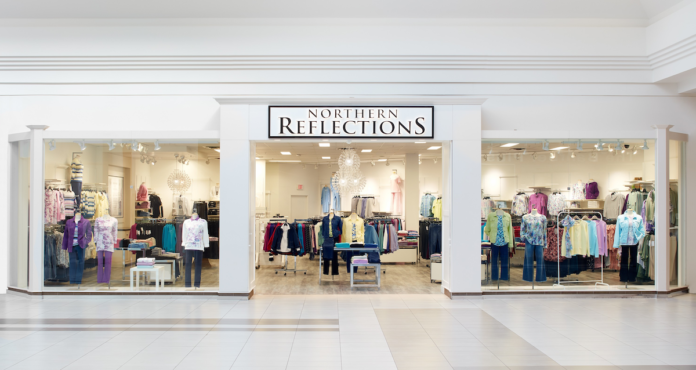
Northern Reflections store at White Oak Mall in London ON. Photo: Northern Reflections
The Canadian retail landscape continues to evolve with the acquisition of women’s fashion retailer Northern Reflections by Putman Investments. The deal, announced in January 2025, marks a pivotal moment for the 40-year-old brand, which has long been recognized for its commitment to quality and classic styling.
Under the leadership of Doug Putman, Putman Investments has a track record of revitalizing well-known retail brands, including Toys “R” Us and Babies “R” Us Canada, Sunrise Records, and UK-based HMV. Northern Reflections’ acquisition signals another strategic move in preserving and growing a heritage brand in a shifting retail market.
A New Era for Northern Reflections
Maryann Darling
Northern Reflections’ President, Maryann Darling, and Director of Retail, Kate Alexander, expressed their enthusiasm about the acquisition in a recent interview. Darling emphasized that the partnership with Putman Investments will allow the company to reinforce its Canadian roots while enhancing its ability to provide high-quality products to a loyal customer base.
“This particular partnership allows us to do what we haven’t been able to before—it gives us an opportunity to truly stay true to our Canadian roots while strengthening our commitment to quality,” said Darling. “Not just as a retailer, but because of Putman’s other portfolios, we can now become a really strong collaborator across the banners. This will allow us to approach brand awareness in a fresh and innovative way.”
While the integration is still in its early days, Darling hinted that customers can expect to see developments over the next three to six months. “There are a lot of different opportunities and synergies we are working through behind the scenes. It’s still early, but you’ll start to see things come together soon.”
Continuity in Store Experience and Product Offerings
Kate Alexander
Despite the ownership change, Northern Reflections’ stores will maintain their familiar look and feel. Alexander assured customers that no immediate changes are planned in terms of store operations. However, the company will be transitioning its logistics to the Vaughan Distribution Centre, previously occupied by Toys “R” Us, which will allow for cost efficiencies and streamlined operations.
“I’ve been with Northern Reflections for 28 years, and for all those years, the focus has always been on the customer first,” said Alexander. “That will remain the same. We’re proud of our product, and we have a loyal following that appreciates our commitment to quality.”
The product line will also continue to embody the classic aesthetic Northern Reflections is known for. However, Darling shared an exciting update about the company’s leadership team. “On March 3rd, we welcomed Jacqui Simpson as our new head of product development and buying. She brings a wealth of experience in product strategy and brand development, and we’re excited to see how she continues to evolve and inspire our customers.”
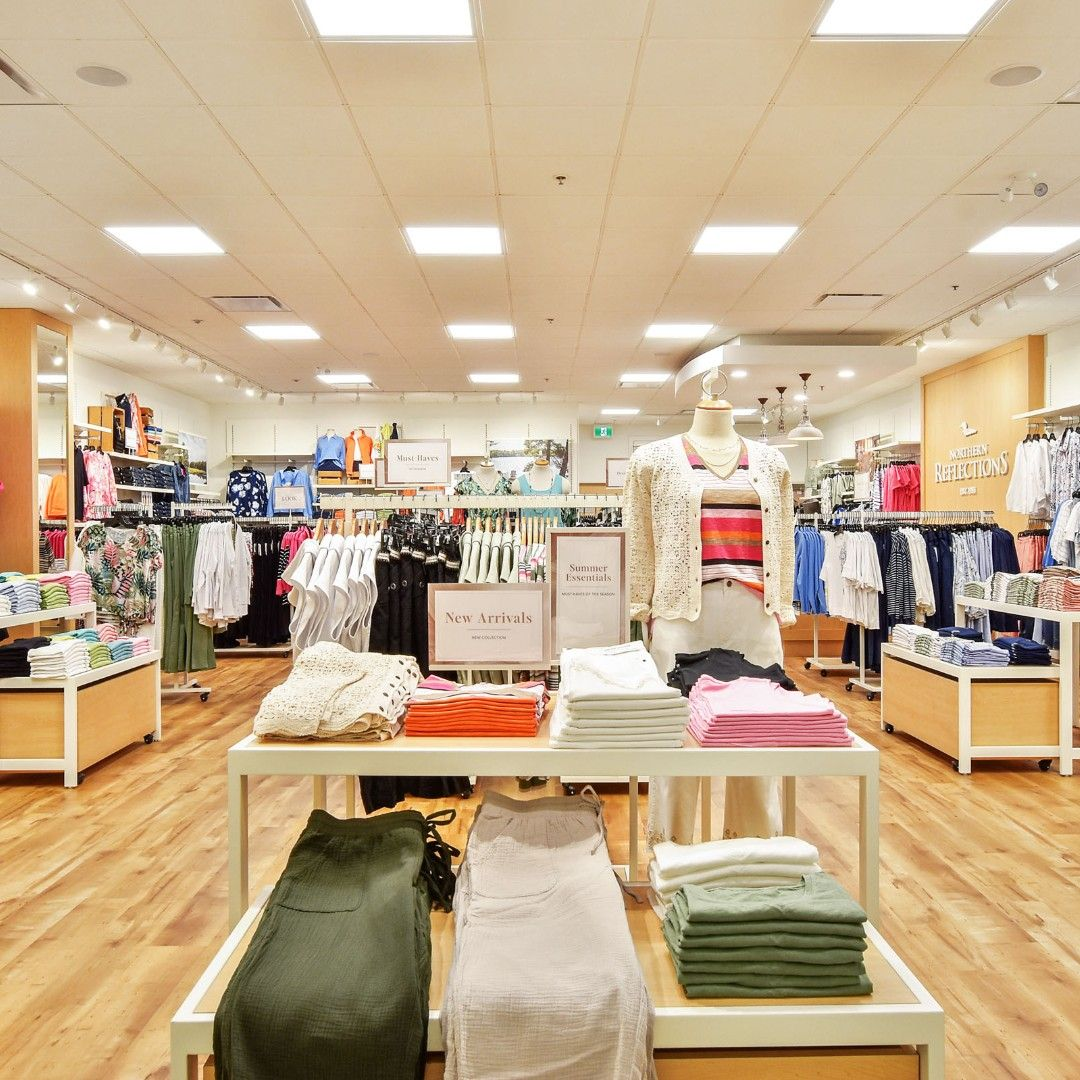
Northern Reflections store at Cottonwood Mall. Photo: Northern Reflections
E-Commerce and Retail Strategy
While e-commerce has been a significant focus for many retailers in recent years, Northern Reflections is taking a measured approach to its digital growth. Darling explained that while online sales remain stable, the company is being deliberate about balancing in-store and e-commerce strategies.
“What we’re seeing in the industry is that e-commerce has plateaued or even declined in some areas,” said Darling. “For us, we’re focusing on maintaining volume while building a stronger financial foundation. At the same time, we know that our customers value an exceptional in-store experience, so we’re ensuring there’s parity between the channels.”
Sustainability and Ethical Practices
Northern Reflections has long been committed to sustainable and ethical business practices. Alexander highlighted some of the initiatives the company is undertaking to minimize environmental impact.
“We donate products to Brands for Canada, and wherever possible, we use recycled paper and other sustainable materials,” she said. “Unlike fast fashion brands, Northern Reflections designs classic styles that endure the test of time. We take pride in the fact that many customers still have Northern Reflections pieces in their wardrobes from 20 years ago.”
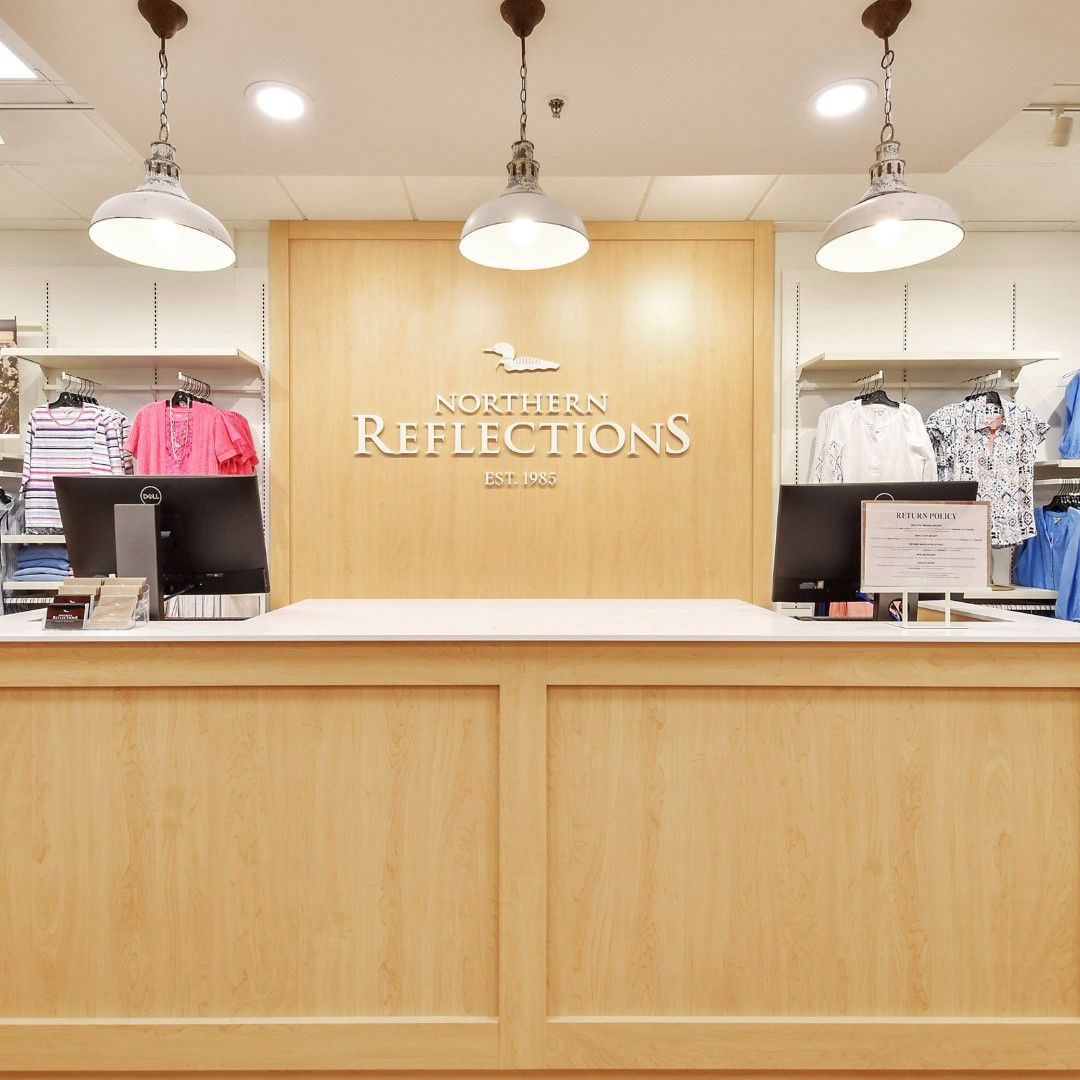
Northern Reflections store at Cottonwood Mall. Photo: Northern Reflections
The Future of Northern Reflections: Expansion and Collaboration
As part of its growth strategy, Northern Reflections will maintain a store count of approximately 105 locations across Canada. While there are no immediate plans for major expansions, the brand is exploring collaborations within the Putman Investments portfolio.
“We’re thrilled to share that in fall 2025, we will be launching two new collaborations that maintain our Canadian heritage while introducing something new,” revealed Darling. “The first is NR Littles, a baby collection that will be sold at Babies “R” Us. The second is NR, a unisex line of hoodies, sweatshirts, and sweat bottoms, which will be available at Sunrise Records.”
These exclusive collections will feature Northern Reflections’ signature quality and craftsmanship while catering to a broader customer base. Darling noted that these launches are just the beginning of what’s to come under Putman Investments’ ownership.
Celebrating Canadian Heritage
Northern Reflections remains one of Canada’s most recognizable fashion brands, alongside heritage names like Roots. With its signature loon logo and a commitment to classic, high-quality apparel, the brand continues to resonate with generations of Canadians.
“One of the key factors in Putman’s decision to acquire us was our deep connection to Canada,” said Darling. “This acquisition isn’t about changing who we are—it’s about preserving our heritage while evolving for the future.”
Ross Mayer at 122 Cumberland Street in Toronto. Photo: Craig Patterson
Toronto’s high-end Yorkville shopping district has welcomed a new addition with the opening of a flagship store by renowned Canadian fashion designer Ross Mayer. Located at 122 Cumberland Street, the boutique spans approximately 1,000 square feet and offers a curated selection of gender-fluid fashion, bespoke tailoring, and bridalwear.
Mayer, known for his timeless yet contemporary aesthetic, saw Yorkville as the ideal setting for his brand.
“When I was looking for a retail location, I explored different areas of Toronto, including Queen West, but Yorkville seemed to be the right fit,” Mayer explained. “It aligns with our client base, our aesthetic, and the level of sophistication we aim for.”
Ross Mayer
The process of securing and renovating the space moved quickly. Mayer finalized the deal shortly after the holidays, took possession of the store just three weeks before opening, and rapidly transformed it to match his brand’s elegant yet modern identity.
Design and Aesthetic
The store’s interior reflects Mayer’s refined yet contemporary design sensibility. A key feature of the space is its gold-accented fixtures, an element Mayer initially considered removing but ultimately chose to integrate into the store’s aesthetic.
“I decided to work with the gold details rather than eliminate them,” he said. “I complemented them with clean white walls, which allow the clothes to be the focal point.”
The result is a minimalist yet luxurious environment, allowing the garments to take center stage.
Ross Mayer at 122 Cumberland Street in Toronto. Photo: Craig Patterson
Gender-Fluid Collections and Bespoke Services
Mayer’s collection is distinctly fluid, blurring the lines between menswear and womenswear.
“I don’t separate my collection into men’s and women’s sections,” Mayer noted. “Everything is interspersed. It’s fashion for whoever appreciates it, without boundaries, labels, or limits.”
The store carries a diverse range of offerings, from everyday fashion-forward pieces to custom bridal and eveningwear. Bridalwear, a growing segment of Mayer’s business, is offered on a bespoke basis, allowing for exclusive, one-of-a-kind creations.
“Bridalwear excites me as a designer because it allows for an extreme level of customization and craftsmanship that isn’t possible with ready-to-wear collections,” Mayer said. “Clients are looking for something highly personal, and I love the opportunity to bring their vision to life.”
Additionally, Mayer plans to introduce bespoke menswear tailoring services, further expanding the boutique’s offerings.
Ross Mayer at 122 Cumberland Street in Toronto. Photo: Craig Patterson
The Decision to Open a Store
Despite the evolving retail landscape, Mayer remains committed to the in-person shopping experience.
“We’ve built a strong presence in the U.S. market, largely through e-commerce and collaborations, but we wanted to establish a solid footprint in Canada,” he explained. “Yorkville felt like the right place to do that.”
Mayer has built a substantial following in the United States, partly due to a high-profile collaboration with Ross Mathews, a judge on RuPaul’s Drag Race. The partnership helped increase visibility for the brand, leading to significant growth in e-commerce sales. However, Mayer recognized the need for a brick-and-mortar presence to complement his online operations.
Future Expansion Plans
While Mayer remains focused on establishing the Yorkville store, he acknowledges the potential for future retail expansion.
“There’s definitely going to be another location at some point,” he said. “I could see us in another urban center—perhaps Montreal. The city has a European sensibility when it comes to fashion, which aligns well with our brand.”
Ross Mayer at 122 Cumberland Street in Toronto. Photo: Craig Patterson
Canadian Craftsmanship and International Manufacturing
Mayer’s designs are crafted both in Canada and overseas, a decision driven by both quality and cost considerations.
“We produce as much as we can in Canada, but the reality is that domestic manufacturing is incredibly expensive,” he explained. “We also work with a premium factory in China that I personally vetted. The quality they deliver is outstanding.”
Despite initial reservations about overseas production, Mayer expressed gratitude for the partnership. “Finding the right manufacturing partner was a lengthy process, but we have an incredible relationship with them, and they consistently deliver exceptional craftsmanship.”
Navigating the U.S. Market and Tariffs
Currently, approximately 70% of Mayer’s e-commerce sales come from the U.S., making the brand highly dependent on cross-border trade.
“The tariff situation is constantly shifting, and it’s something we have to monitor closely,” Mayer said. “While it hasn’t caused major disruptions so far, it’s definitely a concern for our customers.”
Tariffs on fashion imports can impact consumer purchasing decisions, particularly for aspirational buyers. Mayer acknowledges that added costs could deter some customers from making purchases, though he remains optimistic about the resilience of his U.S. customer base.
Final Thoughts
With the opening of his Yorkville boutique, Ross Mayer is solidifying his presence in Toronto’s fashion retail scene. His approach to gender-fluid fashion, bespoke craftsmanship, and high-end bridalwear positions him uniquely within the Canadian market. As he continues to expand his brand, Mayer remains committed to creating timeless yet innovative designs that resonate with modern consumers.
“Fashion should be an investment—pieces that stay with you over time, not just seasonal trends,” he emphasized. “That’s always been my philosophy.”
After a successful soft launch, Kinton Ramen South Trail Calgary will officially open its doors on March 15 with a grand opening celebration.
Located at 4307 130 Ave SE, Unit #215, the festivities will begin just before doors open at 11 a.m. To mark the occasion, guests can enjoy signature ramen dishes at 50 per cent off.
The new Calgary location will be open daily for normal business hours (these vary day-to-day). Conveniently located within the adjacent shopping centre, it offers a perfect spot for shoppers to enjoy a cozy dine-in experience or grab a meal to go, said the company.
“The new Calgary location is the first of several planned for the city, with additional restaurants set to soft open before summer in the Mission and Uxborough neighbourhoods. This expansion is part of a signed Area Representative Agreement with The Labreche Group, which will bring 12 Kinton Ramen outposts to Alberta over the next five years,” said the company.
Kinton Ramen Waterloo (Image: Kinton Ramen)
“Since franchising began in 2021, Kinton Ramen has expanded its footprint across North America, making its unique dining experience accessible to a broader audience. The new location in Calgary follows the success of its Winnipeg opening, a testament to the rising demand for authentic ramen in the Western Canada region.”
Source: Kinton Ramen
Established in May 2012, Kinton Ramen was one of Toronto’s first Japanese ramen restaurants
Founded in 2009, Kinka Family is a full-service international hospitality group. Since then, the company has come to be recognized as Canada’s largest Japanese restaurant group. It owns and operates a diverse portfolio of restaurants and cafés in Toronto, Montreal, Vancouver, Chicago, and New York. Included are KINKA IZAKAYA, KINTON RAMEN and JaBistro.
By Lilian Bories: From a global supply chain perspective, the biggest uncertainty retailers and brands face in 2025 is the impact of tariffs. While the full outcome of new tariff policies remains unclear, organizations are bracing for potential cost disruptions by increasing their agility and refining supply chain models. Many are already making significant adjustments—a recent survey of 579 retail, consumer packaged goods (CPG), and wholesale professionals across multiple countries found that as tariffs loom, 60% of companies are overhauling their supply chains. Most companies are investing in diversification, automation, and supply chain resilience in response to complex global trade relations.
TradeBeyond’s latest Retail Sourcing Report takes a deeper look at the strategies leading brands and retailers are using to navigate the coming year of volatility.
Lilian Bories
Strategy 1: Optimize Cost Structures
In this climate of tariff volatility, companies need to take a proactive approach to cost management. Consumer product businesses can counter the impact of tariffs by ensuring they have fully diversified their supply chains, are running efficiently and have weighed the pros and cons of passing costs onto consumers.
A study by the National Bureau of Economic Research looked at the impact of the 2018 U.S. tariffs on washing machines across sourcing countries. It found that prices rose by around 12% across countries, including for the U.S. produced washing machines and dryers. The tariffs resulted in the creation of 1,800 domestic jobs, but the higher product prices cost consumers $1.5 billion more. This means that consumers ended up paying over $815 thousand per job (after netting out the tariffs collected).
No matter how tariffs play out, we can assume that prices for products will be higher. To counter the impact, retailers and brands can employ creative strategies such as adjusting prices across products, transferring costs to consumers where brand loyalty is strong and using hedging strategies to protect against currency and commodity price fluctuations.
Strategy 2: Leverage Advanced Technology
While still in a nascent stage, the integration of artificial intelligence (AI) and predictive analytics is readying to be a game changer for supply chain operations. These technologies promise to proactively help companies predict demand fluctuations, forecast potential disruptions, and optimize procurement processes in real-time. AI is expected to bring efficiency improvements across most of the supply chain.
Retailers such as Walmart have used predictive analytics to forecast inventory needs and reduce delivery times by up to 20%. Integrating AI helped Walmart streamline their operations and reduce inventory costs, for savings of $18 billion in one year. One research study highlighted how AI-driven analytics could save the retail sector $300 billion annually. Advanced technologies help businesses respond to market changes, improve overall efficiency, and reduce costs, ensuring a resilient and agile supply chain and value addition in dynamic trade environments. Alongside upgrading technology, upskilling employees to work alongside advanced technologies maximizes their potential.
Strategy 3: Broaden Sourcing Networks
Diversifying the supply base is not a new concept for most companies who have mature global sourcing programs. Retailers and brands have learned hard lessons in recent years from relying too much on Chinese or other single country suppliers. Increased trade tension and a climate of aggressive tariffs have further made the case for supplier diversification. As highlighted by GEP, diversifying supplier bases is key to enhancing supply chain resilience while reducing dependency risks.
Chinese suppliers are already well established in countries such as India, Vietnam, Malaysia and even Africa. Eastern Europe and Latin America have also grown in recent years as alternative or complementary sourcing destinations to mitigate risk. A priority for companies is finding a way to ensure supply chain continuity, establishing long-term agreements with competitive pricing, and further stabilize cost structures. Smart companies are also leveraging the available support from within supply chain networks, using third-party logistics providers to streamline diversification.
Strategy 4: Bolster Supplier Partnerships
Strong supplier relationships are an essential part of a contingency plan for navigating trade uncertainties. Engaging in collaborative planning, risk-sharing arrangements, and diversified sourcing strategies can foster a more resilient supply network. Openly sharing sustainability initiatives and performance metrics with stakeholders is also key to building trust and differentiation. Robust reporting practices reinforce credibility while ensuring adherence to emerging regulatory standards.
A study by PwC found that companies with deeply integrated supplier partnerships are 20% more likely to maintain stable operations during periods of market volatility. Such strategic alliances facilitate rapid adaptation to unforeseen challenges while ensuring continuity in supply. Diversifying supplier partnerships also reduces localized supply chain risks.
Strategy 5: Embrace nearshoring and onshoring
No question, the case for nearshoring and onshoring has grown in recent years, driven by higher costs, supply chain disruptions such as the pandemic and more recently, geopolitics. In theory, companies can gain greater control over their supply chains, allowing them to further streamline operations and respond quickly to shifting trade policies.
Nearshoring may not always be the best solution, but can yield benefits such as shorter lead times, faster response to consumer demand, reduced transportation costs, and improved regulatory compliance. Companies also gain the flexibility to find alternate sources for components and materials within their own region and can more easily customize products to suit local preferences.
Amid escalating trade complexities and unpredictable global markets, building resilient supply chains requires a multifaceted, data-driven approach. By broadening sourcing networks, embracing localized production, optimizing cost structures, using advanced technologies, and nurturing robust supplier relationships, companies can not only mitigate trade risks but also position themselves for sustainable long-term growth.
TradeBeyond’s new Retail Sourcing Report: 2025 Insights & Indicators explores these and other topics in greater detail, with in-depth analysis, including economic and global sourcing analysis and indicators. The report is available now as a complimentary download.
Lilian Bories is Chief Marketing Officer for TradeBeyond, retail’s leading provider of SaaS supply chain solutions.
The CEO of one of Canada’s most iconic brands, BeaverTails, is urging Canadians and Canadian businesses to support each other.
“We have seen a wave of patriotism across Canada in recent weeks,” said Pino Di Ioia. “And while we generally avoid politics, we feel that this is a time for Canadians to stand together. Supporting Canadian companies is nothing new for us. We have a decades-old practice of sourcing key ingredients – such as flour – from a network of local suppliers.
“Today, we urge all Canadians to think about their purchasing decisions. We also invite other Canadian businesses to join this conversation. Standing together – united by common purpose – is what Canadians do best.”
Pino Di Ioia
The brand, makers of unique pastries was born in small town Ontario and toda, there are BeaverTails locations at virtually every major tourist destination across the country.
“The BeaverTails brand is authentically and typically Canadian – humble yet quietly patriotic,” said the company.
Milestones:
1978: It first served at the Killaloe Fair, west of Ottawa. Later, stores open at Ottawa landmarks the Rideau Canal and Byward Market.
1990: BeaverTails opens at La Ronde in Montreal.
1990s: It expands rapidly across Canada.
2002: New management team moves head office to Montreal, streamlines operations and strengthens brand to focus on quality and the experienced-driven community we know today.
2008: New boutique locations open showcasing expanded menu.
2015: BeaverTails opens its 100th location.
2016: BeaverTails opens Toronto Waterfront flagship location.
2017: BeaverTails named one of Canada’s top brands by Interbrand.
2025: With 50 iconic locations at leading tourist and resort destinations, plus more than 150 express and mobile locations at amusement parks, zoos, fairs and festivals, BeaverTails is always within reach.
The Government of Canada is making significant investments to expand tourism experiences across Alberta, with over $2.9 million allocated to nine unique projects aimed at showcasing the province’s rich culture, Indigenous heritage, and stunning landscapes.
Terry Duguid, Minister for PrairiesCan, made the announcement recently, highlighting the importance of tourism as a powerful economic driver that sustains local businesses, creates jobs, and contributes to Alberta’s economic growth.
“Alberta has incredible stories to share—from its rich Indigenous heritage to its stunning landscapes and unique local experiences. Supporting tourism at home means backing local businesses, creating jobs, and strengthening our economy. These projects will help more people, from Canada and beyond, experience everything that makes Alberta special,” said Duguid.
Terry Duguid
These investments are part of the federal Tourism Growth Program (TGP), which is designed to support small and medium-sized businesses, Indigenous and non-Indigenous communities, and not-for-profit organizations in developing local tourism products and experiences. The program contributes to the Federal Tourism Growth Strategy, aimed at long-term growth, stability, and investment in Canada’s tourism industry.
Among the projects receiving funding, Tourism Calgary will receive over $434,000 to enhance inclusive programming for Chinook Blast in 2025 and 2026, as well as to develop Indigenous programming for the 2026 Grey Cup and create a new Indigenous music festival. Blackfoot Crossing Historical Park in Siksika will also benefit, receiving $350,000 to expand access to active Indigenous heritage experiences by improving visitor spaces, gallery displays, and exhibit content.
Another notable recipient is Parallèle Alberta, which will receive more than $573,000 to develop and market six new Économusées—artisan workshops that highlight traditional trades and sustainable business models in Alberta. Other investments include funding for Black Sheep Ventures, Granary Road, Mahikan Trails, and Rendez Vous RV Park to enhance their tourism offerings and visitor experiences.
Photo by Andre Furtado
The TGP is expected to support approximately 120 jobs across the province, helping Alberta’s tourism sector recover and thrive. This announcement reflects the principles of the Government of Canada’s Framework to Build a Green Prairie Economy, which aims to create good-paying jobs while driving economic growth across the region.
According to Travel Alberta, the province’s visitor economy reached $12.7 billion in tourism expenditures in 2023, contributing $9.9 billion to the provincial GDP and creating nearly 90,000 jobs.
The $2.9 million investment will play a key role in enhancing Alberta’s position as a top destination for domestic and international travellers, ensuring that the province remains a vibrant and attractive place for visitors to explore.
While 30% of Canadians say they support a strong tip culture, recognizing it’s a key part of income for service industry workers in Canada, the vast majority appear to have extreme tip fatigue – both with expectations around gratuity amounts and with the extent of services that now prompt for a gratuity. This is despite nearly one in three Canadians (31%) that have directly worked in a gratuity-based job as some point. A survey by H&R Block’s also reveals that while most Canadians know that tips are considered taxable income, 47% assume people are not actually declaring them on their taxes.
Yannick Lemay
“It’s important to emphasize that tips are considered taxable income, by law, even if your employer does not include any tip amount on your T4 slip. But the good news is there are many ways to make your tips work in your favour when it comes to filing your taxes,” said Yannick Lemay, Tax Expert at H&R Block Canada.
“Not only are there numerous deductions, benefits and credits you can leverage, there are tax-friendly ways to use your tips to invest in your professional growth and well-being and bolster your savings.”
Canadians begrudge gratuity prompts from card payments machine: A colossal 94% of Canadians say they’re annoyed by card payment machines prompting options for services that tips or gratuities weren’t previously expected. However, more than half (57%) of Canadians feel awkward skipping the tap prompt so tend to leave one anyway, said the survey.
While most Canadians know that tips are considered taxable income – many assume they’re not declared for tax filing purposes: Overall, 84% of Canadians recognize that tips must be declared for tax purposes (whether they are cash, credit or via other payment methods). However, 47% assume that the recipients aren’t declaring their tips when filing their taxes. Conversely, 16% didn’t realize that they must be declared as taxable income. Nearly half of Canadians (45%) say they try to give cash where possible, in thinking that the person then doesn’t have to worry about paying tax on it, explained H&R Block.
Other key findings from the survey:
Canadians are divided on whether they believe the individual or the employer pockets gratuities: While around half of Canadians believe the individual person they’re tipping receives the money, the other half believe it goes into the employer’s pocket.
More than half of Canadians identify as ‘frugal tippers’: Overall, 53% of Canadians consider themselves as frugal tippers, typically opting for the lower tip option and/or only tipping for exceptional service. This compares to 39% who say they’re generous tippers and tend to opt for the higher tip amount or tip most services.
Many Canadians feel that tipping lets employers off the hook to pay employees’ full wage: Overall, 88% feel that tipping culture has become a means for employers to pay their staff less. Furthermore, 91% believe that Canada should have less of a tipping and gratuity culture as employers should cover their employees’ full wages.
Canadians believe 9% is the tipping sweet spot: When asked what Canadians believe the tipping or gratuity amount should be for various services, the overall average equated to 9%, which is well below typical gratuity prompt amounts. However, not all services are perceived as equal when it comes to the average amount considered appropriate by industry:
According to a recent Statistics Canada report, federal and provincial governments earned a total of $15.7 billion from the control and sale of alcohol and recreational cannabis in the fiscal year ending March 31, 2024. Of this total, $13.5 billion came from alcohol sales, showing a slight decrease of 0.5%, while recreational cannabis sales reached $2.2 billion, marking an impressive increase of 12.6%. This total includes net income from provincial liquor and cannabis authorities, excise taxes, retail sales taxes, other specific taxes, and licences and permits.
Historic Drop in Alcohol Sales Volume
Despite a 2.5% increase in the price of alcoholic beverages from March 2023 to March 2024, total alcohol sales dropped by 0.1%, totaling $26.2 billion for the fiscal year ending March 31, 2024. On a volume basis, sales of alcohol fell by 3.8%, marking the largest volume decline on record since Statistics Canada began tracking alcohol sales in 1949. In total, 2,988 million litres of alcohol were sold in 2023/2024. On average, Canadians of legal drinking age consumed the equivalent of 8.7 standard alcoholic beverages per week, down from 9.2 in the previous fiscal year, explained Statistics Canada.
Domestic Products Dominate Alcohol Sales
In 2023/2024, domestic products accounted for 59.0% of all alcohol sales in Canada, a slight increase from 58.7% in the previous year. Beer, at 88.0%, and ciders and coolers, at 85.0%, represented the highest proportions of domestic sales, while spirits (46.1%) and wine (28.8%) had smaller shares.
Record Decline in Beer Sales Volume
Beer sales experienced a record decline of 4.5% by volume, totaling 1,950 million litres in 2023/2024. This marks the eighth consecutive year of volume decline for beer. Beer sales by dollar value also fell by 1.3%, totaling $9.2 billion. Despite this decline, beer remains the top-selling alcoholic beverage, representing 35.1% of total sales, though this is down significantly from two decades ago when beer accounted for nearly half (49.4%) of all alcoholic beverage sales, noted Statistics Canada.
Wine and Spirits Sales Drop
Wine sales also saw a decline in both volume and value. Volume fell by 4.8%, totaling 476 million litres, marking the third consecutive year of decline. Wine sales by value decreased by 0.3% to $7.8 billion in 2023/2024. Spirits sales dropped by 0.5%, totaling $6.9 billion, with volume declining by 3.9% to 184.9 million litres. Whisky, vodka, and liqueurs were the top-selling spirits by share.
Ciders and Coolers See Growth
The only alcoholic beverage category to experience growth in 2023/2024 was ciders and coolers, which saw a 6.9% increase in sales, reaching $2.3 billion. The volume of ciders and coolers sold also rose by 1.3%, totaling 377 million litres. The total sales were equivalent to approximately 0.8 standard drinks per week for each Canadian of legal drinking age.
Source: Binoid CBD
Cannabis Sales Continue to Rise
Recreational cannabis sales saw a significant rise of 11.6%, reaching $5.2 billion in 2023/2024. This growth, though slower than the previous year’s 15.8% increase, reflects continued consumer demand for cannabis products. The increase in cannabis sales occurred despite a 2.8% decrease in the price of cannabis products during the same period, according to Statistics Canada.
Inhaled extracts emerged as the fastest-growing cannabis category, with a remarkable 31.4% increase in sales, accounting for over two-thirds of the overall $0.5 billion increase in cannabis sales. Over the past three years, inhaled extracts have steadily gained market share, with dried cannabis losing ground. In 2023/2024, dried cannabis accounted for 61.4% of the market, down from 71.0% in 2021/2022, while inhaled extracts increased to 29.3% from 18.1%.
Provincial Differences in Cannabis Consumption
Cannabis consumption varied significantly across Canada, with Yukon having the highest per-person sales at $356 per person of legal age. In contrast, Quebec had the lowest at $96 per person, partly due to the province’s restrictions on cannabis vapes and topicals and its limited edible offerings.
This report highlights shifting trends in Canadian alcohol and cannabis consumption, with changes in beverage preferences and a continued rise in recreational cannabis sales. These patterns will likely influence both the market and government revenues in the coming years.
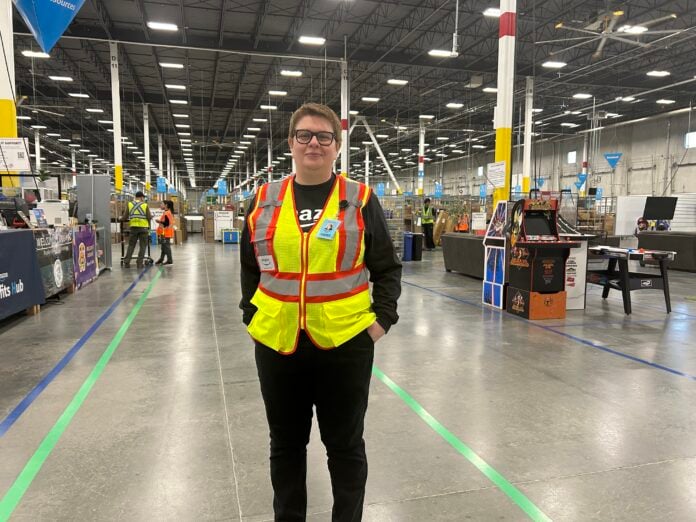
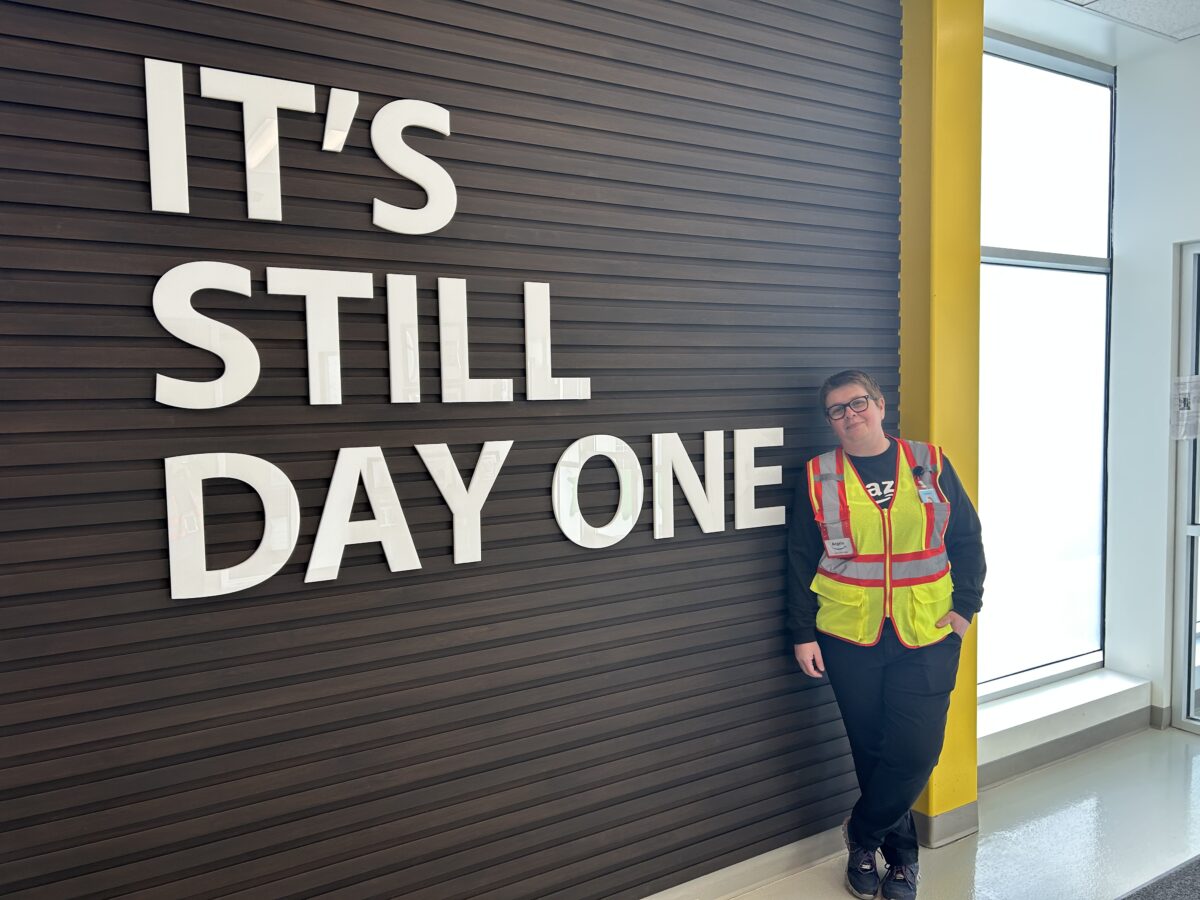
Angela Baciu at the Amazon Delivery Centre in southeast Calgary. Photo by Mario Toneguzzi
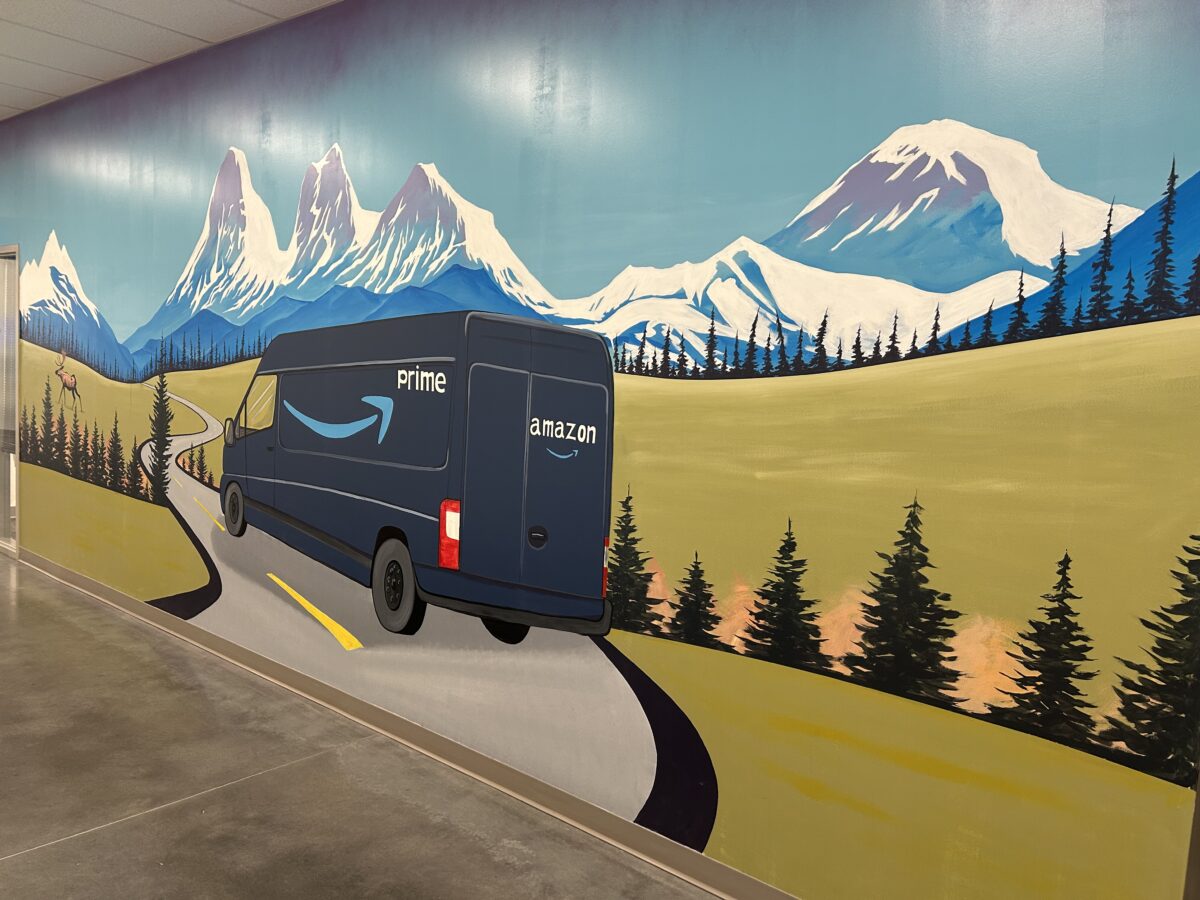
Angela Baciu describes an Amazon Delivery Centre in southeast Calgary as where “the magic is happening.”
The Regional Manager for the Prairie Region for Amazon said it’s the last mile for packages before they are delivered to people’s doorsteps.
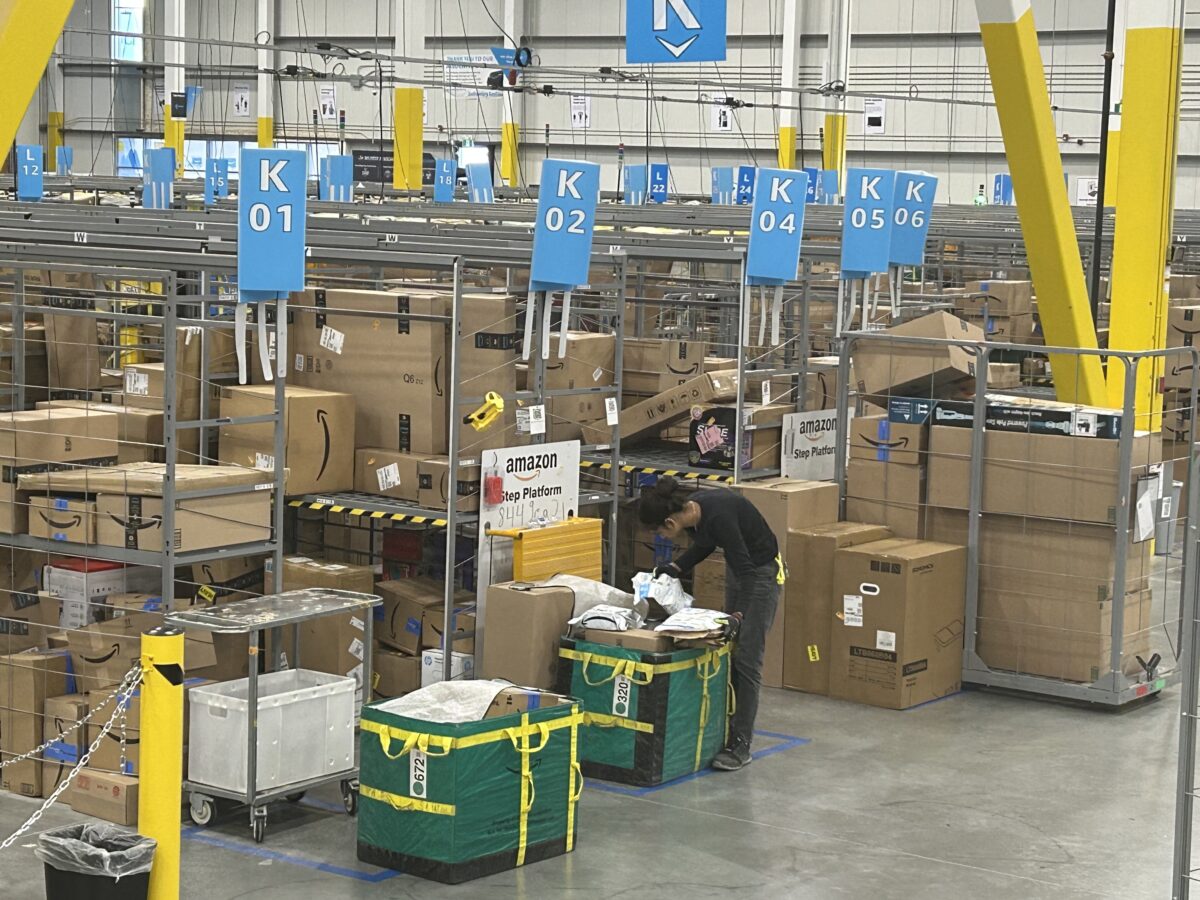
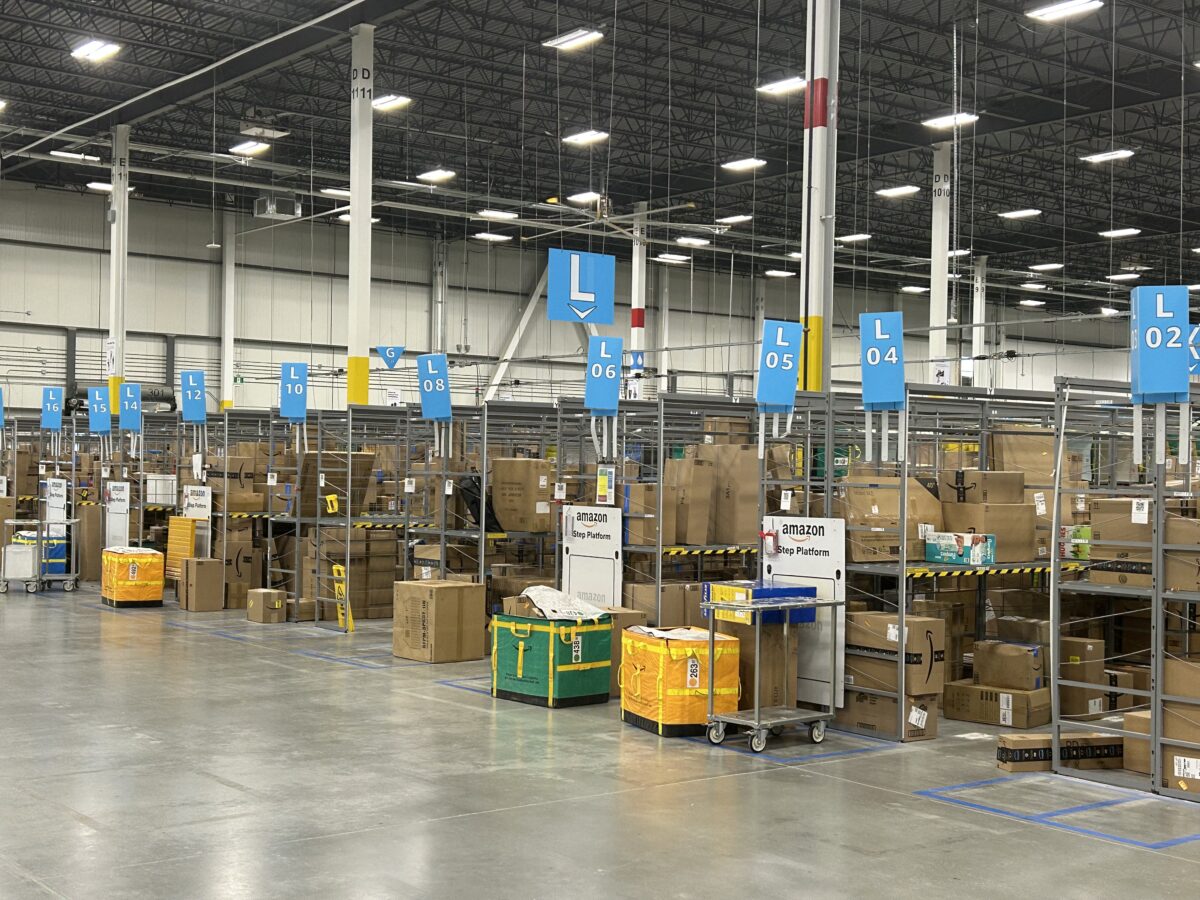
The Calgary facility, one of two in Calgary, is 164,000 square feet. The other facility is about 200,000 square feet. The southeast location opened in August 2020 while the northern location opened last September.
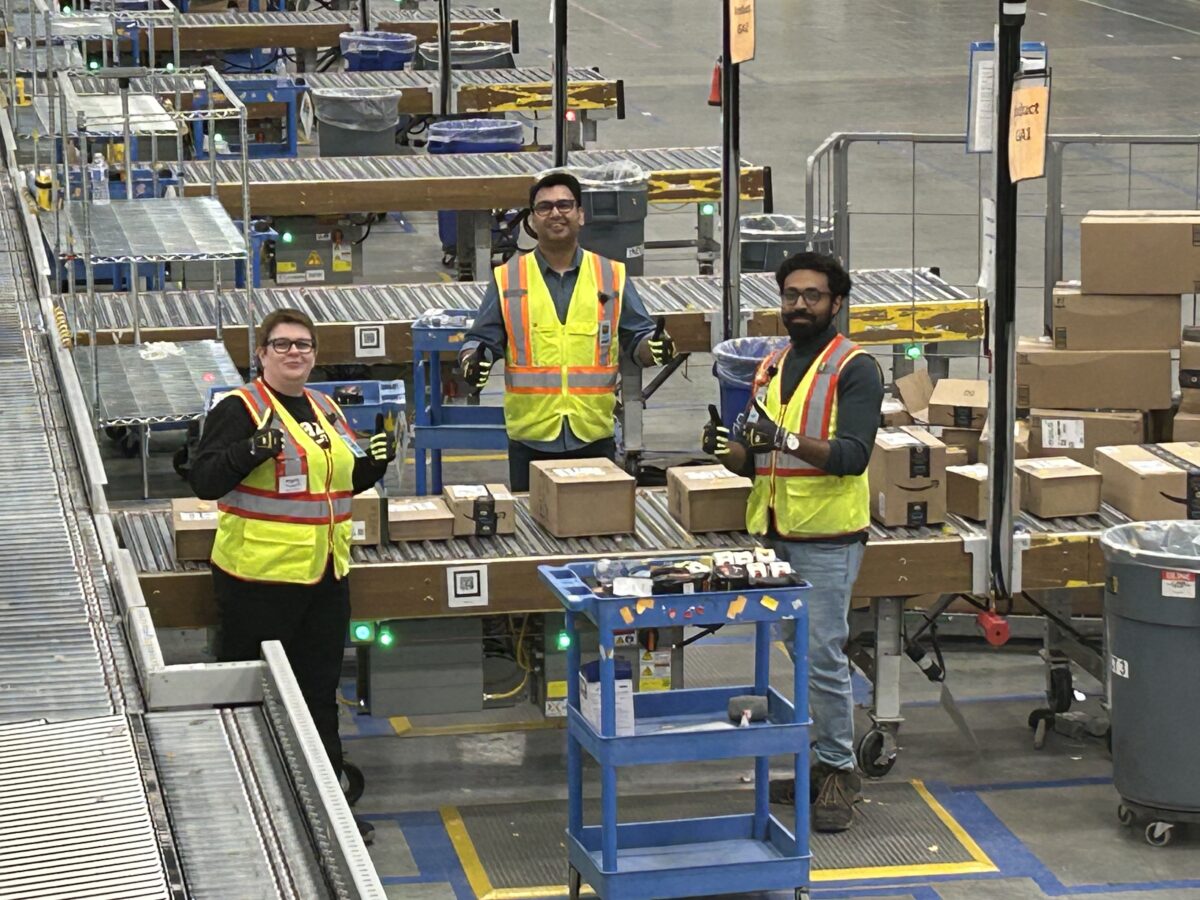
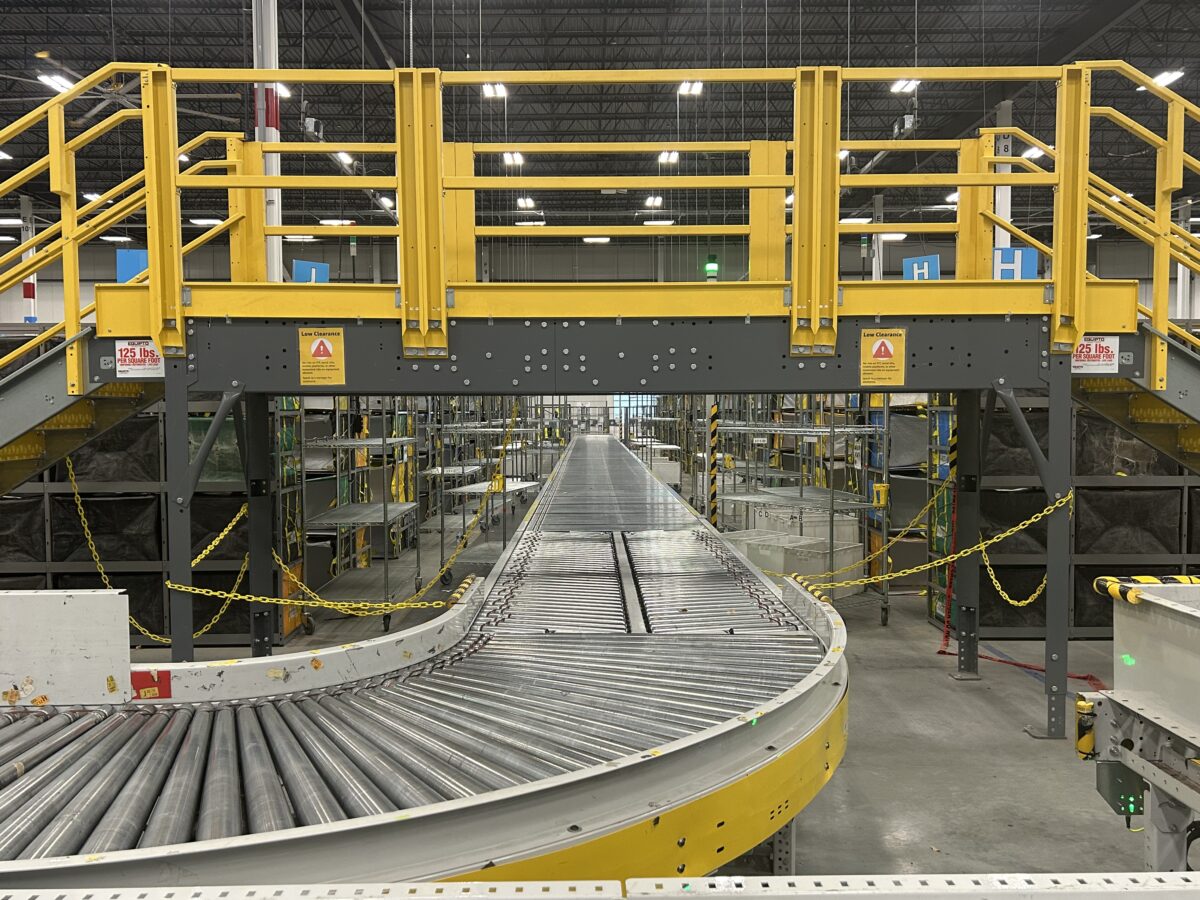
“The packages come to our delivery station. We are sorting based on where it’s going to be delivered. Then we take the bags and they are taken by a third-party of drivers who then deliver the packages,” said Baciu.
The packages come initially from either a fulfillment centre or a sort centre.
From these two stations, Calgary is split in half where deliveries are handled. The centres cover the City of Calgary and surrounding areas.
Photo by Mario Toneguzzi
The number of packages that go through a last mile site is mind-boggling.
“Imagine that this site started in 2020 with 4,000 packages per day. Now in peak, what we consider peak is November and December when we’re having the high volume events, we had 3.7 million packages that are spread between six weeks,” said Baciu. “On an average day, taking out a high volume event, just this station we’re talking about 50,000 packages per day.”
During high volume event days like Prime for example that number can soar up to 125,000 packages per day.
Earlier this year, Amazon announced plans to cease operations at seven facilities in Quebec over the next two months. The closures include one fulfillment centre, two sorting centres, three delivery stations, and one AMXL (extra-large) delivery station co-located with a sorting centre. This decision will impact approximately 1,700 regular employees and 250 temporary seasonal workers in the province.
The company stated that it will revert to a third-party delivery model supported by local small businesses, a system previously in place until 2020. Amazon spokesperson Barbara Agrait emphasized that this move aims to maintain high-quality service and offer greater savings to customers in the long term. She clarified that the decision was not influenced by the unionization of 200 employees at Amazon’s DXT4 warehouse in Laval, Quebec, which occurred in May 2024.
Photo by Mario Toneguzzi
In the company’s 2024 annual report, Amazon said it is a “powerful engine of growth for the Canadian economy. Through innovation, investments, and job creation, Amazon is helping transform the economic potential of communities across the country.
“Since 2010, we’ve made direct investments in our Canadian operations of more than $50 billion. This includes both capital expenditures (such as the fulfilment centres and data centres we build) and operating expenditures (such as the jobs we create). These direct investments create a ripple effect through the economy: Keystone Strategy, an independent economics consulting firm, estimates that Amazon’s investments contributed an additional $43 billion in spillover value-added effects to the Canadian GDP between 2010 and 2023 (Amazon’s spillover value-added effects represent the indirect effects of Amazon’s investments on Canada’s GDP. Amazon’s investment has indirect effects in the economy due to the expanded production of firms that supply the goods and services purchased by Amazon).
“These investments have helped us create more than 46,000 good jobs with competitive pay and benefits across Canada, at our corporate Tech Hubs in downtown Toronto and Vancouver and our close to 70 Operations and logistics sites from coast to coast.”