For many young Canadians, securing a summer job is an essential stepping stone toward future success. It provides opportunities to build confidence, develop new skills, and explore career interests, all while earning money for education and living expenses. Recognizing the importance of these opportunities, the Government of Canada is once again supporting youth employment through the Canada Summer Jobs (CSJ) program.
“A summer job is more than just a paycheque—it’s a chance for young people to gain experience, develop new skills, and explore career paths that interest them. Through Canada Summer Jobs, there are thousands of opportunities for youth to grow, contribute to their communities and build a strong foundation for their future,” said Minister Ien.
Young job seekers will have access to these job opportunities starting April 21 through the Job Bank website and mobile app. These roles span various sectors, including recreation, food services, marketing, tourism, housing construction, and environmental protection. Youth will be able to apply for positions that align with their interests and skill sets. As new opportunities are posted regularly, young people are encouraged to stay engaged and check the site for updates throughout the summer.
In addition to providing opportunities in various fields, CSJ prioritizes projects that support youth who face barriers to employment. This includes youth with disabilities, Indigenous youth, Black and racialized youth, 2SLGBTQI+ youth, and youth in rural, remote, or official language minority communities. By ensuring that all youth have equitable access to these opportunities, the program aims to equip young Canadians with the skills and experience they need to succeed in the workforce.
CSJ is part of the Youth Employment and Skills Strategy (YESS), a Government of Canada initiative designed to help youth gain the skills, education, and work experience necessary for a successful career transition. This summer, CSJ-funded jobs will range from 6 to 16 weeks, with full-time positions of 30 to 40 hours per week.
The Government’s commitment to youth employment goes beyond summer jobs. In the 2024 federal budget, the Government of Canada announced a $351.2 million investment in YESS for the 2025–26 fiscal year. This includes $200.5 million for CSJ to support youth job opportunities in sectors facing critical labor shortages, such as housing construction.
Quick Facts:
The Government of Canada is investing $351.2 million in 2025–26 for youth employment programs, with $200.5 million allocated specifically for CSJ.
Since 2020, CSJ has helped create over 454,000 jobs for youth across Canada.
An independent audit by the Office of the Auditor General of Canada found that youth who participate in CSJ have better long-term earnings than those who do not.
According to a 2024 survey, 92% of CSJ participants reported increased confidence in their skills, and 85% felt optimistic about their future job prospects.
With these significant investments, the Government of Canada continues to support the growth and development of youth, ensuring they have the tools and opportunities needed to achieve their career goals.
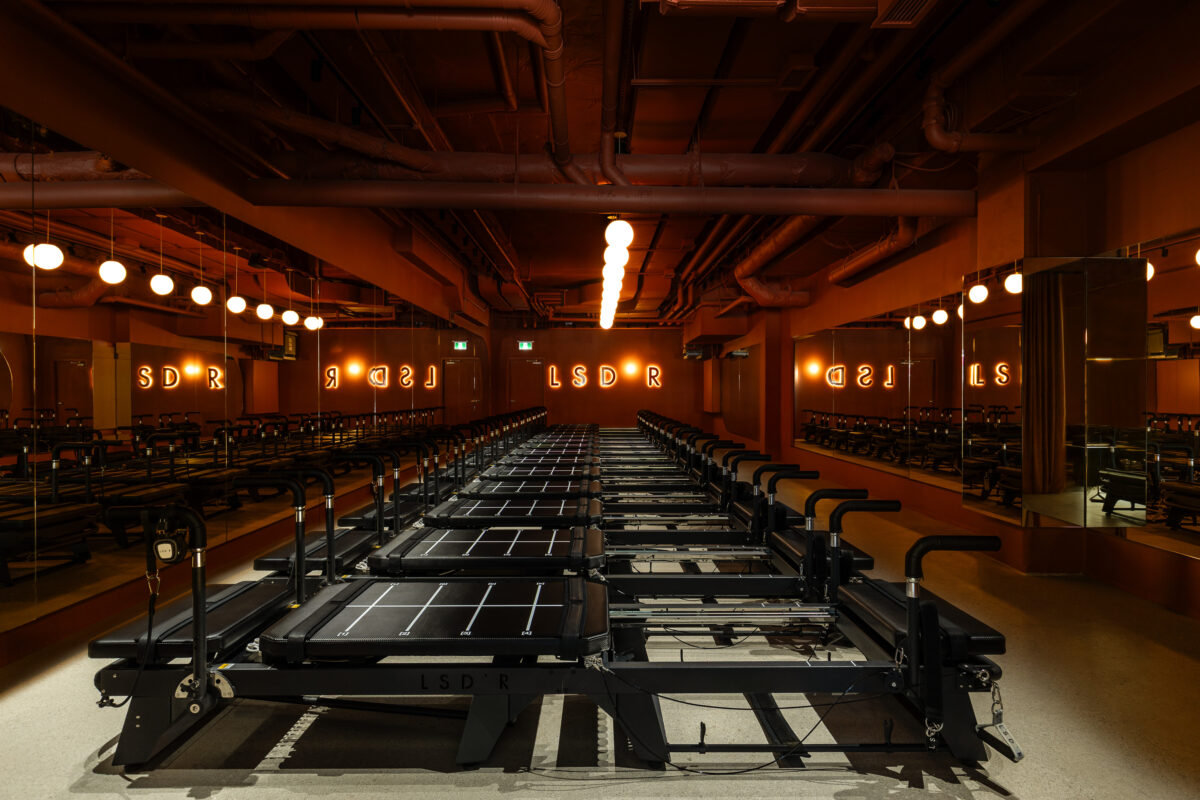
A new boutique fitness studio, LSD°R, is making waves in Toronto’s King West neighbourhood, offering a unique low-impact Pilates experience that incorporates both breathwork and Reformer machines.
Founded by seasoned fitness entrepreneurs Tessa Bernier and Jackie Di Renzo, LSD°R aims to bring a sustainable, mindful workout to a growing wellness hub in the city. With a soft launch this week and a grand opening on March 3, the studio promises a fresh approach to fitness for those seeking long-term results without putting stress on the body.
LSD°R’s 1,700-square-foot space is designed to be intimate and functional, housing 14 Reformers and a variety of amenities such as lockers, restrooms, and a reception area. The studio is strategically located at 543 Richmond Street, positioned between Portland and King West—an area already home to several wellness businesses. Bernier and Di Renzo, both experienced in the boutique fitness scene, were drawn to the neighbourhood’s demographic and vibrant energy, making it the perfect spot for their first location.
The studio’s name, which stands for “Low, Slow, Deep Reform,” reflects the core philosophy of the practice. Participants are encouraged to move slowly on the Reformers while focusing on deep breathing to enhance both physical strength and mental clarity. While the primary demographic is women between 25 and 40, LSD°R is also attracting a growing number of men seeking a functional, low-impact workout that fosters overall wellness. With plans to expand to five locations throughout Toronto, LSD°R is poised to become a go-to destination for those looking to incorporate mindful movement into their fitness routines.
Bernier said the two owners have extensive experience in the boutique fitness industry. They’ve opened yoga and Pilates studios in the past in Toronto and other locations.
“We’ve also owned retreat centres together and run international retreats for many years. We’ve been involved in yoga, Pilates, and teacher training for a long time. We’re both movement instructors, specializing in yoga, Pilates, and breathwork training. All of this experience ultimately led us to LSD°R, where we focused on a Re°form Pilates modality,” she said.
“The location is perfect because it’s at the intersection of an emerging wellness hub in Toronto, with other wellness-oriented businesses nearby. We also know King West well, having owned studios in the area before, so it felt like coming home. We understand the neighbourhood demographic, which made it an easy choice for our first studio,” said Di Renzo.
Jackie Di Renzo
“We’ve found that 1,500 to 2,000 square feet is the right size for what we need—enough to create an intimate, functional environment without any excess space. We’ve learned from previous experiences that less can be more. This sort of bespoke type of location that offers everything a client could possibly need is that sweet spot in and around 1,700 square feet,” added Di Renzo.
Bernier said the concept behind it is a low-impact workout where you move slowly, incorporate deep breathing, and engage deeply with the Reformer machine, focusing on getting into deep positions.
Di Renzo said they hope to open more studios.
“Our goal has always been to have a minimum of five locations here in Toronto. We wanted to create smaller, more intentional spaces that can fit into various neighbourhoods around the city. The design and offering allow us to cater to the specific needs of each neighbourhood, ensuring the concept works on a community level,” she said.
Source- LSD°R
Bernier said the studio’s main demographic is women, particularly those between 25 and 40. That said, they’ve had a lot of men during its recent soft launch as well. The area around the studio has a dense population of people in that age range, so it’s a good fit.
“We put a lot of thought into the offering. Breathwork and modern Pilates are central to our program. Pilates on the Reformer allows for a low-impact, sustainable workout. People often want something new to add to their wellness routine, and we offer an option that stretches, lengthens, and strengthens without putting stress on the joints or deteriorating the body,” said Di Renzo.
“We also incorporate breathwork, which not only aids in the mind-body connection but offers mental health benefits. Breathwork helps people shift their mental state, feel grounded, and generally feel better in their own skin. Our target is someone who is familiar with wellness and looking for a long-term, functional practice that also nurtures their mental well-being.”
Purdys Chocholatier at CF Richmond Centre. Photo: Geetanjali Sharma
For over a century, Purdys Chocolatier has been a staple in Canadian confectionery, bringing premium chocolate to generations of consumers. Founded in 1907 in Vancouver, the company has remained steadfast in its commitment to Canadian production, community engagement, and sustainable sourcing. Despite external challenges, including rising cocoa prices and ongoing trade uncertainties, Purdys continues to thrive, adapting to industry shifts while maintaining its dedication to quality and ethical sourcing.
A Proudly Canadian Brand
“Purdys is about as Canadian as you can get,” says Lawrence Eade, President of Purdys Chocolatier. “We were founded in 1907 in Vancouver, and our factory has been in Vancouver ever since. We’ve moved and grown, but we’ve always stayed here. Now, we’re coast to coast, from Victoria to Ottawa. We sell and make everything here in Canada in our own channels.”
Lawrence Eade, President of Purdys Chocolatier
The company’s Canadian roots run deep, with over 1,100 employees nationwide. Purdys has also made a name for itself through its Purple Partnerships initiative, supporting Indigenous programs, LGBTQ+ advocacy, and grassroots fundraising efforts that contribute millions of dollars annually to local communities. “It’s all through the power of chocolate,” Eade says. “We help small organizations—whether it’s a hockey team, dance program, or parent advisory council—keep doing what they love in their communities.”
Tariffs, Trade Wars, and Canadian Sentiment
Recent announcements around trade tariffs and upcoming changes to the de minimis threshold (which exempts low-value shipments from duties) could impact Purdys’ ability to ship products to U.S. customers. “Many of our online orders come from expats and tourists who’ve visited Canada and fallen in love with Purdys,” says Eade. “When tariffs go up, it could affect that segment. We’re working on ways to minimize costs for our American customers.”
However, the silver lining has been a rise in ‘Buy Canadian’ sentiment. “Consumers are focusing on supporting Canadian businesses now more than ever,” Eade says. “When people look for a Canadian chocolate alternative, there aren’t many choices outside of us. The market is dominated by U.S. and European brands. Purdys is one of the few truly Canadian chocolate brands, and we want people to remember that.”
Rising Cocoa Prices: A Global Challenge
The global cocoa market has faced unprecedented price hikes, with costs per metric ton skyrocketing from historical averages of $2,500 to over $12,000 at peak. Eade attributes this volatility to poor crop yields, climate change, and government-led initiatives to improve wages for farmers in West Africa, where 70% of the world’s cocoa originates.
“We’ve been working in West Africa for almost 30 years, supporting farming communities, building schools, and improving agricultural practices,” Eade explains. “These price hikes are partly due to governments trying to ensure farmers are paid fairly, which is an important step forward.”
For Purdys, sustainability is non-negotiable. The company has long promoted the use of 100% sustainable cocoa and has been proactive in integrating ethical sourcing into its business model. “We can make a small but meaningful impact on a global scale,” says Eade.
Supply Chain and Market Shifts
With cocoa prices fluctuating, businesses across the industry are reevaluating their use of chocolate. “Larger-scale companies that use chocolate in ice cream or baked goods are the first to cut back,” Eade notes. “For Purdys, which sells a premium chocolate product, demand has remained steady. Consumers are shifting toward higher-quality products, willing to pay a little more for something special.”
While this trend benefits Purdys, supply chain challenges remain a concern. The company relies on U.S. imports for key ingredients, particularly Georgian pecans for its signature Sweet Georgia Browns. “We’re not changing that,” Eade insists. “We won’t compromise the quality of our chocolates, even if costs increase. We’ll absorb the impact rather than passing it entirely onto the consumer.”
Expansion and Innovation
Despite economic pressures, Purdys remains focused on growth. The company has recently explored pop-up stores as a strategy to test new markets. “We started with three pop-ups two years ago, and they turned into permanent stores in Fort McMurray and Cranbrook, B.C.,” says Eade. “Last year, we launched six more. Some of those locations will also transition to permanent stores.”
Looking ahead, Purdys has its eyes set on Quebec and the Maritimes, two major Canadian markets where it has yet to establish a significant footprint. “There’s plenty of white space in Canada, and we’re being strategic about how we expand,” says Eade. Retail partnerships and store-in-store concepts with major Canadian retailers are also under consideration as part of the company’s broader growth strategy.
Purdys Chocolatier at CF Sherway Gardens (Image: Purdys Chocolatier)
The Future and Purdys Chocolatier
As economic uncertainties loom, Purdys remains optimistic about its place in the Canadian market. “We’re a well-known brand, but sometimes people forget about us until the holidays,” Eade admits. “Christmas, Easter, and Valentine’s Day are our big seasons, but we want to remind consumers that we’re here for celebrations year-round—whether it’s Eid, Diwali, or just a small moment of indulgence.”
With a legacy spanning over 100 years, Purdys Chocolatier stands as a testament to Canadian resilience, quality, and community spirit. While global challenges persist, the company’s commitment to ethical sourcing, premium products, and Canadian values positions it for continued success in the years to come.
“Businesses adapt,” says Eade. “As Winston Churchill said, ‘Never waste a good crisis.’ We’ll keep finding ways to grow, support our communities, and deliver the best chocolate in Canada.”
Exterior of Second Cup location on King Street East in Toronto. Photo: Second Cup
Effective February 27, 2025, Second Cup eliminated the additional charge for non-dairy and lactose-free milk alternatives at all locations across Canada. The move reinforces the brand’s commitment to providing greater accessibility and choice for its customers.
With the policy change, customers will now have the freedom to select their preferred non-dairy or lactose-free options—including almond, coconut, soy, and oat milk, as well as lactose-free 2% and skim milk—at no additional cost. The decision marks a significant shift in Second Cup’s customer service approach, aligning with changing consumer preferences for more inclusive and accommodating beverage options.
Peter Mammas, CEO of Foodtastic
“Our goal has always been to create a welcoming café experience,” said Peter Mammas, Founder and CEO of Foodtastic, the parent company of Second Cup. “We recognize that preferences and dietary needs vary, and by removing this charge, we’re ensuring that all our guests can customize their drinks without an added cost.”
Responding to Consumer Expectations
The decision comes amid growing demand for dairy alternatives and increasing consumer expectations for equitable pricing in the coffee industry. With plant-based diets and lactose-free lifestyles becoming more common, many customers have long called for the removal of surcharges on non-dairy milk options.
By eliminating the extra fee, Second Cup follows in the footsteps of select competitors who have already made similar moves, reinforcing its commitment to customer satisfaction and inclusivity.
All 178 Second Cup locations across Canada will implement the change immediately, with adjustments reflected on menu boards and in-store pricing. The move is expected to be well-received by customers who have sought greater flexibility in customizing their beverages.
A Legacy of Adaptation and Growth
Since its founding in 1975, Second Cup has remained a fixture in the Canadian specialty coffee market, known for its premium quality beverages and commitment to sustainability. The company has continuously evolved to meet the demands of an ever-changing coffee culture.
In February 2021, Second Cup was acquired by Quebec-based Foodtastic Inc. for an undisclosed amount, which included $14 million in cash. The acquisition provided a new strategic direction for the brand, allowing it to modernize and expand under new ownership.
Beyond its latest pricing shift, Second Cup has also demonstrated a strong commitment to ethical sourcing and environmental responsibility. Notably, 80% of its coffee beans are Rainforest Alliance Certified, ensuring adherence to standards that protect ecosystems and promote fair treatment of farmers and workers.
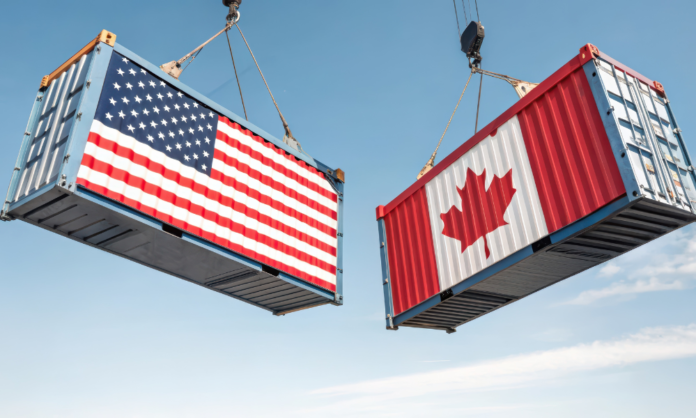
The retail landscape in Canada is facing new challenges following the implementation of U.S. tariffs on Canadian goods. As trade tensions escalate between the two nations, retailers and grocers are adjusting their strategies to support Canadian consumers while mitigating cost increases.
Per Bank, CEO of Loblaw Companies Ltd., issued a statement on LinkedIn outlining the company’s proactive measures to counter the effects of the tariffs. His message underscores Loblaw’s commitment to supporting Canadian suppliers, sourcing alternatives, and advocating for policies that minimize economic harm to consumers.
Navigating a Trade War: Loblaw’s Strategy for Canadian Consumers
Loblaw CEO Per Bank
“This marks the beginning of a trade war between Canada and the United States,” Bank stated. “Misguided threats of sweeping tariffs from American leadership have resulted in necessary counter-tariffs here at home.”
Bank acknowledged growing concerns among Canadian households, particularly regarding the cost of food and other essential goods. Inflation has already impacted grocery prices, and additional tariffs could exacerbate the situation. In response, Loblaw is implementing a four-point plan to shield consumers from the worst effects of these economic policies.
1. Strengthening Canadian Supply Chains
Loblaw has long been one of Canada’s largest purchasers of domestically produced goods. With the tariffs now in effect, the company is intensifying efforts to source food and other products from within Canada.
“We’re looking for new ways to secure as much food as possible that is grown, made, or prepared in Canada,” said Bank.
As part of this effort, Loblaw has already onboarded 30 new Canadian suppliers in 2025, bolstering its commitment to domestic sourcing. The company says sit continues to work closely with local farmers and manufacturers to ensure stable inventory levels despite trade restrictions.
2. Exploring Alternative Sourcing Options
While Canada produces a significant portion of its own food, some products—such as certain fruits, vegetables, and specialty items—are traditionally imported from the U.S. Due to the tariffs, Loblaw is now seeking alternative suppliers from other global markets.
“Our goal is comparable quality and price,” said Bank, emphasizing that the company is actively vetting international suppliers to supplement gaps in the supply chain. The move is intended to prevent drastic price hikes while maintaining product availability for consumers.
3. Promoting ‘Made in Canada’ Products to Consumers
Consumer nationalism is rising in response to the trade dispute, with many Canadians opting to support domestic brands. Loblaw is reinforcing this trend by making it easier for customers to identify Canadian-made products in-store and online.
New store signage: Loblaw is rolling out in-store labels that highlight products prepared in Canada, including those affected by tariffs.
Marketing initiatives: Promotional flyers and digital campaigns will feature more Canadian products.
Loyalty incentives: PC Optimum points will be offered for purchasing Canadian-made goods.
PC Express swap option: Customers using the online platform will be able to substitute American products for Canadian alternatives.
Shoppers Drug Mart at 728 Yonge Street (corner of Charles Street) on Friday, August 13 2021. Photo: Craig Patterson
4. Advocating for Canadians Amid Trade Uncertainty
Loblaw is also taking an active role in discussions with government and industry stakeholders to address the broader economic implications of the tariffs.
“This includes asking the Canadian government to exempt the most essential U.S. products from possible counter-tariffs, especially where customers have limited alternatives,” said Bank.
While Loblaw says it remains committed to working within the new trade framework, the company is urging policymakers to consider consumer interests in future negotiations.
The Bigger Picture: Canada’s Retail Sector Braces for Change
The implementation of U.S. tariffs has sent shockwaves through Canada’s retail industry. Other major grocers, including Metro, Sobeys, and Walmart Canada, are similarly adjusting their sourcing strategies. Some retailers have already raised prices on affected products, citing increased costs from suppliers.
Beyond grocery stores, Canadian manufacturers and exporters are feeling the strain, with concerns about supply chain disruptions and declining sales to U.S. markets. Small businesses, in particular, may struggle to absorb additional costs, leading to higher prices for Canadian consumers.
The full economic impact of the tariffs remains to be seen, but industry analysts warn that long-term inflationary pressures could reshape shopping habits and retail dynamics across the country.
Loblaw: A Canadian Retail Giant Adapting to Change
As Canada’s largest grocery and pharmacy retailer, Loblaw Companies Limited is uniquely positioned to navigate the turbulence caused by the tariffs. Founded in 1919 and headquartered in Brampton, Ontario, Loblaw operates over 2,500 stores nationwide, spanning supermarkets, discount grocers, and specialty food outlets.
The company’s diverse portfolio includes:
Superstores: Real Canadian Superstore, Maxi, and Dominion
Conventional supermarkets: Loblaws, Provigo, and Zehrs
Discount retailers: No Frills and Maxi
Specialty stores: T&T Supermarket (Asian groceries) and Joe Fresh (apparel)
Pharmacies: Shoppers Drug Mart and Pharmaprix
Loblaw also operates President’s Choice Financial, offering banking and financial services to Canadian consumers.
In early 2025, the company announced a $2.2 billion investment plan to renovate stores, open new locations, and create 8,000 new jobs.
West Edmonton Mall in December, 2024. Photo: Craig Patterson
Edmonton’s retail market is experiencing significant growth, fueled by strong immigration, inter-provincial migration, and a lower cost of living compared to other regions in Canada.
Paul Raimundo
According to Paul Raimundo, Principal at Avison Young, the city is witnessing an increase in demand for retail services, with a particular boom in suburban areas. The southwest remains the strongest part of Edmonton, with developments like Glenridding Village, a new grocery-anchored retail centre, contributing to the city’s retail expansion. Notably, many new developments are nearly fully pre-leased before opening, indicating a thriving demand for retail space in the area.
Despite challenges faced by Edmonton’s downtown core due to the shift in work patterns post-COVID, there are signs of recovery. As a government town, Edmonton is still adjusting to hybrid work models, which has impacted foot traffic in the core. However, Raimundo notes that Calgary is typically ahead of Edmonton by six to 12 months in retail trends, and the Edmonton core is starting to see more people return. The return of workers and visitors, combined with the ongoing success of the new arena and other downtown developments, is expected to drive further retail recovery in the city.
Looking ahead, Raimundo remains optimistic about Edmonton’s retail landscape, with a focus on community-driven developments and mixed-use centers. These centres are not just about retail, but also include community spaces, soft seating, and music to create inviting environments. As vacancy rates continue to decline and new developments take shape, Edmonton is poised for continued retail success in the coming months, reinforcing its position as an appealing market for businesses and consumers alike.
With a high personal income per capita compared to Canada’s other major metropolitan areas, Edmonton is an attractive retail destination.
Retail vacancy rates on the decline
According to the latest retail report from global commercial real estate advisor, Avison Young, vacancy rates for the city are on the decline, particularly in the suburbs – with a shift toward more urban, mixed-use concepts.
“The retail market is very robust today. There’s a lot of activity and interest in the market. We’ve had good immigration and inter-provincial migration to the province. Edmonton benefits from a lower cost of living compared to the rest of the country. This has resulted in growth, which translates into a need for more services,” said Raimundo.
“We’re seeing a lot of QSR (quick-service restaurant) tenants active, and grocery stores are thriving, especially in suburban markets with new grocery-anchored sites. The southwest area of the city remains the strongest and has been for some time. We are seeing some new centres coming out of the ground finally.
Butcher and Kosher goods at L’OCA Quality Market in Edmonton. Photo: L’OCA Quality Market
“We’re working on a project with Rohit Developments in the southwest, called Glenridding Village, a 13.3-acre site. We built seven buildings last year, and they all took possession early this year. Freshco will open in late May. We added around 150,000 square feet to the market in that area. We have three more buildings coming, but it’s not just us; there are other developments too. For example, Keswick is doing well and staying full. Cameron Developments has leased out the remaining space in their development, adding a specialty Italian grocery store, Tesoro.
“The Currents of Windermere is also changing, with some tenants leaving post-COVID, but the vacancies aren’t due to a lack of demand—they’re just waiting for the right tenants to come in. Harvard and Cameron are very particular about what they do at that site. There’s also a new residential building coming out of the ground with some ground-floor retail.
“The city is growing. The southeast, northwest, and areas like Albany and Newcastle are doing well in terms of leasing. Overall, Edmonton is in a great spot right now, and I’m pretty bullish on it. The market has been very active over the last 18 months.”
Downton is making strides
Raimundo said the downtown core is making strides. It’s not quite where it was pre-COVID, but it’s improving. The shift is mainly driven by the fact that Edmonton is a government town, and there’s still a hybrid work model being sorted out. In Calgary, being a private business hub, they’ve pushed many staff back to the office full-time, but in Edmonton, that’s still a work in progress.
He said Calgary is about a year ahead of Edmonton in terms of retail recovery. It’s pretty typical for retail trends in Alberta—Calgary is usually six to 12 months ahead of Edmonton.
“The core is starting to see more people come back, which is great. We need more bodies to come back and that will help us,” said Raimundo. “Pre-COVID we were in such a good spot with the arena opening (in Ice District).”
Raimundo is a big fan of Edmonton. He thinks it’s a great market to do business in. A lot of restaurants start in Edmonton, test their concepts, and then expand to other cities or even nationally.
“The activity has been great. We’re a busy market. We have lots to do. We have lots of things to see and I think as we continue on in these next 12 months we’re going to super excited to see more and more of these sites come to fruition. Our vacancy rate is declining. There’s space that’s being eaten up whether it’s existing and/or new product. Most of the new product coming out of the ground is nearly full pre-leased by the time it’s turned over,” he said.
Retail Trends for Edmonton
According to Avison Young’s latest retail report, these are the retail trends to watch for in Edmonton:
Retailers benefiting from province’s growth
Edmonton’s population growth remains the highest in the country, driven by international immigration and interprovincial migration. Edmonton boasts the highest personal income per capita among Canada’s major metropolitan areas, making it a very attractive retail destination. The region’s consumer base and economic stability are compelling factors for retailers and investors from outside of the province, which further stimulates the local economy and elevates the area’s profile.
Retail vacancy continues to decline
E-commerce sales in Canada have leveled off after a significant surge during the COVID-19 pandemic. Meanwhile, vacancy rates for brick-and-mortar stores have been on the decline, particularly in the suburbs. Retail development has slowly increased in response to demand. While traditional big box and community centres continue to be developed, zoning requirements are driving a shift toward more urban, mixed-use concepts.
Further grocery store growth is anticipated
Investor preference for essential retail has driven persistent demand for grocery-anchored shopping centres. In Canada, core retail sales continue to be led by non-discretionary merchandise, such as food and beverages, reflecting consumers’ adaptation to an increase in cost of living. Investors are attuned to this trend, prioritizing lease “quality” by favoring long lease terms, stable cash flows, and high covenant strength. Grocery-anchored retail is ideal in this respect, with demand outpacing supply particularly in primary and secondary markets with favourable demographics.
With the U.S. government implementing tariffs on Canadian goods as of March 4, 2025, the Canadian retail sector is bracing for economic turbulence. Diane J. Brisebois, President and CEO of the Retail Council of Canada (RCC), has been at the forefront of discussions, advocating for Canadian retailers while navigating a complex and rapidly evolving trade environment.
Since the first rumours of a trade dispute surfaced, the RCC has been actively working with the Canadian government, industry associations, and retailers to mitigate the fallout. “We’ve been working closely with retailers to understand the potential impact of retaliatory tariffs,” Brisebois stated. “The economic stakes are high, with the first wave of counter-tariffs covering approximately $30 billion in goods, and an additional $120 billion in products potentially facing higher costs in the coming weeks.”
Diane J Brisebois, President and CEO of the Retail Council of Canada
Canadian Retailers Face Supply Chain Challenges
Retailers across multiple categories—including grocery, pharmacy, apparel, and home goods—are being forced to adapt to the new economic landscape. According to Brisebois, one of the primary concerns is the availability of alternative suppliers outside the U.S.
“Certain products imported from the U.S. simply have no other available source,” she explained. “We are working closely with our members to identify supply chain alternatives, but it’s not as simple as flipping a switch. Retailers need to negotiate pricing, secure production capacity, and ensure reliable delivery timelines.”
The RCC has been engaging in high-level discussions with federal officials to advocate for exemptions on essential goods that cannot be sourced elsewhere. “We saw similar efforts during COVID when we worked to ensure continued supply of critical products such as baby formula and over-the-counter medications. The goal now is to minimize disruptions where possible.”
Retailers Caught in a Pricing Dilemma
Beyond supply chain concerns, Canadian retailers are grappling with a tough decision: whether to absorb additional costs or pass them on to consumers already dealing with inflation and a high cost of living. The situation is further complicated by the declining value of the Canadian dollar against the U.S. dollar.
“For many retailers, products are purchased in U.S. dollars, which means every fluctuation in currency impacts pricing,” Brisebois noted. “With the dollar at one of its lowest points, tariffs will only add more financial pressure.”
This issue is exacerbated by limited consultation from the U.S. before implementing tariffs. “There was no meaningful process to request exemptions or discuss the economic impact,” she said. “Retailers now have to make rapid adjustments without much government support.”
The De Minimis Debate: A New Front in the Trade War
Another key issue is the potential elimination of the de minimis exemption, which allows duty-free shipments of low-value goods from foreign retailers. The U.S. has hinted at reconsidering its de minimis threshold, which currently stands at $800 USD, after recognizing that foreign e-commerce giants such as Shein and Temu are leveraging the rule to flood the market with duty-free imports.
“We fought hard during the USMCA negotiations to keep Canada’s de minimis level low,” Brisebois explained. “The U.S. argued it should be higher, but now they’re seeing the unintended consequences. It’s ironic that they are reconsidering their position.”
White semi truck on a highway. Photo: iStock
Interprovincial Trade Barriers: A Hidden Challenge for Retailers
While much of the trade discussion focuses on international relations, another significant challenge for Canadian retailers is the presence of interprovincial trade barriers. Brisebois pointed out that restrictions between provinces continue to complicate business operations, despite Canada being a single national market.
“Imagine running a retail chain with stores in multiple provinces and facing different regulations for packaging, labeling, and product distribution,” she explained. “Retailers constantly navigate these inconsistencies, which increase costs and limit efficiency.”
For example, differences in recycling and waste management policies between provinces can make it difficult for retailers to implement standardized product packaging. “A product label that meets regulations in Ontario may need to be altered to comply with rules in Quebec or British Columbia,” Brisebois said. “This adds unnecessary complexity at a time when retailers are already under immense pressure.”
The RCC has been actively advocating for a reduction in interprovincial trade barriers, arguing that harmonized policies would strengthen Canada’s domestic economy. “As we work to encourage retailers to source more products locally, it is critical that our own internal trade systems do not create additional obstacles,” she noted. “If we want Canadian businesses to thrive, we need a more streamlined regulatory framework.”
Government and RCC Advocacy Efforts Continue
The RCC has been actively engaging with both Canadian and U.S. officials in an effort to mitigate the fallout from the trade war. Brisebois confirmed that RCC representatives will be traveling to Washington, D.C. this week to meet with policymakers.
“Our goal is to support the Canadian effort to avoid tariffs altogether, but if that is not possible, we want to ensure that tariff exemptions, remissions, and compensation processes are fair and efficient for retailers,” she said. “We are also providing direct assistance to our members who need guidance on navigating these changes.”
Canadian Retailers Remain Resilient Despite Challenges
Despite the uncertainty, Brisebois emphasized that Canadian retailers remain resilient and adaptable. “Retail is about finding solutions. If you’re not looking for opportunities within challenges, you’re not in the right business,” she said.
However, she acknowledged that many retail executives are still processing the unprecedented nature of the situation. “Canada and the U.S. have always had a strong economic relationship. What we’re seeing now is a breakdown in that partnership, and retailers are struggling to navigate a new reality.”
The trade war between us and the Americans is no longer just academic. It’s real, and Canada is at the center of one. In response to escalating tariffs from the United States, Canada has chosen to retaliate. While standing up to protectionist policies is necessary, the Federal Government’s approach could ultimately harm Canadian consumers far more than it impacts American interests.
Placing tariffs and taxes on food and essential goods that Canadians rely on is not just a poor economic decision—it is a direct attack on our own food security. It is impossible to win a trade war against the United States, the most powerful economy in the world, and the strategy of imposing retaliatory tariffs will likely yield more tariffs in response. The end result? A prolonged economic downturn that will hit Canadians the hardest.
How Tariffs Become a Hidden Tax on Canadians
The reality is that these tariffs act as a tax on Canadian consumers. Every additional cost imposed on imported goods translates into higher prices at the grocery store, increased costs for businesses, and a greater financial strain on households. The government may attempt to justify this as necessary pushback against U.S. trade policies, but the truth is simple: Washington will not bear the brunt of this burden—Ottawa’s own citizens will.
The federal government’s strategy not only risks exacerbating inflation but could also tip Canada into recession. As disposable incomes shrink and household budgets tighten, consumer spending—a major driver of economic growth—will decline. Instead of punishing American trade aggressors, Canada is punishing itself.
A Smarter Strategy: Targeting U.S. Consumers Instead
A more effective response would be to shift the burden onto U.S. consumers by implementing taxes on Canadian exports such as potash, beef, pork grains, and canola oil—commodities that the U.S. heavily relies on. This strategy would maintain leverage over the American market while avoiding unnecessary harm to Canadian households. Instead, Ottawa has chosen to disguise this tax grab as a patriotic countermeasure against the U.S., misleading Canadians into believing that it will make a difference. The government not only collects revenue through the tariffs themselves but also benefits from the additional 5% GST on these higher-priced goods. This is not sound economic policy—it is an economic miscalculation.
At a time when food affordability is already a pressing issue, Canadian policymakers should be seeking ways to support consumers, not further strain them. Provinces and citizens alike must recognize that better tools exist to navigate trade disputes, ones that do not come at the cost of food security and economic stability.
With a new leader set to take charge in Canada within days, the future of these policies remains uncertain. However, one thing is clear: continuing down this path will only lead to greater hardship for Canadian families. It is time for a change in strategy—one that protects Canada’s interests without inflicting unnecessary pain on its own people.
Retail Insider is streamlining its Canadian retail news from around the web to include a handful of top news stories that can be viewed quickly during the day. Here are the top stories from the past 24 hours.
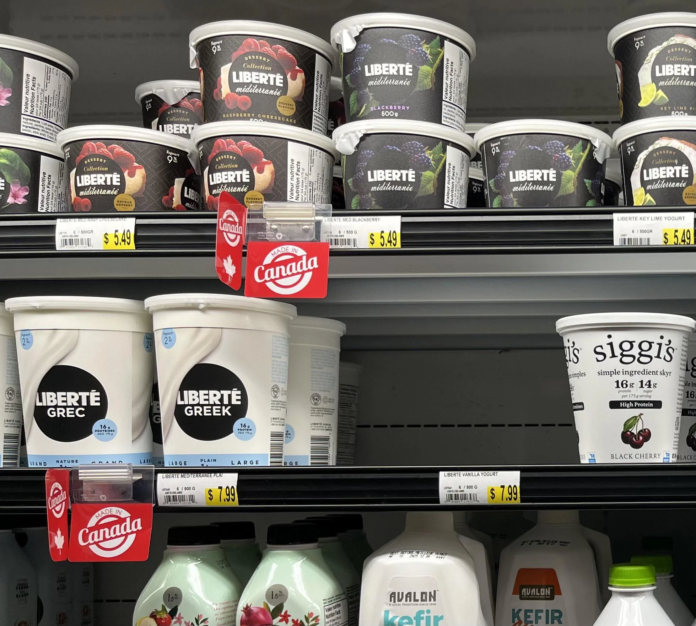
Made-in-Canada labels on products in a grocery store. Photo: Reddit
As trade tensions continue to influence consumer choices, many Canadians are seeking ways to support homegrown businesses by purchasing products made in Canada. While some grocery stores have started labeling Canadian-made products with a small flag beside their price tags, there are additional methods to ensure consumers are buying locally sourced goods. Understanding Canadian labeling regulations can help consumers make informed choices while grocery shopping.
Understanding “Product of Canada” and “Made in Canada” Labels
One of the easiest ways to identify a Canadian-made product is by checking for official labeling. The Government of Canada has established strict guidelines for how companies can label their products.
“Product of Canada” Label
Products bearing this label must meet the following criteria:
At least 98% of the ingredients, processing, and labour used in manufacturing the product must come from Canada.
The phrase “Canadian” is also considered equivalent to “Product of Canada” and follows the same guidelines.
“Made in Canada” Label
A product labeled as “Made in Canada” means that:
The final transformation of the product took place in Canada.
At least 51% of the total cost of production (including labour and materials) was incurred in Canada.
Some ingredients may be sourced internationally, but the primary manufacturing process occurs in Canada.
Additional Labeling Qualifiers
If a product contains some imported ingredients, manufacturers may use specific qualifiers to indicate that only part of the product originates in Canada. Common phrases include:
“Distilled in Canada” – often found on alcoholic beverages and vinegar.
“Refined in Canada” – frequently used on sugar and oil products.
“Packaged in Canada” – applies to pre-packaged goods assembled locally but containing imported components.
“Processed in Canada” – used for products such as canned vegetables or frozen meals where the raw ingredients may not be entirely Canadian but are processed locally.
100% Canadian Claims
For those looking to ensure their purchases are entirely sourced within Canada, look for 100% Canadian claims. These products contain exclusively Canadian ingredients and are entirely processed and packaged domestically. This level of transparency helps consumers looking to minimize their reliance on international imports.
A Guide to Canadian-Made Grocery Items
Here is a helpful guide to Canadian brands across various grocery categories:
Dairy (Milk, Cheese, Yogurt, Butter, etc.)
Instead of international brands like Kraft or Land O’ Lakes, consider these Canadian alternatives:
Agropur
Black Diamond
Bothwell Cheese
Chapman’s Ice Cream
Gay Lea
Lactantia
Natrel
St. Albert Cheese Factory
Tre Stelle
Baking & Honey
Instead of relying on imported brands like Pillsbury and Domino, consider:
Billy Bee Honey
E.D. Smith Jam
Five Roses Flour
Redpath Sugar
Robin Hood Flour
Wine, Beer & Spirits
For locally crafted alcoholic beverages, check out:
13th Street Winery
Canadian Club
Collective Arts Brewing
Creemore Springs
Dillon’s Distillers
Forty Creek Whisky
Labatt Blue
Moosehead Breweries
Bread, Grains & Cereals
Skip brands like Kellogg’s or Nature’s Own and try:
Arva Flour Mills
Dempster’s (manufactured in Canada)
Nature’s Path
One Degree Organics
Stone Mill Bakehouse
Meats & Poultry
Rather than choosing brands like Oscar Meyer or Tyson Foods, look for these Canadian options:
Maple Leaf Foods
Sofina Foods (Janes, Lilydale, Mastro, San Daniele)
Tony’s Meats
Snacks, Cookies & Chips
Avoiding imported snacks? Opt for these Canadian brands:
Dare Foods
Hawkins Cheezies
Old Dutch
Peace by Chocolate
Purdy’s Chocolates
Voortman Cookies
Condiments & Seasonings
Instead of brands like Hidden Valley or Tabasco, try:
French’s Mustard (manufactured in Canada)
Kozlik’s Canadian Mustard
Renée’s Dressings
Windsor Salt
Coffee & Tea
Rather than purchasing from Starbucks or Folgers, consider:
Balzac’s Coffee Roasters
Muskoka Roastery Coffee Co.
Nabob
Salt Spring Coffee
David’s Tea
Four O’Clock Teas
Drinks (Soft Drinks & Juices)
Look beyond Coca-Cola and PepsiCo for:
Allen’s
Clearly Canadian
Naya Bottled Water
Oasis
SunRype
The Pop Shoppe
Frozen Foods
Skip brands like Stouffer’s or DiGiorno and try:
Arctic Gardens
Cavendish Farms
Green Giant (manufactured in Canada)
McCain Foods
President’s Choice
Toilet Paper & Paper Products
Consider these Canadian brands over Charmin or Scott:
Cascades
Cashmere
Purex
Royale
Laundry Detergent & Dish Soap
For Canadian-made household cleaning products, try:
Tru Earth
Nature Clean
Final Thoughts
As Canadian shoppers become more conscious of where their purchases come from, these guidelines and product lists can help them make informed choices. While tariffs may fluctuate, supporting Canadian-made goods helps sustain local businesses, jobs, and the economy.