A majority of small- and mid-sized businesses (62%) say they’re taking a hit due to the ongoing U.S.-Canada trade war, finds data from the Canadian Federation of Independent Business (CFIB)’s upcoming Monthly Business Barometer®.
About a quarter indicate no impacts yet, while 12% are unsure about the impacts. Most of affected firms are in the manufacturing, wholesale, and transportation sectors, reported Canada’s largest association of small and medium-sized businesses with 100,000 members across every industry and region.
Simon Gaudreault
“To say that small businesses are feeling worried is an understatement. No one likes to be strung along, small business least of all. The everchanging news developments and the constant on-again, off-again tariff threats are exhausting and just very bad for the economy, investment and long-term business planning,” said Simon Gaudreault, CFIB’s chief economist and vice-president of research.
Small businesses need stability, said the CFIB, which is urging the federal government to recall Parliament immediately to scrap the upcoming 19% carbon tax increase and pass legislation to make sure carbon tax rebates are tax free.
Government must also pass proposed legislation to increase the lifetime capital gains exemption threshold to $1.25M and ensure the promised Canadian Entrepreneurs’ Incentive stays in place. Ottawa should also ensure that any funds collected from Canadian retaliatory tariffs is returned to affected businesses as quickly as possible, added the organization.
Corinne Pohlmann
“We cannot wait until Parliament is back on March 24 to sort out the current mess and allow the ongoing uncertainty to drag on for any longer. Ottawa owes it to small businesses to provide some clarity and assurance in these turbulent times. The expansion of the EI Work-Sharing Program, announced as part of the federal support measures last Friday, could help businesses avoid layoffs during the uncertain times. But we’re not so sure about the other supports. Small businesses need help keeping doors open, not taking on more debt through loans,” said Corinne Pohlmann, Executive Vice-President of Advocacy at CFIB.
“One thing government could do is help offset high shipping costs for small firms looking to reach a new export market or a supplier outside of the U.S.”
Small business impacted by U.S.-Canada tariffs can visit CFIB’s website to share their stories and learn more about the latest tariff developments: cfib.ca/tariffs.
Retail Insider is streamlining its Canadian retail news from around the web to include a handful of top news stories that can be viewed quickly during the day. Here are the top stories from the past 24 hours.
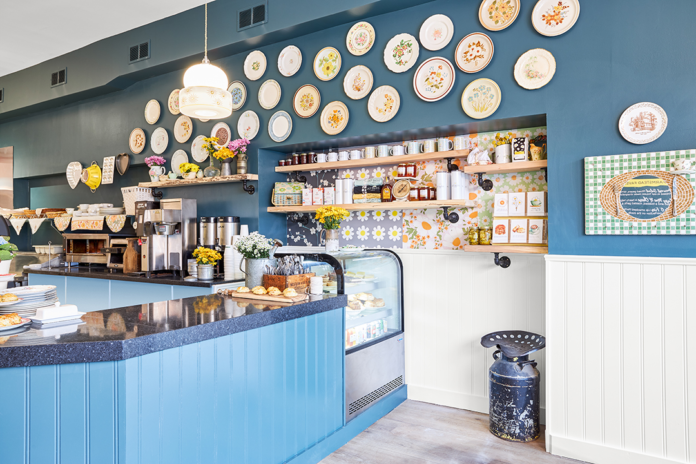
Lazy Daisy’s Café, a beloved Toronto eatery at 1515 Gerrard Street East, has become a staple for locals craving all-natural, homemade breakfast and brunch offerings. Founded in 2011 by Dawn Chapman, the café draws inspiration from her childhood summers spent on her grandparents’ farm, where fresh ingredients and simple, homemade meals were the norm.
“I grew up spending summers on my grandparents’ farm, and yes, there was a cow named Daisy,” Chapman recalls. “My grandma and I used to bake everything from scratch with natural ingredients. That experience shaped my philosophy on food and hospitality.”
Dawn Chapman
That passion turned into an entrepreneurial journey that saw Chapman open bagel shops in London, England, before returning to Toronto to create Lazy Daisy’s Café—a welcoming space that blends farm-to-table dining with a strong sense of community.
“I wanted to create something that was part of the neighborhood, a place where parents could bring their kids without feeling out of place. Fourteen years later, it’s amazing to see how much we’ve grown.”
From Local Favorite to Wholesale Expansion
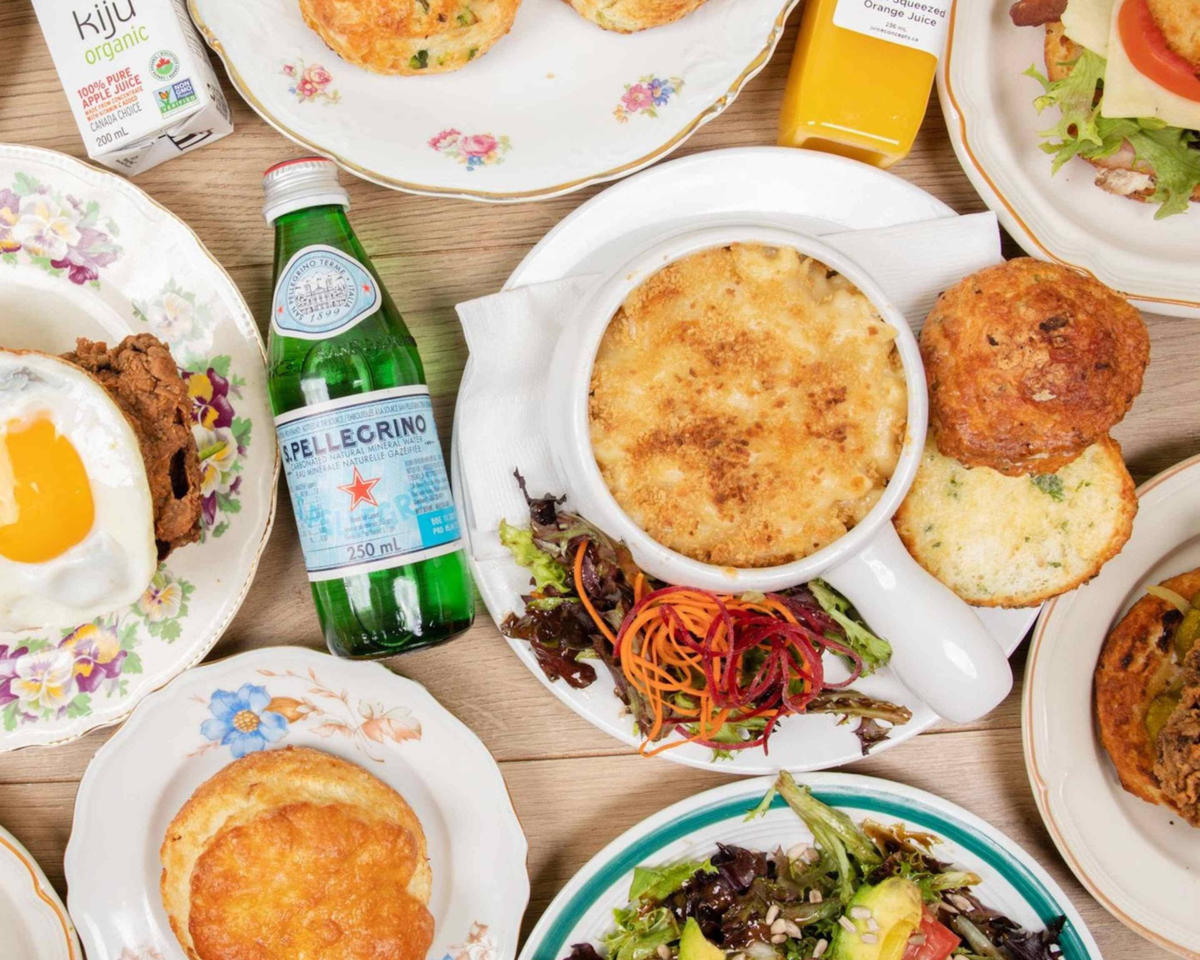
Now, Chapman is taking her business to the next level, expanding into grocery stores with a wholesale line of bake-at-home buttermilk biscuits.
“Our biscuits have always been one of our best sellers,” she says. “They’re hand-made, all-natural, and really delicious. We wanted to bring that same quality to people’s homes.”
What started as a small initiative has quickly gained momentum. “We launched the wholesale line about a year and a half ago, and we’re already in over 100 retailers. In June, we’re rolling out in Whole Foods,” Chapman reveals. “It’s exciting to see a Canadian brand entering a space that’s been dominated by big American names like Pillsbury and Eggo. There’s a huge opportunity for high-quality, locally made breakfast products.”
Lazy Daisy’s frozen breakfast line will soon expand beyond biscuits to include ready-to-eat pancakes and breakfast sandwiches, offering consumers a convenient yet premium alternative to mass-market options.
Photo: Lazy Daisy’s Café
A Champion for Women in Food Entrepreneurship
Chapman is also a strong advocate for women in the food industry, a sector where female representation in leadership remains low. She is part of Canadian Women in Food, an organization that helps women entrepreneurs navigate the consumer packaged goods (CPG) industry.
“Entrepreneurship can be a lonely journey, so it’s essential to have a support network,” she says. “Women tend to take on additional responsibilities at home, which makes launching a business even harder. But the more we support each other, the more we can grow.”
Her efforts have not gone unnoticed. In 2024, she received The Food Industry Award, presented by Skip, as part of WXN’s prestigious Canada’s Most Powerful Women: Top 100™ Awards. “It was an incredible honour,” Chapman says. “Women in food often fly under the radar, and this recognition validates the hard work we put in. It also inspires the next generation to pursue their own food ventures.”
Navigating Challenges and Looking Ahead
Like many Canadian businesses, Lazy Daisy’s has had to adapt to economic pressures, including shifting supply chains and potential trade disruptions.
Photo: Lazy Daisy’s Café
“We source everything locally, so we haven’t been too impacted by U.S. tariffs,” Chapman explains. “But we’ve had to make adjustments, like sourcing some ingredients from Mexico instead of California. It’s all about finding solutions. Every problem has a creative fix.”
As for the future, Chapman has big ambitions. “The goal is for our wholesale business to outgrow the café. In the next few years, I’d love to take Lazy Daisy’s national. There’s so much potential for Canadian-made breakfast products in the grocery space.”
Supporting Local, One Biscuit at a Time
Beyond growing her own business, Chapman remains committed to promoting local food culture. Lazy Daisy’s was a finalist in the Ontario Made Awards, recognizing its contribution to supporting Canadian suppliers.
“It’s not just about buying from us—it’s about supporting all local businesses,” she says. “That’s how we build a stronger economy and a stronger community.”
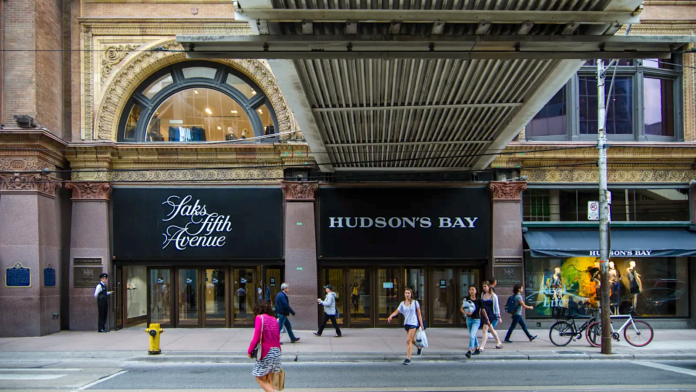
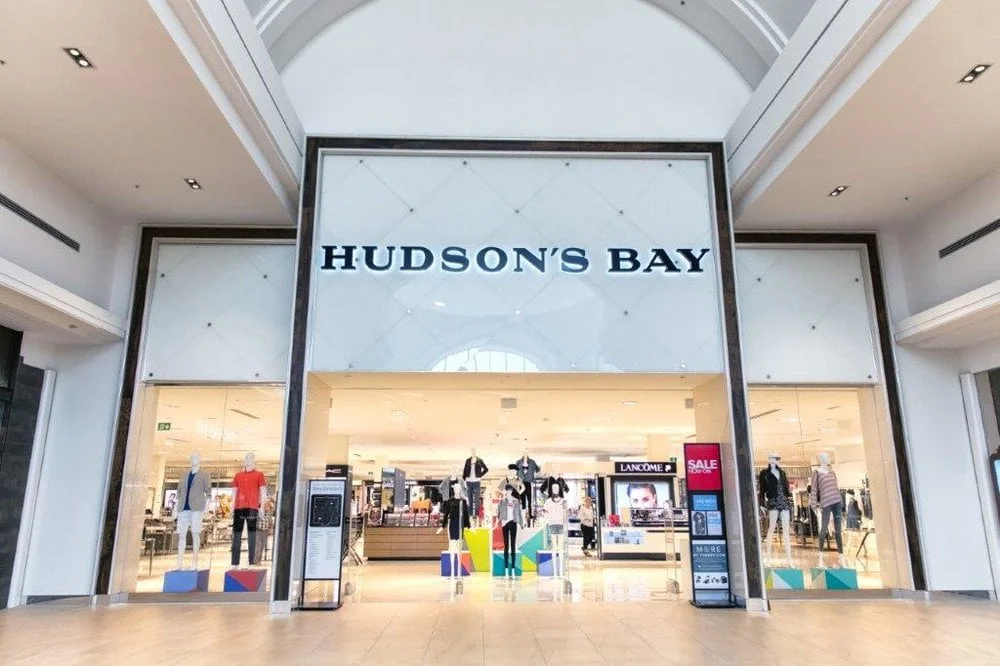
Hudson's Bay/Saks entrance on Queen Street in Toronto. Photo: Jeff Hitchcock, licensed under CC BY 2.0
The Hudson’s Bay Company (HBC) filed for creditor protection under the Companies’ Creditors Arrangement Act (CCAA) last week. The move follows a steep 30% decline in sales over the past 12 months and a reported $1 billion in debt, leaving the iconic department store chain in a precarious financial position.
The company’s challenges are multifaceted, stemming from shifting consumer preferences, reduced foot traffic in downtown locations, a lack of reinvestment in its stores, and broader economic pressures exacerbated by trade disputes with the United States.
Bruce Winder
Retail expert Bruce Winder, in an interview with Retail Insider, offered a sobering assessment: “They’re literally fighting for their life right now. With a major sales decline and mounting debt, a bankruptcy filing seemed inevitable.”
Financial Struggles and Loss of Lenders
One of the most alarming issues leading to the filing was Hudson’s Bay’s reported inability to secure financing. According to Winder, “They lost their bank and credit facility, which was a major red flag. They were running out of money immediately unless they found new financing.”
HBC President Liz Rodbell cited trade tariffs as a major deterrent for potential lenders, stating that the uncertain economic climate made it difficult to attract investment. “Because of the tariffs, no one wanted to lend them money anymore,” Winder noted.
Further complicating matters was HBC’s decision in December 2024 to separate its operations, creating a new entity for Hudson’s Bay stores while Saks Fifth Avenue and Saks Off 5th were moved into a different holding company under Saks Global. This restructuring signaled an intent to prioritize Saks over the struggling Hudson’s Bay brand.
Soon-to-close Hudson’s Bay store in downtown Regina at the Cornwall Centre. Photo: Shar Lyn, Nostalgic Regina Saskatchewan Facebook page
The Decline of the Department Store Model
The downfall of Hudson’s Bay is not an isolated event but rather part of a broader trend affecting department stores worldwide. “Consumers just don’t shop that way anymore,” Winder explained. “If you look at shoppers aged 20 to 50, they’re not thinking of The Bay. They’re buying from Amazon, specialty retailers, or brands themselves.”
The lack of reinvestment in stores further alienated customers. “Many locations suffered from maintenance issues, with peeling walls, broken elevators and escalators, and empty shelves. It was so obvious the company was starving for capital,” Winder said. “The more you neglect the stores, the more customers stop coming.”
Former CEO Bonnie Brooks had briefly revitalized the retailer in the early 2010s, repositioning it closer to Holt Renfrew in terms of premium branding. However, subsequent leadership failed to sustain the momentum, and investment dried up. “They tried to make Hudson’s Bay relevant again, but without consistent reinvestment, it just couldn’t compete,” Winder noted.
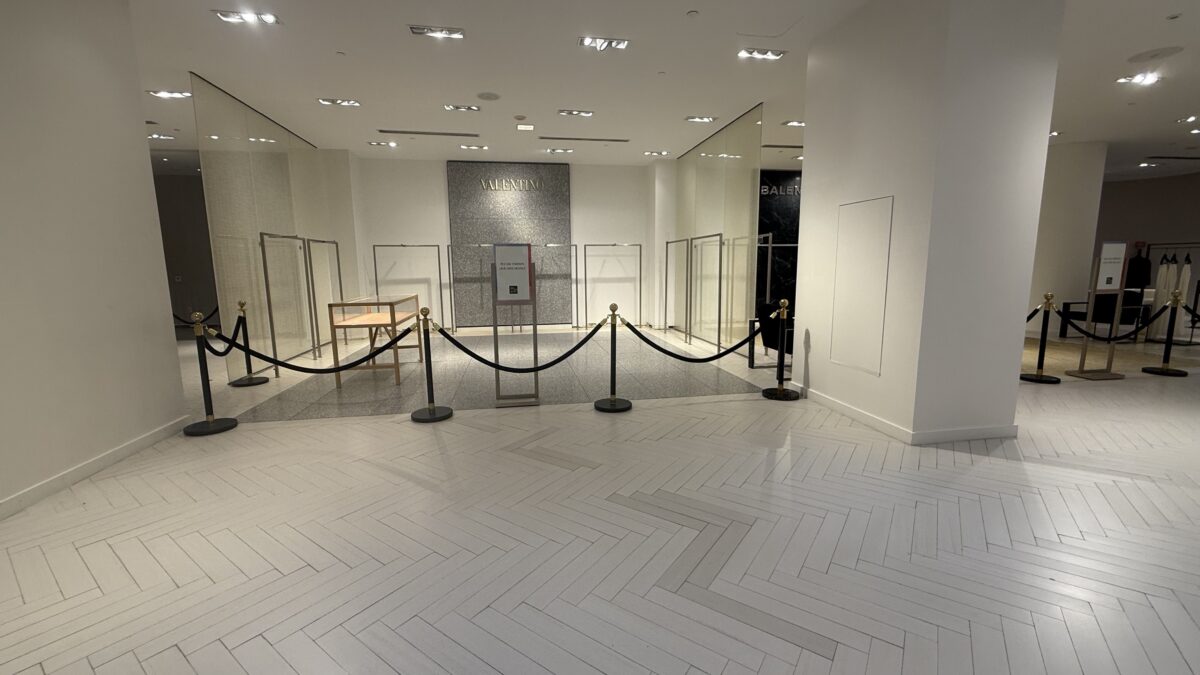
Empty Valentino boutique on the third floor of Saks Fifth Avenue in downtown Toronto. This Saks location was carved out of the massive Hudson’s Bay flagship store, and opened in February of 2016. Photo: Craig Patterson
Saks Fifth Avenue Licensing and Potential Closures
An overlooked aspect of the restructuring is the fate of Saks Fifth Avenue stores in Canada. The three full-line Saks locations, along with 13 Saks Off 5th stores, are operated under a licensing agreement rather than direct ownership. “That means these stores are also at risk,” Winder said. “If HBC liquidates, it could spell the end for Saks in Canada.”
Saks Fifth Avenue’s Canadian stores are in Toronto and Calgary. A larger store expansion never came to fruition. Saks Off 5th operates stores in BC, Alberta, Manitoba and Ontario.
Vendor Relations and Supply Chain Disruptions
As the retailer navigates CCAA protection, its strained relationships with vendors pose another hurdle. Reports indicate that many suppliers have not been paid, leading to concerns about inventory replenishment. “The only way vendors will ship to them now is if it’s cash up front,” Winder noted. “No one is going to extend credit to a company in bankruptcy.”
Beyond financial risk, some brands may avoid Hudson’s Bay to protect their reputations. “If a retailer is liquidating inventory at 60% or 70% off, that devalues the brand,” Winder explained. “Luxury and premium brands especially don’t want their products sold in a distressed environment.”
Potential Buyers and Restructuring Scenarios
A court hearing scheduled for March 17 will determine the next steps, including whether Hudson’s Bay secures financing or moves toward liquidation. The fate of the retailer now hinges on whether a “white knight” investor—such as Doug Putman, Joe Mimran, or Authentic Brands Group—steps in to salvage the operation.
“Putman has a track record of buying distressed retailers, but would he want the Bay?” Winder questioned. “Mimran and his group have been looking at retail investments, and Authentic Brands Group is known for licensing historic brands. It all depends on the valuation.”
A Possible Future: The Heritage Model
If Hudson’s Bay is to survive, some believe it must pivot dramatically. Winder envisions a smaller, heritage-driven model, akin to brands like Roots or Canada Goose. “They could focus on Canadiana—three-striped blankets, premium outdoor gear, high-quality Canadian-made products,” he suggested. “Target tourists and upper-middle-class consumers, not the mass market.”
Such a shift would require drastic downsizing, potentially reducing the footprint to just seven to ten flagship stores in major Canadian cities, he said. “They’d need to strip down operations, get rid of most locations, and focus on a niche market,” Winder added.
Hudson’s Bay store at Hillcrest Mall in Richmond Hill, ON. Photo: Renee Suen
Impact on Shopping Malls and Retail Jobs
The potential collapse of Hudson’s Bay could leave significant vacancies in Canada’s shopping malls. Many malls were built with department stores as anchor tenants, a model that is rapidly becoming obsolete. “The department store era is over,” Winder declared. “Outside of La Maison Simons and maybe Holt Renfrew, the days of department stores anchoring malls are done.”
Additionally, mass closures would result in thousands of job losses. “It’s devastating for employees, especially those who have been with the company for decades,” Winder said. “And what happens to their pensions? Remember what happened with Sears?”
Gift Card Holders Face Uncertainty
Another looming issue is the fate of outstanding gift cards. Reports suggest that consumers hold millions of dollars in unused Hudson’s Bay gift cards. If the company undergoes liquidation, these could become worthless overnight.
“It’s a massive number,” Winder said. “If I were a consumer, I’d be using my gift card right now. However, a mass redemption of gift cards could further strain the company’s finances, accelerating its cash flow crisis.”
The End of an Era?
With its 355-year history and deep ties to Canada’s retail landscape, the possible demise of Hudson’s Bay would mark a significant shift in the industry. “It would leave a massive hole in Canadian retail,” Winder said. “And in a time of economic uncertainty, it would feel like a gut punch to see an institution like this disappear.”
While restructuring efforts continue, the clock is ticking. Without new financing or a strategic acquisition, Hudson’s Bay may soon join the list of once-dominant retailers that failed to adapt to a changing market. For now, the fate of Canada’s most storied department store remains uncertain.
Odd Burger Vancouver Store Front. (CNW Group/Odd Burger Corporation)
Odd Burger Corporation, a leading vegan fast-food restaurant chain and food technology company, is planning to expand to the U.S. and open a store by the end of this year.
On Monday, the company outlined its U.S. expansion strategy amid recent tariffs on Canadian goods and also announced a non-brokered private placement offering to support these initiatives.
“Odd Burger has established a strong, vertically integrated supply chain in Canada through its manufacturing division, Preposterous Foods Inc. The Company produces its own plant-based proteins and dairy alternatives at its dedicated manufacturing facility, using primarily Canadian-grown ingredients. This approach has allowed Odd Burger to minimize external supply chain disruptions, maintain product quality, and reduce costs, even during challenging market conditions,” it said.
“As part of its expansion into the U.S. market, Odd Burger plans to replicate its Canadian model by sourcing ingredients from U.S. farmers and building its own manufacturing facility in the U.S. By doing so, the Company will ensure that its food is locally produced, fresh, and sustainable while continuing to maintain control over its supply chain. This approach will help mitigate the effects of current tariffs and provide a more resilient supply chain in the U.S.”
James McInnes
“Our experience in Canada has shown that a vertically integrated, localized supply chain is key to controlling costs and maintaining high-quality food production,” said James McInnes, CEO and Co-Founder of Odd Burger.
“We are confident that by implementing this strategy in the U.S., we can expand quickly while keeping prices stable and offering the same level of excellence that our customers expect.”
Odd Burger currently operates 20 locations, including 18 storefronts and two mobile units.
“We have four or five more locations opening this spring,” McInnes told Retail Insider in a previous story. The company is also preparing to expand into the U.S. later in 2025, with Washington State—likely Seattle—or Florida as potential markets.
“We’ve done really well in BC—almost double the unit sales. The West Coast is a strong market.”
$2M Private Placement to Support Expansion
In conjunction with its U.S. expansion efforts, Odd Burger announced a non-brokered private placement of up to 6,666,666 units at a price of $0.30 per Unit, for total gross proceeds of up to $2,000,000.
Each Unit consists of one common share and one Common Share purchase warrant. Each Warrant entitles the holder to purchase one Common Share at a price of $0.35 per Common Share, exercisable for two years from the closing date of the Offering.
The net proceeds from the Offering will be used to fund the establishment of U.S. manufacturing facilities, expand the Company’s franchise operations across North America, and for general working capital purposes. Completion of the Offering is subject to TSX Venture Exchange approval, and all securities issued will be subject to a four-month and one-day hold period from the date of issuance.
A finder’s fee of up to 6% of the gross proceeds may be paid in cash.
Recently, Odd Burger announced its continued expansion in the Canadian retail market, securing a major retail listing with Calgary Co-op. This strategic move will see the company’s full line of consumer packaged goods (CPG) available at 22 Calgary Co-op locations in and around Calgary.
In a video interview, retail analyst Bruce Winder discusses Canadian Tire’s new $2 billion True North Growth Strategy, unveiled as part of the retailer’s effort to adapt to changing market conditions. Winder highlighted that the strategy marks the end of Canadian Tire’s previous Better Connected strategy, which focused on enhancing its digital presence.
Winder explained that Canadian Tire faced challenges post-pandemic, including increased competition and shifting consumer spending habits, particularly in discretionary items. Additionally, changes in the automotive market and homeownership trends contributed to the need for a strategic overhaul. The True North strategy includes the closure of 17 standalone Atmosphere stores, with 14 of them being co-located within SportChek locations, a move Winder described as a financially prudent decision.
A key aspect of the new strategy is the expansion of the retailer’s Triangle Rewards program. Winder emphasized that loyalty programs are becoming crucial in retail, and Canadian Tire has successfully built its customer base through its Triangle loyalty system. The company is also working to integrate its various brands under a unified operational model, which Winder believes will improve customer experience and streamline operations.
Furthermore, Winder noted the importance of artificial intelligence (AI) and first-party data in shaping Canadian Tire’s future growth. The company is leveraging data from its credit cards and website to deliver personalized offers and enhance the overall shopping experience.
The sale of Helly Hansen for nearly $1.3 billion earlier this year also plays a significant role in the retailer’s strategy. Winder sees this as a move to free up capital, which will be used for debt reduction and shareholder buybacks, positioning the company for success in its next phase of growth.
The Salvation Army Thrift Store welcomes the Leslieville community to celebrate the grand opening of its ninth Toronto location on Thursday, March 13th, from 10 am to 8 pm. (CNW Group/The Salvation Army Thrift Store – National Recycling Operations)
The Salvation Army Thrift Store will celebrate the grand opening of its ninth Toronto location in Leslieville on Thursday, March 13. The new store at 20 Leslie Street, spanning 10,000 square feet, aims to expand the organization’s reach in the community while providing affordable shopping options and supporting local programs.
“In the last two years, we’ve seen a significant increase in the number of people shopping at our thrift stores, with a nationwide rise of 12% and up to 22% in parts of Toronto,” said Ted Troughton, Managing Director of The Salvation Army Thrift Store. “As more people embrace thrift shopping, we’re thrilled to open our doors in Leslieville, a vibrant and growing community.”
The Salvation Army Thrift Store provides an accessible shopping experience for individuals looking to stretch their budgets while also making environmentally conscious choices and supporting their local community.
“Every purchase and donation help fund local Salvation Army programs and services for those in need such as foodbanks, shelters, rehabilitation for those struggling with addictions and emergency relief efforts,” added Troughton.
Beyond the funds generated through the sales of donated items, the Thrift Store raises money in stores through its GoodWorks@Work campaigns. These initiatives support vital causes such as Send a Kid to Camp, modern slavery and human trafficking prevention, international development, and Christmas kettles, it said.
“Last year, we raised more than $865,000 to further support The Salvation Army’s work,” said Troughton. “Together, we can make a real difference in the Leslieville community. We invite everyone to join us this Thursday from 10 am to 8 pm as we celebrate this exciting new chapter and the impact we are making together.”
The new store will offer a variety of gently used clothing, household items, electronics, art, books, and more for everyone. The store is open for shopping Monday to Saturday from 10 am to 8 pm, and donations are accepted in-store daily.
There are 94 Thrift Stores across Canada that diverted over 94 million pounds of items from landfills last year.
Hudson’s Bay, one of Canada’s most iconic department store chains, has officially filed for bankruptcy protection. While this may come as a surprise to some, for many in the retail industry, the move has been long anticipated. The once-dominant retailer has been facing significant operational and financial struggles for several years, with mounting signs that things were no longer business as usual. From declining store conditions to cash flow problems, Hudson’s Bay has been unable to keep up with the changing retail environment, leading to its current financial crisis.
“Let’s face it,” says George Minakakis, CEO of Inception Retail Group, a retail expert with deep experience in the industry. “The writing was on the wall for Hudson’s Bay for a while. When a brand like this fails to adapt to the modern shopping experience—whether it’s e-commerce, staffing, or store conditions—it’s a matter of time before it hits a wall.” Minakakis’s observations reflect the broader picture of retail brands struggling to maintain relevance in a constantly evolving landscape.
George Minakakis. Photo: LinkedIn.
The filing for bankruptcy protection is the latest in a series of missteps that have seen Hudson’s Bay struggling to stay relevant. The company has failed to meet its financial obligations, citing lower revenue as a key factor in its inability to secure necessary financing. Despite its iconic status, the retailer’s struggles reflect broader issues in Canadian retail, where legacy brands are struggling to adapt to an increasingly digital-first shopping landscape.
Minakakis emphasizes that the root cause of the issues is not just financial mismanagement but a failure to connect with consumers in a meaningful way.
“Department stores like Hudson’s Bay used to be about aspirational experiences,” Minakakis says. “You’d go in for the experience, not just to buy a coat or a set of dishes. But that experience has eroded, and now the stores feel more like warehouses than destinations. Once that happens, you’re facing a huge uphill battle to rebuild that trust.” Minakakis’s point underscores the decline in consumer confidence, which is often the hardest to regain once lost.
Indeed, Hudson’s Bay’s troubles go far beyond its finances. The retailer has been plagued by operational issues, including reduced staffing, store disrepair, and outdated product lines. As Minakakis highlights, these issues have eroded consumer confidence, which is essential for any retailer to thrive. “When you walk into a store and the escalators are broken or the staff is nowhere to be found, that’s a red flag,” Minakakis explains. “Consumers don’t come back from that easily.”
Operational Struggles: Beyond Just Financials
Hudson’s Bay’s financial difficulties are not just a result of market conditions or tariffs; they are deeply tied to persistent operational struggles that have undermined the retailer’s core business. For years, the company has faced a series of challenges that have made its stores less appealing to consumers.
Minakakis said that there have been visible signs of disrepair in several Hudson’s Bay locations. Escalators have been out of service, HVAC systems have failed, and general maintenance has been lacking. “These are basic operational issues that consumers have come to expect from major department stores, yet they have gone largely unaddressed. This has led to an overall negative shopping experience, particularly for older customers who may find it difficult to navigate stores without functional escalators or proper climate control. It’s a simple thing,” Minakakis says. “If you can’t keep your store in good shape, you’re sending the message that you don’t care about your customers.”
Furthermore, Hudson’s Bay’s stores have suffered from insufficient staffing and reduced hours of operation. In many locations, it has been difficult to find staff to assist customers, leading to frustration and an overall poor shopping experience, Minakakis said. While many retailers are adapting to the new reality of online shopping by enhancing their in-store customer service, Hudson’s Bay’s stores have failed to keep up with these expectations. “Customer service isn’t optional in retail,” says Minakakis. “When you can’t find someone to help you, you’re creating a hostile shopping environment. And that’s just one more reason why people turn to online shopping.”
While Hudson’s Bay has attempted to revive the Zellers brand as a means of regaining consumer interest, the effort has been largely ineffective. “The revival of Zellers was seen as a way to introduce value pricing and attract budget-conscious shoppers, but it has failed to deliver significant improvements to Hudson’s Bay’s bottom line. The Zellers relaunch has done little to offset the deeper problems at the core of the Hudson’s Bay brand,” Minakakis said.
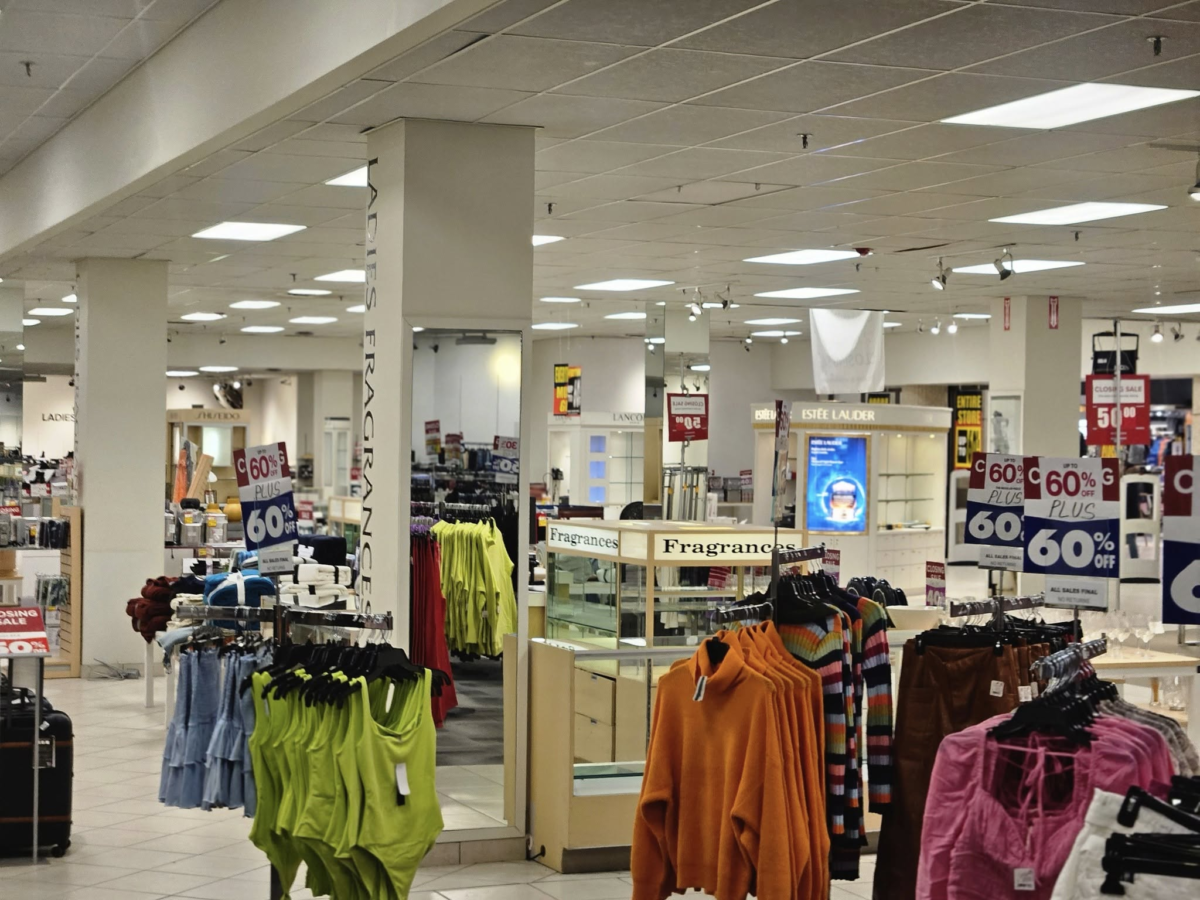
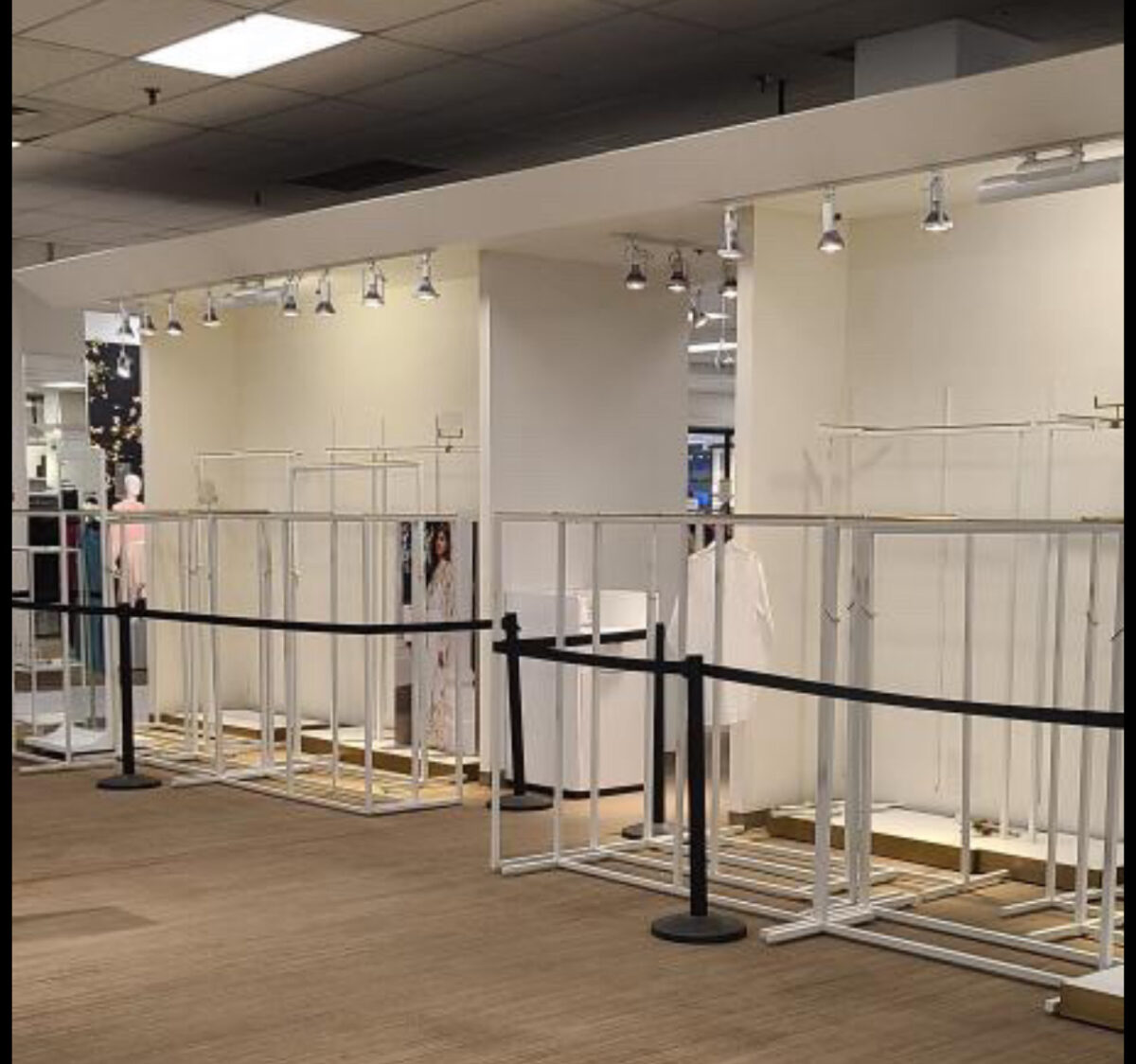
Vendors pulling product – an empty womenswear area at Hudson’s Bay, Southgate Centre in Edmonton on Sunday, March 9, 2025. Photo: Christopher Lui
Debt Restructuring: A Temporary Fix?
The decision to file for bankruptcy protection signals that Hudson’s Bay is now in the process of restructuring its debt. This move is intended to help the company right-size its operations, eliminate unnecessary costs, and secure the liquidity needed to continue operations. However, as George Minakakis points out, there is a clear distinction between restructuring debt and restructuring a brand.
“Hudson’s Bay may be able to restructure its finances and stay in business for a while,” Minakakis says. “But this doesn’t solve the underlying problem: the brand’s loss of relevance.” Restructuring debt can buy Hudson’s Bay some time, but it will not solve the deeper issue of how to make the brand relevant to today’s consumer.
“To truly recover, Hudson’s Bay would need to invest heavily in revitalizing its stores and brand image. This would involve updating product lines, improving customer service, and reinvigorating the in-store experience, Minakakis said. “However, these are costly endeavours, and with the company now in debt restructuring, it seems unlikely that such investments will be made in the short term.”
“At the end of the day, it’s not just about finances,” says Minakakis. “You can’t put a Band-Aid on a problem that big. You need to invest in the brand and reinvigorate the experience for consumers. Otherwise, it’s just going to keep slipping further away.”
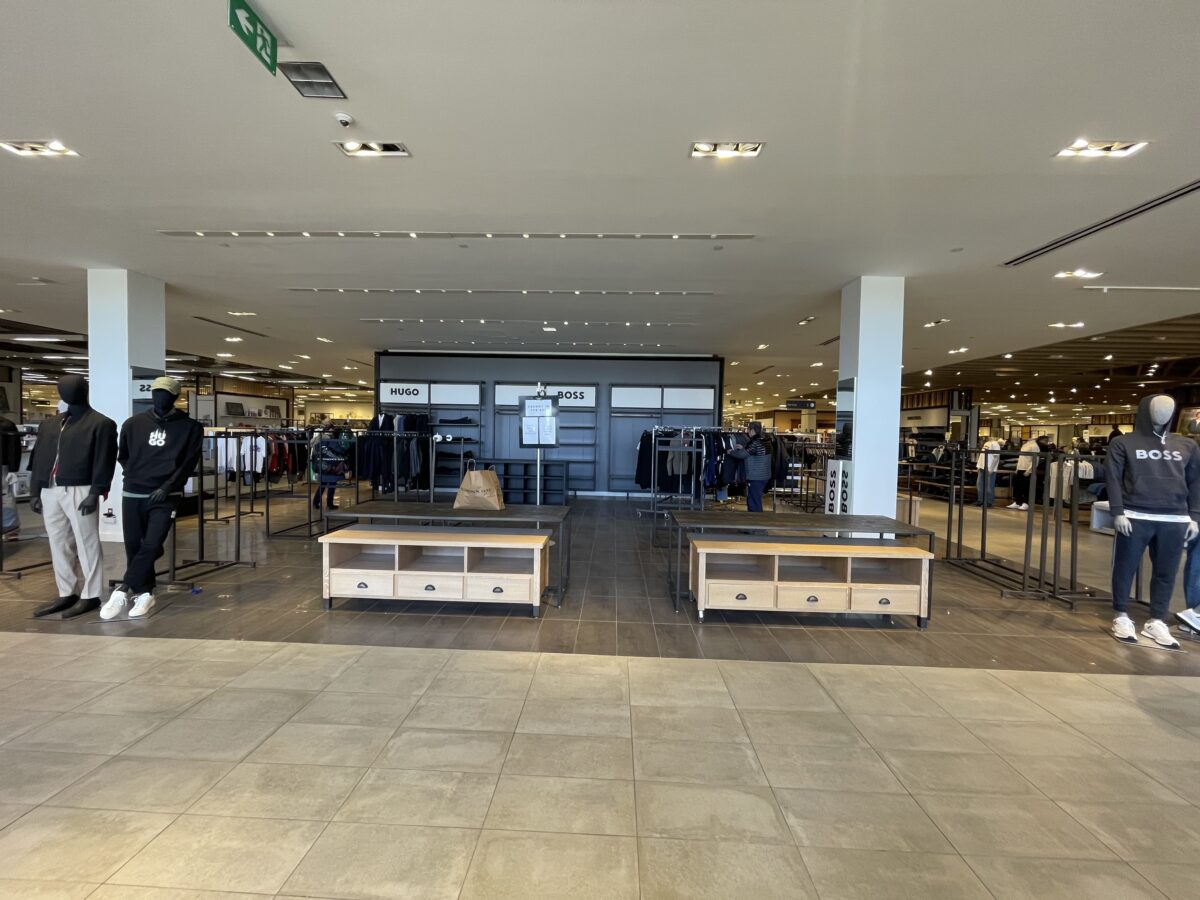
An emptied-out Hugo Boss men’s area at Hudson’s Bay in Richmond Hill, ON, March 9, 2025. Photo by a reader.
The Impact of Tariffs on Retailers
One of the more controversial aspects of Hudson’s Bay’s bankruptcy protection filing is the mention of tariffs as a contributing factor to its financial troubles. While many have dismissed the notion that tariffs have significantly impacted Hudson’s Bay, there is no denying that rising costs due to tariffs are affecting retailers across the board.
In its bankruptcy protection filing, Hudson’s Bay cited tariffs as a key reason for its inability to secure debt financing. “While it is difficult to quantify the exact impact, it’s clear that the rising costs of imports have put significant pressure on the bottom lines of retailers that rely on goods from overseas,” Minakakis said. “For Hudson’s Bay, this has only compounded its financial difficulties, making it even harder to navigate the current retail landscape.”
Minakakis notes that the issue with tariffs is a broader concern for the retail industry. “Retailers are feeling the impact of tariffs, but many are also dealing with other challenges—like a decline in consumer spending and rising operational costs,” he explains. “It’s a perfect storm, and Hudson’s Bay is one of the first to be hit by it. But it won’t be the last.”
“The broader implications for the retail industry are concerning. If tariffs continue to increase, other retailers—especially those that are already struggling—may find it difficult to secure financing and maintain profitability. This could lead to more bankruptcies and closures, which would have a far-reaching impact on the Canadian retail sector.”
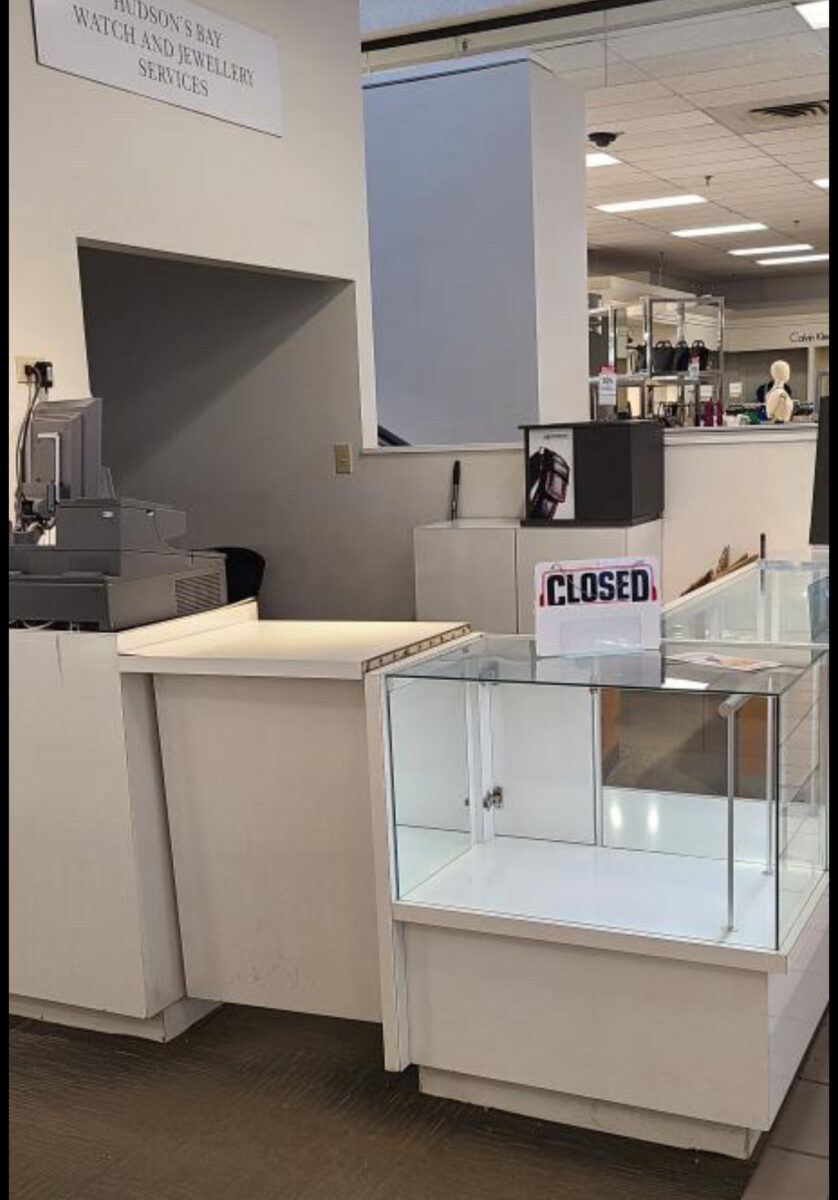
Shuttered watch/jewellery repair at Hudson’s Bay, Southgate Centre in Edmonton on Sunday, March 9, 2025. Photo: Christopher Lui
The Fallout: Vendors and Small Businesses
Hudson’s Bay’s financial troubles are not just a concern for the retailer itself but for the broader retail ecosystem. Many smaller vendors rely on Hudson’s Bay as a key customer, and as the company faces bankruptcy protection, these vendors may be left without payment for outstanding debts.
“As a retailer, Hudson’s Bay is tied to many small businesses,” Minakakis explains. “And if they’re not getting paid, they’re going to feel the effects. Some of these smaller suppliers may not survive this. It’s a big hit to them, and it’s a reminder of how interconnected the retail ecosystem is.”
“There is a real possibility that smaller vendors may be forced to shut down or scale back their operations. Small to mid-sized vendors may struggle to recover from this, particularly those who rely heavily on sales to Hudson’s Bay for a significant portion of their revenue.”
The impact of this could be especially severe for niche brands or Canadian vendors who depend on Hudson’s Bay for access to a broader customer base. For these smaller businesses, Hudson’s Bay’s troubles could be catastrophic, potentially leading to bankruptcy for those that cannot absorb the financial hit.
Real Estate Strategy and Store Closures
Hudson’s Bay’s real estate holdings are another critical piece of the puzzle. While the company no longer owns much of its real estate, it has long relied on its portfolio of high-value properties, including long-term leases, as a core asset. As part of the bankruptcy protection process, Hudson’s Bay may be forced to sell off locations to generate cash, further depleting the company’s ability to leverage its real estate assets.
The prospect of closing approximately 50 stores is also looming. However, this brings into question the viability of these stores and whether they can be sold or repurposed for other uses. “That’s going to be tricky,” says Minakakis. “Who’s going to buy these stores? Retailers are already struggling, and buying up underperforming locations might not be an attractive proposition.”
The key challenge here is the value of the company’s real estate and whether it can be sold at a price that will provide meaningful liquidity. Minakakis points out that Hudson’s Bay’s long-term leases may offer some value, but they are also a liability. “A 100-year lease doesn’t sound as appealing when you’re trying to sell that space,” he adds.
The Future of Hudson’s Bay: Is It the End?
As Hudson’s Bay moves forward with its bankruptcy protection proceedings, the future of the brand remains uncertain. While the company may be able to continue operating for the time being, it faces a difficult road ahead. The brand’s core retail operations need a complete overhaul to survive in an increasingly competitive and digital-first marketplace.
“In the short term, they’ll probably survive, but long-term, I’m not sure,” Minakakis states. “The brand has too many structural issues that can’t be solved overnight. Unless there’s a radical reinvention, Hudson’s Bay may very well be a thing of the past.”
“Looking ahead, it’s possible that Hudson’s Bay will continue to operate in some form, but it will likely be a shadow of its former self. The brand may continue to exist as a smaller, niche player, with only a handful of locations remaining.” However, as Minakakis suggests, .”In 10 years, Hudson’s Bay could be a relic of the past, with only a few stores left for nostalgia’s sake.”
Broader Implications for Canadian Retail
Hudson’s Bay’s struggles should serve as a cautionary tale for other retailers in Canada. As Minakakis emphasizes, many retailers face similar challenges in adapting to an increasingly digital-first world while dealing with rising costs, tariffs, and changing consumer preferences. Hudson’s Bay’s bankruptcy protection filing highlights how difficult it is for legacy brands to maintain relevance in today’s rapidly evolving retail landscape.
Other retailers that are already struggling may soon face similar financial troubles if they are unable to adapt. Hudson’s Bay’s filing underscores the importance of reinvention, especially in a time when e-commerce and changing consumer habits are reshaping the retail industry.
Retail sales in December reached $71.6 billion, marking a 3.7% increase compared to the same month in 2023, according to a report from Statistics Canada. This uptick was seen across 14 of the 18 commodity classes, signaling a robust end to the year for the retail sector.
The most significant contributor to this growth was motor vehicle sales, which surged by 14.1% year-over-year in December. “The growth in motor vehicle sales was largely driven by a 15.0% increase in new motor vehicles,” said the report. New minivans, sport utility vehicles, and light trucks led this rise, with sales in these categories increasing by 16.8%. Additionally, used motor vehicle sales saw a solid increase of 12.6% compared to December 2023.
Photo by Ron Lach
Clothing sales also saw continued growth as the holiday season approached, rising by 3.9% in December. Women’s clothing led the charge with a 3.4% increase, while men’s clothing saw a slightly higher gain of 4.0%. Footwear sales, in particular, experienced a notable rise, up 7.7%, with non-athletic footwear accounting for the bulk of the growth, posting a 9.6% increase, explained Statistics Canada.
The holiday season also brought increased demand for gifts and entertainment items. Audio and video recordings, as well as game software, jumped by 12.4%, while toys and games (excluding game consoles and software) saw a smaller, but still significant, increase of 2.6%.
However, not all commodity classes saw growth in December. Food and beverage sales posted the largest dollar decline, falling by 0.5%. The decrease was primarily attributed to a drop in alcoholic beverage sales, which fell by 5.1%. Despite this decline, other categories within the food and beverage sector performed well. Sales of eggs and dairy products rose by 2.3%, while cookies, confectionery, and snack foods grew by 1.8%, and fresh meat and poultry saw a 2.0% increase, noted Statistics Canada.
Looking ahead, the Monthly Retail Trade Survey’s advance estimate for January 2025 suggests an early increase of 6.5% in unadjusted total retail sales. This figure is preliminary and will be revised in future reports.
These figures point to a resilient retail landscape, driven by strong consumer demand across multiple categories, from vehicles to apparel and entertainment.
For the 16-week period ended December 29, 2024 (Q4 2024), A&W posted system sales of $576.8 million, maintaining consistency with Q4 2023. However, the company experienced a revenue decrease of $9.7 million (9%) compared to the previous year. Despite this, income before income taxes increased significantly by $8.7 million (72%) compared to Q4 2023. Adjusted EBITDA saw a slight increase of $0.2 million (1%), reaching $27.9 million.
Operating costs decreased by $11.7 million (19%) in Q4 2024, and general and administrative expenses were reduced by $1.7 million (10%) compared to the same period last year. During Q4 2024, A&W opened 9 new restaurants, contributing to its growth, it said.
Fiscal 2024 Highlights
For the 52-week period ended December 29, 2024 (Fiscal 2024), A&W achieved record system sales of $1.87 billion, surpassing its previous high of $1.85 billion in Fiscal 2023. Revenue for the year decreased by $7.0 million (2%) year-over-year, while income before income taxes increased by $2.9 million (6%).
Adjusted EBITDA rose by $1.2 million (1%) to $93.5 million, and operating costs decreased by $6.9 million (4%). However, general administrative expenses increased by $1.5 million (3%) in Fiscal 2024. A&W also opened 28 new restaurants during the year, along with its first stand-alone Pret restaurant, reflecting its continued growth and expansion, reported the company.
Net Annual Restaurant Unit Growth
A&W said it significantly increased its pace and number of restaurant openings in Fiscal 2024. The company opened 28 new restaurants, an improvement over the 19 restaurants opened in the previous fiscal year. While 11 restaurants were closed in 2023, only 9 closures occurred in 2024, resulting in a net restaurant count increase of 19 in 2024, compared to 8 in the prior year.
This growth in restaurant openings and fewer closures led to a Net Annual Restaurant Unit Growth of 1.8% in 2024, compared to 0.8% in 2023. A&W attributes this increase to the stabilizing construction timelines following the multi-year slowdown in real estate transactions and construction timelines that resulted from the COVID-19 pandemic, which had significantly impacted the construction and real estate industries.
Strategic Developments
Susan Senecal
Reflecting on the year, A&W CEO Susan Senecal shared her thoughts on the company’s performance: “Reflecting on 2024, A&W has a lot to celebrate and be proud of. We opened 28 new A&W restaurants and opened our first stand-alone Pret restaurant.”
She also highlighted menu innovations, including the South Asian-inspired Veggie Masala Burger and the Spicy Peri Peri Buddy Burger lineup, alongside the nationwide rollout of Pret coffee at A&W locations.
Senecal emphasized the company’s response to a more challenging environment in 2024. “We have renewed our marketing strategy to reflect the growing importance of value and affordability to Canadians. With the decline in disposable income pressuring consumers and the intense price competition in the quick service restaurant industry, we recognize the need for more price activity and offers as well as doubling down on our successful innovation.”
Looking ahead, Senecal spoke about the company’s plans for 2025: “We have made solid advancements on many of our strategic areas in 2024, including a redesigned restaurant operating system which will be rolled out in 2025. We are excited to bring more efficiency and guest experience enhancements to life at our restaurants and for our franchisees.”
Image: A&W Canada
Strategic Combination with the Fund
In Q4 2024, A&W completed an important transaction that altered its corporate structure. On October 17, 2024, A&W acquired all remaining units of the A&W Revenue Royalties Income Fund (the “Fund”) that it did not already own, indirectly gaining control of the A&W Trademarks. This acquisition led to the de-listing of the Fund’s units from the Toronto Stock Exchange (TSX) and the listing of A&W’s common shares under the symbol AW.TO on October 18, 2024.
This strategic move simplifies the company’s structure and strengthens its position for future growth.