Advertisement
Advertisement
Home Blog Page 52

Square report finds group of loyal ‘regulars’ generates 6x more revenue for Canada’s small businesses

Andrea Piacquadio photo

A small but loyal group of repeat customers generates nearly six times more annual revenue for Canadian neighbourhood businesses than one-time visitors, according to new data released today by technology company Square.

The inaugural Square Local Economy Report combines anonymized transaction data from Canadian businesses with a national consumer survey. Findings reveal that “regulars” — defined as customers who visit four or more times within a year — are the backbone of Canada’s neighbourhood economies, generating significantly more annual value for local businesses.

In Montreal, regulars generate seven times more annual value than occasional customers. Nationally, these repeat customers return at least nine or 10 times per year, creating steady revenue streams that help businesses withstand rising costs and economic uncertainty, said Square.

“We love all of our customers, but our regulars are truly the foundation of our business,” said Lucas Spinosa, owner of Black Sheep Coffee Roasters in Ontario’s Niagara region. “They’re part of our daily rhythm. With our loyalty program, we can recognize them, remember their orders, and make sure they feel valued every time they walk in. That consistency builds trust — and trust keeps people coming back.”

Despite Financial Pressures, Canadians Want Local

While many Canadians anticipate tightening household budgets in 2026, local loyalty remains strong, added Square:
● 81% of Canadians plan to shop in their local neighbourhoods as much or more than last year
● 61% would continue supporting local businesses even if prices increase, provided value improves
● 74% visit multiple local businesses in a single trip at least occasionally

The report said proximity to home now ranks as the top driver of local spending decisions, ahead of price alone, followed by word-of-mouth recommendations and perceived value. Rather than retreating from local businesses, consumers are consolidating errands and favouring convenience, familiarity, and trusted experiences.

The Neighbourhood Network Effect

The report also shows that local success is increasingly driven by a “Neighbourhood Network Effect” created by shared customers and connections between nearby businesses. In Toronto, 49% of businesses share regular customers with at least one other nearby business. In Vancouver, that figure rises to 55%, illustrating how everyday errands such as coffee, food, and quick purchases can link independent businesses. In fact, these connections have real economic impact: in Toronto, each additional local business connection is associated with an average $2,067 increase in annual revenue.

Coffee shops, in particular, act as neighbourhood anchors, frequently serving as the bridge between retail, food, and service businesses. Although regular customers may spend slightly less per visit than one-time shoppers, their frequency and consistency have an outsized impact. The data found that 84% of regulars spend the same or more per visit once a relationship is established, helping businesses weather economic volatility, added Square.

Karisa Marra
Karisa Marra

“When Canadians build local routines — a coffee, a haircut, a quick stop at a shop — they’re doing more than running errands. They’re strengthening a connected network of neighbourhood businesses,” said Karisa Marra, Head of Sales at Square Canada. “Square is helping build that neighbourhood network by giving small businesses the freedom to focus, the tools to grow, and a trusted partner in their corner so they can recognize regulars, deepen loyalty, and strengthen local connections that power vibrant economies.”

The Path Forward for Local Businesses

Square said the path forward for local businesses is clear: loyalty doesn’t happen by accident. As local shopping habits continue to shape how Canadians spend, sellers who invest in turning customers into regulars — and in building intentional neighbourhood connections — will be best positioned to thrive. In today’s local economy, growth isn’t just about attracting customers. It’s about building the relationships and network effects that strengthen entire neighbourhoods.

More from Retail Insider:

Canadian cardholder spending warms up despite discretionary goods pullback: RBC

RBC Canadian cardholder spending showed modest improvement in February despite consumers continuing to cut back on discretionary goods spending, according to a recent report by the bank. 

“Our core retail sales measure on a three-month average remained negative at -0.1%, but marked an improvement from -0.3% (seasonally adjusted), indicating the decline eased in February after weather-related disruptions and post-holiday fatigue weighed on spending in January,” said the report.

“We expect higher oil prices will drive up purchases at gas stations. The impact on other essentials and discretionary spending is less clear as it will depend on how consumers allocate their remaining income, and the extent to which they tap into their savings.”

The report highlights:

  • February’s contraction came entirely from discretionary goods—clothing and related retail segments were among the weakest performers.
  • Weakness in discretionary goods spending was partially offset by spending growth in discretionary services and essentials. Travel, entertainment and art posted the strongest gains on a three-month average, pointing to continued resilience in experience-related spending.
  • Spending grew in most provinces on a three-month average following the January slowdown. Ontario, hit particularly hard by winter storms, showed notable recovery in February as conditions moderated.

More from Retail Insider:

Job vacancies held steady in Q4 2025: Statistics Canada

Job vacancies were little changed in the fourth quarter of 2025 at 495,100, following three straight quarters of decline beginning with the first quarter of 2025, according to a recent report by Statistics Canada.

Year over year, job vacancies were down by 8.9% (-48,100) in the fourth quarter. This was the smallest proportional year-over-year decline since the fourth quarter of 2022 (-6.4%), said the federal agency.

“Job vacancies rose for full-time occupations (+5,100; +1.4%) and fell for part-time occupations (-4,300; -3.4%) in the fourth quarter of 2025. Meanwhile, job vacancies held steady for both permanent and temporary positions. Despite little variation in the number of vacancies, total labour demand (the sum of filled and vacant positions) rose in the fourth quarter (+26,500; +0.1%), as payroll employment increased (+25,700; +0.1%),” it said.

“The job vacancy rate—which corresponds to the number of vacant positions as a proportion of total labour demand—held steady at 2.8% for the third straight quarter. The job vacancy rate had previously declined steadily from the record high of 5.6% reached in the second quarter of 2022.

“The proportion of long-term vacancies—vacancies for which recruitment efforts have been ongoing for 90 days or more—across Canada was 28.5% in the fourth quarter of 2025, a 4.1 percentage point decrease from the fourth quarter of 2024 (32.6%) (not seasonally adjusted). This indicates that employers had fewer difficulties filling available positions compared with a year earlier.”

Statistics Canada said the unemployment-to-job vacancy ratio—the number of unemployed persons per job vacancy—fell from 3.2 to 3.1 in the fourth quarter of 2025, the first quarterly decline since the second quarter of 2022. The unemployment rate in the fourth quarter of 2025 was 6.8%, down from 7.0% in the third quarter of 2025.

“In the fourth quarter of 2025, job vacancies increased in trades, transport and equipment operators and related occupations (+3,800; +4.3%), in business, finance and administration occupations (+3,300; +5.0%) and in occupations in manufacturing and utilities (+1,100; +6.3%). Meanwhile, decreases were recorded in sales and service occupations (-4,100; -2.8%) and in legislative and senior management occupations (-200; -27.8%),” added Statistics Canada.

“On a year-over-year basis, job vacancies were down in 8 of the 10 broad occupational groups in the fourth quarter, led by health occupations (-13,600; -17.0%), sales and service occupations (-9,500; -6.2%) and trades, transport and equipment operators and related occupations (-7,200; -7.2%). Year over year, job vacancies were little changed in natural resources, agriculture and related production occupations and occupations in manufacturing and utilities.”

More from Retail Insider:

Tulkoff Foods acquires Celtrade Canada to expand North American sauce manufacturing capabilities

Celtrade Canada photo

Tulkoff Foods has acquired Toronto-based private label manufacturer Celtrade Canada in a move the companies say will broaden their manufacturing footprint and product development capabilities across North America.

The Baltimore-based sauces and condiments manufacturer announced recently that the strategic acquisition is intended to strengthen the combined company’s ability to serve retail, foodservice and industrial customers with expanded packaging formats and culinary innovation.

The transaction brings together manufacturing operations in both Canada and the United States, along with research and development teams focused on custom flavour solutions. The companies said the integration is expected to enhance speed to market and support growth across multiple distribution channels.

In a joint announcement, the companies outlined plans to leverage complementary strengths in product development and packaging to create what they described as a broader custom solutions platform.

Mike Kagan
Mike Kagan

“We are thrilled to welcome Celtrade to the Tulkoff family,” said Mike Kagan, CEO, Tulkoff Foods. “Celtrade has built an exceptional reputation for quality and innovation and together, we’ll deliver even more value to our customers by combining expertise, expanding product offerings, and enhancing our manufacturing footprint.”

The combined enterprise will offer a wider range of packaging formats, including tubs, sachets and dip cups. The companies said this expansion is designed to support diverse applications across retail shelves, foodservice operations and industrial supply chains.

They also pointed to Celtrade’s research and development capabilities as a key factor in the transaction. The Toronto-based company’s innovation-focused culinary team is expected to contribute to product development initiatives spanning sauces, dressings, condiments and flavour systems.

Chris Bouchard
Chris Bouchard

Celtrade president Chris Bouchard said the acquisition represents a significant milestone for the Canadian manufacturer and will increase capacity and flexibility for customers.

“Joining forces with Tulkoff marks an exciting next chapter for Celtrade. This move is highly complementary in the capabilities we can bring to our collective customer base. It gives our customers more- more capacity, more capability, more pack size options and more choice.”

The companies said the combined organization aims to serve a broader customer base across North America by aligning operational resources and expanding distribution reach. They also indicated that the integration process is expected to proceed without disruption to existing customer relationships.

Founded in 1926 and headquartered in Baltimore, Tulkoff manufactures custom sauces, dips and dressings for foodservice operators and consumer packaged goods brands. The company has positioned product innovation and co-development partnerships as central to its growth strategy.

Celtrade, meanwhile, produces private label and co-manufactured products including cooking sauces, infused oils, vinegars, mayonnaise-type spreads, gourmet condiments and salad dressings. The Toronto-based firm serves retail, foodservice and industrial customers across North America.

Celtrade Canada photo

The acquisition reflects a continued focus on building scale and expanding capabilities in custom flavour development and contract manufacturing, according to the companies.

Tulkoff and Celtrade said they expect the integration to create new opportunities for collaboration with customers as the combined business moves forward.

More from Retail Insider:

Foliot Furniture expands into community living housing market with purpose-built furnishings

Foliot Furniture photo

Quebec-based contract manufacturer Foliot Furniture is expanding into Canada’s community living housing sector, positioning its furnishings and design expertise to serve organizations involved in supportive, affordable and emergency housing.

The company said the move builds on more than three decades of supplying furniture to residence halls, hotels and institutional clients, as demand grows for durable solutions in high-occupancy housing environments.

Founded in 1991, Foliot said it has focused on producing contract furniture designed for intensive use. Its latest expansion targets organizations addressing housing needs across the country, including those operating supportive and modular housing projects, senior living residences, Indigenous housing initiatives and staff accommodations.

The company said it will now provide furnishings tailored to both temporary and permanent community living settings, reflecting what it described as increasingly complex operational requirements for housing providers.

Foliot’s product offerings for the sector are intended to address practical considerations such as safety, durability and accessibility. The company said its designs incorporate features including reinforced construction, bedbug-resistant elements and compliance with safety guidelines, as well as configurations aligned with accessibility standards in different Canadian jurisdictions, it explained.

Foliot Furniture photo

The manufacturer said its approach also draws on expanded experience in supportive housing environments, where physical surroundings can influence residents’ emotional well-being and sense of stability.

According to the company, its furnishings are developed using trauma-informed design principles aimed at supporting dignity and wellness in both transitional and long-term living arrangements. The focus includes creating calm, non-institutional aesthetics intended to help housing operators foster environments that promote safety and belonging.

Foliot said each community living setting presents distinct operational and emotional considerations, requiring adaptable furnishing solutions that can withstand sustained use while maintaining a residential feel.

As a vertically integrated manufacturer, Foliot said it will offer end-to-end support to clients, from furniture selection through to space optimization for private units and shared areas.

The company said all products supplied to the community living market will be backed by a 25-year warranty and a replaceable parts program designed to extend product lifespan. It added that the approach is intended to reduce disruptions for housing providers while helping them manage long-term costs, a key factor for publicly funded and community-based organizations.

Foliot described the offering as a turnkey solution that reflects its experience managing high-volume furnishing requirements in institutional settings.

Foliot Furniture photo

The expansion represents what the company characterized as a milestone in its broader strategy to support housing organizations focused on delivering stable living environments. Drawing on its history in residence and hospitality projects, Foliot said it is seeking to establish itself as a partner capable of managing furnishing needs from initial planning through to project completion.

The manufacturer said its experience with complex occupancy environments provides a foundation for serving the evolving requirements of Canada’s community living sector.

Foliot added that the initiative aligns with its stated objective of creating living spaces designed for durability and long-term use, while supporting the needs of residents and housing operators alike.

More from Retail Insider:

Maison Territo Launches Archiproducts Digital Showroom

Image: Maison Territo

Architects and interior designers increasingly rely on digital platforms to research products, compare materials, and manage complex project specifications. In response to this evolving workflow, Montréal-based Maison Territo, located at Royalmount, has partnered with Archiproducts to introduce the Archiproducts Digital Showroom. The new platform allows design professionals to explore the brands and collections represented by Maison Territo through a centralized and efficient digital interface.

The Archiproducts Digital Showroom extends Maison Territo’s physical presence by providing an online environment dedicated to product discovery, planning, and specification. Through the platform, architects and interior designers can browse the showroom’s curated portfolio of European furniture, lighting, and surface brands while accessing detailed product information and technical specifications. Users can also download catalogs, review product imagery, and request quotations directly through the system, streamlining the process of gathering and managing project resources.

Image: Maison Territo

Maison Territo is recognized for its carefully selected portfolio of European design brands, several of which are exclusive to the Canadian market. By integrating its collections with Archiproducts, a globally recognized platform used by architects and designers to discover and compare design products, Maison Territo brings its curated offering into a digital ecosystem already familiar to many industry professionals.

While the digital showroom expands access online, Maison Territo’s Royalmount location continues to serve as an important destination for design professionals and private clients. The 11,000-square-foot showroom presents internationally recognized collections within immersive environments, allowing visitors to experience materials, finishes, and craftsmanship firsthand.

Image: Maison Territo

Grounded in the Territo family’s long-standing design legacy, Maison Territo bridges the worlds of architecture, fashion, and high-end interiors. Together, the physical showroom and the Archiproducts Digital Showroom create a complementary experience that supports design professionals who value both tactile exploration and digital research tools.

Visit the Maison Territo website to learn more. Maison Territo is located at Royalmount, 5050 Côte de Liesse #1050 Mont-Royal, QC H4P 0C9 Canada. For more information, call 514-800-0102

More from Retail Insider:

Daily Synopsis: Mar 17, 2026

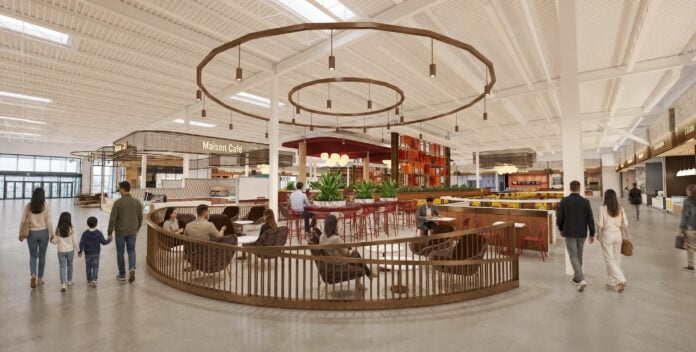
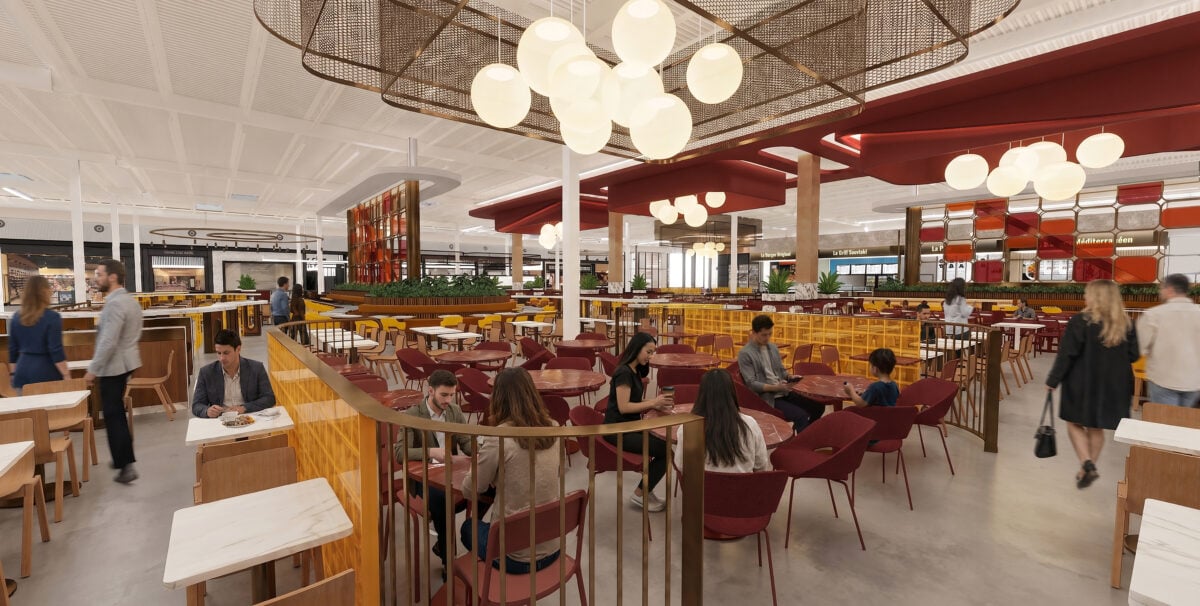
Today’s Retail Insider articles are listed below, followed by Canadian Retail News From Around the Web. Highlights include Alimentation Couche-Tard’s strong Q3 2026 financial performance, Marugame Udon’s expansion into Toronto, and Bramalea City Centre’s revamped food court. The Canadian Food Inspection Agency’s enforcement against mislabelled food products also made the news. These developments reflect ongoing growth, evolving consumer spaces, and the heightened attention on regulatory compliance in retail.


🗞️ The Day’s Retail Insider Article List


🌐 Canadian Retail News From Around the Web

Lululemon Q4 Profit Falls as Global Growth Shifts

lululemon at West Edmonton Mall (Image: West Edmonton Mall)

Vancouver-based Lululemon Athletica Inc. reported a decline in quarterly profit as revenue growth remained modest, reflecting a challenging North American environment alongside stronger international performance.

The company announced that net income for the fourth quarter ended February 1, 2026, totaled approximately $586.9 million, down from $748.4 million a year earlier. Diluted earnings per share fell to $5.01 from $6.14 in the prior year period. Revenue reached $3.6 billion, representing an increase of about one per cent compared to the same quarter last year.

However, the year-over-year comparison was impacted by the absence of a 53rd week that was included in the prior fiscal year. On a comparable basis, excluding that extra week, revenue growth was closer to six per cent.

Despite the modest headline growth, the latest Lululemon earnings exceeded analyst expectations, highlighting continued resilience in certain segments of the business even as profitability came under pressure.

Diverging Regional Performance Shapes Results

The latest results underscore what management described as a “tale of two markets,” with strong international growth offsetting continued softness in North America.

International revenue increased 17 per cent in the fourth quarter, with Mainland China emerging as a standout market, posting growth of 28 per cent. By contrast, revenue in the Americas declined four per cent, while comparable sales in the region slipped by one per cent.

This divergence reflects broader shifts in consumer demand and competitive dynamics. North America, which has historically been Lululemon’s core market, is experiencing slower traffic and increased promotional activity, while international markets continue to offer expansion opportunities and higher growth potential.

Men’s accessories at Lululemon at Yonge and Bloor in Toronto. Photo: Craig Patterson

Margin Pressure Weighs on Profitability

While revenue held steady, profitability was impacted by several factors, including rising costs and external economic pressures.

Gross margin declined by 550 basis points to 54.9 per cent, while operating margin dropped 660 basis points to 22.3 per cent. The company pointed to higher costs of goods sold, which rose nearly 15 per cent, as well as the impact of U.S. import tariffs.

Inventory levels also increased significantly, rising 18 per cent to $1.7 billion. The buildup reflects both expansion efforts and softer demand in certain regions, contributing to increased markdown activity and margin compression.

These dynamics highlight the challenges facing premium apparel brands as they balance growth, pricing power, and cost pressures in a shifting retail environment.

Digital Growth Continues to Drive Performance

One of the more positive elements in the latest Lululemon earnings was the continued strength of its digital business.

Digital revenue grew nine per cent in the quarter, reaching approximately $1.9 billion. Online sales now account for nearly 52 per cent of total revenue, reflecting a sustained shift in consumer shopping behaviour toward e-commerce.

Management indicated that digital channels are helping offset the higher operational costs associated with physical stores. At the same time, the company is leveraging digital platforms to support product launches, including its new “ShowZero” technology, which is being promoted through digital-first campaigns.

The growth of e-commerce remains a critical component of Lululemon’s strategy as it navigates changing consumer expectations and seeks to drive full-price sales.

Global Expansion Strategy Targets New Markets

Looking ahead, Lululemon is focusing its expansion strategy on international markets, particularly in Asia and Europe.

The company plans to open between 40 and 45 net new company-operated stores globally in fiscal 2026, building on a network that reached 811 locations at the end of fiscal 2025. This represents an increase from 767 stores the previous year.

In addition to organic growth, Lululemon is entering several new markets through franchise and partnership models. These include Greece, Austria, Poland, Hungary, and Romania in Europe. In Asia, the company is preparing for a major entry into India through a partnership with Tata CLiQ, scheduled for the second half of 2026.

China remains a central focus, with plans to expand further into Tier 2 cities following strong recent performance. The international strategy reflects a deliberate pivot toward higher-growth regions as North American expansion slows.

Future Lululemon store at 1035 Ste-Catherine St. W. in Montreal. Photo: Retail Insider

North American Strategy Shifts to Optimization

In contrast to its global expansion, Lululemon is taking a more measured approach in North America.

Rather than aggressively opening new stores, the company is focusing on optimizing its existing fleet. This includes relocating to larger spaces in high-performing malls, as well as evaluating successful pop-up locations for permanent conversion.

The strategy also involves refining product assortments to better align with consumer preferences. Interim leadership has indicated a shift toward a more curated offering, with fewer logos and a greater emphasis on technical lifestyle products.

This approach is intended to improve productivity and restore full-price selling in a market that has become increasingly competitive.

Leadership Transition and Board Developments

Calvin McDonald
Calvin McDonald

The latest Lululemon earnings come during a period of significant leadership transition.

Calvin McDonald officially stepped down as CEO on January 31, 2026, and is currently serving as Senior Advisor through March 31. The company is now led by Interim Co-CEOs Meghan Frank, Chief Financial Officer, and André Maestrini, Chief Commercial Officer, as the search for a permanent CEO continues.

At the board level, Lululemon confirmed that Chip Bergh, former president and CEO of Levi Strauss & Co., officially joined the board on March 17, 2026. His appointment adds significant global retail experience at a time when the company is navigating both operational and strategic shifts.

Activist Pressure Adds Strategic Complexity

Founder Chip Wilson has intensified his criticism of the company’s direction, arguing that Lululemon has strayed from its core identity.

He has called for the addition of new board members with stronger brand and product experience, while also criticizing what he views as an overreliance on discounting and a lack of innovation.

The company has pushed back against these claims, stating that Wilson has not been involved in the business for over a decade and that his comments are inaccurate and misleading.

This ongoing tension adds another layer of complexity to Lululemon’s strategic outlook as it navigates both operational challenges and governance debates.

Outlook Reflects Cautious Growth Expectations

Lululemon’s guidance for fiscal 2026 reflects a cautious outlook.

The company expects revenue to reach between $11.35 billion and $11.50 billion, representing growth of approximately two to four per cent. Earnings per share are projected to range from $12.10 to $12.30, below the $13.26 reported in fiscal 2025.

Management has emphasized a focus on improving full-price sales in North America while continuing to invest in international expansion and digital capabilities.

More from Retail Insider:

Alimentation Couche-Tard reports Q3 2026 financial results

PHOTO: CIRCLE K

Alimentation Couche-Tard Inc. announced Tuesday its results for its third quarter ended February 1, 2026, with total merchandise and service revenues of $5.8 billion, an increase of 8.7%.

Alex Miller
Alex Miller

“For the third consecutive quarter, we delivered positive same-store sales across every region and once again outperformed the broader industry. Customers continue to respond to the value and ease of our offer, from Meal Deals to our compelling Thirst and Nicotine programs, which along with healthy fuel margins and deepening loyalty program engagement are feeding our momentum as we execute our refreshed Core + More strategy,” said Alex Miller, President and Chief Executive Officer.

“Heading into the fourth quarter of our fiscal year, I couldn’t be prouder of the teams driving these results, focused on winning our customers and embracing our vision to become the world’s favorite stop for people on the go.”

Filipe Da Silva
Filipe Da Silva

“We delivered one of our best quarterly performance in over two years, with same-store sales accelerating as the quarter progressed and contributing to solid growth in both adjusted EBITDA and earnings per share,” said Filipe Da Silva, Chief Financial Officer.

“These results validate that the actions outlined in our Business Strategy Update are translating into measurable outcomes. Continued focus on traffic, customer value and operational execution is strengthening our growth algorithm and driving long-term value creation.”

Quarterly Highlights

  • Net earnings attributable to shareholders of the Corporation were $757.2 million for the third quarter of fiscal 2026 compared with $641.4 million for the third quarter of fiscal 2025. Adjusted net earnings attributable to shareholders of the Corporation were approximately $751.0 million compared with $641.0 million for the corresponding quarter of last year, representing an increase of 17.2%.
  • Net earnings attributable to shareholders of the Corporation were $0.82 per diluted share for the third quarter of fiscal 2026 compared with $0.68 per diluted share for the third quarter of fiscal 2025. Adjusted diluted net earnings per share were $0.81, representing an increase of 19.1% from $0.68 for the corresponding quarter of last year.
  • Total merchandise and service revenues of $5.8 billion, an increase of 8.7%. Same-store merchandise revenues increased by 2.8% in the United States, by 0.4% in Europe and other regions, and by 0.3% in Canada. Consolidated same-store merchandise revenues increased by 2.0%.
  • Merchandise and service gross margin decreased by 0.1% in the United States to 33.9%, and by 0.1% in Europe and other regions to 38.9%, while it increased by 0.1% in Canada to 32.5%.
  • Same-store road transportation fuel volumes decreased by 0.4% in the United States, and by 1.6% in Europe and other regions, while it increased by 4.2% in Canada.
  • Road transportation fuel gross margin of 47.71¢ per gallon in the United States, an increase of 3.43¢ per gallon, US 10.87¢ per liter in Europe and other regions, an increase of US 1.58¢ per liter, and CA 15.82¢ per liter in Canada, an increase of CA 2.28¢ per liter.
  • Solid pipeline execution with 37 new-to-industry openings, and 8 relocated or reconstructed stores, reaching a total of 80 stores since the beginning of fiscal 2026. As of February 1, 2026, another 58 stores were under construction and should open in the upcoming quarters.

“We acquired 12 company-operated stores, reaching a total of 26 company-operated stores acquired through various transactions since the beginning of fiscal 2026. We settled these transactions using our available cash,” said the company.

“During the quarter, we completed the construction of 37 stores and the relocation or reconstruction of 8 stores, reaching a total of 80 stores since the beginning of fiscal 2026. As of February 1, 2026, another 58 stores were under construction and should open in the upcoming quarters.”

Couche-Tard is a global leader in convenience and mobility, operating in 27 countries and territories, with close to 17,300 stores, of which approximately 13,200 offer road transportation fuel. With its well-known Couche-Tard and Circle K banners, it is one of the largest independent convenience store operators in the United States and it is a leader in the convenience store industry and road transportation fuel retail in Canada, Scandinavia, the Baltics, Belgium, as well as in Ireland. It also has a presence in Luxembourg, Germany, the Netherlands, Poland, as well as in Hong Kong Special Administrative Region of the People’s Republic of China. Approximately 149,500 people are employed throughout its network.

More from Retail Insider:



Healthcare Retail Expansion Surges as Traditional Canadian Stores Face High Vacancy Rates

Image generated by Gemini

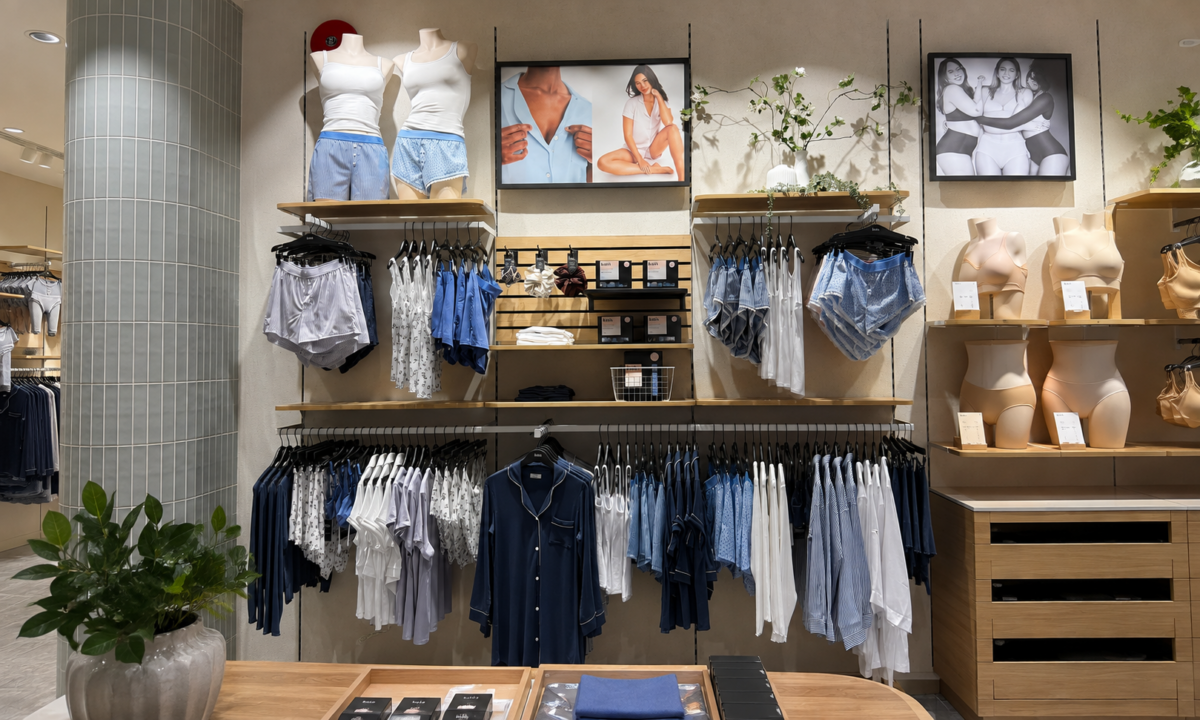
Canada’s retail landscape is in a state of stark transition. While legacy department stores are leaving behind vast, empty spaces, a new type of tenant is quietly moving in: the doctor and the dentist. A recent JLL Canada report highlights a national retail vacancy rate of 2.5%, largely driven by these closures. This void, however, is being filled by a powerful trend known as “medtail”—the integration of healthcare services into traditional retail settings. This shift is more than just a real estate transaction; it’s reshaping community shopping centers into essential service hubs, creating a win-win for landlords, consumers, and surrounding businesses.

What’s Fuelling the Medtail Surge in Canadian Retail?

The rapid rise of medtail is not an accident but a response to converging market forces. On one side, commercial landlords are grappling with unprecedented vacancies left by traditional anchors. On the other hand, a confluence of demographic and policy changes is creating immense demand for accessible healthcare services, turning a real estate problem into a strategic opportunity.

The “Retail Landlord’s Dilemma”: An Opportunity in Disguise

The findings from the JLL report are clear: traditional anchor tenants like department stores are disappearing, leaving landlords with significant vacancies to fill. These large, well-located, and highly visible spaces are prime for redevelopment. As seen in other markets, tight leasing conditions are calling for the strategic redevelopment of existing assets to meet modern needs. In Canada, this means landlords are actively seeking stable, long-term tenants who are immune to the pressures of e-commerce, and healthcare providers fit that profile perfectly.

A Perfect Storm of Healthcare Demand

This real estate opportunity coincides with an unprecedented demand for accessible healthcare, driven by several key factors. First, Canada has a steadily aging population, which naturally increases the need for routine and specialized medical services—a demographic trend also fuelling medtail growth in other regions. Second, the federal government has introduced a policy game-changer: the Canadian Dental Care Plan (CDCP). This program aims to provide dental coverage to up to nine million previously uninsured Canadians, single-handedly creating millions of new consumers actively seeking care. Finally, the sector itself is proving its economic stability. The Canadian dental services market is not only projected to grow at a 5.4% compound annual growth rate but has already surpassed pre-pandemic productivity levels by $851 million, demonstrating its robust resilience.
The Ripple Effect: How Medtail Revitalizes the Entire Retail Ecosystem

The introduction of medtail tenants does more than just fill an empty storefront; it fundamentally alters the commercial gravity of a shopping plaza. By offering essential services, these healthcare clinics become the new, more resilient anchor tenants, creating a positive ripple effect that benefits landlords and adjacent retailers alike.

A Lifeline for Landlords: The Value of a Resilient Tenant

For property owners, medtail tenants are a crucial lifeline in a volatile market. They are both “recession-proof” and “e-commerce-proof,” as one cannot get a dental cleaning, a physiotherapy session, or a medical check-up online. These tenants are highly desirable because they typically sign long-term leases of 10 to 15 years, possess high creditworthiness, and invest significant capital into their spaces for specialized infrastructure. This provides landlords with the stable, predictable rental income needed to secure financing and maintain property value.

The New Anchor Tenant: Driving Consistent Foot Traffic

Unlike discretionary retail, healthcare appointments are necessity-based, creating a steady and reliable stream of visitors to a shopping center. These visits often occur during off-peak retail hours on weekdays, smoothing out traffic patterns throughout the week. This consistent flow of people generates significant positive externalities for neighboring businesses.

  • Increased Cross-Shopping: Patients frequently combine appointments with other errands, visiting nearby cafes, pharmacies, or grocery stores before or after their visit, boosting sales for co-tenants.
  • Consistent Daytime Traffic: Medtail draws a reliable daytime population to the plaza throughout the workweek, a demographic that traditional retail often struggles to attract.
  • Community Hub Creation: A plaza that offers essential health services becomes a trusted, one-stop destination for local families, enhancing its role and relevance in the community.
  • Enhanced Property Value: A diversified tenant mix with a stable medtail anchor makes the entire property more attractive to investors and other potential retail tenants.

A Tale of Two Anchors

The contrast between the old retail model and the emerging medtail-anchored model is striking. The new anchor provides a level of stability and consistent traffic that department stores, vulnerable to economic cycles and online competition, can no longer guarantee.

FeatureTraditional Anchor (e.g., Department Store)“Medtail” Anchor (e.g., Dental Clinic) 
Foot Traffic DriverDiscretionary; seasonal peaks (e.g., holidays)Necessity-driven; consistent year-round
Economic ResilienceVulnerable to e-commerce and recessionsHighly resilient; services are non-negotiable
Lease TermIncreasingly shorter-term or with break clausesTypically long-term (10-15+ years)
Benefit to Co-tenantsDraws shoppers, but traffic is decliningDrives reliable, errand-bundling foot traffic
Community RolePrimarily transactional (shopping)Essential service hub (health and wellness)

The Anatomy of a Model Medtail Tenant

Not all medtail tenants are created equal. The most successful and impactful models are those that go beyond offering a single service and instead position themselves as a comprehensive health destination for the entire community. This approach maximizes their value as a reliable traffic driver for the entire shopping center.

Beyond the Basics: Why an All-in-One Service Model Wins

The most sought-after medtail tenants are those that become a true “health home” for local families. By offering a comprehensive suite of services under one roof—from routine check-ups to specialized procedures—they encourage patient loyalty and generate multiple visits per year from each family member. This all-in-one strategy not only secures a stable business model for the clinic but also multiplies its foot traffic, which is the ultimate goal for any retail landlord.

A Case Study in Community-Centric Care

A prime example of this integrated model in action is Dawson Dental Clinics. The organization’s strategy directly aligns with the characteristics of a premier medtail anchor. By establishing a strong presence in accessible, convenient retail plazas across the country, they remove common barriers to care for busy individuals and families. Their “all-in-one” approach is key to their success as a plaza draw. Instead of just offering basic check-ups, their clinics provide a comprehensive range of services, including general dentistry, cosmetic procedures, orthodontics, and specialty care. This model fosters long-term relationships, turning a one-off visit into a consistent healthcare partnership. For a landlord, this means a single family might generate a dozen or more visits to the plaza annually for various treatments and check-ups for different family members. This consistent, non-discretionary foot traffic provides the lifeblood that supports surrounding retailers, demonstrating how a well-executed medtail strategy can elevate an entire commercial property.

Challenges and Considerations on the Path to Medtail

While the opportunity in medtail is significant, the path to converting traditional retail spaces into clinical facilities is not without its complexities. Landlords and healthcare providers must navigate considerable structural and economic hurdles to ensure a successful transformation.

Not a Simple Retrofit

Converting a former retail box into a functioning clinical space is a complex undertaking. As noted in markets that have seen a rise in medtail, it is not as simple as just reconfiguring walls. These projects require significant capital investment in specialized infrastructure, including enhanced plumbing for clinical needs, robust electrical systems to power medical equipment, specialized HVAC for air quality control, and soundproofing to ensure patient privacy and meet healthcare standards.

Navigating the Economics of Care

The financial models for retail health can also be complex, a factor that has created challenges in the U.S. market where services are often under-reimbursed. However, the Canadian market is buffered by government initiatives like the CDCP, which create a more stable and predictable reimbursement environment, mitigating some of these risks and encouraging further expansion. Nevertheless, cost can still be a barrier for some patients, as nearly a quarter of Canadians have avoided dental visits for this reason. This fact reinforces why accessible retail locations and programs like the CDCP are so vital for the trend’s continued success.

The Future of the Canadian Shopping Plaza is Healthy

The rise of medtail is a fundamental and permanent shift in the Canadian retail landscape, not a temporary trend. It represents a powerful convergence of a clear real estate opportunity—large, well-located vacancies—and undeniable healthcare demand driven by demographics and supportive government policy. By replacing struggling retail giants with essential health and wellness services, Canadian landlords are not just filling empty storefronts. They are building more resilient, future-proof, and community-focused properties. The once-humble strip mall is being reborn as a central hub for daily life and wellness.