Advertisement
Advertisement
Home Blog Page 525

Spanish Luxury Brand Loewe Enters Canada with 1st Standalone Store at Toronto’s Yorkdale Shopping Centre [Photos] 

Facade of the Loewe store at Toronto's Yorkdale Shopping Centre. Photo: Michael Muraz

LVMH-owned Spanish luxury brand Loewe has opened its first standalone store location in Canada at Toronto’s Yorkdale Shopping Centre. The brand entered Canada wholesale several years ago and is now expanding distribution into retail. 

The Yorkdale store spans 3,922 square feet of retail space on one level (the second largest in North America), carrying Loewe’s range of ready-to-wear for women and men as well as bag leather goods, footwear, eyewear, jewellery, accessories and other categories including fragrances, home scents and candles. Loewe has expanded its product assortment under designer Jonathan Anderson to become a lifestyle brand. 

The store’s interior includes several ‘rooms’, including a wooden ‘gazebo’ design that is a first in North America for Loewe. The brand says that the store design is based on creative director Jonathan Anderson’s CASA LOEWE concept, which involves combining the refinement of retail with the intimacy of an art collector’s home. 

Ceramic is an important material used for the store. Loewe’s Yorkdale facade features blue handmade ceramic tiles, while the interior features the same handmade tiles in green, blue and silver. Earth tones accent the space while walls are made of poured concrete. Other materials include brass, glass, and turned iron, and there are several antique ceramic vessels and contemporary podiums in various finishes in the space. Furniture includes Berin club chairs and angular Utrecht armchairs, interspersed with iron martini tables. A paper lamp by artist Isamu Noguchi hangs from the ceiling. The store also contains two bespoke wool rugs featuring reproductions of British textile artist John Allen’s tapestries — including the sweeping landscape of The River Reaches the Sea Buirling Gap.  

Art work is featured throughout the store. On the walls, British painter Eliot Hodgkin’s botanical pencil sketches capture intricate organic forms, while Swedish artist Cecilia Edefalk’s Luz (2022) is part of a wider body of work using repetition to investigate charged memories and shifting perception. German photographer Jochen Lempert’s Subjective photography series (2010) also investigates the wonders of the natural world, bridging the artistic and the scientific in his abstracted, monochrome images.

Loewe’s Yorkdale store is located in a new luxury wing being developed in the centre run of the centre. About 60,000 square feet of space is being repurposed with other confirmed tenants including Brunello Cucinelli and Loro Piana. Others will be announced in collaboration with the mall’s landlord Oxford Properties. 

Handbag area at the front of the Loewe store at Toronto’s Yorkdale Shopping Centre. Photo: Michael Muraz

Despite being a brand nearly 170 years old, Loewe’s first substantial presence in Canada was in 2015 when Nordstrom opened a shop-in-store for the brand at its Vancouver location. Loewe boutiques then opened inside Nordstrom’s downtown Toronto and Yorkdale stores. 

Holt Renfrew subsequently picked up Loewe, which is said to now be the top-selling wholesale leather goods brand at Holts. Loewe has a small leather goods presence in a space at Holts Yorkdale as well as at Bloor Street in Toronto and in downtown Vancouver — a range of ready-to-wear is also available at the Yorkdale, Bloor and Vancouver Holts stores. With Nordstrom’s exit from Canada last year, Holt Renfrew is now the primary retailer in Canada for Loewe, which is also carried at The Webster on Scollard Street in Toronto. 

Sources told Retail Insider that Loewe had been in talks to open a store at Oakridge Park in Vancouver in 2025. It’s not known if a lease deal has been done. The luxury-heavy shopping centre will open on Vancouver’s West Side in about a year.  

Men’s fashion area at the back of the Loewe store at Toronto’s Yorkdale Shopping Centre. Photo: Michael Muraz

Loewe is considered to be one of the world’s hottest brands right now, which means that sales at the new Yorkdale store are expected to be robust out the gate. Lyst recently named Loewe as the world’s third hottest brand in its Q4 2023 global brand ranking.  

Yorkdale is adding luxury retailers at a rapid pace with the opening of its new luxury wing, and is expected to become one of the world’s top centres in terms of luxury brand offerings. Robert Horst, VP of Retail at Oxford Properties, said in an interview that the goal of the landlord is to make Yorkdale a global retail destination. Retail Insider will continue to report on new tenants in the luxury wing when permitted. 

Loewe was founded in Madrid in 1846, making leather goods for royals and other affluent clients. The brand continued to grow modestly over the decades and was relatively obscure until it was acquired by LVMH in 1996. The brand has grown rapidly over the past decade following the appointment of creative director Jonathan Anderson in 2013.

Women’s fashions and bags in the Loewe store at Toronto’s Yorkdale Shopping Centre. Photo: Michael Muraz
‘Gazebo’ at the centre of the new Loewe store at Toronto’s Yorkdale Shopping Centre. Photo: Craig Patterson

Today, Loewe operates standalone stores in major markets globally and it also wholesales in various upscale retailers. In the United States, Loewe operates eight full-priced stores in New York City (Soho), Beverly Hills (Rodeo Drive), Orange County (South Coast Plaza), Santa Clara CA (Valley Fair), Dallas (Highland Park Village), Honolulu (Ala Moana Center), Las Vegas (Wynn), and in Miami (Miami Design District). The brand also operates two outlet stores in the United States, and can be found in retailers such as Saks Fifth Avenue and Bergdorf Goodman in New York City. The brand also has stores in major markets globally as well as concession and wholesale distribution. 

Upscale Vancouver-Based Sushi Restaurant Chain ‘Hello Nori’ Unveils Ambitious Global Expansion Plans [Interview]

Future Hello Nori on King Street West in Toronto (Image: Dustin Fuhs)

Hello Nori, a Vancouver-based sushi restaurant chain, is bringing the traditional Japanese temaki – hand-rolled sushi – into the spotlight, offering a unique dining experience to Canada. The restaurant has plans on expanding throughout Canada and to break into international markets with a goal of having 100 Hello Nori locations worldwide. 

“Our vision for Hello Nori is to open 100 locations across the world, sharing the unique and homey experience of hand rolls with more communities. We aim to expand across major markets in Canada such as Vancouver, Toronto, Calgary, and beyond in the upcoming years. The flexibility of our kitchen set up allows us to strategically choose prime real estate locations. We are excited to keep innovating the menu and concept to bring even more premium experience to our customers,” says Isaac Olivier, director of restaurant operations at Hello Nori. 

Image: Hello Nori
Isaac Olivier

Currently, Hello Nori has three locations in Vancouver with the original location on Robson Street which opened in 2021, one in Brentwood, and a few weeks ago opened a smaller location which is designed for menu innovation.       

“So the first location we opened in 2021 is on Robson Street, essentially the heart of shopping, tourism, and dining. The second location we recently opened is in Brentwood, an amazing neighbourhood that has really taken off in the last five years, and then we actually just opened a smaller research and development outlet on Expo Boulevard near the stadium where our chef is going to be preparing new dishes for takeout.” 

The new concept will allow the chef to try new menu items in a low-pressure environment before launching them more widely at other Hello Nori locations. 

Expansion plans 

Image: Hello Nori

Hello Nori already has established its presence in Vancouver with its locations and will be continuing as Olivier says he is planning to open three additional locations within the next two years: 

  • CF Richmond Centre in Richmond, which will open by early June. Olivier says this location will be its largest restaurant as it will have 36 seats instead of 24. 
  • Park Royal in West Vancouver, which will be under a new concept 
  • Oakridge Park, “an enormous premium mall that is just being built and should be ready by 2025.” 

As for Ontario. Olivier says construction in Toronto has already begun for two locations. The first location will be at 650 King Street West in Toronto and will also be a larger space offering 36 seats: “this is a great location and pretty much right in the heart of the entertainment district in Toronto.” 

The second location is going to be on York Street in the downtown Financial District and should be completed hopefully early in 2025.

Image: Hello Nori
Hello Nori Brentwood (Image: Hello Nori)

The brand will be looking into expanding further into major shopping centres across Ontario, specially around areas such as Yorkville and Yonge and Shepherd, and will also be looking into the Calgary market for expansion. Once the Canadian expansion is set, Olivier says the brand would like to open locations globally. 

“As far as Hello Nori is concerned, we have just begun. The vision is to open 100 locations across the world ultimately. We would like to expand more in BC, Toronto, Montreal, and other parts of Ontario and then just really take it across Canada before heading into other countries.” 

Hello Nori Signature – new in-store concept 

The Park Royal location will be under a new concept and will offer an enhanced dining experience compared to its standard locations. 

“Park Royal, which is actually going to be a different concept, is titled Hello Nori Signature. It will have seating, a full kitchen, and essentially offer a more premium experience. As opposed to the wooden seats, there are going to be plush leather seats in the bar so you can really enjoy the Japanese whisky as well as our vision is to have the largest selection of Japanese whiskey in Canada.” 

The designs are not the only thing that will be changing as this location will also offer an expanded menu and will include hot food items, a broader range of sushi, and an extensive cocktail menu. This will be the first location under this concept, but Hello Nori is looking into expanding this concept to other locations in Canada. 

Image: Hello Nori

As the brand continues to expand, Olivier says Hello Nori’s targeted locations are ones that combine high foot traffic with great visibility, choosing spots that can accommodate their kitchen needs with less space than traditional restaurants require. Avision Young handles all site locations for Hello Nori and the brokers involved include Ali Baker, MacKenzie Kohl, and Caitlyn Micuda

“We are definitely very particular with our locations. But one of the interesting benefits of Hello Nori is that as it really only focuses on rice and seafood, the requirements for a kitchen are less compared to a typical full-scale restaurant, which usually requires full gas ranges and a lot of heavy equipment. So we are able to pick and choose different locations that wouldn’t have necessarily been suitable for restaurants to begin with – which gives us a better pick.” 

Peavey Mart Spearheads Retail Revamp of Stores Across Canada while Launching Media Network 2nd Phase [Interview]

Image: Peavey Mart

Farm and ranch retailer Peavey Mart has opened its latest location in Steinbach, Manitoba where the brand will launch its first Dog Wash to test that model.

Jest Sidloski

Jest Sidloski, Vice President of Marketing, Customer Experience & eCommerce at Peavey Mart, said the brand is also in the thick of launching the second phase of its retail media network. 

“We’re the first retailer in Canada to have a comprehensive platform including digital radio, digital ads, social ads, etc.  We’re live with digital radio, and about to launch the next phase of this program. Retail media networks are one of the hottest retail trends in North America,” he said.

Image: Peavey Mart
Image: Peavey Mart

The company has 95 locations across Canada.

“We’re also going to be resetting many locations this year to provide a better customer experience to our customers,” he said. 

Last year, its first store east of Ontario in Bedford, Nova Scotia experienced significant flooding which took the store off line for several months.

“And we had to almost rebuild it. We were at the epicentre of that flood. Our location was six feet under. So a new location and then all of a sudden we’re off line,” said Sidloski. “We did a brand relaunch last winter in the Bedford location. Other than that we didn’t have any new stores last year. 

Steinbach Manitoba opened in early April. 

“Our focus this year isn’t going to be on new location openings. It’s going to be a year of refreshes. We’ve got five major refreshes planned for some major markets and then we’ve got 12 minor refreshes planned for other markets.”

Image: Peavey Mart
Image: Peavey Mart

Sidloski said a refresh for the brand involves a crew going into a location, resetting and relaying out the store completely.

“A new look and feel. A new experience. It often comes with updated services, updated look and feel. Retraining, etc. So it’s as if we’re reopening a new store in the same building in the same market.

“It’s our focus this year. It’s no secret I think that it’s been a tough couple of years for retail. And certainly 2023 was exceptionally tough in many ways just with consumer spending, inflation, mortgage rate renewals and the weather events, in Western Canada specifically, which prevented a lot of consumer spending.

“We took that as an opportunity to relook at the markets that we are in. Look at the feedback from our customers and then figure out what we need to do a little bit differently. Some of these markets haven’t been touched in a very long time. And it’s a great opportunity for us to get in there, retell the story of who Peavey Mart is and then look to attract existing customers as well as look to open the doors to new customers in those markets.

“And these markets are growing. Saskatoon is one example. It’s our largest sales volume location. The city continues to grow and with that growth we have a lot of new people moving into these markets that traditionally know a Peavey Mart that don’t know a Peavey Mart. So these refreshes come with more marketing and a fresh new take on what story we’re trying to tell and it’s our way to get competitive market share this year.”

Image: Peavey Mart
Image: Peavey Mart

Sidloski said the brand’s commitment doesn’t change from its origins in the farm and ranch community. 

“Certainly that’s something we want to recommit to. We continue to hear from farm customers about their experience with the farm and ranch channels and we take these to heart and we want to make sure that we are refocusing on that strategy, making sure we’ve got improved inventory positions especially in the higher location items like farm feed, bird seed, animal foods,” he said. “Making sure that customers know we are still that retail store for them.

“The other side of the coin is market growth. We have the opportunity to enhance our position on homesteading and we successfully did this 10 or more years ago. We want to reposition homesteading to be one of our cornerstone categories at Peavey Mart. That of course is gardening, your growing, your yard care, your candle making, your soap making, your DIY. Really capturing that lifestyle which also, based on the data we have, is attracting a younger audience. For us, that’s really important. We want to make sure that those younger people also know that Peavey Mart is a store for them and some of what they’re looking to get into and we want to be a destination, we want to be known for that. So these refreshes in these markets will allow us to do that better, tell more of that story as well along with an increased inventory position on those key areas.”

Sidloski said the company has teams of people that are looking at different markets all the time. There’s nothing officially stated by the company for this year for areas that it is closer to launching new stores.

Image: Peavey Mart
Image: Peavey Mart

Most of the locations for stores are about 28,000 square feet. Its flagship Red Deer store is about 50,000 square feet. One of its Winnipeg stores is over 50,000 square feet. Also more than 20 stores are under 24,000 square feet.

“What we look to do going forward is not necessarily standardization but that 28,000 square feet is about the right size for our brand,” he said.

The company launched ChickDays.ca last year in Ontario. It is an online ordering destination for rare and heritage breed chicks as well as meat birds and egg layers. Live chicks are also in stores.

“It was a great success. We’ve rolled it across Canada nationally this year. It’s the first of its kind,” he said.

“The demand is outpacing last year in a very big way. Our customers continue to look for ways to grow their own food, know where their food is coming from, and that is the shift we’re seeing. I think that’s indicative of inflation, mortgage rate renewals, the cost of living. Nobody is hiding from that. It’s impacting everybody. So our consumer is telling us they want items that are necessities. It’s not maybe the wants they would have bought in the past on the consistency of what we would have sold those products for. It’s really the needs items. The stuff they can save some money by doing it at home.

“That’s going to be our focus because that’s where we believe our consumer is telling us we need to be positioned.”

The company’s roots go back to 1967 when it started as National Farmway, a chain of “super farm markets” whose first location opened in Dawson Creek, BC. By 1975, the chain became known as Peavey Mart, a subsidiary of Peavey Company of Minneapolis. In 1984, the company returned to Canadian ownership and to this day remains 100 per cent Canadian-owned and operated. In 2017, Peavey Industries LP acquired the TSC Stores banner, based in London, Ontario with stores operating in Ontario and Manitoba. In spring of 2021, the final conversion of all TSC Stores to Peavey Mart.

Canadian Retail News From Around The Web For April 15th, 2024

Canadian Retail News From Around The Web

News at a Glance

Retail Insider is streamlining its Canadian retail news from around the web to include a handful of top news stories that can be viewed quickly during the day. Here are the top stories from the past several days.

Loblaw launching No Name Mobile cellphone plans at all No Frills stores (CTV)

Competition Bureau to monitor retail flyer market, despite NAL for Transcontinental-Quad/Graphics deal (PYMNTS)

Despite backlash, some Loblaw stores still discount perishable food by 30% — not 50% (CBC)

Walmart Canada says robots are coming to 2 Ontario warehouses, but jobs not at risk (Financial Post)

Former Value Village employee speaks out about her experience (Daily Hive)

Dollarama food prices compared to Loblaw, Metro, Sobeys and Walmart (Daily Hive)

Hundreds line up at Shein pop-up store in Vancouver (Global)

Aisle 24 now open in London (CTV)

McNally Robinson is an indie bookstore that figured it out: Focus on books (Globe & Mail)

Pape and Danforth Starbucks becomes the first Toronto location to unionize (Toronto Observer)

Concerns over beer and wine in Ontario corner stores (CTV)

Four Edmonton convenience store owners charged with illegal tobacco sales (Edmonton Journal)

Homer’s Donuts: Simpsons-inspired doughnut shop draws big crowds in N.D.G. (Montreal Gazette)

Player’s Choice Sports Cards and Collectibles welcomes more than 1200 customers in Kelowna for Hockey Card Day (Castanet)

Questions arise about future of Vancouver stores selling magic mushrooms (Global)

Innovative Direct-to-Consumer Furniture Startup CouchHaus Opens 1st Physical Retail Space in Vancouver [Interview]

Couch Haus at 2421 Granville Street in Vancouver (Image: Couch Haus)

Direct-to-consumer furniture retailer CouchHaus has launched its first-ever store in Vancouver at Granville and Broadway.

The showroom is located at 2421 Granville Street.

Harrison Gordon and Paige Sandher, Co-Founders, were a couple in the search for a perfect couch a few years ago which led to the creation of CouchHaus.

The company was founded March 2021.

“CouchHaus is a direct-to-consumer furniture company, so we specialize in modular furniture and our main focus is on customization. We can offer hundreds of different fabrics and also made to measure. If you have a certain space that only allows for a certain size, maybe it’s only 110 inches, we can tailor it to your space and custom make it there. And a lot of companies usually charge an arm and a leg to upgrade whereas we offer all these changes for free,” said Gordon.

CouchHaus at 2421 Granville Street in Vancouver (Image: CouchHaus)

The furniture is made overseas in Shanghai.

“We were just looking for furniture for ourselves. We’re not only co-founders, but we’re also partners. We were moving into a new home and Harrison’s quite tall and I’m quite short. We’ve got a six-four and a five-two over here. He wanted a deeper seating couch but a lot of the deeper seats weren’t fitting into our townhome,” said Sandher. 

“We didn’t have like the length of a full detached home that traditionally deeper couches are made for . . . When we looked at all the custom options after purchasing our first home we realized that custom furniture can go up to like $10,000 to $15,000 and we just weren’t in a space that we were able to spend that much. We thought, how could we do this in a more cost effective manner?”

Image: CouchHaus
CouchHaus at 2421 Granville Street in Vancouver (Image: CouchHaus)

Gordon said it was a running joke that they started selling a couch out of their house.

The retailer has been primarily online as an e-commerce brand. But they had so many people just within the Lower Mainland that wanted to come and visit and test out the couches that they started just inviting people over to their home for appointments.

“For the past three years, we’ve run it out of our house and we’ve had people come over and we do one-on-one consultations and personalize appointments,” he said. 

“And just now, in the past month, we’ve signed a lease on a space in Vancouver. So we’re opening a flagship location on South Granville, which is where basically all the good furniture stores are in Vancouver. That’s going to be our first step to just being open to the public and not just by appointment of people visiting our house.”

Harrison Gordon and Paige Sandher, Co-Founders of CouchHaus
CouchHaus at 2421 Granville Street in Vancouver (Image: CouchHaus)

The physical space is about 1,600 square feet.

Sandher said the showroom will be set up very much similar to its  appointment model where they basically have different areas where you go through different features.

“One is like your configuration area where you choose what size and what modules you need. The second area is the size area. How deep you want the seats? And then the third one is the fabric area. We will of course have like more condo setups and then more of our home setups as well,” she said. 

“And then in the back area will also have our design consultation rooms. So that’s where we essentially offer like 30 to 40 minute appointments where we’ll help you go through your space and customize based on the size that you’re working with as well.”

CouchHaus at 2421 Granville Street in Vancouver (Image: CouchHaus)

Gordon said all of the custom pieces are delivered within eight to 10 weeks. 

“We also have noted that we have some really popular SKUs that we do now keep in stock at all times as well,” said Sandher.

“Those are available for purchase on the website and delivery within about three to five days.

“The product itself was actually very simple. We actually have one product and it’s just called the comfy couch. It’s sold as separate modules, and what I mean by modules is you can do a corner piece and armless piece or an ottoman or a chaise. And from there you can configure it to if you want to make a three-seater, a two-seater, a six-seater U-shape.

“You can really build it as you want to. And then from there, that’s where you customize if you want to add storage to the ottomans or raise the backrest height and certain features that you wish to upgrade, as well as the comfort of the couch. You can also choose how soft and firm you want it to be.”

Gordon said about 70 per cent of the brand’s customers are from British Columbia and about 20 per cent are from Ontario and then the other 10 per cent are scattered around Canada.

Couch Haus at 2421 Granville Street in Vancouver (Image: Couch Haus)

He said the company has looked into Stackt Market in Toronto.

“It’s a low commitment, you can sign a three or six month term there and you just basically run the space and test it out. So we’re hoping Q3 we open a pop up there and then if it looks good then sign a lease out East,” added Gordon.

“I think one of the really cool features about our product is that we also do focus on sustainability. A couple of features integrated into the product itself would be that we actually have removable slipcovers. They’re all fully washable, which is a really key feature for a lot of our clients. With them also being removable you can change the color of your couch as well. That’s also something that our clients will do as their lifestyle changes whether they have young families or you know wanting to switch it up just based on the seasons,” said Sandher. 

“And the cushions are also restuffable. It’s usually the first thing that goes on couches is the actual cushions start sagging. We wanted to make ours so that you could refill the foam and then also restuff the cushion to really minimize furniture that’s going into the landfills.

“And then for every couch we build, we also plant 100 trees. That’s already built into our initiative as well.”

Canadians Look to Make Major Purchases in 2024 Despite Economic Uncertainty: Survey

Flight Centre’s Concept Store at Coquitlam Centre (Image: Cutler)

Economic uncertainty isn’t stopping Canadians from planning major purchases in 2024, according to a new survey by Affirm, a payment network.

Wayne Pommen

“Canadians are eager for travel experiences but wary of high prices compromising their budgets,” said Wayne Pommen, Chief Revenue Officer at Affirm. 

“Our survey found that 71 per cent of consumers are looking for ways to be more financially savvy than in years past, including over how they pay. One way Canadians can take greater control over their finances is through honest financial products like Affirm, as we do not charge any late or hidden fees and enable consumers to pay-over-time at their own pace.

“On the one hand you have people concerned about the economy. We’re all seeing the headlines and everybody’s been in a bit of a funk about that for a number of months now. But at the same time, there is a degree of optimism, especially when people reflect on their personal finances and where that’s going. I think we found that quite encouraging.

“It particularly jumped out that the younger generation are feeling a little more optimistic than the older folks . . . We thought that was significant. And related to that we saw a fair number of consumers planning to make a large purchase in the near future and that speaks again to some consumer confidence that maybe kind of surprised us to the positive side.”

Mercedes-Benz Kelowna (Image: Provided)

Some key findings from the survey:

  • 82 per cent of Canadians plan to make a major purchase in the coming months;
  • Younger generations were more likely to plan a major purchase this year, with 94 per cent of Gen Z and 90 per cent of Millennials planning to do so, compared to 82 per cent of Gen X and 72 per cent of Baby Boomers;
  • Vacations were by far the most likely big purchase for Canadians (45 per cent), followed by a car (25 per cent) and furniture or decor (23 per cent). Technology (22 per cent) and tickets to an experience (21 per cent), such as a concert or sporting event, also ended up on consumers’ spending shortlists to round the top five categories;
  • 41 per cent of Canadians expect it will be difficult for them to stay on budget this year, while 24 per cent are unsure of their budgets. An overwhelming majority of these consumers (71 per cent) cited high prices as their biggest challenge, followed by an uncertain economy (36 per cent), and not having enough money to make ends meet (31 per cent);
  • 58 per cent of consumers are looking for greater transparency from their payment options, and 48 per cent want increased flexibility;
  • 29 per cent of respondents believe the Canadian economy will improve over the next 12 months and 45 per cent expect their personal financial situation will improve over the same period;
  • 64 per cent of Gen Z consumers and 59 per cent of Millennials believe their finances will improve over the next 12 months, both of which were roughly double in comparison to Gen X (37 per cent) and Baby Boomers (31 per cent);
  • Gen Z (49 per cent) and Millennials (41 per cent) were also significantly more likely to say their personal financial situations had improved over the prior year compared to Gen X (26 per cent) and Baby Boomers (25 per cent).
B2 at Montreal Eaton Centre (Image: Craig Patterson)

Affirm is integrated at checkout across more than 279,000 retailers including partnerships in Canada with Amazon, Apple, Samsung, Hudson’s Bay, Browns Shoes and CheapOair.  Consumers can buy now and pay over time at stores with Affirm with no hidden fees—not even late fees.

“There are more options now than there used to be for people to make these types of purchases and not end up in revolving credit card debt, taking risks, hit with late fees, etc.,” said Pommen.

He said the buy now and pay later option is becoming more popular.

“When we see inflation, when we see economic stress, people will cut back on spending but they’ll also say well how can I make these purchases that I really want to make and what’s the smartest way to do that. So what we’ve seen is that customers are getting more and more savvy about the fact that if you put something on a credit card and you don’t pay it off in full every month you’re paying 20 plus per cent revolving interest, you’re paying late fees. If you put it on say a store card, you could be paying deferred interest and getting these unsavory bills where the interest is retroactive.

“We don’t do any of that. We just take a purchase. We split it up over time. It’s very clear. There’s no hidden fees. No late fees. No revolving account like on a credit card. And we think more and more people understand this. None of this existed in Canada a decade ago and now it’s fairly mainstream with us we think as the leader.”

Canada’s Agri-Food Sector Lacks Vision as Consumers Struggle with Grocery Prices [Op-Ed]

Real Canadian Superstore in Burnaby, BC (Image: Field Agent Canada)

This past week has been pivotal for economic indicators. The Bank of Canada has opted to maintain its benchmark interest rate steady, while recent data revealed that inflation in the U.S. is accelerating again. The U.S. economy appears robust, which sharply contrasts with Canada, where there is an anticipatory hope for a “soft landing”—a scenario that includes avoiding recession while achieving full employment. However, the economic data from Canada indicate significant headwinds in productivity and wealth creation.

There is widespread speculation about interest rate adjustments across North America. The U.S. Federal Reserve is contemplating an increase, which has already begun to exert downward pressure on the Canadian dollar. This has weakened significantly and might dip below 70 cents against the U.S. dollar by early May. This depreciation could make imports, including food, more expensive.

Amid these economic tremors, Canada has unveiled its new budget after two weeks of exhaustive discourse, featuring over $20 billion in new expenditures. The Trudeau government is persuading Canadians of the diminishing necessity for provincial involvement, positing that Ottawa alone can fulfill its promises. This centralized approach is also evident in measures related to the agri-food sector and food security.

Despite the national school food program, the budget was silent on new measures to stabilize or nurture our agri-food economy. Food inflation is on a downtrend, yet per capita food expenditures are also falling. The average Canadian now spends approximately $248 monthly on food at retail outlets, a significant drop from the $339 needed to sustain a healthy diet. This reduction is evident in a shift towards cheaper, nutritionally deficient alternatives—a trend previously unseen in Canada.

Winners at 110 Bloor (Image: Dustin Fuhs)

The root cause extends beyond food prices alone. The cost of living, primarily housing, has prompted many Canadians to economize at the grocery store. In response, the Trudeau government has focused intensely on housing policies in recent weeks, though the strategies employed are open to debate.

What is glaringly missing is a definitive, actionable vision for Canada’s agri-food sector. The national school food program should have been an integral part of the Sustainable Canadian Agricultural Partnership, which concludes in 2028. Logically aligning what we cultivate with what children eat in schools seems straightforward, yet Canada complicates food-related initiatives. This inconsistency extends to support for food banks and food rescue organizations. Three years ago, Ottawa formed a Food Policy Advisory Council to shape Canada’s agri-food vision, but its impact has been minimal, with many members resigning and low attendance at meetings.

Contrastingly, the United States is poised to introduce a new Farm Bill to legislators, a $1.4 trillion initiative over five years that will dictate the future of its agriculture and nutrition policy. This amount dwarfs Canada’s entire national debt and equates to $820 per American annually, compared to a mere $17 per Canadian. The U.S. policy, including the Supplemental Nutrition Assistance Program, demonstrates a profound commitment to supporting its agri-food sector in line with national interests. We may disagree with their vision for agriculture and agri-food, but at least they have a clear vision. Meanwhile, Canada is still grappling with how to protect the antiquated supply management regime at all costs, particularly through the controversial Bill C-282. We just do not take our agri-food priorities seriously.

While it would be unfair to attribute all our challenges to the Trudeau government alone, it undoubtedly possesses a unique opportunity to define a forward-looking vision for the agri-food sector. Its commitment to environmental stewardship could play a pivotal role, but Ottawa should also consider extending its influence over provincial domains where it can meaningfully impact agriculture and food security.

However, one should not hold their breath for transformative outcomes from the budget. It appears unlikely that significant advances will emerge.

Crafting Resilience: 10 Key Factors in Creating a Robust Contingency Plan for Your Company

Every business faces its own challenges and surprises. A strong contingency plan can make the difference between stumbling and standing strong.

This article dives into ten key factors to keep in mind when preparing your business for the unexpected. Using advice from industry experts, we explain key strategies to ensure your operations are resilient, your team is ready, and your future is secure.

Why Does Resilience Matter in the Workplace?

Resilience in the workplace helps teams power through tough times into growth phases. It transforms a group of individuals into a unified force capable of pivoting quickly and effectively, no matter the challenge.

Jim Purcell from Returns On Wellbeing Institute, LLC, noted. “Resilience enables employees to protect against negative experiences which otherwise could be paralyzing. And it helps employees maintain emotional balance during the adversity we’re experiencing today and reduces the likelihood of debilitating stress or depression.”

Fostering resilience means building a culture where every setback is a setup for a comeback. This value nurtures an atmosphere where innovation flourishes, people feel genuinely supported, and the business thrives, even in adversity.

How Does a Contingency Plan Enhance Resilience?

A contingency plan is an important component for navigating unexpected challenges. It outlines clear actions a business can take to ensure operations continue smoothly past disruptions, providing a roadmap for rapid adaptation and recovery.

“A contingency plan is essentially a safety net,” said Titania Jordan, CMO of Bark Technologies, a company known for the Bark Phone, a kids phone with built-in safety features. “When challenges arise, it’s the blueprint that keeps operations running, minimizing their impact and ensuring progress doesn’t stall.”

Embedding a mindful plan into a company’s strategy enhances resilience, empowering teams to handle crises with confidence. Contingency plans transform potential disruptions from major setbacks into manageable events, promoting a culture of readiness and adaptability.

What Are the Core Elements of a Robust Contingency Plan?

Crafting a contingency plan that stands the test of time and uncertainty involves more than just wishful thinking — it requires strategic foresight, meticulous planning, and a clear understanding of what makes your business tick. Here are 10 core elements to consider:

1. Start With a Comprehensive Risk Assessment

Kickstarting with a thorough risk assessment sets the stage. Instead of guesswork, it’s a detailed analysis of what could go wrong and how it might affect your operations.

“Every risk assessment is a deep dive into the ‘what ifs’ that many employees prefer to avoid, but it’s important for resilience,” explained George Fraguio, Vice President of Bridge Lending at Vaster. “Identifying these risks early on equips businesses to handle them with precision if they ever turn into reality.”

A meticulous risk assessment highlights potential threats and prioritizes them based on their impact and likelihood. This approach ensures that your contingency plan is targeted and tailored to your business’s unique landscape instead of being a blanket strategy.

2. Identify Critical Business Functions

Next, you need to understand which functions are vital for your business’s survival. It’s about asking, “What are the non-negotiables for keeping the lights on?”

Saad Alam, CEO and Co-Founder of Hone Health, emphasized, “Focusing on these important areas guarantees that you safeguard what’s indispensable, ensuring your operations can endure any challenge.”

Identifying these critical business functions goes beyond protection, making sure that your business continues to serve its customers and maintain its market presence in times of crisis.

3. Develop a Communication Strategy

Establishing who needs to know what, when, and how helps ensure that misinformation doesn’t compound any existing issues. A strategic communication plan outlines protocols for internal and external messaging, keeping all stakeholders informed and aligned.

Sam Emara, CEO of Foxy AI, said, “Crafting a clear and concise communication strategy underscores any contingency plan’s success. This way, everyone involved understands their role and the steps they need to take, minimizing panic and confusion.”

By prioritizing transparency and consistency, a communication strategy manages expectations and maintains trust. Whether you’re updating employees on the next steps or informing customers about how operations are affected, timely and honest communication reinforces stability and confidence across the board.

4. Allocate Resources for Quick Response

Having resources ready at a moment’s notice can significantly reduce the time it takes to respond to a crisis. This concept includes having physical resources like emergency supplies and financial resources to cover unexpected costs. Planning how to allocate these resources before the unexpected hits means you can act immediately, reducing the impact on your operations.

Brianna Bitton, Co-Founder and CEO of O Positiv, pointed out, “Quick access to pre-allocated resources allows you to respond to emergencies rapidly, mitigating potential damages and keeping your core functions intact.”

Effective resource allocation involves understanding what you might need in various scenarios and ensuring those resources can be mobilized quickly. In addition to having funds or supplies on hand, you should know how to deploy them efficiently to address immediate needs. In doing so, your business remains operational, and you minimize the crisis’s impact on stakeholders.

5. Establish Recovery Procedures

Recovery goes beyond your initial response to a crisis. It involves steps to return to normal operations while minimizing the long-term impact on your business. Setting clear recovery procedures puts a roadmap in place for navigating out of crisis mode and back to business as usual.

Justin Soleimani, Co-Founder of Tumble, emphasized, “Recovery procedures lay down the steps to bounce back with minimal disruption to your services and client relationships.”

Focusing on recovery means having a plan that covers not just the immediate aftermath but also the longer-term strategies for full operational recovery. You’re developing resilience, learning from the event, and emerging stronger than ever.

6. Conduct Drills and Training

Theoretical plans need practical testing. Conducting drills and training sessions ensures everyone knows their role and how to execute the plan under pressure. This practice builds confidence among team members and identifies any gaps or areas for improvement in the plan.

“Drills transform your contingency plan from paper to practice, ensuring your team is both prepared and proficient,” said Travis Mydock, DUI lawyer St. Augustine, FL of Mydock Law.

Drills and training embed a contingency plan into your company culture. They make resilience and preparedness part of the daily operations so that when the unforeseen occurs, your response is swift, coordinated, and effective.

 7. Regular Plan Reviews and Updates

The business environment is constantly changing, and so are the potential risks to your business. Regularly reviewing and updating the contingency plan helps it remain relevant and effective against new threats. Consider revisiting risk assessments, communication strategies, and recovery procedures to reflect your current reality.

“An updated contingency plan is a live document that grows with your company,” noted Andrew Meyer, CEO of Arbor. “Staying ahead means regularly reassessing your strategies and making necessary adjustments.”

This key factor is about adaptability: Ensure your plan evolves with your business, incorporating lessons learned from drills, actual events, and changes in the business landscape or operations.

8. Collaborate With External Agencies

Collaboration with external agencies — such as local emergency services, government bodies, and industry partners — can enhance your contingency plan’s effectiveness. Establishing connections and understanding mutual support capabilities before the unexpected happens ensures smoother coordination during emergencies.

“Working alongside external agencies strengthens your preparedness framework, bringing in expertise and resources beyond your immediate reach,” stated Max Baecker, President of American Hartford Gold, a company that helps customers invest in and buy gold.

Integrating with external partners means you’re not alone when navigating crises. Their support can offer additional insights, aid, and a broader perspective on managing emergencies, ensuring a more comprehensive response strategy.

9. Secure Data and IT Infrastructure

Cyber threats or system failures can cripple your business operations in our increasingly technological world. Including cybersecurity measures and IT disaster recovery plans in your contingency planning safeguards your business’s digital heartbeat.

Asker A Ahmed, Director of iProcess Global Research, advised, “Prioritizing the security of your data and IT systems is non-negotiable. It’s the foundation upon which your business operations rest.”

Making sure you back up your data and your systems are resilient against attacks means that even in the face of IT crises, your business can continue to operate without significant loss of data or functionality.

10. Employee Well-being and Support

Providing support structures, such as counseling services and clear communication about job security, can mitigate the emotional and psychological impact of a crisis on employees.
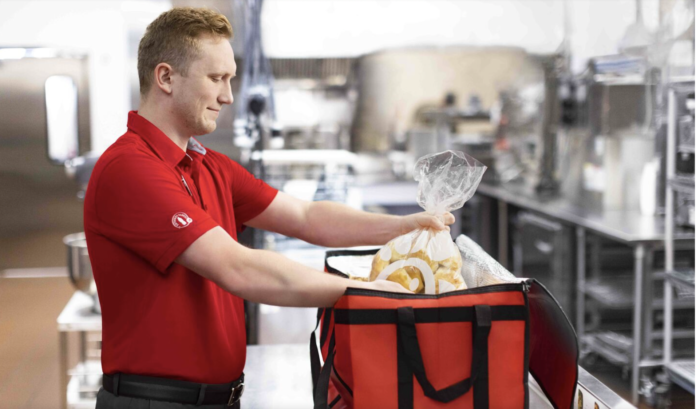
A contingency plan that includes employee support recognizes that your team is your greatest asset. Supporting them through crises not only aids in quicker recovery but also builds a stronger, more cohesive company culture capable of withstanding future challenges.

Building Towards a Resilient Future

The journey to crafting a robust contingency plan is pivotal in arming your organization against the unexpected. It’s about more than just survival; it’s a strategic advantage that positions you to seize opportunities when they arise, especially when others might be floundering.

Martin Reeves, Chairman of BCG Henderson Institute, noted, “Resilience is not merely an operational consideration — it’s a potential strategic advantage that enables companies to capitalize on opportunities when competitors are least prepared.”

Embrace these key factors, and set your business on a path to resilience and sustained growth.

Flexible Work Company ‘LAUFT’ Discusses Expansion Plans and New Government Collaboration [Interview]

LAUFT is Expanding on King Street in Toronto (Image: Dustin Fuhs)

As workplaces in Canada have been reshaping from in-office to hybrid and remote environments, LAUFT, known for its flexible on-demand offices, has announced ambitious expansion plans, including a contract with the federal government of Canada.

Currently located in the Greater Toronto Area, LAUFT offers convenient and compact workspaces equipped with spaces to meet the needs from solo entrepreneurs to large corporations who are looking for flexible workplace solutions. 

Graham Wong

“Really what we are looking at doing and really what we want, is to build the Starbucks of workspaces with an Uber-like experience”, shares Graham Wong, Founder and CEO of LAUFT. “In this evolving landscape, LAUFT is not just creating spaces; it is crafting experiences catering to the modern professional’s need for flexibility, innovation, and a work-life balance. As LAUFT expands its footprint, it brings us one step closer to a future where workplaces are as dynamic and diverse as the people who use them, offering a glimpse into a world where our environments are tailored not just for our tasks – but for our lifestyles.”

Image: LAUFT at Vaughan Mills

Currently the company has six locations including Vaughan, Burlington, Ajax, Castlefield, Dufferin, Don Mills, and King at Church in downtown Toronto. The company is planning to expand in the GTA and beyond, with a future site planned for Ottawa with a potential location in Oakville. 

The space in Ottawa will be a pilot program aiming to introduce its flexible workplace environments to federal agencies, offering government employees a new way to work. Beyond these plans, LAUFT will be exploring opportunities throughout Canada and eventually will take its concept globally. The location in Oakville has not been confirmed, but Wong says he is hoping to open a space there for around September. 

“We are expanding and have a pipeline of more locations that extend all the way outside of the GTA in the commuter areas. We are also expanding into Ottawa where we won a contract with the federal government of Canada. We will be taking the LAUFT concept there as a pilot for their federal agencies and workers. From there, the vision extends across Canada. We see the value and demand for our model in providing flexible workspaces that cater to not just individual freelancers, but also to large organizations looking for adaptable solutions for their teams.” 

Specialized spaces for events 

LAUFT will be expanding its King and Church location in Toronto and the additional space designed for meeting areas, workshops, professional and social gatherings, and provide parties. 

“We are expanding into the West unit, transforming it into a street-level space. This is about more than just providing space; it is about creating an experience that blends seamlessly with our vision of work and life.”  

The new event space is scheduled to open in early May and Wong says it has the potential to be a landmark destination for professional and social events in downtown Toronto. 

“We need to look at space, and we need to figure out what people need. And what we saw and identified in the downtown core was an opportunity for event spaces. This is really just about how you can entertain and host larger groups in a space that is highly customizable, but very convenient and very accessible in the downtown core.Maybe it is for a book club, a wedding party, or maybe a sporting event. That hasn’t existed in a very on demand way and this is what we are bringing into the market.” 

The new event space will be a test before expanding the concept to other locations. 

Blending travel and work 

Image: LAUFT Ajax

LAUFT is aiming to be the “Starbucks of workspaces,” and would like to take the concept into airports, hotels, and globally. 

Wong says he is exploring innovative venues that are not traditional office settings such as integrating flexible workspaces in airports and hotels. These locations will allow LAUFT to reach travelling professionals to work efficiently and comfortably while on the move. 

“Imagine having LAUFT in airports or travel hubs where between flights, professionals can catch up on work in a conducive environment, or hotels offering dedicated workspaces allowing guests to seamlessly blend travel and work. This vision represents a significant opportunity for LAUFT to embed itself into the fabric of the global business ecosystem.”

Wong also has plans to expand LAUFT internationally, such as in the US and Europe, but before this, he wants to establish a foundation in Canada. LAUFT is working with Nick Iozzo from Savills Canada for their real estate search expansion needs.

Future plans 

As the business is expanding its offerings into the Nation’s capital, Wong shared what’s to come for LAUFT.

“The next step would likely be in Quebec and then we would love to go across Canada and then look into the US as that would probably be our second market. 

Wong also said LAUFT is planning to bring back its loyalty program to enhance the user experience and foster a deeper sense of community. Wong says the company is working on rebuilding the loyalty program for guests, but is unsure when it will be available. The loyalty program Wong says is a great way to support local businesses, as it could possibly offer discounts to businesses around them such as cafes, restaurants, and retailers. 

Currently, LAUFT already supports and promotes local businesses as it integrates local vendors and services into its workplaces, this loyalty program Wong says could be another way to interact with the community.

“Our aim with revitalizing the loyalty program is not just about rewarding our users; it is about creating a thriving ecosystem where everyone benefits. By potentially offering discounts and special offers from nearby cafes, restaurants, and retailers, we are not only adding value for our members, but also driving meaningful support to local businesses. It is a tangible expression of our commitment to the communities we are part of and a reflection of our belief that when local businesses flourish, we all flourish.”