Advertisement
Home Blog Page 563

Canadian Shoppers Frustrated by the Gap Between Digital Expectations and In-Store Tech Realities: Report

Self-Checkout at Decathlon Union Station (Image: Dustin Fuhs)

The retail industry is facing a critical juncture where Canadian consumers are experiencing a disconnect between their shopping expectations and the in-store reality, according to technology company SOTI.

As the Canadian retail markets continue to evolve, the industry grapples with challenges rolling out in-store technology and integrating advanced AI technology, while continuing to optimize the supply chain and address ever-growing security concerns, it says.

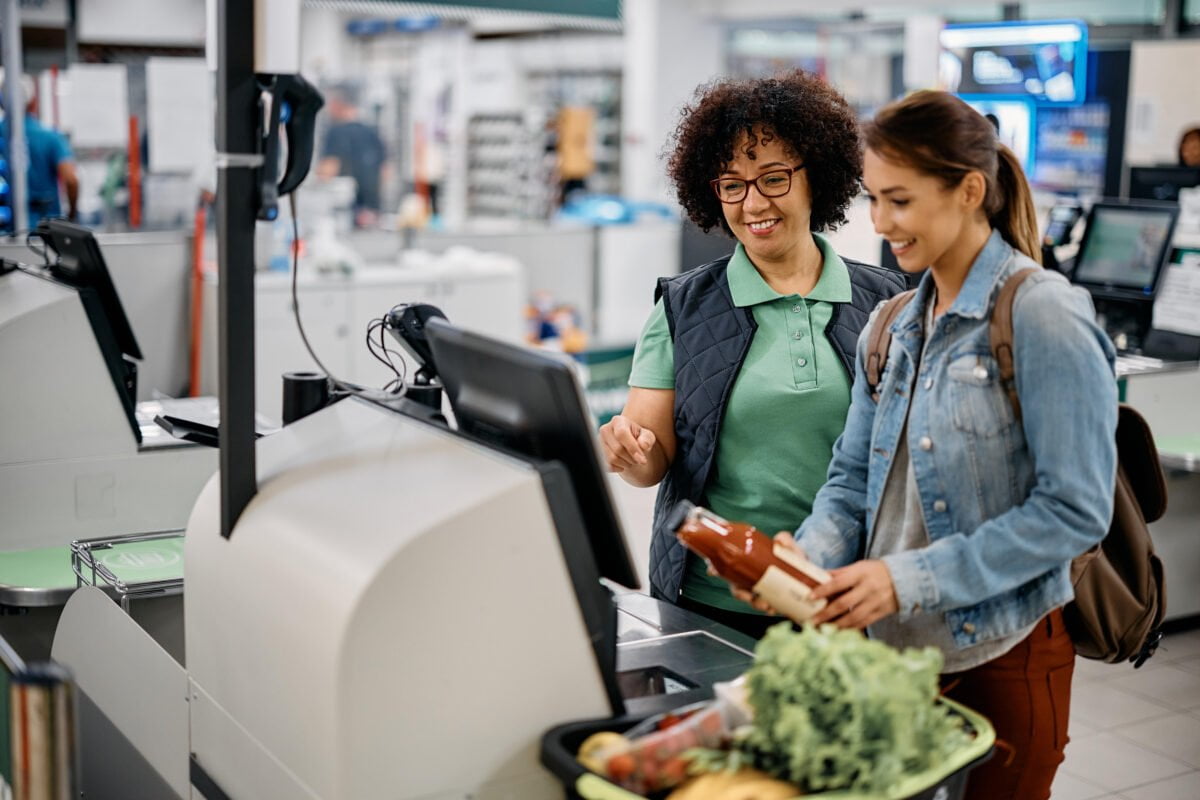
According to SOTI’s new global retail report, Techspectations: Consumer Demand for Digital Transformation in Retail, 92 per cent of Canadian consumers have used in-store technology but many believe these devices make the shopping experience worse. Canadians cite challenges in-store such as a lack of staff to assist with issues relating to self-serve machines (73 per cent of users), while as many as 31 per cent stated that, despite visiting a store to buy goods, retail staff members had to order the item online using the store device regardless.
“Retailers have been focusing on how to maximize AI’s impact for the online experience without fully replicating these benefits in their physical stores where it can address many of the pain points Canadian consumers are facing today,” said Shash Anand, SVP of Product Strategy at SOTI. 

Shash Anand, SVP of Product Strategy, SOTI

“For those with an omnichannel approach, strategic investment in in-store infrastructure will enable AI and automation to optimize supply chain processes, identify technical issues, enhance inventory visibility and aid in forecasting, while reducing waste. As a result, they can ensure a harmonized and efficient retail experience that will replicate the seamlessness consumers expect from online shopping.”

Other findings from the report include:

  • Despite adoption of Artificial Intelligence (AI) and mobile technologies, 78 per cent of Canadians express security concerns with personal data, 28 per cent find the in-store shopping experience more confusing than ever before and 47 per cent have experienced issues with devices such as self-serve checkout;
  • 46 per cent of Canadian consumers expect to be able to pick up an item ordered online from a physical store on the same day;
  • 41 per cent will look elsewhere if delivery or pick-up of an item is more than two days;
  • 77 per cent of consumers expect to always know the status of their orders, highlighting the need for efficient supply chain visibility; 
  • More than three-quarters (78 per cent) expressed concerns about entering personal details online or through in-store devices, indicating a pervasive lack of trust in the data collection and payment technologies used by retail organizations;
  • Security concerns extend to fraud, with 41 per cent of consumers worrying about becoming a victim of financial fraud and another 42 per cent expressing concerns about identity fraud;
  • Canadian consumers have concerns using in-store devices due to mistrust of retailers, including the potential exposure of personal details (40 per cent) and the risk of the next user seeing personal information (25 per cent);
  • Despite this, 43 per cent of consumers view in-store devices as tools to enhance shopping convenience and speed. This highlights the need for retailers to balance convenience and security while building trust among those making purchases in the retail space.
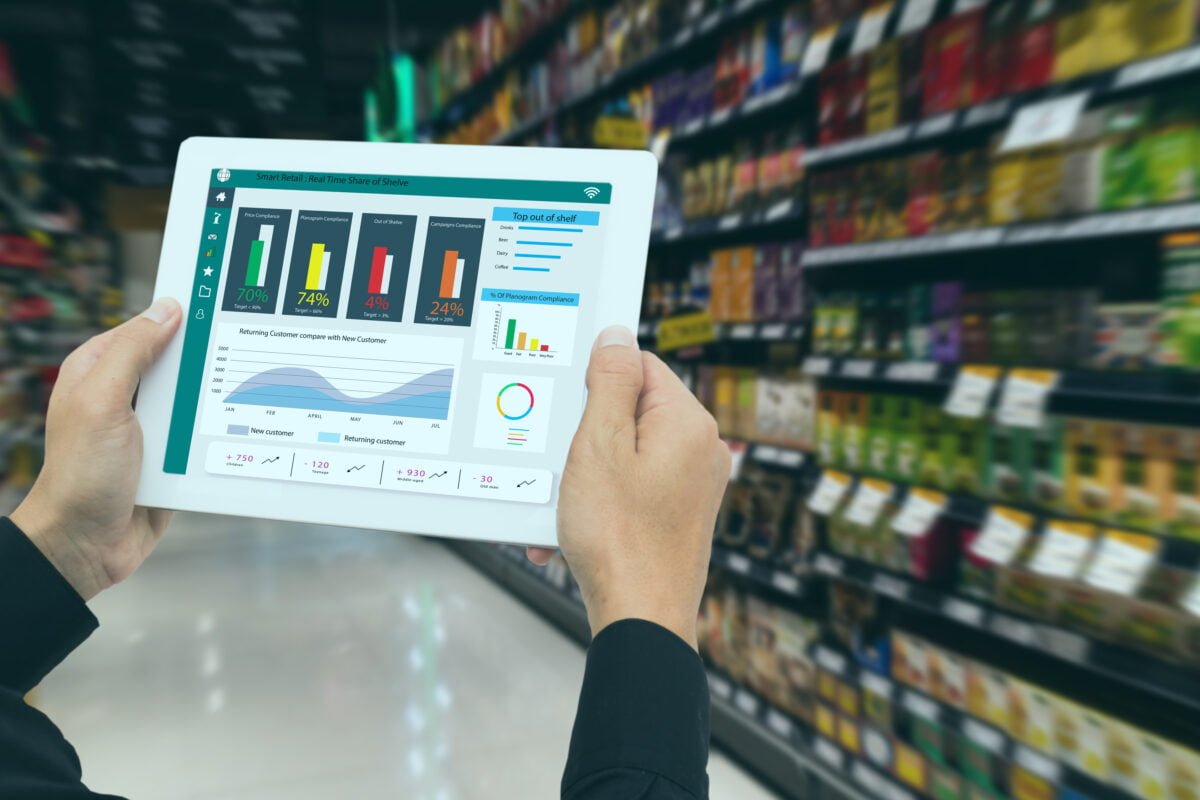
Retailer holds tablet and use augmented reality technology to monitor data.

“We do this report every year and it’s really for us to kind of find out what the pulse is of what’s going on in retail,” said Anand. “This allows us to identify the issues that consumers are facing specifically. Our job is to help the retailers with technology.”

Anand said the fact that 92 per cent of Canadian consumers have used in-store technology but many believe these devices make the shopping experience worse is an indication that “the tech is being used but it’s not being used effectively.”

“And if it’s not going to be used effectively, guess what, I’m not going to have that positive experience.”

Anand said retailers have mastered the online experience in many ways in recent years because of COVID and market trends.

“That in-store experience did not get updated but the online experience got a lot better,” he said. “But at the same time what happened also is consumers have realized that they get this really nice, personalized experience when they are online but they would like that to be shifted over to the in-store experience and I think that’s where retailers have said ‘okay how do we do that, how do we make that experience easy once you’re in the store as well’. 

Naan Kabab (Image: Dustin Fuhs)

“The truth is you buy a bunch of tech and you’re trying to give a positive experience, you’re trying to give a personal experience, but if the experience isn’t good in the store, the consumers will go elsewhere.

“What happened is that self-serve checkout became very popular. Buy online, pick up in store became popular. But what’s happened is 73 per cent of those reported that they experienced a lack of staff to assist with issues related to those self-serve checkouts.

“Should the retailers be at a place where it’s like ‘yes, this is a no brainer’? Absolutely. We have companies that are still having trouble with device visibility, they’re still having trouble with inventory management, they’re still having trouble with just the overall cost of trying these security devices. The visibility is really a big one. I want to know what’s going on in all my stores, I want to know what’s happening.”
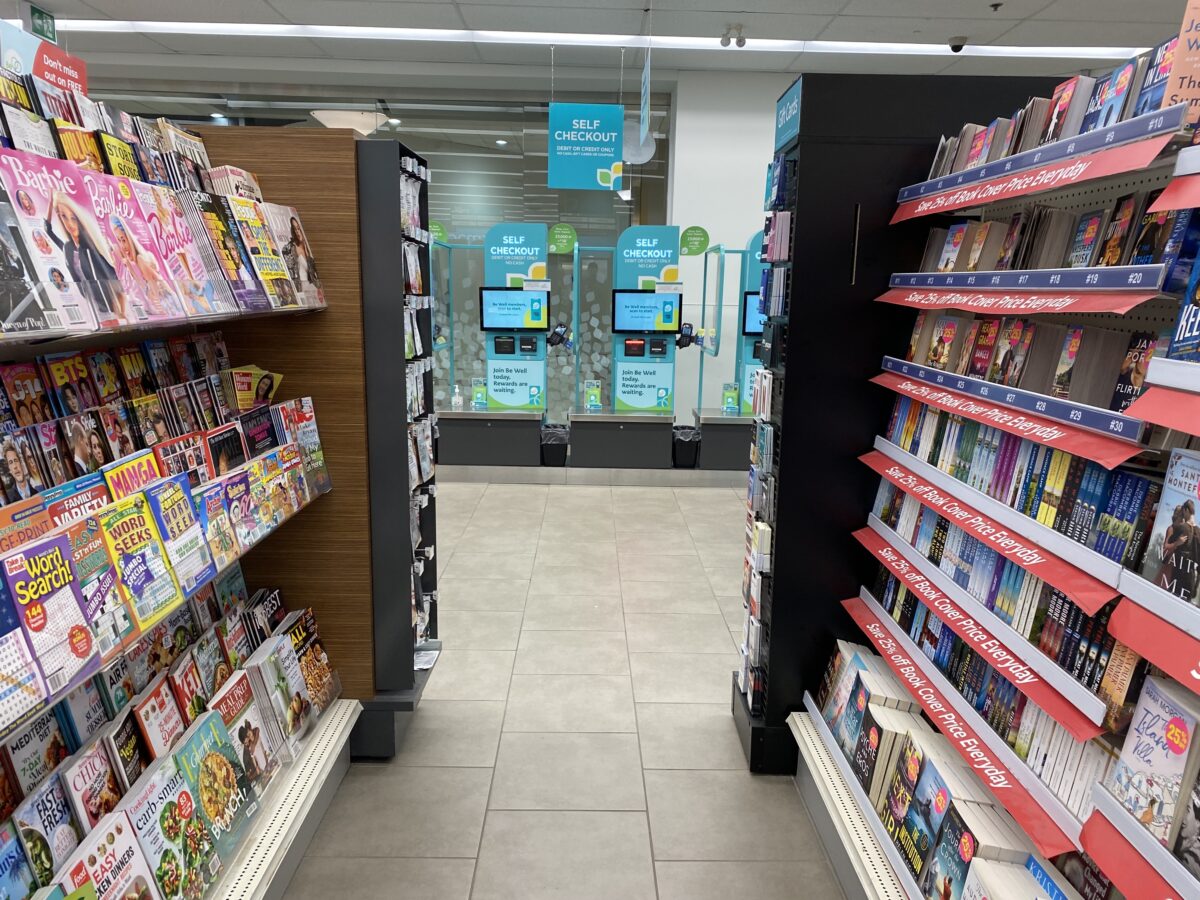
Self Checkout at Rexall in Metro Hall (Image: Dustin Fuhs)

When reflecting on the overall retail experience, Canadian respondents continue to expect change and see value in technology to enhance their interactions with retailers, but gaps in expectations and reality continue to jeopardize brand loyalty and sales, added Anand. 

“Looking to the future, retailers must focus on the technologies and infrastructure around them and ask how these applications, devices and technology solutions are being managed, monitored and maintained.”

Anatomy of a Leader: Arlene Dickinson

Anatomy of a Leader: Arlene Dickinson

Arlene Dickinson today is recognized as a visionary entrepreneur with an incredible track record of success – an iconic Canadian business leader with a high profile through her work and as a dragon on the popular CBC TV show Dragons’ Den.

Her journey to get to this position in life and in business has not been an easy one over the years. But a vision, dedication and perseverance have always been in the forefront of her road to success.

“For me, I think it’s been a function of always wanting to make the most of what was in front of me,” she says. “Because we grew up very poor and without very much, we were raised to be very grateful for what we had and we were raised to believe that anything is possible.

“I think immigrants just have a different view on what hard work can do. So I always knew that if I worked hard enough I could put food on the table and I could take care of myself. I have a really strong work ethic. I try to do the right thing. It doesn’t mean I’m always successful at doing everything right but I try to do the right thing.

“And I think my success has come because when I listen to people, and when people share their stories with me or share their dreams with me, or talk about what they want to do, I genuinely listen. I think I’m authentic and I think my authenticity has really been the key to my success because I care about what people think, I care about what they want, I care about what they need and I want to help them do whatever they need.”

Image: Arlene Dickinson

Dickinson was born in Germiston, South Africa, just outside of Johannesburg. Her father chose to move to Canada as an electrical engineer and Dickinson was three years old when she came to Edmonton initially. A few years later the family moved to Calgary when she was around six years old.

“I didn’t have any university. (After high school), I started to work. I worked in PR for a little bit and worked in retail for a little bit. I graduated when I was 16 and left home because my parents ended up getting divorced so I didn’t really have a home to stay at,” she said.

“So at 16 I left home, went to rent a place, got a job in retail then got a job in PR for a little bit and then got married at the age of 19. So I was like literally out of school, worked for a couple of years, fell in love and got married.

“I got a job at CFCN TV in sales when I got divorced. Got fired from that job and I had met one of the partners at Venture (Communications) at the time and they said they would make me a partner if I would come and work for free basically. Sweat equity. And I had nothing else I could do. I had no other opportunity in front of me so I took the gig and went to Venture.”

About nine or 10 years later, she bought the partners out.

“In marketing, you have to be a student of pop culture and I was fascinated by people. Always have been fascinated by people. So I’ve always been an observer of people. And I think what made me good at marketing was understanding that people have dreams and they have fears,” said Dickinson.

I think people only hire you for marketing because you can do one of two things. You can help them build their dreams or you can help them stop their pain . . . I grew up in a fairly troubled family, got divorced when I was young. So I became a really great listener and a great observer of people.

“And I think those street smart skills made me really good at marketing. I liked it because I understood it and I think I was good at it because I had come from a place of feeling unheard and unseen in my childhood. So it was this kind of ability to think about pop culture and to think about what people really wanted and not put the attention on me but really focus on making other people successful. So my whole thing with marketing is how do you make somebody else really successful and if you do that you might be lucky enough to be successful yourself but the purpose of it was always, how do I help other people build their business. That was kind of where it started and why I liked it so much because you could help other people.

“It was either going to be that or a social worker.”

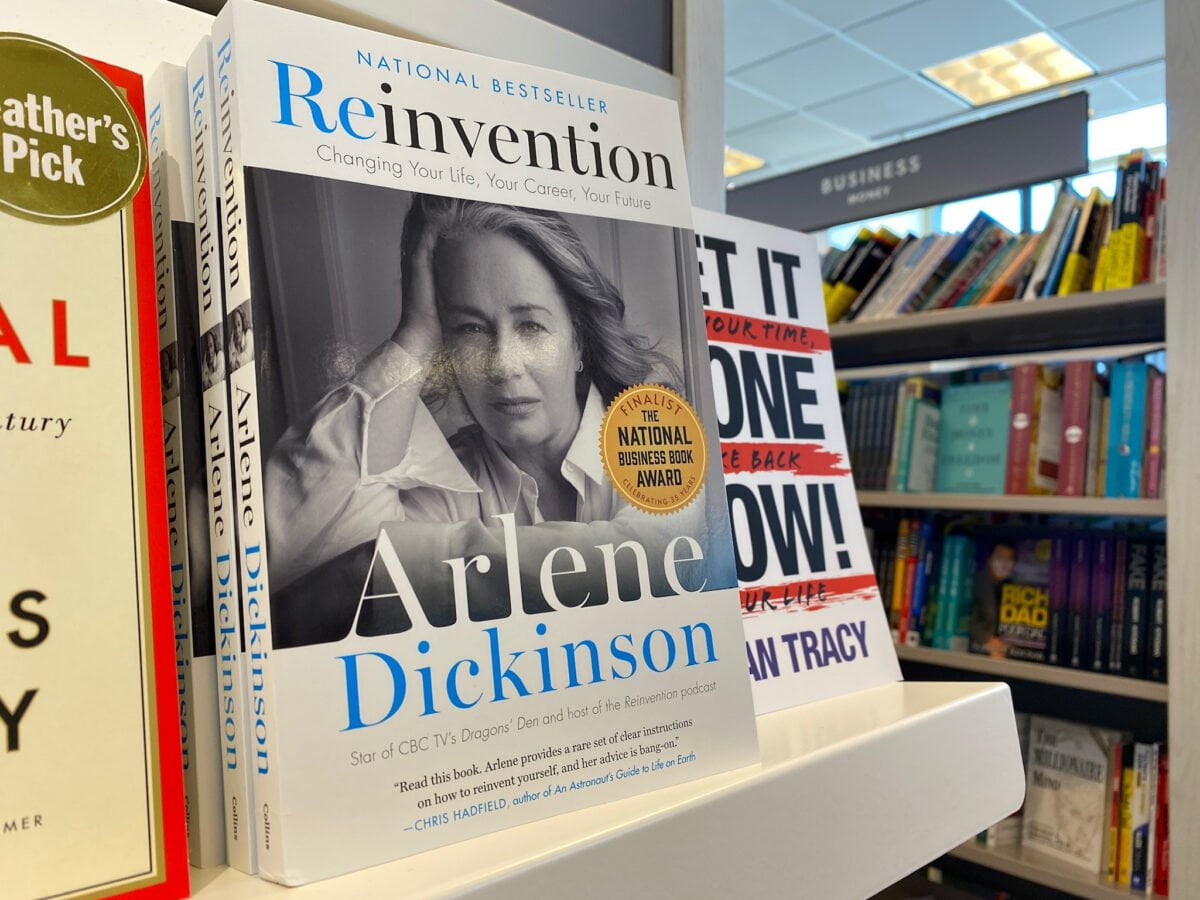
Reinvention by Arlene Dickinson
Reinvention by Arlene Dickinson – Photo by Dustin Fuhs

Dickinson is Founder and General Partner of District Ventures Capital, a venture capital fund that invests in innovative companies in the food & beverage and health & wellness sectors. She is also the Co-Managing Partner of Believeco:Partners, an independent Canadian-based owner, operator, and builder of the foremost marketing, communications, and engagement agencies in North America.

Beyond her business ventures, Dickinson is a sought-after speaker, three-time best-selling author, and philanthropist. She is widely recognized for her role as a Venture Capitalist on the hit television series, Dragons’ Den, where she currently has starred for over 15 seasons.

Dickinson has been included in Canada’s Most Powerful Women Top 100 Hall of Fame, PROFIT and Chatelaine’s Top 100 Women Business Owners and the Marketing Hall of Legends. She’s a recipient of the Pinnacle Award for Excellence and the Queen Elizabeth Diamond and Platinum Jubilee Awards. She has received numerous other awards and accolades – both for her work as an entrepreneur and her many philanthropic efforts, including acting as an ambassador for Second Harvest. She has served for many years as an Honourary Captain in the Royal Canadian Navy and has received honourary degrees from Mount Saint Vincent University, Concordia University, Saint Mary’s University, Olds College, Northern Alberta Institute of Technology and University Canada West.

Before she joined Venture, she had a couple of other jobs. At one of those jobs she met a guy who was into investing in the stock market. That piqued her interest even though she had little money to invest. While learning about the stock market, she met his broker who taught her the best lesson she ever learned about investing – don’t be greedy, pigs get slaughtered which were his words. Always leave some money on the table for the next guy. And you can’t go broke taking a profit.

Arlene Dickinson at Carlton University SOAR Student Leadership Conference (Image: Chris Roussakis)

The stock market was interesting to her and because she liked people so much she started to think, as she got more successful in her business, more about it. At the time, one of her staff came to her and said they were going to Thailand to start a travel adventure company and would she lend them some money to do it.

“I had never done angel investing before. I thought it was interesting. Sure. I really liked him. I really trusted him. I knew he would pay me back. It was $30,000. I really didn’t have $30,000 but I lent it to him anyhow and he paid me back over time,” said Dickinson.

“And I just got the bug. It made such a difference to him. It was the difference between him starting his business and not starting his business. Because he paid me back on time and he always kept me informed, I thought there’s something there. I was doing little investments on the side. I was investing in things on my own with angel investing. And the market. Of course, investing in myself and in the business and growing the business and making the deals, acquiring companies. They came and asked me to be on the show and that literally was the start of my serious investing.”

Dickinson walks a lot to relax. If she is dealing with a problem or trying to sort through something, she goes for a long walk. Traveling and reading are also big interests of hers outside of work.

Image: CBC Dragons Den

In a recent post on LinkedIn, Dickinson offered her crash course on resilience:

  1. Everyone is not going to like you, and that’s ok, so get comfortable with liking yourself because yes, it will feel hard when not everyone likes you.
  2. You don’t need to seek or have other people’s validation of your accomplishments in order to be accomplished.
  3. Be like that wind up toy that when it hits the wall it reverses and goes happily in a different direction.
  4. The easy road doesn’t exist so stop searching for it and get comfortable with navigating a road full of potholes.
  5. Sometimes when you reach your goals you still won’t feel satisfied. Use that sense of needing more to help you accomplish more.
  6. Resilience and optimism are co-dependent.
  7. Know your values because people will constantly test them and you’re going to need them when they do.
  8. You can be confident and have loads of self doubt at the same time. Focus on growing even the smallest glimmers of confidence that are in you and leveraging the fear, no matter how big, to propel you forward.
  9. Find the joie de vivre because each day will always bring a challenge if you’re trying to grow.
  10. And here’s the best lesson: Challenges are opportunities.

GoDaddy’s All-in-One Commerce Platform Helping Small Businesses in Canada Cut Costs with the Lowest Transaction Fees in the Industry

As Canadian shoppers tighten their spending in early 2024 following a busy holiday season, businesses in Canada are being pressed to save money wherever possible. In an effort to help small businesses keep costs low GoDaddy Canada has launched its latest commerce innovation in Canada, called GoDaddy Payments. 

The all-in-one commerce platform facilitates fast and secure payment processing and introduces the lowest transaction fees in the industry, enabling businesses to save over 15 per cent on card processing fees*.

The lower transaction fees are a huge bonus to retailers, especially smaller operations, as rising credit card usage continues to drive an increase in credit card fees. While retailers have the right to pass these charges on to their customers through raising prices or issuing surcharges, saving on transaction fees can help retailers reduce their own costs while keeping prices stable for their customers.

GoDaddy’s new offerings for retailers save money while also offering ease of use. GoDaddy Payments seamlessly integrates with the existing suite of user-friendly tools within the GoDaddy Commerce platform, including GoDaddy Website Builder.

The comprehensive commerce solution empowers small businesses to streamline operations by managing customer orders, payments, and refunds all in one place, with the convenience of a centralized dashboard.

As part of its all-in-one commerce platform, that enables retailers to sell both online and in store, GoDaddy has launched several new features for the Canadian market to help retailers boost their omni-commerce footprint and manage it from one dashboard.  

  • GoDaddy Payments: A powerful payment provider facilitating seamless and secure transactions across the full GoDaddy Commerce suite at a competitive price.
  • GoDaddy Smart Terminal: A modern point-of-sale (POS) device designed to effortlessly manage curbside or in-store pick-up orders, complementing online and offline selling in one centralized dashboard.
  • GoDaddy Online Pay Links: A simple way to accept online payments using quick, sharable links without the need for a website.
  • GoDaddy Virtual Terminal: Enables any computer, tablet, or mobile device with a web browser to function as a payment terminal without the need for extra equipment.

GoDaddy has made GoDaddy Payments quick to set up, recognizing that retailers and other businesses have many priorities and that time is money. With GoDaddy Payments, getting set up is quick and easy. Account creating is simple, verification takes minutes, and you are ready to take payments right away. Transaction fees are as low as 2.7% + 0 cents for ecommerce and 2.3% + 0 cents for in-person sales.

Quick setup is further complemented by fast pay-outs, as GoDaddy recognizes that smaller retailers especially may struggle with cash flow. With GoDaddy Payments, business owners can receive payments from customer purchases as soon as the next business day.

GoDaddy Smart Terminal: Revolutionizing In-Person Selling

The GoDaddy Smart Terminal is a sleek and modern all-in-one point-of-sale designed to meet in-person selling needs. It enables a quick and easy setup, reliability, along with English-speaking 24/7 customer support. The terminal supports contactless payments, includes built-in receipt printing and a barcode scanner, and features a lightweight design with dual screens for convenient in-store selling.

The GoDaddy Smart Terminal is currently available in Canada at GoDaddy.ca for a promotional price of $399, a significant saving compared to existing competitor devices. Each terminal includes a charging dock and free expedited shipping to facilitate a quick start for small businesses.

A Unified Dashboard for Omni-Commerce Experience

For retailers who sell both in-store and online, the GoDaddy Commerce lineup provides a streamlined dashboard for managing payments and orders across online and in-person sales. Features include syncing product catalogues and inventory across all selling platforms and managing multiple marketplace placements through a single listing. This addresses the issue of retailers having to use different platforms, which can be inefficient and more costly.

Learn more about GoDaddy’s Commerce solution at https://www.godaddy.com/en-ca/sell. To explore how GoDaddy supports everyday entrepreneurs and can help your retail business, visit godaddy.ca. 


* Disclaimer: Currently lowest pricing compared to leading providers Square, Stripe, and Shopify for Canadian ecommerce, in-person, and keyed-in transactions.

*Retail Insider partnered with GoDaddy for this article content.

Canadian Retailers and Shopping Centres Embrace the Chinese Year of the Dragon with Vibrant Celebrations and Exclusive Merchandise for Lunar New Year [Interviews]

Yorkdale Lunar New Year 2024 (Image: Oxford Properties)

Canadian shopping centres and retailers across the country have been going all out recently celebrating the Year of the Dragon as part of the Chinese Lunar New Year experience.

It’s a way to recognize this important event, to reflect the community and also to appeal to a key consumer demographic.

Bruce Winder

“The Chinese consumer has a fairly large impact on retail in Canada – particularly in the Greater Vancouver and Greater Toronto markets. You could break the segment into Canadian Chinese shoppers and Chinese tourists visiting Canada. Both are important segments. According to Periphery, the Chinese population in Canada will be 2.7 million people by 2031,” said Bruce Winder, author of RETAIL Before, During & After COVID-19 and President of Bruce Winder Retail, adding the Chinese tourism business in Canada is also a big booster of sales in the retail sector.

“This segment over indexes on luxury goods and experiences. When you think about Lunar New Year merchandise and services, this group offers a great sales opportunity at a time when retail overall is a little quiet and sales are slow. Retailers that do a good job on Lunar New Year build relevance to these important customers which may bring loyalty at other times of year.

“There have been some interesting collaborations recently with brands celebrating Lunar New Year with select merchandise from Lululemon, Dr. Martens, Aritzia and many more. The Year of the Dragon looks like a great sales opportunity for retailers of all kinds.”

Yorkdale Lunar New Year 2024 (Image: Oxford Properties)

Oxford Properties is bringing the Lunar New Year experience to a number of its shopping centre properties including Yorkdale, Scarborough Town Centre, Square One, Hillcrest and Upper Canada Mall.

Lucia Connor

Lucia Connor, Vice-President of Marketing, Oxford Properties, said the real estate company recognizes various periods throughout the year, but in particular for Lunar New Year, as its shopping centres are located in diverse communities.

“Our teams, we create, we launch, a wide range of different experiences, entertainment, performances, events. And we even include markets to really commemorate the Year of the Dragon for Lunar New Year,” said Connor. 

“We do this at Oxford specifically because in order to connect with the communities, we need to reflect the communities. So that’s an important priority for us. 

“Secondly, Lunar New Year is a significant gifting occasion. Many retailers in our shopping centre also celebrate the season with in-store events, many of whom have window displays. And what’s really interesting is that some of the brands will also create and carry unique Lunar New Year products. So this year, Year of the Dragon products. And so our shopping centres will also amplify that on our channels to drive awareness, traffic and sales to those retailers.”

Lunar New Year at Scarborough Town Centre (Image: Oxford Properties)

For example, at Yorkdale, until Sunday, February 25, visitors can visit East Court near Canada Goose to make themselves a part of an elevated Lunar New Year experience like no other. Toronto’s largest indoor dragon will take over a major court and feature a massive 40-foot installation of a golden dragon. 

Vianna Ko

Also, Yorkdale Shopping Centre is welcoming the return of an expansive gold immersive experience located near Holt Renfrew. Until Friday, February 23, guests can walk through a passageway featuring golden archways and a stunning runway floor decal adorned with florals and dragons that beautifully intertwine tradition and modern artistry.

“Lunar New Year is one of the most significant gift giving events in many Asian cultures. We know from experience that our guests and store employees expect engaging experiences in addition to our unrivaled array of global brands that often release exclusive, limited edition Lunar New Year collections,” said Vianna Ko, Marketing Manager, Yorkdale Shopping Centre. “Launching two expansive and immersive themed experiences means that everyone can embrace the Year of the Dragon at Yorkdale.”

Jingjing Zheng, Founder + CEO of BEYOO, the first and only platform, where brands can build relationships with best-in-class Asian influencers and creators, both at home and globally, said Lunar New Year events and celebrations not only draw Chinese customers but also create interests for other Asian consumers and non-Asian consumers.

Jingjing Zheng

“It creates a great opportunity for decors and merchandising themes in red, gold and festive colours and styles. Many retailers and brands also select and even design specific products for the Lunar New Year. For example, this year, the dragon is a great theme. Brands like Loro Piana, Ralph Lauren, Tods and Acne created their special dragon collections,” she said.

“In 2019, Chinese tourists spent $255 billion (€235 billion) while overseas, according to business consultancy McKinsey & Company. The figure is almost twice as much as Americans, three times more than Germans and almost four times the spending of British tourists. At $2.1 billion, China was Canada’s top tourist spending nationality in 2019. In terms of long-haul arrivals, it was second only to the UK.

Square One Lunar New Year 2024 (Image: Oxford Properties)

For Canada China has yet to lift its ban on group travel to Canada. In August, the Chinese government lifted it for the U.S., UK , and multiple other countries.

She said China is expected to fully recover its spending in Canada at $2.1 billion in 2026. Japan and South Korea are expected to come back sooner than China in 2025.

“In the first half of 2023, the number of outbound tourists from mainland China reached 40.3 million, according to official statistics. That figure is expected to have grown further in the latter half of the year.

But it’s still a far cry from 155 million outbound trips taken by mainland Chinese tourists in 2019 before the pandemic struck. And some anecdotal data, most of my wealthy Chinese friends are traveling domestically during the weeklong Chinese New Year break. There has been a lot of campaigns between northern China and southern China provinces to encourage each other to visit and see different parts of China.

“More can be done by our tourism organizations to encourage individual travel to Canada while group travel is not happening.”

Yorkdale Lunar New Year 2024 (Image: Oxford Properties)

Shopping centre owner Cadillac Fairview also has a strong Lunar New Year presence at its properties in Canada.

For example, the landlord is celebrating the event with a return of dazzling decorations, engaging in-person programming and exclusive promotions at three of its shopping centres in the Greater Toronto Area –  CF Markville, CF Fairview Mall, and CF Toronto Eaton Centre.

All three locations across the Greater Toronto Area will come alive with the return of CF’s “supertrees,” an immersive and vibrant décor display, inspired by Singapore Marina Bay’s Supertrees. The shopping centres will also be decorated with refreshed floor decals of this year’s Chinese zodiac sign, the Dragon. Cultural performances including martial arts, Chinese dances, traditional eye dotting ceremonies, dragon and lion parades and more are all part of the experience.

Louise Della Fortuna

“Cadillac Fairview is so excited to celebrate the Lunar New Year with refreshed decorations and vibrant programming,” said Louise Della Fortuna, Director, Regional Marketing, Cadillac Fairview. “During this special time of year, our guests can come together and enjoy the festivities with new parades, martial arts performances and lion and dragon dances at several of our properties. We want to wish all our visitors happiness and good fortune for the year ahead as we welcome the Year of the Dragon.”

In Vancouver, similar celebrations are part of the Lunar New Year experience at CF Pacific Centre and CF Richmond Centre.

Canadian Retail News From Around The Web For February 8th, 2024

Canadian Retail News From Around The Web

News at a Glance

Retail Insider is streamlining its Canadian retail news from around the web to include a handful of top news stories that can be viewed quickly during the day. Here are the top stories from the past 24 hours.

How Lee Valley Tools combines newfangled technology with old-fashioned people skills to create experiential retail (Ottawa Business Journal)

Bell to close The Source headquarters, lay off employees following Best Buy Express rebrand (Mobile Syrup)

Whole Foods Canada offers same-day delivery with Instacart partnership (Grocery Business)

Mandatory grocery code of conduct essential, industry expert tells Ottawa committee (Grocery Business)

Specsavers surpasses 100-store milestone in Canada (Newswire)

Amazon offers packaging waste reduction program to Canadian small businesses (Canadian Grocer)

Opinion: Ottawa’s bid to woo a foreign grocer to Canada is a nothingburger (Globe & Mail / subscriber paywall)

Ottawa boosting funding for food price increase investigations (National News Watch)

First Phase Of Cloverdale Mall Redevelopment Gets The Green Light From City Council (Toronto Storeys)

‘Onerous’: Slow uptake on B.C. grant for businesses targeted by crime, vandalism (Global)

There’s a new Kensington vintage shop and it’s a time portal to the ’70s (Streets of Toronto)

B.C. to remove nicotine pouches from convenience stores (CTV)

Alberta wine clubs, retailers feeling short-poured over B.C. wine war (Global)

Quebec closing cannabis store in Montreal (StratCann)

Montreal-Based AI-Powered Custom Suit Company ‘SUITABLEE’ Discusses Expansion Plans [Interview]

Image: Suitablee

SUITABLEE, an AI-powered custom suit company in Montreal, is looking to be the leader in custom suiting in North America within the next ten years by expanding across Canada, into the US market, and by continuously advancing with AI.

Jean-Sebastien Siow

“SUITABLEE is the world’s first AI-powered custom suit company. Our operations are quite complex, so this is where we have a competitive advantage over competitors. We are very smart in the way we do things and we have customers across North America. We allow our customers to design their suits, choose the fabrics, and have everything custom fit to their size which is dependent either online or here locally in Montreal,” says Jean-Sebastien Siow, the Co-Founder and CEO of SUITABLEE. 

New Location in Montreal 

Image: Suitablee

SUITABLEE has recently opened its largest headquarters in the Old Port of Montreal, spanning across 4,000 square feet. The new space opened a few months ago and acts as both a showroom and the company’s administrative centre. Operations at this location include cutting, assembly of garments, seamstresses, and a photo studio. 

The second location is at Quartier DIX30 and the boutique is about 1,500 square feet of showroom space.

The brand started in 2015 when Siow and Jean-Jeremie Siow, both engineers, wanted to “combine old-school tailoring with technology.” The co-founders did not start off in a store, but in a car. 

“It really started in the trunk of a car, where we would go to people’s homes or offices and show them the fabrics and use the old traditional ways of measuring. We learned a tremendous amount over the years to be able to create what SUITABLEE is today. We sort of used Montreal as our base to do all our data analysis over the last few years, but SUITABLEE was not always where we are today.” 

Siow says the brand places a strong emphasis on making sure its custom suits are accessible to a range of customers.

Currently, getting a custom suit comes with high price tags, but SUITABLEE has made it accessible by offering a range of prices. Looking at its standard fabrics, customers are looking at spending around $900, making it accessible to students, for prom suits, and to those new to tailoring.

Looking at the deeper end, premium fabrics are available starting at $1,100  and ultra-premium options ranging from $1,400 to $1,700. This approach allows suits to be more accessible to everyone and customers “can enjoy the benefits of a custom tailoring, without breaking the bank.” 

AI Suits – How it Works 

Image: Suitablee

Customers can either design a suit in-store or online. For those visiting locations, SUITABLEE uses a state-of-the-art infrared  scanner to measure all the subtle slopes and angles of the body, ensuring a precise fit. 

Online, customers use its automatic sizing technology by answering a series of questions about their height, weight, preferences, and body shape. Based on these responses, SUITABLEE is able to leverage its database and AI algorithms to generate custom suit patterns. This process eliminates the need for traditional manual measurements, making it not only comfortable and convenient, but also accurate. 

Either online or in-store, both measurement techniques eliminate the need for using tape measure tools which could be uncomfortable. Now, consumers can enjoy a relaxed and comfortable environment as they go through this non-invasive measurement process. 

As the brand makes it accessible for customers to order suits online, Siow says orders come in from across Canada, the US, and also Europe.

“People don’t want to have to spend a lot of time taking out a measuring tape and having somebody measure them: it’s not error proof and there is a lot of interpretation required. In our case, people want to be able to answer those 14 questions and have their measurements generated automatically. It lowers the barrier.” 

Both locations have physical samples of suits for customers to try on, but SUITABLEE also has a digital screen where customers can see how the suit will look on them. They will also be able to look at different colour options, styles, and fit – helping the customer get a clear view of the design elements before making the purchase. 

“Unlike our competitors, our service is very interactive. Our online platform allows not only for customers to purchase online, but for them to have a preview of what their suit will look like due to our design tools on our website. So you are able to completely configure and design a custom suit on our website and these large screens in our showrooms. That way, our customers know exactly what they are getting before making the dive to purchase their outfit.” 

AI’s Future at SUITABLEE 

Image: Suitablee

Siow said the brand will continue to advance its AI technology and already has a few ideas on where they can use it to make custom suits even easier. 

“The next step in our journey with AI is the styling part of suiting. So what we have realised in custom suiting is that despite the fact we make custom things and people have choices, customers like to be told what the best options are in terms of colours, styling, and fit based on their life circumstances such as age, career, and where they live. Rather than having to decide, we can generate the most ideal recommendation from a styling perspective. So that is our next step.” 

Augmented reality is also something Siow is interested in adding to the brand, such as Apple’s headset, Meta’s headsets, and Facebook’s progress on glasses. 

“Augmented reality is making a big move and that is something we would like to dig into and how we can include that for people who want to have a visual of what a suit looks like on them. We are very much a technology driven company, beyond being a fashion company and that comes with the fact that my partner and I are trained as engineers.” 

Siow said this technology will allow people to have an idea of what a shirt, colour, and fit will look on them: “One thing we can’t currently do, is you can see the suit on the screen but you don’t know what it looks like on you, you don’t know what it looks like on your skin tone.” 

Siow says the brand is trying to push this technology to be ready for locations in the next few years. 

Product and Location Expansions 

Image: Suitablee

SUITABLEE is now going to be expanding into women’s tailoring, aiming to offer the same level of precision and customization for female clients. Currently it is at the early stages of development as they need manual measurements to build an AI database, but Siow says the AI women’s suits should be ready within the next year or two. This expansion takes a major step towards inclusivity. 

The company is currently rooted in Montreal; however Siow says they have plans to extend its physical presence beyond its home base within the next 18 months, targeting key Canadian cities such as Ottawa, Toronto, Calgary, and Vancouver.. Beyond Canada, SUITABLEE has its sights set on the US market, with particular interest in Boston, New York, and Texas where they currently have a strong customer base. 

Inside Quebec, SUITABLEE is also looking at adding an additional location somewhere North of Montreal but is unsure when. 

“Once we feel that we have really reached the heights and potential in Montreal, then we will start looking outside of the area, but we don’t want to expand and have a bunch of average stores. We want to be able to have a good hold on what is at home and then move everywhere from Ottawa to Toronto, to Calgary to Vancouver. Our goal over the next ten years is to have a very strong presence and to be the leader when it comes to custom suiting in North America.” 

Oakridge Park in Vancouver Announces First Confirmed Luxury Retail Tenants Ahead of 2025 Grand Opening [Feature]

Image: QuadReal

Ahead of its spring 2025 grand opening, Oakridge Park is announcing its first confirmed luxury retail tenants for the highly anticipated mixed-use project on Vancouver’s West Side. Oakridge Park will create a second significant luxury node in the Vancouver market, and will compete for consumer dollars with the city’s luxury retail-heavy downtown core. 

More than 100 retailers will be part of the new Oakridge Park retail component, which will span about 650,000 square feet and will include a mix of luxury stores, big-brand retailers, two anchors (including Hudson’s Bay) and various food and beverage options including a Time Out Market food hall. 

Flagship-sized luxury stores will be part of the mix, with some big brands said to have secured large spaces near Oakridge’s new 140,000 square foot Hudson’s Bay store. The first batch of announced luxury brand stores include some brands already in the market, as well as some new ones not in Vancouver or even in Canada yet, for that matter. 

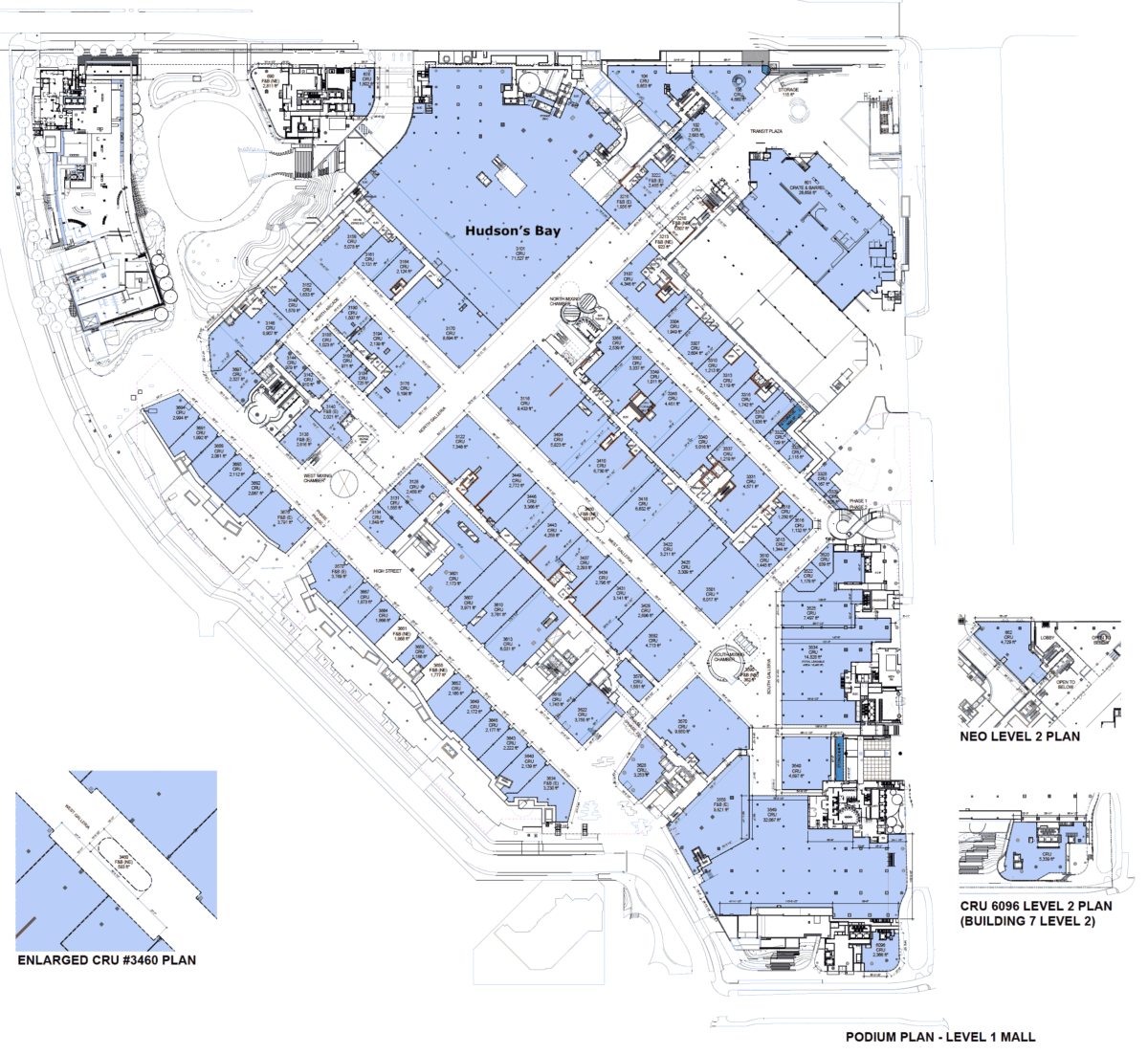
Main floor leasing plan for Oakridge Park, via QuadReal
Second floor leasing plan for Oakridge Park, via QuadReal
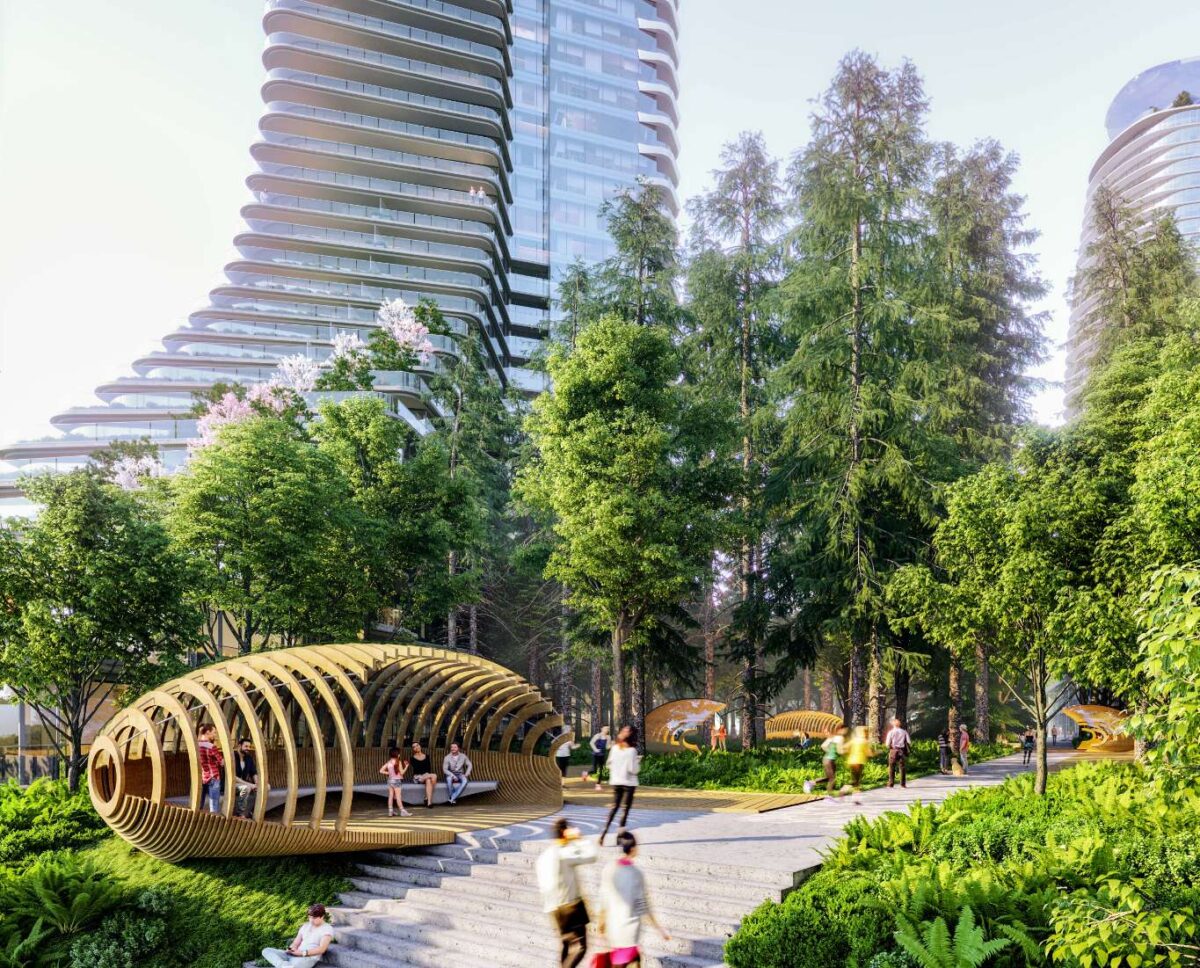
Rendering of the ‘luxury run’ at Oakridge Park. Image via QuadReal

Chrystal Burns, Executive Vice President, Canadian Retail at QuadReal, said that luxury brands will make up about 20% of the shopping centre component of Oakridge, and that the centre will otherwise serve the local community and trade area with a roster of strong retail offerings. 

Brands announced for Oakridge that currently do have standalone stores in the Vancouver market include Christian Louboutin, Miu Miu, Alexander Wang, Maison Margiela, and Versace. Christian Louboutin currently operates a concession at Holt Renfrew in downtown Vancouver, and operated a concession at the downtown Nordstrom store until the Seattle-based company exited Canada last spring. The standalone Miu Miu store announcement is the first in Canada for the Prada-owned brand, which also operates concessions at Holt Renfrew in Vancouver and Toronto. Flashy New York City-based designer Alexander Wang opened his Canadian flagship at 110 Bloor Street West in December, and we were told at the time that Oakridge was part of the expansion plans. 

Maison Margiela is an interesting announcement. The French brand, owned by OTB and designed by John Galliano, has been expanding and opening stores recently in major global centres. The once obscure brand founded by Belgian designer Martin Margiela is known for its edgy and unique designs. Oakridge could become the first location for a standalone Margiela store in Canada, unless a store opens in Toronto in the meantime. 

Versace is also returning to Vancouver with a store at Oakridge Park, after closing its downtown store at Thurlow and Alberni streets in January of 2021 (luxury brand Thom Browne now occupies the space). Versace had an ongoing presence in Vancouver since the 1980s before the pandemic hit.

Oakridge Park. Image via QuadReal
Oakridge Park interior retail rendering. Image via QuadReal
Oakridge Park. Image via QuadReal

Brands announced for Oakridge Park that already have locations in downtown Vancouver include Louis Vuitton, Prada, Brunello Cucinelli, Moncler, and Max Mara. On Wednesday, menswear retailer Harry Rosen also confirmed with Retail Insider that it would return to Oakridge with a store.

In Vancouver, Louis Vuitton operates a large storefront at the Fairmont Hotel Vancouver facing Burrard Street, while also operating a highly productive concession nearby at the downtown Vancouver Holt Renfrew store. Prada, Brunello Cucinelli and Moncler all also operate standalone stores in downtown Vancouver near the Alberni Street and Thurlow Street corner, and all of those brands also have concessions nearby at Holt Renfrew. 

Max Mara, operated in Western Canada by Vestis Fashion Group, has stores under the Max Mara banner at CF Pacific Centre in downtown Vancouver as well as on South Granville Street. Vestis operated a Max Mara store at the former Oakridge Centre prior to its temporary closure in 2020 for its transformation into Oakridge Park. 

The Margiela, Miu Miu, Brunello Cucinelli and Versace lease deals were negotiated by DWSV Realty.

Toronto-based luxury menswear retailer Harry Rosen told Retail Insider on Wednesday that it would be returning to Oakridge with a new store (it had been a key tenant before the mall’s temporary closure in 2020). The new Harry Rosen will span about 16,000 square feet and will house a series of boutique spaces for luxury brands such as Brioni, Tom Ford and Zegna.

Oakridge Park. Image via QuadReal

Ms. Burns confirmed that a Safeway grocery store would be returning to Oakridge Park, and that Crate & Barrel, which has been open all along with a standalone retail space, will continue to operate. She also noted that the outdoor high street of Oakridge will be completed as part of a second phase in 2028 after the indoor portion of Oakridge Park is unveiled in the spring of next year.  

Retail Insider is aware of many more stores that will be opening at Oakridge Park next year, and the names are impressive. The retail component of Oakridge Park could become the most productive shopping centre in Canada, given its heavy focus on top luxury brands and its potential to pull consumer dollars from the region and beyond. Given sales numbers at downtown stores such as Chanel (said to be about $60m annually), the region can support major luxury brands. 

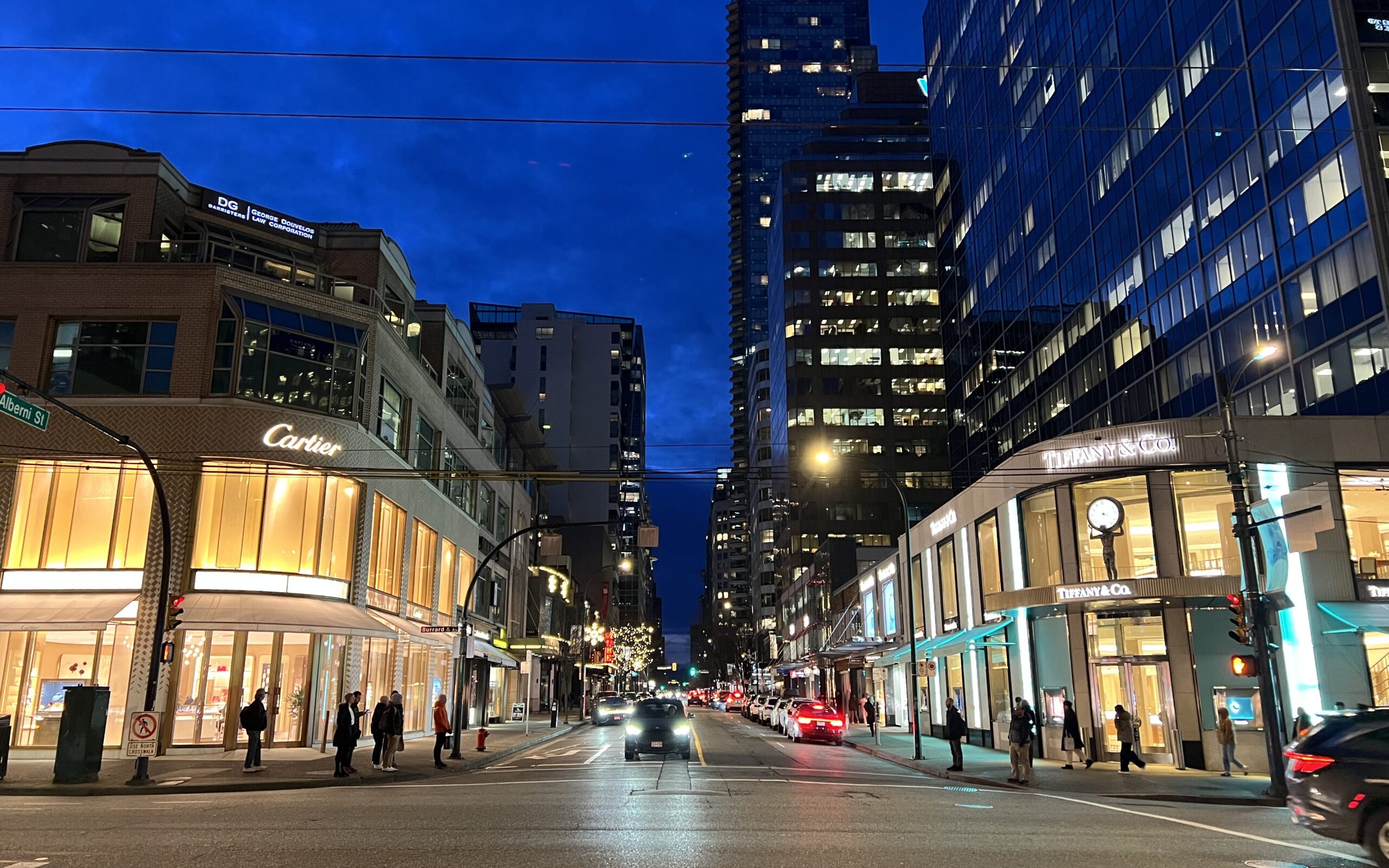
Oakridge Park will compete with downtown Vancouver’s ‘Luxury Zone’, as well as Holt Renfrew which is said to have sales exceeding $400 million annually. The Luxury Zone, located in the area around Alberni Street roughly between the Fairmont Hotel Vancouver and the Shangri-La Hotel, houses a dense clustering of luxury brand stores including several jewellery stores along Alberni Street. Holt Renfrew, anchoring the north end of CF Pacific Centre in about 180,000 square feet over three levels, houses the most comprehensive clustering of luxury brand concessions of any store in Canada. Many of those concession brands will also have standalone stores at Oakridge Park. 

Oakridge Park and the new Time Out Market food hall. Image via QuadReal
Time Out Market food hall terrace at Oakridge Park. Image via QuadReal
Time Out Market food hall at Oakridge Park. Image via QuadReal

Oakridge Centre closed in 2020 for the transformation of the site into a mixed-use development unlike anything in Canada. QuadReal Property Group partnered with developer Westbank on the Oakridge Park project, which will include upscale residential towers, offices, a public library, park space, indoor and outdoor performance venues, and a ballet school among other uses. 

“In the world of luxury retail, Oakridge Park in Vancouver stands out as a global exemplar,” said Andy Clydesdale, Executive Vice President of Global Retail at QuadReal Property Group in a statement. “Located in one of the most livable cities, it features a unique nine-acre park at its heart, blending nature with the fusion of East and West cultures for an unparalleled experience that will further build our economy, and attract diverse consumer bases from around the world.” 

His statement went on to say, “We have so much to be proud of with this ambitious project. It sets a new standard for transformative projects by seamlessly integrating retail, residential, and sustainability elements through innovative design and functionality. Oakridge Park promises a holistic and exceptional cultural environment for both residents and visitors, marking a significant milestone in the evolution of luxury retail real estate.”

Nine acre park at Oakridge Park. Image via QuadReal

“Oakridge Park goes beyond physical retail, our aim is to offer an extraordinary experience” said Ian Gillespie, Founder & CEO of Westbank in a statement. “We hope the new Oakridge Park will serve as a cultural hub for Vancouver that the world will look to for inspiration.”

Oakridge Centre was formerly an upscale shopping centre surrounded by surface parking lots. The mall was developed by department store retailer Woodward’s and opened in 1959. In 1993, the 260,000 square foot Woodward’s store was rebranded by new owner HBC, which divided the store to create separate Hudson’s Bay and Zellers department stores. Over the years, affluent demographics on Vancouver’s West Side also resulted in Oakridge securing upscale retail tenants such as Tiffany & Co., Harry Rosen, and Max Mara among others. 

Ivanhoé Cambridge owned Oakridge Centre until QuadReal acquired the property in early 2017. Ivanhoé Cambridge had already intended to develop the property, which had been through various stages of applications and studies for redevelopment. 

Oakridge Centre in 2018. Photo via Wikipedia
Former food court at Oakridge Centre in 2018. Photo via Wikipedia
Oakridge Centre in 2018. Photo via Wikipedia

Oakridge Centre maintained its position as one of Canada’s most productive shopping centres for years, in terms of sales per square foot, until its temporary closure in 2020. The high sales were due partly to highly productive jewellery retailers as well as an Apple Store. 

Retail Insider will follow and report on Oakridge Park in the coming months, as new tenants are announced.

Read More

Vancouver’s Retail Landscape Thrives: Economic Growth, Tech Boom, and Tourism Fuel Expansion [Report/Interview]

Downtown Vancouver from Granville Bridge. Photo: Lee Rivett

Vancouver is poised for outstanding growth over the next five years which is good news for retailers already there and those who want to join the burgeoning market.

The latest Vancouver Urban Retail Report, by real estate firm JLL, said the growth will be driven by impressive gains in population, GDP, and employment rate − all of which exceed the national average.

“As the largest market in Western Canada and third largest in the country, Vancouver boasts a favourable mix of economic sectors that skew toward higher-paying jobs. The region’s vibrant lifestyle and weather act as a magnet, attracting young workers and fostering an influx of more than 50,000 new immigrants each year,” said the report.

Alberni Street at Burrard Street in Downtown Vancouver. Photo: Lee Rivett.

“Vancouver’s continued population growth is expected to fuel increased spending and business investment, particularly in the burgeoning technology sector. Technology companies have established offices in the region to tap into the pool of engineering talent, reduce labour costs, and avoid the challenges associated with U.S. immigration.

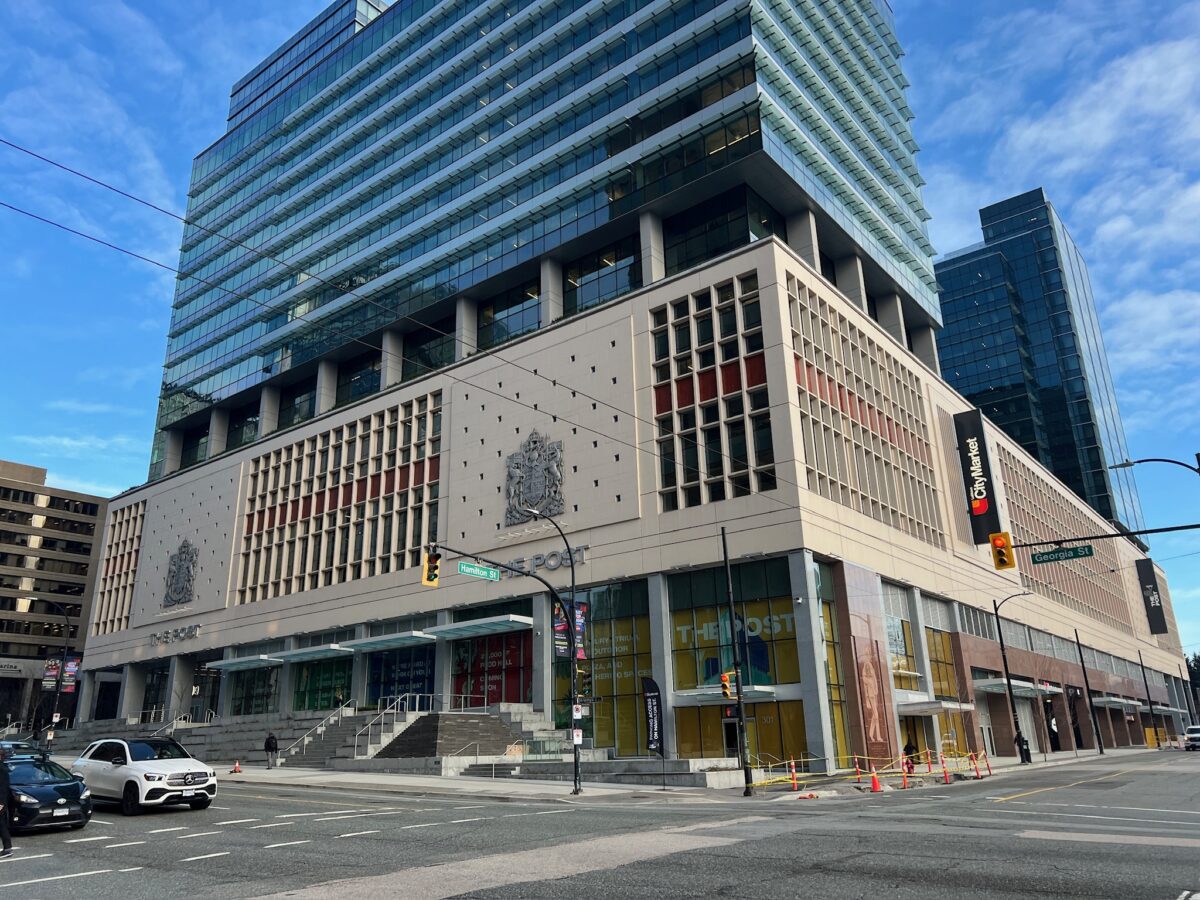
“The redevelopment of the downtown The Post, home to Amazon, is emblematic of the region’s progress in the tech sector. In 2019, Amazon − looking to secure world- class engineering talent − shifted its focus from a failed second headquarters in New York City to expanding its Vancouver hub.” 

“The Post” in Downtown Vancouver after Loblaw’s City Market opening. Photo: Lee Rivett.

Also good news for the retail sector is the return of the tourism industry to the region.

Vancouver International Airport (YVR), Canada’s second-busiest airport, anticipates a strong 23-24 winter season with passenger traffic expected to exceed 2019 levels. This positive outlook is due to the boom in B.C.’s ski resorts and YVR’s significant efforts to regain traffic lost during the pandemic by restoring service, attracting new carriers, and expanding its list of destinations, said JLL.

“Air-passenger traffic in 2023 is estimated to have reached approximately 90 per cent of 2019 levels, with much of the remaining gap due to a decline in Asia- Pacific travelers. While domestic passenger traffic has fully recovered, the return of Asia Pacific travelers has been slower due to limited flights from mainland China following its recent lockdown,” added the report.

“In turn, the Vancouver Fraser Port Authority (VFPA) is forecasting another record cruise season in 2024, with ship visits expected to match the 2023 record. In 2023, 332 cruise ships docked between April and October, accommodating a remarkable 1.25 million passengers − an increase of 54 per cent over the previous year.

“Looking ahead, Vancouver’s tourism momentum is expected to continue, as the city has been selected by FIFA to host the 2026 World Cup. Over the next three years, Vancouver will also host the Invictus Games and the Grey Cup. These prestigious events will undoubtedly boost tourism and solidify Vancouver’s position as a global destination.” 

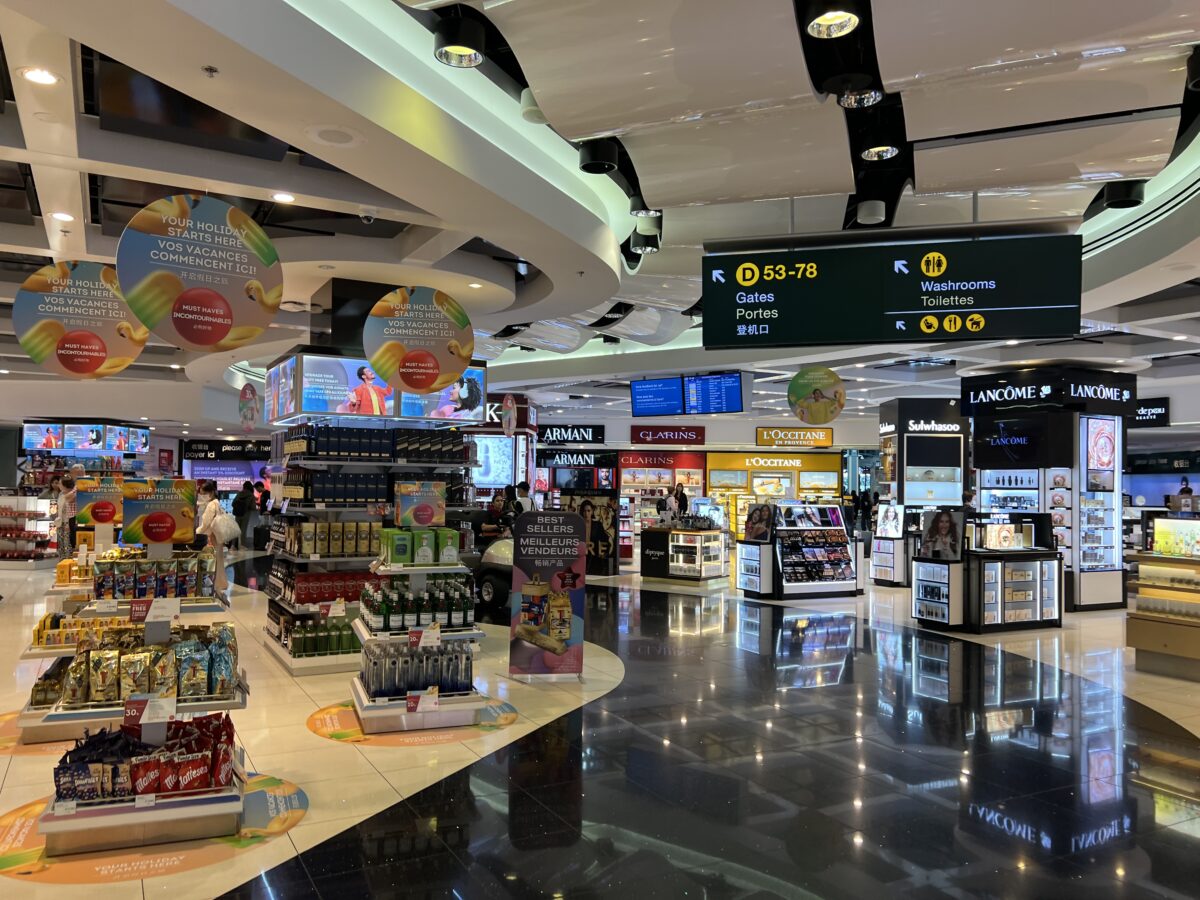
World Duty Free at YVR Airport. Photo: Lee Rivett.

Trevor Thomas, Senior Vice President of JLL, described the Vancouver retail market as “healthy” right now.

Trevor Thomas

“We’ve got a strong labour market. There’s ever-growing population. More and more people are coming back to work. And together this drives retail sales,” he said. “There’s been a lot of transition happening downtown on Robson Street. While we can’t talk about all the deals right now, it’s going to look very different in the next 12 months.

“The deals we can talk about is we’ve heard adidas is going to be back filling Victoria’s Secret with a big flagship location. And there’s a few other deals that are in negotiations right now that are getting close to being finalized. Esprit is hoarded up and they’re getting ready to open. Club Monaco closed and there’s another fashion retailer that has backfilled their spot.”

“So when there’s a vacancy the demand is always greater than expected. It doesn’t matter if it’s on a high street downtown or if it’s in a power centre in the suburbs, there’s always someone there knocking on the door.”

He said athleisure and outdoor recreational retail is “the flavour of the month right now . . . That’s certainly the category that’s popular.”

As the daytime population on those high streets returns to normal, people are spending more money in public areas like restaurants and movie theatres and recreational areas.

“That’s all up 20 per cent as well. So that speaks something to sort of where the mind set is right now for a lot of consumers. They’re feeling more comfortable in these public places and spending dollars,” added Thomas.

Closed Victoria’s Secret on 750 Burrard Street in Downtown Vancouver. Photo: Lee Rivett.

The JLL report said that Q4 2023 average asking rents across Vancouver’s five retail corridors stood at $130 per square foot per year. But it was $200 per square foot for the popular Robson Street.

“Robson Street is still centre ice and I think it will continue to be centre ice,” added Thomas.

At the end of the fourth quarter last year, the number of direct ground floor availabilities totaled 37, or 6.2 per cent of the storefronts in the corridors tracked by JLL.

“The retail property fundamentals for Robson Street show signs of a robust recovery from the pandemic. Premium asking rents are approaching pre-pandemic levels, indicating a positive trend, and a wider range of rental rates suggests a more diverse mix of retail offerings on the street,” explained the report.

“Nordstrom’s departure from CF Pacific Centre has created opportunities for its shop-in-shop stores to find locations on Robson Street. This recent increase in demand for space has contributed to a decrease in overall availability compared with the peak in 2020.”

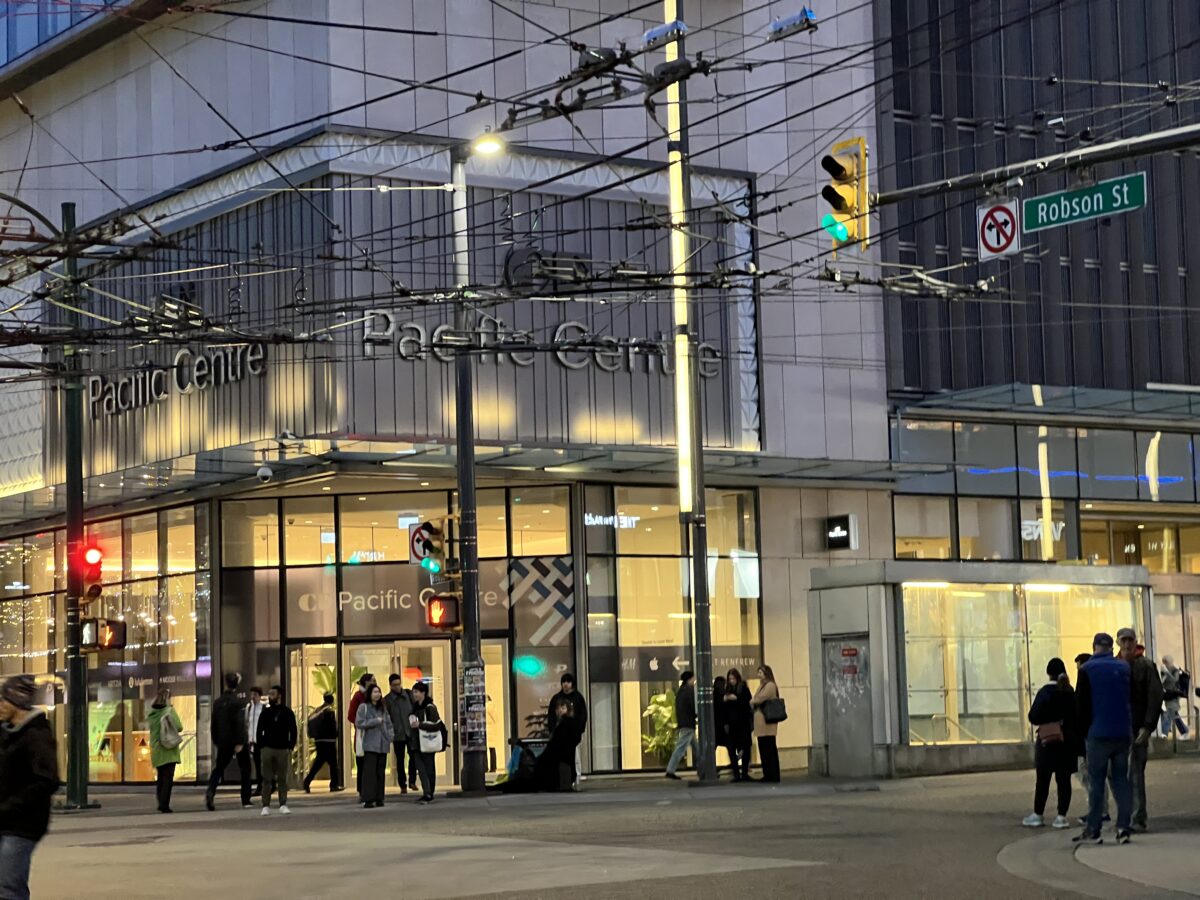
CF Pacific Centre entrance off Robson Street in Downtown Vancouver. Photo: Lee Rivett.
MaxMara and Artizia at CF Pacific Centre. Photo: Lee Rivett.

Concessions and pop-up shops, once common, are now becoming scarce. This could be a sign of growing landlord confidence and a preference for longer-term leases. Retailers are signing 10-year leases, indicating a positive outlook for the market, said the report.

“The athleisure trend continues to grow in the area, pointing to the importance of fitness and casual wear in the local retail scene. Nearby, Alberni Street – a destination for high-end shoppers seeking luxury goods and designer fashions in the downtown core – continues to see increased demand for luxury brands, even with the suburban Oakridge Park and McArthurGlen Designer Outlet Vancouver,” it said.

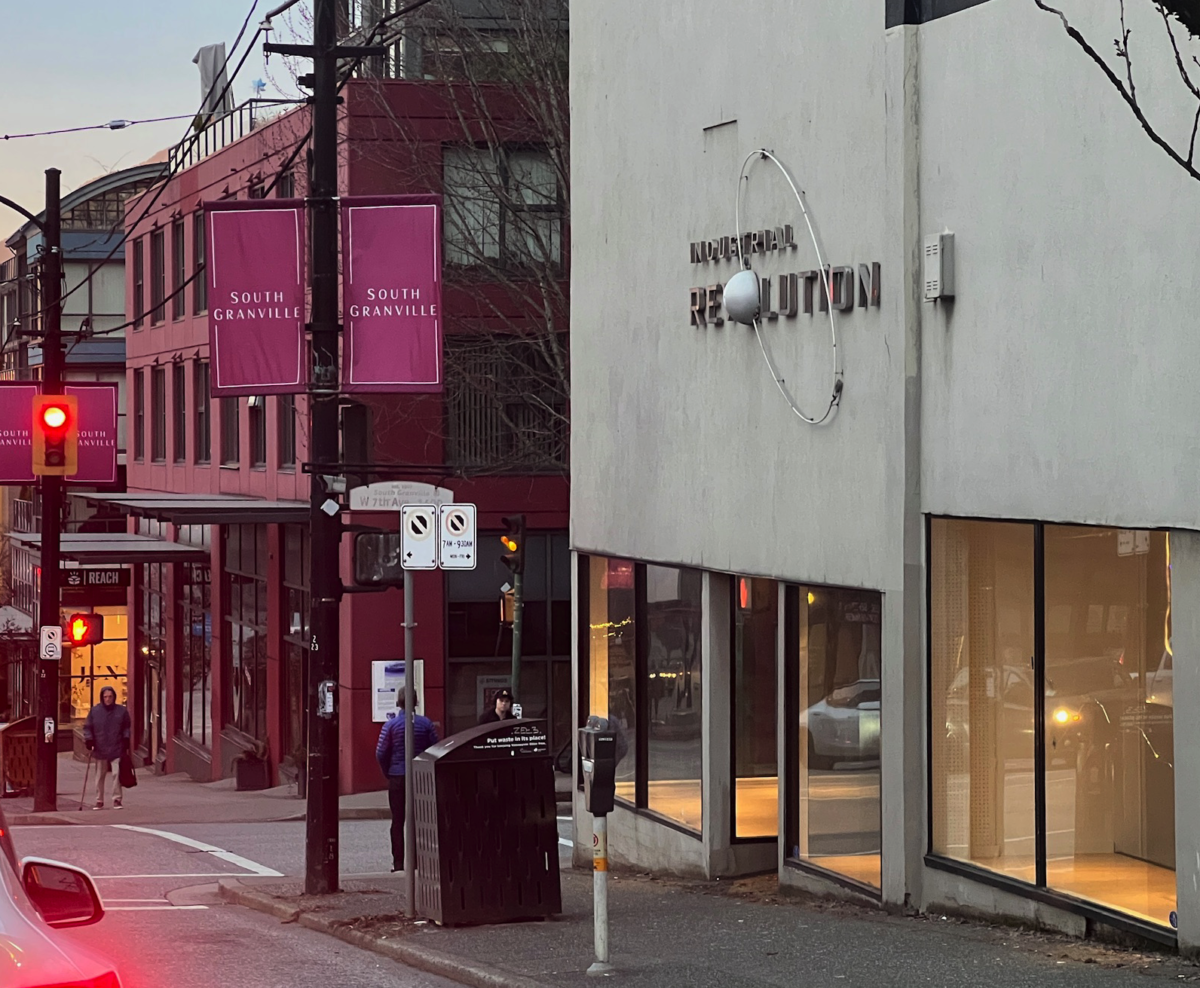
South Granville retail district in Vancouver. Photo: Lee Rivett.

Despite the challenges posed by the pandemic, West 4th Avenue has continued its upward trajectory to become one of Vancouver’s most sought-after high streets, said JLL. 

“In particular, many clicks-to-bricks brands, along with the recent addition of accessories retailer Monos, have chosen West 4th as their first retail location in the market. With availability rates remaining low, landlords are no longer considering concessions that were once on the table. The desirability of the Kitsilano residential area has strengthened their position and allowed them to maintain favourable lease terms,” said the report.

“Exciting redevelopment plans are underway on West 4th Avenue, specifically between Vine and Balsam Streets at 2346 West 4th Ave. The project, scheduled for completion by 2025, will introduce four retail units and one restaurant unit, further enhancing the street’s appeal and providing new opportunities for retailers and restaurants.”