Advertisement
Home Blog Page 566

Retailers to Benefit as Tourism in Canada Surpasses Pre-Pandemic Numbers [Interview]

Jasper, Alberta (Image: Mario Toneguzzi)

Tourism plays a significant role in the health of the retail industry in Canada.

But with the pandemic the last few years, tourism has suffered and with that the retail industry, particularly in towns that rely on tourists, has felt the pain.

However, there is light at the end of the tunnel.

Jasper, Alberta (Image: Mario Toneguzzi)

According to the recent Destination Canada report, Tourism Outlook: Unlocking Opportunities for the Sector, total tourism revenue was set to exceed 2019 levels, generating $109.5 billion by the end of 2023.

“This represents the recovery of the tourism sector from the COVID-19 pandemic, one year earlier than projected. Despite tourism coming to a standstill in 2020, the industry, post recovery, is expected to grow faster than the general economy at 5.8 per cent, reflecting its resilience and importance to the economic vitality of the country,” said Destination Canada.

“While this is positive news, it is important to recognize that recovery both geographically and across sub sectors has been uneven. The challenge ahead is creating profitable growth for tourism businesses given their current debt loads and inflationary pressures.”

Jasper, Alberta (Image: Mario Toneguzzi)

Tyler Riopel, Director of Destination Development with Tourism Jasper, said that in 2023 Jasper welcomed around 2.4 million visitors, which is on par with 2019 (pre-COVID) levels.

Tyler Riopel

“Domestic travel is extremely important for the visitor economy in Jasper as it accounts for close to 40 per cent of our annual visitation. These visitors are even more important in the winter months and is estimated to account for somewhere between 80-90 per cent of our visitors,” he said.

“Of our total visitation, 55 per cent are international travelers and we consider them to play a significant role in Jasper’s visitor economy as they are more likely to have extended stays, visit mid-week and spend more in destination. In 2023, international visits from the US were nearly equal to the number of travelers we saw from Ontario last year at close to 115,000.”

While visitor numbers from international markets indicate lower volumes, average spend per person is higher than pre-pandemic levels, explained Riopel, adding that 2023 revenues exceeded the 2019 level which is great news for the tourism industry as a whole.

“In Jasper we expect to see our winter season to be somewhat flat linked to a slow start to the winter season with lower than normal snowfall levels and an increase in domestic travel to sun destinations. As winter conditions improve we anticipate visitation levels to increase through the end of Q1. International travel will likely continue to recover as people get more comfortable traveling, so we are confident that summer demand will remain high,” he said.

Jasper, Alberta (Image: Mario Toneguzzi)

The Destination Canada report outlines that there is an opportunity for the tourism sector’s growth trajectory to reach $160 billion in revenue by 2030, but capacity constraints are limiting the sector from achieving its full potential. 

It said a transformational path must be embraced. Without change, tourism will move forward along its long-term trajectory where constraints will limit its potential to $140 billion, which when adjusted for inflation, shows no real growth.

“At this critical juncture, we face a clear choice,” said Meaghan Ferrigno, Destination Canada’s Chief Data and Analytics Officer. “The difference between $160 and $140 billion is about more than revenue. It’s about unleashing capacity when and where we have it, it’s about creating stable employment and enhancing societal wellbeing. And importantly, it’s about smart growth that drives real prosperity for tourism businesses across every corner of this country.”

Key report highlights include:

  1. Tourism revenue will exceed pre-pandemic levels in 2023: Amid inflationary headwinds, tourism spending will exceed pre-COVID-19 levels in 2023, reaching $109.5 billion. Domestic activity has led revenue recovery and is on track to reach 104 per cent of 2019 levels by the end of 2023.
  2. Opportunities constrained by capacity​: As we look to 2024 and beyond, opportunities for growth prevail but challenges persist as we enter a fiercely competitive global marketplace where we are all vying to attract travelers. ​Demand for travel is projected to grow by 30 per cent by 2030 and will outpace our capacity to host in peak seasons, limiting Canada’s growth potential.
  3. $160 billion Potential: The report identifies a $160 billion revenue potential for the tourism industry by 2030, but only if a transformational path is taken that addresses constraints and shifts demand to change how growth occurs.
  4. Closing the $20 billion opportunity gap: Destination Canada proposes a transformative path to secure an additional $20 billion in annual revenue by 2030, driving real prosperity for tourism businesses across the country and contributing a 14 per cent increase in GDP generated by tourism, 84,000 more jobs and $5.3 billion more in tax revenue for all levels of Government.
  5. Transformational path: Industry transformation will close the $20 billion opportunity gap but it will require sector-wide collaboration on seven key levers: revenue and yield growth, brand leadership, investment, access, workforce and digital readiness, environmental sustainability and support from Canadians.
Jasper, Alberta (Image: Mario Toneguzzi)

According to Statistics Canada, tourism spending in Canada grew 0.5 per cent in the third quarter, following a 1.1 per cent increase in the second quarter. Growth in the third quarter was driven by a 2.3 per cent increase in foreign tourism demand, while domestic tourism demand declined 0.2 per cent.


Canadian Retail News From Around The Web For January 30th, 2024

Canadian Retail News From Around The Web

News at a Glance

Retail Insider is streamlining its Canadian retail news from around the web to include a handful of top news stories that can be viewed quickly during the day. Here are the top stories from the past 24 hours.

Pickleball: the latest tenant to volley its way into old shopping malls (CBC)

Canada grocery food price measures leave minister ‘disappointed’ (CTV)

Grocery prices in Canada: Online forum says ‘Loblaws is out of control,’ as outrageous prices become common (Yahoo)

Leon’s Furniture planning nearly 4,000-home real estate development (CityNews)

Loblaw welcomes 10 more electric trucks (Supermarket News)

Metro donated $63M in food to fight insecurity in 2023 (Grocery Business)

Leger WOW survey reveals top retailers in grocery, alcohol, convenience, and pharmacy sectors (Grocery Business)

Calgary Co-op criticised by members after switching patronage payment to app (Co-Op News)

9 privately run ServiceOntario outlets moving to Staples stores, province says (CBC)

5 things you (probably) didn’t know about department stores in Vancouver (VIA)

Club Monaco closes longtime flagship store on Robson Street in Vancouver (Urbanized)

Family denied permits to move to Thunder Bay from Saudi Arabia to open a clothing store (Thunder Bay News Watch)

Asian restaurant to take over former Rideau Street McDonald’s location (Ottawa Business Journal)

‘It’s $2.29 for one, but $5 for two?’ A Toronto resident called out Loblaws for trying to pull a fast one on customers (NOW)

Shake Shack to Join The Ballroom Bowl and Hard Rock Cafe at ‘The Tenor’ in Downtown Toronto

The Tenor at 10 Dundas St. E. in Toronto on January 29, 2024. Photo: Dustin Fuhs

Shake Shack will be opening its first Canadian location at The Tenor in downtown Toronto, joining The Ballroom Bowl and Hard Rock Cafe which will both also open upstairs in the iconic building at Yonge and Dundas Streets. 

Shake Shack is confirmed to have leased the former Adidas retail space at the corner street level space in The Tenor. Shake Shack will occupy more than 7,300 square feet of space according to lease plans, with construction expected to start soon. Adidas vacated its space at The Tenor several months ago. 

A member of the Urban Toronto Forum posted the lease plan showing Shake Shack as a tenant on January 29th.

Image posted to the Urban Toronto Forum, showing the main floor of The Tenor at 10 Dundas St. E. in Toronto. Image is hyper-linked to its main source.
Future Hard Rock Cafe at The Tenor (Image: Dustin Fuhs)

Upstairs, Toronto-based bowling concept The Ballroom Bowl will open in a space of almost 13,800 square feet where the current third floor food court is at The Tenor, and it was recently announced that the Hard Rock Cafe will be returning to the area with a 9,925 square foot restaurant on the fourth floor of The Tenor where Milestones was most recently a tenant. 

A Winners store on the second floor of The Tenor, spanning 28,800 square feet, is said to be closing as a new location will open nearby at CF Toronto Eaton Centre in a space to be vacated by Old Navy.

Future Winners at CF Toronto Eaton Centre (Image: Dustin Fuhs)

US-based Shake Shack announced in March of 2023 that it would expand into Canada with about 35 locations to open by 2035 — the chain has over 400 locations globally. 

Retail Insider was the first to report on Hard Rock Cafe’s closing nearby in the spring of 2017. The street front location is now home to a Shoppers Drug Mart store at the south end of Dundas Square on Yonge Street. 

The Tenor complex, managed by one of Canada’s largest 3rd party property managers, BentallGreenOak, sees about 28.5 million annual visitors, and spans 13 levels with 340,000 square feet of retail, office and entertainment space. The tenant mix includes a diverse variety of national brand retailers, restaurants, entertainment, and tourist attractions.

The Tenor is located at the busiest pedestrian intersection in Canada. An estimated 50 million people visit the Yonge-Dundas area annually, making it one of the busiest places in North America. Vehicle traffic is estimated to be about 5.5 million annually. More than 45,000 students attend the Toronto Metropolitan University (TMU) next door, and there are about 700,000 residents (and growing) within 5 km of the building. The busy Dundas TTC subway station sees about 26.6 million riders annually, many getting off right in front of the 10 Dundas Street East retail space in a building that was rebranded as The Tenor last year. 

Children’s Retailer Bambino Fine Shoes Reveals Store Expansion Plans in GTA and Vancouver [Interview]

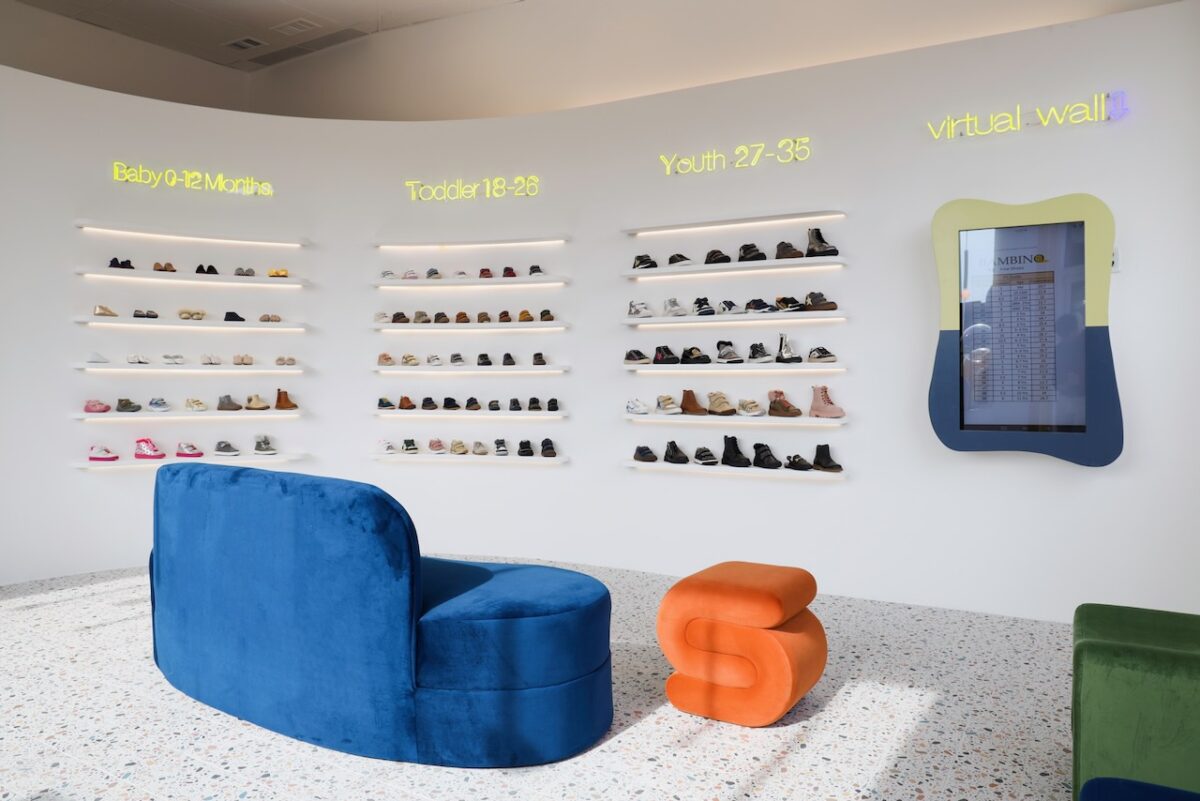
Bambino Shoes in Oakville (Image: Bambino Shoes)

Bambino Fine Shoes, a family-owned footwear business, provides a unique experience focussing only on children’s footwear. After recently opening its second location downtown Oakville, the brand already has plans to expand by six stores within the next five years, primarily in the Greater Toronto Area and a possible location in Vancouver. 

Luis Roldan

The founder, Luis Roldan, created the brand as he was experiencing difficulties finding proper footwear for his five children. The first location opened in Toronto in May 2022 near High Park and the second location recently opened in downtown Oakville. 

“We wanted to bring high-quality footwear to the market as the proper footwear throughout childhood makes a significant difference in the child’s upbringing. A child’s foot is extremely malleable and very impressionable and if you are not using the correct size or the correct footwear – it can be detrimental to the child’s health. All of our brands are pediatrician approved and are engineered to help the child develop at the right stage.” 

Bambino’s New Oakville Location 

Bambino Fine Shoes in Oakville (Image: Bambino Fine Shoes)

The new location in Oakville was based on its shopping area, new street improvements, its family-oriented community, and its matching values. 

“When we were looking to expand and open our second brick-and-mortar store, we were very particular as to where that should be. We were looking for an upscale shopping district, one that had character, was family-oriented, and one that had services and products being offered with a very client-centric approach – not a transactional mindset, but somewhere where you can go spend the afternoon, walk around, and make it a destination and really an experience for the entire family. We found there was a perfect synergy between what our brand was looking to offer and what Oakville downtown was able to deliver.” 

The brand offers a wide variety of children’s footwear, ranging from newborns to around nine-years-old: baby, toddler, and youth sizes. Consumers can expect sizing assistance from staff and the store is set up to make shoe shopping interactive and engaging for both parents and children. 

Easy for parents; enjoyable for children 

Locations are designed to be a low-friction, fun environment for children to enjoy. This includes providing activities such as colouring and there is a section where children can go in and play. The brand also gives out balloons to every child and has a treasure chest where children can pick out a toy, whether they purchased a pair of shoes or not: “They are walking away with a gift. They select it, they take away this little treasure, and hopefully remember this experience.” 

“We find buying shoes for parents is almost as daunting as taking kids to the dentist. So we try to remove all of that by doing the homework for the parents and being able to provide them with solutions. It is a very fun experience for the child and I think it is important because when the child is in the right mind, their choices come out. Kids are very involved in the choice they make, so we look for ways to make it a fun environment for them. Often kids don’t want to leave the store and that is a win for us.” 

Bambino Fine Shoes in Oakville (Image: Bambino Fine Shoes)

The stores offer a warm, welcoming and enjoyable environment for families  – turning a difficult task into a pleasant experience.  

If the shoe choice is unavailable, the store offers a virtual inventory showcasing what shoes they have in its distribution centre; expanding the selection for kids shoes. “If you don’t find a particular style you are looking for, we can find it on the virtual wall. It is an interactive screen we can pull different sizes from, make recommendations, and ship for free within one day within the GTA.” 

Roldan says the brand offers shipping across Canada and provides free returns as the brand is trying to make the shopping experience “restriction free.” 

Image: Bambino Shoes

Bambino’s vision for future growth 

On top of Bambino’s currency loyalty program, the brand is also developing a loyalty program called the Bambino Club which will offer perks to frequent shoppers. The new loyalty program is set to provide more than just points; it will include special access to a resource library, special deliveries, and exclusive launches that would not be accessible online or in-store without the membership. The current loyalty program only offers points: “That is what most retailers are doing. Our new loyalty program will be giving back to our consumers. It is not only to earn points, but will also provide additional benefits by shopping through us.” 

Roldan says he is also ready to take the brand to the next level by expanding to six stores within five years. The plan would be to launch these locations within the GTA, locations will be provided at a later date but Roldan said two possible locations he is looking at includes Woodbridge and Bayview. Additionally, the brand is looking to expand in Vancouver by 2026. 

“We are a family based business and we are passionate about what we do. We don’t compromise the quality for the immediate financial gain, we are in this with a community mindset. We want parents to really look at the health component in how footwear really does affect a child’s upbringing – we can’t emphasise that enough.” 

Mic Mac Mall Adding Retail Tenants as Landlord Plans Massive On-Site Mixed-Use Redevelopment [Interviews]

Mic Mac Mall (Image: Cushman & Wakefield)

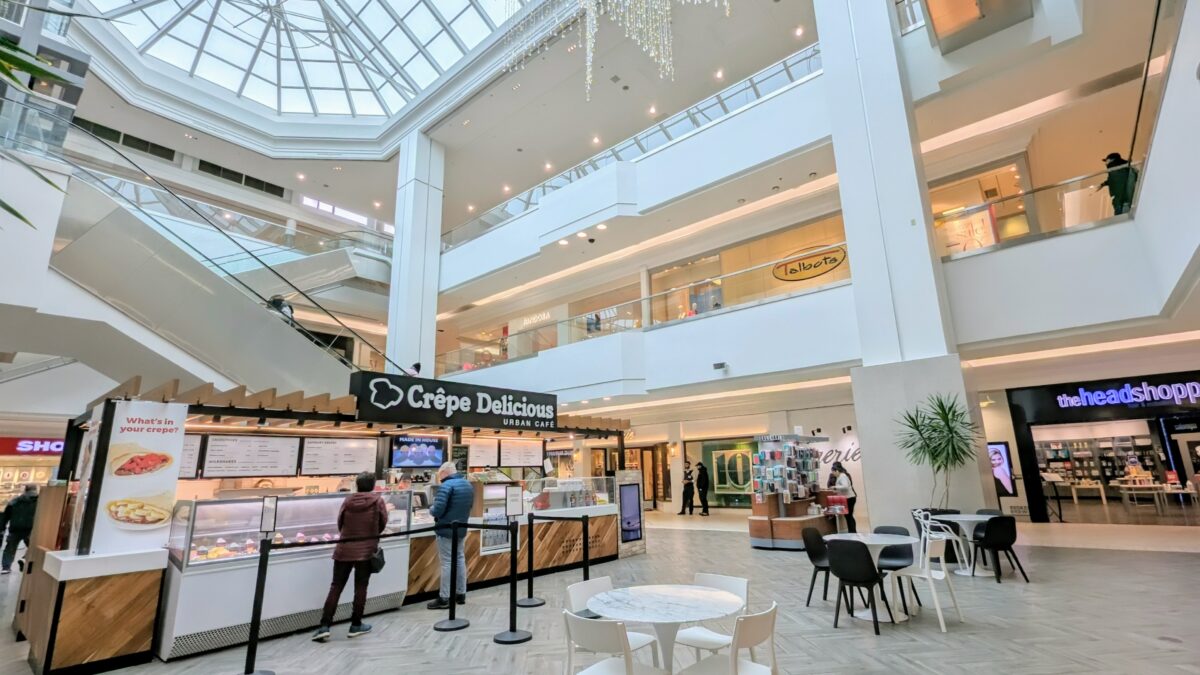
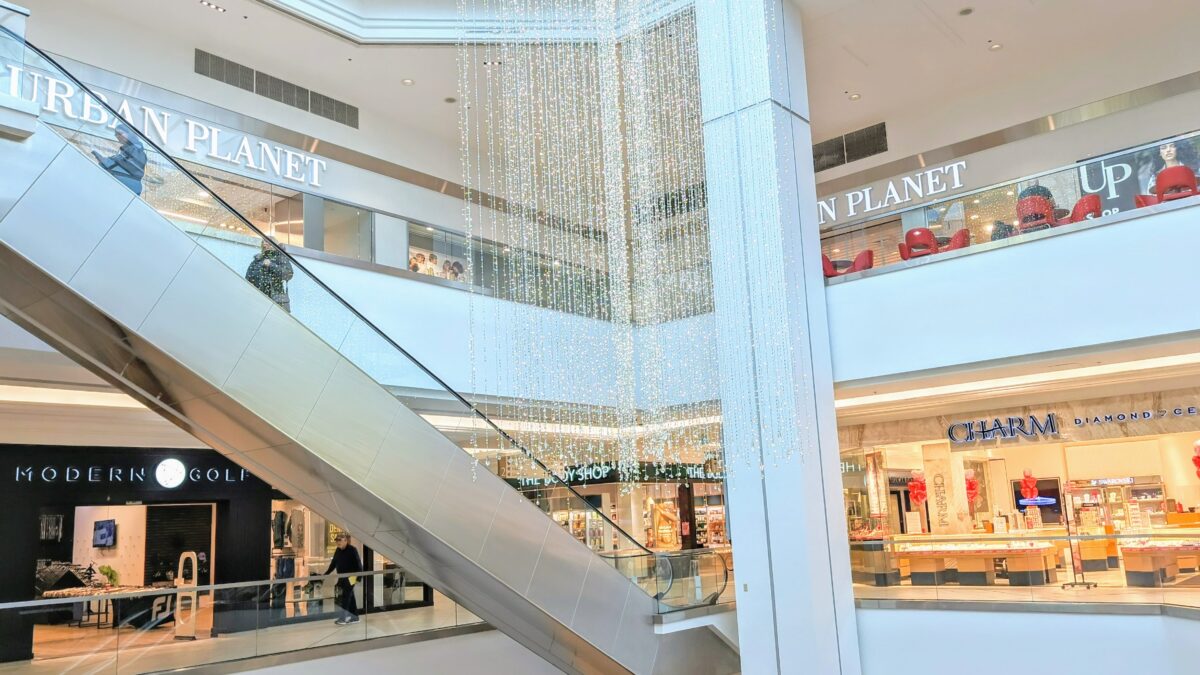
It’s been a very busy time for leasing in the past year or so for Mic Mac Mall, which is Atlantic Canada’s largest enclosed shopping centre, located in Dartmouth, across the harbour from Halifax.

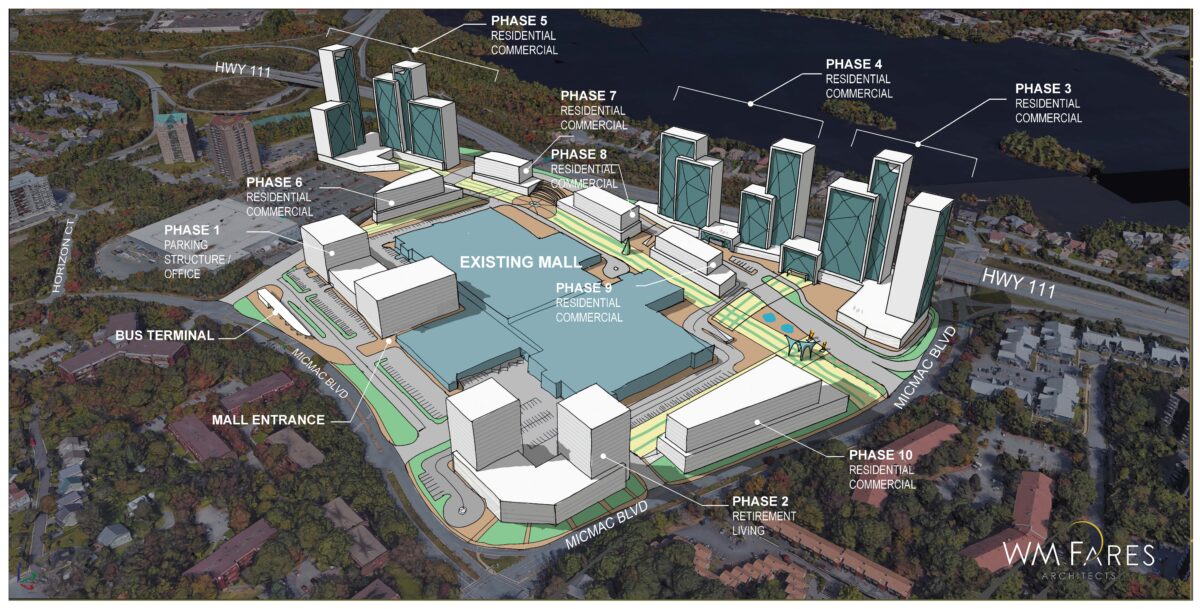
And the popular centre, owned and operated by Mic Mac Mall Limited Partnership and managed by Cushman & Wakefield Asset Services, is close to getting final permit approvals for the planned development of the site surrounding the shopping centre that will be called the “M” District. 

This new development will include over 1,000 residential units including senior living, two office towers and a major family entertainment area/destination of approx. 60,000 square feet.

“The proposed mixed‐use development . . . would create a vibrant destination and community hub for the entire municipality. The combination of high‐density residential towers with diverse retail and commercial opportunities creates spaces where both residents and visitors can enjoy new services and amenities, while the increased density will in turn revitalize the interest in the current shopping centre,” said a written submission to the city by WM Fares Architects on the proposed development.

M District (Rendering: WM Fares Architects)

“Outside of the buildings, the current non permeable asphalt parking surfaces will be largely transformed into landscaped pedestrian corridors, curating the circulation paths as people make their way through the site. Underground parking facilities and a limited circumferential service road will limit the amount of vehicular traffic on the surface of the site, placing the pedestrian experience at the forefront of the design concept. Located on a Transit Priority Corridor, the addition of the new transit terminal will ameliorate the user experience and promote the use of public transportation to and from the site. 

“In terms of active transportation, the site will look to plug into the existing trail networks as a node between the Shubie Canal Greenway Corridor and Lake Banook Trail. This will offer bicycle and walking access points for visitors, and escapes to green spaces for residents along the Trans Canada Trail, aligning the proposal with as much of the Integrated Mobility Plan as possible.”

Mic Mac Mall (Image: Cushman & Wakefield)

Mic Mac Mall is just under 690,000 square feet over three levels and is six kilometres to downtown Halifax. 

“We are on trend with the Canadian Retail Industry. Our comparable traffic volume has not yet recovered to pre-pandemic, however comparable sales have matched and in fact surpassed 2019 sales in most categories. We are very pleased with our 2023 sales results,” said Lisa Flux, General Manager.

Lisa Flux

“Shopping trends have changed, as they do. Our dwell time has increased by 20 or so minutes. This is indicative of a knowledgeable shopper, one who has a plan. You see that reflected in the food court and specialty food sales. Sales in these two categories are significantly above 2019 numbers. Again, this trend is one we have noted across our portfolio from province to province.

“2022 was a historical recovery year and our Retailers are reporting similar growth again this year. In 2023 specialty retail sales reflected a 13 percent increase over 2022; and our temporary tenants, or specialty leasing, they had a hectic year, bringing change and some unique events to to Mic Mac Mall, in all rising comparable sales by 7 percent in 2023.“

Mic Mac Mall (Image: Cushman & Wakefield)

Lori Stuart, Senior Leasing Manager at Cushman & Wakefield Asset Services, said occupancy in the mall is about 91 per cent.

Lori Stuart

“We’ve made great momentum in the last 12 months. We’ve done about 46 leasing transactions, about 160,000 square feet,” she said. 

New retailers (in the past 18 months) include: Orange Theory Fitness, Griffin Jewellery Designs, Glamour Secrets, Freak Lunch Box, Presotea, Pizza Delight, Labels, Mobile Care, Milestones Grill + Bar and many more.

“We’re happy to boast that we do have some exclusive tenants to the market as well,” said Stuart. 

Decathlon at Mic Mac Mall (Image: Cushman & Wakefield)

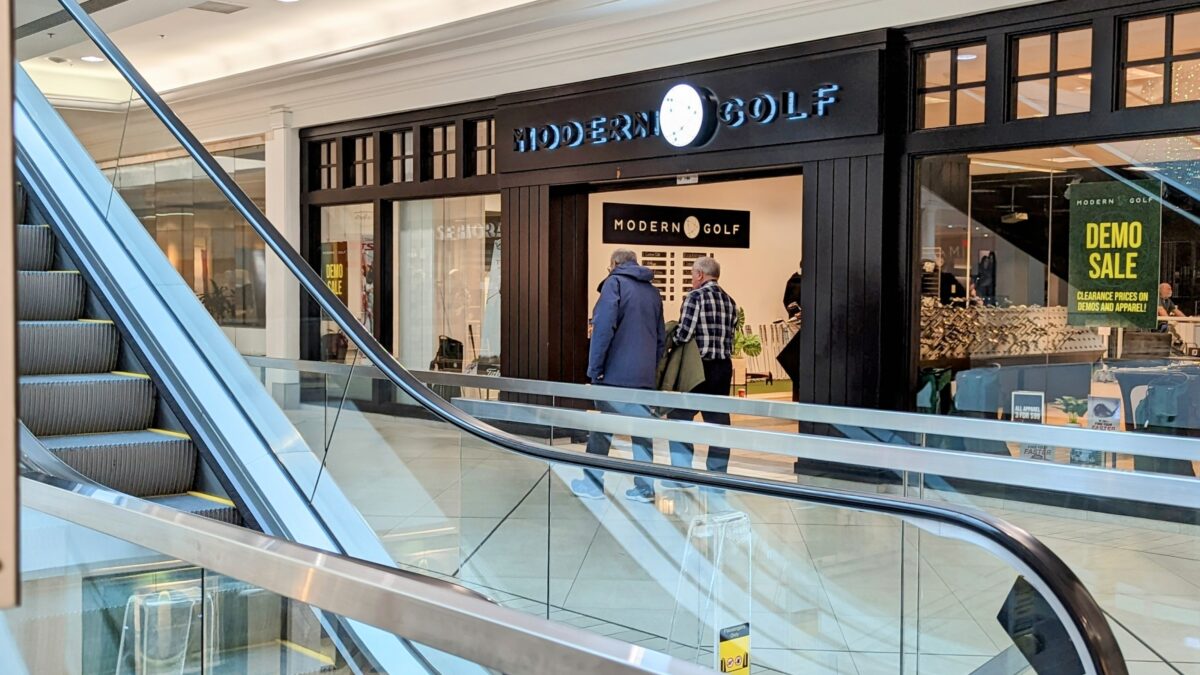
Exclusive tenants in the market at Mic Mac Mall include Decathlon, Eddie Bauer, Build-A-Bear, Talbots and Modern Golf.

“The momentum keeps going and in 2024 we’ll see some new tenancies as well. We’ll welcome NVA which is Canada’s leading veterinary care clinic. They’ll take about 24,000 square feet on site,” added Stuart. “And many others leasing about 15,000 square feet we’ve got in the works right now and then the re-set of a former Winners box that’s 53,000 square feet. So we’re re-demising that and going to be announcing some new tenancies in the coming months. There will be multiple units there.”

Flux said NVA is quite unique and world-renowned.

“There’s one in PEI but it will be the only other one in Atlantic Canada that does super specialized procedures that this particular clinic is known for. This is a really unique service,” she said.

Modern Golf at Mic Mac Mall (Image: Cushman & Wakefield)
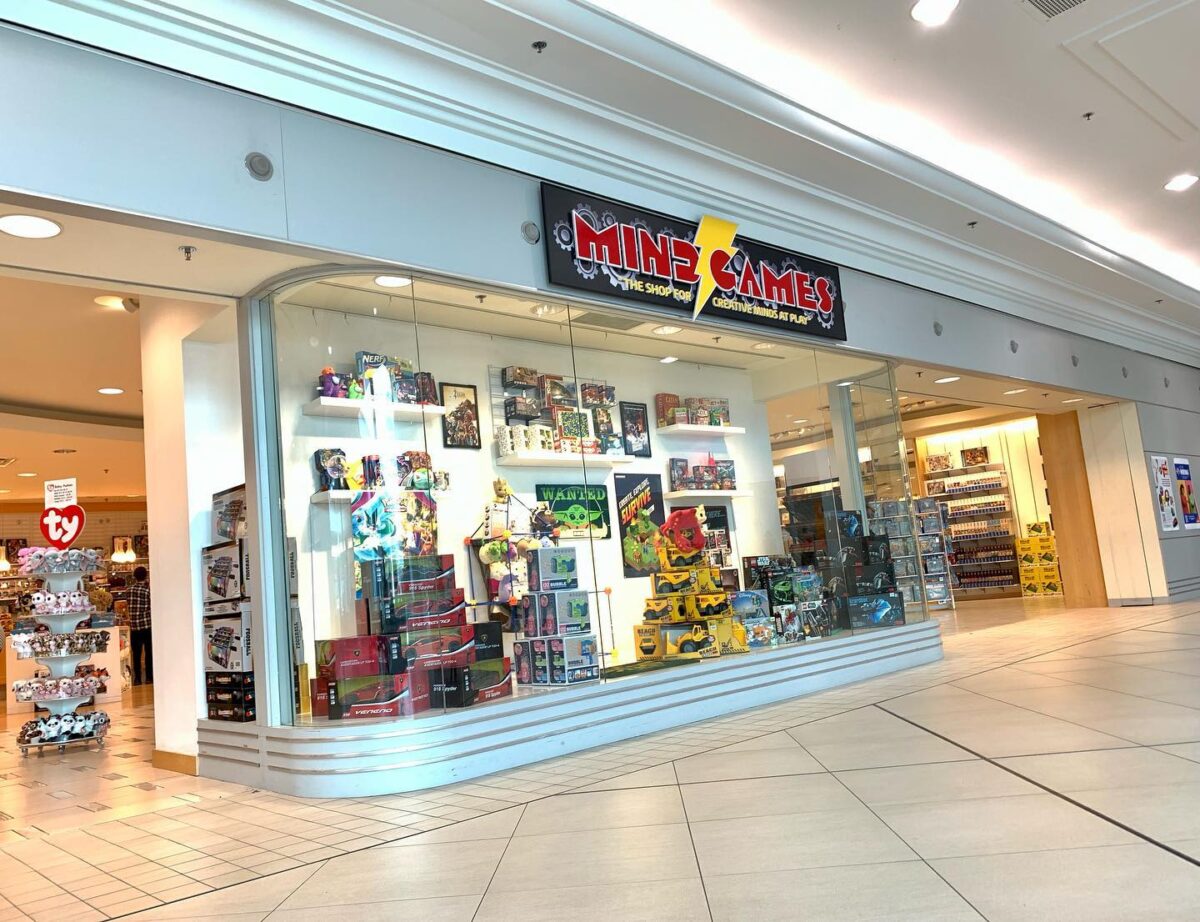
Mind Games at Mic Mac Mall (Image: Cushman & Wakefield)

Mic Mac Mall will also have 25,000 square feet of current tenant relocations and renovations planned for 2024. And a number of local and national retailers that have expressed interest in Mic Mac Mall that it is working with to add to its merchandise mix.

Daniela Vicino, National Specialty Leasing Manager at Cushman & Wakefield, said there is about 70,000 square feet of specialty leasing at Mic Mac Mall.

Daniela Vicino

“Specialty Leasing has 27 activations with nine new for 2023. Some of our most notable additions are Mind Games, first to market; also, a first retail location called Little Luxuries (Soapworks). Some others are Maritime favourites such as Twiggs. They’ve been renewed for a few years in a row now. We’ve implemented Fresh New You, Incandescent, Mesh Barns, Freddy’s Fashion and Karma Spa. And we also have our usual seasonal roster that encompasses the Calendar Club, Hickory Farms. We have the Halloween superstore Glow come in again,” said Vicino.

“This year specifically we were one of the 10 chosen locations for the Merry Berry Buble Pop Up that went across Canada . . . We had a stellar year between leasing and specialty leasing. We have a quite diverse roster of tenants within Mic Mac.”

Also activated in 2023 were CHATR, and Just Cozy.

It is the 50th anniversary of the mall and there will be events to celebrate that achievement.

Canadian Retail News From Around The Web For January 29th, 2024

Canadian Retail News From Around The Web

News at a Glance

Retail Insider is streamlining its Canadian retail news from around the web to include a handful of top news stories that can be viewed quickly during the day. Here are the top stories from the past several days.

How Sunrise Records became the last music chain standing (CityNews)

Hardware chain Rona cutting 300 jobs, closing two distribution centres (CBC)

Bad Boy Furniture Warehouse fails to file proposal, is deemed bankrupt (BNN)

Canadian Tire targets newcomers to strengthen reputation as ‘Canada’s Store’ (The Message)

Ikea slashes prices on Billy, Svartpoppel and more — despite shipping problems in Red Sea (CBC)

Shoppers Drug Mart called out for ‘crazy increase’ in prices in viral Reddit post (Yahoo)

Reusable bags were supposed to help save the environment, but only if shoppers bring them (CBC)

Fire destroys main grocery store in downtown Steveston BC (Global)

Outdoor sports retailers worried Ottawa’s unpredictable weather is freezing business (CBC)

Torontonians shocked to see food prices from 2020 Food Basics flyer (CP24)

U.S. trade officials among those concerned about Quebec’s new French-language sign rules (CBC)

Metro Vancouver retail tenants ‘hard-pressed’ to find space (North Shore News)

Beer Store expands Ontario alcohol delivery partnership with DoorDash (Global)

Parkland Founder Jack Donald Dies at 89 (CSP Daily News)

FreshCo opens new store in Alberta (Grocery Business)

Indigenous-owned Starbucks opens in Campbell River (Victoria Times Colonist)

Ottawa consignment shop among the top in Canada (CTV)

One Yonge Mega-Development in Downtown Toronto to Include Substantial Retail Component [Interview]

The Prestige at Pinnacle One Yonge (Image: Urban Reform Realty Inc. Brokerage)

The One Yonge development at the Toronto Waterfront, just steps to the Financial District and other landmark sites, promises to be one of the most coveted addresses in the city for both residents and retailers.

Michael Calderone

Michael Calderone, Broker with Urban Reform Realty Inc., said availability of retail space exists in The Prestige Condos tower by Pinnacle, the first tower in the overall development.

One Yonge is a multi-phase development at the foot of Toronto’s iconic Yonge Street composed of three residential condo towers and two office towers with the Toronto Star building receiving an additional 10 floors.

Pinnacle One Yonge (Photo: Dustin Fuhs)
The Prestige at Pinnacle One Yonge (Photo: Dustin Fuhs)

The master-planned community by Pinnacle International and designed by Hariri Portarini Architects, will transform a legendary address into one of the world’s most vibrant go-to places to live, work, play, shop, and pursue your passions, says the developer.

It will have more than 2,200 condominium suites between the three residential towers and the buildings will anchor the master-planned 4.4 million square foot development of Pinnacle One Yonge. This complete community will also include 1.5 million square feet of office space, 160,000 square feet of retail, a 250-room hotel, and a 50,000 square foot community centre that will include a six-lane, 25-metre swimming pool and double gymnasium, making this truly a complete community.

The Prestige, with about 1,600 residential units, is located at One Yonge and Queens Quay.

Pinnacle One Yonge (Image: Hariri Pontarini Architects)

The Prestige is the first tower built in the overall development and it’s 65 storeys. 

“That building is built and occupied with the current ground floor retail with Bank of Montreal open and Society Skin Bar is open and operating and then Phase 2 will be the Sky Tower, which is on track to be the tallest tower in Canada (at 105 storeys with 960 residential units),” said Calderone.

To the north of these two towers is Phase 3 which previously was going to be an 80-storey tower but could now be 95 storeys.

Pinnacle One Yonge (Photo: Dustin Fuhs)
Former LCBO Head Office and Pinnacle One Yonge in the Distance (Image: Dustin Fuhs)

The second tower is under construction.

“Our retail in all three towers will be connected with a contoured pedestrian walkway between all three towers and trying to make it as liveable and community centric as possible,” said Calderone.

“All three towers will have retail. There will be restaurant opportunity and the service amenities. Right now in The Prestige which is currently built and occupied, the second floor . . . has a 50,000-square-foot community centre that’s built and operated by the City of Toronto. That has a six-lap Olympic size pool. A real great community amenity. There’s an art community centre, there’s breakout rooms and a gymnasium and community services.”

Image: Hariri Pontarini Architects
Available Retail at The Prestige One Yonge (Image: Urban Reform)

One Yonge St is in a home room location with close proximity to Union Station, Scotiabank Arena, Harbourfront Centre, Meridian Hall, Hockey Hall of Fame, St. Lawrence Market and many other Toronto attractions.

“It’s really the gateway to the east Sugar Wharf and East Bayfront. This is the main connector to the financial core and the City of Toronto. Union Station. Air Canada Centre,” said Calderone.

“This is going to be a landmark destination, visually from the towers themselves but from a live, work, play we are the glue that connects us to the rest of Toronto.”

A leasing brochure on The Prestige indicates there are seven retail spaces with the tower comprising 13,702 square feet. About 7,740 square feet remains available for lease.

Lids to Re-Open at Union Station in Downtown Toronto After More than a Decade

Future Lids at Toronto Union Station (Image: Dustin Fuhs)

Leading sports retailer Lids is set to open a new storefront in Toronto’s Union Station, re-opening at the transit hub after shuttering before the revitalization started back in the early 2010’s.

Lids was originally in the GO Concourse at Union Station, across from Mr. Sub and around the corner from McDonalds and Cinnabon. Fans would walk right past the store as they would travel from the TTC to Scotiabank Arena (then known as the Air Canada Centre), providing an opportunity to get a last minute hat or jersey before a Toronto Raptors or Toronto Maple Leafs game.

The space that Lids will be going into was originally designed to be a beauty bar, displaying signage for months before the construction hoarding was changed to generic signage promoting the area. Recently, the recognizable logo was attached to its future home and memories came flooding back to a time before Nespresso and Decathlon.

Future Lids at Toronto Union Station (Image: Dustin Fuhs)

Lids will be joining a transit hub that continues to add retailers en route to eventual completion.

Nespresso opened a new concept store in November 2023, joining Decathlon, Sephora, TD Bank, LCBO, Fika and % Arabica in the Bay Street Promenade. Retail Insider recently reported that Japanese-based % Arabica would be replacing Starbucks in the centre court at CF Toronto Eaton Centre.

Around the corner, The Source and Hazukido recently opened new locations, with Cinnaholic to debut a space right in the middle. In the Foodie Aisle, Mightybird recently opened its first location.

Toronto Union Station (Image: Dustin Fuhs)

With Lids set to join Union Station in the near future, the brand was also recently featured in Retail Insider with the opening of Paris Saint Germain. As part of a partnership with Lids and Fanatics, the Parisian football club opened its 1st Canadian storefront at 399 Queen Street West.

Indianapolis-based Lids Sports Group, owned by Fanatics, is the largest licensed sports retailer in North America, selling fan and fashion-orientated headwear and apparel across more than 2,000 retail locations globally.

Paris Saint-Germain at 399 Queen Street West (Image: Dustin Fuhs)

Oakville’s Downtown Transformation Draws New Retailers and Boosts Traffic by 23%, Reviving Area Despite Covid Challenges [Interview]

Image: Oakville Downtown BIA

The transformation of downtown Oakville has been attracting new retailers to the area and has limited availability. Adrienne Gordon, the executive director of Oakville Downtown BIA, discusses changes to the downtown core, occupancy, and visitor traffic which has increased by 23 percent. 

Adrienne Gordon

Construction began in 2019 and extended into the challenging period of Covid in 2020. Despite businesses facing closures and challenges, the BIA’s investment in redeveloping the infrastructure has revitalized the area. Today, Gordon says the necessary improvements have led to an increase in traffic, a surge in retailers, and community enjoyment of the new space.

“Once the construction was almost finished – Covid hit, so it was really a double whammy. I came on the talent to act as an executive director to the downtown BIA right in the heart of Covid. The roads were pretty much closed, the town was closed. It was a dire time when we first started, but what makes this story so amazing is it was such a difficult time when we started. We worked really hard completing the downtown,  supporting existing and new businesses that were choosing downtown Oakville.” 

New Look, Enhanced Feel 

Image: Oakville Downtown BIA

The key focus of the construction was enhancing the community and visitor experience. Gordon says one of the main projects was reconstructing the roads so they could widen the sidewalks to improve walking conditions. By adding a wider sidewalk, Gordon says it makes the downtown feel more welcoming and also encourages people to walk around more. 

The BIA also made enhancements to the street by adding new trees, lighting fixtures, and other aesthetic improvements. To further improve the beauty of downtown, Gordon introduced a year-round flower program and art installations. 

“The general landscape, like the buildings and the staff all stayed the same, but the roads were redone and the sidewalks were widened. That extra sidewalk was a big draw for people to get out and walk around, so it really changed the landscape of the roadwork and the streets’ look and feel – it just elevated the look of downtown.” 

Retail and Business Growth 

Since 2021, downtown Oakville has seen 60 new businesses enter and is attracting a mix of large, established, and unique businesses to the area. Shoppers can now expect to find a variety of businesses including design, clothing brands, restaurants, and beverage services. 

“We have companies that  swore they would never leave Toronto, and we have had probably four or five brands come from downtown Toronto, so that is interesting and has never happened before – we are becoming this hub for business. Retailers have really made a home in downtown Oakville.”

Future Nadege in Downtown Oakville (Image: Image: Oakville Downtown BIA)

In terms of beverages and the restaurant business, Gordon says the downtown is growing in these categories and now has a diverse mix including East Asian, North American, Italian, and European food options. 

 “So we have a great selection now and I think there is always room for continued opportunities for retailers that offer different price points. We have a great amount of high end retailers, but it is also nice to have that variety in terms of slightly different price points for the folks coming down, the retail mix for us is definitely growing in the right direction. We always want people to think there is something going on downtown and that there is something for them downtown, and I think that is why people keep coming back.” 

Visitor Traffic and Low Vacancy Rates 

Visitor traffic has increased by 23 percent over the past year, with approximately seven million visits. Through collected data, the BIA can find out when people are coming, who is coming down, and how they are winning over competitors around them. 

The vacancy rate, Gordon says, has been the lowest it has ever been. The current vacancy rate is at 6.21 percent compared to 9.77 percent from last year. 

“It has never been this low. Typically we find that if a retailer has moved out, we rarely actually see a for lease sign now and they are rented before the tenant actually leaves – which has never happened. It has always been going through the process of putting up a lease sign, but right now the turnover is quick and there tends to always be someone behind waiting to come in.” 

Image: Oakville Downtown BIA

Gordon says  the increase of traffic was noticed after Covid as people started to enjoy walking downtown instead of shopping within a mall and opened people’s eyes to supporting local businesses downtown. Gordon says data showed that people would now rather drive 30 minutes to come to Oakville on a weekend and they will likely spend the whole day downtown.  

“It opens people’s experiences of being in downtown versus the mall and that stuck with people enough to say ‘you know what, I am just going to pop downtown and walk around, I am going to spend the day downtown,’ and that has shifted behaviour significantly and is the reason why it has been so successful.” 

New Retailers in the area 

Recently opened: 

  • Bambino Fine Shoes
  • Diba Custom Tailoring 
  • Hoseki Sushi 
  • Maverick’s Gourmet Donut Shop 
  • Montagio Custom Tailoring 
  • Sanctus 
  • State & Liberty 
  • TBB by Enza 
  • The Latest Scoop 
  • Pescaraa 
  • Wuxly 
Future Avani in Downtown Oakville (Image: Oakville Downtown BIA)

Coming Soon: 

  • Brenda Seymour Photographic Art 
  • Ferris Rafauli Design Studio 
  • II Bacio Spa Club 
  • Synergy Sports Health & Medicine 

Visitors can find a variety of high-end retailers such as Boa Boutique, Andrews, Lululemon, and also specialty retailers such as Accents for Living. 

Future Plans 

Looking ahead, the BIA plans to maintain its focus on beautification, marketing, and community engagement. 

The BIA has also created a marketing activation plan for the year to include a program every month downtown as Gordon says they want an activity to keep people engaged. The goal would be to always have something happening downtown, whether it is a one night event or a long-term event such as an art installation, Gordon says: “We have a real plan to deliver on our insight that we want people to always believe there is something happening downtown.” 

“We have always established ourselves as a place where people want to go. It has grown into this experience that I think has the benefit of just feeling good about supporting locals. Together, we are creating a downtown that is not just beautiful, but a vibrant destination that welcomes all. We are very focused on building the brand of downtown and it is the only reason why it has been so successful.” 

Employers Should Use Skill-Based Hiring to Find Hidden Talent and Address Labour Challenges [Op-Ed]

Employers can address qualification inflation by implementing skill-based recruitment and selection practices. (Shutterstock)

A concerning trend known as qualification inflation has been plaguing hiring practices for years. Qualification inflation — also known as degree inflation — refers to the growing number of employers requiring degrees and extensive experience for jobs.

As highlighted in a 2017 Harvard study, job listings now often demand that applicants have degrees and experiences that were previously unnecessary, with some job requirements even surpassing the qualifications of current employees.

Of the 11.6 million jobs created between 2010 and 2016, three out of four required a bachelor’s degree or higher, and one out of every 100 required a high school diploma or less.

This qualification inflation increases employer costs through longer recruitment times and wage premiums, and makes it more difficult to create diverse workplaces, another Harvard study found. This study showed that marginalized people, women and younger people were less likely to have the required degrees and experience.

In addition, women are less likely to apply for jobs if they don’t have all of the listed qualifications. Because of this, having unnecessary requirements may disproportionately discourage them from applying to jobs.

The origins of qualification inflation can be traced back to the rise of online application platforms and the 2008-09 financial crisis, both of which resulted in larger job applicant pools. Economic and technological shifts have also given rise to new roles that require unique skills.

Some employers adapted to these changes by adding qualifications to job listings without removing outdated ones, leading to qualification inflation. While this has been an ongoing issue for years, it is becoming increasingly urgent as many Canadian businesses are reportedly grappling with recruitment and retention challenges.

Job analysis and advertising

There are ways for employers to address qualification inflation, namely by implementing skill-based recruitment and selection practices to hire qualified and diverse employees. To begin with, organizations should conduct thorough job analyses before posting listings by determining a job’s core skills and characteristics.

Open-source resources like the Occupational Information Network and the National Occupational Classification can provide a good starting point for companies. However, manager and employee involvement is also necessary to ensure jobs are aligned with organizational needs.

Organizations should conduct thorough job analyses before posting listings by determining a job’s core skills and characteristics. (Shutterstock)

To create a compelling job advertisement that also incorporates accurate skill and qualification needs from job analyses, our research shows that ads should explain how the job will meet applicants’ psychological needs (autonomy, variety and purpose).

We also recommend job postings state that applicants will be considered if they have transferable skills from different job families or industries. Providing a list of example job titles with potentially transferable skills is a helpful addition.

Skill-based screening

Another way employers can address qualification inflation is by using skill-based screening. These assessments are designed to evaluate the skills of a job applicant to determine if they are the right fit for a role.

Asking applicants to self-report their proficiency levels for certain skills during the application process is one screening approach employers can take, but it should be managed cautiously. As our research shows, some applicants may exaggerate their skill level if they are in the midst of a lengthy job search.

We found that applicants inflated their self-assessments of behavioural skills (e.g., customer service) compared to technical skills (e.g., programming) because behavioural skills can be difficult to verify. Because of this, focusing self-reports on technical skills may mitigate applicant exaggeration and help identify talented applicants without degrees.

Skill-based assessments are designed to evaluate the skills of an applicant to determine if they are the right fit for a role. (Shutterstock)

Our research also shows that overclaiming assessments — a type of questionnaire that asks applicants to rate their familiarity with both real and fictitious skills — can identify applicants who are faking responses, as well as those who are providing more accurate self-assessments.

Forced-choice competency and skill assessments, which usually require applicants to rank equally-desirable statements about their job-relevant skills, can also reduce faking and exaggeration.

Skill-based hiring

After identifying a shortlist of qualified applicants, employers can then use more in-depth assessments. The first type of assessments are job knowledge or skill tests. Many off-the-shelf tests have been developed for a wide variety of technical skills, ranging from knowledge of Microsoft Word to contract law.

Research shows that work sample assessments — providing applicants with a sample of the actual work performed on the job — are one of the most valid selection procedures. However, employers should ensure assessments are not too time-consuming so applicants don’t feel like they’re doing free work for the company.

Personality assessments can provide a more holistic picture of the applicant. Validated, forced-choice personality assessments can reduce applicant faking or exaggeration, which is a significant concern when applicants are responding to a personality assessment for a job they really want.

Finally, structured interviews, where the same set of job-relevant questions are posed to each candidate and detailed scoring guides allow interviewers to reliably assess candidate responses, can provide valid information about the candidate’s skills.

Interviews are probably best suited to evaluate behavioural skills. If an interviewer has already used some of the technical skill assessments suggested in this piece, they can devote most of the interview to assessing an applicant’s behavioural and social competencies.

Skill-based hiring can help address problems associated with qualification inflation, while revealing previously hidden talent and providing diverse applicants with access to quality jobs that were once out of reach.

This article is republished from The Conversation under a Creative Commons license. Read the original article.

By Joseph Schmidt, Professor of Human Resources and Organizational Behaviour, University of Saskatchewan and Joshua Bourdage, Associate Professor, Department of Psychology, University of Calgary