Advertisement
Advertisement
Home Blog Page 566

LAUFT to Open New ‘On-Demand Workspace’ in Downtown Toronto, Aiming to be the ‘Starbucks of Workspaces’ [Interview]

LAUFT at 95 King Street East in Toronto (Rendering: LAUFT)

LAUFT, an on-demand shared workshare network built for remote work, is continuing to expand its footprint with its latest location planned to open in downtown Toronto.

Graham Wong

Graham Wong, Founder and CEO, who has described the concept’s potential as being the “Starbucks of workspace”, said the new location at 95 King St E is opening in the next couple of weeks by the end of November.

“We’re very excited about our new location at 95 King St. E in downtown Toronto,” shared Wong. “With current locations already active in Burlington, Vaughan, North York and Ajax, we’re answering the growing demand for a downtown LAUFT.”

“While many value having a LAUFT close to home, they have also shared the value that a location would hold should they have to trek downtown and need a professional space to touch down in and work.”

“We’re actively exploring other neighbourhoods in and around the GTA to the east, west and north.”

LAUFT at 95 King Street East in Toronto (Rendering: LAUFT)

The new location is just under 2,000 square feet. 

“Our model has always been to take small footprints and create drop in, touch down space as you need it,” said Wong. “We even have a new offering where a company can rent out the entire space for the day if they wanted to get their team together. We call the offering ‘Team On-Site’. It’s a daily rate with access to desks, offices, work rooms and the board room.

“We haven’t seen that offering on the market anywhere and we’re excited about the launch of that.”

Wong said the company is offering the ‘Team On-Site’ concept at its Shops at Don Mills, Burlington and Vaughan Mills locations, in addition to the upcoming King Street location.

Currently, LAUFT has five locations in the Greater Toronto Area. 

“We’re looking at locations in Oakville, Mississauga, Hamilton. Really you’re targeting commuter areas. And then we’ll also be going to Ottawa. Add to all this, our recent contract with the Government of Canada which will see us expand into Ottawa and you can really see the impact that our growing LAUFT network will hold for hybrid workers,” said Wong. 

“Our long-term goal remains the same. Can we be the largest network of flexible workspace on the planet. We’d love to see LAUFT’s in malls, airports, conference centres and hospitals. Can we be the Starbucks of workspace with an Uber-like experience? I believe that this team will make it happen.”

LAUFT is working with Nick Iozzo from Savills Canada for their real estate search expansion needs.

Historic Image of 95 King Street East

He said many companies are reaching out to LAUFT now because they need a hybrid solution for their workplace.

LAUFT opened its first location in 2018.

“I think hybrid is here to stay. In fact, hybrid was always around. Generally speaking even before COVID, Mondays and Fridays were always light in the office. You always had outside sales. So you always had people working in hybrid,” said Wong.

“What people are looking at now is for two years we had an extreme. Everybody was home. Now the pendulum is swinging back and I think we’re going to find this place where you have to be in the office when you need to. Obviously there’s so many pros to seeing people face to face. Be at home when it makes sense because maybe you don’t need to be in an office, you need focused work and you also have obligations in your life. And then there needs to be a third option in between and I think that realistically we all look at it as this holistic work journey and you just want to be able to work from anywhere that it makes sense for what you need to accomplish. That’s kind of where we’re going. 

“You’re seeing companies starting to accept that reality and you have companies that there probably is a need for them to be in the office more often than not and it will make sense for them. But people are embracing the reality of what work means today and how to balance that with life.”

LAUFT at 95 King Street East in Toronto (Rendering: LAUFT)

Wong said he’s excited about the partners LAUFT is working with on this concept.

“Our technology layer and our operational layer. The fact we have physical locations but we always were powered by a technology platform that allowed booking has resulted in us having solutions that we could never even think of,” he said. “So even for commercial real estate partners we now have this product we can almost take their office and create a time share situation where tenants who may only need a Thursday would actually be able to book a Thursday in the office and take over an office.

“We’re just really innovating in different ways and creating solutions we’ve been forced to given the reality.”

Designer Toy Culture Retail Concept POP MART Expanding into Canadian Market with Stores [Interview]

POP MART Storefront (Image: POP MART Australia)

POP MART, a market-leading character-based entertainment company and a global champion of designer toy culture, with an innovative vision and retail concept, is expanding in Canada.

Tony Flanz and the team at commercial real estate firm Think Retail is helping the brand with its real estate needs for its Canadian expansion.

The brand, which has a network of more than 380 stores, plus more than 2,000 Roboshops—which dispense toy collectibles—has a retail footprint that spans more than 84 countries, including China, Korea, Japan, Singapore, the U.S., Europe and Canada. Plus, Pop Mart has a significant digital presence. It also have more than 500 distributors.

POP MART at American Dream

“The company is looking to further growth and that includes stores in several Canadian markets—British Columbia, Alberta, Ontario and Quebec,” said Flanz.

Tony Flanz

“This is such a fun and interesting concept that appeals to all demographics, from young people who love toys to mature collectors. POP MART collaborates with major companies, including Marvel and Disney, to create branded toys that span Harry Potter to SpongeBob, Minions, Pokémon and favourite anime collections. 

“Its collectibles go beyond the usual, as POP MART is known for collaborating with artists to create unique characters that have a loyal fan base. Some of its best-known characters include MOLLY, The Monsters, DIMOO, Skullpanda and others.”

Funan POP MART Store, Singapore (Image: POP MART)
POP MART Australia (Image: POP MART)

Flanz said the focus in Canada is on super regional centres with high annual traffic. Ideal sizes are: 1,000 to 1,500 square feet for inline stores; 100 to 150 square feet for kiosks; plus the company is interested in sites for pop-up stores and Roboshops. 

According to POP MART: “Through global artist development, IP operations, designer toy culture evangelism, and strategic investments, we have built an integrated platform covering the entire designer toy value chain, allowing artists to focus solely on their craft and giving stage to talent from all over the world.”

POP MART says its mission is to light up passion and bring joy around the world.    

POP MART Singapore (Image: POP MART)

Flanz said POP MART is a well-known brand with brick-and-mortar stores that are company owned and beautifully designed for a fun browsing (and buying) experience. 

“In addition to its thriving online business, POP MART experiments with cool pop-up stores designed to test new markets and increase brand awareness,” he said. 

“With strong branding that appeals to its target markets – it’s also well established across relevant social media channels, including TikTok, Instagram, YouTube and Facebook – POP MART is an ideal tenant.”

POP MART in Richmond, BC (Image: POP MART)
@nathan_fox_was_here Pop Mart Flagship store in American Dream Mall. @POP MART US @POP MART #americandreammall #popmart ♬ original sound – Nathan Fox

In September, POP MART announced the grand opening of its first permanent location in the United States in the prestigious American Dream Mall in New Jersey.

“We are thrilled to bring our unique retail experience to the American Dream Mall,” said Larry Lu, Head of POP MART North America. “The opening of our first permanent store in the US signifies an important milestone for our brand, and we are excited to share our passion for designer toys with our loyal fans and collectors in the United States.”

Canadian Retail News From Around The Web For November 9th, 2023

Canadian Retail News From Around The Web

News at a Glance

Retail Insider is streamlining its Canadian retail news from around the web to include a handful of top news stories that can be viewed quickly during the day. Here are the top stories from the past 24 hours.

Why ‘Christmas creep’ is sneaking up on many Canadian retailers – discussion with Craig Patterson of Retail Insider (CBC)

‘We wouldn’t sign’ grocery code if it raised prices: industry group exec (BNN)

Indigo launches transformation plan in hopes of returning retailer to profitability (CityNews)

Ikea Canada leaning on automation as it overhauls fulfilment network: new CEO (Financial Post)

IKEA Canada reports continued growth in Fiscal Year 2023 as more Canadians prioritize quality and affordability when choosing where to shop (Newswire)

Metro Inc. to set emission reduction targets per Science-Based Target Initiative (Grocery Business)

Roots CEO Meghan Roach Recognized as one of Canada’s Most Powerful CEOs by WXN and a Fellow (FCPA) by CPA Ontario (Newswire)Ontario car dealerships are price gouging customers: survey (CP24)

What’s in a business name? In Quebec, everything (Globe & Mail / subscriber paywall) ****

Isolated and expensive, the N.W.T.’s Sahtu riding feels squeeze of climate change (CBC)

IGA Rodrigue & Morin, Que. re-opens after extensive renos (Grocery Business)

London Drugs named Official Pharmacy of Invictus Games Vancouver Whistler 2025 (Grocery Business)

Winnipeg woman sues Tim Hortons alleging cream in tea led to hospitalization (Canadian Press)

Alexander Wang Opens Flashy Canadian Flagship on Bloor Street in Toronto [Photos]

Alexander Wang store at 110 Bloor Street West in Toronto. Photo: Craig Patterson

Upscale New York City-based contemporary brand Alexander Wang has unveiled its Canadian flagship store on Bloor Street in Toronto. The flashy metallic space is the first standalone location in Canada for the brand with more to come. 

The 2,500 square foot Toronto store at 110 Bloor Street West houses Wang’s full collection that includes women’s and men’s ready-to-wear, footwear and accessories, a well as body wear. A kid’s collection will be introduced at a later date. The men’s collection recently re-launched after a hiatus — men were already buying various pieces from Alexander Wang that were considered to be unisex. 

The new Alexander Wang flagship is now probably the flashiest looking store on Bloor Street, featuring mirrored ceilings, mirror-polished stainless steel tube walls, sparkling concrete floors, columns and slick industrial scaffolding. Mirrors are used throughout the space as well as stainless steel fixtures. The store’s red coloured dressing rooms contrast with the bright main space. There’s also a private washroom in the store clad in mirrors, with low lighting and a nightclub feel. Music in the store creates a subdued, almost surreal feel. 

Alexander Wang store at 110 Bloor Street West in Toronto, before product was added. Photo supplied.
Alexander Wang store at 110 Bloor Street West in Toronto. Photo: Craig Patterson

Arlin Markowitz and Alex Edmison of CBRE Toronto’s Urban Retail Team negotiated the lease on behalf of tenant Alexander Wang. CBRE co-listed the spaces at 110 Bloor with Philip Traikos and Carmen Siegel of Cushman & Wakefield. Landlord ProWinko Canada owns 110 Bloor. Design firm Stamuli designed the space, and has worked with Alexander Wang on other retail projects while local architect dkstudios assisted during the construction process.

More Alexander Wang stores are expected to open in Canada, according to sources. More details are to follow.

Until now, Alexander Wang has been distributed in Canada primarily at Holt Renfrew stores and at TNT The New Trend and The Webster in Toronto, as well as at Montreal-based SSENSE. The new Bloor Street Alexander Wang flagship store carries some pieces not available elsewhere. That includes a new limited edition shirt that the brand says will become a collectors item. 

Alexander Wang store at 110 Bloor Street West in Toronto. Photo: Craig Patterson

Alexander Wang founded his brand in 2005 after attending two years at Parsons in New York City. In 2007 he presented his first women’s ready-to-wear collection and won the CFDA/Vogue Fashion Fund award in 2008, the same year he launched a handbag collection. His first store opened in New York City’s Soho area in February of 2011. From 2012-2016 Alexander Wang was creative director at luxury brand Balenciaga. 

In the United States, Alexander Wang has three standalone stores. That includes a flagship at 103 Grand Street in New York City’s Soho area as well as locations at American Dream in New Jersey and South Coast Plaza in Orange County, California. 

In London UK, Alexander Wang operates a store in the affluent Mayfair area — London’s Equivalent to Yorkville in Toronto. In Milan, Italy, Alexander Wang operates a concession at the La Rinascente department store. 

Red dressing room inside of the new Alexander Wang store at 110 Bloor Street West in Toronto. Photo: Craig Patterson
Inside the washroom at the Alexander Wang store at 110 Bloor Street West in Toronto. Photo: Craig Patterson
View of the new Alexander Wang store at 110 Bloor Street West, as well as Gucci which recently saw a renovation. Anne Fontaine will open next to Alexander Wang, while Saint Laurent will open a flagship in the large space at the right of this photo. Photo: Craig Patterson

Asia is where Alexander Wang has its biggest retail presence. That includes 25 stores in China, 10 in South Korea (a mix of standalone stores and concessions), eight in Japan (a mix of standalone stores and concessions), two stores in Bangkok Thailand, and one store in Singapore. Various upscale retailers around the carry the brand wholesale.

Alexander Wang is the latest retailer to open a flagship store on Toronto’s rapidly changing Bloor Street West luxury run. Other recent openings include Van Cleef & Arpels at 100 Bloor Street West, Bonpoint at 151 Bloor Street West, Ferragamo at 131 Bloor Street West and Browns Shoes at 60 Bloor Street West. More stores are on the way including at 110 Bloor where Alexander Wang is located — Saint Laurent is building a 10,000 square foot store in the complex along with Anne Fontaine. Rolex is building a store at 101 Bloor Street West, and three Richemont watch brands have leased space at the Park Hyatt Hotel. They join established flagships on Bloor Street including Louis Vuitton, Tiffany & Co., Gucci, Prada, Dior, Cartier, and others. 

Canadian Cities Urge Government Action to Revitalize Ailing Downtowns as Vacancy Soars and CEBA Deadlines Loom

Image: Downtown Winnipeg BIZ

Cities across Canada are calling for immediate action to revive struggling downtowns and main street businesses amid rising vacancy rates and the burden of having to repay federal government loans. 

The International Downtown Association Canada (IDA Canada), a national coalition, which supports organizations representing and serving business districts nationwide, said its members are concerned about the elevated vacancy rates in the downtowns of many Canadian cities.

Post-COVID-19 effects, compounded with rising costs, labour shortages, and operational barriers that include anti-social behaviours in public spaces, have harshly affected Canada’s downtown and main street businesses, said IDA Canada.

The organization said that addressing these hurdles is essential not only for economic rejuvenation but also for ensuring community prosperity.

IDA Canada is also advocating for an extension to the Canada Emergency Business Account (CEBA) loan repayment timeline, aiming to offer significant financial reprieve to beleaguered small businesses.

Kate Fenske

“While government efforts have certainly aided struggling businesses, the brief 18-day extension for federal payments falls short of what’s needed,” said Kate Fenske, Chair of IDA Canada. “Many businesses are teetering on the edge. The very core of our downtowns and main streets—our central business districts—are feeling the strain. The moment calls for collaborative and holistic strategies.”

IDA Canada is calling for the government to strengthen Canada’s main street and downtown businesses by directing federal business funding effectively through Regional Economic Development Agencies, guaranteeing that these funds reach local main street and downtown businesses via their respective improvement associations. 

“This isn’t solely about lengthening loan repayments, vital as that is. We’re looking at addressing systemic issues impacting every riding from coast to coast. Downtowns and main streets are the economic lifeblood of our communities, and relief, restructuring, and visionary leaders are needed to ensure their prosperity,” said Fenske.

Calgary Cityscape (Image: IDA Canada)

IDA Canada is a national coalition that works on behalf of more than 500 Business Improvement Associations. Together, it represents over 250,000 business and property owners in districts that account for billions of dollars in assessments and economic activity. 

In its written submission, Pre-Budget Consultations in Advance of the Upcoming Federal Budget, IDA Canada also recommends the government address main street and downtown challenges by providing funding through the Canada Health Transfer to treat addictions and mental health in collaboration with municipalities and their social service partners for in-patient addiction support. 

It also recommends the government invest in skills and infrastructure development by dedicating $500 million annually from the Investing in Canada Plan for main streets and downtowns with a focus on ensuring streetscapes are fully accessible; public spaces are vibrant; cultural hubs are dynamic and welcoming; public transit is accessible, safe, and affordable; public washrooms increase in number and accessibility; existing buildings and their ground level storefronts are re-utilized and made more efficient; and all infrastructure investment is sustainable.

“Street issues, including homelessness, addiction and mental health, have become a barrier to the recovery of significant downtowns and some main streets. To ensure these places remain vibrant destinations where all community members can thrive, we ask the federal government to play a meaningful leadership role in addressing this crisis. We call upon the federal government to lead a nationwide initiative to find and share best practices for addressing street issues and subsequently coordinate government action at all levels to manage them,” said the IDA in its submission.

“Every dollar invested in main streets, downtowns and their businesses has a robust downstream impact on the economic health of a community. Providing support to address skills, labour shortages, immigration targets, and infrastructure gaps will further support the health of main streets and downtowns across Canada. Main streets and downtowns across the country need revitalization. For decades, municipalities have carried the weight of infrastructure repairs to maintain the integrity of community centers and preserve tourism, arts and culture and heritage. Prioritizing the maintenance and updating of aging infrastructure will also provide workforce development opportunities across the country, stimulating local economies and providing economic stability for newcomers coming to Canada.”

Canada Goose in Transition as it Seeks Future Purpose Following Retail Rollout [Op-Ed]

Canada Goose at CF Toronto Eaton Centre (Image: Benoy)

By Jared Gordon, Managing Partner, Faculty of Change.

Canada Goose, the Canadian apparel company renowned for its high-quality parkas, has witnessed an 80% drop in stock value over the past five years. The brand recently lowered its financial forecast for the year, stirring widespread concern. However, I maintain there’s much to appreciate about Canada Goose, and there’s hope on the horizon. The prevalent skepticism springs from an outdated view of the business and overlooking its potential for long-term success. Markets and customers need time to catch up as the company evolves.

Critics typically cite three primary concerns regarding the company’s future:

  1. The market for “expensive parkas” has reached saturation.
  2. Discretionary luxury spending is vulnerable, likely to be hit hard by any downturn in consumer expenditure.
  3. Uncertainty and economic weakness in China will limit the company’s ability to grow.
Image: Canada Goose at West Edmonton Mall

The best companies undergo a natural evolution, especially those that started by innovating or disrupting a category. For Canada Goose, the critical question is whether it can leverage its expertise and market presence to branch into new territories—achieving what we term ‘Evergreen’ status.

Canada Goose is over 70 years old, with its parkas dating back 50 years. As a luxury parka company, the future does not look bright. What is not immediately obvious is that the company’s future lies far beyond luxury parkas. Since going public, Canada Goose has been diligently transitioning towards Evergreen status by:

  • Shifting from wholesale to direct-to-consumer retail.
  • Expanding beyond seasonal wear to offer solutions year-round.
  • Broadening from a parka company to one that meets the needs of customers looking to protect themselves from an increasingly unpredictable climate.

This strategy exemplifies what we at Faculty of Change describe as strategic renewal—redefining relevance amidst a shifting marketplace. By reimagining its business and challenging conventional assumptions, Canada Goose’s obstacles are cast in an entirely different light.

These challenges are valid, especially if you look at the company as a luxury parka company. But if you look at it through the lens of renewed potential, it is a wholly different story. Based on a review of publicly available information, there are efforts underway, as well as new ones the company can undertake, to retain the premium market position and drive growth.

The company saturated the market for “expensive parkas”

Canada Goose opens its doors in the city it calls home (CNW Group/Canada Goose)

Consumers today have more choices for products that serve similar needs to the core parka product than in the past. In Canada alone, there are Moose Knuckles, Arc’teryx (and their luxury line, Veilance) and Mackage. Globally, there are countless other competitors.

This is the fate of any company that creates or disrupts a category. Canada Goose demonstrated the model (and margins) available in the market and others followed behind.

The traditional response to complaints of market saturation would be to sell the product to those who don’t already own it. In this case, Canada Goose has announced a focus on growing penetration amongst women and Gen Z consumers. From experience, this is a low-quality opportunity. Specifically targeting demographics specifically often results in short term lift, but in an ever shrinking/competitive market. Canada Goose created (and dominates) this market. Growing the number of parkas sold per 100k people from 2.3 to 8 in the US will be financially significant, but the company will still be in the same position (with investors asking the same questions) five years from now.

Canada Goose should instead embrace its evolution. The company can capitalize on its niche in “performance luxury” to innovate and penetrate new product categories. If these categories resonate with Gen Z and women, it could lead to a natural cross-sell opportunity back to its parkas. Repurpose the investment in fashion collaborations and general awareness marketing to the type of product-led growth that drove the company’s initial success.

Discretionary luxury will suffer more than other categories from a pullback in consumer spending

Traditional responses to a recessionary environment include lowering prices and reducing value to the consumer or squeezing your supply chain. Instead, the focus should be on understanding and addressing unmet consumer needs, fostering sustainable growth. Canada Goose’s customer community, Basecamp, is an asset that could facilitate this approach. The way to prevent a pullback on spending is to engage with them to better understand their unmet needs or position the existing business to meet known unmet needs.

There are countless ideas for customer driven initiatives that reflect Canada Goose’s strategic renewal. Looking at what others have done in similar markets, Canada Goose can satisfy the needs of the aspiring customer and retain/re engage the loyal with a resale program. Second resale gives people a reason to check-in online or instore frequently as inventory turns more quickly. 

Canada Goose at CF Sherway Gardens (Image: Canada Goose)

In line with Canada Goose’s reframe, the real opportunity is the rest of the year. Building seasonal resilience through category diversification is the strategy that will create sustainable long term growth. Beyond demographic trends, climate change will be a major driver of new consumer needs.

As climate change begets more erratic weather patterns, the need for high-performance apparel will transcend the niche, opening opportunities outside of the current niche applications for items like raincoats and sun-protective gear. The 2018 acquisition of Baffin Boots, for example, aligns with this strategic pivot more than giftable slippers, etc.

Uncertainty and economic weakness in China will limit the company’s ability to grow

The reliance on the Chinese market, where 21 of Canada Goose’s 51 stores are located, may seem precarious amidst economic volatility. However, the expansion in China is part of a broader initiative to bolster owned channels and curate the Canada Goose story, enhancing brand value and facilitating category expansion.

But the store footprint only tells the traditional part of the story. The company has reduced wholesale in North America in an effort to grow its owned channels and only sell in stores that can tell the larger Canada Goose story. This cements the higher order brand value in customers minds in two ways.

First, China is a market with easily available counterfeit goods/dupes and low penetration of destination multi brand stores to wholesale to. Having an owned channel provides an authentic point of purchase.

Second, creating owned channels will better facilitate category expansion. Canada Goose luggage doesn’t make sense when seated between Pelican and Rimowa. Where it does make sense is adjacent to boots, hats, gloves, scarves, and other accessories you would purchase to ensure your performance in inclement foreign climates.

As Canada Goose articulates its vision and business strategy, it’s clear the company is actively working towards strategic renewal. Achieving this will elevate Canada Goose from a category leader to an Evergreen entity capable of adapting to ever-shifting market demands—a transition akin to evolving from an Under Armour to a Nike. As an admirer of the brand and its commitment to Canadian craftsmanship, I eagerly anticipate the next chapters in Canada Goose’s journey.

Jared Gordon is one of the founders of Faculty of Change. He and his team works with established retailers to uncover new sources of growth.

Canadian Retail News From Around The Web For November 8th, 2023

Canadian Retail News From Around The Web

News at a Glance

Retail Insider is streamlining its Canadian retail news from around the web to include a handful of top news stories that can be viewed quickly during the day. Here are the top stories from the past 2 days.

Loblaw raises the affordability alarm as grocery code of conduct nears completion (CityNews/Canadian Press)

Indigo reports lower sales, net loss in second quarter as customers cut back (CityNews)

Shifting shopping trends have e-commerce brands opening stores (BNN)

Regional mall fundamentals receive high marks (Canadian Property Management)

Here’s why you’ve been paying more for rice at the grocery store (Global)

RBC raises price target on grocers, Loblaw ‘best positioned’ (Grocery Business)

WeWork seeking to exit some Canadian locations as part of bankruptcy filings (CP24)

As Canadians grapple with food prices, a new hub aims to help (Global)

Ssense Taps Haein Dorin as Global Head of Partnerships (Yahoo)

Workers at Freedom Mobile unionize, ink first collective agreement (CityNews)

Red Deer’s discount women’s wear store Dots to close after 30 years (Red Deer Advocate)

Vancouver music store falls victim to fraud, facing bankruptcy (Global)

How Victoria plans to inject more dollars into downtown businesses (BIV)

The Body Shop opens interactive holiday pop-up in Toronto’s Union Station (Retail Leader)

B.C. consignment store sees surge in people dumping COVID-19 clothing (Vancouver Island Free Daily) ********

Ren’s Pets Expands Canadian Presence with More Ontario Stores Planned for Spring 2024 [Interview]

Image: Ren's Pets

Ren’s Pets, a leading Canadian specialty retailer of pet food and supplies, is growing its footprint in Canada with the addition of three more stores in the Spring.

This after opening 12 new stores in 2023 in Ontario and Eastern Canada, including two urban stores in Toronto.

The company said it will open the following locations in the Spring – Collingwood, Ontario located at 2 Mountain Road, 9,000 square feet; Napanee, Ontario located at 89 Jim Kimmett Blvd, 6,400 square feet; and Tillsonburg, Ontario located at 200 Broadway Street, 4,700 square feet.

Image: Ren’s Pets
Ren’s Pets Markham (Image: Ren’s Pets)

Ren’s currently has 57 stores operating in Canada.

Scott Arsenault

“Ren’s has been on a fast-paced growth plan for the past five years, and we plan to open three new stores in the spring of next year,” said Scott Arsenault, CEO of Ren’s Pets. “Every time we survey our customers, they tell us they want more Ren’s stores. We’re so appreciative of the customer support for our brand, and the desire from our customers to want to shop with us. More than anything, they love supporting a Canadian company that offers only the top premium brands for your Pet’s Best Life.

“At this time, we’re working on finding the perfect locations in strong pet communities to complement our existing Ren’s store set. We’ve built a great customer base in the Greater Toronto area and have expanded into urban locations right in the heart of Toronto. We’re growing around the rest of the province of Ontario. Ren’s now also has a strong network in Eastern Canada, with eight stores across Nova Scotia, New Brunswick, Newfoundland, and Prince Edward Island. We’ll continue to add stores, but also put a large focus on our existing store base going into next year.

“We continue to look at opportunities in any market and we’ve had success opening up in Owen Sound which was a great market. Even Belleville at one point we thought was too small for a Ren’s and that store’s been really fantastic for us . . . The thing that comes out of areas like Collingwood is we look at the pet spend and we look at the population there. And it is really high. Most of our decisions are driven by data. We look at household incomes, we look at pet ownership, we look at pet spend. We have all of that data including veterinary spend, food spend and the market around Collingwood is great. It’s fantastic.”

Image: Ren’s Pets

Ren’s Pets is headquartered in Guelph, Ontario and operates stores in Ontario and Atlantic Canada. The company, which was founded in 1975, was acquired by the Legault Group in August 2021.

“(2023) was a big year. 12 new stores. Really grew our recognition as a brand now to have great coverage in Ontario but now we have a great network of eight stores in the Maritimes,” said Arsenault.

The first store in Atlantic Canada was about three and a half years ago in Halifax. 

Arsenault said the company is planning right now for 2024. 

“We have lots in the hopper but right now (the three stores) is what’s confirmed,” he said. “Our fiscal year begins in February. So we do like to get the openings. We just finished three openings in September and as a retailer I think everybody, especially even in Canada with the climate and weather, you want to get open as early as you can before the holiday season. That’s typically how we do it and we’ve left out some months in time to negotiate if there’s going to be more stores for Ren’s.”

Greg Rabin, Vice President Commercial and Retail Services at The Behar Group is assisting Ren’s Pets with site selection in Toronto/GTA.

Ren’s Pets Charlottetown (Image: Ren’s Pets)

The pet industry was booming during the COVID years and the strength has continued post-pandemic.

“The one thing that has changed is there’s been a little bit of compression in the toys and treats but the thing that has not changed is Canadians are unwavering for nutrition for their pets,” explained Arsenault. “Our pet food sales in premium food, in really good quality food, and raw has not slowed down. It’s actually grown. You hear about all these macro winds out there affecting retailers, we just have not seen people wavering on what they’re feeding their pet.

“Pet ownership is still rising high and we haven’t seen any consolidation on where they’re spending their money on food.”

Canadian Restaurant Industry in Crisis with Consumers Unhappy as Prices Escalate [Op-Ed]

The Canadian restaurant industry, once a thriving and beloved sector of our nation’s culture, is now facing a severe crisis. It is as much about survival as it is about maintaining its image. Recent survey results from our Lab in collaboration with Caddle have unveiled a harsh reality: less than 30% of Canadians are satisfied with their restaurant experiences amid higher menu prices. This alarming statistic should be a wake-up call for the entire industry and prompt the need for innovative strategies to adapt to changing consumer preferences and economic challenges.

As we approach the holiday season, it is crucial to recognize the state of the Canadian restaurant industry. We surveyed over 5,000 Canadians in Fall 2023, and the results have shed light on several concerning trends.

The Impact of Escalating Expenses

Milestones (CNW Group/Foodtastic)

The restaurant industry has been grappling with rising operational costs and food expenses, with an alarming 51 percent of Canadian restaurants operating at a loss, a dramatic increase from the 12 percent pre-pandemic figure. These escalating expenses are predominantly related to labour, rent, and food costs. The industry is at a critical juncture, and the challenges it faces demand immediate attention.

Observing Menu Price Increases

An overwhelming 81% of Canadians have noticed changes in menu prices over the past year. The consequences of this are far-reaching, with 80.1% of respondents admitting that higher menu prices influence their dining-out choices. Additionally, a significant 88.3% of Canadians reported dining out less due to overall food prices being higher than they were a year ago.

Changing Restaurant Selection Criteria

In response to rising menu prices, a substantial 84.2% of Canadians have become more selective in choosing a restaurant. Most notably, 77.1% of Canadians now prefer more affordable dining establishments. Discounts, rebates, and loyalty programs have become increasingly popular, with 76.2% of Canadians favouring establishments that offer these incentives. The survey also found that 89.7% of Canadians have become more budget-conscious when deciding on a restaurant.

Perceived Value for Money

The survey revealed that only 29.5% of Canadians expressed satisfaction with their restaurant experiences based on the money they spent. A significant 68.2% of Canadians have observed that portion sizes at restaurants have decreased over the past year, a phenomenon known as “shrinkflation” within the food service industry. The decline in service quality at restaurants, likely attributed to staffing challenges, is another issue plaguing the industry.

Dissatisfaction Varies by Province

Notably, the survey found that the level of satisfaction with restaurant experiences varies across provinces. Quebec and Prince Edward Island lead with 42.0% and 41.2% of respondents expressing satisfaction, while provinces like Nova Scotia, Saskatchewan, and Manitoba have much lower satisfaction rates, indicating that this issue affects Canadians across the country. In Ontario, satisfaction with restaurant visits over the last 12 months has been reported by less than 29% of diners.

The restaurant industry will adapt to the changing landscape of consumer preferences and economic dynamics. Fewer people visiting downtown has also been an issue, but expectations have clearly changed. This survey underscores the profound impact that rising menu prices and food inflation are having on Canadian consumers’ dining habits.

In a trading-down economy, while chains will likely continue to strive, independents, especially those who rent space to operate their establishment, will continue to be challenged by higher costs.

Strategies to address these challenges include finding innovative ways to control costs, maintaining quality and service standards, and providing value for money to customers. Adapting to the changing preferences of Canadians is the key to ensuring the survival and success of the restaurant industry in Canada. Innovation is not a foreign concept to the food industry.

Most importantly, this survey provides valuable insights into the struggles faced by the restaurant industry. We owe a lot to the restaurant industry over the years as it has allowed many Canadians to try new cuisines and taste many flavours of the world. But the restaurant industry is also known for its resilience. It will certainly bounce back.

Retailers Sound Alarm on Rising Crime in British Columbia; New Coalition SOS Urges Government Intervention [Clint Mahlman Interview]

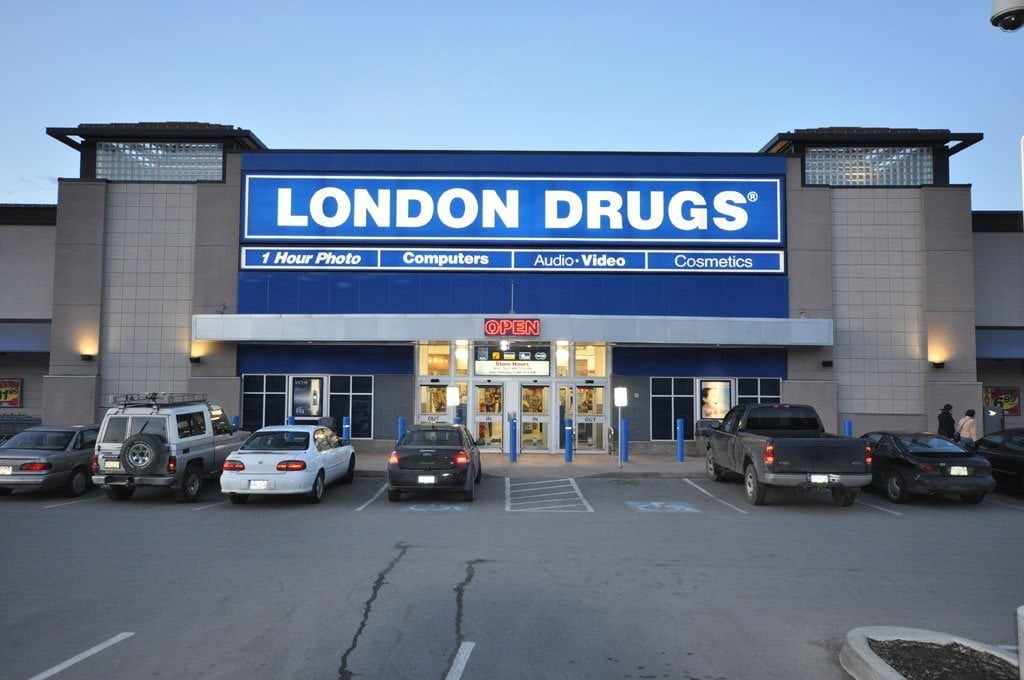
London Drugs 710 Granville St, Vancouver (Image: Craig Patterson)

Retailers in Canada are increasingly sounding the emergency alarm about the impact to their businesses and communities of a growing wave of crime and violence.

In British Columbia, retailers have joined forces to create SOS: Save our Streets, which is a new public safety coalition demanding governments step in and deal with the issue.

Image: Clint Mahlman

“Every British Columbian knows the escalation in crime and violence in our communities has reached epidemic proportions, and governments need to step up and do their jobs to make our streets safer,” said Clint Mahlman, President of London Drugs, and a founding member of SOS.

“SOS is a broad and growing coalition committed to raising the alarm that our streets, our businesses, and our fellow British Columbians are at risk, and only governments, particularly the federal and provincial governments, have the resources, expertise, authority, and responsibility to change things for the better.

“Community groups and local businesses across the province have been expressing concern over the growth in violence against innocent victims for years and have been asking government leaders to do something to protect citizens and their streets. Governments at all levels have responded in piecemeal fashion but are not acting in unison or with any sense of urgency as street-level problems continue to grow. SOS says the current approach of government is not working, and streets and communities are becoming more unsafe.”

Gastown Vancouver (Image: Craig Patterson)

SOS members say retailers across BC are facing growing amounts of theft which impact prices and local shoppers. SOS says absorbing the cost of retail theft and more security is costing BC families $500 annually.

Mahlman said the level of violence, vandalism and theft in all of retail but certainly community-wide is at a crisis point.

“Certainly we see this in British Columbia but we know this could be true throughout the West. Many community groups and downtown business associations and certainly other retailers, restaurants, service industry, are feeling that if the governments don’t act now that we will be past the tipping point and we’ll end up like San Francisco, Portland or Seattle where the downtown cores are no longer safe and retailers will have to close,” he said. 

SOS wants to establish a set of measurable results that provide British Columbians with statistical evidence that show whether streets and communities are getting safer or not.

“These dramatic costs that are associated this, the human costs, the human toll, the direct costs due to vandalism, supporting employees through their mental health or having to take leaves due to the violence and certainly the ongoing costs of security system, recovering theft, is sadly causing a number of retailers to either close or think about relocating and that’s not good.”

SOS Logo

Mahlman said the Retail Council of Canada, London Drugs and many retail colleagues have been lobbying governments for many years prior to COVID that this is a major issue. 

“And frankly it seems to have fallen on deaf ears. The reason for this coalition is to bring a number of people together to try and amplify our voice to ask for change,” he said, adding this is a problem that is not solely in downtown cores of major cities but smaller towns are experiencing this as well.

He said the movement needs other national retailers to step up and also voice the same concerns.

Linda Annis, Executive Director of Metro Vancouver Crime Stoppers, and a city councillor in Surrey, said the SOS network across the province reinforces how widespread the issues are.

“People are afraid, and they’re frustrated,” she said. “The SOS coalition means a louder voice for communities, one that is hopefully heard by our politicians who have the authority, resources, and responsibility to make these issues a priority. After all, when your streets and neighbourhoods aren’t safe nothing else matters.”

Image: Craig Patterson
Crime & safety in Western Canada: The small business perspective

Meanwhile, a new report, Crime & Safety in Western Canada: The Small Business Perspective, from the Canadian Federation of Independent Business (CFIB) found that 43 per cent of Alberta small businesses have been directly or indirectly impacted by crime.

Keyli Loeppky

“The public does not have to look far to see that crime and safety is a problem in our communities and for businesses. We recognize that these are complex issues without simple solutions, but it is important to highlight the toll these issues are having on our local businesses,” said Keyli Loeppky, Director of Interprovincial Affairs at CFIB.

The report said Alberta small businesses say they are struggling to manage theft, property damage, waste and litter, loitering, and public intoxication. Many (73 per cent) are also worried about the safety of their customers and employees.

Small businesses are already implementing measures to better protect their business, customers, and employees, including spending more money on security, adjusting operations, and providing additional safety training for staff. Some report having to pay more to attract and retain employees, further contributing to labour shortage challenges, said the report.

“Many small business owners are expected to be their own accountant, HR department, and marketing team. They did not anticipate also having to work as security, social worker, emergency medical provider,” added Loeppky. “A collaborative approach is needed by all governments, stakeholders, and law enforcement to address these very real challenges.”