“The Minister of Labour must make decisions for the greater good of the country. Our supply chain needs to be protected, and so do our businesses and their employees. A lengthy work stoppage has harmful consequences for the whole economy that are disproportionate to the benefit any of the parties involved can obtain,” saidJasmin Guenette, Vice-President, National Affairs, CFIB.
Jasmin Guenette
“We welcome the Minister’s decision today. But it shouldn’t have come to this point, and we need to find better ways to solve labour disputes. We cannot have work stoppages paralyze Canada’s supply chains every time negotiations are at an impasse. Moving forward, government must make ports an essential service, so they remain fully operational at all times.”
The CFIB is Canada’s largest association of small and medium-sized businesses with 97,000 members across every industry and region.
“Collective bargaining negotiations between the parties in the ports of British Columbia, Montreal and Quebec are all at an impasse. The responsibility for these negotiations belongs to the parties alone, but the impacts are being borne by all Canadians. We simply cannot afford this uncertainty and instability at this moment.
Steve MacKinnon
“The work stoppages at the ports of British Columbia and the Port of Montreal are significantly impacting our supply chains, thousands of Canadian jobs, our economy, and our reputation as a reliable trading partner.
“The dispute at the Port of Quebec has been dragging on for more than two years without any sign of resolution despite significant mediation support. Replacement workers have been used during the lock-out, so the relationship between the parties and industrial peace is further corroded with every passing day.
“Therefore, I have invoked my authorities under the Canada Labour Code to secure industrial peace and to protect the interests of all Canadians.
“I have directed the Canada Industrial Relations Board to order the resumption of all operations and functions at the ports, and to assist the parties by imposing final and binding arbitration. I have also directed the Board to extend the term of the existing collective agreements until new ones are reached.
“Negotiated agreements are the best way forward, but we must not allow other Canadians to suffer when certain parties do not fulfill their responsibility to reach an agreement. It is my duty and responsibility to act in the interests of businesses, workers, farmers, families and all Canadians.”
According to the federal government, the number of agreements settled by FMCS (Federal mediation and conciliation services)in fiscal year 2023-24 without a work stoppage was 154 (96%); the number of agreements settled by FMCS in fiscal year 2023-24 with a work stoppage was 6 (4%); and the total number of agreements settled in fiscal year 2023-24 was 160.
Bruce Winder
Retail analyst and author Bruce Winder said he is relieved for retailers and suppliers that the federal government has forced binding arbitration for Canada’s Vancouver and Montreal ports.
“We were losing $1.2 billion in business every day that the ports were shut down. The risks to Canada’s fragile economy were too great. Particularly with a potential Canada Post strike in play this week as well,” he said.
Gary Newbury, a retail supply chain and last mile expert, said the recent rail strike/lock out (Aug 24) was quelled by the federal government forcing both parties into binding arbitration, and similarly now, the ports have been forced to resume work under the same legislative conditions.
“Canada’s reputation as a reliable trading partner is not enhanced by these “fall outs” arising from management and unions using monopolistic/duopolistic supply chain infrastructure assets as betting chips in their agendas,” he said.
Gary Newbury
“I would go further and suggest the opportunity that may arise mid Jan 25, our ports need to be ready to handle a sharp rise in activity as the Gulf/Eastern American ports head into a more substantial dispute deferred from October.
“The federal government having recognized the critical nature of our supply chains operating efficiently during the pandemic, have chosen not to recognize our ports, ferries, bridges or railways as “Essential Services” and brought into place legislation to ensure minimum service standards are maintained during periods of disputes.
“While in peak trading for Canadian retailers (and their increasingly extending promotional events such as Black Friday), the use of binding arbitration/return to work is a short-term tool the Minister for Labour can use. A far more proactive approach would be to reclassify such infrastructure to ease pressures within Canadian employers dependent free flowing supply of product for their survival, and for consumers to ensure their lives are not avoidably disrupted.”
RioCan Real Estate Investment Trust (TSX: REI.UN) has posted strong results for Q3 2024, achieving a record-high retail committed occupancy of 98.6%, as high-quality, open-air assets continue to thrive in Canada’s competitive retail landscape.
Overall committed occupancy for RioCan’s portfolio reached 97.8%, a 30-basis-point sequential increase, with the Trust’s lease renewal retention ratio remaining high at 92%, the company reported in a news release.
RioCan said it celebrated its third consecutive quarter of double-digit leasing spreads, reaching 14.2% on a blended basis. The REIT reported that more than 1.28 million square feet of leases were completed, including 251,000 square feet of new leases.
Jonathan Gitlin
Jonathan Gitlin, RioCan’s President and CEO, highlighted the Trust’s ongoing resilience in the current market: “Our expertise allows RioCan to capitalize on the favorable environment for retail real estate,” he said, adding that the team’s strategic tenant curation has enhanced both income stability and growth prospects.
The Trust backfilled all 10 large units affected by tenant failures earlier in the year, securing top-tier tenants at higher rent levels, driving an average rent increase of nearly 24% across these leases. This improvement reflects RioCan’s proactive approach to enhancing asset value and tenant quality, it said.
RioCan is one of Canada’s largest real estate investment trusts. RioCan owns, manages and develops retail-focused, mixed-use properties located in prime, high-density transit-oriented areas where Canadians want to shop, live and work. As at September 30, 2024, its portfolio was comprised of 186 properties with an aggregate net leasable area of approximately 33 million square feet.
RioCan said it also cut almost 10 per cent of its staff in October.
“The corporate restructuring is part of RioCan’s ongoing responsible cost management, enhances workflow efficiency, and optimizes resource allocation to better align with business needs.
“RioCan does not intend to commence new physical construction of mixed-use properties in 2024 and well into 2025. Development Spending on mixed-use projects, which were in progress prior to the reduction in new construction starts, is expected to be between $250 million to $300 million. Development Spending for retail in-fill projects is expected to be between $30 million to $40 million,” it said.
Oliver Harrison
Oliver Harrison, Senior Vice President, Leasing & Tenant Experience at RioCan, said: “We’re very pleased with our operating results particularly within our commercial portfolio, having demonstrated in a few cases record high results whether it’s occupancy, spreads on our new leasing deals and renewals, retention ratio in the low 90%. Definitely very happy with those results.”
Harrison said the retail sector continues to be historically strong.
“I’ve been at RioCan for 25 years. I don’t think I’ve ever seen retail fundamentals as strong as they are right now. You’re seeing it in the results we’ve produced in the past few quarters. And you continue to hear it when you talk to our retail partners whether it’s grocery retailers, whether it’s value retailers, whether it’s kind of value apparel. They’re all performing well, they’re all looking to grow their store count and they’re very pleased with their performance.”
For RioCan, one of the jewels in its portfolio is The Well in downtown Toronto.
“The Well continues to perform at or in certain cases above expectations,” said Harrison. “We’re almost one year out from having opened up The Well. We’re at close to 95 per cent occupancy. We’re seeing business in the range of 180,000 to 220,000 people a week. Some really strong sales numbers coming out of the retailers at The Well by and large. And the residential component of the project of which we have a 50 per cent interest in one of the residential buildings, we started leasing it up in August of last year and I think we are either at or close to stabilization already which would be 90 per cent leased and occupied at rents that are equal to or marginally ahead of our pro forma.
“So The Well has been a very positive headline for us, looking back on one year of operation.”
The Well (Image: Dustin Fuhs)
Other notable highlights from the RioCan financial results included a landmark land lease agreement for a 158,000-square-foot Costco store at RioCan Centre Burloak. In addition to driving traffic and attracting complementary tenants, the addition of a service-based anchor is expected to fortify the property’s long-term appeal, said the company.
RioCan said it also maintained a strong financial position, with liquidity of $1.3 billion and an Adjusted Debt to EBITDA ratio of 9.1x. Recent financing initiatives include $1.05 billion in debt restructuring at favorable rates, positioning RioCan to navigate future growth opportunities.
These results underscore the continued demand for RioCan’s necessity-based retail centres and mixed-use developments across major Canadian markets, as the Trust looks forward to sustained momentum heading into 2025, it said.
Home Depot, the largest home improvement retailer worldwide, has posted notable sales results for its third quarter of fiscal 2024, reporting a 6.6% increase in total sales year-over-year, reaching $40.2 billion. Despite a modest decrease of 1.3% in comparable sales, the company’s performance outpaced expectations in a quarter marked by changing consumer spending patterns and challenging economic conditions.
Operating income for the quarter held steady at $5.4 billion, representing an operating margin of 13.5%. Adjusted operating income rose to $5.6 billion, with an adjusted operating margin of 13.8%. However, net earnings dipped slightly to $3.6 billion, translating to $3.67 per diluted share compared to $3.81 per diluted share in the same period last year.
Ted Decker
Ted Decker, chair, president, and CEO of The Home Depot, credited the resilience of the company’s performance to favorable shifts in weather and increased demand for seasonal and outdoor products, including incremental sales from hurricane preparedness efforts. “While macroeconomic uncertainty remains, our third quarter performance exceeded our expectations,” said Decker in a news release. “Our associates continue to show outstanding dedication to serving our customers and communities.”
Fiscal 2024 Guidance Update
The company has adjusted its fiscal 2024 guidance, incorporating an additional 53rd week in its operating calendar. Projections include a 4% increase in total sales, with the 53rd week contributing an estimated $2.3 billion. However, comparable sales are expected to decline by approximately 2.5% for the 52-week period relative to fiscal 2023, it said in a news release.
The updated guidance reflects expectations of $6.4 billion in incremental sales from the strategic supply chain investments (SRS), and Home Depot anticipates opening approximately 12 new stores by year-end. Key metrics forecasted for the 53-week period include a gross margin of approximately 33.5% and an operating margin of about 13.5%, alongside a tax rate around 24%, said the company.
Despite the anticipated challenges, Home Depot expects to maintain steady growth, with diluted earnings per share projected to decline by 2% year-over-year but benefit from an extra $0.30 from the 53rd week. Similarly, adjusted earnings per share are set to dip by 1%, with the 53rd week contributing $0.30.
Operational Footprint
At the close of the third quarter, The Home Depot’s retail presence spanned 2,345 stores and over 780 branches across North America, including the U.S., Canada, and Mexico. Employing over 465,000 associates, the company remains a dominant force in the retail sector, with shares traded on the New York Stock Exchange (NYSE: HD) and included in both the Dow Jones Industrial Average and the S&P 500 index.
The Home Depot’s Q3 performance underscores its resilience in navigating a complex retail landscape, balancing steady growth and strategic adaptation amidst macroeconomic headwinds. The company’s adaptability continues to solidify its position as a leader in the home improvement industry, it said.
CF TORONTO EATON CENTRE YVES ROCHER LOCATION. PHOTO: CRAIG PATTERSON
Yves Rocher, a pioneer in dermo-botanical beauty, has announced a significant expansion in Canada through a partnership with Shoppers Drug Mart and Pharmaprix. This marks the first time the global beauty brand will distribute its products outside of its own channels, bringing its plant-powered skincare, bath, body, and hair care products to Shoppers Drug Mart and Pharmaprix locations nationwide.
The move is part of the company’s strategic vision to grow its Canadian footprint, following the brand’s “Retour aux Sources” initiative, launched nearly a year ago. This initiative aims to reconnect Yves Rocher with its origins and with consumers by focusing on natural, sustainable beauty. Julie Huynh, Managing Director of Yves Rocher North America, describes the partnership as “a transformative moment,” enabling the brand to connect with more Canadians looking for responsible beauty options.
Julie Huynh
Just over a year ago, Yves Rocher unveiled its new brand strategy, “Retour Aux Sources” which is reconnecting the retailer with its roots.
The new brand strategy for the botanical beauty brand includes: a renewed in-store shopping experience, a redesigned pricing strategy, and a revised loyalty program.
At the time, Huynh told Retail Insider the updated strategy aims to reconnect the brand to its founding mission: to offer natural, responsible beauty, by cultivating, revealing and transmitting the incredible power of plants through cosmetics with proven plant power.
In addition, the new strategy aims to forge an even deeper and more authentic connection with the customer, whose input was at the heart of this brand repositioning initiative
Huynh said there are 39 Yves Rocher stores located in Quebec.
“We had to transform the brand to reposition the brand with all the legacy and where the brand comes from. One year later, now we’re ready with a brand new image,” she said, adding the rollout in Shoppers has begun with about 20 to 30 stores.
“By the end of December, we will have 70 across all of Canada.” She said 32 of those locations will be in Quebec. “The main reason why is to be more accessible to more Canadian customers. Having only 39 own stores only in Quebec is not enough.”
She said Shoppers has an incredible network of stores across Canada and there is the potential in the future to have a presence in even more of the drug stores.
“And perhaps why not if our customer is willing to find our brand in such channels why not consider out distribution (channels) and other retailers. But for the time being this is the very, very beginning let’s make it first successful and expand to make the footprint bigger.”
Gwennaëlle Varnier
Shoppers Drug Mart and Pharmaprix Vice President Gwennaëlle Varnier is equally enthusiastic, noting an increasing demand among Canadians for clean, responsibly sourced beauty products. “Canadians trust Shoppers Drug Mart to offer them the best in beauty, and this partnership with Yves Rocher reflects our commitment to offering sustainable options in communities across the country,” she said.
In addition to store shelves, Yves Rocher products will be available online, offering further convenience for consumers. Prestilux, a Canadian distributor known for working with prestigious brands, is managing the distribution, adding an established partner to ensure the expansion’s success, said a news release.
The collaboration underscores Yves Rocher’s dedication to innovation and sustainability, while keeping true to its founding mission: harnessing the power of plants to provide natural beauty solutions. As Yves Rocher continues to evolve, Canadian consumers will now have easier access to the brand’s unique dermo-botanical expertise, available just around the corner at Shoppers Drug Mart and Pharmaprix locations across the country, according to the release.
The Morning Show on Global Television recently unveiled a revamped set furnished by leading online retailer, Wayfair. This partnership, established for multiple months, brings stylish and functional furniture to Canada’s top-rated morning show while enhancing the visual appeal and versatility of the set. The redesign highlights various themed conversation areas, offering a welcoming environment for hosts Jeff and Carolyn as well as guests.
The partnership goes beyond simple furnishing; it brings Wayfair’s brand directly into millions of Canadian homes. Through this collaboration, Wayfair not only enhances the show’s aesthetics but also connects with viewers by showcasing a range of products they can replicate in their own spaces.
Photo: Global
Elevating the Morning Show Experience with Wayfair Furnishings
The redesigned set incorporates multiple conversation areas that create a warm, home-like environment for segments, discussions, and interviews. At the heart of the set is a signature Morning Show desk where Jeff McArthur and Carolyn MacKenzie kick off the daily broadcast. Behind them, viewers can see sleek Wayfair stools that blend style with functionality, reflecting the modern look Wayfair is known for.
Jordan Schwartz
“There’s a new energy in the studio with the Wayfair setup,” noted Jordan Schwartz, Head of Morning Programming across Global. “We have areas with sofas and coffee tables, stools, a kitchen table, and even a working kitchen. These varied spaces not only look great but make it easier to transition from one segment to another. The new design lends itself perfectly to the diverse segments our show covers every day.”
The redesigned set has transformed the traditional, single-desk format into a dynamic, multi-area studio, allowing hosts and guests to move around, enhancing the viewing experience. The Wayfair-furnished spaces also bring flexibility, enabling the show to switch quickly between interviews, cooking segments, and more.
A Multi-Month Partnership with Viewer-Engagement Opportunities
The partnership between Wayfair and The Morning Show will extend over several months, with plans to incorporate viewer engagement. “Our hope is that this collaboration will continue well beyond the initial agreement,” says Schwartz. “Wayfair has brought a fresh look and functional setup to our show, and we’re excited about the possibilities moving forward. There’s even going to be a contest for our viewers later in the partnership, which is something to look forward to.”
In addition to showcasing Wayfair’s products on air, the contest will give viewers the chance to bring pieces from The Morning Show set into their own homes. This unique opportunity not only promotes viewer engagement but further strengthens the connection between Wayfair’s products and the show’s audience.
Wayfair’s Commitment to the Canadian Market
In a statement, Wayfair said: “The Morning Show recently went through a rebrand, bringing in new personalities and a fresh perspective. To align with this new direction, they needed a set that would express their updated identity. Wayfair was excited to step in as a sponsor, helping TMS curate furniture and décor pieces that truly reflect their new branding. Just as we support TMS in finding the right style to express who they are, we strive to do the same for Canadians, helping them create homes that reflect their personal style as they navigate different stages of their lives.
“We believe every Canadian deserves access to a trusted destination for all things home, so that their spaces express who they are, no matter where they live. That’s why our extensive range of styles is available from coast-to-coast, empowering everyone to easily create a home that feels just right for them. Whether it’s a new beginning, like The Morning Show’s rebrand, or a life transition, Wayfair is here to support Canadians in designing homes that truly reflect their personality and lifestyle.”
This partnership is Wayfair’s latest strategic move to expand its footprint in the Canadian market. With a set that millions of Canadians see daily, the collaboration offers high visibility and reinforces Wayfair’s reputation as a go-to destination for home furnishings.
Success Stories: Retail Brands Flourishing on The Morning Show
The Morning Show has seen increasing interest from brands eager to feature their products in front of a live Canadian audience. Retailers are finding that their products receive a direct sales boost after appearing on the show, and companies such as Joe Fresh, Specsavers, Intel, and Loblaw have all experienced success after partnering with the program. A recent example included Volkswagen Canada, which showcased the launch of their electric ID Buzz minibus, creating significant buzz in the market.
This connection between on-air exposure and consumer purchases is becoming more prominent, and The Morning Show is now sharing case studies of successful retail partnerships with potential collaborators. “The response from retailers has been overwhelmingly positive,” says Schwartz. “Companies are seeing sellouts and increased brand visibility from our audience, and the format of our show allows us to naturally incorporate these brands in a way that resonates with viewers.”
The show’s producers see this shift as a win-win, giving viewers practical information on where to find the items they see on screen. “There’s no harm in letting people know where they can buy something, as long as it aligns with our values and fits with our show’s tone,” they explained. “The feedback from both viewers and retailers has encouraged us to embrace these partnerships even more.”
Designer Shai DeLuca Adds Flair to the Set
Shai DeLuca
Interior designer Shai DeLuca, known for his innovative style, was brought in to orchestrate The Morning Show’s new look using Wayfair’s products. DeLuca’s approach centers on creating warm, functional spaces that fit the needs of the show while providing a seamless backdrop for a variety of content.
“Shai understood the needs of the show perfectly and was instrumental in bringing this concept to life. The new set areas not only look stunning on screen but offer a high level of functionality. We’re grateful to have a designer who truly understands how to blend style with usability,” says Schwartz.
DeLuca’s influence is evident throughout the set, with furniture choices that balance contemporary style with practical functionality. The design includes a diverse mix of seating arrangements, coffee tables, and cozy sofas, along with a fully operational kitchen area that hosts cooking and lifestyle segments.
Photo: Global
Strong Online Presence and Viewer Reach
In addition to its television audience, The Morning Show boasts an impressive 1.9 million YouTube subscribers, giving brands a digital platform with extended reach. This strong online presence allows The Morning Show to engage viewers who may not tune in live but still follow the program’s content online.
Wayfair’s partnership will likely benefit from this multi-channel approach, giving viewers multiple touchpoints to engage with and purchase featured products. The Morning Show team is optimistic about the ongoing collaboration, and hopes it will continue to build momentum and enhance the set’s versatility.
Looking Ahead: The Future of Retail Partnerships on The Morning Show
The Morning Show’s collaboration with Wayfair reflects a broader trend in Canadian television, where brands find value in authentic partnerships that resonate with audiences. As The Morning Show continues to lead in ratings and reach, the team expects to see more brands seeking similar opportunities.
“Our focus is on working with brands that align with our values and enhance the viewing experience,” says Schwartz. “Wayfair has been a great partner in that sense, and we’re excited about what’s to come in this partnership.”
With the blend of Wayfair’s stylish furnishings and DeLuca’s keen design eye, The Morning Show’s revamped set is more than just a facelift—it’s a platform that integrates retail and entertainment in a meaningful way, fostering a stronger connection between brands and consumers across Canada.
As the retail industry grapples with rising returns and logistical expenses, Toronto-based Frate Returns has emerged as a disruptor, bringing an AI-driven approach to returns management that aims to streamline processes and curb costs.
Launched in 2022 by former Division One hockey player and Ivey Business School graduate Bailey Newton, the company’s CEO, Frate’s innovative software solution tackles one of the biggest pain points in retail: the rising cost and complexity of handling returns. This cutting-edge approach, which uses AI to assess returns at the customer’s location, is designed to ease burdens on retailers and enhance the customer experience.
In a recent conversation, Newton shared the inspiration behind Frate. “The idea came about in a very real, personal way,” he says, describing how he observed his mother’s shopping habits during the pandemic. “She, like so many others, was ordering multiple sizes or colours of items, knowing she’d return most of them. At one point, her home practically turned into a small warehouse. It made me realize how inefficient and costly the returns process can be for retailers.”
Bailey Newton
The Pandemic Shift: Retail Returns Surge
The pandemic fueled a surge in online shopping and, consequently, returns. A study by the National Retail Federation reported that the volume of returns increased by 16.6% in 2022, costing retailers nearly $761 billion in lost sales. Traditional return processes, in which every returned item is shipped back to a warehouse for evaluation, adds further costs and complexity.
“What we saw during the pandemic was really a shift in customer behavior,” explains Newton. “Everyone’s home became a fitting room, and with that came an enormous increase in returns. But the standard return model is costly and outdated. Warehouses are filling up with returned items that haven’t even been inspected yet, and brands are paying each time an item travels back and forth. It’s a logistics nightmare.”
Newton’s idea for Frate was to reimagine this entire process. “The goal was simple: create a solution that minimizes costs for retailers while keeping returns convenient for consumers,” he explains. To achieve this, Frate built a comprehensive returns management system, complete with a returns portal that integrates into a brand’s website and a sophisticated AI feature that assesses the condition of returned items via uploaded customer images.
A New Model: Return Quality Control at the Customer’s Doorstep
With Frate’s software, customers begin a return by entering their order number on a brand’s online return portal, selecting their reason for return, and uploading images of the item. Frate’s AI then analyzes these images, categorizing items as “perfect,” “good,” or “poor” condition, based on criteria tailored to each brand’s specifications. By allowing brands to evaluate items remotely, Frate enables more efficient handling of returns, avoiding costly warehouse inspections for high-quality items and reducing inventory holding costs.
“Bringing the quality control process upstream was a game-changer,” Newton explains. “Instead of shipping everything back to a warehouse, we’re able to route items based on their condition. Perfect condition? It can be resold to another customer, potentially without even leaving the consumer’s home. Good condition? It could go straight to a liquidation centre, bypassing traditional channels. It’s a new way to think about returns that’s both cost-effective and sustainable.”
Preventing Return Fraud and Wardrobing
Frate’s approach also addresses one of the industry’s growing issues: return fraud. A common tactic, known as “wardrobing,” occurs when customers wear items and then return them as if they’re new, expecting a full refund. This practice has been especially prevalent in fast fashion, where customers may buy multiple items, wear them once, and then return them. Frate’s image-based verification system helps detect such cases, allowing brands to make more informed return decisions.
“We’ve seen an increasing number of brands turning to Frate for this exact reason,” says Newton. “Fraudulent returns can eat away at profits, and it’s a big problem for brands who are trying to offer flexible return policies while protecting their bottom line. Our software can flag these items based on wear indicators, helping brands save on costs without negatively impacting honest customers.”
Frate’s software empowers retailers to decline returns that don’t meet quality standards. “It’s all about creating a fair process,” Newton notes. “If an item comes back in poor condition, brands now have the tools to make a justified decision. And in cases of return fraud, they’re not automatically taking the loss.”
Expanding Partnerships Across North America and Europe
Frate is already making an impact in Canada, the U.S., and the U.K., with clients that include Toronto-based brands like Peace Collective, as well as major international names like Schutz and Club L London. These brands have embraced Frate’s technology to reduce costs associated with traditional returns, allowing them to streamline operations and avoid unnecessary restocking.
“Frate is a fantastic partner,” says the CEO of Peace Collective, one of Frate’s early clients. “With their software, we’re able to make returns more efficient while focusing on reselling items that are still in top condition. The difference in our cost savings has been substantial.”
Newton explains that Frate’s appeal lies not only in its technology but also in the benefits to the bottom line. “The savings brands are seeing from this process are significant. We’re talking about reduced shipping costs, reduced storage costs, and, most importantly, better inventory management. It’s about bringing sustainability to the forefront in a way that makes sense financially.”
Future Plans and a Growing Market
Newton sees tremendous potential for Frate as retailers shift toward a more sustainable approach to returns. The company is currently exploring new features, such as expanding AI capabilities to provide even more detailed quality assessments. “We’re looking to add even more refinement to our AI model, so brands have an even clearer picture of an item’s condition,” he says. “The goal is to keep evolving and add as much value as possible.”
With returns management now representing a sizable expense for retailers, Frate’s model aligns with current retail trends toward cost efficiency and sustainable practices. A recent study by the University of Arizona found that unsold or returned inventory can cost brands anywhere from 5% to 10% of their revenue. By keeping more items in circulation and reducing the back-and-forth in shipping, Frate’s platform helps brands mitigate these costs.
In the future, Newton envisions Frate continuing to innovate in returns management, potentially expanding into other areas of retail logistics. “There’s so much we can do with this technology,” he says. “Right now, we’re focused on returns, but I see Frate evolving as a broader solution for retail logistics. Our mission is to make the entire ecosystem more efficient and customer-friendly.”
As Frate builds its reputation and expands its partnerships, Newton is optimistic about what lies ahead. “We’re just getting started,” he says. “Frate is about more than just returns; it’s about rethinking logistics and creating a more sustainable, streamlined system that benefits everyone.”
With its groundbreaking approach, Frate is poised to reshape the returns landscape, saving retailers money, reducing waste, and improving the customer experience — all while paving the way for a new era in retail logistics.
Music icon Beyonce endorsing Levi's. Photo: Levi's website
Midtown, in Saskatoon, has welcomed iconic brand, Levi’s, to the shopping centre.
This is the first Levi’s owned and operated store in the Saskatoon market, and Saskatchewan overall. The new retailer is on the main floor next to Bath & Body Works.
Established in 1853, Levi’s is among the world’s most recognizable brands, with more than 1,200 owned and operated stores worldwide, available in nearly 40 countries. With both classic and trendy pieces, and lines for men and women, the retailer will appeal to a variety of Saskatchewan shoppers, said a company news release.
Grand opening celebrations were held on November 9.
“This is such an exciting new addition to Midtown’s incredible roster of retailers!” said Brittany Abercrombie, Marketing Manager, Midtown. “We’re thrilled to bring this iconic brand to Saskatchewan for the first time — and just in time for holiday shopping, too!”
Music icon Beyoncé has been endorsing the retailer.
Midtown is operated by Cushman & Wakefield, a leading global real estate services firm. Cushman & Wakefield is among the largest real estate services firms with approximately 53,000 employees in 400 offices and 60 countries. In 2019, the firm had revenue of $8.8 billion across core services of property, facilities and project management, leasing, capital markets, valuation and other services.
Wisdom Natural Brands, the Arizona-based parent company of SweetLeaf®, has announced a major acquisition in the natural sweetener market, acquiring Canadian honey producer Drizzle Honey. Known for its commitment to all-natural, sustainably sourced honey, Drizzle adds a robust new line to Wisdom’s product offerings and provides an ideal platform for expanding into the high-growth U.S. honey market.
Aja Horsley
Founded by former environmental scientist Aja Horsley, Drizzle has made its mark in Canada with raw, unprocessed, bee-friendly honey. The company sources exclusively from local beekeepers who practice sustainable and non-toxic beekeeping. Drizzle’s innovative product line includes everything from white and golden raw honeys to superfood-infused varieties, like ginger and turmeric, as well as trending products like hot honey and cinnamon-spiced honey. Now available in 1,200 Canadian stores, Drizzle will gain access to an expanded distribution network across the U.S., thanks to Wisdom’s well-established partnerships with major retailers like Whole Foods, Sprouts, Walmart, and Amazon, said a news release.
Michael May, CEO of Wisdom Natural Brands, sees the acquisition as a natural evolution for the company. “Honey fits perfectly into our line of natural sweeteners, and Drizzle Honey adds bonus wellness and environmental benefits,” he said. “With its nutrient-rich raw honey and sustainable practices that support pollinator populations, Drizzle brings a range of health and eco-friendly options for consumers looking to reduce their refined sugar intake.”
The honey market has seen significant growth, with Nielsen reporting sales exceeding $1 billion in 2023 and double-digit growth for organic and raw honey products. Raw honey in particular accounted for a substantial 35% of category volume, a testament to consumer demand for natural, nutrient-rich alternatives to conventional sweeteners, said the news release.
Drizzle’s Certified B Corporation status and dedication to sustainability, including a commitment to donate one percent of profits to pollinator research, aligns with Wisdom’s brand values. Horsley, Drizzle’s founder and “Queen Bee,” is enthusiastic about the partnership’s potential to bring Drizzle to a wider audience. “With its decades-long commitment to natural sweeteners, Wisdom is perfectly positioned to introduce our honey to U.S. consumers as well as grow our market share in Canada,” she noted.
The acquisition further cements Wisdom’s position as a leader in natural sweeteners, as it continues to provide consumers with clean, health-conscious alternatives to refined sugars and artificial sweeteners. For more information, visit SweetLeaf and Drizzle Honey’s respective websites, added the news release.
Calgary’s dining scene has expanded with the opening of Pineapple Hall, a dynamic new food hall concept by Concorde Entertainment Group.
Launched on November 6, in Stephen Avenue Place in downtown Calgary, Pineapple Hall brings together several of Concorde’s popular restaurant brands under one roof, creating a vibrant new destination for downtown patrons.
Pineapple Hall features a walk-up food hall where guests can sample a curated selection of menu items from some of Concorde’s most beloved venues, including Lonely Mouth, Double Zero Pizza, Surfy Surfy, and Clive Burger. A unique aspect of the food hall is its streamlined ordering process: all items are available from one of two pickup windows, allowing customers to enjoy offerings from multiple Concorde brands in a single order, according to a news release.
In addition, a grab-and-go fridge stocked with Concorde Catering’s Boardroom menu will provide convenient breakfast and lunch options for those on the move.
“Pineapple Hall is a celebration of some of our favourite Concorde Group brands, all collected in one space,” said Joe Dort, Concorde’s Director of Brand and Special Projects. “This is intended to be a place for people to gather, whether for brunch, a quick coffee, or dinner, where they can experience a mix of our concepts from around the city all at once.”
Officials said the new space is also home to Needs Must, a stylish cafe and patisserie serving Monogram Coffee and an array of freshly baked treats. Led by Jordan Hartl, Concorde’s Director of Pastry, the in-house team will create a rotating selection of daily pastries, alongside house-made juices and smoothies. Needs Must promises to be an inviting stop for both locals and visitors, with a focus on high-quality, artisanal ingredients.
In addition to the food hall and cafe, Pineapple Hall will host a second location of Concorde’s award-winning restaurant, Pigeonhole. Known for its brunch, innovative share plates, and inventive cocktails, Pigeonhole’s new downtown spot is tailored for Calgary’s corporate crowd, making it an ideal venue for breakfast meetings, happy hours, and dinner gatherings. The restaurant’s emphasis on vibrant flavors and hospitality will undoubtedly appeal to downtown diners looking for a memorable dining experience, said the news release.
With nearly 40 years in the business, Concorde has grown from a single entertainment venue into one of Western Canada’s most iconic hospitality groups, with an impressive portfolio of popular brands including Bridgette Bar, Lulu Bar, and Major Tom Bar.
Nakisa, a global leader in cloud-native enterprise solutions working with brands such as 3M, BP, Coty, Delta Air Lines, and Walmart, has expanded its suite of offerings with the launch of an Integrated Workplace Management System (IWMS) Product Portfolio. For those new to IWMS, it is a comprehensive software platform used by corporate and commercial real estate (CRE), IT, and digital workplace professionals to centralize and manage the lifecycle of their real estate portfolios, enhancing operational efficiency, sustainability, and cross-team collaboration.
Recognizing the evolving needs of the market, Nakisa, long known for its innovative approach to lease accounting, workforce planning, and real estate management, saw the need to create a full-featured cloud-native IWMS solution tailored for global retailers. Nakisa’s IWMS product was so effective at launch that it was recognized by Gartner as a leading disruptor in its IWMS Market Guide 2024.
Why and how did Nakisa move into the IWMS space with such a strong showing right out of the gate? Retail Insider interviewed Founder and CEO Babak Varjavandi, Global VP of Business Development and Marketing Saleh Bahrololoum, and Director of Business Development – IWMS Ashwath Muralidharan to learn more.
Transforming into a Portfolio Provider
Nakisa strategically shifted from being a point solution provider— focused on real estate asset management only— to a portfolio provider, offering a comprehensive system of integrated solutions that range from covering capital project planning and budgeting to portfolio management, as well as facility and maintenance management. “We aim to equip our clients with all the tools they need in one platform, increasing efficiency and alignment across departments so they can focus on running their businesses— not managing software,” said Saleh Bahrololoum, VP of Business Development and Marketing.
Saleh Bahrololoum, VP of Business Development and Marketing at Nakisa
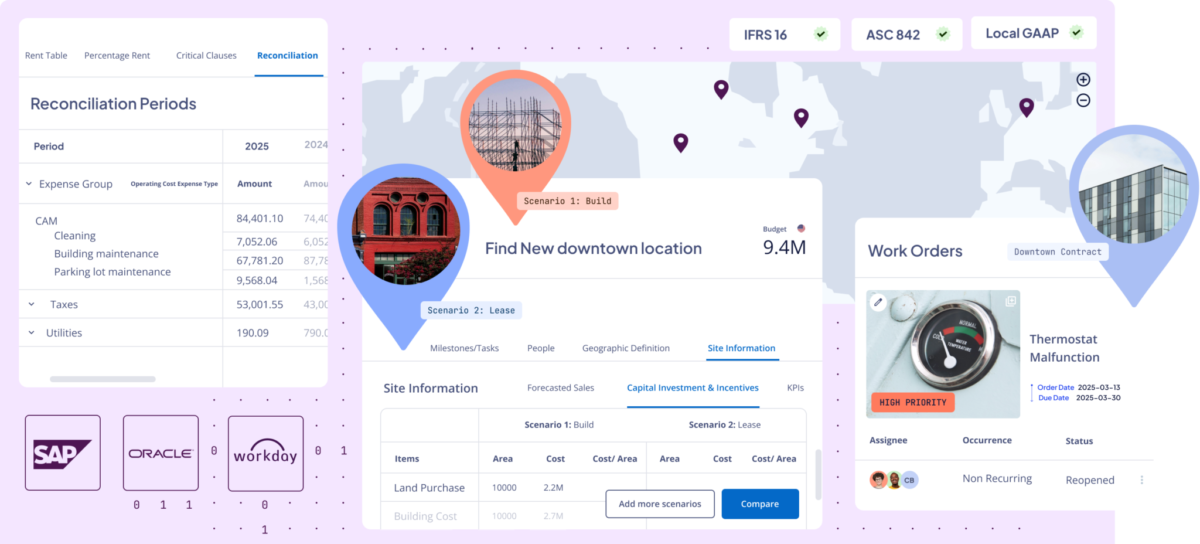
With its IWMS portfolio, Nakisa allows enterprises to efficiently manage capital project planning and budgeting, site selection for opening new stores or expanding to new markets, lease administration and accounting, and facility operations and maintenance. The IWMS software provides role-based workflows and team-specific UIs, enabling each team—whether real estate, lease accounting, facility, or capital project management—to work independently and have the functionality and user-friendly interface they need to achieve their goals. Despite team-specific setups, all teams operate within a unified asset repository, using the same data and platform to ensure cross-team alignment. This approach reduces clients’ learning curve and helps them achieve quick time-to-value and high ROI. These elements are particularly beneficial for retail and commercial real estate management.
Tailored for Retail and Commercial Real Estate
Nakisa’s IWMS solution provides comprehensive support for retailers in commercial real estate management through many key features, including automated percentage-based rent calculations and common area maintenance (CAM) reconciliation out of the box or the ability to customize formulas or create scripts to meet specific use cases.What’s more, the solution provides comprehensive management for tax, insurance, accounts payable (AP), and accounts receivable (AR), along with a dedicated vendor portal designed to enhance communication and collaboration with landlords. Clients find great value in Nakisa’s virtual document library, along with the advanced notifications and alerts for critical clauses and dates. Beyond that, Nakisa offers advanced configurability so that users can easily deal with a portfolio with diverse assets, comply with parallel standards (i.e., IFRS 16, ASC 842, and local GAAP), integrate natively with multiple ERPs (SAP, Oracle, Workday), and operate in diverse geographies and currencies.
Ashwath Muralidharan, Director of Business Development – IWMS at Nakisa
Nakisa’s deep expertise in enterprise finance and lease accounting is pivotal to its new IWMS portfolio. Integrating financial and operational data within one solution aligns real estate and finance teams. “Our IWMS solution bridges the gap by centralizing all operational and financial data in one platform,” said Ashwath Muralidharan, Director of Business Development – IWMS. “It empowers teams to act quickly and accurately, addressing a common challenge in retail real estate. For retail clients, this means real-time access to critical insights, enabling them to make faster and more informed decisions about their assets.”
Nakisa’s IWMS offers powerful analytics and reporting capabilities that aim to democratize access to real-time insights. Clients, regardless of their BI skill level, can utilize out-of-the-box dashboards, no-code formulas, and real-time data visualizations to effectively track KPIs, manage assets, and analyze costs. Highly flexible scripting options are also available for those who need advanced configuration.
Success Stories: Nakisa’s Impact on Leading Brands
Nakisa has already delivered significant results with high-profile clients such as Nestlé, Walmart, FairPrice, and PUMA (who represent just a few of Nakisa’s Fortune 1000 companies). “Our solutions provide improved efficiency, enhanced compliance, and scalability,” shared CEO Babak Varjavandi, describing Nakisa’s impact on enterprise clients. Through Nakisa’s native bidirectional SAP integration, robust security, and strict adherence to SOC 1 Type II and SOC 2 Type II standards (among many others), Nakisa ensures secure and comprehensive lease accounting and administration.
Babak Varjavandi, Founder and CEO at Nakisa
Nakisa’s flexibility in meeting specific retail requirements has established it as a trusted partner for major brands, helping its clients achieve up to 70% operational efficiency gains. “We designed Nakisa’s IWMS to be adaptable, scalable, and user-friendly, with client needs driving every feature,” said Muralidharan.
Disrupting the IWMS Market with a Cloud-Native Solution
Nakisa’s IWMS portfolio stands out from traditional systems by offering a cloud-native solution that’s configurable on Day 1 to meet the diverse needs of enterprises – without the need for customization. “Our product is designed to meet 80-90% of our clients’ needs right out of the box,” said Muralidharan. “Any additional customization can be managed through client-side configurations, saving both time and resources.”
Built on a flexible, scalable architecture, Nakisa’s platform integrates seamlessly with existing ERP systems, providing a solution that evolves alongside clients’ growing needs. Bahrololoum added, “Our cloud-native approach enables fast and simple deployment, making it easy for clients to scale their operations as they grow without incurring the high costs typically associated with traditional IWMS providers.”
Innovation and Future Outlook
Nakisa is actively planning future innovations to enhance its IWMS offerings, particularly focusing on sustainability tracking and advanced analytics. “Sustainability is becoming increasingly critical to real estate operations, and our platform will soon be able to track energy usage, water consumption, and carbon emissions in real-time,” said Muralidharan. “This data will be invaluable for companies committed to achieving their environmental, social, and governance (ESG) goals.”
Nakisa’s ongoing commitment to AI-driven enhancements and analytics will enable clients to predict maintenance needs, optimize space utilization, and support growth initiatives. “We’re dedicated to creating solutions that empower clients to make informed, data-driven decisions about their portfolios,” Varjavandi added. “This commitment to innovation and client success is central to our long-term strategy.” In fact, Nakisa offers a unique large language model (LLM) lease abstraction feature that allows users to leverage generative AI to quickly extract and deploy key lease information in workflows, eliminating manual tasks and their associated errors. This feature has gained the interest of global retailers looking to streamline operations.
Image: Nakisa
How Nakisa’s 20 Years of Independent Growth Paved the Way for Its IWMS Innovation
Starting with core capabilities in lease administration and accounting, Nakisa’s expertise naturally evolved into IWMS, driven by its clients’ needs. Varjavandi explained, “We recognized years ago the importance of adapting to and anticipating the demands of large enterprises in real estate management and lease administration. Our commitment to becoming a comprehensive IWMS provider is the result of years of listening to our clients,” Varjavandi noted. With its expansion into IWMS, Nakisa now offers a fully integrated, cloud-native platform tailored for large enterprises, built to easily integrate with major systems like SAP, Oracle, and Workday.
Offering such an IWMS product would be a significant accomplishment for large companies like IBM, so how did Nakisa develop their offering with just 300 employees?
A large part of that answer comes from the company’s long-standing independence. For 20 years, Nakisa achieved continuous profitability without external funding, allowing it to grow sustainably and make strategic, client-focused decisions. This autonomy fostered a high level of employee retention, supported by a truly diverse C-suite leadership team, managers, and staff who all comfortably and openly offer up ideas and constructive feedback to one another.
Varjavandi continued, “Our independence has enabled us to grow sustainably, align product development with client needs, and focus on building robust, cloud-native solutions that support large enterprises’ evolving challenges.”
A Vision for the Next Generation of Real Estate Management
Nakisa’s IWMS portfolio, the result of years of planning and careful development, sets a new standard in real estate management by offering a fully integrated cloud-native solution for large enterprises. This head start allows Nakisa’s IWMS products to stand apart from many established vendors that offer a mix of on-premises and cloud-based solutions. As Bahrololoum explained, “Our mission is to offer a seamless, integrated experience that transforms how companies manage their properties. We’re enabling our clients to become more agile and resilient as they navigate the industry’s evolving challenges.”
With a strong emphasis on innovation, client needs, and sustainable growth, Nakisa is set to make a significant impact on the industry through its IWMS portfolio, enabling clients to streamline operations and achieve long-term success.