Advertisement
Home Blog Page 569

New Zealand-Based Men’s Fashion Brand Rodd & Gunn to Enter Canada with Standalone Stores

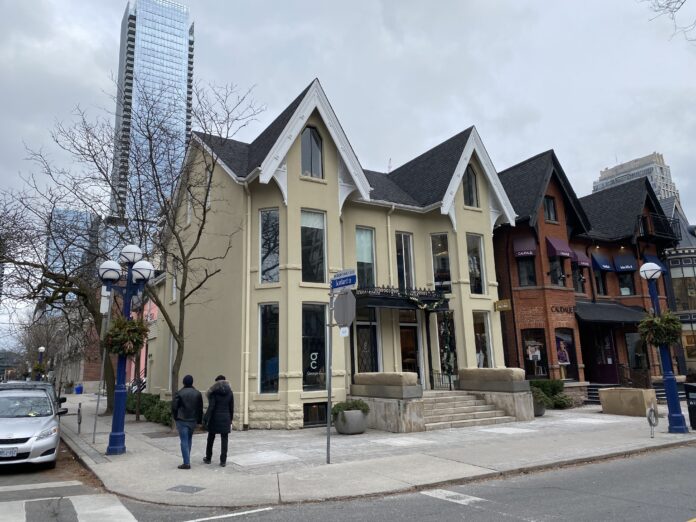
Future Rodd and Gunn at 21 Hazelton Avenue (Image: Dustin Fuhs)

New Zealand-based menswear brand Rodd & Gunn is expanding into the Canadian market this year with standalone stores. Its first will open on Hazelton Avenue in Toronto, and more are planned. 

The Toronto location at 21 Hazelton Avenue is expected to carry the full line of Rodd & Gunn’s ready-to-wear line as well as footwear and accessories. The entire building spans just under 3,300 square feet, including a ground floor of 1,029 square feet, a second floor with 934 square feet, and a basement level spanning 1,331 square feet. The store will open this spring.

Jordan Karp of Savills Canada listed the space and is representing Rodd & Gunn in Canada as the brand expands. Hanard Investments owns the building which is managed by Greenwin. 

Rodd & Gunn Flagship in Chadstone, Australia (Image: GDM Retail Systems)

The building at 19-21 Hazelton Avenue, which was originally built as two semi-detached houses, was constructed in 1900 and was renovated in 2006. Until recently, upscale multi-brand womenswear retailer George C. operated in the Rodd & Gunn space, and the store closed due to the owner’s retirement. Next door is Amsterdam-based custom men’s retailer Atelier Munro in 19 Hazelton, which opened its first Canadian location there in October of 2022

Other historic homes on Hazelton Avenue have been turned into retail spaces, and over the years there has also been some purpose-built retail construction. A clustering of menswear brands on the street appears to have developed with Amsterdam-based SuitSupply occupying a large three-level store a few doors south of Atelier Munro and the future Rodd & Gunn. 

Rodd & Gunn plans to open more standalone stores in Canada. Locations sought include street-front spaces in buildings with ‘character’ in nodes with premium brand/multi-brand retailers, as well as enclosed malls. The ideal size for stores are in the  2,000-3,000+ square foot range. 

Scott Braini, General Manager of Real Estate at Rodd & Gunn, said, “Our premises selection almost always starts with a building that exudes character or a notable point of difference that we can lean into as a brand and showcase our unique rich heritage & personality.”

He went on to say, “Preferred locations are vibrant retail nodes that provide a village energy and showcase a diverse and eclectic retail mix from progressive designers, premium lifestyle offers, classic sophisticated staples and market leading cafes and restaurants.”

In the Toronto area, Rodd & Gunn is targeting opening three to five stores, and a national expansion initially in the Montreal and Vancouver markets is in the works, given opportunities. 

“We are driven by opportunities that excite and engage with our passion for retail. Rodd & Gunn is extremely dynamic in its approach to property, and will readily pivot our strategy to achieve unique and authentic experiences for our customers,” said Braini.

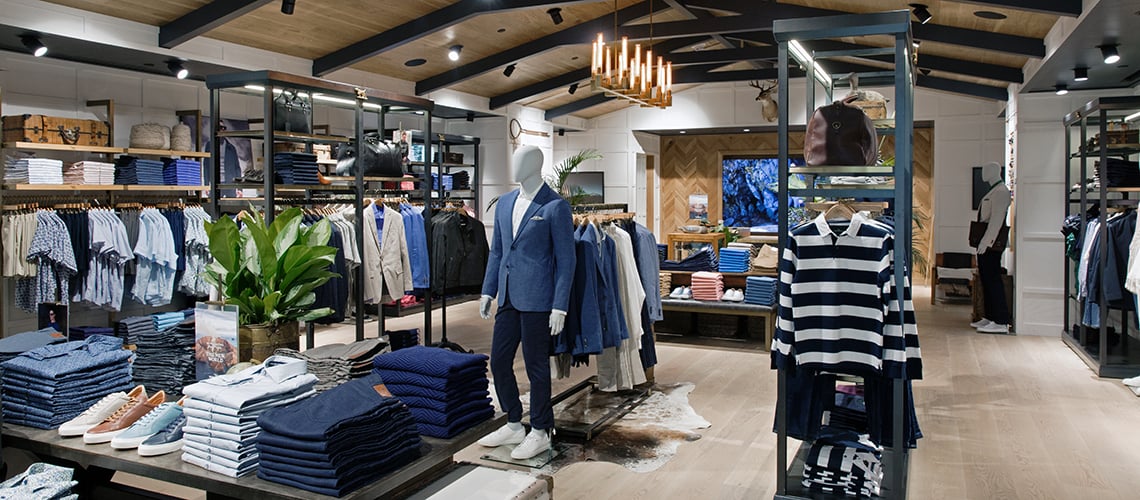
Image: Rodd & Gunn
Image: Rodd and Gunn

Rodd & Gunn is also eyeing the potential to open at least one Rodd & Gunn + Lodge Bar flagship in Canada, which would include retail as well as a significant licensed food and beverage component. The right location is paramount, with the Lounge Bar concept building brand awareness while showcasing the New Zealand lifestyle at an elevated level. Locations such as this would span in the 7,000-12,000+ square foot range. These concepts have proven to be popular in New Zealand and Australia. 

When asked if Rodd & Gunn was bringing the Lodge Bar flagship concept to Canada, he said, “Most definitely; however, we do not currently have a firm timeline for this. These stores are an immersive brand experience that encapsulates Rodd & Gunn’s vision and values across lifestyle mediums of food and fashion. The catalyst for these locations starts with a location that captures our hearts and imaginations!”

Rodd & Gunn entered Canada more than a year ago via a concession presence at Hudson’s Bay. Almost half of Hudson’s Bay’s stores now have a Rodd & Gunn concession presence. These concessions will remain operational as part of the brand’s Canadian penetration strategy while standalone stores also become operational. 

“Department stores remain a key touch point for our consumers and provide a platform for scaled accessibility. These environments are typically operated as a concession (store in store) which enable us to create a true Rodd & Gunn experience through the deployment of our expert retail team and the curation of our product offering as only we know how,” said Braini.

US-Based Jersey Mike’s Subs to Expand Canadian Footprint with Hundreds of New Locations [Interview]

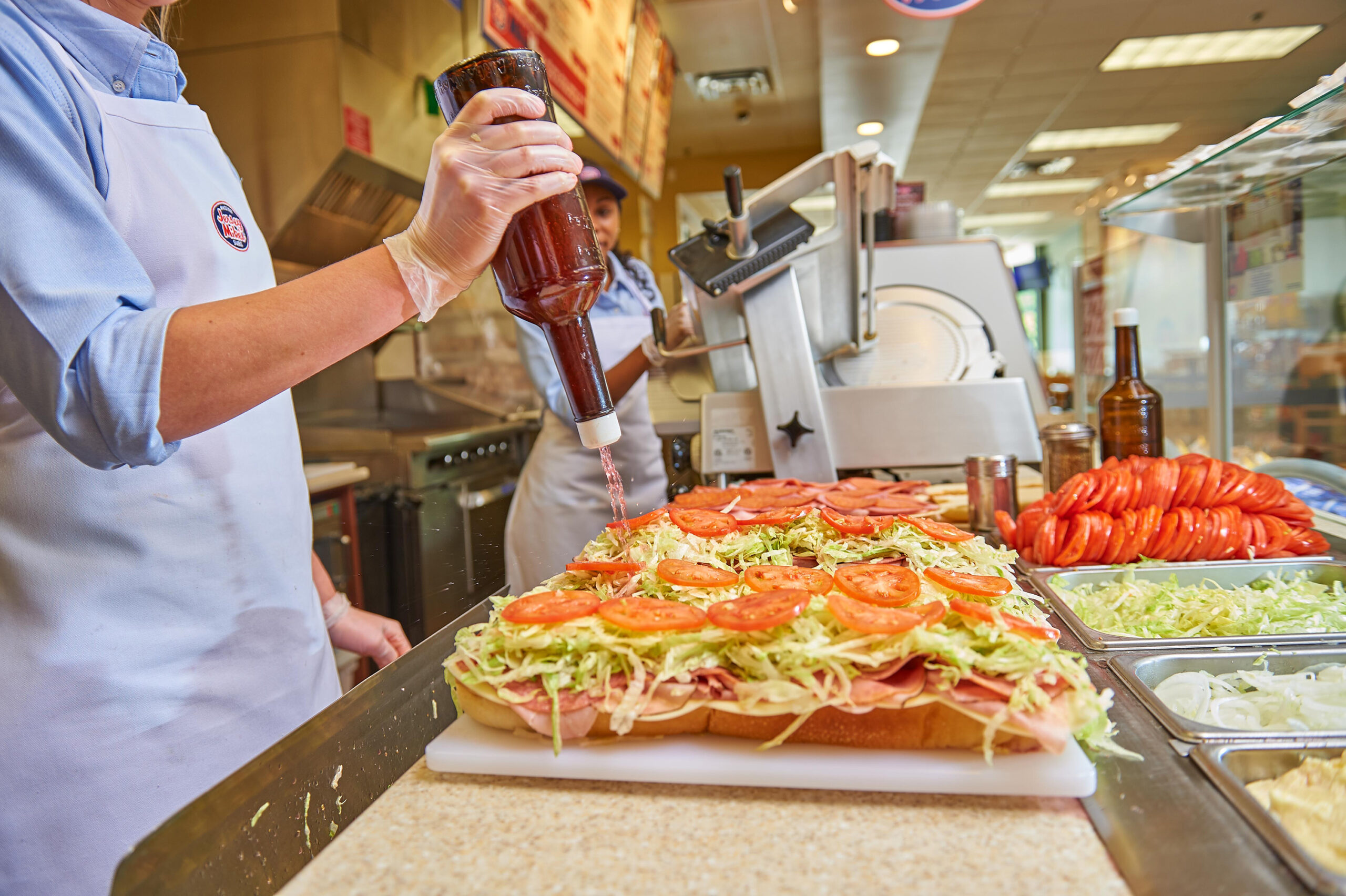
Image: Jersey Mike's Subs

Jersey Mike’s Subs, known for its fresh sliced/fresh grilled subs, has announced an Area Director and Development Agreement with Redberry Restaurants, one of Canada’s largest restaurant operators with plans to open 300 Jersey Mike’s restaurants across Canada by 2034, through a combination of Redberry-owned-and-operated stores and supported franchisee locations.

This marks the first major international expansion for Jersey Mike’s in its 68-year history.

Redberry will purchase the two existing Jersey Mike’s locations in Kitchener and London and will open five new Jersey Mike’s in Ontario in 2024. The Kitchener and London locations will be completely remodeled in early 2024 to reflect Jersey Mike’s new image. Those two locations have been open for about five years.

Image: Jersey Mike’s Subs
Hoyt Jones

“I think it’s a natural progression for us in being extremely successful down here in the United States for us to come up to Canada. The two stores that are already in existence have done quite well and we were just waiting patiently for the right partner and we’ve been very fortunate to partner with Redberry in Canada and we just know there’s a right cultural fit. They’re operators at the core and they operate at a very, very high level,” said Hoyt Jones, President of Jersey Mike’s. 

Jersey Mike’s Subs has more than 3,000 locations open and in development in the U.S. It serves authentic fresh sliced/fresh grilled subs on in-store freshly baked bread — the same recipe it started with in 1956 at the Jersey Shore. 

Ken Otto

“We love dealing with the best of the best and a big part of Redberry’s journey in Canada is partnering with iconic brands that are leaders in their segment, believe in people, believe in their product and just provide unbelievable support to franchisees,” said Ken Otto, President of Redberry.

“When you look at that list, Jersey Mike’s is at the top of that list. We met and there was a synergy and an energy at our first meeting and that’s why we’re together today.”

Image: Jersey Mike’s Subs

Founded in 2005, Redberry is one of Canada’s largest QSR restaurant franchisees. Redberry owns and operates 180-plus restaurants across the country, operating under the BURGER KING®, Taco Bell and Jersey Mike’s Subs brands. With signed agreements to build more than 600 new restaurants, Redberry is one of Canada’s fastest-growing restaurant companies. 

Otto said a minimum of five Jersey Mike’s will be opening in and around Toronto and southwestern Ontario in 2024.

“We’ve already begun scoping out real estate. We have a number of franchisees that have expressed interest. Jersey Mike’s is known to a lot of people in Canada despite only having two stores,” he said.

“We think we have a running start to bring the Jersey Mike’s promise and great stuffed sandwiches pretty quickly. So look out here we come.”

Image: Jersey Mike’s Subs

Otto said the company is looking for high quality strip retail, preferably encap, 1,500 square foot, locations with great visibility from major traffic corridors with lots of rooftops and traffic for retail. 

The iconic American brand is about more than just high-quality ingredients: “Giving…making a difference in someone’s life” has been Jersey Mike’s mission from the beginning. Since 2010, Jersey Mike’s locations throughout the U.S. have raised more than $110 million for local charities. In 2023 alone, the chain raised a record-breaking $21 million to help more than 200 local charities during its annual Month of Giving.

This strong foundation in philanthropy perfectly aligns with Redberry’s mission to support and uplift local communities. Redberry is a leader in supporting its current Brand partner charitable initiatives and has raised over $1 million dollars to support these outstanding causes. Redberry also sponsors a wide variety of local community initiatives throughout the year and is an active participant in the YMCA and University Co-Op programs to offer jobs and career training.

“We pretty much stand apart from the rest. We hand slice and fresh grill every sub sandwich to order which is pretty unique. It’s definitely old authentic east coast style sub and we just take great pleasure in making sure that every sub is handmade every single time,” said Jones.

Ebeltoft Group Releases 2024 Retail Innovations Book [Video Interview with J.C. Williams Group]

SUSO Skate Co. at Bramalea City Centre (Image: SUSO Skate Co.)

Craig and Lisa Hutcheson, Managing Partner at J.C. Williams Group, discuss insights gathered in the Ebeltoft Group’s newly released Retail Innovations 19 book. They highlight the role of sustainability in modern retail, both as an environmental concern and as a foundational element in business models. From Canadian initiatives like Good Foot Delivery, promoting employment for neuro-diverse communities, to France’s Fresh focusing on local, organic produce, they illustrate how sustainability is being integrated in diverse retail formats globally.

The conversation then shifts to enhanced consumer experiences, demonstrating the resurgence of physical stores but with a twist. They discuss examples like Suso Skate Co’s roller rink pop-ups in shopping centres and Shanghai’s Ultraviolet restaurant, which offers a multi-sensory dining experience. These examples underscore the retail sector’s innovative approaches to creating memorable, immersive customer experiences. Hutcheson also touches upon the importance of combining online and offline aspects to enhance customer engagement and convenience.

Image: Good Foot Delivery

Patterson and Hutcheson then delve into the theme of operational efficiency in retail. They discuss examples like Sweet Green’s automated salad preparation in Chicago and Just Cuts’ streamlined haircutting services in Australia, showing how technological integration is optimizing retail operations. These examples highlight the industry’s response to modern challenges, including labor shortages and the demand for quick, efficient service. The discussion concludes with a forward-looking perspective on how these innovations might shape the next 50 years of retail.

Ebeltoft Global Retail Trends & Innovations 2024 (Image: Ebeltoft Group

The Interview Series video podcasts by Retail Insider Canada are available through our Retail Insider YouTube Channel where you can subscribe and be notified when new video episodes are available.

If you prefer to listen to the audio version, it is available below:

The Interview Series audio podcasts by Retail Insider Canada are available on Apple Podcasts, Stitcher, TuneIn, Google Play, or through our dedicated RSS feed for Overcast and other podcast players. Also check out our The Weekly audio podcast where Craig and Lee discuss popular content published on Retail Insider which is part of the The Retail Insider Podcast Network.

Subscribe, Rate, and Review our Retail Insider Podcast!

Follow Craig:

Follow Retail Insider:

Listen & Subscribe:

Share your thoughts!

Drop us a line at Craig@Retail-Insider.com. You can also rate us in Apple Podcasts or recommend us in Overcast to help more people discover the show!

Background Music Credit: Hard Boiled Kevin MacLeod (incompetech.com). Licensed under Creative Commons: By Attribution 3.0 License. http://creativecommons.org/licenses/by/3.0/

Aurora Landing Project in Fort McMurray AB Seeks Investors and Retailers as Development Planning Progresses [Interviews]

Image: Fort McMurray Wood Buffalo

The Fort McMurray Airport Authority (FMAA) is open for business in Alberta with the planned 650-acre commercial development Aurora Landing on airport campus.

The land is now available for sale, long-term leasing, or joint venture development opportunities.

Aurora Landing is projected to be one of the largest, most comprehensive mixed-use masterplans in Alberta. The project, divided into 12 parcels, is expected to span 15 years. The FMAA is currently in the pre-development phase of planning, engaging prospective joint venture partners. 

Aurora Landing (Image: Fort McMurray Airport Authority)

This long term multi-phased development is expected to address several critical commercial needs in the growing Fort McMurray Wood Buffalo market, including leading retailers, major hospitality brands and supporting amenities, experiential entertainment, food and beverage operations, signature office campus, state-of-the-art logistics and technology facilities, and regional transportation services.

There is potential for sale and land lease for selected parcels for commercial/hospitality, light industrial/logistics, auto mall and services. 

Michael Sieger, Vice President of Air Service and Commercial Development with the FMAA, said Aurora Landing meets market demand on many fronts, and benefits from the expected transportation infrastructure to be introduced in the region. 

Michael Sieger

“Combined with the adjacency of the airport terminal and the many existing businesses already located on Fort McMurray International Airport (YMM) campus, Aurora Landing serves as a critical catalyst to support the growth of the region, specifically south Fort McMurray, which has been underserved in terms of important commercial and retail amenities. We believe Aurora Landing is a perfect location to host the developers actively looking to come into our region,” he said.

Aurora Landing is composed of 650 acres along a major highway. Four kilometres of frontage, and situated south of town where future growth is anticipated to occur.

Aurora Landing (Image: Fort McMurray Airport Authority)

“The community is looking for retail growth. Aurora Landing is well-positioned in the market to be the that destination for developers.”

In 2023, the Airport Authority commissioned a full land development master strategy plan. The 100+ page master plan takes the development out for the next 15 to 20 years. 

“With interest in the marketplace for land in Fort McMurray, from the retail perspective, from the light industrial commercial perspective, we knew that we had something special here. We’ve got 650 acres along a major highway. Four kilometres of frontage which no other parcel of land in Fort McMurray has and we’re situated south of town which we believe is where the future growth of our community from a residential perspective and from a development perspective is going to occur,” said Sieger.

“So, all the stars lined up and we said ‘okay we know we’ve got something great here let’s put a name to it and let’s start to market it’.”

Members of the FMAA will be at the upcoming ICSC@WHISTLER event, January 21-23 in booth 1113, to promote the development.

Aurora Landing (Image: FMAA)
Image: Fort McMurray International Airport

Denean Robinson, President & CEO of the Airport Authority, said Aurora Landing is a visionary program leveraging the strength and resilience of the entire region. 

Denean Robinson

“This overall masterplan speaks to our strong conviction in the long-term growth of Fort McMurray Wood Buffalo. Our significant land holdings provide a truly unique opportunity to accommodate various commercial developments and business platforms that typically require larger land needs in a highly integrated, vibrant, and commercially cohesive environment.  Aurora Landing will provide exactly such an environment,” said Robinson.

The airport is a major economic driver for the region, with an economic output of over $354 million, supporting over 70 businesses and approximately 900 jobs on airport campus.

YMM is the aviation centre of the Athabasca Oil Sands region and a gateway for Canada’s energy sector. Located just 15 minutes from downtown Fort McMurray, Aurora Landing is within close proximity to Highway 63, providing easy access to the region’s oil sands sites, the Edmonton region and Western Canada. 

Image: Fort McMurray International Airport

Aurora Landing is poised to be Fort McMurray Wood Buffalo’s biggest commercial hub, serving residents and visitors to the region.

Development advantages include:

  • Expansive site coverage (+650 acres of developable land);
  • Flexible development site configuration;
  • Excellent commercial frontage profile (4.0 kilometres);
  • Unconstrained egress & ingress points;
  • Adjacency of YMM passengers & local workforce;
  • Long term commercial/industrial/residential support base; and
  • Immediate & flexible long-term development timeframe.
Fort McMurray (Image: Sport Canada)

The master plan builds out the 650 acres in 12 different parcels.

Development order will be based on the scheduling of JV development Partner(s) and Key Anchor Tenants. So far, the demand seems to call for Parcel B first. The overall masterplan will commence at both ends and work their way towards the middle and from the Highway 69 frontage inward to the Airport Terminal.

“Right now, when it comes to the retail perspective (in Fort McMurray Wood Buffalo), research suggests that we’re about 1.2 million square feet short of what’s needed in the community,” shared Sieger.

Sieger said the parcels of land available in Aurora Landing are quite large and can accommodate several hundred thousand square feet of retail space.

Image: Fort McMurray International Airport

Fort McMurray has a number of key demographics that are attracting retailers:

  • The region is home to more than 110,000 residents with one of the world’s leading energy sectors and a strong oil and gas industry workforce;
  • The region is expected to see strong population growth exceeding 170,000 residents by 2040;
  • The region has one of the highest annual income levels in the country with an average of $217,284 per household annually;
  • The region is projected to generate significant retail expenditure exceeding $5.6 billion by 2040, a rise averaging five per cent per year;
  • The market has a significant commercial recapture opportunity with an estimated $850 million in retail spent outside of the region annually.

“We have $850 million worth of retail that leaves our region both in online and direct shopping in cities outside of Fort McMurray,” said Sieger.

“It’s like a perfect storm. Everything’s just waiting for retail to come here. And the ones that do it first, the first adopters, are the ones that are going to benefit the most.”

Fort McMurray Airport (Image: Ema Peter)

Aurora Landing is within 15-20 minutes from any point in Fort McMurray. There’s also a new highway alignment, Highway 686 Connector to Grand Prairie, completing the transport loop with Edmonton.

More information on Aurora Landing can be found here: https://flyymm.com/aurora-landing/

Or contact: 

For more information, contact Michael Sieger, VP Air Service & Commercial Development, Fort McMurray Airport Authority at: Michael.Sieger@FlyYMM.com Direct: (780) 399-8669

Image: Fort McMurray International Airport

Retail Insider partnered with Fort McMurray Airport Authority for this article. To work with Retail Insider, email: craig@retail-insider.com

Naan Kabob Launches Bold Expansion with Aggressive Canadian Location Expansion, Global Foray into Dubai and London [Interview]

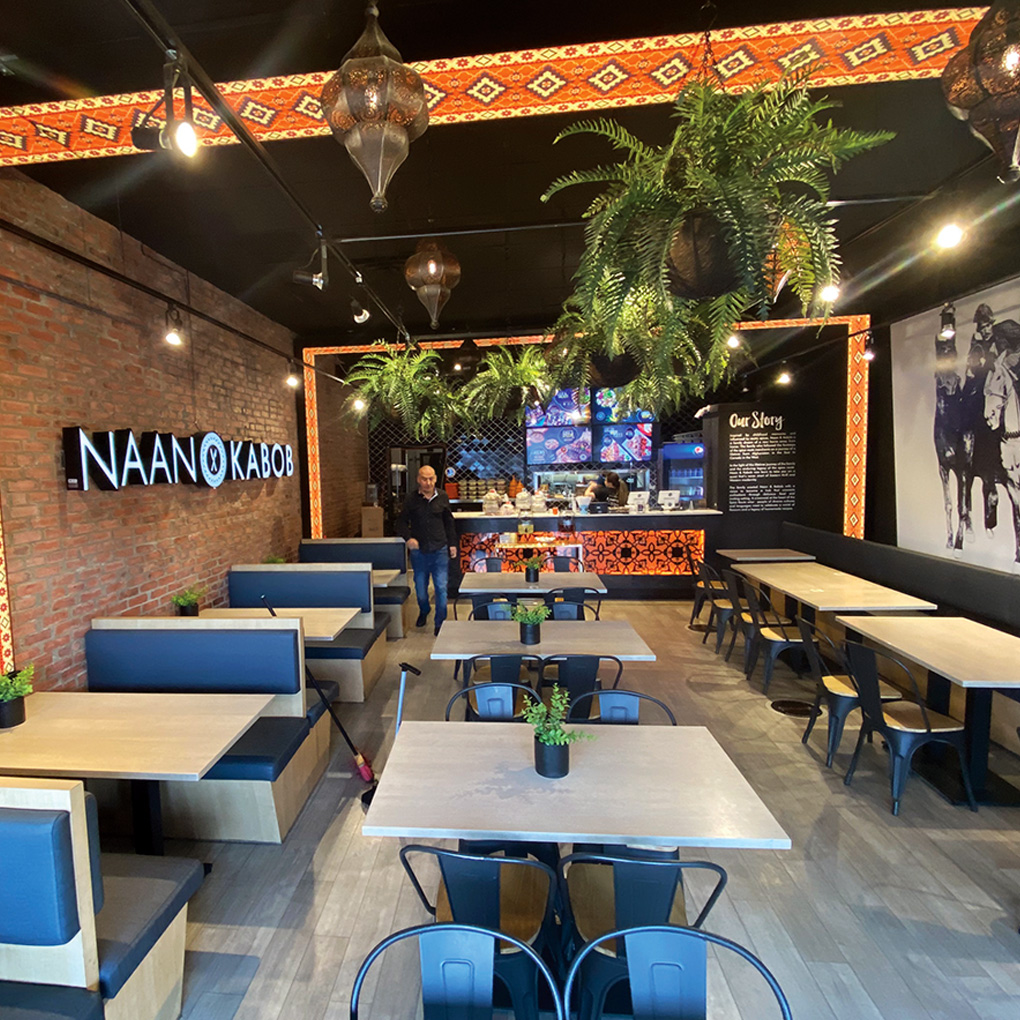
Image: Naan Kabob

Naan Kabob, an Afghan and Middle Eastern Restaurant in Toronto, is opening three new locations in the Greater Toronto Area, has plans to open 25 locations throughout Canada by 2028, and is expanding internationally. 

Starting out as a family owned business in 2010, it has now grown into a larger company with ten locations within the Toronto area. In 2024, Fahim Ahmadi, the vice president of development at Naan Kabob, says the brand is in process of opening three locations which will be in Newmarket, Hamilton, and Niagara Falls. Leases for these locations are in process, but Ahmadi indicated they will be opening at the end of the year. 

Fahim Ahmadi

Naan Kabob is known for offering a variety of affordable and fresh Afghan food options where guests can expect to have their orders within 15 minutes. 

“Our focus is serving fresh food, creating consistency across our service, and quality of our food. We had some challenges introducing Afghan food in the market as there were some other players in the area, so we wanted to create a casual premium category where it is not fast food, not casual – but something more premium with great quality. So, that is our model and we have an aggressive growth plan, going nationwide, and at the same time expanding internationally,” says Ahmadi. 
25 openings within four years

Naan Kabob Mississauga (Image: Naan Kabob)

As for other expansion plans, Ahmadi says he is looking to open 25 locations across Canada by 2028 including Calgary, Edmonton, and Vancouver. 

“Those three locations are the major provinces and each of them will take about five locations. We are also looking at Winnipeg and Ottawa as it is another great growing market, but Calgary, Vancouver, and Edmonton will be our top goal.” 

Ahmadi says instead of opening locations all at once, he will take it slow and open flagship stores first, see how they develop, and if successful can open more locations. 

“We want to make sure the structure is well established where they don’t sign five deals without ensuring the market responds and how successful the location will be. We are looking forward to our market segment, at the same time we want to continue to support franchises because we would like to make sure this is strategic because our brand reputation and popularity will be on the line – It is just not about opening more locations, but creating the brand. We don’t really want to give it out to anybody.” 

Naan Kabob Lawrence Avenue (Image: Naan Kabob)

Ahmadi says the brand will be looking for people who have food experience and have worked for food chains, have an understanding of the market segment, and who can easily open “because Naan & Kabob has all the infrastructure, all the systems, operation procedures, and marketing support.” The brand is currently working with JLL for finding locations, Ahmadi says the brand will be looking for locations outside or within malls,next to Starbucks, next to premium brands, but is avoiding food courts as the brand is being cautious with rent and wants easy access for delivery partners. 

Due to the unfamiliarity in the Quebec market, language requirements, and its unique culture – the brand will not be entering into Quebec right now, but will look at it later. 

“We don’t really know the market for us to really go into Quebec. We really need an expert from the market to be successful. It is an amazing market and a lot of the things are easier, but we definitely need an expert because a lot of brands have failed going into Quebec – so I think we are a little scared of entering into that market right now. The decision to enter into the Quebec market would likely depend on overcoming the identified challenges, such as the language barrier, culture differences, and finding the right local expertise.” 

International Growth

Naan Kabob Yonge Street (Image: Dustin Fuhs)

For the past four years Naan Kabob has been looking into expanding internationally, but when Covid hit, the brand put the brakes on. For this year, the brand is now looking into expanding into Dubai and in Europe with London as its first stop. 

Both locations in Dubai and London are expected to open by the end of the year or in the first quarter of 2025. Ahmadi says he will be looking into other locations in Europe and in the Middle East, though specific locations are undetermined. 

“It has been very hard to find locations, so we have been working with JLL to find the right ones, but we have our team ready once we have a lock in a location to start going there, building, and planning out the opening. This is something we are hoping to open by the end of the year or the first quarter of 2025, it is our number one priority.When given the green light, it will probably take four to five months to open, give and take to build a location.”

New experience for every location

Naan Kabob Queen Street (Image: Dustin Fuhs)

To keep locations interesting, each Naan Kabob location has its individual design as it is not a “cookie cutter” franchise where each store looks the same. This approach to designing is part of the brand’s strategy to enhance customer experience. 

“We are not like other franchises, we make every location different. The designs will add extra costs for us because every time you are building a different restaurant. The whole idea is how do we keep excitement for customers when they go to a different location. At the same time, our work culture is different too – people who work with us believe in our concept and really work from the heart. It’s not just a franchise – it’s still a family business and it is heavily dependent on the quality of the food, consistency, and the warm welcoming of customers.” 

When More Stores Isn’t the Answer: Aritzia and the Challenge of Growth [Op-Ed]

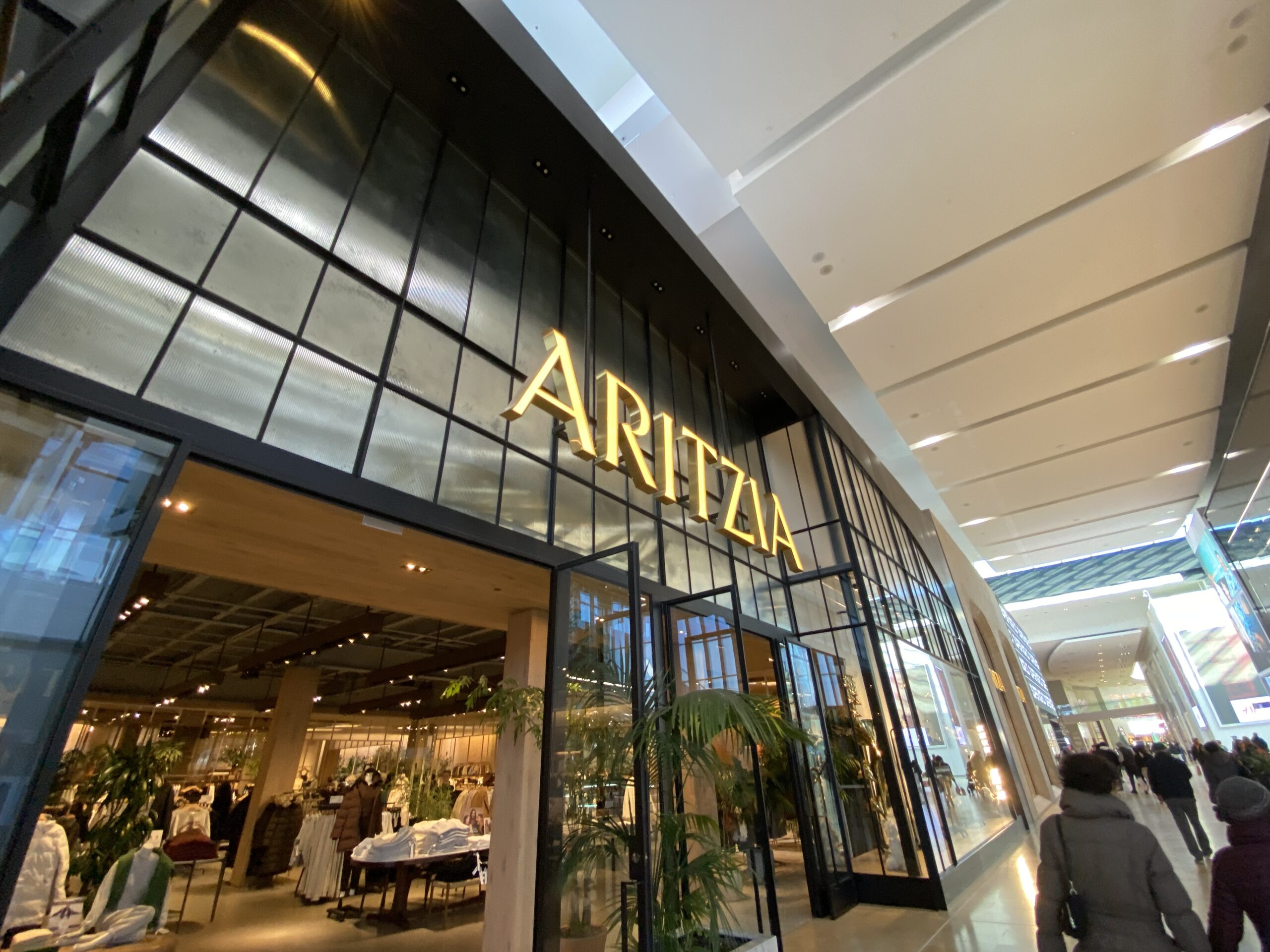
Aritzia at Upper Canada Mall (Image: Aritzia)

In the wild world of retail, the story of Aritzia, a once-celebrated Canadian brand, stands out. The Canadian retailer of “everyday luxury” saw its net income drop by 39% in Q3 of 2024, a decline worse than its peers and not attributable to broader trends like weaker consumer spending. In fact, while publications by the Financial Post are saying Aritzia’s “hype has fizzled” and the company has seen its stock value drop by half over the past year, its American counterpart, Abercrombie, has had a 5x increase in its share price and remains one of the best performing stocks on the NYSE. This disparity raises a critical question: Is it time for Aritzia to embrace strategic renewal?

Aritzia’s current strategy hinges on an ambitious expansion in the U.S. market, aiming to grow its American store count to around 90 by 2027. Todd Ingledew, Aritzia’s CFO, on a recent analyst call, asserted the company’s confidence in this approach. He remarked, “Our new stores are our most consistent growth driver, historically delivering predictable revenue growth and propelling our brand.”

Aritzia Yorkdale (Image: Dustin Fuhs)

Expanding the store count is indeed a tried-and-tested formula. And it works, until it doesn’t. New stores allow a brand to tap into new geographies, potentially boosting e-commerce in adjacent areas and increasing top-line revenue. However, the flip side of this strategy is equally telling. Store expansion does not inherently elevate brand relevancy, address novel customer needs, or ensure a unique competitive edge in new markets. Jennifer Wong, Aritzia’s CEO, candidly acknowledged these challenges, noting that heightened visibility in the U.S. is bringing the brand onto competitors’ radars. Fundamentally, solutions of quantity can’t solve problems of relevancy.

Aritzia’s recent moves, such as heavy reliance on discounting, exemplified by an 80% off “archive sale,” and spending on marketing for the first time in its 40 year history, hint at a deeper need for a strategic pivot. These strategies, though not inherently flawed, collectively suggest a brand in search of a new identity and direction.

Aritizia’s primary challenge is its product-centric approach, banking on items like the “super puff”  or rompers/athleisure to drive sales. This strategy can look thin compared against brands like Brandy Melville and Abercrombie, which are currently experiencing a resurgence by emphasizing their uniqueness across multiple platforms and channels. Being a product-driven company exposes them to swings in taste and makes them uniquely susceptible to quality complaints. 

Earlier, Abercrombie faced – and has since overcome – the same challenges as Aritzia. They peaked in 2007 then suffered more than a decade of decline. But starting in 2017, the company began a rebrand away from selling “Abercrombie products” to offering a classic “all American” preppie-oriented look with a commitment to inclusive sizing and quality manufacturing. Once known for logo-heavy t-shirts and sherpa-lined coats, Abercrombie became known for something deeper and more solid: its fundamental aesthetic and value. Aritiza could benefit from a similar renewal.

Image: Aritzia

At Faculty of Change, we often encounter such scenarios. Brands facing similar challenges have found it helpful to reassess their market understanding, to become curious again and about what matters most and leverage this new perspective to foster growth. Perhaps it’s time for Aritzia to embark on a similar journey of introspection and strategic realignment.

While Aritzia’s expansion plans may offer short-term gains, the long-term sustainability of the brand may well depend on a bolder, more holistic approach to market strategy and brand positioning. As the highly competitive retail landscape continues to evolve, Aritzia’s next moves will be pivotal in determining its place in the world.

Jared Gordon is one of the founders of Faculty of Change. He and their team work with established retailers to uncover new sources of growth. They are releasing their 2024 Nearly Now report on January 25th, 2024. You can find more information here

Canadian Retail News From Around The Web For January 16th, 2024

Canadian Retail News From Around The Web

News at a Glance

Retail Insider is streamlining its Canadian retail news from around the web to include a handful of top news stories that can be viewed quickly during the day. Here are the top stories from the past 24 hours.

Mastermind Toys lays off 272 employees as sale to Unity closes (CTV)

Grocers taking steps to combat shopping cart theft (Grocery Business)

What experts think of Loblaw ending its 50 per cent discounts on last-day sale items (CTV)

DavidsTea steeped in turmoil but determined not to sell (Globe & Mail)

Why Rexall’s American owner wants to sell the pharmacy chain — and might unload it at a loss (Globe & Mail / subscribers)

Shoppers irate at retailers who check bags, receipts at exit. Do customers have a right to refuse? (Yahoo)

Economists think inflation started rising again in December (Financial Post)

Where Will Dollarama Stock Be in 5 Years? (Motley Fool)

Ford government to use taxpayer funds to retrofit 2 Walmart stores to also host ServiceOntario kiosks (CityNews)

Single-use bag, utensil rules and fees start Tuesday in Calgary (CTV)

Deachman: Ottawa has lost another neighbourhood jewel. What will replace our well-known small businesses? (Ottawa Citizen)

‘They don’t have the cash’: Why COVID loans meant to help B.C. businesses may now lead to their closures (Vancouver Sun)

WARMINGTON: Yorkdale may have looked like a Mall Cop movie set but this mayhem was real (Toronto Sun)

Ottawa International Airport Revitalizes with New Retail and Dining Experiences Post-Pandemic [Interview]

Image: YOW Ottawa International Airport Authority

The retail and food and beverage component of the Ottawa International Airport is poised to see growth with more airline passengers expected following the lull during the pandemic.

The launch of a new food program coupled with new retail offerings will also give the airport a boost in sales on its commercial real estate locations on the site.

Coleman Swartz

Coleman Swartz, Director, Commercial Development, Ottawa International Airport Authority, said a major redevelopment unfolded through COVID.

“We didn’t expand the terminal. The last time we did that was in 2008 when the building physically grew,” he said. “But we had already planned to completely rebuild our security checkpoints, specifically the main screening point that most of our passengers pass through, and the retail and food reconfiguration was coordinated to go along with that, in 2018 and 2019.

“What we did is we moved our security checkpoint up to the top level of the terminal because where the previous one was it was way too small. It was outdated, old technology, very short little lanes . . . We actually put our new retail centrepiece right in that old space.”

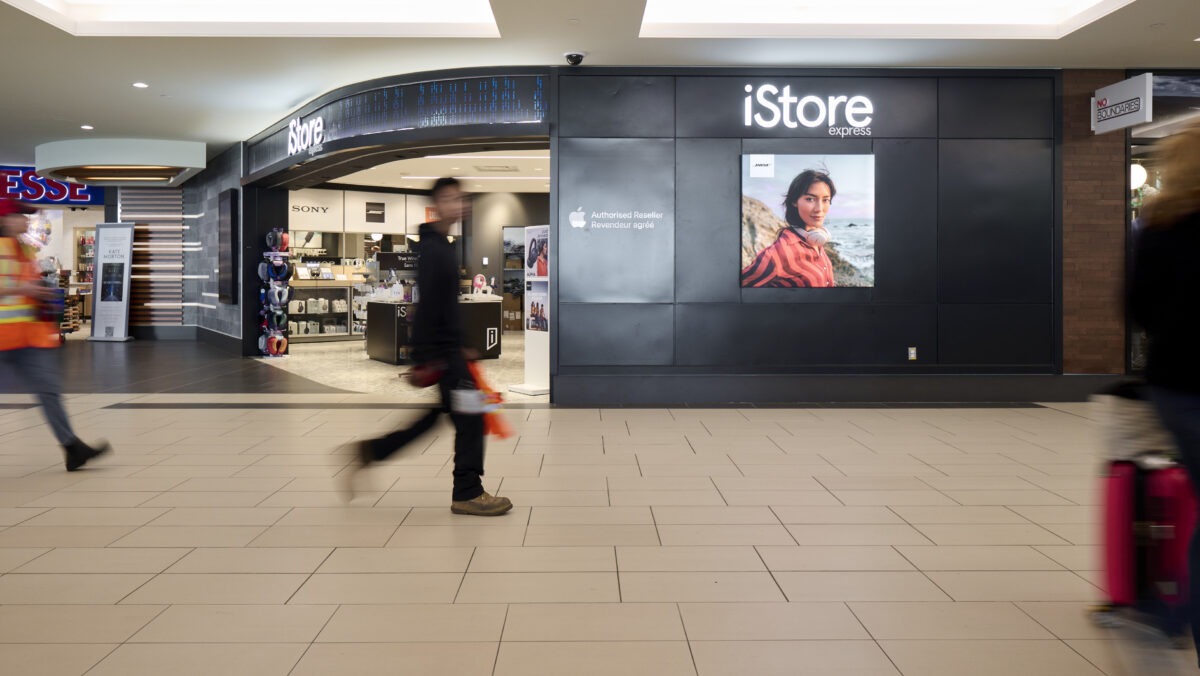
iStore (Image: YOW Ottawa International Airport Authority)

The new food program will have a total footprint of around 14,000 square feet. This is a reduction from the previous program size of about 17,000, but it is “right-sized” and better located.

Swartz said the new retail program will be around 6,000 square feet, down from around 7,000 previously with locations right-sized and relocated in order to serve customers best and optimize revenues.

He said the new food program has 14 locations in total – counting the food hall as one location, and the Bridgehead Coffee within it as a separate one. This is a reduction of two units from the previous program – both were pre-security on the Departures level and were underperforming.

The Locks at YOW (Image: YOW Ottawa International Airport Authority)

The new retail program has seven locations (not including two duty-free shops). An eighth is contemplated and may be opened within the next few years.

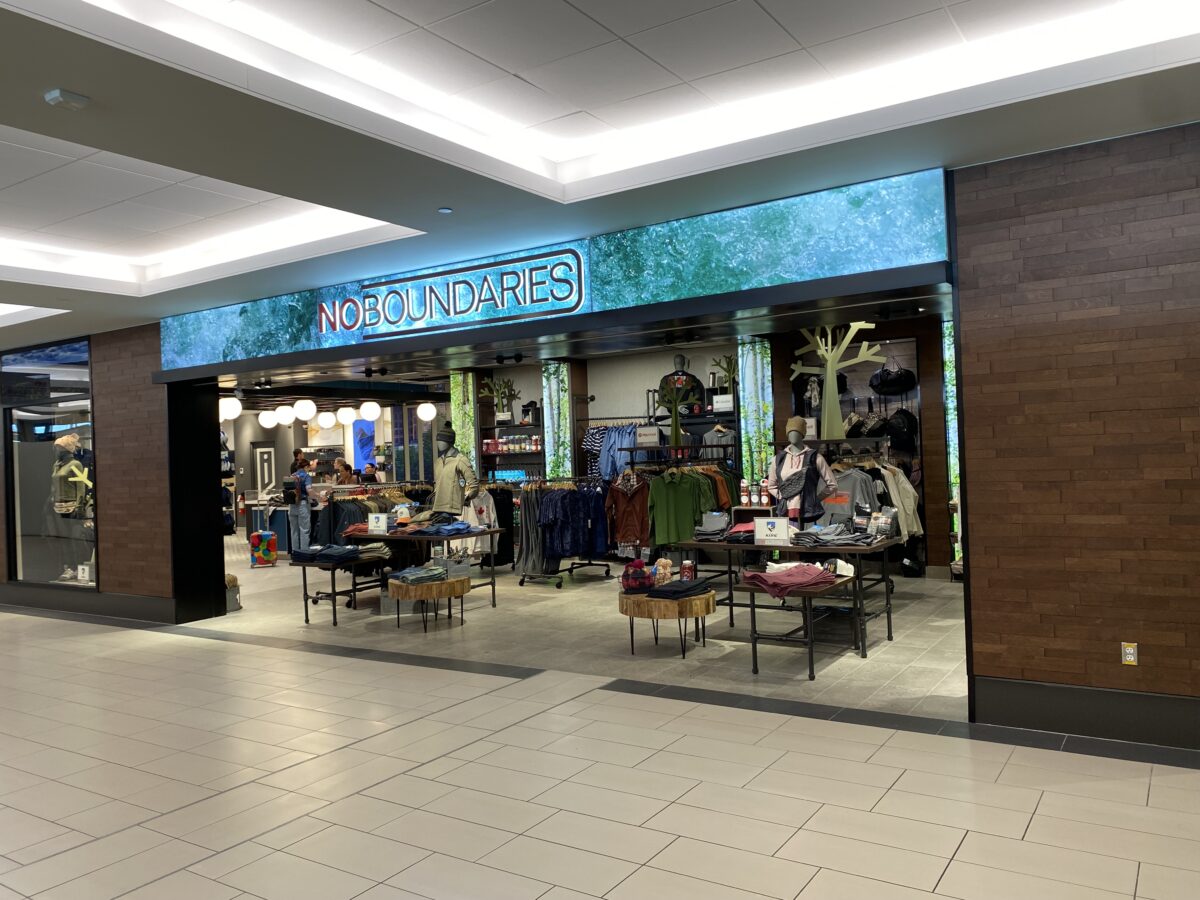
The flagship new central retail travel essentials store, The Locks, opened in August 2021. The two specialty stores, iStore Express and No Boundaries, opened October 2022.

No Boundaries at YOW (Image: YOW Ottawa International Airport Authority)
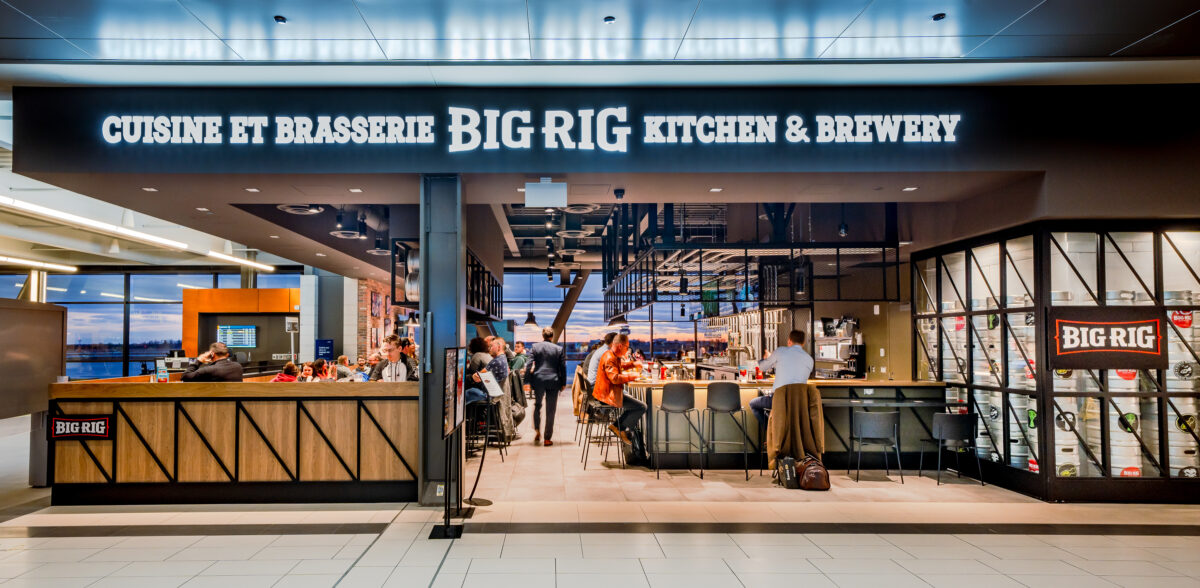
Big Rig at YOW (Image: YOW Ottawa International Airport Authority)
Big Rig at YOW Airport (Image: YOW)

On the restaurant side, Big Rig opened in September, and Canal Market Hall (the central food hall) opened mid-October.

Within the food hall are some local brands including La Bottega Nicastro and Bridgehead Coffee. The food hall is run by SSP America. It also includes Pizza Vino, The Grill and a Bento sushi spot.

“The next wave is going to be another Bridgehead Coffee shop down in the Arrivals area. It’s going to replace a Tim Hortons that’s there and they’re going to rebuild and slightly relocate Starbucks which already exists in the domestic post-security area,” said Swartz. 

“Starbucks was opened in 2011, so it’s already approaching 15 years old It’s a little bit under-sized. It’s a little bit tired. And we’re moving it also a little bit to make room for a larger retail store down at that end.”

Marché du Canal Market Hall (Image: YOW Ottawa International Airport Authority)

After the travel slowdown during the COVID period, Swartz said the airport is “rebuilding a new normal.”

“Ottawa’s passenger traffic pre-COVID was just over five million passengers a year. We did close the past year (2023) at just over four million,” he said. “That puts us at 80 per cent which is lagging a little bit behind some other Canadian airports and definitely behind the U.S. We’re probably on par with most of Europe right now. 

“We just have this slightly more conservative outlook . . . Everything that makes Ottawa really good as a real estate investment town most of the time kind of works against us in COVID which is the (federal government) is your main employer and normally they’re a source of stability but in this case they’re a source of lagging contribution you would say. We believe that government travel is probably the biggest missing piece because we think leisure travel is pretty good. We have Air France serving direct to Paris which is brand new for us as of last summer. Game changer. Fantastic development for us and for the region.

“We’re waiting for government which is both government employees traveling outbound and people coming into Ottawa to do business with the government.”

YOW Central Market (Image: YOW Ottawa International Airport Authority)

Swartz said it’s important for the airport to get that local flavour and character into its retail and food and beverage offerings. 

“We’ve come a long way. Got a little bit of a ways to go but we’re really proud that we now offer much more of a sense of Ottawa to our passengers,” he said.

iStore (Image: YOW Ottawa International Airport Authority)

IBM Study Reveals Massive Gap Between Consumer Expectations and Retail Experiences [Interview]

Image: IBM

A new global study from the IBM Institute for Business Value reveals a widening gap between shopper demands and the current retail offering.

“IBM’s 2024 Consumer Study has uncovered that only nine per cent of consumers are satisfied with their in-store experiences and 14 per cent with online shopping. However, there is a burgeoning eagerness among consumers to embrace AI throughout their shopping journey,” said Luq Niazi, Global Managing Partner, Industries & Global Consumer Industry Leader, IBM Consulting.

Luq Niazi

“Roughly four in five consumers who haven’t yet tried AI for shopping said they would like to use it to research products, look for deals, ask questions, and resolve issues.

“This signals a clear demand for a seamless integration of technology, like AI, in retail, moving beyond the traditional paradigms to a more dynamic, personalized shopping environment. Personalization and targeted offerings are in demand, with 52 per cent of consumers surveyed interested in receiving information, advertisements, and offerings from stores that are relevant to their specific interests. The challenge and opportunity for retailers lies in responding to this eagerness for AI, leveraging the technology to enrich consumer shopping experiences at every point, from personalized recommendations to real-time inventory updates.”

Image: IBM

He said today’s consumers are not just buying products but they are seeking an enriched shopping experience, deeply integrated with technology. 

“Our study reveals a definitive shift towards AI and digital technologies in retail. Shoppers want personalized, seamless experiences that blend the physical and digital worlds, particularly through the use of AI, virtual assistants, and augmented reality. The modern consumer, often using their mobile device as a shopping aid, which we found in IBM’s 2024 Consumer Study, expects a seamless omnichannel experience that many retailers are still striving to provide,” said Niazi.

“The current landscape shows a gap between consumer expectations and the retail experiences being offered. With satisfaction levels hovering around nine per cent for in-store and 14 per cent for online shopping, it’s clear there’s room for improvement. Retailers are making strides in integrating AI and advanced technologies, but the challenge remains to implement these tools in a way that truly resonates with the consumer’s desire for a more interconnected and intuitive shopping experience.”

To elevate the in-store experience, retailers must leverage the power of AI and digital innovation, he said.

“This includes deploying AI for personalized recommendations and assistance, using augmented reality for a ‘try before you buy’ experience, and providing real-time product information through mobile apps. Our research indicates that a majority of consumers use their smartphones in-store. Retailers who capitalize on this by offering a more digitized, interactive in-store experience will lead the way in meeting modern consumer needs,” added Niazi.

“Improving the online shopping experience is about harnessing AI for personalization and efficiency. Our findings highlight the need for online platforms that not only recommend products tailored to individual preferences but also offer a streamlined browsing experience. Effective use of AI-powered chatbots for customer service, user-friendly interfaces, and a seamless connection between online and offline channels can significantly enhance the consumer’s online journey, making shopping not just a transaction, but an engaging experience.”

Generated via AI

The study found that 55 per cent of respondents indicated they are eager for AI enhancements like virtual assistants and 59 per cent for AI applications as they shop. Influenced by inflation, six in ten consumers surveyed also say inflation has impacted how they shop, with 62 per cent saying that price is a top reason they switch stores or brands.

IBM said noteworthy findings from the study include:

  • In-Store Experience Lacks Luster: Despite a preference for physical stores by 73 per cent of those surveyed, only nine per cent are satisfied with the in-store experience. Consumers surveyed want greater variety of products available (37 per cent), more information about products (26 per cent), and faster checkout (26 per cent) in stores. Most consumers surveyed (65 per cent) are supplementing their in-store experience by using mobile apps while shopping — demonstrating a trend toward a digitally integrated in-store experience; 
  • Online Shopping Shortcomings: Online retail isn’t immune to criticism; two-thirds of consumers surveyed discover new products via the web, yet many have expressed dissatisfaction with their online shopping journey, citing challenges finding the products they want (36 per cent), not enough information about products (33 per cent), and a cumbersome return process (33 per cent);
  • Consumers Desire Digital Integration: Consumers surveyed showed a strong interest in using AI technology to enhance various aspects of their shopping. Most consumers (59 per cent) said they would like to use AI applications as they shop and four in five consumers who haven’t used the technology for shopping reported an interest in trying it. Personalization and targeted offerings are in demand, with 52 per cent of consumers surveyed interested in receiving information, advertisements, and offerings from stores that are relevant to their specific interests. Yet there remains a stark satisfaction gap for current AI assistant users surveyed. Only about one-third of responding consumers who have used virtual assistants are satisfied with the experience and nearly 20 per cent were so disappointed that they don’t want to use virtual assistants again, signalling a mismatch between current tech offerings and shopper expectations;
  • Economic Forces at Play: Economic challenges, particularly inflation, are influencing shopping behaviours. Consumers surveyed are seeking flexible payment options, with 55 per cent desiring more varied payment options and 46 per cent reporting they would like to pay for their purchase in instalments. As inflation and economic uncertainty pinch pocketbooks, 62 per cent of consumers surveyed also say price is a top reason they would switch stores or brands.

The IBM Institute for Business Value surveyed 20,000 consumers across 26 countries on their digital habits, their use of AI and generative AI, and their expectations for brands. IBM is a leading provider of global hybrid cloud and AI, and consulting expertise. It has clients in more than 175 countries.