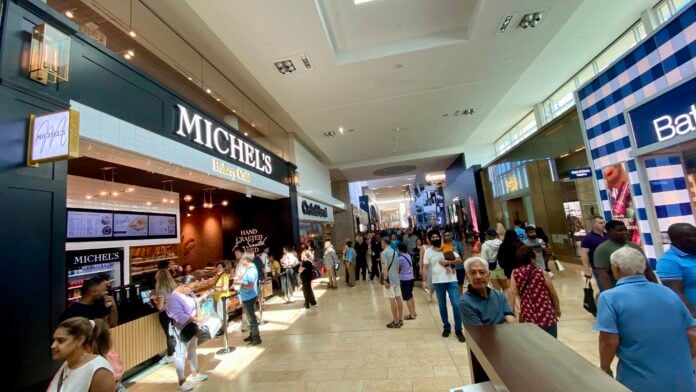
Michel's Bakery and Café at Toronto's Yorkdale Shopping Centre on September 1, 2024. Photo: Craig Patterson
Retail sales reached $68.7 billion in June, a decrease of 3.0% compared with the same month one year earlier. Lower sales were reported in 13 of the 18 commodity classes, reported Statistics Canada on Monday.
The advance estimate provided by the Monthly Retail Trade Survey suggests that unadjusted total retail sales in July increased by 1.5%. Because of its preliminary nature, this figure will be revised, added the federal agency.
“In June, the largest decline in dollar terms came from lower sales of motor vehicles (-8.4%). The decrease in this commodity class was driven by lower sales of new motor vehicles (-7.6%) and used motor vehicles (-9.4%),” it said.
“For the second consecutive month, retail sales of hardware, tools, and renovation and lawn and garden products (-5.5%) decreased year over year in June. Sales of renovation materials and supplies (-6.9%) posted the largest decrease within the class, driven by lower sales of lumber and other renovation materials and supplies (-8.6%).
“In dollar terms, the largest increase in June came from sales of food and beverages (+1.4%). Leading the growth within this product class were higher sales of eggs and dairy products (+6.6%) and cookies, confectionery, and snack foods (+5.7%). Lower sales of alcoholic beverages (-5.2%) partially offset the increase.”
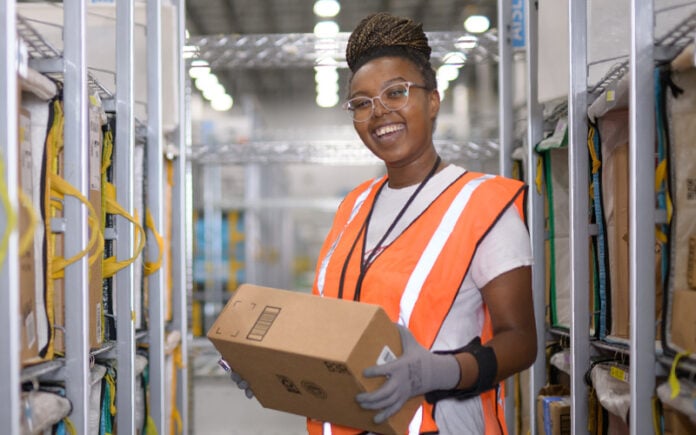
Amazon is hiring thousands of people for the holiday season. Photo courtesy of Amazon
Amazon has confirmed that its newest fulfilment centre, YHM2, will open in Cambridge, Ontario on September 29. Measuring nearly one million square feet, with capacity for more than 1,000 employees, the new facility will offer in-demand skills training and career growth opportunities while helping optimize Amazon’s regional operations network, it said.
At YHM2, Amazon product inventory will be stored, managed, and distributed to regional Amazon Robotics fulfilment centres, allowing them to fulfil a wider selection of customer orders at the fastest-possible delivery speeds.
Greg Clutton
“YHM2 will bring the best of Amazon’s logistics expertise to Cambridge while making the city an important part of how we support our local fulfilment network and offer a leading product selection to customers,” said Greg Clutton, YHM2 Site Lead. “We are proud to be creating good jobs while making important contributions to the local community.”
Because of Cambridge’s strategic location, YHM2 will play a key role in supporting Amazon fulfilment centres in southwestern Ontario as the company prepares for the holiday season. The site will launch with more than 250 jobs, and has the capacity to scale to more than 1,000 jobs as operations ramp up. Employees will have the opportunity to build new skills and grow their careers by participating in training and certification programs related to the technology operated by the site, including forklifts. With the launch of YHM2, Amazon now operates 12 fulfilment centres, two sortation centres, 16 delivery stations, and two AMXL delivery stations in Ontario, explained Amazon.
The company said it is donating $66,000 to the YWCA Cambridge’s Small Steps to Success program. Small Steps to Success helps empower local women and gender-diverse individuals in the Region of Waterloo to achieve their personal and professional goals, aligning with Amazon’s commitment to fostering skills training, inclusive opportunities and long-lasting community impact.
Kim Decker
“YWCA Cambridge is pleased to welcome Amazon to the community. Their commitment to investing in women’s employment through this donation will provide much needed support to the women and gender-diverse individuals who access our employment programs. We look forward to a continued partnership where all women and gender-diverse individuals have the opportunity to reach their full potential,” said Kim Decker, CEO, YWCA Cambridge.
Amazon is also supporting the construction of 24 stacked townhomes in Cambridge through a donation to Habitat for Humanity. The project will provide working families in need with access to home ownership.
Philip Mills
“Everything that we do to make a difference in the lives of families in our community is done through partnerships. Because of the generosity of folks like Amazon, children have a safe place to grow up, parents have the peace of mind knowing they can’t be evicted, and the community is one step closer to a solution to our affordable housing crisis,” said Philip Mills, CEO, Habitat for Humanity Waterloo Region.
Amazon said it has invested over $1 billion globally in safety initiatives since 2019. In 2024 alone, the company allocated over $750 million to invest globally in technologies, resources, training, and programs to further enhance safety efforts.
Candidates interested in working at YHM2 are encouraged to visit www.amazon.ca/canadahourlyjobs.
(Bruce Winder is a retail analyst, advisor and speaker with 30+ years experience in big retail, consulting and teaching)
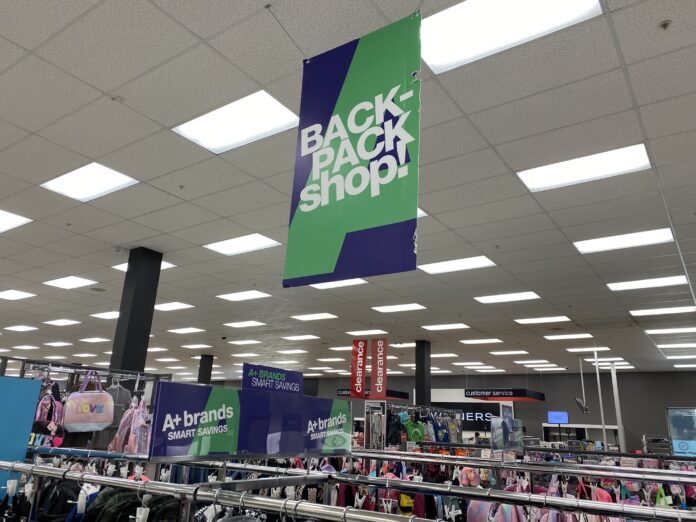
As the new school year is here, many families are finding the excitement of a fresh start is overshadowed by the costly burden of back-to-school shopping. Parents in Canada are faced with a question: how can they navigate this financial challenge without sacrificing their children’s needs and educational experience?
Bruce Winder
Back-to-school spending is the second-largest annual retail expenditure for households, trailing only holiday shopping. According to a 2024 report from Deloitte, consumers spend a yearly average of almost $600 per student on back-to-school supplies alone.
However, the back-to-school shopping landscape – and the retail landscape as a whole – has been shifting. While Canadians may feel like their social media feeds are bombarded with “back-to-school hauls,” the reality is more and more families are shrinking their back-to-school budgets and opting for more conscious spending. Deloitte reported a decrease in school spending from past years – from $661 in 2022, to $597 in 2023 and down to an average of $586 per student this year.
It’s fair to say that the cost-of-living crisis has extended well beyond housing, gas and groceries to also include clothing and everyday essentials. In this difficult economic climate, consumer priorities are shifting as families become more mindful of where they’re spending their hard-earned cash – and more importantly – how they can save. Retail trends have been quick to adapt to these changes.
Previously, younger generations gravitated towards brand names and celebrity-endorsed products that flooded their social media feeds. Now, brand loyalty is waning as families prioritize cost savings and embrace discount and secondhand shopping.
In 2024, there is a growing preference for cheaper, unbranded or lesser-known alternatives to popular brand-name products. Approximately, 67 per cent of surveyed parents will shift brands if their preferred brand is too expensive, and 50 per cent will shop for private labels over name brands.
Online shopping, social media and apps have become viable solutions for families looking to stretch their dollars further. One in three parents plan on using social media sites to assist in their back-to-school shopping.
Even more so, online thrifting sites such as Facebook Marketplace and discount shopping apps have become increasingly popular because of the wide range of choices offered – many of which are identical in origin and quality to the products found in physical stores without the hefty supply chain mark-ups that inflate the costs of products.
Convenience is another major factor. Parents want to save time and money through one-stop shopping and easy returns offered by online marketplaces. For back-to-school supplies, they’re increasingly turning to direct-from-factory marketplaces like Temu, where they can find a wide selection of cost-effective products at prices significantly lower than other retailers.
Not participating in these retail traditions is easier said than done. Equally, we can’t ignore the positive benefits associated with them. Studies have consistently demonstrated that having school supplies of their own can improve students’ grades, creativity, attitudes toward learning, behaviour, peer relationships and self-image.
In today’s evolving retail landscape, parents should feel empowered to balance fiscal responsibility with purchasing the products their children need and want to start the new school year off strong. With smart shopping choices and an openness to trying new platforms in an ever-changing retail environment, Canadian families have the power to successfully navigate the economic challenges facing them today while provide the best for their family without breaking the bank.
Retail Insider is streamlining its Canadian retail news from around the web to include a handful of top news stories that can be viewed quickly during the day. Here are the top stories from the past several days.
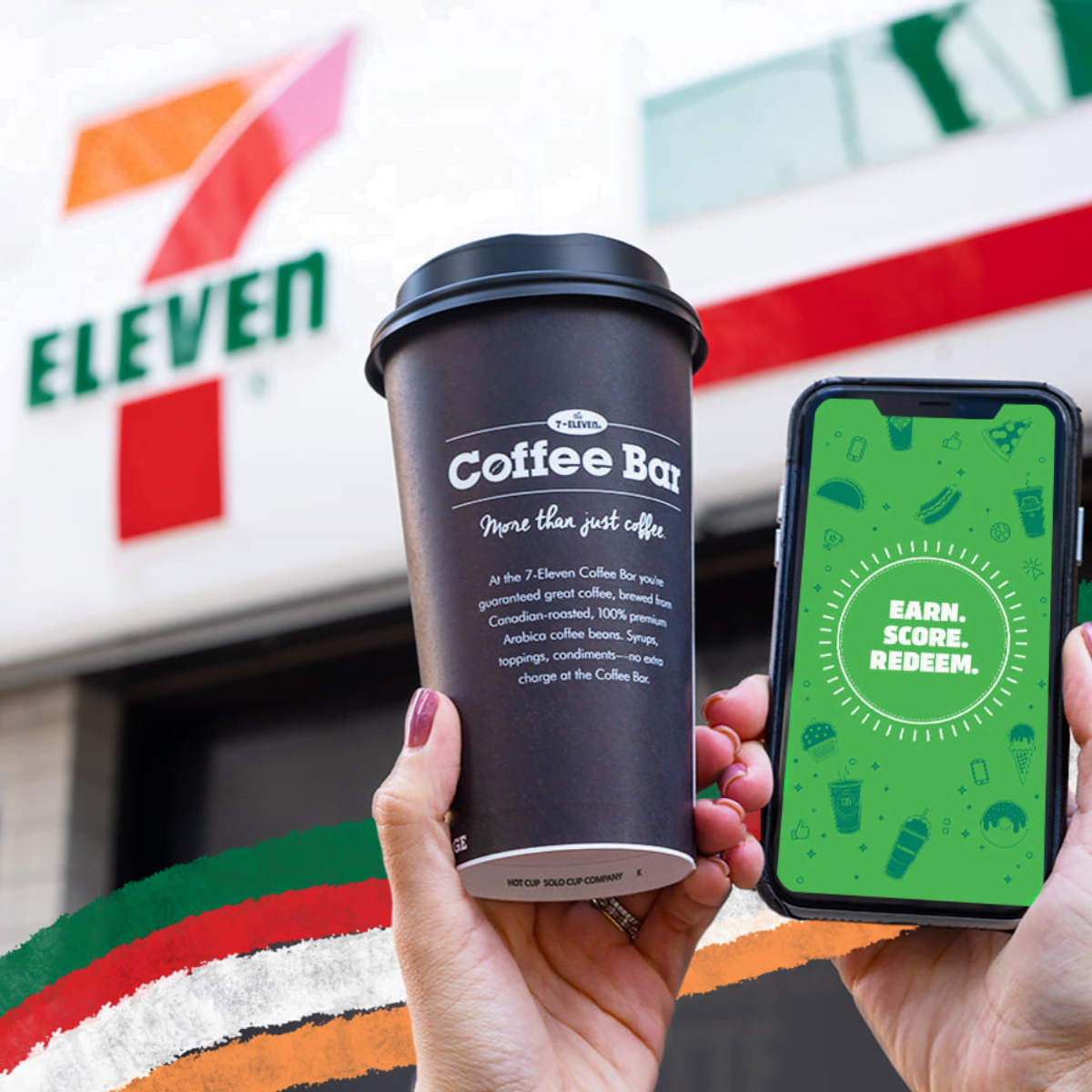
Seven & i Holdings, the Japanese parent company of convenience store chain 7-Eleven, has rejected a US$38.6 billion takeover offer from Canadian retail giant Alimentation Couche-Tard. The proposal was deemed to undervalue the company and carry significant regulatory risks.
In a letter made public on Friday, Stephen Dacus, head of Seven & i’s special committee, outlined the reasons for rejecting the bid. Couche-Tard’s all-cash offer of US$14.86 per share, equivalent to about 5.5 trillion yen, was considered “opportunistically timed” and insufficient.
Despite the rejection, Seven & i left the door open for future negotiations. Dacus stated they would consider proposals that fully recognize the company’s stand-alone intrinsic value and address regulatory concerns in the current environment.
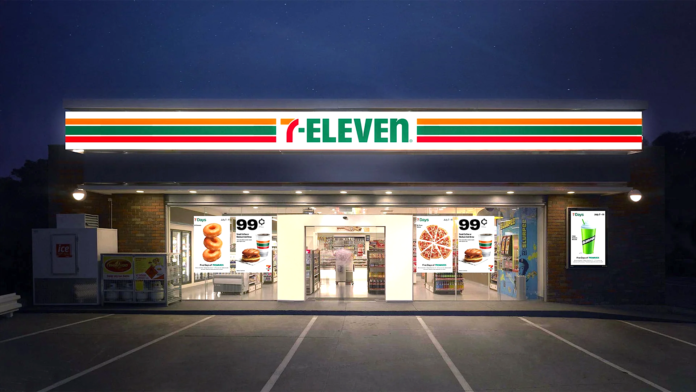
Image: 7-Eleven Canada
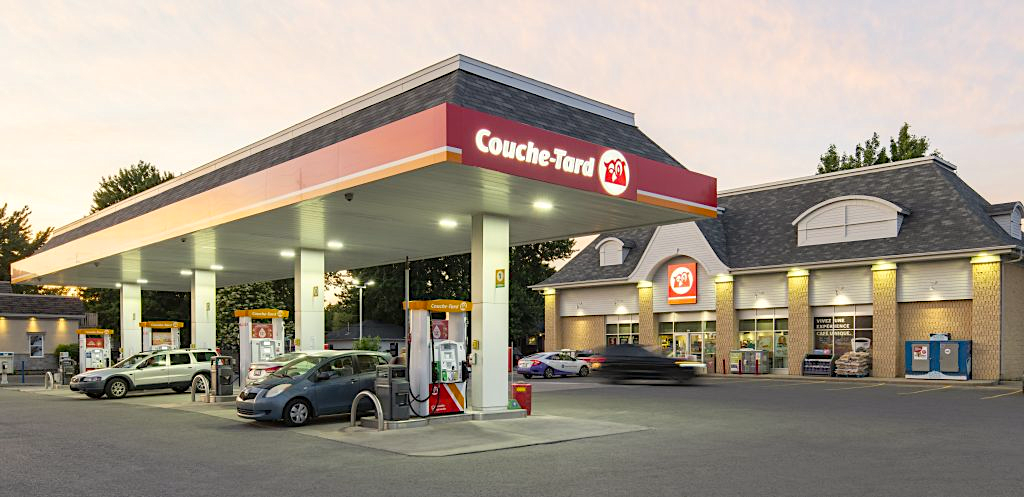
Laval, Quebec-based Couche-Tard, which operates about 17,000 stores in 31 countries including the Circle K brand, has long sought to acquire its Japanese rival. The proposed deal would create the world’s fourth-largest retailer, behind only Walmart, Amazon, and Costco.
Seven & i operates 86,000 stores across Japan, the United States, and other Asian nations. In Canada, the company has a growing presence, with stores in several provinces. The 7-Eleven brand remains popular in Japan, serving as a vital part of daily life for many consumers.
The takeover bid faces significant hurdles in the United States, where both companies have substantial operations. Seven & i expressed concerns about Couche-Tard’s lack of detailed plans for addressing potential antitrust issues. Analysts estimate that over 1,000 stores might need to be divested to satisfy regulators.
Photo: Couche-Tard
Seven & i’s shares on the Tokyo Stock Exchange reacted to the news, trading at 2,133.5 yen (US$14.92) on Friday, down 1.4 percent. However, the stock has generally maintained gains since the takeover approach was first disclosed on August 19.
Industry experts anticipate that Couche-Tard may return with an improved offer. CEO Alex Miller expressed confidence in financing and completing the takeover, stating, “We look forward to engaging with Seven & i constructively.”
The outcome of this potential deal would significantly expand Couche-Tard’s global footprint and potentially reshape the convenience store industry worldwide.
PHOTO: CIRCLE K
Seven & i recently announced a restructuring plan to strengthen its U.S. operations and streamline its Japanese business. The company closed some Ito-Yokado supermarkets in Japan and sold its Sogo & Seibu department stores to Fortress Investment Group for US$1.5 billion last year.
In its latest financial report, Seven & i reported an annual profit of 224 billion yen (US$1.6 billion), down 20 percent from the previous year, while annual sales slipped nearly three percent. Despite these challenges, the company remains a dominant force in the global convenience store market.
The potential acquisition would combine Couche-Tard’s strong North American and European presence with Seven & i’s dominance in Asia. This would create a retail powerhouse with annual revenue exceeding US$150 billion and more than 100,000 stores worldwide.
After close to 50 years, Spruce Meadows, just south of Calgary, has grown into an internationally-renowned equestrian facility.
Spruce Meadows is wholly owned and operated by the Southern Family.
“The dream of the Southern Family from the start was to create a unique environment of “good friendship, good commerce, and good sport”. This dream has been shared from its genesis by a committed group of corporations, volunteers, media, athletes, staff, fans, and officials. Together these stakeholders have shaped the dream and built a most memorable place,” says the organization.
But the massive facility is more than just horses.
Retail Insider caught up with Linda Southern-Heathcott, President of Spruce Meadows, during the annual Masters tournament to discuss how it has evolved over the years into a dining, shopping and entertainment destination.
Southern-Heathcott talks about the growing number of vendors that are now selling their products during tournaments at the marketplace, the growing number of food offerings and the opening next year of a fine dining restaurant on the site.
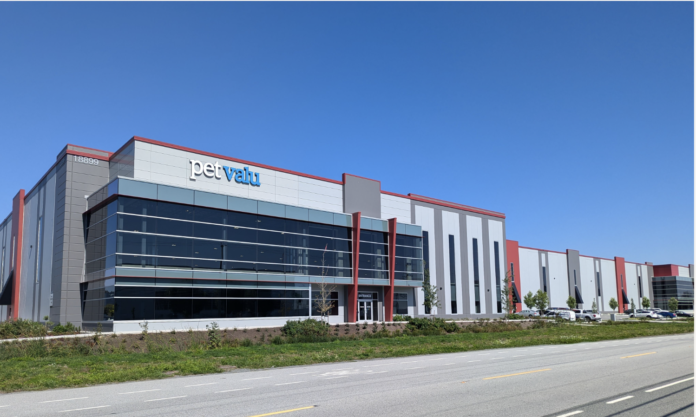
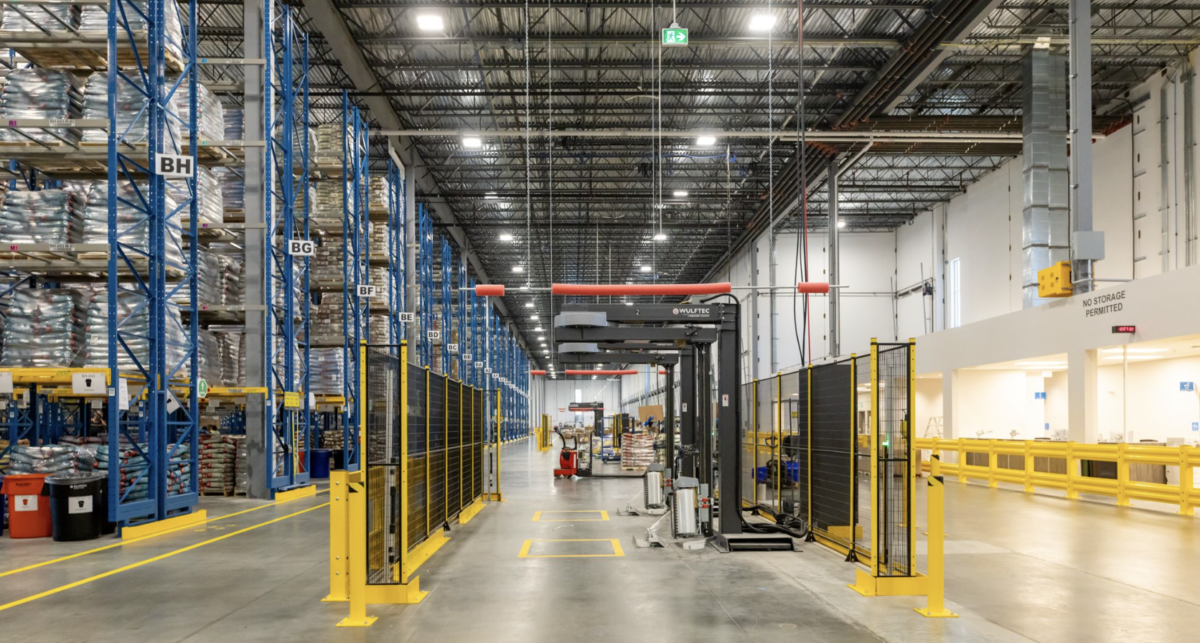
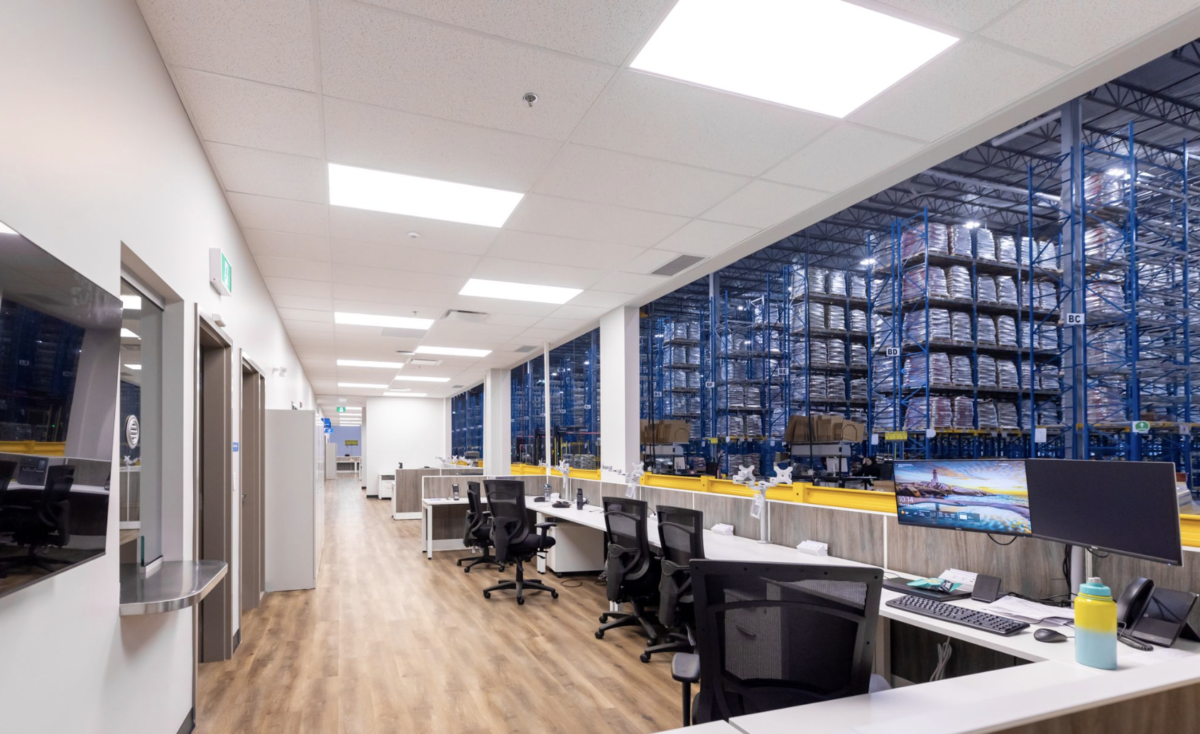
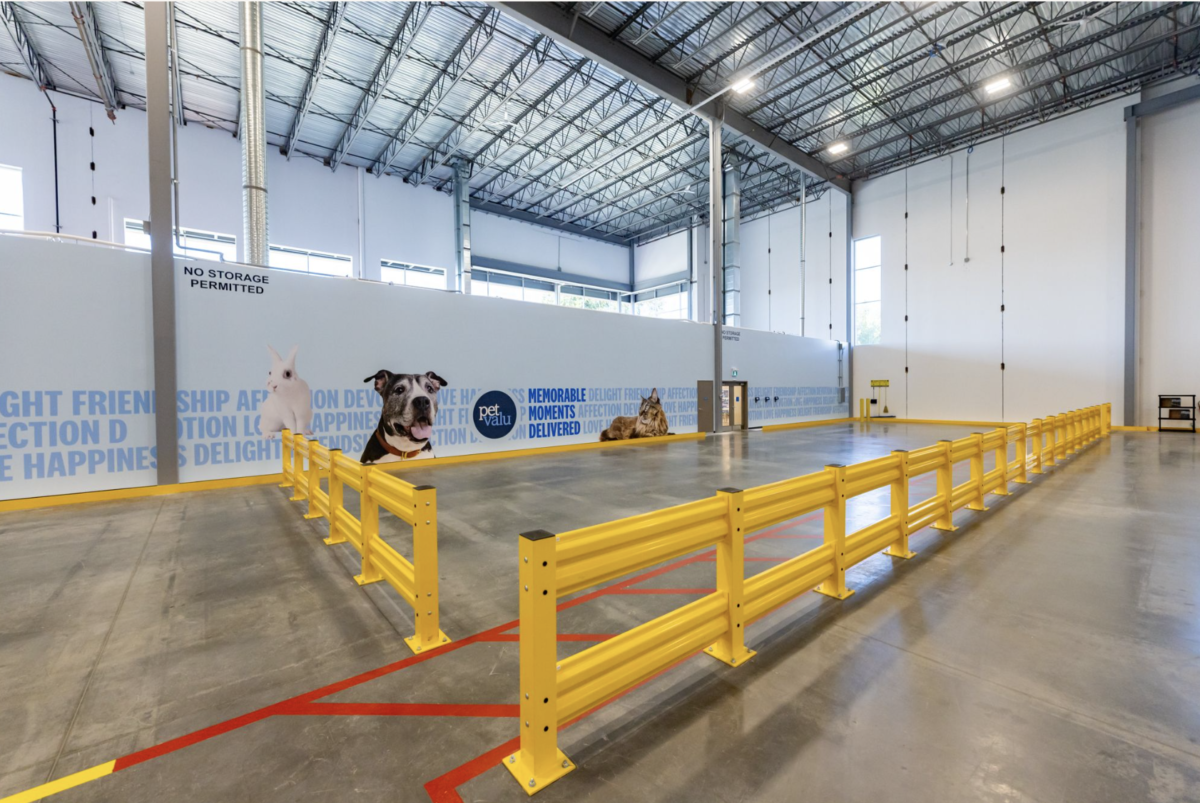
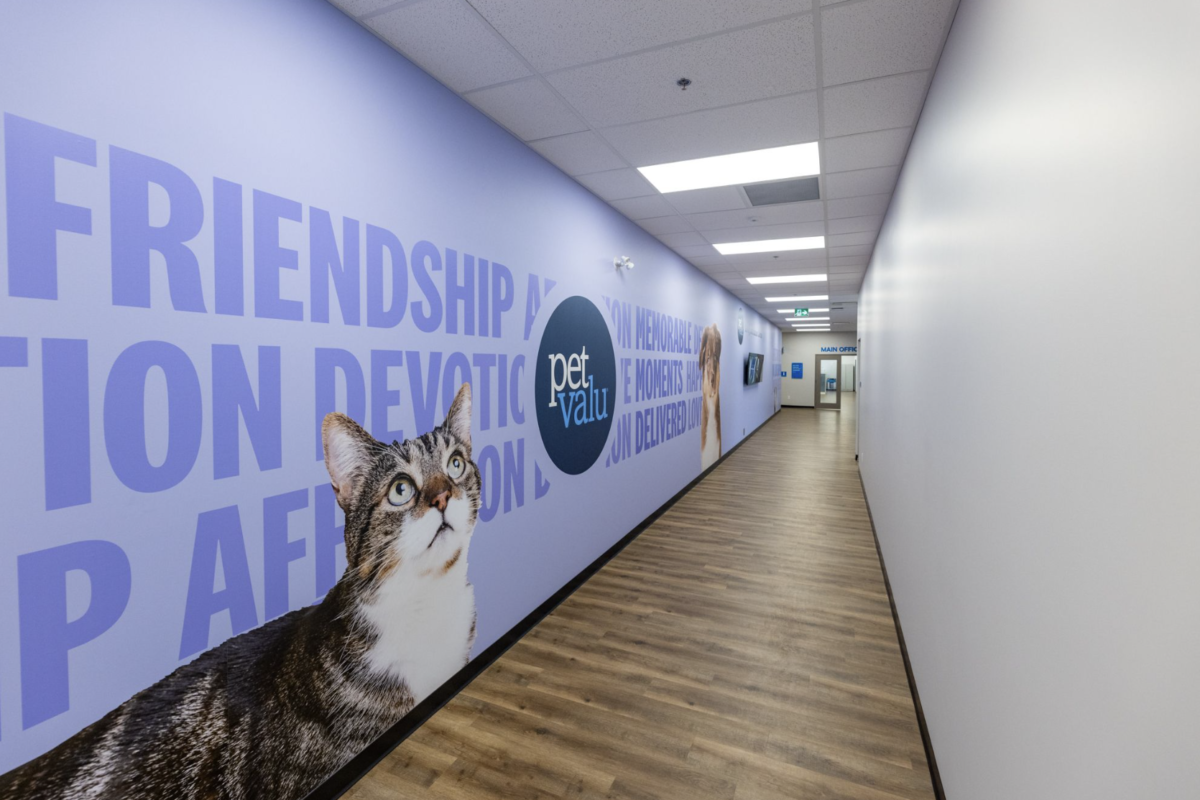
Pet Valu Holdings Ltd., the leading Canadian specialty retailer of pet food and pet-related supplies, announced Friday the official opening of its 350,000-square-foot, LEED-gold certified distribution centre in Surrey, British Columbia.
The company said the Surrey DC is three times the size of Pet Valu’s existing warehouse in the province and a key component of Pet Valu’s over $100 million supply chain transformation. It said the new facility unlocks the company’s continued growth in Western Canada while providing enhanced service to existing stores in the region.
Photo courtesy of Pet Valu
Richard Maltsbarger
“Our new Surrey DC represents the second pillar of our supply chain transformation, and another key achievement of our cross-functional teams, whose careful balance of rigourous planning and iterative learning have kept this multi-year project on time and on budget,” said Richard Maltsbarger, Chief Executive Officer of Pet Valu.
“This new facility embodies Pet Valu’s commitment to Our Four Paws service model, designed to emphasize safety, compassion, expertise and efficiency. Following several years of heightened investments, we are now entering the final stretch of our transformation, after which we will have Canada’s strongest pet specialty distribution network as the backbone to propel Pet Valu’s continued profitable growth over the next decade.”
The company said the Surrey DC is the second largest pet specialty distribution centre in Canada, exceeded only by Pet Valu’s own 670,000-square-foot distribution centre in Brampton, Ontario and brings up to 150 skilled jobs to Surrey.
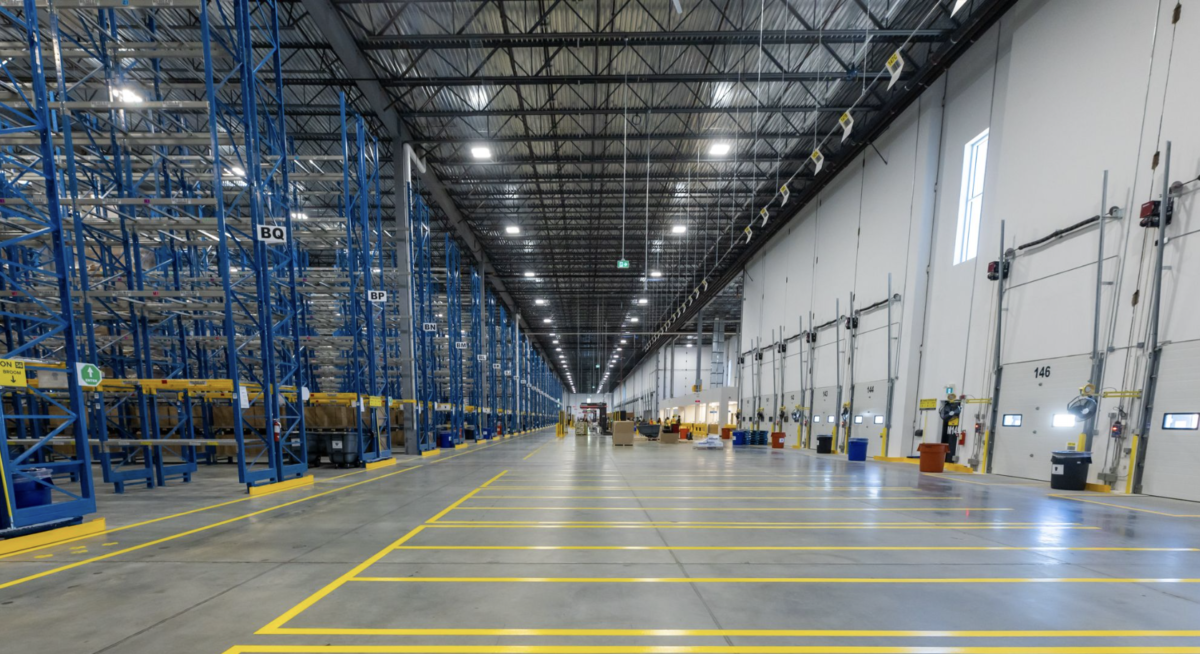
“Similar to the GTA DC, the Facility utilizes an advanced warehouse management system, and modernized machine handling equipment, safety systems and security systems. Additional features include ample wellness space to support the diverse needs of its employees, including a meal room, training space, a driver’s lounge, prayer and ablution rooms, and first aid facilities,” said Pet Valu.
“As part of the company’s ongoing pursuit to optimize energy and emissions management, the Surrey DC will pilot the use of two electric trucks as part of its delivery fleet. Each electric delivery truck represents an opportunity to avoid consumption of over 25,000 litres of diesel fuel per year.
Photo courtesy of Pet Valu
Pet Valu said it expects the Surrey DC to be fully operational by the fourth quarter of 2024, as it scales down use and exits its legacy distribution centre and third-party storage space in the Metro Vancouver Region in the coming months. It said the facility is currently receiving and shipping all products through advanced manual processes with implementation of automation of its piece-pick operations intended for 2026 or thereafter.
Nico Weidel
“Pet Valu continues to set a high bar for pet specialty distribution capabilities in Canada,” said Nico Weidel, Chief Supply Chain Officer at Pet Valu. “The advanced, modern processes and systems at each of our new distribution centres provide improved product availability, faster order processing, and enhanced customer service levels for stores and eCommerce customers alike in a safe, spacious environment that supports the needs of our modern workforce.
“As we finalize our transitions in the Greater Toronto and Metro Vancouver regions, we will soon shift our focus to our final distribution hub in Calgary and completion of our supply chain transformation in 2025.”
Pet Valu is Canada’s leading retailer of pet food and pet-related supplies with over 800 corporate-owned or franchised locations across the country.
It has been in business for more than 45 years.
Photo courtesy of Pet ValuPhoto courtesy of Pet ValuPhoto courtesy of Pet ValuPhoto courtesy of Pet Valu
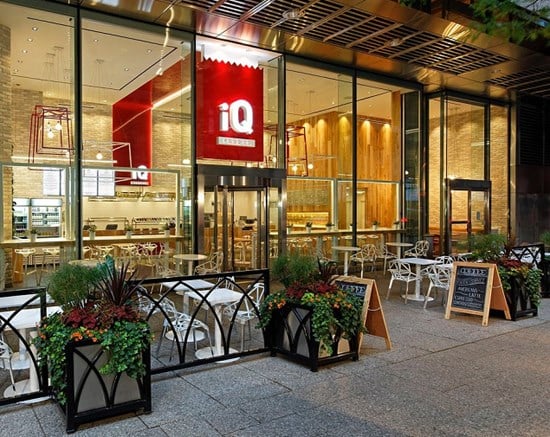
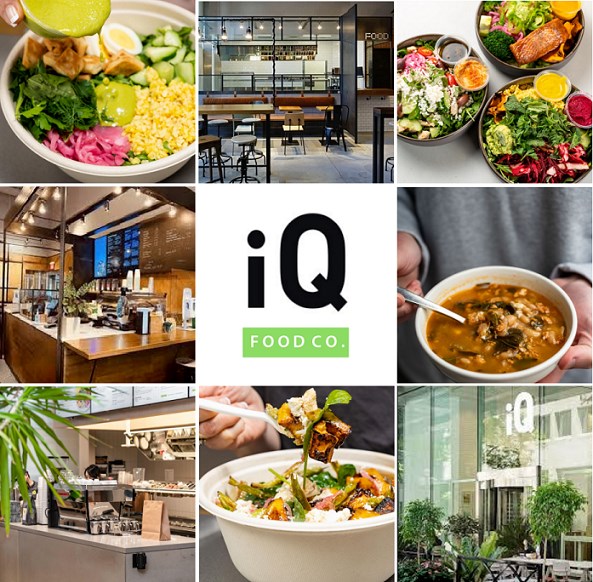
Happy Belly Food Group Inc., a leading consolidator of emerging food brands, announced Friday that it has acquired 100 per cent of Toronto-based QSR brand iQ Foods Co. and all four iQ Foods locations following iQ’s filing for creditor protection recently.
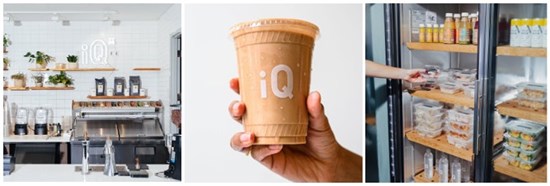
iQ Foods offers a variety of wholesome options like healthy bowls, smoothies, sandwiches, soups, and salads, along with other flavourful clean-eating dishes.
“Today, we are pleased to announce the 100 per cent acquisition of iQ Foods. Alongside our wholly owned Lettuce Love Café brand, and our binding acquisition agreement for Salus Fresh Foods announced on July 29th, we are taking our first steps in executing the next phase of our business strategy by consolidating emerging brands within sectors, in addition to developing emerging brands,” said Sean Black, Chief Executive Officer.
Photo courtesy of Happy Belly Food Group
“This is a key moment in our company’s growth as we embark on consolidating sectors, starting with the premium healthy and clean eating vertical. This approach aligns with our strategy, targeting a growth sector that is gaining market share and share of wallet amongst consumers, especially among health-conscious consumers in parts of Canada and the US.
“We see inspiration in category leaders like Sweetgreen in the US, which has grown significantly in business, store count, and achieved an impressive market cap of over $3.5 billion USD, not unlike how CAVA accelerated its expansion in the Mediterranean category by acquiring Zoe’s Kitchen. Our acquisition of iQ Foods establishes our Happy Belly platform as a strong foundation for our sector consolidation strategy.”
Happy Belly said iQ Foods is a cornerstone brand in Canada’s premium healthy eating market and represents the largest single acquisition of corporate-owned stores that Happy Belly has made to date.
Photo courtesy of Happy Belly Food Group
“Strategically situated in urban and central business districts, iQ Foods serves the needs of thousands of customers who are focused on health and wellness from local businesses while also expanding into catering services, which generates additional revenue in major metropolitan centres. This approach has built strong brand awareness and a loyal customer base through word-of-mouth and most importantly, happy and satisfied customers.”
As part of the acquisition Happy Belly takes ownership of four downtown Toronto locations: 100 King Street West (First Canadian Place); 18 York Street (Financial Centre); 199 Bay Street (Equinox Gym and Fitness Center); and 55 Avenue Road (Yorkville Equinox Gym and Fitness Center). A location at Toronto’s Yorkdale Shopping Centre recently closed with a creditor protection filing.
“With our current and prospective new locations, we aim to grow and scale iQ Foods operations into 2025 and beyond. Our Happy Belly footprint continues to grow with each M&A transaction and every new store opening. With the iQ Foods acquisition, we will have 36 restaurants operating within the Happy Belly portfolio, which will increase to 45 following the closing of the Salus Fresh Foods acquisition. Additionally, five of our brands currently have one or more locations under construction, significantly boosting our organic growth. This combination of accelerated organic and inorganic growth positions us well for continued expansion. We look forward to announcing several new openings throughout 2024 as we continue to sign franchise agreements and secure prime real estate locations for our franchisees across Canada,” added Black.
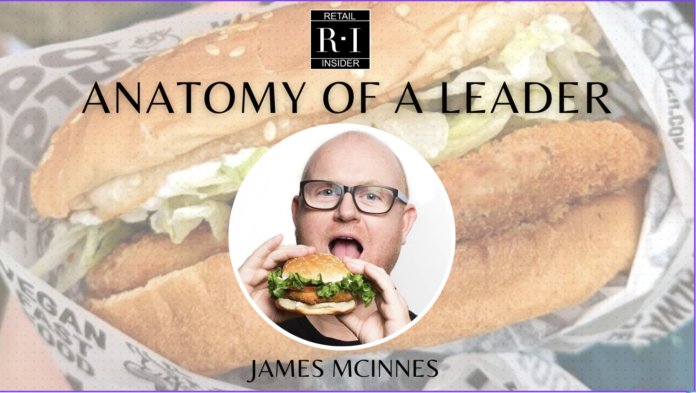
James McInnes founded Odd Burger in 2014 as a grassroots vegan organization that brought organic fruit and vegetables from local farmers to customers’ doorsteps.
The idea began percolating in his mind while he was running a software company.
He was born and raised in London, Ontario, and went to the University of Western Ontario taking genetics and computer science.
James McInnes
“I’ve always been like a scientist I guess,” said McInnes. “I always found that field of quantitative scientific methods and processes to be really cool, really interesting, especially in the computer science side, with an emphasis on the life sciences.
“After I got my degree I ended up starting a software company and ran that for seven years or so before I left and started this company. It’s always been a passion of mine science and life sciences.”
His first company was a fintech firm.
“While I was still running my software company I went vegan for health reasons. I was diagnosed with high blood pressure when I was about 32. I thought I was leading a fairly healthy life. I didn’t eat a lot of fast foods. I was eating what I thought was a balanced diet and fairly unprocessed,” he said.
“But it still led me to have some serious life implications. I went plant-based just to try it for 30 days and it completely reversed my high blood pressure which was shocking to me that in 30 days you could change your diet and you can have such a drastic impact on your health. The doctors were pretty amazed too.
“At the time, going vegan was such an extreme diet. People were asking how do I get my protein. I was going to die. I couldn’t live like this. A lot of misconceptions at that time. It started as me on a personal health journey. I ended up buying fruits and vegetables in bulk and I ended up starting a buying group with friends and family.”
He partnered with Vasiliki McInnes in 2015 and the couple developed vegan meal kits, through which they learned that people loved their vegan fast food recipes.
In 2016, Odd Burger brought what is now known as the Famous Burger to the London, Ontario Ribfest where it sold out due to overwhelming demand.
The popularity of this vegan option made waves and the disruption garnered great media attention throughout North America. The food truck was launched soon thereafter which brought vegan fast food to communities across Ontario and where customers came out in droves.
Image: Odd Burger
In 2017, the company launched Canada’s first vegan fast-food restaurant. Six months later, they opened the world’s first 24-hour vegan drive thru. Odd Burger opened its own manufacturing centre in 2018, where food is produced, and research and development take place.
In August the company, in its third quarter financial results, said it was expecting to open an additional six units in Canada before year end, bringing the total number of expected units operational to 23.
The perceptions of being a vegan have changed over the years.
“It’s becoming mainstream much more so than it was. I remember never even seeing the word vegan or plant-based. You rarely saw it at restaurants. You rarely saw any vegan offerings whatsoever. It just wasn’t on the radar because no one was eating that way whatsoever,” said McInnes.
“I think we’re starting to see kind of a shift, the same way cannabis has shifted from being just for the hippies to now lots of people doing it for lots of different reasons . . . And it’s gone mainstream . . . I think the same thing where plant-based has gone through the same type of transition. The industry itself is massive and the potential is huge.”
McInnes said today he’s 44 years old but feels like he’s in his 20s with lots of energy.
When asked about his entrepreneurial success, he said: “Perseverance was the number one thing because every business is going to have its ups and downs. Sometimes the downs can last for years. You have to be able to persevere through those hard times to sort of see the good times, sometimes.
“There’s this kind of ebb and flow that you have to get used to. You’re going to have failures. You’re going to have setbacks. You’re going to have challenges. You’re going to have times when you don’t think you’re going to make it through. At the end of the day, remember why you’re doing it and what are the reasons you’re doing it. As long as that reason is in the right place. It’s because you love what you do, you’re passionate about it, you believe in the importance of doing what you’re doing for the world, I think that helps you stick with it.”
McInnes said as an entrepreneur it’s important to be able to manage a company’s growth which many don’t think about.
“I think the real challenges and the difficulties come in the growth . . . Every single step of growth has challenges you have to be able to get through.”
In his spare time, he plays tennis and swims. He’s also a musician, working on a musical about the story of Odd Burger, coining it Odd Way on Broadway. He plays violin while his wife plays keyboard, drums and flute.
“I think creative outlets are great,” added McInnes, who played violin in different orchestras as a youth.
Retail Insider is streamlining its Canadian retail news from around the web to include a handful of top news stories that can be viewed quickly during the day. Here are the top stories from the past 24 hours.