Retail Insider is streamlining its Canadian retail news from around the web to include a handful of top news stories that can be viewed quickly during the day. Here are the top stories from the past several days.
A new report by Second Harvest, titled The Avoidable Crisis of Food Waste, underscores the staggering scale of food waste in Canada. The findings reveal that 46.5% of the food in Canada goes to waste, with 41.7% of this waste deemed avoidable. Photo: Second Harvest
A new report by Second Harvest, titled The Avoidable Crisis of Food Waste, underscores the staggering scale of food waste in Canada. The findings reveal that 46.5% of the food in Canada goes to waste, with 41.7% of this waste deemed avoidable.
This avoidable food waste represents a loss of $58 billion—a sobering figure that highlights the economic and environmental impact of wasted food.
Little Progress in Reducing Food Waste
Led by food waste expert Dr. Martin Gooch, this report is the second comprehensive assessment in five years, and unfortunately, Canada’s food waste situation has shown little improvement. However, there is hope.
Dalhousie University’s Agri-Food Analytics Lab recently introduced the Canadian Food Sentiment Index, which explores Canadians’ attitudes toward food waste. According to this index, 76.6% of Canadians report actively trying to reduce food waste compared to a year ago. Rising food prices have encouraged more consumers to be mindful of their household food inventory, a positive trend that can significantly reduce waste at the consumer level.
One of the main contributors to household food waste is the misunderstanding around best-before dates—another critical point highlighted in Second Harvest’s report. Many consumers are now recognizing that a best-before date does not equate to “bad after.” These dates, largely unsupported by scientific research, are designed to indicate optimal freshness rather than food safety, especially if the packaging remains unopened. Despite this, 55.4% of Canadians still discard food that has passed its best-before date, even when the product remains sealed.
Food waste in Canada has solutions. Image via Loblaw Companies
Too Good To Go’s “Look-Smell-Taste” Initiative Aims to Curb Waste
To help address this issue, Too Good To Go has launched the “Look-Smell-Taste” initiative in partnership with food manufacturers and retailers across Canada. Through this campaign, informational stickers will be placed on select food items to encourage consumers to evaluate freshness with their senses rather than relying solely on printed dates. The method is straightforward: consumers are prompted to look for signs of spoilage, smell to assess freshness, and taste to confirm edibility.
When consumers scan these stickers with the app, they receive additional tips and guidance, empowering them to make informed choices about whether food is still good to eat. This sensory-based approach can foster a more intuitive understanding of food quality, reducing unnecessary waste and helping households save money.
While some people may still find the idea of eating food past its best-before date off-putting, others are embracing it as a way to save money. The food rescue market, which involves salvaging food that might otherwise go to waste, is gaining traction across the country. Stores specializing in discounted food products near or past their best-before dates are popping up nationwide, with grocery chains increasingly joining the movement.
Montreal-based chain Liquidation Marie, for example, is opening its fourth store dedicated exclusively to “rescue foods.” A typical shopping trip there can cut a customer’s food bill by 50% to 80%—a compelling option for those looking to save money amid rising grocery prices.
A solution to food waste in Canada – Image: Too Good to Go
Challenges and Criticisms of the Food Rescue Movement
Not everyone, however, welcomes this development. Liquidation Marie’s expansion in Montreal has reportedly led to anonymous complaints filed with Quebec’s Ministry of Agriculture, suggesting unfair competition with conventional retailers. In today’s high-cost food landscape, this response is disappointing. Consumers need all the support they can get, and food rescue initiatives offer tangible help in an economy strained by inflation.
An economy that values food will waste less of it. Reduced waste promotes greater food security and a lower environmental footprint. Second Harvest’s report highlights that avoidable food waste generates 25.69 million metric tonnes of CO₂ emissions each year—the equivalent of 253,223 one-way flights from Toronto to Vancouver. By reducing food waste, we take a significant step toward a more sustainable and environmentally responsible future.
Ultimately, The Avoidable Crisis of Food Waste calls on Canadians to rethink how they value food. Simple changes—using leftovers more often, freezing food strategically, exploring food rescue options, and relying on innovative solutions like Too Good To Go’s Look-Smell-Taste approach—can make a meaningful difference. There’s a food rescuer in all of us, ready to help tackle this crisis.
Today’s consumer is more diverse than ever before and is changing the Canadian retail landscape – but who is today’s Canadian consumer? With varying preferences, behaviours, and technological engagements, understanding consumers is crucial for retailers. Lisa Hutcheson, a retail strategist and managing partner at J.C. Williams Group; Jeff Doucette, the General Manager of Field Agent Canada; Larry Leung, global customer experience leader; and Colleen Martin, Chief Revenue Officer at Caddle, discuss their viewpoints on the modern Canadian consumer, sharing their different perspectives on consumers including diversity, spending habits, the forgotten ageing population, and how powerful the consumer is when it comes to ratings.
“Chasing value because they have to”
Jeff Doucette. Photo: LinkedIn.
“Consumers are constantly changing, with a significant trend towards value as budgets are tight,” says Doucette. His insights explore the expectations of Canadian consumers, the idea of value, and the demand for high-quality experiences.
Doucette says throughout recent years with economic pressures, consumers are looking more towards value, making it a number one priority within purchase decisions. This ongoing financial strain has led consumers to seek out discounts and cost saving opportunities, especially in grocery stores.
“There is an ongoing trend towards value and shoppers moving to that discount grocery shopping experience in particular, where wallets are definitely being stretched and budgets are tight, and people are saving where they can so they can splurge in other areas,” he explains. “People are trying to manage their budgets more carefully. They are often cutting back on discretionary spending in other areas to ensure they can afford the basics. This behaviour is not just limited to low-income households, but is becoming more common across different income levels.”
“Moving to value for different reasons”
Doucette breaks it down into two groups when it comes to saving money: consumers trying to find value to keep their budgets in check for the basics, and consumers who are not struggling, but want to save for travelling and recreational activities.
When going out and spending, Doucette says young consumers are looking for top quality services and products and are for more dining experiences:
“Consumers have the thought of ‘if I am going to be spending money, then I am going to go out and I want it to be a good experience and if not, I might as well just have that experience at home.’ So consumers are chasing value on basics to be able to afford some of the more entertainment options that are out there and want a great experience,” he says.
With the high costs of living, he says middle-aged consumers are facing challenges with stagnant incomes and the cost of living, with a large part of the population chasing value because their incomes have not grown, but the cost of everything else has. As for older consumers such as boomers, Doucette says they are looking for reliable and high-touch services rather than top end experiences.
“Older consumers appreciate reliable service and are less forgiving of lapses in product availability or customer service,” he says. “They have higher expectations for consistency and quality in their shopping experiences. When they visit a store, they expect to find the products they need in stock and to receive attentive, personalized services. Any shortcomings in these areas can significantly impact their loyalty and willingness to return to the store. This demographic values the human touch and reliable interactions, making it crucial for retailers to maintain high standards in their in-store experiences.”
As consumers are looking for great value, Doucette advises retailers to use social media, not just for engagement, but to also offer deals.
“You could have exclusive offers for people who follow you on Instagram and really drive some amazing business,” he states. “Social media platforms are powerful tools for creating a direct line of communications with your customers. By leveraging these platforms to provide special promotions and engaging content, retailers can build a loyal following and significantly boost their sales. This kind of targeted engagement not only attracts new customers, but also fosters a sense of community and loyalty among existing ones.”
Consumer empowerment
Today, consumers have more power to hunt for deals, especially through social media.
“Consumers are starting to have more of a voice and people are chasing deals and will broadcast it on social media with ‘hey, this item is on sale at this retailer.’” he says. “There is a group of people out there that are really focused on helping others get value and these sort of sneaky deals and smart shopping is happening out there in the world.”
This can also have a negative impact on retailers as consumers are not just sharing sales, but also sharing high prices and bad experiences.
“Everybody has their own broadcasting channel in a way right now, which is empowering for the consumer,” he says. “You don’t need to get the attention of CBC to highlight the fact that the number of grams in your bag of frozen carrots is short of what is declared in the bag. But it is a real concern for retailers because that negative product experience, pricing experience, and customer service experience can all blow up quickly.”
To manage issues, retailers need to create an open conversation with consumers and also keep updated with its social media to respond quickly to any complaints – this way, consumers feel they are being heard and respected.
“The Canadian consumer now, in my mind, is more diverse and more multifaceted than ever before,” says Hutcheson. “You really have to consider the demographic, lifestyle, socio-economic status, and cultural influences. There are so many new immigrants, each bringing their own values and behaviours, which makes it challenging to categorize them neatly.”
Hutcheson takes a look into the complexity of today’s consumer landscape, which she says is influenced by high immigration rates, diverse backgrounds, and various age groups.
Young consumers (Gen Z and Millennials)
Gen Z and Millennials are leaning more towards sustainability, health, and wellness and are purchasing more eco-friendly products and services to align with their values. This demographic is also more tech-savvy and prefers the convenience of online shopping.
“Health and wellness has become a really big one since Covid-19,” Hutcheson recognizes. “People are really taking care of themselves. There is a lot less alcohol consumption and more focus on activities like cold plunging and other wellness trends. Certain demographics are doing things like that and we are seeing a significant shift towards products and services that support these healthier lifestyles.”
This demographic is also looking for instant gratification, seamless digital and in-store experiences, and personalization. Hutceshson says this group often prefers experiences rather than goods.
“Experiential purchases, such as travel and dining out, have become more important than material goods,” she asserts. “Younger consumers are prioritizing experiences that create lasting memories over accumulating physical items. This trend is particularly strong among those influenced by social media, where experiences are often shared and valued more than possessions.”
Hutcheson goes on to explain that new immigrants often are seeking products and services aligning to their cultural backgrounds and preferences. This includes specific food items, traditional clothing, and services that help them integrate into Canadian culture. She suggests that retailers can start to build stronger relationships with incoming immigrants by understanding their needs which will foster trust and loyalty.
“The influx of new immigrants has introduced a variety of cultural influences, making it crucial for retailers to adapt and offer products that resonate with these diverse groups,” she says. “Retailers who can effectively meet these unique needs are more likely to succeed in today’s competitive market and to have loyal consumers.”
Strategies for retailers
The one thing most consumers are looking for is personalization. Hutcheson says retailers should be using data and technology to enhance shopping experiences. By offering personalized experiences, understanding consumer preferences, and tailoring offerings, consumer satisfaction and loyalty can be improved.
“Retailers have to get crystal clear on who their customer is and what their product offering entails,” she asserts. “You can’t be all things to all customers. So, understanding and leveraging data to focus on your specific customer can really drive engagement and loyalty. It’s about honing
in on who your specific customer is and what they value most. This targeted approach helps attract the right customers and grow the business.”
She also suggests building a strong social media presence and engagement through these channels is a must as well as integrating online and offline shopping experiences.
“Retailers need to ensure that their online and offline experiences are consistent and seamless,” she points out. “Customers expect to have a cohesive shopping journey with the brands that they shop with, whether they are browsing online or visiting a physical store. This integration makes it easier for them to switch between channels without any friction.”
“Canada has close to 40 million people and the consumer is more diverse than ever,” says Leung. His insights shed light on the often forgotten older demographic and the unique challenges they face in the modern retail landscape.
“Older consumers grew up in an era where personal service was the norm, and many still expect that level of interaction when they shop,” he says. “They often find modern, technology-driven retail environments challenging and prefer traditional methods. Many older consumers did not grow up with the internet and find it less intuitive. They prefer the reliability of in-store shopping where they can see and touch products.”
As retailers are transitioning to meet the needs of younger consumers, older consumers are finding it difficult, such as the increasing usage of self-service technologies. Leung says that older consumers often find kiosks and self-service checkouts confusing and frustrating and that they miss the personal interaction with staff that they were accustomed to.
Looking at consumers between the ages of 45 to 50, Leung suggests that although they received internet experience as part of their university educations and are adaptive to digital technologies, some of them would still like to have a personal experience.
“Many of them may not like to be on social media, especially more advanced technologies like TikTok because they didn’t grow up making videos,” he says. “The older you are, the more likely you may not necessarily want an all digital experience – they would really like the physical experience more than ever.”
Different meaning on service – low and high touch
This age group and older also have a different meaning to service, as in many grocery stores there used to be someone who managed the check-out process and even helped out bagging groceries. Along with evolving with what younger consumers are expecting today, retailers must also recognize and balance their strategies to match what older consumers are looking for.
“It’s important for retailers to collect data and know their demographics and then ask themselves whether or not the customer journey for each group that they want to target is being met,” suggests Leung. “For example, an older generation of people may go grocery shopping on a Monday morning. If retailers know that there is consistent behaviour of shopping earlier, then maybe you need more cashiers at that time because those people may not necessarily want to go use a kiosk. They might have a difficult time locating a sticker with a number for produce, or maybe they would have an issue scanning the products and bagging them themselves.”
Leung goes on to explain that many retailers are trying to find a balance between transitioning to digital and keeping old strategies. Leung says that some retailers were too hasty in their attempts to go digital. He says that it’s not a knock on digital, but about using the communication and service of the customer’s choice.
Leung suggests several strategies for retailers to improve their service for older consumers including maintaining a strong in-store presence with staff who can help with a purchase and provide a personalized experience as older consumers value personal interaction and the assurance that comes with talking to a knowledgeable staff member.
Retailers should also consider using hybrid approaches to marketing, combining traditional and digital methods. While moving to digital flyers and promotions can save costs, Leung says that it is also important to ensure that older consumers still receive the information they need in a format they are comfortable with, such as physical flyers or mailed promotions.
Lastly, Leung suggests retailers enhance accessibility on digital platforms to make it easier for older consumers to navigate. This can include larger text sizes and clear navigation to make them easier to use. He says that it’s about making the digital experience as seamless as possible for those who are less familiar with technology.
By addressing these challenges and not jumping on the digital path too quickly, retailers can better serve the older demographic, ensuring they feel valued within the modern retail landscape.
Martin, who has 25 years of experience in retail, says because consumers have more access to information, they are less loyal to specific retailers.
The use of social media platforms have made it easy for consumers to share their experiences, positive or negative, which can influence other consumers on what and where they purchase.
“Consumers are utilizing digital platforms in different ways, and there is a noticeable shift towards leveraging online reviews and ratings,” says Martin. “This trend is particularly strong among younger generations who rely heavily on peer reviews to make informed decisions. They trust the opinions of other consumers over traditional advertising, and this influences their purchasing behaviour significantly. The ability to access a vast amount of information quickly means that if they don’t find what they are looking for, or they see a negative review – they are likely to move on to another retailer. This behaviour underscores the decreasing brand loyalty in the current retail landscape.”
She goes on to explain that consumers are even using technology to find better prices elsewhere, such as Amazon. Today, people have the convenience of walking around a grocery store to compare prices and to see reviews quickly.
“People are walking around grocery stores and scanning things with the Amazon app and reading the reviews. And then, if it is even a cent cheaper, they are adding it to cart,” says Martin.
She points out that because ratings have purchasing power, retailers such as Walmart have integrated user-generated content and peer reviews into their in-store displays to enhance the shopping experience.
“Walmart did a great job at their flagship, putting peer review content on the shelf,” she says. “So not only do they see features and benefits rolling on the panel where the pricing is, but also what those top reviews are. So that has had some really great consumer feedback.”
Not only should retailers place reviews in-store, Martin suggests that retailers should also place ratings on flyers.
“Even integrating ratings and reviews on the flyer is critical because if you are looking at a deal and it is only three stars – people are not going to want to buy that item, but if it is four stars or more they most likely will,” she says. “Peer review is absolutely the most critical piece.”
Martin also suggests that younger consumers expect personalized experiences and relevant product recommendations.
“Consumers today are looking for retailers who understand their unique shopping habits,” she asserts. “They are expecting personalized experiences and relevant product recommendations based on their preferences and past purchases. We have seen that younger generations, in particular, want to feel like the retailers know them and can anticipate their needs. They are no longer satisfied with the one-size-fits-all approach and are quick to switch brands if they don’t receive the personazied service they expect.”
Retailers that are able to successfully integrate personalization into both digital and in-store experiences fore their customers are more likely to build a strong, lasting relationship with them. Going forward, Martin believes that the role of AI will transform personalization, perhaps with the help of AI-powered chatbots and shopping assistants.
“Imagine a chatbot that can recommend recipes based on your purchase history, suggest complementary products, and facilitate a seamless one-touch purchase,” she says. “This level of personalization and convenience is where retail is headed. Consumers want these hyper-personalized experiences that save them time and make shopping more efficient. We have seen examples where AI can help someone find a recipe for six people, taking into account dietary preferences and what they already have in their pantry. It is about making the shopping experience not just personalized, but also incredibly convenient and responsive to consumer needs.”
So … who are the modern Canadian consumers?
Today’s Canadian consumer is diverse, technologically advanced, and value-driven. They are seeking personalized shopping experiences that cater to their unique preferences and needs. As Hutcheson, Doucette, Leung, and Martin say, the modern consumer is more informed than ever before and retailers must adapt to offer seamless experiences, engage meaningfully through data-driven insights, and ensure consistently personalized interactions. Understanding and responding to these evolving consumer behaviours, while still remembering traditional services, is crucial for retailers aiming to build loyalty and stay competitive in the dynamic retail landscape.
“Retail is evolving faster than ever, and consumers are leading the charge,” says Martin. “They are seeking meaningful interactions, personalized experiences, and authenticity. Consumers have always had the power, but now, with the vast amount of information at their fingertips, they are more empowered to make informed decisions. Retailers must rise to the challenge to meet informed consumers with personalized, seamless, and engaging experiences. The future of retail hinges on understanding and anticipating customer needs better. The retailers that can meet these demands will not only survive – but will thrive.”
Retail sales increased 0.4 per cent to $66.6 billion in August with sales up in four of nine subsectors and led by increases at motor vehicle and parts dealers, reported Statistics Canada on Friday.
Core retail sales—which exclude gasoline stations and fuel vendors and motor vehicle and parts dealers—were down 0.4 per cent in August, said the report, adding that in volume terms, retail sales increased 0.7 per cent in August.
Retail sales increase in August
“The largest increase in retail sales in August was observed at motor vehicle and parts dealers (+3.5 per cent). Higher sales at new car dealers (+4.3 per cent) led the increase, followed by used car dealers (+2.1 per cent). Lower sales at other motor vehicle dealers (-0.3 per cent) were offset by gains at automotive parts, accessories and tire retailers (+0.4 per cent),” explained StatsCan.
“Sales at gasoline stations and fuel vendors (-2.7 per cent) were down in August. In volume terms, sales at gasoline stations and fuel vendors decreased 2.1 per cent.
“Following two consecutive monthly increases, core retail sales were down 0.4 per cent in August on lower sales at food and beverage retailers (-1.5 per cent). Sales at food and beverage retailers were down in all four store types, led by supermarkets and other grocery retailers (except convenience retailers) (-1.9 per cent).”
The report said lower sales were also reported at furniture, home furnishings, electronics and appliances retailers (-1.4 per cent) in August, but the largest increase in core retail sales came from sporting goods, hobby, musical instrument, book, and miscellaneous retailers (+0.9 per cent).
Sales increase in four of nine subsectors in August
“Retail sales increased in seven provinces in August. The largest provincial increase was observed in Ontario (+0.9 per cent), led by higher sales at motor vehicle and parts dealers. In the census metropolitan area (CMA) of Toronto, sales were up 0.6 per cent. In Quebec, retail sales increased 1.0 per cent in August. In the CMA of Montréal, sales were up 1.5 per cent. The largest provincial decrease in retail sales in August was observed in Alberta (-1.1 per cent). The decrease was led by lower sales at food and beverage retailers,” added the federal agency.
On a seasonally adjusted basis, retail e-commerce sales were down 2.5 per cent to $3.9 billion in August, accounting for 5.9 per cent of total retail trade, compared with 6.1 per cent in July, said the report.
“Statistics Canada is providing an advance estimate of retail sales, which suggests that sales increased 0.4 per cent in September. Owing to its early nature, this figure will be revised. This unofficial estimate was calculated based on responses received from 61.1 per cent of companies surveyed. The average final response rate for the survey over the previous 12 months was 89.1 per cent,” said Statistics Canada.
Andrew Grantham, Senior Economist, CIBC Capital Markets, said the report suggests that consumer spending remains patchy, and that further reductions in interest rates will likely be needed to bring a sustained acceleration.
Maria Solovieva, Economist, TD, said strong auto sales continued to drive retail growth in August. However, ex-autos, sales were the weakest in three months.
“Our internal credit and debit card spending data, which primarily reflects non-durable and durable goods, indicates a softening trend through September. Together, these signals align with our forecast, where a rebound in durable goods is expected to be the largest contributor to Q3 growth in total personal consumption expenditures – projected to rise at a below-trend rate of 1.0-1.5 per cent quarter-on-quarter (annualized),” she said.
“Alongside the weakness in core sales, the downward trend in retail spending per capita remains intact, marking a major area of concern for the Bank of Canada, which moved to cut rates by 50 basis points this week. By accelerating its easing cycle, the Bank wants to see consumption growth strengthen, but it risks sparking more demand for housing instead. Financial markets are currently pricing in a coin-flip chance of another jumbo cut in December.”
RONA inc., one of Canada’s leading home improvement retailers operating and servicing some 425 corporate and affiliated stores, says the RONA Lachine’s major expansion and renovation project is now complete.
Recently, leaders from RONA’s dealer support team, business partners, and store employees joined the Chartier family, who owns the store, to mark the occasion with the traditional board-cutting ceremony.
“The project required a local investment of approximately $2 million. The main goal was to build a second warehouse for building materials, to improve the service offering for construction and home improvement professionals. The RONA Lachine store was expanded by 6,500 square feet, and 75 items were added to the store’s product assortment. The new warehouse is accessible by vehicle and includes a service counter equipped with a racking system, electronic shelf labels, and lockers for online order pick up. The Chartier family also took the opportunity to add parking spaces, including two with electric charging stations, and a staff break room with a patio,” said the company.
“We are now the third generation to run this neighbourhood hardware store since it first opened in 1998. Our improved offering aims to meet the growing needs of construction, commercial, and home improvement professionals, as well as small business owners in our communities,” said Yves Chartier, Co-owner.
Alain Ménard
The company said the store’s exterior and interior signage were also updated and customized with the new visual identity designed exclusively for RONA affiliated dealers. It highlights the “Yves Chartier Family,” its unique history, and its community spirit. The Chartier family is very involved in its community and supports many charitable causes. They have received several awards for their social involvement over the years, it added.
“Hugo, Pierre-Yves, and Yves Chartier are highly respected in their community, and their store is a real neighbourhood institution. They embody the vitality and strength of the affiliated dealers that make up our network in Canada, and we’re happy to help them gain even more of a competitive edge in their market,” said Alain Ménard, Senior Vice-President, RONA Affiliated Dealers at RONA inc.
Emily Newell, Jewelers Block Insurance expert at CHES, said simple steps, such as reviewing security audits, ensuring staff are trained in loss prevention, and updating inventory management systems, can significantly reduce the risk of theft.
“Jewelry stores regularly acquire new stock or make operational changes. Without a mid-term check-in, these updates might leave them underinsured or exposed to unnecessary risks,” she said.
Here are the key tips for brokers to address during a check-in, according to CHES:
Security Audits: Encourage clients to regularly assess their alarms, surveillance systems, and safes.
Staff Training: Remind clients of the importance of ongoing training in loss prevention and security protocols.
Inventory Management: Regular inventory checks can both prevent loss and expedite claims.
Physical Barriers: Reinforcing display cases or upgrading locks can provide an extra layer of security.
Coverage Updates: A mid-term review allows for the reassessment of coverage to ensure it matches the client’s current stock and operational needs.
“Jewelry stores are vulnerable because of the nature of their products. All one needs to do is walk through a mall, and you will see either police, security, or both at the front door of the store,” he said. “Generally, stolen goods are disposed of by a network of buyers who resell them. You can likely find the product on online marketplaces from private sellers.
“However, jewelry is tougher to dispose of, and you’ll likely find it traded at pawn shops for cash, private sales, or even melted down, as most of it is untraceable. Unless they are high-end, authentic watches with serial numbers, you might find them heading overseas. There is a very sophisticated subculture and black market behind all of this that serves as a supply chain for others.
“To mitigate their risks, jewelry stores need deterrents such as unbreakable glass and secondary security doors. They also need an emergency button for authorities to be summoned. These thieves have scoped out the location beforehand and can be very brazen. If it happens during business hours, your priority is to protect your staff and customers.
“Sadly, we will see this increase because of the economic benefit it garners for some.”
“It’s interesting that the insurer or the broker is giving advice to their clients, the insured, to harden themselves as a target,” said O’Keefe. “I’ve always said in loss prevention that the way you would look at risk is three ways. Like anything you transfer, accept or mitigate.
“And when you transfer the risk in this particular case just like a car you get insurance. You’re inviting somebody else in to share the responsibility and the fact that the insurer is saying hey you guys need to harden yourselves as a target, because we can’t take on this financial responsibility of continuing to compensate for these mass robberies, when an insurance company gets involved it’s per incident.
“Let’s say a Walmart as an example has 30,000 incidents (of shoplifting) in a year and they lose $1 million. You can’t go to the insurance company and say can you compensate me for the $1 million in loss and so it’s absorbed. But when you have one robbery that somebody steals $1 million you can go to the insurance company and say it’s one incident and it’s under my crime provision of insurance under robbery and I want to be reimbursed for the $1 million.
“Jewelry stores face losses in that second scenario. They don’t have volume of small incidents like a department store or convenience store or a grocer but they are susceptible to individual incidents of robbery. Having said that, on the shoplifter side you have the same type of thing. I can work volume and steal 100 times from a department store and get $50,000 or I can take the greater risk of robbing a jewelry store one incident and getting $50,000. And where we’re at is just the economy of scale. Shoplifters are targeting larger prey and we are seeing more incidents of jewelry store robbery whether that’s at gunpoint or whether that’s those smash and grabs where we see 15 people going into a store and they smash all the showcases and they run off. We’re seeing a lot more of that and it’s taking place.”
He said insurance companies are looking at jewelry stores to come up with innovation as they can’t rely on the same old lockable glass showcase where the jewelry is put in. The thieves have figured it out. There are some tamper proof showcases.
“The insurers are saying exercise due diligence and do a review of what you expect because you are either softening yourself as a target or the criminal element is coming after you,” said O’Keefe. “So the nudge they are giving the insureds is a good one. Exercise due diligence. Do a review.”
A new survey by the Retail Council of Canada, with Caddle, finds that 53 per cent of shoppers are gearing up for Halloween and 83 per cent plan to maintain or increase their spending.
52.6 per cent will spend between $0-$50, 29.7 per cent will allocate $51-$100;
Shoppers are preparing earlier, with nearly half (47.1 per cent) purchasing two to four weeks in advance (up from 34.6 per cent in 2023) and only 8.7 per cent shopping just before Halloween, down from 18.2 per cent in 2023;
51 per cent of shoppers will make a dedicated shopping trip for Halloween purchases, up from 45 per cent in 2023.
Despite economic challenges, spending patterns show steady enthusiasm for Halloween, said the report, adding that “value” is key for Halloween shoppers, but perceptions of what is of value differ. The survey found that 42.6 per cent don’t prioritize brands, 31.4 per cent see brands as adding value, and 25.9 per cent focus on overall value, brand or not.
In-store shopping also dominates, according to the report, with 73.2 per cent of purchases likely to be made in physical stores, emphasizing the importance of standout displays. Online shopping is anticipated for 23.7 per cent of purchases.
The report said trick-or-treating (26 per cent) leads activities, followed by home entertainment (21.5 per cent) and shopping (13.1 per cent). Spending is highest on food, alcohol, and candies (62.7 per cent), followed by clothing (30 per cent) and home décor (26.6 per cent).
The survey found that products seen in stores (36 per cent) and Flyers (33 per cent) are the top inspiration for Halloween shopping lists.
More than half, 53 per cent, of Canadians this year will make purchases to help them celebrate Halloween.
A small retailer in Canada grappling with inflation, technology and crime issues. Photo: Barry Austin
Canadian small and medium-sized retailers are facing a challenging landscape, with rising inflation, technology adoption hurdles, and a surge in retail crime threatening their survival. In an interview with Matthew Poirier, Vice President of Federal Government Relations for the Retail Council of Canada (RCC), he discussed the pressing issues affecting these businesses and the advocacy efforts aimed at supporting them in this difficult time.
Inflation Pressures on Small and Medium-Sized Retailers in Canada
One of the primary issuies facing small and medium-sized retailers in Canada is inflation. Poirier explained that rising costs are having a more profound impact on these businesses than on larger retailers. “Inflation is hitting smaller retailers particularly hard,” he said, “because they lack the same pricing power as their larger competitors.” Larger businesses can adjust their supply chains or absorb some of the costs, but smaller ones are left to pass higher prices onto customers, which can be risky in a price-sensitive market.
Matthew Poirier, Vice President of Federal Government Relations for the Retail Council of Canada (RCC)
Poirier also emphasized the difference between the U.S. and Canadian retail markets, noting that small businesses in Canada are feeling the pressure more acutely. “While the U.S. economy has rebounded stronger, Canada is still struggling. Small and medium-sized retailers are facing tighter margins and slower sales,” he said. The differences between the two economies create unique challenges for Canadian retailers, particularly in terms of consumer spending and operational costs.
Supply chain disruptions continue to exacerbate the problem, as small and medium-sized retailers find it more difficult to source products in a timely and cost-effective manner. “Smaller businesses don’t have the same leverage when negotiating with suppliers,” Poirier explained. These challenges make it increasingly difficult for Canadian retailers to compete in an already tough economic environment.
Technology Adoption Is Essential for Small Retailers’ Growth
One of the key challenges that small and medium-sized retailers in Canada must address is the adoption of technology. Poirier highlighted the importance of digital tools and AI, which are critical in helping businesses manage inventory, enhance customer service, and improve operational efficiencies. “Larger retailers have the advantage when it comes to integrating technology,” he noted. “Small businesses, on the other hand, often lack the resources and expertise to implement these tools effectively.”
While some small businesses have embraced digital transformation, many remain hesitant due to the financial costs and the knowledge gap. Poirier explained that smaller retailers often operate with limited staff, making it challenging to dedicate time and resources to learning and integrating new technologies. “It’s not that small businesses don’t see the benefits of technology,” he said, “but they face significant barriers in getting there.”
The Canadian Digital Adoption Program (CDAP) was designed to address these barriers by providing financial aid and expert guidance. However, as Poirier pointed out, the program has struggled with implementation. “The demand was overwhelming, and many businesses couldn’t access the help they needed,” he said. Poirier believes that improving programs like CDAP could give smaller retailers the tools they need to compete in an increasingly digital marketplace.
Image: National Retail Federation
Retail Crime Adds Pressure on Small and Medium-Sized Retailers in Canada
Retail crime is another growing concern for small and medium-sized retailers across Canada. Organized crime has become a significant issue, affecting businesses of all sizes. However, small and medium-sized retailers are particularly vulnerable due to limited resources for security. “Retail crime isn’t just about shoplifting anymore—it’s organized and well-planned,” Poirier explained. “Smaller retailers often don’t have the budget for robust security measures, making them easy targets.”
The impact of retail crime extends beyond lost merchandise. Retailers also face increased insurance premiums, higher operating costs, and damaged customer trust. Poirier pointed out that many larger retailers can afford to invest in comprehensive security measures, but for smaller businesses, the costs are prohibitive. “The cost of crime prevention can be devastating for a small retailer,” he said.
The RCC has been working with law enforcement and policymakers to address this issue at the national level. “This isn’t just a problem in certain regions—it’s a nationwide issue,” Poirier emphasized. The RCC is advocating for stronger policies and better resources to help small retailers protect their businesses from crime.
Credit cards. Photo: iStock
Credit Card Fees Remain a Financial Burden
Small and medium-sized retailers in Canada are also grappling with high credit card fees, which add to their financial challenges. Recently, two major credit card companies announced they would reduce interchange fees for small businesses, a move welcomed by the RCC. However, Poirier stressed that this is only a partial solution. “While the fee reduction is helpful, it doesn’t address the larger issue,” he said. Larger businesses are still subject to high fees, which continue to put pressure on the broader retail sector.
The RCC is advocating for a more comprehensive approach to credit card fees, focusing on the benefits to both retailers and consumers. “Reducing these fees across the board would not only help retailers but also create a better shopping experience for consumers,” Poirier said. By addressing credit card fees more broadly, the RCC hopes to provide some financial relief to small and medium-sized retailers who are already dealing with multiple challenges.
Supporting Canadian Small Retailers Is Critical for the Economy
Canadian small and medium-sized retailers face numerous challenges, from inflation and supply chain disruptions to technology adoption and retail crime. As Matthew Poirier outlined, these businesses are vital to the Canadian economy but require more support to thrive in today’s competitive market.
Programs like CDAP and recent credit card fee reductions provide some relief, but more needs to be done to ensure that small businesses can adopt new technologies, secure their operations, and maintain profitability. The Retail Council of Canada says it remains committed to advocating for these businesses, ensuring that they have the resources and support needed to succeed in a rapidly evolving retail landscape.
Following the success of its first Canadian store at Yonge and Dundas, the brand is now making strides to solidify its presence in Toronto and beyond. That includes plans to open 35 locations across Canada by 2035.
The Union Station location will offer commuters and visitors a unique dining experience, while the Yorkdale spot will add to one of Canada’s premier shopping destinations. Both new restaurants are set to open this winter.
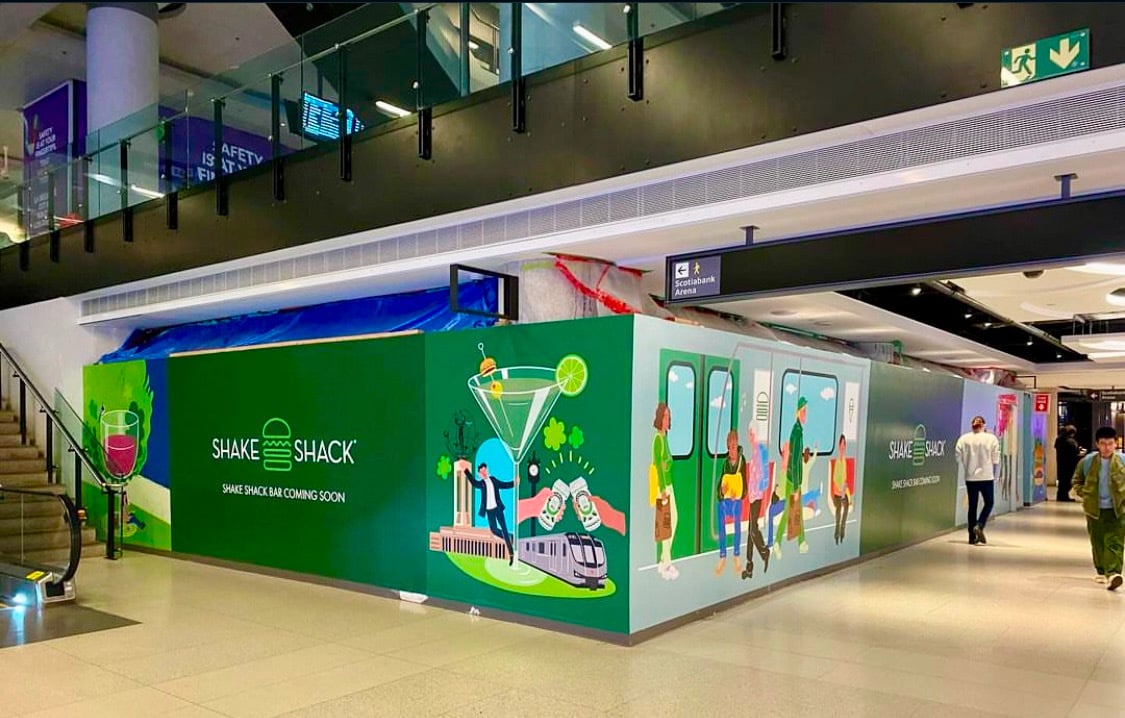
Shake Shack will occupy a space originally earmarked for The Queenston restaurant at Union Station in Toronto. Photo: 6retail
Union Station to Welcome Unique Shake Shack Experience
The Shake Shack at Toronto’s Union Station will be a major draw for commuters and locals seeking a quick meal. Union Station’s Shake Shack will be one of the few globally to feature a full bar. It will offer custom-crafted cocktails to accompany its signature burgers, crinkle-cut fries, and frozen custard. The location, initially earmarked for another restaurant concept called The Queenston, will be a lively hub in the transit centre.
Incorporating local culture, Toronto-based illustrator Pui Yan Fong will be commissioned to create artwork for the space. Her work is known for its storytelling and will bring the energy of the city into the restaurant. The attention to detail is part of Shake Shack’s broader effort to connect with the communities it serves.
“Toronto has been incredibly welcoming, and we’re excited to further our presence in the city with these two fantastic locations,” said Billy Richmond, Business Director of Shake Shack Canada. “Both Union Station and Yorkdale Shopping Centre offer unique opportunities to engage with our guests in new ways, and we look forward to becoming a part of these lively hubs.”
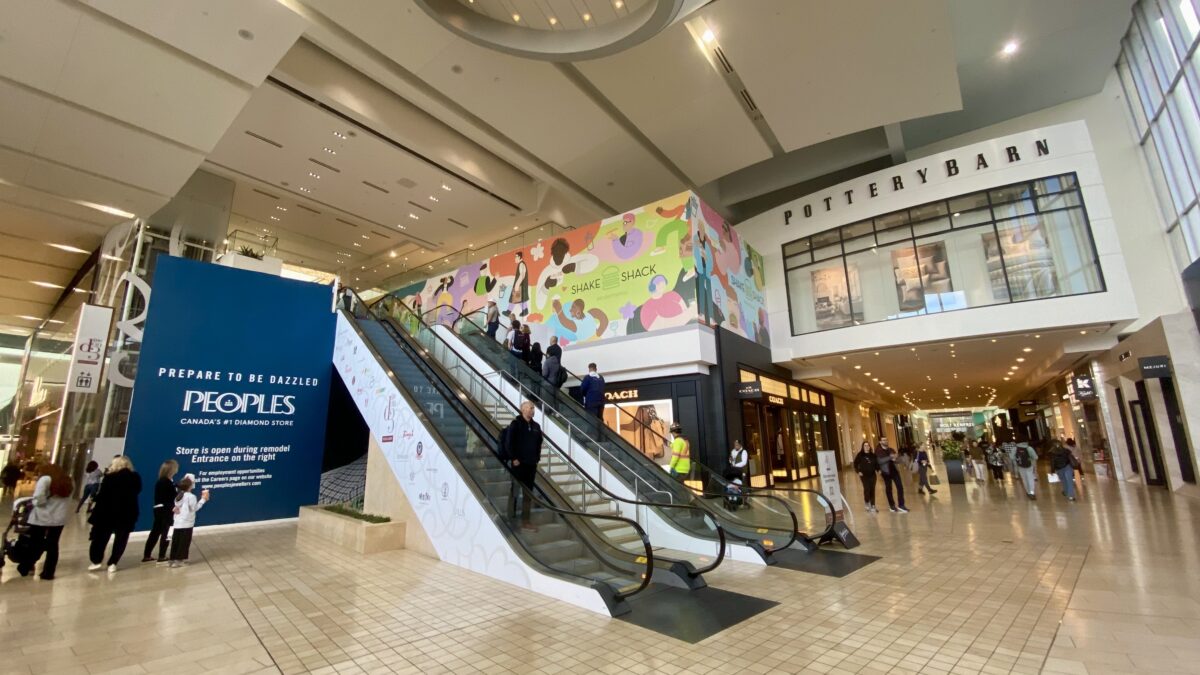
Shake Shack construction hoarding at Toronto’s Yorkdale Shopping Centre on Thursday, October 24, 2024. Photo: Craig Patterson
Yorkdale Shake Shack to Transform Former Illy Space
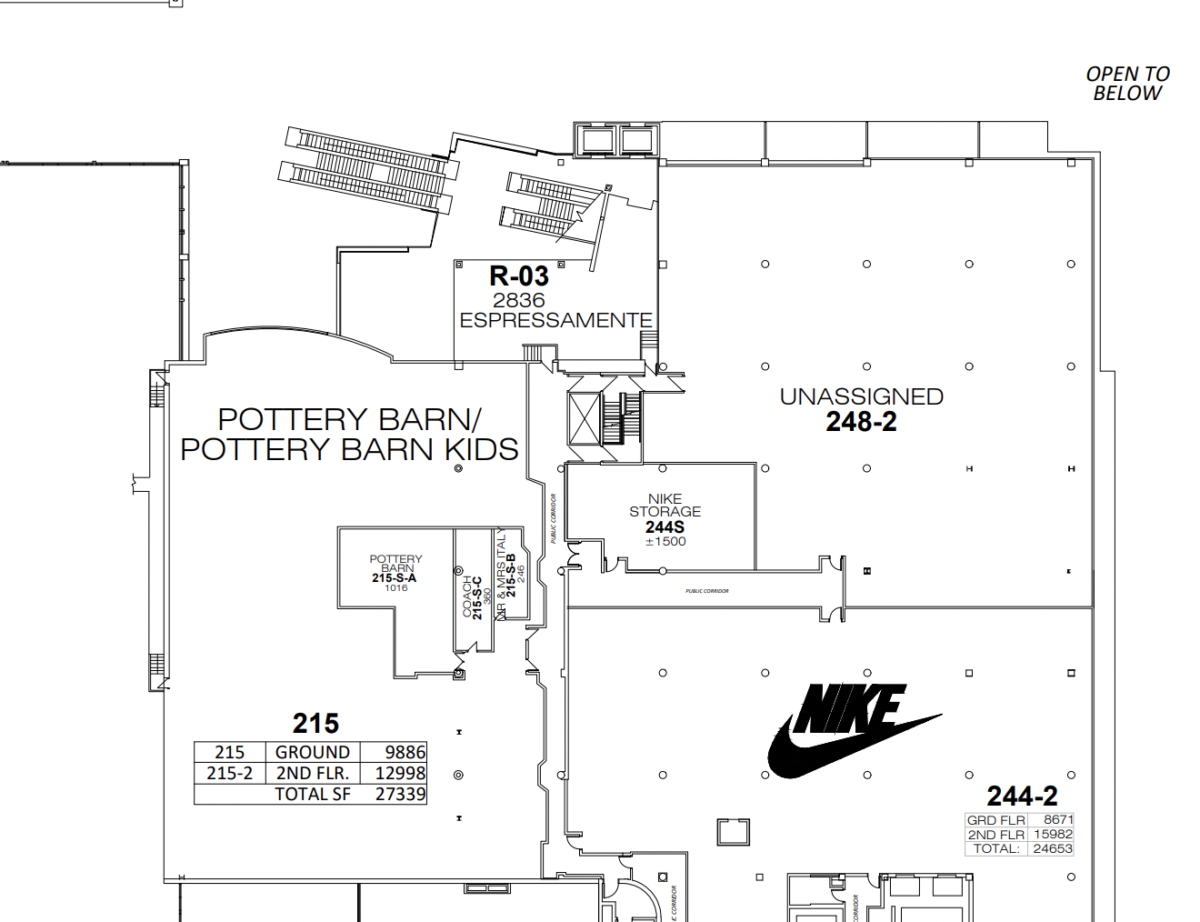
Shake Shack’s other new Toronto location will be situated within Yorkdale Shopping Centre. The space itself will be interesting, as it combines a former Illy Cafe on a mezzanine with an adjoining area that was once part of the former Eaton’s department store. The reimagined space will sit between two escalators, providing a dynamic and visually striking dining spot for Yorkdale shoppers.
The Yorkdale location will feature artwork by Vivian Rosas, a queer Mestizx/Latinx illustrator from Toronto. Her work celebrates diversity and community. Like the Union Station site, this attention to local artistry reinforces Shake Shack’s commitment to making each restaurant feel distinctly connected to its surroundings.
The arrival of Shake Shack at Yorkdale is expected to draw crowds, much like the first Canadian store at Yonge and Dundas, which opened earlier this year in the complex branded as ‘The Tenor’ at 10 Dundas St. W. The location quickly gained popularity, setting the stage for the brand’s ongoing success in Toronto.
Shake Shack will occupy unit R-03 at Yorkdale, as well as expand into space 248-2 which was originally part of the second floor of an Eaton’s department store. Image: Oxford Properties lease plan.
Shake Shack’s Expansion Across Canada
The opening of these two new Toronto locations is part of a bigger expansion. Shake Shack has ambitious plans for the Canadian market, with the goal of opening 35 additional stores nationwide by 2035. The expansion, long in the works, reflects the company’s confidence in Canada’s appetite for premium fast-casual dining experiences.
Shake Shack and The Tenor at 10 Dundas St. W. Photo: Dustin Fuhs
Shake Shack says that guests at both the Union Station and Yorkdale locations can expect the same ingredients and hospitality that have made the brand a global success. The menu will include Shake Shack’s signature items, such as 100% Canadian Angus beef burgers, crispy chicken sandwiches, crinkle-cut fries, and hand-spun frozen custard made with Canadian dairy, real cane sugar, and cage-free eggs.
Since its first location opened in NYC’s Madison Square Park in 2004, Shake Shack has expanded to over 510 locations across the U.S. and internationally, including major cities such as London, Hong Kong, Tokyo, and Mexico City.
The rush to make massive changes to Canada’s permanent immigration levels and the Temporary Foreign Worker (TFW) Program have many small business owners’ heads spinning, says the Canadian Federation of Independent Business (CFIB).
Dan Kelly
“And while it is entirely appropriate to turn the immigration dial up or down based on the needs in the labour market, any huge swings hold significant implications for employers, workers and the economy,” said Dan Kelly, President of the CFIB, after the federal government made its immigration announcement on Thursday.
“CFIB is already receiving panicked calls from small business owners, including many who are heartbroken to have to say goodbye to their foreign workers who are already in Canada and whose visas are soon to expire. Others are telling us the new skilled temporary worker prevailing wage level requirements do not reflect the reality of a small business and will mean their firms will struggle to survive. Earlier decisions to reduce access to lower skilled TFWs will also have a major impact on the ability of small firms to build the teams they need to put their products or services to market.
“The dramatic cut to permanent immigration levels too is troubling for Canada’s employers. Yes, the unemployment rate has ticked up in recent months, but there are still 379,000 persistent vacancies in the private sector. And while we are experiencing housing pressures right now, any look at Canada’s demographics reveals we will struggle to maintain a strong workforce without robust immigration.
“These decisions hold huge implications for small business owners, Canadian workers as well as permanent immigrants and temporary workers. A restaurant owner who can’t find a cook ready and willing to work in their community will not have work for the Canadians who may work in the front of the house. We need to rethink many of these recent changes and be ready to turn the dial back up whenever and wherever needed.”
The CFIB is Canada’s largest association of small and medium-sized businesses with 97,000 members across every industry and region .
On Thursday, Marc Miller, Minister of Immigration, Refugees and Citizenship, announced the 2025–2027 Immigration Levels Plan: a plan that will pause population growth in the short term to achieve well-managed, sustainable growth in the long term. For the first time ever, the levels plan includes controlled targets for temporary residents, specifically international students and foreign workers, as well as for permanent residents, said the government.
“Immigration is essential to our country’s economic success and growth. As Canada reopened following the pandemic, the needs of businesses were greater than the supply of workers available to support their recovery. We took decisive measures to attract some of the world’s best and brightest to study and work in Canada, and to integrate them into the economy quickly. This meant a faster economic recovery. It also meant that robust immigration helped prevent a recession, while contributing to Canada’s workforce,” said the government in a news release.
“In response to the evolving needs of our country, this transitional levels plan alleviates pressures on housing, infrastructure and social services so that over the long term we can grow our economic and social prosperity through immigration. This unprecedented plan offers a comprehensive approach to welcoming newcomers—one that preserves the integrity of our immigration programs and sets newcomers up for success. Canadians also expect a well-managed immigration system from the Government of Canada.
“The 2025–2027 Immigration Levels Plan is expected to result in a marginal population decline of 0.2% in both 2025 and 2026 before returning to a population growth of 0.8% in 2027. These forecasts account for today’s announcement of reduced targets across multiple immigration streams over the next two years, as well as expected temporary resident outflows resulting from the 5% target, natural population loss and other factors.
reducing from 500,000 permanent residents to 395,000 in 2025
reducing from 500,000 permanent residents to 380,000 in 2026
setting a target of 365,000 permanent residents in 2027
“The Levels Plan also supports efforts to reduce temporary resident volumes to five per cent of Canada’s population by the end of 2026. Given temporary resident reduction measures announced in September and this past year, Canada’s temporary population will decrease over the next few years as significantly more temporary residents will transition to being permanent residents or leave Canada compared to new ones arriving.
Specifically, compared to each previous year, we will see Canada’s temporary population decline by