Retail Insider is streamlining its Canadian retail news from around the web to include a handful of top news stories that can be viewed quickly during the day. Here are the top stories from the past 24 hours.
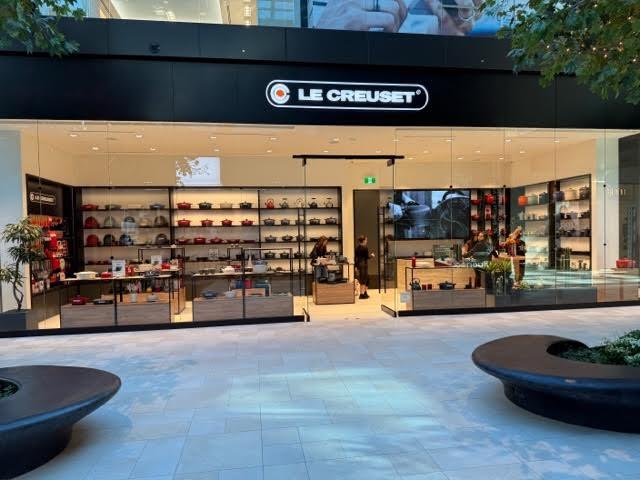
Le Creuset Royalmount boutique. Photo: Think Retail
Le Creuset, the world-renowned French cookware brand, has launched a new boutique at Royalmount in Montreal. This addition marks Le Creuset’s 12th Canadian store and its second in the Montreal area.
The new Royalmount location showcases Le Creuset’s latest retail concept, inspired by the modern kitchen. Open shelving and island-style displays create an engaging and interactive shopping space.
“Our new boutique design takes inspiration from the modern kitchen, offering an inviting space where open shelving and island-like displays create an interactive and immersive experience,” said Sarin Keusseyan, Managing Director at Le Creuset Canada.
The new setup allows shoppers to explore Le Creuset’s cookware firsthand, making it ideal for both longtime customers and those discovering the brand for the first time.
Royalmount, designed as more than a shopping centre, features a unique blend of retail, office, residential, and cultural spaces. Its vision emphasizes both luxury and sustainability, aligning perfectly with Le Creuset’s values of quality and heritage. Le Creuset’s boutique at Royalmount thus invites shoppers to experience the brand in a refined, community-centred setting that celebrates modern culinary craftsmanship.
Design-build firm SAJO brought the store to life. SAJO has been building Le Creuset’s stores in Canada over the past 15 years.
Le Creuset’s Growing Presence in Canada
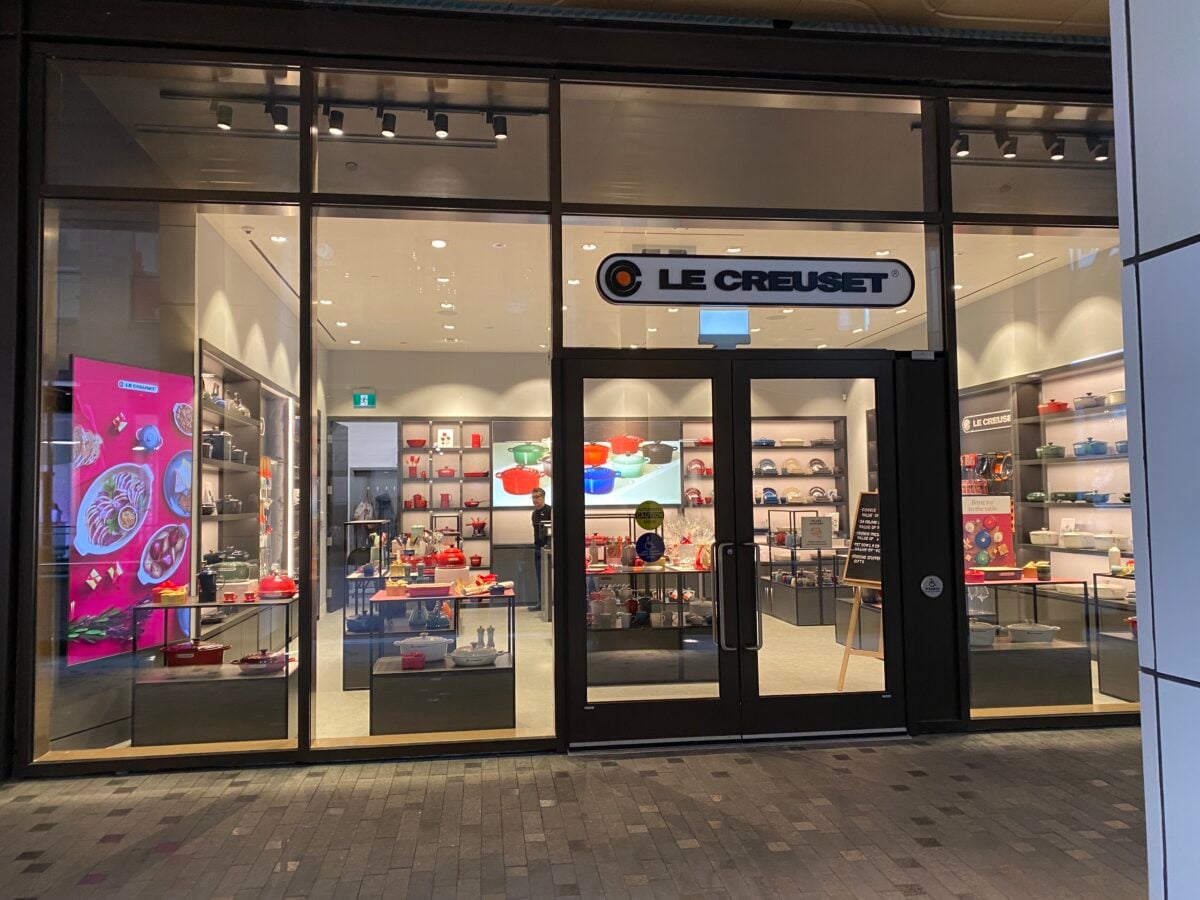
Le Creuset’s expansion into Royalmount is part of a broader growth strategy across Canada’s premier retail locations. In November 2023, the brand also opened a boutique at The Well in Toronto. The downtown Toronto mixed-use development offers an engaging setting, combining retail and residential areas with over 320,000 square feet of retail space. The Well location provides culinary enthusiasts with access to Le Creuset’s latest products in a vibrant cultural and community hub.
Le Creuset at The Well in Toronto (Image: Dustin Fuhs)
Earlier this year, Le Creuset also refreshed its boutique layout at CF Chinook Centre in Calgary. The redesigned concept offers a modern and welcoming space that emphasizes the brand’s focus on heritage and craftsmanship. The new layouts reflect Le Creuset’s commitment to creating inviting, innovative retail experiences for Canadian customers.
With plans to grow further in Canada, Le Creuset is exploring ideal retail spaces ranging from 1,000 to 1,500 square feet. In collaboration with Tony Flanz at brokerage Think Retail, the brand continues to focus on upscale, high-traffic locations that match its reputation and appeal to discerning shoppers.
North entrance to the Yorkdale Shopping Centre in Toronto. Photo: Craig Patterson
Toronto’s Yorkdale Shopping Centre celebrates its 60th anniversary in 2024, marking six decades of growth, innovation, and leadership in Canadian retail. Since opening its doors on February 26, 1964, Yorkdale has evolved from being the largest enclosed shopping mall in the world to becoming one of Canada’s premier luxury shopping destinations.
Over the past six decades, Yorkdale has adapted to changing retail trends, launched more first-to-market global brands than anywhere in the country, and consistently redefined the shopping experience, making it a beloved landmark in Toronto and a top retail destination in the country.
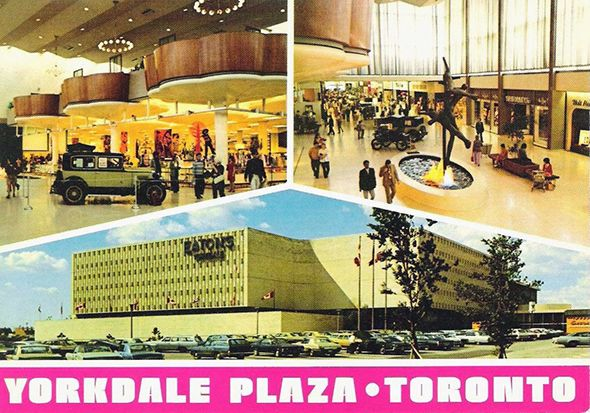
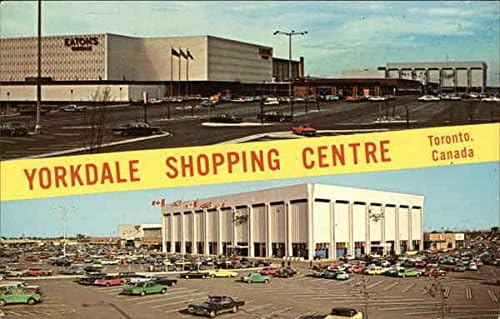
Early 1970s postcard from Yorkdale
The Early Vision and Construction of Yorkdale
Yorkdale’s origins trace back to the 1950s, when T. Eaton & Co. department stores purchased a 99-acre plot at Dufferin Street and Highway 401 for CA$1.4 million. Eaton’s envisioned creating a massive suburban shopping destination to cater to the growing population in Toronto’s northern suburbs. In 1958, Eaton’s found a partner in Simpsons, which bought an adjacent 20-acre parcel. Together, these two retail giants embarked on one of Canada’s most ambitious retail projects.
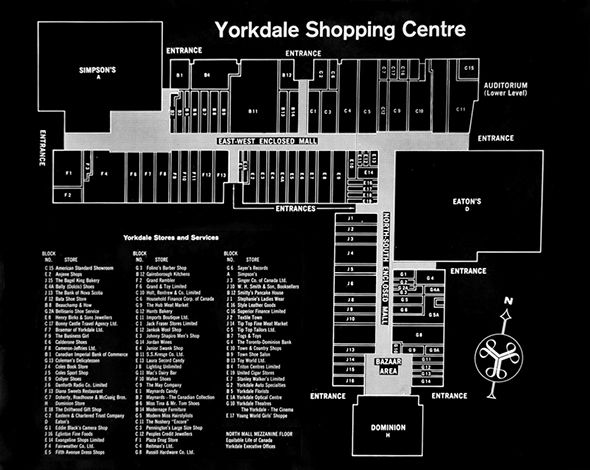
Original Yorkdale floor plan, 1964
Seattle-based architectural firm John Graham Consultants was tasked with designing the shopping centre. The resulting L-shaped mall featured a spacious 60-foot-high atrium, 40-foot-wide hallways, and a unique underground system that allowed trucks to deliver goods directly to the stores. This innovative design set new standards for efficiency in retail operations and also contributed to the mall’s appeal as a modern, climate-controlled shopping destination.
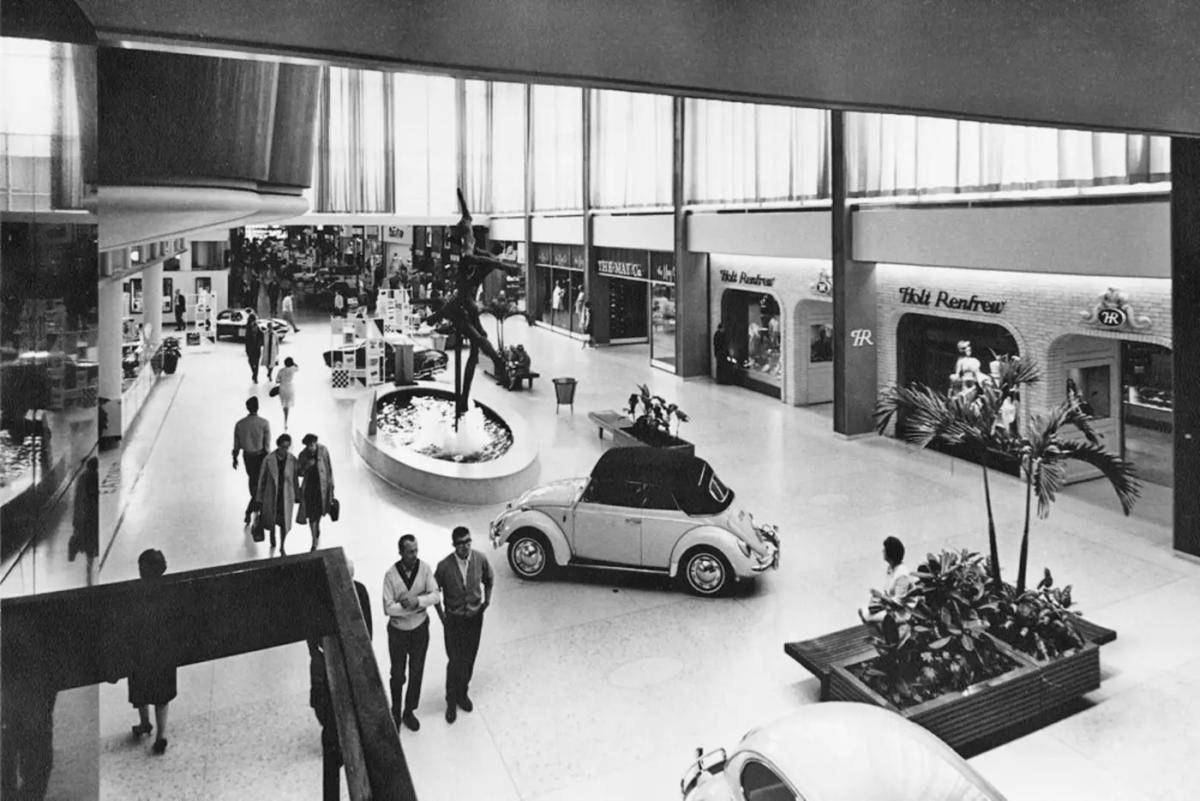
At the time of its grand opening in 1964, Yorkdale was the largest enclosed shopping mall in the world, boasting over 1.2 million square feet of retail space and 61 stores at the time. Eaton’s and Simpson’s served as anchor tenants, while a Dominion grocery store added convenience for shoppers. The mall’s immediate success was due in part to its groundbreaking architecture, its location near major highways, and its ability to attract some of the largest retail names in Canada, such as Holt Renfrew.
Vintage post card, Yorkdale Shopping Centre, 1964Historical photo of Yorkdale, including its first Holt Renfrew store. Image via Oxford Properties
Yorkdale’s Early Success and Expansion
Yorkdale’s opening day on February 26, 1964, saw over 100,000 visitors flood the mall. Its accessibility was further enhanced by the opening of the Allen Expressway in 1966, which connected the mall to other parts of Toronto, and the Yorkdale subway station in 1978, making it even easier for visitors to reach the shopping centre.
The mall’s rapid popularity led to a series of expansions over the years. In 1984, Yorkdale added 153,000 square feet and 75 new stores, bringing in major brands and enhancing the shopping experience. By 1986, the mall’s total retail space had expanded to 1.3 million square feet. The Hudson’s Bay Company acquired Simpsons in 1978 and the Simpsons Yorkdale location was converted to a Hudson’s Bay store in 1991.
Yorkdale’s 2012 expansion wing is now home to a range of luxury brands and big names, including Tesla and Apple. Photo: Craig Patterson
A Hub for Global, Luxury and First-to-Market Retailers
The mall’s 2012 expansion brought even more international brands, including the first Canadian locations for Tesla and Microsoft. The 2016 Yorkdale expansion, which added nearly 300,000 square feet of retail space with retailers such as Uniqlo, allowed the mall to continue growing its retail offering while introducing new dining and entertainment options. In 2017, a westward expansion of Yorkdale added RH, Sporting Life and other retailers to the centre.
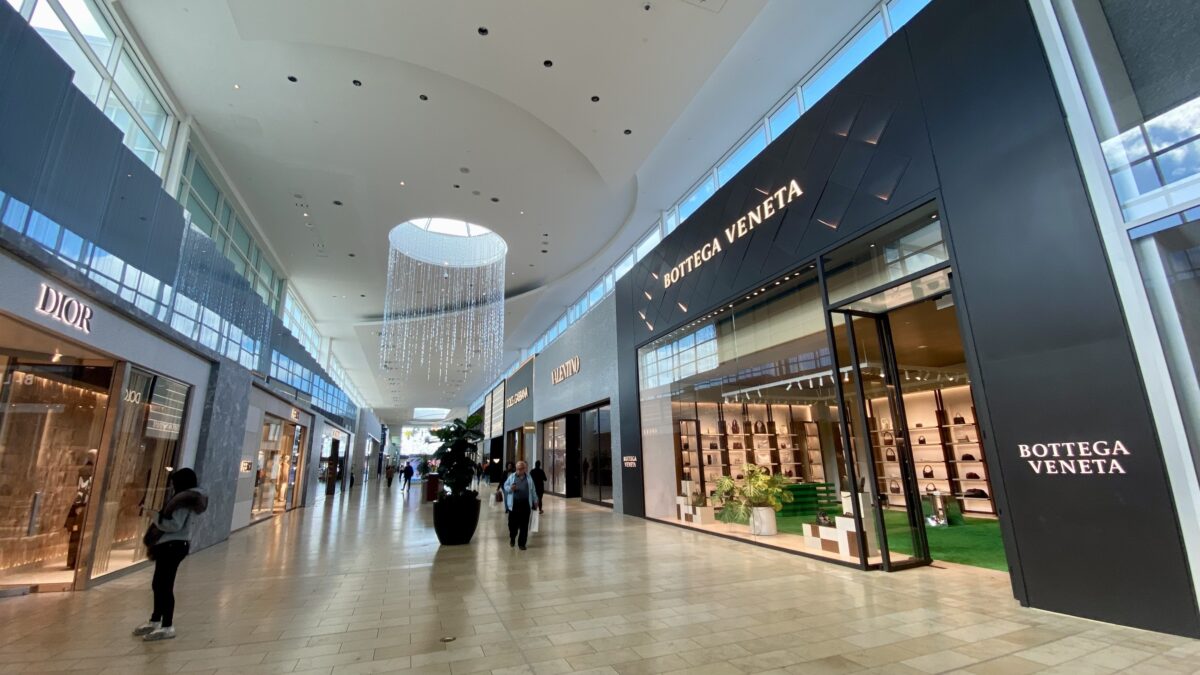
With the 2009 opening of Tiffany & Co., Yorkdale’s management began positioning the mall as a destination for high-end and luxury retail. The strategic shift attracted global luxury brands, including Bottega Veneta, Van Cleef & Arpels, Louis Vuitton and many others, establishing Yorkdale as Canada’s top destination for luxury fashion. These retailers were drawn to the mall’s ability to attract affluent shoppers and its reputation as a trendsetting retail hub.
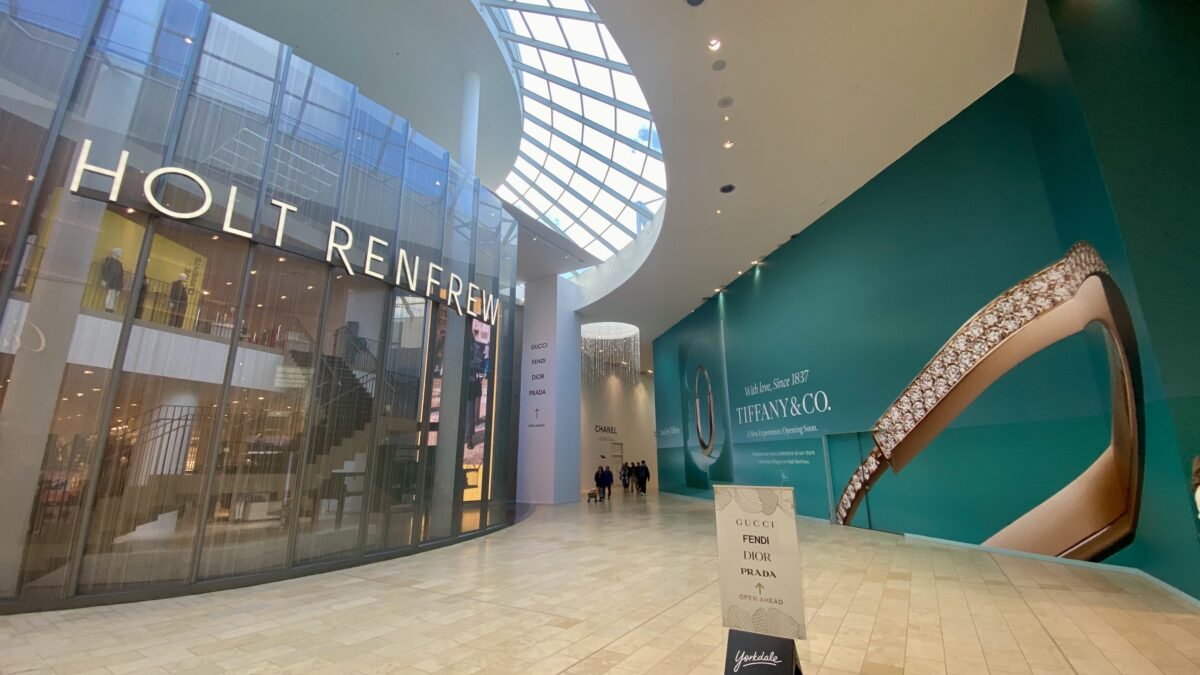
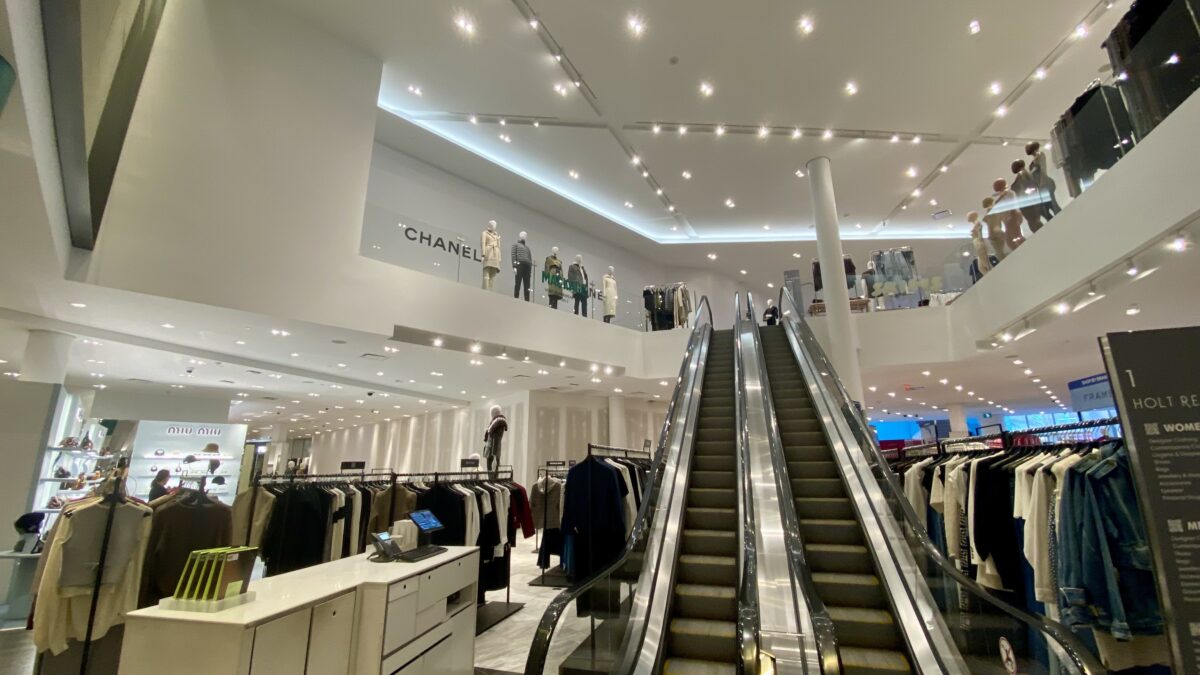
Holt Renfrew Court at Yorkdale – Holt Renfrew relocated in 1996 to a former grocery store space in the mall. Today Tiffany & Co. is building a new flagship of the future and Chanel is creating its largest concession globally at Holts. Photo: Craig PattersonInside the Holt Renfrew store at Toronto’s Yorkdale Shopping Centre. Chanel’s concession is under construction, which will span two floors. Photo: Craig Patterson
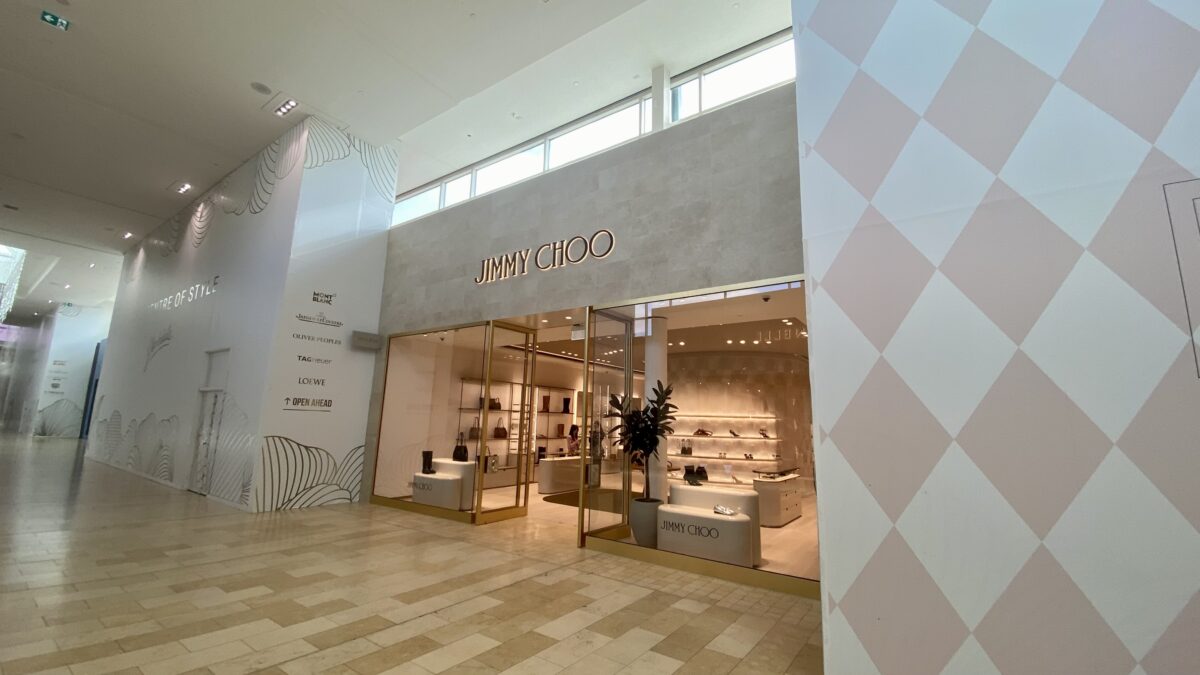
Under construction: A new luxury wing at the heart of the Yorkdale Shopping Centre, bringing new brands such as Loewe, Brunello Cucinelli, Jimmy Choo, Versace, Loro Piana, Rimowa, Maison Margiela, and others, to the mall. Photo: Craig Patterson
The next year will be an exciting one for the mall, with La Maison Simons set to take over 118,000 square feet of the mall’s former Nordstrom space next year. New retailers will be opening in the centre, including a newly positioned wing in the mall that will feature luxury brands. Retail Insider will be reporting on these future developments.
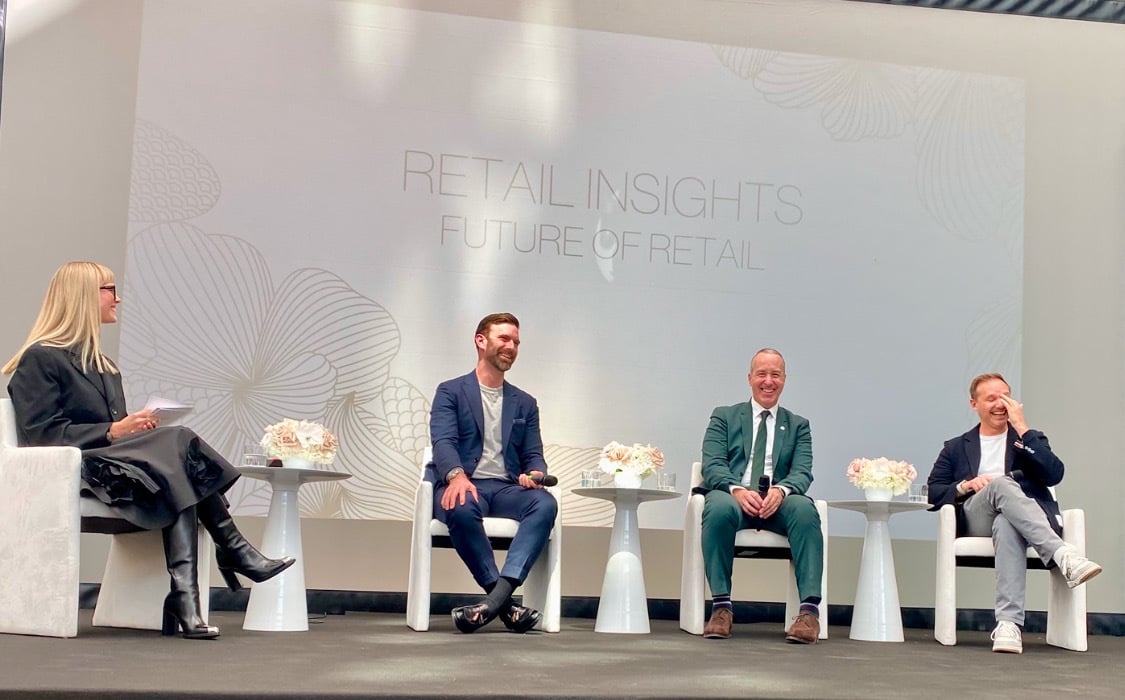
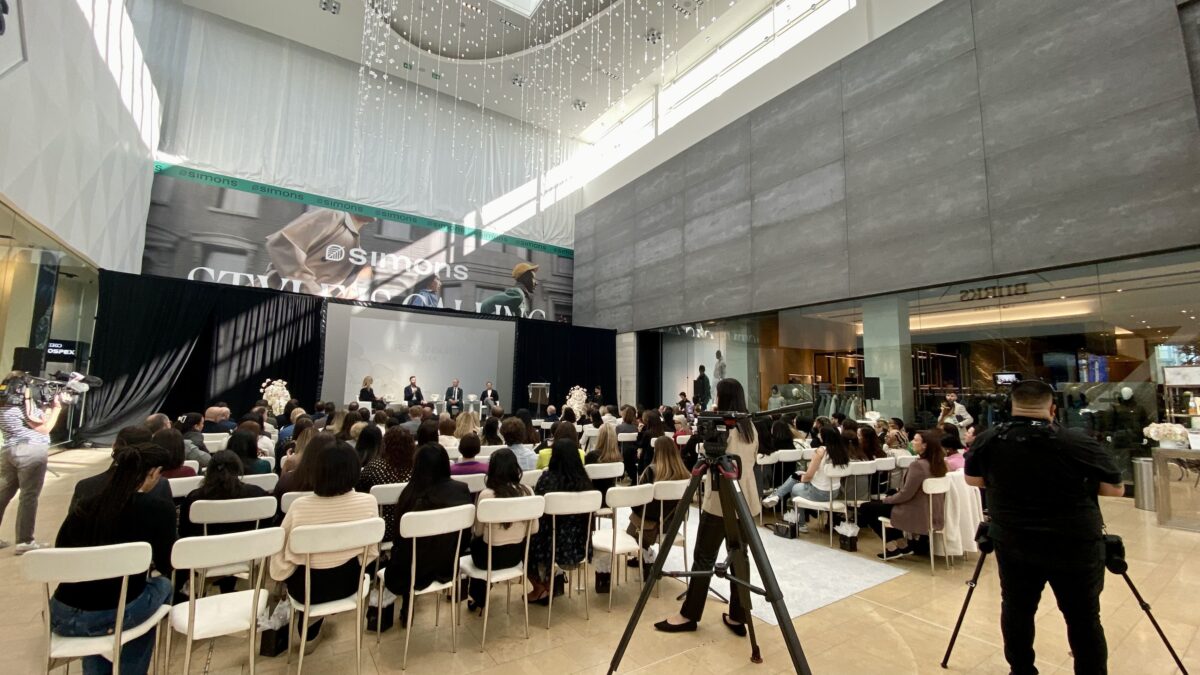
Yorkdale Shopping Centre marked 60 years with a panel discussion hosted by Mosha Lundström Halbert. Panelists included (left to right) Ian Rosen, President and COO of Harry Rosen, Bernard Leblanc, CEO of La Maison Simons, and Sebastian Picardo, CEO of Holt Renfrew. Photo: Craig Patterson
Yorkdale’s 60th Anniversary Celebration: A Panel of Retail Leaders
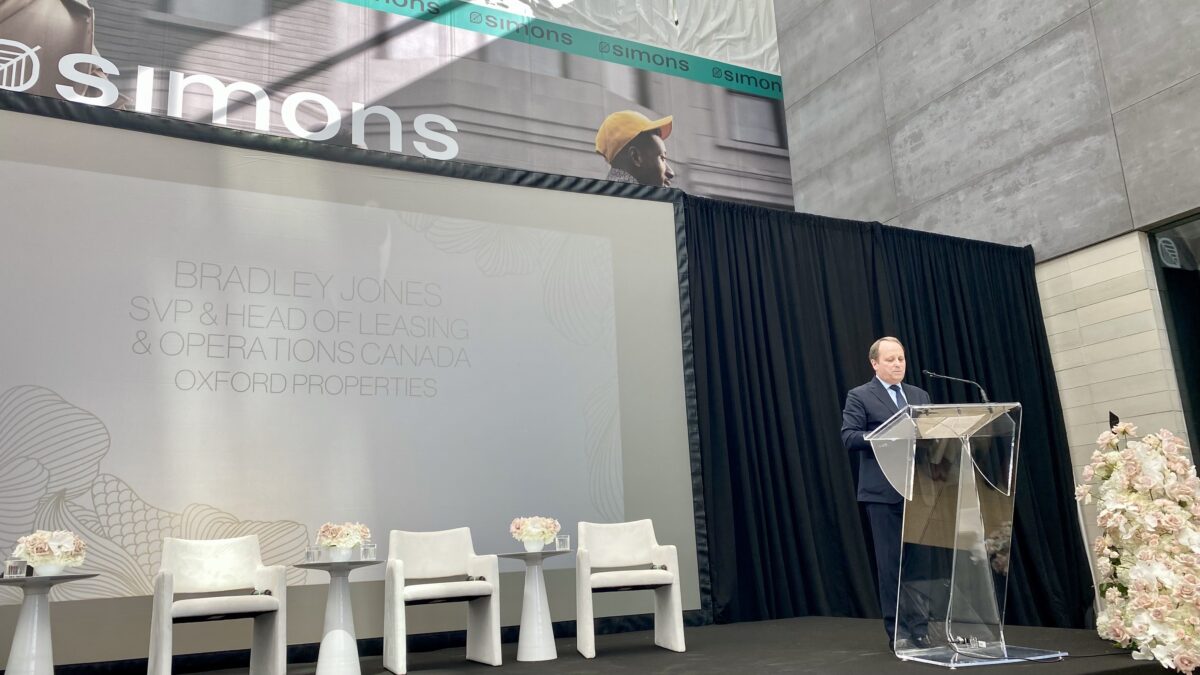
On October 24, 2024, Yorkdale hosted a special event to commemorate its 60th anniversary, featuring a panel discussion with some of the top figures in the retail industry. The event included an address by Bradley Jones, SVP & Head of Leasing and Operations, Canada at Oxford Properties Group, who reflected on the mall’s transformation and its future.
“Yorkdale has always been more than just a place to shop,” Jones remarked during his speech. “We’ve evolved into a hub of innovation, where the future of retail and customer experience is continually being redefined.”
Bradley Jones, SVP & Head of Leasing and Operations, Canada at Oxford Properties Group. He spoke on stage prior to the panel. Photo: Craig Patterson
Following Jones’ address, a distinguished panel of retail leaders shared their thoughts on Yorkdale’s legacy and its role in shaping the future of Canadian retail. The panel featured Ian Rosen, President and COO of Harry Rosen; Sebastian Picardo, President and CEO of Holt Renfrew; and Bernard Leblanc, CEO of La Maison Simons.
Ian Rosen of Harry Rosen reflected on how Yorkdale has remained a key player in bringing luxury retail to Canada. “Yorkdale has always had a forward-thinking vision,” he said. “From day one, it’s been about more than just selling products. It’s about creating an environment where customers feel excited to shop and experience the very best of what retail has to offer.”
Sebastian Picardo of Holt Renfrew echoed these sentiments, emphasizing the importance of Yorkdale in providing a platform for luxury brands to thrive. “The luxury landscape in Canada has evolved significantly, and Yorkdale has played a crucial role in that evolution. Our expansion at Yorkdale reflects the demand for luxury goods in this market, and it allows us to offer our customers an elevated shopping experience.”
Bernard Leblanc of La Maison Simons highlighted the importance of maintaining strong customer relationships. “Retail is about more than just transactions—it’s about connections. Yorkdale’s ability to foster these connections between brands and customers is what has made it such a successful and enduring retail destination.”
Yorkdale 60th anniversary event on October 24, 2024. Photo: Craig Patterson
A Personal Connection: Jeanne Beker Reflects on Yorkdale
In an exclusive interview with Retail Insider in April 2021, Canadian fashion icon Jeanne Beker shared fond memories of her connection to Yorkdale, offering a personal glimpse into the mall’s legacy. Beker, known for her role as the host of Fashion Television and her contributions to fashion journalism, revealed that her first retail job was at Yorkdale.
Jeanne Beker
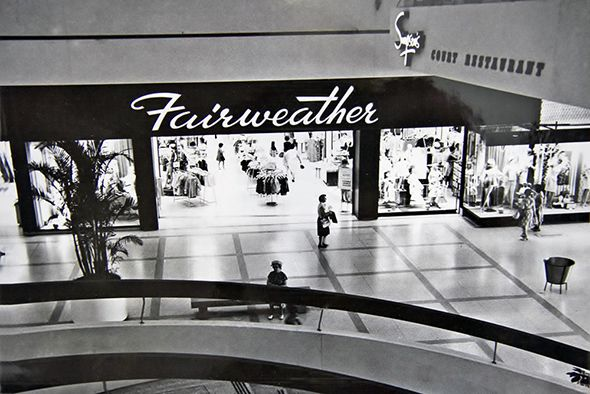
“A lot of people don’t know this, but my first job in retail was at Fairweather’s at Yorkdale,” Beker recalled. “That was back in the day when Fairweather’s had this really cool shop inside called Big Steel Man that had all this mod clothing. It was a very heady time—great, great days for fashion and for Canadian retail.”
Beker fondly remembered how glamorous Yorkdale was for suburban teenagers in the late 1960s, including hosting her Sweet 16 party at the mall. “I had my Sweet 16 party at Yorkdale. There was a restaurant called the Noshery Encore, and they had a party room in the basement. I had a real big bash there when I turned 16 in 1968.”
Reflecting on Yorkdale’s evolution over the years, Beker noted, “It’s interesting to see how Yorkdale has morphed over the years. Today, it has the highest concentration of luxury brands in the country, which is something you wouldn’t have imagined back then.”
Fairweather store at Toronto’s Yorkdale Shopping Centre in the 1960s. Photo: Oxford Properties
Sustainability and Technological Innovation at Yorkdale
As Yorkdale celebrates 60 years of success, it continues to look to the future with a strong focus on sustainability and technological innovation. In 2023, Yorkdale became the first shopping centre in the world to receive the WELL Performance Rating seal from the WELL Building Standard™, highlighting its commitment to creating a healthy and engaging environment for shoppers and staff.
Yorkdale’s sustainability efforts include solar panels, green roofs, and advanced air filtration systems, which have earned the shopping centre a LEED Gold certification. These initiatives are part of Yorkdale’s long-term strategy to create a positive environmental and social impact while maintaining its reputation as a forward-thinking retail destination.
The mall has also invested in cutting-edge technology to enhance the customer experience. Smart technologies, such as advanced analytics and logistics systems, ensure that Yorkdale remains a leader in retail innovation.
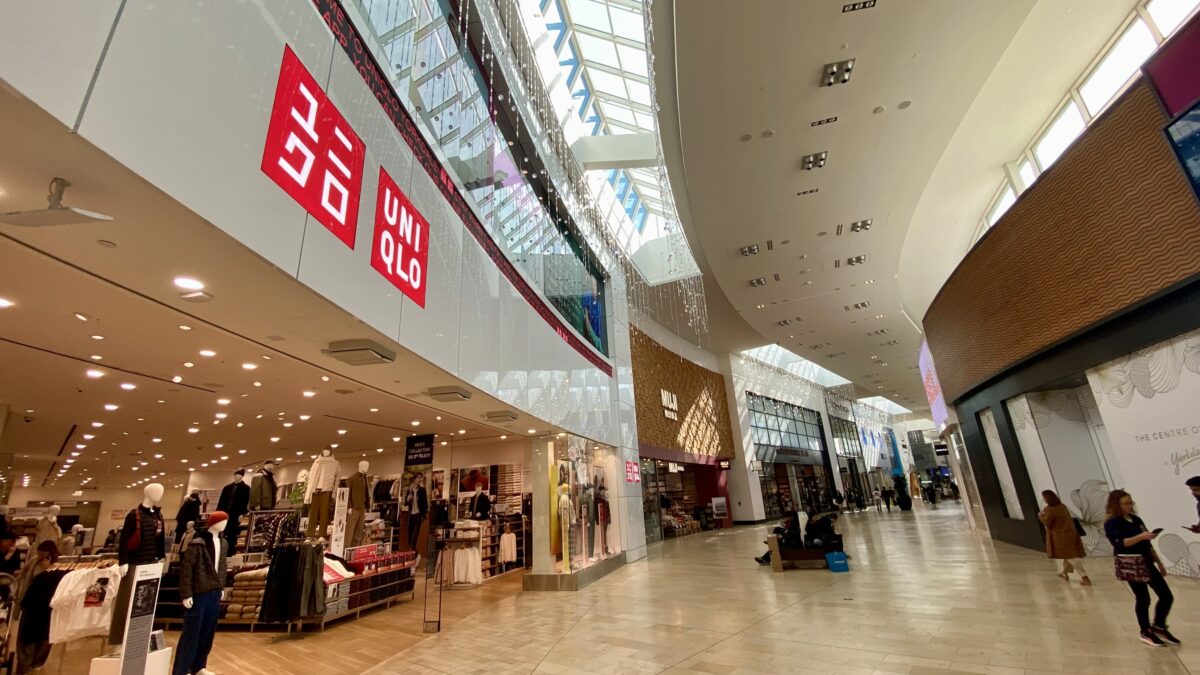
2016 Expansion wing at Toronto’s Yorkdale Shopping Centre, including Uniqlo and Muji. Nordstrom opened in the wing as well in 2016, and shut in 2023 with the retailer’s Canadian exit (La Maison Simons will replace it). Photo: Craig Patterson
Looking to the Future: Yorkdale’s Bright Road Ahead
As Yorkdale enters its seventh decade, the mall’s future is brighter than ever. Plans for mixed-use developments, including residential and office spaces, will further integrate Yorkdale into Toronto’s urban landscape, making it a central hub for both shopping and community engagement.
“We’re excited about the future,” said Bradley Jones during the anniversary event. “Yorkdale will continue to push the boundaries of what retail can be. We’re focused on creating experiences that inspire, engage, and connect people, making Yorkdale a destination not just for shopping, but for innovation.”
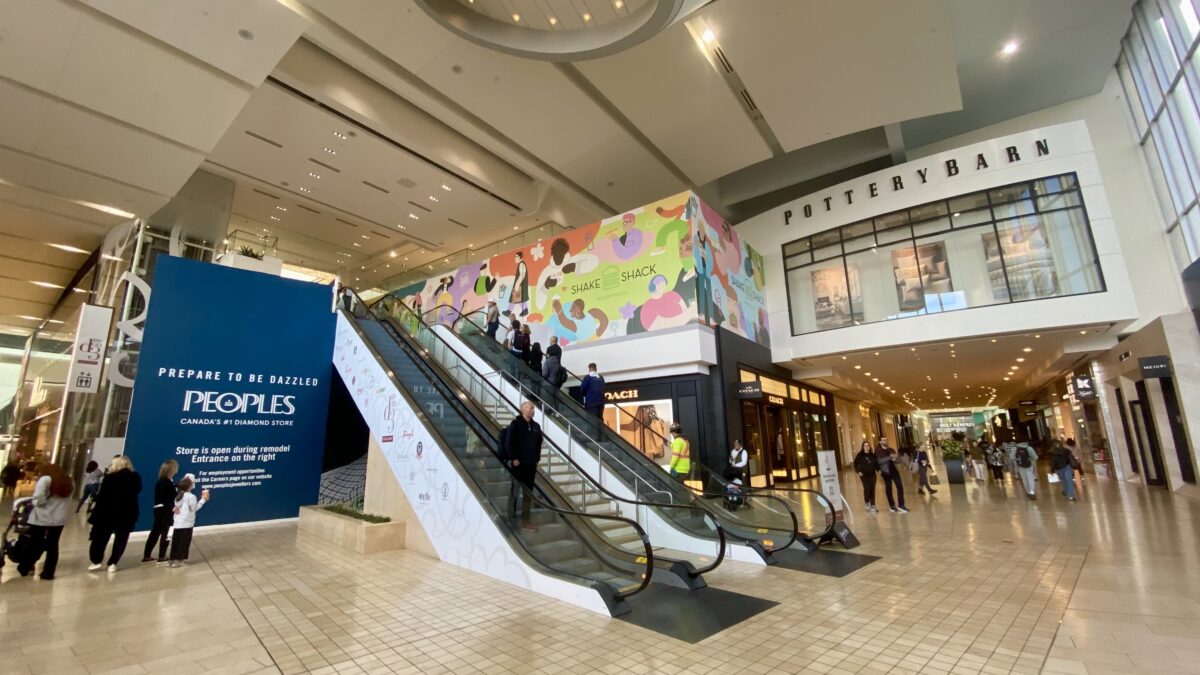
Shake Shack is the latest international tenant to open at Yorkdale. The burger restaurant will open along the escalators leading up to the mall’s third floor food court, which recently saw a major investment. Photo: Craig Patterson
With its unparalleled selection of luxury brands, cutting-edge technology, and commitment to sustainability, Yorkdale Shopping Centre is well-positioned to remain Canada’s premier retail destination for years to come. Its ability to adapt to changing consumer demands while maintaining its core values of innovation and excellence ensures that Yorkdale will continue to thrive as a leader in the global retail landscape.
CELI storefront on Queen St. W. in Toronto. Image supplied
CELI, a new fine jewelry brand co-founded by sisters Chau Lui and Trang Wong, is set to make its global debut with an e-commerce launch and the opening of its first brick-and-mortar location in Toronto. CELI’s e-commerce platform will go live on November 8, 2024, followed by the grand opening of its flagship store at 753 Queen Street West on November 14, 2024. The brand, which will become known for its modern yet timeless pieces, aims to redefine fine jewelry by offering a range of gold, silver, and diamond jewelry designed to celebrate life’s special moments.
Lui and Wong bring over 30 years of combined experience in the fine jewelry industry, having previously established the successful Edmonton-based Paris Jewellers brand, which has more than 20 locations across Canada. CELI represents a new chapter for the sisters, reflecting a desire to introduce a fresh, contemporary approach to fine jewelry that appeals to both local and global audiences.
Chau Lui and Trang Wong
CELI’s Modern Jewelry Offerings and Ethical Sourcing
At the heart of CELI’s mission is the celebration of personal milestones, big or small, through jewelry. The brand offers a wide variety of pieces, ranging from solid gold rings and silver bracelets to delicate necklaces and diamond earrings. CELI also features a full bridal collection, offering both traditional engagement rings and wedding bands, as well as modern interpretations that reflect contemporary tastes.
“We wanted to create a brand that feels personal and special for every individual,” said Chau Lui during an interview. “CELI is about celebrating moments, whether it’s a simple, everyday ring or an heirloom-quality piece that will be passed down through generations. Our goal is to provide jewelry that speaks to a wide range of customers, offering something for everyone—whether you’re looking for a unique engagement ring or a classic necklace.”
Rendering of the new CELI store on Queen St. W. in Toronto. Image: CELI
In an effort to cater to diverse consumer preferences, CELI also embraces both ethically sourced diamonds and lab-grown diamonds, giving customers the flexibility to choose based on their values and budget. The decision reflects a growing trend in the fine jewelry market toward sustainability and transparency. “We know that today’s consumers care about where their products come from,” said Lui. “That’s why we’re committed to offering both natural and lab-grown diamonds, ensuring that every piece is created with integrity.”
The price points for CELI’s jewelry are designed to be accessible, ranging from affordable everyday pieces to higher-end, custom designs for special occasions. This approach aligns with the sisters’ belief that fine jewelry should be both beautiful and attainable.
CELI storefront at 753 Queen Street West in Toronto. Image supplied
CELI Brings Fine Jewelry to Toronto’s Queen Street West
The choice of Toronto’s Queen Street West for CELI’s first physical location is a strategic one. Queen Street West is one of Toronto’s most vibrant neighborhoods, known for its eclectic mix of shops, galleries, and restaurants, making it a popular destination for both locals and tourists. The area attracts a diverse, fashion-forward crowd, which aligns with CELI’s vision of inclusivity and modern luxury.
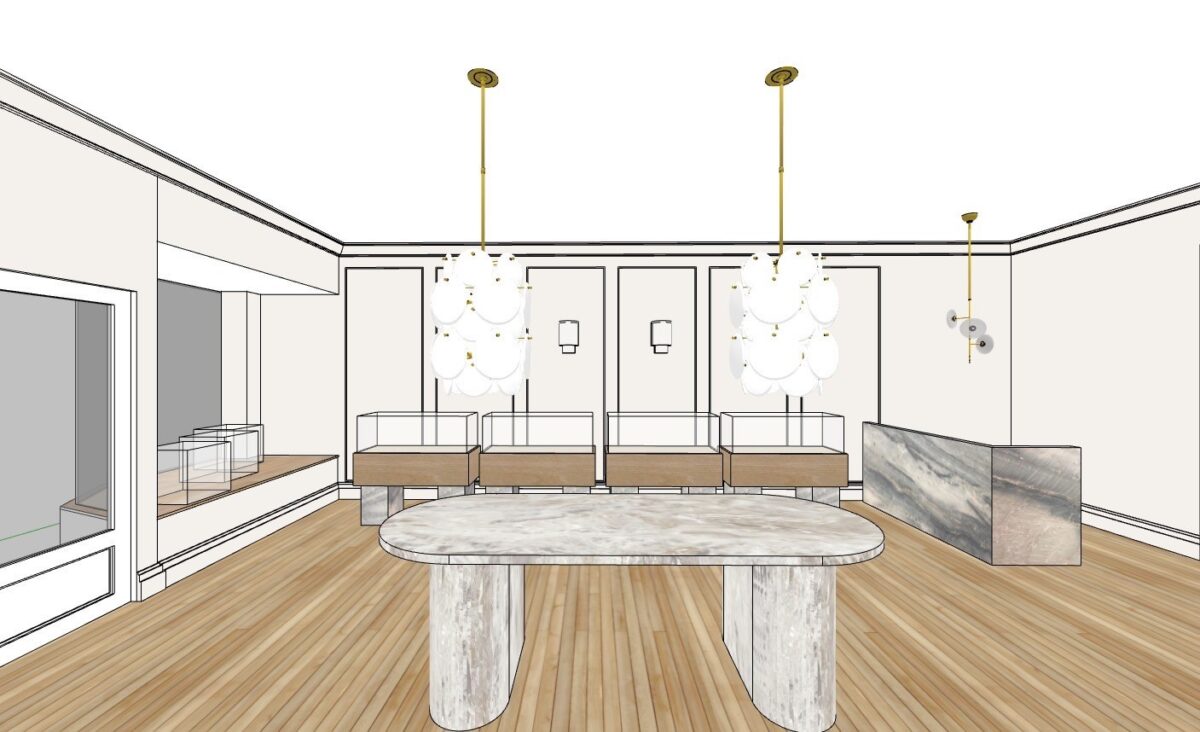
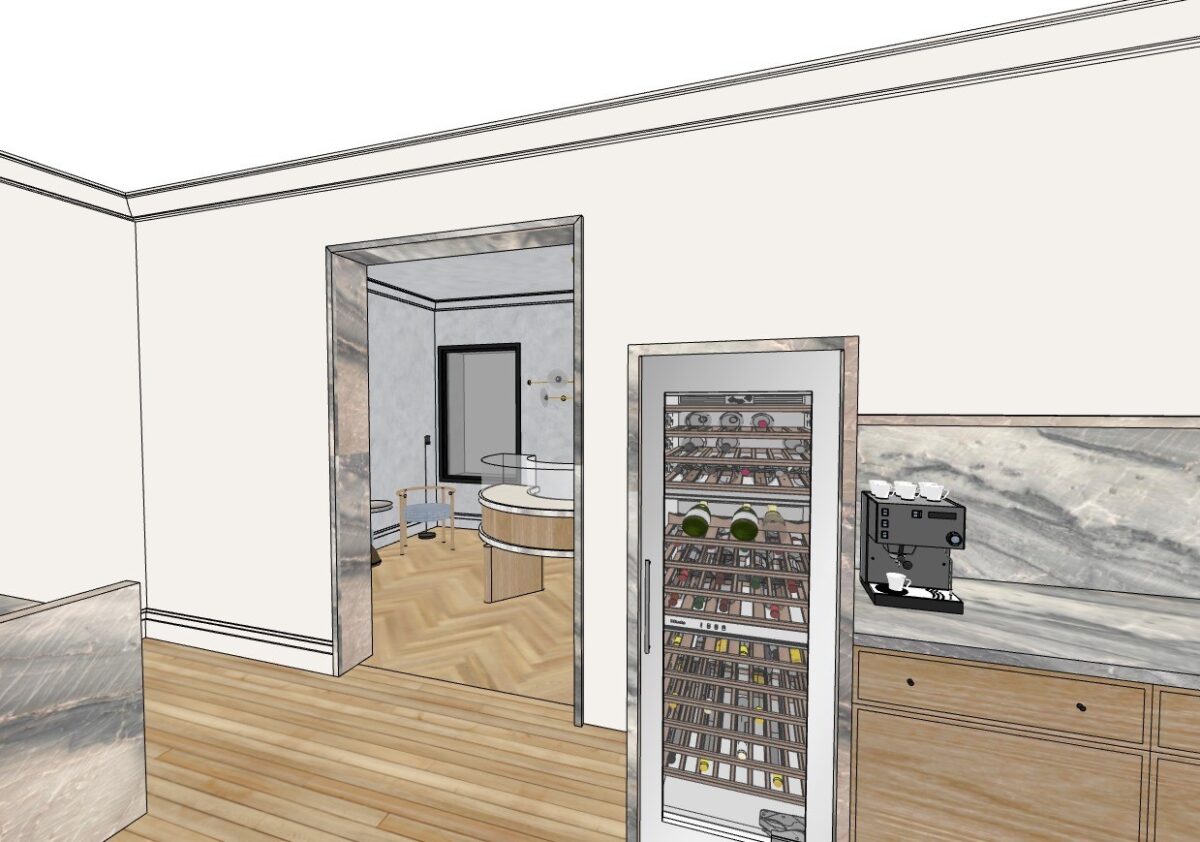
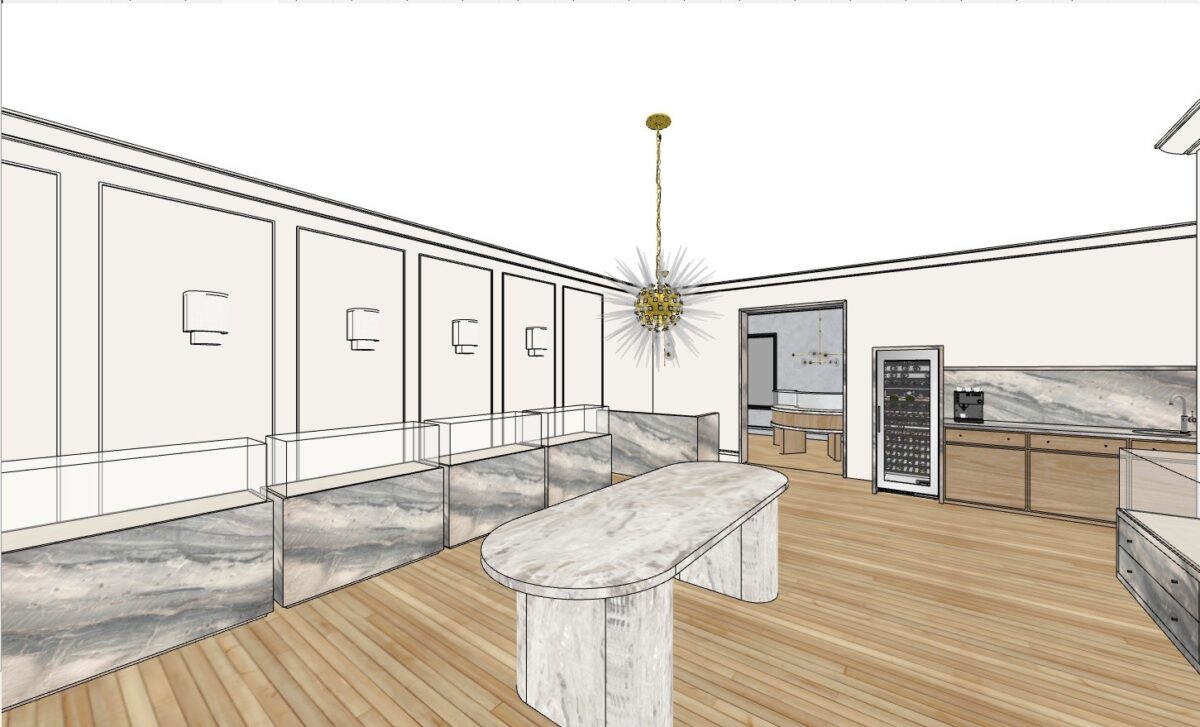
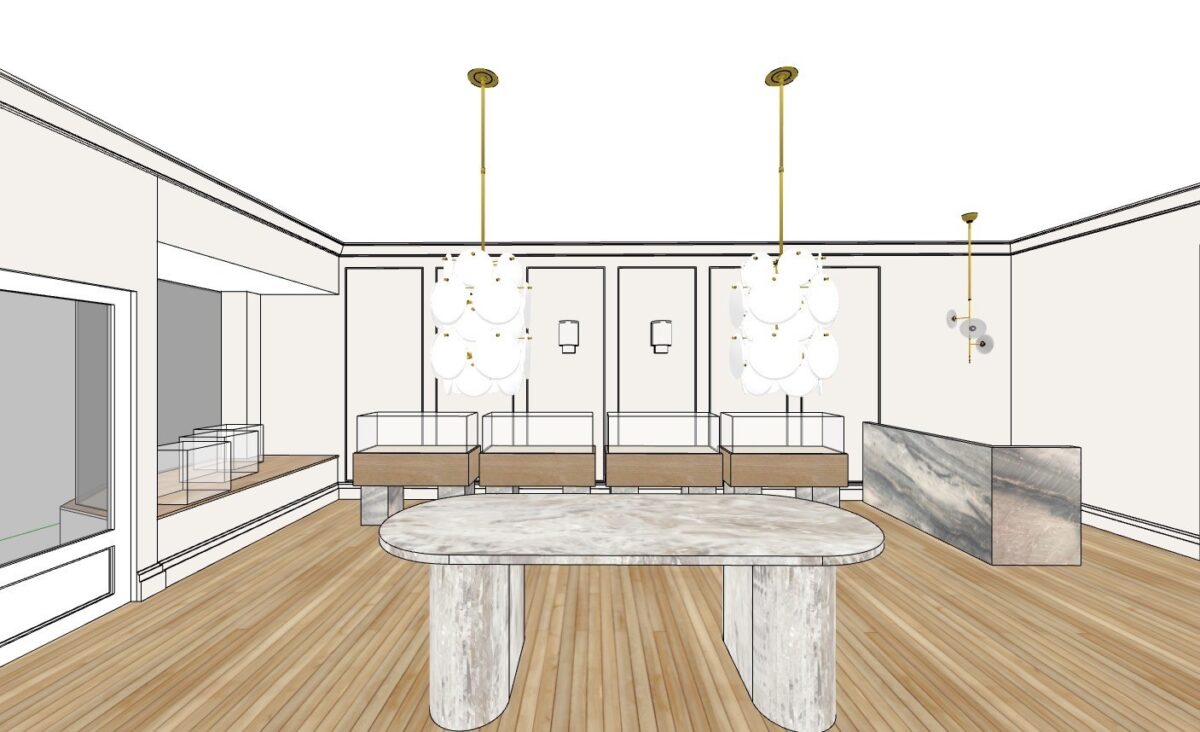
The store, located at 753 Queen Street West, occupies a heritage building with historical significance. The interior design reflects a European-inspired aesthetic, featuring the brand’s signature pale blue color scheme, elegant crown moldings, and gold accents. Custom lounge seating and penny-tiled floors greet customers as they enter, creating an atmosphere of both comfort and sophistication. A unique feature of the store is its private bridal suite, where customers can book appointments for personalized consultations, complete with champagne service.
Rendering of the new CELI store on Queen St. W. in Toronto. Image: CELI
“Queen Street West has such a special energy, and we love the diversity and creativity of the people in this area,” Chau said. “We’ve designed the store to reflect that spirit, offering a space that feels both luxurious and welcoming.”
The store will showcase CELI’s full range of jewelry, from solid gold rings and necklaces to diamond earrings and custom engagement rings. The bridal suite, in particular, offers a special experience for those looking for one-of-a-kind pieces for their big day. “We’re really proud of the bridal and custom options we’ll offer,” Lui noted. “We know that choosing an engagement ring or wedding band is one of the most significant purchases someone will make, and we want to provide a personalized, memorable experience for every customer.”
CELI’s Global Expansion and Omnichannel Approach
While CELI is launching its first physical store in Toronto, the brand has global ambitions. The e-commerce platform launching on November 8, 2024, is designed to reach customers worldwide, offering a seamless online shopping experience. CELI’s omnichannel strategy is central to its growth plan, ensuring that customers can shop the brand’s collections whether they are in-store or online.
“Our goal is to create a truly seamless shopping experience, whether you’re visiting our Toronto store or shopping online from across the globe,” said Lui. “We’ve put a lot of thought into how we integrate our digital and physical platforms to ensure that customers feel connected to the brand no matter where they are.”
Rendering of the new CELI store on Queen St. W. in Toronto. Image: CELI
The founders believe that having both an online presence and a physical store will help CELI build strong brand recognition and loyalty. “There’s something special about being able to touch and try on the jewelry in person, but we also know that convenience is key for today’s shoppers,” said Lui. “By offering both options, we can reach more people and provide a tailored experience for each customer.”
CELI and Paris Jewellers: A Legacy of Fine Jewelry
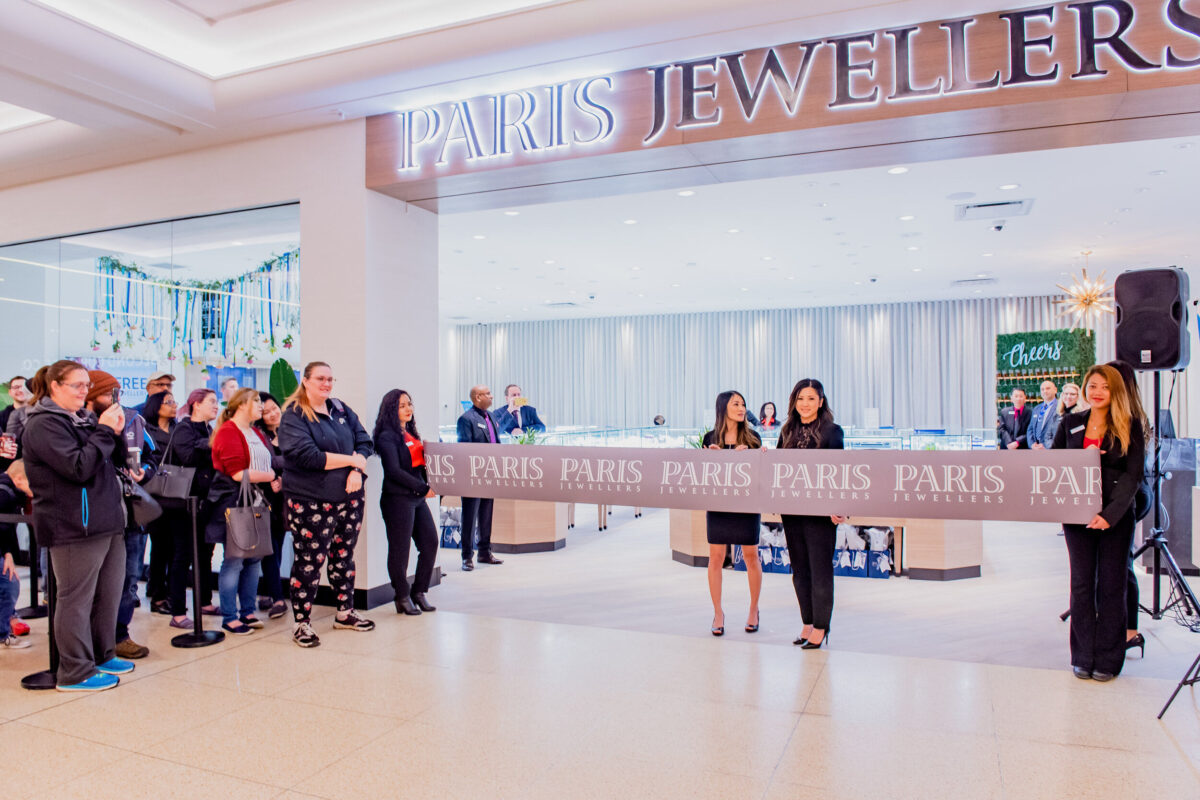
CELI is not the first jewelry venture for sisters Chau Lui and Trang Wong. Their established brand, Paris Jewellers, has become a well-known name in Canada, with over 20 stores across the country. Paris Jewellers has built a reputation for quality craftsmanship, excellent customer service, and community involvement. CELI, however, represents a new direction for the sisters—a more modern, design-forward brand with a global vision.
The sisters opening a new Paris Jewellers store. Photo: Paris Jewellers
“We’ve learned so much from our experience with Paris Jewellers, and we’re bringing all of that knowledge to CELI,” said Lui. “CELI is about creating something fresh and contemporary while still maintaining the high standards of quality and customer care that have always been important to us.”
CELI’s collections reflect current trends in fine jewelry, with an emphasis on bold textures, stackable pieces, and versatility. The sisters have drawn inspiration from their own family’s jewelry, particularly their mother’s pieces from the 1980s, to create designs that feel both nostalgic and modern. “We wanted to incorporate a sense of legacy into our designs,” said Lui. “The jewelry we offer is meant to be worn and cherished for years to come.”
Rendering of the new CELI store on Queen St. W. in Toronto. Image: CELI
Looking Ahead: CELI’s Vision for the Future
While the Toronto store marks CELI’s first physical location, the brand is already planning for future growth. Lui hinted that the sisters are open to expanding CELI’s retail footprint across Canada and potentially into international markets. “We’re dreaming big with CELI,” Lui said. “We see this as the beginning of something really special, and we’re excited to see where it takes us.”
The opening of CELI’s flagship store in Toronto and its global e-commerce launch are just the first steps in what the co-founders hope will be a long and successful journey. “We’ve put our hearts into this brand,” said Lui. “We can’t wait to share it with the world.”
Canadian retail sales in August painted a picture of cautious consumer spending, with All Stores experiencing a marginal growth of 0.6% YOY. The discretionary spending segment, represented by All Stores Less Automotive, Food, and Pharmacies, saw an even slimmer growth of 0.2% YOY, indicating a continued cautious approach to non-essential purchases.
Notably, Clothing and Accessories Stores continued the typical back-to-school trend with a strong 5.4% YOY increase. This uptick suggests that despite economic headwinds, parents and students prioritized wardrobe refreshes for the new academic year. This trend may also indicate a broader return to social and professional activities, driving demand for new apparel.
Conversely, sectors tied to housing and home improvement faced further challenges. Furniture Stores experienced a decline of -5.5% YOY, while Home Furnishing Stores and Building Material and Garden Equipment stores also saw decreases of -1.7% and -7.4% YOY, respectively. These declines likely reflect the cooling housing market and consumer hesitancy towards major home-related purchases in the face of economic uncertainty. The anticipation of a potential interest rate cut in October likely suggests a collective hope for a boost in these sectors.
Interestingly, while Convenience Stores faced a -4.7% YOY decline, there’s optimism on the horizon with the imminent introduction of alcohol sales in these outlets in Ontario (which occurred in September). This regulatory change could potentially revitalize the convenience store sector, offering a new revenue stream and potentially altering consumer shopping habits.
The Beer, Wine, and Liquor Stores category showed resilience with a 3.1% YOY increase. This growth, coming on the heels of a strike at LCBO stores, demonstrates the category’s ability to bounce back and the continued consumer demand for these products, even in challenging economic times. However, the before mentioned introduction of alcohol at convenience stores, and the growing trend of eliminating alcohol could have a continued impact on these stores.
As we move further into the fall, and approach some major changes in Canada and North America, the JCWG team is currently thinking about: • While there will undoubtedly be an impact in the US, how will the upcoming U.S. election impact the Canadian retail industry? • What will be the ripple effects of potential interest rate decreases? • How will the recently announced, revised immigration targets affect retail demand? • Will this year’s holiday sales exceed last years results? • How are YOU preparing for the upcoming holiday season?
Canadian Retail Sales by Product Category, Same Month Comparison
Sales for the Month of August
Aug-24
Aug-23
YOY
All Stores
69,932,236
69,487,092
0.64%
Motor Vehicle and Parts Dealers
19,106,184
18,808,359
1.58%
Gasoline Stations
6,867,051
7,316,427
-6.14%
All Stores Less Automotive
43,959,001
43,362,306
1.38%
Food and Beverage Stores
13,686,789
13,233,492
3.43%
Supermarkets and Other Grocery Stores*
9,479,025
9,094,355
4.23%
Convenience Stores
784,037
822,146
-4.64%
Specialty Food Stores
967,232
935,191
3.43%
Beer, Wine and Liquor Stores
2,456,494
2,381,800
3.14%
Health and Personal Care Stores
5,523,059
5,433,003
1.66%
All Stores Less Automotive, Food, and Pharmacies
24,749,153
24,695,811
0.22%
General Merchandise Stores
9,171,844
8,810,709
4.10%
Furniture, Home Furnishings, Electronic and Appliance Stores
3,639,594
3,782,370
-3.77%
Furniture Stores
1,221,896
1,292,717
-5.48%
Home Furnishings Stores
688,177
699,807
-1.66%
Electronics and Appliance Stores
1,729,521
1,789,846
-3.37%
Clothing and Accessories Stores
3,827,794
3,630,700
5.43%
Clothing Stores
2,943,773
2,786,911
5.63%
Shoe Stores
499,499
461,570
8.22%
Jewellery, Luggage and Leather Goods Stores
384,523
382,219
0.60%
Sporting Goods, Hobby, Book and Music Stores
4,073,344
4,115,307
-1.02%
Building Material and Garden Equipment
4,036,578
4,356,726
-7.35%
Miscellaneous Store Retailers
2,671,257
2,636,825
1.31%
Cannabis Retailers
465,106
469,015
-0.83%
Canadian E-commerce Sales
Ecommerce Sales
Aug-24
Aug-23
Percent Change
Year-to-Date
29,426,372
27,894,707
5.49%
Year-Over-Year
3,736,531
3,562,850
4.87%
Canadian Retail Sales by Store Category, Year to Date Comparison
Year-to-Date, Ending August
Aug-24
Aug-23
YTD
All Stores
524,055,082
519,161,948
0.94%
Motor Vehicle and Parts Dealers
144,867,742
143,359,690
1.05%
Gasoline Stations
51,981,418
52,441,254
-0.88%
All Stores Less Automotive
327,205,922
323,361,004
1.19%
Food and Beverage Stores
101,649,863
100,556,617
1.09%
Supermarkets and Other Grocery Stores*
72,340,885
70,871,847
2.07%
Convenience Stores
5,780,540
5,980,740
-3.35%
Specialty Food Stores
6,962,360
6,649,730
4.70%
Beer, Wine and Liquor Stores
16,566,079
17,054,297
-2.86%
Health and Personal Care Stores
43,828,665
41,669,260
5.18%
All Stores Less Automotive, Food, and Pharmacies
181,727,394
181,135,127
0.33%
General Merchandise Stores
69,566,619
66,511,679
4.59%
Furniture, Home Furnishings, Electronic and Appliance Stores
27,129,419
27,530,794
-1.46%
Furniture Stores
9,019,787
9,284,361
-2.85%
Home Furnishings Stores
5,307,529
5,517,478
-3.81%
Electronics and Appliance Stores
12,802,104
12,728,952
0.57%
Clothing and Accessories Stores
25,480,297
25,572,701
-0.36%
Clothing Stores
19,687,680
19,673,778
0.07%
Shoe Stores
3,028,127
3,085,223
-1.85%
Jewellery, Luggage and Leather Goods Stores
2,764,490
2,813,699
-1.75%
Sporting Goods, Hobby, Book and Music Stores
28,715,871
29,966,332
-4.17%
Building Material and Garden Equipment
30,835,186
31,553,623
-2.28%
Miscellaneous Store Retailers
18,715,520
19,628,121
-4.65%
Cannabis Retailers
3,352,109
3,386,032
-1.00%
Retail Trade, Canada, All Stores, by Geographic Regions
Amazon has launched its “Climate Pledge Friendly” feature in Canada, a program designed to empower customers in making more sustainable shopping choices across household, fashion, beauty, and personal electronics, among other categories.
Through a “Sustainability feature” label, Canadians can now easily identify more than 143,000 products that are both clearly labeled in shopping results and featured in a dedicated section of Amazon’s store, said the company.
Amazon said Climate Pledge Friendly products meet one or more of 44 rigorous sustainability certifications, including:
Rainforest Alliance: Stands for more-sustainable farming methods that help improve farmer livelihoods & mitigate climate change.
The Forest Stewardship Council: Certified products that support responsible forestry, helping keep forests healthy for future generations
MADE SAFE: Certified products made without known toxic chemicals, by prohibiting substances that harm human health or the environment
Global Organic Textile Standard: Certifies each step of the organic textile supply chain against strict ecological and social standards.
Eva Lorenz
“Climate Pledge Friendly provides our customers with an easy way to identify and choose products that meet trusted sustainability standards, aligning with our commitment to offer more sustainable shopping choices,” said Eva Lorenz, Amazon Canada Country Leader, in a blog on the company’s website. “Through this program, we’re encouraging our selling partners to offer selection that meets sustainability standards, making it easier for customers to protect the natural world for future generations.”
adviso and R3 Marketing, in collaboration with Ad hoc Research, has released its 7th edition of the LoyalT study. By sampling 10,000 Canadian respondents and applying a unique methodology, LoyalT is the most complete Canadian study on loyalty program performance, said officials in a news release.
List of the 10 best loyalty programs in Canada
Achieving the top spot on the LoyalT list for the first time, PC Optimum has strengthened its reputation as a leader in relationship marketing and loyalty, said the report.
“The new private coalition program Moi, by Metro, launched in 2023, has ascended to third place. Bringing together the Brunet, Première Moisson, Jean Coutu, and Super C brands, Moi replaces the metro&moi program, which was a favourite in our rankings in past years. While Sephora’s Beauty Insider has made its first reappearance on the list since 2018, Pet’s Rewards (Global Pet Foods), Nike Membership, and Air Miles have all made their very first appearance.
“Air Miles has experienced a significant upswing since its acquisition by BMO. The program’s performance has improved, in part attributed to the change in its business model and its co-branded card-linked offers, which generate even more engagement. Despite its position in fifth place, the Air Miles’s program seems to have stalled in Quebec since the withdrawal of a number of major retailers, such as RONA, Jean Coutu, and IGA. It has received an average LoyalT score of 88 in Quebec, while it has achieved a score of 111 in the rest of Canada. Over 20 per cent of Quebecers stated that they had subscribed to the program in the past 12 months.”
The report said absent from the list of top performers, given its ranking of 25th place, the new coalition program Scène+ (Banque Scotia and Cineplex) shows lukewarm performance. While it registered the strongest growth in 2024 in terms of members—numbering over 10 million—the program has not been able to create a bond with its membership nor influence their purchase behaviours and visit frequency, added the report.
Inflation has affected members’ consumption habits. Almost one in three Canadians (32 per cent) have changed their choice of products to maximize loyalty point accumulation, as opposed to 27 per cent in 2023 and 23 per cent in 2021;
For the first time, the Amazon Prime subscription rate has exceeded that of Costco: 54 per cent of Canadians are members, compared to 51 per cent for Costco;
Young people (18–35) still represent the segment with the most membership. The 2024 study also shows that they are more active and more satisfied both in terms of the overall program and promotional offers;
Participation in gamification activities has increased amongst the 18-to-54 age group. This increase is especially notable amongst those 18–35, of which 33 per cent frequently participate in games, challenges, surveys, and contests, representing an increase of seven percentage points;
More Canadians are opting for a digital loyalty card 42 per cent state they prefer this modality, a leap of 10 percentage points compared to the previous year;
55 per cent of Canadians frequently use loyalty programs that have superior mobile applications, as opposed to 41 per cent for programs whose experience leaves something to be desired.
In 2024, Canadians belonged to an average of 19 programs, which is five more than in 2023—a number that represents the highest level observed in seven years of LoyalT studies. However, only seven programs are used regularly, an identical figure to last year and barely higher than that observed in 2021. The rate of programs used on a regular basis has decreased from 50 per cent to 36 per cent, indicating that Canadians are becoming increasingly selective about which programs they choose to use consistently;
One in three members stated they had visited retailers more often (32 per cent) and were concentrating more of their purchases (36 per cent). These two statistics have increased by four percentage points since 2023.
Jonathan Pollender
“We are frequently asked whether there is a decline in loyalty. The answer is no; the numbers above are very high and demonstrate the effectiveness of these programs, which is also confirmed by our profitability analyses of numerous programs. The programs that succeed in increasing visit frequency and purchase concentration show a very high ROI”, said Jonathan Pollender, Business Strategy Consultant at adviso.
Elizabeth Henry
“This study goes far beyond simply ranking programs. It’s teeming with valuable insights on the needs and perceptions of Canadian consumers in terms of their relationships with and attachment to brands. It highlights the best practices for generating engagement and building real, sustainable relationships. At adviso, we strongly believe that relationships are foundational to the future of marketing,” said Elizabeth Henry, CEO and Partner at adviso.
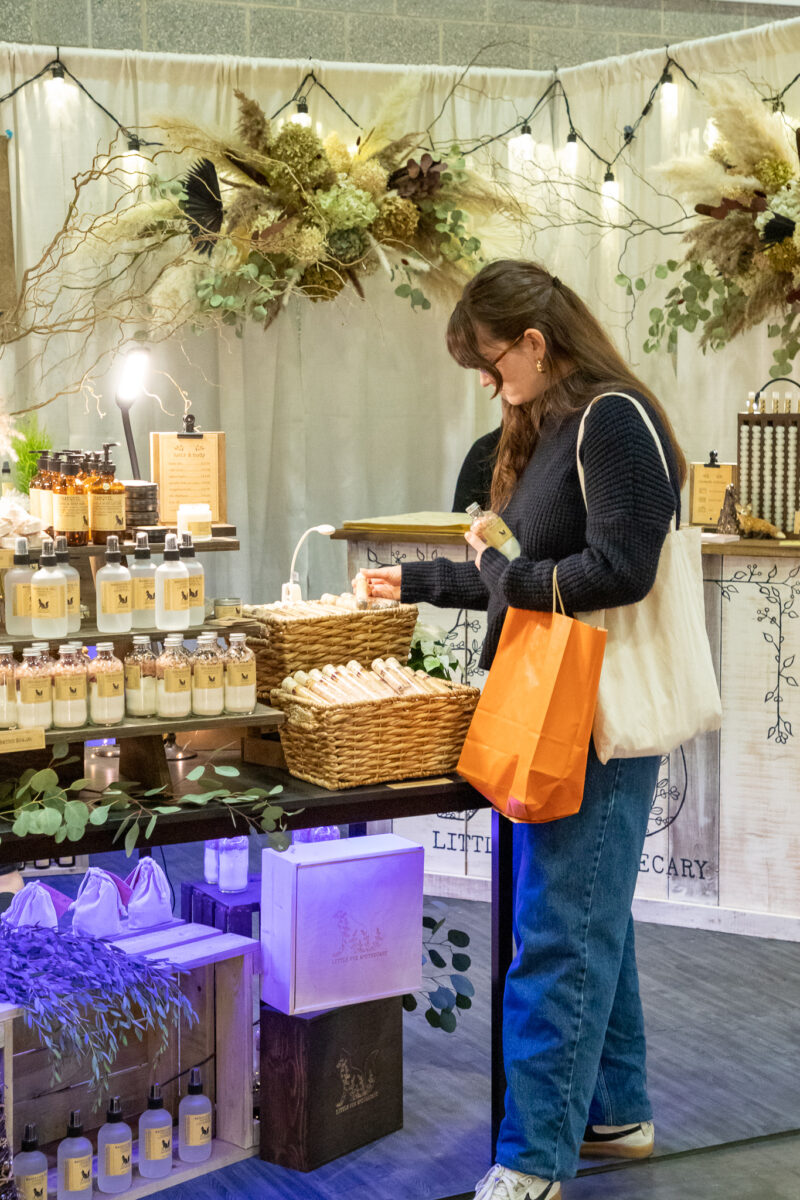
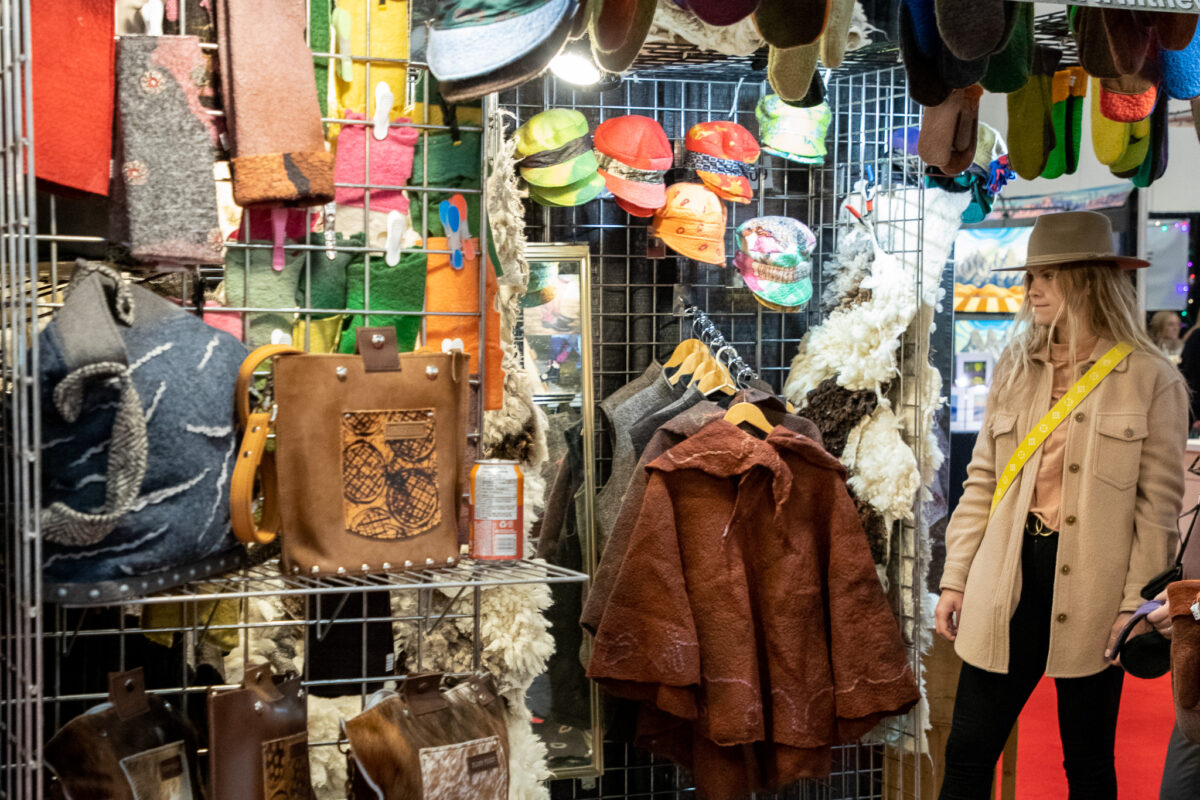
Calgary’s largest fall artisan market, the Festival of Crafts, returns to the BMO Centre in Stampede Park from October 31 to November 3 with 130+ Canadian vendors under a single roof.
Organizers said the weekend affair will see artists, makers and craftspeople travelling from as far as Charlottetown and Whitehorse to bring their unique gifts, upcycled clothing, and handmade wares to Calgarians.
“Festival of Crafts is a uniquely Canadian handmade marketplace in Calgary that features the works of artists, artisans, makers, and designers from coast-to-coast. Since 1986, the show has been one of Calgary’s premier fall shopping events – an annual tradition where visitors can meet passionate creatives in person, hear their stories, and feel their works first-hand. Join us at the BMO Centre on the Stampede Grounds for an unforgettable experience and shop for handmade that lasts a lifetime.”
Photo: Festival of Crafts
But like all great craft markets, the real treasures are the stories behind each handcrafted item, say organizers:
CLAIMS TO FAME ● A hat maker whose hats have appeared in London Hat Week and sat on the heads of Meghan Markle and the cast of ‘Emily in Paris,’ to name a few! (Sherri Hrycay, Sova Design Millinery & Apparel | BOOTH 312) ● A Dragon’s Den alum, whose finishing butter recently scored 96 in international awards (Rob Sengotta and Landon Kroeker, Von Slick’s Finishing Touch | BOOTH 329) PAIN, HEALING, & RESILIENCE ● A salve & soap maker who turned lived experience with endometriosis into a thriving self-care business (Jamie Leigh Hoogendoorni, Fleurish Goods Co. | BOOTH 305) ● A lifelong asthma and migraine sufferer who created candles she can enjoy without triggering her sensitivities (Samantha Bozinovski, Taisha Essence | BOOTH 414) ● An Airdrie knitwear artist trying to sell 1000 toques to raise money for her IVF journey (she has 585 left to go!) (Kelsey Gyarmati, KLG Knits | BOOTH 519) ● A mother devastated but inspired by the loss of her child to create jewellery keepsakes (Danielle Robinson, Silver Soul Creations | BOOTH 425) ● Plus, artists whose personal experiences with MS, breast cancer and more have inspired their art.
MISSED (& FOUND) CONNECTIONS ● An adopted daughter and a biological mother who, though they never had the chance to meet, unknowingly crossed paths (Megan Mackenzie Jones, Mackenzie Jones Design | BOOTH 308) ● A woman who took on a 1930s steam train in a footrace through the Prairies… and won. (Jen Gregoire, Jen Gregoire Photography | BOOTH 316);
● A candle-maker balancing the stress of new motherhood with nursing shifts during the pandemic, who turned to her Filipino grandmother’s scents to comfort her… and never looked back (Ellen Joyce Santos, Farmhouse Charm Candles Inc. | BOOTH 315)
UPCYCLING, CLEAN CREATIVITY, & SUSTAINABILITY ● A sustainable fashion designer who uses hemp and old denim to make bespoke iron-on patches and reduce his eco-footprint (Adam French, Adan Ballou | BOOTH 401) ● A Nigerian Canadian clean beauty brand that uses traditional West-African ingredients to soothe the skin (Yoyin Familusi, Sewa Skincare | BOOTH 103) ● A Calgary-based duo who scours thrift shops for vintage silverware, trays and reclaimed wood, upcycling them into jewellery and home décor (Katherine & Joanne White, ReDesigned | BOOTH 509)
EVENT DETAILS Dates: October 31 – November 3, 2024 Location: BMO Centre, Stampede Park, Calgary, AB Show Hours: Thurs, Oct 31 (10am – 9pm) / Fri, Nov 1 (10am – 9pm) / Sat, Nov 2 (10am – 6pm) / Sun, Nov 3 (10am – 5pm)
TICKET INFO Tickets can be purchased online at ticketme.ca/event/calgary or at the event doors. Pricing: Adult $8 | Senior $6 Online Presale | Save 50% Until Oct 24: Adult $4 | Senior $3 October 31 – November 1 | Get 50% off after 5pm: in person and online
Signatures Shows Ltd. is Canada’s largest and most experienced producer of fine craft shows. Founded in 1980 from an idea brought to life by two artisans, Signatures has become Canada’s largest and most experienced producer of handmade shows, producing, promoting and managing 16 events each year in 11 cities across the country.
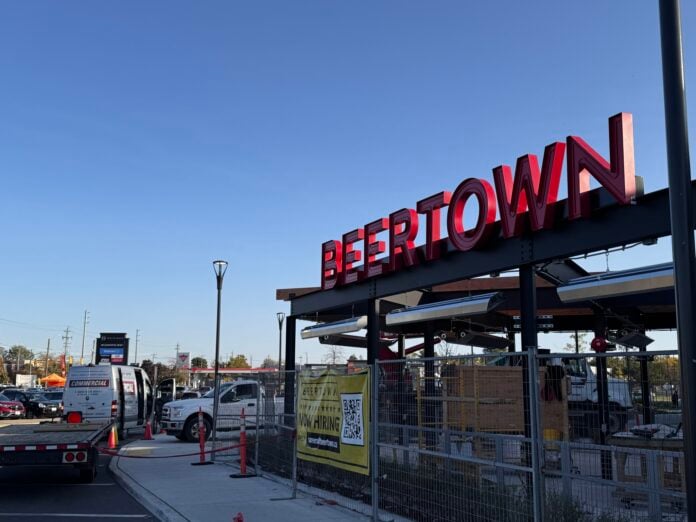
Following the success of their most recent new location opening in Whitby, the Charcoal Group said the Beertown Public House is bringing its signature blend of food, craft beer, and unforgettable hospitality to London South in White Oaks Mall.
The new location will soon become the 12th Beertown and promises to deliver a revolutionary dining experience with an emphasis on fresh, scratch-made cuisine, the company said in a news release.
“Construction is officially underway, and Londoners can start counting down the days to an additional, premium craft beer dining destination. The new Beertown location will feature a spacious dining room and an inviting outdoor patio, providing a vibrant setting for craft beer enthusiasts, food lovers, and anyone looking for a great time out.
Jody Palubiski
“We’re thrilled to bring Beertown to London South to better serve the London community which has been so good to us over the years says Jody Palubiski, partner at Charcoal Group. “This new location represents an exciting chapter for us as we continue to grow and share our love for craft beer and outstanding food across Ontario.”
From day one, Beertown said it aims to be more than just another restaurant in London.
“With seating capacity to accommodate large groups or intimate gatherings, guests can enjoy an extensive drink menu featuring local craft beer collaborations, non-alcoholic options, unique cocktails, and wines, ensuring there’s something for everyone. Don’t let the name fool you; Beertown’s diverse menu also boasts an array of plant-based and gluten-friendly dishes, continuing the Charcoal Group’s commitment to providing exceptional food experiences to all guests,” it said.
“Beertown — with its durable ‘modern beer bar’ concept was born out of many ‘research trips’ to the NYC boroughs of Manhattan and Brooklyn just after the 2009 recession. It’s no surprise with the scratch-made cuisine, and by riding the wave of craft-beer popularity, the team continues to welcome guests and looks forward to entering the London area as they officially cut their 12th ribbon this summer.”
For more updates on the new Beertown London South location and to find out when they’ll be opening, stay tuned to Beertown’s social media channels and https://beertown.ca/
Charcoal Group is a group of full-service restaurants located across Southern Ontario with over 65 years in the hospitality industry. Restaurants include Solé Uptown, The Charcoal Steakhouse, Martini’s, Dels Italian Kitchen, Wildcraft Grill & Long Bar, The Bauer Kitchen, The Bauer Bakery & Café, Moose Winooski’s, Beertown Public House, and Sociable Kitchen & Tavern.
The H&M Foundation has announced a significant shift in its overall strategic direction, focus on supporting the textile industry in halving its greenhouse gas emissions every decade by 2050, while promoting a just and fair transition for both people and the planet.
The innovation challenge Global Change Award 2025 (GCA) is the first initiative to reflect this shift, it said in a news release.
GCA is now seeking innovative ideas addressing different high emission areas across the textile industry value chain, including sustainable materials and processes, responsible production, mindful consumption, and ‘wildcards’ that support the GCA purpose. Today, only a fraction of philanthropic capital is directed to climate, said the Foundation.
“The textile industry needs all hands-on deck if we are going to meet our climate goals by 2050, and we must ensure this transition is fair for everyone. I really believe that innovation is key to decarbonising the industry, and that the Global Change Award can play a role in identifying and growing future changemakers whose ideas can have a transformative impact if given the right support,” said Karl-Johan Persson, Board Member of the H&M Foundation.
Since GCA launched in 2015, 46 innovations have received support and a combined grant of 8 million euros, said the Foundation.
While it continues to award 10 winners every year, with each receiving 200,000 EUR, there are other key updates to the GCA, explained the Foundation:
New focus area – decarbonising the textile industry.
Holistic approach – equipping changemakers with a holistic people and planet mindset.
Wider range of changemakers – switching to a nomination-based process, instead of an open application system.
Systems change approach – equipping changemakers to consider the entire textile value chain and its interconnectedness while also considering the impact on people.
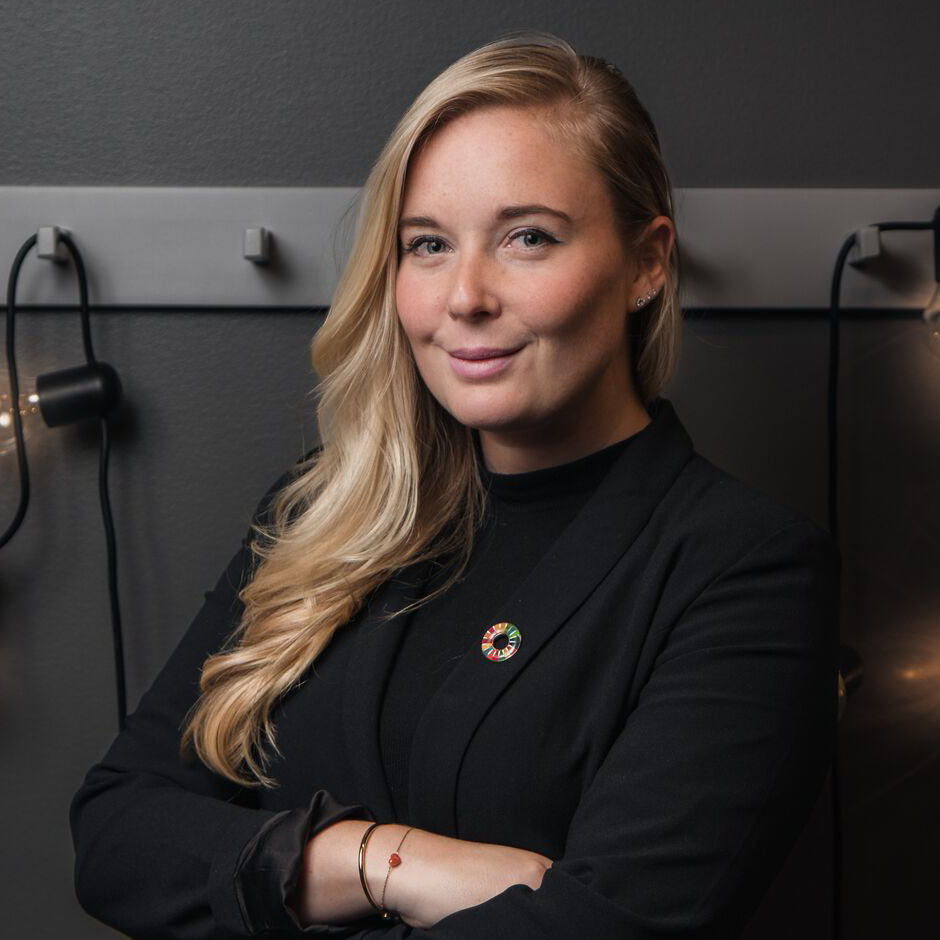
Annie Lindmark
“While the industry is hungry for innovation, the holistic perspective to decarbonisation is often lacking, and the critical early stages of an innovator’s journey overlooked – this is where philanthropy can make a real difference”, said Annie Lindmark, Programme Director for Innovation at the H&M Foundation.
“In addition to financial support, winners will gain access to a powerful network of mentors, collaborators, and industry leaders to help bring their solutions to life. Together with partners Accenture and KTH Royal Institute of Technology, H&M Foundation will invite the winners to participate in a yearlong, tailormade Changemaker Programme. The Global Change Award 2025 winners will be announced in April 2025,” added the Foundation.