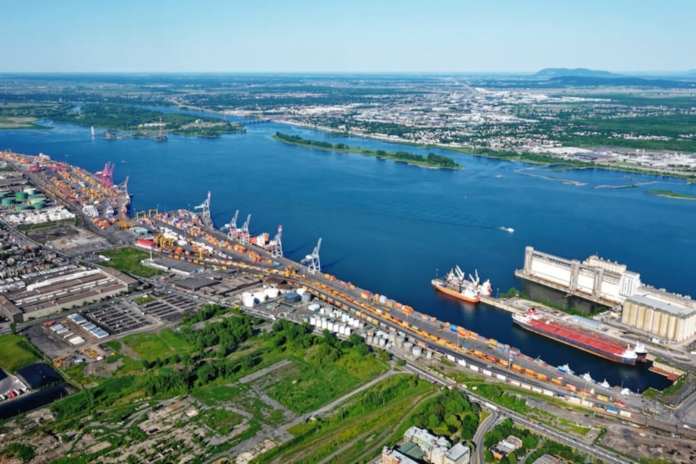
The union representing longshore workers at the Port of Montreal has initiated a three-day strike, significantly impacting operations at the port’s Viau and Maisonneuve Termont terminals.
Approximately 350 workers, affiliated with the Canadian Union of Public Employees (CUPE), are participating in the work stoppage, which began at 7 a.m. Monday morning. The strike, set to continue until Thursday, stems from ongoing contract disputes, as the workers’ agreement with the Maritime Employers Association expired on December 31, 2023.
The Maritime Employers Association (MEA) expressed its disappointment in a statement, indicating that despite efforts to avoid disruption—including mediation and an emergency meeting with the Canada Industrial Relations Board—negotiations have reached an impasse. The MEA emphasized that they had “tried all possible means” to avoid the strike, though these efforts proved unsuccessful.
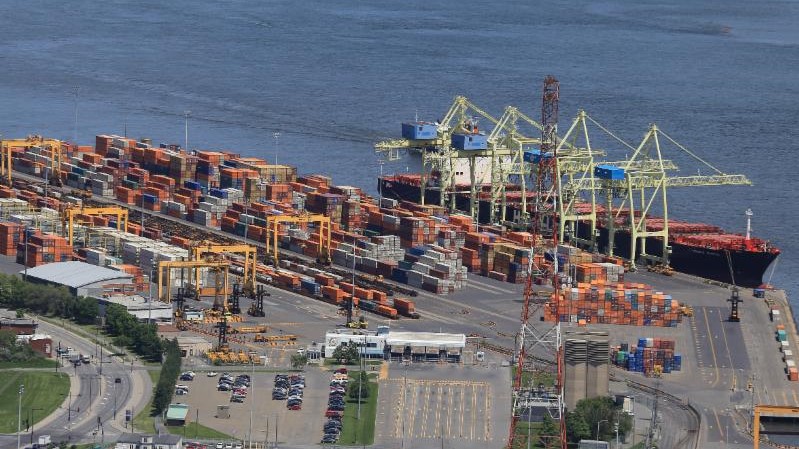
This strike has the potential to disrupt trade significantly, as the Port of Montreal is a key point for Canadian imports and exports. The port handles approximately 40 million tonnes of goods annually, including consumer products for retailers, vital resources like fuel, and industrial materials. As the strike progresses, various industries dependent on the port’s supply chain may face delays, potentially causing ripple effects across the country.
Photo: Port of Montreal
The strike follows years of escalating tensions between the union and employers over working conditions, including wages, job security, and scheduling concerns. In 2021, the union launched a similar work stoppage that led to widespread delays and cost businesses millions in lost revenue. This latest strike threatens to replicate that impact, with the possibility of prolonged economic consequences if the dispute isn’t resolved swiftly.
Montreal’s port authority is urging both sides to return to the bargaining table to reach a resolution, as the strike adds pressure on an already strained supply chain. The global logistics industry has faced mounting challenges due to the pandemic and inflationary pressures, and additional labor disruptions could exacerbate these issues.
The union has stated that it remains open to further dialogue but maintains that their members deserve fairer working conditions. With the strike ongoing, the situation at the Port of Montreal remains critical, with all eyes on potential developments as Thursday’s deadline approaches.
The retail trade sector (+1.0 per cent) was the largest contributor to overall growth of Canada’s GDP in July, recording a second consecutive increase and the sector’s largest monthly growth rate since January 2023, reports Statistics Canada.
“Most subsectors expanded in July 2024 with motor vehicles and parts dealers (+2.8 per cent) contributing the most to growth, driven by higher retailing activity at new car dealers which more than offset the previous month’s decline. A contraction at gasoline stations (-1.8 per cent) tempered the overall growth in the sector,” says the federal agency.
In a recent report, StatsCan said real gross domestic product was up 0.2 per cent in July, following essentially no change in June. Despite negative impacts from wildfires on transportation and warehousing and accommodation services, the services-producing industries grew 0.2 per cent in July, driven in large part by increases in the retail trade sector, the public sector and the finance and insurance sector. Goods-producing industries edged up 0.1 per cent, with the utilities and manufacturing sectors contributing the most to growth within this aggregate. Overall, 13 of 20 sectors expanded in July.
“Advance information indicates that real GDP was essentially unchanged in August. Increases in oil and gas extraction and the public sector were offset by decreases in manufacturing and transportation and warehousing. Owing to its preliminary nature, this estimate will be updated on October 31, 2024, with the release of the official GDP by industry data for August.”
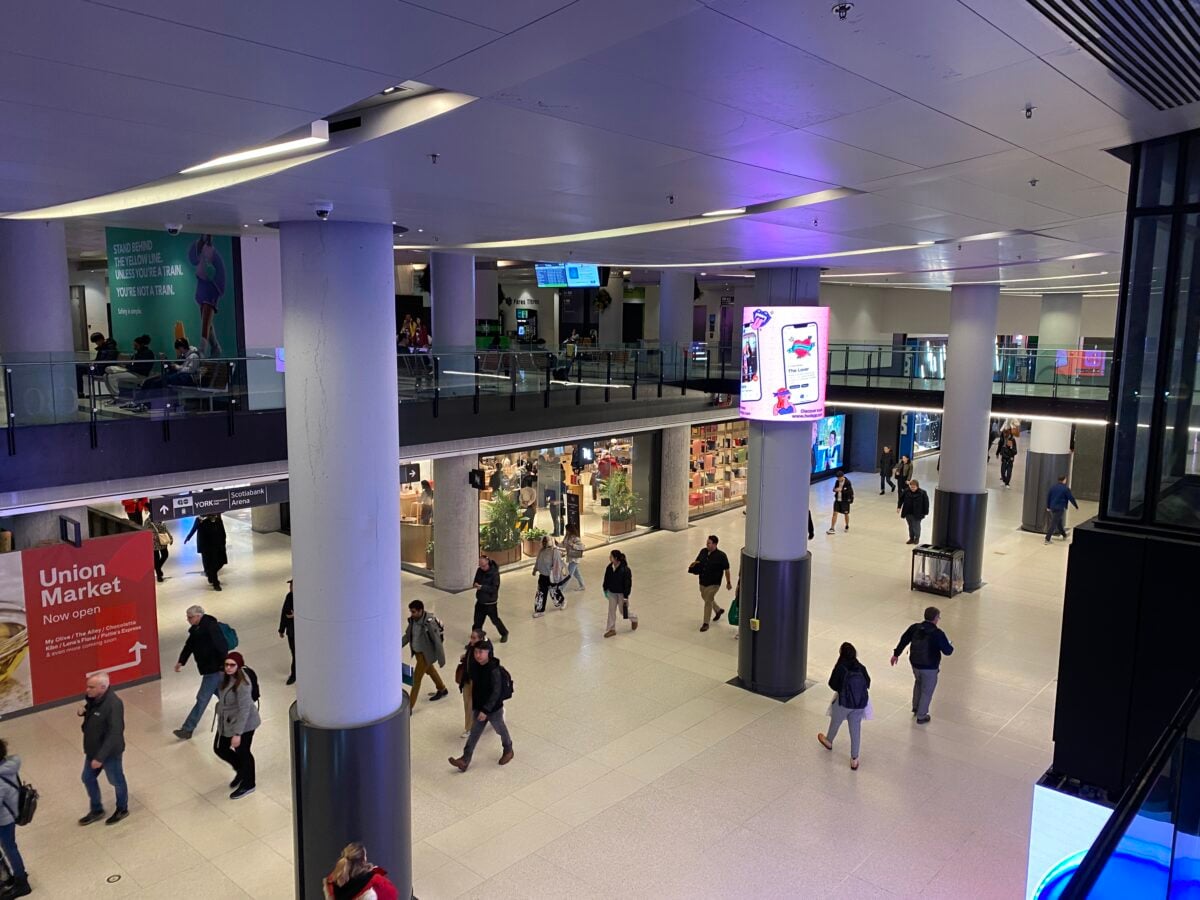
Toronto’s Union Station, Canada’s busiest transit hub, is undergoing another phase of its ongoing transformation with the expansion of its Foodie Aisle this October.
Located on the lower level with direct access to Scotiabank Arena, the Foodie Aisle serves as a key part of the station’s revitalization, bringing a diverse selection of chef-driven, market-style eateries to the heart of downtown Toronto.
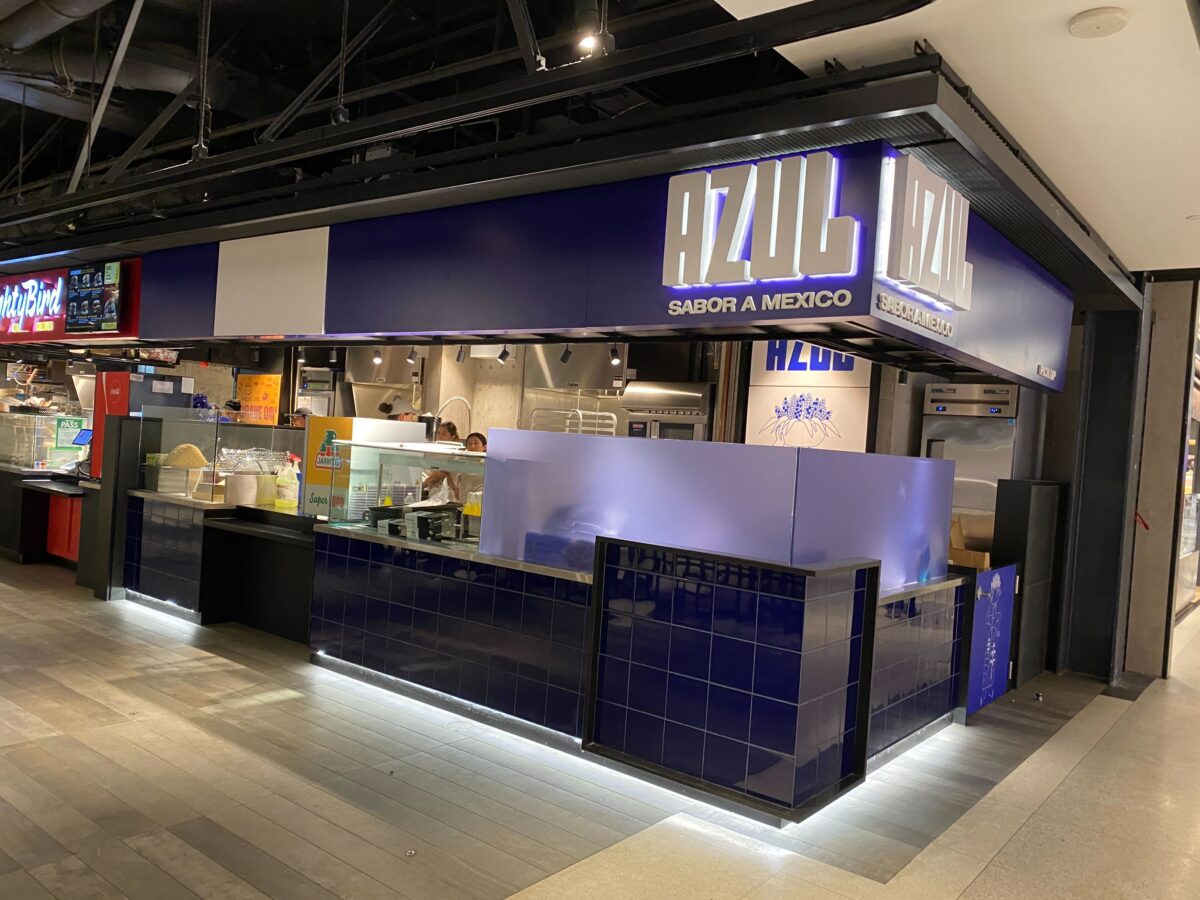
Azul at Union Station on September 30, 2024. Photo: Dustin Fuhs
The latest rotation of vendors, the first since the Foodie Aisle opened in 2021, introduces new culinary options that its landlord says reflect Toronto’s vibrant food culture.
Among the new additions are Azul, Tut’s Egyptian, and Blondies Pizza, each contributing unique offerings to the diverse mix of international and local cuisines:
Azul, led by Executive Chef Joao Medina, aims to redefine quick-service Mexican food with a focus on authenticity and quality. Known for bold flavors, Azul will offer a selection of traditional Mexican dishes tailored for busy commuters and sports fans.
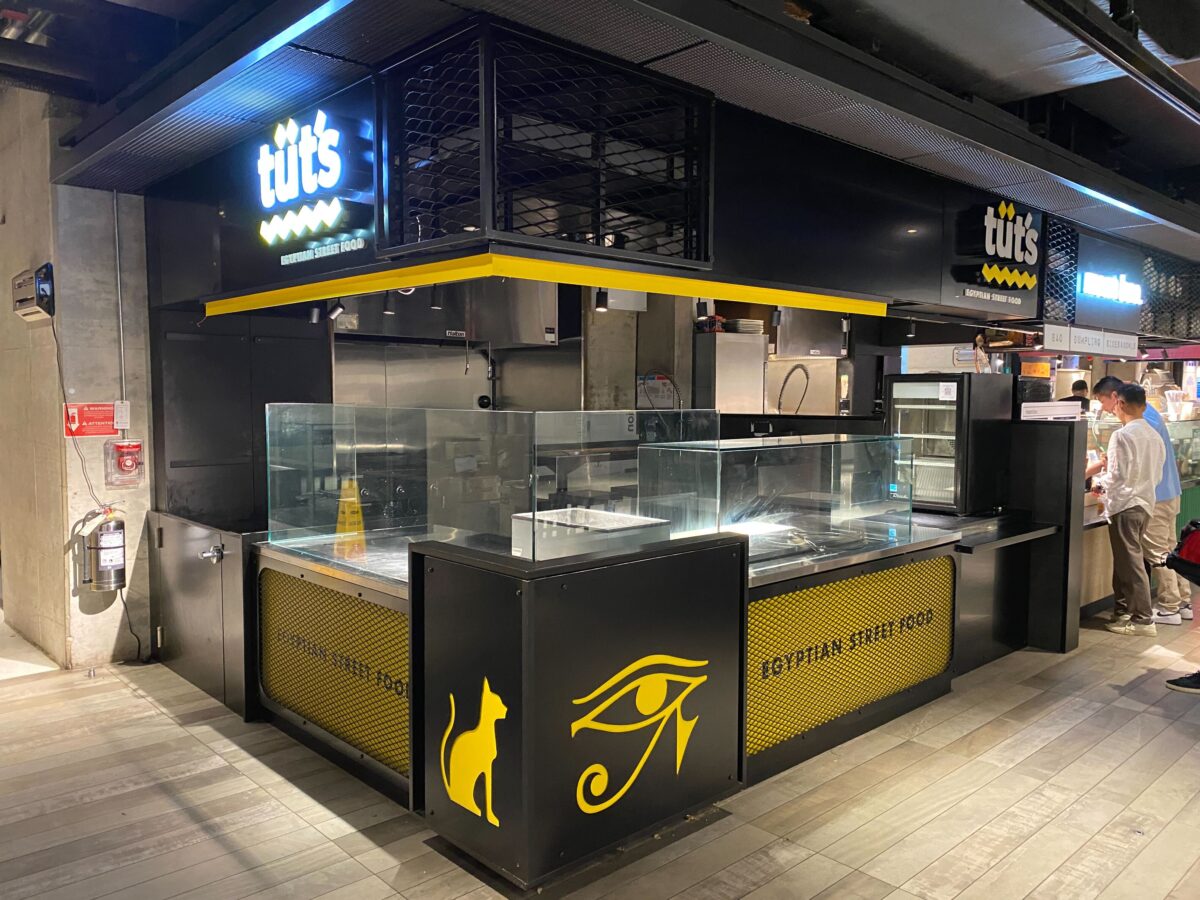
Tut’s Egyptian, which has already made a name for itself with locations in King & Portland, Mississauga, and Oakville, specializes in Egyptian sandwiches. This will be the vendor’s first foray into the downtown core, where it aims to introduce a modern take on Egyptian street food.
Blondies Pizza, a rising star in Toronto’s pizza scene, will bring its New York-style pizzas to Union Station in November. Since its founding in 2018 in Leslieville, Blondies has become known for its innovative approach to classic pies, utilizing high-quality toppings and ingredients.
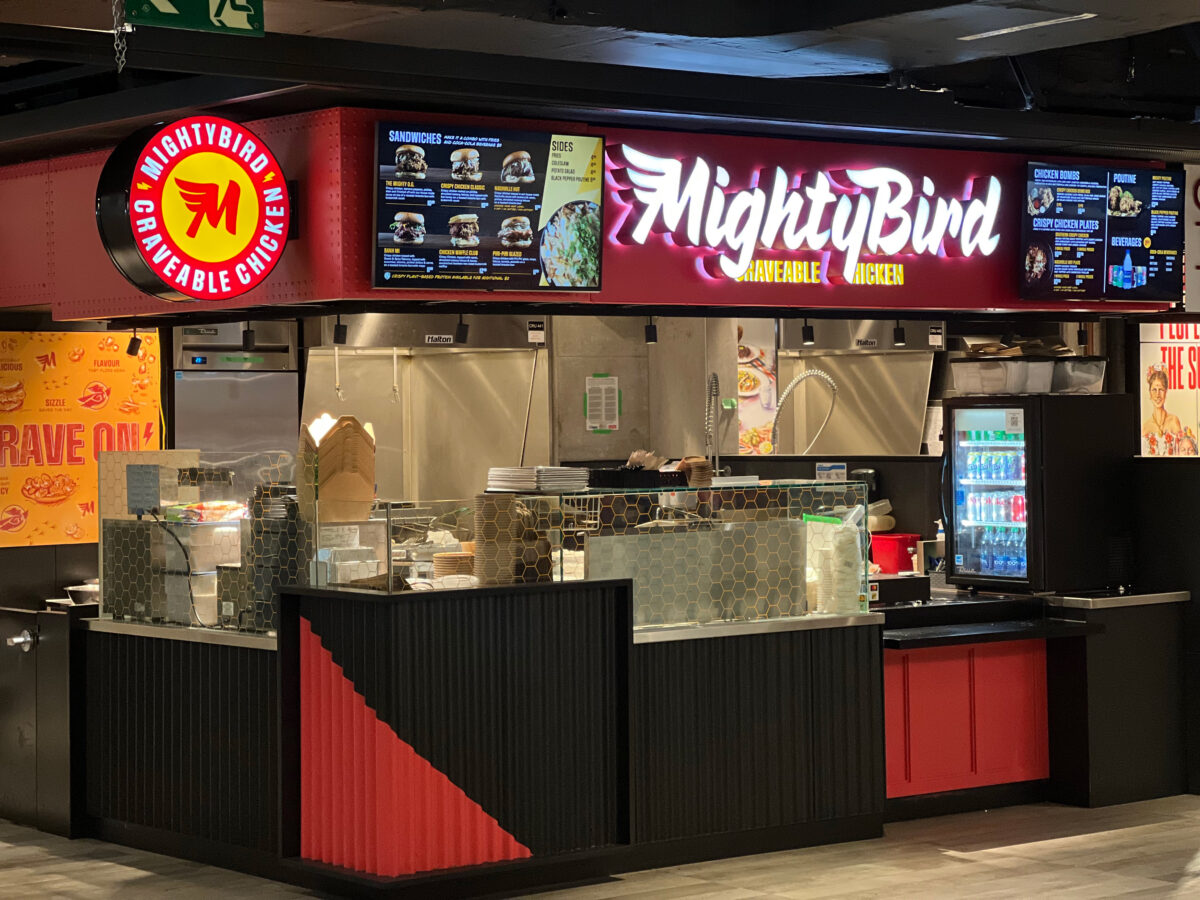
Tut’s Egyptian at Union Station in Toronto on September 30, 2024. Photo: Dustin FuhsMightyBird Union Station in Toronto (Image: MightyBird)
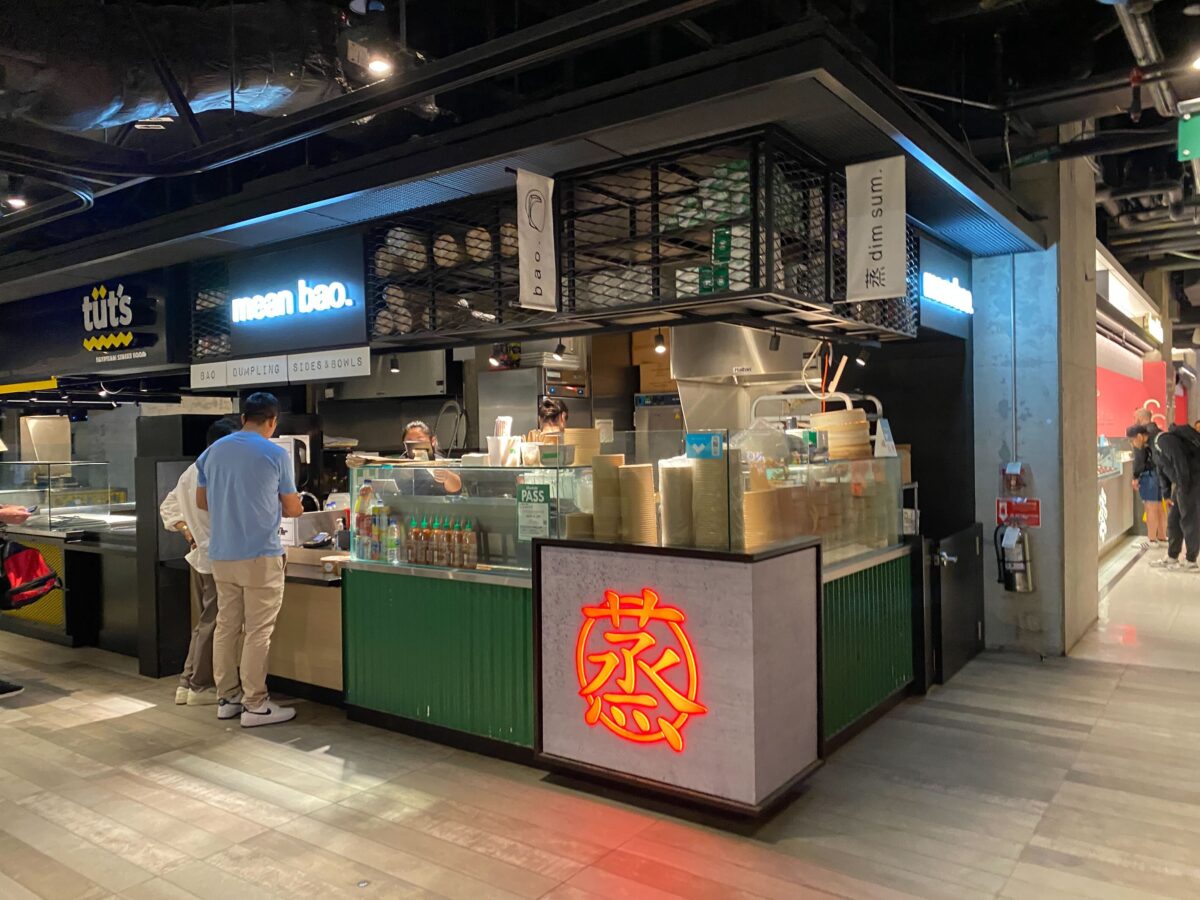
The new vendors join returning favourites, such as Mean Bao, known for its pillowy bao buns filled with savoury ingredients like pork belly and braised beef, and MightyBird, offering premium fried chicken dishes that have become popular for their bold flavours.
Part of a Broader Revitalization
The Foodie Aisle is just one element of Union Station’s larger redevelopment. The multi-phase project is transforming the station into a cultural and commercial hub, with plans to host over 75 retail and food vendors by its completion.
Mean Bao at Union Station in Toronto on September 30, 2024. Photo: Dustin Fuhs
The revitalization has already attracted international brands, including Sephora, Decathlon, %Arabica and Nespresso, while the newly opened Fresh Market provides groceries and specialty items from local vendors.
“Union is becoming a destination for food lovers,” said Lawrence Zucker, CEO of Osmington Inc. “Toronto is one of the best food cities in the world, and visitors and residents alike will now find high-quality food options at Union that reflect our city’s diverse culinary landscape”.
Toronto Union Station (Image: Dustin Fuhs)
A Culinary Gateway
Union Station’s strategic location between the Financial District, Scotiabank Arena, and the waterfront makes it a natural gathering place for both commuters and visitors.
The food hall concept emphasizes convenience while offering diverse options that range from dim sum and tacos to smash burgers and rotis. The ease of access to food has helped position Union Station as a culinary destination in its own right.
Halifax’s luxury watch and jewellery store, Touch of Gold, is now on a prime corner on Spring Garden Road. The company has been on Spring Garden Road for over 40 years now, but jumped at the opportunity to move to a storefront location and includes a designated Rolex boutique along with other luxury watch brands.
“For us, Spring Garden is home. Our customers know it, and from a pedestrian traffic perspective – there is just a lot of activity down here. We are a five minute walk to the waterfront, we have universities within a ten minute walk, two major hospitals a block away, and the new convention centre just two blocks from us. It is a very useful hub of the city. It is just a young, vibrant city and has seen a lot of growth, so we just feel like we are in the middle of it down here,” says Mike Foran, president and co-owner of Touch of Gold.
Luxurious and welcoming environment
Inside Touch of Gold’s store, showcasing its new comfortable and welcoming design.
The new 3,500 square foot location is on the corner of Spring Garden and Birmingham, offering more visibility and traffic. Launch by Design, a Toronto-based firm, created the store’s interior, while Rolex’s own designers created the dedicated Rolex section.
“We are pleased with not only the number of people that have come in the store, but also the reaction people have. You can take this store and you could plop it on the high street in any major city in the world, and it would fit in.”
Rolex showroom
Foran says the store dedicates 700 square feet to its Rolex showroom.
Touch of Gold’s designated Rolex boutique
“Having represented Rolex in Halifax for more than 40 years, we are proud to expand the brand’s presence, upholding the highest standards of quality and service. We are much larger, more than twice our size of our old store, and we are much more branded.”
In addition to Rolex, Touch of Gold also has dedicated branded areas for Omega, Tudor, and Breitling watches. The store also carries Longines, Montblanc, and Watch Winders. Touch of Gold also carries an jewellery products such as bracelets, earrings, necklaces, and engagement rings.
Beyond selling luxury watches
Touch of Gold goes beyond selling luxury items; they have created a space where people feel welcome and comfortable.
A shopping section in the back with a welcoming space for visitors
“People can come in, they can feel welcome, and they can feel comfortable. We will find people coming here throughout the day to meet their friends, to look at new watches, and to look at new pieces of jewellery,” says Foran. “Jewellery is a very personal business from that perspective. We have so many great stories of customers who buy things to memorialize an event for so many different reasons, and we get to share that.”
Touch of Gold also has strong ties within the Halifax community. Over the years, they have been supporting local charities, particularly those focusing on mental health, youth sports, and underprivileged communities.
“In the last number of years, we have given millions of dollars back to our community in the form of charitable giving. That is an important part to us, myself, my wife, and my sister, as owners. It is an important part to our staff that they are connected to the community, and it is important to our customers that they know the store they are supporting is also supporting the community around them.”
Staying relevant in the luxury watch market
To stay on top of luxury watch trends, Touch of Gold keeps a close eye on new trends and maintains strong relationships with clients. The company’s dedication is to understanding what their consumers are looking for and reflect it in its inventory.
“Our plan is evolution, not revolution. I have owned this business for over 20 years, it has evolved to a much more brand-centric and customer-centric business where we are providing a service and a product to our customers that is relevant. I can’t prescribe to you today what we are going to be selling in five, six, or ten years in time, but we will be listening to our customers and offering them a product that they want and what is relevant.”
Additionally, Foran says they go to international watch fairs and jewellery trade shows. Each year the team travels to events such as the Watches and Wonders watch fair in Geneva, as well as jewellery trade shows in the United States and in Europe. These events keep the company informed about the latest trends and innovations.
“Jewellery and watches are timeless in that the products we sell are generational, and they are passed on from one generation to another generation, and that touchstone is quality. What we have seen in times when there is uncertainty in the world, people have turned to things that they believe have performance. There is more than just a monetary value to it – there is a sentimental value that can’t be measured.”
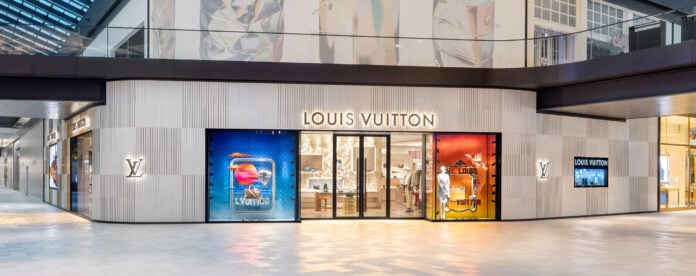
Louis Vuitton at Royalmount in Montreal. Photo: Brad Dickson
Louis Vuitton has unveiled its first freestanding store in Montreal at Royalmount, Quebec’s largest private development. It’s one of the largest Louis Vuitton stores in Canada, spanning more than 9,000 square feet.
The new Royalmount Louis Vuitton location offers a full spectrum of the Maison’s prestigious métiers, including accessories, leather goods, ready-to-wear, fine jewelry, fragrances, and its most coveted bespoke items.
The Royalmount store represents Louis Vuitton’s second location in Montreal, complementing its existing downtown concession space at Holt Renfrew Ogilvy. It also marks Louis Vuitton’s 10th store in Canada, reinforcing the Maison’s growing footprint across the country.
The new opening is part of a broader series of fall initiatives for Louis Vuitton in Canada, including an exclusive Trunk Show in Toronto held in September, and the highly anticipated release of the City Guide Toronto next month, available both in print and digitally.
Louis Vuitton at Royalmount in Montreal. Photo: Brad DicksonLouis Vuitton at Royalmount in Montreal. Photo: Brad Dickson
A Grand Destination of Craftsmanship and Art
Louis Vuitton’s Montreal location offers what it says is an immersive experience that marries the brand’s heritage with forward-thinking design. The two-toned limestone façade of the store draws inspiration from the iconic Damier pattern, originally created by Louis Vuitton in 1888. Unique to North America, the architectural detail sets the Royalmount location apart. Inside, the inviting ambiance is enriched by the use of natural materials, such as petrified wood, shell, and stone, giving the store an organic yet modern feel.
Complementing the design is a curated collection of contemporary art that transforms the retail environment into a gallery-like experience. Works by renowned artists, including Lautaro Cuttia, Heidi Spector, and Benna Holden, energize the space with bold colours and abstractions.
Particularly striking is a piece by Canadian artist Jonathan Forrest, whose rainbow-hued acrylic chevrons add vibrant depth to the space. Additionally, vintage Louis Vuitton advertisements and catalog entries from the brand’s Paris archive are displayed, creating a dialogue between the brand’s storied past and its innovative present.
Design-build firm SAJO was responsible for bringing the store to life. SAJO also is building the new Tiffany & Co. at Royalmount that will open in several months.
Louis Vuitton at Royalmount in Montreal. Photo: Brad DicksonLouis Vuitton at Royalmount in Montreal. Photo: Brad Dickson
Presence in Canada
Louis Vuitton’s presence in Canada spans several decades and includes a growing network of stores in key cities. The first Louis Vuitton location in the country opened in 1983 at 110 Bloor Street West in Toronto. The store marked the beginning of the brand’s expansion in the Canadian luxury market. Over the years, Louis Vuitton upgraded its Toronto footprint, moving to an 18,000 square-foot Maison at 150 Bloor Street West in 2012. The flagship location, which remains the brand’s largest store in Canada, showcases Louis Vuitton’s full range of products, from accessories to ready-to-wear.
Vancouver was the next major city to host Louis Vuitton when a concession opened at Holt Renfrew in 1987. The brand’s first standalone store in Vancouver followed in 1996, located at the Fairmont Hotel Vancouver. This store was significantly expanded in 2010 to a 10,000 square-foot space, making it the first Louis Vuitton Maison in Canada.
Montreal’s relationship with Louis Vuitton dates back to 1989, with the opening of a concession at Ogilvy. Louis Vuitton has maintained a presence in the building, now Holt Renfrew Ogilvy, since then.
Louis Vuitton also operates concessions at Holt Renfrew in Vancouver and Toronto (Bloor Street and Yorkdale). A source told Retail Insider that earlier this month, a high jewellery purchase of about $5 million was made at Louis Vuitton’s Vancouver concession at Holt Renfrew, breaking records for the brand.
The existing infrastructure, particularly near rapidly growing urban centres, relies on outdated systems plagued by lost mileage and inefficiencies. Distribution centres with cooling and freezing capacity are few and far between, forcing trucks to cover unnecessary distances, often resulting in higher costs and delays.
The lack of adequate cold storage facilities near large urban centres often leads to redundant transportation, with products traveling back and forth between locations. For example, food might bypass nearby stores en route to a distant cold distribution centre before being redistributed back to those same stores, adding excessive mileage and causing delays.
While grocers like Walmart and Kroger are experimenting with promising new distribution models, the overall cold chain is challenged by high construction costs, sustainability concerns, and complex regulations that make it difficult to build and upgrade cold storage facilities to meet changing demographics and consumer demand.
How lost miles add up
Many of the existing cold storage facilities were built 20 to 30 years ago, following the ‘hub-and-spoke’ model, similar to the Sears distribution system in Industrial America. In this model, grocery retailers and their third-party logistics (3PL) partners rely on a few major distribution centres spread across the country, each serving as a central hub for all their stores.
This outdated grocery supply chain model has not kept pace with changing demands in the U.S., where online grocery sales are predicted to grow at a compound annual rate of 4.5 per cent over the next five years, more than three times the 1.3 per cent growth rate expected for in-store grocery sales, according to a Brick Meets Click’s forecast. As grocers expand into fast-growing U.S. markets like the Sun Belt, cold distribution inefficiencies are becoming more pronounced. The distance from stores to central cold storage hubs has grown, making older facilities less effective for modern supply chains.
Peter Kroner
“Many of the cold distribution centres for grocery retailers are significantly older and more outdated compared to what we’re seeing elsewhere in the supply chain,” said Peter Kroner, Director, Industrial / Supply Chain and Logistics Market Intelligence for Avison Young.
Canada faces similar challenges, especially in metro areas like Greater Toronto. Population growth over the past five to 10 years has outpaced the development of cold chain infrastructure, creating a lag in distribution.
Flash-frozen vegetables, for example, might be processed at a rural manufacturing facility, sent to a nearby 3PL, and then transported hundreds of miles to a major retail distribution centre—only to be sent back to another 3PL in the wrong direction before finally reaching the stores.
People generally prefer not to have food production facilities like hog farms near their homes. The separation between agricultural zones and populated areas further compounds ghost miles.
The fast expansion of e-commerce has led to more sophisticated and reliable supply chain models built on layered distribution systems—from hefty central hubs to smaller peripheral and last-mile fulfillment centres—although the cold supply chain for grocery items has been slow to adapt, increasing carbon emissions and fuel costs. Grocery retailers are now beginning to address these lost miles and inefficiencies as part of their ESG (Environmental, Social, and Governance) initiatives.
Warren D’Souza
“There will always be some ghost miles, but right now, we’re seeing a lot of redundancy, which happens because gaps in the network need to be filled. If the nearest distribution centre is 200 miles away, you have no choice but to go there. By building closer facilities, we’re creating new stopping points.” said Warren D’Souza, Senior Manager, Market Intelligence, National Industrial Lead for Avison Young.
Advancing the cold chain system and eliminating ghost miles
While progress is slow due to the high costs of developing cold storage facilities, some large grocers are beginning to lessen their reliance on faraway distribution centres by building multiple facilities that better serve growing urban areas. In Canada, major chains like Loblaw are adding cold storage on the periphery of cities, anticipating population growth in the next 20 years.
In the U.S., Walmart is opening five automated cold storage and freezer facilities, each costing over US$1 billion. The distribution centres are strategically located, with more storage capacity and cost-effective operations, to address sustainability issues and overhaul the old cold chain logistics models.
In addition, Walmart is using its existing store locations as fulfillment centres, with floor space dedicated to collecting orders, packing for delivery, and curbside pickup. Using stores for fulfillment can reduce lost miles, but grocers need to ensure it doesn’t deplete shelves for in-store shoppers.
Meghann Martindale
“The biggest challenge for retailers is balancing convenience with maintaining the in-store experience. When online orders are fulfilled directly from the store floor, it can deplete shelves and frustrate in-store shoppers. Grocers are faced with the difficult task of growing delivery and curbside pickup options without compromising the ease and experience of shopping in-store,” said Meghann Martindale, Principal, Director Market Intelligence, Retail for Avison Young.
Grocers are trying to find the right mix. Some, like Trader Joe’s, focus solely on the in-store experience, while others, like Kroger, are investing in fully automated fulfillment centres with freezing and cooling capacity and on-demand delivery. With its Ocala series in Groveland, Tampa, and Jacksonville, Fla., Kroger can service the entire Florida market without having any physical storefront locations.
Modern cold storage buildings are taller, with 70 to 80-foot clear heights that allow for higher racking systems, maximizing storage capacity. These fully automated ‘dark facilities’ require minimal human intervention. Features include insulated floors and advanced cooling technologies to prevent ground freezing and ensure consistent temperatures throughout the cold chain, enhancing food safety from the warehouse to the stores and consumers.
What’s next?
As these modern, strategically located cold storage facilities come online, they have the potential to eliminate inefficiencies and lost miles by reducing unnecessary transportation and helping grocers meet sustainability goals.
For grocers looking to stay competitive and meet evolving market demands, investing in a modern cold chain logistics system is crucial for securing future success.
Retail Insider is streamlining its Canadian retail news from around the web to include a handful of top news stories that can be viewed quickly during the day. Here are the top stories from the past several days.
The recent strike by grain terminal workers at the Port of Metro Vancouver, which halted critical exports, has come to a swift conclusion following a tentative agreement reached late Friday night.
This comes as a relief to many within Canada’s agricultural sector, where the strike had stopped tens of millions of dollars in grain exports during the critical harvest season. Vancouver’s port handles over 50% of the country’s grain exports, making it a vital gateway for international markets. The strike began Tuesday morning and caused widespread concern about delays and potential reputational damage to Canada as a global supplier of grain.
The deal, which was facilitated through renewed mediation efforts led by Peter Simpson, director general of the Federal Mediation and Conciliation Service (FMCS), extends until the end of 2027. Wade Sobkowich, executive director of the Western Grain Elevator Association, confirmed the agreement, noting that operations at the six grain terminals will resume over the weekend. Workers, represented by the Grain Workers’ Union (GWU), will vote on the tentative agreement on October 4, but exports are expected to proceed in the meantime, alleviating immediate concerns.
The strike, which brought Canadian grain exports to a halt, came at a critical time for the agricultural sector. The economic impact was significant, with daily losses estimated at $35 million. With the resolution now in place, industry stakeholders are optimistic about quickly making up for lost time as international buyers anxiously await shipments from the recent bumper crop.
Vancouver port strike, September 2024. Photo: Youtube screen capture
Looming Strike in Montreal
While Vancouver’s grain terminal’s operations are now safe, Canada’s export sector faces yet another challenge. A fresh labour dispute is brewing at the Port of Montreal, where longshore workers have issued a 72-hour strike notice, with plans to walk off the job starting Monday. The Syndicat des Débardeurs du Port de Montréal, representing the port’s longshore workers, has been in a prolonged negotiation process with the Maritime Employers Association but has yet to reach a satisfactory agreement. The union is citing key issues, including wages and working conditions, as unresolved concerns.
The Port of Montreal is a crucial hub for goods moving between Canada, Europe, and the U.S. East Coast, and any disruption there could exacerbate existing supply chain issues. The potential strike threatens to disrupt industries ranging from manufacturing to retail, particularly as many companies are still recovering from delays caused by the earlier Vancouver strike.
Additionally, with Montreal handling a significant portion of Canada’s exports outside of the West Coast, the looming strike could result in further economic repercussions if left unresolved.
Mediation’s Role and Broader Implications
The quick resolution of the Vancouver strike highlights the importance of mediation in managing labour disputes within Canada’s vital export infrastructure. Federal Labour Minister Steven MacKinnon praised both sides for their efforts in reaching an agreement, acknowledging the critical role played by federal mediators in facilitating the deal. The efficient mediation process not only allowed grain shipments to resume but also provided reassurance to stakeholders in the agriculture sector.
However, the looming strike in Montreal brings renewed uncertainty, signalling that labour tensions within Canada’s port system are far from over. With both Vancouver and Montreal being key export hubs, ensuring stability in the country’s port operations is crucial for maintaining Canada’s competitiveness in global markets. Both federal and provincial authorities are closely monitoring the situation in Montreal, and there are growing calls for a resolution to be reached before Monday’s deadline.
Vancouver port strike, September 2024. Photo: Youtube screen capture
Industry Reaction
Canadian exporters and producers have welcomed the swift resolution in Vancouver, but many are anxious about what lies ahead for Montreal. For industries dependent on reliable shipping routes—particularly agriculture, manufacturing, and retail—any further disruptions could have severe economic implications. Grain producers, in particular, are relieved that exports can resume through Vancouver, but the ongoing threat of port disruptions continues to cast a shadow over the season’s harvest.
As these labour disputes unfold, businesses and industry groups are urging the federal government to take a more proactive role in ensuring long-term stability at Canada’s ports. The recent labour tensions have highlighted the vulnerabilities in Canada’s supply chain, especially during peak export seasons when any disruption can cause significant financial losses and logistical headaches.
With the Vancouver strike now resolved, all eyes are on Montreal as the potential for another disruption looms. The next few days will be critical in determining whether Canada’s ports can maintain the operational stability necessary to support the country’s export economy.
Porsche Cars Canada, Ltd. (PCL) has appointed Trevor Arthur as its new President and Chief Executive Officer, effective October 1, 2024.
Trevor Arthur.: Karen Images 2016
The company said Arthur brings considerable automotive business management experience to lead Porsche’s continued growth in Canada, as the subsidiary’s new President and CEO.
“He comes back to his home country following a period of eight years as Vice President, Area West, at Porsche Cars North America, Inc. (PCNA). He joined the brand in 2008 as a regional manager for PCL and then held the role of Sales Director until 2016,” it said in a news release.
“Before his time with Porsche, Arthur previously worked in sales and service with two other automotive brands in Canada. He received a diploma in Business Administration, Automotive Marketing from Georgian College in Barrie, Ontario.”
Arthur succeeds John Cappella who has been at the helm of the Canadian subsidiary since September 2022.
“Under Mr. Cappella’s leadership, PCL has grown its sales to pass the 10,000-unit threshold for the first time and reach its highest annual level in 2023. In addition, he oversaw the construction of its first-ever Porsche Experience Centre slated to open in the Greater Toronto Area later this year. John Cappella has taken over as Executive Vice President and Chief Operating Officer at PCNA,” added Porsche Cars Canada.
“A successor for Trevor Arthur’s former role as Vice President, Area West, at Porsche Cars North America will be announced in due course.”
NEW SURVEY FROM KITCHENAID SPILLS THE BEANS ON CANADIANS QUIRKY COFFEE HABITS (CNW Group/KitchenAid Canada)
KitchenAid, known for its innovative kitchen appliances, has unveiled compelling insights into Canadian coffee consumption trends through a new survey. The study highlights the coffee habits of Canadians following the launch of the KitchenAid® Espresso Collection in Canada, revealing just how deeply coffee is ingrained in the daily lives of its drinkers.
According to the survey, coffee is indispensable for many Canadians, with respondents admitting they would prioritize their coffee intake over soda (42%), alcohol (30%), and even social media (22%). Some respondents went as far as to say they’d forgo television (14%) and even sex (8%) in favor of their daily cup of coffee.
The findings, which coincide with the launch of KitchenAid’s new line of espresso machines, underscore that the love for coffee isn’t just about taste. A significant portion of the survey participants (68%) drink coffee for the flavor, but for many, it’s a necessity—26% of respondents claim they can’t start their workday without coffee, while 22% need a cup before breakfast, and 21% before leaving the house. Over one-third (37%) admit they couldn’t go more than one or two days without their daily caffeine fix.
Alberta Leads Canada’s Caffeine Charge
Alberta claims the top spot as Canada’s most caffeinated province, with 69% of its coffee drinkers consuming two or more cups a day. Ontario follows closely at 67%, while on the city level, Ottawa and Halifax emerge as the most caffeine-dependent, with over two-thirds (78% and 76%, respectively) drinking at least two cups per day. Quebec City, by contrast, ranks as the least caffeinated, with more than half of its coffee drinkers limiting themselves to just one cup per day.
NEW SURVEY FROM KITCHENAID SPILLS THE BEANS ON CANADIANS QUIRKY COFFEE HABITS (CNW Group/KitchenAid Canada)
Coffee on a Budget: A New Trend
As coffee consumption continues to dominate Canadian routines, affordability becomes an increasing concern. On average, Canadians spend $504 annually on coffee outside the home. To manage this, one-third of coffee drinkers (32%) are cutting back on coffee purchases, while over half (57%) of respondents believe investing in a high-quality coffee machine for home use is a smarter, long-term choice.
“Coffee has clearly become a daily ritual for Canadians, and our new espresso collection aims to make premium coffee more accessible at home,” said Janice Ryder, Country Manager at KitchenAid Canada. The KitchenAid Espresso Collection, which includes both semi-automatic and fully automatic machines, promises quiet operation with the added convenience of premium barista-style brewing. These machines offer Canadian coffee lovers an elevated way to enjoy their coffee while maintaining peace in the morning.
Regional Coffee Preferences and Custom Recipes
To celebrate the launch of the KitchenAid Espresso Collection, KitchenAid partnered with specialty coffee roaster Caitlin Campbell, founder of Street Brew, to create custom recipes inspired by regional coffee preferences uncovered by the survey. These include the Iced Pumpkin Latte for Alberta, a Hot Peppermint Latte for British Columbia, an Iced Honey and Maple Coffee for Ontario, and a Maple Espresso Con Panna for Quebec, offering unique blends that resonate with the diverse tastes of coffee lovers across the country.