Retail Insider is streamlining its Canadian retail news from around the web to include a handful of top news stories that can be viewed quickly during the day. Here are the top stories from the past 24 hours.
777 Ste-Catherine Street West in Montreal. Photo supplied
A premier flagship retail space at the bustling intersection of Sainte-Catherine Street West and McGill College Avenue in downtown Montreal is available for lease. Located at 777 Sainte-Catherine Street West, the retail opportunity is ideal for retailers and other businesses looking to establish a high-profile presence in one of the city’s most coveted locations.
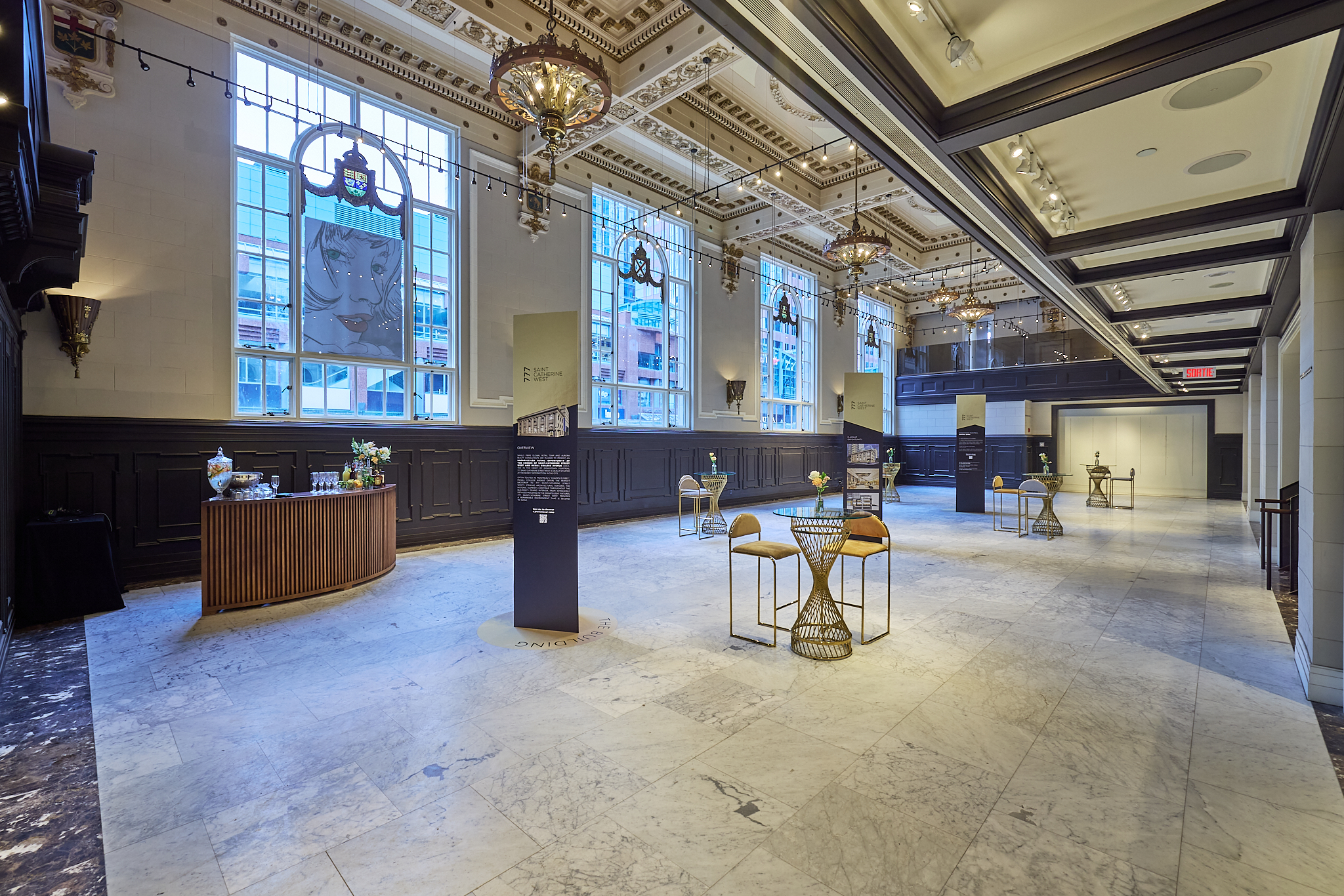
Often dubbed Montreal’s “Champs Élysées,” McGill College Avenue provides a distinguished setting for the retail space. The building’s architecture combines classic elements with contemporary design, featuring intricately detailed moldings and ornate light fixtures throughout its grand interior. This striking aesthetic creates an appealing atmosphere for retailers seeking a unique and luxurious environment for their operations, with the opportunity to modify the space to make it appear more contemporary. McGill College Avenue is seeing updates that will turn it into a pedestrian promenade.
Main floor. Photo: Darwin Doleyres
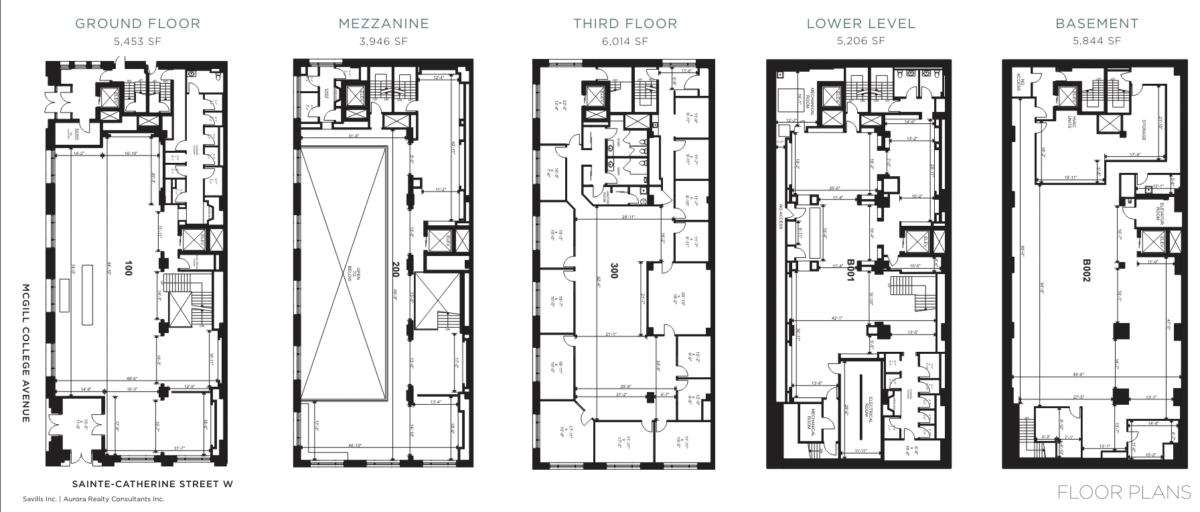
Spanning 26,463 square feet across five levels, the space at 777 Sainte-Catherine Street West offers ample room for a variety of retail configurations. The ground floor boasts a substantial 30-foot ceiling and 5,453 square feet of open retail space, perfect for large displays or flagship operations. The mezzanine provides 3,946 square feet, while the third floor and lower levels add additional flexibility for various retail concepts. With a frontage of 54 feet on Sainte-Catherine Street West and 120 feet on McGill College Avenue, this retail space ensures high visibility and excellent foot traffic.
Looking from the mezzanine level to the main floor. Photo: Darwin Doleyres
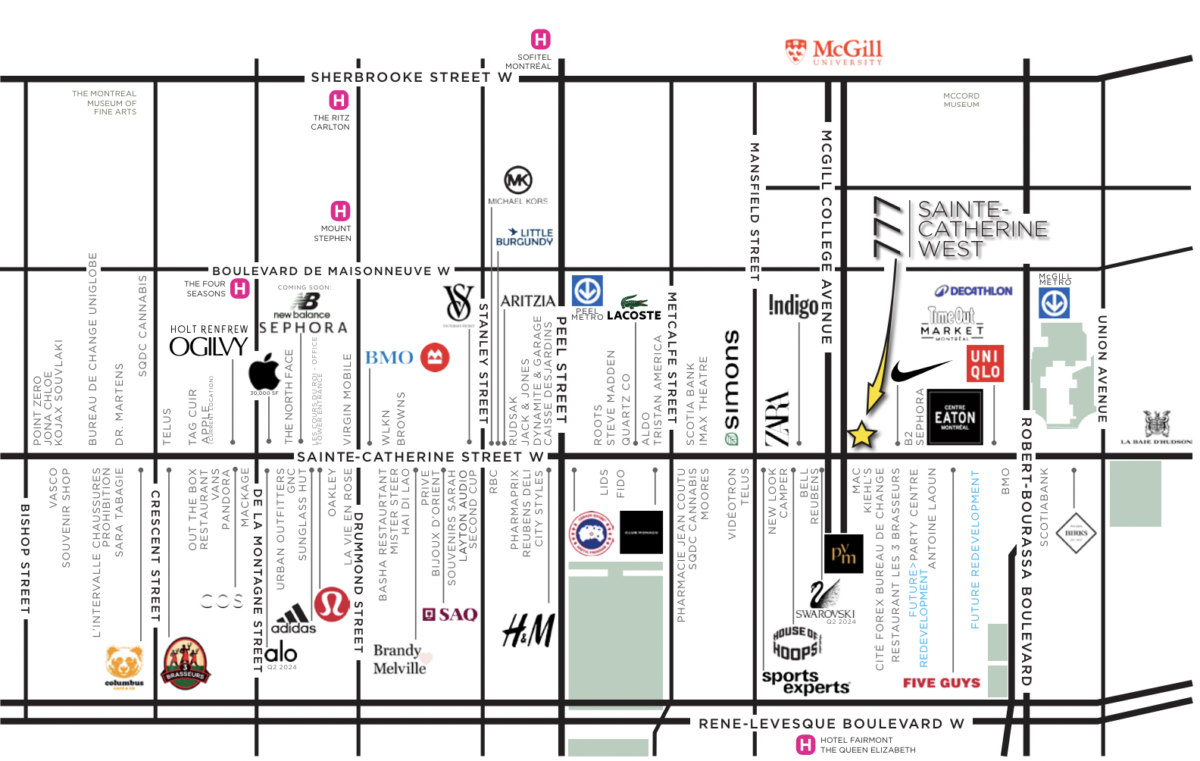
Its central location near major landmarks like the Montreal Eaton Centre and McGill University makes the retail space an attractive proposition for both businesses and customers. Additionally, its proximity to Peel and McGill metro stations, both within a five-minute walk, offers convenient public transportation access for staff and visitors.
Looking from the mezzanine level to the main floor. Photo: Darwin Doleyres
As part of Phase 1 of the Sainte-Catherine Street West Revitalization Project, the space is positioned in a key area experiencing significant growth and investment. Leasing the retail space provides a unique opportunity to be at the forefront of downtown Montreal’s transformation, with the potential to attract both local residents and tourists.
One can take a virtual walk through the space via a Matterport tour.
Anyone interested in leasing 777 Sainte-Catherine Street West can contact:
Jordan Karp, EVP, Savills Canada: 1-416-922-2223, jkarp@savills.ca
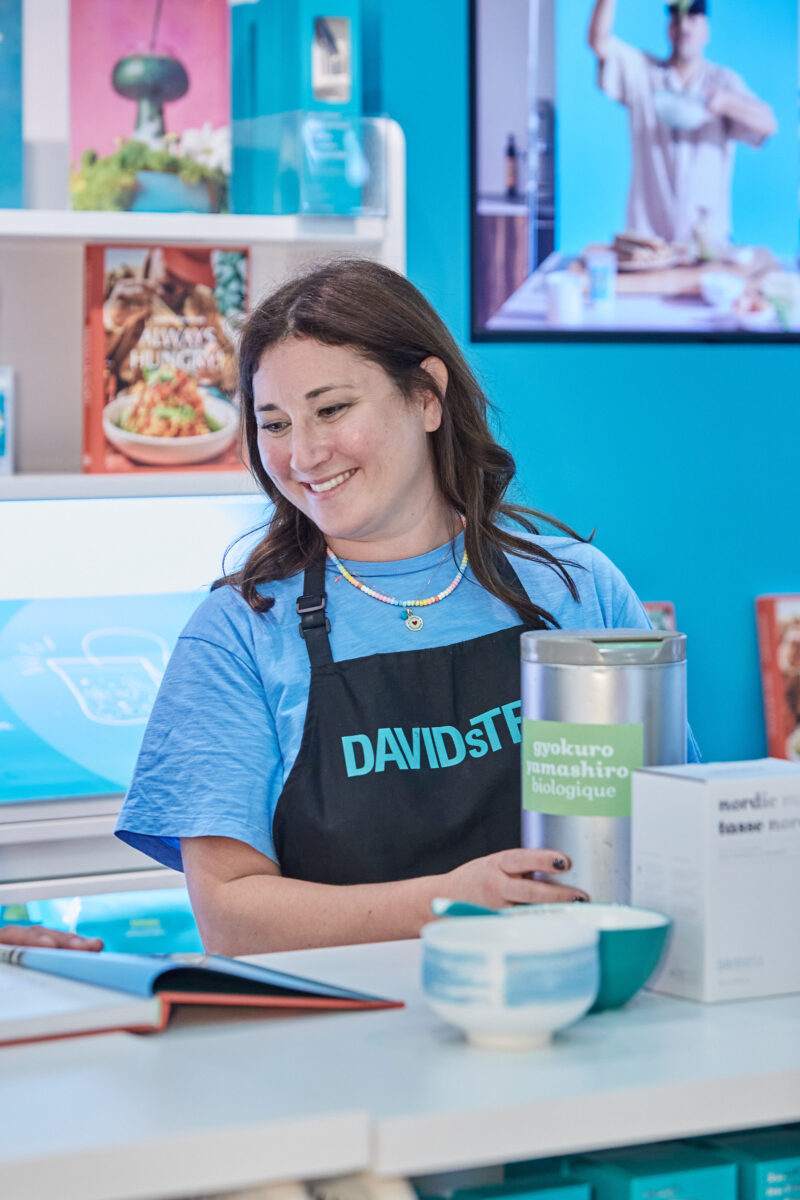
Anatomy of a Leader: Sarah Segal, CEO of DAVIDsTEA
The entrepreneurial spirit has been in Sarah Segal’s blood since she was a child.
Today, the well-known Canadian businesswoman is CEO of DAVIDsTEA since December 2020 and President of Squish Candy since January 2014.
Segal was born and raised in Montreal. She has a B.A. in Environmental Health from McGill University. Her junior year was spent at the London School of Economics.
She took a job out of university and went to China, working with the Junior Professional Consultants Program with the Canadian government. At the time, Segal worked within the United Nations organization. While working there, her boss recommended she do a Masters at Oxford University and she ended up doing a Masters in Water Science, Policy and Management.
“I had the pleasure of growing up in a retail family, both my grandparents’ side and my parents as well. We’re very entrepreneurial in our own way. My parents directly ran a couple of businesses. So from a very young age, my earliest job was working in my mom’s toy store which was a beloved toy store in Westmount here in Montreal. It was called Oink Oink,” said Segal. “She became known for free gift wrapping.”
Image: Sarah Segal
The store was open throughout Segal’s life growing up. It closed about a year or so ago.
“I really loved it. I grew up in a store. You learn a lot being around customers. I really loved wrapping. I loved gifting. I loved helping people find the perfect gift. I loved the full environment of that store which was pure joy. Now I have kids and I understand the whole toy dynamic,” she said.
“You learned through osmosis. Like merchandising and display. I would get to do the window. And I learned to work with customers and work with cash at a very young age. I don’t think you study that necessarily.”
As she grew up, her father founded Le Chateau and her mother helped run that retailer since 1959.
Segal also worked in many clothing stores.
“That was really my exposure to customers and customer service and helping customers. It was a very enjoyable line of work for me. It just felt like something you did. I gravitated towards it.
“I love talking to people. At the end of the day, I feel maybe shy in other situations but when I’m working in a retail environment I’m not shy. And I think as I grew older and more self aware I realized what kind of energy it gives you.”
Image: Sarah Segal
After graduating with her Masters, Segal joined DAVIDsTEA in 2010 in the area of product development. She became CEO in December 2020.
“I had this desire to do a similar concept as DAVIDsTEA with candy. And I saw this opportunity at a certain point. I remember wanting the vibe of opening stores and trying that entrepreneurial spirit and just so excited about the candy space and discovering this world of gummy bears,” she said of how Squish was created.
When Segal looks back at her family background and its entrepreneurial spirit, she said she learned that it takes hard work.
“I really do think (her parents) led by example. They worked 24/7. I don’t know if that’s a generational thing or a cultural thing. I’m sure a lot of people can speak to it in their own ways but for my parents they worked 24/7. I never really saw them turn off. Even on our family vacations, they would be on buying trips. It was their whole life,” said Segal. “I guess I just knew that from a very young age that it’s very involved.”
Segal said it’s definitely a time of change and evolution today in the retail industry.
“But I think retail has been evolving for quite a number of years. There are some things that haven’t changed. I still think that people want to connect in a very real way with the brand, have discussions, learn about the products, have an experience. We’re seeing such great energy in our stores. It’s still really relevant to have that human connection and to smell, touch, taste,” she said.
“I think the things that are changing are how many stores you need to have that impact, how far people are willing to displace or go to have an experience. That’s been changing for 10 plus years and kind of accelerated at this point. So I think being very, very thoughtful of where you go and how you reach your customers now with all the data we have with online sales and everything you can be very thoughtful about where you pop up or where you open. It can change and has changed.
“But I don’t think stores and in person activation is declining in any way. It’s even more relevant as a complement to a digital experience.”
Image: DAVIDsTEA
Segal said she tries to lead by example. She’s very involved in the business.
“I believe authenticity and trust is something that you build over time. I was lucky enough to come into an organization where a lot of people already knew me. That really helped in terms of me getting feedback, having that trust and open communication,” said Segal. “I believe that’s what allowed us to survive through such a big transition. It’s been our ability to communicate openly in our organization. I’ve had two children since I’ve been in this role. I’ve been a working mom. I didn’t even take a mat leave. There’s other parents in the company who were very collaborative.
“It’s a very honest and open communication and it is something that prioritizes flexibility. I hope the team feels they can talk to me about the real life struggles they face because I live it every day and share with them that you can be fully committed and work a lot but also not at the expense of your family. That’s something we’re all aligned on internally.”
Her children are two and five years old. How does she manage to juggle that, being a parent of young children and running a company?
“A lot of support. I have support here at the office. So much understanding . . . I think everyone understands when I go home for dinner. I’m going to cook for my kids, I’m going to drop them off for school. If my daughter is with me, they know why. I think it’s really normalizing those two roles. I’m not alone. Everybody aligns here and has the same situation and appreciates my values around that.”
Beyond family time and work, Segal loves playing tennis. She’s a long-time tennis lover.
“I’m very active. I played a lot of sports in the past. Team sports don’t translate into adult life so easily because of the time restrictions . . . So tennis is what I’ve been able to keep going. And I walk a lot. It’s my life hack, my pandemic habit, that continues. It’s something I can do while pushing a kid or having them on my back,” she said.
“That’s the one thing I’ve been able to maintain that doesn’t have a schedule. With work and kids, I’m at the stage where scheduling is almost impossible.
“I’ll walk in the rain or the snow, whatever. I’m very Montrealer like that. My other hack I started a few years ago was restorative yoga . . . Twenty minutes at night changed my whole alignment. It’s so enjoyable . . . It’s been a way for me to process the day and when you’re with so many people in the day, that time has been a big win for me.”
Apple has launched Tap to Pay on iPhone in Canada which it says allows businesses to seamlessly and securely accept payments from contactless credit and debit cards, Apple Pay, and other digital wallets using only an iPhone and a partner-enabled iOS app.
The retailer said no additional hardware or payment terminal is required.
Jennifer Bailey
“Canadians increasingly rely on a variety of digital and contactless payment options, so we’re excited to partner with payment platforms to offer merchants across Canada a private, secure, and easy-to-use capability that meets customers where they are,” said Jennifer Bailey, Apple’s vice president of Apple Pay and Apple Wallet, in a statement.
“We’ve seen how merchants and customers around the world appreciate the versatility of Tap to Pay on iPhone, and in a region as diverse as Canada’s, we look forward to making it easy for businesses of any size to transact from coast to coast with just an iPhone.”
Image: Square
Apple said payment platforms and developers can integrate Tap to Pay on iPhone into their iOS apps, making it easy for merchants to enable this secure and convenient capability. Starting today, Adyen, Moneris, Stripe, and Square are the first payment platforms in Canada to offer Tap to Pay on iPhone.
In the coming months, Aurus; Chase Payment Solutions, a part of J.P. Morgan Payments; Fiserv; and Helcim will enable Tap to Pay on iPhone for customers in Canada. Tap to Pay on iPhone will also be available at merchants such as Sephora, as well as Apple Store locations across the country later this year. Tap to Pay on iPhone works with contactless credit and debit cards from leading payment networks, including American Express, Interac, Mastercard, and Visa, said the company.
“With Tap to Pay on iPhone, merchants can unlock contactless payment acceptance through a supporting iOS app on an iPhone Xs or later running the latest iOS version. At checkout, the merchant will simply prompt the customer to hold their contactless credit or debit card, iPhone, or Apple Watch, or other digital wallet near the merchant’s iPhone, and the payment will be securely completed using NFC technology. No additional hardware is needed, so merchants can accept payments from wherever they do business. Contactless payments such as Apple Pay are already accepted at more than 90 per cent of Canadian retailers, and with this new capability, virtually every business, big or small, can use Tap to Pay on iPhone at checkout,” said Apple.
“Privacy is fundamental in the design and development across all of Apple’s payment features. With Tap to Pay on iPhone, customers’ payment data is protected by the same technology that makes Apple Pay private and secure. All transactions made using Tap to Pay on iPhone are encrypted and processed using the Secure Element, and as with Apple Pay, Apple doesn’t know what is being purchased or who is buying it.”
Tap to pay on iPhone (Image: Shopify)
In a statement, Stefan Jensen, Sephora’s vice president treasurer, said a focus on innovation and the customer journey is central to Sephora’s business, and delivering Tap to Pay on iPhone is another example of how Sephora is continuing to offer an elevated experience to consumers.
“We’re thrilled to soon expand Tap to Pay on iPhone to our Canadian market after introducing it to our stores in the U.S. last year and seeing how the beauty community has embraced this new way to pay. Today, our Beauty Advisors use their iPhone to provide shoppers with curated beauty recommendations, and thanks to this new flexible payment acceptance solution, they will soon be able to seamlessly complete contactless transactions on that same iPhone — wherever they are in the store,” he said.
In February 2022, Apple announced plans to introduce Tap to Pay on iPhone in the U.S.
“As more and more consumers are tapping to pay with digital wallets and credit cards, Tap to Pay on iPhone will provide businesses with a secure, private, and easy way to accept contactless payments and unlock new checkout experiences using the power, security, and convenience of iPhone,” said Jennifer Bailey, Apple’s vice president of Apple Pay and Apple Wallet, at the time.
“In collaboration with payment platforms, app developers, and payment networks, we’re making it easier than ever for businesses of all sizes — from solopreneurs to large retailers — to seamlessly accept contactless payments and continue to grow their business.”
“Whether you’re a salesperson at an internet-first retailer or an individual entrepreneur, you can soon accept contactless payments on a device that’s already in your pocket: your iPhone,” added Billy Alvarado, Stripe’s chief business officer, at the time. “With Tap to Pay on iPhone, millions of businesses using Stripe can enhance their in-person commerce experience by offering their customers a fast and secure checkout.”
Retail Insider is streamlining its Canadian retail news from around the web to include a handful of top news stories that can be viewed quickly during the day. Here are the top stories from the past 24 hours.
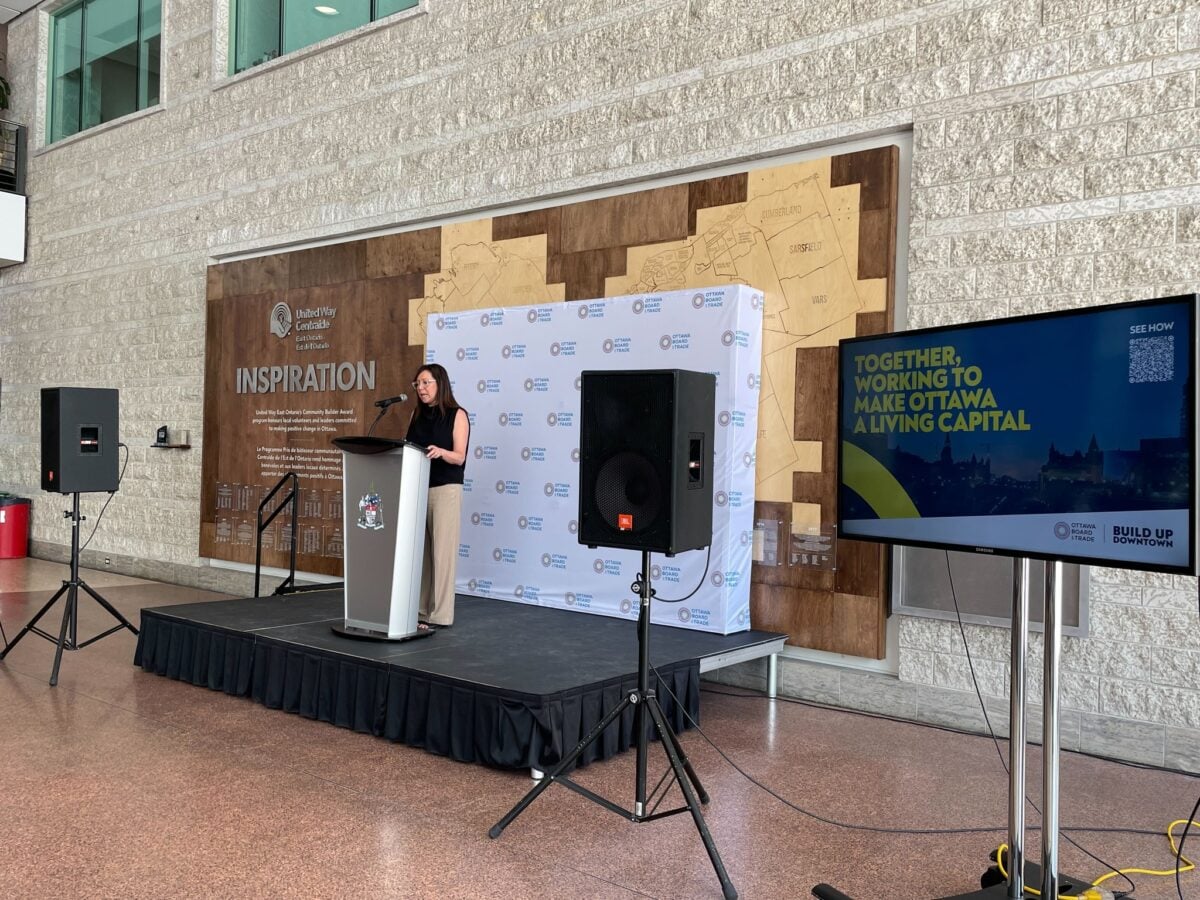
The Ottawa Board of Trade has collaborated with the Canadian Urban Institute to launch a new initiative to help transform and revitalize the city’s downtown core.
The Downtown Ottawa Action Agenda aims to reimagine and rejuvenate Downtown Ottawa, making it more diverse, resilient, and vibrant for generations and challenges to come.
Under the plan, Downtown Ottawa will see the addition of 40,000 new residents and the creation of 50,000 jobs by 2034, transforming the cityscape into a bustling hub of activity and innovation. The plan proposes creating a joint $500 million fund to kick-start a series of catalytic projects, including significant enhancements to the public realms of Sparks Street and ByWard Market, and the establishment of a new Business Incubation District and an Arts/Culture Corridor.
Sueling Ching
“This is more than a plan; it’s a renaissance for Ottawa’s downtown,” said Sueling Ching, President & CEO, Ottawa Board of Trade. “By fostering a live-work-play environment, we are not only boosting the local economy but also creating a culturally rich, inclusive, and accessible downtown for all to enjoy. And a Capital City all Canadians can be proud of.”
Mary W. Rowe
“Downtown Ottawa’s revitalization is a blueprint for how cities can harness urban space to meet the challenges of the 21st century,” said Mary Rowe, President & CEO, Canadian Urban Institute. “By focusing on inclusivity, resilience, and vibrant public spaces, Ottawa is setting a standard for urban innovation.”
The Downtown Ottawa Action Agenda
Rowe said downtowns around North America are reinventing themselves and Ottawa is no exception to that.
She said the pandemic exacerbated a number of issues downtowns already had but became more obvious and more critical during the pandemic.
“The Board of Trade came to us and said they wanted to do something. We’ve got to figure out what the future of the downtown is. It’s too important. The commercial tax base. So we started working with them and a whole bunch of partners,” said Rowe.
“Historically, downtowns were places you went for excitement, to see something you didn’t see in your neighbourhood, to have an experience . . . Downtowns were destinations. They were really lively places. Over time they became more dominated by office uses, office workers. And in many ways that sort of changed the composition of downtowns. Suddenly you were going downtown to work. Hasn’t always been the case.”
Today, the office landscape has changed with more remote workers and hybrid workers. This has given downtowns an opportunity to rethink what downtowns should be.
“Downtowns are for people. The main ingredient for any downtown is people. Lots of people. Different kinds of people. People coming into a physical environment for some kind of extraordinary shared experience. And that’s what we’re rediscovering now. We’re rediscovering how do we do that? How do we attract residents to live downtown? How do we attract more visitors to experience downtown and also how do we accommodate workers who may be coming in and out and commuters? These are all part and parcel of the challenge as we reinvent downtowns.
“It’s happening around the country and Ottawa is Canada’s living room. So it’s important that they get it right. The rest of the country is watching.”
Image: Ottawa Board of Trade
Here’s the Top Five Immediate Actions outlined in the Ottawa plan:
Prioritize Housing: Streamlining processes to increase downtown residency through higher density and use of public land.
Invest in the Future: Establishing financial mechanisms for ongoing downtown investment.
Address Homelessness, Addiction, and Mental Health: Implementing focused programs with multi-level government funding.
Improve Regional Mobility: Enhancing transit options to make downtown more accessible.
Position Downtown Nationally and Internationally: Marketing efforts to boost economic activity and enhance downtown’s image.
Ching said that as the voice of business the Board of Trade advocates for priorities and policies that create a competitive business environment.
“We are also representing the interests of the business community as it pertains to economic development in our community. So from that perspective, we have been mindful of the impact of the changes in workforce strategy for both the private and the public sector since the beginning of the pandemic because as you know our downtown in Ottawa we’ve been very fortunate with our business district in that a high majority of it is coming from the public sector,” she said.
“During the pandemic at one point we realized that the hybrid workforce strategy was not something that was going to go away and we were all going to go back to normal. So because of that we knew that the footfall in the downtown core was going to change. It was going to change the dynamic of the economy. We know that the downtown is an important part of the economy and also that there are many businesses there that were built up for that market and that it’s also a great asset for tourism.
“We knew that it would have to transform to become more diverse, more resilient, more vibrant and that’s why we declared it last year a top priority.”
Byward Market in Ottawa (Image: Dustin Fuhs)
Ching said Ottawa is not alone in the issues downtowns face today in Canada and the United States.
“But Ottawa is a poster child, I’ll tell you that. All downtowns of the large cities across Canada, they were disproportionately impacted during the pandemic. But Ottawa has remained the slowest to recover its downtown and therefore its economy among the larger cities,” said Ching.
“And it has everything to do with the fact that we are the seat of government and that the footprint of the public sector in our downtown core is significant and that the return to office, not work, for that sector is significantly impacting our ability to recover.”
Ching said safety in downtown areas is critically important because it directly impacts the ability to attract people to the core.
“During the pandemic what happened was that many of those issues became highlighted if you will. Maybe even accelerated and so we have to ensure the safety and security of the people that we want to work in the city core, live in the city core, and visit the city core but also for the people who are the most vulnerable and come up with a solution to serve those people as well. It’s critically important. It has the ability to discourage people from investing in the core or in the city. It needs to be addressed. And it needs to be addressed in a very multi-faceted, trilateral way for all levels of government.”
Image: Ottawa Board of Trade
The action plan was developed by the Canadian Urban Institute, in partnership with the City of Ottawa, Ottawa Tourism, Invest Ottawa, BOMA Ottawa and the National Capital Commission.
Brendan McGuinty
“Our collaborative approach ensures that the transformation of Downtown Ottawa not only meets the economic and cultural needs of today but paves the way for future generations,” said Brendan McGuinty, Board Chair, Ottawa Board of Trade.
“We’re taking a Team Ottawa approach to our downtown. By coming together as a community, we’re not just revitalizing our core, but also setting the stage for a dynamic and resilient future for all Ottawa residents,” said Ottawa Mayor Mark Sutcliffe.
Mark Sutcliffe
The Ottawa Board of Trade is the voice of business and a key economic partner in the National Capital Region. Its mission is to cultivate a thriving world class business community. One that drives affordable, inclusive, and sustainable city building. It is a champion of Ottawa as the best place to live, work, play, learn, visit and invest. For information, visit www.ottawabot.ca.
The Canadian Urban Institute is a national platform where policy makers, urban professionals, civic and business leaders, community activists and academics can learn, share, and collaborate with one another from coast to coast to coast. Through research, engagement, and storytelling, CUI’s mission is to support vibrant, equitable, livable, and resilient cities in Canada. For information, visit https://canurb.org/.
Bayview Village, an urban oasis for shopping at the intersection of Bayview and Sheppard in an affluent neighbourhood of Toronto, is being transformed with the addition of new residences, added experiential shopping venues, welcoming pedestrian avenues, green areas and public spaces.
It is also adding several new tenants to its retail mix as it aspires to become a European-style shopping centre.
“Bayview Village is always committed to providing an exceptional experience for both our valued visitors and esteemed tenants. With an array of exquisite shops and dining options, our goal is to consistently deliver a premium retail environment that perfectly complements the calibre of our outstanding partners. Our newly announced tenants will further ensure an elevated experience for everyone who visits Bayview Village,” said Carrie DeVries, Vice President, Retail Leasing, for QuadReal Property Group, which owns the property.
Bayview Village celebrated its 60th anniversary last year. The shopping centre is about 315,000 square feet on one level.
Bayview Village (Rendering: QuadReal Property Group)
John Minas
John Minas, VP, Retail East, handling the operations for Eastern Canada for QuadReal Property Group, said retail was hit quite hard in Toronto during the pandemic with all the government restrictions, particularly with non-essentials.
“We’re seeing some luxury categories, especially jewelry, performing at pre-pandemic levels. Our spa and ballet studio are doing very well. You’re seeing a lot of the luxury brands starting to get back to pre-pandemic levels and then you’ve got some other retailers that just haven’t come back which you’ve probably seen and heard about in other shopping centres across the country,” said Minas.
He said the shopping centre is over 90 per cent occupied as new tenancies continue to join the roster.
Ju-Raku (Image: Bayview Village)
Those include Ju-Raku, a Japanese high-end style restaurant, in about 4,500 square feet of space, which is scheduled to open in September.
It will offer a unique dining experience featuring an omakase sushi bar, teppanyaki tables, and a traditional Japanese izakaya-style private dining area.
“We are so excited to be opening the very first Ju-Raku at Bayview Village as we think this prestigious shopping centre is in a fantastic location for our new upscale Japanese restaurant. We will be bringing a taste of Japan to our guests in a modern space. With three areas of the restaurant providing different experiences, customers can expect a sushi bar, a teppanyaki space and a main dining room, all with an extensive sake menu and Japanese-inspired cocktails,” said the restaurant brand in a statement.
Moda Kids (Image: Bayview Village)
Minas said Moda Kids has a target opening date of August in 2,376 square feet of space. Moda Kids is a one-stop mini luxury department store to shop for the latest trends in the kid’s world that can best reflect unique styles of kids.
“We’ve had our eye on Bayview Village Shopping Centre for a long time and have now found the perfect space for our new Moda Kids shop. So many of our customers are based in Toronto and with this new location we’ll be better able to service them. Much of our inventory is high-end baby products from Europe and we are confident Bayview Village shoppers will love what they find at Moda Kids,” said the brand in a statement.
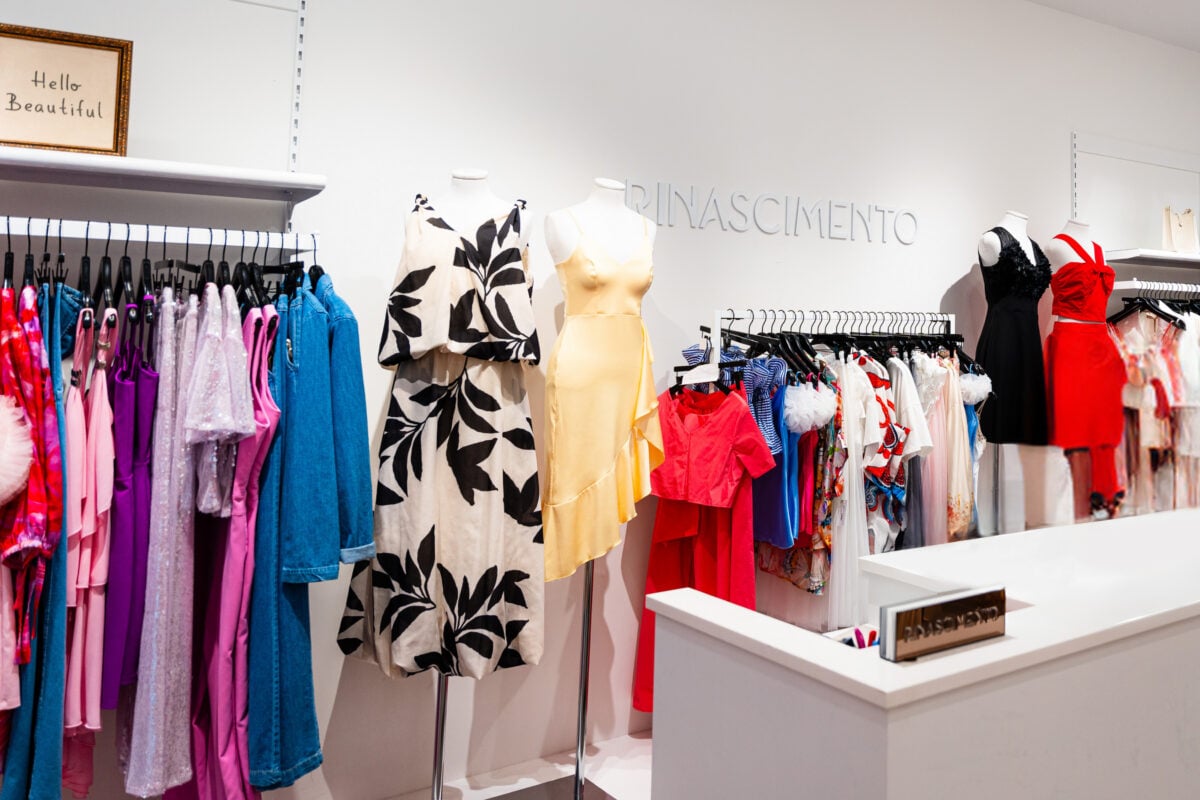
Rinascimento has opened in 1,096 square feet of space. It’s a luxe Italian brand selling women’s clothing, shoes, accessories, and handbags, inspired by the glamorous and contemporary woman.
He said Pür & Simple Restaurants Inc. also has a target opening date of January 2025 in 2,834 square feet of space. Pür & Simple is a national breakfast restaurant serving the simple comforts of breakfast with imaginative twists on the classics.
“The new Pür & Simple Restaurant at Bayview Village will be very different from our other locations. We’re more than a breakfast place and will be serving delicious offerings all day long, an extension from our normal hours. We believe the Bayview Village shopper will be excited to enjoy our first-ever indoor patio and elevated presence. We’ll be combining two units to present a vibrant and dynamic dining experience for our customers,” said Sean Sarrami, Chief Development Officer & Co-Owner, Pür & Simple Restaurant Inc., in a statement.
Bayview Village (Rendering: QuadReal Property Group)
Minas said Bayview Village is undergoing a complex interior renovation that’s going to be in harmony with a future exterior renovation.
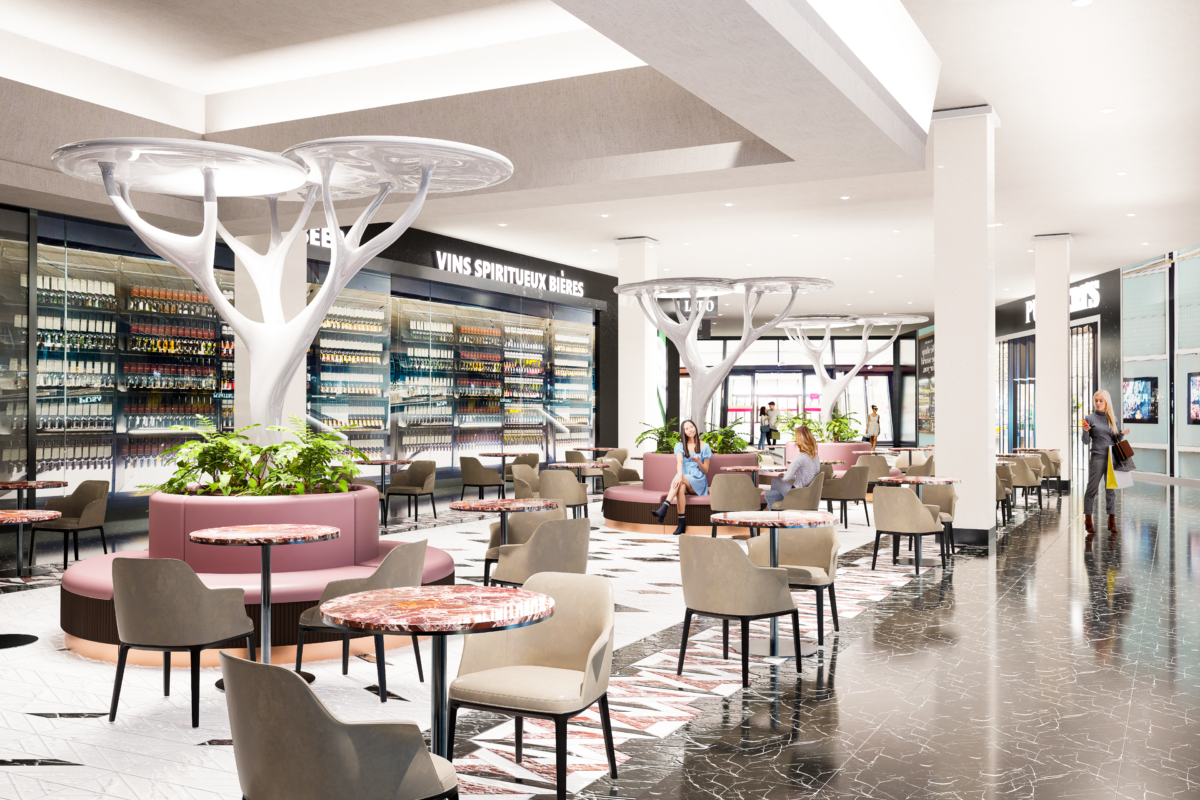
“We’re looking at basically creating the great European shopping centre experience,” he said, adding that this includes classic European details to the flooring with marble flooring as opposed to porcelain. Arches will be added as well.
“We’re trying to develop something that’s going to be cohesive and we’ll enhance and elevate our user and customer experiences. What I mean by that is elevate something that’s going to be timeless and add technology to it and obviously performance.”
Minas said easy wayfinding will also be included in the shopping centre emphasizing some of the gathering points throughout the mall. Piazzas with marble tiles will interact with one another. New lighting is going to be added as well.
“The reason why we did that is we looked at Bayview Village pre-pandemic and when we first bought it and obviously liked the uniqueness of it and that was one of the things that attracted it to us as far as the property goes. If you walk through Bayview Village on any given day there’s actual natural trees, there’s natural lighting which makes it really unique,” he said.
New lighting is being added to the centre court area including a big bang chandelier.
Bayview Village (Rendering: QuadReal Property Group) The Future of Bayview (Rendering: QuadReal Property Group)
The residential component is a key part of the redevelopment plans into the future.
“QuadReal is one of Canada’s leading providers of housing. At Bayview Village, we are reimagining the community to create a highly amenitized living experience that seamlessly connects to high-end retail, transportation, and new outdoor spaces,” said Aaron Knight, Senior Vice President, Development, for QuadReal.
“Working with creative partners like architect Ralph Gianonne and Antonio Tadrissi, the redevelopment will create a million square feet of new living space with over 1,000 rental and condo units across five buildings. We have a long-term vision for Bayview Village, and we’re committed to supporting a vibrant community for its residents and guests.”
The renovation of Bayview Village shopping centre draws from its prestigious history and status. Antonio Tadrissi, creative director of Prototype Design Lab and President of Tadrissi Studio, and his team aim to call on elements of the centre’s glamorous history while maintaining its luxury reputation. Their design philosophy envisions the centre as a central gathering point, inspired by European locales like Piazza Duomo in Milan and the shopping streets of Paris and Rome. They selected materials and finishes to evoke a timeless, classic experience, using artisanal marble tiles in a chevron pattern and brass and copper accents. Existing trees in the halls became focal points, complemented by custom-carved wood infinity seating, symbolizing the blend of nature and the centre’s indoor-outdoor history.
The Future of Bayview (Rendering: QuadReal Property Group)
On its website, Bayview Village described its objective this way: “To transcend what it means to be a lifestyle hub by creating a truly holistic, mixed-use environment built on community connectivity, a diversity of experiences and services, a spectrum of housing options, and of course retail therapy.
“How will we do this? Our ambitious pursuit starts with our approach. The genesis of which is to provide all of our guests, whether they be residents, shoppers, or visitors with a resort-like experience; exclusive and curated with the needs of each individual thoughtfully considered.
“Our new expansion is organized around an intimate outdoor retail promenade, flanked by boutique shops and restaurants. The promenade itself will be highly programmed, offering patio spaces for relaxing, space for rotating public art, and seasonal activities; seamlessly connecting the new retail, the residential buildings and a new public park.”
The Future of Bayview (Rendering: QuadReal Property Group)
The website says residential lobbies and below-grade parking will directly connect residences with the interior of the shopping centre, as well as the Sheppard-Yonge subway station, providing all users direct access in a way that is unique to Bayview Village and quite unlike the approach of other malls also undergoing redevelopment.
“The vision: to modernize and activate the southwest portion of Bayview Village. This includes bringing Bayview Village out to Sheppard, with a multi-level storefront as our new front door to the city. An integrated podium incorporating both residential and retail elements to support the city’s key planning and urban design objectives for this part of Sheppard Avenue. To ensure a sustainable, future-proof development, we’ve improved connectivity to transit and the community. That’s why our concept plan includes new retail and residential along Sheppard, and new integrated direct connection to the TTC Line 4 subway that will provide a weather protected connection to the new buildings and to the existing shopping centre.
“New dedicated public open space will form a new urban ‘town square’, allowing for different events and opportunities for the community to come together all year long.We are in the midst of creating a destination where people can participate in a more vibrant urban neighbourhood. How? By improving the pedestrian experience, while improving the efficiency of various modes of transportation through new bike lanes, ease of access to the subway and functional parking. Through incorporating a series of well-located urban parks and green spaces, an interconnected series of pedestrian walkways links the community/transit to residential to retail across the various activity zones through the centre.
The Future of Bayview (Rendering: QuadReal Property Group) The Future of Bayview (Rendering: QuadReal Property Group)
“The NE park is more intimate in scale and acts as a more traditional neighbourhood park, lush with plantings, trees and seating. Consistent with our core principles, native and drought-tolerant plant species will build upon Bayview Village’s sustainability and visual green identity.
“The SW park anchors the site and forms part of a modern, urban plaza. Bounded by water features and flush with outdoor seating areas, the plaza acts as both a thoroughfare to the nearby subway and a place to relax and meet friends.”
Phil's Place at St Lawrence Market (Image: Dustin Fuhs)
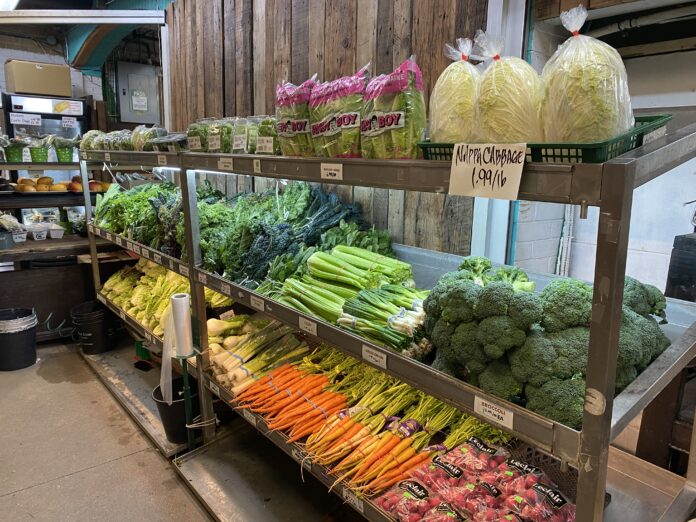
Statistics Canada reported this week that food inflation in April stood at 1.4%, indicating that food prices in stores are 1.4% higher than they were a year ago. However, Statistics Canada also confirmed a trend our lab has been tracking for some time: food prices in April declined by 0.3%. Indeed, they dropped. Looking ahead, we might witness another negative figure from Statistics Canada for May.
Remarkably, food inflation in Canada decreased for the fourth consecutive month in April, falling to 2.3% from 3% in March. Food purchased from stores experienced a year-over-year increase of 1.4%, the lowest since July 2021. This marks the first instance since November 2021 where food inflation (2.3%) has fallen below the general inflation rate (2.7%). This is undoubtedly positive news, especially given the challenging years we have endured. Lower prices are what many Canadians have been yearning for. Yet, the reactions and comments about the inflation data suggest that few have recognized that Statistics Canada essentially announced a major shift in food pricing.
Not a single media outlet reported on this development. This omission is quite revealing, suggesting a pervasive preoccupation with highlighting negative news in the data. The data released this week was certainly reassuring for the outlook for the rest of the year. Nevertheless, it appears no one paid heed, not one bit.
This reaction stems from a deeply ingrained obsession. Food inflation has been politicized to an extreme, exploited by all sides of the political spectrum. The political weaponization of higher food prices has rendered most Canadians resistant to the rational analysis necessary to understand the current situation. It has been astonishing to observe. When one individual challenges another’s narrative on food inflation, mutual accusations of conflict of interest and bias inevitably follow. We live in a peculiar era.
Underlying this awkward social discourse is a political contest between parties in Ottawa that has exacerbated the situation, cornering all parties in the process. Why would any party now want the food inflation storm to dissipate when a substantial portion of their messaging revolves around addressing the cost-of-living challenges we all face?
On one hand, Jagmeet Singh, a vocal critic of Loblaw for alleged profiteering, appears unwilling to acknowledge that market forces are at play. Pierre Poilievre, on the other hand, also has little incentive to see the issue resolved. Why would he? It serves as a perfect political problem for the Conservatives to blame the Trudeau government, even though food inflation has been a challenge in most developed nations for a prolonged period. Food inflation has been politically convenient for both the NDP and the Conservatives, but this should no longer be the case. Yet, no one in Ottawa seems to have addressed this with Jagmeet Singh or Pierre Poilievre.
Shoppers Drug Mart (Image: Dustin Fuhs)
In the context of food prices, it is imperative that cooler heads prevail as soon as possible. Emotions and sentiments seem to hold more sway than data or science. Absurd. Every Canadian needs to detach from their emotions, which they often mistake for evidence of truth, and instead focus on what the data is revealing. The data clearly indicates that the situation is improving, and rapidly so.
Before leveling accusations of bias, one should spend time examining the data. Emotions and feelings, though intense, are always misleading guides to the truth.
Retail Insider is streamlining its Canadian retail news from around the web to include a handful of top news stories that can be viewed quickly during the day. Here are the top stories from the past 24 hours.
Too Good To Go is changing the way food businesses handle its extra food products by offering surprise bags at a discounted price to consumers. Since opening in 2022, the company has saved over 4.2 million meals from going to waste and over 2.5 million users across the country have saved a total of 55 million dollars to date. Sarah Soteroff, the Senior Public Relations Manager of Too Good To Go, discusses the current state of the brand, waste reduction, and growth in Canada.
Sarah Soteroff
“We imagine a world without food waste, and we are working tirelessly to make that vision a reality. Every day we are helping consumers save money, providing retailers with extra revenue, and reducing the environmental impact of surplus food. We are driven by the belief that there shouldn’t be any food waste and every day we see firsthand how our surprise bag model not only reduces waste, but also empowers consumers and businesses to create a positive environmental impact,” says Soteroff.
Too Good To Go app helps businesses list surplus items they would usually throw away and helps consumers buy items at a discounted price. The surprise bag model allows consumers to purchase food items from grocery stores at a fraction of the cost – but it is unpredictable of what each bag will contain, adding an element of excitement.
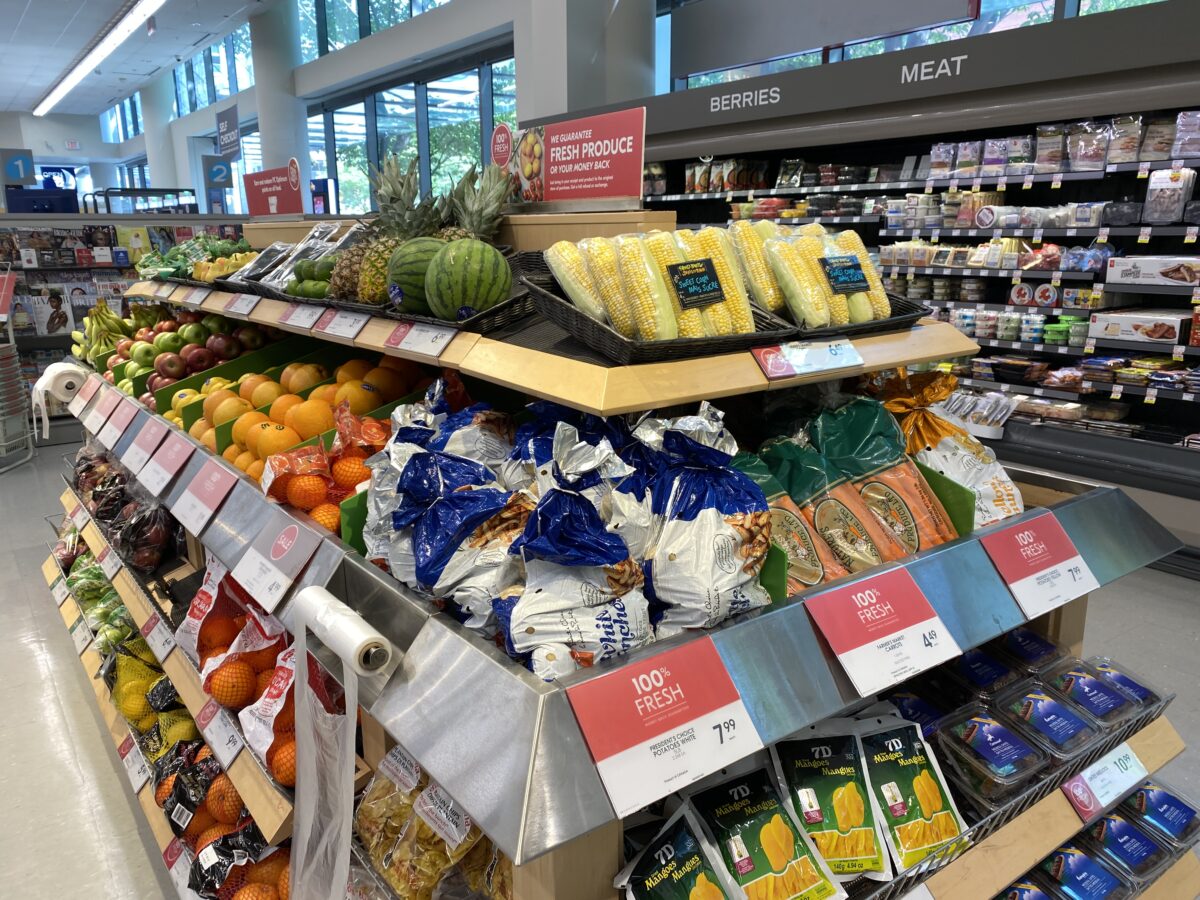
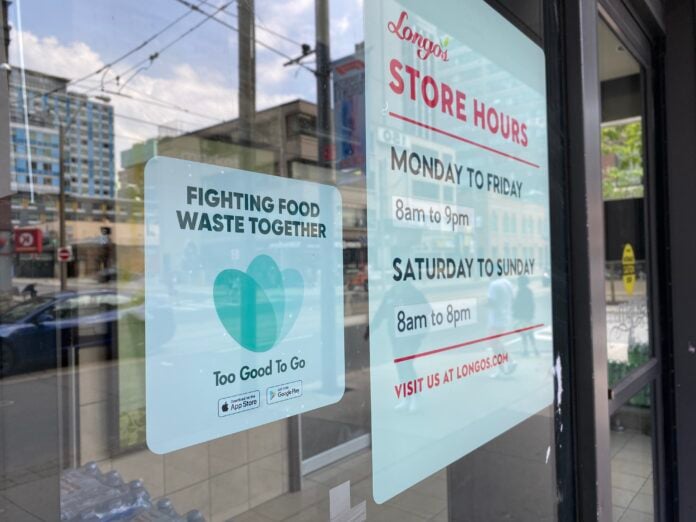
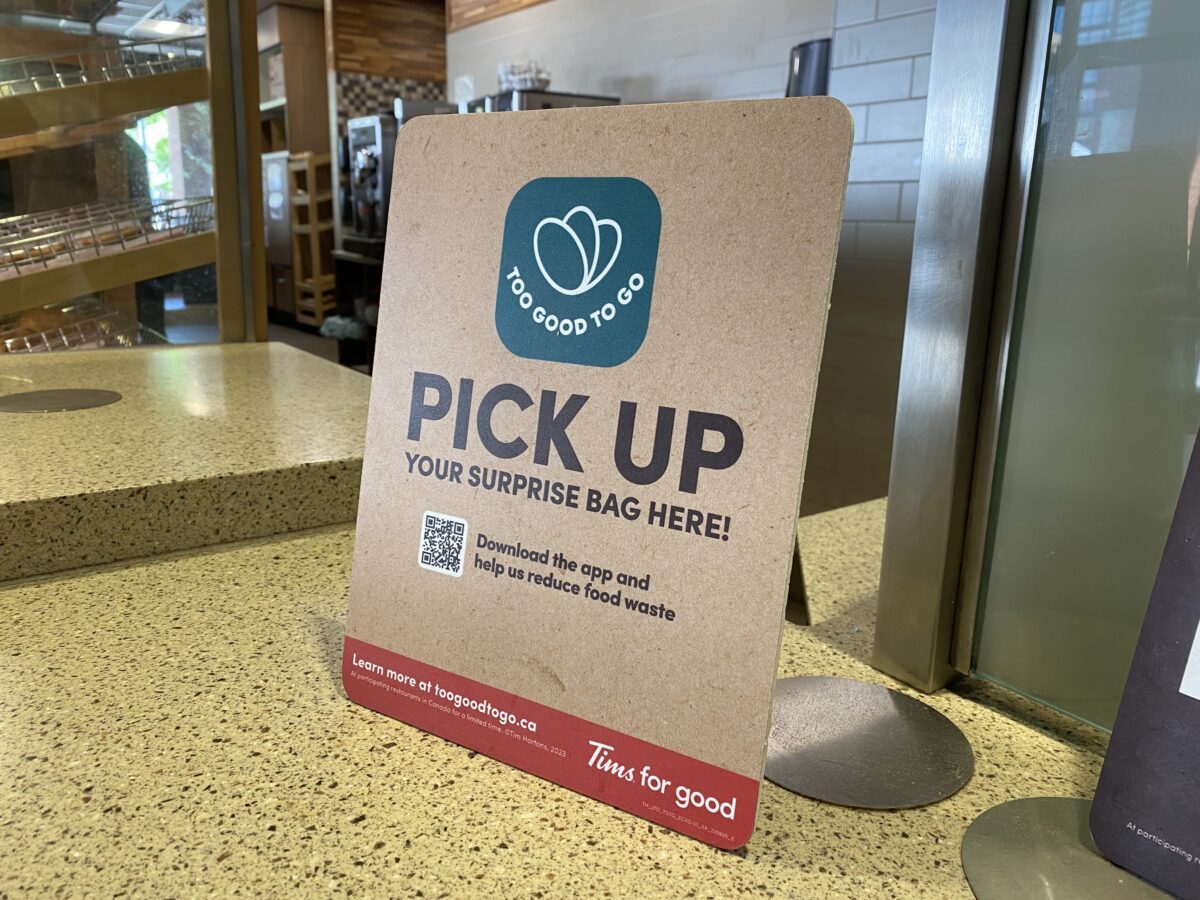
Too Good to Go (Image: Retail Insider)Too Good to Go at Tim Hortons (Image: Dustin Fuhs)
This concept provides flexibility to businesses, as Soteroff says it allows them to create different categories and pickup windows based on the inventory they have left, allowing for customized offers. Partners could be any retailers selling food such as grocery stores, coffee shops, and bakeries. Soteroff says since opening, retail earnings have reached 19 million dollars.
“The beauty of this model lies in its adaptability. Businesses can sell surplus food that would otherwise go to waste, while consumers enjoy access to fresh products at unbeatable prices. This flexibility creates a sustainable solution that benefits everyone involved.”
How it works
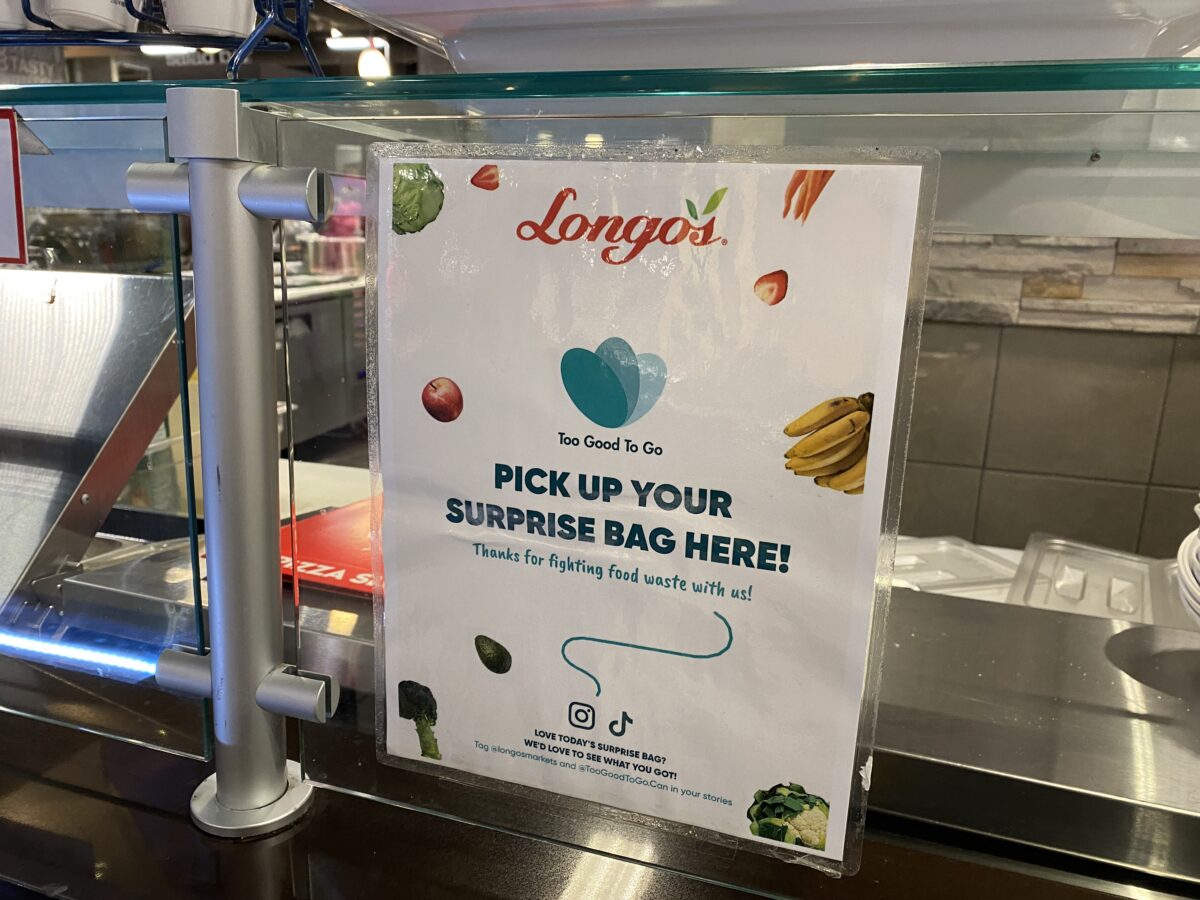
Too Good to Go at Longo’s (Image: Dustin Fuhs)
Filtering by your location or category, consumers are able to find available surprise bags in their area. Once they find something they like, they can reserve it and pick it up at the designated time frame.
To reserve, consumers pay on the app; eliminating the need for cash exchange at the retailer: “They simply swipe a button on their screen to reveal a code that the store matches with their own internal system to ensure a seamless handover.”
To help consumers decide on a surprise bag, retailers are able to offer separate bags for dairy products, meat products, baked goods, or prepared foods.
The app also provides an individual impact summary for each user, highlighting the contributions they have made towards food waste.
“Our goal is to empower both consumers and businesses to see the tangible impact of their efforts in reducing food waste. Users can track their personal contributions, and businesses gain valuable insights into how much surplus they have saved, the additional revenue generated, and their role in lowering carbon emissions.”
Image: Too Good To Go
Partnerships across Canada – big and small
Too Good To Go has built partnerships across Canada throughout the last two years. The app provides consumers with a variety of options including bakeries, cafes, grocery stores, juice bars, and more. One of its largest partners is Tim Hortons, with over 2,500 stores now available, offering baked goods at a reduced price.
With 11 thousand partnerships, the company is seeking to expand further, particularly with larger brands such as Loblaws, Walmart, and Starbucks.
“There is an opportunity here for major food retailers to lead by example. They can demonstrate that sustainability and profitability can go hand in hand by offering surplus food to consumers through our platforms,” says Soteroff. “But I think the discounted prices do turn off a lot of the premium brands, though once they see it in effect, it really does start to showcase how important it is.”
Smaller businesses, such as Homegrown Juice, Greenhouse Juice Co, and Village Juicery, have also found the app beneficial and Soteroff says any retailer who sells food, should look into the program.
“It is inspiring to see local shops find new opportunities with our app. They are not just selling surplus; they are engaging customers who care about sustainability and building loyal communities.”
One month in Quebec: “The program is working”
Too Good to go x Metro (Image: Metro Inc.)
Another large partnership the company has is with Metro, including all locations in Ontario and has recently partnered with locations in Quebec – so far, Metro has saved more than 385 thousand meals.
The pilot program started in Quebec with ten locations, and after its success it expanded in April to include 93 locations. After one month, the Quebec location has saved over ten thousand meals, showcasing how quickly consumers and businesses can see results.
“The rapid adoption of our platform by Metro in Quebec demonstrates how quickly businesses can make a tangible difference. Within just one month, they have saved over ten thousand meals, showing that when retails commit to reducing food waste, the impact is immediate and substantial.”
The Metro partnership started off with only discounting bakery items, but have now been offering prepared foods, dairy items, meat products, and other grocery items.
“There is a real opportunity here to make an influence and a difference on the impact of food waste and what it does to the environment – there is no reason we should have this much food waste. We still have a lot of groundwork to get the message across, to let people know what food waste means and why it matters. But so far, we have heard from a lot of consumers that they feel a sense of empowerment – making them feel less depressed about the state of things.
Since opening in Canada, Too Good To Go has seen changes in consumer behaviour as they are seeking alternative solutions to high cost items and are looking to be more sustainable. The goal would be to have every food retailer on the app.