Home Blog Page 637

Walmart Canada CEO Gonzalo Gebara Discusses Retailer’s Plans for Continued Growth and Omni-Channel Expansion [Feature Exclusive Interview]

Gonzalo Gebara, CEO of Walmart Canada (Image: Mario Toneguzzi)

Gonzalo Gebara, who took over as President and CEO of Walmart Canada in the early part of this year, has ambitious plans to continue to grow the giant retailer’s presence in the country.

“It’s hard to predict the future. With the last four or five years that we’ve had in the world, predicting the future is difficult. But I see a strong growth. We’re in growth mode in Canada,” he told Retail Insider in an exclusive interview while in Calgary recently to officially open the company’s latest state-of-the-art fulfillment centre.

“But we like to say that we’re in omni growth mode. If you ask me if there is room for more stores, I think there are. There is room for more stores in Canada, no question about it. Our value proposition resonates very well across all of the country.

“But also there’s a lot of opportunity to continue to grow our omni capabilities and continue to serve customers in the many different ways they are choosing to shop.”

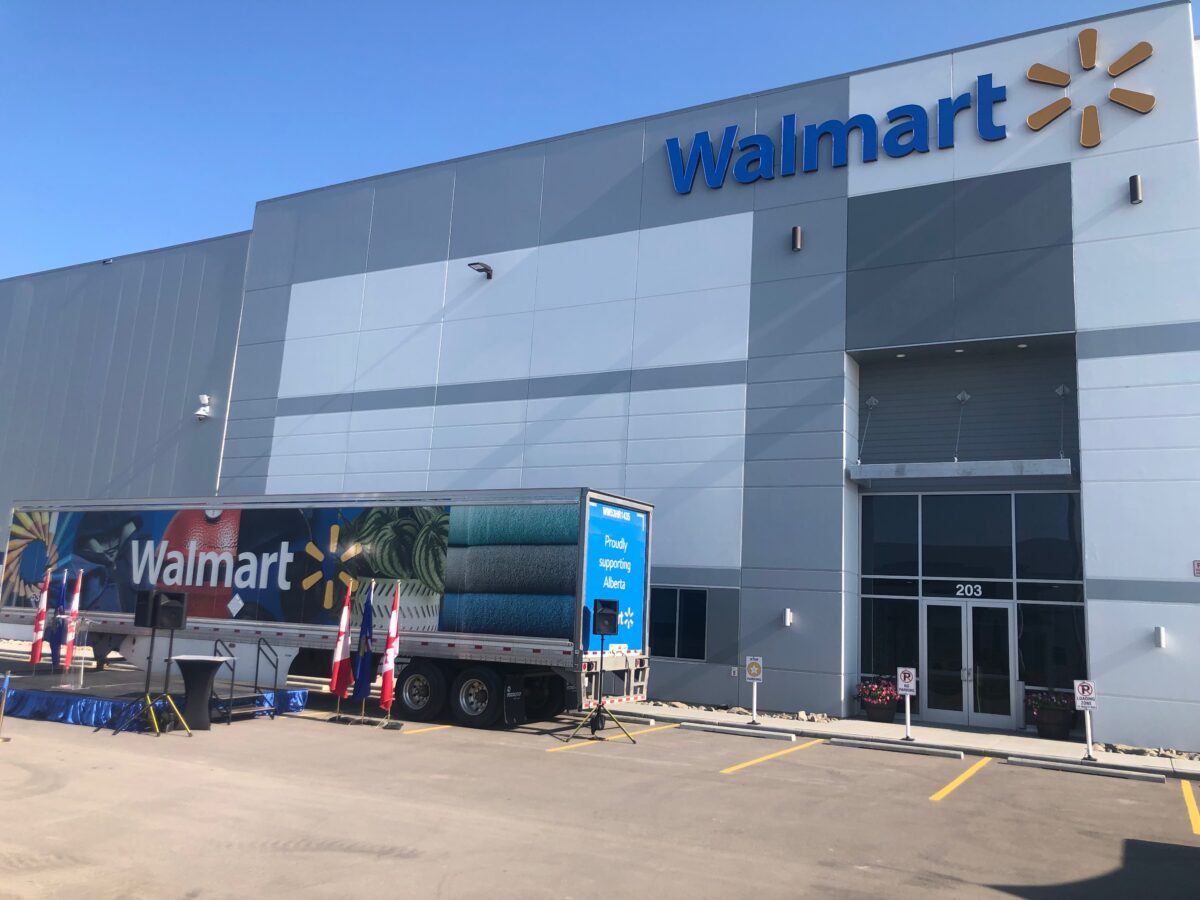
Walmart Canada Fulfillment Centre in Rocky View County, Alberta (Image: Mario Toneguzzi)

Gebara said a facility like the new one in the Calgary area in the Balzac part of Rocky View County is a clear demonstration of the company’s approach to the market. The $100-million investment in the 430,000-square-foot facility is its first highf-tech fulfillment centre in Western Canada.

“It’s the latest and greatest version of fulfillment capabilities that we have. State of the art,” he said.

Walmart Canada, with more than 100,000 associates, operates a chain of more than 400 stores nationwide serving 1.5 million customers each day. Walmart Canada’s flagship online store, Walmart.ca, is visited by more than 1.5 million customers daily. 

Gebara joined Walmart in 2000. During his career, he has held roles across Finance, Strategy, eCommerce, Marketing and Operations, in positions of increasing responsibility. Additionally, he has worked with teams across multiple markets, including the United States, Argentina and Chile, driving critical business outcomes.

Gonzalo Gebara, CEO of Walmart Canada (Image: Mario Toneguzzi)

In his most recent position as CEO for Walmart Chile, he played an integral role in accelerating the company’s transformation, making life easier for customers and giving them access to buy what they need, where, when and how they want to shop. 

Gebara said during his experience with the company, Walmart Canada has always been a really interesting, innovative part of the Walmart ecosystem.

“When I got here of course I knew enough about the business but a couple of things just caught my attention,” he said. “The first one would be the talent that we have in the business. We have very talented people, very knowledgeable both in our stores and in our home office. We’re putting all that collective intelligence to continue to bring our purpose to life across all of Canada.

“The other thing I was quite impressed is how sophisticated it really is. Of course we’re at the cutting edge of retail with lots of players, lots of options for consumers. The technology supporting customers so they can shop the way they want and where they want. It’s a pretty intense retail environment.

“I’m quite impressed by how much our value proposition resonates across the whole customer base of bringing value, everyday low price, and bringing access through our stores and our omni capabilities.”

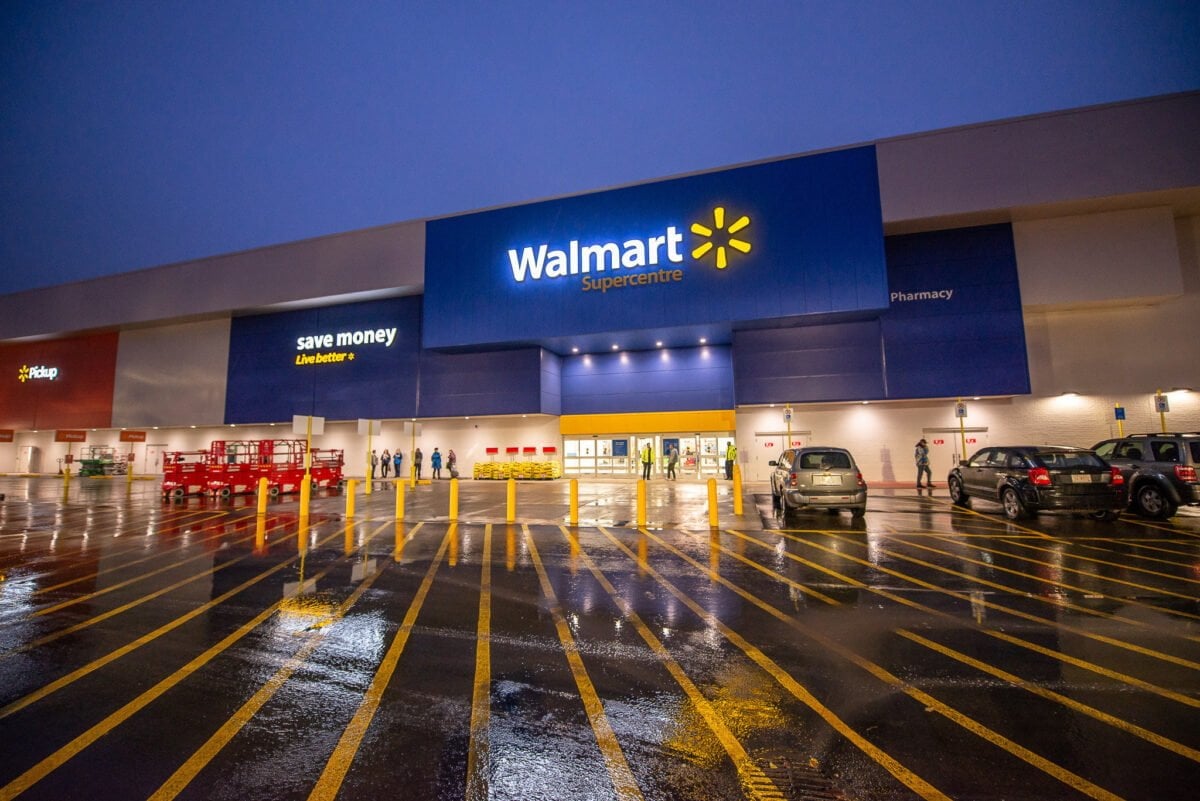
Walmart Canada officially opened its new Edmonton Kingsway Walmart Supercentre in Alberta today (CNW Group/Walmart Canada Corp.)

Gebara said the company describes itself as a people-led, tech-enabled, omni-channel retailer.

“Our people are the most important thing that we have in Walmart and we continue to invest and to develop all of us. But technology is a very, very strong enabler so that we can continue to serve customers, serve communities and develop our associates across the whole network,” he said. 

“We will continue to invest in technology. This is obvious. We will continue to leverage the great innovations that we see coming from our U.S. business. Some of them we can implement faster than others because of nuances of each of the different markets and the shape of our businesses. We are in good shape to continue to develop technology and invest in technology.”

Gebara described the retail landscape in Canada as “ever-evolving.”

“The pandemic had a big impact in so many ways in our industry and coming out of the pandemic and kind of this post-pandemic era, there are a few things that went back to the way they were before, others haven’t,” he said. “I think we’re still in flux to see what the next normal will look like.

“So in the meantime, the way we’re thinking about the business is we need to be agile enough to be able to adapt and continue to learn about customers’ preferences and customer behaviour so we are prepared to react fast to the nuances of our customers’ preferences.

“We are continuing to evolve our network so that we are agile and we can react fast to the customers’ preferences.”

Canadian Cities Seeing Empty Downtown Spaces and Food Deserts Amid Reduced Foot Traffic [Op-Ed]

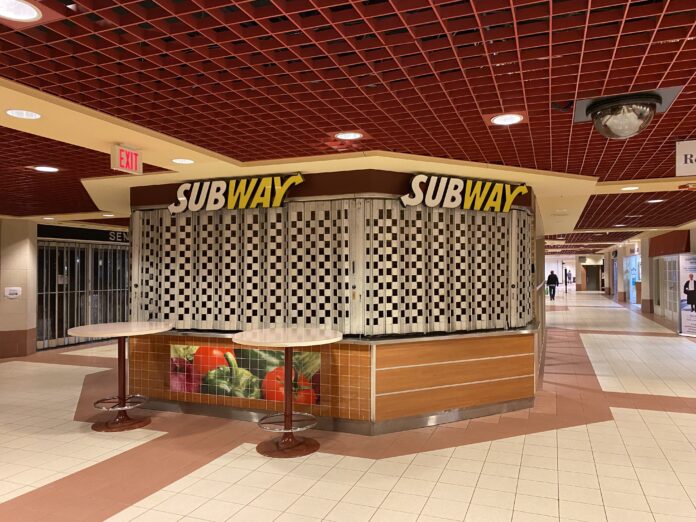
Vacated Subway Franchise at the Sheraton Centre in Toronto (Image: Dustin Fuhs)

“Cities will need to embrace new transformative strategies to overcome the challenges of downtown empty spaces and food deserts.”

The establishment of hybrid work as a long-lasting trend is evident, as supported by a recent global report. Since mid-2022, office attendance has reached a stable state across developed nations, consistently maintaining a 30 percent decline compared to pre-pandemic levels. Naturally, this phenomenon has substantial implications for the food industry.

The newly released report from the McKinsey Global Institute sheds light on the potential consequences of remote work, warning that it poses a threat of devaluing office buildings in major cities by a staggering $800 billion. The survey encompassed cities such as Beijing, Houston, London, New York City, Paris, Munich, San Francisco, Shanghai, and Tokyo, but Canadian cities were not included. Nevertheless, anyone who has visited major cities throughout Canada would have observed a decline in local foot traffic. According to the report, foot traffic around stores in metropolitan areas continues to remain 10-20 percent lower than pre-pandemic levels, and this trend is expected to persist.

The Ring at Place Ville Marie (Image: Place Ville Marie)

Municipal governing bodies and business organizations, such as city councils and Chambers of Commerce, are actively seeking strategies to revitalize downtown areas and entice individuals to return. A notable example is the installation of a large ring structure in Montreal, designed to attract both tourists and workers. However, the outcomes of such initiatives have been varied, yielding a range of results and impacts on the desired objectives. Unions have also recognized the increasing prevalence of remote work and have made it a central topic of negotiation during the reopening of collective agreements.

This fact holds critical importance for food retailers and restaurants. The report highlights that urban core retailers face significant challenges in attracting customers, particularly in comparison to their suburban counterparts. As of October 2022, it was observed that foot traffic near suburban stores had recovered to a level 16 percent lower than January 2020, whereas foot traffic near urban stores remained considerably lower at 36 percent. These challenges are further magnified in office-dense neighborhoods within urban cores. The underlying reason for this trend appears to be the reduction in office attendance, resulting in less frequent shopping near the office. Survey respondents who only worked at the office for one day per week reported significantly lower retail spending in proximity to their workplace compared to those who worked at the office for two to five days a week.

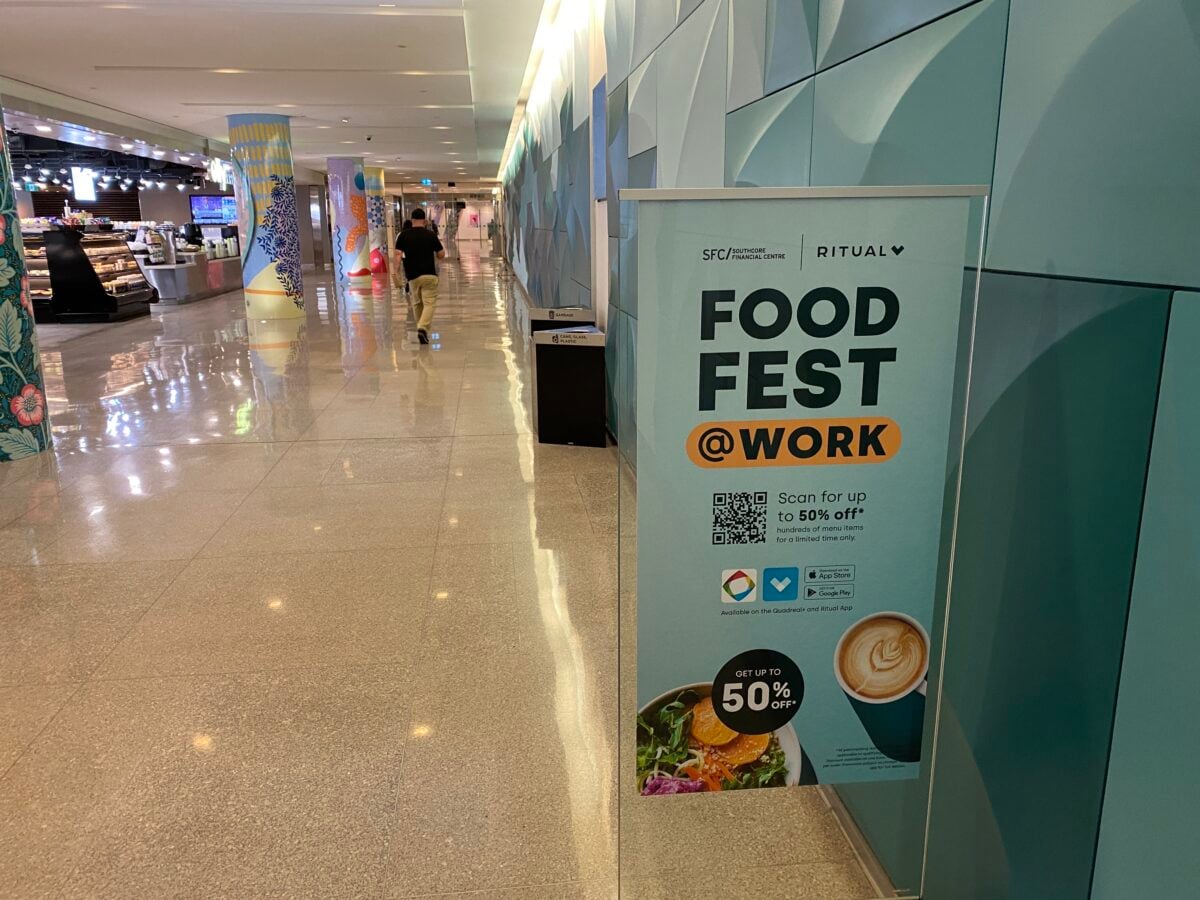
Southcore Financial Centre (Image: Dustin Fuhs)

Urban core-based food stores and restaurants will inevitably face the impact of reduced traffic. There is concern that this could contribute to the emergence of food deserts in urban areas. Urban food deserts refer to areas with limited options for affordable food for city dwellers. If real estate values decline in downtown cores, it is possible that urban spaces will become more appealing for establishing downtown markets. The report also emphasizes the variations between different cities. Toronto, Montreal, Calgary, Edmonton, Vancouver, and even smaller urban cores like Winnipeg, Victoria, Quebec City, Saskatoon, Regina, Charlottetown and Halifax are adapting to the hybrid work environment.

To navigate these challenges, pop-up food stores, mobile farmers’ markets, e-commerce platforms, grocers, and restaurant operators must actively seek out areas with market potential instead of relying solely on existing foot traffic. The industry requires a paradigm shift in thinking. It is important to acknowledge that downtown areas are undergoing transformation. While some may perceive this as negative, it is not necessarily the case. Positive developments can arise from such shifts. More affordable rental space downtown could actually bring new opportunities to the food industry. However, urban food deserts remain a genuine challenge for certain neighborhoods, and specific demographics may be left behind. Previously, growth in urban centers occurred effortlessly. Today, the growth of downtown areas, supported by food establishments, will necessitate innovative retail strategies.

Nespresso Expands Presence in Ottawa with New ‘Neighbourhood Concept’ Streetfront Store at Lansdowne Live Development [Interview]

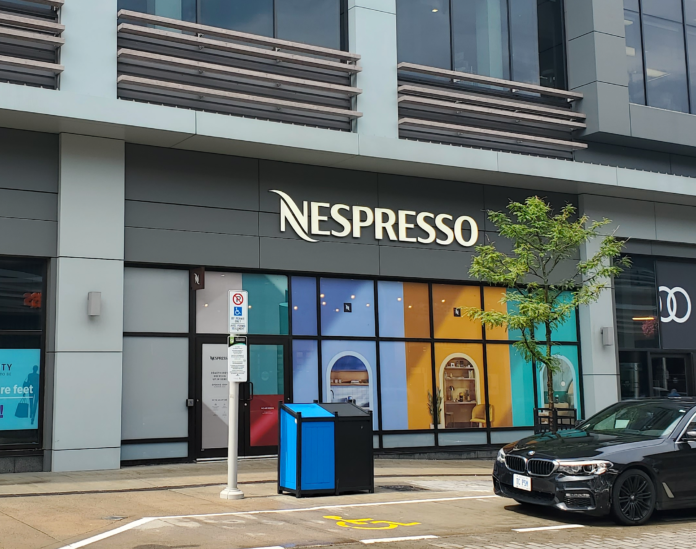
Nespresso at Lansdowne Live (Image: Nespresso)

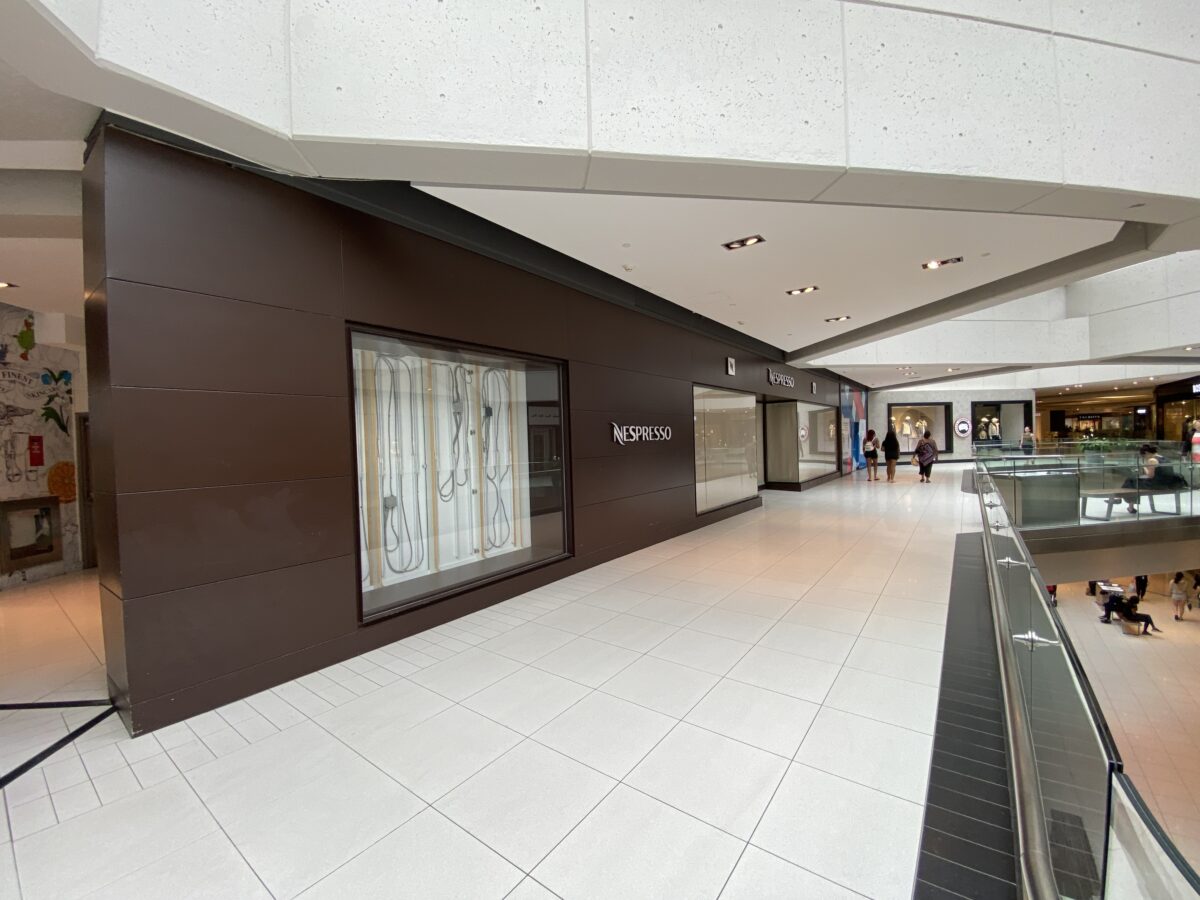
After closing its location in Ottawa’s CF Rideau Centre, Nespresso is opening a new location at the mixed-used Lansdowne Live development with a streetfront store in the busy neighbourhood in the nation’s capital.

Anne-Valerie Guidollet

Anne-Valerie Guidollet, Vice President of B2C Sales and Omni-Channel at Nespresso Canada, said the Lansdowne location in Ottawa’s inner city will house the brand’s innovative new concept neighbourhood store.

“It’s a destination area. It really came across as a new type of location which would also be very close to our Nespresso club members,” she said.

“We decided to test this type of area, location, as something new and different in terms of bonding with our club members and being part of a community neighbourhood.”

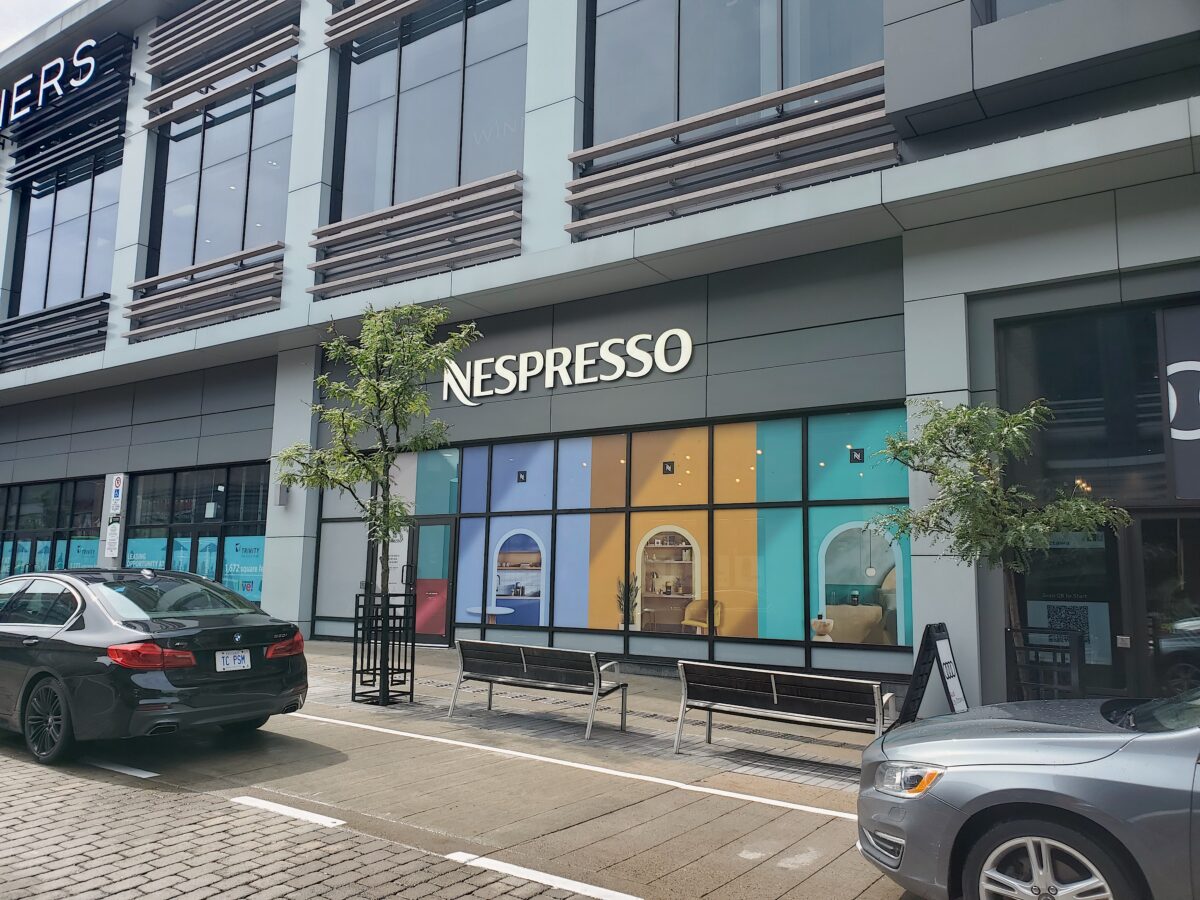
Nespresso at Lansdowne Live (Image: Nespresso)

The brand’s presence in the Ottawa area includes a new boutique store in Gatineau and a store in the Bayshore Shopping Centre in Ottawa.

“What’s different for us (with the Lansdowne store) and something that we haven’t tested in a while is the fact that it’s actually going to be a street location,” said Guidollet. “The previous openings that we made were more in a mall context. This is why it’s really interesting to see what type of traffic we’re going to get in that area, what type of relationships we’re going to have with the club members because we believe it will be a different experience than shopping at a mall.”

“We have 35 boutiques in Canada, which include two street boutiques. Crescent Street in Montreal and Cumberland Street in Toronto. This will be another street boutique. It’s very interesting for us to see, and test and to innovate in this way.”

Guidollet said every year the company re-assesses its network to see what’s working well, what’s not working as well, what are the opportunities.

“We do have projects in the future in some of the biggest areas. I cannot share too much, but what I can say is we’re going to reinforce our experience and then we’re always interested in also testing new locations. We opened a pop-up in Kelowna for instance. We also opened a popup in Sherbrooke,” she said.

“We’re also looking into beyond going into the downtown areas and looking at other locations where we could have appeal to our club members and attract our club members. We look at both the traditional big city areas but also other new areas where we see a fit with our brands and potential club members.”

Shuttered Nespresso at CF Rideau Centre (Image: Dustin Fuhs)

Guidollet said Nespresso has a strong omni-channel presence, but it’s grounded also in the retail experience.

“In terms of retail, what’s different with Nespresso is the level of experience that we want to give and the level of personalization that is very, very important to us. Tasting is really our key point of difference. We have a strategy to offer coffee tasting to whoever comes into the boutique and it’s a way for people to discover our brand. That’s something that we can only do in boutique and linked to that there’s also the story behind the brand. All our sustainability programs, our sourcing. These are also key elements for us that we really showcase throughout the touchpoints and in boutique we spend more time to explain and to educate our club members on.”

Nespresso liked the Lansdowne Live area because it’s an up-and-coming neighbourhood in Ottawa along the busy Bank Street with lots of foot traffic.

There’s a lot of activity in the area with restaurants, a farmer’s market, a football stadium, and a hockey arena.

The Nespresso location there will have direct access from the street level, and it will be just over 2,000 square feet.

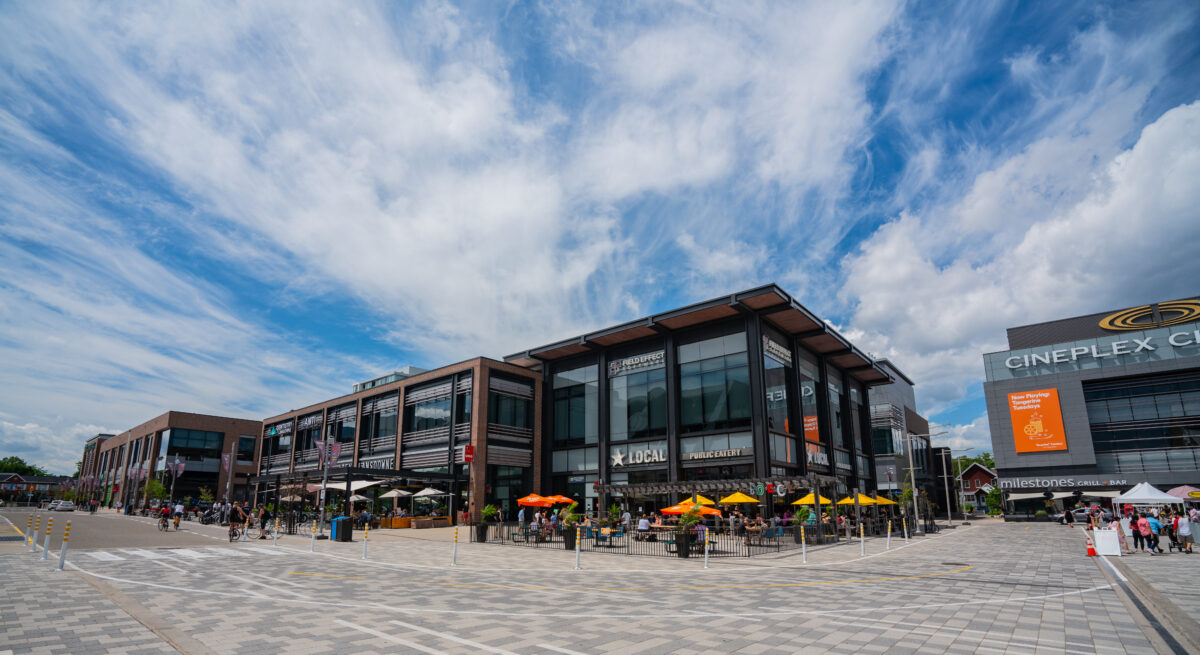
Image: Lansdowne Live
Image: Lansdowne

David Scorniaenchi, Vice President of Leasing for real estate company Trinity, which is the landlord for Lansdowne Live, said the area is a one-of-a-kind unique development.

David Scorniaenchi

“I don’t think there’s too many of them in Canada really that has this combination of sports, retail and entertainment,” he said. “It’s really a home for everything in Ottawa.”

“We’re thrilled to be welcoming Nespresso. When we had the opportunity to work with them and bring them to Lansdowne it’s the exact type of global destination name, banner, brand that we look for Lansdowne and I think it fits perfectly for the neighbourhood. There’s tons of traffic here. There’s lots of events, it’s a high energy site especially when there’s sporting events going on but throughout the summer there’s lots of programming. So it’s exactly the type of tenant we like to target.”

Attracting more than four million visitors annually, Lansdowne Live is a premium, one of a kind, mixed-use sports and entertainment centre in the Glebe District, one of Ottawa’s most revered neighbourhoods. Blending historical beauty with modern retail, office and residential, Lansdowne boasts year-round entertainment including a farmer’s market, and over 300 events held across the Aberdeen Pavilion, Horticulture Building, and TD Place. TD Place is home to the Ottawa Redblacks (CFL), 67’s (OHL), Blackjacks (CEBL) and Atlético Ottawa (CPL).

Lansdowne Live includes a real estate mix with 340,000 square feet of retail, 280 residential units, 116,000 square feet of office, and 1,430 parking stalls. The retail is anchored by Cineplex VIP, GoodLife Fitness, Whole Foods, Sporting Life, Winners, LCBO, Joey, Craft Beer Market, Milestones and Local. 

“We are looking to do Lansdowne 2.0 which involves a redevelopment of the north end of the football stands that will add potentially three more residential towers and 1,200 residential units and additional 80,000 square feet of retail and more entertainment as well,” said Scorniaenchi.

Nespresso is working with brokerage Oakmont Real Estate Services for its Canadian expansion.

Erin Mills Town Centre in Mississauga Adding New Retailers with Eye on Future Residential Use [Interviews]

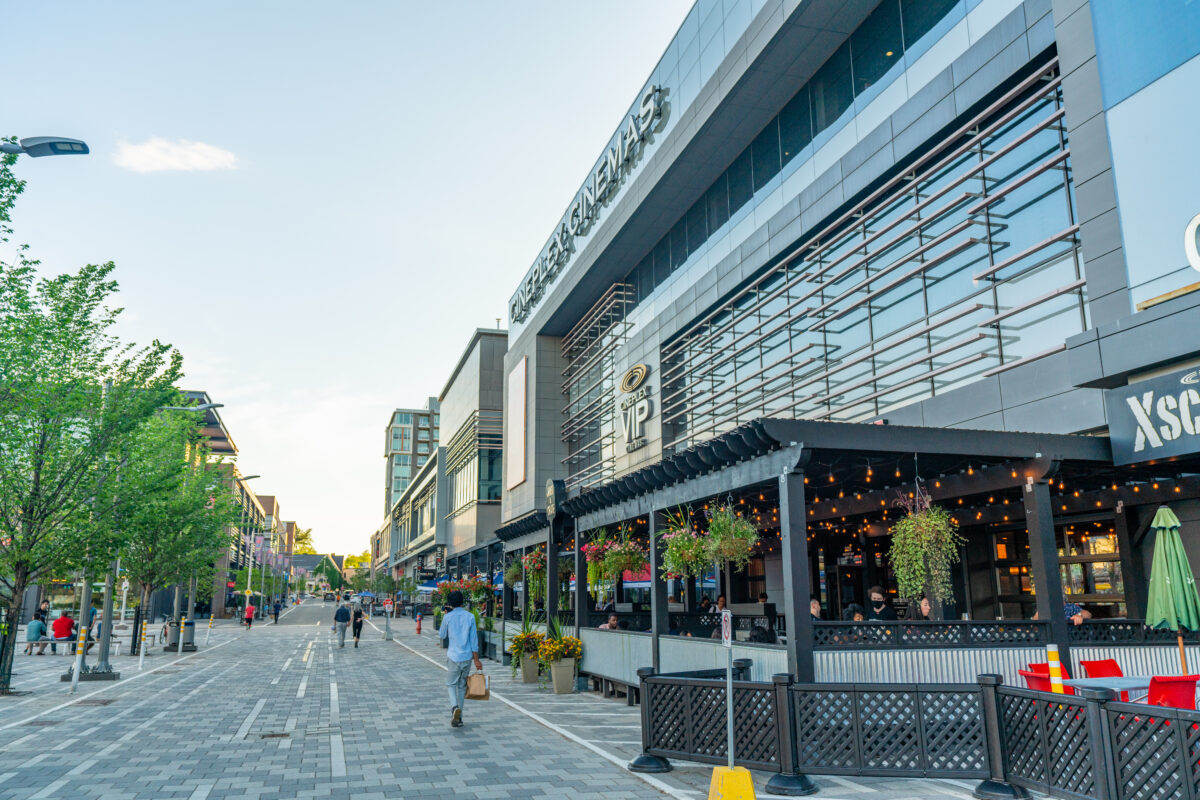
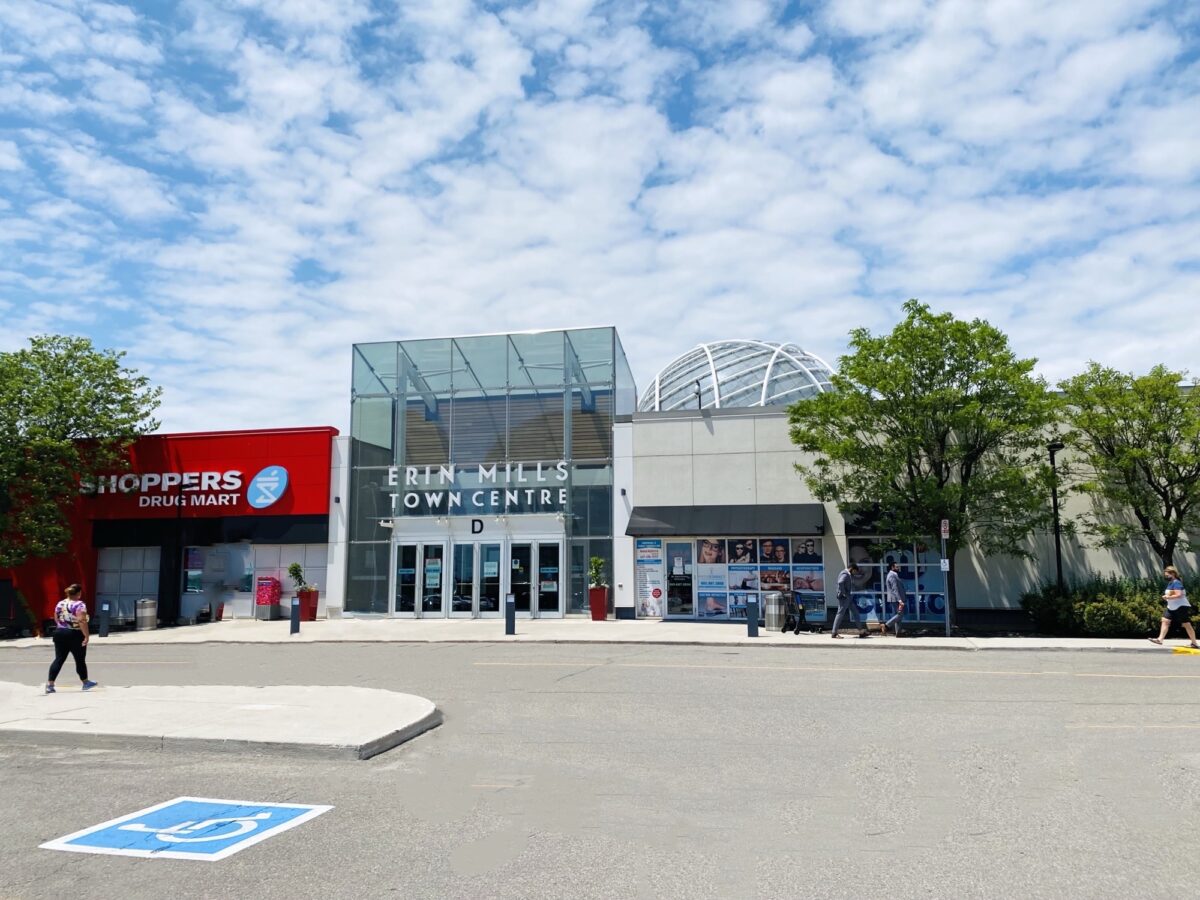
Erin Mills Town Centre (Image: Erin Mills Town Centre)

A $100-million investment in the redevelopment of the Erin Mills Town Centre a few years ago has transformed the property into a premium shopping destination in Mississauga with the potential of future residential use being eyed for the site.

Jeff Barbosa, General Manager at Erin Mills Town Centre, said the mall has done a great job in recent years of growing with the demographic in the area.

Jeff Barbosa

“Right now with the Centre with all the development we’ve done since 2014 the Centre itself I think we’re pretty well wrapped up with the development for the building itself,” said Barbosa.

“There is some conversation on possibly some exterior amenities on some of our land.”

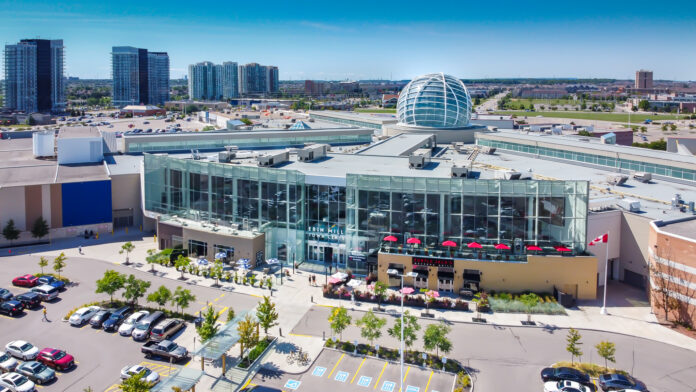
Erin Mills Town Centre (Image: Erin Mills Town Centre)

In the area, there is incredible residential condo growth around the Centre.

“There is some more retail growth that will happen out on pads, but residential will be the future growth outside the enclosed mall which means the mall becomes the amenity to the residential and the residential becomes a brand new customer base for the mall,” said Andrea McGowen, Executive Managing Director of Business Development and Leasing for Cushman & Wakefield Asset Services, which manages the property.

Andrea McGowen

Barbosa said the idea would be that the Erin Mills Town Centre would be almost like an ecosystem of what is going to be surrounding the mall down the road.

The Centre was originally built in 1989 with about 850,000 square feet over two levels today and it sits on 84 acres of land. There are about 185 tenants. Anchor tenants include Hudson’s Bay, Walmart, the newly-opened Cineplex Junction and Marshalls.

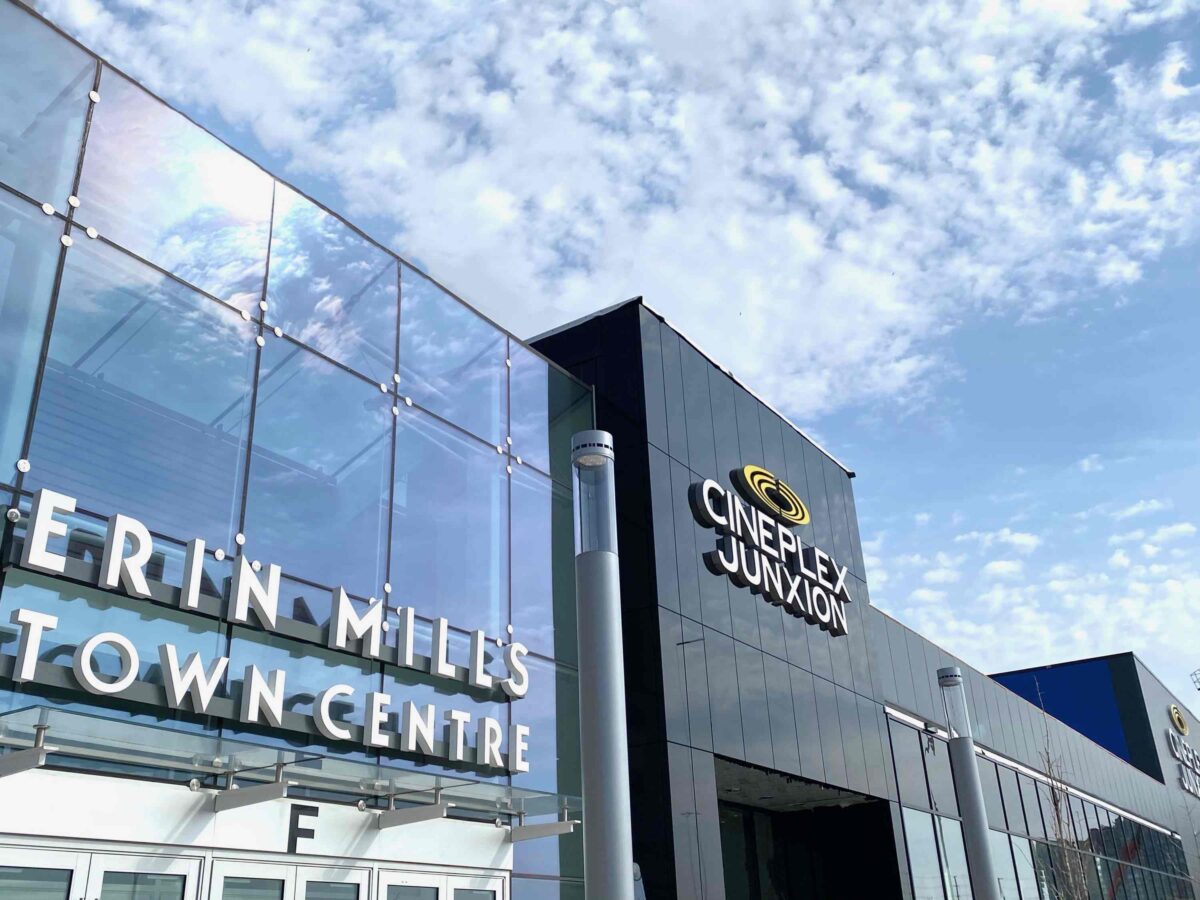
Cineplex Junxion at Erin Mills Town Centre (Image: Erin Mills Town Centre)

Barbosa said the shopping centre has about 10 per cent vacancy currently.

Besides the Cineplex Junction, other key openings in the past year or so have included Marshalls and a Zellers shop-in-store at Hudson’s Bay.

“We have many exciting prospects planned. We can’t really divulge them at this time but I think considering this is a post-COVID environment I would say that we’re performing better than many properties. We’re in a great spot in terms of leasing. Having a vacancy of only 10 per cent is a great story considering what other businesses have gone through,” said Francesca Bourré, Marketing Director at Erin Mills Town Centre.

Francesca Bourré

“Erin Mills Town Centre has always been a vibrant hub for families and friends in the community and is considered the ultimate place to meet and greet.  We have continued that momentum to ensure that people know that we are there for them.”

McGowen said that in the past year and a half there has been about 70,000 square feet of new openings which include Cineplex Junction and Marshalls.

“We do have about another 40,000 square feet right now under negotiation. What we’re actively pursuing is undertaking that true evolution of the retail offering here so that we can satisfy our customers’ changing needs,” she said. “So that’s not only this food and beverage opportunity but we’ve also introduced a number of unique and entrepreneurial and diverse retailers that are actually speaking to our customers’ needs.

“There’s a Korean lifestyle brand that’s going to come in doing beauty, decor. We’ve got some Afrocentric clothing that’s coming in. We’ve got some Turkish and Middle Eastern retailers who are coming in and one that’s expanding with us. So you’re going to see that evolution of the offering to make sure we’re meeting the needs of our customers going forward.”

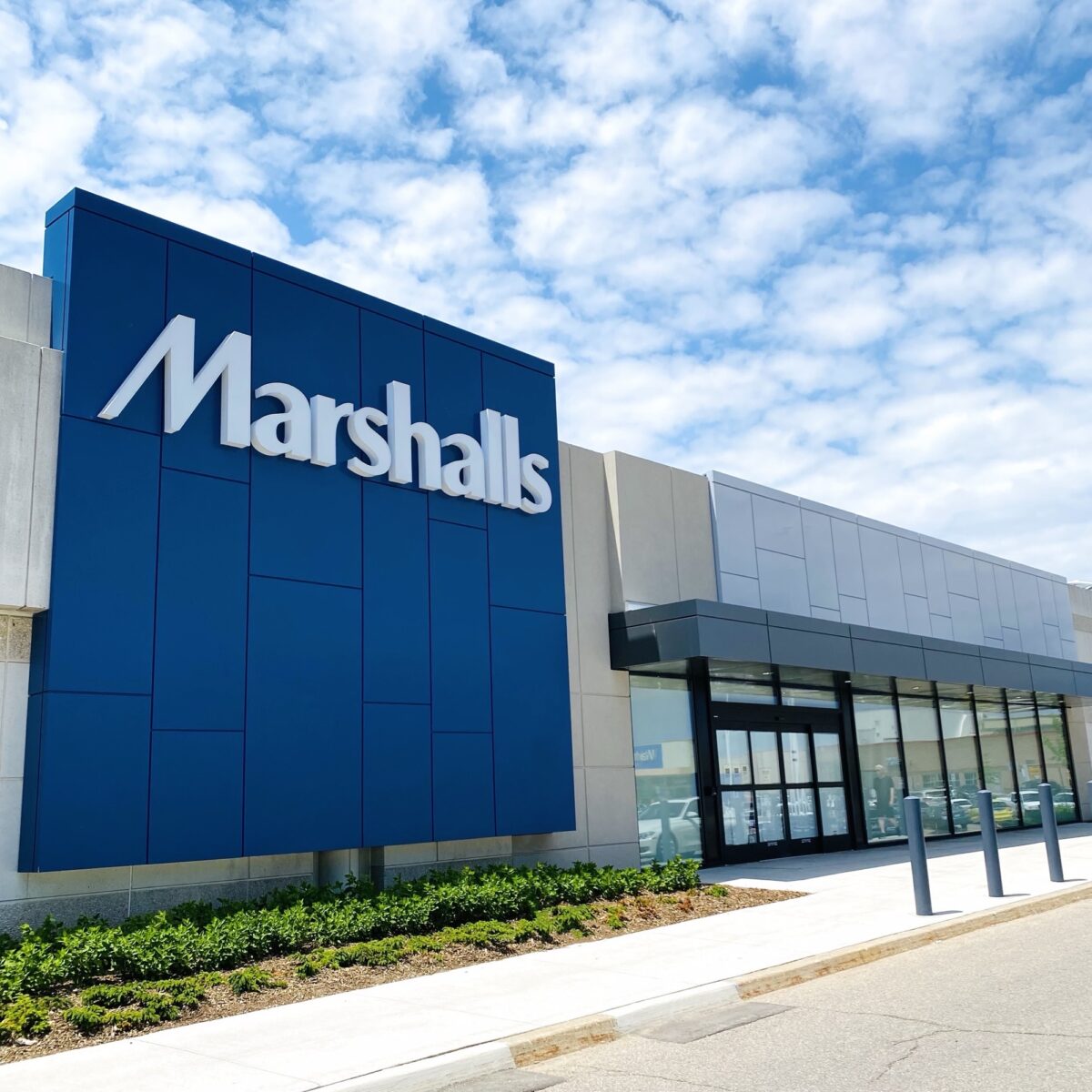
Marshalls at Erin Mills Town Centre (Image: Erin Mills Town Centre)

Marshalls and Cineplex Junction took the majority of the space in the former Sears box which was about 135,000 square feet in total. There’s about 45,000 square feet left with the majority on the lower level. There is ‘paper’ on that lower level space to lease out that space but that has not been finalized.

“It is not a prototypical retail offering. It will have offshoots that will take space in the rest of the mall that will be more of a customer centric retail offering but we’re looking to evolve that use and add some different uses to the shopping centre,” said McGowen.

According to the Centre, the $100-million transformation included:
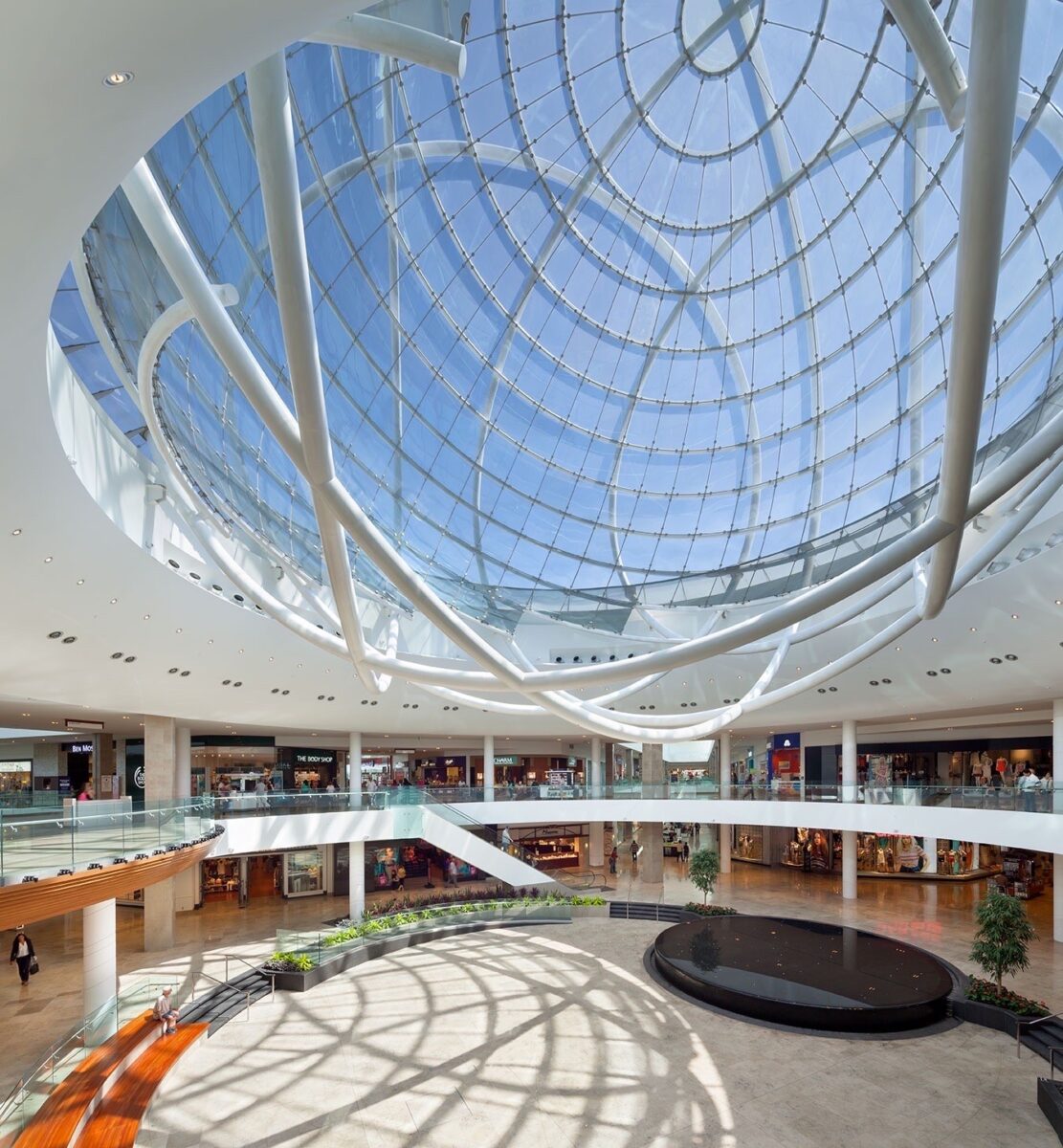
NEW CENTRE COURT, SPHERE & FOUNTAIN
A spectacular new architechtural Sphere has been added to float over Centre Court and allow natural light to flood into the shopping centre.  The Sphere is 283 feet in circumference and its double curved glass construction is one of its kind in the world.

NEW FOOD COURT & OUTDOOR PATIO
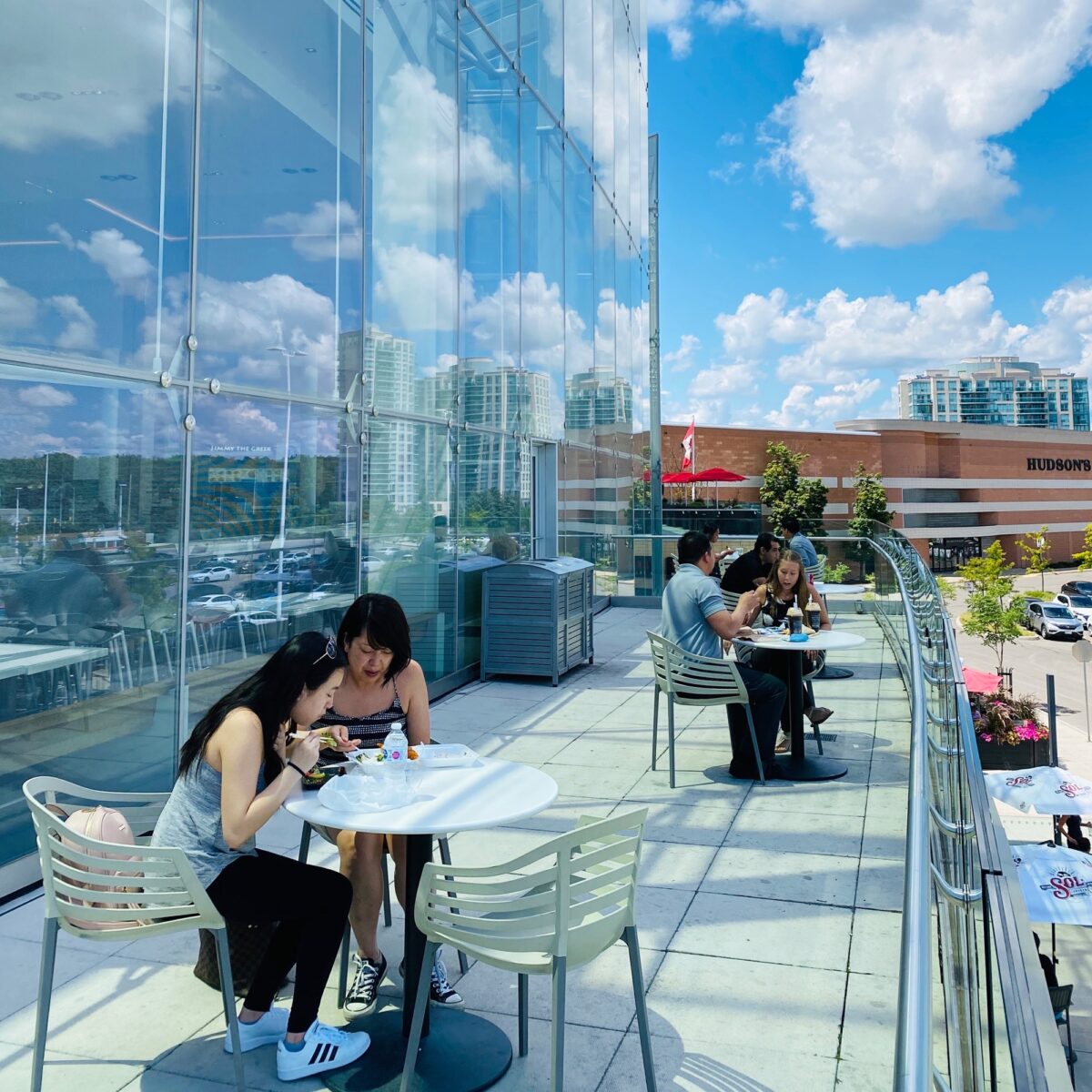
Visit the new Food Court and Outdoor Patio today for a bright and fresh experience featuring 26-foot tall windows and spectacular views of the city. 

NEW ENTRANCES
The impressive new main entrance (Entrance ‘A’ near Hudson’s Bay) features a striking glass facade that is over 40 feet tall and 350 feet wide. New entrances have also been added to the Tim Horton’s and Shoppers Drug Mart wings in addition to a complete renovation of Shoppers Drug Mart, now offering the Beauty Boutique.

UPPER AND LOWER LEVEL WINGS
The upper and lower level wings have been completely redeveloped and feature European limestone floors, elevated ceilings and enhanced new lighting for a modern & refreshed shopping experience.

NEW ELEVATOR & NEW ESCALATORS
A brand new elevator has been installed in Centre Court and brand new escalators have been installed in each of the anchors’ wings as well as in Centre Court and at the new Main Entrance near the Food Court.  The new elevator and escalators will improve navigation throughout the centre.

NEW WASHROOMS
Modern new washrooms (women’s, mens’, family & nursing rooms) are located on the upper level in the Food Court and on the lower level in the H&M hallway.

Shoppers Drug Mart at Erin Mills Town Centre (Image: Erin Mills Town Centre)
Outdoor Food Court Patio at Erin Mills Town Centre (Image: Erin Mills Town Centre)

Erin Mills Town Centre provides an attractive shopping environment in the heart of Mississauga, catering to a dynamic family market comprised of 255,422 households, with an average income of $116,000, far above the Canadian average household income of $79,000. The majority of the market consists of families, with an average age of 35 years.

The Erin Mills Town Centre customer market is upscale, with high projected growth in the suburban area of west Mississauga, Milton and Oakville. They are comprised of two main groups; the young family who are first time homebuyers building their careers, and focusing their energy and time on their children. They are time pressed, and therefore enjoy small indulgences and buying for their growing family. The other is an established family with children and an active lifestyle. They are professionals who shop at quality branded stores who indulge in the finer things. They are busy and involved in family activities. They can afford to buy finer quality, trend and brand merchandise for themselves and their children.

“We pride ourselves in offering programs with some falling under the national Cushman umbrella. Programs include International Women’s Day and Mental Health Awareness events and activations. Many of these efforts are important to our community,” said Bourre.

“This is very much the essence of Erin Mills Town Centre – to be a part of the community. We’re building towards residential and which will continue to speak to our brand positioning and a leader in community efforts.”

Interviews: Interactive Multi-Sensory Art Exhibit ‘Arcadia Earth’ to Open Permanent Location at ‘The Well’ in Toronto

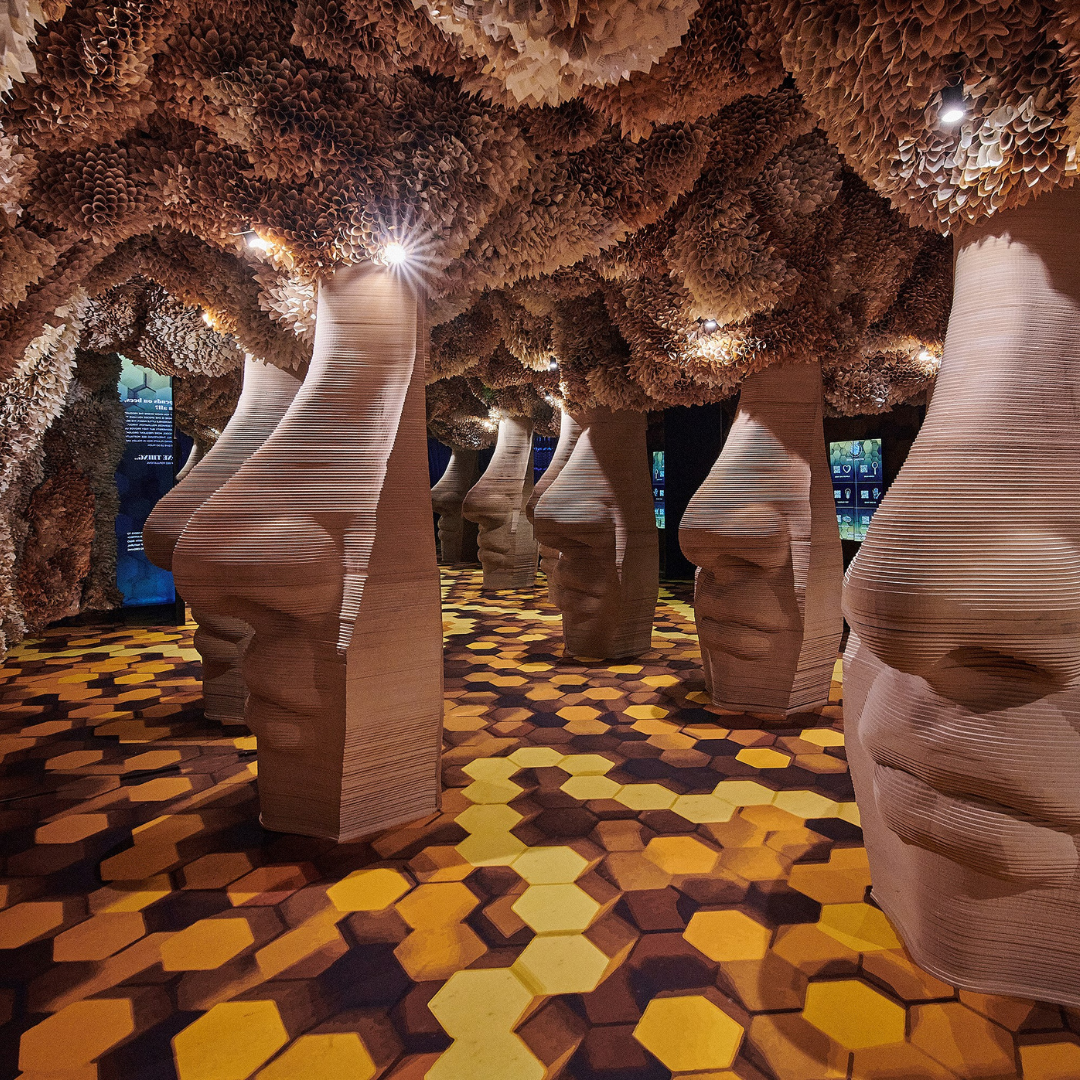
The Scent room from the Las Vegas exhibit will make its way to Toronto this Fall. Photo credit: Arcadia Earth (CNW Group/Arcadia Earth Toronto)

This Fall, people in Toronto will be able to walk through an interactive multi-sensory art exhibit, Arcadia Earth, which inspires and informs people about climate change. The exhibit will also include a retail aspect where it supports Canadian brands who are environmentally friendly.

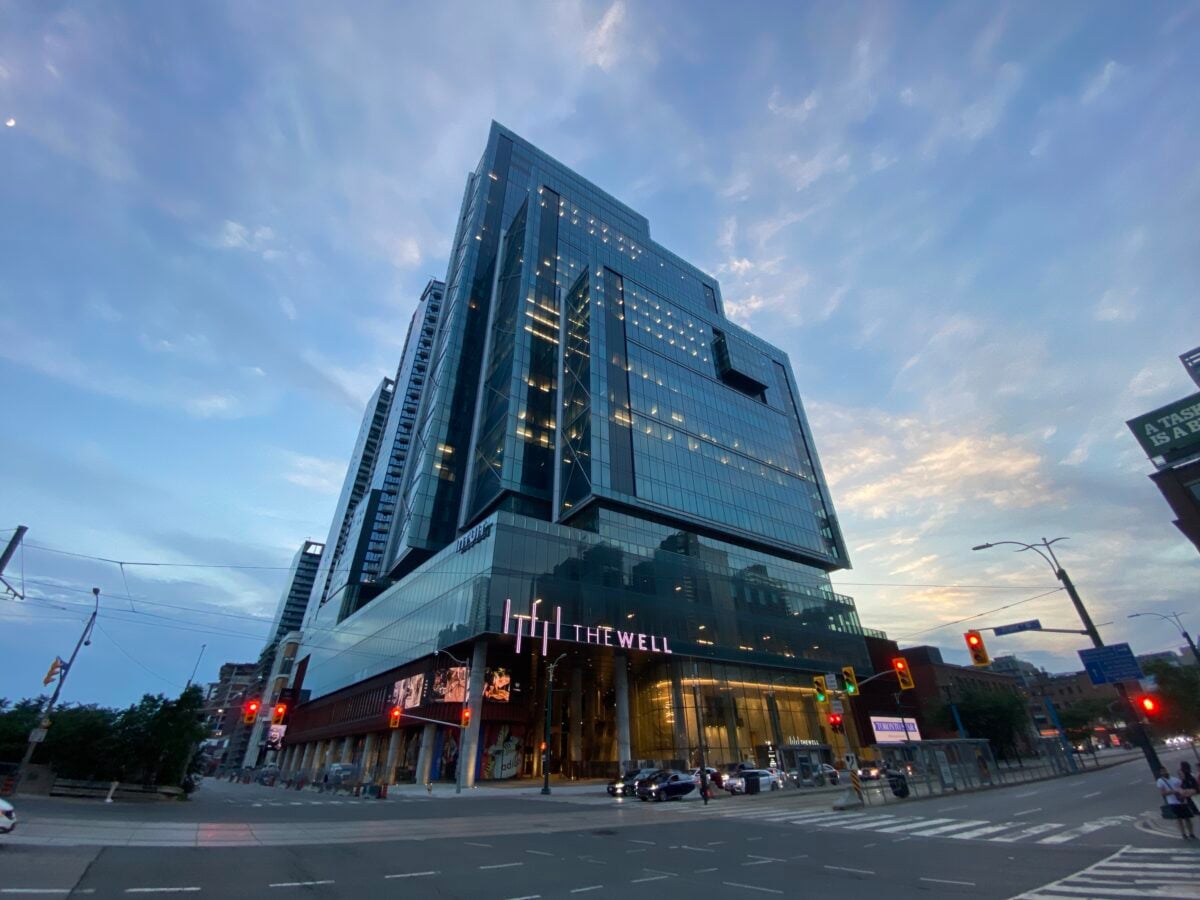
The permanent exhibit will hopefully be open to the public in October 2023 and will be located inside The Well.

Valentino Vettori

“We are hoping to be able to open in October. People normally are not inspired by negativity, and so we wanted to offer something beautiful. And by doing so, we hope more people will come to join the conversation about climate change,” says Valentino Vettori, the founder of Arcadia Earth.

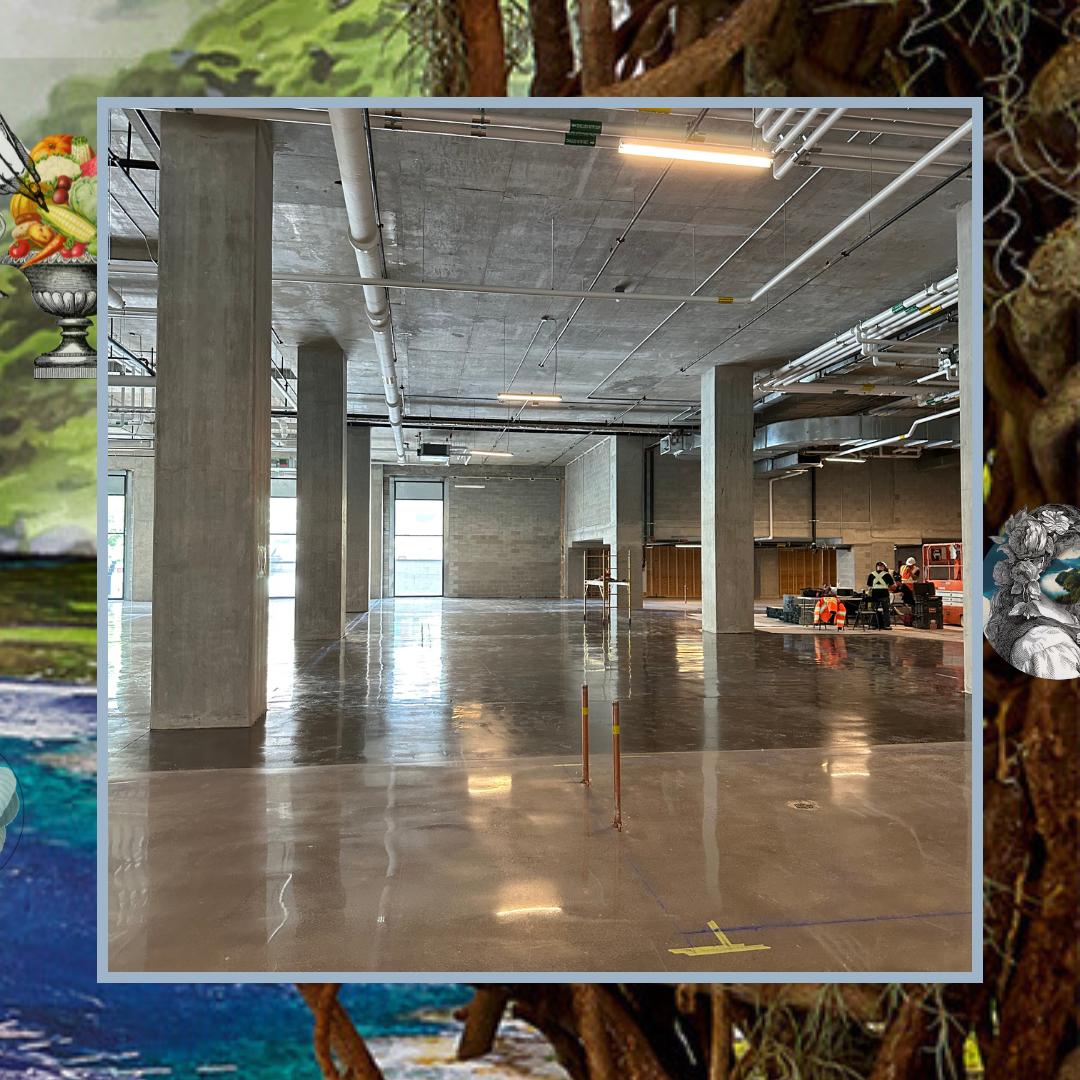
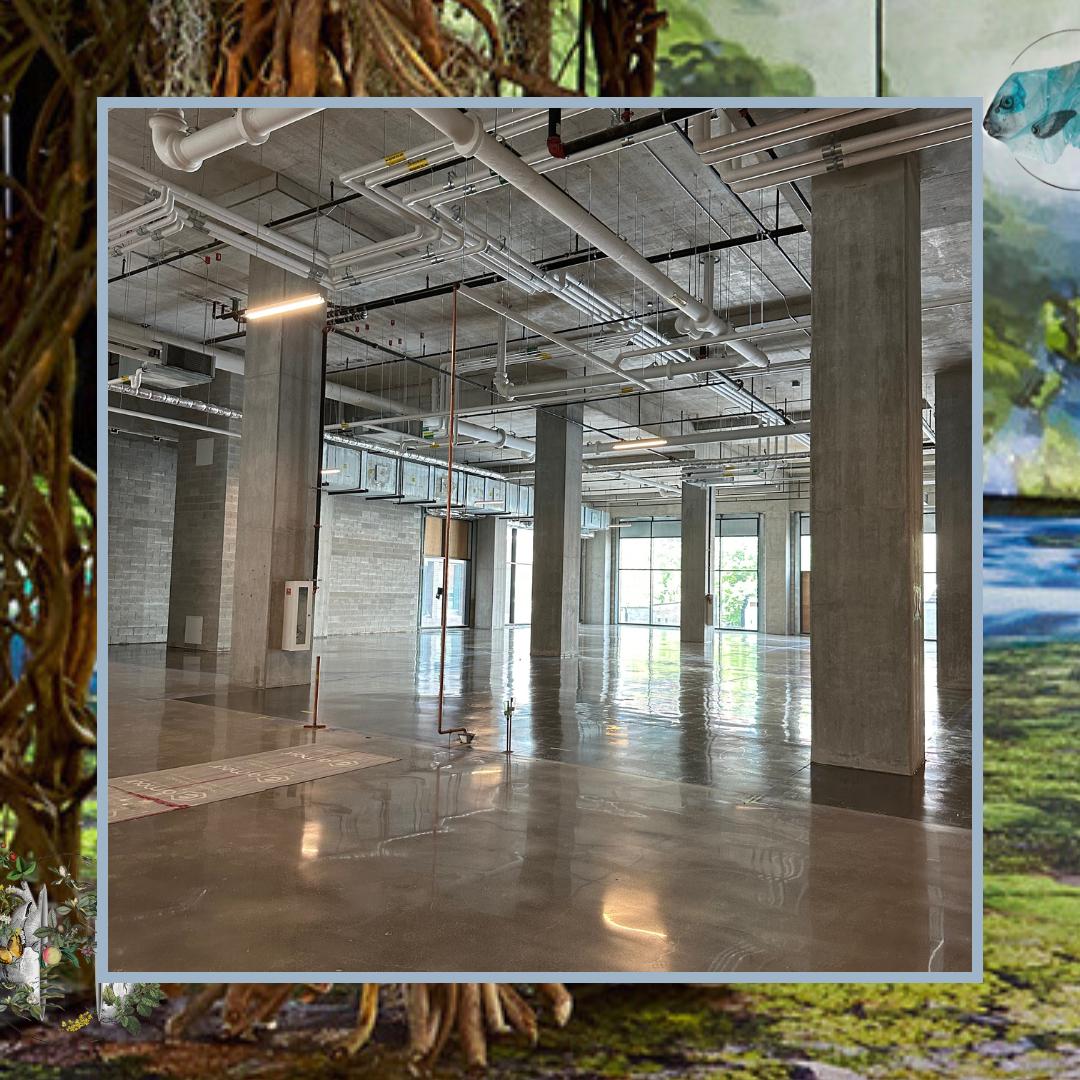
The exhibit has already seen success in New York, Las Vegas, and Saudi Arabia – Toronto was the next go-to location as they wanted to show the “first experience of its kind” to Canadians. The 17,000 square foot space will showcase ten rooms addressing different environmental concerns such as overfishing, biodiversity loss, and plastic waste. One out of the ten rooms will be reserved for a Canadian artist, which will be decided on in the next couple of weeks.

The Well in Toronto (Image: Dustin Fuhs)
Image: Arcadia Earth

After two years of searching for the perfect location, The Well caught their eye as the location provided easy access to guests as it is close to airports, trains, buses, and highways. Another reason The Well was landed on was because of its new sustainable services that will serve Toronto, including its new partnership with Enwave.

Craig Perlmutter

“We found this new development had some great forward thinking plans when it came to urban development. One really neat piece of The Well, I think will likely come out over time when they are opening, is in partnership with Enwave.They have this incredible deep lake water system that has cool and hot water distribution that is not just feeding The Well, but it is actually feeding outside and part of the downtown West core. So it is a really neat forward thinking system and was a great part of the story. Hopefully, at the right time, we will be able to tell that story within our space,” says Craig Perlmutter, the President of Arcadia Earth Toronto.

What People Can Expect

For the first concept, Perlmutter and Vettori say they are focusing on the concept of restoration and regeneration in Canada. Themes can go from underwater to land, plastic pollutants, overfishing, and more. Most of the rooms will be designed by Perlmutter and Vettori and all of the instalments are created with “upcycled materials and reusable elements.”

“We do this simply because it is a good way to allow flexibility for adoptions, updates, and changes particularly when it comes to climate change. For example, right now we are in collaboration with the World Wildlife Fund Canada and it gets a bit challenging when you also have to have a third party artist – so we create some of the rooms ourselves,” says Vettori.

As environmental topics will change, so will the exhibit as Perlmutter and Vettori says they made it where they can change the content, change topics, and change the overall mission. Some rooms might change every six months, twelve months, or some might stay for eighteen months – depending on the topic and how difficult it is to change. By refreshing rooms every so often, the exhibit will be able to draw more people back to the exhibit and will “continually inspire and motivate people,” says Puerlmutter.

As for any future plans with the new exhibit concept, Perlmutter and Vettori say as they are focused on the flagship location in Toronto right now, they are not looking to expand at this moment. However, they have a few ideas for different locations, such as a smaller versions of the exhibit.

Supporting Canadian Brands

Image: Arcadia Earth

The exhibit will also have a marketplace area which will be filled with brands created by Canadian entrepreneurs that have developed innovative, sustainable, and environmentally friendly products.

The exhibit will also include a marketplace where consumers will be able to find innovative, sustainable, and environmentally friendly Canadian brands. This does not just provide brand awareness to Canadian entrepreneurs, but also provides a learning opportunity for guests.

“That is the part of the impact which is super important to us, is that we are going to give options to visitors that they can buy, options for people to change some of their behaviours. Brands can also show consumers how to read labels a little bit better and look for cleaner, more eco friendly sustainable products. People learned a lot about brands in New York and Las Vegas, and we are getting some great feedback from Canadian businesses right now that would like to be part of our marketplace to showcase their innovations,” says Perlmutter.

“People Are Curious About What They Can Do”

Image: Arcadia Earth

Vettori says he wanted to create something that was “educational, but also fun for the whole family as every time education is fun – people stick around.” The exhibit is a chance for people to realize even small changes can have a big impact and will hopefully inspire people.

“If people are curious about what they can do, then this is a great opportunity. The exhibit shows people they can easily change their behaviour and will inform people that these behavioural changes are really simple to make and also make a lot of sense. So generally, I think people want to do the right thing, but they need to be inspired. We want to talk about all these topics in a more positive light and not bring a doomsday approach that you hear a lot in conversations about climate change,” says Perlmutter.

Retailers at the Top in New Study on Canada’s Most Trusted Brands [Interview]

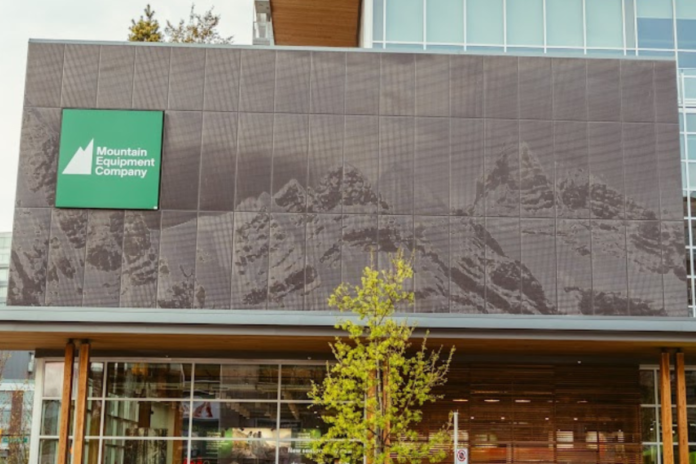
MEC Vancouver (Image: MEC)

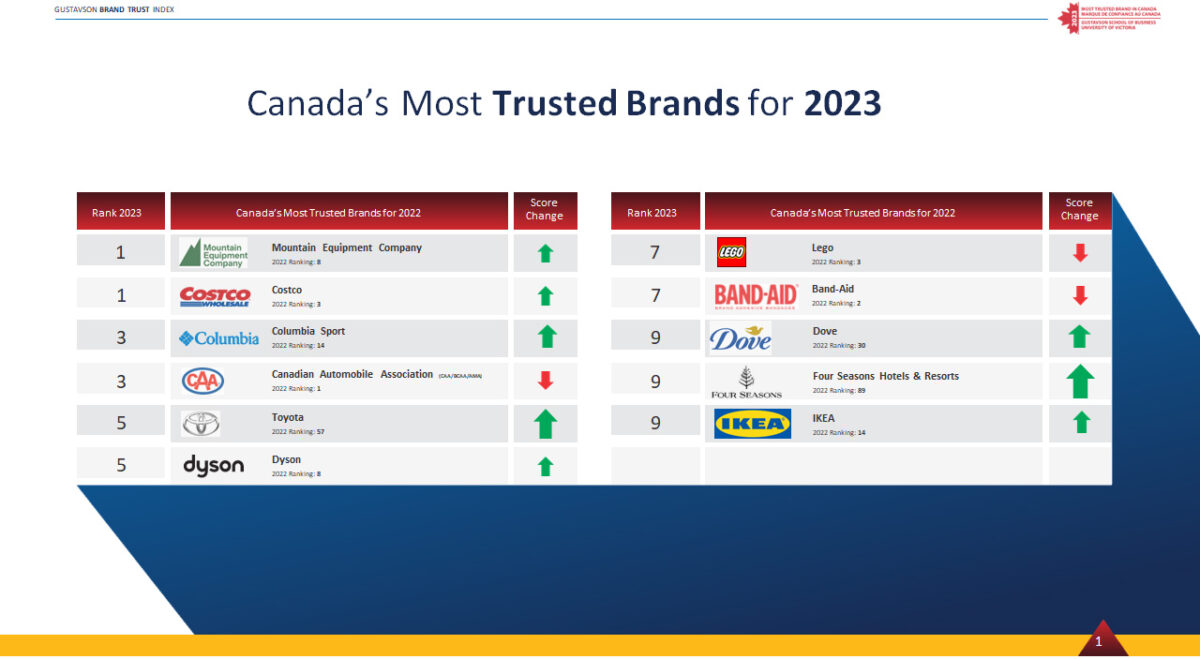
Retailers MEC (Mountain Equipment Company) and Costco have capitalized on their investment in customer-centric approaches and their value offering to tie for the most trusted brands in Canada in the ninth annual 2023 Gustavson Brand Trust Index (GBTI).

The Index is a research study by the Gustavson School of Business at the University of Victoria.

“The two brands’ commitment to value-driven offerings, customer service and competitive pricing has resonated with consumers searching for affordability in the face of inflation,” said Saul Klein, dean of the Gustavson School of Business at the University of Victoria.

Image: 2023 Gustavson Brand Trust Index (GBTI)
Saul Klein

After achieving the top spot in the Gustavson Brand Trust Index in 2019 and 2020, MEC faced a significant decline in 2021 following the dissolution of their co-op structure and sale to a private investment company in the US, falling into seventh place. However, through determined efforts, they reclaimed their first-place position as the most trusted brand in 2023.

“MEC’s incredible comeback story showcases the power of resilience and customer loyalty, propelling them from a moment of crisis to reclaim their position as Canada’s most trusted brand,” said Klein. “Their story inspires other companies to prioritize transparency, sustainability, and customer-centric approaches to regain trust and thrive in a competitive market.”

Klein said the Gustavson Brand Trust Index is a national, in-depth analysis of the role brand trust plays in the minds of consumers when making purchase decisions.

Based on the perceptions of 13,188 Canadians, measured in early 2023, it ranks and evaluates trust in over 400 brands. Brands are then assigned to different categories and compare their performance on the various determinants of trust and their likelihood to be recommended.

“Earning trust in a purpose-driven economy is achieved by acting with competence and good intent. It is lost when these behaviours are not demonstrated. This year we were struck by the declining trust in Big Tech companies which have tightened their grip on our lives, dominating how we communicate, shop, learn about the world and seek distraction and joy,” said Klein. 

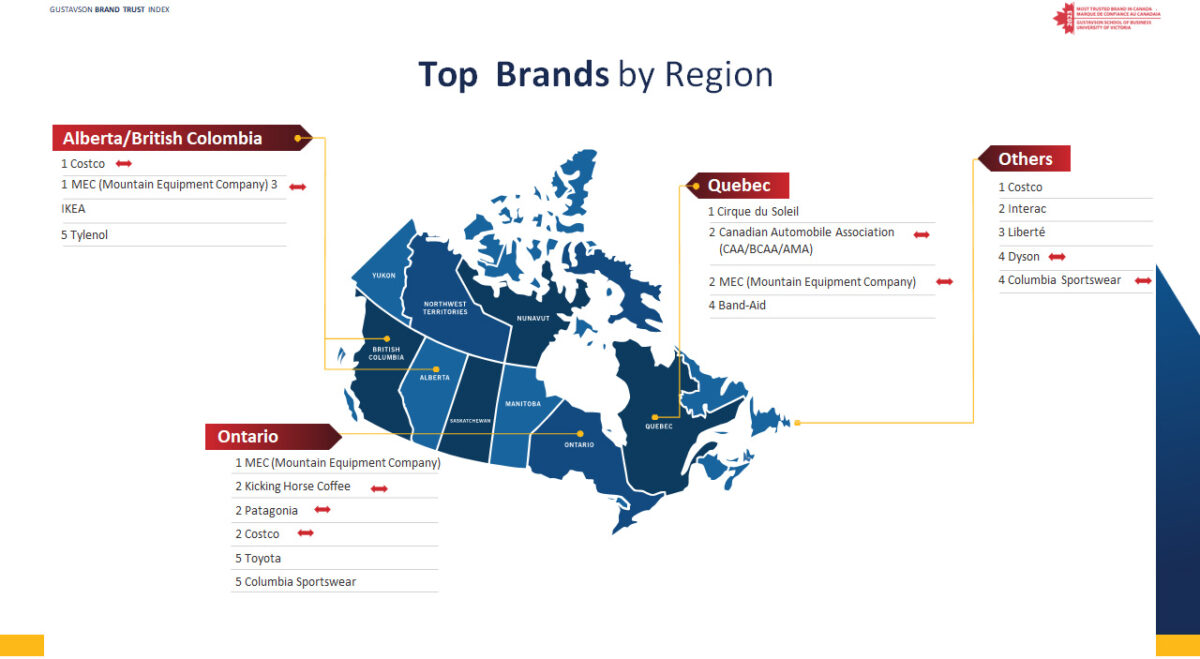
Image: 2023 Gustavson Brand Trust Index (GBTI)

“Even while many of us have spent lots more time with technology since the pandemic, we are becoming more concerned about the enormous amount of power these companies wield and our vulnerability to their actions. Even some of tech’s biggest supporters have started seeing the potential for worry here. Unless these companies adapt to rebuild trust we are likely to see more restrictions on their dominance coming from governments.

“The good news is that this troubled era demonstrates the benefits and the importance of businesses using their power and voice in ethical, transparent and authentic ways that are good for people and the planet while still recognizing the need for profits. There are enormous opportunities for brands to differentiate themselves from others, bolster their competitive advantage, and stay relevant for the future by re-focusing their efforts on what matters to their consumers, employees, and investors alike. This opportunity is particularly pronounced for the younger generation, those on whom future business success depends.”

The report said a key finding this year was brands that offered savings and value to consumers increased their trust rating, influenced by rising inflation and hits to people’s bank accounts. Those brands that seemingly turned a deaf ear to rising costs saw their trust scores erode.  

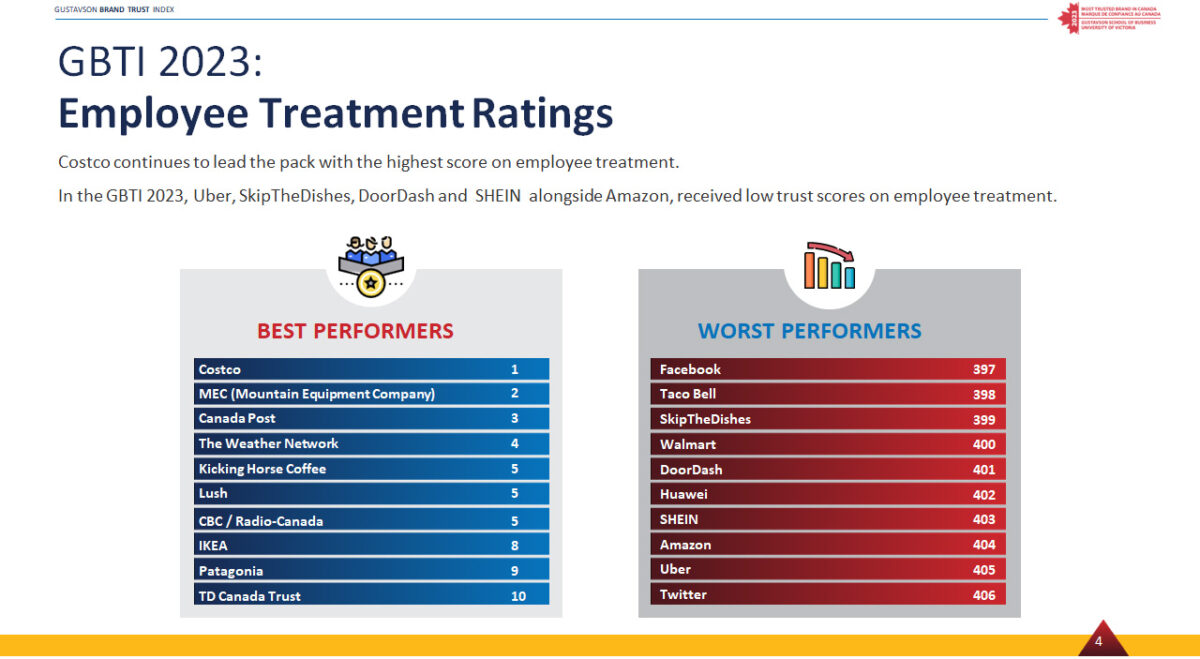
Image: 2023 Gustavson Brand Trust Index (GBTI)

Other Key Findings

  • WestJet has lost altitude, while the airline industry as a whole is facing a severe crisis in customer trust and loyalty. To regain lost ground, airlines must prioritize exceptional customer service and operational excellence to win back the hearts and minds of Canadians;
  • Netflix’s decision to crack down on shared accounts, coupled with the subsequent decline among its viewers, highlights the growing importance of trust in the streaming industry;
  • Inflation and the pursuit of value saw trust in Loblaws plummet;
  • Toyota is the most trusted brand in the Automotive category while trust in Tesla dropped sharply;
  • Among Canadian youth, Four Seasons Hotels & Resorts ranked ninth and as the most trusted brand in the hotel category, perhaps inspired by popular TV shows and social media influencers;
  • BC local brand, Kicking Horse Coffee is the most trusted brand in the Coffee/Tea Category;
  • A significant decline in trust in CTV among respondents aged 35 and over raises concerns about the network’s reputation and its ability to retain loyal viewers, influenced by the dismissal of veteran journalist Lisa Laflamme.

Klein said the research study categorizes the responses of people into three dimensions when it comes to brand trust.

One is functionally based. Do you trust the brand to keep their promises effectively? Are they reliable? Are they consistent? Do they provide good value for money? High quality? Innovation?

“The second thing is we look at more relational issues which really comes back to the service and the individual customer. So how well do I think they’re treating me as a customer? Do they communicate honestly with me? Do they protect my privacy? Do they fix my problems if something goes wrong?,” said Klein.

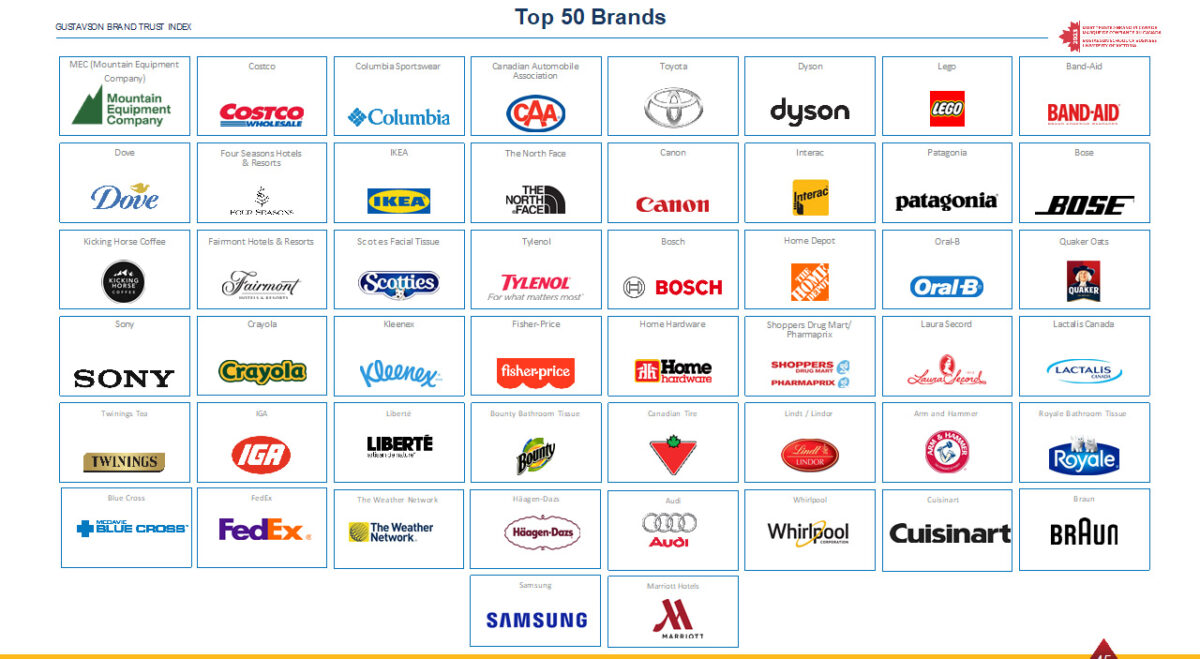
Image: 2023 Gustavson Brand Trust Index (GBTI)

The third dimension is more of a value base. Consumers tend to trust brands that are doing things that have more of a positive societal impact. Does the brand respect and protect the environment? Do they contribute to the local community? Do they treat employees well?

“We think there’s a bit of an evolution where historically it was all about functional trust. But sometime in the 1970s and 1980s we saw this movement where it was harder and harder for brands to differentiate themselves on the basis of functional trust so the service component became more and more important,” said Klein.

“Where we are now is we think we’re on the cusp of the next evolution. So you can think of it as a product-based economy to a service-based economy, we’re suggesting the next evolution is to a purpose-based economy where again it’s harder and harder to differentiate oneself on the basis of the quality of one’s service and what becomes the differentiator going forward is really about the broader contribution of the brand to society and in some ways that might be the most sustainable basis of differentiation because it’s the hardest one for anybody else to copy. 

“You can copy somebody else’s product features. You can reverse engineer. You can benchmark against the service standards but the value based elements are really embedded in the culture of the organization and those are hard to copy.”

Development Surge Along Vancouver’s Kingsway Could Spark Retail Renewal [Feature]

Streetside at The Windsor, one of the newest mixed-use residential and commercial buildings on Kingsway. (Image: Evan Duggan)

For more than 110 years the current version of Kingsway has linked Vancouver to New Westminster through South Burnaby, serving as one of the longest and busiest thoroughfares in the Lower Mainland. 

The route was used for centuries prior by local First Nations, before the road was officially paved and opened in its current form in 1913, according to this feature in the Burnaby Beacon.

Kingsway is too lengthy and varied to identify it as a single commercial and retail hub, but it has been evolving and developing in sections to varying degrees over the decades. Most of the development has been in the Metrotown area of Burnaby where a towering centre of new homes and national and international commerce has erupted in and around the Metropolis shopping centre in recent years.

Kingsway at the 2400 Court Motel (Image: Evan Duggan)

Today, Kingsway also has strong commercial sections in areas like Joyce-Collingwood on the eastern Vancouver flank of the artery, and in the Fraser Street node where celebrated restaurant Savio Volpe and others have emerged. 

Developers are now turning their attention to another particular stretch of Kingsway, roughly located in the two-kilometre section between Victoria Drive and Rupert Street — and particularly in Norquay Village. With various mixed-use developments either recently completed, under construction or staged for future development, hundreds of new residents are starting to arrive in the neighbourhood, potentially triggering a retail and commercial renewal to provide all the goods and services the newcomers will need and want.

The Rupert-to-Victoria stretch continues to host various popular family restaurants serving up Vietnamese, Chinese and South Asian cuisines. Small accountants, lawyers, and car repair shops generally round out the commercial offerings in aging buildings. 

It’s possible this section of Kingsway will someday rival the vibrant live-shop districts of Main Street, Victoria Drive or even Commercial Drive. Stakeholders and experts say it has the potential, but will ultimately redevelop in its own unique way reflecting its thoroughfare character, existing infrastructure, culture and history.

Developers keen on bringing more housing to the area

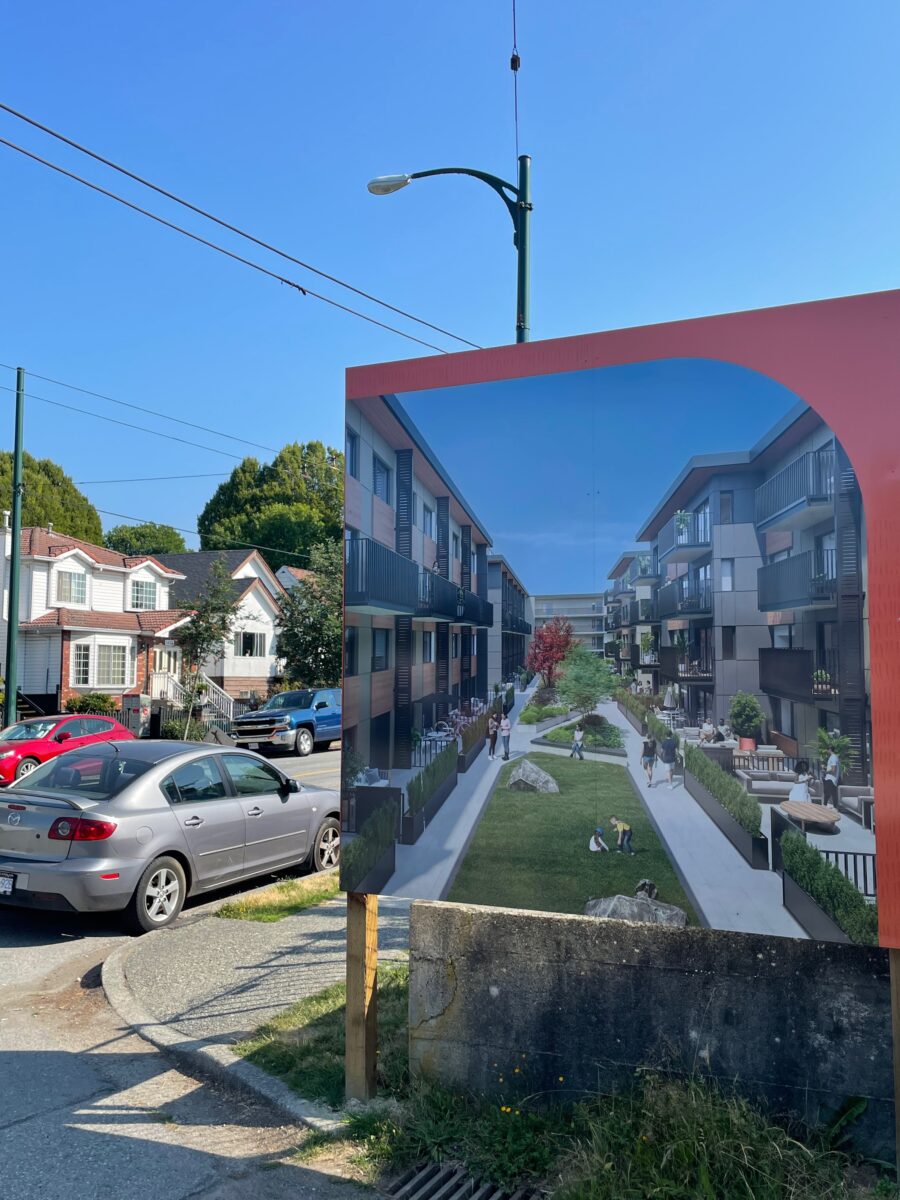
A development sign with a rendering of Chard Development’s Earl condo project on Earles St. near Kingsway. (Image: Evan Duggan)

Vancouver-based Chard Development is now pre-selling a two-building, 131-unit condo project that will include a mix of one- to three-bedroom condos and townhomes on Earles St. just off Kingsway. 

The building, called Earl, is part of a transitional zone in the Norquay Village Neighbourhood Centre Plan, said Mackenzie Biggar, vice-president, development with Chard. The plan permits larger towers on Kingsway and then cascades down to four-level buildings, townhomes, triplexes and duplexes in the surrounding neighbourhood that has been mostly single-family homes until now, wedged between Kingsway and the 29th Ave. SkyTrain station.

Mackenzie Biggar

The community plan says it aims to revitalize this part of “Kingsway to expand the variety of local shops and services, accommodate higher density housing, and support social interaction in a vibrant and interesting place that neighbourhood residents can walk to.”

Earl is one of several similar projects under way in the vicinity that will bring many more families to the area. There’s already a rich sense of community in the area, Biggar told Retail Insider in an interview. “It has excellent connectivity through the Kingsway artery and the SkyTrain. It is a well-established neighbourhood… that’s moving towards its next iteration.”

Higher density developments are giving people the chance to either stay in their neighborhood, return to their neighborhood, or join the neighborhood, Biggar said. 

Area provides value and opportunity for retail tenants and buyers

The Windsor, on Kingsway (Image: Evan Duggan)

The Windsor is a completed mixed-use condo tower in the area with several strata retail units on the street level. The project emerged on Kingsway across from the 2400 Court, a familiar landmark and motel with a colourful past and uncertain future. (If you watch any amount of TV or movies, you’ve probably seen the motel). 

Retail Insider recently visited the area noting “coming soon” signage at The Windsor for a dental clinic, medical office, beauty salon and noodle shop. 

That building is just up the street from another mixed-use condo tower at Nanaimo Street that includes a Shoppers Drug Market, RBC branch, Subway and a private liquor store. A relatively new T&T Supermarket is located just west at Gladstone St. and Kingsway. 

“Kingsway has always been, quite frankly, a bit of a highway,” said Martin Moriarty, senior vice-president investments, with Marcus & Millichap in Vancouver. “It doesn’t always lend itself perfectly towards a dynamic… streetscape.”

Martin Moriarty. Photo: LinkedIn

But it has plenty of potential, added Moriarty, whose firm has several retail listings along Kingsway. Demand for retail space to lease or buy is strong in this stretch of the route, and continues to provide value compared to more vibrant East Van commercial streets like Commercial Drive, Main Street and parts of Fraser Street, Moriarty said.

The neighbourhood would benefit from the arrival of coffee shops, additional grocers and gathering places including pubs or larger restaurants that complement the already-strong mix of popular family-run restaurants in the area. 

“There is interest (in the area) from national (brands) but they tend to lend themselves towards uses like grocery, banks, drugstores, fitness, quick service food providers and other uses like pet stores, accountants and real estate offices,” Moriarty said. 

The Norquay section of Kingsway is less likely to attract national fashion retailers who are more focused on shopping centres, and Vancouver’s suburban shopping nodes. “This will be hard to change in the short term and will require longer term planning and vision,” Moriarty said. 

Moriarty raised Vancouver’s Olympic Village as an example of a pathway to commercial growth that could happen in the Norquay part of Kingsway — although he emphasized the infrastructure and locations are differently configured. 

Olympic Village was initially dominated by residential development and although it brought thousands of new residents to the edge of False Creek, it took a while for the commercial amenities to catch up. Now, it’s a popular, regional destination that includes brew pubs, coffee shops, restaurants, a community centre and other shops and services and public outdoor spaces.

“It’s become a place for people to meet,” Moriarty said. Kingsway could get there, but will need to first experience an architectural renewal with more pedestrian-friendly access and gathering places, he added. 

New mixed-use development could provide first step

Site clearing is under way at the site of Frame, a mixed-use development with 12 retail/commercial units by Peterson at Kingsway and Earles St. (Image: Evan Duggan)

A new project by Peterson could represent a helpful step.

The local developer is in the early stages of building Frame. It’s a two-tower condo project set atop street-level retail at the intersection of Kingsway and Earles, just up the street from Chard’s Development and across the street from Purdy’s Chocolates factory (earmarked to one day become a public plaza). 

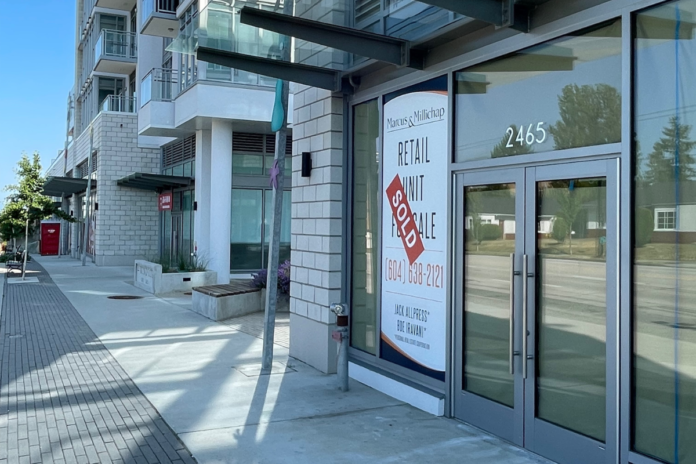
Frame will include 217 1, 2 and 3 bedroom concrete homes and 12 retail or commercial units that are now for sale.Four of them have sold so far, said Mark Boden, vice-president, asset management with Peterson

Individual units available range from 567 sq.ft. to 2,100 sq. ft. The spaces were designed in a wide array of sizes to provide more of the diverse mix of retail Kingsway is known for, Boden said in written responses to Retail Insider. The company’s marketing brochure depicts a coffee shop and a grocer in the renderings, but the uses will ultimately be determined by the buyers. Construction at the site has just begun with completion expected in late 2025, Boden said. 

“Those who know and love Kingsway have for years appreciated the eclectic mixture of culture, cuisine, and community reflected in the vibrant commercial culture of the corridor,” Boden said. “Frame is at the centre of the City of Vancouver’s Norquay Village Neighbourhood Centre Plan, bringing not only new strata retail space but also a significant number of new residents to the neighbourhood.”

“Once we started talking more about Kingsway in the office, it emerged that everyone here has their favourite secret restaurant or shop,” Boden said. “There is, of course, tons of potential to further expand the offering of housing and retail spaces.”

Boden said the neighbourhood will eventually see more residential development and places to gather. “Over time, we will start to see more pedestrian and bike-friendly pathways forming to continue to support multi-modal connectivity; throw in an under ten-minute walk to SkyTrain, and it’s a pretty special spot indeed.”

Exploring the State of Canadian Retail: Consumer Trends and Challenges [Podcast]

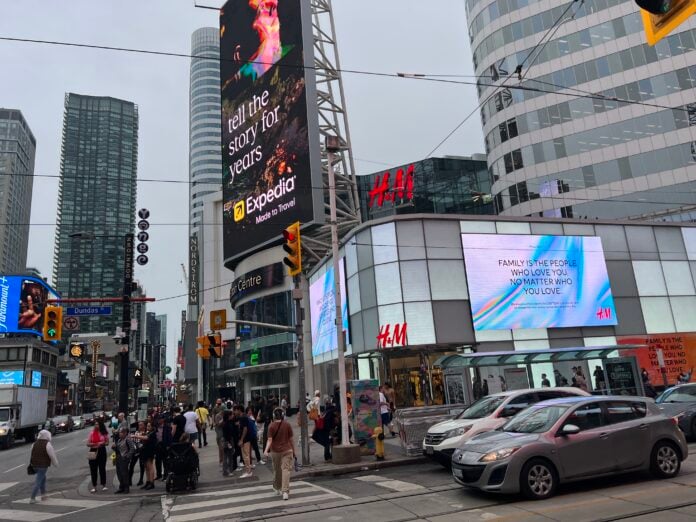
Dundas Square next to Toronto Eaton Centre in June 2023. Photo: Lee Rivett

Craig and Lee dive into the current state of the Canadian retail industry, discussing recent consumer trends and challenges. They explore topics such as the impact of inflation, consumer spending habits, strengths in lower-cost regions, the struggle of small businesses, the shift between online and in-store retail, and the inventory and supply chain issues faced by retailers.

The Weekly podcast part of the The Retail Insider Podcast Network by Retail Insider Canada and is available on Apple Podcasts, Stitcher, TuneIn, Google Play, or through our dedicated RSS feed for Overcast and other podcast players.

Retail Insider content discussed this episode:

Transcript

Announcer 0:00
This is a Retail Insider PodCast. You’re listening to “The Weekly”.

Lee Rivett 0:08
Welcome to this week’s episode of “The Weekly” by Retail Insider. I’m Lee Rivett. And I’m joined with the owner and publisher of Retail Insider Media, Craig Patterson, to discuss this week’s most read articles on retail-insider.com. So thanks for joining me, Craig.

Craig Patterson 0:22
Hello, everyone.

Lee Rivett 0:23
Now, Craig, you were invited to delve into the Canadian retail landscape and present some of the key points to business group in mid June. Now, I looked through the presentation and the key discussion points were perfect for sharing. So I wanted to do that during this podcast. But before we do, could you give a little bit of context to our listeners on the presentation itself and the group that you’re sharing with?

Craig Patterson 0:43
So I recently did a talk for the Sports Industry Credit Association about the Canadian retail industry. It was a little bit of a ‘State of the Union’. And so what I’m going to do is just go through a little bit of that here, because I think that it’s an interesting conversation. Some of this won’t be news to people, but at the same time, it’s a bit of a summary of where the consumer is, and where I think retail is going in the Canadian market at the moment as well as even beyond so we can dive into this right now here.

Lee Rivett 1:07
Well and to start with, could you give us an overview of how Canadian retail is doing?

Craig Patterson 1:12
It depends who you ask, I mean, some retails doing better than others. Consumers generally – I’ll talk about the consumer generally – is spending less on non necessities. This has been a situation for a little while here, as we’ve seen inflation going up. The cost of housing, the cost of food, the cost of will be the luxury goods going up in price because some people have been saving up or were in the past buy expensive things and are now not doing that. I’ve spoken to people in expensive stores that have said this. We’re seeing a situation where you know, even though retail sales have declined 2.4% in March – this was a statistic that we had – in Canada is outperforming most developed markets. I think Canadians are just stretched more than anything. This is according to a report by Colliers.

Lee Rivett 1:56
And were there any strengths that came out of that report, because a lot of times (especially post COVID) a lot of these retail reports are quite doom and gloom.

Craig Patterson 2:05
What they found though, at the same time, as within Canada, retail sales have been the strongest and regions with a lower cost of living. And that really shouldn’t be a shock to anyone. I mean, you look at say retail sales in a place like Texas where the cost of living is lower. People there have a lot of money, discretionary, I would say income overall on average than most Canadians would, but in markets like Toronto and Vancouver here in Canada, versus say, you know, Regina, Saskatoon, Edmonton and Calgary, the recovery has been faster in the places with the lower real estate prices, which are not Vancouver and Toronto, for those for those who know the country obviously. And I knew that real estate prices, were going to come and bite us in the ass for retail, because even though there are rich people in these cities, there’s a lot of people that don’t have a lot of money. And I think that with that discretionary and even just any disposable income drying up, that’s going to impact retail sales on non to set on non essentials. And I think that there is going to be a little bit of a reckoning here in the retail industry just because money is being siphoned off to things like rent and mortgage payments and shopping at Loblaws and getting gouged on food prices. Altogether, this is not a good time for a lot of Canadian consumers. And we get a lot of comments. I’ve said this before in our articles at retail insider, from people that are saying they’re desperate. I mean, I’m blown away. So people are saying that they’re, you know, cutting back on food and are trying intermittent fasting, and they’re not doing it for health. I mean, it is a healthy thing. But it’s out of desperation because they don’t have to pay for food all the time. And I don’t think that’s a good place for people to be in.

Lee Rivett 3:35
How do you think Canadians are dealing with these inflationary pressures? You mentioned like intermittent fasting, but how are people in Canada dealing with it?

Craig Patterson 3:45
Consumers are definitely cutting back. There was a study by EY I thought was really interesting saying that almost the majority of consumers now are saying they’re not brand loyal, and that they’re going to be looking for discounted pricing or looking for the better price, I should say. That’s a huge concern. Because if you think about a lot of brands out there, there, they spent an absolute fortune, trying to get in front of the consumer build loyalty, you know, get known and have people shop at their brands. So because prices are going up and consumers don’t have as much money to spend. That’s going to have an impact on brands. I think was the same study said that 58% of consumers in Canada are trying to save money or economizing they’re cutting back depending what word you want to use. A 73% of consumers plan to repair or repair items over replacing them. It’s good first day sustainability. People aren’t gonna be buying new stuff but you know what the consumer economy is based on people spending more money on buying new things as opposed to repairing them so this is going to have an impact I think on the economy as well. Especially, I don’t know fast fashion.

Lee Rivett 4:48
And you mentioned food purchases….?

Craig Patterson 4:51
Food purchases at grocery stores are down. Like I said some people are interested in fasting at the same time and it’s people will either with more money or they’re just by going out and spending it regardless on experiences. Restaurant spending is up, which is almost counterintuitive, but a lot of people are still going to restaurants to eat. Also experiences – some people are still taking trips to places if they can afford them, or they’re just maybe they can’t afford it, or they’re going somewhere else. But I do know that even with the pandemic, and following that… people are reevaluating reevaluating their priorities or just realizing they want to have maybe have more fun or have experiences. So they’re buying less stuff.

Lee Rivett 5:33
And how are people stretched?

Craig Patterson 5:35
I talked about this a bit before, certainly around the housing costs, whether or not a person owns a home and has a mortgage, or has just bought a new home and probably spent over a million dollars on it. Or is spending money on rent, I saw a report what was it in Toronto, the average one bedroom apartment is over $2,500 a month. In Vancouver, I can’t believe it, it’s over $2,800 which is just mind blowing because the average income in Vancouver is not that high compared to other parts of Canada, even though it’s a very expensive place. But housing costs have certainly stretched consumers. Taxes: Canadian consumers are taxed to you know, higher than Americans were paying taxes left, right and centre, whether or not it’s income taxes are on our alcohol or on our food or restaurants. I mean, we are just tax, tax, tax, tax. That’ll all add up. Stock market gains on wealth if people have anything at all has has been variable over the course of the pandemic and into now. Salaries haven’t met inflation. So people may actually not be able to find jobs. That hasn’t been as big of an issue here. We’ve got pretty decent employment in Canada, but it’s not perfect. With the pandemic, some people are having to pay back some support that they got some businesses are having to pay back some support. There’s been lost savings. And one thing as well, grants that some businesses got it earlier during the pandemic are coming due at the end of this year (of end of 2023). And we’re predicting a catastrophic implosion of smaller businesses in this country. Because of that I’ve spoken to various people, I’ve signed a petition with this Canadian Federation of Independent Business. It’s a bit of an aside, but that’s probably another conversation we should be having here. Because we’re going to see a collapse in small businesses by the end of the year here. A lot of them can’t afford to pay this back. And it’s going to be a tough time.

Lee Rivett 7:16
Yeah. Well, and what about the difference in the Canadian retail for Ecommerce (shopping online) or in store (or brick and mortar) retail?

Craig Patterson 7:24
Yeah. In the in the talk that I did, I talked a little bit about online versus in store. I was saying that we’re seeing we saw ecommerce growth absolutely explode during the pandemic, partly out of necessity. I mean, you know, literally, we couldn’t go into a lot of stores that were during the lockdown. So we saw ecommerce growth, growth of the roof it it created some habits that I think people have kept, but it has kind of plateaued or it’s not growing nearly as much as it was during the pandemic. I mean, it was exponential. They say we moved into the future significantly, but we still saw when when lockdowns ended, a lot of people went back into the stores. So that habit of shopping in a physical store is still there, I think it’s here to stay, at least for a lot of categories, say trying on clothing or something, at least for the first time. And people sometimes just want to see stuff. So I mean, at the same time, ecommerce is still growing, Amazon is still doing well, in terms of getting sales in Canada and elsewhere. So, I think that stores are here to stay. And also I was saying in this lecture that physical stores, even if you’ve just got one creates a sense of legitimacy for retailers say that’s doing a lot of sales online. Because I know for myself there was I forget what it was what shape I don’t want to say what the retailer was, but it was something I was shopping on. It was, you know, an online website. And I was like, Oh, they have a store. They’re real! They’re a real retailer. Yeah, they’ve got one store but they’ve got one like they’re not just

Lee Rivett 7:24
Some random, in the ether store…

Craig Patterson 7:52
Virtual world online. So anyways, I you know, maybe I’m just old fashion but that did get my attention for this retailer, even though it was just one store location for this national retailer.

Lee Rivett 9:09
And what about direct to consumer versus wholesale in Canada?

Craig Patterson 9:13
Yeah, did a little bit of a talk about direct to consumer versus wholesale. Brands like Nike and Canada Goose were certainly dropping their wholesale accounts and opening their own stores who have reported on Nike opening lots of stores. Canada Goose is actually doubling down on its retail store expansion plans while pulling back on wholesale. Nike surprised surprised us a little bit recently because it actually reestablished some wholesale agreements with DSW, the footwear retailer as well as Macy’s in the United States. So we may see wholesale coming back a little bit with Nike with certain select retailers, but I’m sure there’s some agreements and rules and all kinds of other stuff. With direct to consumer, I mean, brands like it if they have their own store, to put it simply to control the environment, it’s it’s kind of a brand ecosystem, there’s different margins, you can sometimes make more money in retail. If people are coming into your store. You’ve got staff you you’ve got you can, you know, decorate it, you want the way that you want. We see the same thing with concessions and stores like Holt Renfrew, or otherwise, these brands have stores within a store, but they’re still being run by that brand. So I was in the royal I did a tour of royal mount a few weeks ago at Montreal. And what I thought was really interesting is the team there was saying, Well, we are targeting brands to have stores in our mall, we’re not looking for the multi brand retailers. It’s not that there aren’t any there. But the really, the focus was because of the increased sales growth of individual brands versus multi brand retailers. They said, Well, we see the future success of the centre being with actual brands having stores in here and not having a, I don’t want to throw any retailers under the bus but or not even that but you know, Hudson Bay store or Harry Rosen or something which has different brands in it, instead, they would actually have the brand rather have the brands that are contained within those stores, but have their own stores in that mall. So they’re really smart people, they’re at Royal mount in terms of what they’re doing, they’ve been around the world they’ve thought this through. And I think that’s to me, that was that was a little bit profound to to hear that, you know, it’s all about the brands, it’s not about, you know, a retailer that’s carrying a bunch of brands within it. So but at the same time, some brands are not gonna be able to stand out on their own and open stores. They’re gonna be in multi brand retailers. And that’s totally fine. And I don’t want to see multi brand retailers closed at the same time. I’ve got some favorites, I think we all do. And I we still wish them success. But retail is changing. It always does.

Lee Rivett 11:36
And what about the inventory and supply chain issues that we’re seeing during the pandemic, now that we’re kind of more post-pandemic, if you were.

Craig Patterson 11:44
in a certain I think certain categories of retail, I don’t know from from bicycles and sporting goods, a few other areas, there was an increase in demand, like I don’t know, you couldn’t get a bike to ride around in during parts of the pandemic, because everybody bought them because they’re all wanting to ride around. Now there’s too many. So mountains of inventory, I think was a headline I saw on the news. Now retailers are having to deal with that. So what that means is right, you know, sometimes things go on sale, say a bike, you might get a better price now. So you’ll be able to actually find one on top of that. But I think that with that too much supply and discounting, it’s going to be a little bit of an issue here. You know, the supply chain? Well, you know, that’s being attempted to be dealt with. I mean, Canada’s a big country, it’s low density, it’s got a large geography, we’re contained to a few major cities for the most part. But at the same time, the Port of Vancouver had a very low ranking and its efficiency. And that’s a concern, because a lot of products for retailers come into the Port of Vancouver, if they’re coming in from Asia and other parts of the world. So hopefully that can be dealt with because we need as many as much in the way of efficiencies as we can in the retail industry here in Canada, just given the cost of doing business. It’s expensive to do business here. Like I said, it’s a big country with a low population density. We’ve got incomes versus expenses going up. Getting stuff to consumers is critical in and it’s also critical to be able to do it in a costly fashion, whether or not it’s a physical store or shopping or shipping online. So, you know, inventory is something which is having to be dealt with. And I think that that’s been quite a challenge as well.

Lee Rivett 13:19
Well, it sounds like it was great presentation. And thanks for going through the key points. When I was looking at the actual presentation itself, it sounded amazing to share with our listeners. So again, thank you for going through it and talk to you next week.

Craig Patterson 13:31
Thank you so much, Lee, and thank you so much everyone for listening. I’ll be doing some more talks out there. I do a little bit of public speaking and both the retail industry and otherwise even perhaps cities in urban planning. Reach out if you ever need anything like I’m having fun doing it. So thank you so much everyone for listening. Take care and bye for now.

Subscribe, Rate, and Review our Retail Insider Podcast!

Follow Craig:

Follow Retail Insider:

Listen & Subscribe:

Share your thoughts!

Drop us a line at Craig@Retail-Insider.com. You can also rate us in Apple Podcasts or recommend us in Overcast to help more people discover the show!

Background Music Credit: Hard Boiled Kevin MacLeod (incompetech.com). Licensed under Creative Commons: By Attribution 3.0 License. http://creativecommons.org/licenses/by/3.0/