
Canadian consumer spending remained consistent in July, while navigating high inflation, says a new report by Mastercard.
According to Mastercard SpendingPulseTM, which measures in-store and online retail sales across all forms of payment, Canadian spending excluding automotive increased 15.4 per cent since pre-pandemic in July, indicating consistent levels of spending despite current high levels of inflation.
“While we’re seeing a slight acceleration in consumer spending, the latest retail trends clearly demonstrate the impact of decades-high inflation on consumer spending,” said Steve Sadove, senior advisor for Mastercard and former CEO and Chairman of Saks Incorporated. “As retailers grapple with excess inventory and supply chain constraints, it’s likely that promotional activity will continue to be an important strategy for retailers to continue to drive e-commerce sales. This will be especially important in the face of rapid price increases and consumers prioritizing necessities.
“If I look at the Canadian data, you’re in an environment where inflation has accelerated . . . Inflation is higher and the growth in retail overall while still relatively healthy versus the pre-pandemic has slowed dramatically. You have relatively slower retail growth and in a higher inflationary environment.
“You have very high fuel prices and clearly the price of gasoline has backed off a bit from the highest levels but it’s still very expensive and the consumer is starting to slow and it’s likely seeing more evidence in the lower income consumer. They’re having to make more tradeoffs than the higher end consumer, but they’re still shopping and you’re still seeing some very healthy performance in e-commerce. E-commerce growing in a faster rate in July than stores and e-commerce becoming entrenched.”
Some key findings of the Mastercard report include:
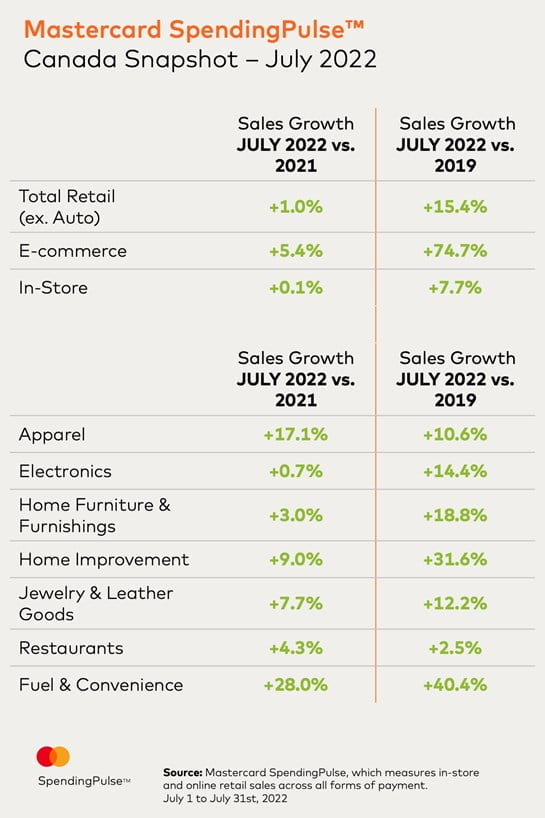
- While sales for e-commerce showed steady year-over-year growth, online spending compared to pre-pandemic saw a significant surge (74.7 per cent). Notably, in-store sales also increased (7.7 per cent) since pre-pandemic;
- Spending growth in July compared to pre-pandemic levels in 2019, was the highest experienced thus far in 2022;
- Consumers continue to spend, with inflation’s impact varying across sectors: Despite high inflation, consumers continue to spend on wants. The Apparel sector, for instance, saw sales up 17.1 per cent in July from a year ago while Restaurant growth (4.3 per cent) showed demand for experiences as Canadians continued to visit restaurants during summer’s busy season;
- E-commerce sales climb amid major summer sales events: E-commerce sales remain elevated, up 5.4 per cent from a year ago and 74.7 per cent from the pandemic, with major summer sales and promotions helping entice shoppers to splurge (and save) with online deals; and
- High season for vacation, with road-trippers continuing to spend at the pump: With gas prices still elevated across the country and summer vacation plans top of mind for Canadians, Fuel & Convenience spending rose 28 per cent year-over-year and YOY / 40.4 per cent pre-pandemic.
“The consumer is looking for deals. They’re in a mindset where they’re a little bit more stretched. You’re still seeing what I would call a change in behaviour from the pre-pandemic and then pandemic environment. What I mean by that was in the beginning of the pandemic everybody was at home. They were buying athleisure, sports, sweat pants, they were fixing up their houses. That bevaviour has led to some real issues in the environment because they’re in a post-pandemic environment where they want to change their behaviour and get out, they want to go to parties, they want to go to social occasions,” said Sadove.
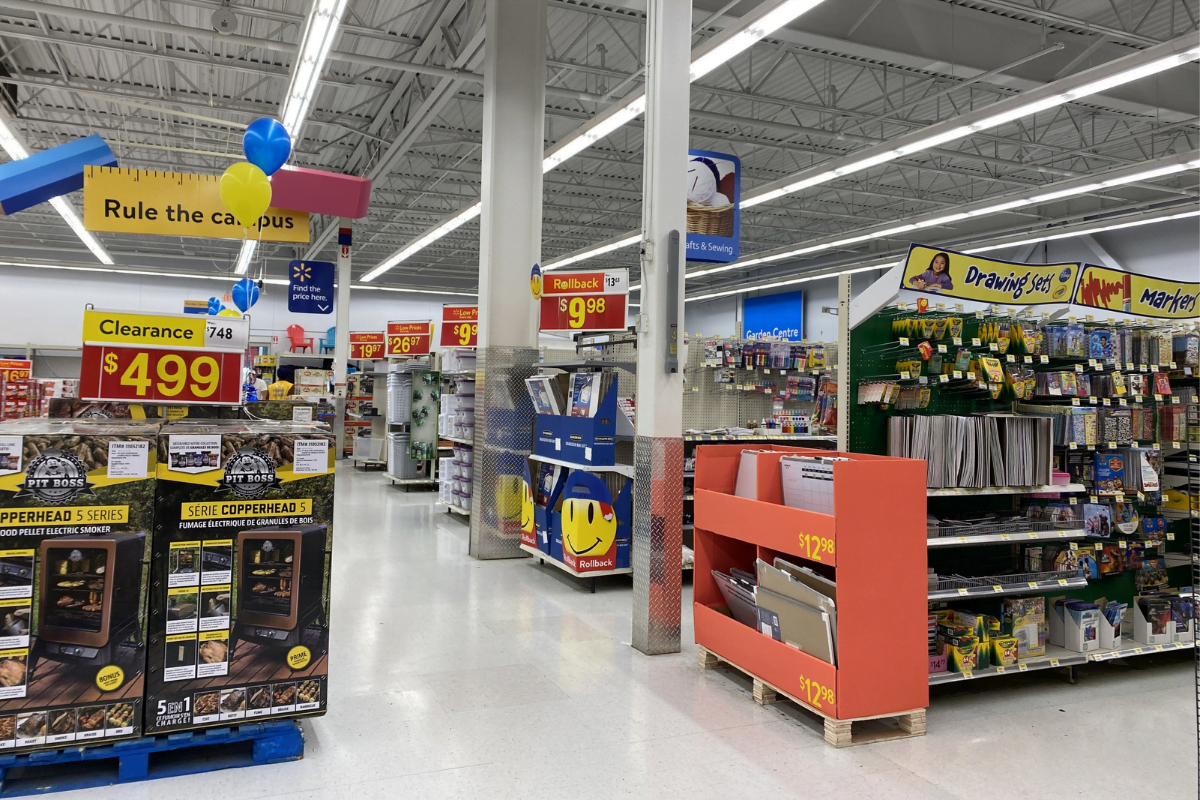
“And what they’re buying is changing. So it’s a little bit dressier, it’s a little bit get out there and a little sexier than it was. And apparel is very healthy . . . . It’s led to some dislocations because a lot of apparel makers brought more of the stuff that people were buying during the pandemic as there are not enough of the stuff that people want right now. So inventory levels across North America in a number of categories, whether or not they’re apparel or home improvement, outdoor grills, furniture, you’re seeing a lot of excess inventory in the system. And that is something I think is going to affect the next number of months as a lot of retailers try to clear out their inventories.
“You’re seeing somewhat of a slowdown moving away from the restaurants where you were seeing a little bit more growth earlier and some of it may be a squeeze on the consumer because of inflation. My go forward is inflation is going to continue to be an impact. You’re going to see more of this inventory clearance, more of the shift towards different kinds of items than they were buying before and for the lower income consumer it’s not going to get better in the near term with the higher inflation and higher fuel costs and energy costs. This winter is going to be a drag on some of the lower income consumers. But there’s going to be a lot of discounting for people who want to buy some of the other products because the inventories are high for a lot of those items.”
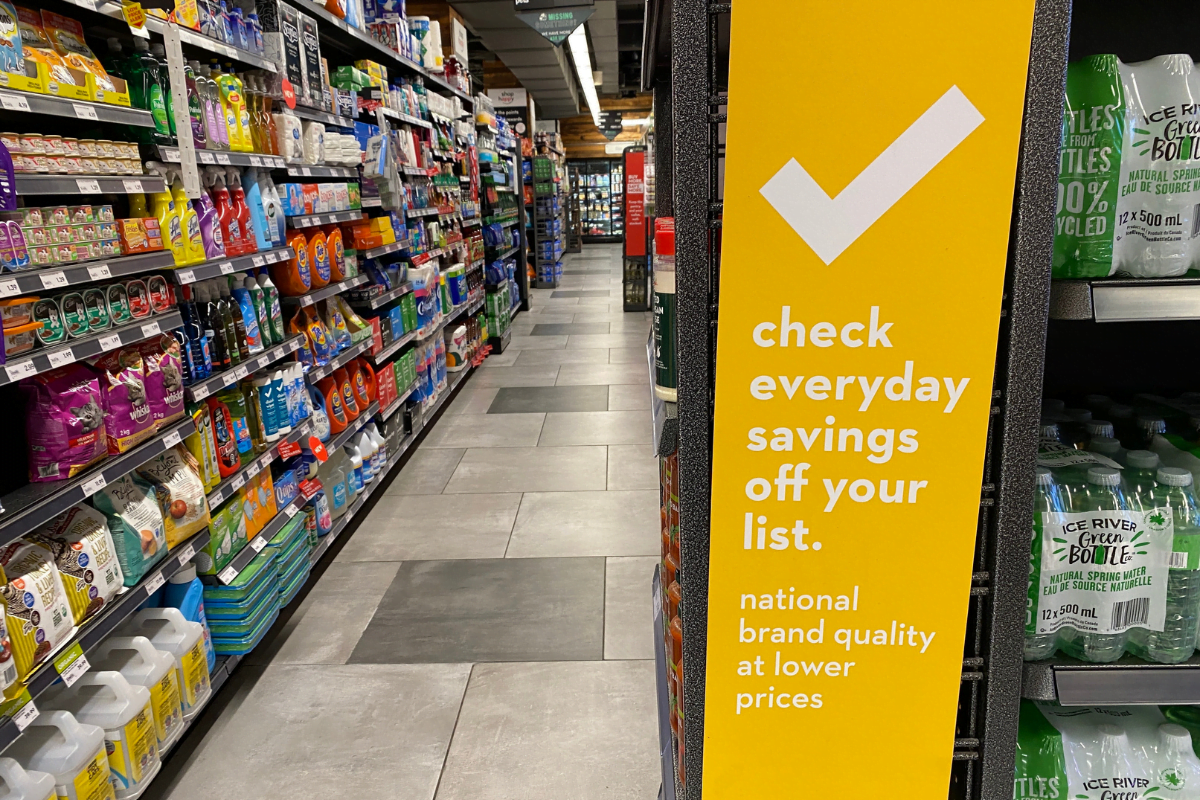
Sadove said many consumers will navigate to lower priced stores such as Walmart and Dollarama because of the high inflation environment. In an environment like this, he said, you tend to get a bifurcation where the high end does reasonably well and people gravitate to the Walmarts and Dollaramas of the world.