The idea for furniture brand Cozey came to Frédéric Aubé when he was a student at McGill University in Montreal studying finance and economics.
Frédéric Aubé
The idea began in 2019 and the brand was launched initially online in June 2020.
“The idea for Cozey at first was just to create one simple sofa, elegant, easy to move, in boxes that could be assembled tool free, shipped to your door in a few days at a really attractive price point,” said Aubé.
“It was a test to see if other people had the same problem as me of moving sofas around in a move or assembling sofas that take four tools and 12 bolts. And if so, can I sell those sofas on the internet.
“It was one sofa, four colours, really simple. And that’s how it started.”
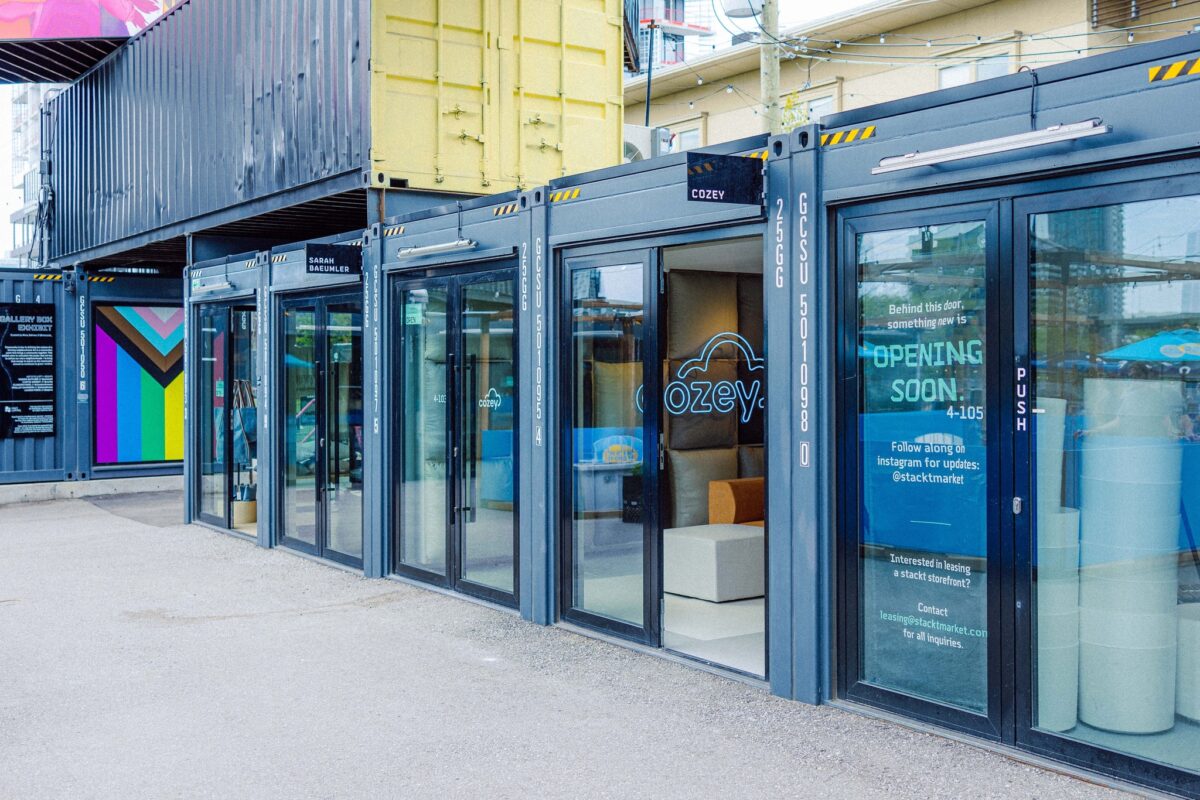
Cozey at Stackt Market (Image: Cozey)Cozey at Stackt Market (Image: Cozey)
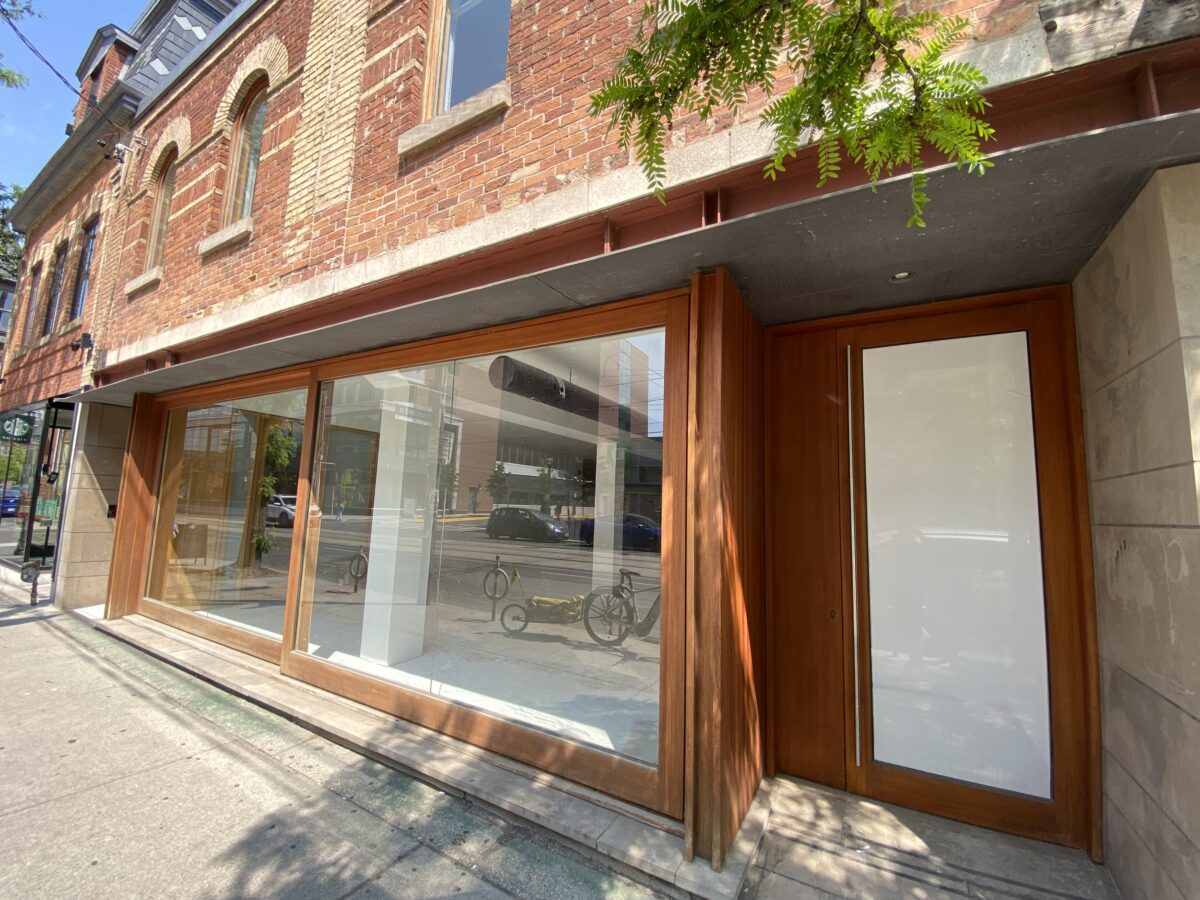
The concept was purely digital until recently when it opened a pop-up location at Stackt Market in Toronto. It is opening up its first store in Toronto on Queen St and Ossington Avenue in September in 3,600 square feet of space.
“It was the perfect timing to launch a sofa brand on the internet. We were in the midst of the pandemic where all the stores were closed. Everybody was looking for furniture and we had furniture in stock because of our model we hold the stock in and ship out directly to the customers’ homes. The business model was perfect because we had stocked and because we were able to serve customers,” said Aubé.
“So the reception was above and beyond all of my expectations and it’s been like that since the beginning.”
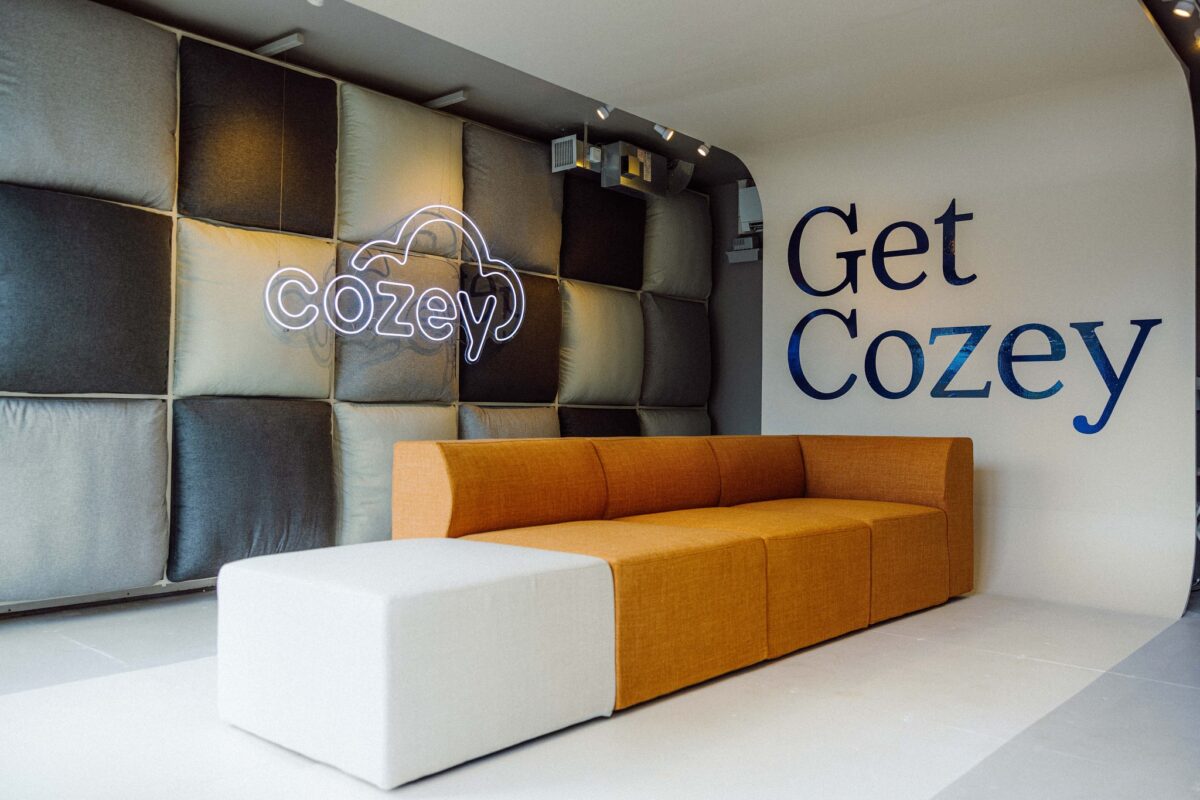
Image: Cozey
Aubé said Toronto is the company’s biggest market as the most populated city in Canada and one of the most populated cities in North America.
“I always say win Toronto, win Canada and for us it was important to be close to our best customers, close to our biggest market and really offer the seven-star experience that we want to offer and close the loop with the store,” he said. “A lot of people are coming every day and saying is there a place where they can try out the sofas.
“So we decided we’re going to test that with one store and if we’re going to do it we’re going to do it in our biggest market. It’s a perfect sofa for a city like Toronto with tight spaces, smaller apartments, being fully modular, ship in boxes, it fits through any door, it’s delivered quick, it’s just an easy experience perfect for the Toronto market.
“Lots of companies have gone too quick in trying to open up new stores. And not really getting the recipe right. And that’s really what we want to do. Get the recipe right. Learn. And then once we figure out if the store and the retail locations make sense, then to scale across Canada and across the U.S. But we want to take it slowly until we find the right recipe.”
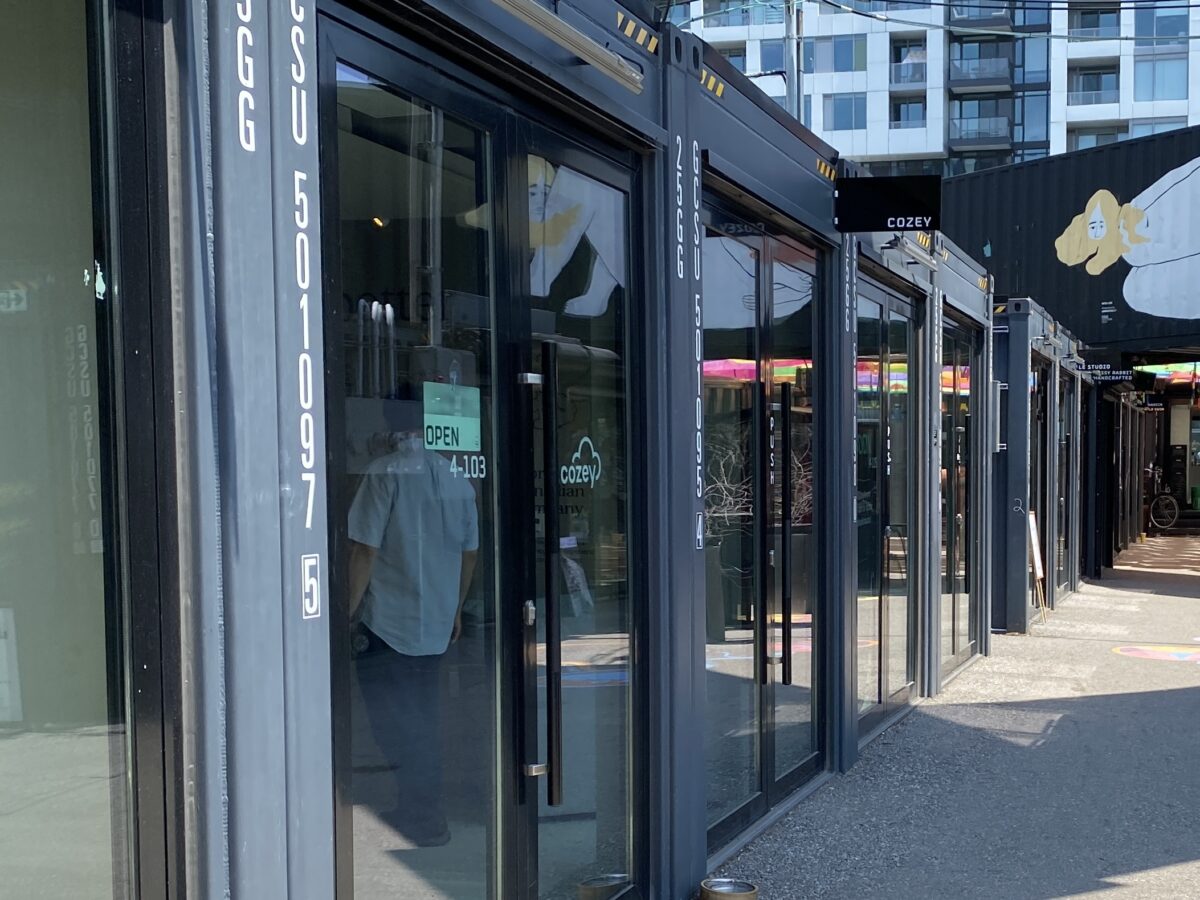
Cozey at Stackt Market (Image: Dustin Fuhs)Future Cozey on Queen at Ossington (Image: Dustin Fuhs)
He said Cozey was never meant to be for students because of the price point.
“But I really wanted it to be the perfect sofa for any type of room whether it’s your first living room sofa, your basement sofa, and just trying to bring the best quality at the best price point possible. It started with my own experience of moving things around,” he said.
“I think the sofa is the toughest item in the house to ship. So once we figured that out let’s go onto other furniture.
“One thing startups have in common is that they try to make the world a better place, by simplifying our lives. That’s what I want. A faster, easier, and effortless experience.”
Retail Insider is streamlining its Canadian retail news from around the web to include a handful of top news stories that can be viewed quickly during the day. Here are the top stories from the past 24 hours.
Ste Catherine at Peel St in Montreal (Image: Craig Patterson)
As remote work increases in popularity, you might wonder how this new trend is affecting retailers – especially downtown cores in Canada. Retail experts Rocco Mateo, Tim Kocur, and Lisa Hutcheson discuss the impact remote work has on retailers and what can be done to minimize the hit.
“In the long-term I think a lot of retailers are going to suffer as more people work remotely, especially in the downtown cores and landlords will also find it very difficult to fill up their spaces. From a work-family balance, I think working at home has done a lot of good; however, there will be a retail impact coming out of this for sure and retailers need to reinvent themselves,” says Rocco Mateo, a Retail Executive in Montreal.
Rocco Matteo
As working remotely has become the new normal, companies have been trying to find a new work balance and it has become a difficult debate throughout the country. Although working remotely has its benefits, it could also impact retailers in cities. Recently in Halifax, Nova Scotia, the Halifax Chamber of Commerce announced it wants municipal employees to return to the office for at least four days a week to bring back traffic to the downtown core. The Chamber is hoping this will bring back vibrancy and increase spending downtown, but is this the right direction?
“I think Halifax is at the forefront of what a lot of organizations will do right now, but it is not viable for the long-term. I think a lot of retailers will suffer, especially in the downtown core and office spaces. So I would suspect that some announcements will be made from major employers to get people back into the office. Maybe not on a full-time basis, but definitely at a minimum of three days a week at the office for sure and I think it is very important for the viability of our economic situation,” says Mateo.
Ste Catherine, Montreal (Image: Craig Patterson)
Mateo says in Montreal, more than half of people are working from home at least three to four days a week and has seen it impacting downtown. Before Covid, Mateo says most people worked five days a week in the office and went out for lunch but now, those lunch spots for example are suffering because they are not having the same amount of traffic and same goes for retail shops.
To help with this transformation, Mateo suggests retailers need to be placing more effort into their e-commerce platforms as until people return back to office, more people are purchasing online.
“We definitely have been seeing more retailers work a lot harder on their e-commerce platforms because their customers were no longer going into the store since they were working remotely. And retailers also need to create a wow factor and go above and beyond with customers and step up in the game and work hard to keep their customers loyal,” says Mateo.
No Time for Shopping
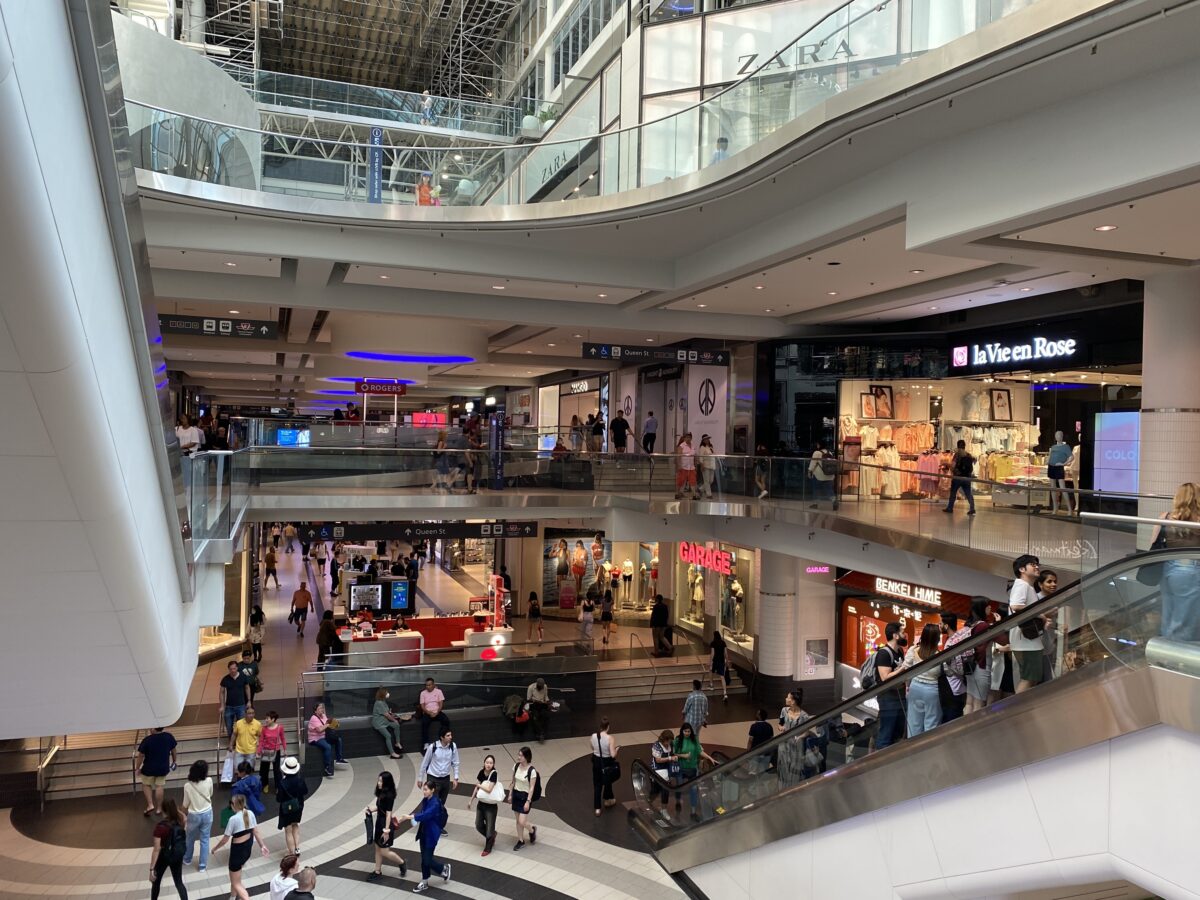
CF Toronto Eaton Centre on Wednesday, May 31st (Image: Dustin Fuhs)
People who do spend two to three days in the office already do not have the same amount of time they used to compared to full-time in office, shared Lisa Hutcheson, the Managing Partner of J.C. Williams Group. Hutcheson says the Toronto downtown core has “really seen the brunt of remote work on retail” and also has noticed employers are not socializing or shopping as much as before Covid as much as they used to.
Lisa Hutcheson
“When employees come into the office today, they are staying focused because if they are commuting – they are not doing it for shopping, they are doing it to put their time in the office,” says Hutcheson. “Before, there would be some spillover and more socialization, but people have gotten out of the habit of that social element at work because they are only there for a shorter period of time. Now, employees want to make sure they are being productive and they are not going out shopping like they used to.”
To survive the new work lifestyle, Hutcheson suggests retailers need to start understanding what their customers want from a shopping experience while they are in the office and start looking at new ways they can pivot their business to meet what the new working consumer wants.
“Although companies keep wanting to mandate people to come back full-time, I think we have created a workforce that has identified that people can work hybridly. And the retailers that are winning and the properties that are winning, are really working hard adjusting on how they serve the customers,” says Hutcheson.
Adjusting to the new consumer base could be looking at extending or shortening retail hours, accessing consumers more through emails and social media platforms, having special events, or promotions. Understanding when people are working in the city is also important as Hutcheson says some people are not even in the office for the full day, but leave at around two “as they don’t stick around anymore after a meeting – they are gone, so how will retailers address this?”
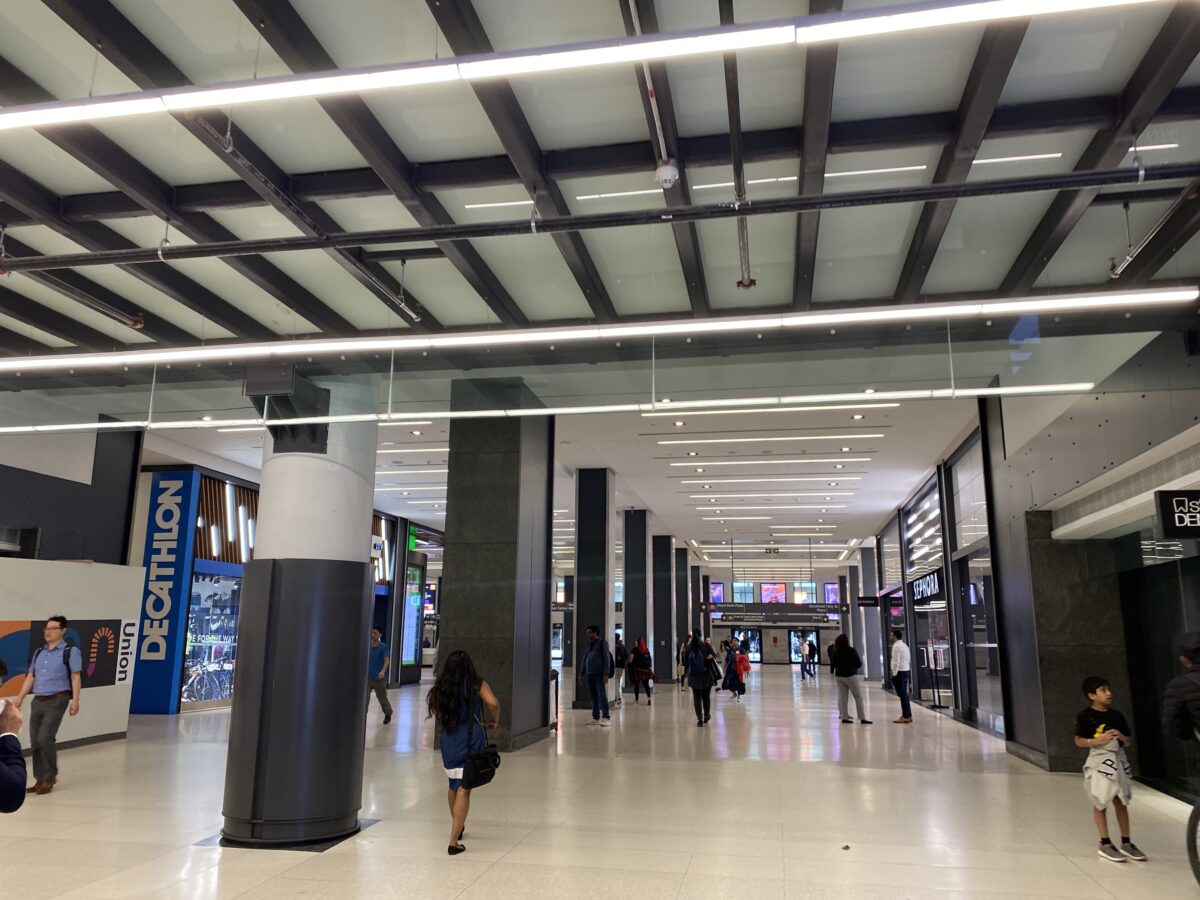
Union Station in Toronto at 145pm on Monday, May 29th, 2023 (Image: Dustin Fuhs)
Tim Kocur, the Executive Director of the Waterfront BIA, also says understanding the new work environment is crucial for retailers. Currently, Kocur says the city looks different depending on the day as mid-week has significantly more traffic compared to Mondays and Fridays. He has found that mid week is almost back to normal with sixty percent of people working in office; however, on Fridays the number goes down to twenty-seven percent.
Tim Kocur
“If people are coming in fewer days they are more likely to miss Monday and Friday especially, so retailers need to adjust to that and in some cases, food courts in the office buildings on Tuesdays, Wednesdays, and Thursdays have been busier than ever before because people are excited to go to the nice coffee shop now that they are in the office two to three days a week, but Mondays and Fridays are where it is nowhere close to the percentage of pre pandemic average,” says Kocur.
Due to the changes on different days, to adjust to the new remote culture, retailers should make changes to their hours of operation. For example, Hutcheson suggested on busier days to be open longer and maybe on Mondays and Fridays, to shorten them. Each city has different working vibes and retailers need to be aligned with what works best for their city.
Kocur says the problem goes beyond retail experience, as even if people worked remotely full-time, the city and retailers should create experiences to attract consumers back to shopping downtown. Mateo in Montreal says that the city is creating more experiences to draw people downtown including a lot of festivals lined up for the summer, “which will push people to downtown Montreal,” says Mateo – and other cities should do the same.
Queens Quay on the Waterfront (Image: Dustin Fuhs)
“A key concern over the next few years was to make sure that retail fills in with a vibrant and inviting retail experience. For example, coming down to see the new amenities, new restaurants along the waterfront, new patios for the summer, and creating events that encourage people to come downtown outside of work,” said Kocur.
As the debate of remote work versus in office continues, Kocur, Hutcheson, and Mateo agree that there needs to be a balance between the two. However, either way retailers need to make changes because as employees get used to working at home, it is unlikely people will want to return to the office on a full-time basis and retailers are going to have to find new alternatives to reach consumers throughout Canada.
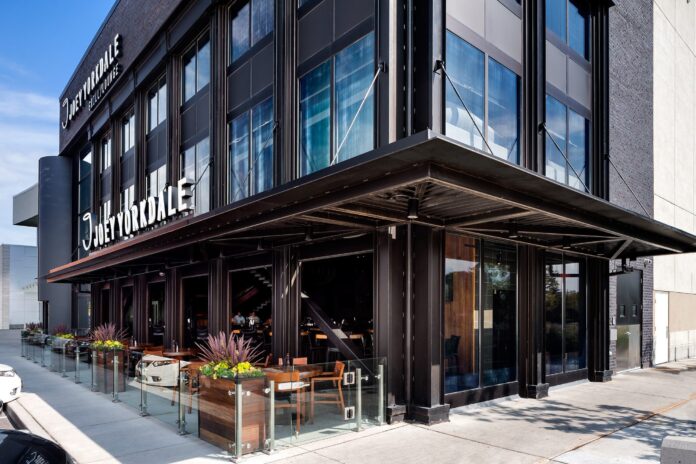
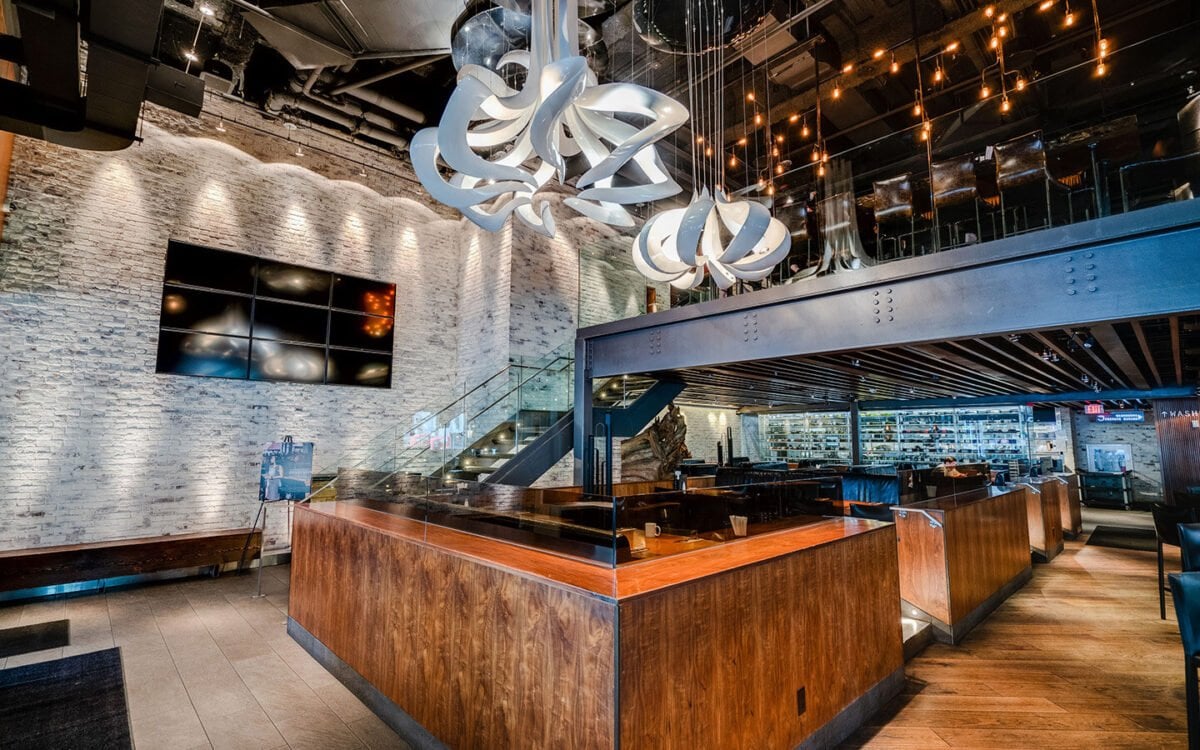
Real estate company CBRE’s Urban Retail Team is working with the Joey Restaurant Group as their exclusive broker to assist with site selection for expansion of the brand across downtown Toronto. JLL is representing the chain for its expansion in the rest of Ontario.
Teddy Taggart
Teddy Taggart, Associate Vice President of CBRE’s Urban Retail Team, is working with Arlin Markowitz, Executive Vice President of the Team, to find locations in urban Toronto on high streets, downtown street fronts only and not any malls.
Arlin Markowitz
He said expansion is planned for both the Joey brand and its sister brand Local.
The casual restaurant concept, based in Vancouver, currently has 23 locations in Canada and eight in the U.S.
Joey at CF Toronto Eaton Centre (Image: Joey Restaurants)
Canadian locations include four in Calgary, four in Edmonton, one in Kelowna, two in Ottawa, five in Toronto, five in Vancouver and two in Winnipeg. In the U.S., there are four in California, three in Seattle and one in Texas.
“Both concepts have been performing very well for them,” said Taggart. “And they’re just looking to expand. They have a couple of them in each market now but they’ve been performing quite well as of recently post-COVID. So they’re just looking for a greater presence across both markets for both concepts.”
Taggart said they are looking for spaces of more than 4,000 square feet but the sweet spot is closer to 6,000 to 8,000 square feet with a patio and parking.
JOEY Bentall One in Vancouver (Image: Joey Restaurants)
“In terms of locations, Joey would be more sort of front and centre flagship. Think the (CF) Eaton Centre (in Toronto). High footfall. High density areas. Whereas Local it targets more neighbourhood. It might skew slightly younger, a little more approachable as a brand, and they also look for patios as well. But the Locals would be more like a local public eatery in a traditional sense hence the name. Both do a great job blending a fun environment with high energy but also do a much better job with the food menu than maybe your traditional pub style operator.
“It’s a good sign of the status of the F&B (food and beverage) market. There’s a lot of concerns about how they were recovering post-COVID and these guys are saying we’re doing more of these and we’re seeing great sales. It’s a nice messaging from a retail perspective that restaurant operators are doing quite well these days.”
Lawrence Hildebrand
Lawrence Hildebrand, EVP at JLL Canada Retail, is handling the expansion of Joey and Local for the rest of Ontario outside of downtown Toronto, including potential locations in Ottawa which is a targeted city for the chain.
Hildebrand said, “For the Joey brand, prominent locations in the 7,000 to 7,500 square foot range are ideal. Having a significant patio in the 2,000 to 2,500 square foot range is a vital feature.”
“For Local, the search is for spaces in the 4,000 to 4,500 square foot range, with a patio in the 1,500 to 2,000 square foot range. Locations with patios that can be used year round or during inclement weather are preferred.”
JOEY at CF Rideau Centre (Image: Joey Restaurants)JOEY Chinook Centre (Image: Joey Restaurants)
The first Joey opened in 1992.
“Like most of JOEY management, CEO Jeff Fuller started his remarkable journey flipping burgers, washing dishes and sweeping floors. It’s called paying your dues, learning from the ground up and understanding what success takes. “If there’s a secret,” he says, “it’s hard work, unwavering commitment to the customer and assembling the very best people”,” says the company on its website.
“Jeff absorbed valuable lessons from his family’s successful businesses before striking out on his own with a brand new concept in upscale casual restaurants. The first JOEY opened in 1992 and, as word spread, plans for a second location were quickly in the works. Today there are 30 JOEY Restaurants across Vancouver, Kelowna, Calgary, Edmonton, Winnipeg, Toronto, Seattle, California and Texas. Our model isn’t to repeat formulas but create spaces perfectly suited to the locale and its clientele. Each JOEY restaurant is unique, but they all have plenty in common: great food, lively environments, exceptional dining experiences.”
Courtney Stewart, Coordinator, Real Estate for the Joey Restaurant Group, said the restaurant brand is looking at major urban downtown cores and very busy dense areas for expansion.
“We’re really looking for really unique offerings . . . unique prime real estate,” said Stewart.
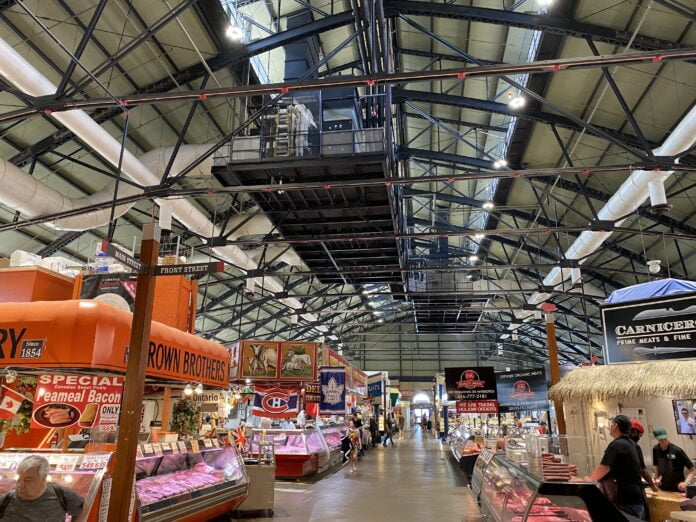
St Lawrence Market in Downtown Toronto (Image: Dustin Fuhs)
In 2022, some food industry sectors in Canada, such as fresh produce and poultry, experienced record production. However, some sectors exported more food internationally in 2022 than in 2021, according to Statistics Canada.
“In addition, the food industry was affected by supply chain issues related to the COVID-19 pandemic, such as shipping delays, product and labour shortages, and price increases,” said the report.
From 2021 to 2022, the amount of fresh fruit (including citrus) available declined by 5.1 per cent to 72.9 kilograms per person. A 12.7 per cent increase in production was not enough to keep pace with an increase in exports (+16.8 per cent) and manufacturing (+13.2 per cent) and a decrease in imports (-3.6 per cent). The total amount of processed fruit available per person in 2022 increased by 4.9 per cent from the previous year to 17.1 kilograms of fresh fruit equivalent, said Statistics Canada.
In this video interview, Dr. Sylvain Charlebois, Senior Director, Agri-Foods Analytics Lab, Dalhousie University, discusses the state of food production and availability in Canada as well as issues the industry is facing when it comes to supply chains, shipping, labour and prices.
Farm Boy Sugar Wharf (Image: Dustin Fuhs)
In 2022, the availability of fresh vegetables (excluding potatoes) was 64.7 kilograms per person, a decrease of 5.9 per cent from 2021. While fresh vegetable production increased 3.9 per cent in 2022, imports declined 7.5 per cent and exports rose 7.8 per cent. Similarly, the availability of processed vegetables (35.0 kilograms of fresh equivalent per person) decreased by 3.2 per cent from 2021, said Statistics Canada.
“From 2021 to 2022, total poultry availability increased by 1.5 per cent to 25.5 kilograms (boneless weight) per person. Poultry exports were down 11.0 per cent from 2021. Red meat availability increased by 4.3 per cent in 2022, compared with 2021, to 32.4 kilograms (boneless weight) per person. Beef availability led the way in 2022, at 15.5 kilograms (boneless weight) per person (+2.9 per cent from 2021), as cattle slaughter increased from 2021. Pork availability in 2022 was 14.7 kilograms (boneless weight) per person (+6.6 per cent from 2021), as exports declined by 5.1 per cent from 2021,” added the report.
“From 2021 to 2022, egg availability increased by 0.6 per cent to 21.5 dozens per person, as egg production increased for the 18th straight year.
The availability of total milk decreased by 3.9 per cent in 2022, compared with 2021, to 58.6 litres per person. This was primarily caused by a drop in production of one percent milk and two percent milk. Total cheese availability decreased 1.4 per cent to 14.2 kilograms per person from 2021 to 2022. The amount of total cheese available in Canada increased by 0.4 per cent from 2021 but was outpaced by Canadian population growth.
“Availability of wheat flour increased by 2.0 per cent to 59.2 kilograms per person in 2022, compared with 2021. This gain was driven by improved growing conditions across Western Canada, which yielded a 4.1 per cent increase in wheat flour production, compared with 2021.”
The Video Interview Series by Retail Insider is available on YouTube.
Connect with Mario Toneguzzi, a veteran of the media industry for more than 40 years and named in 2021 a Top Ten Business Journalist in the world and the only Canadian – to learn how you can tell your story, share your message and amplify it to a wide audience. He is Senior News Editor with Retail Insider and owner of Mario Toneguzzi Communications Inc. and can be reached at mdtoneguzzi@gmail.com.
Also check out the other series offered by Retail Insider, including The Weekly podcast and The Interview Series, which are both available on Apple Podcasts, Stitcher, TuneIn, Google Podcasts, or through our dedicated RSS feed for Simplecast and other podcast players.
Retail Insider is streamlining its Canadian retail news from around the web to include a handful of top news stories that can be viewed quickly during the day. Here are the top stories from the past 2 days.
What is particularly troubling about the food crisis is that the high prices seem to be impacting all food product categories, suggesting the problem is affecting the entire food supply chain rather than specific items or sub-sectors.
In response to this and other concerns, the House of Commons Standing Committee on Agriculture and Agri-Food initiated studies on Food Price Inflation and Global Food Insecurity, which included two separate meetings with the heads of four of the five major Canadian grocery retailers.
A result of the meetings — and a cause for cautious optimism — is the decision to develop a grocery code of conduct to address issues in the food supply chain.
In both meetings, the executives indicated that food price inflation was due to problems with global supply chains in the aftermath of the COVID-19 pandemic: commodity price increases, labour shortages, transportation bottlenecks, weather disasters and higher energy costs.
Michael Medline, President and CEO of Empire Company Limited, left, and Galen G. Weston, Chairman and President of Loblaw Companies Limited, wait to appear as witnesses at the Standing Committee on Agriculture and Agri-Food investigating food price inflation in Ottawa on March 8, 2023. THE CANADIAN PRESS/Spencer Colby
To what extent those meetings helped clarify the complex issues affecting grocery supply chains appears to be still in debate. But the decision to create a grocery code of conduct could make these meetings worth it in the long run.
The code of conduct is currently being drafted by grocers, suppliers and Agriculture and Agri-Food Canada, a government department focused on the country’s agriculture and agri-food sector.
What the new code should include
The grocery code of conduct is still in development. The draft seems to prioritize resolving disputes, rather than making long-term structural changes to the way the supply chain operates.
But this could change in the future. According to members of the code’s steering committee, it will be possible to amend the code once it’s up for review in 18 months.
As an expert in supply chain management, I have recommendations for future editions of the code to strengthen relationships and performance across the industry. These changes would benefit not only the companies involved, but also Canadian consumers.
The grocery code of conduct is being drafted by grocers, suppliers and Agriculture and Agri-Food Canada. THE CANADIAN PRESS/Paul Chiasson
The ultimate target of the new code should be consumers, while also securing prosperity of the supply chain. To do this, the code should accomplish two things: promoting horizontal competition while also fostering vertical co-operation in the industry.
Horizontal competition refers to rivalry between organizations operating at the same level to gain customers — like competing retailers, for example.
Vertical co-operation aims to strengthen relationships between companies operating at various stages of the supply chain. Its objective is to improve collaboration in areas including production, distribution, information sharing and pricing.
Supply chain management practices
Supply chain management practices could be used to foster both horizontal competition and vertical co-operation in the supply chain.
The research recommends introducing collaborative practices that go beyond the dispute-resolution measures outlined in the code draft. These practices include:
Collaborative planning, forecasting and replenishment (CPFR). This program aims to improve coordination across the supply chain to reduce uncertainty, improve responsiveness, and minimize costs such as bloated inventories and expedited orders. CPFR is highly applicable to the grocery supply chain. In fact, it was initially developed by Walmart in 1996 and is currently used by the LCBO and other consumer goods companies in Canada. The code should encourage the adoption of specific CPFR practices, such as joint forecasting between buyers and suppliers.
Target costing. Under this approach, buyers and suppliers work together to reduce costs to guarantee a maximum selling price while protecting margins. As authors James P. Womack and Daniel T. Jones have indicated, this approach requires the “relentless scrutiny of every activity along the value stream.” For this approach to be effective, it must be collaborative and include the fair distribution of responsibility, authority and benefits among supply chain partners.
Ultimately, competitive goals should apply to the entire supply chain, rather than to specific stages. It is well-known that squeezing suppliers can, in many instances, quickly erode the supply base. These policies can be severely detrimental not only to the whole industry — including buyers — but also to consumers.
What we need is a comprehensive code of conduct that ensures the long-term sustainability of the industry, while also protecting consumers in the event of future supply imbalances.
By Giovani J.C. da Silveira, Professor, Operations and Supply Chain Management, University of Calgary
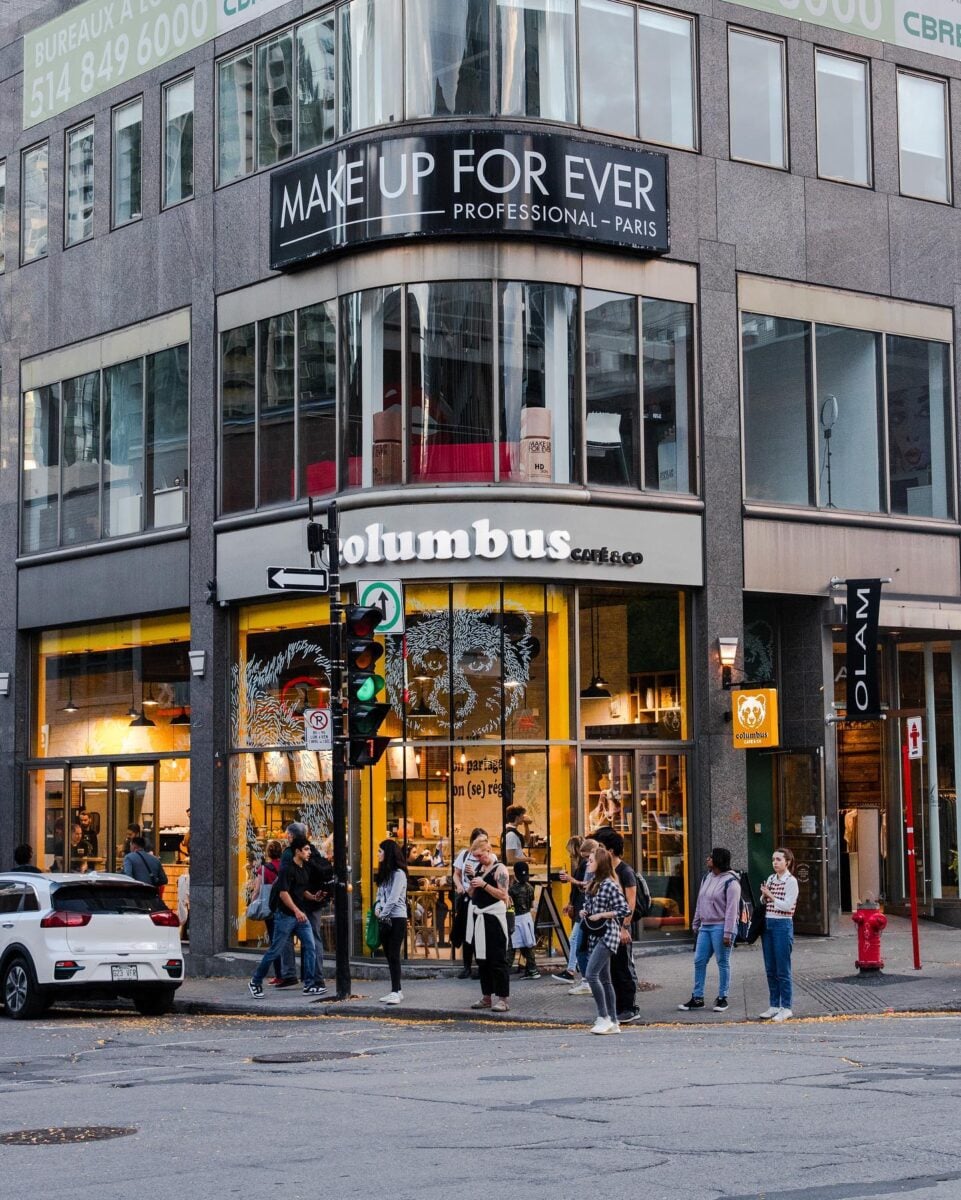
Columbus Café & Co continues to expand its footprint in Canada with the recent opening of its 10th location in Montreal and announcing it will open its first Toronto location in early Fall.
Tony Flanz
Tony Flanz, of Think Retail, which consults and represents international, national, and regional retail chains and is part of Columbus Café & Co’s expansion, said the plan is to open at least 20 locations in the next 12 months.
“Ideal spaces are 1,500 square feet and the preference is for corner locations and/or drive-thru opportunities along high streets, as well as super regional malls, open air plazas, train stations, hospitals and airports,” he said.
“We are flexible. We’re happy to look at something a little bit larger. We’re a bit of a chameleon. We can look at anything from a kiosk at 250 square feet plus some seating to 800 square feet grab and go. So we really can be flexible depending on the location.”
Columbus Café & Co in Montreal (Image: Dustin Fuhs)Columbus Café & Co in Montreal (Image: Columbus Café & Co
The first North American café debuted on Mont-Royal Avenue in Montreal in 2020 and already there are 10 locations in and around the city.
The newest is a 2,000-square-foot café at 2020 Robert Bourassa in Montreal, at the foot of a busy office tower owned by Canderel.
Columbus Café & Co will open its first Toronto location, at 283 Adelaide St. W. in the PJ Condos tower. The location is close to 1,700 square feet.
“Toronto was always part of the plans,” said Flanz. “The company has designs to open at least 100 locations in Canada in their first five years of entering the market. So the gradual scale was always to look in Toronto in year three of the program.
“That particular location we collaborated with Urban Reform who had the listing for that space and felt a coffee shop market was very underserved in that area of Toronto, on that street where there’s a lot of QSR restaurants that are very successful. The location has a lot of frontage and a major patio opportunity which we thought we could be very creative and try to animate that corner with our branded elements and we’re very excited about doing so.”
283 Adelaide St. W. in the PJ Condos (Image: Condos.ca)Image: Columbus Café & Co
He said Toronto and Montreal are big areas of focus for expansion. It is also looking at developing more drive-thru locations which is a top priority. It’s also looking to be in financial cores and entertainment districts, hospitals, airports. High traffic walking streets have always been a part of the core business.
Flanz said the company has built a reputation as France’s favourite coffee shop.
It was founded in 1994. The brand grew because of its premium coffee products and varied menu—sandwiches, salads and Buddha bowls, plus an array of quality baked goods and sweet treats—housed in modern inviting spaces where customers can enjoy a quick bite or linger with friends over coffee and a meal.
In 2001, the company opened its first café outside of France—in Brussels—and three decades after its inception, Columbus Café & Co operates more than 200 locations across France and internationally.
“We will partner and align with some charitable entities each time we open markets,” said Flanz. “When we open in Toronto we will look to align with an organization that helps others, that we feel has synergy with our global mission and objectives.”
In a previous interview with Retail Insider, Maxime Mayant, the company’s CEO in Canada, said: “A large food offering to share every moment of the day whether it is lunch, breakfast, or snack . . . Our values are as follows: Live, share and enjoy. We cultivate healthy eating and products and do as much as possible on site. We also cultivate ecology throughout the process, whether for fair trade organic coffee, packaging, rules in branches.”
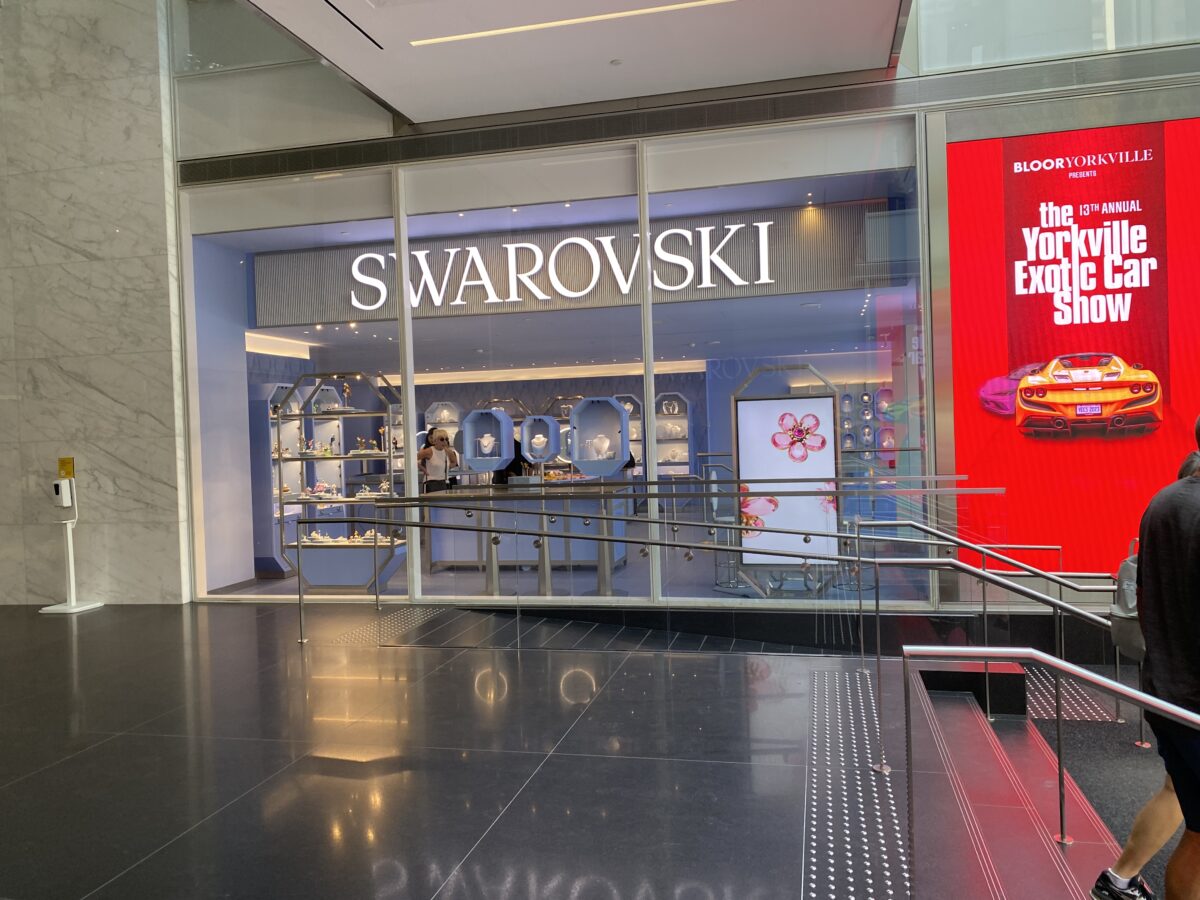
Austrian crystal brand Swarovski has launched its ‘Instant Wonder’ flagship concept store in Canada with a single location on Bloor Street in Toronto. It is one of a select few stores for the new concept globally with the store replacing a previous Swarovski location that recently closed nearby.
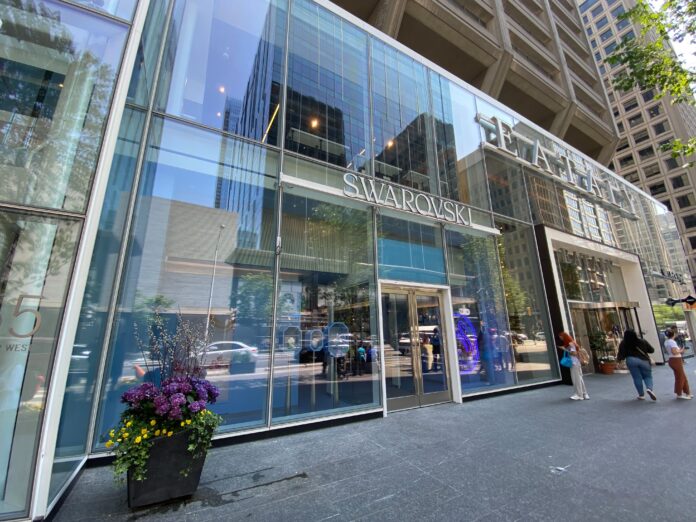
The new 1,900 square foot Instant Wonder Swarovski is located at the Manulife Centre, with a Bloor Street-facing entrance in the space between the main entrance to Eataly and the main entrance to Manulife Centre. It is one of only 27 Instant Wonder stores around the globe according to Swarovski, following the concept’s launch in 2021. Manon Parisien of Aurora Realty Consultants negotiated the lease on behalf of Swarovski. CBRE’s Urban Retail Team represented landlord Manulife including Arlin Markowitz, Alex Edmison, Jackson Turner, Teddy Taggart and Emily Everett.
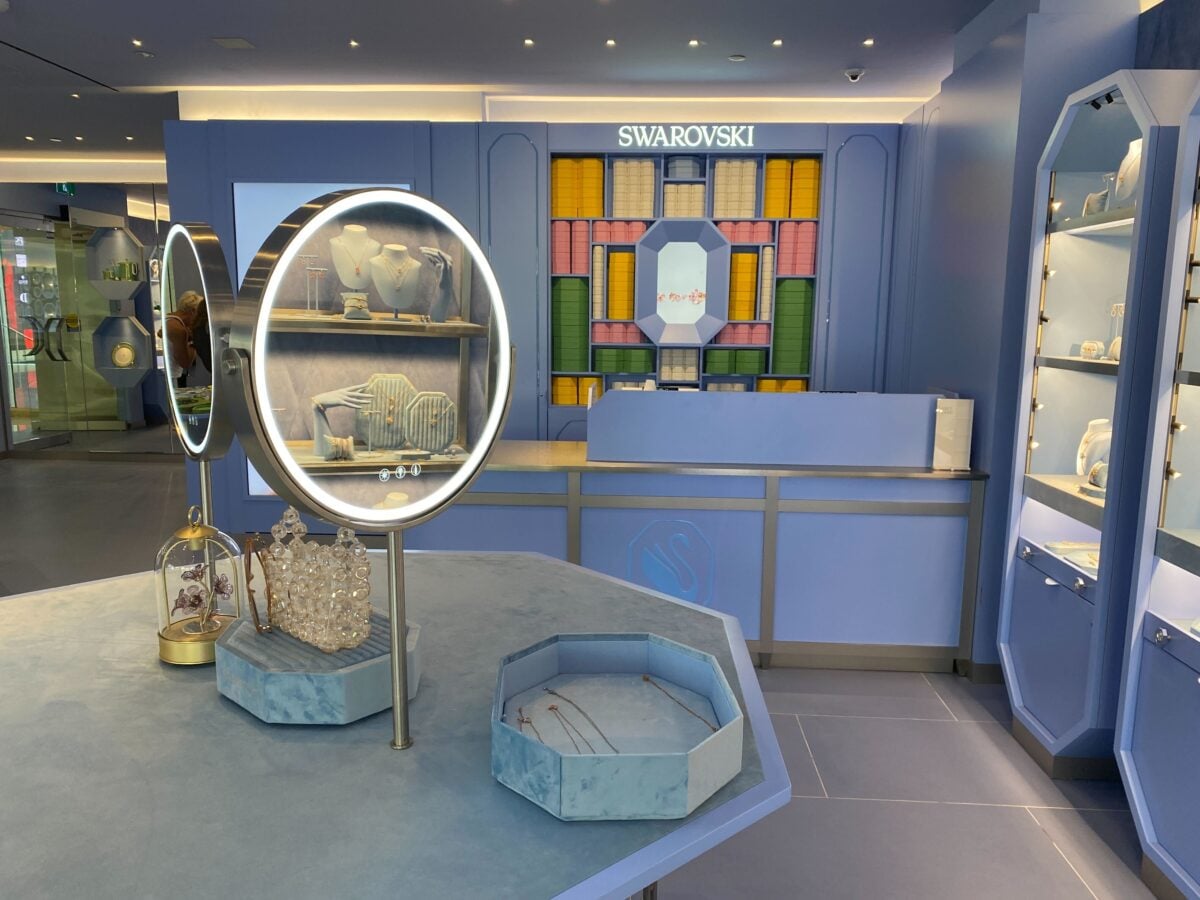
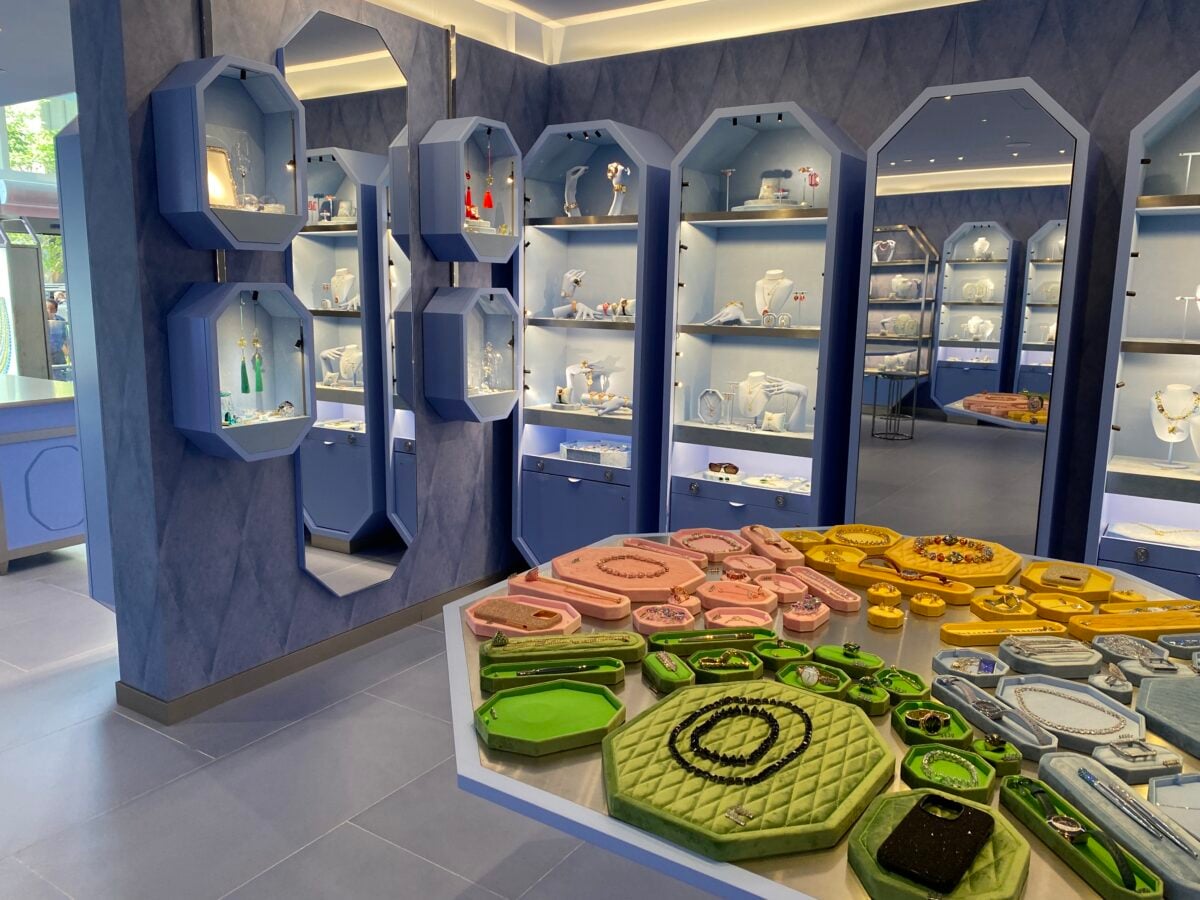
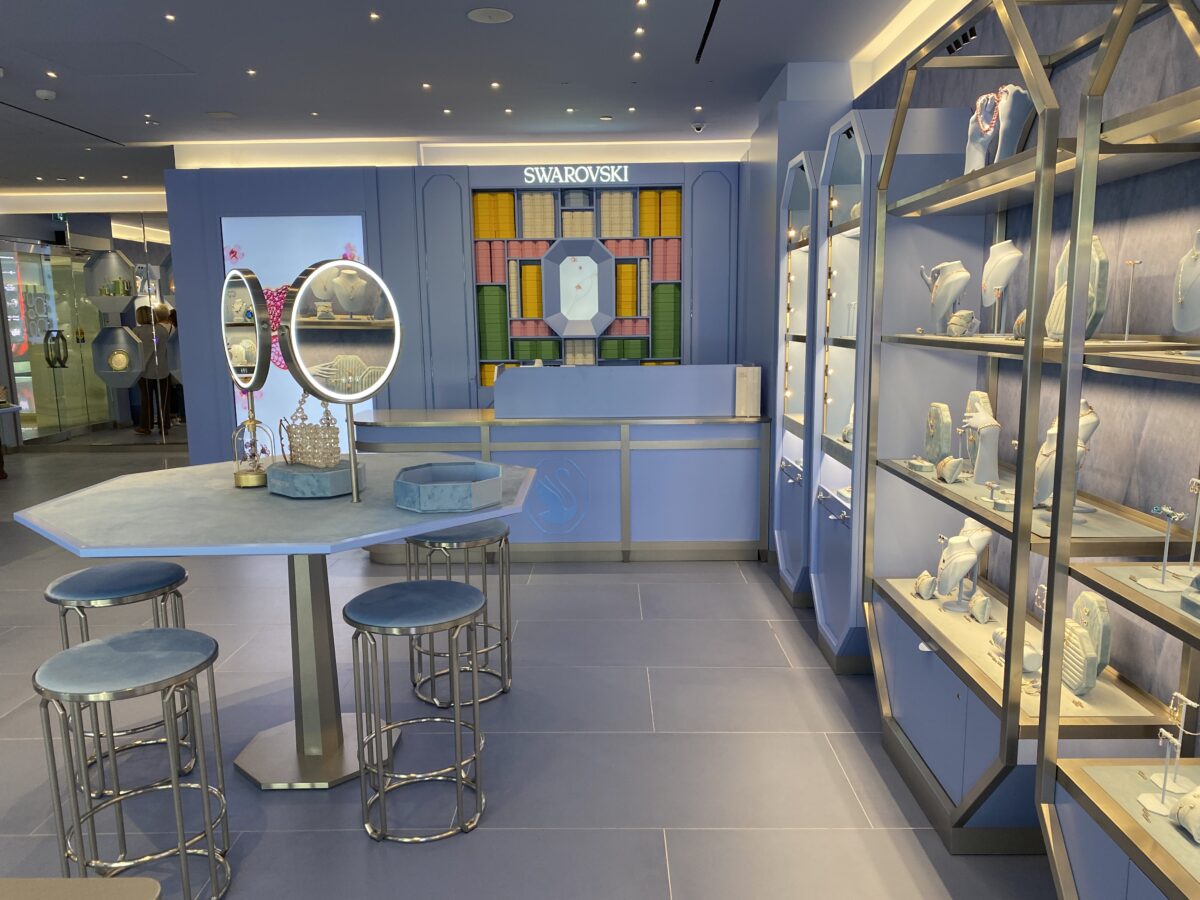
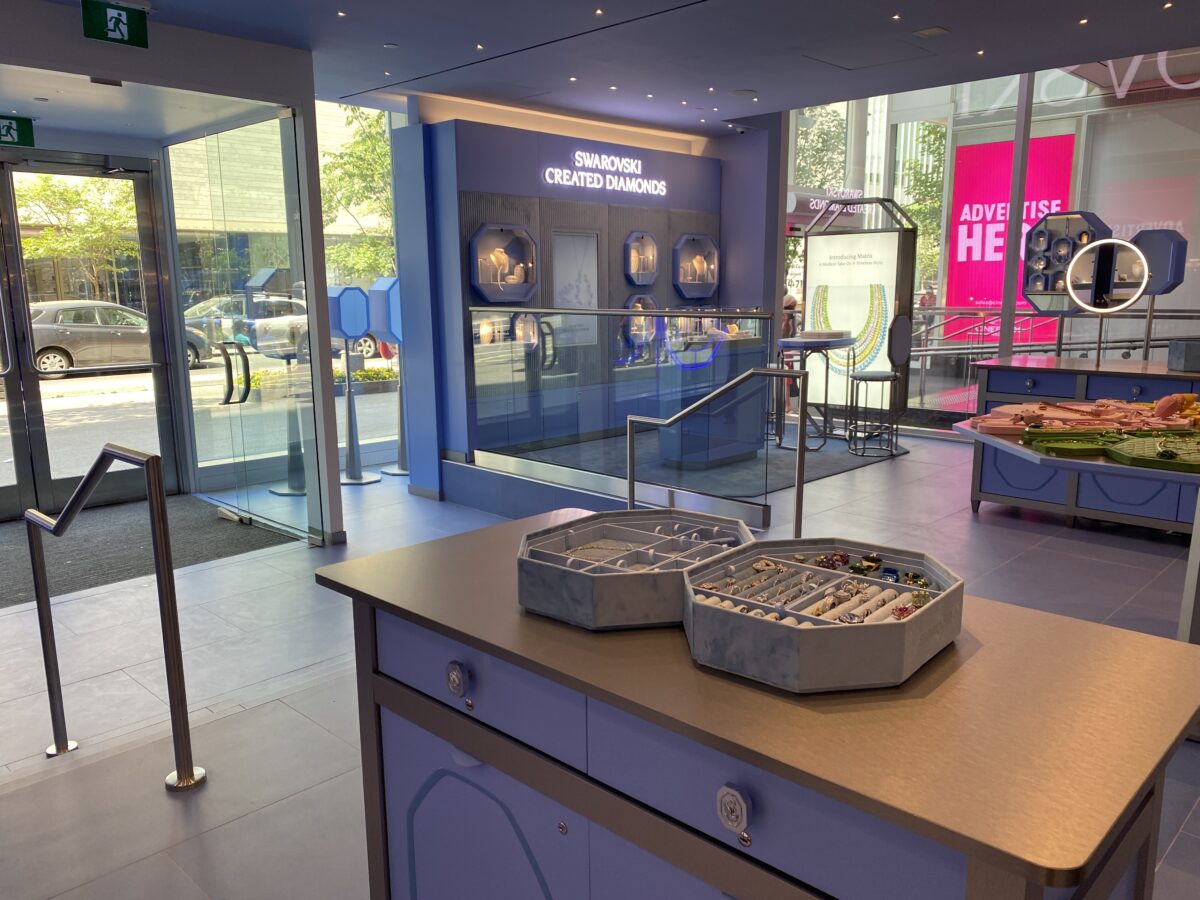
The Toronto store is highly experiential according to Swarovski. The location “pays homage to the shimmering beauty of crystal” with an interior of “mesmerizing metallic finishes and fluted glass combined with chrome and silk touches throughout.” The store, as with other Instant Wonder flagships, is colour-blocked in blue — various stores globally feature other colours. The experience also includes packages that are wrapped up with signature gross-grain silks and velvets.
Swarovski at Manulife Centre (Image: Dustin Fuhs)Photo: Dustin Fuhs
A collection of octagon display cases on the walls of the store showcase a range of jewellery and other offerings adorned in Austrian crystals, and the store also carries an assortment of accessories, figures and collectables, gifts and other categories displayed throughout.
Kolja Kiofsky
“We are thrilled to continue expanding the footprint of our new retail landscape which will allow customers to explore Swarovski collections in a modern luxury environment,” said Kolja Kiofsky, General Manager, Swarovski North America. “Our newly opened presence on Bloor Street underscores Swarovski’s commitment to our business development and to delivering joyful extravagance to our customers in North America.”
The new Swarovski replaces a former location that shut at 2 Bloor Street West in early 2022. That former location, which operated since 2002, shut along with an adjacent Talbots store so that construction could begin on a new Lululemon flagship that will open early next year at the northwest corner of Yonge and Bloor Streets.
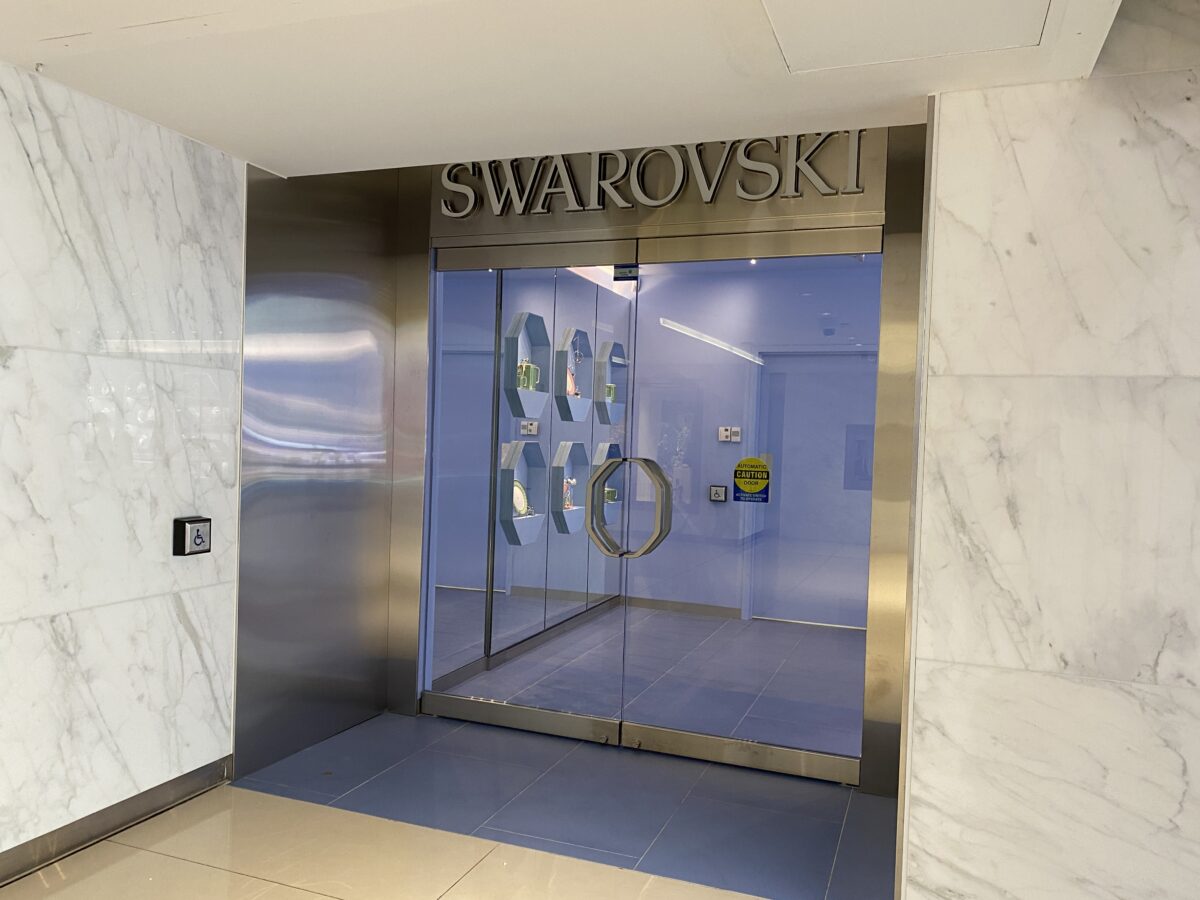
Swarovski at Manulife Centre (Image: Dustin Fuhs)View of Swarovski from the Bloor Street lobby of Manulife Centre. (Photo: Dustin Fuhs)Photo: Dustin Fuhs
Swarovski operates standalone stores across Canada and the brand also wholesales in jewellers nationally. The Manulife Centre Instant Wonder store is expected to be the only one of its kind to open in Canada. Swarovski was founded in 1895 in Austria and the company designs, manufactures and sells a range of crystal, gemstones, Swarovski Created Diamonds and zirconia, jewelry, and accessories, as well as crystal objects and home accessories. The company has about 2,400 stores and 6,700 points of sales in around 140 countries and employs more than 18,000 people.
The Manulife Centre is anchored by a 50,000 square foot Eataly location that opened in late 2019, as well as a Loblaw City Market grocery store, Shoppers Drug Mart, LCBO, Birks, and a new Earls restaurant is currently under construction that will open in the winter. Several smaller retailers also operate in the mixed-use Manulife Centre, including Ron White shoes, Over the Rainbow Jeans, Studio D, Petra Karthaus and others.
There have been plenty of changes nearby in terms of retail, with more to come. Fabricland recently opened a store in the former H&M space at 15 Bloor Street West, and the location could remain open until the site is demolished for a proposed mixed-use tower. Next to that is the construction of an Apple store at 1 Bloor Street West, and across from that will be a new tenant that will replace Nordstrom Rack which shut a couple of weeks ago. Morguard’s properties on the north side of the street, including the Holt Renfrew Centre, will be seeing two new significant Canadian retail tenants while further west along Bloor will be several new luxury retailers that will be opening throughout the remainder of the year. Names include Rolex, Van Cleef & Arpels, Ferragamo, Saint Laurent, Alexander Wang, Bonpoint and others.
Additional Photos from Swarovski at Manulife Centre on Bloor Street
Swarovski at Manulife Centre (Image: Dustin Fuhs)Swarovski at Manulife Centre (Image: Dustin Fuhs)Swarovski at Manulife Centre (Image: Dustin Fuhs)Swarovski at Manulife Centre (Image: Dustin Fuhs)Swarovski at Manulife Centre (Image: Dustin Fuhs)Swarovski at Manulife Centre (Image: Dustin Fuhs)
Healthy Planet, one of Canada’s fastest growing health and wellness retail chains, has opened four new locations in southern Ontario – Toronto, Scarborough, Ajax and London.
Healthy Planet started in 1995 and quickly became one of Canada’s fastest growing, Canadian owned, health and wellness grocery chains with 33 retail stores currently operating.
Muhammad Mohamedy
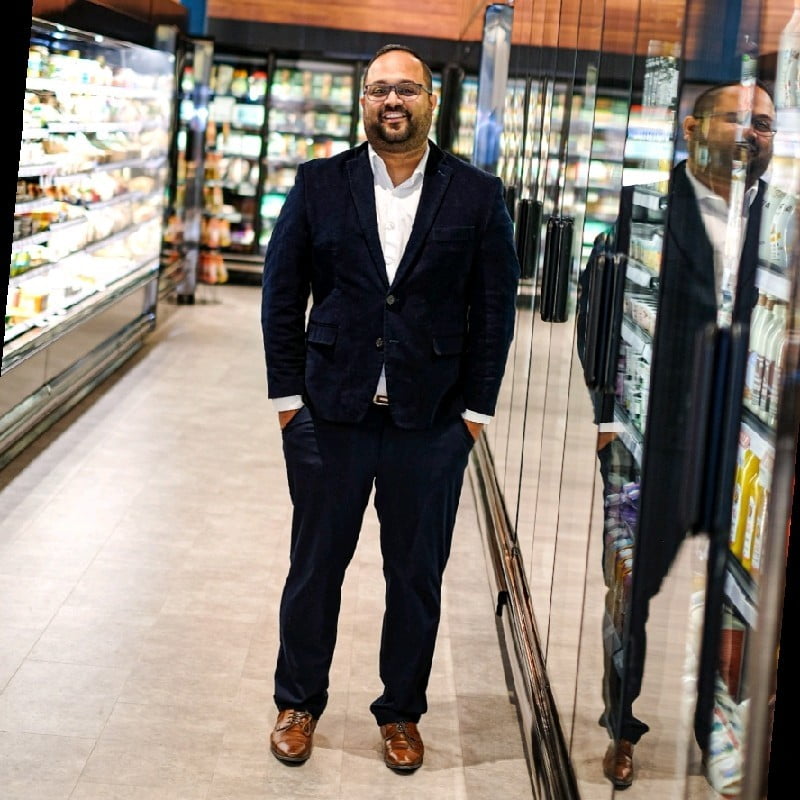
Muhammad Mohamedy, General Manager of Healthy Planet Canada, said the company’s mission is to help Canadians live healthier every day.
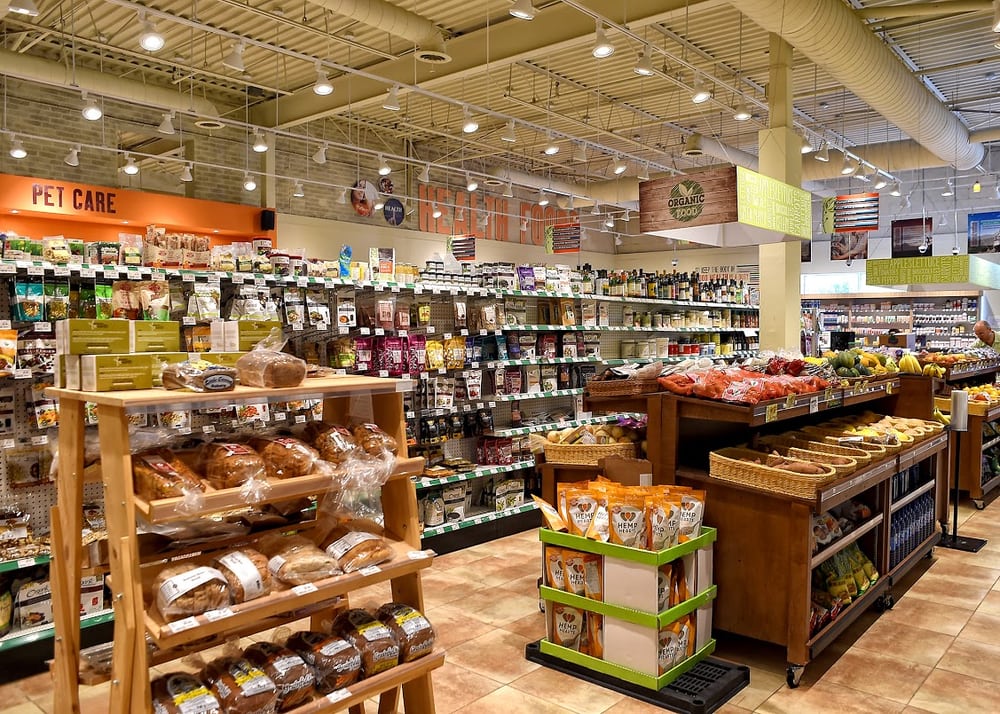
“We are ever expanding our store format with an added range of health and wellness products, including supplements, vitamins, sports nutrition, health foods, organic groceries, bath, beauty, pet supplements, eco-friendly home products and fresh prepared food,” he said.
“We are especially proud to announce the launch of our Healthy Planet Kitchen at the Ajax location, which will offer a chef-inspired menu comprising of soups, salads, sandwiches, wraps, bowls, pizzas, freshly squeezed organic juices, smoothies, breakfast items, baked goods, and snacks. All of our offerings are artfully prepared and assembled from scratch daily.
“Our aim is to make it simple for our customers to prioritize their health and wellness with a menu that is predominantly organic, delicious and exclusive to our kitchen.”
PHOTO: HEALTHY PLANET
The concept began as a small kiosk in a strip mall on Danforth Avenue in Toronto. It then opened its first store at the Parkway Mall in early 1998.
Mohamedy said the company is working on another four locations this year – two new stores and two renovations. A new store should be opening in Richmond Hill in July or August and another store in downtown Toronto at Yonge and Dundas in September and October. The current Oakville location is being renovated to a bigger footprint that should be completed by September.
“We have another six locations signed for next year,” he said.
“Our strategy has always been to go into the markets where there’s not a lot of health food stores available or where there’s not a lot of natural supplements, groceries. We’re going into a lot more of the groceries aspect to it – organic groceries and natural food. That is one area we’ve been really pushing through.
“Now we’re also adding a kitchen. We started that with one location but this year we’re adding three more locations where it’s kind of grab and go food but a healthier version of it. So instead of going to fast food we have natural fast food available.”
Image: Healthy Planet
Mohamedy said a kitchen will be going into the Oakville location as well as an existing store in Mississauga. A kitchen will also be part of the new Yonge and Dundas store and also one in its Etobicoke location.
He said there are plans for more kitchens.
“It won’t be everywhere but where the space allows us to do it we’re going to be adding one in and this is one of our strategies to add that in as there’s a consumer demand for healthier food,” said Mohamedy.
“We’ve done some research on it and people are looking for options other than going to McDonald’s or other major fast food places.”
He said there’s no limit to the company’s expansion plans.
“As long as we’re growing, our sales are good. One of the key things for us is having well-trained staff at our stores – the customer service element. As long as we’re able to keep that mark, we’ll continue to grow,” he said.
Currently the company is concentrated in southern Ontario with a couple of stores in Ottawa. Does the company have plans of going beyond that geography?
“For this year and next year, we don’t have any plans to go outside of Ontario,” said Mohamedy. “But beyond that we’re looking at all the options available. Ontario is the biggest market in Canada so we want to make sure that all areas are covered before we go there. For new areas you need to have a strong team and we’re building towards that right now.”
Mohamedy said the company has realized that today’s consumers are having a hard time making ends meet with inflation on the rise. So the company is aligning its brand with food banks and organizations where it can be part of the community.
“Even though we’re expanding we still want to be involved in every community that we go. So the prices that we put in our stores is also reasonable and at the same time we want to be aligned to the charities,” he said.