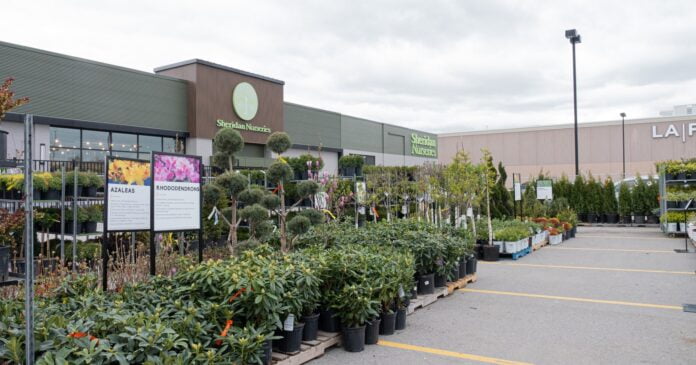
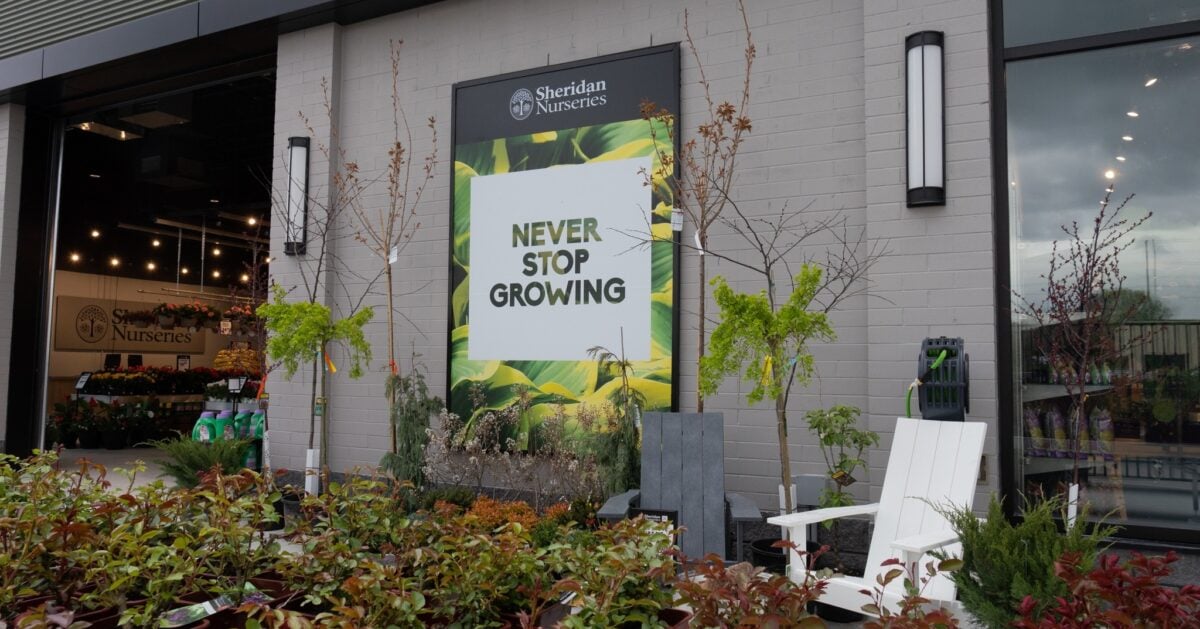
Ontario-based Sheridan Nurseries has opened a new concept Garden Centre in Aurora, Ontario as it celebrates 110 years of growing with landscape professionals and home gardeners.
The company says it is proud to continue to innovate and inspire with products and services to create dream landscapes and backyard havens.
The new garden centre, which is the company’s eighth location, features:
A nursery featuring premium trees, flowering shrubs, evergreens and other hardy, ornamental nursery stock;
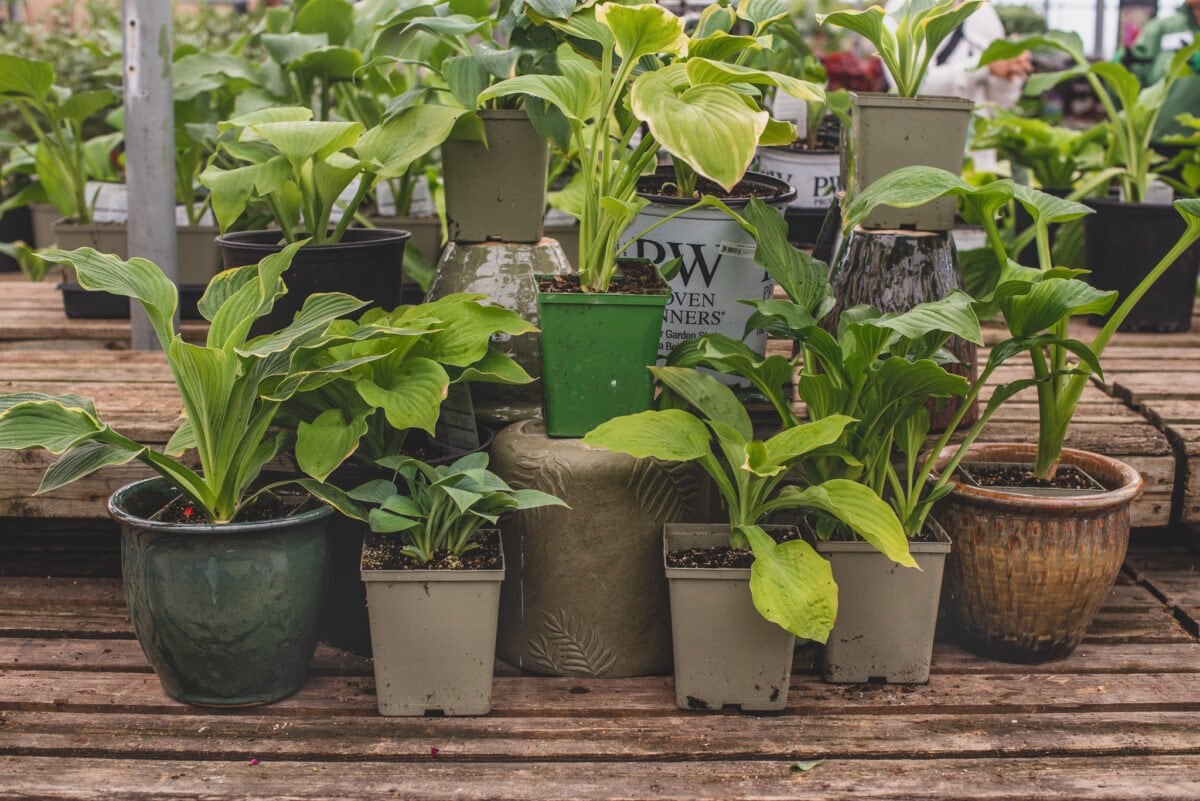
A wide selection of perennials and annuals to grow a garden of timeless beauty and colour;
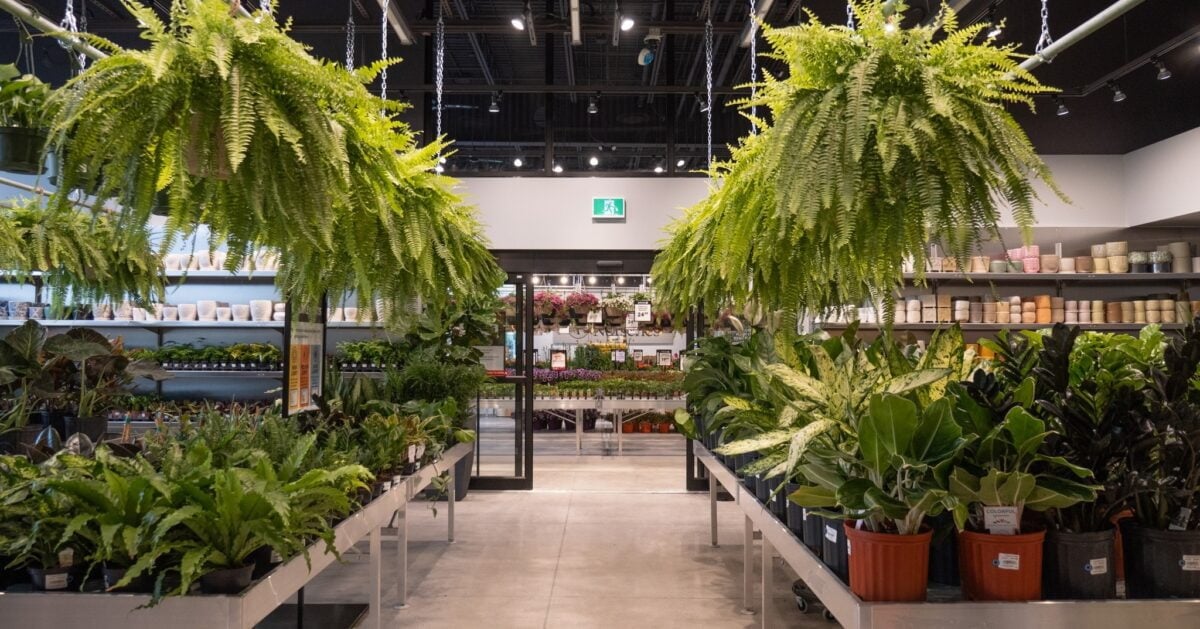
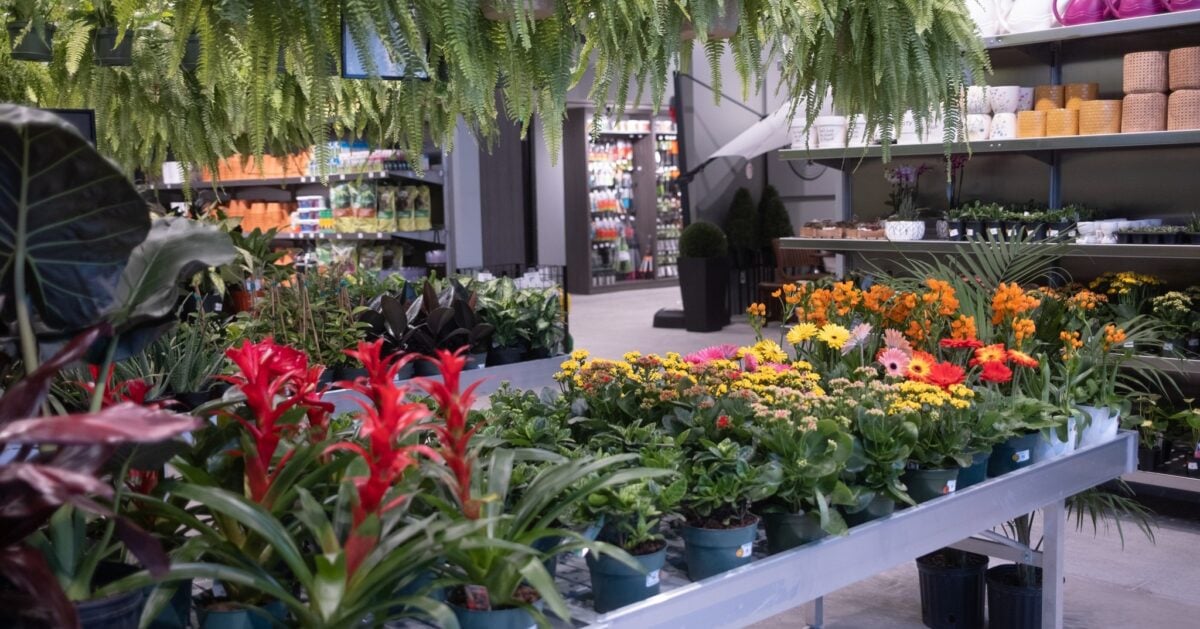
A greenhouse featuring an exotic collection of tropical, foliage and flowering houseplants;
All the supplies and tools to set you up for success in your garden;
A collection of patio furniture, outdoor accessories, home décor and fashion.
“We’re thrilled to be opening our newest location in Aurora,” said Colin Cruji, President and CEO of Sheridan Nurseries. “Sheridan Nurseries has been part of the Ontario landscape industry since 1913, and we’re excited to bring our expertise and passion for gardening to this vibrant community.”
Colin Cruji
Sheridan Nurseries is a local grower, wholesaler and retailer of plants, garden supplies, patio furniture and home decor products. It offers one of the largest assortments of annuals, perennials, and nursery stock in Southern Ontario. Sheridan grows over 1,200 cultivars of perennials in Norval, Ontario and hardy nursery stock on 900 acres in Halton Hills, Ontario, and ships 1.8 million plants annually to markets across North America.
Victoria Mulvale, Director of Marketing for Sheridan, said the company was started in 1913 by two landscape architects (Howard and Lorrie Dunington-Grubb ) who came from England with a vision of bringing the idea of an ornamental garden to the ‘wilds’ of Canada.
Victoria Mulvale
“It didn’t exist. There were no real formal gardens in Canada back then,” she said. “They quickly discovered that not only did we not have gardens already but we did not have the plant material that was hardy to the climate to be able to put together these gardens.
“So they purchased some land in Sheridan, Ontario which is now part of Oakville . . . and they started growing the plants and products that they would need to bring the vision of the ornamental gardens to life, or the English gardens.
“In 1913, they purchased 100 acres of land and they started cultivating ornamental plants and that was the beginning of Sheridan Nurseries.”
Image: Sheridan Nurseries
She said the new nursery hired accomplished Scandinavian horticulturist Herman Stensson as its foreman. The Stensson family continues to be owners of the Sheridan Nurseries today.
By 1926, the company had 250 acres and it continued to grow by adding farms in Georgetown, where it currently operates its farm production.
The newest Garden Centre in Aurora is located at 15630 Bayview Ave.
Design for the new Garden Centre was led by Burdifelik and Drew Mandel Architects, with construction managed by Structure Group.
The Aurora Garden Centre is supported by Sheridan Nurseries’ 900 acres of farm production in Halton Hills, Ontario.
The current nurseries are all in Southern Ontario.
Mulvale said the Garden Centre in Aurora is a test.
“It’s a new direction for how we’re bringing the Garden Centre to life in communities. It’s not on sprawling acres of land like you would traditionally see a garden centre. It’s a standalone building within a shopping centre. It’s a new approach. We’re going to see how that goes and that will sort of lead us into further development based on the success of that location and seeing how that one goes and how we need to modify or shift,” she said.
Craig interviews Toronto-based jeweller Alan Anderson, who discuses how he got started in the jewellery industry, his new atelier on Jarvis Street, and future plans which will include the launch of a handbag line. They also discuss the recent Royal Coronation and jewellery seen on various attendees.
If you prefer to listen to the audio version, it is available below:
The Interview Series audio podcasts by Retail Insider Canada are available on Apple Podcasts, Stitcher, TuneIn, Google Play, or through our dedicated RSS feed for Overcast and other podcast players. Also check out our The Weekly audio podcast where Craig and Lee discuss popular content published on Retail Insider which is part of the The Retail Insider Podcast Network.
Featured during this interview:
Alan Anderson, president/designer at Jewels By Alan Anderson
Drop us a line at Craig@Retail-Insider.com. You can also rate us in Apple Podcasts or recommend us in Overcast to help more people discover the show!
Background Music Credit: Hard Boiled Kevin MacLeod (incompetech.com). Licensed under Creative Commons: By Attribution 3.0 License. http://creativecommons.org/licenses/by/3.0/
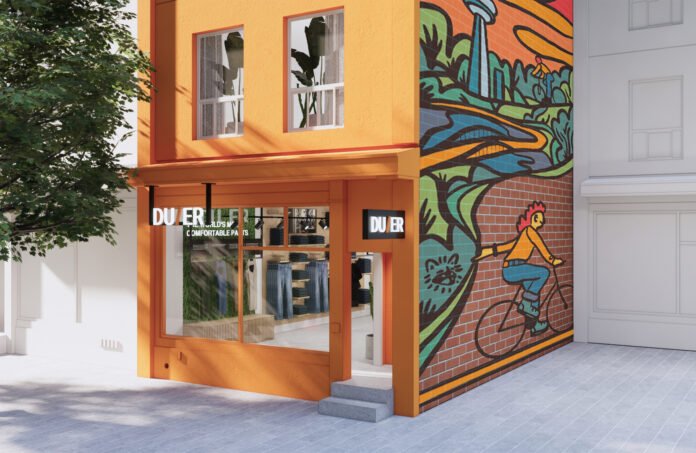
Rendering of DUER at 44 Ossington Ave (Image: DUER)
Vancouver-based apparel brand DUER is set to open a new location on Ossington Avenue in Toronto.
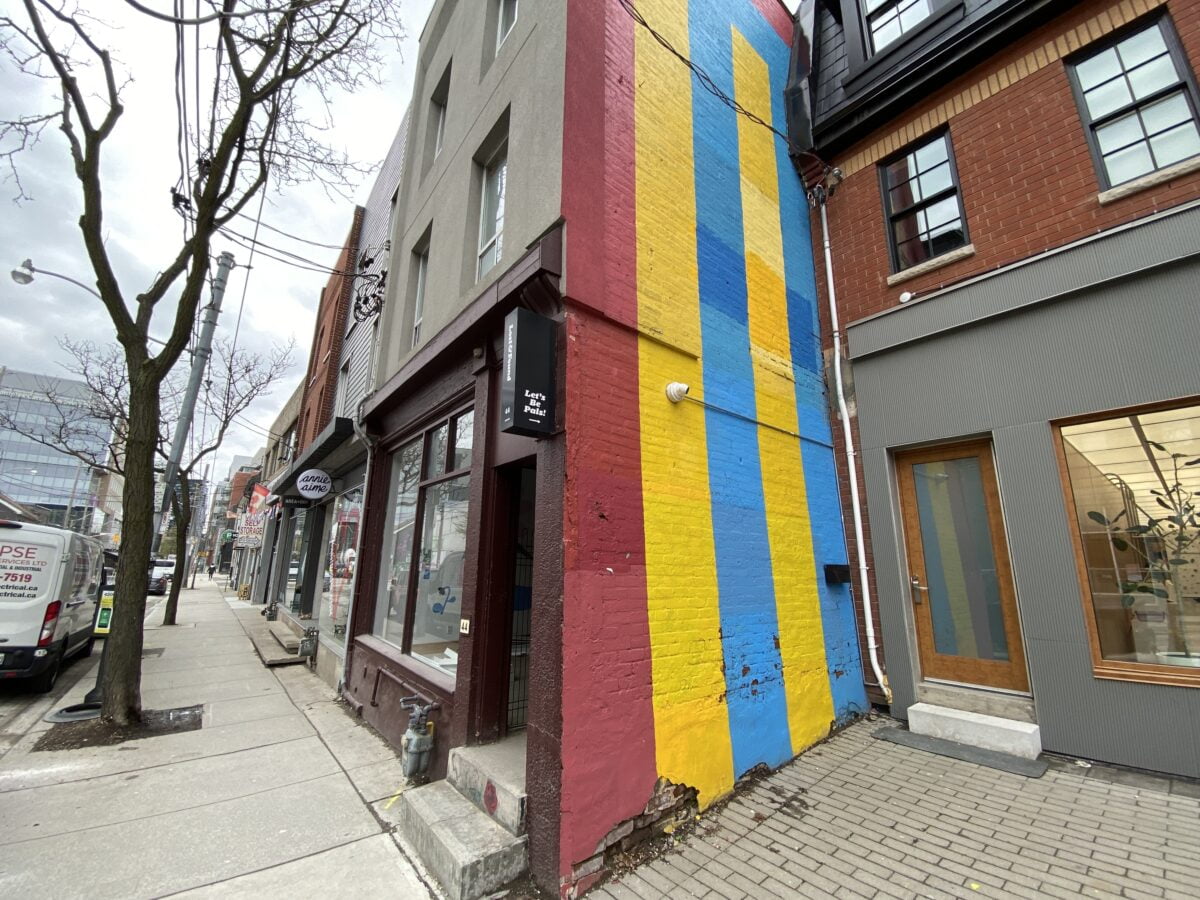
The new storefront at 44 Ossington Ave was previously home to Lost & Found, a men’s premium retailer, which will be moving down the street to 12 Ossington.
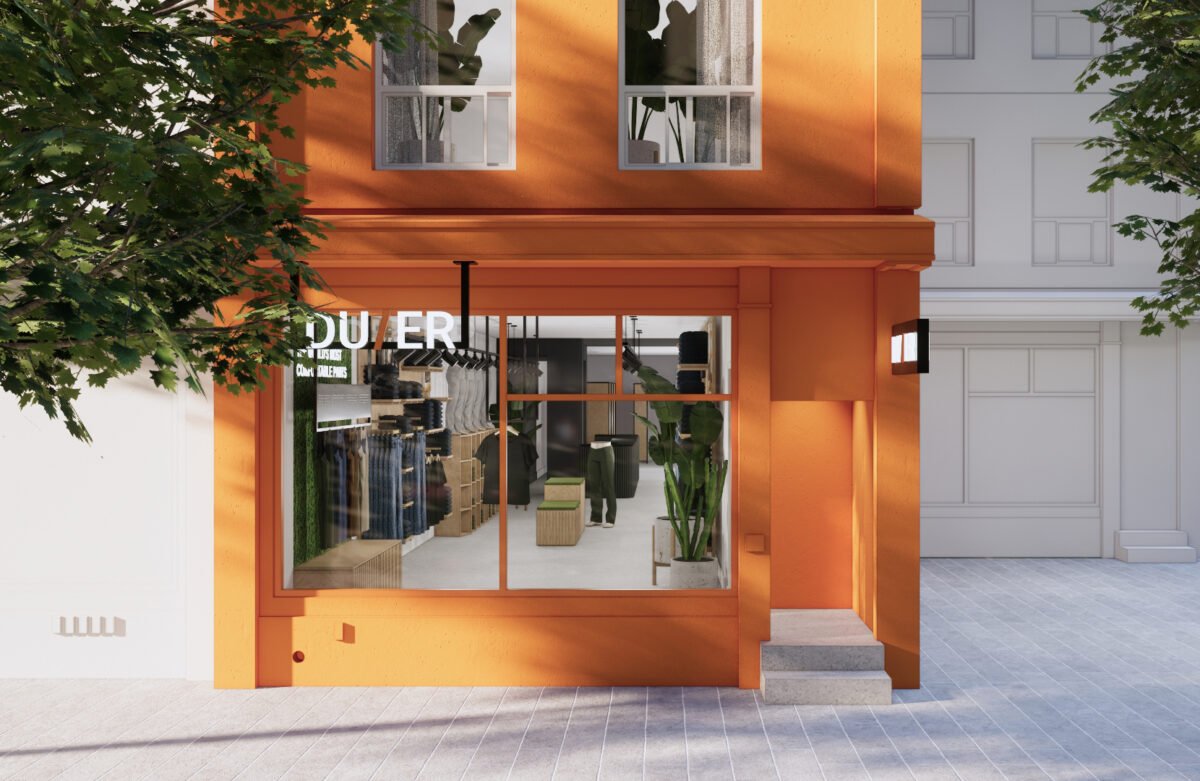
The Ossington DUER store will be hard to miss, with the exterior designed in the brand’s signature orange and will feature both interior and exterior murals painted by a local Vancouver artist.
Rendering of DUER at 44 Ossington Ave (Image: DUER)
DUER’s location will be replacing the current Queen St. West store, which was impacted by a number of factors over the last 24-months. The previous store was situated just over a block away from Queen & Spadina, which will be impacted for years with the Ontario Line subway project.
With the brand moving to a new location in an up-and-coming neighbourhood, it’ll allow for DUER to keep its database of customers while also updating the retail concept to adhere to its future strategy.
DUER recently opened a pop-up at Square One Shopping Centre in Mississauga, and will be planning to double its store count from five to 10 this year.
Gary Lenett, Co-founder and CEO of DUER, shared in a recent Retail Insider article discussing the expansion of the retail footprint that the opportunity in the GTA is top of mind.
“The Greater Toronto Area is Duer’s fastest growing Canadian market so we’re optimistic about how these stores will perform,” said Gary Lenett, Co-founder and CEO of Duer. “We see our new retail footprints as a way to connect people with the brand but also as community hubs where we can bring the Duer ethos to life.”
The retailer has locations in Vancouver, Toronto, Calgary, Denver and Los Angeles. The Calgary, Denver and Los Angeles stores opened during the pandemic.
Former Lost and Found at 44 Ossington (Image: Dustin Fuhs)
The Ossington neighbourhood is set to see more growth, as brands continue to sign long-term agreements to set up locally-inspired retail concepts. ECCO, which is coincidently next-door to the new DUER location, opened a community hub in 2022 as a way to connect with a younger demographic in the neighbourhood.
Ossington is adding a number of new retailers to the neighbourhood, including Grit & Grace, Clocks and Colours, Mejuri and Hobbiesville.
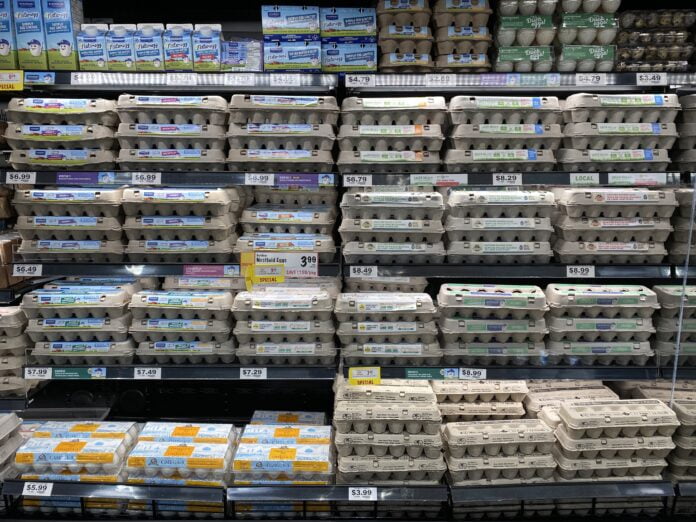
“The data is clear. Canadians are buying less food, and that trend won’t end soon.”
The release of retail data by Statistics Canada last week has provided valuable insights into the dynamic nature of food retailing in Canada. Contrary to initial assumptions, the data reveals intriguing fluctuations in Canadian food and beverage retail sales per capita since 2017, challenging prevailing expectations and necessitating a closer examination of the underlying factors at play.
The figures indicate that in March 2017, sales per capita stood at $258.41, experiencing a marginal decline to $257.05 in March 2018 and a further decrease to $256.61 in March 2019. However, a notable shift occurred in March 2020, with sales per capita surging to $309.19. This significant increase can be attributed to the emergence of the COVID-19 pandemic and associated lockdown measures, which led to changes in consumer behaviour and a reversal of the preceding downward trend in food retail sales.
Post-2020, the data shows a resumption of the downward trajectory in food retail sales. In March 2021, sales per capita dropped to $277.03, indicating a decline from the previous year. This decline can be attributed to the lingering impact of the pandemic, which disrupted various industries, including the retail sector. Furthermore, in March 2022, sales per capita experienced a further decrease to $257.55, signifying a continuation of the downward trend. The most recent available data from March 2023 reveals a further decline to $237.20, marking the lowest point in recent history. These figures suggest that Canadians are spending less on food at grocery stores, despite facing higher food prices.
But here is another piece of valuable data. Recent NIQ data indicates a 2% decline in food sales by volume in Canada in the last year, further emphasizing the reduction in food expenditures among Canadians. This trend raises several considerations. One possibility is that Canadians are increasingly relying on alternative food sources, such as ordering meals from restaurants or utilizing unconventional channels to fulfill their food needs. However, given recent menu prices, this explanation seems unlikely. Another possibility is that individuals are opting for lower-cost alternatives and seeking out independent stores that cater specifically to the needs and preferences of immigrant communities. Private labels or store brands are and will increasingly become more popular. This observation suggests a potential increase in the number of food businesses serving these communities compared to previous periods, indicating a shift away from mainstream food sources.
Furthermore, the data suggests that Canadians may be wasting less food, particularly with the rise in remote work arrangements. The consumption of leftovers and repurposing of food could contribute to reduced food waste, although this is purely speculative. The occurrence of “shrinkflation”, whereby product sizes are reduced without a corresponding decrease in prices, may also play a role in reducing waste. However, the impact of these factors on the overall decline in food retail sales requires further investigation.
Another concerning possibility raised by the data is that Canadians may be consuming less food or relying on food banks more frequently. Reports of long lines at food banks and increased usage across the country indicate a potential rise in food insecurity. While it is unlikely that increased gardening activities alone could explain such a significant shift in the data, the underlying reasons for the increased reliance on food banks is troubling nonetheless.
Bottom line, if people think grocers are riding the inflation wave with their food sales, they should think again. It’s just not happening. Loblaw, for example, saw its food sales go up 3.1% in Q1, which is significantly below our food inflation rate. Grocers are treading water with food sales, at best. Record profits are being recorded, but it’s not because of food sales.
Canadians are buying less food and, chances are, that trend is likely to continue for a while. Just like in early 80s, consumers are programmed to seek deals, all the time. This is what the market is doing to all of us right now. We are all becoming better bargain hunters, for those of us lucky enough to afford the food we need to eat.
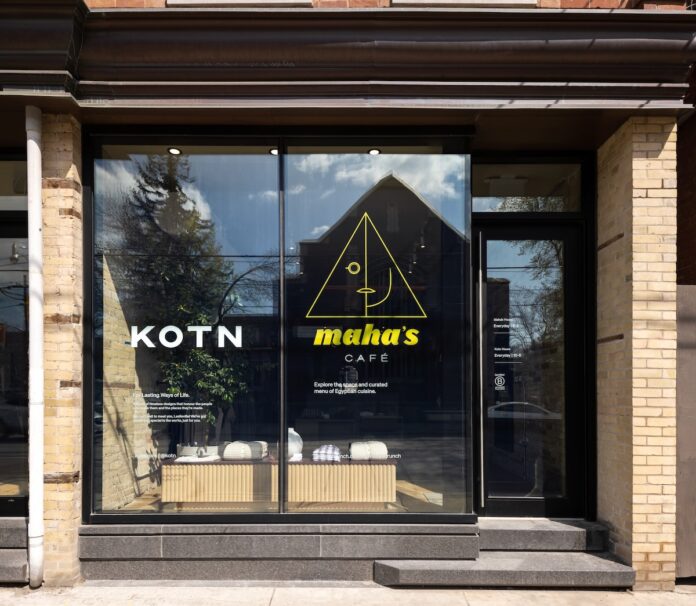
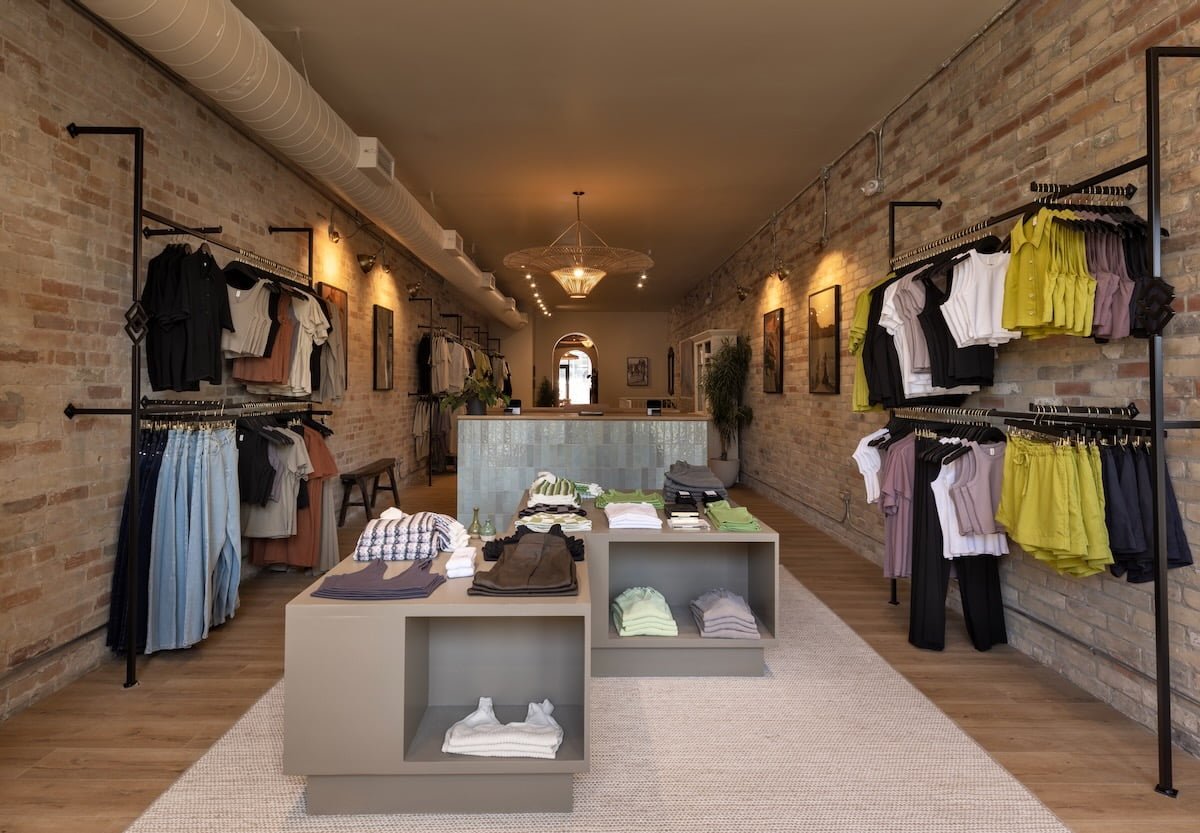
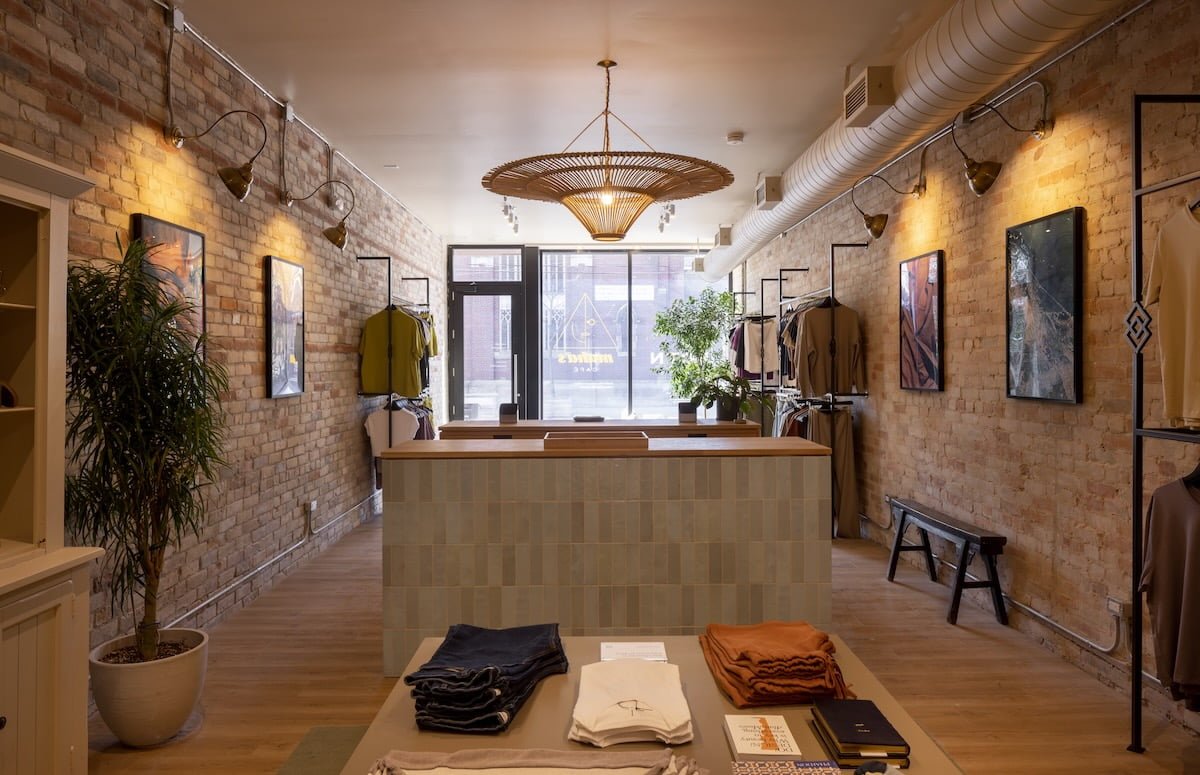
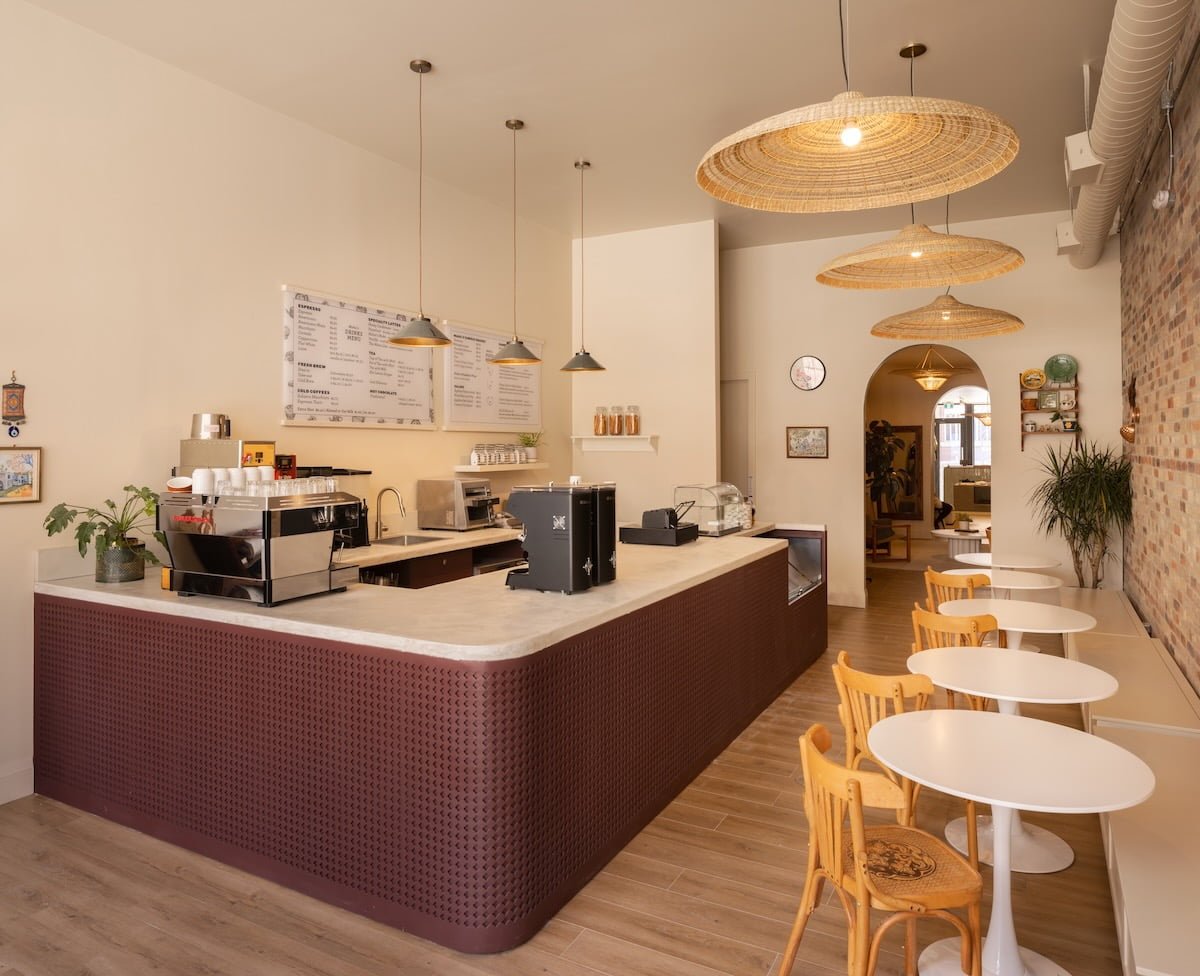
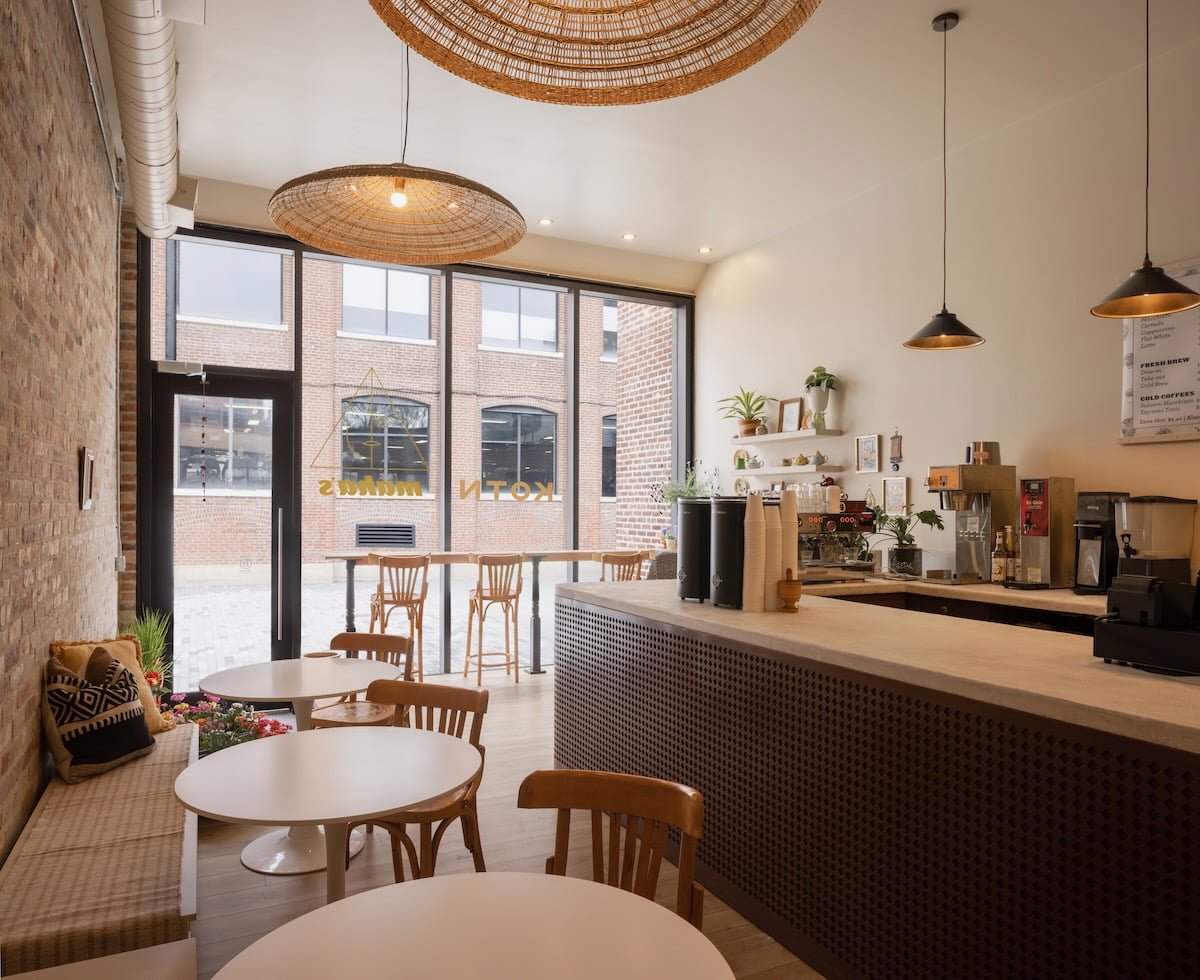
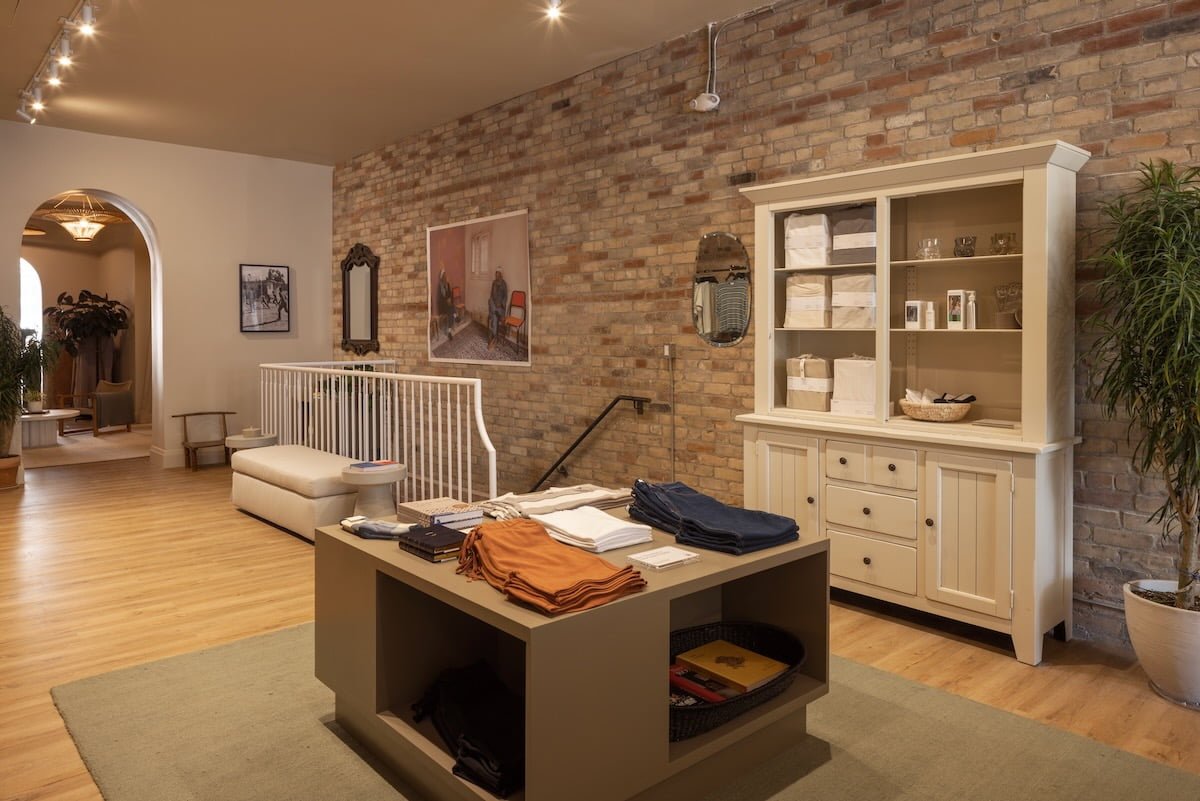
Toronto-based brand Kotn, which sells high-quality everyday wear made from authentic Egyptian cotton, is continuing to expand its retail footprint in Canada with the recent opening of a new, and unique, location in Leslieville in Toronto.
It is the retailer’s fifth location in the country.
Mackenzie Yeates, one of the co-founders and Chief Brand Officer, said the new Kotn space includes the iconic Toronto/Egyptian restaurant Maha’s Brunch.
Kotn also is located in Toronto (Trinity-Bellwoods), Montreal, Calgary, Vancouver.
It also has locations in the United States in Brooklyn in Cobble Hill and Highland Park in Los Angeles.
Kotn launched in Toronto in 2015 when founders Helali, Mackenzie Yeates and Benjamin Sehl noticed a gap in the marketplace – high-quality, well-fitting basics weren’t affordable for everyday wear.
Mackenzie Yeates
“We thought it would be a great destination to have a second Kotn location and also be able to promote some of our home goods as well as people are buying homes in this area (Leslieville) and starting up their families and settling down,” said Yeates.
“The most unique thing about this store is we have a cafe space in the back. This is our first store that has some sort of food and beverage concept within it. We’ve partnered with a restaurant called Maha’s. They’re based in the east end of Toronto as well. It’s a family operation. They’re Egyptian. So it’s Egyptian inspired food. We started all of our production in Egypt. Our CEO and my partner Rami (Helali) are Egyptian so it felt very on brand for us to work with them. We’ve always really loved their restaurant and it’s hugely popular in this area. There’s massive lineups every day of the week. Now you have the opportunity to come and get some of Maha’s product at Kotn.
“The concept is more of a cafe plus take away food. They don’t offer their full menu but we do have seating and some outdoor patio seating out in the back as well. That’s really unique.”
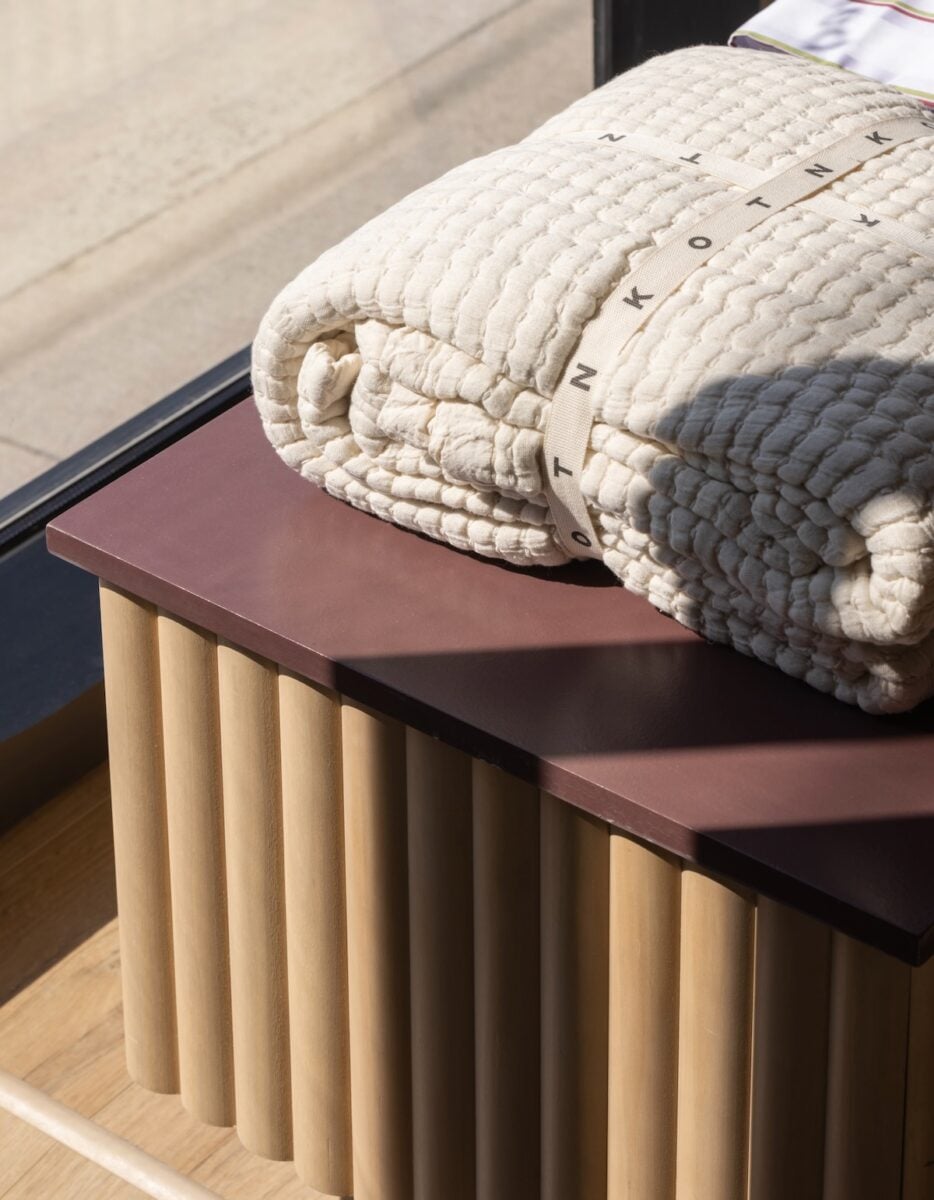
Yeates said the Leslieville store also has more of its home offering available than its other existing stores.
“We’re hoping to build that out further as well,” she said. “We have some of our artisanal product and our bedding available and then we have some exclusive photo prints from our team and things like that you can’t find in other Kotn stores.”
Yeates said the company plans to expand further.
“We’re really enjoying the process of opening stores. From a business perspective, it’s been really good because I think post-pandemic people are craving that in-person experience again and also as our brand developed it’s a great opportunity to be able to give people a taste of our full brand experience from the interior design and interaction with the store staff and being able to drop in and have a coffee and meet your friends,” she said.
“We’ve always really had the dream of building Kotn into a complete lifestyle brand and have interesting experiences and that type of thing and having physical locations allows us to do that. We are planning to open more stores. We have some thoughts in the works. Nothing fully nailed down yet for the rest of this year and going into next year but some things underway.”
Yeates said the strategy for opening stores is to be in locations where Kotn’s customers live.
In a LinkedIn post, Helali, said: “My parents left Canada shortly after I moved back to Toronto to start Kotn. Starting a business without having them around was hard and other than missing them in general, I missed my mom’s cooking (she makes the best Molokheya in the world, this isn’t up for discussion ha). I would go to Maha’s often to scratch my itch for Egyptian food and over the last 7 years, the family behind Maha’s that has made it a successful Michelin rated restaurant, have become like extended family to me (Maha Mourad Barsoom, Monika, Mark and Hany.) We’ve been dreaming about bringing our two Canadian/Egyptian brands together in a beautiful space celebrating our shared heritage, and that day is finally here.”
The company opened its first bricks and mortar store on Queen St W, in Toronto, in 2017, in about 800 square feet.
“We’re an impact-driven lifestyle brand. We focus on apparel and home. We got started around a seemingly very naive mission to try to change how things are kind of created and consumed from the bottom up,” said Helali in a previous Retail Insider article.
“What we mean by that is really, really looking at how products were made and fundamentally altering how they were. We felt like the way that supply chains were built, the way products were built, were creating a lot of negative impact on the people and the environments in which they’re made.
KOTN Leslieville (Image: Kotn)
“So for us, we work with all five tiers of our supply chain directly, we work with small holder farms in Egypt, since then we’ve expanded to other countries, but we got our start with Egyptian cotton and that’s where the vast majority of our product is made today. And we work directly with over 2,000 small holder farms, buy the cotton directly from them and work with every single part of our supply chain to make sure that people and the environments are treated with respect. We’re a majority digital online company but it’s been in our plans for a very long time to continue our retail expansion but we had to put it on pause for a couple of years as we were dealing with the thing everyone was dealing with (COVID).
“I think as a society we crave authenticity and I think it’s been a core and integral piece of our business. From the very beginning for us, truthfully, it’s been around the work that we do on the ground and the impact. To date, we’ve built 15 schools in rural Egypt. That’s a measurable impact that we’re going to have on generations to come and that’s really what makes us internally tick and I think what attracts our community for the work that we’re doing.
“For us, the product, although obviously integral and the thing that customers get to interact with, it starts with how we change what we want to see changed in the world and then everything else follows. And we do that through the supply chain, so through the product. We’ve been very fortunate to build a very strong community over the years and we do that by really focusing on how we can make sure the communities we operate in are better off in 50 years than they are when we get started.”
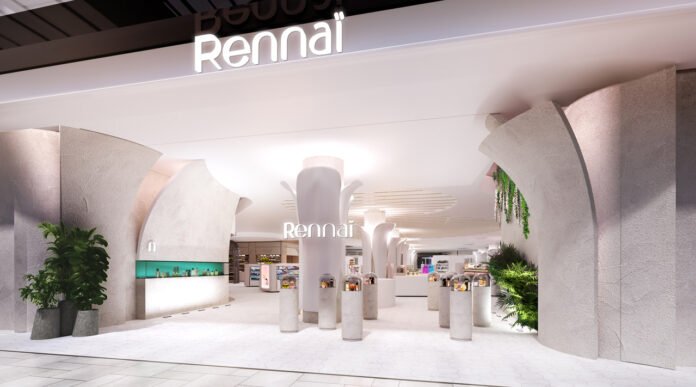
Rennaï, which describes itself as a new retail concept set to reinvent the shopping experience for the beauty and wellness industry, will open its first flagship store in August 2024 at the new retail destination of Royalmount in Montreal.
The 36,000-square-foot space will become the destination par excellence to access a wide range of products and services including traditional aesthetic treatments as well as dermatology and nutrition services. The holistic and sustainable boutique will also include a perfumery zone and a revitalization area, said the brand which is supported by its investors Carbonleo and L Catterton Real Estate.
Christopher Novak
“Inspired by the French word Renaissance, meaning rebirth and renewal, we envision our namesake as our muse. Rennaï is the goddess of rebirth, science, and self-expression, encouraging the practice of self-care and self-love. Our holistic approach to beauty and wellness will empower our clientele to prioritize self-care and redefine the process. Rennaï will simplify the consumer’s routine while enhancing and inspiring a heightened journey in an inspiring and unparalleled destination,” said Christopher Novak, President and Creative Director.
“Rennaï exists in between beauty retail and self-care services, providing consumers with a 360-degree approach to elevate and enhance their traditional experience. More than ever, we are witnessing the massive global growth in beauty and wellness categories, Rennaï addresses the significant white space by introducing a concept that encourages customers to invest in their own well-being by allocating more time in an environment that focuses on prioritizing and personalizing their complete routine within a single location.”
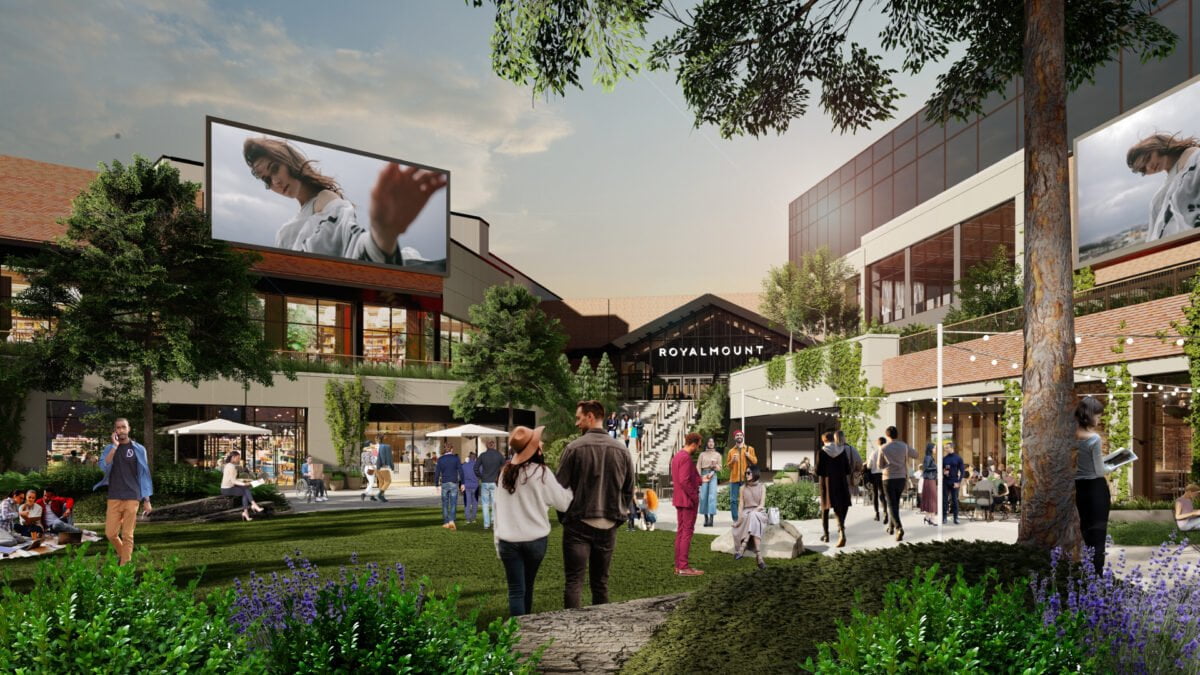
Royalmount (Rendering: Carbonleo)
Located in Montreal’s Midtown district, Rennaï will join the Royalmount’s 170 businesses – including luxury brands like Louis Vuitton, Tiffany & Co., and Gucci – more than 60 restaurants, offices, a hotel as well as public green spaces. Royalmount, which is funded by Carbonleo and L Catterton, will become the first 100 per cent carbon-neutral mixed-use destination in America and the largest LEED Gold retail project in Canada.
Following its opening, Rennaï said it will introduce its concept in nine additional locations in North America by 2028, including within several major American cities.
“Recognizing that today’s consumers expect a shopping experience that goes beyond a simple product purchase. Self-care involves not only the items and services an individual uses, but also their approach to work, life and play. Royalmount provides the ideal location for our first flagship, as it will enhance people’s daily lives, transforming the experience into one of accessible luxury and immersive community connection,” said Novak.
“Located in Montreal’s midtown, Rennaï will join over 100 of the world’s most coveted brands complimented by an array of premier restaurants, alongside an office campus, a hotel, and a serene city park as part of Royalmount, the first 100 per cent carbon-neutral mixed-use development in the Americas and the largest LEED Gold retail project in Canada.
“Rennaï is poised for growth to become a prominent player in the beauty and self-care industry. With our upcoming Montreal location opening in 2024, we begin our journey to establish ourselves across North America by carefully curating our next locations to align with our progressive vision and prioritize the customer experience.
“Rennaï will be more than just a shopping experience. We place advice and consultation at the core of what we do. Our digital experience will serve as a reliable resource in an overcrowded online landscape, providing a smooth and hassle-free experience to customers, whether they choose to engage with us in person or remotely. Our synergistic approach will cater to customers’ personalized schedules and preferences. As we expand, we will remain closely connected to our audience to ensure that we continuously anticipate and meet their needs and expectations at every location.”
Rennaï said it will partner with brands with captivating stories and strong messages. An e-commerce platform and immersive experience is being developed for launch, promising customers an enjoyable, synchronized and streamlined experience in every interaction with Rennai’s team, products and services.
Image: Royalmount
Andrew Lutfy, Managing Director of Carbonleo and visionary of Royalmount, said Rennaï brings together art, science and nature.
“In addition to offering state-of-the-art beauty products as well as a wide range of well-being services, Rennaï offers a space allowing its customers to escape the whirlwind of daily life, all in a pleasant environment offering a harmonious experience that promotes physical and emotional well-being,” he said.
Mathieu Le Bozec , Managing Partner of L Catterton Real Estate, said that with the significant growth of the beauty and well-being fields around the world, Rennaï is tackling a significant unexplored area of the market identified by its study of consumption, and brings together all the services and products so desired by consumers in one place.
Carbonleo is a private Quebec real estate development and management company. Founded in 2012, the company has more than 175 employees and already has major projects to its credit, including Quartier DIX30.
L Catterton is a market-leading, consumer-focused investment firm managing more than $33 billion across three multi-product platforms: private equity, credit and real estate. Founded in 1989, the company has made more than 250 investments in some of the world’s most iconic brands.
Artificial intelligence (AI) has been a topic of interest in the retail industry in Canada and beyond as of late. Now that it’s here, many retailers are looking at how they can adopt and integrate AI into their businesses in an effort to build efficiencies while optimizing operations where possible.
As the benefits of AI become more apparent, the industry is expected to continue to adopt the technology rapidly. Already, retailers are finding ways to utilize AI in day-to-day operations.
AI Brings Opportunities for Enterprise Retailers
Retailers are already finding that AI offers exceptional capabilities and tremendous possibilities, along with some risks. ChatGPT is a particularly buzzworthy topic, with some experimenting with its capabilities. While it might be tempting for retailers to begin utilizing new tech, retailers should consider the maturity of each specific tool before implementing them.
Customer service chatbots are an excellent example of AI in a mature state — many companies use AI chatbots to handle customer service inquiries such as returns, given that it’s more cost-effective than relying on human agents.
Automating manual data processes with machine learning (ML) is another way retailers already use AI to gain efficiency. Pivotree recently benchmarked its ML applications, like Pivotree DIVE, against the ChatGPT app and determined that the contextual learning of DIVE proves to be more effective at discerning product data attributes.
AI Improves the Frictionless Commerce Experience
It’s known in the industry that personalization is crucial to frictionless commerce, but achieving hyper-personalization is an ongoing challenge for retailers. Segmentation is a time-consuming endeavour and requires extensive content for individual personas.
It’s the reason why segmentation is a compelling use case for AI for retailers, as the tech allows them to build out personas extensively. ChatGPT-like technology can also help retailers create merchandising content at scale — including easily translating for specific languages or geographies.
The ability to deliver personalized content and AI-driven product recommendations to specific personas could help retailers significantly improve order frequency and average order value, as well.
Ways Retailers Should Apply AI to Gain Backend Efficiency
Efficiency and cost savings are where AI’s benefits are among the strongest. This is good news for retailers that face labour constraints, tight product life cycles, supply chain challenges, and shrinking windows for delivery.
Machine learning for data processes
Rapid product attribution is one example of how AI can help retailers manage expansive product catalogs. It works by automating areas such as mapping unstructured data, product classification, data normalization, and generating product recommendations.
Previously, enterprises would focus on merchandising the top 10-20% of their catalog, leaving the rest untouched for the most part. It’s been shown that AI enables a deeper dive into the catalog by repurposing data or recognizing what might be true for similar products. The model starts to learn from corrections, which allows for better classification over time.
Pivotree DIVE is an example of using ML to ensure content, SKUs, and products are optimized in a highly efficient way. Companies can auto-classify 80-90% of their product data to quickly launch products and gain hundreds of hours in time savings.
Intelligent forecasting
Sales and demand forecasting is another area where retailers can adopt AI to improve backend fulfillment. By leveraging historical, seasonal, and economic data, retailers and other businesses can optimize inventory levels. This is particularly important because having too little inventory could result in missed revenue, while having too much stock could lead to losses from selling the excess at a deep discount – something many retailers have struggled with.
AI robotics in warehouses
Retailers can also use advanced picking algorithms and AI robotics to fill orders as quickly as possible. The goal is to satisfy customer demand for fast delivery and compete with companies such as Amazon that offer same-day or next-day delivery.
Pivotree offers this AI technology through a composable supply chain model and technology partners like GreyOrange. Advanced robotics can be deployed to pick orders more efficiently. And AI is being used to lay out warehouses in the most efficient way possible. These technologies help reduce friction and cost, while also enabling businesses to fulfill orders faster to meet delivery expectations.
Should retailers be concerned about the risks associated with implementing AI?
ChatGPT is the fastest-growing app of all time, but there are certainly limitations. OpenAI notes that ChatGPT sometimes writes “plausible-sounding but incorrect or nonsensical answers.” And ‘hallucinations’ are a well-documented complaint from users.
Retailers have also voiced concerns about data privacy, potential integration issues, and difficulty determining what type of AI technology to prioritize.
It’s been shown that the best way to navigate this complexity is to start with experience strategy. With AI having so many applications, it is paramount that one does their due diligence on what problems one wants to solve and how AI can help.
Next, one must consider infrastructure. Layering AI onto monolithic platforms can be difficult and increase one’s risks related to cost, security, and stability. On the other hand, a composable commerce model can help retailers compile best-of-breed solutions to solve specific problems — many of which will leverage advanced AI technology that can significantly improve one’s retail business.
Final thoughts
AI has the potential to revolutionize the retail industry, and enterprises should prepare to capitalize on the innovation coming to market. A business’ competitive advantage depends on it.
Thus, careful planning and infrastructure considerations can mitigate risks and help you harness the power of AI for your retail business.
Joel Farquhar
Joel Farquhar, Vice President of Engineering at Pivotree
*****
Partner content as submitted by a guest author. To work with Retail Insider, email craig@retail-insider.com
Retail Insider is streamlining its Canadian retail news from around the web to include a handful of top news stories that can be viewed quickly during the day. Here are the top stories from the past 24 hours.
AI’s game-changing impact on retail explored at RCC STORE 23 Conference, May 30-31 2023 in Toronto
The RCC STORE Conference, organized by the Retail Council of Canada, is the country’s biggest event for the industry, offering two days of learning and discussion on today’s most critical retail topics and newest success strategies.
The event takes place this year on May 30-31 at the Toronto Congress Centre.
“The STORE Conference is our flagship event of the year – our largest event of the year,” said Michelle Ribout, Vice President, Education & Partnerships for RCC. “It really is to bring the best and brightest together for two days of learning and discussion and networking. Really focused on bringing the industry together.”
With dozens of curated sessions, networking opportunities, unexpected, breakthrough ideas shared, RCC STORE 23 promises to re-invigorate people’s passion for retail and inspire new ways of thinking.
More than 75 speakers from across North America and beyond explore the key issues facing retail leadership including, global economics, inspiring leadership, the latest trends and research, innovative technology.
“It’s geared for obviously the retail industry,” said Ribout. “But really retailers, suppliers at that C-suite level to talk about what’s occurring in the industry, what are their hot topic issues that are currently happening and that they’re concerned about, what’s some of the latest research happening in the retail industry not just within Canada or North America but globally as well.”
The event attracts about 2,000 people each year. More information about the even can be found here.
“One of the most common questions that we get about STORE is what’s the theme and for us as organizers we don’t select a theme for the event because it’s really important that we cover everything that’s happening in the industry. So we don’t want to dictate what that theme is but ultimately a theme ends up coming out,” said Ribout. “I think for this year it’s really been about what’s the organizational purpose. When we’re talking about purpose it’s not just what’s your purpose for your organization but how does that translate for your employees, how does that connect with your customers. So really understanding the goal of the organization to draw in those customers to attract talent and employees to join.”
Stephanie Lear, Manager, Events, for the RCC, said there is also a big focus on technology, innovation and automation.
“This is a great opportunity for organizations to bring their teams out to. We’re seeing a lot more of that this year,” added Ribout. “Organizations are coming out en masse together and I think that’s been a really positive thing as well.”
The event also features a celebration of the winners of the Excellence in Retailing Awards, Canadian Grand Prix New Product Awards, and special Awards of Distinction and Lifetime Achievement Awards.
The Excellence in Retailing Awards honor the very best in retail innovation and creativity.
RCC’s Awards of Distinction recognize retail leaders in Canada that have led companies to outstanding business success and have consistently demonstrated community commitment and support. The recipients are role models in the retail industry in Canada and in the community at large, through personal and corporate philanthropic activities. Awards include the Independent Retail Ambassador of the Year, the Lifetime Achievement Award, the Distinguished Canadian Retailer of the Year. There is also an induction in the Canadian Retail Hall of Fame.
The Canadian Grand Prix New Product Awards celebrate the best new products of 2022. The awards recognize excellence in food, non-food and private label categories. Entrants represent national and regional brands as well as private label.
*****
Retail Insider worked with Retail Council of Canada for this partnership announcement.
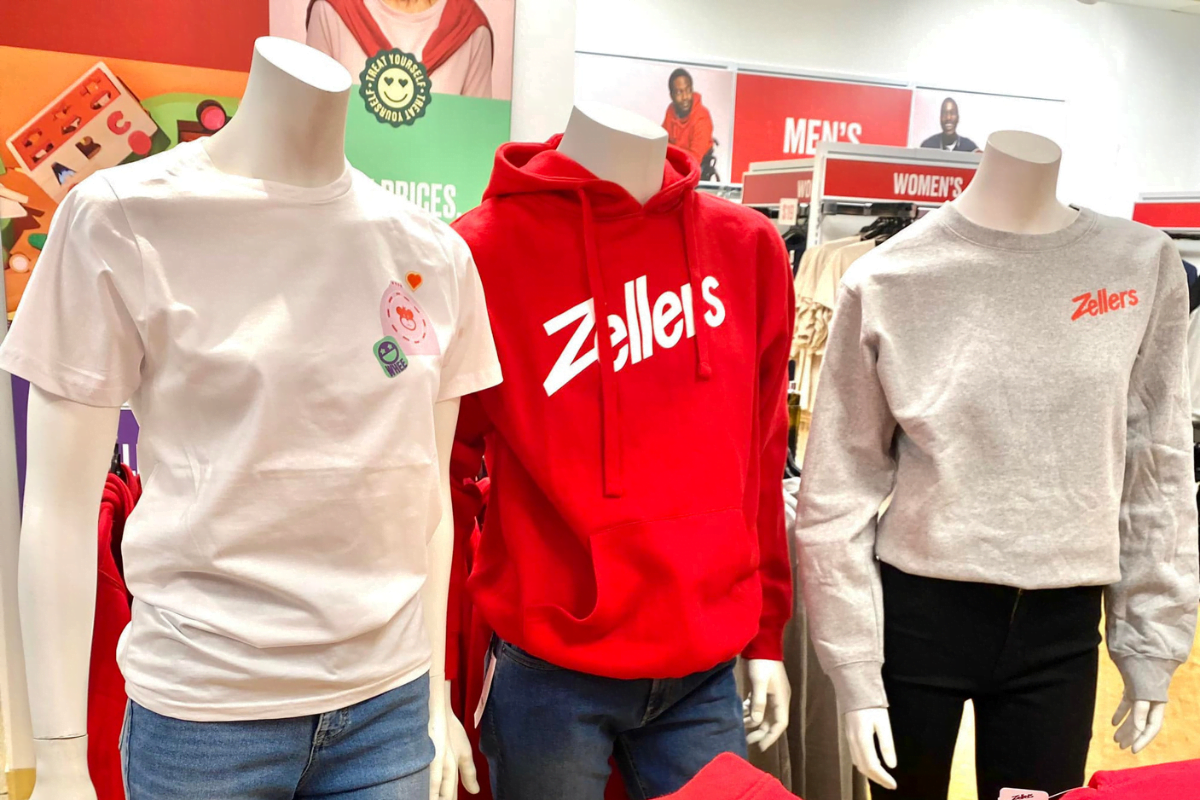
Hudson’s Bay is expanding its iconic Zellers brand across Canada, increasing the store’s footprint in cities across the country.
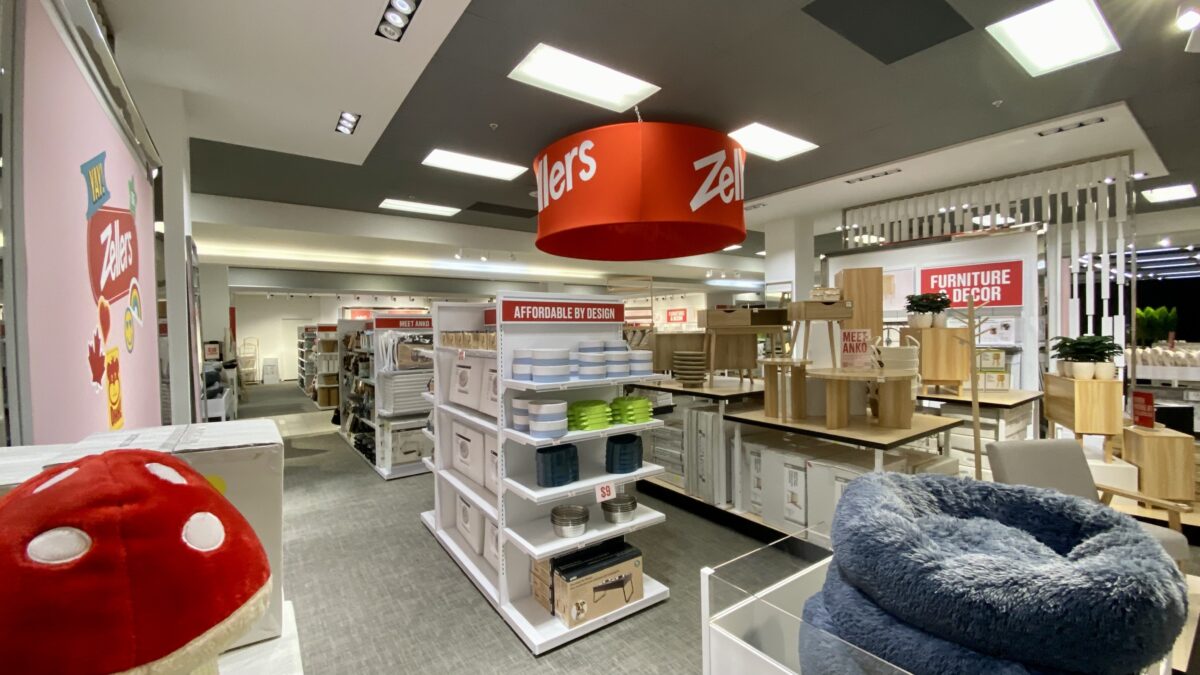
With the launch of its first e-commerce site and 25 shop-in-shop locations nationally within Hudson’s Bay stores, the brand will now be opening a series of pop-up boutiques within Bay stores.
The company said it intends to open larger footprint stores in some or all of those same locations. The first pop-up will launch at Hudson’s Bay’s flagship Queen Street store in June, with up to an additional 20 pop-ups expected to open in August. These pop-ups will effectively measure customer response in each market to determine the best fits for the Zellers store experience.
Zellers at Erin Mills Town Centre (Image: Erin Mills Town Centre)
“We have always said that we will listen to Canadians, and they will tell us where to grow,” said Sophia Hwang-Judiesch, President, Hudson’s Bay, in a news release. “With these pop-ups, our expansion strategy will be fueled by the interest and feedback from our customers across the country.”
Sophia Hwang-Judiesch
Zellers stores are 8,000 to 10,000 square feet. The updated pop-up size has not been determined just yet, and may differ by location.
HBC, the holding company of investments and businesses that include Hudson’s Bay and Zellers, as well as Saks Fifth Avenue and Saks Off Fifth, also announced that it has raised $240 million of additional liquidity to further invest in and grow its operating businesses. With an immense opportunity for growth in its retail markets, HBC said it recognizes that this capital will strengthen the company’s strategic position while also taking advantage of the opportunities being created as other retailers exit the Canadian market.
“As we diversify our consumer offerings, we are strongly positioned to expand on the retail experience customers have come to expect from Hudson’s Bay, Saks Fifth Avenue, Saks Off Fifth and now Zellers,” said Richard Baker, Governor, Executive Chairman and CEO of HBC, in a statement. “With this incremental liquidity, we will strengthen our businesses and build upon the great foundation we have established.”
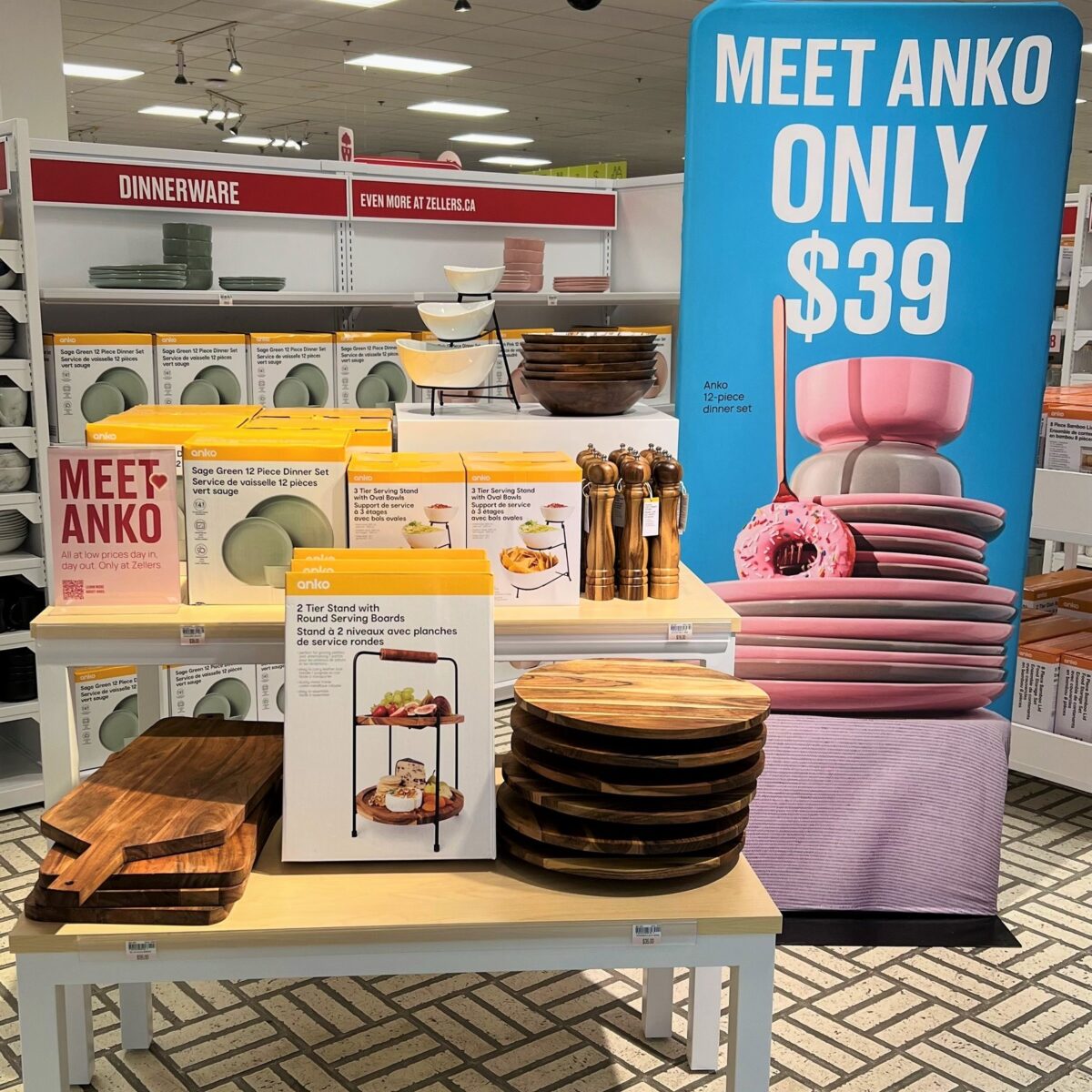
The core product line at Zellers in Canada is the Anko brand, developed for Kmart Australia. The Anko brand is now wholesaling in retailers globally with Zellers being the first to carry it outside of its home country.
Zellers at Abderdeen Mall in Kamloops (Image: Aberdeen Mall)
Bruce Winder, author of RETAIL Before, During & After COVID-19 and President of Bruce Winder Retail, said he is surprised that HBC has decided to expand the revised Zellers format so quickly after launch and that some stores will receive a larger footprint than the initial pop ups.
Bruce Winder
“Based on the late March launch date, the company must have been impressed with results to date. I thought they would have waited longer to make this decision as I fear the initial interest from customers may not reflect typical performance once the pomp and circumstance dies down,” said Winder, who worked in the past for Zellers for almost two years as general merchandise manager for seasonal.
“Maybe when one looks at incremental sales versus incremental cost to run the operation they have a low break even point and can leverage existing fixed cost on stores and distribution. Also, perhaps HBC wants to take advantage of the current and future economic downturn to expand its value offering. Certainly we have seen a flight to value based on rising interest rates and sticky inflation, especially in food.
“The capital raise will help the company put its best foot forward and perhaps spend more money advertising the brand refresh. I hope the rollout is a success as Canada needs more competition especially within this segment.”
George Minakakis, CEO, Inception Retail Group, and author of The New Bricks & Mortar: Future Proofing Retail, wondered if HBC saw an uptick in sales so early in the initial Zellers launch to justify this expansion.
George Minakakis
“Certainly, one would hope so. This fast-paced shift comes with risks. Unless, of course, there is no other choice for the brand. I, too, would be compelled to alter my offering if I led a mid-market department store brand struggling with economic, consumer and digital competitive forces. Hudson Bay’s expanding footprint of Zellers is also an admission that things have changed in the Canadian retail landscape, as so many retailers know,” he said.
“There is also the harsh reality that more than half of Canadians are balancing on a financial tightrope, living precariously from paycheque to paycheque. This is the grim portrait of our ‘new’ middle class. And nothing more negatively impacts a consumer’s confidence than high prices and debt. To lure these budget-conscious shoppers back to brick-and-mortar stores, all retailers need more than nostalgia and lower prices. They will also require an enticing kaleidoscope of assortments and pricing that doesn’t cause heart palpitations when customers receive their credit card bills. Not to forget an exhilarating shopping experience so compelling it’s unforgettable.
“So, is Zellers that charm for HBC? This co-branding between Zellers and HBC is a strategy; however, could this damage HBC further? It might. My experience has been when I enter the department store on my left is Zellers, and on my right is HBC. That’s confusing. I am still skeptical on two fronts. The first is that nostalgia is a long-term strategy. Yet I will contradict myself here by saying that it could be helpful in sending a message that HBC is priced for all consumers. The second level of my skepticism is when a retailer tries to be all things to all consumers. It has seldom worked well and could alienate their base customers.
“Nevertheless, this isn’t the Hudson Bay of old nor our grandparents’ retail world. It could be a brilliant revival strategy. And then there is the legal issue over the Zellers trademark, for which HBC has a strong case.”
Zellers at Scarborough Town Centre in Toronto, March 21, 2023. Photo: Craig Patterson
Liza Amlani, Principal and Founder of the Retail Strategy Group and The Merchant Life, said the Zellers expansion strategy is smart and she’s happy to see that Sophia Hwang-Judiesch’s team is testing the market with pop-up stores.
Liza Amlani
“Expanding too quickly without learning what resonates with the consumer would have been a mistake. The true test will be analyzing the Zellers success through inventory turns, full-price sales and gross margin. With more consumers tightening their spending, the lower priced product mix could be exactly what Canadians need,” she said.
“Further, if you take a deeper dive into the product mix, the assortment strategy has a focus on baby, furniture and bath which are essentials at a competitive price point. As a former merchant, I am happy to see a relevant product mix that feels like a Target 2.0 but saves us the effort in cross-border shopping. In light of the Zellers expansion, it would be important for The Bay to invest in store planning and product-obsessed brand ambassadors. These are the missing links that could save this iconic retailer.”
Michael Kehoe, Broker of Record at Fairfield Commercial Real Estate Inc. said the expansion of the Zellers brand by Hudson’s Bay is a strategic and measured program that is being driven by consumer demand.
Michael Kehoe
“The fact that capital has been raised lends credibility to the venture and its likely success. The proposed larger footprint stores are a result of the recent successful test-drive / pop-up store-within-a-store launch in several Canadian markets along with e-commerce that has been supporting the Zellers brand,” he said. “The scale of the next round of large format pop-ups, 20 in all, to be open just in time for the important back to school selling period is a welcome addition to the value end of the Canadian retail spectrum. This will serve the Canadian consumer in specific markets very well during these challenging economic times and beyond.”