Diabetes drug Ozempic is shown at a pharmacy in Toronto on Wednesday, April 19, 2023. (THE CANADIAN PRESS/Joe O'Connal)
The surging demand for weight-control drugs, prominently Ozempic, is not only aiding countless individuals in shedding excess pounds but is also noticeably tempering growth projections for the packaged food sector. What’s even more striking is the speed at which this transformation is occurring. Indeed, the food industry is now exploring how these medications might potentially reshape the future of food consumption in Canada, with potential consequences for the way Canadians eat in the coming years.
Let’s begin by discussing the medication itself. Referred to as GLP-1 drugs, these pharmaceuticals mimic a hormone that signals fullness to the brain, encouraging individuals, including those already taking diabetes medications, to eat less and make more health-conscious dietary choices. Originally developed to manage Type 2 diabetes, many now regard them as a miraculous solution for weight loss, actively seeking insights from their healthcare providers. The demand for these drugs, fueled in part by the millions of TikTok viewers, has resulted in shortages. With the exception of Ozempic, Health Canada has approved very few similar drugs, like Rybelsus, which can be taken orally. Unless individuals have insurance coverage, the cost of these treatments can range from $600 to well over a thousand dollars per month.
According to data from Statistics Canada, in 2021, approximately 29% of Canadian adults aged 18 and above were categorized as obese, with an additional 36% falling into the overweight category. While the prevalence of overweight adults remained relatively stable between 2015 and 2020, there was a notable increase of approximately three percentage points in the prevalence of obese adults during the same period. This translates to roughly one-third of the Canadian population grappling with weight-related issues. Given these statistics, it’s no surprise that interest in these treatments is on the rise.
The food industry is starting to take notice of this shifting landscape. Just last week, a Walmart executive disclosed to Bloomberg that the retail giant observed that individuals using GLP-1-type drugs like Ozempic tend to purchase slightly fewer groceries than other customers. As a result, Mondelez International, renowned for its popular snacks such as Oreos and Ritz crackers, experienced a 7.7% drop in its shares over the following two days.
PepsiCo also weighed in on this matter last week while reporting its financial results. Although PepsiCo demonstrated robust financial performance in the most recent quarter, it has cast doubts on the prevailing notion of a potential market downturn driven by Ozempic. The traditionally resilient PepsiCo stock has, however, suffered a significant decline of almost 13% over the past six months, mirroring broader sell-offs within the food industry. Shares of Mondelez, the maker of Chips Ahoy! Oreo cookies and Cadbury are down almost 12% in the last 6 months. Nestle shares, the largest agribusiness in the world, are also down 8%, just in the last 6 months. These declines have ignited discussions on Wall Street regarding the implications of the growing prevalence of new weight-loss medications.
Walmart Eglinton (Image: Field Agent Canada)
This situation leads us to question whether the profitability of the food and snack industry is fundamentally intertwined with a consumer base grappling with excess weight. This question inevitably raises ethical and moral concerns. Undoubtedly, with share prices being impacted by these developments, these companies risk being seen as purveyors of unhealthy foods if consumers start losing weight.
Should the “Ozempic phenomenon” become a reality, it could pose a significant challenge for consumer product and goods companies. Their task would be to transition from being viewed solely as providers of convenient food to being recognized as solution providers for individuals on a weight-loss journey in a potentially leaner marketplace.
In the initial stages of introducing weight-loss drugs, factors such as adoption protocols, regulatory hurdles, and associated costs are likely to constrain their widespread use. Time will be the ultimate judge. However, it is clear that these drugs are creating apprehension among many in the food industry and among shareholders.
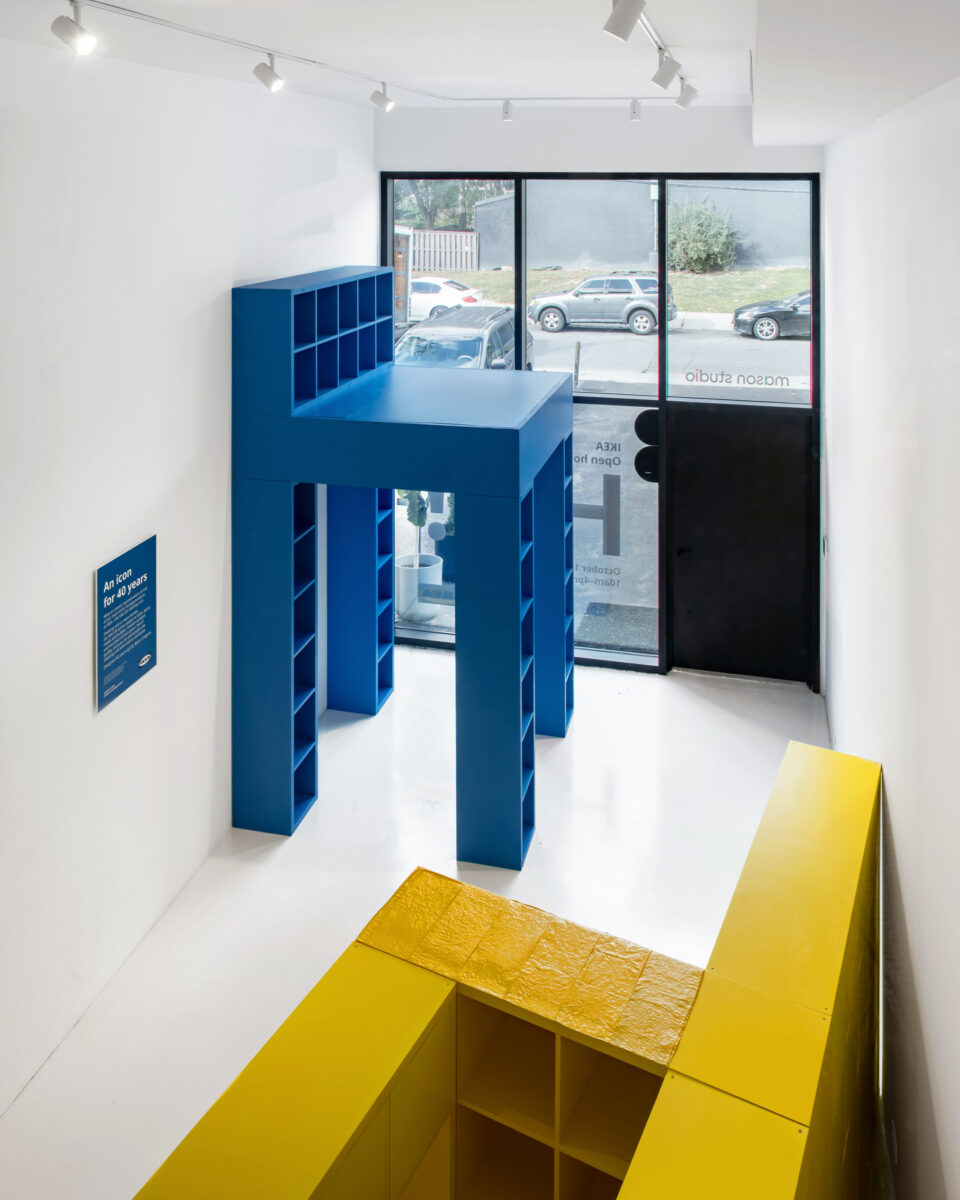
IKEA Canada collaborates with Mason Studio on larger-than-life KALLAX installation (CNW Group/IKEA Canada Limited Partnership)
Retail giant IKEA Canada has ambitious plans for its continued omnichannel transformation in the coming years.
Selwyn Crittendon, CEO and Chief Sustainability Officer, IKEA Canada, who has been in the role for about two months, said the retailer’s vision is to create a better everyday life for Canadians.
Selwyn Crittendon
“And this has never been more meaningful. Our culture, our values and our purpose unite us as co-workers and they continue to be our compass as we transform to be leading omnichannel retailers,” he said.
“This is all about really understanding our customers – transforming into the retailer our consumers want IKEA to be. We need to be available. We need to be accessible and we need to be affordable. But more importantly how do we also strengthen areas of sustainability that make their lives even more meaningful. That is what the purpose and what the future really looks like – a more omnichannel IKEA and an IKEA retailer that can showcase not only solutions that provide great services and really, really give opportunities for young at heart or old at heart a great place to work.
“So IKEA will turn into not only a great place to shop but we are going to be the greatest place to work very soon.”
Image: IKEA
So what does the omnichannel transformation mean for the future?
“We started a journey here especially with our fulfillment network. We’re really creating that fully integrated fulfillment operation. We have our stores which really have been beacons for IKEA – our iconic flagship stores. But they’re now also transforming into fulfillment units,” said Crittendon. “So they’re also supporting how we get our goods closer to the many consumers that can’t really come and see us every day.
“The minute our stores get turned into fulfillment units, we’re supporting with pickup locations, we have some units that are doing their entire (omnichannel) process all on their own. So they’re not connected to a central hub or a central DC (distribution centre). They receive their goods, they ship out their goods, they package their goods. Really what we’re doing is transforming our retail locations into fulfillment locations but still have the wonderful proprietary inspiration solutions and products that you’ll find in any IKEA store globally.”
About a month ago, IKEA held a grand opening in Beauharnois, Quebec, of its latest Distribution Centre and Customer Distribution Centre in Canada to enhance the omnichannel retailer’s operational efficiency, providing its retail locations and customers with unparalleled convenience and swift service.
The new facility is the first IKEA Distribution Centre in over three decades and aligns with the brand’s commitment to enriching the lives of its customers by offering quality products for a better life at home, said the company.
IKEA Distribution Centre in Beauharnois, Quebec (Image: IKEA)
Crittendon has been with the company for close to 23 years.
Founded in 1943 in Sweden, IKEA is a leading home furnishing retailer, offering a wide range of well-designed, functional home furnishing products at prices so low that as many people as possible can afford them. IKEA Canada is part of Ingka Group which operates 389 IKEA stores in 32 countries, including 16 in Canada. Last year, IKEA Canada welcomed 26 million visitors to its stores and 189 million visitors to IKEA.ca.
Crittendon said in the future the retailer will be looking at how current stores can be part of the company’s fulfillment network.
“So you’ll see more and more that our units are fulfilling more of those consumer orders that are happening online,” he said.
“You’ll see more of these smaller pickup points like our partnership with Penguin Pickup happening across Canada. You’ll see us really tapping into the smaller format stores like Plan and Order points. And where we see the next expansion areas in the country we will come back with more traditional large format stores as well too.
“Right now I can’t say where or when but absolutely looking from an omnichannel approach how do we get to areas of the country without a physical touchpoint . . . and if we have the possibility with our fulfillment network already we can provide those orders to those customers. Greater accessibility. We’re going to be talking about more affordability with our prices and our services and then looking for reach. How do I get the consumers that can’t get to us today or we can’t get to them and finding new and unique opportunities.”
IKEA at Deerfoot Meadows (Image: Ivanhoe Cambridge)
He said the company is partnering with FedEx to unleash at least more than 2,000 parcel pickups where it can get goods quicker to customers where IKEA may not be.
“Right now it’s more important than ever for us to really listen to our consumers and be present in the conversations they need us to be there,” added Crittendon. “So what they’re screaming loud and clear right now is affordability and that’s what you’re really going to hear from IKEA for the next couple of months. It’s really screaming.
“Coming very soon, IKEA Canada will be launching some financial services that will help consumers be able to attain the solutions that they need at affordable monthly prices as well too.
“I am working aggressively to really hear our consumers and our co-workers. They’re telling me we need to be more accessible. I can’t really share any new openings right now at this instant, but I do have some things working in the background so we can become more accessible to many more.”
Earlier this year, IKEA Canada announced plans to inject more than $400 million into projects that expand fulfillment capabilities in the Greater Vancouver and Toronto Areas. IKEA Canada’s investment will help the brand continue to meet the evolving ways that customers shop today, while supporting their commitment to help Canadians enjoy a better life at home.
Image: IKEA Canada
That included expanding fulfillment capabilities at IKEA Richmond.
In the Greater Toronto Area, IKEA Canada said it intends to build a new Customer Distribution Centre in Hamilton, Ontario in 2025 that will support expansion throughout southwestern Ontario. IKEA Etobicoke and IKEA Vaughan will also undergo expansions by 2025 to strengthen their store fulfilment capabilities and further enable the company to keep in-demand products available and delivery times as short as possible, while also supporting future growth in the market.
IKEA Canada continues to expand its diverse network of customer meeting points including Plan and order points now open in Boisbriand and Brossard, QC as well as Kitchener, ON, Canada’s first city-centre store in downtown Toronto, and the highly anticipated small-format store at Scarborough Town Centre.
IKEA Pick and Order Point Boisbriand (Image: IKEA Canada)Scarborough Town Centre IKEA (Image: Craig Patterson)IKEA Canada collaborates with Mason Studio on larger-than-life KALLAX installation (CNW Group/IKEA Canada Limited Partnership)
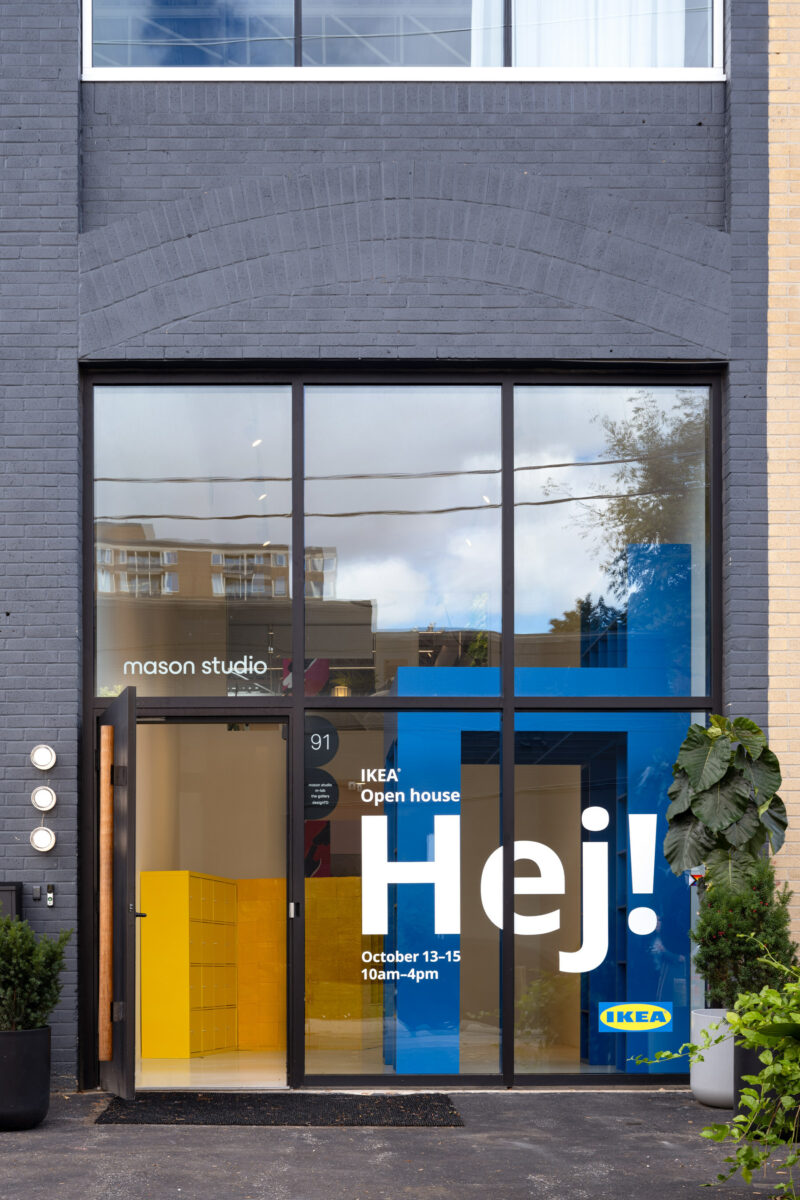
IKEA Canada welcomed consumers to the first-ever IKEA Canada Open House Event hosted at renowned Canadian design firm, Mason Studio. The event celebrating life at home was on display at Mason Studio’s headquarters and Cultural Hub at 91 Pelham Avenue for consumers to visit October 13th – 15th from 10am – 4pm daily. At the conclusion of the exhibit, most product displayed will be donated to Furniture Bank, a Toronto based charity and social enterprise.
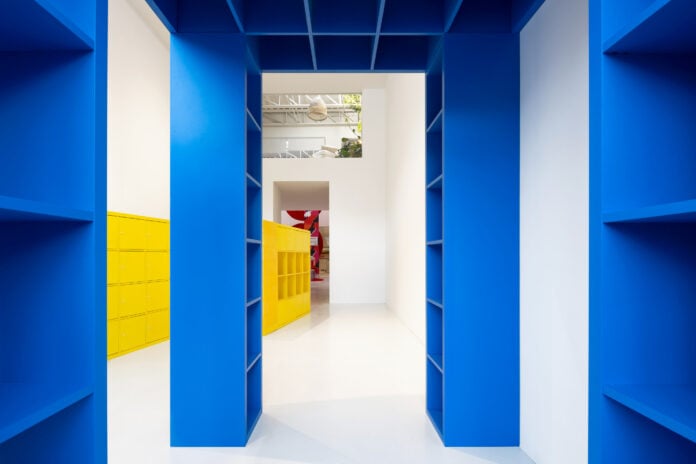
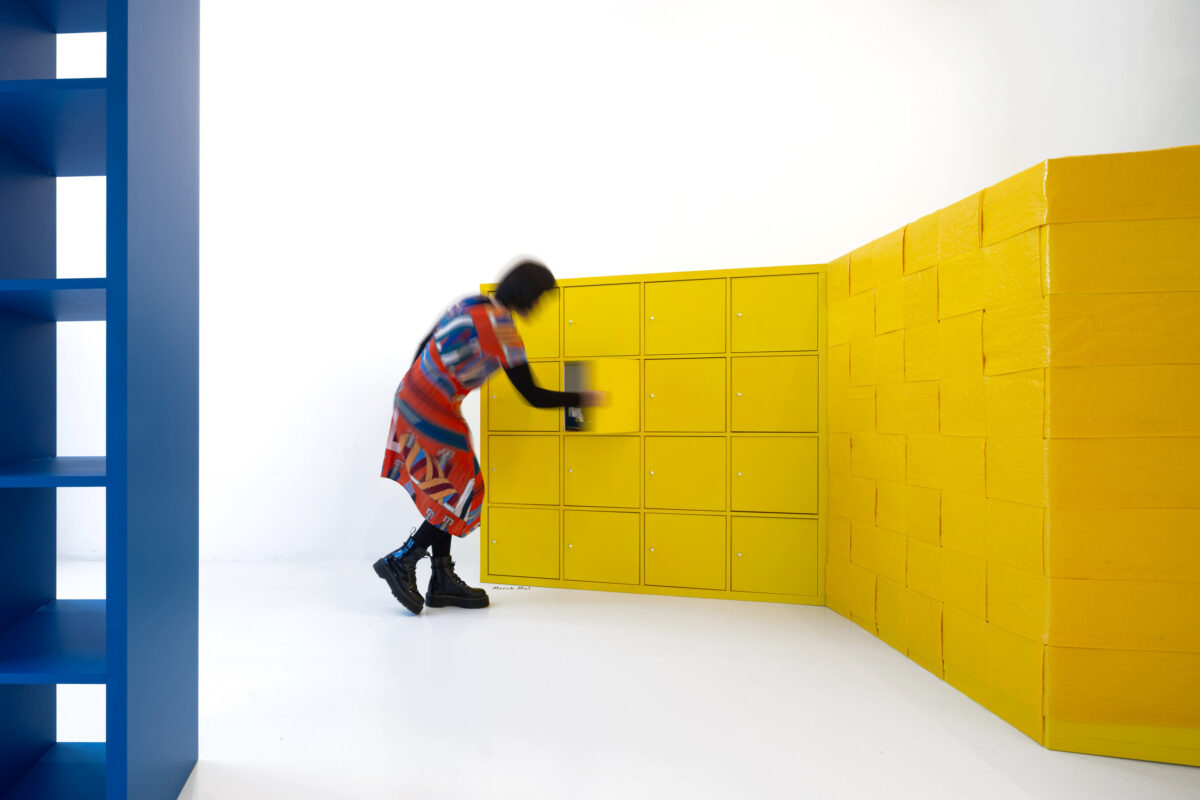
“The IKEA Canada Open House Event will spotlight a larger-than-life art installation highlighting one of the brand’s most iconic and coveted storage products, the KALLAX shelving series. The KALLAX shelving series which was designed over 40 years ago by in-house Product Developer, Börje Lindgren. Mason Studio has reimagined this legacy product in a dramatic scale that blends the lines between storage and contemporary design while featuring the IKEA brand’s iconic blue and yellow. Incorporating the essence of IKEA’s playful spirit and iconic products, Mason Studio designed an exhibition to ignite discovery, interaction, and connection,” said the company.
IKEA Canada collaborates with Mason Studio on larger-than-life KALLAX installation (CNW Group/IKEA Canada Limited Partnership)(CNW Group/IKEA Canada Limited Partnership)
The space also featured:
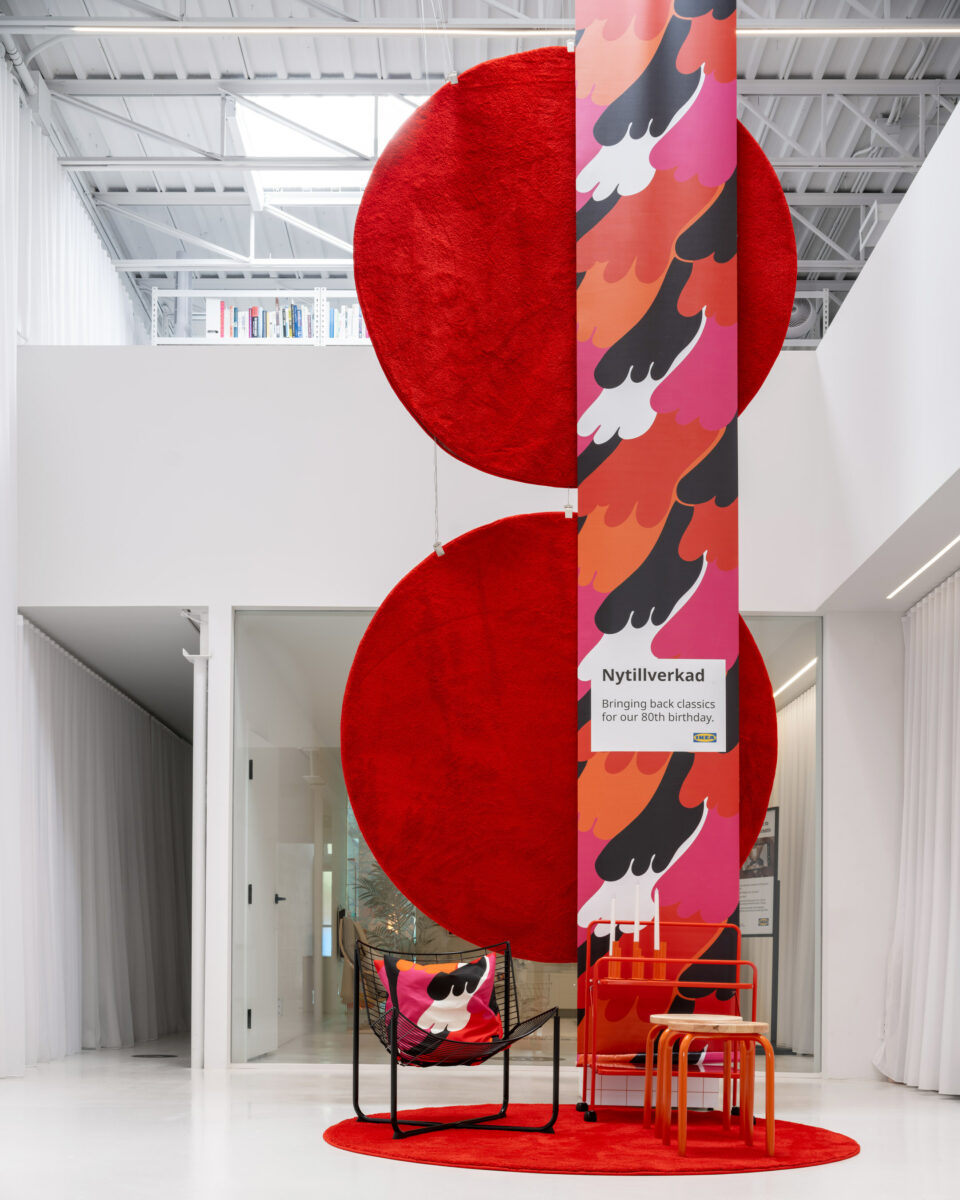
Nytillverkad – As IKEA celebrates the brand’s 80th anniversary, it reintroduces carefully selected favorites from its design archive. The Nytillverkad collection connects iconic designs of the past with the dreams and needs of the present and future. The event spotlights the second launch of the Nytillverkad collection where the brand is showcasing ’70s and ’80s designs with product highlight including Niels Gammelgaard-designed SKÅLBODA armchair and JÄRLÅSA side table.
IKEA Kreativ – IKEA will also highlight how design and technology comes together through the recently launched AI-powered and digital experience, IKEA Kreativ.
Complete sleep – Visitors will experience a complete sleep sanctuary which highlights all six of the IKEA sleep essentials including comfort, light, temperature control, air quality, sound control, and colour and furnishings.
Seasonal collections – Visitors will be able to preview holiday collections such as the Scandinavian-folklore-inspired VINTERFINT collection and the AROMATISK collection designed to support the festivities around Diwali.
IKEA Canada collaborates with Mason Studio on larger-than-life KALLAX installation (CNW Group/IKEA Canada Limited Partnership)
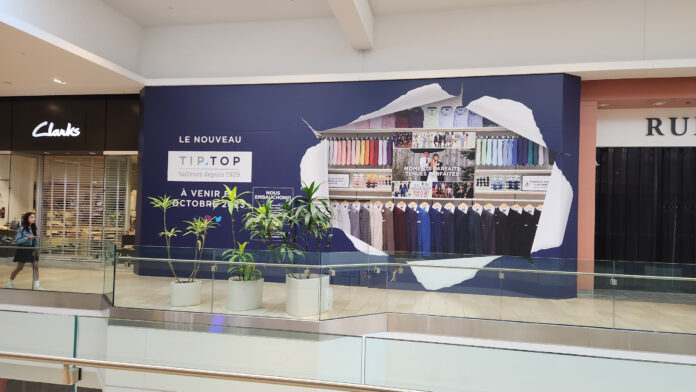
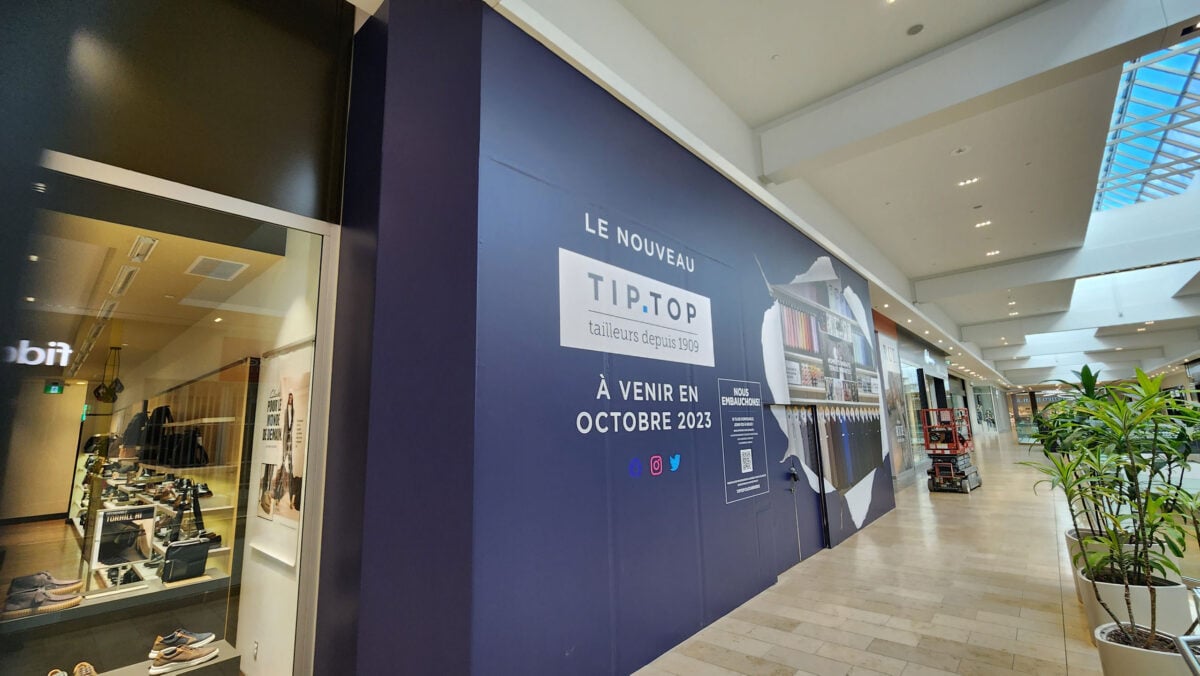
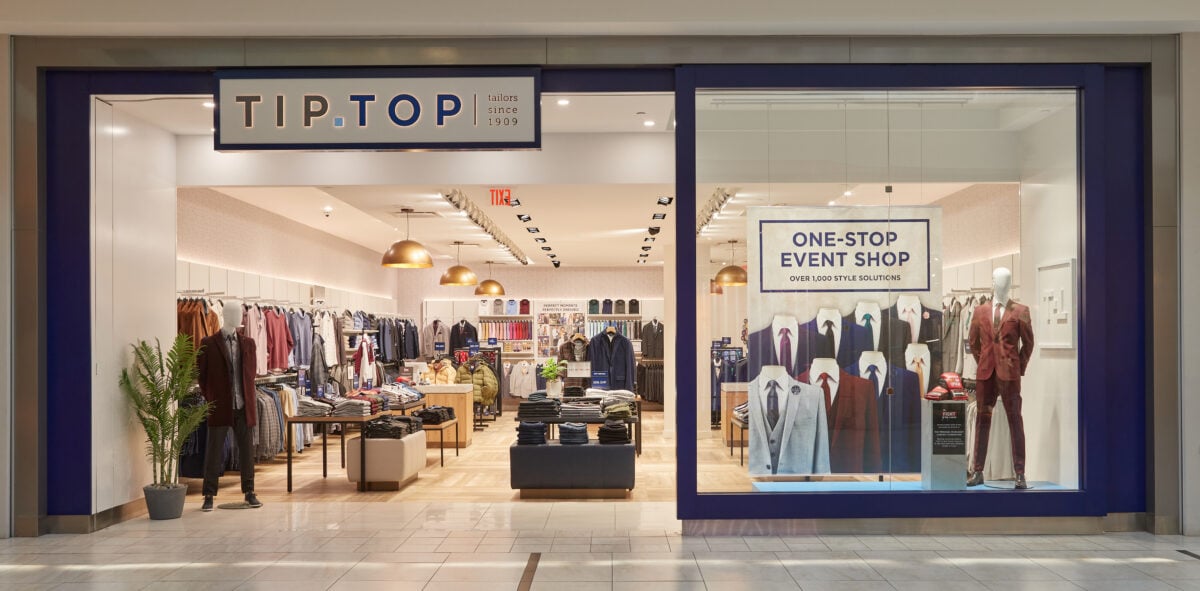
Tip Top Construction at Galarie De La Capitale (Image: Tip Top)
Canadian retailer Tip Top, specializing in men’s dresswear, is opening four new stores in Quebec, re-entering the province for the first time in two decades.
And it’s coming back with a new look and feel.
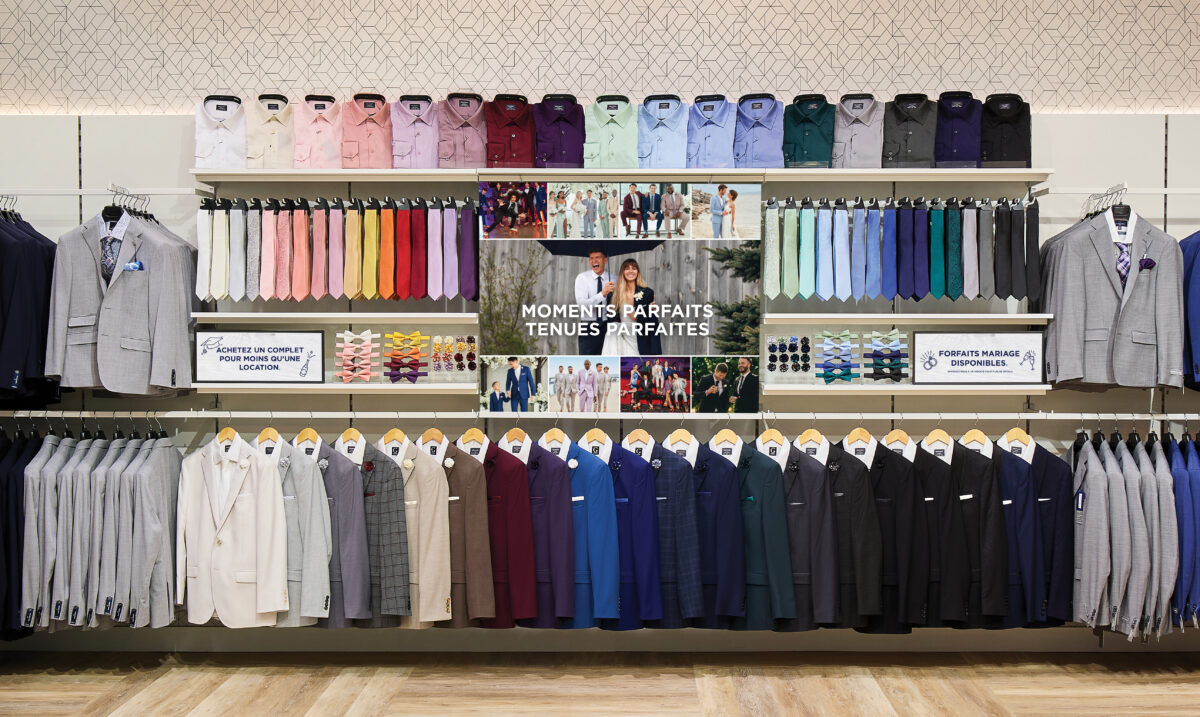
“We are excited to be returning to the Quebec market, the fashion capital of Canada,” said Lance Itkoff, CEO of Grafton Apparel Ltd. (Tip Top). “There is no one else in Quebec doing what we do, and we see a real need in the market, which presents a tremendous opportunity for both us and our customers. Our new concept stores, which have been extremely successful across Canada, focus on outfitting men for the most special events in their lives, or as we say, ‘Perfect Moments, Perfectly Dressed’.
Lance Itkoff
“Along with our real estate partner Oberfeld Snowcap, we are continuously looking for new development opportunities across the country. Within Quebec, we have targeted upwards of 20 malls, and are in a position to continue growing as the right spaces become available. The choice to launch first in Montreal and Quebec City was simple, as these cities present the biggest base of need for both special event and go-to-work men’s apparel. Both Galeries d’Anjou and Galeries de la Capitale are located in suburban hubs with heavy foot traffic where we feel our value proposition resonates strongest.”
Tip Top Construction at Galarie De La Capitale (Image: Tip Top)
The initial two stores are slated to open this fall with a third and fourth confirmed for early spring 2024. The first location will open its doors on Thursday, October 19 in Montreal at Galeries d’Anjou and the second in Quebec City on Thursday, November 2 at Galeries de la Capitale.
“Why weren’t we in Quebec? That was a question that we were scratching our heads about. I’ve been with the company for seven years now and when we were in the deep dark recesses of COVID we really had to take a good hard look at our business strategy and what was it we wanted Tip Top to look like when we came out of it,” said Itkoff. “It really offered us the chance to move the brand forward by 10 years probably in two years.”
Tip Top’s roots date back to 1909 and today the retailer has more than 80 stores across the country.
Tip Top continues to roll out its new prototype stores and is renovating existing locations across Canada to reflect the brand’s reimagined look and feel. The retailer says interiors will attract shoppers with a bright and airy vibe featuring the Tip Top Event Shop, which is disrupting the status quo by providing consumers with a one-stop shop for all event solutions.
The Event Shop is a newer concept that makes the shopping experience simple and seamless. It mirrors a real-life catalogue displaying countless options to help shoppers find everything they need in matching colours and patterns to suit up for their special event, all in one visit to Tip Top, it said.
Itkoff said the merchandise was changed in the stores to speak to eventing.
Tip Top Markham (Image: Tip Top)Tip Top Event Shop (Image: Tip Top)
He said the company now plans to open more stores in the future in Quebec.
“It’s pretty exciting times. Boy, if you told me two years ago we would be talking about what we’re talking about I would have been happy to be having that conversation then,” added Itkoff.
“We believe that the opportunity is for a total right now we’ve identified 16 locations (in Quebec) we’d like to be in. We are actively working with Oberfeld on identifying the right spots at the right malls. The good news is we have the ability to move quickly when we get the right opportunity. The better news is we don’t have pressure. We haven’t gone out and announced that we’re opening up x amount of stores. So we have to open up a store even if it isn’t the right location in the right malls. We don’t have that pressure.
“So we’re going to open up stores when it makes sense. When we can find the right space in the right mall. We have a fantastic space in Square One. We’ll be opening that up in April. We have a right size store format where we’re plus or minus 2,500 square feet.”
Tip Top recently opened in Markville and Vaughan Mills and “those stores have been doing phenomenally.”
Health and wellness store Healthy Planet is expanding into the heart of downtown Toronto to Yonge-Dundas Square.
Muhammad Mohamedy
“We are looking forward to serving the downtown core as a one-stop destination for all things related to health and wellness,” said Muhammad Mohamedy, General Manager of Healthy Planet.
“Whether you’re a student, parent, work long hours or are just visiting the city, our in-store product specialists and nutritionists are ready to help you with your unique needs. We look forward to becoming an integral part of this community that is at the centre of Canada’s best entertainment, tourism, and living!”
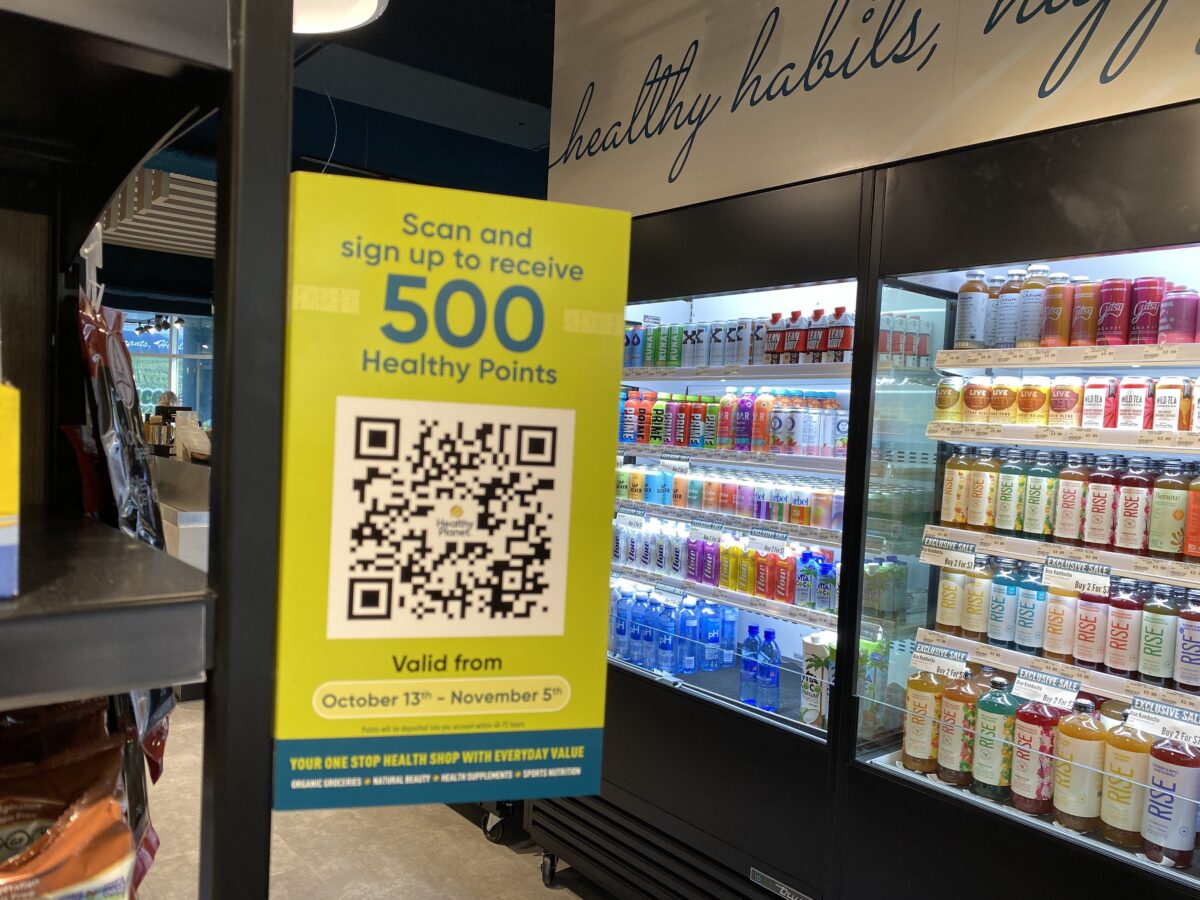
The store at 322 Yonge Street is expected to open October 13 in 7,500 square feet of space.
“Yonge and Dundas is the most recognized street in Toronto. There was an opportunity that was available. We don’t have a store right in the core of downtown. This is our first core downtown store. We opened a store on College Street last year,” he said.
“It will give us good visibility. There’s a lot of visitors and in that area. We feel there’s a void for a health food store and we’ll be a perfect fit for it.”
Healthy Planet is a health and wellness store with 35 locations in Ontario. It has grown from a small kiosk in a strip mall to what it is today.
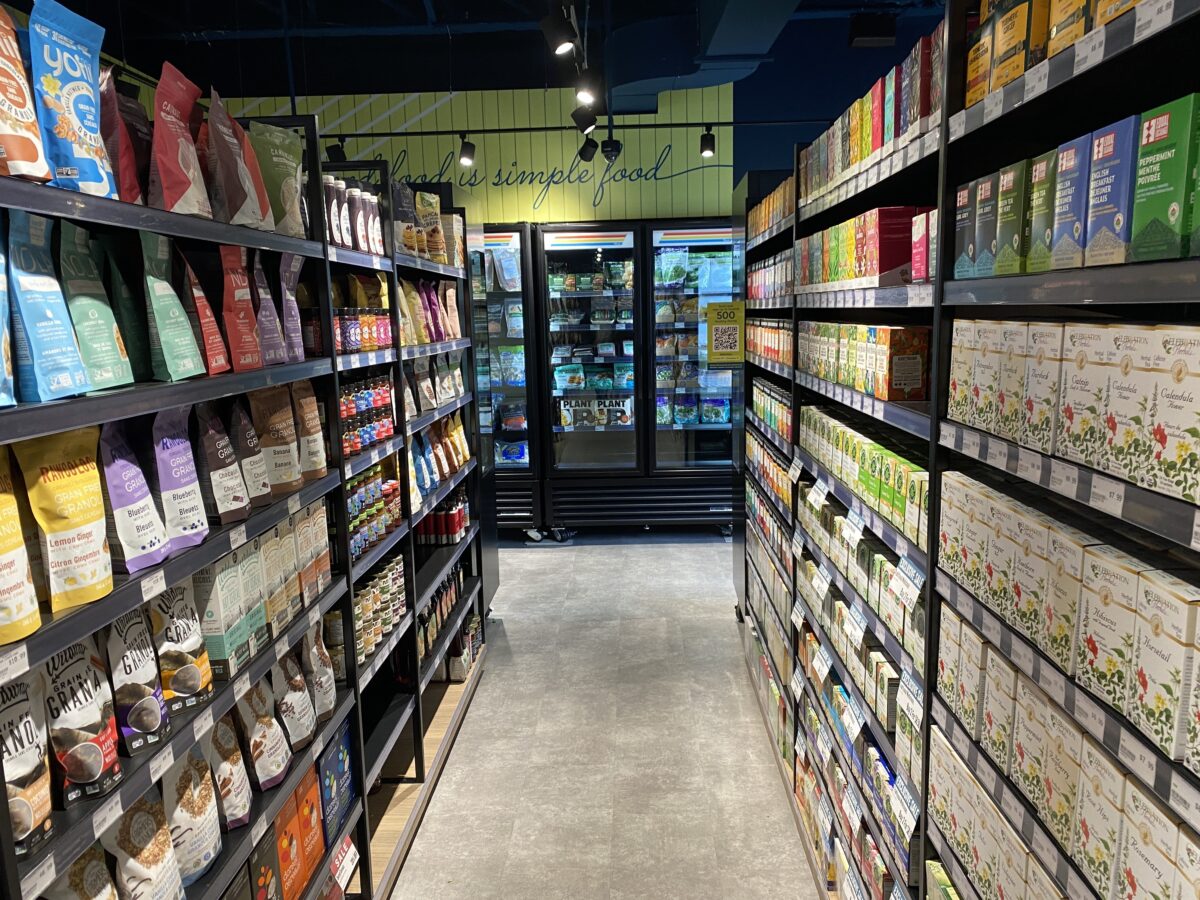
The store offers a large selection of vitamins, herbs and supplements of the highest quality at affordable prices, as well as herbal products, bodybuilding supplements, diet products and natural cosmetics.
“Initially when we started Healthy Planet, we were mostly selling bulk food and then we added health food products and some supplements and then slowly grew into a one-stop health food store and then we added more and more categories as we grew,” said Mohamedy.
The company said its expansion is a testament to Healthy Planet’s “unwavering commitment to fulfilling its mission of granting the community access to exceptional health and wellness products and the team couldn’t be more excited to bring this commitment to downtown.”
The location will also include a Healthy Planet Kitchen.
“A visit to a Healthy Planet kitchen is like diving into a world of pure culinary goodness,” said Mohamedy. This will be the second location for Healthy Planet Kitchen with Ajax being the first to open earlier this year.”
Mohamedy said the brand has a goal to reach 100 stores within the next five years.
Healthy Planet Yonge Dundas (Image: Dustin Fuhs)
Initially all the stores will remain in Ontario.
“We don’t have plans right now to go out of Ontario but never say never,” he said. “Once we feel Ontario is really saturated then we’ll start looking outside of Ontario.
“All of our opportunities to enter a market that we serve, we don’t want to do a half-ass job. We want to make sure we do it correctly. Expansion has to be done correctly otherwise it could be a nightmare situation. We don’t do it for the heck of doing it. It has been done strategically and for us the staffing is very important. So if we’re not able to do it we won’t do it.”
As Canadians grapple with the rising cost of living, many consumers are reevaluating their daily choices and purchase habits. The cost of groceries is forcing many households to make difficult decisions, like having to choose between food quality and affordability.
Amid these economic pressures, the concept of brand loyalty — the preference consumers have for a particular brand over others — is undergoing a significant shift. Brand loyalty is the result of a mix of factors, including trust, habit and the perceived value of goods.
Losing loyalty, on the other hand, can result in a competitive disadvantage for retailers. It can lead to revenue loss, increased marketing and customer acquisition costs and negative word-of-mouth.
Once a cornerstone for many food retailers, brand loyalty is eroding as consumers prioritize immediate cost savings over long-term brand relationships.
Adapting to rising food costs
Inflation is impacting a wide range of income groups: 81 per cent of lower-income, 50 per cent of middle-income and 35 per cent of high-income earners in Canada are impacted by inflation, spending less on clothing, beauty products and big-ticket items.
Consumers have been adopting various strategies to manage their budgets. Three-quarters of Canadians say they dine out less often because of the rising cost of living, and 70 per cent say inflation has shifted the way they cook.
Some Canadians are also modifying their eating habits by altering portion sizes, cutting back on pricier food items and focusing on more affordable staple foods. While these changes help consumers deal with rising costs, they also come at the expense of brand loyalty.
The digital landscape is also playing a key role in this shift. Consumers are increasingly turning to digital platforms to find economical food options. The convenience of online marketplaces and food delivery services exposes them to a wide array of product choices and competitive pricing.
This transparency and the ease of comparing prices online encourage consumers to explore various brands, making it more challenging for traditional food brands to sustain customer loyalty.
People shop inside a grocery store in Toronto, on July 18, 2023. THE CANADIAN PRESS/Cole Burston
Inflation also leads to changes in spending habits in a phenomenon known as consumption smoothing. This often involves delaying the purchase of durable goods, prioritizing the purchase of necessities and opting for store-brand products.
In essence, consumers shift their priorities toward cost management, which in turn reduces their loyalty to specific brands. Food companies need to adapt to these changing consumer needs by recognizing affordability and value take precedence in an inflationary market.
What can retailers do?
The shift away from brand loyalty can pose challenges for business owners and retailers who depend on consumer spending. Aside from the most obvious solution to the issue — lowering prices — there are other things retailers can do to win back customers.
First, retailers can use dynamic pricing, allowing them to adjust prices based on factors like supply and demand, inventory and competition. This approach enables them to offer competitive prices and discounts while also minimizing food waste.
Second, retailers can also introduce loyalty programs that go beyond conventional point-based systems. By using personalized data from consumers, retailers can tailor rewards and incentives to match individual shopping habits, experiences and preferences. Retailers can also collaborate with other businesses and incorporate gamification elements to further enhance loyalty.
Lastly, retailers should consider using a value-oriented marketing approach to elevate consumer experiences. Retailers should communicate the value of their products, emphasizing quality, nutritional benefits and unique features to justify their price points.
Simultaneously, investing in exceptional customer experience, both in-store and online, can foster strong emotional connections between retailers and consumers. When consumers feel valued by brands, they are more likely to stay committed to that brand’s products. By assuring customers of their commitment to value, retailers can play a crucial role in guiding consumers through these challenging times.
By Omar H. Fares, Lecturer in the Ted Rogers School of Retail Management, Toronto Metropolitan University and Seung Hwan (Mark) Lee, Professor and Associate Dean of Engagement & Inclusion, Ted Rogers School of Management, Toronto Metropolitan University.
Retail Insider is streamlining its Canadian retail news from around the web to include a handful of top news stories that can be viewed quickly during the day. Here are the top stories from the past 24 hours.
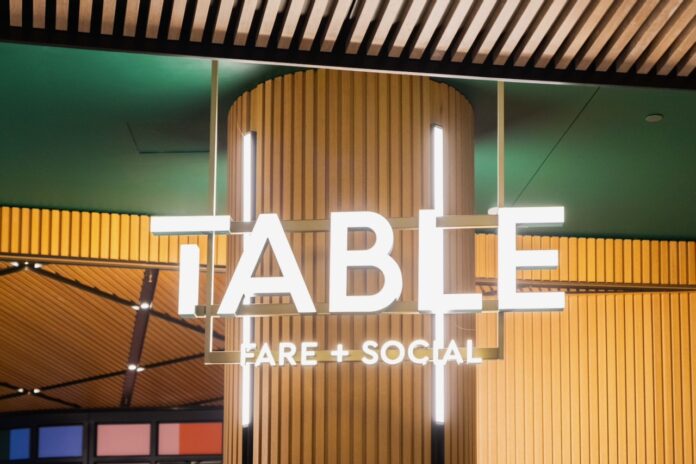
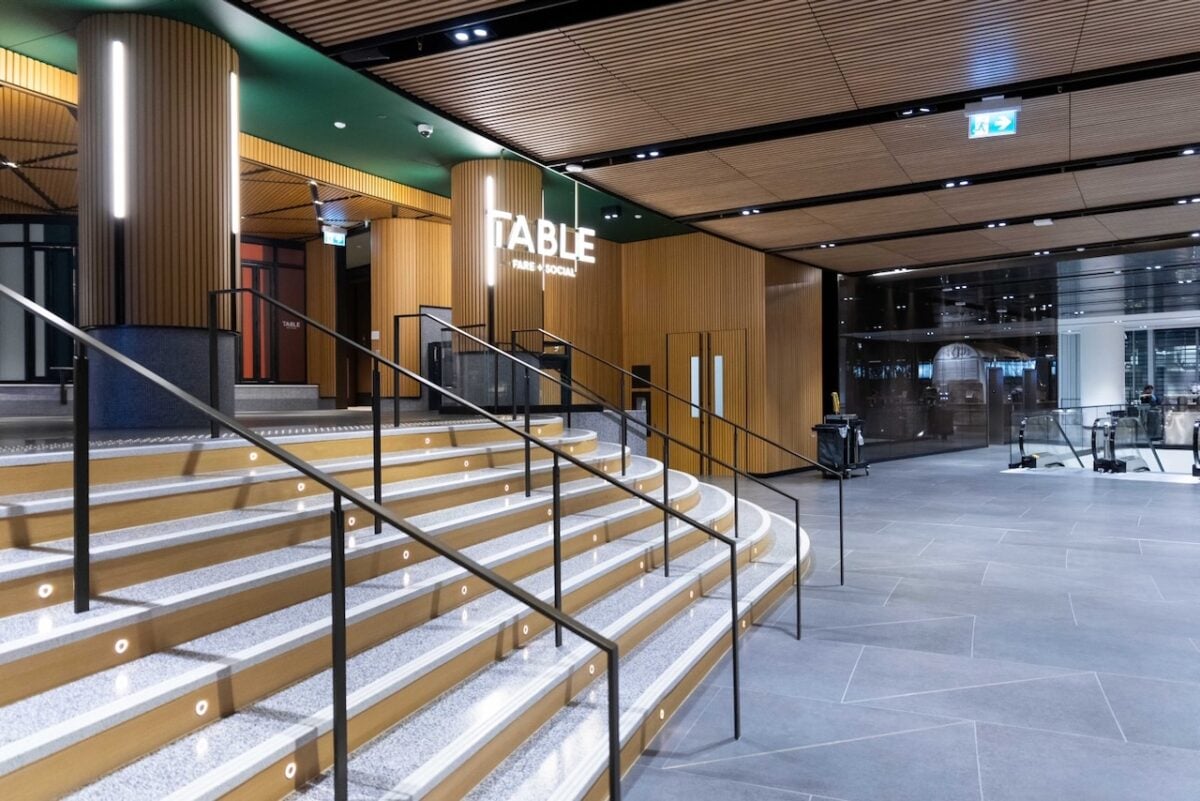
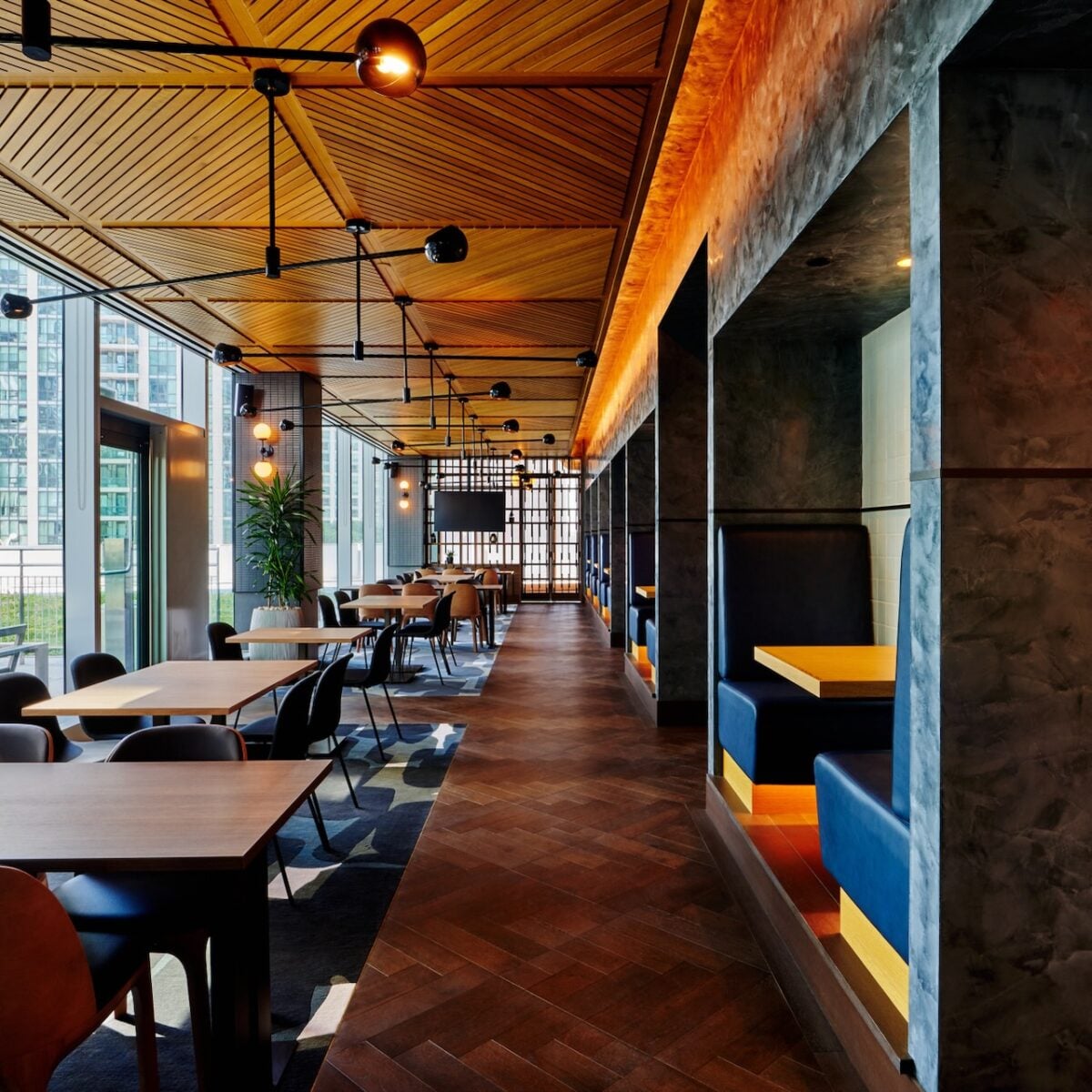
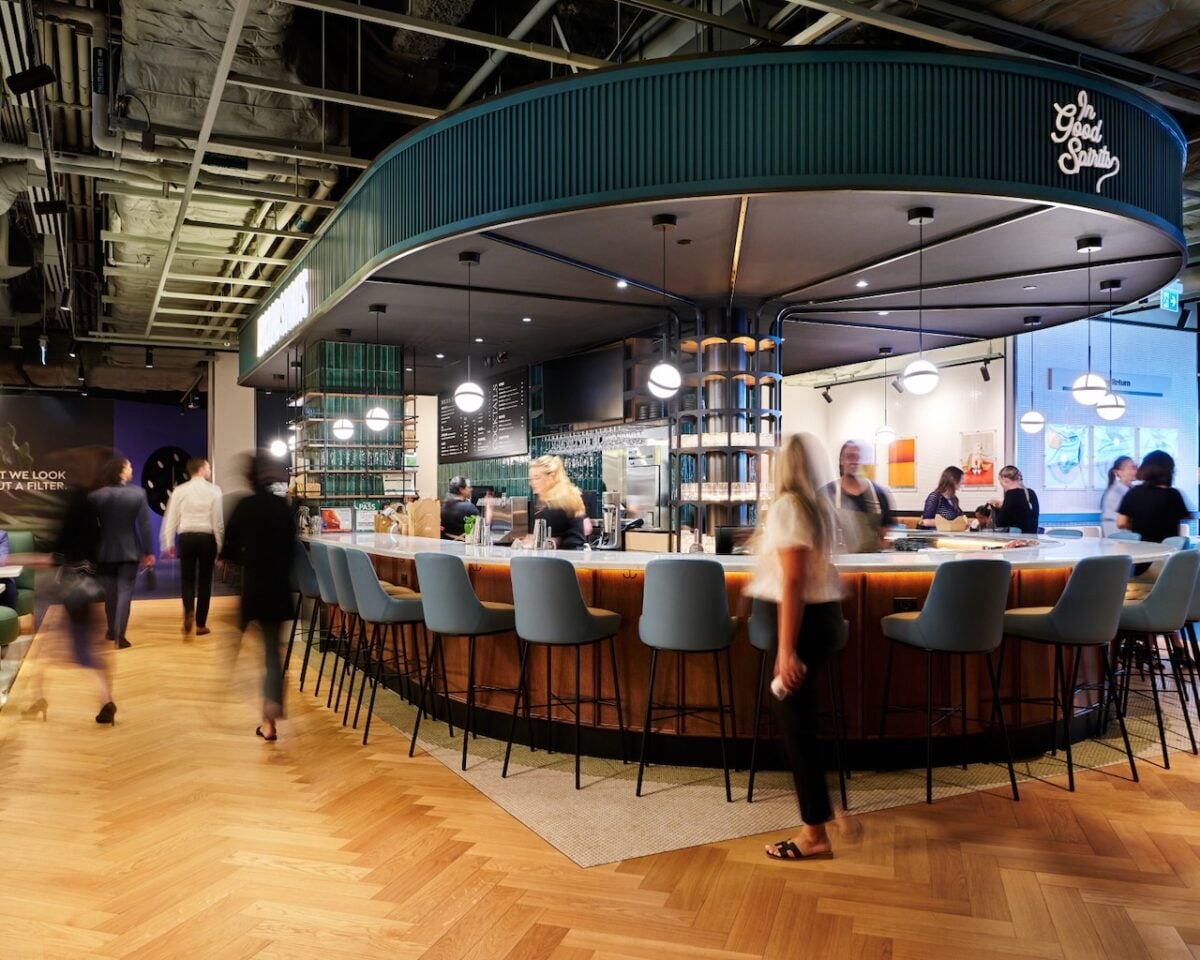
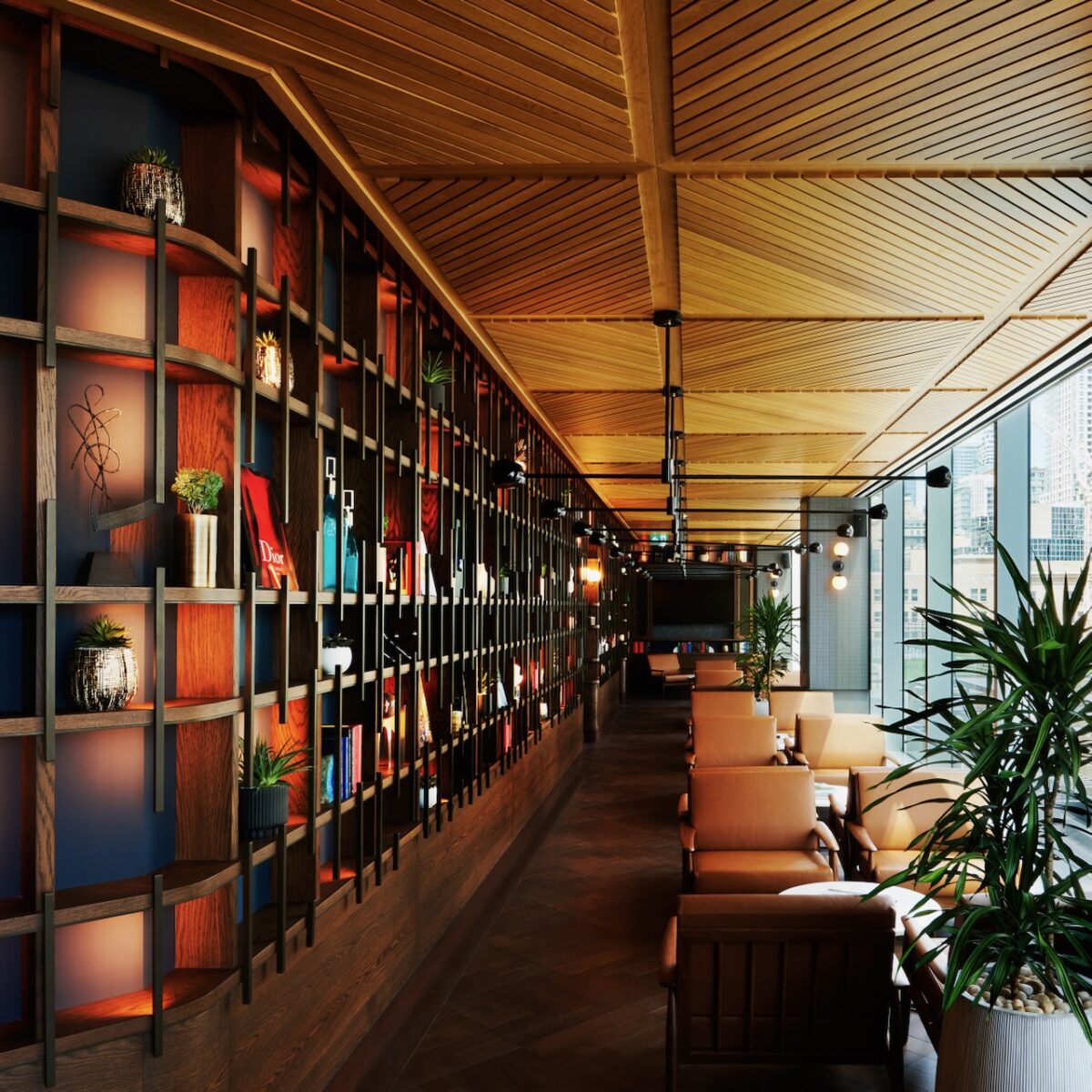
The new TABLE Fare + Social concept at CIBC SQUARE in downtown Toronto has become the latest sensation for the city’s dining scene with more establishments coming.
Avi Behar
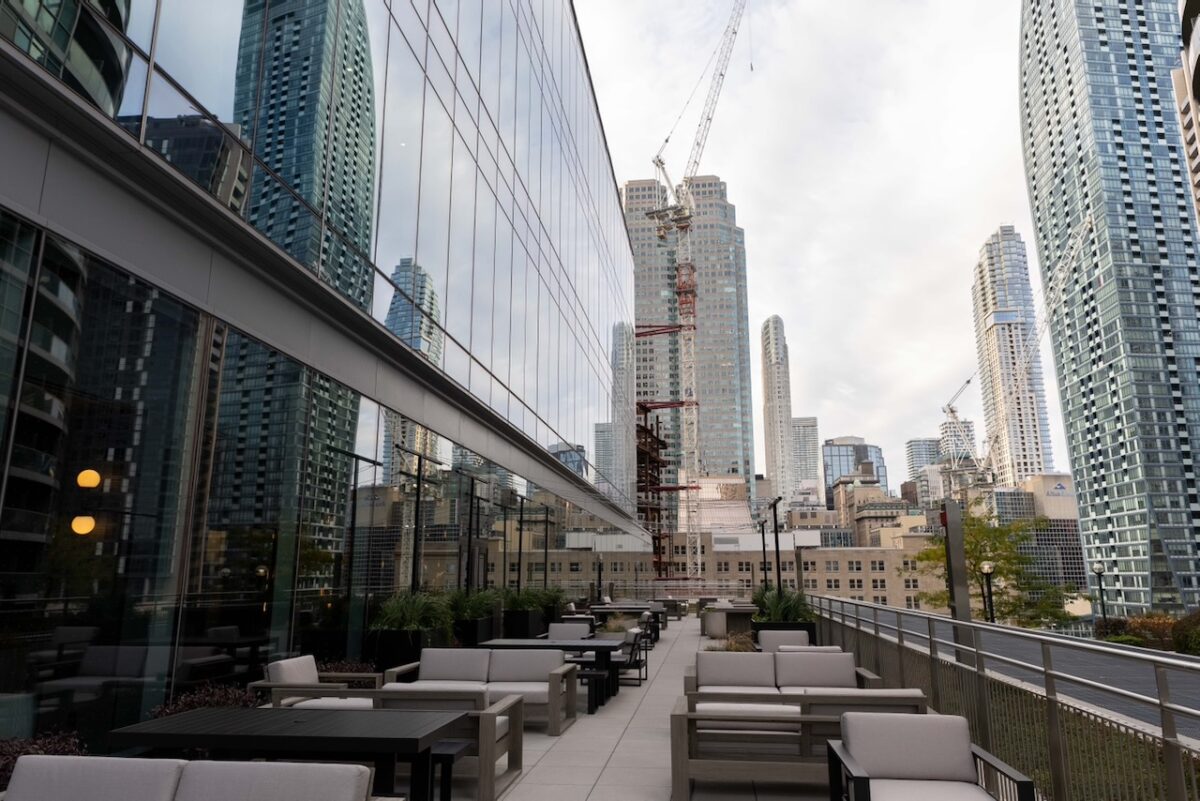
“The integration with the Park (an elevated green space) was really key for us. We wanted to create an elevated experience both figuratively and literally,” said Avi Behar, Chairman & CEO | Broker at The Behar Group Realty Inc. “Because it is situated prominently on the fourth level, in the heart of downtown Toronto, the vistas are unparalleled.
“It’s kind of magical up there.”
TABLE Fare | CIBC Square (Image: Kennedy Pollard / TABLE Fare)TABLE Fare | CIBC Square (Image: Sierra Curtis / TABLE Fare)
He said the idea was to establish a unique concept and not duplicate the typical food courts that people might see in the PATH system.
“We wanted to create some uniqueness” said Behar. “As a result, we targeted established restaurateurs who are known for the high quality and calibre of their food and operations but who have also proved to be able to deliver high volumes at peak periods which we know a food hall such as this will deliver.
“Most of the groups have anywhere from one to four or five operations elsewhere. For the most part, we’ve sourced Toronto-based groups, however we’ve also secured some brands that are national and global.”
The Behar Group has been involved since the infancy of the food hall project a few years ago.
The fourth floor of Tower One at CIBC SQUARE flows into the Park and into the fourth level of Tower Two.
“That’s intended to create an unmatched experience, weaving together entertainment, food & beverage, community engagement, programmability and activation,” said Behar. “That was really the objective – to have a charming north lobby so that when people reach the fourth level via the PATH system or otherwise, they’re instantly engaged and siphoned into multiple environments which include the relatively newly opened Dineen Coffee Shop and Bar in the lobby, the curated Park, a signature format, larger restaurant that’s yet to open and the food hall.
“It’s a very animated, activated level, filled with energy.”
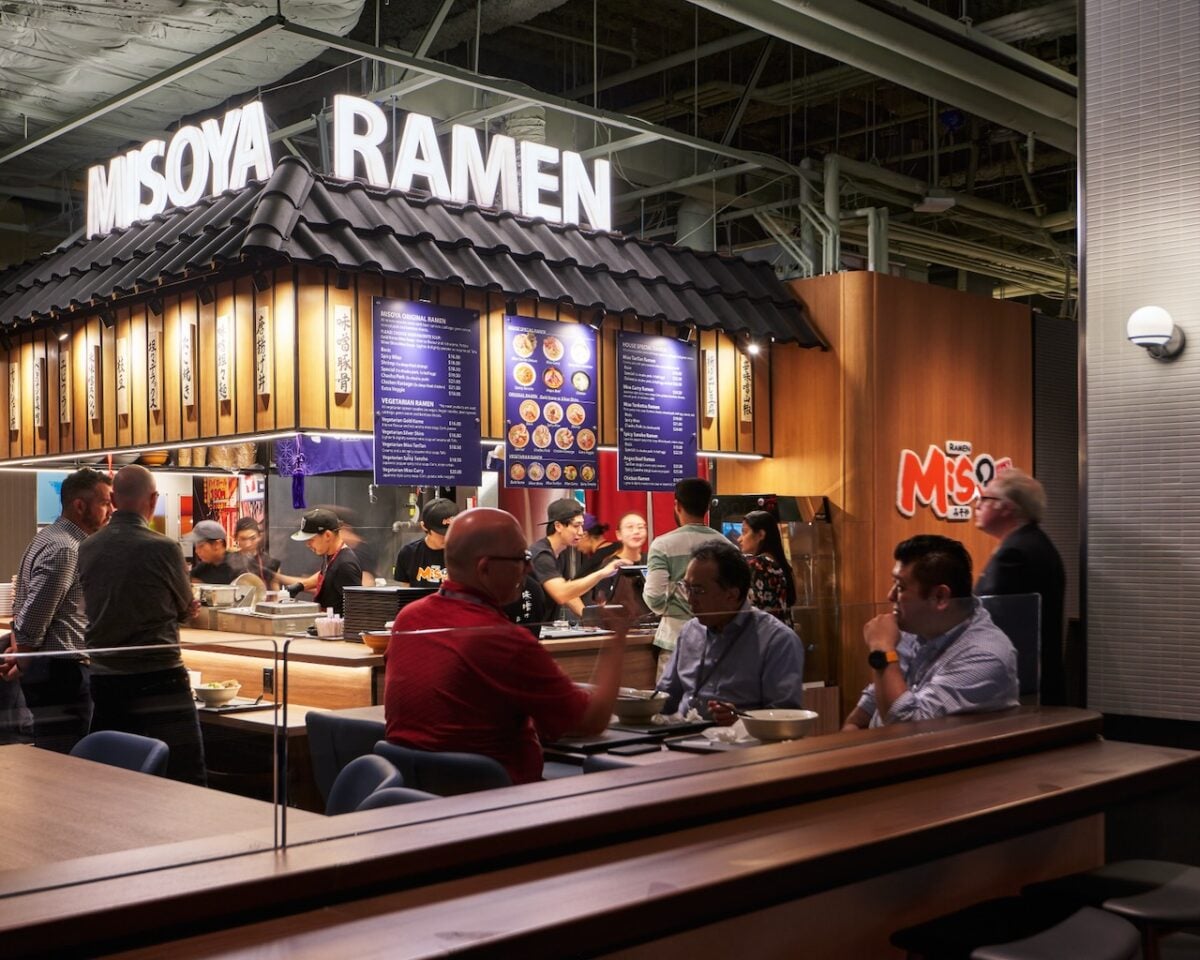
Misoya Ramen at TABLE Fare | CIBC Square (Image: Sierra Curtis / TABLE Fare)In Good Spirits at TABLE Fare | CIBC Square (Image: Sierra Curtis / TABLE Fare)
“Our role included the establishment of target tenant categories and an overall merchandising mix, evaluating design and layouts, and forecasting revenues,” said Behar.
“In terms of the merchandising mix, we established a list of categories in food operations that we thought would resonate best for the buildings themselves and the larger ecosystem in the heart of downtown Toronto.
“In this case we decided to do a few interesting things. Part of our approach was oversizing the kiosks. In typical food courts, kiosks range around 300 square feet give or take. These ones are mostly 500 to 600 square feet and what we wanted to do was create better kitchens, more space for the food operators and the chefs and kind of embrace the theatre of cuisine where patrons can see food being made. We upsized the kiosks and we took the approach of establishing fewer operators and giving each of those operators more space.
“Whereas many food halls have 20 kiosks or more, TABLE Fare + Social has 13, with more seating than a typical food hall globally would have. Fewer kiosks. More seats per kiosk. And more bathrooms.”
TABLE Fare | CIBC Square (Image: Sierra Curtis / TABLE Fare)TABLE Fare | CIBC Square (Image: Kennedy Pollard / TABLE Fare)
The food hall area is about 40,000 square feet and the signature restaurant which is outside of that box is about 10,000 square feet. That restaurant is under construction and officials have not yet released its name. Besides the Park, there is also a patio as part of the project.
The project is opening in phases.
The vendors that are currently open besides Dineen include:
In Good Spirits: In Good Spirits (IGS) aims to bring a top-bar experience to the masses through remarkable hospitality, inspired cocktails, and delicious cuisine. IGS serves a French-inspired food menu with a dash of Spanish influence, including cocktails, beer, wine, and coffee, accompanied by shareable bites and gourmet choux bun sandwiches, all with exciting flavour combinations to savour;
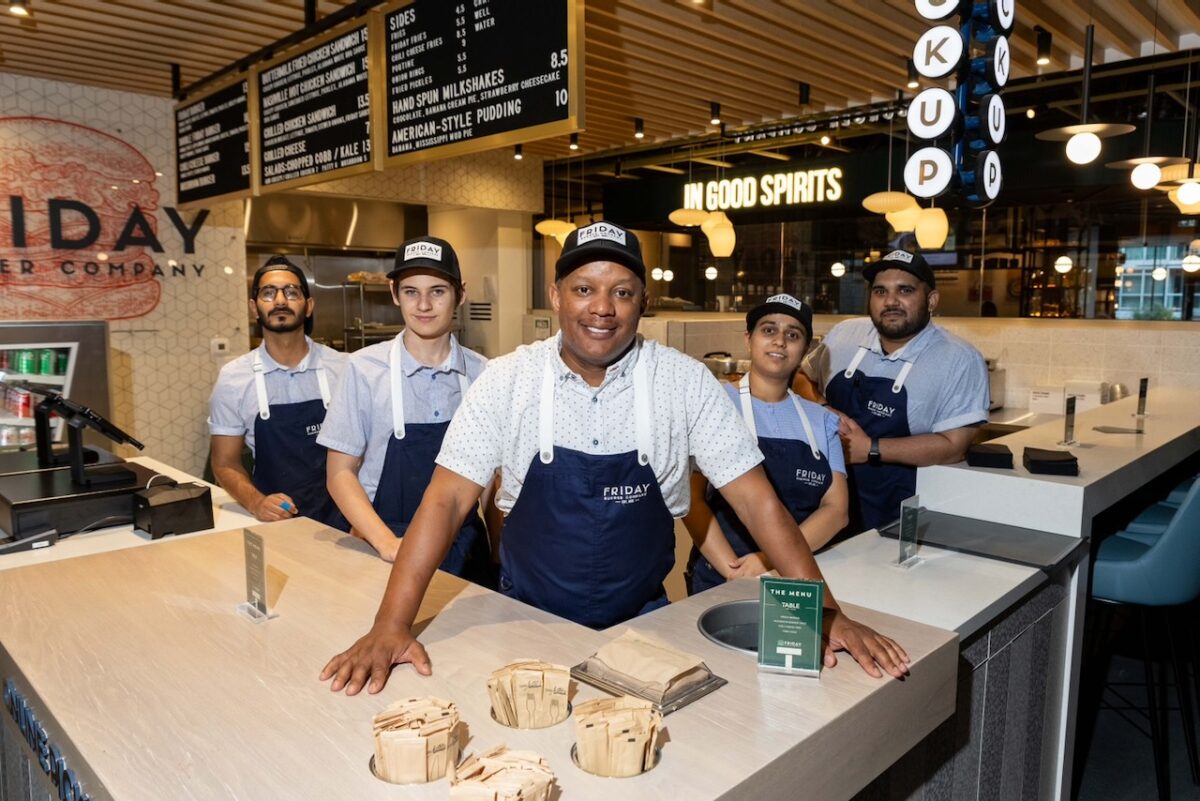
Friday Burger: Every Friday Burger is handcrafted, fresh, and made with the highest quality ingredients. Friday Burger offers traditional and plant-based options, chicken sandwiches, limited edition features, and every accompaniment you’re craving to enhance the experience;
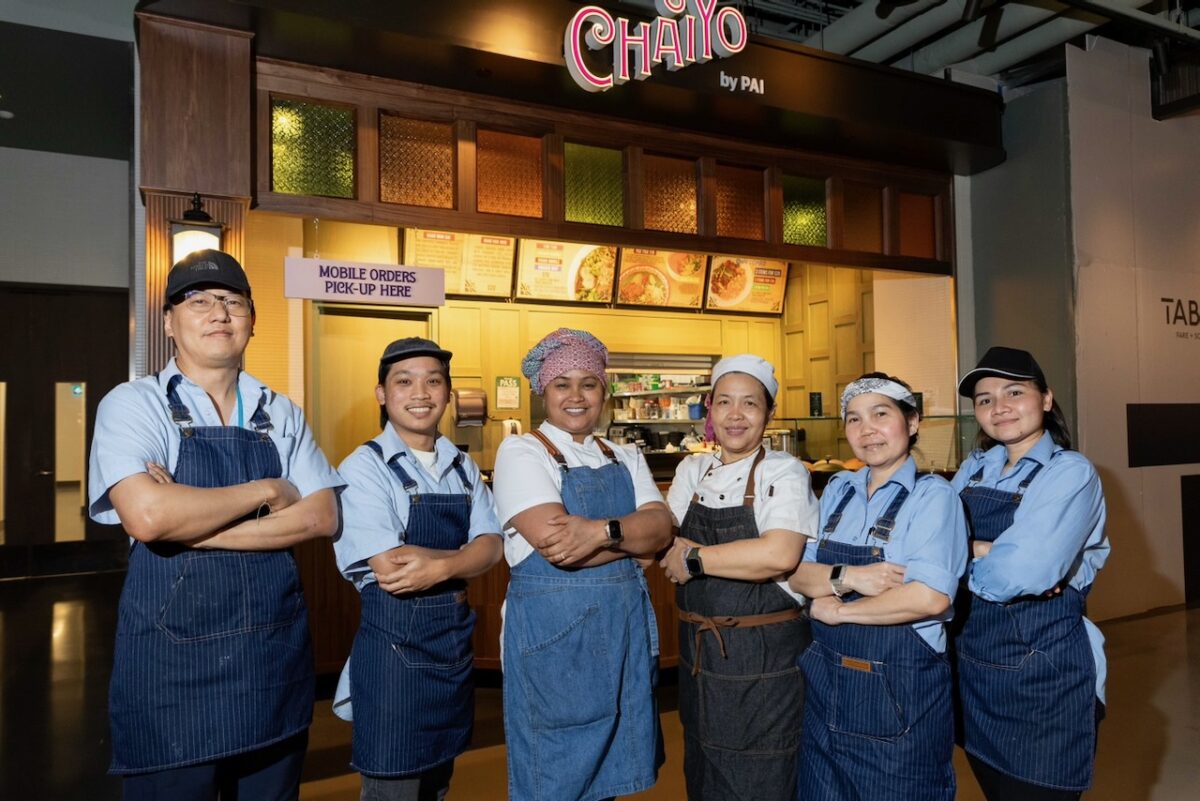
Chaiyo by Pai: Chaiyo by PAI expands beyond their Northern Thai roots to showcase the Thai street market culture and the nostalgic dishes that Chef Nuit misses and remembers from the markets in Thailand. Within the food hall located in the new CIBC SQUARE, Chaiyo by PAI offers fresh and authentic Thai food in a fun and unique Thai market experience; and
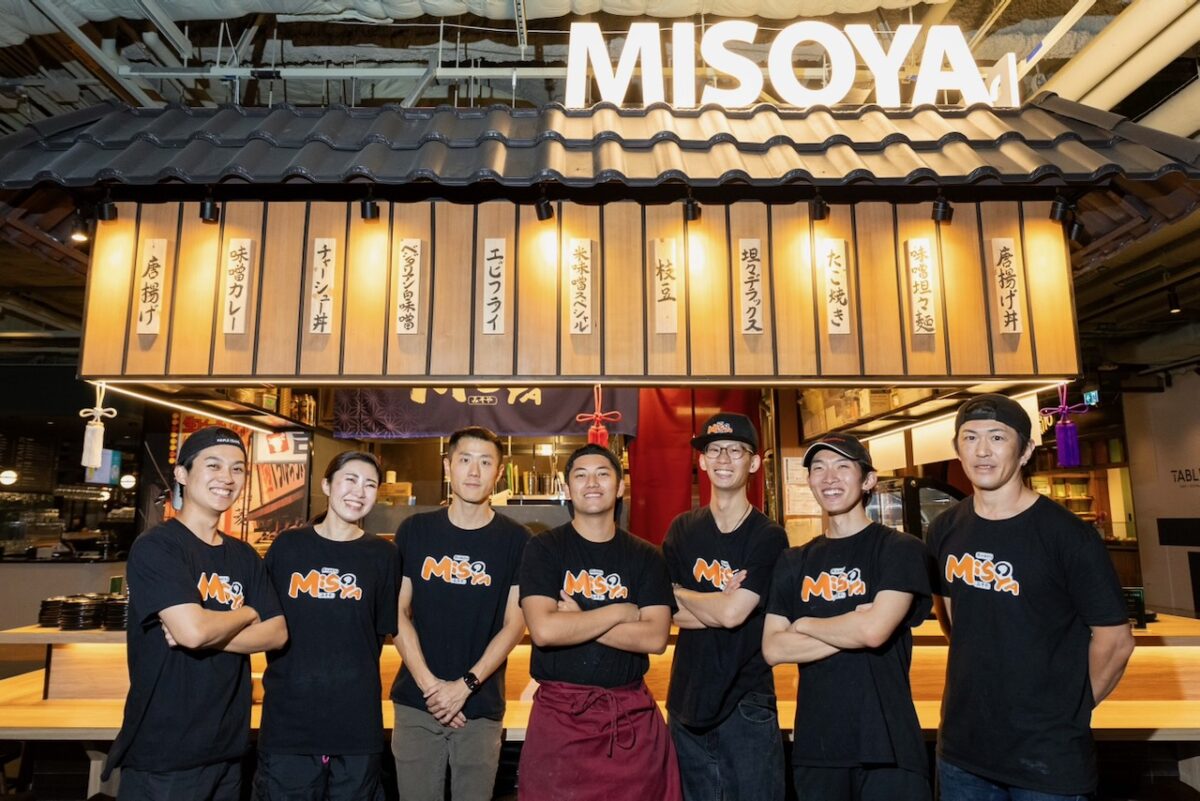
Misoya: Ramen Misoya is a Japanese noodle house that specializes in miso ramen. The menu here offers the usual fare of Japanese noodles and sides but with a strong focus on one main ingredient: miso.
CIBC SQUARE, a joint development of Ivanhoé Cambridge and Hines, is located on Bay Street south of Front Street.
TABLE is easily accessible via the rail hub, PATH, and Scotiabank Arena.
Behar said three other concepts, soon to be four, are under construction at the food hall. The hope is that they will open before the end of the year.
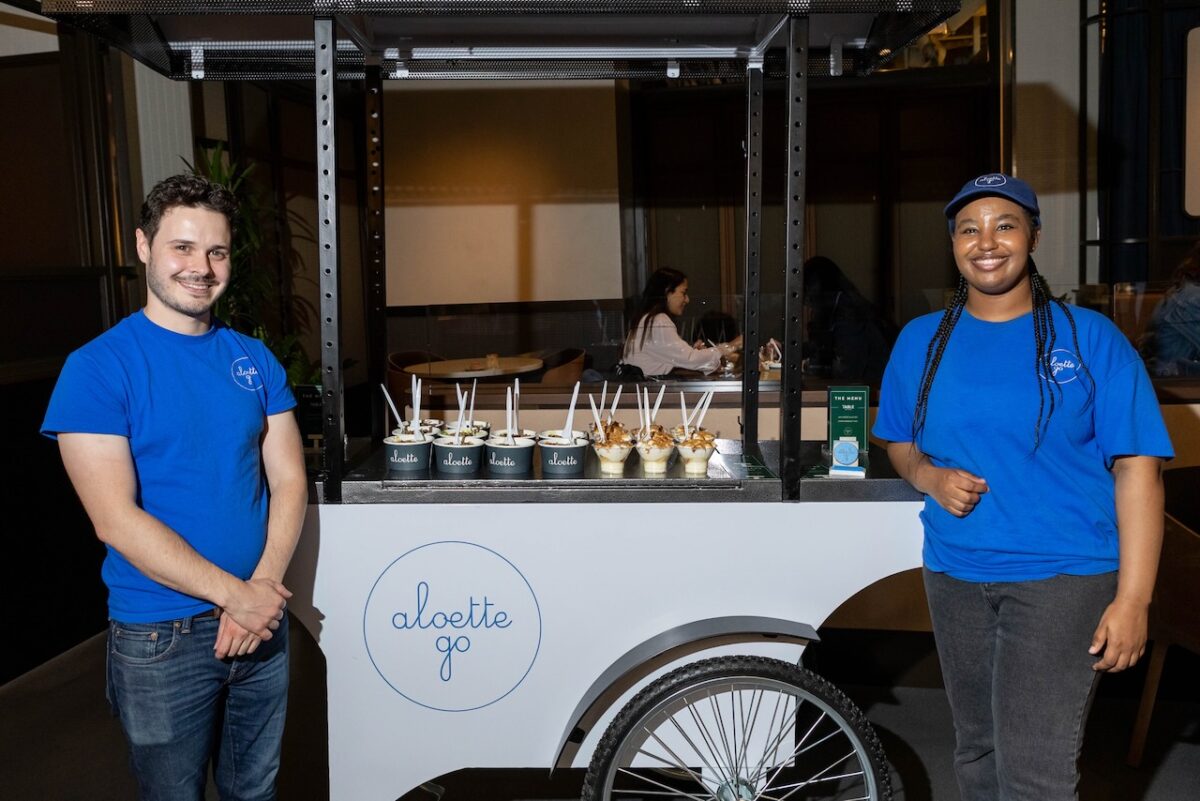
Friday Burger Company at TABLE Fare | CIBC Square (Image: Kennedy Pollard / TABLE Fare)Misoya Ramen at TABLE Fare | CIBC Square (Image: Kennedy Pollard / TABLE Fare)Chaiyo by PAI at TABLE Fare | CIBC Square (Image: Kennedy Pollard / TABLE Fare)Aloette Go at TABLE Fare | CIBC Square (Image: Kennedy Pollard / TABLE Fare)In Good Spirits at TABLE Fare | CIBC Square (Image: Kennedy Pollard / TABLE Fare)
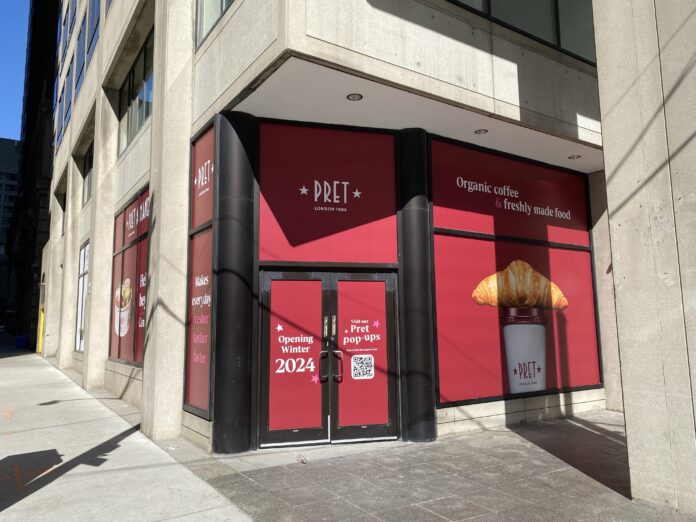
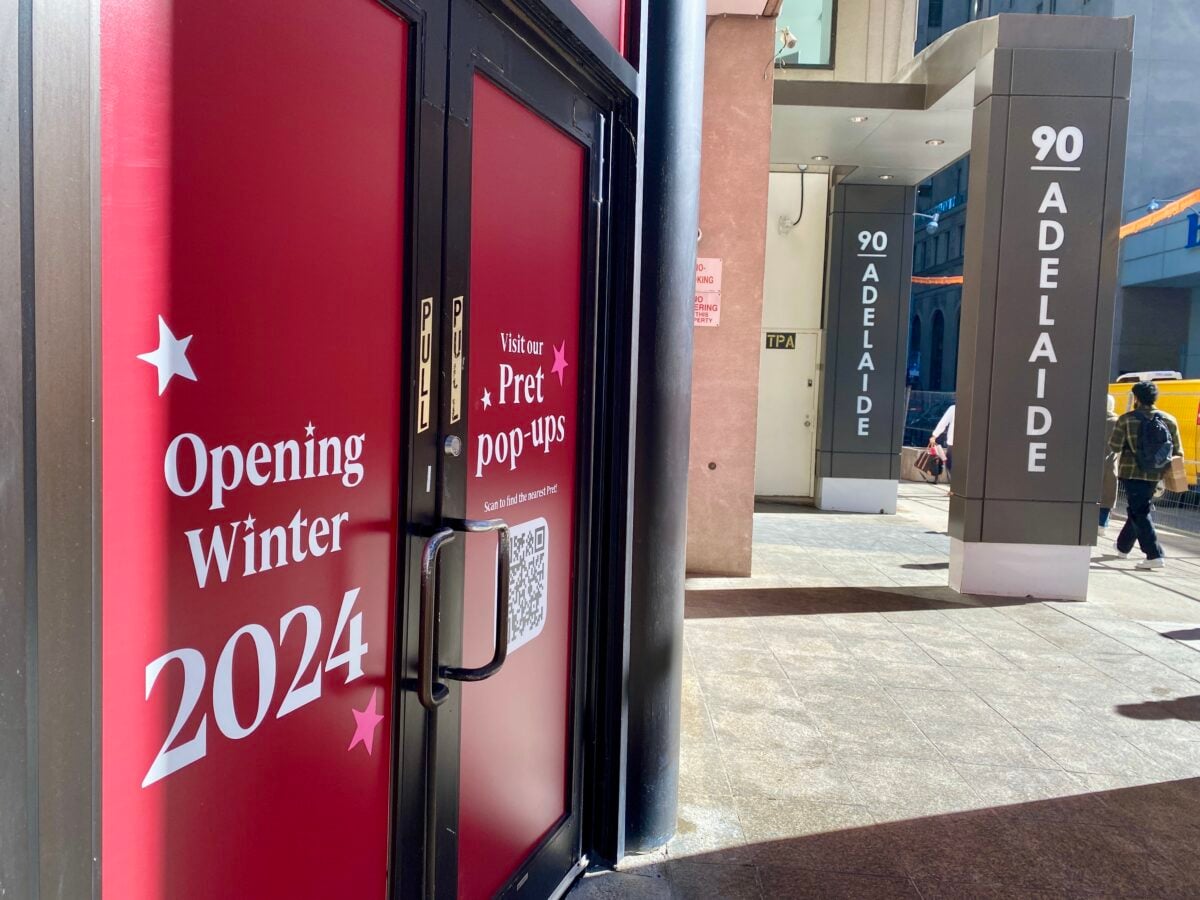
Pret a Manger at 90 Adelaide Street West (Image: Dustin Fuhs)
UK-based foodservice chain Pret a Manger is expanding its presence in the Canadian market with fully-branded location in the Financial District in downtown Toronto. It follows a pilot project that some were calling insufficient.
The original two-year pilot project saw the brand open as a shop-in-shop concept within select A&W Canada locations across the country, with the Vancouver debut in July 2022 and Toronto later that year. Dozens of stores had been retrofitted to include Pret, which included a refrigeration and warming unit for prepared items.
What was lacking in these A&W locations was a full Pret a Manger experience, possibly prompting the launch of a fully dedicated storefront to test the market.
Pret a Manger at 90 Adelaide Street West (Image: Dustin Fuhs)Pret a Manger at 90 Adelaide Street West (Image: Dustin Fuhs)
Construction hoarding for the new stand-alone QSR location was installed on the former Tim Hortons at 90 Adelaide Street West at the end of September, with wrapping that announced the store would be opening in “Winter 2024”.
The previous tenant had shuttered in 2021 after more than 15-years in that location.
Canada’s first Pret a Manager will be located across the street from First Canadian Place, with a number of newly-added and soon-to-open brands.
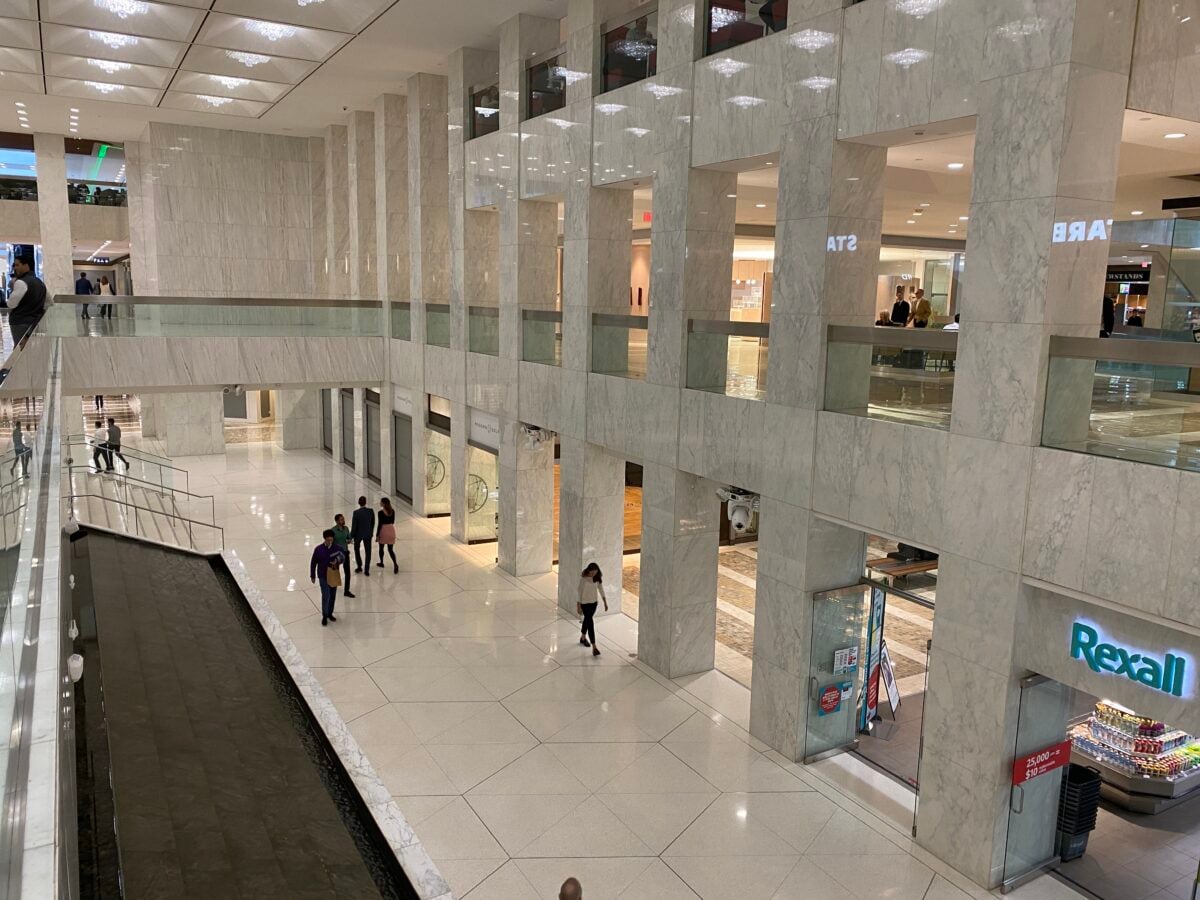
View of Future Pret a Manger from First Canadian Place in Downtown Toronto (Image: Dustin Fuhs)Modern Golf at First Canadian Place (Image: Dustin Fuhs)
Modern Golf opened in the former Tip Top Tailors location in early 2023, bringing the indoor golf experience to the financial district for its first downtown Toronto location. Paul Fisher, President, CEO and Managing Partner of Modern Golf shared in the Retail Insider exclusive announcement that the location “is as centre ice as centre ice can get. First Canadian Place is an iconic asset. It’s Brookfield. It doesn’t get any bigger than that. It’s so special to me.”
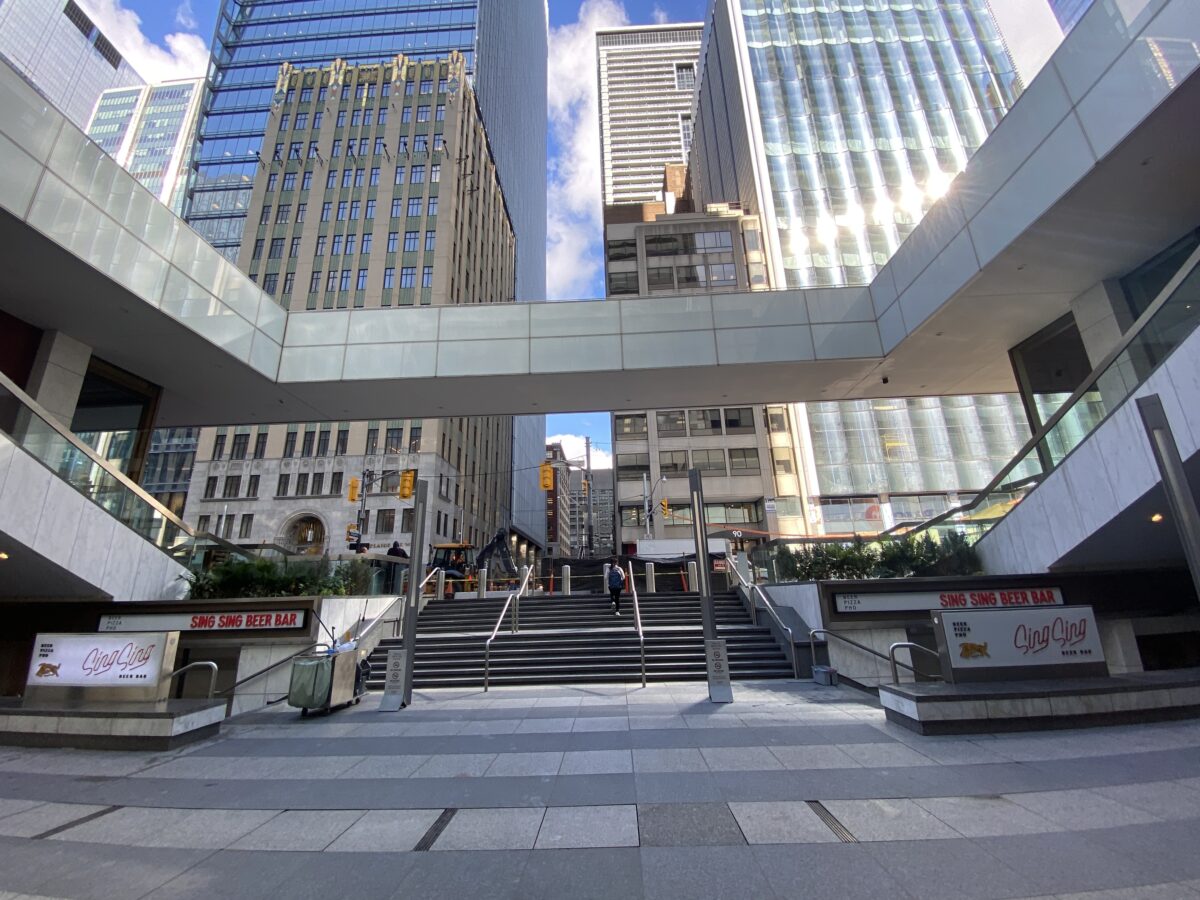
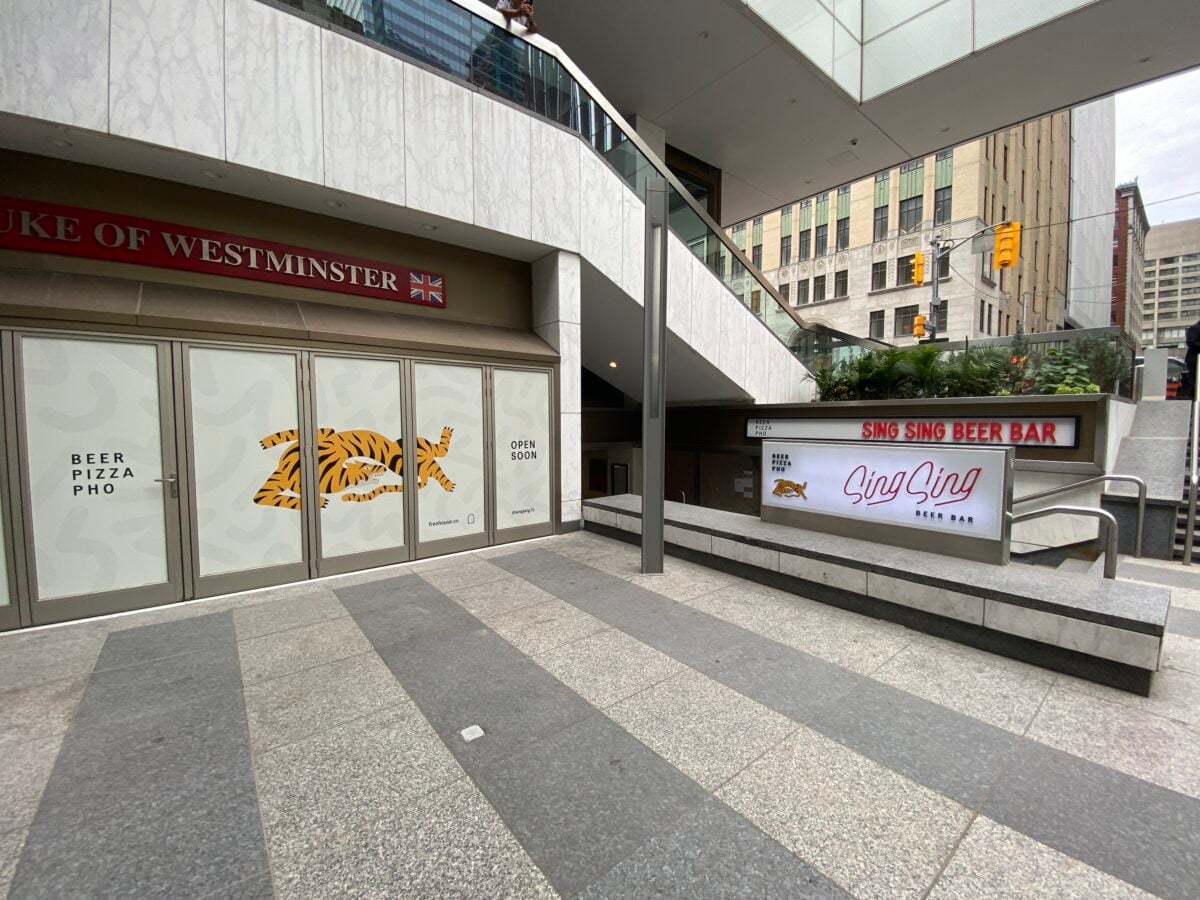
Sing Sing Beer Bar at First Canadian Place (Image: Dustin Fuhs)
Signage has been installed nearby for Sing Sing Beer Bar, a Vancouver-based concept managed by Freehouse Collective and operated by Donnelly Group. The beer, pho and pizza restaurant is set to open in the former Duke of Westminster at First Canadian Place.
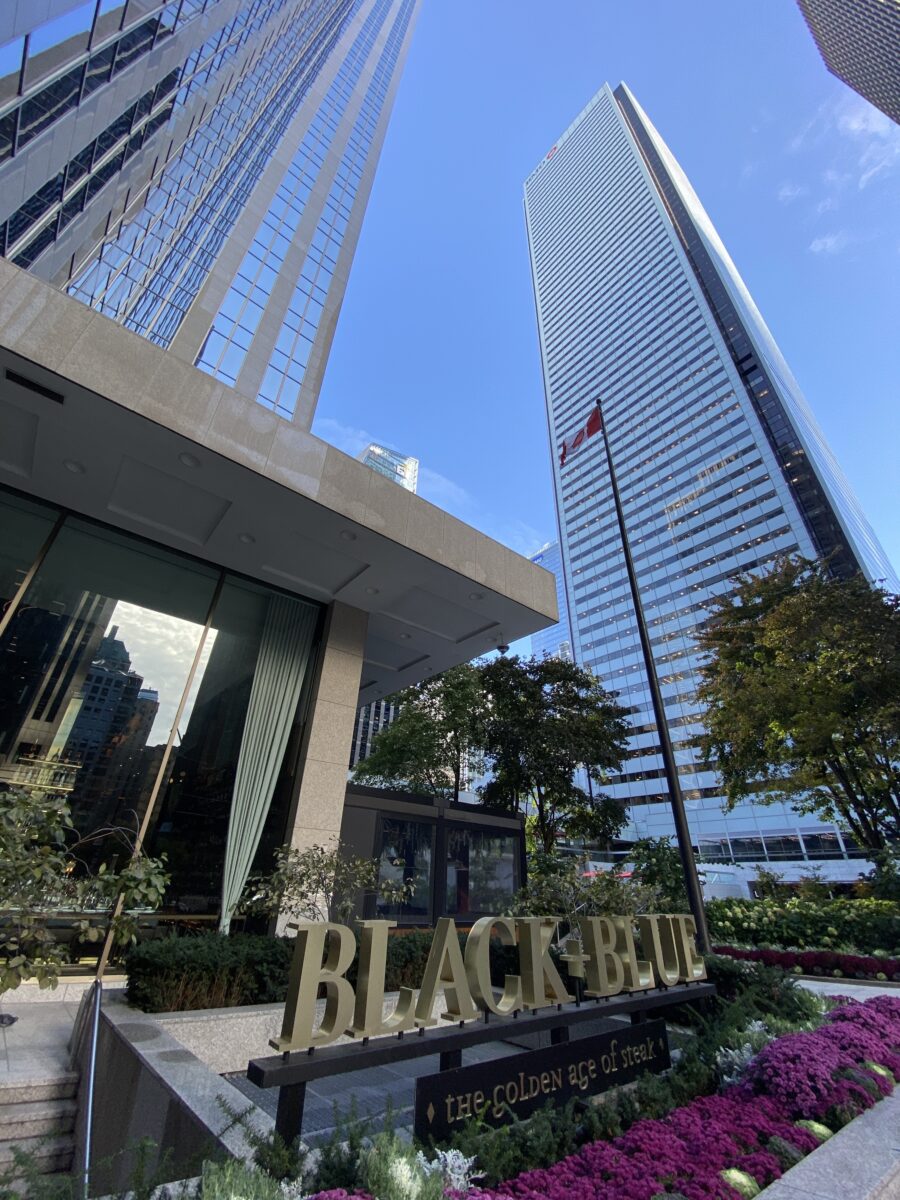
Sing Sing joins Black + Blue Steakhouse, Cactus Club, King Taps and Reds as restaurant anchors in First Canadian Place and the Exchange Tower.
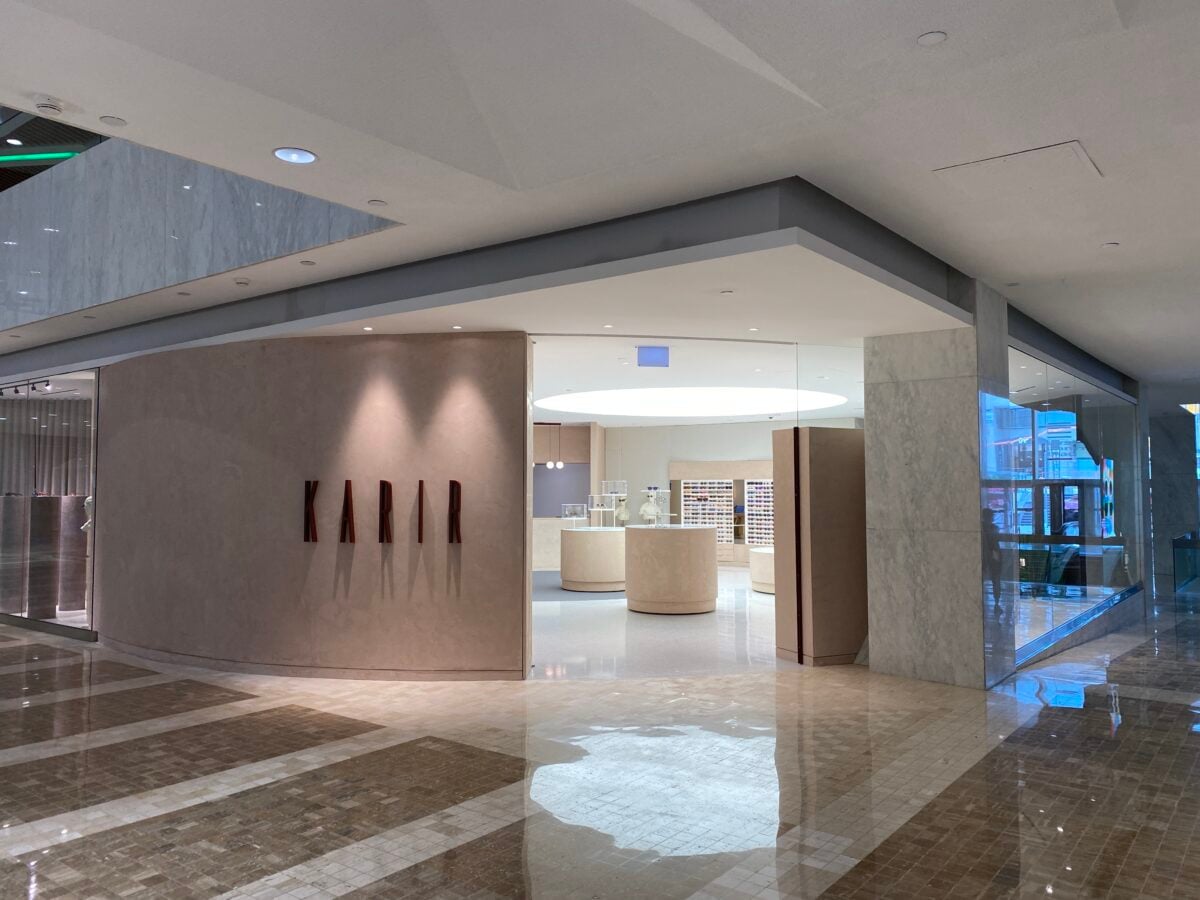
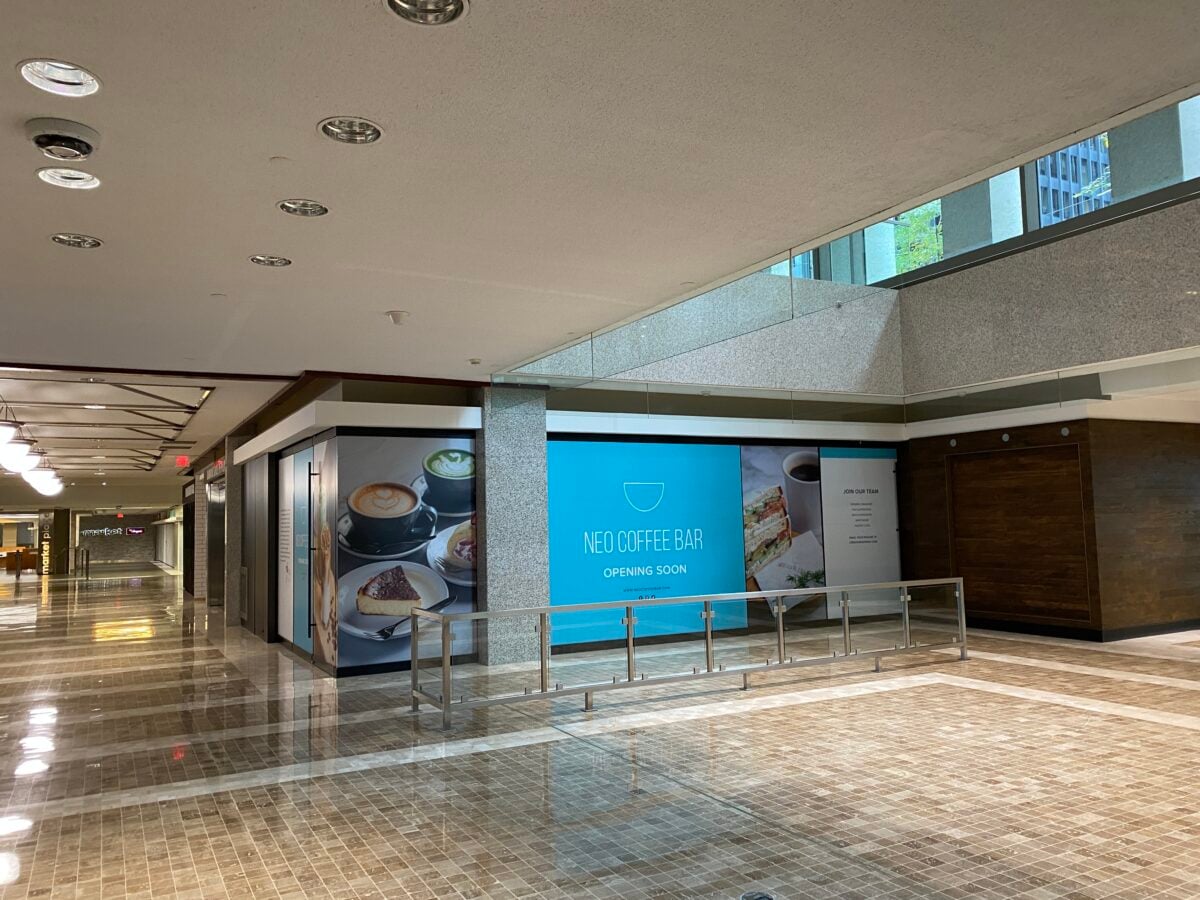
Black + Blue | First Canadian Place | Exchange Tower(Image: Dustin Fuhs)Karir Eyewear at First Canadian Place (Image: Dustin Fuhs)Future NEO Coffee Bar in the Exchange Tower at First Canadian Place (Image: Dustin Fuhs)
The area around the new Pret a Manger is also developing. With stock-market inspired bar concept CKTL & Co at Bay & Adelaide having opened this past April and Alobar debuting its York & Adelaide location in May, the area is making a calculated shift to cater to both the traditional financial district clientele and the new evening & weekend crowds.
Retail Insider will be reporting on a number of new F&B brands that will be opening in the area soon, including the soon-to-open Mott32 on University Avenue at the Shangri-La Hotel. We will also be reporting on the new JOEY King Street, which will see the addition of an upscale dining experience to the former RBC at 20 King Street West.
Future Mott32 at 190 University Avenue (Image: Dustin Fuhs)Future JOEY on King at 20 King Street West (Image: Dustin Fuhs)
The response for the first wave of Pret a Manger’s shop-in-shop retrofitting inside existing A&W in Canada was mixed, with a variety of reviews and first-hand personal accounts focused on quality and supply chain issues. With a dedicated format for the Pret brand coming to the market, it could bring an element of consistency that is currently amiss with the partnership format.
Retail Insider had reached out to both Pret a Manger and A&W Canada at the end of September for comment for an article on the first standalone store, with no comment being provided. We will continue to cover this developing story.
Club Champion has opened a new golf fitting studio in Vancouver with more locations to come.
“In the simplest terms we are a very comprehensive data driven club fitting and building company. We basically do club fitting and measure through a series of different diagnostics your ability or capability to hit a golf ball and measure up the best clubs we can find to maximize your production or maximize your capability to hit a golf ball,” said Joe Lee, chairman of the company.
Joe Lee
Club Champion’s headquarters are just outside of Chicago. Overall, it has 115 locations in the U.S., four locations in Canada, three in the UK and three in Australia.
In Canada, besides the new location in Vancouver (in Richmond), it also has a presence in Calgary, in Toronto and in Mississauga. The two in the Toronto area have been open for four or five years. The Calgary location has been around for about a year.
Image: Club Champion
To kick off its international expansion, Club Champion acquired top Canadian club fitter, Tour Experience Golf (TXG) in 2022.
Ian Fraser
“There has always been a mutual admiration between TXG and Club Champion,” said Ian Fraser, TXG’s founder, at the time of the acquisition. “We share a similar belief that every golfer deserves the best possible equipment for their game, and now we get to work together to further that message.”
Now, the two brands are coming together under one brand umbrella to serve North American golfers.
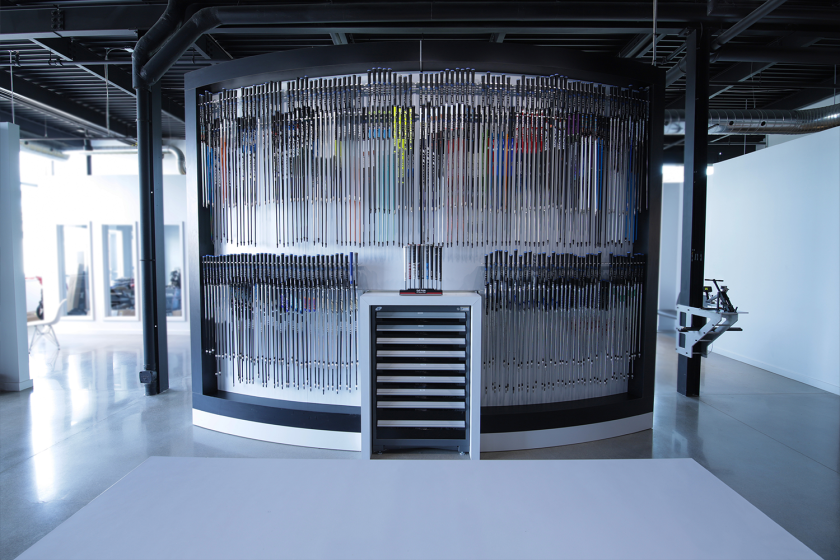
“We work with all major manufacturers . . . and what our real secret sauce is to be frank is we can separate the shaft and the head from each other so you can try on anything on the market together,” said Lee.
“We can mix and match all over the board with no bias. So we don’t care what club you end up playing with, we just want it to be the best one for you. And we go one step further, we actually assemble those clubs to spec. We actually have our own build shop. We have a 20,000-square-foot build shop right here in the States. We actually assemble the clubs to exact specs. So swing weight, length, lie of the iron, loft, all those things that can make a difference in what your performance is and how consistent your clubs are from club to club throughout your set.”
Club Champion Vancouver (Image: Club Champion)Image: Club Champion
Lee said there’s a build shop in Toronto that assembles the clubs for all the four Canadian stores.
Lee said Club Champion locations are anywhere between 2,500 to 3,500 square feet. A location would typically have two or three fitting bays (simulator bays) and a putting green with a putting analyzer. There’s also a small build shop to do repairs or simple grip changes.
“We have big time plans for Canada. We believe that golf just like it is here is very popular for a certain segment of citizens that are passionate about the game. They play a lot. It’s a big part of their life. They may not be the best players in the world but they want to get better,” said Lee.
“So we think wherever there’s pockets of golfers and golf courses in a metro area or a small area that we can be a success. That’s pretty much the model we’ve done here. We’re only four stores today. I think there’s definitely plans to be in 15 to 18 locations by the time we’re mature in Canada.”
Retail Insider is streamlining its Canadian retail news from around the web to include a handful of top news stories that can be viewed quickly during the day. Here are the top stories from the past 24 hours.