A recent policy initiative by a Toronto-based restaurant chain, Goodfella’s, which operates seven establishments known for their wood-oven pizzas, has sparked considerable debate. The chain has introduced a 2% “carbon fee” on all orders, purportedly to contribute to carbon capture efforts through supporting Tree Canada’s National Greening program, aimed at reforesting areas in need. This decision, revealed by a CTV News report, has ignited a flurry of social media criticism. The chain has since changed its policy and now offers an opt-out option.
The policy manifested at the point of sale, with receipts clearly stating the intention behind the levy: to offset the carbon footprint associated with dining by investing in environmental sustainability. While the legal standing of this surcharge is not in question—provided it is not characterized as a tax—the public’s response was predictably divisive. The concepts of ‘carbon’ and ‘fee’ alone are sufficient to provoke a public outcry, particularly in a climate of heightened sensitivity towards both food prices and environmental politics.
The bill from a recent meal at Goodfellas Wood Oven Pizza on Old Mill Dr. in Toronto shows a 2% carbon fee (Image: Joseph Cristiano)
This situation intersected with several broader socio-economic issues. First, it underscores the volatile nature of consumer attitudes towards food pricing, an area already under scrutiny due to incidents like Wendy’s dynamic pricing controversy, which was perceived as an unfair price inflation tactic. The introduction of a carbon fee by Goodfella’s, regardless of its noble intent, is thus seen through a lens of skepticism, with some interpreting it as yet another financial burden.
Moreover, the initiative touched upon the politically charged debate surrounding carbon taxation. With Ottawa’s carbon tax policy serving as a contentious cornerstone of Canada’s environmental strategy, the imposition of a similar charge by a private entity can be polarizing. This reaction is indicative of a broader discomfort with policies perceived as mandating lifestyle changes, particularly when the public discourse around carbon emissions and climate change is so fragmented.
Goodfella’s execution of this policy also warrants critique. The absence of an opt-out mechanism at the beginning or clear pre-dining communication about the fee suggests a lack of transparency, which is crucial in fostering consumer trust. In the current climate, any policy perceived as inflating costs is met with intense scrutiny. The restaurant industry, competitive and customer-oriented, is especially susceptible to backlash over perceived financial impositions.
Trust is another critical factor. The onus is on Goodfella’s to ensure that the collected fees are transparently and effectively channelled towards the intended environmental projects. This is analogous to the broader issue of tip distribution within the service industry, where there is growing concern over whether gratuities reach the intended recipients.
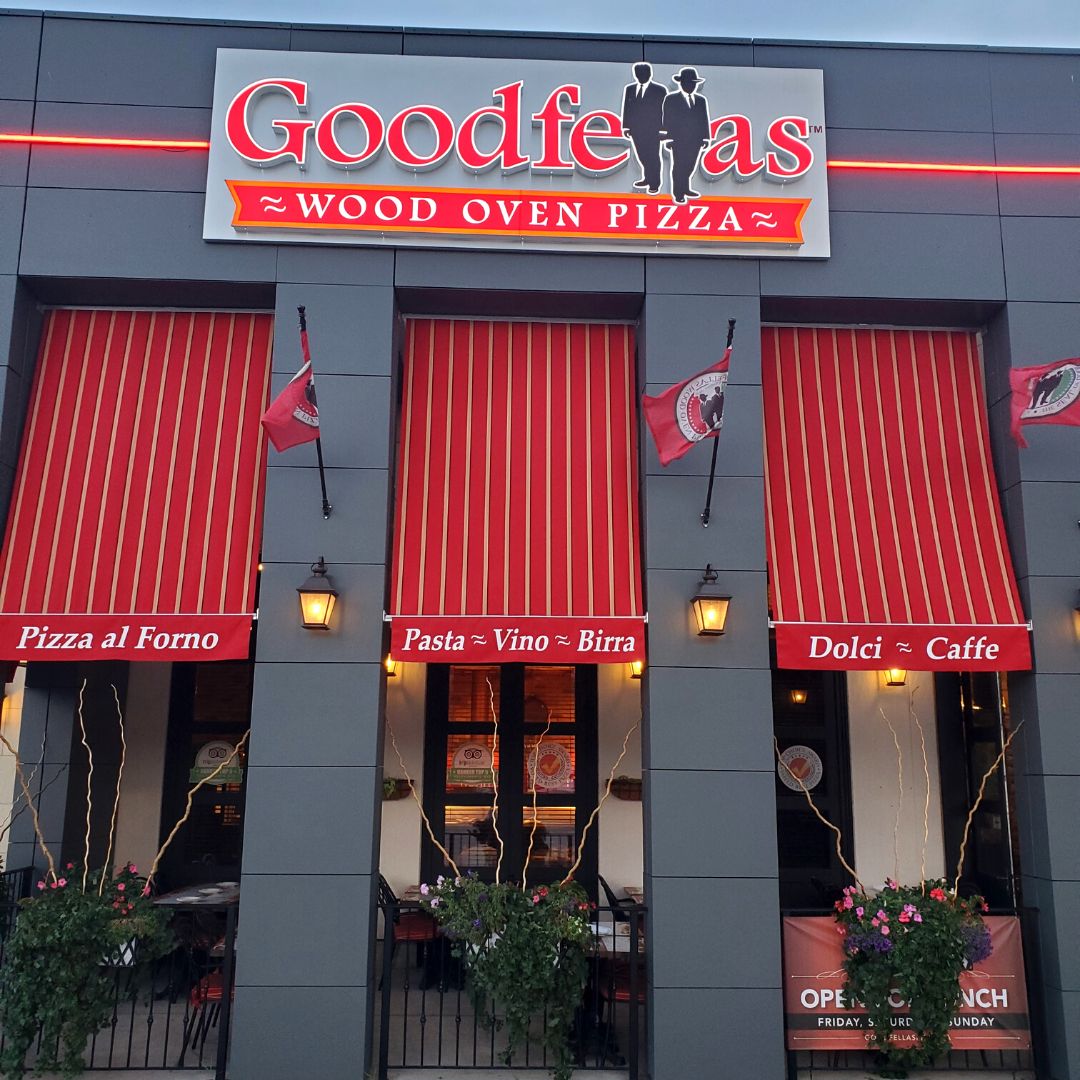
Goodfella’s Pizza (Image: Goodfella’s Pizza)
Ultimately, Goodfella’s initiative raised significant questions about the efficacy and reception of environmental surcharges in the restaurant sector. The critical response to this policy suggests a misalignment between the chain’s intentions and consumer expectations. While addressing the carbon footprint of dining is commendable, the approach to doing so must consider consumer sentiment, especially in a leisure context where patrons seek respite from broader societal concerns.
If indeed this initiative was conceived as a form of publicity, it highlights a misjudgment in strategy, reflecting a need for a more nuanced understanding of contemporary marketing dynamics. The intricacies of consumer behaviour, especially in response to issues intersecting with political and environmental concerns, demand a sophisticated approach. In conclusion, Goodfella’s experience serves as a cautionary tale on the complexities of integrating environmental stewardship into business models, underscoring the need for strategic transparency, consumer engagement, and sensitivity to the broader socio-political landscape.
A successful career in the world of finance laid the foundation for Robin Kovitz to become a successful entrepreneur as well in the retail sector as President and CEO of Baskits Inc.
But the lessons she learned growing up in Calgary with a family business – Centennial Foods which was the largest privately-held meat manufacturing and distribution company in Canada with three plants in the city – are ones deeply rooted that continue to this day being a part of her leadership style of a national company.
Baskits, the online retailer of gift baskets, has been in business since 1985 but in 2014 it was acquired by entrepreneur Kovitz who has spearheaded explosive growth for the company in recent years. The company does have one retail location in central Toronto.
“I loved going to the office with my dad and grandfather evenings and weekends,” said Kovitz.
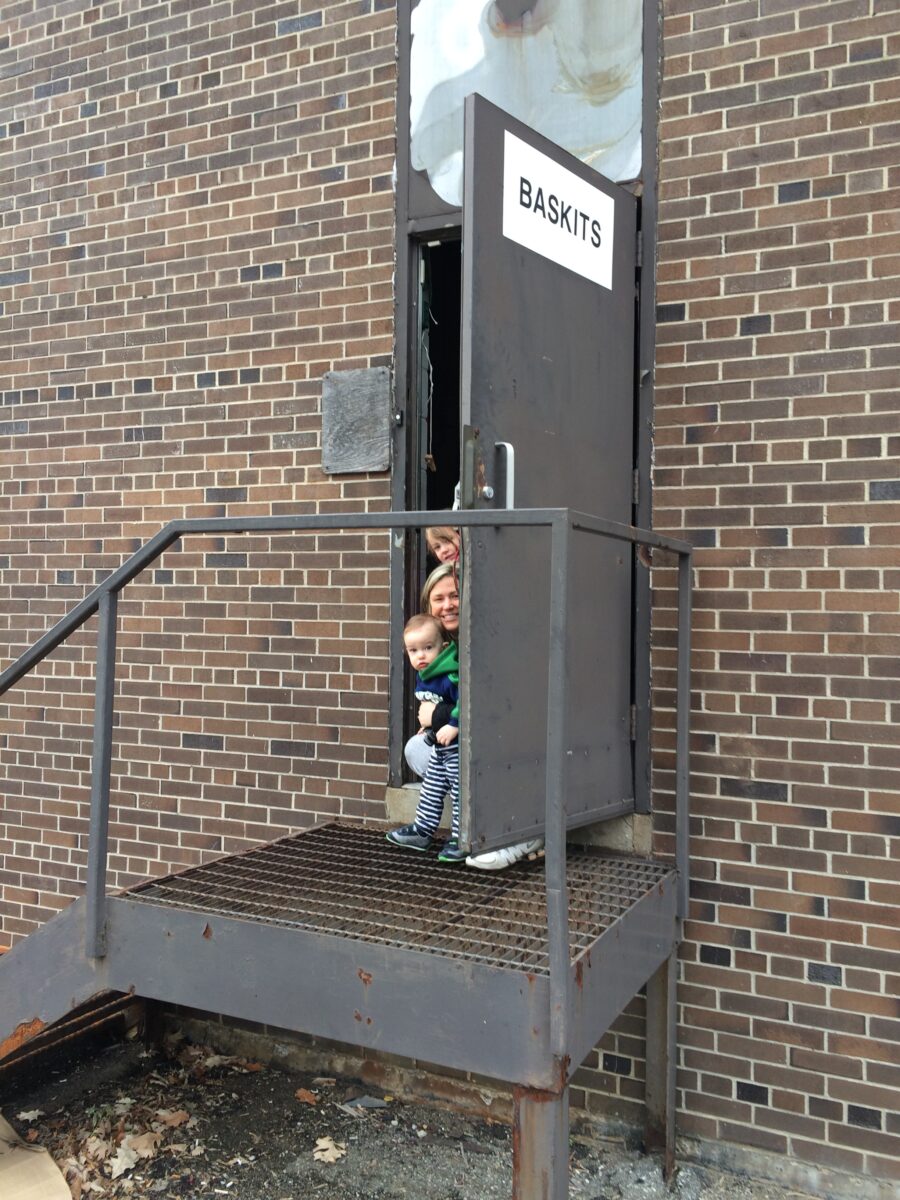
Image: Robin Kovitz
One of the biggest lessons she learned is how dealing with people is a key for any business.
“When you’re working for a larger company you can lose sight of this but it’s the people that go in everyday, that handle sales, marketing, product development, operations, packing, right down in our business to the delivery,” she said.
“So I think one of the most important lessons I’ve taken away from my family business and my time on Bay Street and Harvard is the power and magic of harnessing a team – a high performing team in a meritocracy. Being able to attract all-stars and then being able to facilitate their success and in some ways get out of their way as the CEO.”
She remembers walking around the family business with her father and noticing how people in the plant deferred to him with such respect. They appreciated him so much.
“I remember him just stopping and caring and talking to every single person and realizing that each one of those people was contributing to the success and the continuation of the business,” explained Kovitz. “And just him showing them each that much respect back.
“I remember when I went to Bay Street and was working for bigger companies I saw how that reciprocity can be lost in bigger companies. The big boss really doesn’t have that respect and appreciation – I’m generalizing – for the mainline worker who is making it all happen. And there’s this sort of disconnection that happens.
“When I was little I saw the importance through my dad and my grandfather of the role of the business and the responsibilities that a business has in society to help people and when I moved to Bay Street I saw some of that being blurred with more of a focus on providing a return for shareholders as opposed to doing good for our country and our world. At the end of the day, I’ll be happy if I did some good with Baskits. We’re trying to get all our employees above the living wage which is difficult in this inflationary environment where everyone wants free shipping and a discount. But we’re trying.”
Photo Provided by Robin Kovitz
Kovitz said another thing she learned from her father was the value of a different perspective to business. As an architect originally, her father was very creative and the way he would problem solve and look at situations was often from an artistic point of view.
“I think if you can bring that to business situations it’s extremely powerful. For example, when I’m hiring I don’t care for the ‘perfect’ CV. I often just look for experiences. Can this person problem solve? What did they learn in their history that might help them in this new role?”
She had a few different jobs with the family business as a youth but she also then went to work for the Gap where she enjoyed the life of retail.
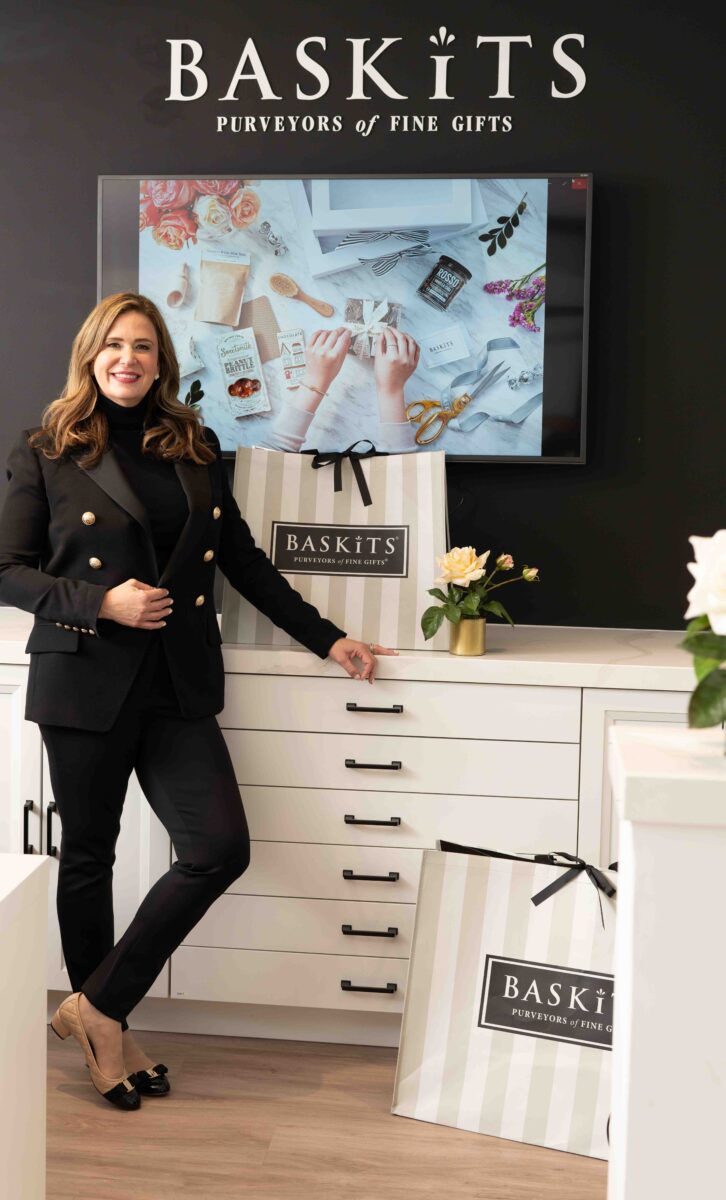
Image: Robin Kovitz
After she graduated from high school, she went to Queen’s University for a Bachelor of Commerce. Kovitz then spent a few years in investment banking, advising people on buying and selling companies.
“I was lucky to accomplish my dream of going to the Harvard Business School for my MBA after not getting in in undergrad,” she said.
She decided private equity was the career for her and she came back to Canada and worked for a couple of equity firms.
“Then I turned 30 and decided to start a family like many women . . . I really wanted to work from home for a period of time so I could be with the baby and that just wasn’t a thing. It was way before COVID. So I decided to go off on my own and try and find a small business to buy which is quite a thing now. It’s called entrepreneurship through acquisition. But at the time I did it in 2011 it wasn’t en vogue. The concept there is it’s safer to buy a business than to start a business because the majority of businesses fail in their first year,” she said.
“So if you can buy a stable business and step into a salary and improve the business in some way it’s a better alternative for certain people as a pathway to entrepreneurship.”
Image: Robin Kovitz
In 2011, she became President and Co-Founder of Jet Star Capital Ltd. and then in 2014 she bought Baskits Inc., which is one of Canada’s fastest growing companies. Baskits designs, manufactures and delivers unique and luxurious gifts across Canada and the US.
Kovitz has two children Jill, aged 13, and Jake, 10. As a business owner, it can be difficult to juggle being a mother and running a big company.
“We have an amazing person who helps us in the home and so part of my strategy historically a lot of those duties have fallen to sort of the women in the relationship. So I don’t do laundry and I don’t cook and I don’t shop. And so we’re grateful to have a third sort of member of our family who is able to take care of those duties. For a long time my husband had a big career as well. He was a partner at a law firm and about six years we looked at each other and said this was crazy, we had two sets of nannies picking up our kids. So we made the decision that something had to give. And he fortunately joined Baskits where he works more part time. And he is what we consider parent number one. If you get a call from the school, somebody’s got to pick up the kid. It’s my husband not me,” said Kovitz.
“I read a lot about balance and having it all. The older I get the more I think that’s not possible but maybe as a family unit that harmony is possible but not as an individual working professional.”
Image: Robin Kovitz
Kovitz describes her leadership style as still evolving. She admits she wasn’t a great leader when she first started. She had very high expectations of people.
“And I’ve learned that we’re all humans. Myself included. And we deserve grace. And working 24 hours a day is not healthy and ultimately you’re going to burn out,” she said.
“I think my leadership style is trying to treat other people as I think they would want to be treated. Not as I think they want to be treated but as I think they would want to be treated. So really my leadership style is acknowledging that we’re humans, that we’re not meant to work 24/7, that we each have our unique gifts and gaps and finding a way to harness the gifts and make sure we don’t overwork our team and as I put together a team it becomes like a patchwork of quilts of strength on strength on strength and the team has synergy and is stronger than the individual parts.”
As a sought-after speaker and commentator on “Entrepreneurship through Acquisition”, digital retail and the topic of “Mompreneurship” Kovitz frequently serves as a guest lecturer at both the Yale School of Management and the Harvard Business School. She and/or Baskits have been featured in a number of leading publications, including: Forbes, House & Home, Elle Canada, Canadian Business, Huffington Post, Style at Home and on Global News, Your Morning Show.
In 2017, and again in 2021, she was recognized as a Canada’s Most Powerful Women: Top 100 award winner. In 2021, she received the Women of Inspiration Award from the Universal Women’s Network. Kovitz was a finalist for the EY Entrepreneur of the Year 2021.
Image: Robin Kovitz
What’s the appeal for her in being in this kind of a business?
“I really wanted my compensation to be a direct reflection of my performance and I think on Bay Street I started to be a little bit subjective. You work for someone, they like you or they don’t, it’s less of a meritocracy with a direct correlation to performance. In entrepreneurship I really like that you eat what you kill. Terrible expression. There are examples of entrepreneurship where you can work really hard and still not make money. There’s all kinds of other factors,” said Kovitz.
“But I really love the fact that compensation is a direct line to what I do. So I want to work harder and hope that I can grow sales more. If I don’t work this hard, that’s on me but not someone’s opinion of me.
“The other one is having flexibility and freedom over my schedule. I still work far too much. But I don’t have that being on beck and call. That’s one thing as a leader. I remember hating that when I worked for other people so I try not to do that to my team. I’m so careful not to email evenings and weekends. Not to demand things with unreasonable turnaround times. I try really hard because those were the things I really hated.”
Image: Robin Kovitz
Kovitz said she’s now getting to a point in her life where she can pick up some of the hobbies she gave up years ago. She used to play a lot of soccer and is thinking of doing that again or joining a gym.
“But really actually my passion and my hobby is the business and the design side of the business which I never expected was going to be a part of my area of control. So I kind of fell into design. Evenings and weekends I’m designing products and I’m really passionate about that, making sure we have the best products in our baskets,” she said.
“I think as a leader one of the best things you can do is build something that is bigger than yourself. So I get so excited when something happens in the company that I knew nothing about and it didn’t even touch me and that’s to me a symbol that it’s working.”
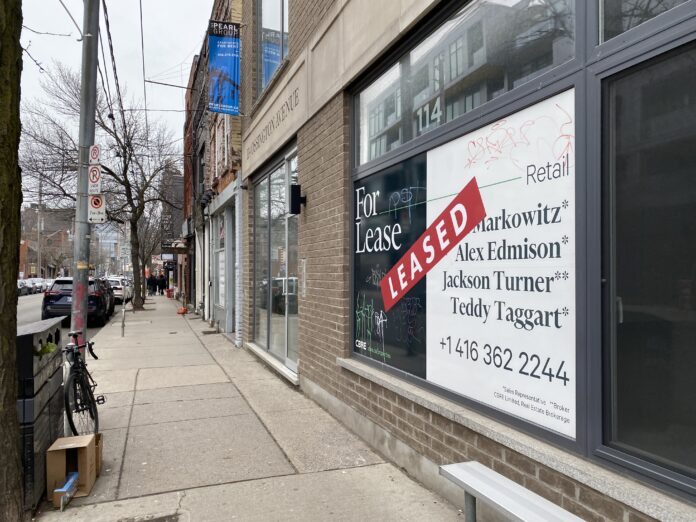
Ossington Avenue Leased Retail Space (Image: Dustin Fuhs)
The Canadian retail landscape is poised for change in the year ahead as consumer behaviour and spending patterns will test retailers and push for innovation as they compete to remain top of mind for shoppers, according to a new report by real estate firm CBRE.
Churn is expected but should be a boon for the sector which has seen limited vacancy amongst the most in-demand formats, added the 2024 Canada Real Estate Market Outlook.
The report identified three trends to watch:
Changing consumer behaviour and spending patterns are expected to challenge retailers in the year ahead. Capturing and maintaining consumer attention will be of importance for brands;
Retail insolvency filings are on the rise; however, these promise to promote growth by opening opportunities in markets where vacancy has been limited. Consolidation, rollup, and acquisition will likely be seen among established brands propelling these institutions to grow and reach new highs in 2024;
Companies will continue to implement technologies such as AI as part of building their competitive edge. It remains important however that these advancements, both online and in-store, are thoughtful and effective in improving the customer experience.
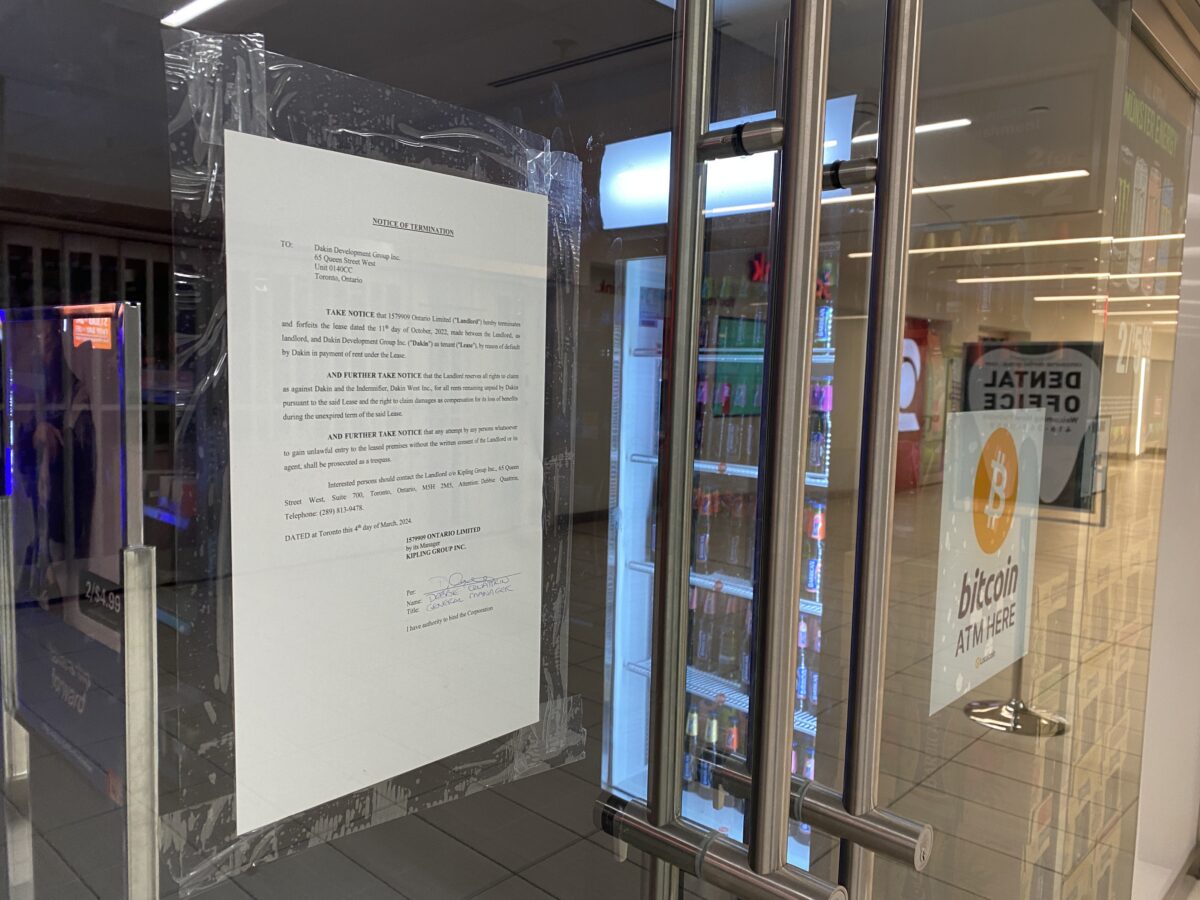
Lease Termination Notice in Downtown Toronto (Image: Dustin Fuhs)
“Inflation and elevated interest rates constrained wallets in 2023 and led to a gradual consumer pullback in the latter half of the year. This rebalancing period is expected to continue in 2024 with Oxford Economics forecasting retail sales to decline year- over-year by -0.6%. Ultimately this will put capturing and maintaining consumer attention into sharper focus for brands in the year ahead with 64% of respondents in Salesforce’s State of Commerce survey indicated that meeting customer expectations is harder than ever,” said the CBRE report.
“Consumer behaviours started to shift amidst the peak of inflation in 2023 as shoppers became more critical of their discretionary spending and household budgets. Value in particular has had a boom with sales growth at brands that offer savings. Continuing from 2023, consumers will try to save money on essential items in 2024 by trading down to value channels and products, especially for grocery items where inflation has been most acutely felt. This is both to reduce spending and allow consumers the ability to trade up or spend more on less essential items, including luxury goods or other micro indulgencies.
“All that said, 2024 promises to challenge retailers. Expect retailers to lean into discounts or other targeted promotions to capture the selective spending and move product. Expansion and innovation will be greatest among those facing headwinds or that are carving a niche for themselves within the Canadian marketplace.”
CBRE said elevated interest rates are having a material impact on business operations.
“Coupled with a cost-of-living crisis and pullback in consumer spending, business insolvency filings started to creep up across the country in 2023, increasing over 40% from the prior year. The Federal government deadline to pay back pandemic loans happened in early 2024, the impact of which will be most acutely felt among small businesses, with many speculating we will see more churn in the industry in the year ahead,” said the report.
“Consolidation, rollup, and acquisition will likely be seen among established brands propelling these institutions to grow and reach new highs in 2024. We started to see some of these moves take shape in 2023 including Putman Investments taking on a portion of the former Bed Bath & Beyond portfolio; as well as Unity Brands acquiring Kit + Ace and Mastermind Toys. In each of these cases, the originating brand needed some form of repositioning, either having been stagnant or by growing too quickly.
‘From a real estate perspective, this churn can be viewed as a good thing as it brings the potential to open opportunities in markets where vacancy has been limited. Looking at REIT-owned property performance, retail vacancy trended down over 2023 to 4.0% with all but regional shopping centres showing a marked improvement. Good real estate has and will continue to be leased quickly, resulting in limited vacancy amongst the most in-demand formats, namely grocery-anchored centres. Because of this, tight market conditions are expected to persist, especially when paired with a softening supply pipeline, a byproduct of higher construction costs.”
Loblaw’s City Market entrance at “The Post”. Photo: Lee Rivett.
CBRE said 78% of Canadians expressed security concerns with personal data related to AI. The report added that retailers need to balance convenience and security while building trust in this sphere.
“CBRE’s Global Live-Work- Shop Report found that Canadians prefer to shop in-person across all categories, a fact that should not be forgotten. Part of the competitive edge that companies will be seeking in the year ahead involves implementing technologies such as Artificial Intelligence (AI), especially as it aids in improving the customer experience through personalized recommendations and product discovery. AI technologies and solutions will drive innovation, improve the shopper journey, deepen loyalty, and elevate the overall brand,” explained the report.
“As with any type of change however comes a learning curve before being widely adopted. SOTI’s Techspectations: Consumer Demand for Digital Transformation in Retail report found that there are still some pain points to both new and existing technologies being implemented. Namely, 78% of Canadians expressed security concerns with personal data related to AI. Retailers need to balance convenience and security while building trust in this sphere.
“The technology learning curve can also extend to the physical store as we’ve seen a rapid adoption of self-checkout stations or sales professionals carrying around tablets that check store inventory. According to SOTI, 43% of customers indicated that these technologies can enhance shopping convenience and speed; however technology can also complicate the shopping experience with 28% of respondents finding making in-store purchases more confusing.
“It will be important in the year ahead that the technologies being implemented in-store are thoughtful and effective to the customer experience. CBRE’s Global Live-Work-Shop Report found that Canadians prefer to shop in-person across all categories, a fact that should not be forgotten. Consumers are eager to engage in more lively, personalized shopping experiences that cannot be offered online.”
Queen Street in Toronto (Image: Dustin Fuhs)
Arlin Markowitz, Executive Vice President at CBRE’s Urban Retail Team, said some change is happening for consumers in terms of how much one’s disposable income people are willing to put into food and beverage, travel and entertainment.
Arlin Markowitz
“I’m seeing as an increase compared to years past, especially when you compare it to generations past,” he said.
“The consumer is not willing to sacrifice their lifestyle.”
Markowitz said retail spending has been steady which has been a surprise to many as interest rates have risen.
“We thought we would see the retail consumer tightening up the purse string and making sure they can pay their mortgage. Somehow it seems to me especially to me in the top urban markets in the country that the consumer has figured out a way to just keep on spending and spending on retail and not sacrificing lifestyle even if there was a ‘potential’ recession or if they’re feeling the squeeze on interest rates,” he said. “It just seems they’re not willing to sacrifice their retail habits.
“Generally speaking, it’s feeling really positive out there. It feels good for retail to be kind of the darling asset class when compared to office and development these days which are having a little bit of a harder time. We’ve been fortunate to benefit and witness retail’s resiliency through COVID. It came out strong. Now it’s performing really well. It’s just great to see. I think people will just continue to crave the kind authentic in-person experience shopping in stores. And I don’t think online hurt retail the way people thought it might in the early 2000s. Everything has kind of settled down into a nice pattern and retail appears really strong in 2024 even surprisingly so to myself. It’s a pleasant surprise I would say.”
As navigating the retail landscape from scratch has challenging aspects, Futurpreneur, an entrepreneur startup program in Canada, provides assistance by helping remove barriers, especially for equity-deserving groups. Karen Greve Young, CEO of Futurpreneur, discusses the challenges of starting a company and how the organization offers support.
Karen Greve Young
Futurpreneur supports young entrepreneurs between the ages 18 to 39 where the organization provides help with loan financing, mentorship, and support for business plan development.
“In a world where young entrepreneurs face not just challenges of bringing up innovative ideas to market, but also navigating the complex maze of funding, mentorship, and systemic barriers. Futurpreneur stands as a beacon of hope and support. We are committed to leveling the playing field, offering more than just financial assistance,” says Karen Greve Young. “We provide mentorship, resources, and a community that believes in the power of young innovators. Our mission transcends mere business support; it is about fostering a new generation of leaders who are ready to tackle the world’s most pressing challenges with creativity, resilience, and a forward-thinking mindset.”
Image: Futurpreneur
Three obstacles and how Futurpreneur steps in
Entrepreneurs face multiple roadblocks when starting a business, including systemic barriers, particularly for underrepresented groups such as people of colour, indigenous populations, and newcomers to Canada.
Financial Roadblocks
Greve Young says these groups tend to encounter challenges in accessing credit and financing – a crucial step for starting a business. Greve Young says to help with this barrier, the organization provides entrepreneurs with access to loans and can connect entrepreneurs with investors.
“Our approach goes beyond traditional financing; we aim to bridge the gap by not only offering financial assistance through low-interest loans, also by empowering entrepreneurs with the knowledge and networks necessary to explore alternative funding avenues.”
To make financing accessible and affordable, Greve Young says Futurpreneur offers low interest rates and different repayment options for different needs. The organization also provides workshops, seminars, and one-on-one coaching on financial management, budgeting, and planning to ensure entrepreneurs are well-equipped to manage their finances effectively.
“We are committed to breaking down the barriers to financial access for entrepreneurs across Canada. Our approach is not just about providing funds; it is about building a foundation for sustainable growth. Through our tailored financial programs, we aim to empower entrepreneurs from all backgrounds. Moreover, our comprehensive education resources, from financial literacy workshops to mentorship programs, are designed to equip our clients with the knowledge and skills they need to thrive in today’s competitive marketplace.”
As many entrepreneurs are facing financial stress of opening new businesses, Greve Young says she is seeing more people opening up pop-up shops or an online store before committing to a long-term lease agreement.
Adapting to hybrid business models
As more businesses are integrating their online presence with physical store locations, additional skills, investments, and resources are needed. Entrepreneurs today must be able to navigate the brand’s digital presence, understand online consumer behaviour, understand the digital data collection, and be able to seamlessly integrate online and in-store experiences.
“In today’s rapidly evolving marketplace, the blend of online and physical storefronts is not just an option – it’s a necessity. Entrepreneurs stepping into this new retail landscape must arm themselves with a broad skill set that spans understanding digital consumer behaviour to mastering the art of integrating online and in-store presences. Our organization is deeply committed to supporting these entrepreneurs by providing necessary tools, resources, and guidance to navigate the complexities of digital transformation effectively.”
For entrepreneurs confused by the digital side of their brand, Greve Young says Futurepreneur offers digital tools, resources, mentorships, and digital training opportunities covering topics such as digital marketing, e-commerce, and understanding online consumer behaviours – equipping entrepreneurs to successfully provide a seamless interaction between its digital presence with in-store experiences.
As digital initiatives don’t come free, the organization also provides financial support for digital services.
“We understand the challenges of digital transformation for new entrepreneurs. That is why we offer digital literacy and skills training, alongside financial support for digital services. Our aim is to ease the integration of online and physical operations, making the digital leap financially viable and empowering entrepreneurs to navigate digital marketing and e-commerce effectively.”
Image: One More Cocoa
Being different and attracting consumers
Finding a niche is crucial for business’ to succeed and to stay relevant; however, Greve Young says this doesn’t come without challenges. Greve Young says entrepreneurs need in-depth research, a deep understanding of consumer needs, and an awareness of what is already out there and who they might be competing against.
“One of the biggest challenges we see young entrepreneurs facing today is the ability to carve out a unique space in the market. It’s not just about having a good idea; it is about understanding your potential customers and finding a way to stand out in a crowded market. This requires a high level of market research and customer insight that many new entrepreneurs might not initially appreciate.”
Futurpreneur recognizes these challenges and have stepped up to guide its clients through its resources such as research tools, mentorship programs, and education workshops. Greve Young says these programs help bring entrepreneurs insights of what they are offering and how it is unique from other brands.
Emerging retail trends and community support
Image: Futurpreneur
Greve Young says because of the shifting retail landscape in Canada, paths to entrepreneurship has changed. One trend that’s being discussed is individuals opting out of starting their own business from scratch, but are more interested in purchasing an existing business which reduces the hoops they have to jump through. From this, people are able to leverage the brand’s preexisitng operations, customer base, and its market presence.
Greve Young says there is also a rise of side hustles as it provides a low-risk entry for entrepreneurs. This trend allows people to test the market and adjust before leaning in full-time and would off er a low financial pressure and no lease stress.
Finally, Greve Young has seen a peeked interest in consumers supporting local retailers: “Consumers are increasingly seeking to invest to thier local economcies, driven by the desire to contribute to the well-being and growth of their communities.” This emerging consumer trend opens new pathways for small businesses and also shows the importance of community engagement and support to help local entrepreneurs succeed.
“In today’s evolving retail landscape, we are witnessing a significant shift in how individuals approach entrepreneurship. It is not just building businesses; they are igniting change within their communities and across the economy. As we stand at the forefront of nurturing these visionaries, we are reminded that with the right support, resilience, and innovation – there is no limit to what can be achieved. Our mission continues to empower the next generation of entrepreneurs, breaking down barriers and fostering a culture of growth and opportunity.”
Success stories over the last 27 years
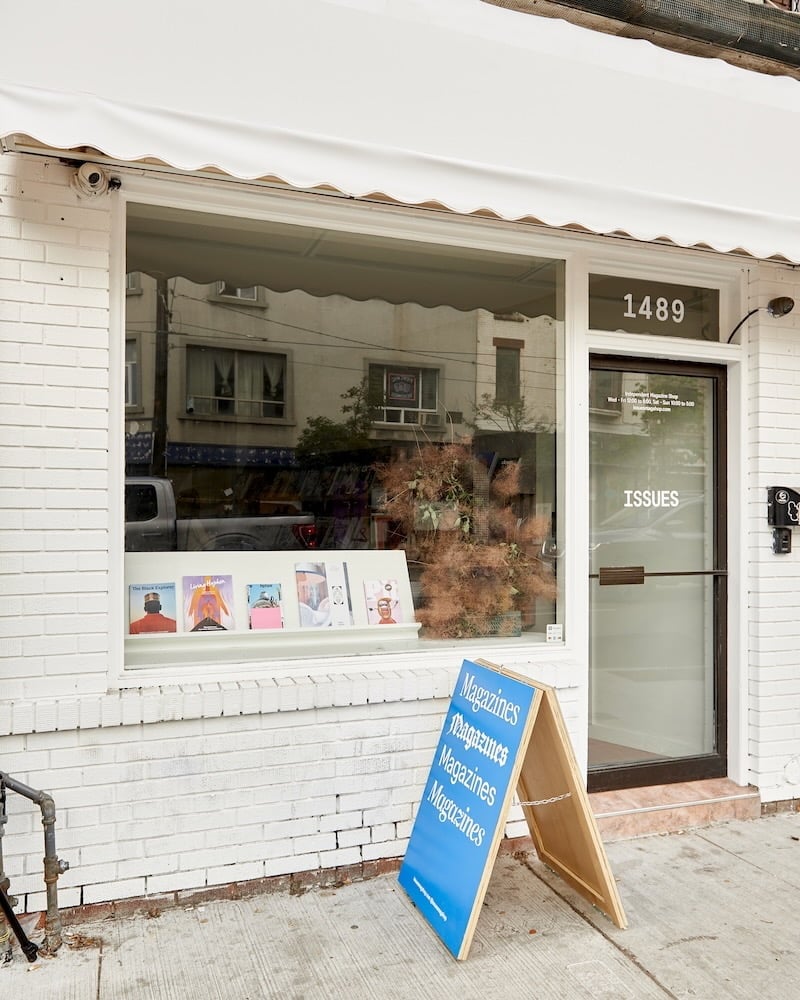
Issues Magazine Shop (Image: Justin Ming Yong)
Bar Vela Pizzeria & Mercato (Monique Bisson-Gironi, Belfast, PEI) – Monique’s pizzeria persevered through Hurricane Fiona. Futurpreneur offered them flexible repayment options and restructured their agreement to lower their payments for six months. With the extra cash flow, Monique and her husband were able to buy a generator to be prepared for future weather events and were very appreciative of Futurpreneur’s support.
Casca Designs (Braden Parker, Vancouver) – Casca started as a brick-and-mortar shop in Vancouver and then moved online due to high retail leasing costs in the city. Co-founder Braden Parker and his partner then sold the business last year to Unity Brands.
Issues Magazine Shop (Nicola Hamilton, Toronto) –
Launched a brick and mortar independent magazine shop and has found a loyal, niche following. Additional story about Nicola, can be found in a previous Retail Insider article.
Retail Insider is streamlining its Canadian retail news from around the web to include a handful of top news stories that can be viewed quickly during the day. Here are the top stories from the past 24 hours.
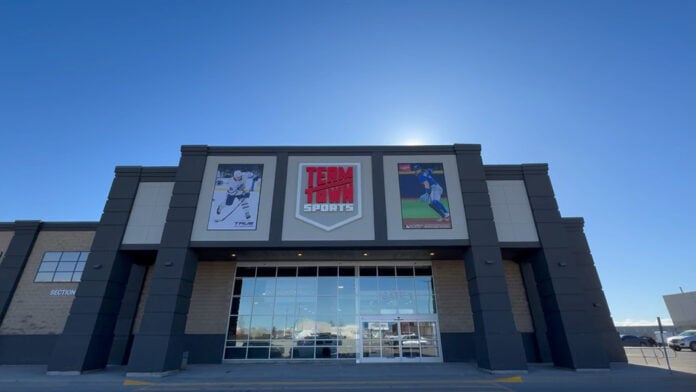
The concept, which was launched about a year ago, now has four stores open with the latest one in Whitby, Ontario. The retailer’s other stores are located in Calgary, with two, and one in Mississauga.
Frederick Lecoq
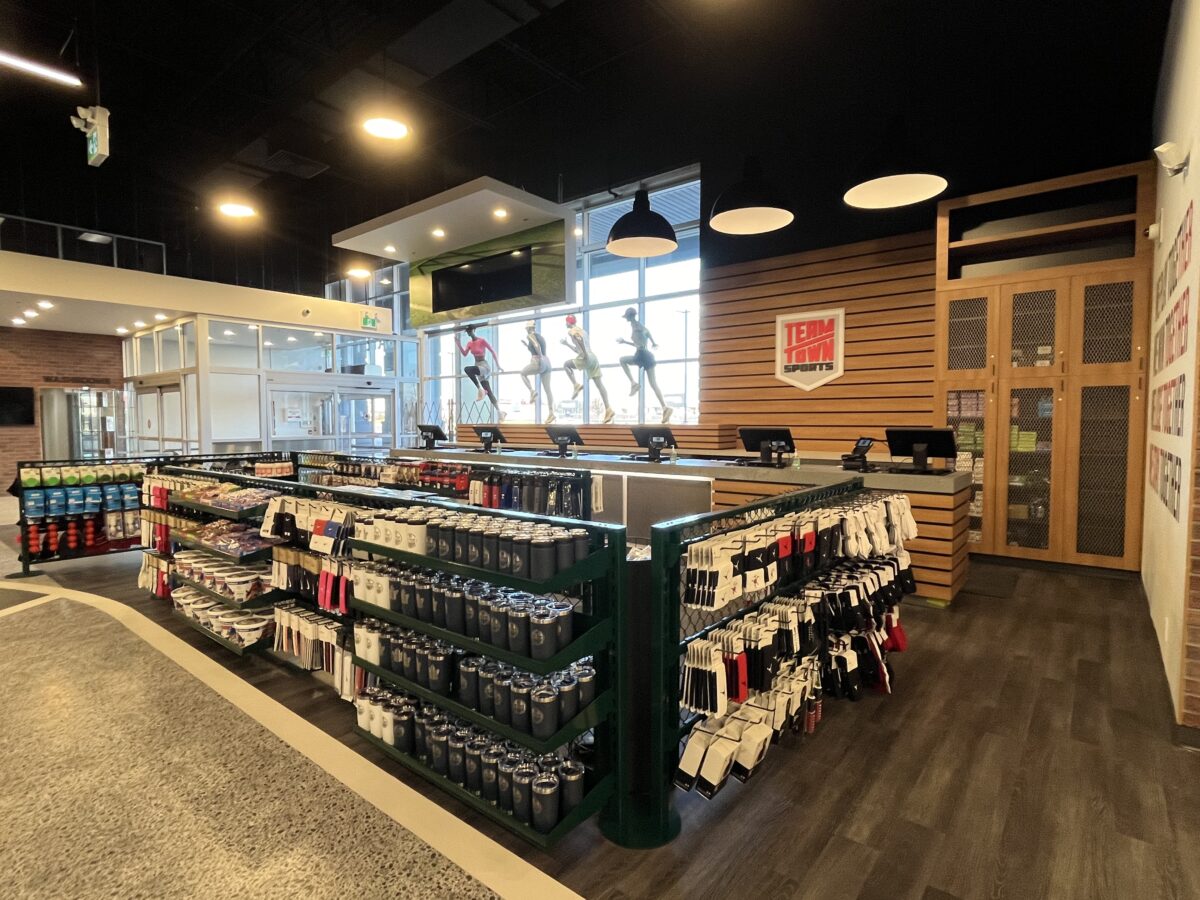
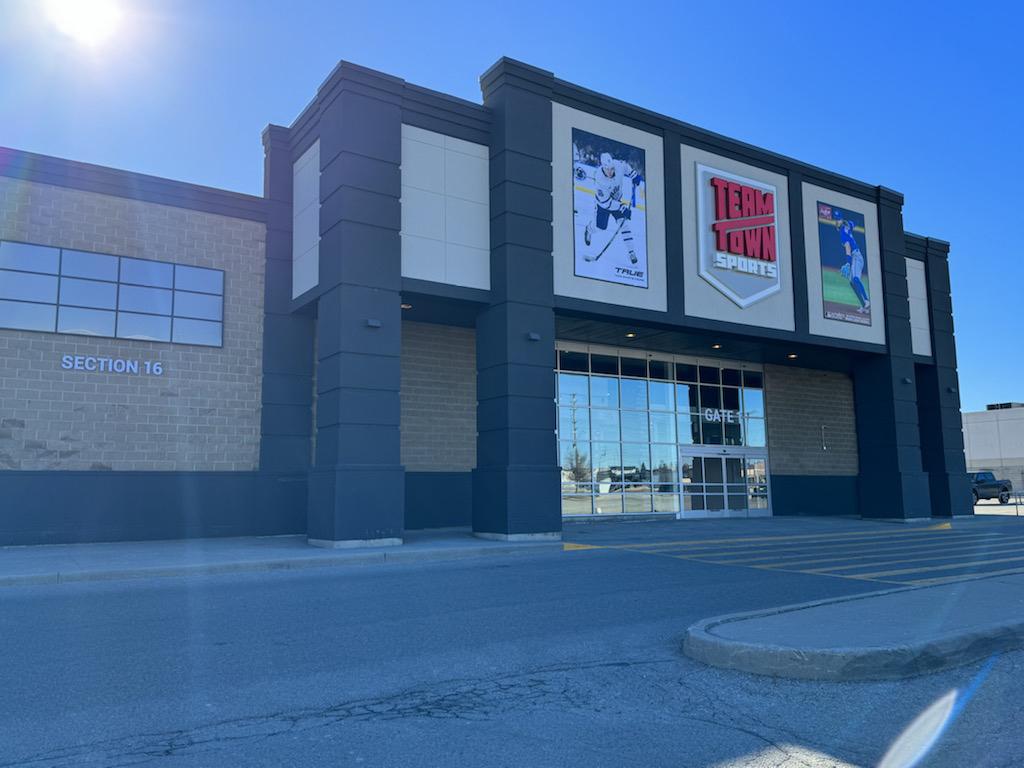
Fred Lecoq, Chief Marketing Officer and Chief Digital Officer of the Sporting Life Group, said the Whitby store, located at 1751 Victoria Street East, is just over 28,000 square feet.
“The first location we opened in the GTA (Greater Toronto Area) is located in Mississauga, Meadowvale. Looking at our existing database of customers . . . we identified a large cluster of active customers in the East GTA. With the Whitby opening we can now connect with the athletes living on the east side of Toronto,” he said.
“The Whitby demographic is filled with young families whose kids will participate in sports. Whitby also has a long heritage of being an active community with a strong culture of team sports.”
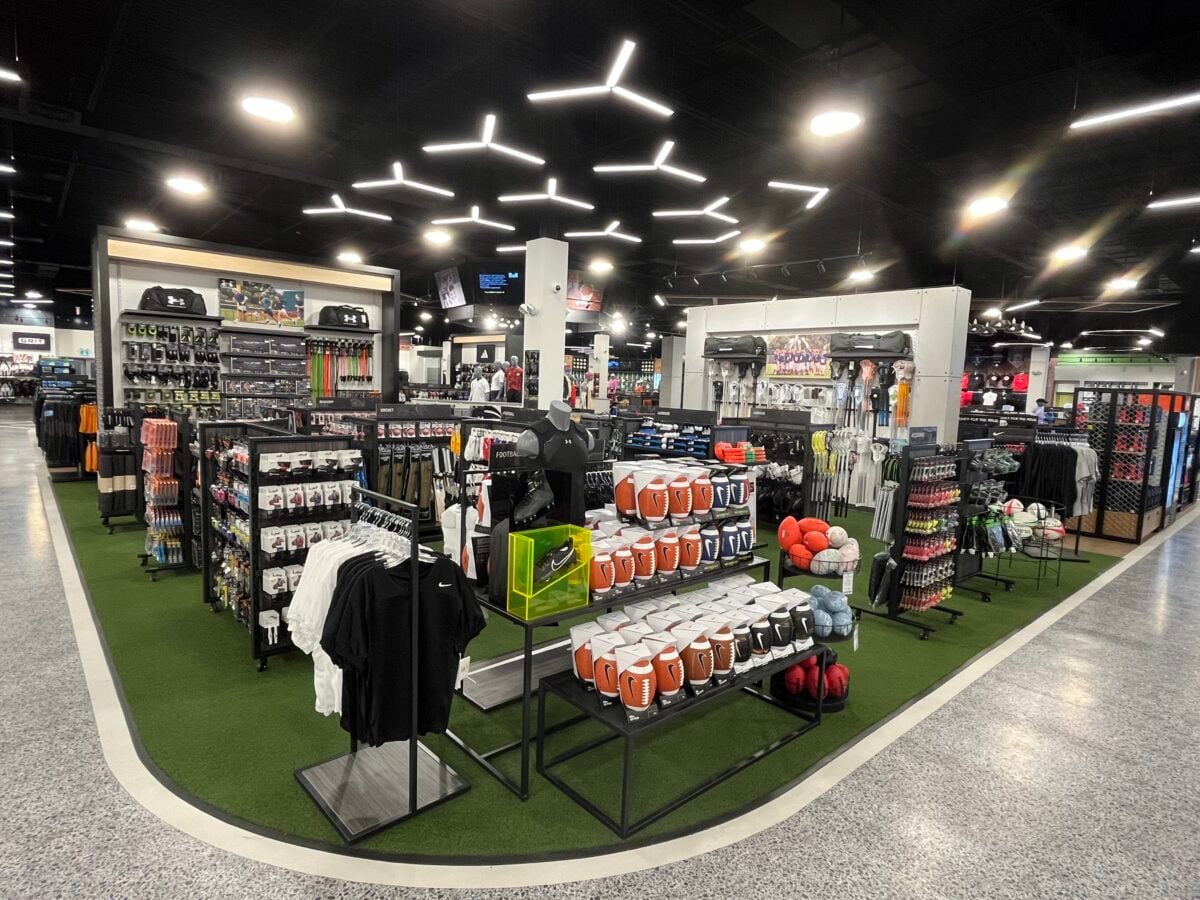
Team Town Sports Whitby (Image: Team Town Sports)Team Town Sports Whitby (Image: Team Town Sports)
Lecoq said the company does not have any plans to open any new stores in the next three months.
“We’re continuously listening to real estate opportunities and will be quick to react should a right location become available,” he added.
Previously, the company said it plans to eventually open up to 25 stores from coast to coast.
“Through COVID and the lockdown, participation in sports declined but it is now bouncing back and team sports is back on the rise,” said Lecoq. “A second factor to take into consideration is the growing number of new Canadians and the sports they participate in. As such soccer, basketball, volleyball, rugby are on the rise. Lastly, Canadians are multi-sports enthusiasts and it is common that they play several sports at a competitive level. Hockey + baseball / hockey + lacrosse / hockey + football …On top of all the above, we’re seeing more and more girls getting into team sports, inspired by all the recent great accomplishments of women’s sports. Think PWHL – Canada’s women’s national team – WNBA. Team Town Sports is a multi-sports megastore designed for all athletes, men and women.”
Lecoq said the future for the brand will include “hypergrowth and our objective is to create between $300-$350 million in revenue.”
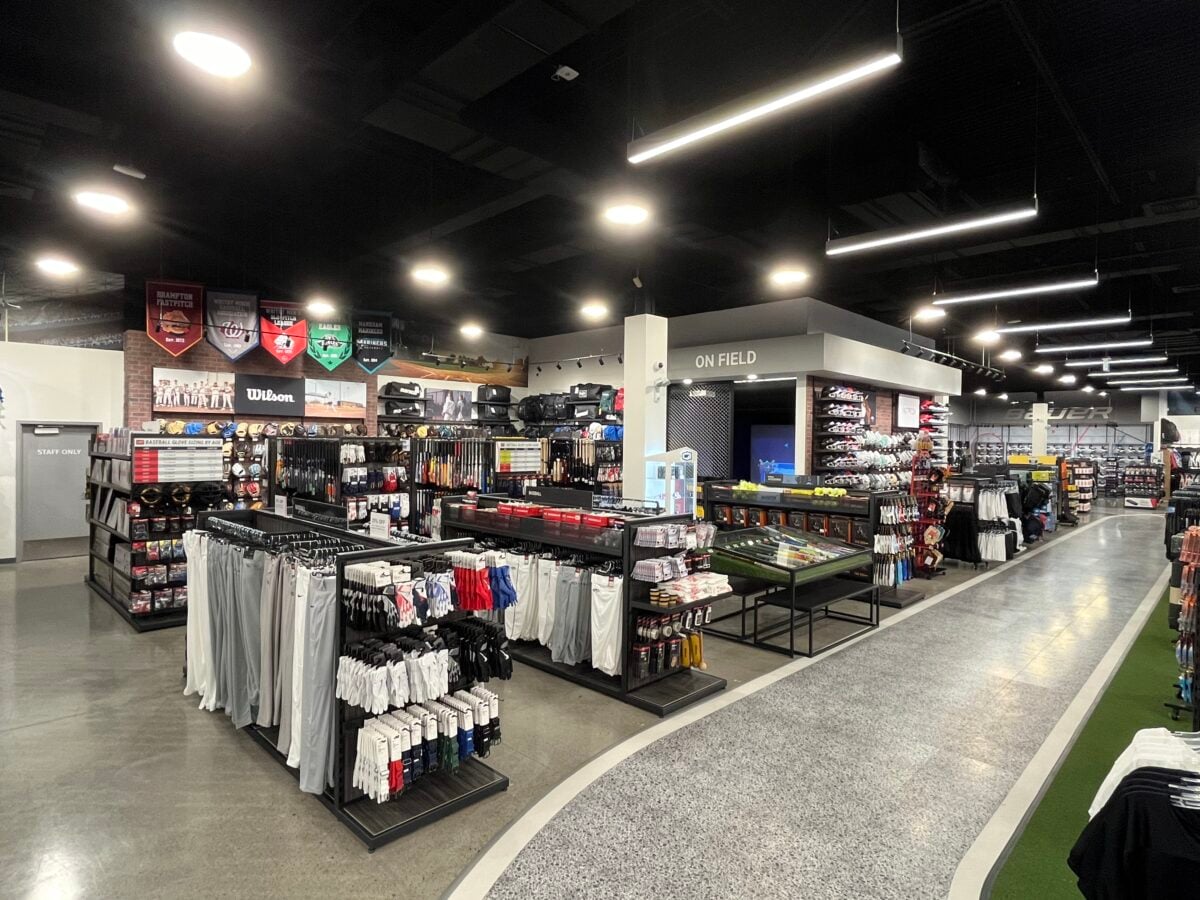
That will happen by fulfilling the unaddressed demand in the GTA following the closing of National Sports. Team Town will become a major player in the team uniform business. It has 13+ sports under one roof.
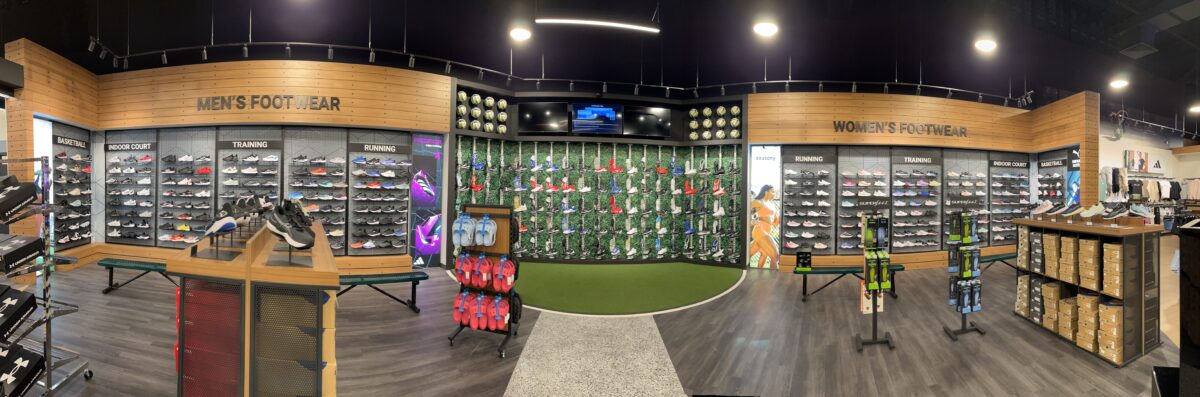
“Team Town is a mix of a team sports megastore and sport community hub celebrating local athletes / local heroes. Our staff are athletes and know the sports they sell as they play it. We want to be the most trusted outfitter for all team sport athletes coast to coast for the spot they love whether that is in our community hub brick and mortar locations or through our comprehensive online store offering,” added Lecoq.
Team Town Sports Whitby (Image: Team Town Sports)Team Town Sports Whitby (Image: Team Town Sports)
Team Town Sports is part of the Sporting Life Group which also owns and operates Golf Town and Sporting Life. Both banners finished a very strong fiscal year, said Lecoq.
In a previous Retail Insider story, Chad McKinnon, President of the Sporting Life Group, said: “By making it a place where all customers can access the equipment they need to play and train for the team sports they love, Team Town Sports represents the reinvention of the sports retail experience. Our goal is to meet the needs of a diverse Canadian population with a model that feels welcoming and inclusive. Our latest concept will feature all team sports under one roof, allowing us to connect with our customers through a shared passion for sports.
“It’s really about a couple of things. One is the white space in the market today. There’s a real opening for a premium sports offering to all Canadian athletes across team sports. Lots of good independents do things for sports individually but nobody’s really rolled it up under one roof, under one big box for everything for team sports. And we want to be good, better, best in our assortment. We’ve been very welcoming and inviting to Canadians. Super inclusive since day one. So we’ve had a very strong female component to what we’re doing and it also complements what we’re building strategically with the Sporting Life Group in terms of our village.
“It complements Golf Town. It complements Sporting Life. Because there’s very little crossover between the assortment. So super complementary to what we’re already doing very well today.”
Retail Insights with Eric Sherman [Video Interview]
Craig and Eric Sherman, Head of National Operations at First Capital REIT discuss Eric’s extensive experience in the retail real estate industry, highlighting his journey from a summer student to the head of national operations at First Capital REIT. Eric reflects on his start in the industry, emphasizing the lack of awareness about retail real estate opportunities during his university days. He recounts his career progression, mentioning key projects and roles leading to his current position.
The conversation shifts to the transformation of Yorkville Village and the strategic decisions behind acquiring properties in high-density, high-income neighbourhoods. Eric elaborates on First Capital REIT’s approach to curating retail mixes in different neighbourhoods, with examples from Yorkville to Liberty Village. He talks about the importance of integrating luxury with personal service and experiences, discussing the impact of global trends on local retail strategies.
Finally, Eric shares insights into First Capital REIT’s broader strategy, focusing on grocery-anchored neighborhood shopping centers and the importance of community integration. He emphasizes the role of operations and property management in enhancing retail environments. Discussing recent projects like One Bloor Street East, Eric highlights the challenges and successes in revitalizing retail spaces, showcasing the company’s adaptive strategies in response to changing retail landscapes and consumer expectations.
If you prefer to listen to the audio version, it is available below:
The Interview Series audio podcasts by Retail Insider Canada are available on Apple Podcasts, Stitcher, TuneIn, Google Play, or through our dedicated RSS feed for Overcast and other podcast players. Also check out our The Weekly audio podcast where Craig and Lee discuss popular content published on Retail Insider which is part of the The Retail Insider Podcast Network.
Featured during this interview:
Eric Sherman, Head of National Operations at First Capital REIT
Drop us a line at Craig@Retail-Insider.com. You can also rate us in Apple Podcasts or recommend us in Overcast to help more people discover the show!
Background Music Credit: Hard Boiled Kevin MacLeod (incompetech.com). Licensed under Creative Commons: By Attribution 3.0 License. http://creativecommons.org/licenses/by/3.0/
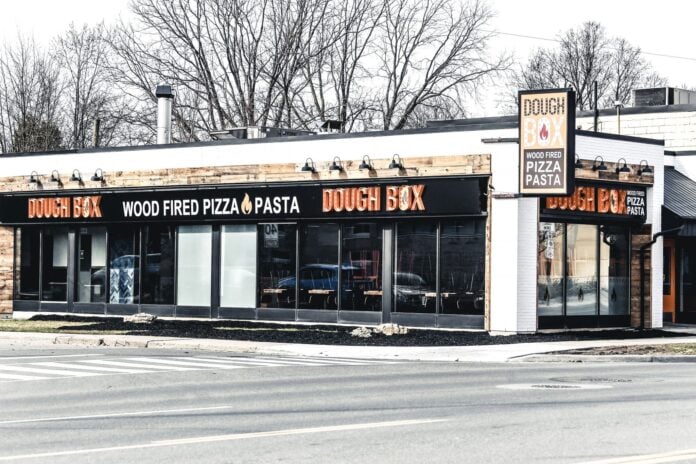
DoughBox Wood Fired Pizza and Pasta is opening six locations in 2024, continues to evolve in-store experiences, is upgrading its loyalty program, and is aiming to expand throughout Canada by having around 60 locations within the next five years.
Tony Visca
The brand opened in 2018 with its first location in Hamilton, Ontario and focuses on wood fired pizza and pasta. Tony Visca, the founder of DoughBox, was inspired to create the brand as he has Italian restaurants in the Niagara region and wanted to create a fast service version while still delivering high-quality ingredients and unique experiences. Guests can expect to receive their meal within nine minutes.
“We started in 2018 where we opened our first location in Hamilton. And then, like everything in the world – Covid hit and at that point, we put the brakes on expanding and put our focus on technology to get more takeout business and that really helped us,” says Visca.
In 2021, the brand started to franchise again and currently has 13 locations – 12 in Ontario and one in Saskatoon. The latest location is in London, Ontario where they opened its doors on February 20th.
Doughbox is owned by Niagara-based 43 North Restaurant Group, which includes brands like Cracker Jacks, Pedal Pub, Pizza Wagon, Johnny Rocco’s Italian Grill, Commercial Roadhouse, Stone Mill Ballroom and Feastivities.
Expansion Plans
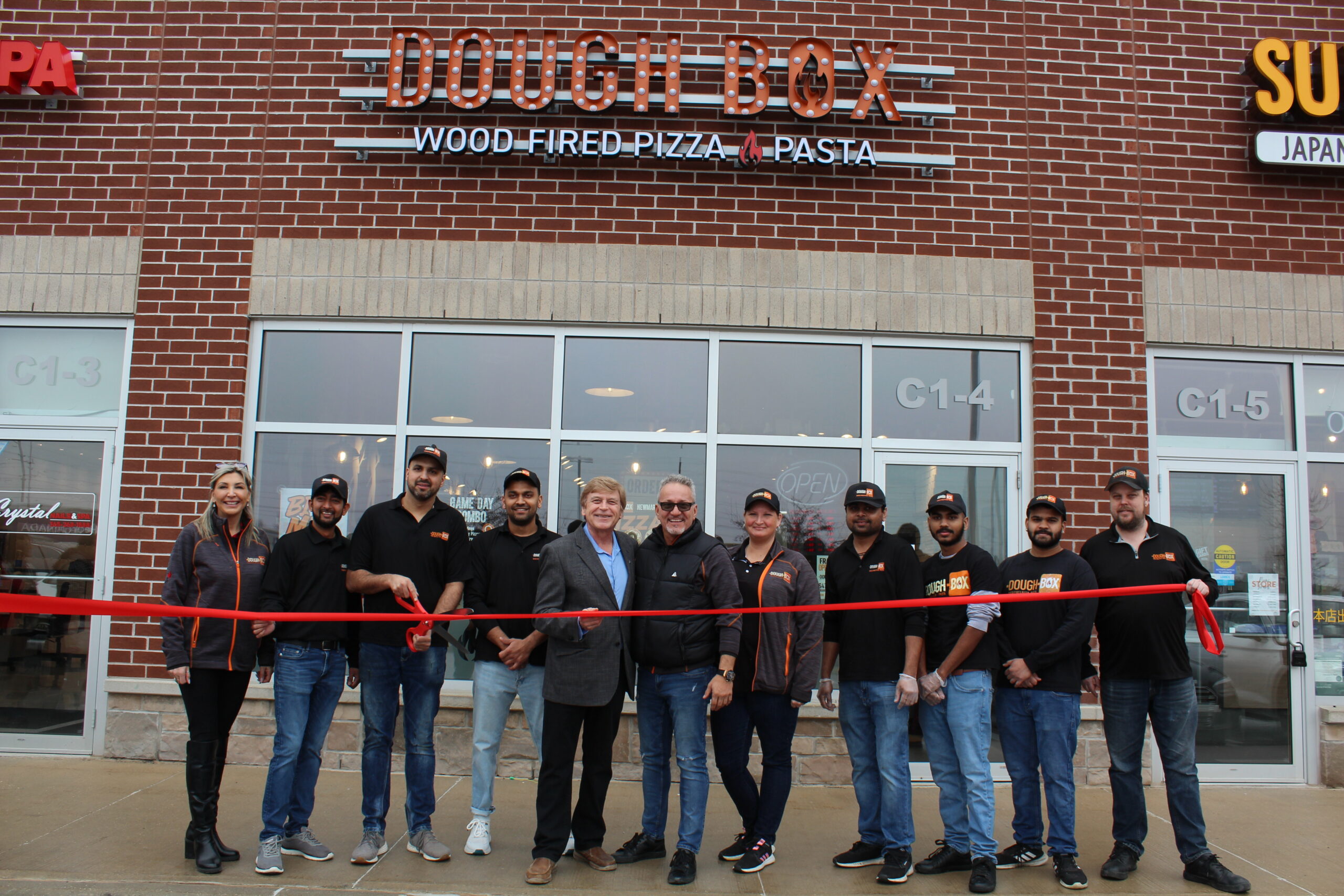
The DOUGHBOX team, Local franchisees, Southlake foundation members and local officials celebrating at the Pizza 500 Grand opening event today in Newmarket.
Visca says the brand currently has four locations under construction and has another 12 franchises looking for locations: “That is the toughest part about this business, is everybody wants to get the perfect spot. So that is our challenge right now is just finding the right real estate.”
The four Ontario locations under construction include:
Brantford, opening by the end of March
Woodbridge, opening by the end of March
Kingston, opening in late April
Toronto, opening in May
Image: Doughbox
Image: Doughbox
As for locations outside of Ontario, Visca says they are currently looking at expanding into Edmonton, Calgary, and Halifax. The goal is to open locations in Edmonton and Calgary in late summer or early fall and for Halifax, Visca says they are unsure when but are looking for a partner. The brand is looking for spaces between 1,600 and 2,000 square feet.
Overall, the brand is aiming to have around 60 stores within the next five years.
“Obviously there is still a lot of opportunity and growth, not just in Ontario, but all of Canada. I am hoping to be around 60 to 70 stores, and then possibly move the brand into the US. We want to cover all the provinces in Canada so going out east, British Columbia, Manitoba, and eventually, even if it is a bit more work, get into the Quebec Market. We will concentrate on the Canadian market first, as we are Canadian, before expanding into the US.”
DoughBox is aiming to be in the US in two or three years.
In-store experiences
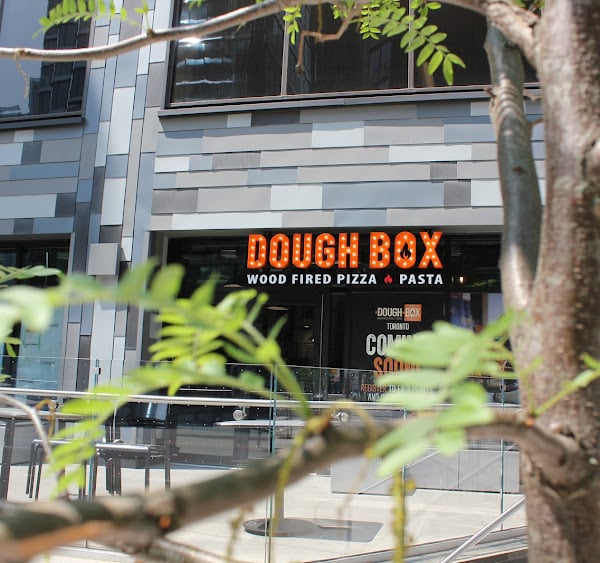
Doughbox at 40 University Avenue (Image: Doughbox)Doughbox at 40 University Avenue (Image: Doughbox)Image: Doughbox
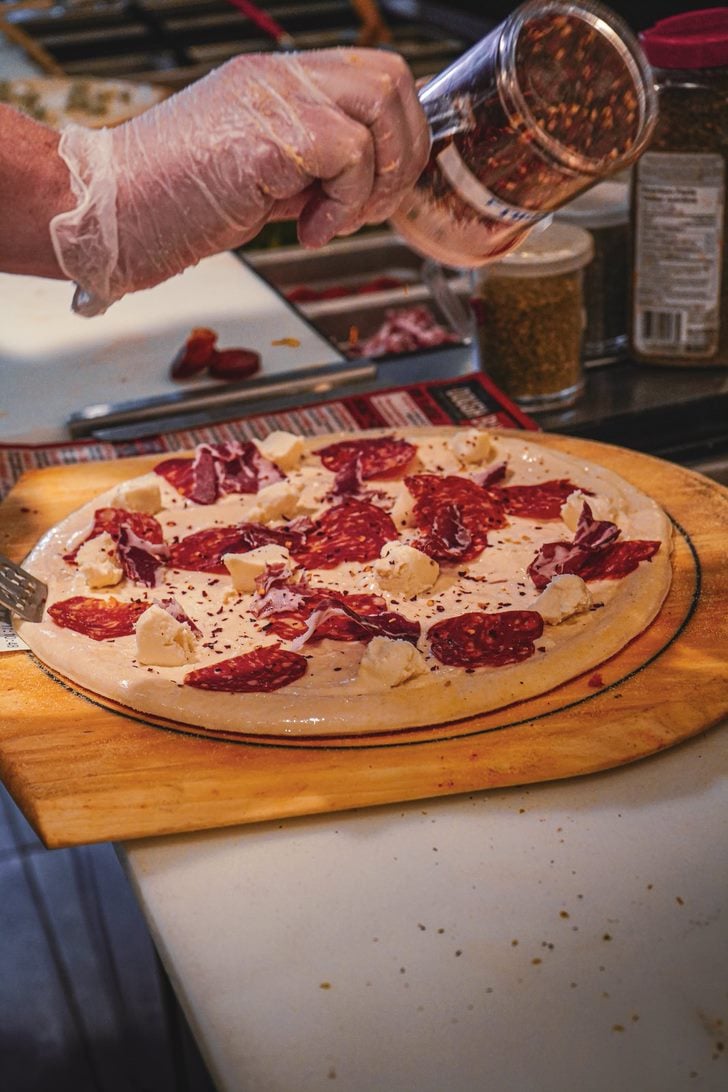
Unlike other pizza restaurants, Visca says guests have the opportunity to create their own pizza and it only takes nine minutes from order time to delivery. Guests also have the opportunity to customize their pasta choices.
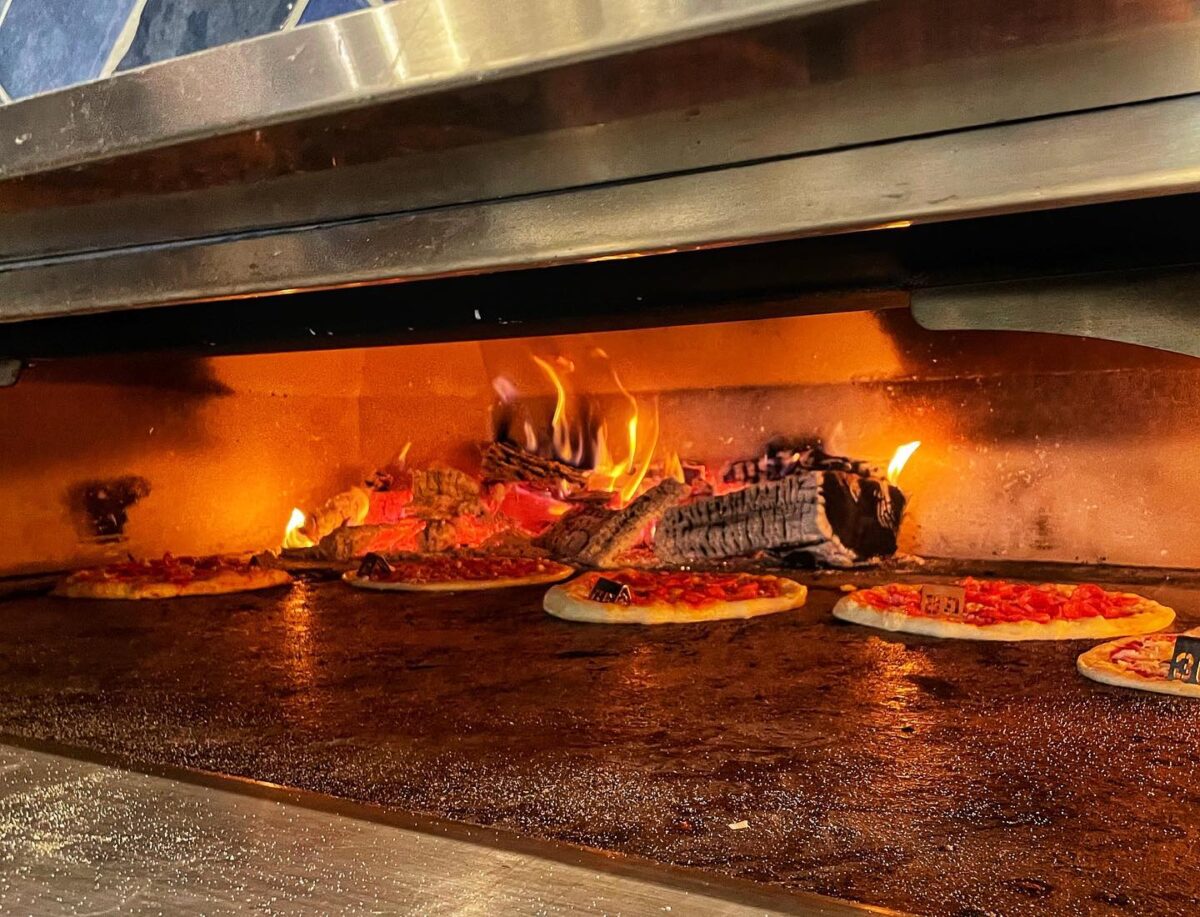
“When you walk in, you can order one of our signature pizzas and just walk down the line and watch them make the pizza in front of you. You can also create your own when you can come in every day and make a different pizza. You get to watch the pizza go into the oven and two minutes later – fresh pizza in your hands. The best way to eat a wood fired pizza is when it comes out of the oven.”
As for evolving technology, Visca says the brand still wants to prioritize human interaction as they want its staff to interact with customers. The main improvements have been online as during Covid, they needed to improve to provide easy access to takeout.
Upgraded loyalty program coming soon
The brand’s loyalty program is currently unavailable as Visca says they are in the process of improving the system.
The loyalty program should be available by the end of March and will be a point based system. Visca says as people come in, they collect points which they can turn in to buy a pizza, pasta, or whatever they like in the store.
“We just want everybody to come in and experience our product, and they will be surprised at the difference they will taste between just a deck style pizza and a wood fired pizza. If you haven’t had a wood fired pizza – you need to try it, it is just a little different. We use high-quality ingredients, they are thin in crust, and cook in a couple of minutes. Our fast service on pizza and pasta gives everybody time to make sure they can get in, out, and enjoy a high-quality meal.”
Retail Insider is streamlining its Canadian retail news from around the web to include a handful of top news stories that can be viewed quickly during the day. Here are the top stories from the past 24 hours.
Ottawa’s retail real estate market is expected to soften amid continued economic headwinds, according to a new report by commercial real estate firm JLL.
“The retail leasing market in Ottawa is stabilizing, with a small decline in the availability rate and relatively low absorption levels. Despite economic headwinds, net rental rates increased as new retail supply continued to underwhelm,” said the report, Ottawa Retail Insight, Spring 2024.
“Private and public stakeholders are working at both ends to create a much-needed boost in Ottawa’s residential supply. Retail sales growth in Ottawa experienced a notable slowdown in 2023, with minimal or no expected growth for the current year.”
Image: City of Ottawa
Despite a slowdown in retail consumption, the retail leasing market in Ottawa remains highly competitive, with availability rates slightly decreasing and notable growth in net rents. The limited new supply delivered in 2023 has sustained a market favorable to landlords, said JLL.
“General retail has accounted for the largest portion of absorbed retail space in Ottawa, while neighborhood, power, and strip centers have experienced stagnant absorption levels,” it said.
“CF Rideau Centre and Bayshore Shopping Centre in Ottawa have managed to secure leases from renowned retailers including RW&Co., Uniqlo, and Imaginaire. While rents in Ottawa are still on the rise, the rate of growth is expected to level off. Rent increases this year will be primarily influenced by the lack of new competitive retail space, inflation and escalating property taxes, rather than the improved retail fundamentals that drove the rent uptick in 2023.
“The trend of decreasing retail completions is anticipated to be reversed soon. Nonetheless, few projects in the pipeline will address the urgent requirement for more retail space in the downtown area in the immediate future. Instead, development activities are primarily focused on areas beyond the downtown core.”
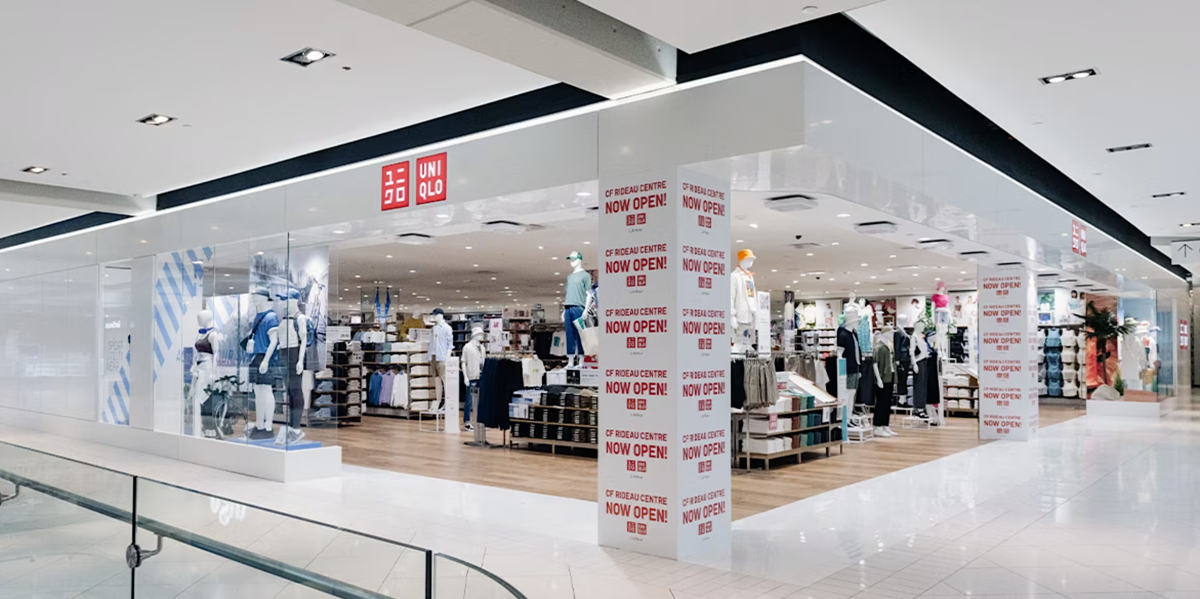
CF Rideau Centre (Image: Cadillac Fairview)Uniqlo store at CF Rideau Centre in Ottawa. Photo: UniqloOttawa Retail Spring 2024 (Image: JLL)
JLL said downtown Ottawa may not see a substantial influx of new retail space, but the city is determined to uplift ByWard Market. With a significant budget allocated for upgrades, the city aims to enhance security measures and rejuvenate key areas such as ByWard Market Square, William Street, and the adjacent parking garage. Addressing security concerns and rejuvenating the market will help stabilize the area and give locals and tourists alike another reason to shop in the city.
“Even with the lack of imminent retail supply in urban Ottawa, there remains optimism for boosted sales thanks to a multitude of residential projects slated for delivery in the coming years,” added the report.
“Colonnade Bridgeport has an extensive development pipeline aimed at addressing Ottawa’s housing crisis, encompassing 14 buildings across the city. The multi-billion-dollar pipeline is set to deliver over 3,400 residential units upon completion. While the towers won’t be concentrated downtown, they will be strategically positioned in areas with transit access to the downtown core. The company plans to start construction on at least two sites off Highway 417 by the year’s end.
“The public sector is also actively addressing the housing shortage, using its power to revise zoning bylaws. The revision involves introducing new areas for infill development and allowing increased residential density in the suburbs. These actions will complement the existing residential growth already taking place in suburban Ottawa. Upon completion of the bylaw revision in 2025, these efforts will create new possibilities for residential projects, leading to increased sales and demand for additional retail spaces.”
In 2023, JLL said retail sales in Ottawa experienced a notable deceleration, growing by just 1.2 per cent compared to the growth rate of 3.4 per cent in 2022. Ongoing economic pressures have further contributed to the anticipation of limited growth in retail sales for the current year, as consumer spending is expected to decline. Notably, there has been a slowdown in sales growth for retail staples including general merchandise, clothing, and shoes, it said.
“Although Ottawa saw a deceleration in sales growth in 2023, the city remains supported by robust long-term fundamentals due to its significant number of high-paying public sector jobs and anticipated population growth driven by immigration,” explained the report.
“The food services sector, encompassing full and quick-service restaurants, fared better than the goods sector in 2023 and is expected to maintain growth in the low single digits, albeit at a slower pace.”
Hard Rock Hotel & Casino Ottawa (Rendering: Hard Rock)
Over the past three years, air passenger traffic volume has continued to rise, growing by almost 37 per cent in 2023, said the commercial real estate firm. Although the number of passengers has not yet reached pre-pandemic levels, the delivery of Hard Rock’s 150-room, 1,600-slot Hotel & Casino by mid-2025 offers an added incentive for travelers to visit the nation’s capital, it said, adding that public transit has also shown growth, increasing by 36.2 per cent annually.
However, ridership levels remain well below pre-pandemic levels. The prevalence of hybrid work models, which require employees to be present for only two to three days per week, will likely continue to limit public transit usage for the foreseeable future, according to the report.
“Ottawa’s retail sector is experiencing a weakened outlook as the growth rate of spending on general merchandise, clothing, and shoes is slowing. However, there are positive prospects for sustained growth in food services and tourism. Efforts are underway to tackle the city’s housing shortage, which will ultimately provide retailers with a larger pool of potential customers as more transit-accessible towers are delivered,” concluded the JLL report.
Ottawa Retail Spring 2024 (Image: JLL)
Casdin Parr, Executive Vice President, Retail Advisory Services, JLL, said the return to the downtown core in Ottawa has certainly been slower than it has been in Toronto for instance.
Casdin Parr
“While (CF) Rideau (Centre) continues to be the dominant asset in the downtown core from a retail perspective,” he said. “They’ve made some great additions over the last 12 months with the likes of Uniqlo, Athleta and some still to open like Alo Yoga.
“The strength in the marketplace is also spreading out to the Bayshore and the St. Laurent assets as the hybrid work model in the Ottawa market is probably a little bit more entrenched and we’re seeing some of the consumer spending shifting from the downtown core out to some of these suburban trade in the marketplace.”
Parr said the density of new homes in Ottawa as well is different than Toronto and Vancouver. While there is still downtown density being added, a lot of the new home development, single-family and multi-family, is actually being spread out over a larger geographic area in the Ottawa marketplace.
“I think long-term in Ottawa the return to work provides more opportunity looking forward. The tourism component is still on the rise and has the ability to rebound to help support the Ottawa downtown core in particular,” he said. “It’s been a slower build to get back to where we were but I also think they may still have a larger ahead to recapture and continue growth going forward.”