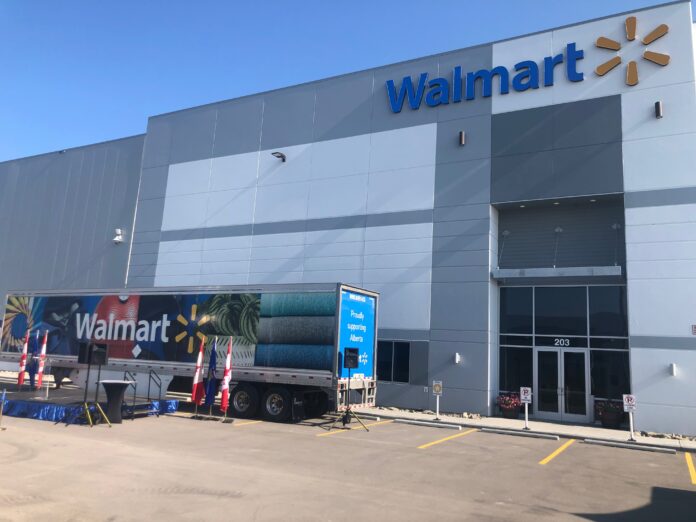
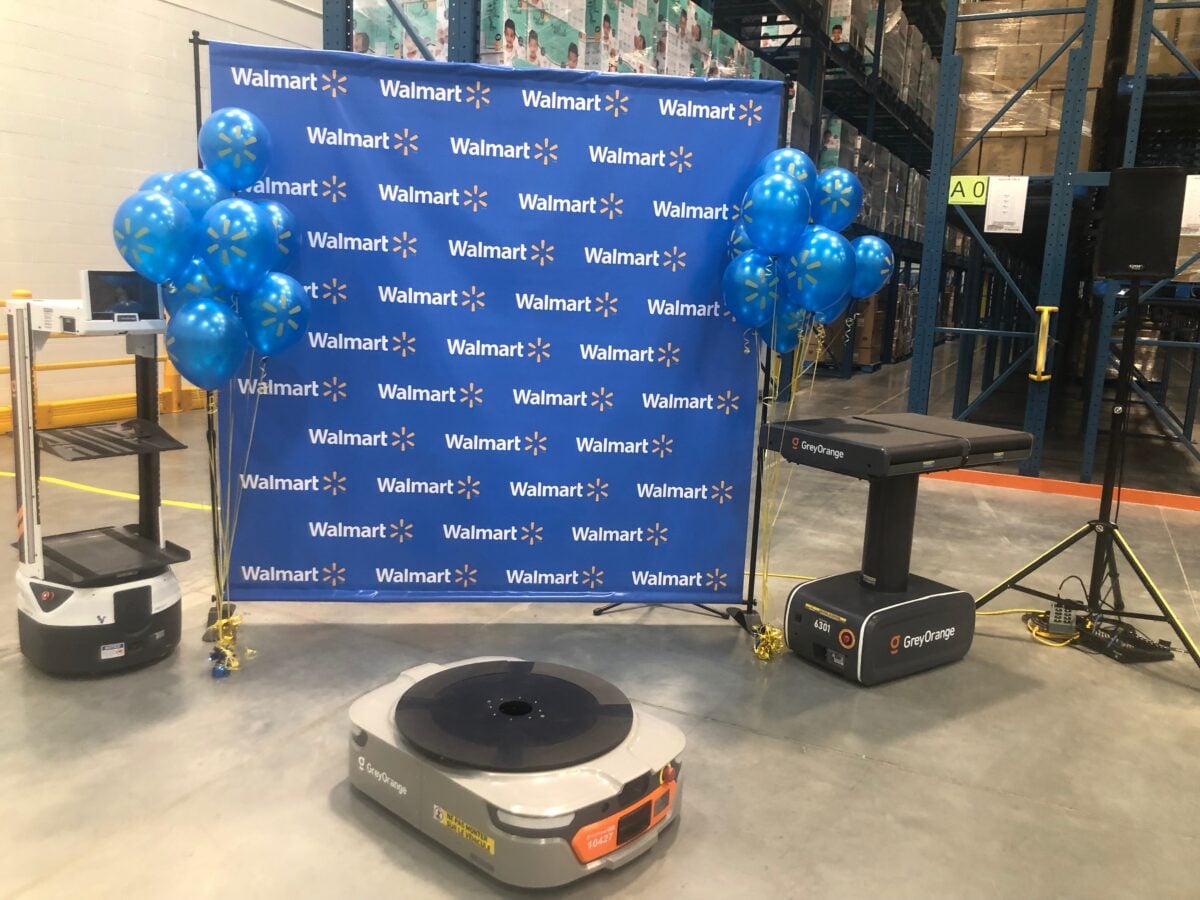
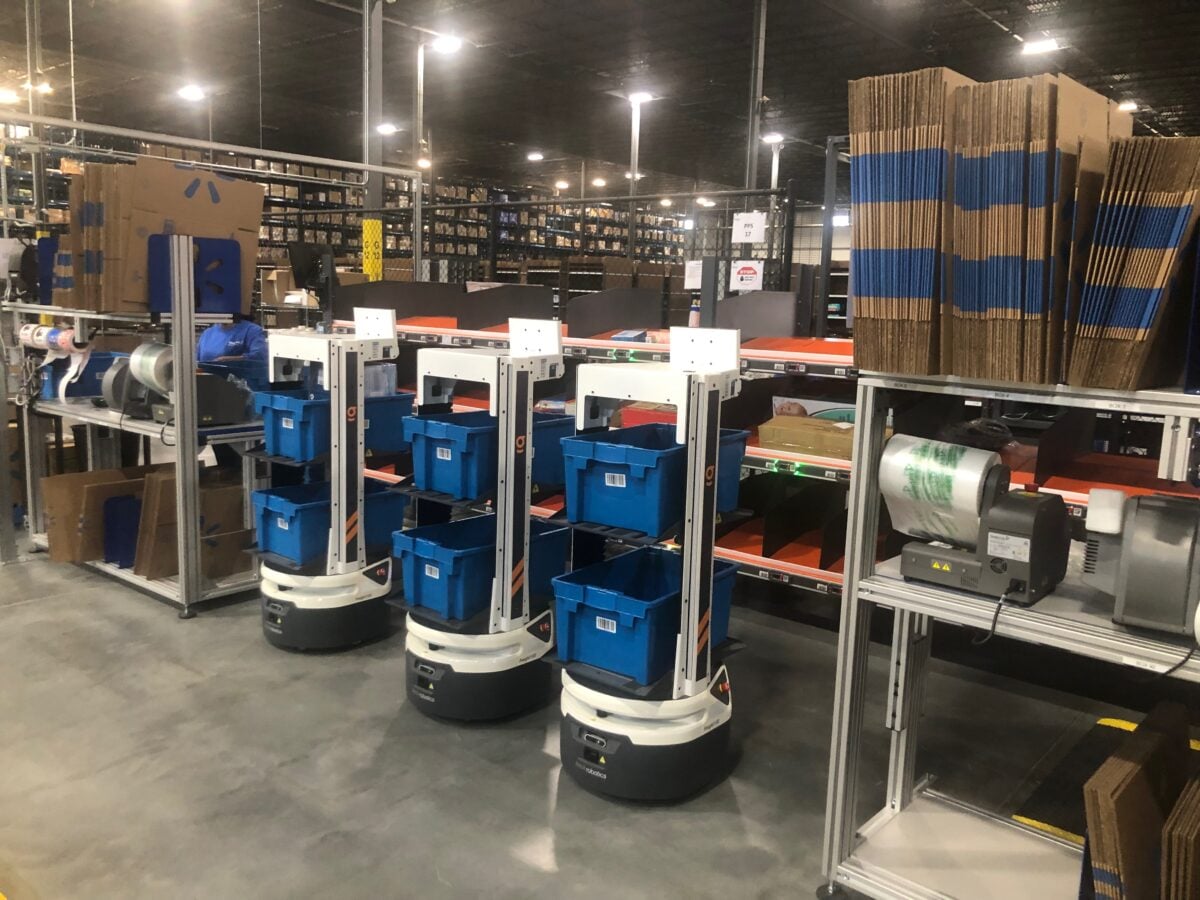
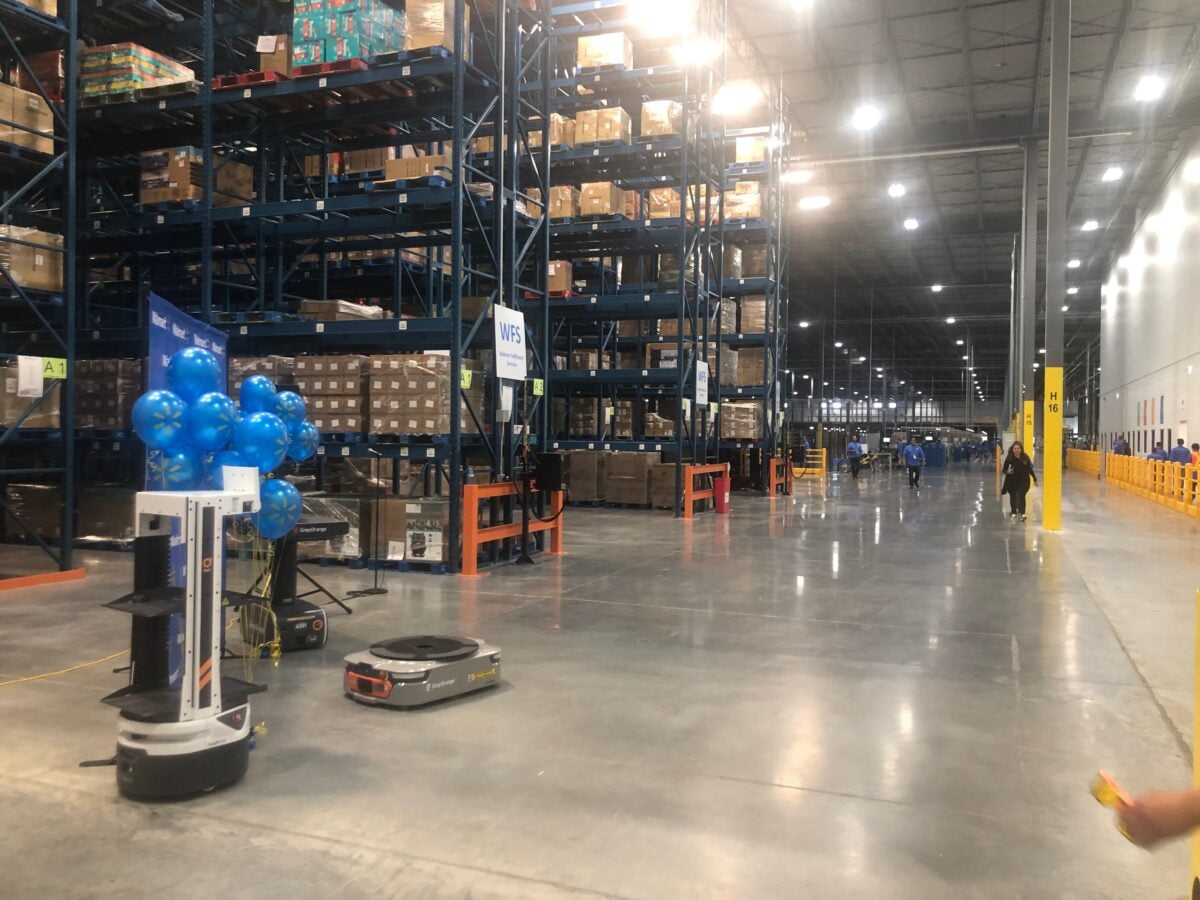
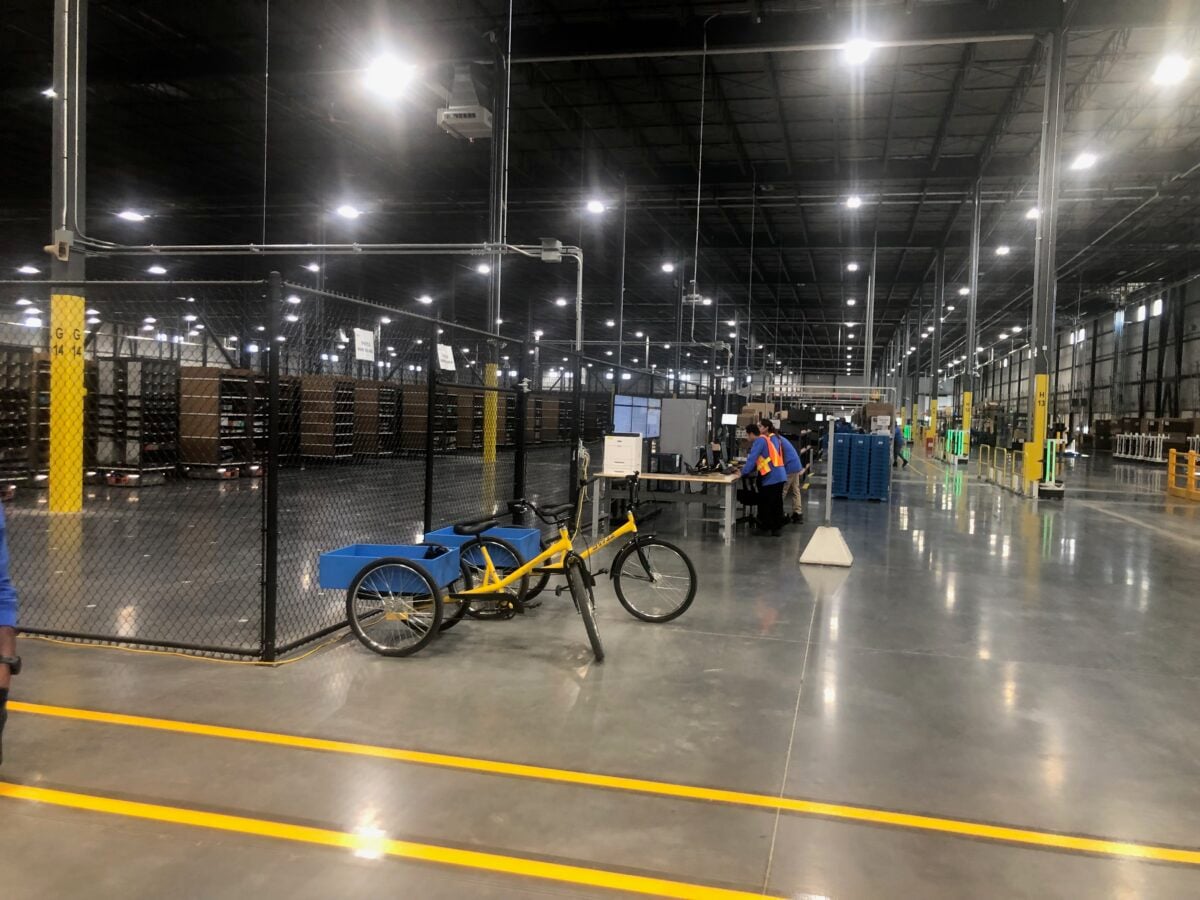
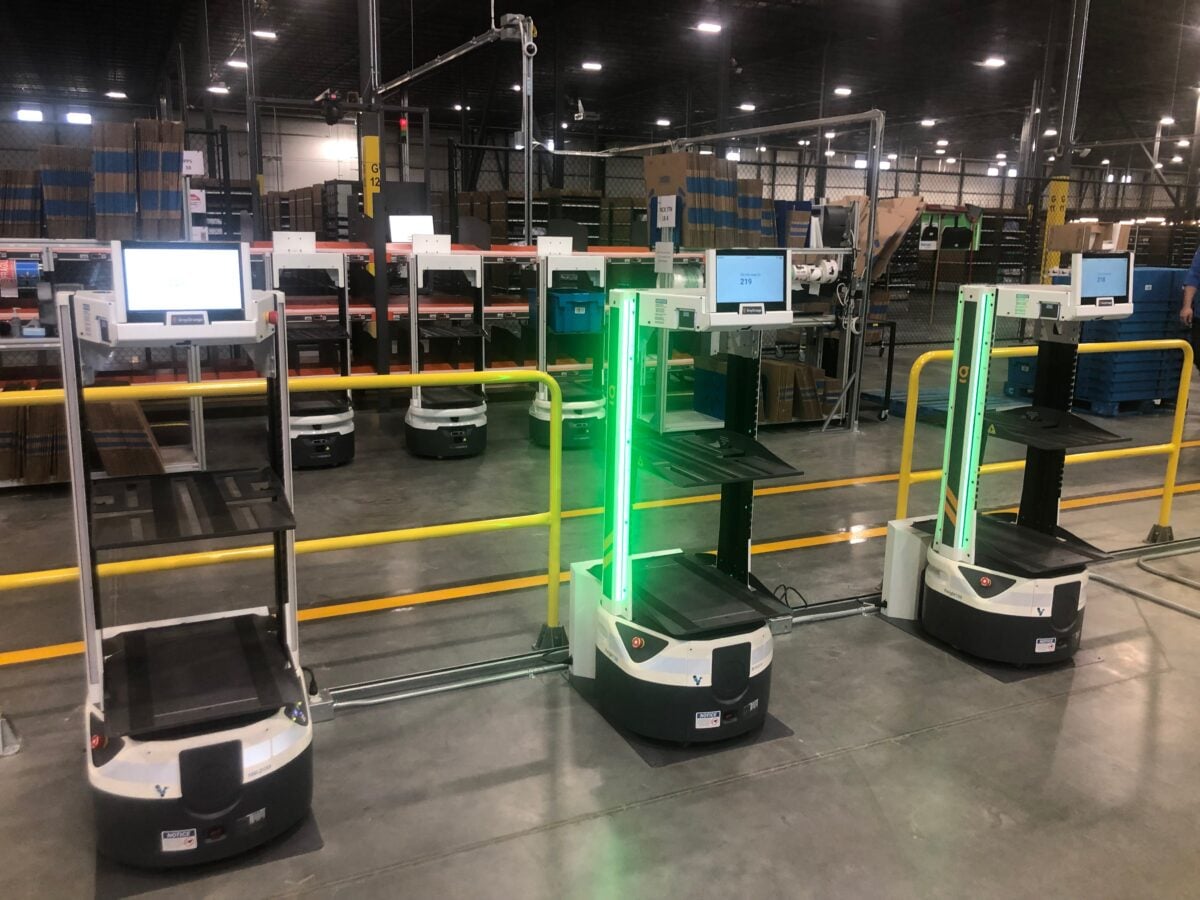
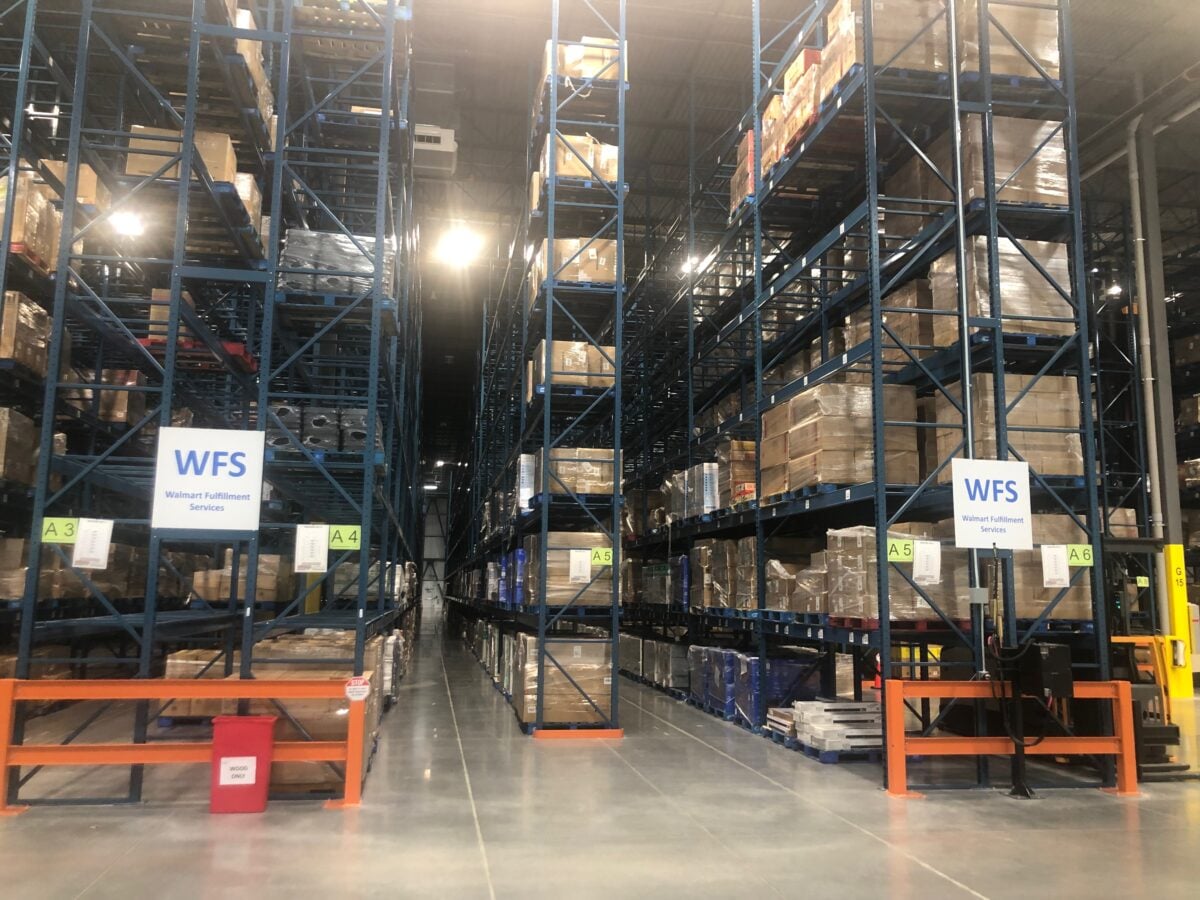
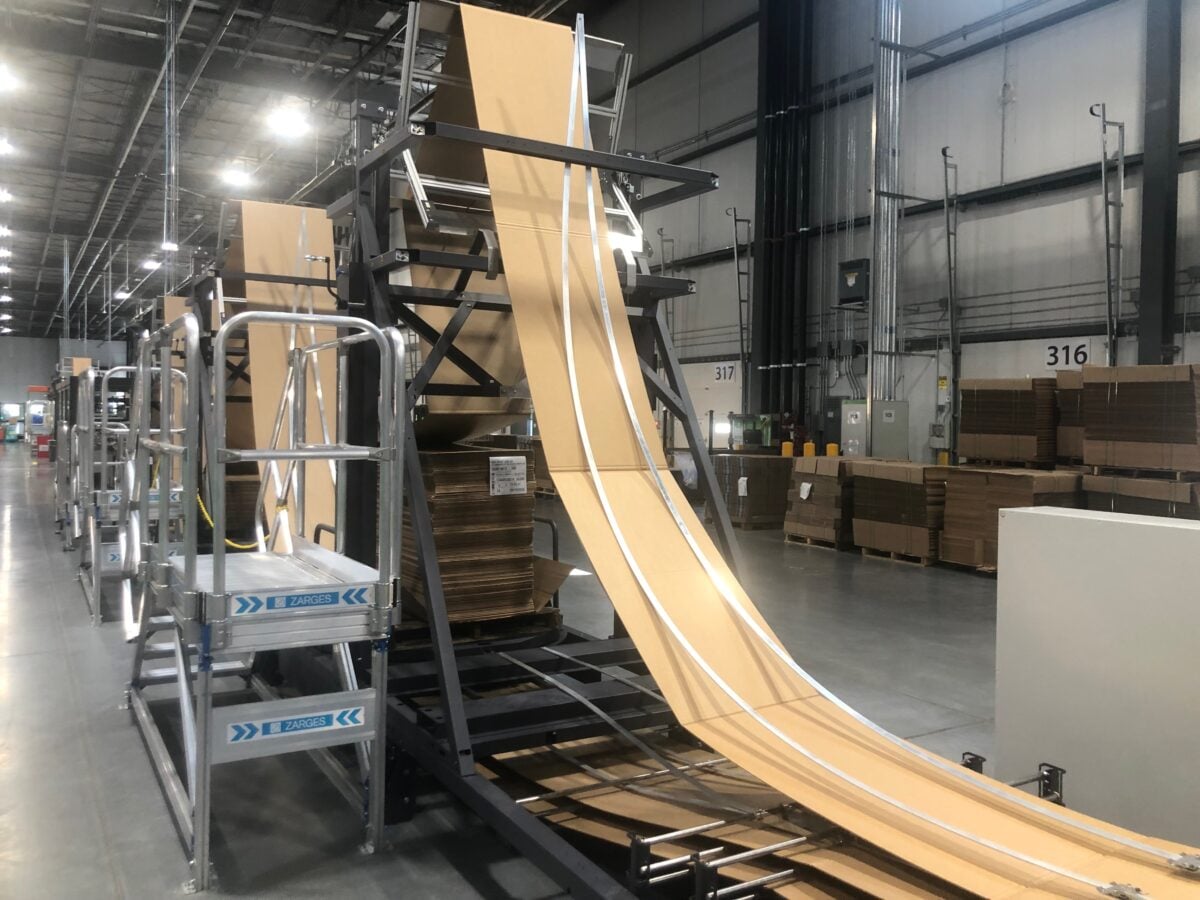
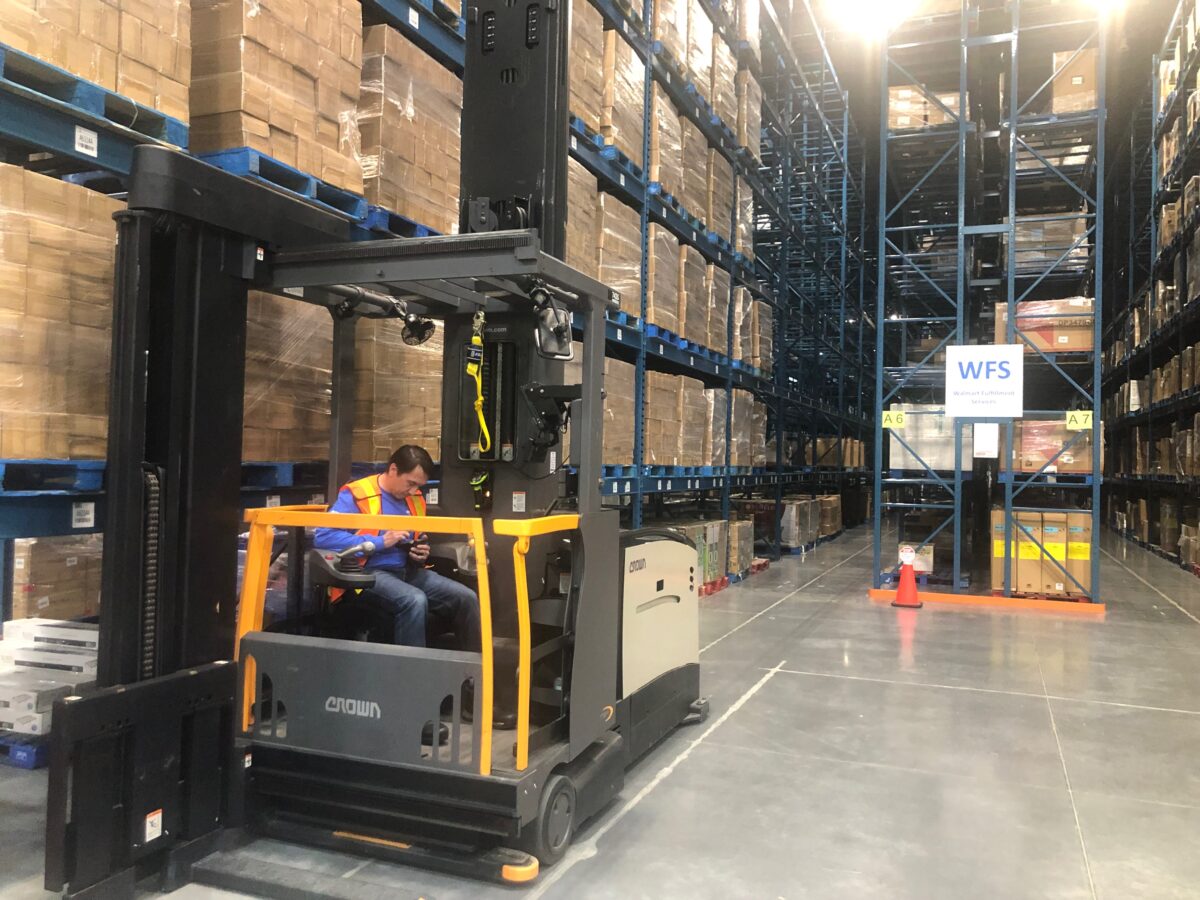
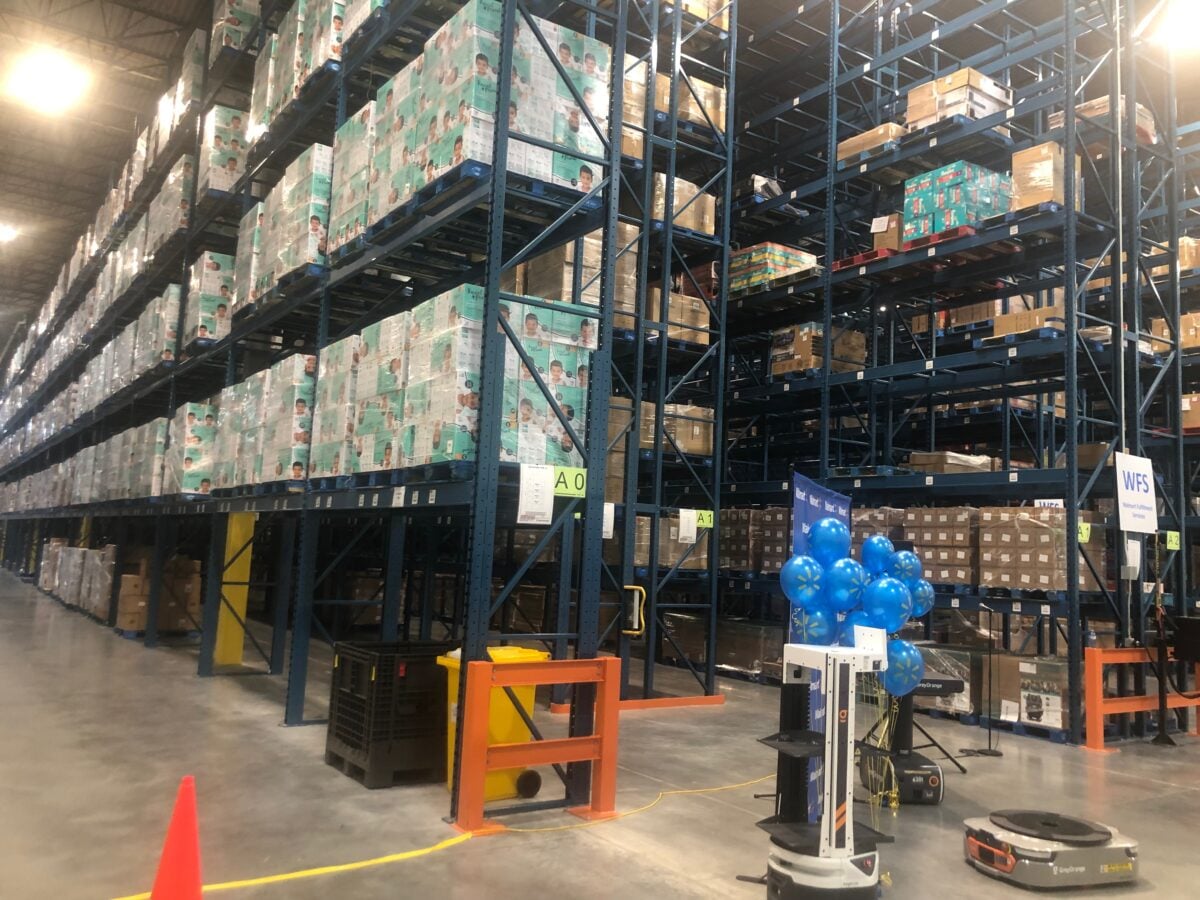
Walmart Canada Fulfillment Centre in Rocky View County, Alberta (Image: Mario Toneguzzi)
Walmart Canada has opened its first high-tech fulfillment centre in Western Canada in Rocky View County, Alberta, just outside of Calgary.
It’s a more than $100-million investment in the 430,000-square-foot facility which will serve as a delivery hub for millions of orders for Walmart’s Western Canada customers, bringing the giant retailer’s two-day shipping to 97 per cent of Canadian households.
Gonzalo Gebara
“We’re on a transformational journey to modernize our supply chain and today’s grand opening marks a major milestone for Walmart Canada,” said Gonzalo Gebara, President and CEO, Walmart Canada.
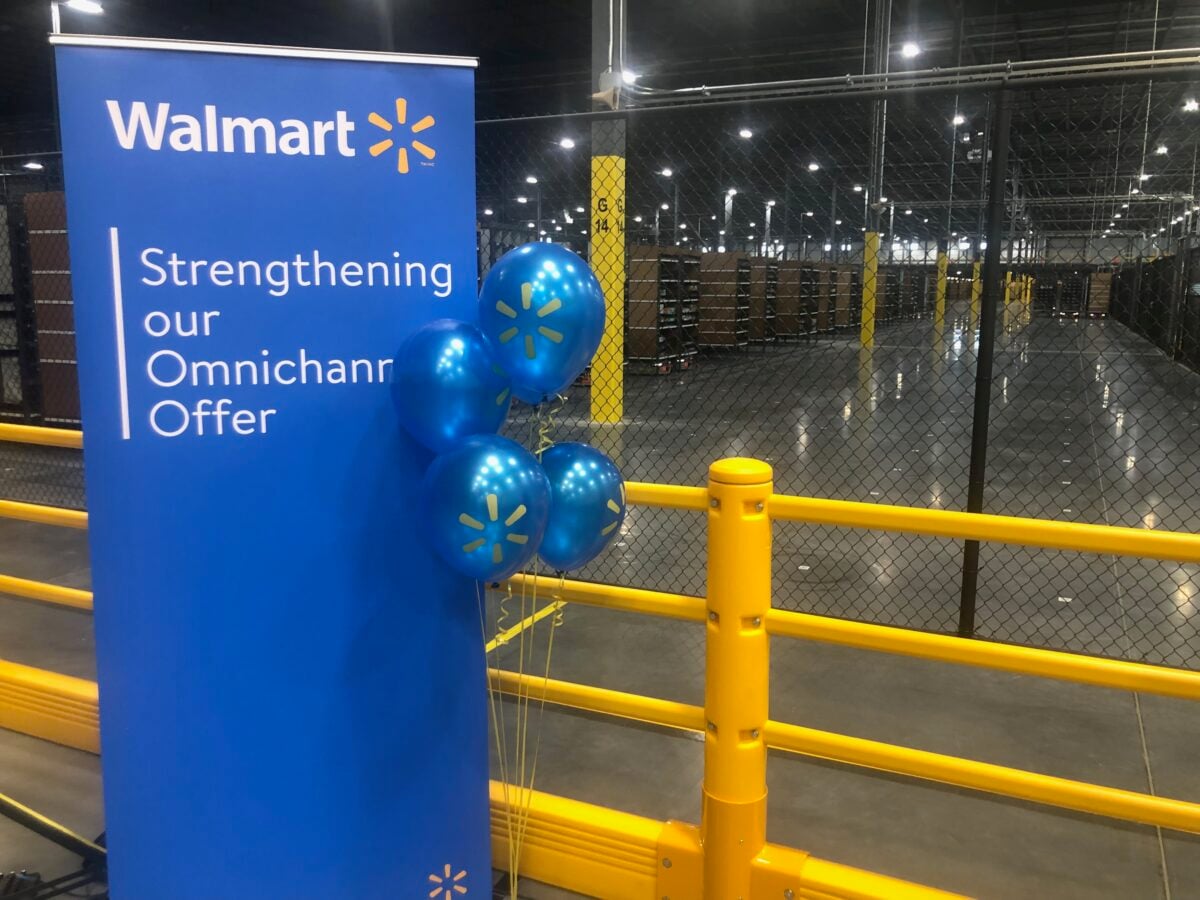
“Walmart Canada is an omnichannel retailer, people-led and tech-powered. We’re providing our supply chain associates with modern logistics technology to fulfill orders at exceptional speed. Every day, we’re enhancing our supply chain network. It’s a very exciting time at Walmart Canada.”
Walmart Canada Fulfillment Centre in Rocky View County (Image: Mario Toneguzzi)
Highlights of the new facility, which is the third for the company in the Balzac area of Rocky View County, include:
Storage for thousands of items available on Walmart.ca;
Capability of shipping 20 million items annually directly to customers and handling up to 500,000 unique items to fulfill direct to home and ship-to-store pickup orders;
Fulfilling orders for Walmart Fulfillment Services (WFS), Walmart’s end-to-end fulfillment service for the retailer’s third-party e-commerce sellers, including larger, non-conveyable items, like large patio items, for the first time. Customers ordering items from Marketplace sellers who leverage the WFS service will benefit from faster shipping speeds and improved product availability;
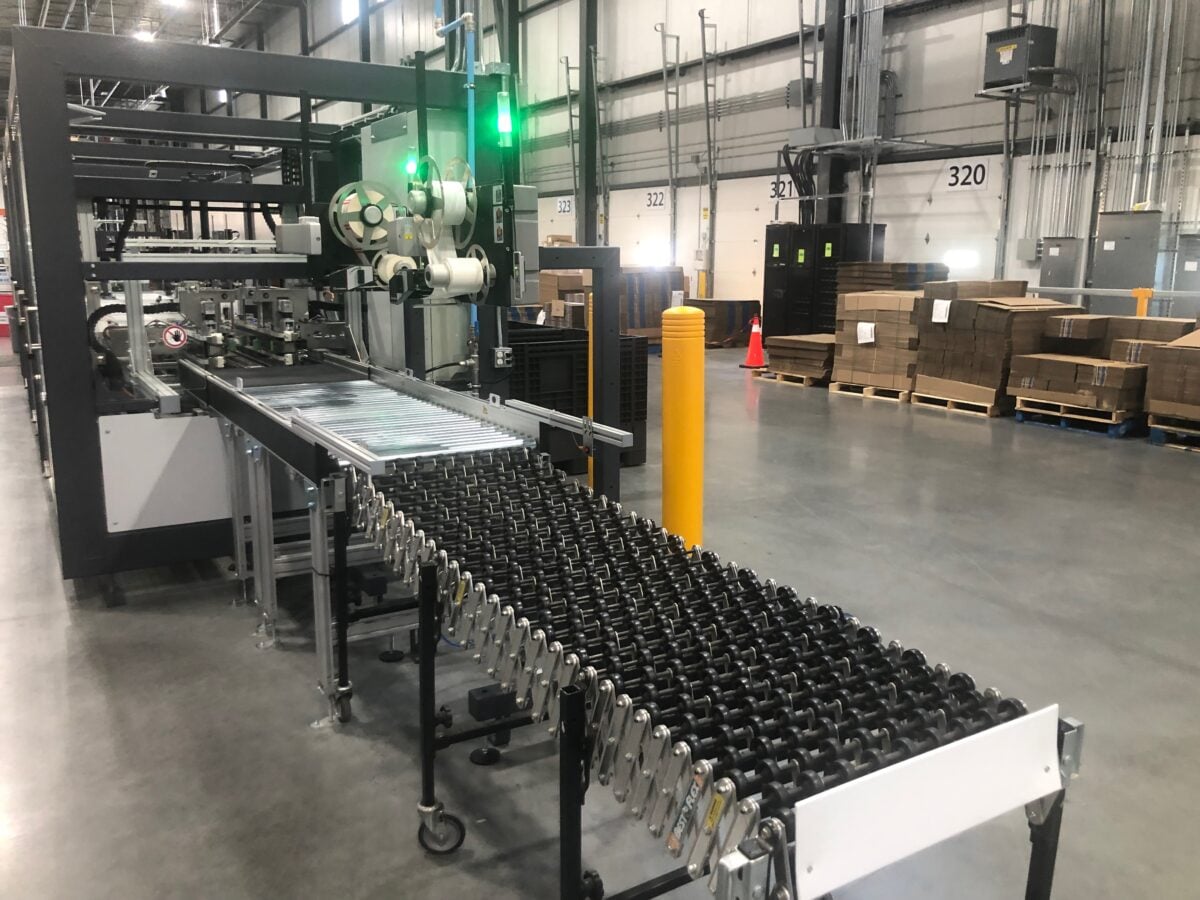
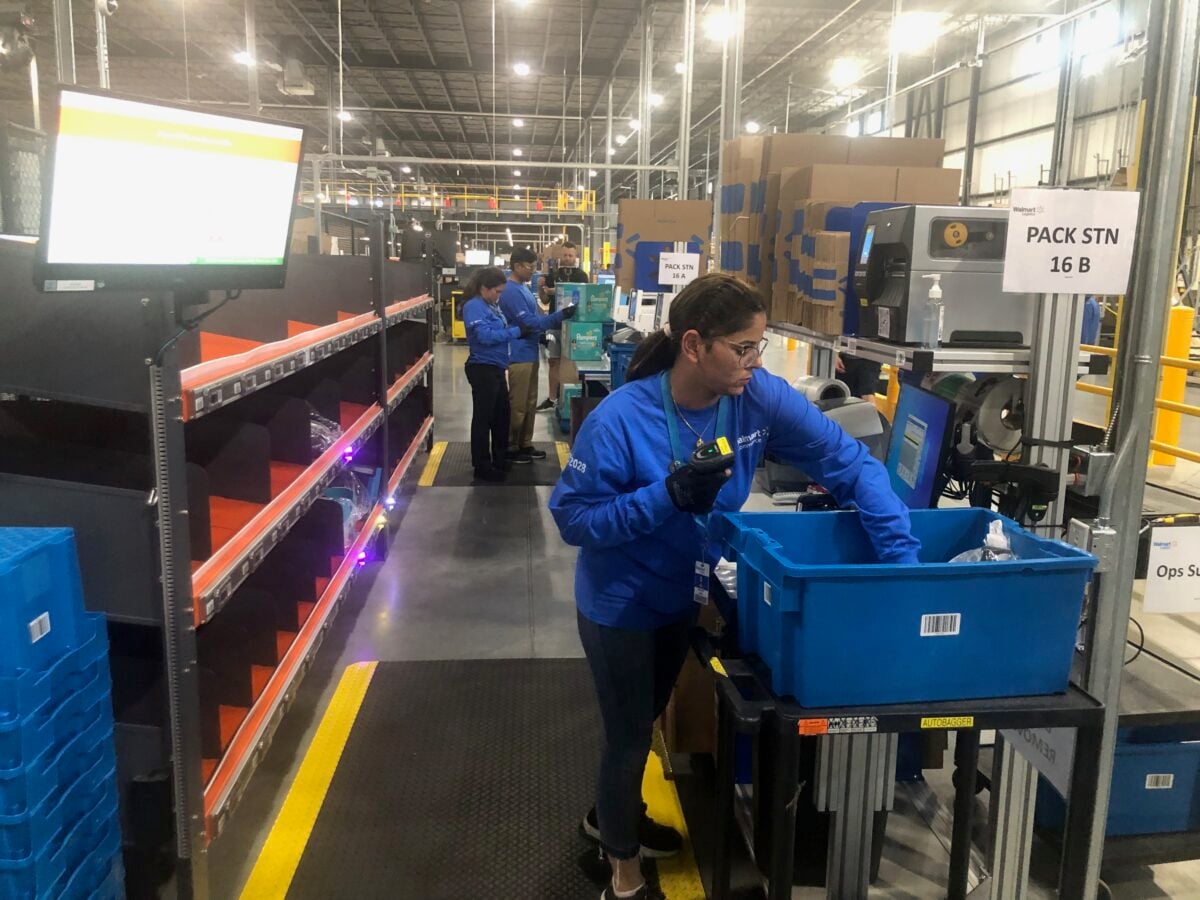
Powered by cutting-edge logistics technology to achieve more productivity with less physical effort and deliver orders faster;
Goods-to-person robotics help associates store, pick and sort items with a high degree of accuracy, speeding up the fulfillment process. Three types of robotic technology assist associates with tasks within the facility;
Smart and flexible storage manages a large and wide variety of inventory, improving availability for customers and allowing the facility to adapt to customers’ needs;
Technology-enhanced inbound receiving allows associates to introduce items to the mobile storage units more quickly, with items available for purchase on Walmart.ca in as fast as 15 minutes once entered into the system;
Auto-boxing technology helps to optimize packaging and minimize waste by building a custom-sized box for each order, resulting in more efficiently-packed trailers.
Patricio Dallan
“Time is the modern currency and we are more committed than ever to provide faster delivery,” said Patricio Dallan, Senior Vice President, Omni Supply Chain, Walmart Canada. “This new fulfillment centre is a game-changer. We’re working hard every day, testing, learning and scaling technology in our omni supply chain operations to exceed customer expectations and provide a more seamless shopping experience.”
The Rocky View County Fulfillment Centre is part of Walmart Canada’s larger $3.5 billion investment to revolutionize its best-in-class supply chain network and increase its e-commerce capabilities.
Walmart Canada Fulfillment Centre in Rocky View County, Alberta (Image: Mario Toneguzzi)
Walmart Canada has been present in Alberta since 1994 and today has 59 stores, four distribution centres and a new fulfillment centre employing more than 16,000 associates.
Walmart Canada is investing more than $100 million in store upgrades in the province over a two-year period to improve the customer shopping experience.
Walmart Canada works with close to 2,000 Canadian suppliers, big and small. Walmart Canada bought approximately $220 million worth of products from more than 40 suppliers located in Alberta in a recent 12-month period, a number the retailer hopes to continue to grow.
Walmart Canada Fulfillment Centre in Rocky View County, Alberta (Image: Mario Toneguzzi)
Gebara said the new fulfillment centre represents a significant investment in Alberta and the creation of more than 100 jobs.
“That’s a testament of the commitment that we have not only with the province but also with the country and how much we want to continue to grow and make a difference for Canadian customers, communities and for all our associates,” he said.
“With our skilled talent and innovative technology that we’re bringing to this facility we’re going to be able to ship quite a few amount of inventory across this part of the country. This facility will allow us to operate and flow when we are at our maturity 20 million units a year and that makes a big difference for our customers because we will be able to continue to deliver our customer value proposition of everyday low prices. But now we will be able to offer it in the ways that our customers want to shop, however they want to shop, whenever they want to shop and wherever they want to shop, whether they want to do it in our stores or whether they want to do it online.”
Gebara said he’s also pleased that through this new facility the retailer will be able to provide fulfillment options for businesses who sell their items in the company’s Marketplace.
“So smaller businesses won’t need to build their own fulfillment networks to be able to get their items closer to their customers,” he said. “They can do it through this facility and through our network and we can leverage altogether the great development that we have here.”
Gonzalo Gebrara at Walmart Canada Fulfillment Centre in Rocky View County, Alberta (Image: Mario Toneguzzi)
Nationally, Walmart has more than 400 stores with 1.5 million daily customers.
“Alberta’s economy keeps moving forward thanks to investments like this one, from Walmart Canada. The opening of their new high-tech fulfillment centre means more jobs for Albertans, increased opportunities for Alberta retailers, and streamlined service for Western Canadian customers. Walmart Canada is already proving to be a good neighbour through their support for local community programs, and I look forward to continuing to work together,” said Danielle Smith, Premier of Alberta, in a statement.
Gebara said Alberta is a very, very important part of the country for the retailer.
“We’re very happy with the business that we have here and we want to continue to grow it and we have the right environment to grow it,” he said.
Additional Photos
Walmart Canada Fulfillment Centre in Rocky View County, AlbertaWalmart Canada Fulfillment Centre in Rocky View County, Alberta (Image: Mario Toneguzzi)Walmart Canada Fulfillment Centre in Rocky View County (Image: Mario Toneguzzi)Walmart Canada Fulfillment Centre in Rocky View County, Alberta (Image: Mario Toneguzzi)Walmart Canada Fulfillment Centre in Rocky View County, Alberta (Image: Mario Toneguzzi)Walmart Canada Fulfillment Centre in Rocky View County, Alberta (Image: Mario Toneguzzi)Walmart Canada Fulfillment Centre in Rocky View County, Alberta (Image: Mario Toneguzzi)Walmart Canada Fulfillment Centre in Rocky View County, Alberta (Image: Mario Toneguzzi)Walmart Canada Fulfillment Centre in Rocky View County, Alberta (Image: Mario Toneguzzi)Walmart Canada Fulfillment Centre in Rocky View County, Alberta (Image: Mario Toneguzzi)
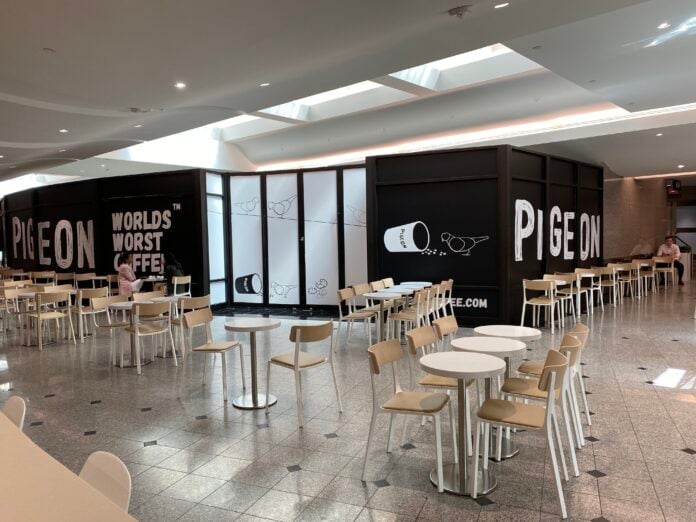
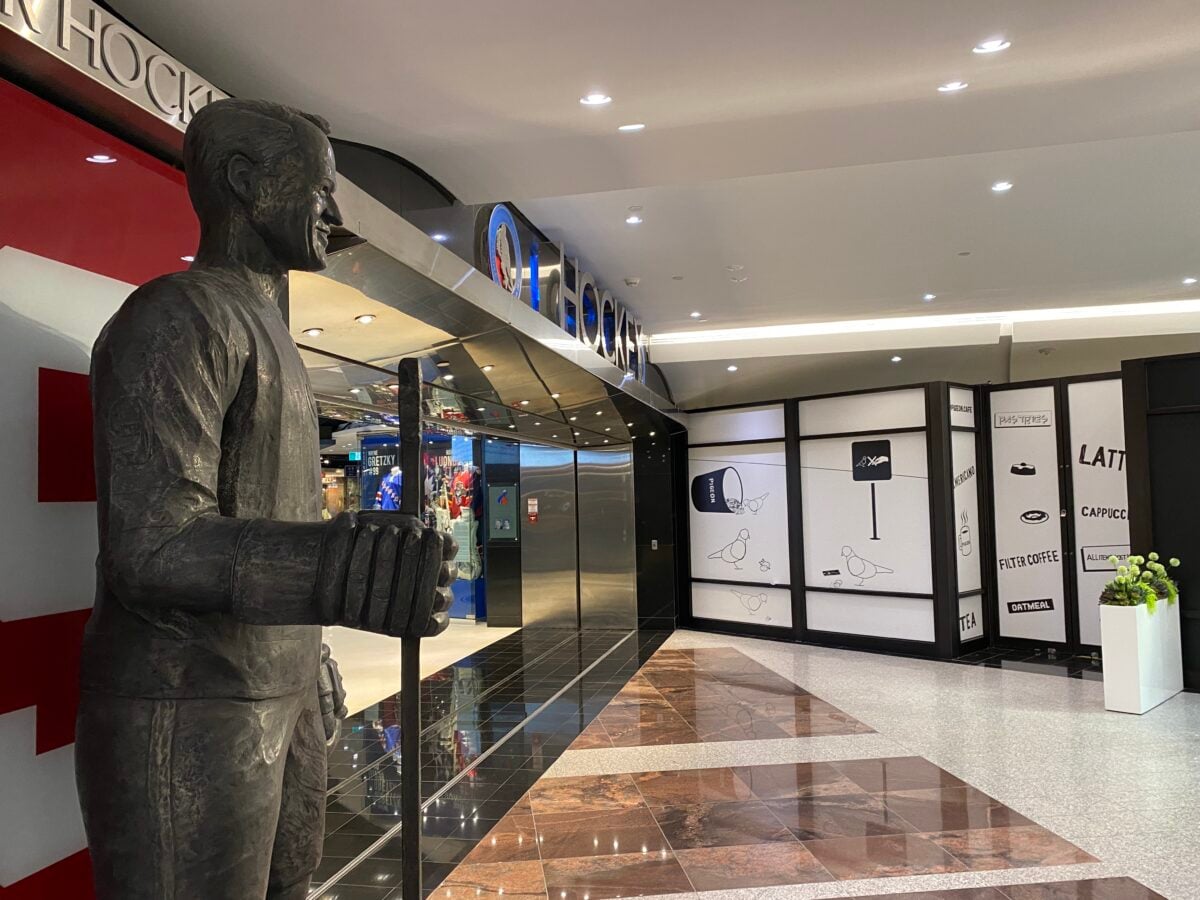
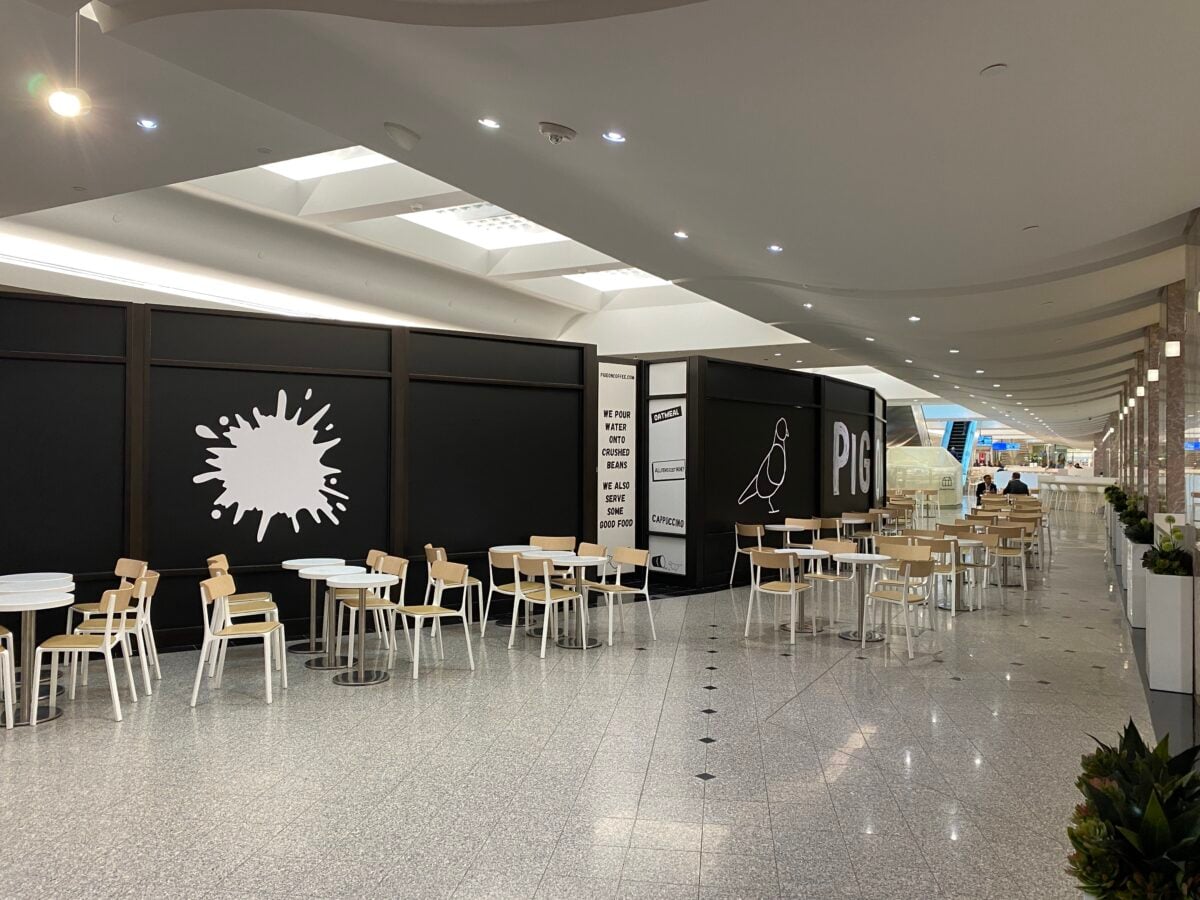
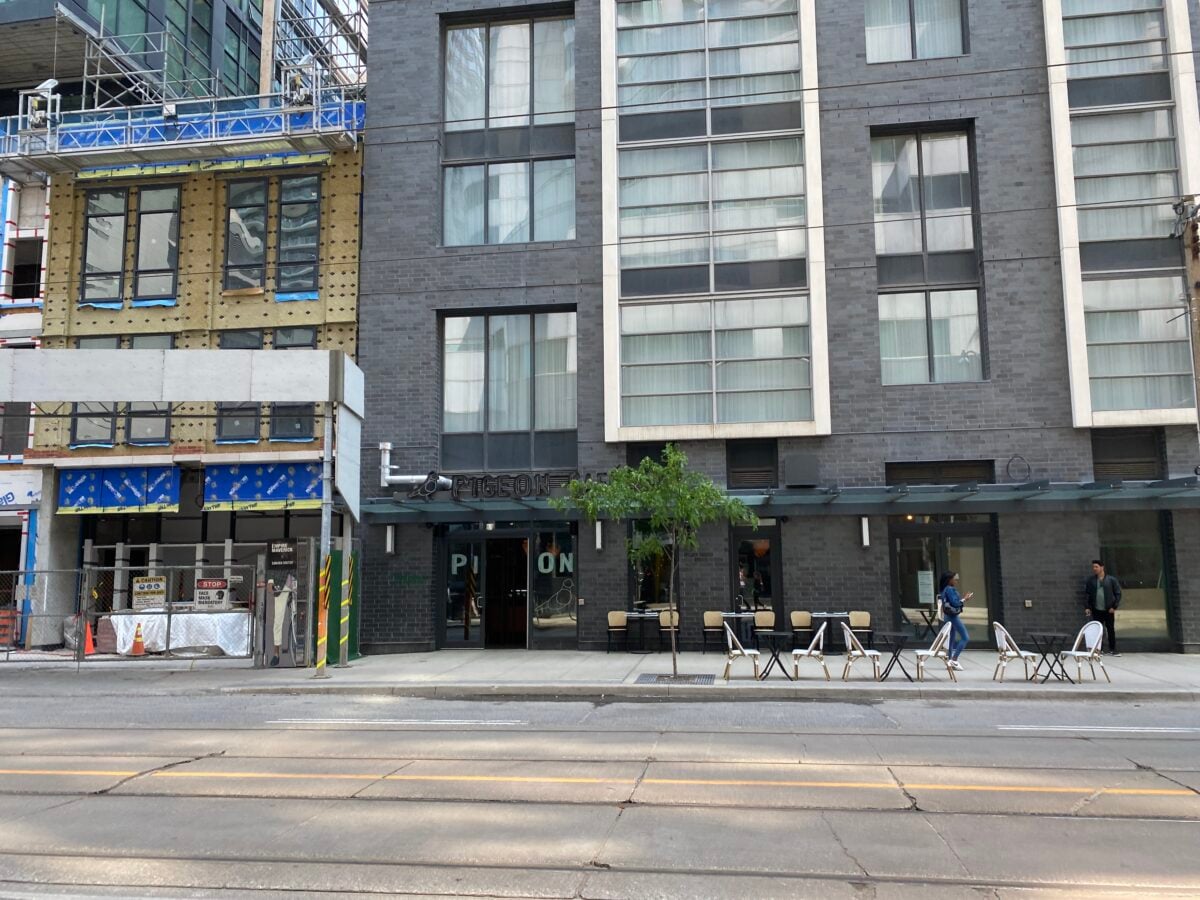
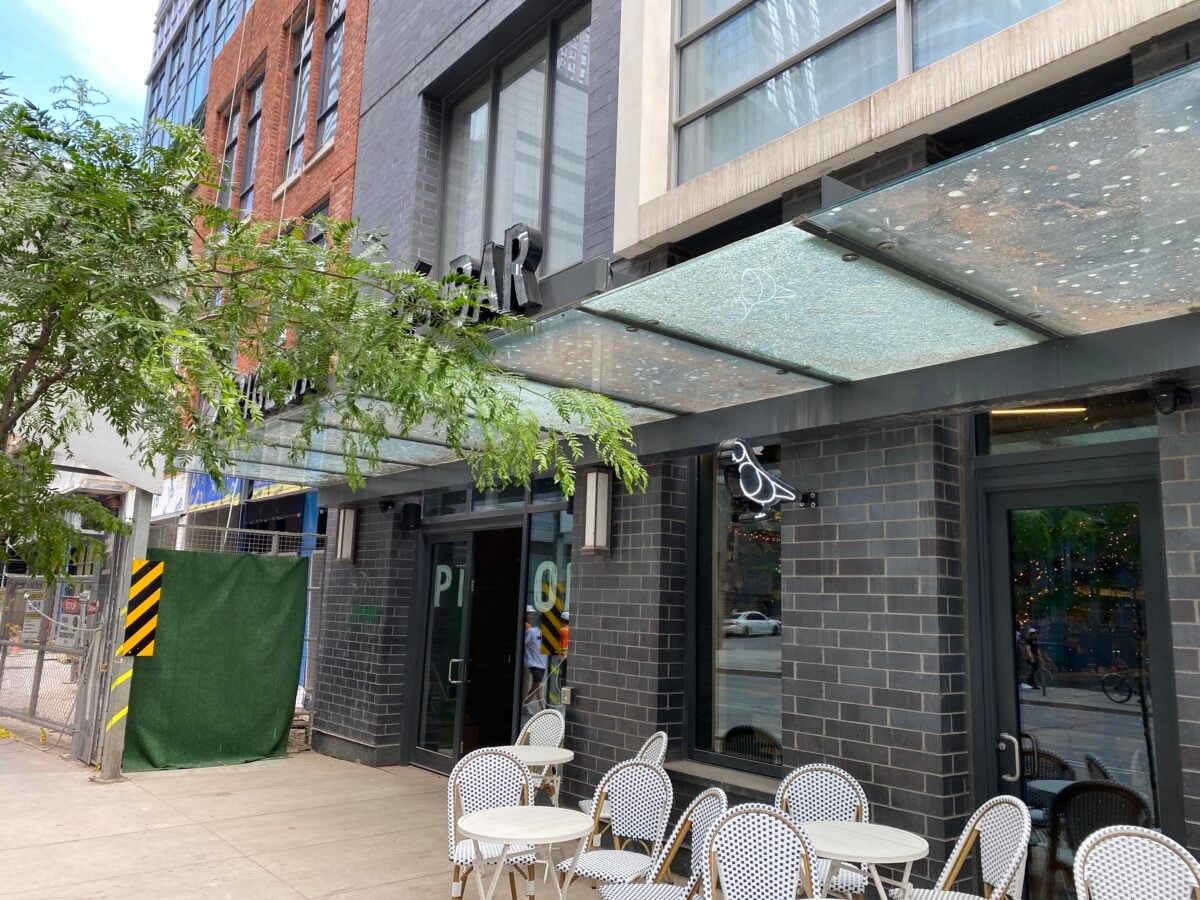
Pigeon Coffee at Brookfield Place (Image: Dustin Fuhs)
Montreal-based coffee shop Pigeon has a unique and funny way to promote itself.
Its tagline jokingly refers to itself as the ‘world’s worst coffee.’
Since its humble beginnings it has grown to several locations in Montreal, expanded to the Toronto market and has plans to open more locations.
“We focus on quality and, in everything, we aim to make amazing stuff,” said Jonathan Dresner, Founder and Owner. “We started out very playful. I’m a restaurateur with other restaurant banners. I’ve started all these different concepts.
Jonathan Dresner
“When I did Pigeon, everybody loved coffee. Very passionate about it. And I wanted to get into it. I found that as I was sourcing beans and talking to different roasters and all this type of stuff, I found it a little bit uptight. Too uptight. Everybody was claiming they were the best and they were claiming that everybody else’s coffee was garbage.
“That trend kept happening. It’s like wine. There’s good wine and bad wine. Some coffees are darker or lighter. A little bit of fruit nodes. Some are bitter. Some are not acidic. People have different preferences . . . It’s coffee. I’m a customer. I like coffee. I like different types of coffee. So I said let me lighten this up and I put a sign on our window and I said we’re the world’s worst coffee. I trademarked that in North America.”
Image: Pigeon Café & Bar
Pigeon became very popular in its first location in downtown Montreal about six years ago – it was basically an espresso bar. Before COVID, Dresner had signed a lease and location in a neighbourhood in Montreal where he wanted to do a coffee and cocktails concept.
“We were going to open up January, February or March 2020 and then we were just about to open and COVID locked us down. We only opened July 3, 2020 and Pigeon cafe and bar, the full restaurant, that just took off. We had lineups day and night. It was very very popular,” said Dresner.
“We sell our coffee online. We’ve been in a few grocery stores and eventually we’re going to work on that as well. The expansion we’ve done so far hasn’t been really from being too aggressive. It’s been more like opportunity coming, someone saying hey why don’t you open here, take a look, we want Pigeon here.
“There’s been so much demand.”
Pigeon Coffee at Brookfield Place (Image: Dustin Fuhs)Pigeon Coffee at Brookfield Place (Image: Dustin Fuhs)
It has four locations now, three in Montreal, with the latest in Toronto on King Street as a full restaurant concept with coffee and cocktails.
“We’re going to keep expanding one by one,” said Dresner, adding he’s quite excited about the opening in downtown Toronto in Brookfield Place in the fall.
“That was one of the busiest Starbucks I think. Beautiful space. Obviously we want to do a really nice selection there. So hopefully people keep coming back to the towers coming back to work and we want to make something very special there.”
Pigeon Café & Bar on King Street in Toronto (Image: Dustin Fuhs)Pigeon Café & Bar on King Street in Toronto (Image: Dustin Fuhs)
Another two are opening this year in the Montreal area.
“Hopefully if this Brookfield thing goes really well, we’ll be open to doing more of these espresso bars. Quick service coffee. Grab pastries and sandwiches and salads.”
Dresner said he’s never set target numbers with his hospitality brands in the past.
“But I think Pigeon could be very big. It’s a good name. We have a good product. We do coffee and food. I do plan to open in the States. I’d like to go around Canada. I’d like to bring it around the U.S. But how fast, how many, we’ll see,” he said.
Retail Insider is streamlining its Canadian retail news from around the web to include a handful of top news stories that can be viewed quickly during the day. Here are the top stories from the past 24 hours.
The Competition Bureau is making recommendations to promote competition in Canada’s grocery industry – actions that would encourage lower prices and more choice for Canadians.
The Bureau, on Tuesday, said grocery prices have increased at their fastest rate in more than 40 years, and Canadians are feeling the pinch.
Matthew Boswell
It published its market study report Canada Needs More Grocery Competition which recommends that all levels of Canadian government act to increase competition in the grocery industry.
“As we have witnessed the highest cost-of-living increases seen in a generation, Canadians are recognizing the relationship between a lack of competition and rising prices. By acting now, governments at all levels can take steps towards creating a more competitive grocery industry. Competition can help lower prices and make life more affordable for Canadians,” said Matthew Boswell, Commissioner of Competition, in a statement.
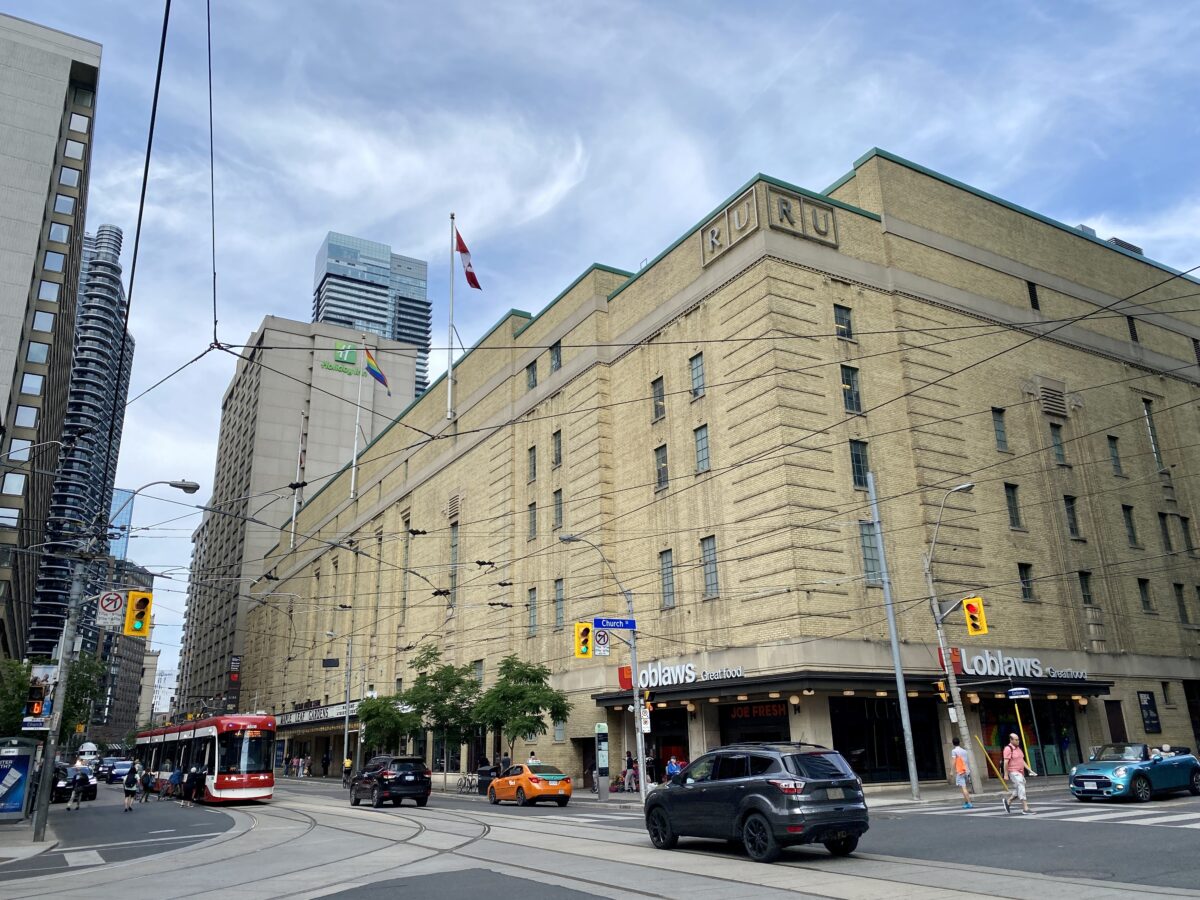
Farm Boy Weekly Specials at Sugar Wharf Location (Image: Dustin Fuhs)Loblaw Carlton at Maple Leaf Gardens (Image: Dustin Fuhs)
The report makes four recommendations to governments to meaningfully improve competition in the grocery industry:
1. Create a whole-of-government strategy to support the emergence of new types of grocery businesses;
2. Encourage the growth of independent grocers and the entry of international grocers;
3. Introduce accessible and harmonized unit pricing requirements to empower consumer choice; and
4. Limit the use of property controls that make it difficult for new grocery stores to open.
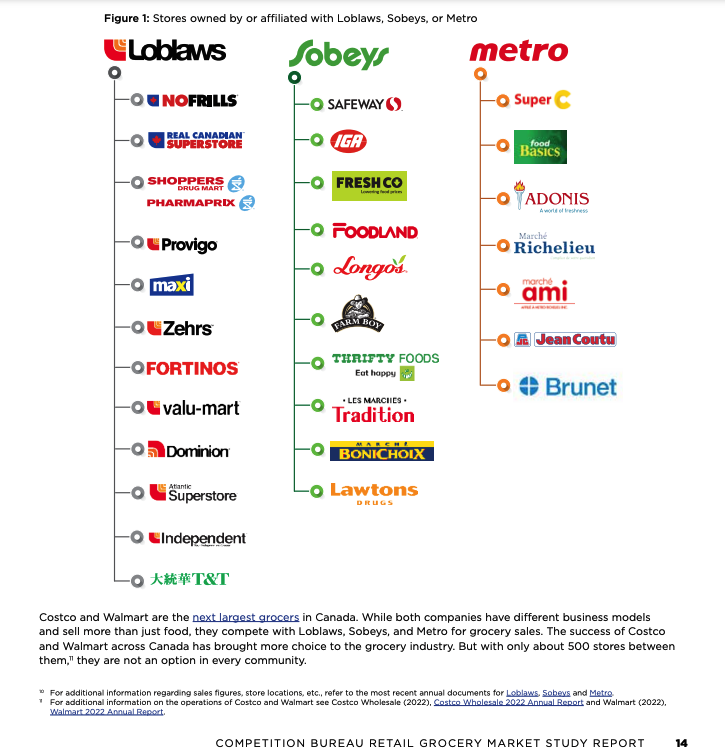
“Canada’s grocery industry is concentrated. Most Canadians buy groceries in stores owned by a handful of grocery giants. In 2022, Canada’s three largest grocers—Loblaws, Sobeys, and Metro—collectively reported more than $100 billion in sales and earned more than $3.6 billion in profits,” said the report.
“For new players and regional independents, the Canadian grocery industry is tough to break into. Canada is a big country and opening new grocery stores is expensive and difficult. The industry’s big players operate thousands of stores and are well entrenched in the shopping habits of Canadians.
“In recent years, industry concentration has increased, and it has become more difficult than ever for businesses to enter, expand, and compete effectively. Furthermore, the price Canadians pay for groceries has been rising fast. Factors such as higher input costs, Russia’s invasion of Ukraine, and supply chain disruptions have contributed to recent increases in the price of food. But we have also seen a longer-term trend that pre-dates those events, of Canada’s largest grocers increasing the amount they make on food sales.”
Image: Sobeys
The report said Canada needs solutions to help bring grocery prices in check. More competition is a key part of the answer.
The Bureau launched its Retail Grocery Market Study on October 24, 2022. The study examined various issues with the goal of recommending measures that governments can take to help improve competition in the sector.
“With inflation on the rise, Canadian consumers have seen their purchasing power decline. This is especially true when buying groceries. In fact, grocery prices in Canada are increasing at the fastest rate seen in 40 years,” said the Bureau at the time.
“Many factors are thought to have impacted the price of food including extreme weather, higher input costs, Russia’s invasion of Ukraine, and supply chain disruptions. Are competition factors also at work? To find out, the Bureau will study this issue from now until June 2023.”
The study examined three main questions:
1. To what extent are higher grocery prices a result of changing competitive dynamics?
2. What can we learn from steps that other countries have taken to increase competition in the sector?
3. How can governments lower barriers to entry and expansion to stimulate competition for consumers?
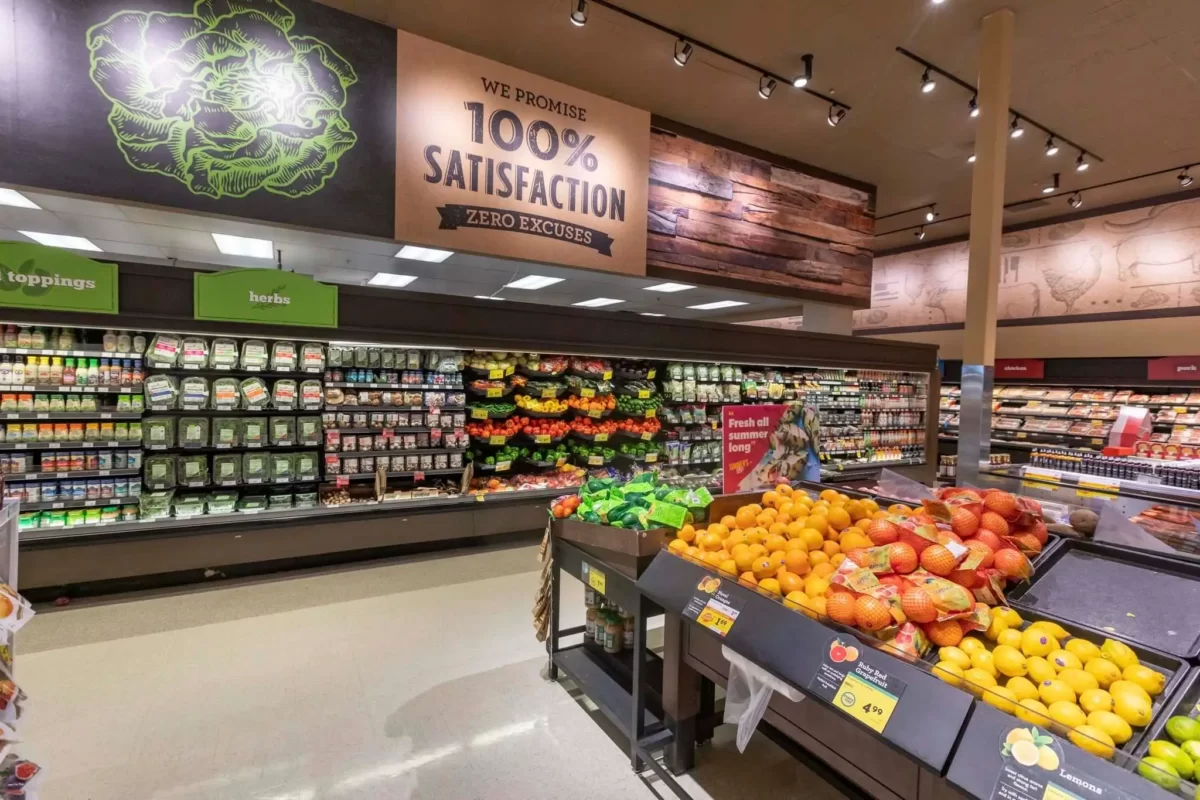
Image: Competition Bureau CanadaInside a Loblaw Grocery Store (Image: Dustin Fuhs)
On Tuesday, the Bureau said it also needs to approach its work in the grocery industry with heightened vigilance and scrutiny to ensure that Canadians benefit from greater choice and more affordable groceries.
“We need to thoroughly and quickly investigate allegations of wrongdoing, and we need the power to act when issues arise. Therefore, in addition to the above recommendations for governments across Canada, the Bureau commits to taking the following three steps to better promote competition in the Canadian grocery industry:
1. Approach our work in the Canadian grocery industry with heightened vigilance and scrutiny.
2. Provide a pro-competitive perspective to support the implementation of Canada’s grocery code of conduct.
3. Revisit the findings of this study in three years to assess progress on recommendations made to government,” it said.
“Change will take time. These solutions will not bring Canadians’ grocery bills down immediately. But by acting now, governments at all levels can take steps toward creating a more competitive grocery industry in Canada.”
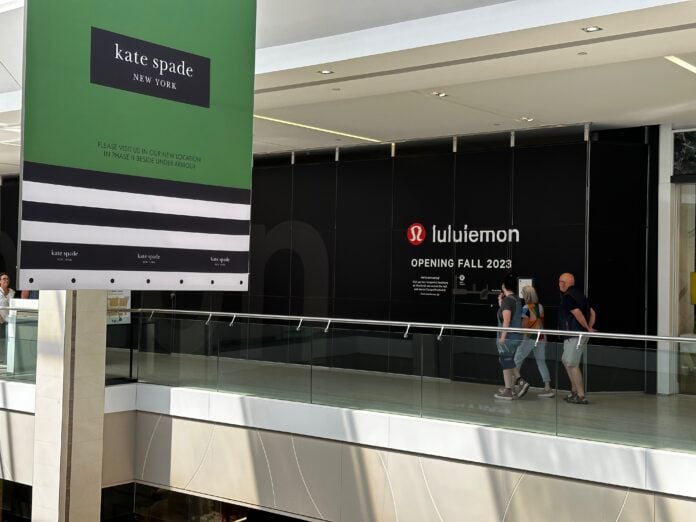
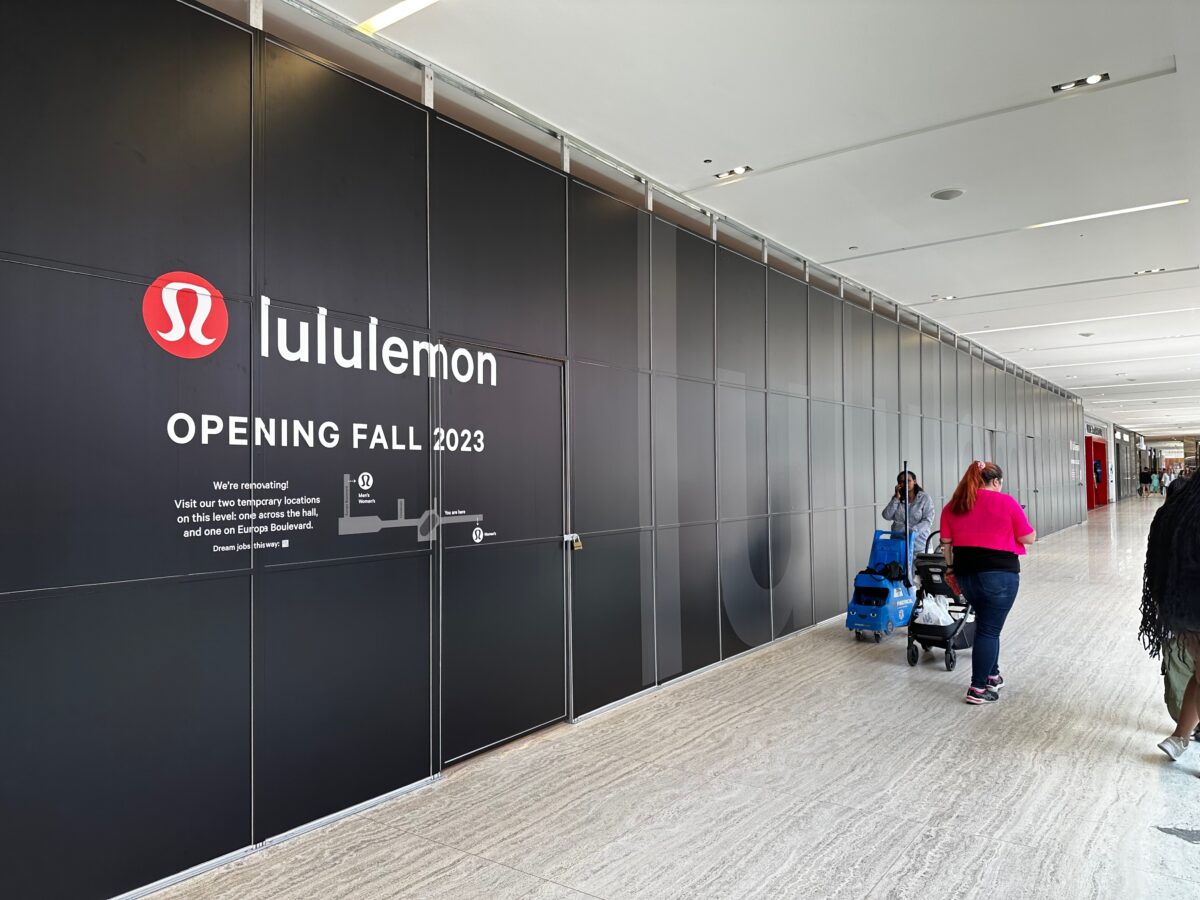
Future lululemon at West Edmonton Mall (Image: Jorden Clarke)
Vancouver-based athleisure brand Lululemon will be expanding its West Edmonton Mall store in Edmonton this year to make it even larger. The store, which almost doubled in size in 2015 is said to be the top-selling unit for the chain and sales are expected to be even higher following its newest expansion. At the same time, Lululemon will be shutting its street front store on Whyte Avenue in Old Strathcona which saw a renovation almost nine years ago.
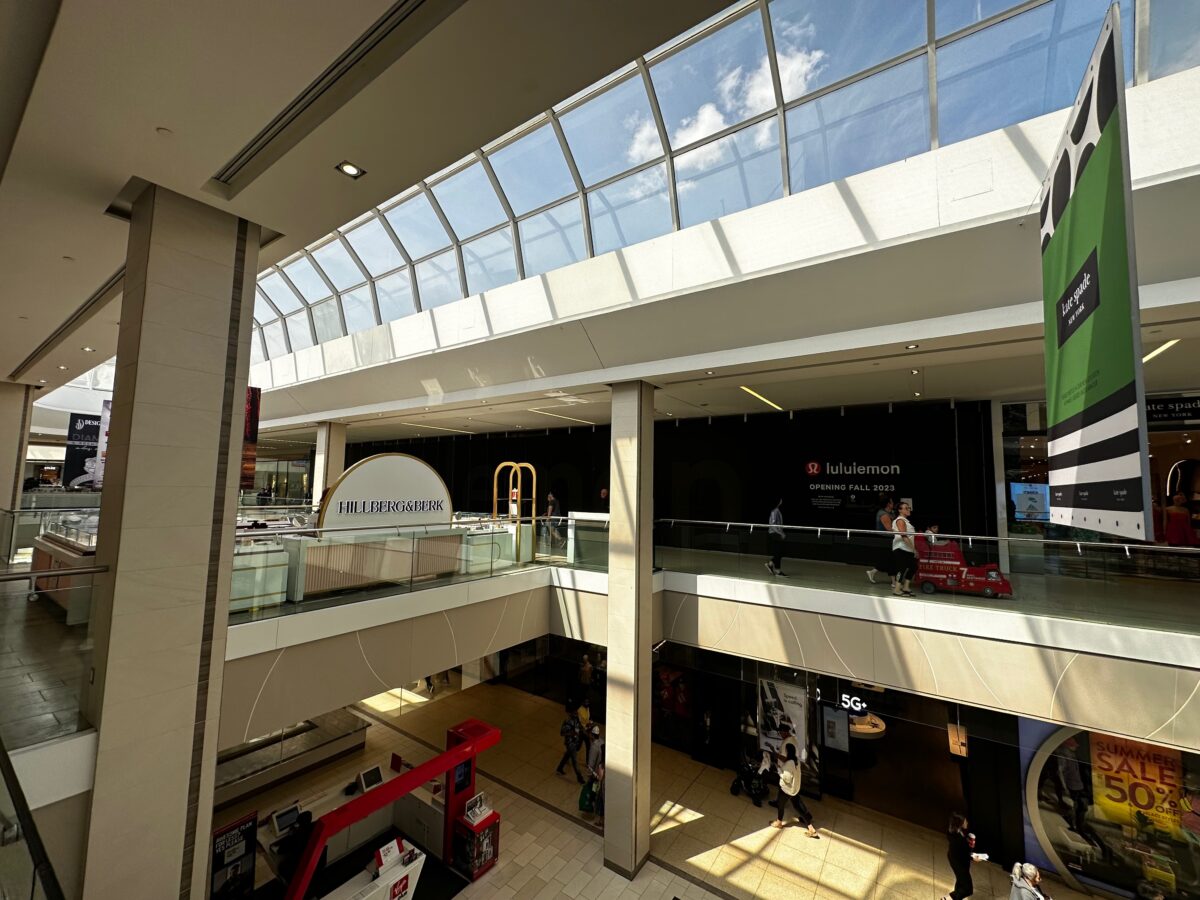
The current 6,190 square foot Lululemon store on the second level in Phase II of West Edmonton Mall will expand by taking over retail spaces formerly occupied by Oakley and Arc’teryx, both of which are relocating in the mall. The former Oakley space is 2,347 square feet while the Arc’teryx space is 2,006 square feet according to lease plans, which means that the expanded Lululemon store will be over 10,500 square feet on one level when completed. The expanded Lululemon store will be bookended by a Zara store and a first-in-Canada Kate Spade concept store recently reported on in Retail Insider.
Uniqlo, JD Sports and Apple are located directly across the way with the Ice Palace skating rink being located a short distance away.
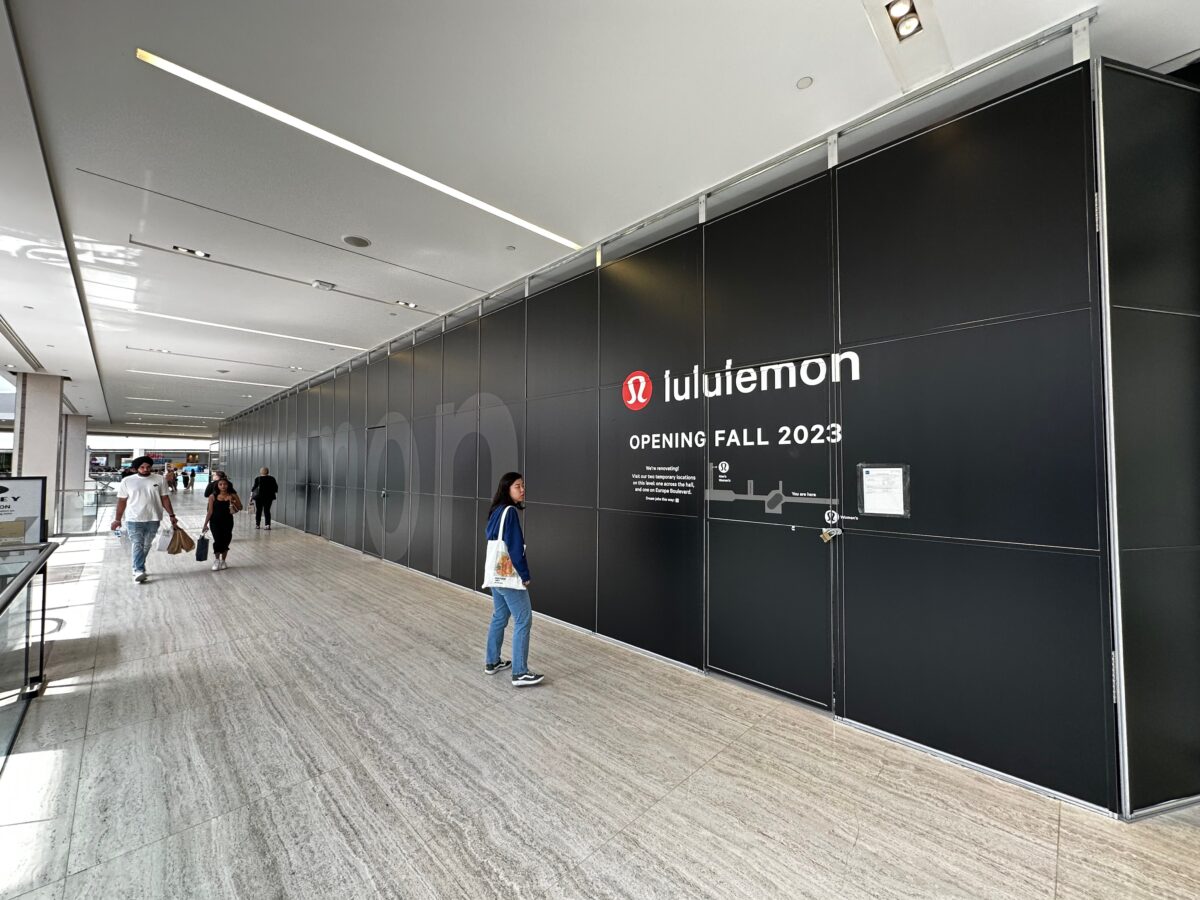
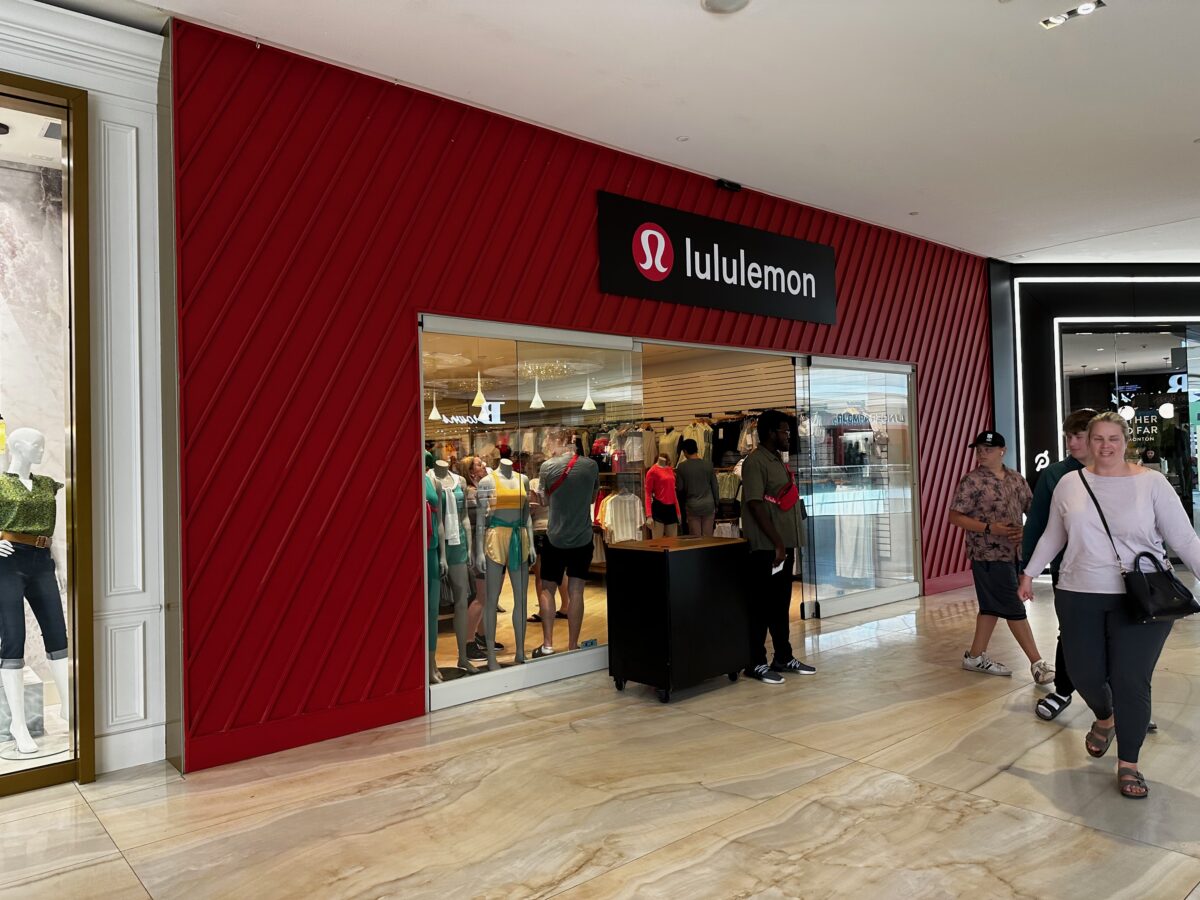
Future lululemon at West Edmonton Mall (Image: Jorden Clarke)Future lululemon at West Edmonton Mall (Image: Jorden Clarke)Future lululemon at West Edmonton Mall (Image: Jorden Clarke)lululemon Pop-up at West Edmonton Mall (Image: Jorden Clarke)
In 2015 Retail Insider reported that Lululemon’s then 3,585 square foot store, which then was the top-selling location for the company, would be expanding to over 6,000 square feet by annexing a retail space formerly occupied by Mexx and Oakley. A unique new facade and full renovation of the store was included with the expansion at that time.
Lululemon will be shutting its street-front store at 10558 Whyte Avenue in early July — the store, which has operated for years, saw a full renovation in late 2014 and acted as a community hub to help drive brand awareness. Lululemon will continue to operate stores at Southgate Centre and Kingsway Mall. A temporary Lululemon store opened last week at West Edmonton Mall while the permanent location is expanded and updated.
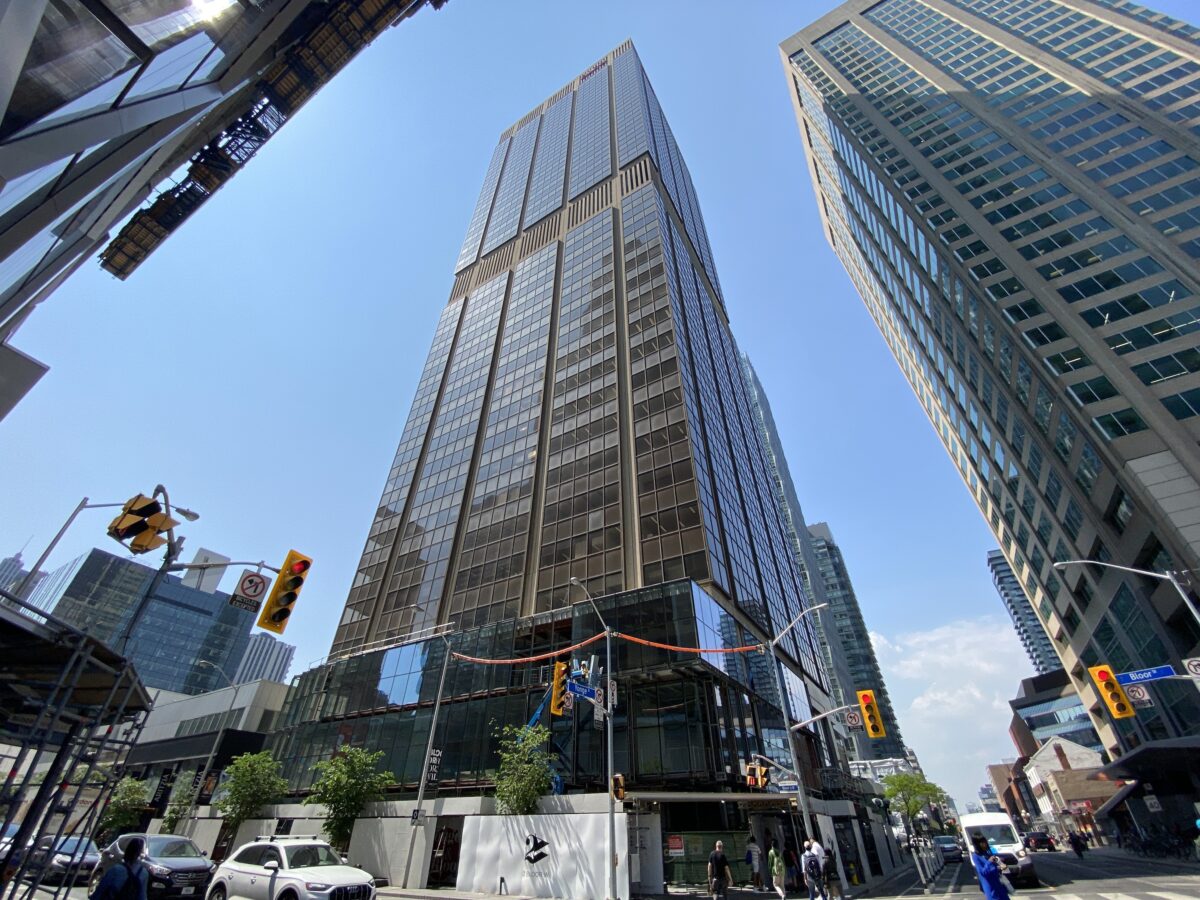
Current Lululemon on Cumberland Avenue in Toronto (Image: Dustin Fuhs)Future lululemon at 2 Bloor (Image: Dustin Fuhs)
Recently, Lululemon has been updating its retail portfolio in Canada, including during the pandemic when it was able to negotiate favourable lease terms to expand and build new stores. This has continued with the brand growing several of its existing locations while building new ones, including one of its largest at the northwest corner of Yonge and Bloor Streets in Toronto (opening next year). Larger stores are being used to showcase Lululemon’s expanded product assortment while also adding experiences and community opportunities.
In Canada, Lululemon has over 70 stores across the country. The brand is now expanding globally with strong penetration into the US market as well as countries overseas. Lululemon is facing competition from US-based Alo Yoga which is expanding rapidly in the US and now in Canada, featuring a similar product and price-point, not to mention Montreal-based Lolë which is growing again.
Nike construction hoarding at West Edmonton Mall (Photo: Jorden Clarke)
West Edmonton Mall has been adding new retailers in recent months, with leasing activity said to be strong. Existing retailers in some cases are being relocated in order to accommodate new retailers and expansions — one example being the move of Volcom and Kawaii Alley in the mall for the construction of a massive new Nike flagship store. West Edmonton Mall has also been adding luxury retail brands to the mix in recent years, and all are said to be doing very well in terms of sales. That includes Louis Vuitton in 2019, Saint Laurent in late 2020, Gucci in 2021, Balenciaga earlier this year, and at least three more big names are said to be on the way with announcements to follow.
Lululemon’s store facades are unique and often feature sustainable and recycled materials, and it will be intersting to see what is done with the expanded West Edmonton Mall store. We’ll follow up on this story when the expanded store fully opens to the public.
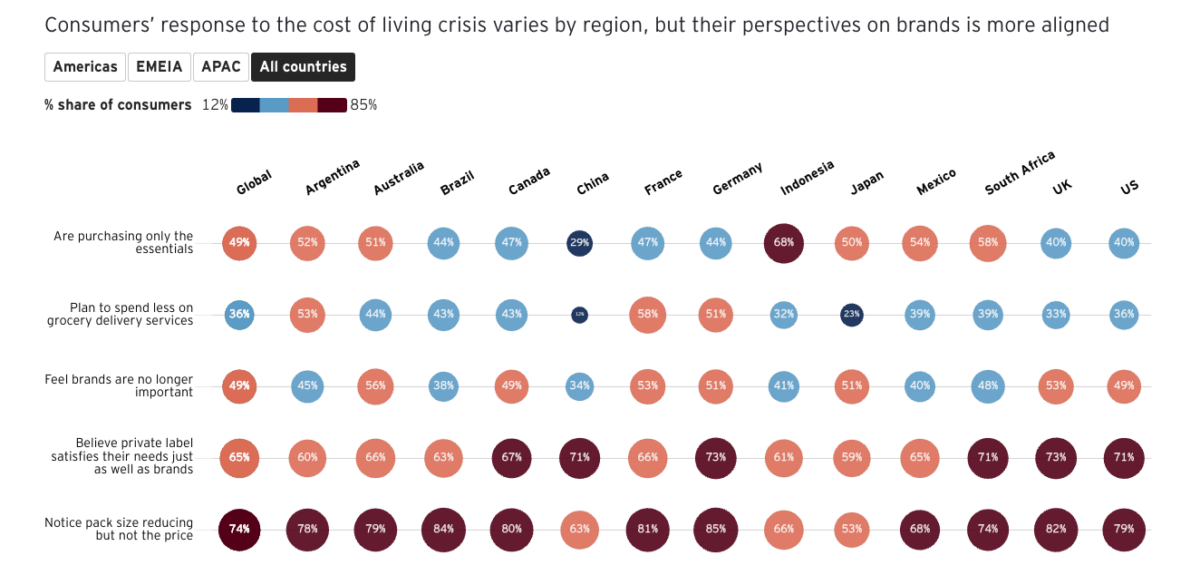
EY Canada’s Future Consumer Report found that almost half of Canadian consumers are turning away from brands in search of affordability.
Consumers are trying to remain resilient in the face of continued cost of living pressure, economic worries and social disruption. Increasingly, they’re adopting new technologies to help them shop, live and work differently — with a focus on making their lives more affordable.
Key findings from the report include:
49 per cent of Canadians say that brands are no longer important;
Respondents are adopting tools to save time or money, but worry about the impact of technology
58 per cent of Canadians are taking action to reduce spending in many areas of their lives deemed non-essential;
43 per cent of consumers are comfortable with the use of artificial intelligence if the benefit is clear;
Consumers said they are willing to leverage AI or share data in exchange for customized online shopping experiences (51 per cent), tailored advertisements (43 per cent) or promotions (63 per cent) and pre-populated shopping carts (41 per cent);
More than half of shoppers would consider private labels for clothing, shoes and accessories
73 per cent now prefer to repair rather than replace their possessions.
Image: EY
“As companies accelerate the use of cloud to build data repositories so they can mine for insights, consumers are increasingly becoming aware that their data is prized and want to weigh the benefits of sharing data against the risks and the value they receive in exchange,” said Imran Ullah, EY Canada, Associate Partner, National Cloud Strategy Leader.
Imran Ullah
“How companies balance this exchange is an important part of consumer trust and engagement – this is why it’s critical to tune in to the way consumers think and feel about the digital innovations that are entering every aspect of their lives today.”
“With today’s economic uncertainties, Canadians are focusing on short-term lifestyle changes and reprioritizing individual needs,” said Monica Chadha, EY Canada Retail Leader. “They are adopting new technologies to help manage their day-to-day and inform their purchasing decisions.”
Monica Chadha
Ullah said Canadians are starting to identify value for items differently. They’re starting to create a different process around how do they think about and experience the purchasing process – and they’re associating value with certain items in a different way than in the past.
“If you see the connection to how Canadians are becoming more and more comfortable leveraging technology in their purchases, the report mentioned in Canada a 43 per cent adoption rate in terms of leveraging and being comfortable sharing data with retailers and also leveraging technology in the regular everyday buying experience,” he said.
“You probably saw this mindshift during COVID. All of a sudden we couldn’t go to the grocery stores. We couldn’t go shopping on a regular basis. Everything had to be pick up outside or shop online and pick up in certain spots. Or hand delivery services.
“So the real core definition of value is changing and that’s impacting brands because brands have not probably done a good enough job of differentiating themselves from the others. There’s some strong brands with great experience that have been doing it year over year in Canada. Those are still well recognized. But the ones that were probably a little bit more on the fringe, Canadian consumers are basically saying I’m finding different ways or different things to value.”
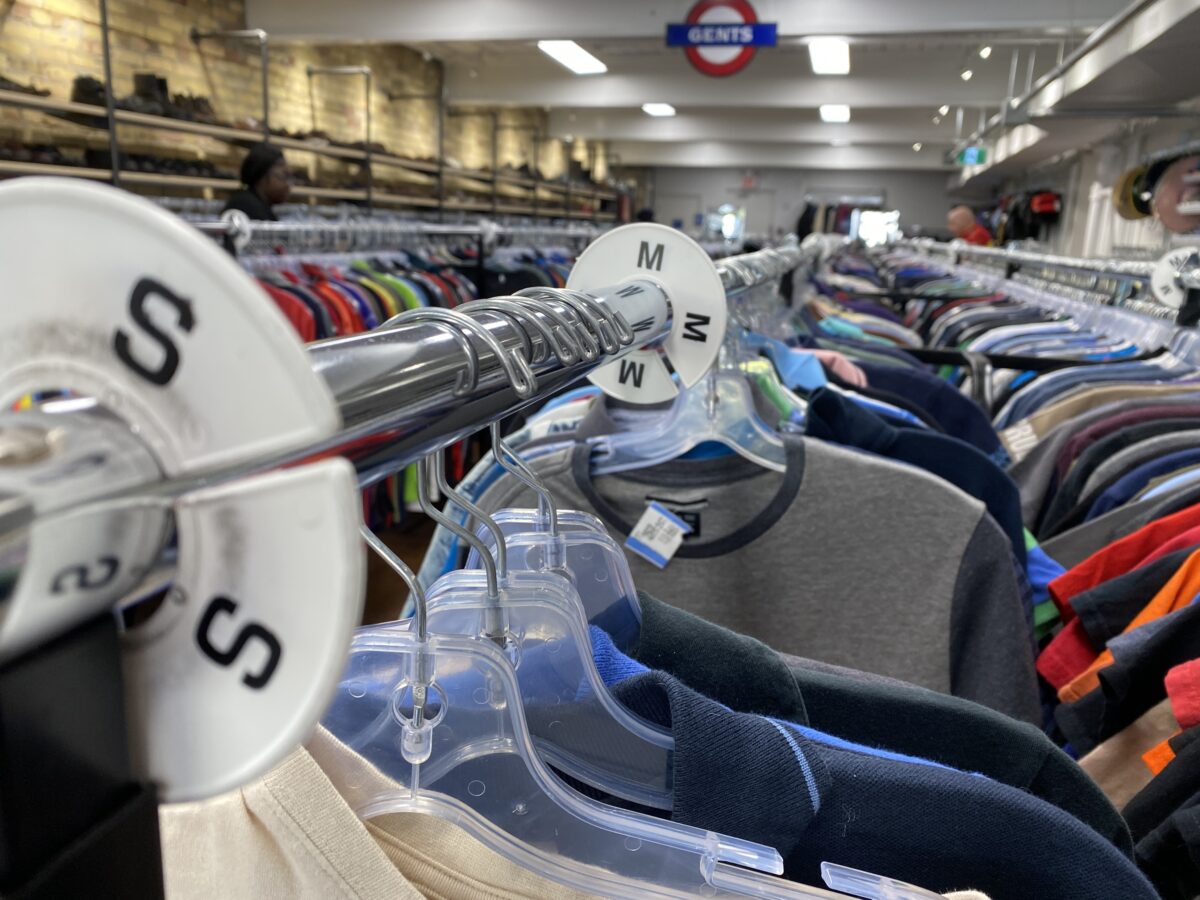
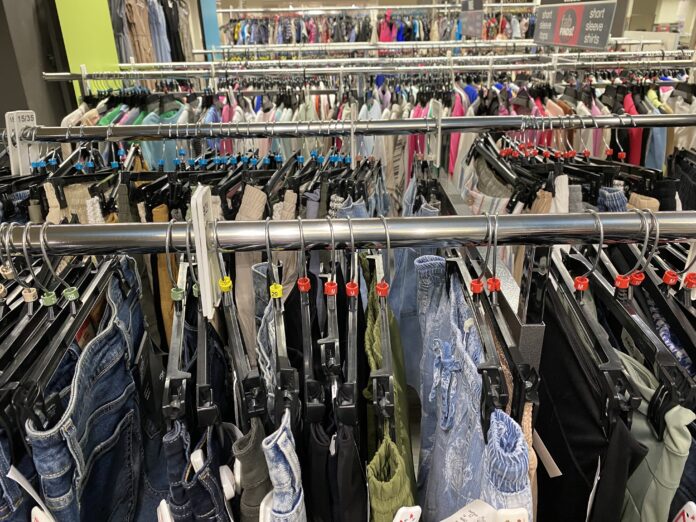
Value Village Boutique on Queen Street (Image: Dustin Fuhs)
Ullah said the consumer is sharing the data. The brands now have the information on what consumers want and it’s just not the journey of buying the product itself.
“It’s everything around it,” he said. “We think about what was the process to buy the item, how did that look like. Is it fit for my needs? Is it fit for purpose? Is it cost sensitive? Does it fit within my budget? Does it have a value or a longevity to it? These are things that consumers are sharing with brands.
“So now brands have to turn around and say alright I’ve got new data, I’ve got information on my consumer base. How do I make my product or my experience better or provide a valuable experience back to the Canadian consumer?”
Ullah said the expectation from the consumer is higher and for brands to be able to compete they’re going to have to start investing more into technology.
“So we’re seeing more of a spend in new technology and there’s a couple of different ways to do it depending on the brand. If it’s a longer running brand, they may have a lot of technical debt that they need to get rid of and take money out of that to put towards new,” he said.
“And then there’s new verticals. There’s new brands that are popping up all the time . . . Shops that are really kind of capturing the market in certain areas. And they don’t have that legacy challenge. So all their investment is going into new technology. And what we’re seeing is it’s leveraging the cloud better because a lot of the services around AI, around data, data analytics, it’s easier to pull data in and run those large data sets on a cloud platform.”
Ullah said a lot of times the expectations of the Canadian consumer were high and they were just not being met.
“I think now that they’re shopping smarter, they’re leveraging technology and they’re like look if it’s a brand that doesn’t differentiate I’m not interested in buying it,” he said. “The consumer is willing to pay. That’s what we’re seeing but they’re now putting the pressure back on the retailers to do better. So the expectation is better quality of service, better experience, and they’re willing to pay for that.”
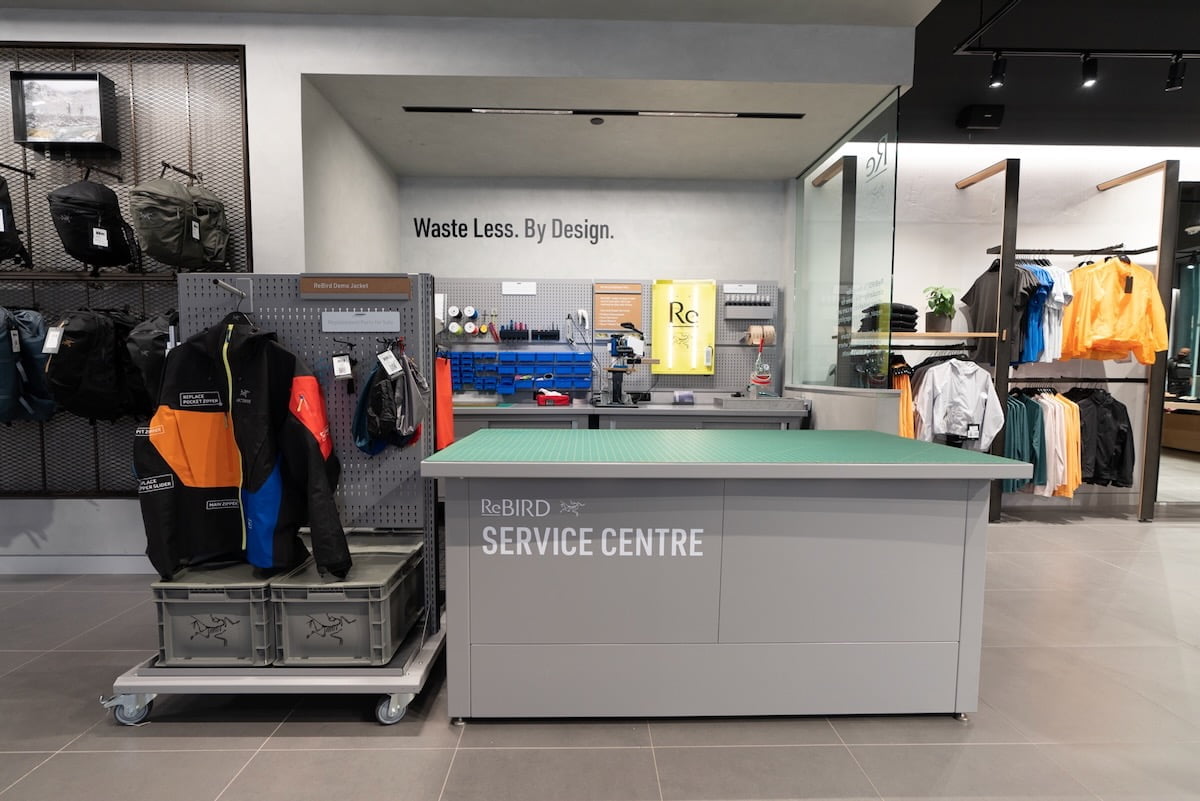
Arc’teryx ReBIRD at CF Toronto Eaton Centre (Image: Ryan Anthony/Arc’teryx)
Canadians growing reliance on technology to manage their daily lives is also shaping purchase decisions and overall consumption, said the EY report. The data revealed that 51 per cent of people have socialized with friends and family over video platforms – a significant 10 per cent rise since June 2022. And 56 per cent now listen to audio streams – a big 18 per cent increase from June 2022.
“Emerging technologies also saw a sharp uptake, with 43 per cent of Canadians now revealing that they’re comfortable with the use of artificial intelligence (AI) technologies if it means an improvement to their purchasing experiences. Notably, consumers said they are willing to leverage AI or share data in exchange for customized online shopping experiences (51 per cent), tailored advertisements (43 per cent) or promotions (63 per cent) and pre-populated shopping carts (41 per cent),” said EY.
The latest edition of the EY Future Consumer Index said the rapid pace of technological change is going to transform the way people live and work, and will redefine the future consumer.
“Small, seemingly unconnected changes in many areas can result in sudden unexpected shifts in behaviors and attitudes. And new technologies can slowly insinuate themselves into a consumer’s daily life before anyone realizes,” said the report.
“Half of the consumers in our Index say they work for companies that are taking on large technology projects designed to create more value for investors, employees and consumers. One of the most significant drivers of change is AI, which will revolutionize the consumer experience, with new products and services, novel ways of accessing them, and entirely new modes of living and working on the horizon.”
Retail Insider is streamlining its Canadian retail news from around the web to include a handful of top news stories that can be viewed quickly during the day. Here are the top stories from the past 24 hours.
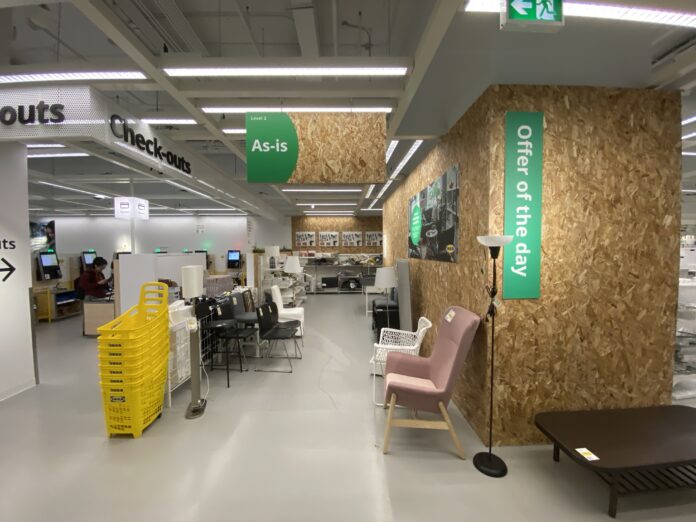
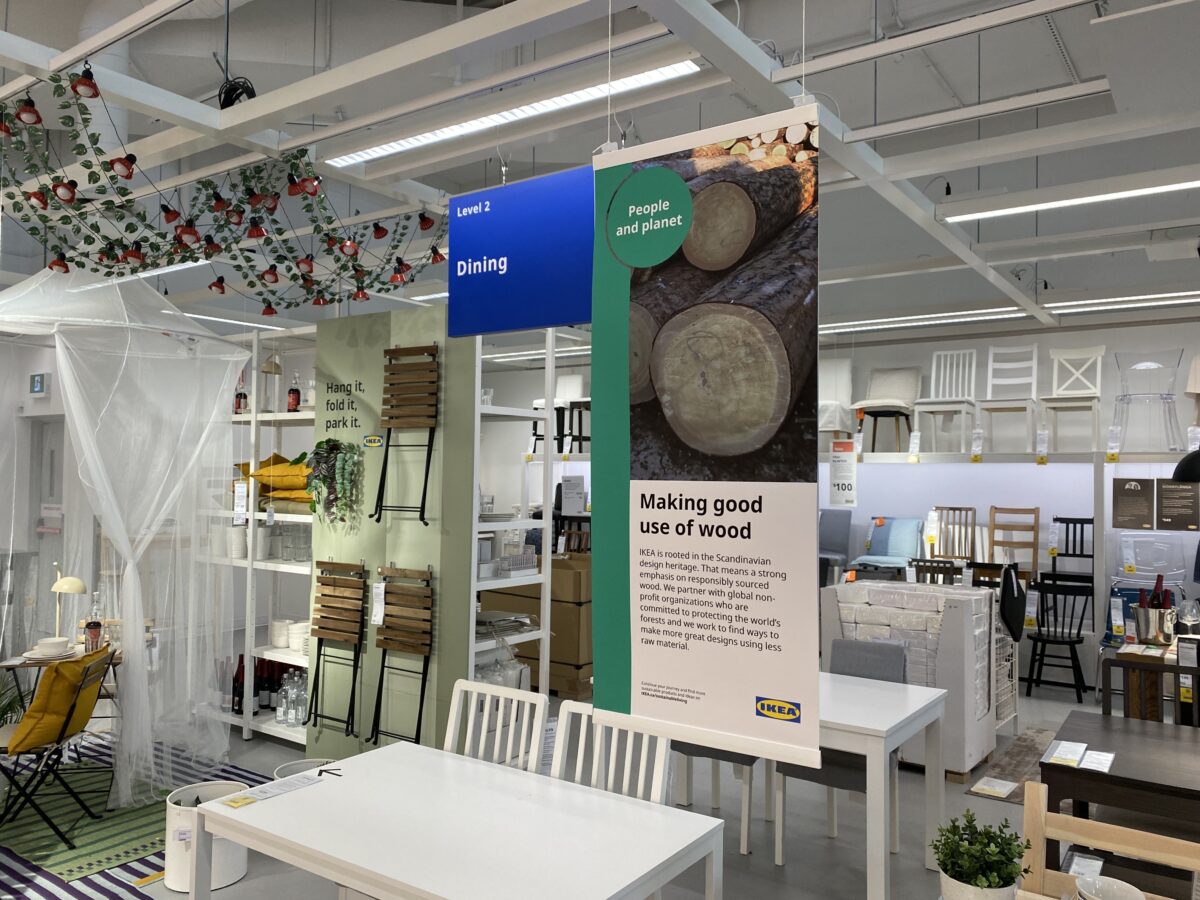
As-Is Section at IKEA City Aura (Image: Dustin Fuhs)
The circular economy is becoming a priority for retailers because it’s a priority for the consumer. Consumers are starting to not only question a retailer’s impact on the environment but they have more options than ever.
“Consumers are also more cautious with their spending and intentionally choosing brands that align with their own values around sustainability. The retail industry needs to work harder in giving consumers what they want. They want more responsible retailers and circularity falls into this bucket,” said Liza Amlani, Principal/Founder, Retail Strategy Group, and Co-Founder, The Merchant Life.
Liza Amlani
“The retailer has more of a chance to save the sale if the return happens in the store. They also have a chance to demonstrate a delightful experience and increase brand loyalty. This can only happen if the customer is engaged and the physical store gives the retailer more of a chance to drive brand loyalty if they can interact with the customer. Saving the sale is only one part of the equation. Getting the customer to continue to shop the brand is another battle that every retailer is trying to win.
“It’s important for brands to be transparent about their process, what they do with returns and the data behind the circular strategy. Responsible retailing is about tracking progress so we do better. Transparency must be part of the circular strategy. With more and more brands being called out for greenwashing and not being completely truthful, retailers need to make sure they are covering all their bases.”
She said depending on how space is being allocated today, returning product that can be repurposed and sold again requires a process that includes sorting, cleaning and repairs – and additional space.
As-Is Section at IKEA City Aura (Image: Dustin Fuhs)
Heléne Loberg, Head of Sustainability, IKEA Canada, said the circular economy is very important these days for retailers such as the international giant.
Heléne Loberg
“It’s the only way to make sure that we still have a healthy planet and still have a business in the future. We think that is so important,” she said.
IKEA has a number of initiatives in place. It offers a no-nonsense policy that allows customers to take up to 365 days to change their mind on a product.
Given how it continues revitalizing its omni-channel services in response to the evolving needs and expectations of customers, customers can now arrange for online order returns to be picked up as well.
It also integrates its returns into its sustainability ambition with updates and expansion of its As-is circular hubs where customers can find solutions in its parts library or save on deals in its As-is sections. These are popular sections at IKEA in-store and online. It also supports waste diversion and social impact through its partnership with Furniture Bank.
”We’re working to become a circular business and are finding new ways to make circularity more relevant and convenient for our customers. We’re developing new products and services that enable customers to maintain, repair and pass on their belongings when they no longer need them,” said the IKEA Canada 2022 Summary Report. “Through the IKEA Sell-back program, customers can give their gently used IKEA furniture another life and get in-store credit to refresh their homes. This year, customers returned almost 3,000 of their pre-loved IKEA items through this program.
IKEA City Aura (Image: Dustin Fuhs)
“In the Greater Toronto Area, we continued to partner with Furniture Bank to offer customers an easy, affordable, and socially responsible mattress removal service. The program collected 5,876 mattresses, with 75 percent being donated to individuals and families overcoming furniture poverty, including community groups supporting marginalized communities. We offer a Spare parts program to support customers in maintaining and repairing their IKEA furniture. Customers can easily order replacement parts for free and have them delivered within 7-10 business days. Throughout the year, we shipped 178,000 orders with a total of 2,760,000 pieces to customers in Canada and the U.S.
“For the second year, IKEA Canada launched a month-long Green Friday campaign shifting the conversation to show how sustainable living can be easy and affordable for everyone. By closing the loop on circularity, IKEA encouraged customers to sell back their gently used products, offered special offers on pre-loved products, hosted virtual workshops to support customers in extending the life of their IKEA products, as well as furniture donation and electronic recycling drives for local community partners.”
Loberg said part of the retailer’s mission is to help consumers live a more circular life.
Gary Newbury, Founder of RetailAID Inc. and an Award Winning Strategic Advisor and Delivery Executive across the end to end consumer driven supply chain, said the circular economy continues to rise in prominence across Canadian retailing for many reasons. The key reasons are:
Gary Newbury
Finding new ways to be more efficient with resources. Within logistics, finding better ways of last mile delivery routing, deferring deliveries, with consumers support, to allow assets to be utilized better and reducing carbon footprint;
Consumers are increasinging becoming more concerned with sustainability of products they buy and demanding more transparency in the end-to-end journey from, say farm to folk;
To meet regulatory requirements developed by various levels of government including areas such as packaging and taking back of products at end of life;
Beneficial cost savings can arise when systems, infrastructure and ways of working are seen through a sustainability lens. A simple example will be to replace light bulbs with low energy consumption LED lights and installing motion detection systems to reduce power consumption further and, importantly;
Supply Chain Resiliency. We have learned supply chains became very easily disrupted in the early stage of restrictions. There is much conversation around regionalization, local supply for local markets. Typically what we are seeing is a switch from China to other Far Eastern (Vietnam seems to be a popular origin for manufacturing), low wage economies. However, there is also strength of feeling that nearshoring (to say Mexico and Latin America) reduces the very real risks of modern day slavery, reduces product carbon footprint and reduces geo-political risk. It also makes reverse logistics of returning product to supplier less wasteful and expensive
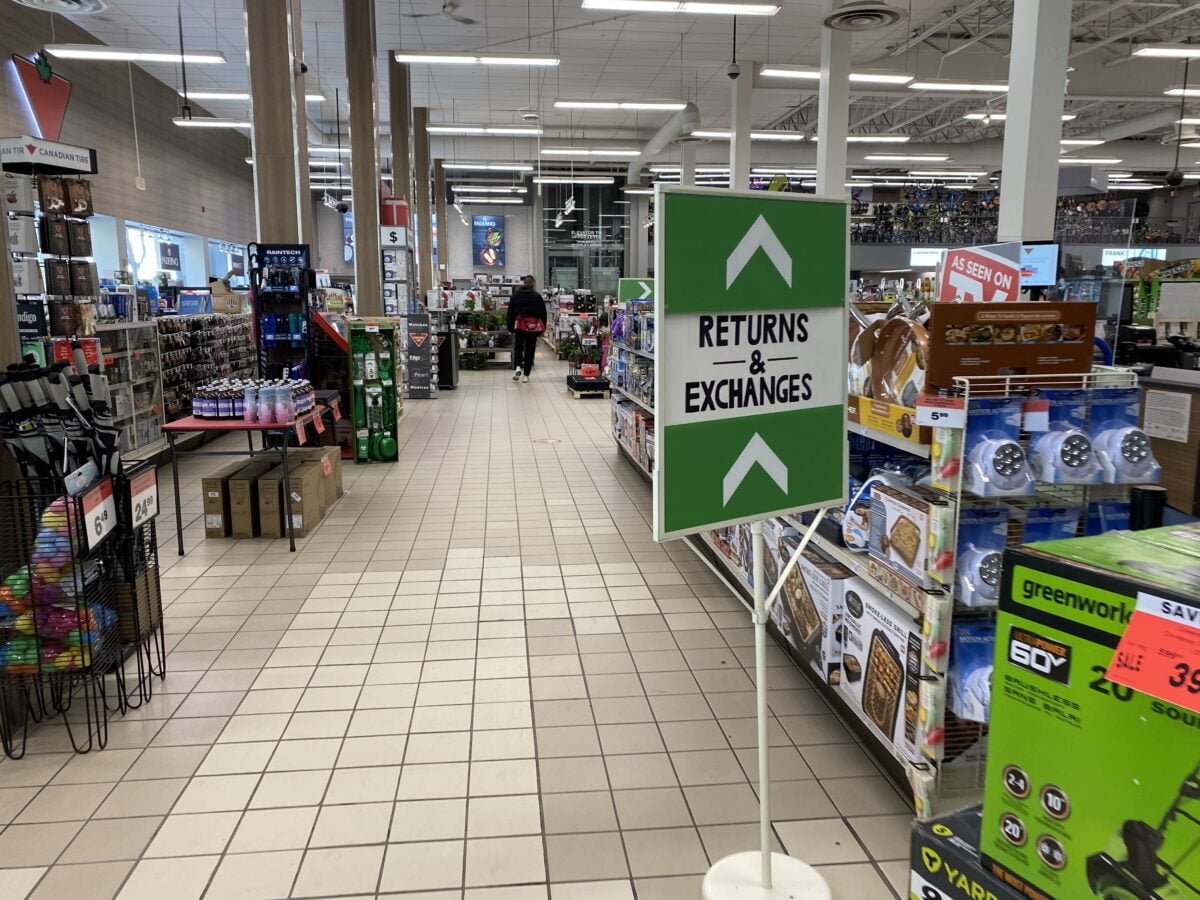
Returns and Exchanges at Canadian Tire (Image: Dustin Fuhs)
There are several reasons to integrate stores and returns processing, and remove friction from the process, he said:
Primarily, this should be convenient for customers to go about their day-to-day business, popping returns to stores, rather than having to repackage the product for sending through the mail, printing off labels and arranging drop off or pick up. Target has reduced this to “drive through returns” at some of its stores;
A hassle-free store-based returns process should be the goal of retailers looking to minimize the burden on consumers and accelerating the path of the return back into inventory as quickly as possible, rather than routing through the warehouse and back out to stores days later, allowing resale as quickly as possible;
A friction free store-based returns process helps to build loyalty and more future sales. It may assist with upselling and providing the consumer with an opportunity to buy other products or services while they are visiting the store; and
Data insights – the returns process should allow returns to be analyzed on the basis of product performance and consumer, to drive supplier performance, returns policy or action with specific consumers
“Most stores have customer service desks that have developed over time. To handle more traffic from, say, online orders which have been previously sent back to the warehouse, they are likely to have to review their procedures (so returns are not held up from being actioned), potentially look at headcount and set KPIs for churning product to monitor performance. Square footage might be a consideration in terms of the extra volume of returns, however the area might need to be redesigned to ensure the consumer experience is friction free, convenient and allows the opportunity to “go and shop”,” said Newbury.
“There are several reverse logistics startups developing solutions to meet the transition of product being tested in store (such as apparel) to the consumer’s bedroom as it transforms into a convenient changing room. The general concept is for the pooling of returns to better utilize the capacity that they have available to move, often, single units, across a country the size of Canada.
“Bringing items back to store can help reduce the costs of reverse logistics, however, for those retailers still working with labels and return warehouses, they should contact reverse logistics businesses to see what services they can offer and their pricings.”
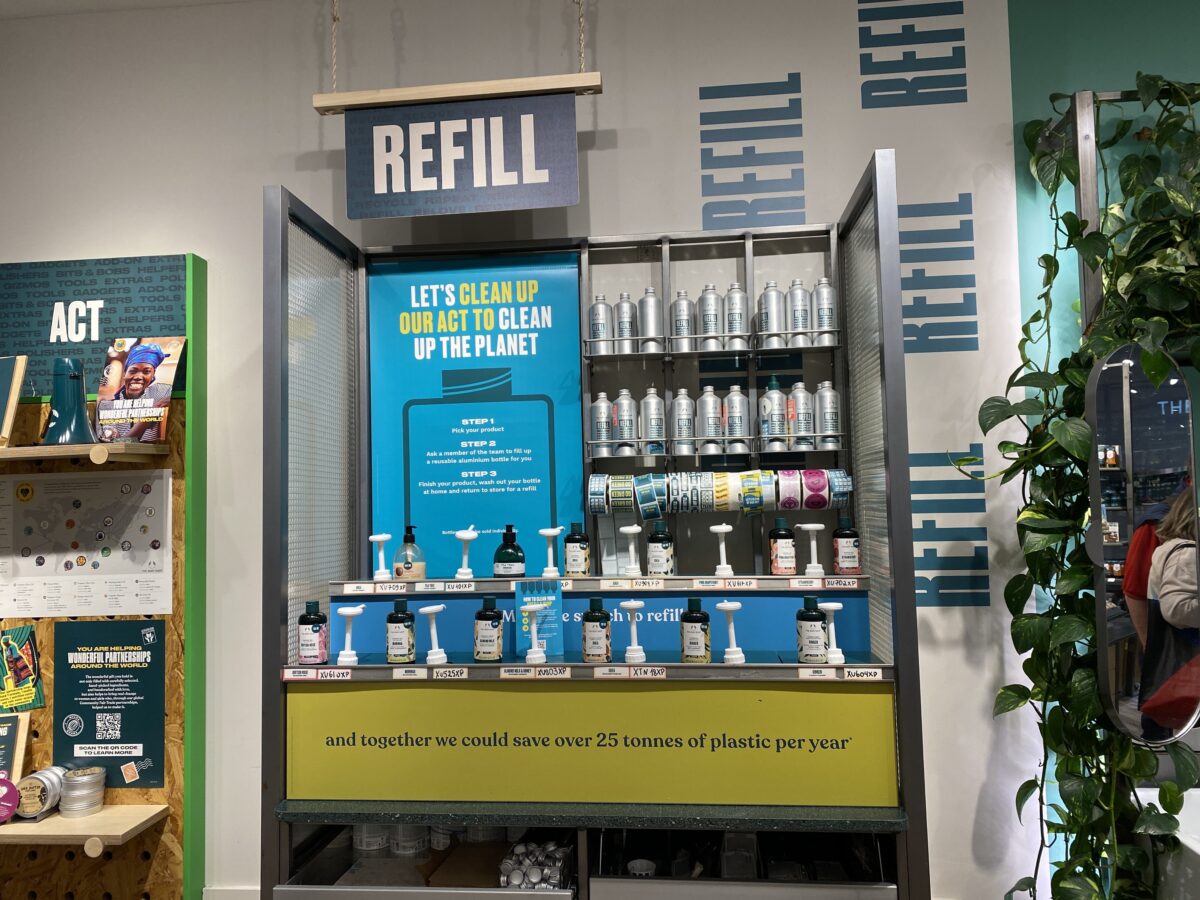
The Body Shop Refill Station (Image: Dustin Fuhs)
George Minakakis, CEO, Inception Retail Group, and author of The New Bricks & Mortar: Future Proofing Retail, said the goal of a circular economy is to keep resources and products in use for as long as possible, getting absolute value while it is owned. After that products are reclaimed and recycled at the end of life.
George Minakakis
“The majority of consumers 70-79 per cent are sensitive to the environment and are listening to their children and the news. As such they are increasingly expecting the goods they buy to be sustainably made, healthy for them and the environment. A circular economy means greater wellness for society, the environment, the economy, and retailers. The demand for sustainably made products will only increase over the next decade. In fact, as more consumers switch to electric cars they will want more actions taken to protect the environment. And therefore a circular economy where we rescue, recycle and reuse will be the measure of a retailer’s commitment to social and environmental responsibility,” he said.
“One presentation that I conduct with groups is called “From Scorched Earth to Blue Earth Leadership.” It’s about developing sustainable products and creating a circular economy through “progressive incremental innovation”. We would be much further ahead in protecting consumers and the environment if we practiced the right principles years ago.”
He said returns are a painful experience for customers and retailers.
“First I want to point out that returns to a store may lower costs for a retailer, but they don’t necessarily lower the percentage of returns or a customer’s costs and patience – unless returns to a store are a means to engage with customers to better understand why products did not meet their expectations. Unless an internal process is designed to understand what the causes were and how they can improve buying and selling of these same products, a return to stores policy will not be successful,” added Minakakis.
“To be more effective the process of returns needs to be simplified because mismanaging this will only create greater negative sentiments. While there is an opportunity to also create another sale, I would strongly suggest that retailers provide their staff with adequate training to ensure that customers don’t feel pressure to buy.”
Minakakis said he’s not in favour of a designated customer returns department in a store. This would only create the perception that retailers have a problem and create unproductive real estate.
“I would do all of this online and have a return slip attached to the product so that store staff can process refunds. If anything I would eliminate the drudgery and perhaps embarrassment for customers returning products. With all customers, even loyal ones, it only takes one bad experience to turn them off a brand,” he said.
“Retailers will need an internal corporate statement on developing a sustainable brand and how that will contribute to a circular economy. For example, stopping the use of plastic bags is old news. So what is new? What percentage of the fabric that their apparel is made of is from recycled garments? Even with appliances, if these products had more IOT connectivity built-in to catch potential failures and notify a customer before they happen, we would have less obsolescence and therefore greater sustainability. Sustainability and a circular economy need technology through many stages of production and use to protect society and the environment. This is a holistic approach that is needed to be successful as both a manufacturer and retailer.”
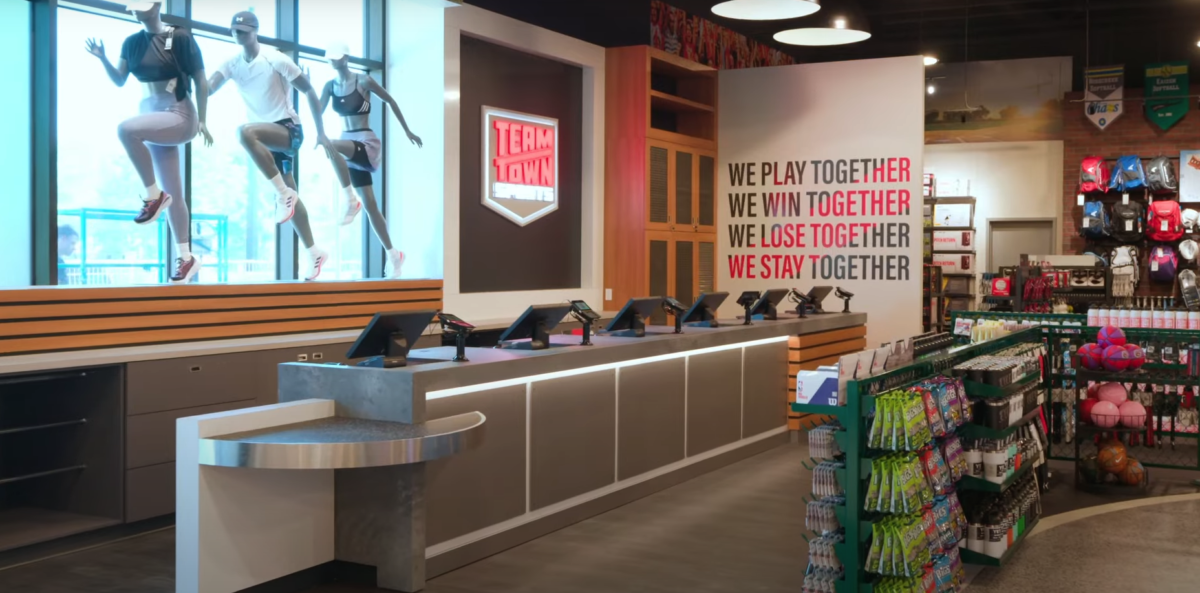
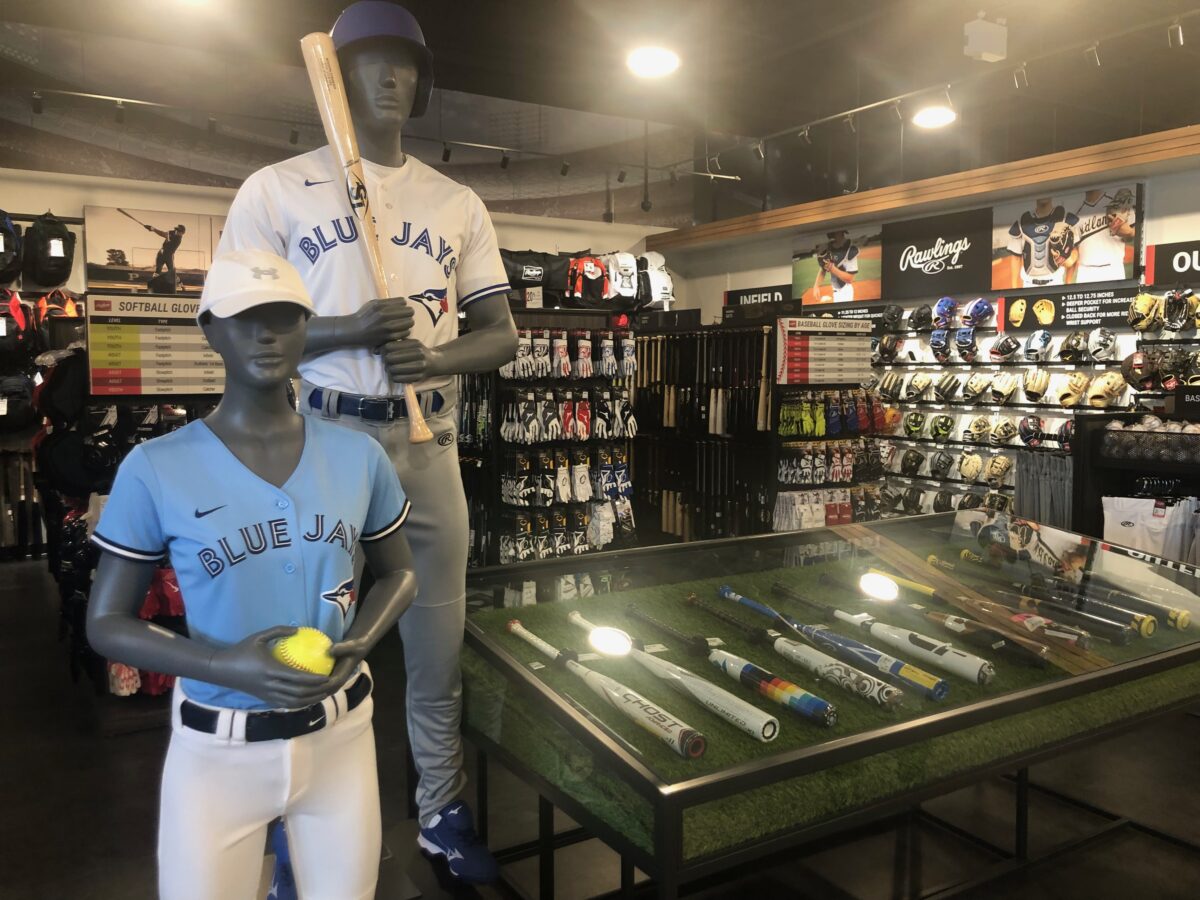
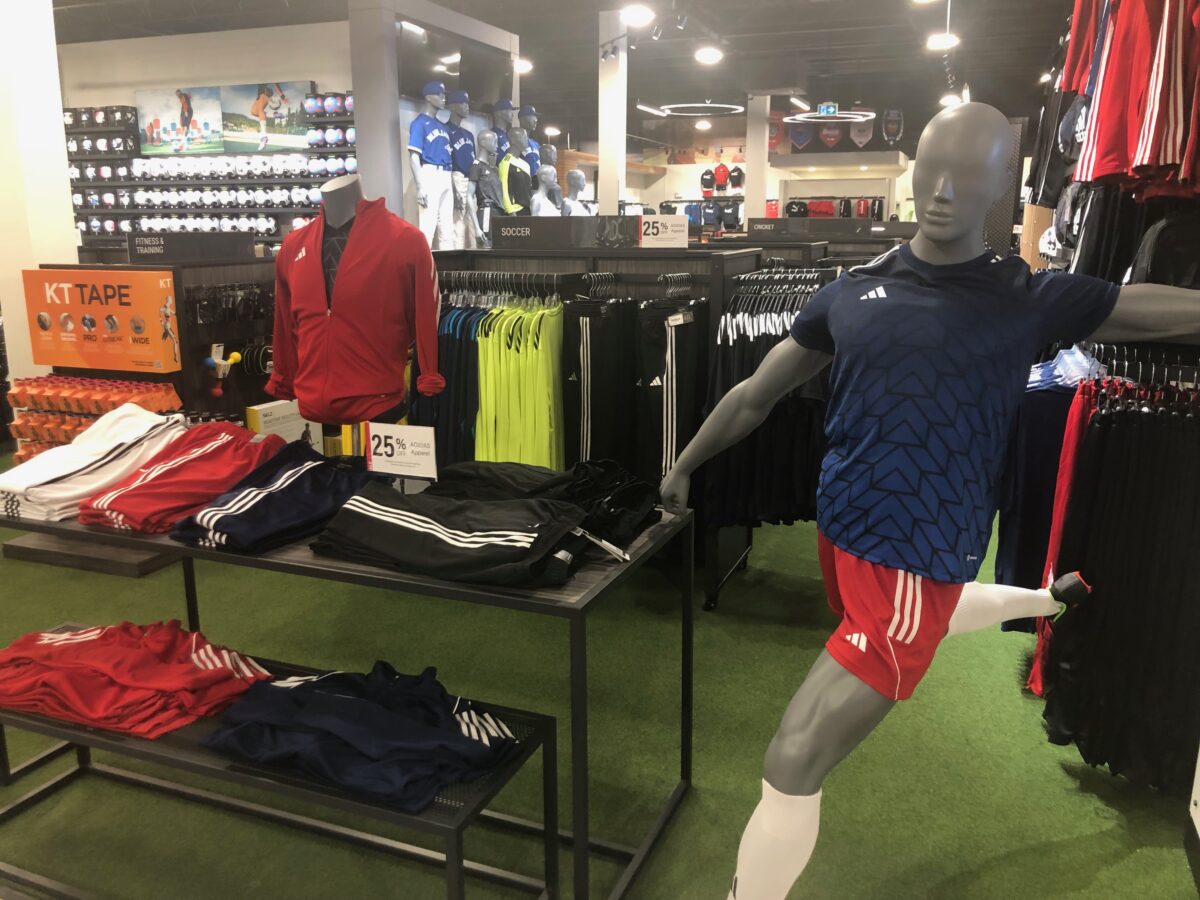
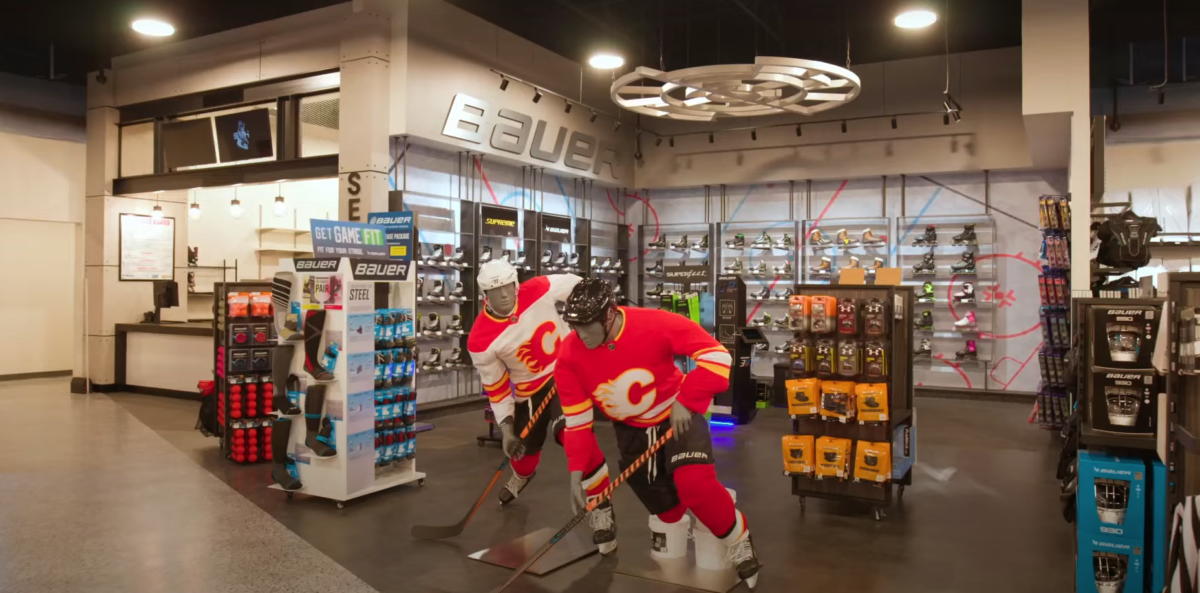
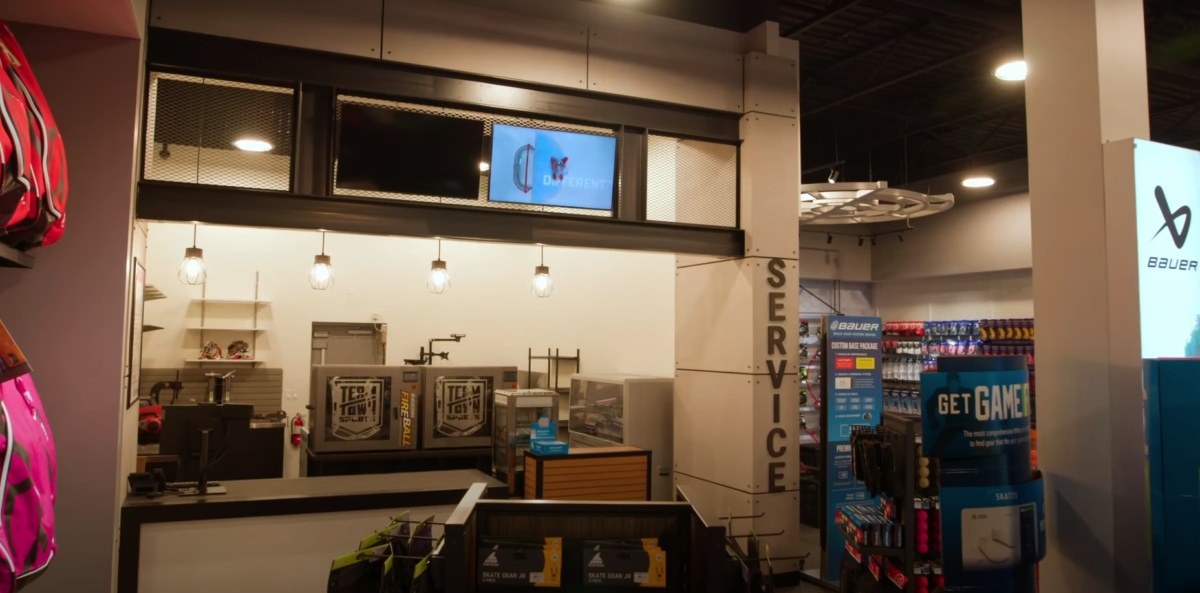
Team Town Sports at CF Market Mall (Image: Mario Toneguzzi)
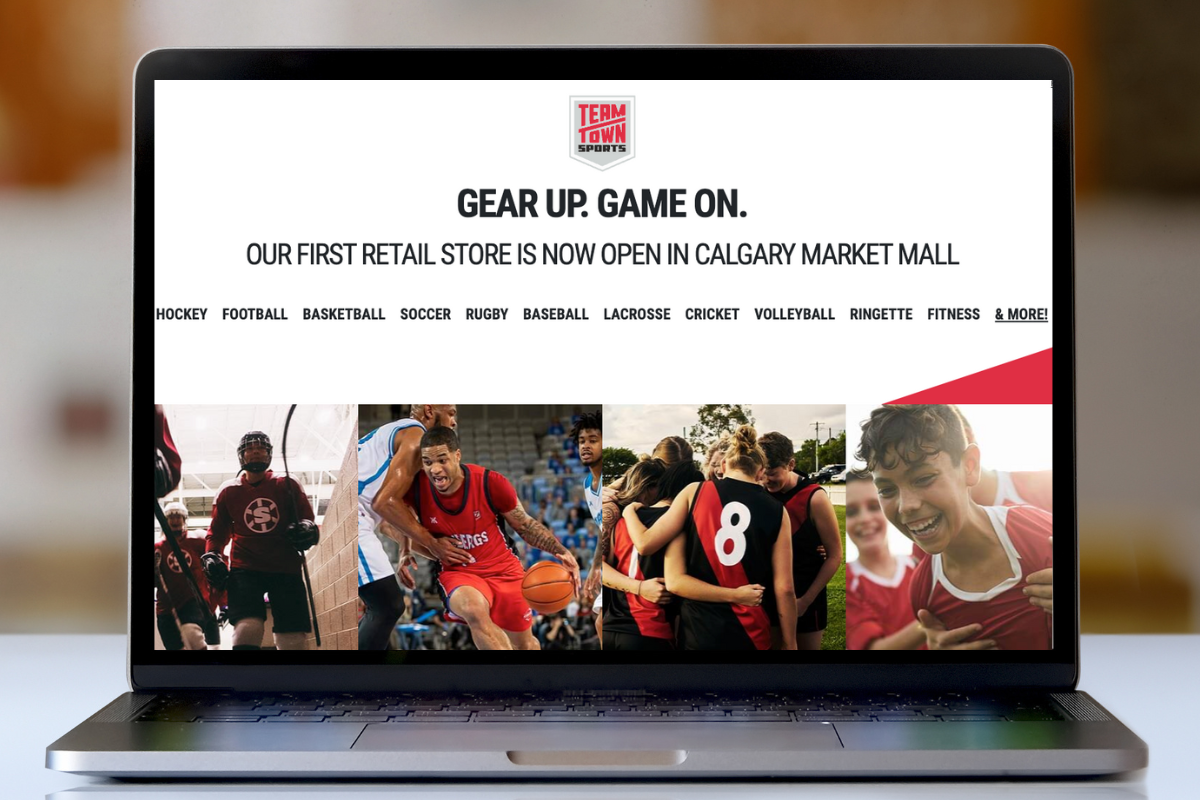
Retail giant Sporting Life has launched its latest national banner, Team Town Sports, with its first store at CF Market Mall.
A second store is opening soon in southeast Calgary at the Heritage Mall near the Costco and a third store is set to open in August in the Meadowvale Town Centre in Mississauga.
Frederick Lecoq
Frederick Lecoq, Chief Marketing Officer / Chief Digital Officer at Sporting Life Group, said plans are to take the new brand coast to coast eventually opening about 25 stores in major cities.
“The concept is all team sports under one roof,” said Lecoq. “That’s the starting point and we’re really focusing on team sports activities. It’s not sports lifestyle. If you’re a hockey player, a soccer player, a rugby player, a football player, name it all. Baseball, basketball, soccer, cricket, lacrosse. Every sports or activity that you participate in as a team you’re going to find your gear here.
“We’re men and women. We’re carrying both . . . If it’s your uniform, it’s your store.”
Team Town Sports at CF Market Mall (Image: Team Town Sports)Team Town Sports at CF Market Mall (Image: Mario Toneguzzi)Team Town Sports at CF Market Mall (Image: Mario Toneguzzi)
The first store is about 25,000 square feet. The second store in Calgary will be about 35,000 square feet and the Meadowvale location will be about 30,000 square feet.
Lecoq said the launch was in Calgary because of the real estate opportunity.
“We know the market pretty well because we’re originally from Calgary (leadership team that includes (Lecoq and Chad McKinnon, President, Sporting Life Group). It was a pure real estate opportunity,” he said.
“There was a great real estate location available and we had to make a really quick decision. We know the market, we know the city plus premium real estate was available. So this location in Market Mall and the other one in Heritage, close to Costco, it was the former Home Outfitters location. It’s interesting. We’re from Calgary and we thought with the real estate available we’re opening with those two locations.”
Both Lecoq and McKinnon had previously worked with FGL Sports.
“We want to focus on that white space,” said Lecoq. “People could argue that we have a lot of sports retail in Canada. People are just super active in sports. It’s just incredible this country.
“There was a banner in Ontario that was called National Sports that was owned by Canadian Tire. They shut it down and National Sports in Ontario was actually a team sports retailer. That was their positioning. It left a blank space. If you look at today, the market, there’s a lot of sports lifestyle retailers. They can be some vertical experts like we are for Golf Town.
“Team sports is overall I would say being under served. Not served like it used to be. In all fairness, there’s some independents that are doing a really good job. Let’s be clear. The only issue I would flag here is they’re single sports. So you could have a good independent for soccer in one city or hockey in another city. But it’s not everything under one roof. The reason why we did this is because there’s this blank space and team sports are being under served . . . There’s tons of sports that our kids are participating in today that people struggle to find the right equipment and moreover if you’re a girl. That was also our angle to make sure we had it all under one roof for everyone no matter what your gender is and no matter what team sports you participate in.”
Team Town Sports at CF Market Mall (Image: Team Town Sports)Team Town Sports at CF Market Mall (Image: Mario Toneguzzi)Image: teamtownsports.com
“We had record years in Golf Town. Even beat our numbers from when we had 60 plus stores. We’re only at 47 today . . . People found things to do that were safe with COVID so we benefited from that,” said McKinnon.
“Now I think there’s a full return to team sports and a lot of young kids were denied playing sports. Lots of pent-up demand and Canada is a sports nation. I think it continues. COVID really slowed team sports down. It’s ready to come back now so our timing is good.”
The Sporting Life Group operates three Canadian retail banners, Golf Town Ltd., Sporting Life Inc. and Team Town Sports.
Team Town Sports at CF Market Mall (Image: Team Town Sports)Team Town Sports at CF Market Mall (Image: Team Town Sports)
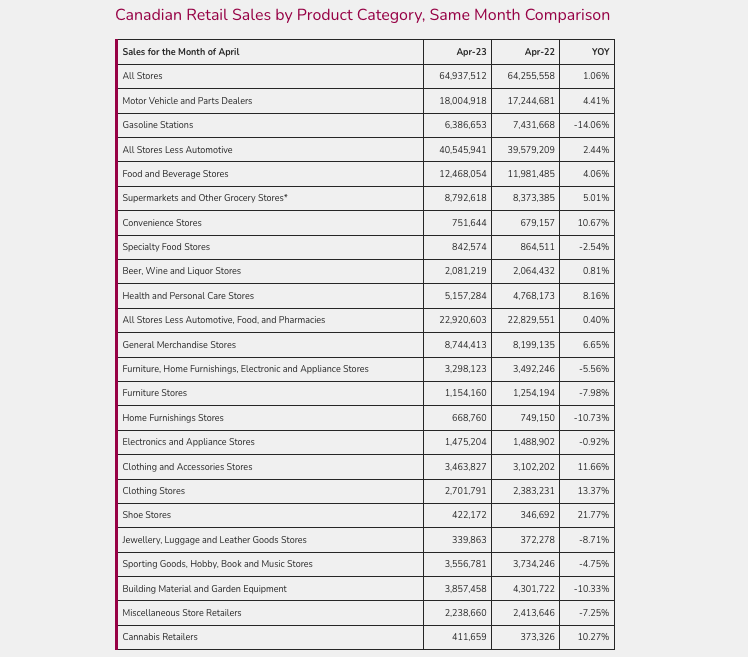
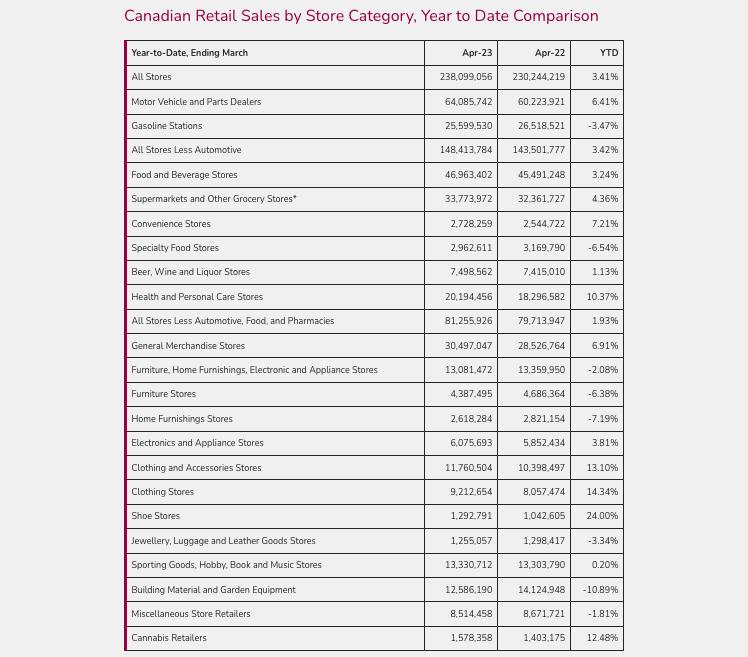
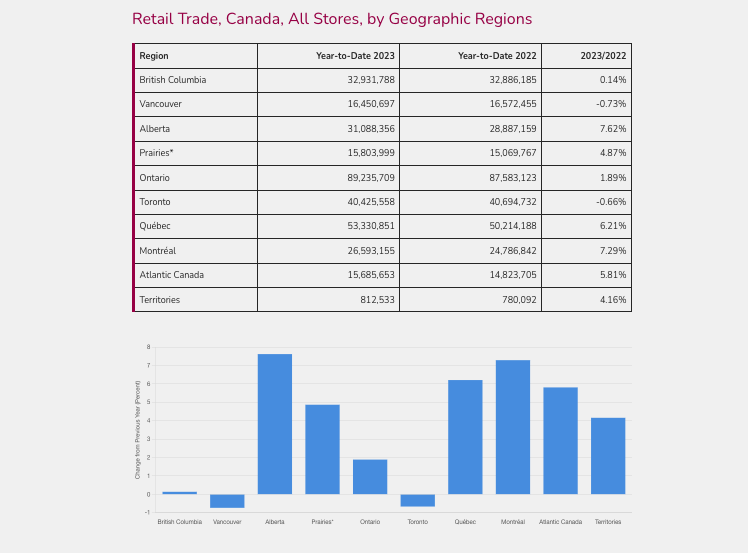
Canadian retail sales are up, though only slightly, in April 2023 with All Stores in January growing 1.1% YOY and All stores Less Automotive, Food, Pharmacies up only 0.4% YOY.
Clothing Stores (up 13.37% YOY) and Shoe Stores (up 21.8% YOY) are continuing their sales trajectory in 2023 with both categories experiencing double digit growth so far in 2023, up 14.4% YTD and 24% YTD respectively. The sales in these categories are finally, consistently exceeding pre-pandemic levels rather than just peaks followed by declines. The growth in April could be attributed to:
The exit of Nordstrom and Nordstrom Rack stores. Though the anticipated clearance sales were not deep discounts in April, their impending departures were undoubtedly driving consumers to shopping centres in an attempt to get some luxury products on sale. When the lacklustre Nordstrom clearance sales were realized, the rest of the shopping centre’s clothing and accessory tenants were able to benefit and pick up the slack.
Inflation remains top of mind for consumers, but this may not be reflective of clothing and accessories. Regardless of whether the price of clothing has gone up, consumers typically notice these changes in higher frequency, habitual purchases like groceries and gas. Consumers may not notice that the clothing they purchased in April 2022 and the clothing they purchased in April 2023 are different prices, as styles change, and they shop different brands.
Another category experiencing impressive growth is Health and Personal Care Stores, up 8.2% YOY in April. There has been some volatility in this industry throughout the waves of the pandemic, but overall, there has been a steady increase. This was a topic of conversation at Retail Innovations Conference and Expo in Chicago last week, with presenter Ari Peralta, (CEO, Arigami), focusing on the fact that the industry was expected to reach $4.6 trillion in the US in the near future. This not only includes products, but health experiences including an increase in spas, yoga and wellness retreats as well as medical tourism, etc. This expansion will also be seen in Canada, especially since the recent announcement by the Ontario Government that they would be converting Ontario Place into a destination spa. Categories that will also see the effects of this trend include:
Beer, Wine and Liquor Stores (up 0.8% YOY): As people become more health conscious, this category will continue to suffer as people move towards more non-alcoholic beverages.
Cannabis Retailers (up 10.3% YOY): Though often seen as a healthier alternative to alcohol (when not inhaled), CBD-based products, creams, etc. will continue to gain popularity as people focus on wellness.
Two categories that have taken divergent paths compared to 2021/2022 are surrounding grocery, with Specialty Food Stores down -2.5% YOY and Convenience Stores up 10.7% YOY. In 2021/2022, at the beginning on inflationary periods, people were changing their shopping habits towards experience and Specialty Food Stores sales were accelerating. People were still in the groove of cooking at home and meal planning and were enjoying the finer foods offered by these retailers. Conversely, as people were also buying in bulk, Convenience Stores were down as people were still not leaving their house everyday and therefore making fewer impulse purchases. These categories have since flipped, with Specialty Food taking a hit as a result of higher food costs, and Convenience Stores increasing for the same reason, since higher food costs (for those in low/medium income) mean they do not have the money to buy in bulk and are instead living paycheque to paycheque.
Though the growth in Canadian retail sales were low in most categories in April, there were still some impressive standouts as consumer preferences continue to evolve. Going into May, we are thinking about:
When will health and wellness tourism start to pick up in Canada? Will new spa offerings be sufficient?
Where are convenience retailers finding to be the most successful locations with office traffic still down?
What category of products are specialty food stores finding are still driving traffic?
How have YOU prepared for the increase in health and wellness spend?
2023 has been a busy year for retail conferences, and it has been great to meet and learn from so many of you. As we are now able to catch our breath, we are looking at staying a little closer to home with options like Retail West, the Retail Sustainability Conference, etc. Are there any upcoming conferences or expos that you are finding valuable, and we should consider? Let us know and we can meet you there!
Canadian Retail Sales by Product Category, Same Month ComparisonCanadian Retail Sales by Store Category, Year to Date ComparisonRetail Trade, Canada, All Stores, by Geographic RegionsCanadian Ecommerce Sales