Home Blog Page 703

Tiny House Brand Habitat28 Launches 1st Discovery Centre at Toronto Premium Outlets [Interview/Photos]

Habitat28 at Toronto Premium Outlets (Image: Habitat28)

Canadian tiny house brand Habitat28 has launched its first Discovery Centre at the Toronto Premium Outlets Mall in Halton Hills.

Habitat28 was formed by a team of entrepreneurs passionate about housing affordability and sustainability issues and looking to provide an alternative housing solution that is eco-friendly, sustainable, affordable, yet stylish and with the latest technology and comfort features.

Aura Poddar, CEO, and Shailesh Poddar, COO, have been working on the project for a number of years.

The company was incorporated in August 2022 but the Poddars have been working in the background to build up the company to develop the product for about four or five years.

“We started out with the concept of a modern design, different design, a really nice design of a tiny house and we started looking on how to build it out and it took a long time in product development,” said Aura. 

Habitat28 at Toronto Premium Outlets
Habitat28 at Toronto Premium Outlets (Image: Habitat28)

“I am a real estate agent. I have about 10 years of experience in sales and Shailesh has about 25 years of residential construction and commercial as well. We kind of piggy backed and built out on that background and the experience in real estate development and sales and that’s how we started the company.”

Habitat28 has a one-year lease with the mall with the hope that it will continue into the future. The Discovery Centre is about 400 to 500 square feet. Part of the Centre is activation as well.

“It’s a place where people can come in and they can experience the unit, ask us questions. We can create awareness to people about tiny home living, about being able to reduce your footprint, about being able to reduce your impact geographically and environmentally through sustainable living,” said Shailesh.

“It’s a place where people can come in and order. We followed the Tesla model where people would be able to come in and experience the car. With us they experience the unit itself. And they can sit down and talk with us about any of the questions they might have.”

Aura said Habitat28 has partnered with the Simon Property Group, one of the largest real estate companies in North America and owner of the Toronto Premium Outlets Mall.

“From the very beginning they were very on board with our idea. We showed them our unit. They loved the model and we came to them with the very modest idea of just having a pop up to raise brand awareness and in turn raise awareness about tiny home living,” said Aura.

“And after we met with their team, with their marketing and leasing director, it just morphed into having us there all the time. They loved the product. They loved the idea. They do have a very broad reach in terms of people coming to the mall. It’s one of the top malls in Ontario. People come from all over including from up north and other provinces as well as from the U.S. So we felt that instead of just being in a mall that has a very local smaller reach of audience, we wanted to be somewhere where we could reach more people and especially people that come from smaller towns in northern regions.

“This tiny home movement is much more closer to their hearts for them because cities are just getting on board. Smaller municipalities are much more open to it and they are embracing the movement because they do understand that they do need to give people more housing options and they do need to intensify the growth and the residential development. But they don’t want urban sprawl necessarily. They want to save the environment as well as attract new people. That’s why we chose this location.”

Habitat28 at Toronto Premium Outlets (Image: Habitat28)

Shailesh said Habitat28 was born to take action on the affordability crisis.

“Our objective is to provide affordable housing solutions and we are trying to put out different models which will suit different needs of people. Habitat28 is largely about being able to give people housing freedom to choose something different – something that a lot of people have considered peripheral but is becoming mainstream now,” he said.

Aura said the number 28 in many cultures is a very lucky number, a wholesome number – adding two plus eight equals 10 and one plus zero is one.

“So that’s like a one, universal wholesome number. So we are standing a lot for the environment, for the planet. One represents we have one planet and we have to take care of it. We have one life. We have to do the best we can with it,” she said.

The first model is S28 which is 28 square metres or 301 square feet. It was built out with the idea that it would look and feel more like a hotel room, a luxury suite, rather than a trailer or some of the negative connotations associated with a tiny house size. The unique design has lots of glass and big windows, feeling open and spacious. 

Image: Habitat28
Image: Habitat28

Shailesh said the company is hoping to expand within Ontario and other provinces as well as moving into the U.S.

The placement of the Discovery Centre is providing Habitat28 with the stepping stone where it can further explore other locations.

Edmonton-Based Brand ‘Poppy Barley’ Expands into Vancouver with 1st Store [Interview/Photos]

Poppy Barley Vancouver West 4th (Image: Elina Kustlyvy)

Edmonton-based leather footwear and accessories company Poppy Barley has expanded into the Vancouver market with the opening of a store in Kitsilano.

It’s the brand’s third store in Canada after launching in Edmonton in 2017 at Southgate Centre and in 2019 at CF Market Mall in Calgary. The brand started in 2012 as an e-commerce business.

And the retailer, founded by sisters Justine and Kendall Barber, has plans to open next in Toronto followed by Ottawa.

Poppy Barley Vancouver West 4th (Image: Elina Kustlyvy)

The new Vancouver store is located at 2144 W 4th Ave.

“For us it’s a small store. It’s 1,200 square feet,” said Justine Barber. “We really thought it was the perfect location with great co-tenancies. So we went a little bit smaller. It’s ideal for our footprint.

“We really think it’s the best street in Vancouver for brand discovery. Cool new brands and it has a great mix of some very well-known established brands like lululemon and some really cool up and coming startups. It’s just a great shopping street.

“Compared to our other stores, we re-designed it. So because it’s been four years since we designed a retail location and since then we’ve updated elements of our brand aesthetic it has a mix of what we incorporated into our previous stores with our Poppy Barley blue and navy colours but it has a lot more warm, natural materials and wood than we’ve previously used.”

The Edmonton and Calgary stores are about 2,200 square feet.

“We think for us an ideal store is like 1,600 square feet,” she said. 

Barber said the retailer always takes a look at a lot of data before entering a market. That comes from e-commerce revenue as well as a pop-up strategy where it will open for a few days in different cities.

“What we’ve seen before is once we get to a certain size within a city, growing a store opens our gross market share by 300 to 400 per cent. So we just got to the point in Vancouver between our e-commerce revenue and our pop-up revenue we knew that Vancouver was ready for a store,” said Barber. “And we started looking for the right real estate.

“It was hard. We narrowed down pretty quickly that we wanted to be on West 4th and then it’s a very popular street right now with very little for lease. We actually offered on a property that wasn’t on the market – that was softly available.”

Poppy Barley Vancouver West 4th (Image: Elina Kustlyvy)

Barber said the retailer plans to open a location in Toronto in 2024 followed by one in Ottawa.

What is it about the brand that resonates with consumers?

“I think it’s partly that we have a very remarkable product,” said Barber. “And as a product-based company, product is the most important thing.

“We also focus a lot on customer service and building customer loyalty

Poppy Barley is a female-founded, Canadian shoe and accessories brand from Edmonton, Alberta that stands for a new kind of luxury – fair prices on sustainably-made products you wear on repeat. As a certified B Corporation, Poppy Barley is rethinking the fashion industry to make it better for the planet, one sustainably-made shoe and accessory at a time. 

The retailer’s name has deep meaning. Poppy seeds and barley corns were the original unit of measurement in shoemaking.

“The idea for Poppy Barley started when my sister was in Bali and went into a shoe store, tried on a pair of boots and she couldn’t quite fit them up over her calves and the guy took out a measuring tape and said let me measure your legs and I’ll just make the shoes to fit you,” said Kendall Barber, in a previous story with Retail Insider.

“So Justine just kind of thought why don’t we all make shoes that way. It makes sense that we can combine the craftsmanship of shoemaking with some technology to be able to make better fitting shoes for everyone. So that’s what started Poppy Barley. She came back to Canada. She enrolled me. Got me on board with her and the two of us set out together to create Poppy Barley.”

Poppy Barley Vancouver West 4th (Image: Elina Kustlyvy)

The retailer started as an e-commerce company.

“Very early on customers started asking us to see the products. We started by setting up a little table on Thursday afternoons where people could come and see the boots and the shoes. That eventually led to having a showroom and then from there we did our first store,” added Kendall Barber.

“Poppy Barley fills a unique gap in the Canadian retail landscape. The footwear market is crowded with cheaply-made, uncomfortable shoes or logo-heavy, preposterously-priced brand name footwear. Poppy Barley creates high quality shoes at a mid-market price point. We’re committed to invest in materials not markups. We’re not willing to compromise comfort or design or function or social responsibility. We’re the future of footwear.”

Automated Grocery Chain Aisle 24 to Open at The Well in Toronto as the Retailer Expands Rapidly [Interview]

Aisle 24 at Novus Liberty (Image: Aisle 24)

Aisle 24, a fully-automated, 24/7 cashier-less grocery chain based in Toronto, will be opening later this summer its latest location in The Well, a massive mixed use development in downtown Toronto.

“We are excited to welcome Aisle 24 to the 320,000 square feet of reimagined retail and food service concepts at The Well. The innovative, convenient approach to food shopping that Aisle 24 offers will serve tens of thousands of residents living at The Well and in the surrounding community and is an excellent addition to the innovative retailer offering at this world-class mixed-use property,” said Oliver Harrison, SVP Leasing and Tenant Experience at RioCan Real Estate Investment Trust, which is developing the project with Allied.

The real estate transaction was facilitated by Oberfeld Snowcap.

Aisle 24 at Novus Liberty (Image: Aisle 24)

John Douang, Co-Founder & CEO of Aisle 24, said he expects the store to open in late summer.

“I just love The Well concept  – the live, work, play. And I think it’s going to be a really bustling, vibrant community. So it’s perfect for Aisle 24,” he said.

John Douang

“What we were keen on there was to ensure that we could operate as we normally do in a 24-hour environment. There were some challenges on the interior side so we wanted to make sure that we chose the right unit for us. 

“This unit is probably a little bit on the upper average size that we go with of about 1,700 square feet. But because it’s going to be a corporate store – one that we are the corporate owner and operate ourselves – we’re going to go fairly unique in terms of the design of this. We’re looking at options to include some local artists into the design of the space but the demographics there are just exactly what we need.”

Aisle 24 at Novus Liberty (Image: Aisle 24)
The Well in Toronto (Image: Dustin Fuhs)

The Well is a massive 7.8 acre site in downtown Toronto which will be home to about 1.2 million square feet of office space and 1.5 million square feet of residential space including 1,700 condominium and purpose-built rental units. At the base of the project is a retail and foodservice offering that will also include a massive 70,000 square foot multi-tenant food market that is expected to become a significant attraction. 

Douang said Aisle 24 has just over 20 locations and there’s about 30 in various stages of leasing and construction currently across Canada.

The ones currently in place are primarily in Ontario and Quebec.

He said the concept has the potential to grow to “several hundred” locations across Canada. 

“That’s our goal and I think over the long term even more just in the way we can really scale the sizing as needed per community really allows us to enter into markets that wouldn’t support a traditional convenient store grocery business,” said Douang.

“We’re getting interest all across Canada and even in remote regions too. We are working very diligently in a special project in Happy Valley Goose Bay Labrador of all places.” 

Aisle 24 at Novus Liberty (Image: Aisle 24)
Aisle 24 River City (Image: Dustin Fuhs)

He said the brand’s community format stores are just over 1,000 square feet.

“When we look at a site we will always look at a demographic report and really dig into the details of density of population, median income, what they’re spending on. All that type of information that we gather to make an assessment as to what size would work best for us,” said Douang.

“But it does seem like we’re trending more on the 1,500 square feet plus size. Most availability that we’re seeing is around 1,500 to 2,000 square feet.

“Our real estate strategy has always been bringing that convenience to the customer. So that typically takes shape in being positioned close to where they live. We want to be that go-to so that when you’re at home and you need something, you can quickly pop down to an Aisle 24. So we’re always looking at the ground level of condominiums and mixed-use communities and this is why The Well was so attractive to us.”

Aisle 24 began in 2016 with its first location at Centennial College in Toronto.

Northern Touch Vintage Seeing Success with Standalone Stores and Holt Renfrew Partnership [Interviews]

Northern Touch Vintage at The Harlowe (Image: Dustin Fuhs)

Toronto’s Aly Jamal is the fresh prince of vintage streetwear.

The 41-year-old owns Northern Touch Vintage, a lifestyle store on Richmond Street West, and sells a curation of what he grew up on: everything pop culture-related.

“If I see a Reba McEntire T-shirt it excites me just as much as finding a Tupac T-shirt,” said Jamal.

Sports-related pieces include basketball, hockey, baseball, football.

Then there’s TV: Alf, Family Ties, Fresh Prince of Bel-Air, Family Matters, etc. 

In other words, all things ’80s, ’90s and early 2000s — everything a geriatric millennial would phone home about.

Northern Touch Vintage (Image: Dustin Fuhs)
Northern Touch Vintage at The Harlowe (Image: Dustin Fuhs)

With access to oodles of product through personal connections, he started selling items during the pandemic.

“Vintage was really big at the time,” he said.

Jamal said he knew he was onto something and created a pop-up at Space on King Street East before settling into a collaborative spot at The Harlowe.

Jamal quit his corporate job at Apple and is going full throttle.

“I just came out and I came out with a vengeance,” said Jamal, who’s been working retail since graduating from high school. 

“The one thing that I never changed was my love for fashion,” he said. “So I always try to find the newest, coolest trend or put people on new styles.”

Image: Northern Touch Vintage

Jamal’s style has attracted celebrities and professional athletes such as Blue Jays pitcher Alek Manoah.

That’s no surprise considering Raptors guard Fred VanVleet was the first brick and mortar customer.

Less than a month later, Holt Renfrew came knocking about a partnership.

“It’s a dream come true,” he said. “You can work your whole life in fashion and still not get into a department store, so I’m extremely grateful and humble about it. And you know, I count my blessings on that.”

What makes his items different from the nostalgic clothing sold at fast fashion retailers?

“I would sell the shirt that Rolling Stones actually put out at that concert in 1996 at Joe Robbie Stadium in Miami or wherever it was,” he said.

“That’s really what we do.”

Northern Touch Vintage x Holy Renfrew (Image: Aly Jamal)
Holt Renfrew x Northern Touch Vintage

Northern Touch Vintage debuted at Holts in mid-March of 2022. Jamal’s curations are currently in four locations: Yorkdale, Square One (Mississauga), Holt Renfrew Ogilvy Montreal, Vancouver and can also be accessed through e-commerce, spokesperson Adam Grachnik confirmed.

Carolyn Wright

When Holts’ SVP of product Carolyn Wright sees Jamal’s proposals for in-store offers, “I get excited about it,” she said. “That’s what we’re trying to drum up with our customers by offering this as well.”

For instance, when Jamal posts a Pink Floyd T-shirt on Instagram, “it sparks joy, right?” Accessing pieces “that are ultra special and can’t be found anywhere else is one of the main goals,” she said, adding it ticks the box on “our materials traceability and our ambition to become a more sustainable business operation.”

With Jamal’s extensive retail experience and laser vision for stellar quality, “we really saw him as the best in class to partner with,” Wright said.

As for more vintage offerings, “we are looking at working with additional vendors to kind of continue to develop this,” said Wright. “But overall, it’s now become part of our offer, which is really exciting.”

Northern Touch Vintage (Image: Dustin Fuhs)

Retail strategist Liza Amlani said vintage is more circular than sustainable. 

Liza Amlani

“Really, you’re reducing the carbon footprint if you’re buying resale and vintage and secondhand versus buying new product that’s being made,” she said.

Amlani adds it’s “almost about consumerism and how it meets values and what values are aligned with our industry’s overall environmental impact, but it’s really the outcome” and keeping clothes from landfill.

Holts’ partnership with Northern Touch Vintage is an outcome she’s applauding.

“I think what makes Holt Renfrew special is that they have backed a Canadian small business,” said Amlani. 

That’s part of the “secret of their success” since the “loyal Holt Renfrew customer shops at Holt Renfrew because it’s a Canadian brand.” 

Northern Touch Vintage (Image: Dustin Fuhs)

Is vintage at major retailers a trend?

Amlani recently returned from London “and even Selfridges just has a resale shop, so I think that a lot of the luxury department stores are onboarding more resale, even vintage areas within the space,” she said.

Closer to home, Hudson’s Bay sells vintage luxury bags “and they have it in their physical stores, so I think that the department store knows that this is something that’s not going away so they should be investing in the resale space.”

What’s the ceiling of innovation in the Canadian retail industry for brands like Northern Touch Vintage?

Sizing comes to mind for Wright.

“Each piece is unique, so you may like the graphic and love the tee but it’s too big or too small,” she said.

That’s linked to scalability of operations; listing each item online is laborious.

Nonetheless, with “vintage resale products going to landfills and to parts of the world where you know, it may not be such a great thing for those countries,” Amlani said, “this is a real beautiful moment for vintage and resale.”

Women’s Fashion Brand Pink Martini Opens 2nd Storefront in Toronto’s Bloor West Village [Photos]

Bloor West Village store, photo: Craig Patterson

Toronto-based women’s fashion brand Pink Martini has opened its second storefront in the city. The 1,300 square foot retail space at 2378 Bloor Street West in Toronto’s Bloor West Village follows a location that opened on the Danforth about six years ago. 

The new Bloor West Village store features the full range of Pink Martini’s women’s fashion line, which also wholesales at about 700 smaller retailers across North America. The Toronto storefront acts as an anchor for the brand and a space where women can come to see the entire collection, and be served by knowledgeable staff. 

Pink Martini was founded in 2006 by entrepreneur Amir Bahar, who’s family has a history in the apparel and fabric business. He developed the line now known as Pink Martini, featuring a range of designs for women that include “feminine boho chic wardrobe choices” with a range of sustainable clothing that transitions through the seasons. The price point on Pink Martini’s fashions is quite reasonable given its quality and design, and the pricing makes it accessible to a broad spectrum of women seeking casual and dressier clothing. The collection is created by Pink Martini’s in-house design team, and manufactured in China.

Photo: Craig Patterson
Jewellery display by a partner brand in the Bloor West Village store. Photo: Craig Patterson
Photo: Craig Patterson

Dresses are priced from about $60 to $130 depending on the style, while outerwear is priced under $250 per coat. Most sweaters and pants are priced at under $100 in a range of styles and colours.  

The second Pink Martini store follows a location that opened in 2017 at 261 Danforth Avenue in Toronto’s Greektown area. The design of the new Bloor Street store features a simplified logo with a clean white aesthetic that is intended to allow the clothing in the space to be the centre of attention. Several other local designers also showcase some goods in the store, including a range of jewellery and bags. 

Pink Martini had a store on Queen Street West in Toronto which shut several years ago. 

In an interview, Amir Bahar said that he choose the Bloor West Village location because of its demographics and the overall community feel of the commercial strip. He was looking for an area with strong neighbourhood retail and a nearby population with a higher income bracket, education and professional employment. 

Cash desk. Photo: Craig Patterson
Photo: Craig Patterson

That goes for any future Pink Martini locations as well, according to Bahar. He said that wholesale will continue to be the lions share of the business for the popular Pink Martini brand, while at the same time he is considering opening more stores in Toronto and even possibly Vancouver at some point, in areas that have a neighbourhood focus, community feel, and strong demographics.  

Bahar explained how customer service is paramount to what a good retail store should be, and with that he has hired a team of exceptional sales associates who he terms ‘stylists’. The Danforth location has developed a loyal clientele and the new Bloor West Village location is already seeing repeat visits since its recent opening. 

The Excellence in Retailing Awards Gala: Celebrating Innovation in Retail

The Excellence in Retailing Awards Gala, hosted by Retail Council of Canada along with presenting sponsor CHASE, is an annual celebration of the individuals and companies who are pushing the boundaries and making a difference in the world of retail. This year’s gala will be held on May 30, 2023, at the Toronto Congress Center, and it promises to be an evening of glitz and glamour, where Canada’s best retail talent will gather to celebrate retail excellence and innovation. The highly anticipated reveal of the winners of the 2023 Excellence in Retailing Awards program will be announced, and three recipients of the prestigious Awards of Distinction will also be honoured.

Winners of The Excellence in Retailing Awards Program to be Announced

The Excellence in Retailing Awards program recognizes outstanding innovation in various categories, including eCommerce Experience, Environmental Leadership, Health, Safety & Wellness, In-Store Experience & Design, Loss Prevention, Omni-Channel, Philanthropic Leadership, Pop-up Experience and Design, Retail Marketing, and Talent Development. The impressive level of excellence to reach finalist status was achieved by more retailers in 2022 than in previous years, demonstrating how retailers across the country are stepping up with forward-thinking solutions to meet the opportunities ahead.

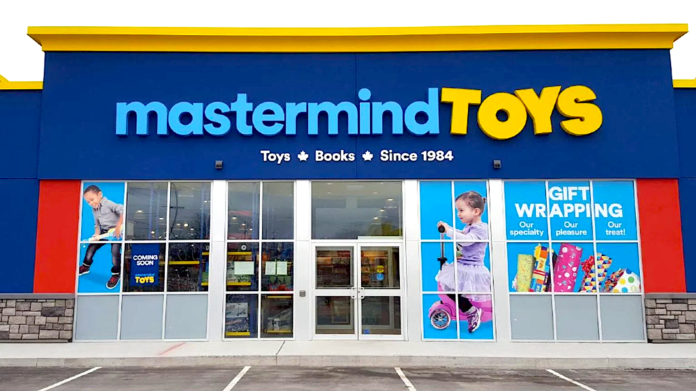
The finalists for the 2023 Excellence in Retailing Awards include dynamic brands such as Amazon, Canadian Tire Corporation, IKEA Canada, Loblaw Companies Limited, Best Buy, Tim Hortons, METRO, LCBO, Sobey, Rona, Rexall, Longos, London Drugs, Golf Town, The Body Shop, II x IV, Mastermind Toys, Peavey Industries, Aldo, Toys R Us, Staples, Pet Valu, Harry Rosen, Big Bear Trading Company, Hillberg & Berk, Ardene, The Ordinary, Telus, Well.ca, Home Hardware, Habitat for Humanity Canada and Walmart Canada, as well as many others. These companies have demonstrated standout success in the various categories while showcasing their commitment to delivering exceptional retail experiences.

Awards of Distinction Recipients to be Honoured

In addition to the Excellence in Retailing Awards, the Gala will also recognize three exceptional individuals with the Awards of Distinction. This year, Paul Simmonds, President of Robert Simmonds Clothing, will receive the Independent Retailer Lifetime Achievement Award for his careers long contribution to his customers and community as independent retailer and advocate. Greg Hicks, President and CEO of Canadian Tire Corporation, will be celebrated with the 2023 Distinguished Canadian Retailer of the Year Award for his visionary leadership and commitment to customer satisfaction. The gala will also recognize Sharon Hayles, Owner of Diane’s Lingerie, as the 2023 Independent Retail Ambassador of the Year for her leadership in helping the beloved store become known for its highly personalized, relaxed shopping experience, and its exceptional commitment to inclusivity.

 The Excellence in Retailing Awards Gala on May 30, 2023, 4:30pm -8:30pm, will be hosted by international food and travel celebrity and founder of Follow Me Foodie, Mijune Pak. Guests will enjoy an exceptional dinner, prepared under the consultation of world-renowned chef Mark McEwan.

To purchase Gala tickets visit https://retailawards.ca/register-now/.

The Excellence in Retailing Awards Gala end the first day of  RCC STORE 23, Canada’s biggest retail conference, from May 30 – May 31, 2023. RCC STORE 23 that will feature 75+ speakers and is attracting retail leaders from across North America and around the globe.

Upscale Black Rooster Decor to Open 2nd Retail Storefront at The Well Complex in Toronto [Interview]

Future Black Rooster Decor at The Well (Image: Dustin Fuhs)

Furniture store Black Rooster Decor has secured a location in The Well, a massive mixed-use development in downtown Toronto.

“The Well is a transformational project and one of the most complex, multi-faceted developments Toronto has ever seen,” said Oliver Harrison, SVP Leasing and Tenant Experience with RioCan Real Estate Investment Trust, which is developing the project with Allied.

“This is choreographed city-building, and this carefully curated retail mix will play a vital role in establishing The Well as a vibrant, lively destination for residents and visitors to Toronto. We are excited to welcome Black Rooster Decor into the fold. This independently-owned and operated furniture and accessories brand diversifies our retail offering. It is well-situated to appeal to the 1,700+ residents living at The Well and to shoppers from across the city.”

The Well is a massive 7.8 acre site in downtown Toronto which will be home to about 1.2 million square feet of office space and 1.5 million square feet of residential space including 1,700 condominium and purpose-built rental units. At the base of the project is a retail and foodservice offering that will also include a massive 70,000 square foot multi-tenant food market that is expected to become a significant attraction. 

Future Black Rooster Decor at The Well (Image: Dustin Fuhs)
The Well in Downtown Toronto (Image: Dustin Fuhs)

Nina Ber-Donkor, Owner of Black Rooster Decor, said when she initially visited The Well site she was “blown away by the community, the space, and the space we’re getting we’re really pleased. It’s a corner unit. It’s perfect for us and we loved the whole vibe of the whole community and the entire Well project. We were really inspired by that and really impressed by it.”

“It’s a game changer for us. We really feel we’re going to be able to expand our brand not just outside of the U.S. but also Toronto. I feel it’s going to put us more in people’s thoughts when it comes to home decor,” she said.

Black Rooster started online about 11 years ago. It was an e-commerce business only until 2014 when it opened a bricks and mortar location.

“We’re a home furnishings store. Lighting. Arts. Rugs. Accessories. Plants. We’re a fully furnishable home decor store. Online we have a lot more. We have a very large showroom online and in store at our current location a small showcase of what we carry.”

Black Rooster has been in Leslieville for the past nine years at 1075 Queen Street East.

Black Rooster Decor at 1075 Queen St E (Image: Dustin Fuhs)
Image: Black Rooster Decor

Ber-Donkor said Black Rooster will keep its current location and its second location at The Well will open in the fall.

The location at The Well is going to be about 2,500 square feet. At Leslieville it’s about 1,500 square feet. At The Well, it will be located next door to Structube.

“We’re primarily an online store. Most of our business is done online. We ship to the U.S. and a lot of our customers are from the U.S.,” said Ber-Donkor.

“Most of our brands are luxury brands and everything is very well curated and thought out. We try not to do mass-produced items. We don’t have things that people are going to see in everybody else’s home. So when you shop with us you’re shopping for something that’s going to be unique and that’s also a piece you can move with you as you go through life and expand your family or move different houses. Most of our pieces are timeless.”

Image: Black Rooster Decor

Black Rooster Decor says it scours the world for unique and stylish furniture and accessories that are top-quality and made to last.

Its catalogue ranges from mid-century modern to European furnishings. 

It now ships worldwide, and has warehouses in the United States.

“We support North American companies and like-minded small businesses and artisans as much as possible. Many of our larger pieces are made from reclaimed material. We only sell merchandise we have seen ourselves and vouch for 100 per cent,” says the company.

Gentrification Leads to Exodus of Art Galleries on Toronto’s West Queen West [Feature/Interviews]

“Arts + Design District” Queen Street West signage (Image: Dustin Fuhs)

West Queen West in Toronto, also known as the “Arts + Design District,” lost more than 76 per cent of its galleries in the last decade, and locals say this has drastically and irreversibly shifted the strip’s very identity.  

Since 2004, West Queen West – spanning from Bathurst Street to Gladstone Avenue – has been defined by its artists. The strip had the highest concentration of galleries per kilometre than any other street in North America, with a total of 33. Today, there are only six. Even government-funded galleries like the Museum of Contemporary Art (MOCA) – who moved away in 2018 – fell victim to this exodus. 

Robert Sysak, executive director of the West Queen West BIA, said in a phone interview that surging rent – brought on by an increase in property values due to the arrival of high-density housing – drove out the galleries. 

Queen Street West (Image: Dustin Fuhs)

Beginning in 2013, Sysak said the strip saw an increase in the number of condominiums being built. He believes the developers moved in because West Queen West land was relatively cheaper than the surrounding areas. He estimates since then, property values have surged by over 50 per cent. 

Sysak added developers purchased many of the properties being leased out to galleries. In 2013, developer Urbancorp applied for a permit from the city to demolish the buildings housing MOCA, the Clint Roenisch Gallery and the Edward Day Gallery to make way for a nine-storey condo tower, which would aptly be called “MOCCA Condo.” Since then, all three galleries have moved away. 

“I don’t like to say it, but we got gentrified,” Sysak sighed. 

Stephen Bulger, owner of the Stephen Bulger Gallery, echoed Sysak’s observation. He said in a phone interview that he opened his business in West Queen West in 1995 before relocating to Little Portugal in 2017 for a larger space. When he first moved to the street, his rent was approximately $10 per square foot. By the time he left, it had more than doubled.

“But others had it worse,” he said in a phone interview. 

Bulger added his neighbours’ rent more than tripled or quadrupled in the same period. 

“In that way, I was one of the lucky ones,” he quipped. 

Landlords had their ‘hands tied’

Doc’s Leathers on Queen Street West (Image: Dustin Fuhs)

Doc von Lichtenberg, owner of Doc’s Leathers on Queen Street West, said in an interview at his store that when the developers moved in, the city rezoned many parts of the area to accommodate them. This meant that under Ontario’s highest and best use tax policy, landlords were being taxed under the assumption their properties were multi-storey condos, even if this wasn’t the case. 

Lichtenberg, coffee in hand, mans the register at his West Queen West store. (Image: Zaid Kaddoura)

Local landlord Joseph Gatto said these factors forced property owners to raise their rents up to three times more than what their gallery tenants could pay. 

“We had our hands tied. There was nothing we could do except adapt,” Gatto said. 

Sysak believes this gentrification has shifted West Queen West’s demographics. He noted the street today attracts more tourists and families than ever before. 

“It’s still a mix. But now more than ever, at places like Trinity Bellwoods park, you see families with baby strollers or playing tennis. We have schools near us,” Sysak said. 

Queen Street West (Image: Dustin Fuhs)

Bulger said he also observed this demographic shift. He said he initially moved to West Queen West because he was attracted to the independent businesses characterizing the street. 

“But when I left, those vendors were all but gone. Inevitably, the families and tourists didn’t want handcut fabrics, they wanted designer brands,” Bulger said. 

Sysak added that specialized retailers – like galleries – can’t adjust to drastic market shifts by virtue of their business models. Consequently, when there isn’t a demand for independent galleries, it becomes unprofitable to run one. 

West Queen West pre-gentrification 

Drapell’s Museum of New, just off of Trinity Bellwoods Park. Toronto, Ont. (Image: Zaid Kaddoura)

Lichtenberg said when he bought his building 29 years ago, it went for a relatively measly $60,000 because the folks who called West Queen West home scared away wealthier investors.

 “The ladies of the night made their homes here, so the bohemians followed them. Consequently, so did the galleries,” he recalled. 

Today, the only Bohemian you’ll find in the neighborhood is the owner of the Museum of New: Joseph Drapell – who hails from Humpolec, in Czechia’s Bohemia region.

Drapell settled in West Queen West back in 1990 when he bought his building for approximately $100,000, which he acquired from previous art dealings. 

Because Drapell owns his building, he is one of few gallery owners fortunate enough to avoid being impacted by the surge in rents. 

“The renters weren’t so lucky,” he said in an interview at his gallery. 

In 1998, Drapell opened his Museum of New. He said back then, profitability was not a priority. It didn’t need to be. Despite his self-professed lack of business acumen, his paintings resonated with the street’s bohemian audience. 

Today, Drapell said galleries can’t break even unless they cater to the strip’s new clientele, consequently compromising their artistic integrity. 

“They had to sell out or move out,” he lamented. 

An identity ever-changing 

Queen Street West (Image: Dustin Fuhs)

Robert Sysak said he believes that for better or for worse, neighbourhoods are always changing. 

“We’re growing. That means change. It’s how we survived the pandemic,” Sysak said. 

But, he also added that West Queen West has not lost its unique identity as Toronto’s premier art destination.

“We still have fabric shops, Michelin-starred restaurants and BIA-sponsored graffiti murals. That’s art, too,” Sysak said. 

However, just like many other West Queen West community members, he still mourns the loss of the strip’s art galleries.

“But when you lose amazing people like Stephen Bulger, you can’t sit and mope about it. You have to ask yourself, ‘What do we do now?’” he said.

Sysak said the BIA has introduced and sponsored many initiatives to support the street’s galleries.

“When we noticed we were losing galleries, we did an outdoor art and artist gallery with QR codes, tours and sculptures with OCAD students,” he explained.  

Queen Street West (Image: Dustin Fuhs)

On the other hand, Gatto said this isn’t enough. He believes the stakes are too high for West Queen West to leave it only to the BIA to protect the street’s art galleries.

“The galleries are West Queen West,” he asserted. 

He said because they brought in interesting people, they brought in interesting businesses, too. 

“They brought a kind of texture to the neighbourhood that we’ve now lost,” he said.

He believes more subsidies, grants, and initiatives from all levels of government or the nearby OCAD University could bolster the strength of the strip’s remaining galleries.

“If the city or province wanted to implement a tax reduction for properties being leased out to art galleries, landlords would definitely accommodate,” he suggested.

Drapell lounges in front of his painting after a long day’s work preparing for an upcoming exhibition. (Image: Zaid Kaddoura)

And like Gatto, Drapell believes this exodus is a cultural blow not only to the community, but to Toronto art as a whole. 

“When you focus on breaking even, you can’t dare. You make democratized, sanitized, family-friendly art catering only to the lowest common denominator of the masses,” he said. 

Two of Drapell’s paintings in the central room of his gallery. (Image: Zaid Kaddoura)

Amid all this uncertainty, Gatto believes one thing is certain for West Queen West.

“It is the end of an era,” he said. 

E-Commerce Sales Down in Canada Year-Over-Year as Consumers Reset [Report]

CF Toronto Eaton Centre (Image: Dustin Fuhs)

A report by Salesforce indicates digital online sales in Canada were down eight per cent year over year in the first quarter of this year compared to a year ago and the decline was worse than globally where it was only two per cent.

In its global Q1 Shopping Index, Salesforce, a global leader in Customer Relationship Management, said digital e-commerce in Canada was down nine per cent year over year in the fourth quarter of 2022.

The report said the per-visit average shopper spend sat at $1.99 in Q1, down from $2.71 in Q4 of last year and the overall conversion rate in Canada was 1.9 per cent compared to 2.5 per cent in the previous quarter.

Indigo Square One Kiosk (Image: Dustin Fuhs)

Caila Schwartz, Director of Consumer Insights and Strategy, Retail & Consumer Goods at Salesforce, said Europe experienced a big drop in digital sales starting to occur in late 2021 and into early 2022 and that continued throughout the year.

Caila Schwartz

“Now we’re seeing in North America – Canada and the U.S. – very similar behaviour. So we’re starting to see drops or flatness happening in digital commerce. It’s really being driven by two main factors. A decrease in traffic and a decrease in order volumes,” she said. “And our hypothesis is that it’s primarily been driven by decreased consumer sentiment.

“There’s a lot of economic headwinds at the moment and consumers are feeling pinched economically and we know that they’re making purchasing decisions – based on our research – price is the number one reason why they’re switching brands and making purchasing decisions.”

Those economic headwinds are also having an impact on the amount of average spend by consumers these days.

“The amount spent per visit is declining and we’re seeing this in Canada and we’re seeing this on a global scale. The traffic that we’re seeing coming to retailers’ websites is less profitable. So we’re seeing some really distinct shifts happening,” said Schwartz. “New customers or customer acquisition is not as lucrative as it has been for the past several years. And we’re seeing a shift now to more loyal customers driving value. The per cent or share of orders coming from repeat buyers in Q1 grew. It grew for Canada and it grew on a global level which means that those existing customers are doubling down and they’re being loyal whereas it’s getting harder to attract and retain a new customer.”

In-Store Pickup at Old Navy (Image: Dustin Fuhs)

She said the retail sector will continue to face challenges for the rest of this year.

“I see it continuing especially in North America. I think what we saw is that economic headwinds hit in Europe first and they bore the brunt of those issues for the entirety of last year,” she said. “I see warning signs that here in North America – Canada and the U.S. – it’s going to continue. This downward trend could continue for the remainder of 2023.

“What will be a leading indicator when you look at the Q2 data, and we won’t have that data until the beginning of July, but if it’s two consecutive quarters, it’s heading into a pattern. We’ve done some research, some consumer-based studies, and we found that consumers are feeling pessimistic about their economic situation and the majority of consumers say that they’re pulling back on their spend. They’re not buying as much as they were this time last year or this time two years ago. That’s in Canada and on a global level.”

Schwartz said the reason why conversion rates are trending down on a global level is because there’s strong traffic growth which is growing by six per cent year over year.

“But we’re seeing decreased order volume growth. So consumers are still coming to retailers’ websites, they’re doing more research but they’re not converting at the same rates they once were,” she said.

“In Canada, it’s actually interesting. We saw traffic volumes decrease, order volumes decrease, which resulted in conversions being essentially flat.

“What’s interesting for markets like Canada and the U.S. is we’re going to see, and we’re starting to see this with some brands that have come out into the market and laid plans for this, is a strong emphasis back on their core customer base. So understanding who their customer is and catering to the experiences that those customers want . . . I think that’s a pivot we’re going to see happen across the industry which means we’re going to see more and more emphasis on having really good data. So what is a retailer’s data strategy, how are they integrating and operationalizing that data. Ultimately what that’s going to do is set them up for success using new tools that are coming out, especially in AI. There’s a lot of excitement happening there not only on the customer experience side but on the optimization, cost-cutting side that’s going to help retailers and ultimately all of these things are going to help drive a better customer experience for those customers.”

Hudson’s Bay at Queen Street (Image: Dustin Fuhs)

Some global highlights of the Salesforce report:

  • After a Q4 comeback, global online sales fell two per cent year over year, largely driven by decreased demand in the US
  • Globally, shopping spend is at its lowest in two years at an average of $2.30 compared to $3.02 in 2021 Q4 and $2.85 in 2022 Q4
  • Digital traffic via desktops dropped significantly at 11 per cent, while mobile maintained at zero per cent growth ;
  • Desktop reigned in follow through, with cart abandonment lowest at 68 per cent compared to 79 per cent on mobile.

The full report, including global data, can be found in the full Q1 Shopping Index.