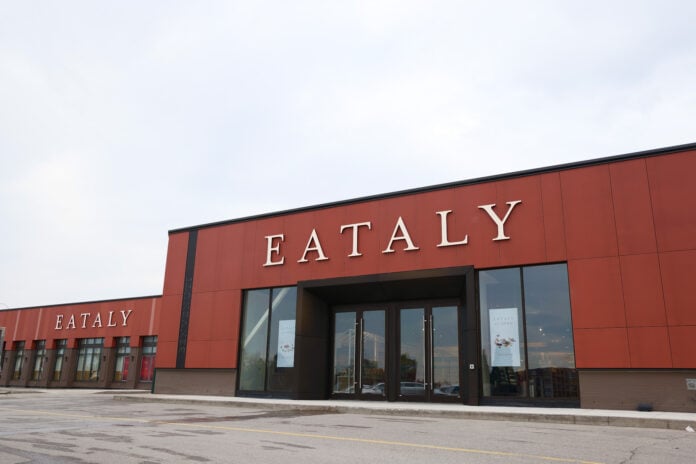
Large-format Italian food marketplace Eataly will open its third Toronto location next year at the CF Shops at Don Mills, following the opening of a second storefront in the city on November 2 at CF Sherway Gardens. With three locations, Toronto will boast more Eataly locations than any city in in North America.
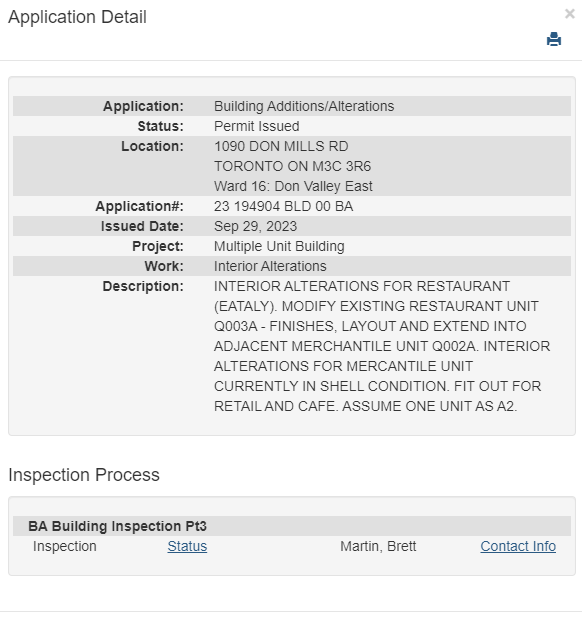
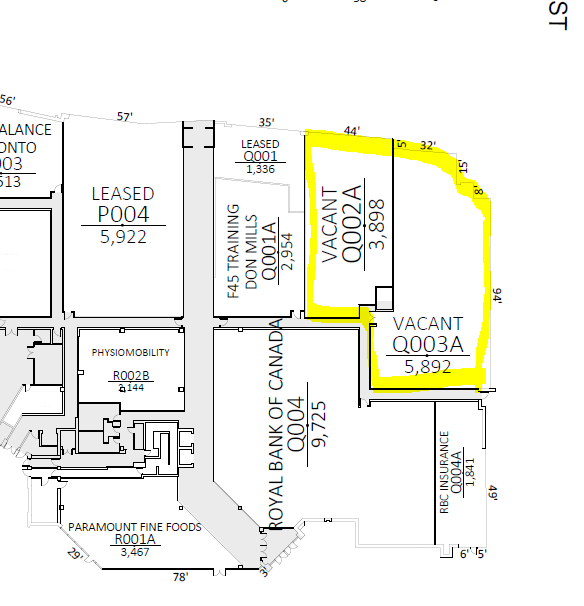
The CF Shops at Don Mills Eataly will open in the first half of 2024, according to the company, and few details have been released at this time. A building application with the City of Toronto shows that Eataly will occupy at least two retail spaces, combining a 5,892 square foot corner space and a 3,898 square foot space as per the building application/plan below. The combined space spans almost 9,800 square feet.
The CF Shops at Don Mills open-air lifestyle centre is owned and operated by Cadillac Fairview, and serves an affluent population in North York that includes wealthy areas such as The Bridle Path.
Image: CF Shops at Don Mills
The North York location follows the opening of Eataly at CF Sherway Gardens on November 2, which is the second Eataly location for the Toronto market. The CF Sherway Gardens Eataly spans about 25,000 square feet and is located next to a large retail space that is currently occupied by a Saks Fifth Avenue store.
Eataly’s first Canadian location opened in downtown Toronto’s Bloor-Yorkville area at the Manulife Centre in November of 2019, just before the pandemic. The 55,000 square foot expansive space spans three levels and includes several restaurants as well as various food offerings, including groceries.
Eataly Il Mercato at CF Sherway Gardens (Image: Eataly)
More Eataly locations could open in Canada, though nothing has been confirmed. There are rumours in the industry that Eataly has been in negotiations to open a location in a prominent retail space in downtown Vancouver. Eataly has also said that it has its sights set on Montreal if the right space can be found.
Wittington Investments is a partner in Eataly Canada, owning a share of the business. Wittington is owned by the Weston family, and has assets across classes ranging from real estate to retail. That includes the luxury retail chain Holt Renfrew in Canada.
According to Eataly’s North American CEO, Tommaso Brusò, Toronto has been a strong market for Eataly. The downtown location is the only one in North America offering three styles of regional pizza, and is the first in North America to host an after-hours Eataly tasting experience. It’s also the first city where Eataly has collaborated with local partners, from chocolatiers to honey producers, to create only-in-toronto house-made limited-time products.
Eataly Toronto (Image: Eataly)
Eataly has almost 50 locations globally. Only Tokyo will have more locations than Toronto in 2024, with the Japanese city having four Eataly locations including one within a department store. Dubai also has three Eataly locations.
In the United States, Eataly operates two storefronts in New York City, as well as individual locations in Chicago, Boston, Los Angeles, Las Vegas, Dallas, and San Jose, California.
We’ll follow up on this story when more details on the CF Shops at Don Mills Eataly location are revealed.
In a significant move that underscores Canada’s evolving gourmet marketplace, Eataly is set to launch its second Toronto location at CF Sherway Gardens on November 2nd. This 25,000 square-foot Italian culinary experience, following on the heels of its successful 2019 Bloor-Yorkville venture at the Manulife Centre, underpins Eataly’s bullish sentiment on the Canadian market.
Tommaso Brusò
“The store at Sherway Gardens is special, marking Toronto as one of the rare North American cities to host more than one of our locations, said Tommaso Brusò, CEO of Eataly North America. “Toronto’s appetite for authentic Italian gastronomy has been overwhelming, and our expansion here reflects that enthusiasm.
“Sherway Gardens was a natural second location for us in Canada. The mall itself opens the door to conveniently reach new audiences, with access to customers coming from Oakville, Mississauga, Brampton and more. Our first store in Toronto has the density of the Yorkville neighbourhood, while Sherway Gardens will see us hosting customers primarily in a drive market and who are looking for a high-quality experience closer to home. CF Sherway Gardens has undergone a beautiful transformation in recent years, and the customer experience has a high bar – we knew this would be the right audience for us.”
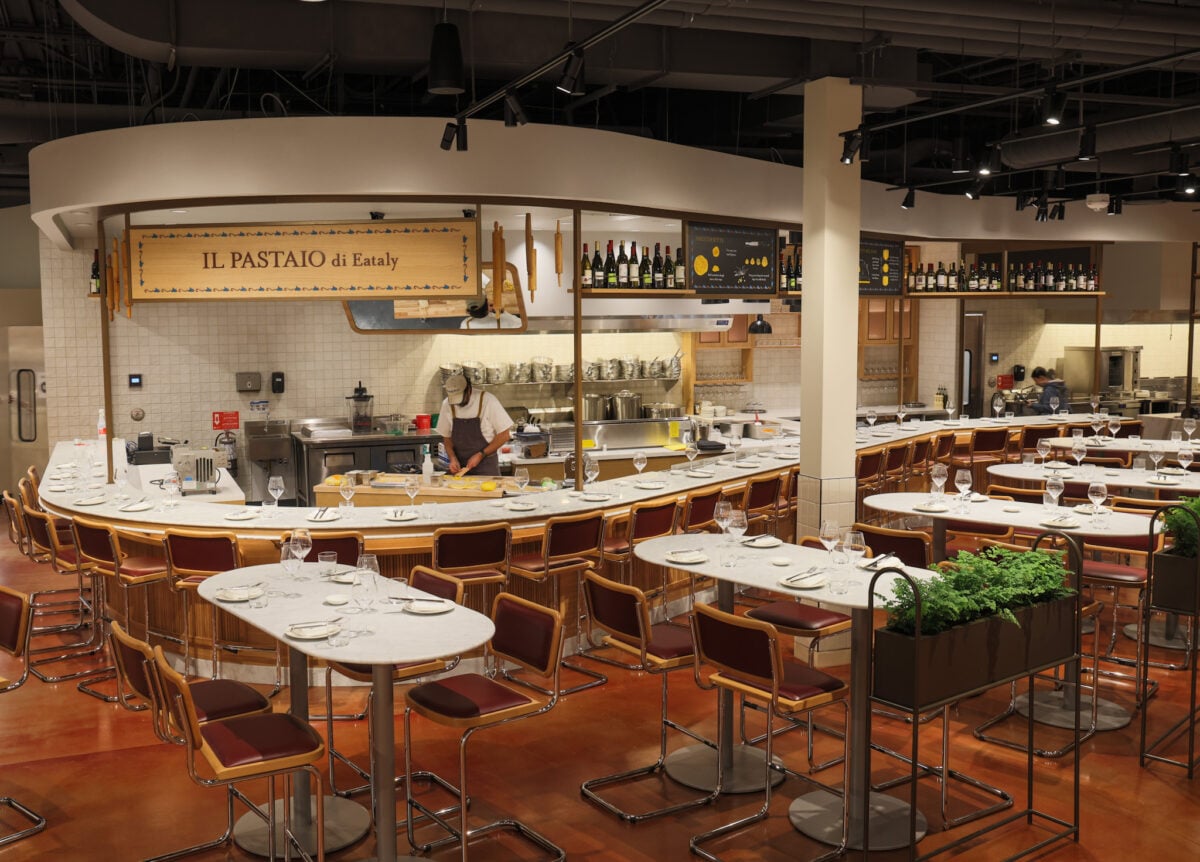
“Restaurants are a big priority for us at this location. We have two restaurants, Il Pastaio and La Pizza & La Pasta. Il Pastaio is a fresh pasta concept that we originally launched in in New York City at Eataly Flatiron and it offers fresh, housemade pasta, prepared daily by Eataly’s very own pastai — or pasta makers. La Pizza e La Pasta is the same concept that the GTA has come to know and love from our Yorkville location, with a higher number of tables to meet demand and a dedicated private dining room.”
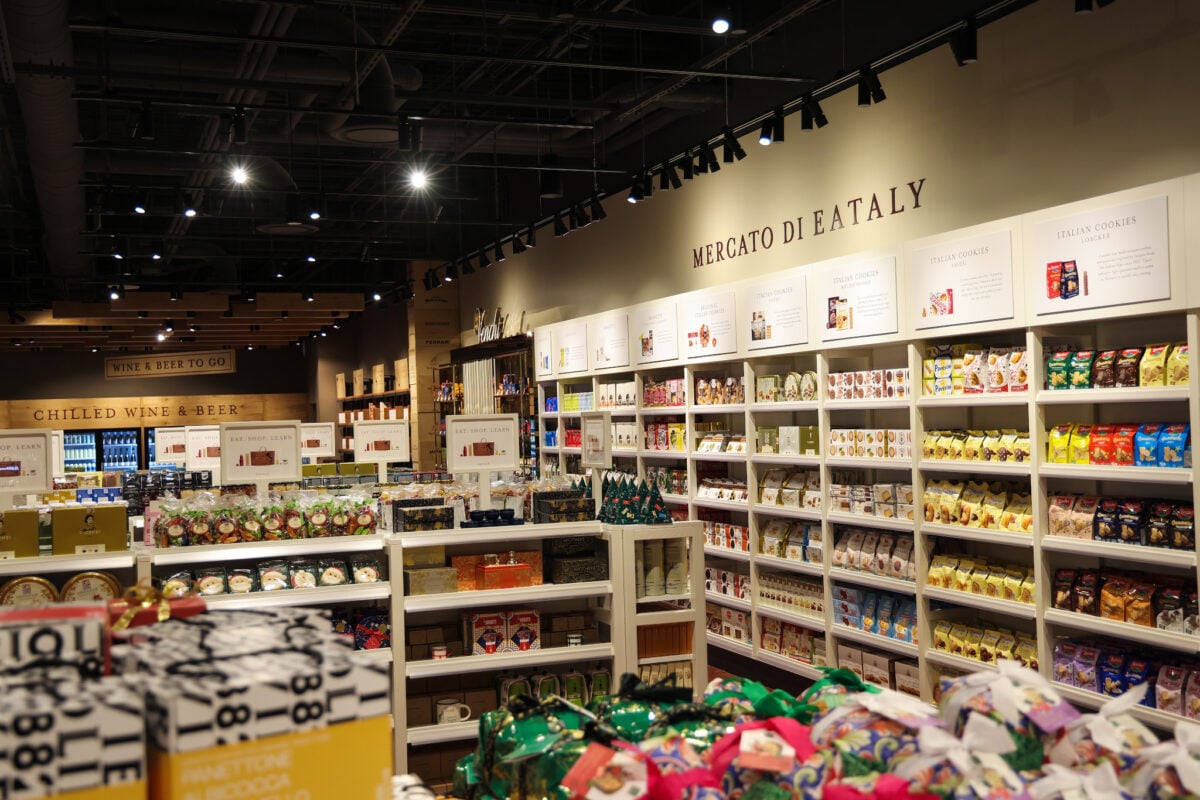
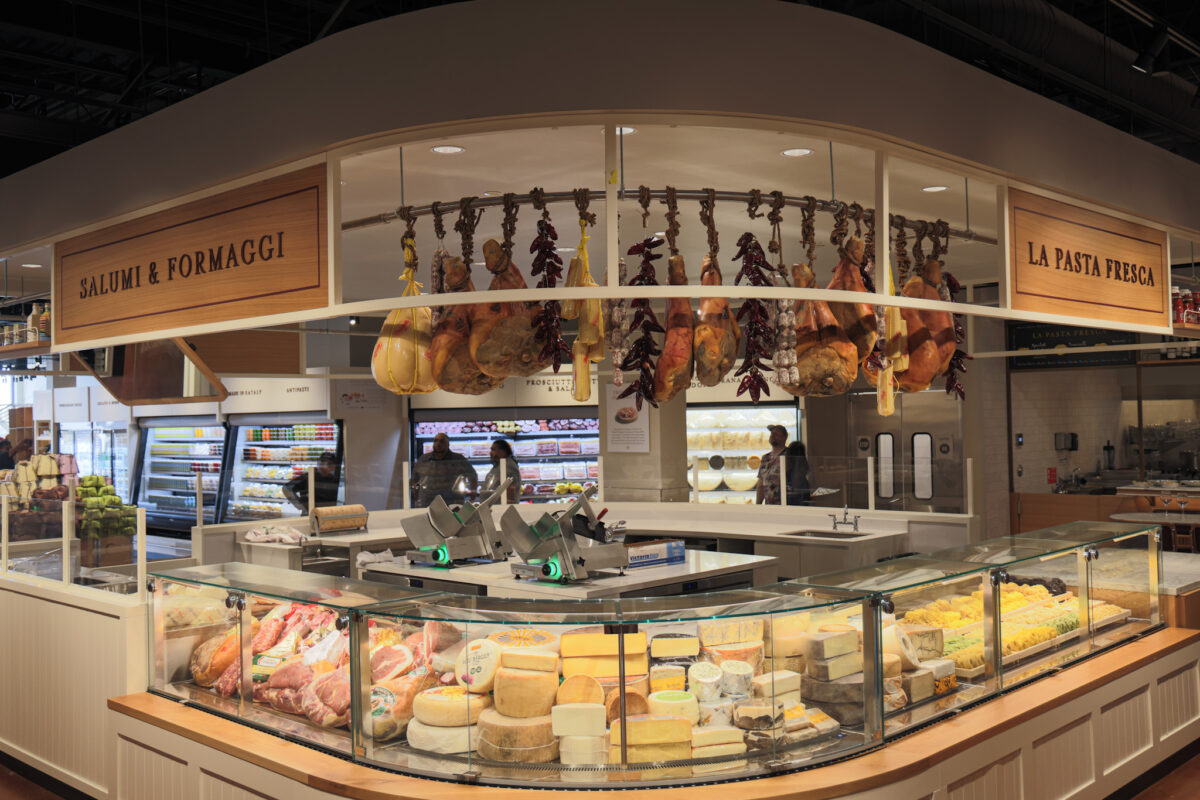
Mercato Di Eataly at CF Sherway Gardens (Image: Eataly)Eataly CF Sherway Gardens (Image: Eataly)
Sherway Gardens as Eataly’s Newest Home
Eataly’s choice of CF Sherway Gardens for its expansion was deliberate. The shopping centre, having recently undergone a significant transformation, offers a combination of diverse clientele and a premium shopping environment. Its southeast corridor, where Eataly is located, aims to become a hotspot for culinary aficionados while expanding the tenant mix to include a destination that mixes experiential with essentials.
Salvatore (Sal) Iacono
“At Cadillac Fairview, nothing is more important than creating a dynamic retail mix complemented by compelling dining experiences, and our partnership with Eataly is a perfect reflection of what we strive to offer,” said Sal Iacono, EVP of Operations and the incoming CEO at Cadillac Fairview.
In addition to the opening of Eataly at CF Sherway Gardens on November 2nd, the centre has welcomed a number of retailers, including:
Endy will be opening its first store in the first week of November
Kiokii will be open on November 1st
Solmaz opening in November
Recently opened retailers include:
Hatley – May 2023
Claire’s – May 2023
Studio Dental – May 2023
Swatch – May 2023
Knix – Pop up Store June 2023
Fox Home – Opened July 2023
Real Fruit Bubble Tea – Sept 2023
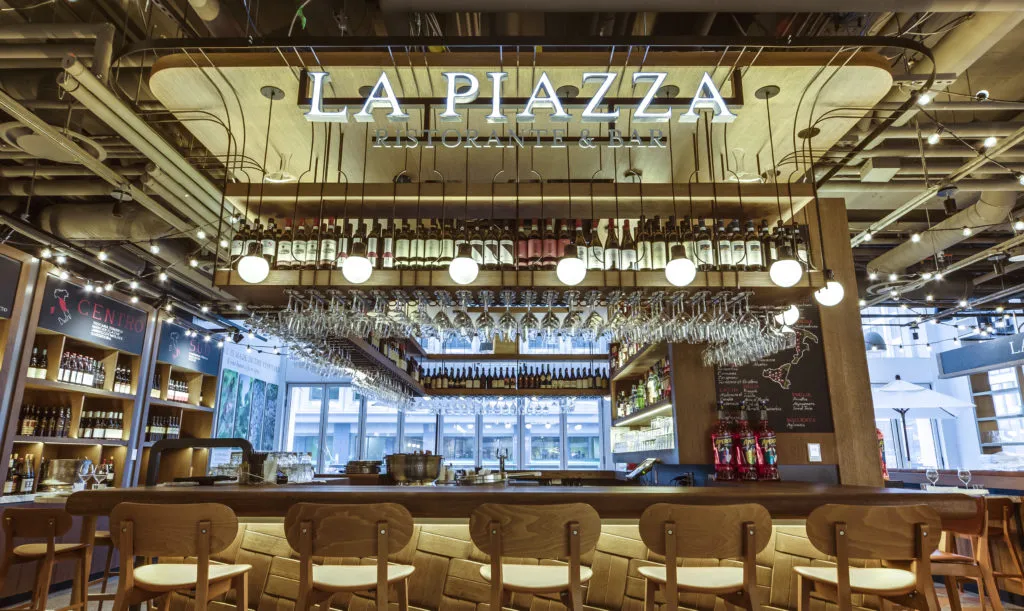
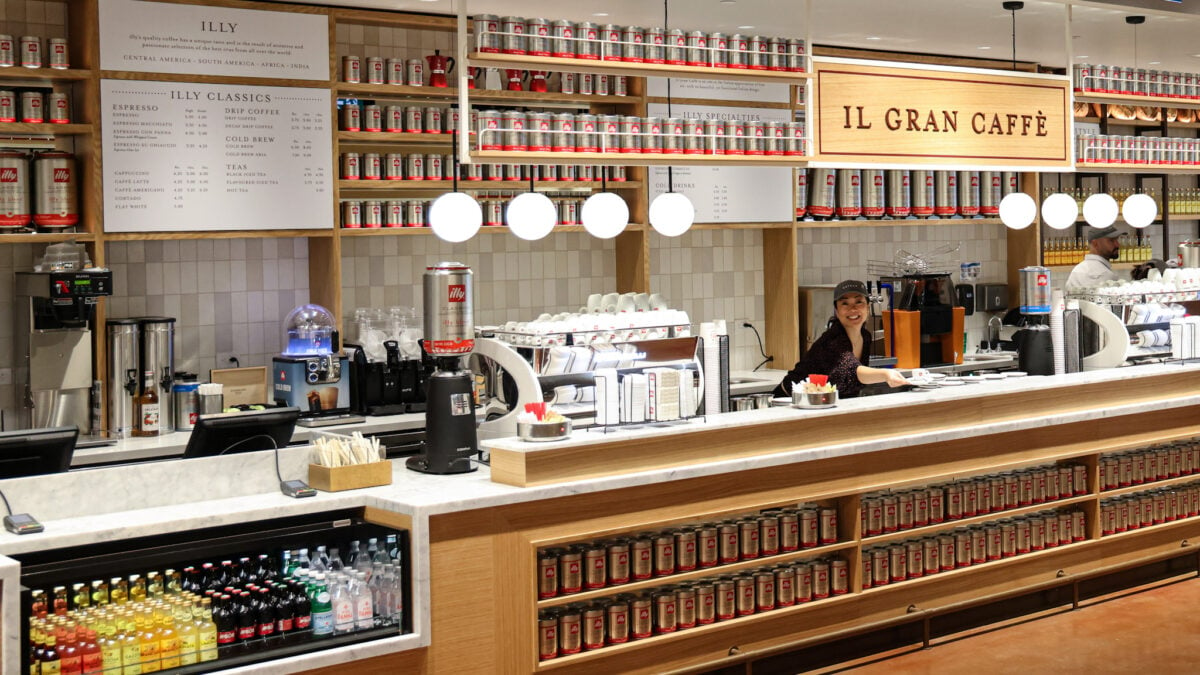
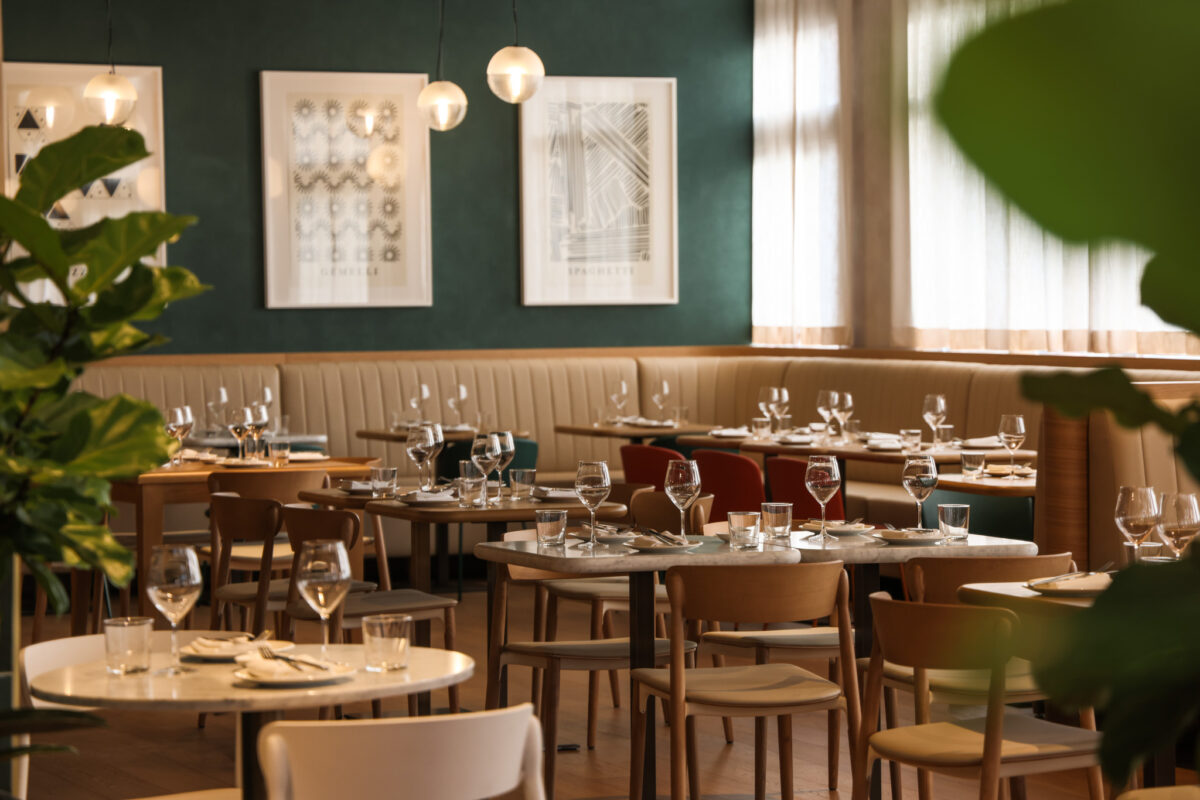
Il Gran Caffe at Eataly CF Sherway Gardens (Image: Eataly)La Pizza e La Pasta at Eataly CF Sherway Gardens (Image: Eataly)
When Eataly launched at the Manulife Centre on Bloor Street in downtown Toronto in November of 2019, it introduced its distinct experiential approach to the Canadian audience. Four years on, a new Canadian location offers Eataly an opportunity to refine and adapt its strategies.
“When we opened the first store in Canada, we understood that the Toronto market is a renowned food city for a reason – there is an elevated understanding and appreciation for cuisine and a strong base knowledge, in particular, of Italian cuisine,” said Brusò. “This was reinforced over the last four years, and the city’s love for unique experiences has pushed us to raise our own bar.”
“Yorkville is the only store in North America where we offer three styles of regional pizza. It’s the first city in North America where we hosted an after-hours Eataly tasting experience. It’s the first city where we have collaborated with local partners, from chocolatiers to honey producers, to create only-in-Toronto, housemade limited-time products.”
“We also learned there is an appetite for Eataly and high-quality Italian products across Canada. In 2020, we launched our nationwide e-commerce platform. Within Toronto, we’re able to ship almost our entire catalogue. Across Canada, we can ship anything from our dry market – and we’ve been encouraged to see orders come in from Victoria to St. John’s to Yellowknife.”
“It’s an exciting time for Eataly,” said Brusò. “In Canada, we are planning a third Toronto location at CF Shops at Don Mills to open in the first half of 2024. Similar to Yorkville, CF Shops at Don Mills presents a new market to us, this one uptown. More details will follow in the coming months, but we continue to evolve the Eataly approach and offer in order to fit our markets and locations, and CF Shops at Don Mills will be no exception.”
“We’re looking beyond Toronto as well. At the moment, we are not at a stage to announce any future locations, but what the Yorkville location affirmed for us is that Canada is a key market for Eataly and we are just beginning to tell our story here.”
Retail Insider is streamlining its Canadian retail news from around the web to include a handful of top news stories that can be viewed quickly during the day. Here are the top stories from the past 24 hours.
While the weakening of the Canadian economy is growing more apparent each week, the national retail environment isn’t going to give David Wyatt too many sleepless nights.
David Wyatt
Wyatt is the senior vice-president of retail at Morguard, which, according to its online portfolio has $4.1 billion in total retail assets among its total ownership pie of $14.7 billion held more specifically by Morguard Corporation ($4.5 billion); Morguard REIT ($2.3 billion); Morguard North American Residential REIT ($4 billion) and Institutional Clients ($3.9 billion).
“There are going to be highs and lows in the economy. It’s cyclical,” Wyatt told Retail Insider in a recent interview covering the company’s current perspective on the national retail situation. Wyatt said Morguard’s grip in the Canadian retail market is wide and deep and their team won’t be “cycling out” of retail real estate based on current conditions — namely rising interest rates, nagging inflation and a slowing national economy.
The Centre in Saskatoon, Saskatchewan (Image: Morguard)
Instead, they’re paying attention to shifting trends and the effects on shopper behaviour and leasing activity, all while shoring up their national retail portfolio, which includes assets like Burquitlam Plaza in Coquitlam, Crossroads Station Shopping Centre in Winnipeg and The Centre in Saskatoon.
“We have many retail clients… in our long-standing buildings that have been with us for 20 years…or longer,” Wyatt said. “We like developing relationships with (retailers) whether they’re local, regional, or national retailers with the idea that we have more than one property that would suit their needs over their time horizon.”
Morguard is a fully-integrated real estate company that owns, manages and invests in assets across North America. With 45 years in business and a team of 1,300 professionals, Morguard is based in Mississauga and has offices in seven provinces and three U.S. states.
Morguard continues to value smaller markets, Wyatt said, listing cities such as Prince George, Grand Prairie, Brandon, Thunder Bay and North Bay.
Those markets hold potential for growth and renewal. “There have been a number of international and quality national retailers that have reinvested in those markets,” Wyatt said. “We like to think we’re providing more compelling shopping centre experiences in those markets.”
Investments in retail assets ‘muted’
Centerpoint Mall in North York, Ontario (Image: Morguard)
From an investment perspective, retail asset sales have been muted this year, according to Morguard’s second quarter update from its 2023 Canadian Economic Outlook.
Retail asset deal volume in the second quarter of this year neared a three-year low, the report said. “Retail investment property sales with a minimum sale price of $10 million in the combined Vancouver, Calgary, Toronto, Ottawa, and Montreal markets totaled less than $300 million in the second quarter, the lowest dating back to Q2, 2020.”
Morguard blamed a few factors for the slowdown. “The most recent of these was the interest rate hikes the BofC implemented to control inflation,” the report said. “The evolution of consumer shopping behaviour continues to generate the uncertainty that keeps the buyer pool thin. Relatively few significant portfolios or flagship properties have been made available for acquisition recently. Smaller and/or value-add assets with repositioning potential have been brought to market more commonly, amid an environment of relatively muted sales activity.”
Shifting consumer behaviour is part of the equation
Part of the equation is changing consumer behaviour and a shifting interplay between e-commerce and bricks-and-mortar, Wyatt said. “We’re trying to align ourselves with those retailers that are really good at omni channel retailing. We find that, whether they’re local, regional, national, or international, those are the retailers that are paying the most attention to what the marketplaces are telling them.”
Shoppers are spending less time window-shopping or “shopping on foot’, Wyatt said. Instead, consumers are spending more time online educating themselves about products or shopping online. However, trips to the shopping centre today “are more purposeful”, Wyatt said.
Retailer and shopping centre traffic counts are generally lower than pre-pandemic levels, but conversion rates are up, Wyatt said.
Prairie Mall in Grand Prairie, Alberta (Image: Morguard)
Core retail sales, excluding gasoline and fuel sales, and motor vehicles and parts sales, gained 1.3% in July, month-over-month, according to Statistics Canada’s most recent retail report.
StatsCan says total national retail sales rose 0.3 per cent to $66.1 billion in July, helped by the strength of sales of food and beverage. However, the agency said more recent months could see a reversal of those modest gains.
Wyatt said Morguard shares the responsibility with retailers to give shoppers a reason to come out and spend money. “We spend a lot of time trying to figure out how we can integrate food and beverage options, or greater food and beverage options in (our) buildings.”
Morguard is also looking into adding more entertainment options at their shopping centres beyond just cinemas.Wyatt pointed to Activate opening its largest ever location last year at Bramalea City Centre in Brampton as an example.”That was our first deal with that particular (company) and it’s been very well received.” Activate has a series of 11 interactive game rooms where people can play arcade-style games involving jumping, climbing and dodging. The Bramalea City Centre location is 13,000 square feet and features laser lights, glowing walls and high-tech rooms with games like Arena, Hoops, Mega Grid and Climb.
Consumers are getting more discretionary
Place Rosemère in Rosemère, Quebec (Image: Morguard)
Consumers though continue to face inflation, declining discretionary budgets and elevated interest rates.
It’s possible that discretionary spending on apparel could recede and there has also been a lot of public and government scrutiny on grocery prices, Wyatt said. “That’s not lost on us when we’re evaluating the marketplace in general.”
Overall, the Canadian retail market has performed relatively well, bouncing back from the pandemic-induced slide, Wyatt said, noting that post-pandemic consumer growth has been taking place at their shopping centres around the country in many categories including apparel, home furnishings, food and drug and specialty items.
Tourism and travel have also returned to strength in Canada’s big cities. “I think the consumer economy has brought the sales back in many or all of our buildings to pre-pandemic levels,” he said. “We’re still not at the same level of leasing, per se, that we were, (and) our occupancy rates are slightly lower than they were pre-pandemic.”
On a short-term basis, Morguard is trying to re-tenant its shopping centres with the types of shops and services consumers are demanding, he said. “We spend a lot of time in our buildings, listening to what our shoppers tell us in terms of what they’d like to see.”
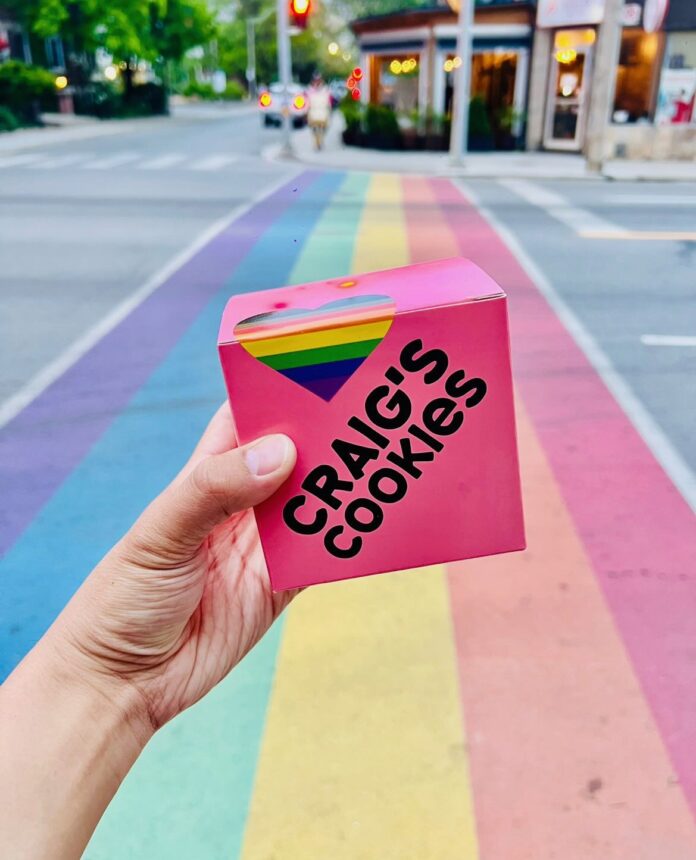
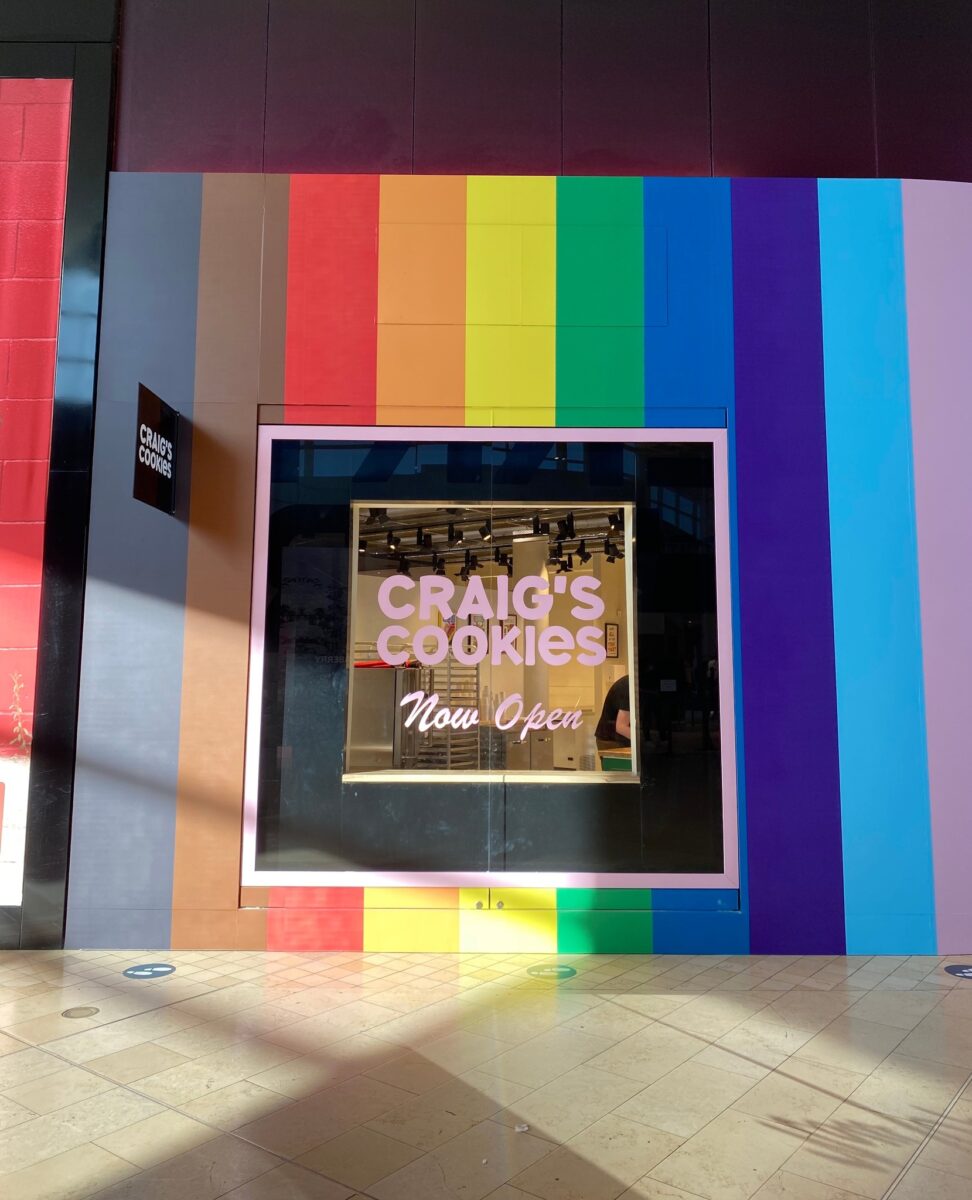
Craig’s Cookies, which Craig Pike began as a way to pay his phone bill by selling the treats over Facebook and Instagram in 2013, has signed a multi-location franchise development agreement with Ontario-based LLH Loose Change.
LLH Loose Change Holdings will open a minimum of five Craig’s Cookies stores, primarily at major regional shopping malls. The company principals are long-time friends and business partners Jay Lee, Bernie Li and Chris Hornung.
“We’re thrilled to embark on this adventure alongside Craig’s Cookies,” said Lee. “We’ve been big fans of Craig’s Cookies ever since they opened their first location in Parkdale. Since then, we’ve been to several locations and continue to be impressed by the consistency of the service and quality of the product. When we learned they were franchising, we jumped at the opportunity. We love what Craig has built so far and are extremely excited to be a part of the growth of this amazing brand.”
Craig’s Cookies at Yorkdale Shopping Centre (Image: Craig’s Cookies)
Pike said the franchise partners bring with them a great deal of experience and share the vision for the brand.
Craig Pike
“They truly understand what we are all about. They are committed to providing the very best service and products to our amazing (and growing) diverse customer base,” said Pike.
“Our aim is to work with the very best franchise partners to open Craig’s Cookies in the locations best suited to deliver our unique customer service and creative approach. Our vision is to be the leading premium cookie business in Canada, by offering our franchisees an unparalleled business opportunity in their local communities. Our mission is to celebrate the YUM factor in the chocolate chip cookie, while honouring diversity and inclusivity. We provide our franchisee family with extensive initial and on-going training and support, impactful marketing and a respected brand name.”
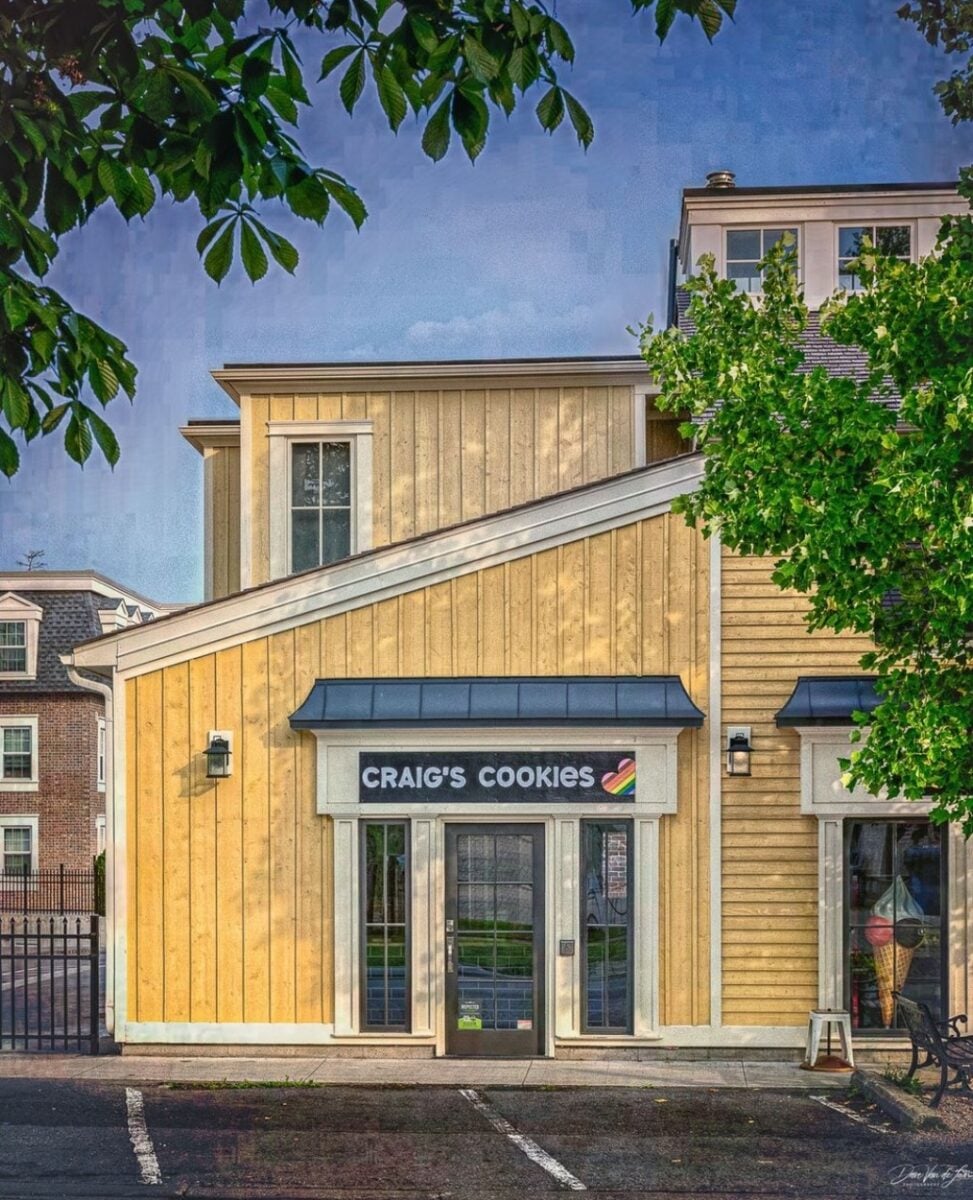
There are six corporate Craig’s Cookies locations and one franchise. In July, the brand opened its first franchise location in Niagara-on-the-Lake. It offers customers chocolate chip cookies with a wide range of toppings and flavours through its retail locations and also ships Canada-wide.
InnoFran, specialists in franchise development helped in facilitating the agreement for Craig’s Cookies and LLH Loose Change.
“Craig’s Cookies presents a fantastic concept and an exceptional avenue for franchising. Since the initiation of the franchise program, the momentum has been unceasing. This progression stands as a captivating and organic advancement for the brand,” it said.
Craig’s Cookies at 106 Queen St Unit E in Niagara on the Lake (Image: @streetsofnotl)
Pike said during COVID and lockdowns a couple of years ago he noticed that the brand was quite strong so he decided to open a couple of stores in Leslieville, Yorkdale Shopping Centre, and St. John’s, Newfoundland.
“And once those six locations were open the brand was continuing to be very, very strong and based on my want and personal need to be involved in the arts which is my gig before I started Craig’s Cookies, I wanted to continue to celebrate the strength of the brand but not open specific locations myself,” he said.
“And so instead of having corporate grow and having my involvement grow I decided to grow the franchise route because it would be a great way for Craig’s Cookies to expand, to reach different neighbourhoods, different communities in southwestern Ontario and then eventually across Canada.
“The really interesting thing about franchising is that it does give many, many people an opportunity to be able to start their own business in a way. We’ve had quite an extensive reach out from folks all across the country. In meeting folks, it’s really important for me to be very specific with who I would like to do work with and to do business with.
“We see as projections the potential of about 10 to 15 in southwestern Ontario and then in major cities across Canada.”
Craig’s Cookies Grand Opening at 106 Queen St Unit E in Niagara on the Lake (Image: Craig’s Cookies)
Pike said the company’s strategy is to grow the brand in the future through franchising but if an opportunity comes his way to be able to open another corporate store that would not be off the table. Also, there is potential to reach into the U.S. market eventually.
Pike said he is shocked and amazed about where the brand is today compared to when it first started.
“I’m very grateful and humble. I never ever thought when I was making cookies in my home 10 years ago, delivering on my bike, that there would be an interest in Craig’s Cookies nationally. And it’s a testimony to not only the products, my mom’s recipe of the chocolate chip cookie, but the hard work of everyone that’s involved in the company,” he said.
Retail Insider is streamlining its Canadian retail news from around the web to include a handful of top news stories that can be viewed quickly during the day. Here are the top stories from the past 2 days.
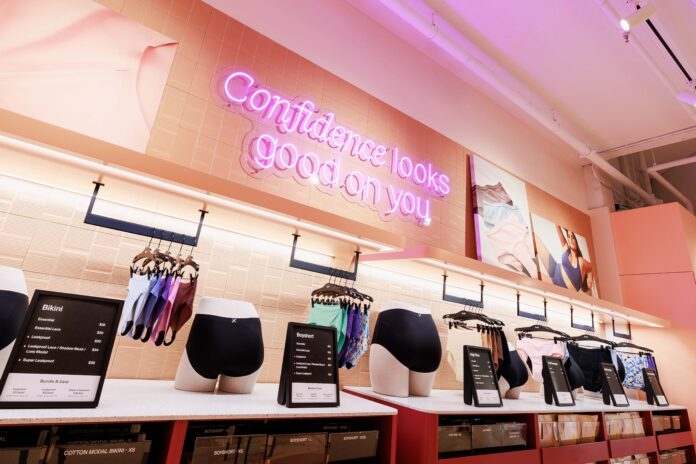
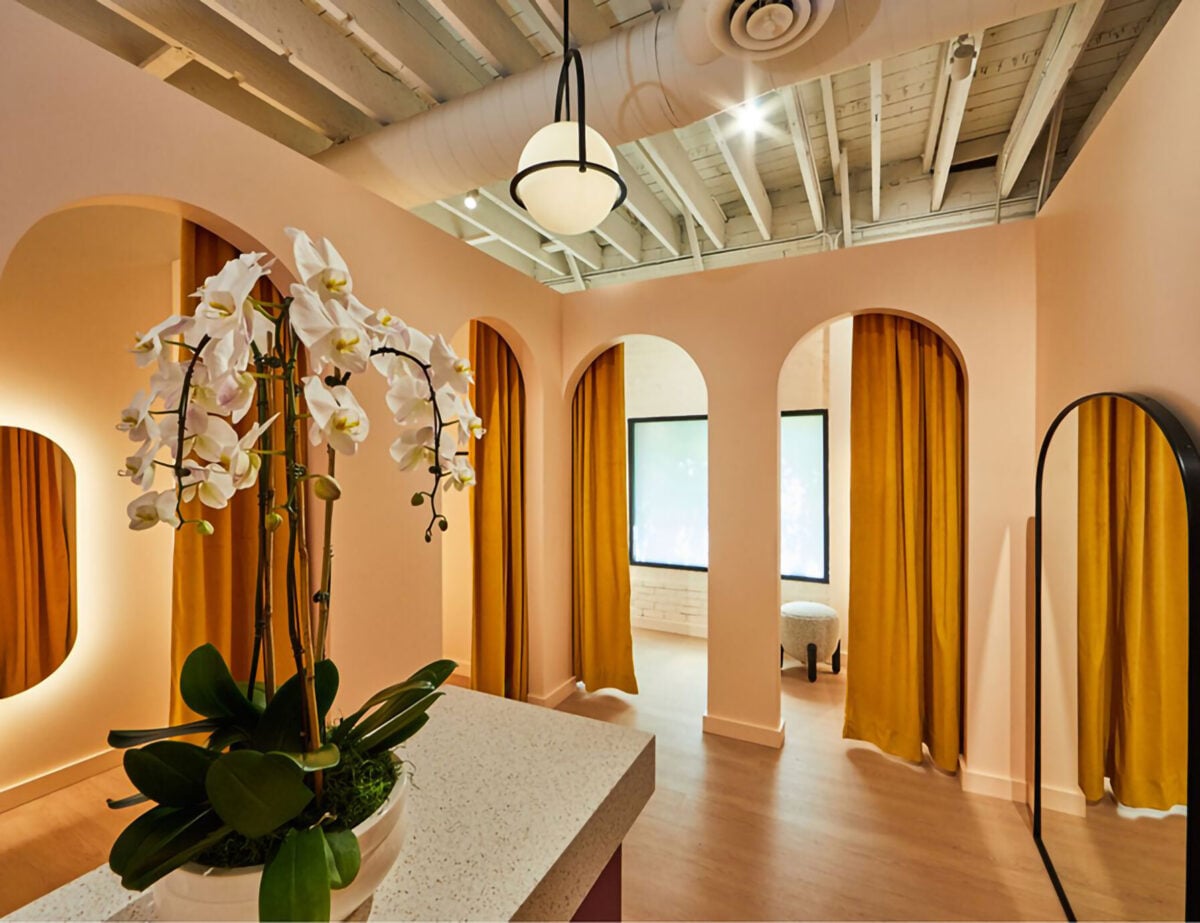
Underwear and apparel retailer Knix has plans to open six stores in the next six weeks in Canada to take advantage of the holiday shopping season as the brand continues to aggressively expand its footprint across the country.
Joanna Griffiths
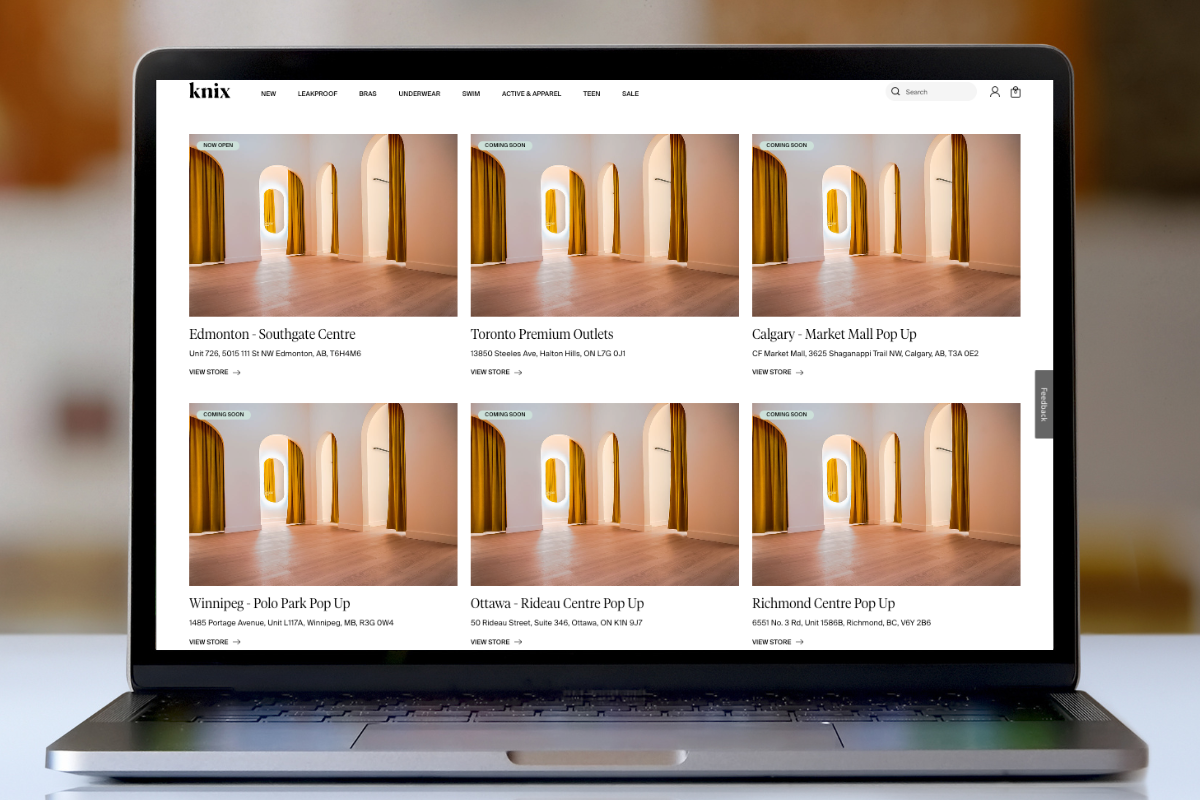
Joanna Griffiths, Founder and President of the company, told Retail Insider those stores will be located at CF Market Mall in Calgary, Southgate Centre in Edmonton, CF Polo Park in Winnipeg, Richmond Centre in the West Vancouver area, CF Rideau Centre in Ottawa and Toronto Premium Outlets in Halton Hills.
“This is part of a broader expansion plan within Canada. We’re continuing to think about opening a similar group of stores to what we did this year. Six to eight locations a year,” she said. “And looking for penetration across Canada. In some instances opening a second or third location within a market and also looking at net new markets as we’ve just done with Edmonton and Winnipeg.”
Currently, Knix has nine locations – six in Canada and three in the U.S. The Canadian locations include two in Toronto, two in Vancouver, one in Calgary and one in Ottawa. The U.S. locations are all in California – Santa Monica, San Francisco and San Diego.
Knix.ca
Griffiths said the retailer’s typical footprint is about 2,500 square feet.
“We’re in the process of sort of evaluating what is the best path forward for the U.S. So when we launched our three California stores we kind of took three very different approaches. One’s in a mall. One’s kind of like a community store and then another one is on more of a tourist, shopping street,” she said.
Griffiths launched Knix with the goal of transforming an underwear market that had too much frill and not enough function. A trailblazer with the creation of Leakproof Underwear, she continues to focus on listening to what people want and bringing revolutionary solutions to life.
In 2013, Knix introduced Leakproof Underwear to the world. In 2015, Knix released their first wireless bra. In 2016, Knix is the first brand to use real women–of all ages, sizes, and backgrounds–on their site. In 2017, Knix launched the first period underwear brand for teens and tweens, Kt by Knix. In 2019, Knix is the first brand to release a lingerie campaign exclusively featuring women from ages 50 to 81. And in 2022
Knix launched the first of its kind Confidence Tour, empowering people to be their most confident selves on a live runway in their intimates.
Knix Santa Monica (Image: Knix)
Griffiths said the retailer has discovered it has a nice white space within the Canadian market.
“A lot of feedback from our growing Canadian consumer base that they want to see and touch and feel product and try it on. That’s kind of gearing our strategy,” she said. “We’ve been experimenting over the past couple of years. With (CF) Sherway (Gardens in Toronto) we entered into our first mall concept. The stores before were all more community-driven concepts. We’re seeing great success in both which is leading to the desire to continue to roll out stores.”
Today, the retailer is a trailblazer with its comfortable wireless bras to super absorbent underwear, which are designed to make women feel more comfortable in their own skin.
“We have a pretty unique product assortment. So a lot of our products are highly differentiated via the innovation and the technology that we offer. We’re a bit more fashion forward than I think maybe some of the more traditionally active apparel companies as an example,” said Griffiths.
“People are loving the product and they’re loving the brand as well. We’ve been on a decade-long journey to really reframe how women are portrayed in the media and portrayed in marketing. Taking a more diverse and inclusive approach and it’s really speaking to people of all ages and backgrounds where they feel like Knix is a store where they want to shop at and they feel comfortable coming into the location and being helped by our incredible retail team members.”
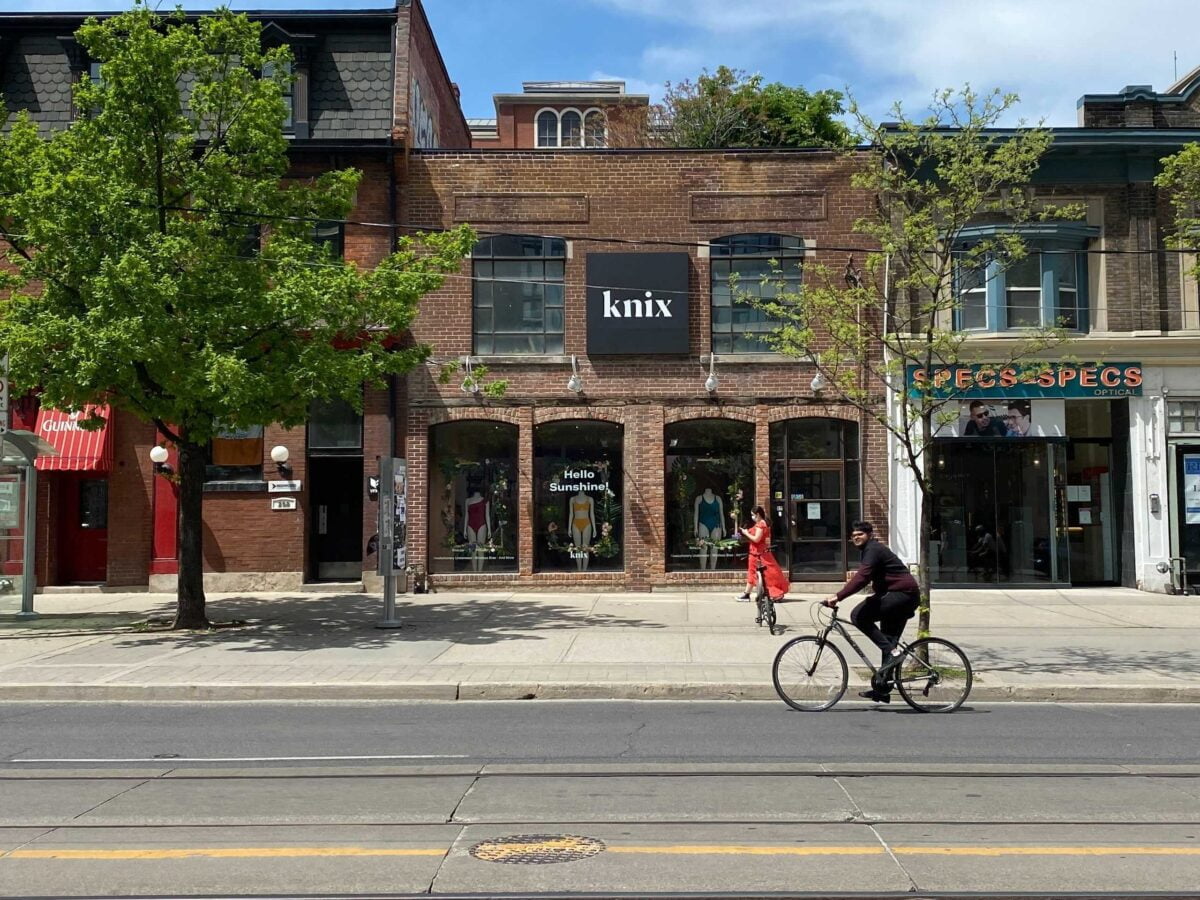
Knix on Queen Street West – Photo by Dustin Fuhs
Given the success of the brand’s Canadian stores, Griffiths said the retailer is seeing a desire for people to connect again in person following COVID.
“From our perspective, the physical retail side of things is really taking off within Canada,” she added.
The BLUMZ: house of fine jewelry and piercings, is looking to bring new experiences to the city. The brand currently has one location open and will be opening a new concept store connecting food with jewelry.
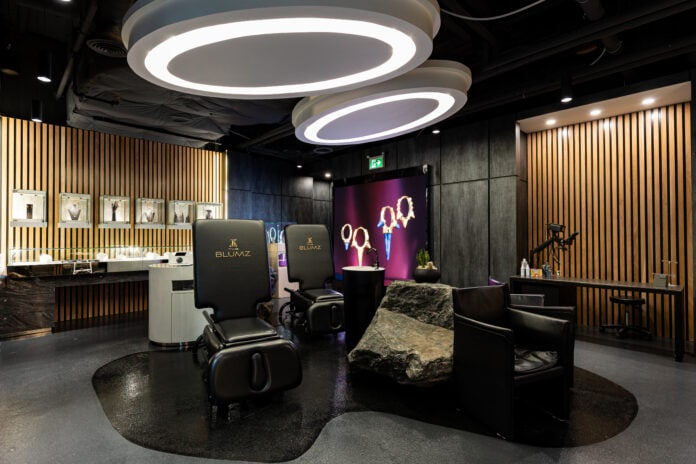
The Blumz opened its flagship in Toronto at 343 King Street West and is 1,000 square feet. Ion Blum, Co-Owner of The Blumz, decided on this location because of being in the new hotel hub such as Bisha and Nobu – a great spot for tourists.
“We shopped around and looked at so many different areas in Toronto. We feel what we are doing is different and we wanted to really create an experience like no other, not only for Toronto residents, but for the tourists coming in Toronto,” says Ion.
The brand’s second concept, The Blumz Privè, is currently under construction and will open by Valentine’s Day. The store will be 600 square feet and is located at 44 Mercer Street in Toronto.
Each location will offer different services, products and experiences to consumers.
The Blumz
Image: The Blumz
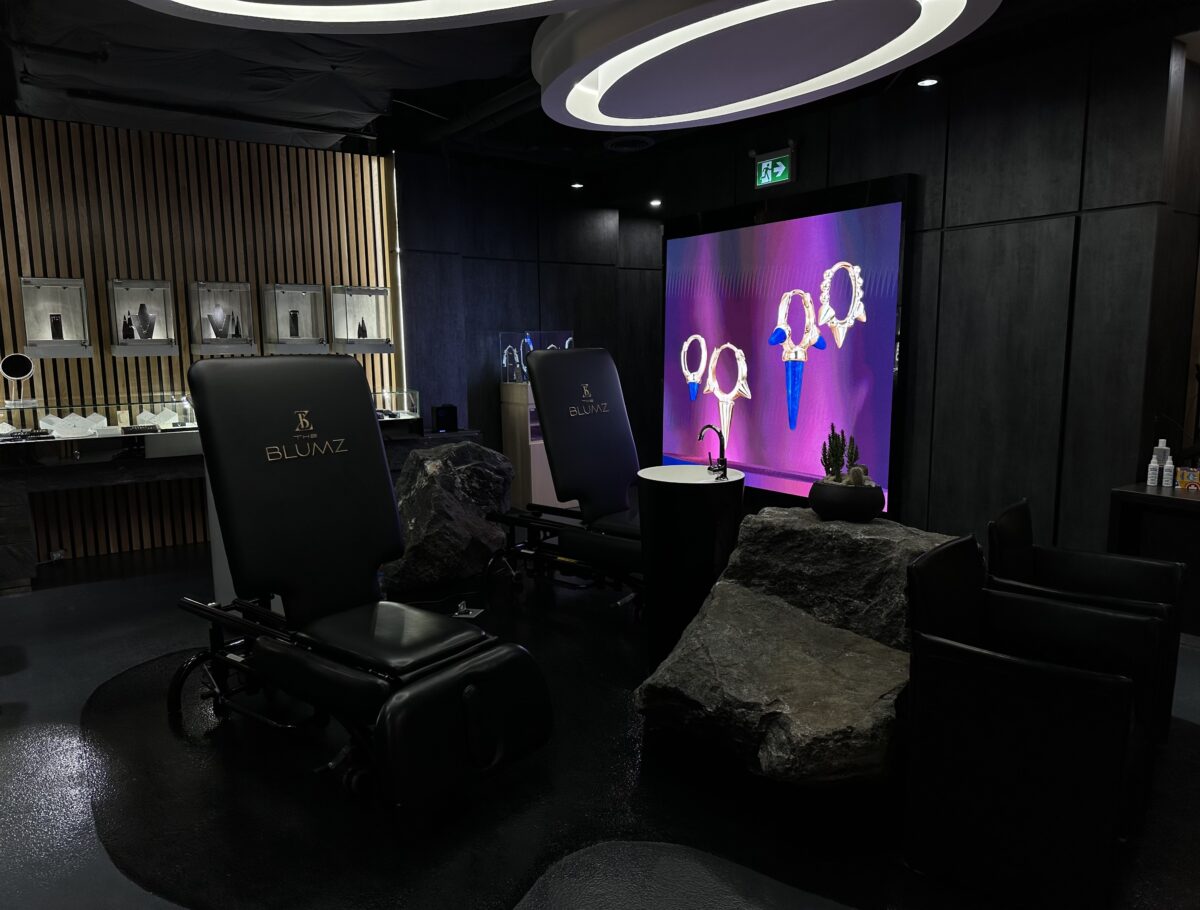
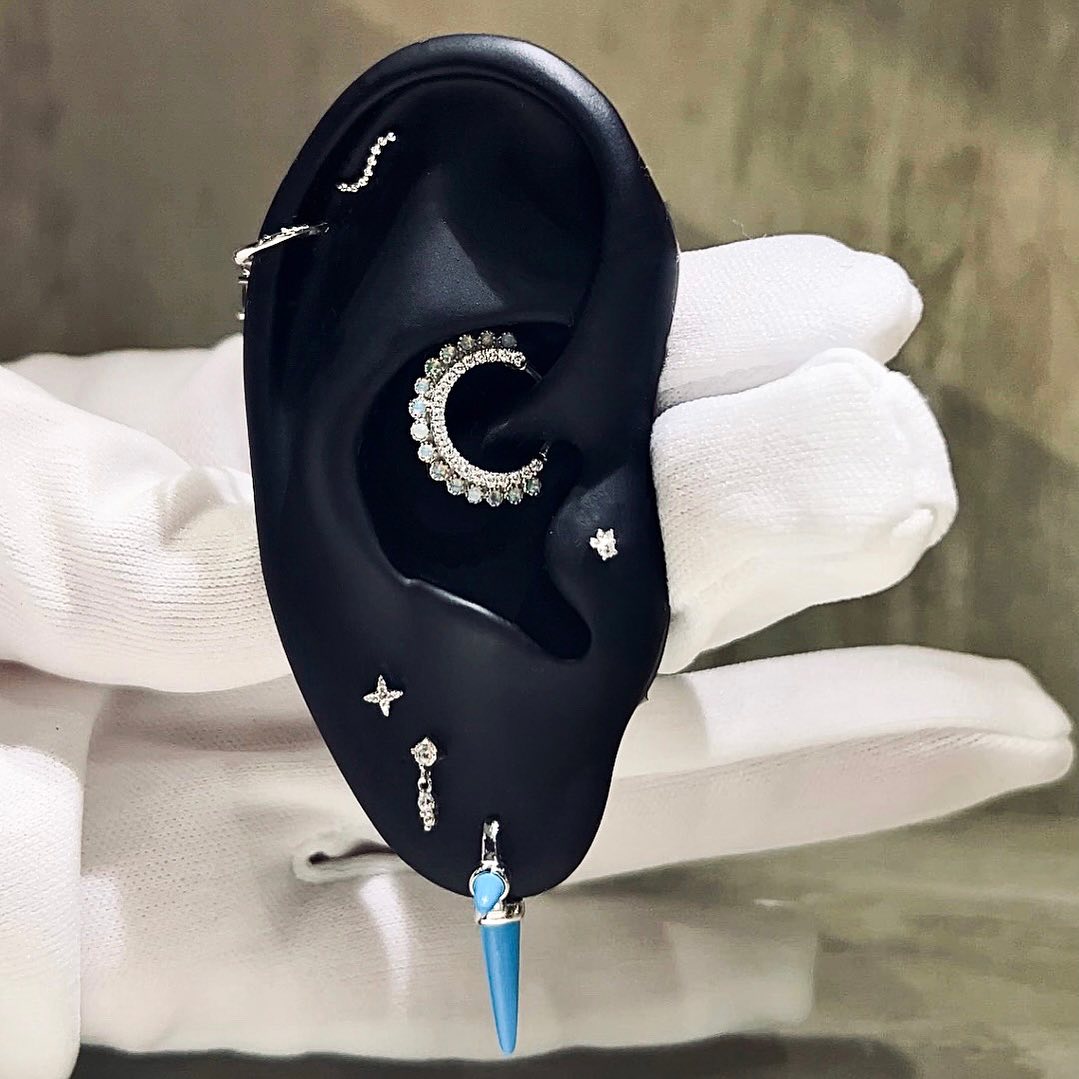
At this location, a variety of fashionable jewelry such as earrings, necklaces, ear chains and charms, piercing studs and hoops. The store also offers piercing services in addition to a permanent bracelet bar, chains, anklets, and rings. jewelry is sourced from around the world and includes designers such as Jacquie Aiche, Anita Ko, Kismet By Milka, and its unique line called Anion Jewelry, who is also co-create with Anna Blum, co-owner of The Blumz.
“At The Blumz, we offer brands that are hand picked by Anna and I based on our personal interest, love for the arts and travel destinations. We carry Maria Tash, Anita Ko, Jacquie Aiche, Kismet by Milka, and more. If you go onto our website, you are going to see all the different lines we carry. What that gives the consumer, is the ability to mix and match based on style and also on price points or budgets.”
The BLUMZ | House Of Fine PiercingsThe BLUMZ | House Of Fine Piercings
When someone goes in for a piercing, the team can recommend different types of jewelry based on the anatomy of the ear. Blum says it offers piercing jewelry that expands from the traditional piercing/tattoo shop.
“They don’t have to be jewelry that you normally would start off with and then kind of upgrade to something that is more fashionable later. The fact that we pierce with a needle, which is far more precise and much better for piercings – we can actually utilize fancy jewelry to pierce with from the start.”
The brand started selling jewelry online; however, after noticing an increase in jewelry and piercing trends, the owners decided to proceed with a brick and mortar store.
The Blumz Privè will offer a different experience than The Blumz and other jewelry retailers in Toronto as it will focus on a unique experiences that combines sight, touch, smell and taste.
The new concept will offer private shopping experiences that can also include menus designed by a number of Torontonian chefs. Unlike The Blumz, this location will require reservations.
“We are in the talks with some restaurants in Toronto to create an experience like no other. Since Elegance is a journey and jewelry has an intimate and sentimental connection with the body that wears it, yet often enough only created by association through sight and touch, at Blumz Privè we want to revolutionize the experience by tapping into the other human senses: smell and taste.”
Blum says the menu will be decided on where the jewelry is manufactured, what kinds of diamonds they use and will let the chefs create different dishes that will represent the region of the world where the jewelry came from.
“We are aiming to have this done for Valentine’s day in 2024, because for Valentine’s day you think of amazing dinners, chocolates, champagne and pampering.”
Anna & Ion Blum
Along with the mentioned locations, Ion and Anna Blum also own a tattoo studio, Black Line Studio, which is also in Toronto and has been operating for the past 17 years. Black Line is an “upscale tattoo shop” offering tattoos, body piercings and laser treatments. Consumers can book appointments or see walk-in availability.
“We have separated the businesses. So Black Line studio is focused on tattoos primarily, then The Blumz is focusing on jewelry and piercings, and the third one that will be opening will be more focused towards fashion jewelry.”
Anna Blum says the main focus right now is to focus on the three brands they have right now, but eventually would like to consider expanding.
“For the past 17 years, we have built different concepts such as Black Line Studio, the 350 Fahrenheit restaurant and a couple of furniture stores. As entrepreneurs, we always look at expanding and creating different concepts, but one thing that always brought us together is that love makes us “Blumz”.”
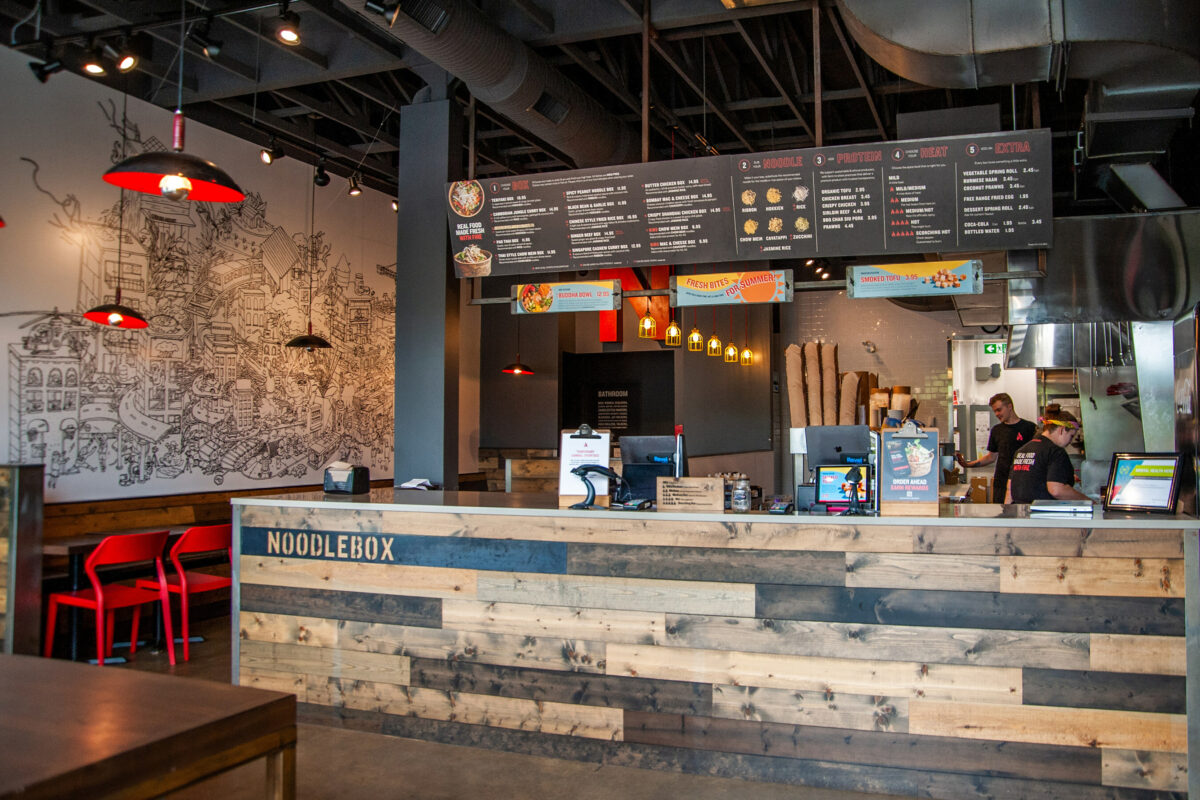
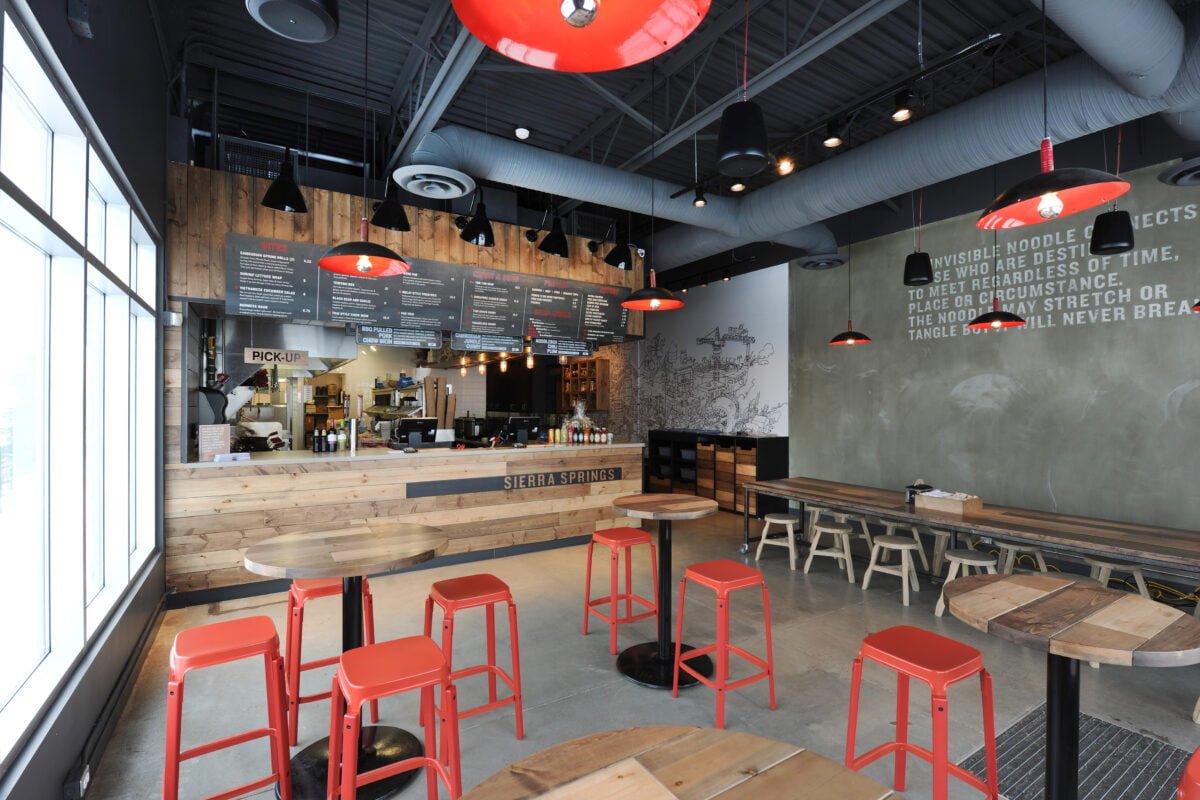
Foodtastic Inc., a leading franchisor of restaurant brands in Canada, has added another banner to its portfolio with the recent agreement to acquire Noodlebox, which it says is one of the fastest growing quick service restaurant brands in the country.
“We are delighted to welcome Noodlebox into the Foodtastic family,” said Peter Mammas, President and CEO of Foodtastic. “Noodlebox’s reputation as a top-tier quick service restaurant brand aligns perfectly with our commitment to providing exceptional dining experiences to our customers. We look forward to working closely with all our new franchisees and driving the growth of the Noodlebox brand across Canada.
Peter Mammas
“I think it’s an amazing brand. We had gone down on a trip to BC and we just happened to eat there. We actually talked to the owners and we were lucky enough to make a deal. But it’s great in the sense that it fits right into our strategy and portfolio and what’s even better, the food is just outstanding.
“It’s prepared on the spot. It’s fresh. It’s healthy. It’s tasty. You get a lot of value for your dollar. The portions are big. The stores look great. I mean what’s there not to like. That one I think is a homerun. It’s just a great concept and it just needs a scope of something like Foodtastic that we could take it coast to coast.”
Noodlebox (CNW Group/Foodtastic)
Mammas said he thinks Noodlebox could be a 215-unit chain just in Canada.
“I think there’s just an enormous opportunity in this. Asian Thai is a great category. It’s probably under-served throughout Canada with the exception of maybe Quebec. There’s a great deal of opportunity in that category,” he said.
Over the next year, including Noodlebox, Foodtastic expects approximately $1 billion of North American system sales across a network of over 1,200 new and existing stores. Foodtastic continues to drive growth through strategic acquisitions, new store development, and innovation.
“We are always on the lookout. Our goal is to actually triple this company in the next five years. We’re going to do that organically. We have plans to grow organically at roughly 10 per cent and on top of that we want to be purchasing three, four great brands every year to get us to that goal of tripling the company in five years.”
Foodtastic’s diverse range of brands includes popular names such as Freshii, Quesada, Second Cup, Pita Pit, Milestones, Fionn McCool’s, Shoeless Joe’s, Benny, La Belle et La Boeuf, and Monza.
Image: Noodlebox Airdrie
Noodlebox started as a food cart in Victoria, BC’s Chinatown in 2001.
Its unique style of Southeast Asian street food was so popular that people waited hours to get their fill.
Dustin May
“We believe that Foodtastic is the perfect home for Noodlebox, and that together we will continue to uphold the values and quality that Noodlebox is known for,” said Dustin May, CEO of Noodlebox.
“Noodlebox has thrived with 46 locations now open and a further 50 in the development pipeline, and we believe that Foodtastic and our Noodlebox leadership team will create a bright future for our dedicated franchisees, team members and loyal guests.”
Mammas said Foodtastic looks to acquire other food establishments that fall into two categories. One is like a Noodlebox where the company thinks the brand is amazing, well run, the financials make sense and it can use its platform to grow that brand. The other category is to buy brands it thinks it can fix.
“There’s a lot of brands that we bought in the past like Second Cup, Milestones and Freshii that we looked at and said ‘you know what, we think we could fix these brands and bring them to where they need to be and once that’s done we can actually grow them’,” he said. “The first one we did with Second Cup and we fixed that brand quite quickly within 12 months. We stopped the hemorrhaging and actually now it’s going to be the first year in probably a decade that Second Cup is going to have net new additions in their pipeline. We’re going to actually open more stores than are going to close this year, which is the first time that’s happened in a decade.
“The second one we acquired was Milestones and . . . they were an under-supported brand within Recipe. It was something that we knew very well because I used to own Baton Rouge. So I knew that segment really well and I looked at it and thought just by changing a few little things I think we could take that brand up. In the first year that we took it over we changed the menu, we changed a bit of the look, we changed the whole marketing, we changed the strategy of where that brand was going and right now it’s probably the number one brand in Foodtastic and we just opened some new stores and we’ve actually brought the concept to Quebec and the Quebec store has been open now for eight weeks and for the last four weeks it’s been the busiest restaurant in the whole country.
“We’re really good at fixing brands and once they’re fixed, growing them. And then you have Freshii that we just bought this year. We’ve only had it for a few months. So we’ve identified what we want to fix there. All the new ideas, the menu upgrades are going to be launched shortly and over the next six months. Again, I think that’s another brand that starting mid next year we’re going to be able to do like Second Cup and open more stores than are closing. And again that hasn’t been done since the last five years at Freshii as well.”
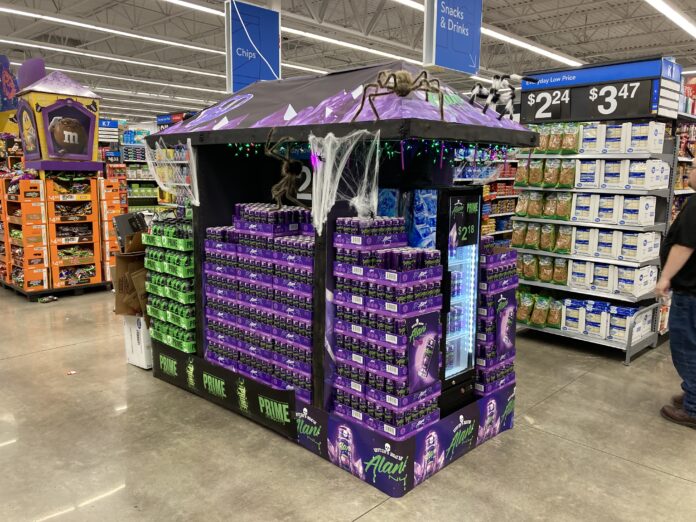
Prime Energy Drink Halloween Display in the US (Image: Jeff Doucette / Field Agent)
Has Halloween in Canada gone stale? The general manager of Field Agent Canada, Jeff Doucette, says yes. Doucette discusses what is missing from the shelves in Canada for Halloween, how retailers are decreasing excitement by overlapping seasons and how we can bring back excitement.
Jeff Doucette
Just like consumers saw the back to school shopping hit stores earlier, Halloween came out earlier this year as Doucette says some retailers were stocking their shelves with Halloween products in August. Although retailers were prepared earlier this year, Doucette is noticing a lack of innovation and for next year – Canada needs to up its game.
“Halloween has been out for a while, we start to see it creep into the stores in September, or even August. The back to school candy gets repositioned to Halloween candy, so we have been seeing the candy and all of that stuff out there for quite a while. But, we have not seen a lot of innovation this year in terms of new things for Halloween or anything unique and in fact – we are now already seeing Christmas,” says Doucette.
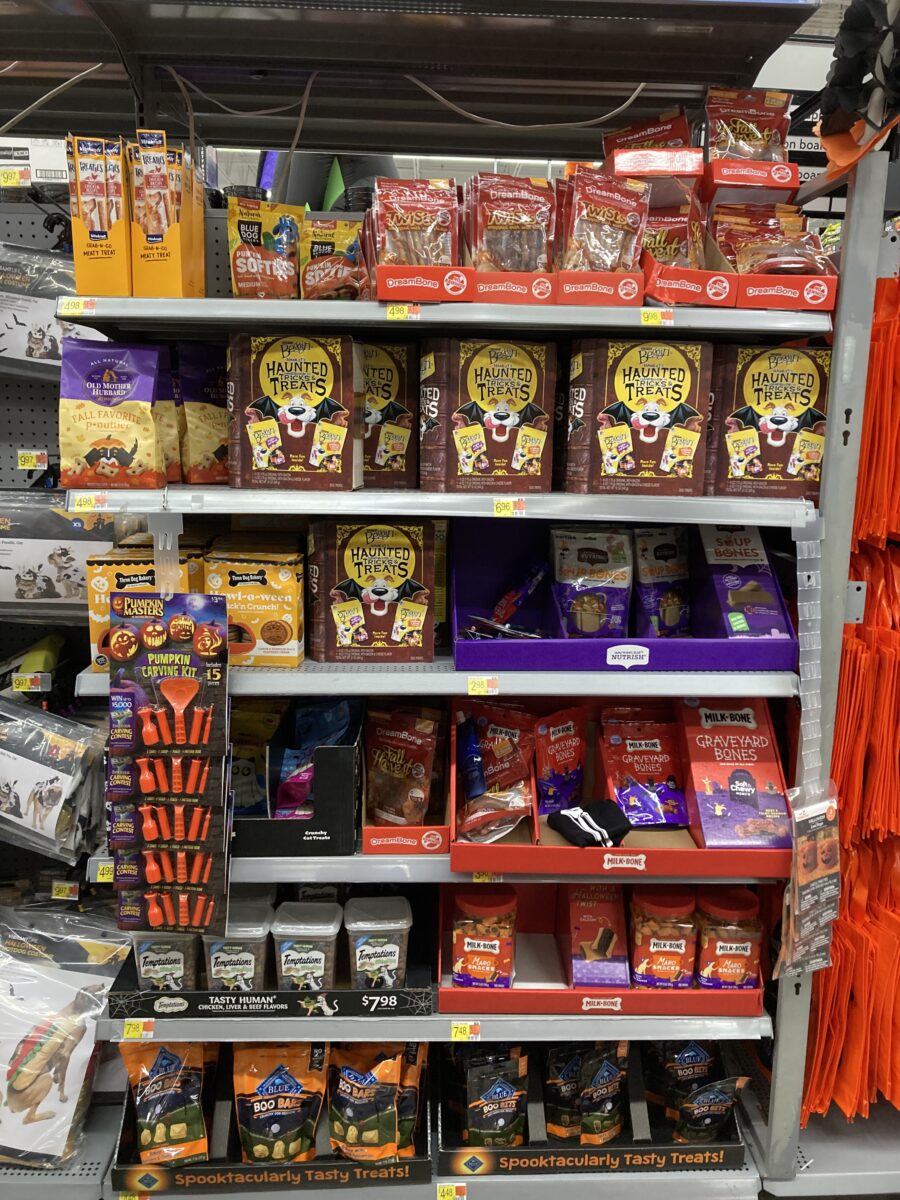
Halloween Display in the US (Image: Jeff Doucette / Field Agent)
Doucette visited the United States weeks before Halloween and noticed a difference in excitement and innovation. Doucette says Halloween in the US was more prevalent, there were no Christmas products on the shelves and instead, had a huge Halloween selection compared to Canadian stores. Meanwhile in Canada, retailers have mixed Halloween with Christmas.
“Retailers have brought Christmas in sooner and it kind of overlapped with Halloween. Sometimes you see some overlap, but when I was at Safeway there were more advent calendars than there were Halloween products. And it just seems a bit out of context.”
“Seasonal Creep Up”
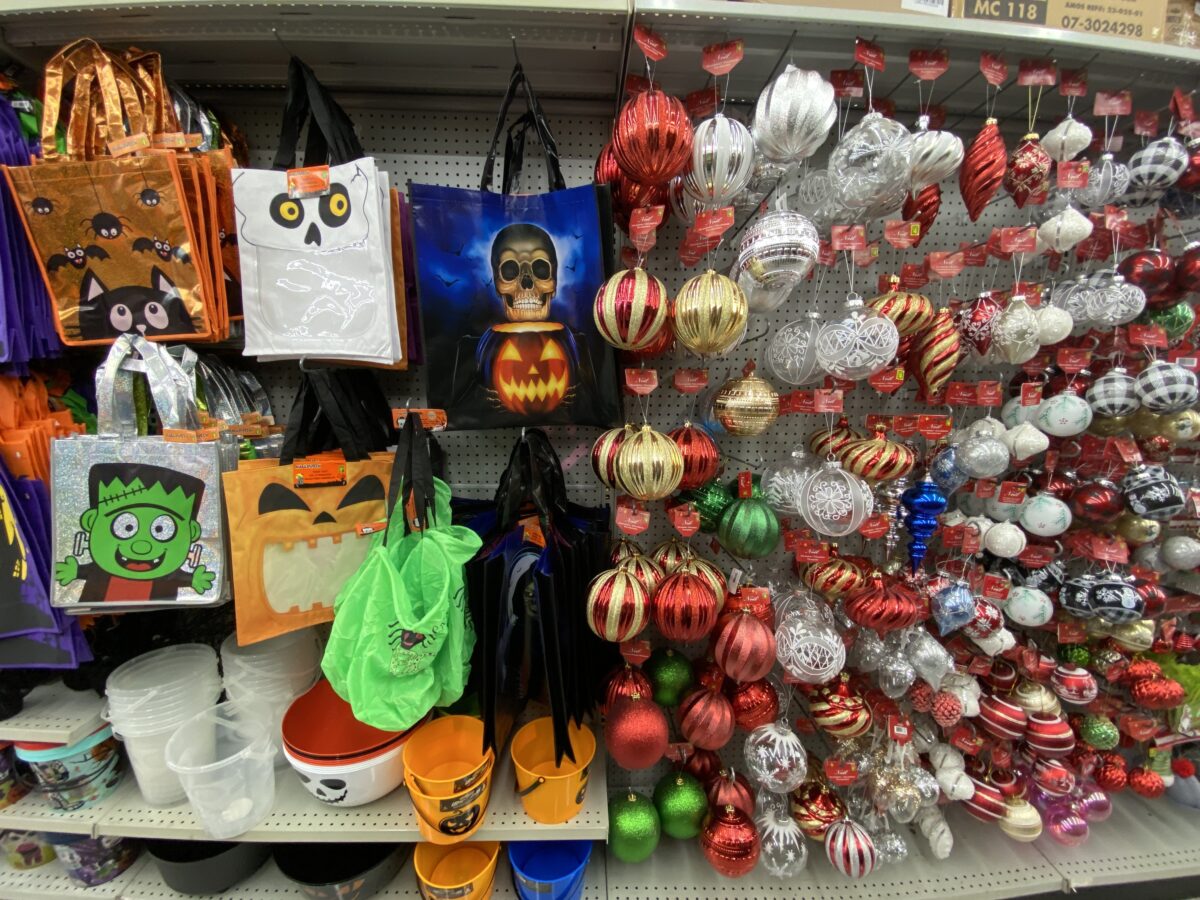
Holiday Decorations at Dollarama (Image: Dustin Fuhs)
Doucette says seasons tend to get earlier and earlier and is reaching a tipping point in retail. As inventory becomes available and gets pushed through the supply chain – everybody wants to be first and it is just getting too early: “right now is on my mind.”
“It is way too early for me to get my head around buying an advent calendar, it just seems a bit out of sorts. We know Halloween is an important holiday for retailers and everybody wants to be out there and be first. But it just seems like Christmas is now taking over and is starting to take over the stores. It seems disjointed.”
Christmas Display at Indigo Bay/Bloor on September 25th, 2023 (Image: Dustin Fuhs)
One reason why Doucette thinks seasons, like Christmas, are being pushed up is because retailers do not want to be last and miss out; however, it is not in line with what consumers are expecting to see in stores. Doucette said the normal flow would be to have Halloween, Remembrance Day – and then you would see Christmas, “and it seems like everyone has just pushed everything up a lot earlier in the cycle.” A second reason would be for consumers who have a tight budget; however, Doucette says it is unlikely people who are currently on a tight budget will be buying an advent calendar in the middle of October.
In a time where retailers are looking to connect with consumers, Doucette says by pushing up holidays like this will cause the reverse effect. Rushing through holidays can cause consumers to become confused, distracted or have a less enjoyable time shopping for the current holiday.
“Retailers are forgetting most consumers do not want to be shopping ahead of holidays, or skipping holidays. When people are focussing on Halloween – their focus is on Halloween, not getting a tree.”
Loss of Excitement
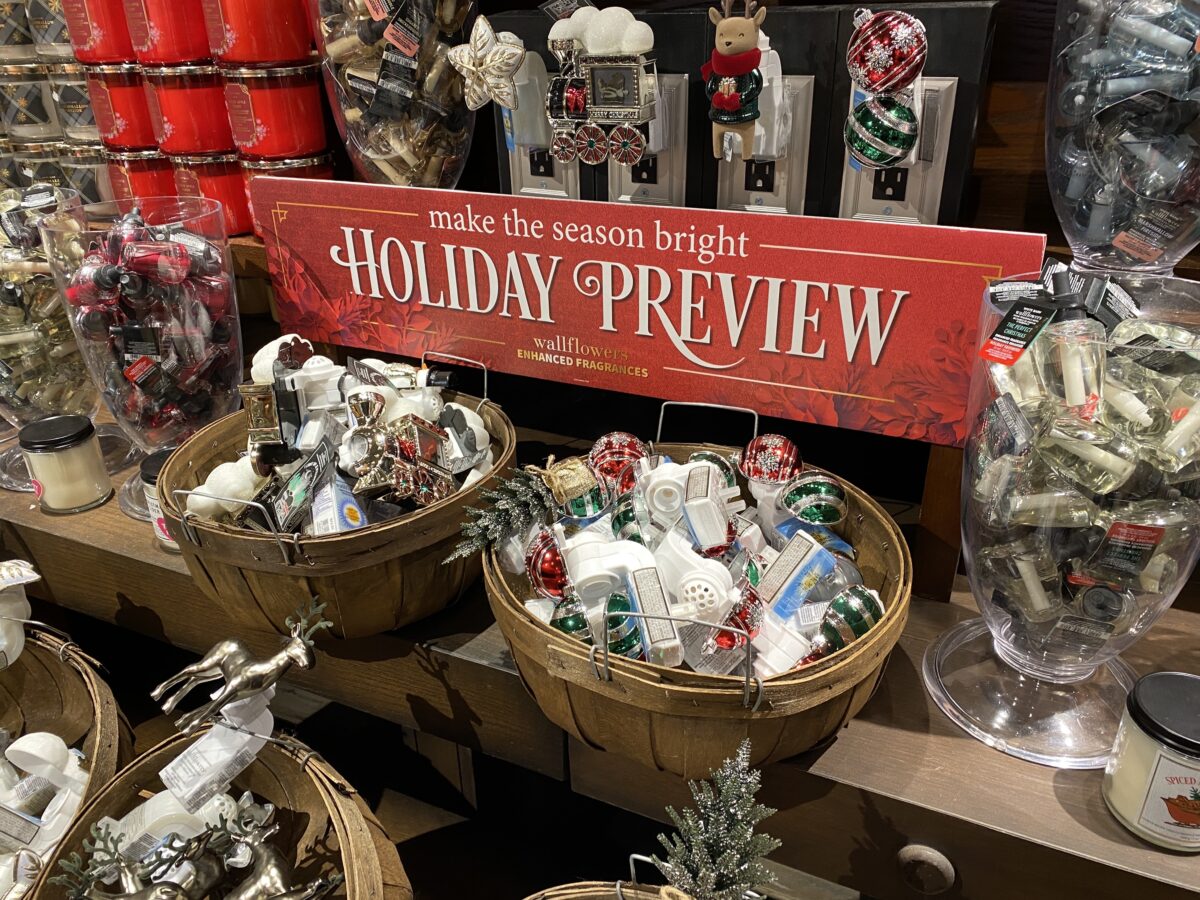
Holiday Preview at Bath & Body Works in CF Toronto Eaton Centre (Image: Dustin Fuhs)
By joining holidays, Doucette says it can cause a loss of excitement and also be exhausting for consumers.
“The Halloween excitement gets cut off by Christmas taking over. I understand if retailers don’t want inventory sitting around and waiting to get out the door, but it just seems like a lot of retailers have gone too early into the next holiday causing consumers to be less excited and more distracted.”
As a change for Halloween for this year is already too late, Doucette’s advice to retailers for next year is to slow it down, manage one holiday at a time and allow consumers to enjoy shopping for each holiday.
When comparing Canada and the US, Doucette said “it was quite interesting to compare and contrast the two” as in the US, the stores did not even have enough room for Christmas products yet as it was filled with Fall and Halloween products.
“Maybe Canada is Stale”
In terms of product creativity, Doucette says retailers in Canada should try and do more. Ideas he had in mind, sparked by his trip to the US, included Halloween theme products, more Halloween themed dog products and treats, and an increase in innovation for Halloween decorations.
“One thing I saw while in the US, which was kind of interesting, was Halloween themed Prime energy and hydration drinks. They had a whole display setup in their stores around Halloween for specific Halloween skews. So that was something I have not seen in the past, of having energy drinks be included in the Halloween experience.”
This is just one example of how brands can be more innovative for Halloween, and also other holidays.This way, consumers would be less distracted and more excited.
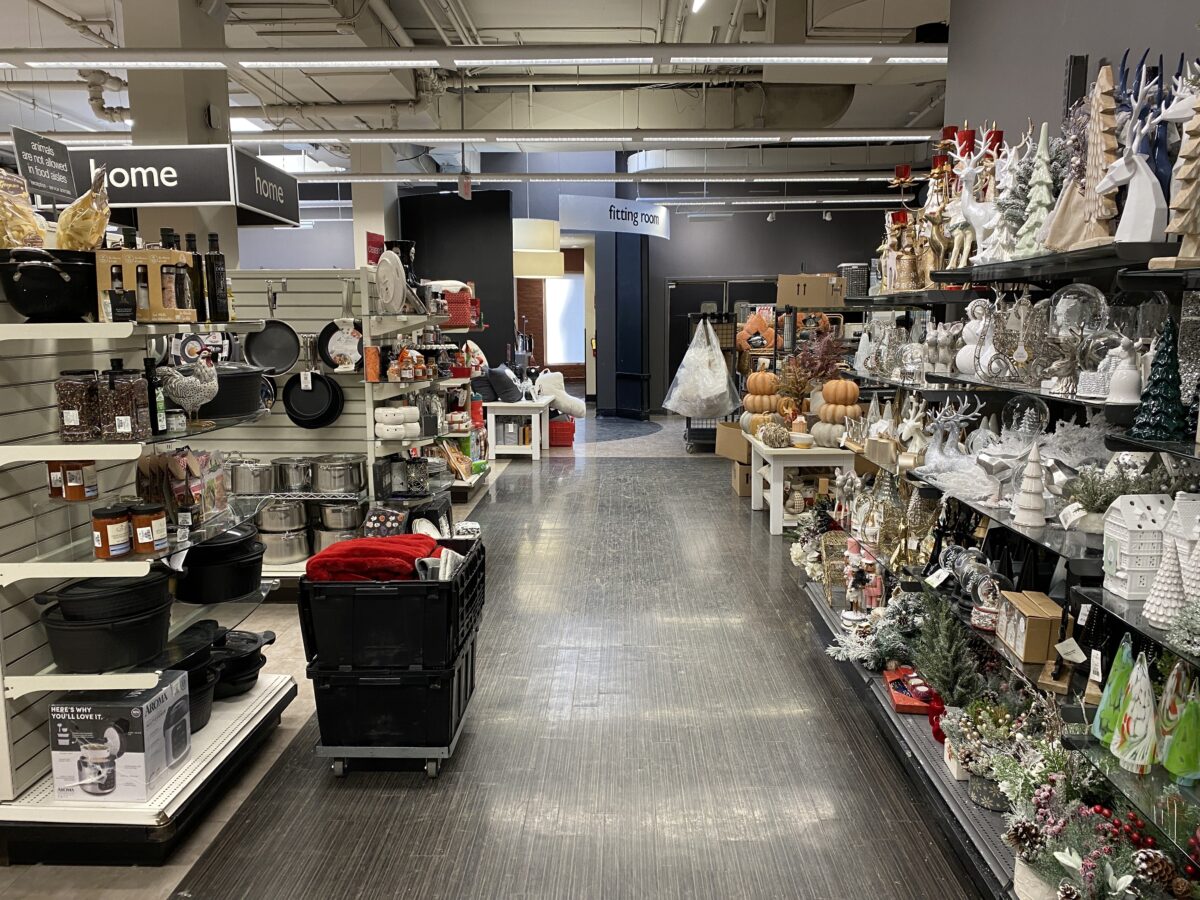
Christmas on the Right and Halloween Clearance on the left at Winners in Toronto (Image: Dustin Fuhs)
As for decorations, Doucette says he is not seeing anything new or exciting.
“To be honest, my feeling for this year is there is just not a huge amount of excitement. We have a huge data collection of seasonal displays and I just have not seen anything this year that really caught my eye in the Canadian space. I just see it as more of the same, I do not see anything exciting – not the most exciting answer, but there is a lot of truth to it.”
Bring It On For Next Year’s Spooky Season
As it is too late for this year for retailers to be creative, Docuette says there is hope for the future if retailers and communities change their ways.
Currently, Doucette says a lot of people just “copy and paste” what they did in previous years and make little tweaks, but to change the stale Halloween climate in Canada, people need to start seeing how other places are being creative for the season and try to stand out.
“There is no real innovation anymore. Maybe we need to start looking to the US for some ideas or other cultures that celebrate Halloween, and try it. I think everybody seems to have the same stuff and is taking the same approach – it is just not attractive and does not create much excitement for anybody.”