Advertisement
Home Blog Page 752

The Pandemic has Changed Consumers in Canada, but has it Really Changed the Food Industry? [Op-Ed]

“The COVID pandemic has changed not only our world but also our relationship with food. As such, post-COVID, the food industry will need to offer us something a little different.”

The food industry is gathering now at different trade shows and events for the fist time in more than two years. It is the first time in two years that they have come together to figure out what consumers are now thinking, believing, hoping and most important, fearing. Trends, flavors, and tastes have changed since March 2020. But after more than two years of the pandemic, it’s not easy to determine exactly how the consumer has evolved.

The Agri-food Analytical Sciences Laboratory at Dalhousie University, with the help of Caddle Insights, has just published new data concerning the Canadian food market. If we are to believe the forecasts, by 2025, the food market in Canada will be more home-based, more virtual, and influenced by the greater curiosity of consumers who now have overall higher food literacy.

First, let’s talk about home life. One thing is clear, the work-from-home phenomenon is here to stay. Too many employers are saving immensely by keeping some employees home. The same applies to the employees themselves. They’re spending less money on transportation, but also clothing, haircuts, makeup – you get the idea. It is estimated that by 2025, 39.5% of consumers, or two in five people, will work at least one day a week from home. By spending more time at home, consumers have also been cooking more and learning new culinary skills. Not only have 34.2% of Canadians learned at least one new cooking style since the start of the pandemic, but 51.8% have also learned at least three new recipes. Almost 40% of people have acquired new skills such as making bread or pasta at home, and 45.2% have discovered new ingredients that they did not use before the pandemic.

In other words, food literacy in Canada has increased since the start of the pandemic. Consumers know how to make more informed choices through more in-depth knowledge of food. The industry must deal with a more curious public, who will have an informed opinion on a greater number of products.

The number of households that own at least one pet has also soared. Since the start of the pandemic, 26.1% of Canadian households, or one in four, have adopted a pet for the first time, and half of them have adopted either a cat or a dog. This is not a trivial fact since research tells us that a pet owner will be more sensitive to ethical animal treatment. This will have a significant effect on choice of protein consumed. In fact, we estimate that 3.2 million Canadians now consider themselves flexitarians, about 1 million are pescatarians, 913,000 are vegetarians and 560,000 are vegans. Apart from veganism, all diet types with less meat or no meat are on the rise in Canada. This is something to watch very closely for food innovators. The prices at the meat counter lately probably haven’t helped, either. Beef prices have gone up by as much as 20% in the last year in some cases.

With more people moving to new areas and with COVID outbreaks in some stores, many consumers are also shopping differently. In fact, 26.1% of Canadians have visited stores they hadn’t visited before the pandemic. It’s pretty much the same for restaurants. The legacy of the pandemic is to have prompted many consumers to reconsider where they buy their food on a regular basis. These are great opportunities for the industry. Less populous regions are getting a second wind due to more people fleeing big cities in Canada, and the food industry is rapidly adjusting.

As a result, the virtual food market is exploding. Almost 40% of Canadians order food, either at retail or in food service, at least once every two weeks. By 2025, 30.1% of Canadians will continue to buy food online on a regular basis. Indeed, we anticipate that by 2025, 10% of food sales in Canada will occur online. Before the pandemic, estimates were around 1.7%. Quite an increase.

And finally, to learn about food trends, Canadians stick to the social network. Aside from family, You Tube, Tik Tok and Facebook are the most used communication vehicles that influence the diet of Canadians. The industry needs to increase its presence on these platforms if it wants to influence trends, especially after a pandemic has forced everyone to take in more information online.

In a nutshell, if you’ve changed your grocery habits since March 2020, you’re not alone. And keeping the industry on its toes is always a good thing.

Retailers in Canada Continue to See Challenges Following 2 Years of Pandemic Uncertainty: Deloitte Report

Queen Street West (Image: Dustin Fuhs)

After two years of uncertainty for Canada’s retailers, new and unexpected challenges continue to arise such as supply chain issues, higher shipping costs, talent shortages, and inflationary pressures, says the 2022 Canadian retail outlook report by Deloitte Canada

With the end of the pandemic in sight, these challenges are persisting, yet retailers now have an opportunity to pivot and implement effective strategies. 

“In the first months of the pandemic, they (retailers) shifted into crisis mode, making long-overdue investments in systems and processes as quickly as possible to meet consumers’ rapid embrace of omnichannel shopping,” said the report. “Then, new and sometimes unexpected challenges arose. Snarled supply chains led to empty shelves, longer lead times, and higher shipping costs. Demand for talent led to higher labour costs. Inflationary pressures increased at a rate not seen in years.

“Even as we edge toward a sort of normalcy, these challenges persist. The difference is that retailers now have an opportunity to catch their breath and plan for the future more strategically.”

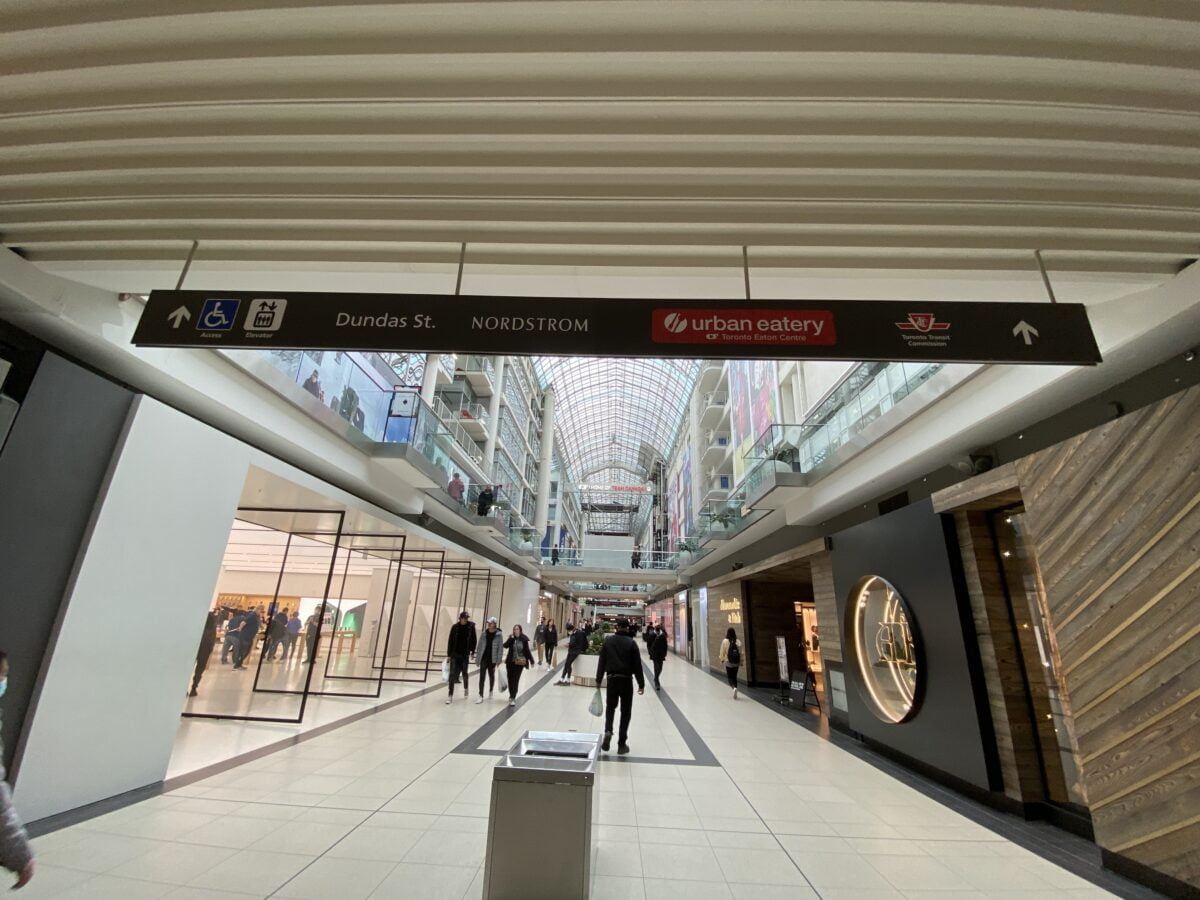
CF Toronto Eaton Centre (Image: Dustin Fuhs)

The report offered the following five key insights:

  1. Retailers are optimistic about revenue growth but concerned about margin erosion. Aggressively reining in costs and strategically investing in ‘no-regrets moves’ will be crucial to ensure top-line growth does not come at the expense of profit;
  2. Supply chain complexities will impact planned investment. Retailers’ ability to meet customer fulfillment promises – from same-day delivery to easy returns – is critical to being competitive. The difficulty will be in investing the right amount at the right speed, as the fluctuating demand of the past two years may not be a reliable guide for the future. Retailers should be meticulous in removing as many friction points as possible from operations;
  3. To fight for the best talent, know what you stand for. Retailers expect the competition for qualified talent to intensify over the next year. To succeed in this labour market, retailers must be employee-centric, developing workforce strategies that promote flexibility, support diversity, equity, and inclusion and make working in retail fun and rewarding. In other words, the workforce is as important as the customer;
  4. Consider ESG an organization-wide responsibility. Organizations can no longer view environmental, social and governance work as the responsibility of any single individual or team – it must be embedded in a company’s culture and everyday operations, with goals and progress communicated to employees, consumers, and potentially regulators. This is a significant transformation in how successful retailers will operate; and 
  5. Retailers must focus on their brand and the customer while remaining adaptable. Throughout the pandemic, retailers have proven how adaptable they can be. Those that can continue to be agile as consumer demands evolve and technology advances are more likely to succeed.
Marty Weintraub

Marty Weintraub, Partner and National Retail Leader for Deloitte, said retailers in the past two years learned that “agility is critical.”

“Certainty is sort of out the window and be ready for anything. Building resilience is critical. There is no better example that I can think of than demand planning. Some of the shifts that have happened and how consumers are buying and shopping and where the wallet share is going has put a pretty big wrench in a lot of the planning processes that retailers would often follow traditionally and those have been thrown out the window. A more agile, a more broadly based set of demand signals that can now be used to help understand where the consumer is going and how he or she will shop, I think that is the number one takeaway,” he said.

“I think the second lesson learned is we can’t be overpresumptious or take advantage of our workforce. That may be a little bit of an aggressive term but the war for talent hit retail really, really hard and being as it was hard enough to already attract folks to work in traditional retail stores, that’s obviously got much more challenging now. So how you treat, retain and incent your workforce. That has to change.”

Weintraub said the retailers that don’t adapt take a huge risk of falling so far behind that catching up becomes either super expensive or impossible. 

“I wouldn’t say it’s a guaranteed result that you’re going to evaporate but I think time is important. How quickly retailers move . . . pace is important. Move quickly. I think historically retail has moved too slowly to invest, too slowly to adapt, too slowly to maybe realize what’s coming at them in hopes that maybe it won’t. The notion of moving quickly and trying things maybe you haven’t tried before at the risk of failure, that’s fine, you learn something and move on.”

First Canadian Place (Image: Dustin Fuhs)

The Deloitte report also found:

  • Most retail executives surveyed (77 per cent) expect revenue to rise in 2022 and almost all (93 per cent) are confident in their organization’s ability to hit its growth targets;
  • 40 per cent expect margins to fall in 2022 and 37 per cent feel they’ll remain stable;
  • 87 per cent of retailers say worsening supply chains is a top retailing risk followed by worker shortages and inflation (both 65 per cent), government actions that reduce retail store capacity (39 per cent) and falling consumer demand (26 per cent);
  • 97 per cent say they plan to invest in expanding their digital capabilities to mitigate these risks;
  • 80 per cent intend to enhance data privacy and security;
  • 77 per cent plan to modernize their supply chain;
  • 86 per cent of retailers expect customers to prioritize stock availability over retailer loyalty;
  • 85 per cent of retailers also expect to invest in supply chain automation, inventory management and other technology; and
  • 77 per cent believe it will be tough to hold on to their best employees.

The report also asked retailers what is most likely to occur in the next 10 years:

  • 70 per cent said staff-free, cashier-less stores will be common;
  • 47 per cent said retailers will increasingly engage consumers through digital goods;
  • 40 per cent said the resale/second-hand goods market will grow significantly;
  • 30 per cent said cryptocurrencies will be widely used by retailers and consumers;
  • 27 per cent said retailers will use autonomous vehicles and drones to transform customer/store deliveries;
  • 23 per cent said voice commerce, where voice commands find and purchase products online, will be widely adopted;
  • 23 per cent said retailers will widely adopt blockchain; and
  • 13 per cent said renting of consumer products will be widely adopted;
  • 3 per cent said direct-to-consumer sales of 3D printed products will impact retail sales.

JLL Launches Digital Solutions Advisory Group as the Commercial Real Estate Firm Looks to the Future of Retail: Interview

Commercial real estate firm JLL has launched a new Digital Solutions Advisory group that will work with best-in-class digital providers to service and implement digital products to both retailers and landlords, including shopping centre owners. 

The Digital Solutions Advisory led by Lee Jackson and Jesse Michael will service retailers, landlords, and digital solutions providers helping them to develop and achieve their innovation roadmaps and objectives by navigating digital partnerships across multiple verticals.

Lee Jackson

“The problem we are trying to solve for is that in a very condensed period of time, human behaviours have changed, the customer expectation is a digital first experience. The enterprise business community must adapt quickly and make fundamental investments to accelerate their digital connection points for the customer,” said Lee Jackson, Senior Vice President, Digital Solution Advisory, JLL.

“Those who have are thriving, those who have not are falling behind. The customer journey now starts with digital. If you do not meet them at digital and accommodate the journey back and forth between physical and digital experiences, they may never find you.  A poor first impression may push them to a competitor. Simply put, organizations must make this transition between the digital and physical experience as seamless and convenient as possible for the customer and we are here to help.  A well curated digital experience will provide those who invest a wealth of data, providing meaningful insights to meet the customers ever evolving needs.” 

Some of the key focuses for JLL Digital Solutions Advisory: 

  • Champion retail focused technology applications, and collaborate with partner sales team and delivery teams;
  • Execute engagement strategies and campaigns to connect business partnerships to the landlord and retailer community;    
  • Act as thought leaders, educating industry on digital innovation and table stake technologies for industry; and 
  • Drive awareness and adoption of retail focused technology across the commercial real estate landscape
Jesse Michael

Michael said the business line was a by-product of the fast-track from the pandemic.

“Ultimately retailers and landlords were forced to meet the customer where they’re at, which is now all digital first. People pull out their mobile device for just about anything whether they’re searching for products or a location.  They’re really looking for the most convenient method to get the information they want from a digital perspective,” said Jesse Michael, Senior Vice President, Digital Solution Advisory, JLL.

“There are a number of vendor technologies that are trying to solve for this ultimate convenience and that’s what we’re here to help guide the industry through.”

via JLL Linkedin

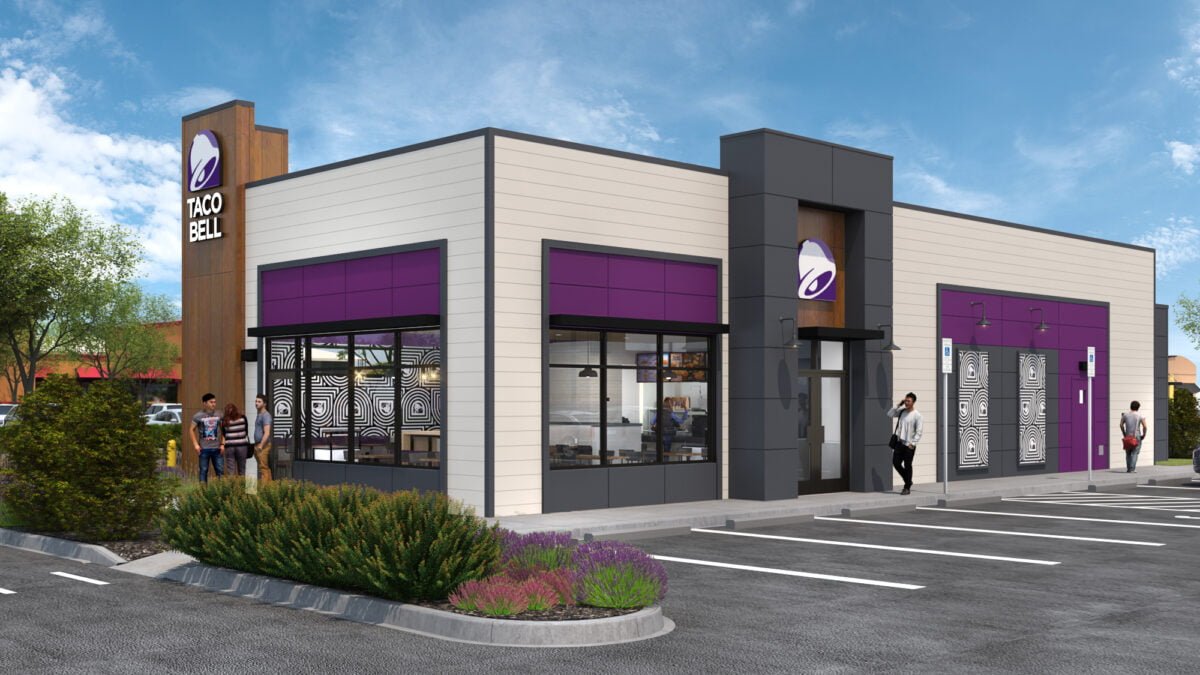
Taco Bell Looks to Grow Market Share with Plans to Double Canadian Store Count: Interviews

Image: Taco Bell Canada

Like many fast food establishments in Canada, the Taco Bell brand managed to survive through the economic challenges of the past two years presented by the COVID-19 pandemic and is now poised to aggressively grow its footprint across the country.

Matthew Shaw, General Manager for Taco Bell in Canada, said the company within the next five years will double its footprint of free standing, solely branded Taco Bell, locations in Canada, to over 100.

Matt Shaw

“We have commitments from some of our excellent franchise partners in the market to really get aggressive with growth,” he said. 

“Having some excellent Canadian partners has really helped accelerate the growth that we’re seeing and the excitement both by the consumers and the franchisees who are investing to bring Taco Bell further into the Canadian market.”

The brand’s first location was in 1979 in Ontario. Today, it has about 160 locations with the majority of those being shared units with KFC (Kentucky Fried Chicken). The brands, along with Pizza Hut, are subsidiaries of Yum! Brands.

Shaw said the shared units is how the market was originally built out in Canada.

“Primarily, the assets are free standing units with drive-thrus though we do have a good number of food courts and a few streetfront locations that service the more urban areas,” said Shaw.

Image: Taco Bell Canada

“The last couple of years have been obviously a challenging environment. We have actually grown our footprint and grown our sales in the market in the last couple of years. We’ve successfully navigated the last several years and I’d say probably in the last five or six years we’ve really invested in the market and we’ve grown entirely in our standalone format, so without the KFCs, just standalone Taco Bells. We’ve grown fairly significantly in the last probably five, six years or so.”

Shaw said overall sales have grown in the past couple of years as well as the company’s unit count by a few. 

“Obviously we’ve been having to navigate some of the challenges both with the units we do have in the malls and food courts that have been temporarily opened and closed but all those are now reopened and we have seen a net growth in our footprint in the last couple of years,” he said. 

Taco Bell Canada also recently kicked off its newest marketing campaign called Beautiful Mess “to celebrate being unapologetic, authentic, and unique—while encouraging Canadians to embrace their own mess along the way.”

Image: Taco Bell Canada

Devon Lawrence, Senior Brand Manager, Taco Bell Canada, said the campaign will continue for a number of years and evolve as it grows. It was launched based on some insights informed about the market and to tap into the DNA of the brand.

Devon Lawrence

“Taco Bell is all about being different and challenging the status quo, which is reflected in everything from our brand to our menu offering,” said Lawrence. “Through Beautiful Mess, we’re embracing our uniqueness and looking to inspire future and fellow taco lovers across the country to do the same. We’re excited to partner with Canadian creators who embody this same spirit and celebrate their authentically beautiful selves!”

Beautiful Mess marks Taco Bell’s first brand campaign in Canada, and strives to break the mold on what consumers expect from a quick service brand.

Image: Taco Bell Canada

“We learned in Canada there’s a lot of love for the brand and our loyal fans love us and love our food but we learned there’s quite a few Canadians, especially in that younger age group, that don’t really know Taco Bell’s personality, what we stand for, who we are. We learned that through some research late last year,” said Lawrence. “And that’s unfortunate for us because for us that are so close to the brand, I think one thing that sets us apart in the QSR (quick service restaurant) space is our personality and our attitude and the things that we stand for.

“So we wanted to build a communication that shared that and food is obviously the core of who we are and so we looked at the equities that are ownable in our food being crunchy, cheesy, messy and spicy and then brought the personality to personify those equities of the product and that’s where we landed with the campaign.”

Taco Bell is partnering with a series of creators, including Twitch streamers Mtashed, TheStefSanjati, and DeadlyCreatorYT; TikTok creators @laframbuesaa and @topebabalola; and others; to bring the content to life.

Taco Bell partnered with dentsu One to develop the creative concept behind Beautiful Mess and execute it through an integrated marketing approach, which launched March 7 with a 45 second spot on digital and social.

Video Interview: Ken Keelor, CEO of Calgary Co-op, Discusses Competing Against Grocery Giants

Ken Keelor, CEO of Calgary Co-op, Discusses Competing Against Grocery Giants

Ken Keelor, CEO, Calgary Co-op, discusses the grocery chain’s strategy in competing against some of the industry’s giant players.

Keelor talks about the company’s sales in the past year, what consumers of today want from a grocery store and its development plans.

The Video Interview Series by Retail Insider is available on YouTube.

Connect with Mario Toneguzzi, a veteran of the media industry for more than 40 years and named in 2021 a Top Ten Business Journalist in the world and the only Canadian – to learn how you can tell your story, share your message and amplify it to a wide audience. He is Senior National Business Journalist with Retail Insider and owner of Mario Toneguzzi Communications Inc. and can be reached at mdtoneguzzi@gmail.com

Interviewed this episode:

Likes, Share and Subscribe to Mario Toneguzzi on YouTube!

Follow Mario:

Also check out the other series offered by Retail Insider, including The Weekly podcast and The Interview Series, which are both available on Apple Podcasts, Stitcher, TuneIn, Google Podcasts, or through our dedicated RSS feed for Simplecast and other podcast players.

Follow Retail Insider:

Share your thoughts!

Upscale Vancouver-Based ‘Provide Home’ Launches Design Gallery Concept Focused on Elevating Furniture ‘Creators’: Interview

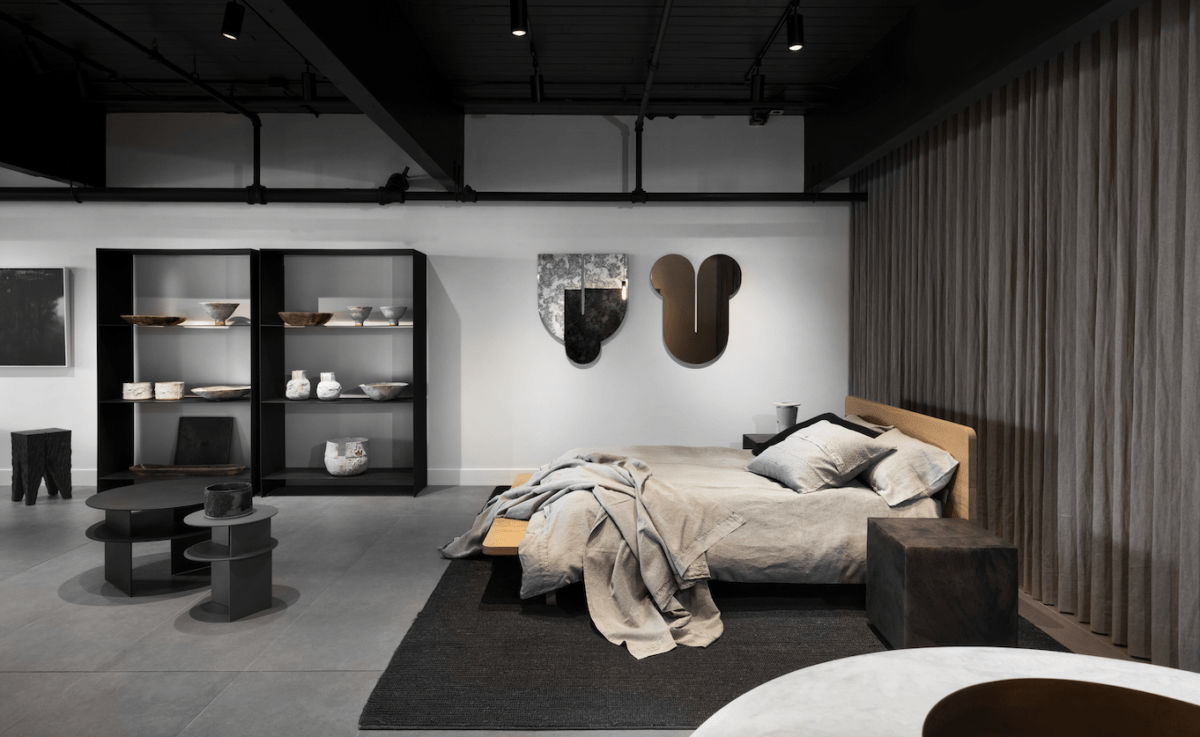
Provide Design Gallery (Image: Ema Peters)

Vancouver-based Provide Home has launched a new home furnishings concept called Provide Design Gallery with a dedicated focus on elevating and celebrating the very best of local, high-end furniture creators.

Provide Home says that it is Vancouver’s premier design destination for understated luxury homewares since 2007. The new gallery is just down the street from that location.

“A natural extension of the Provide brand, Provide Design Gallery champions local design for big-scale furnishing with artful expressions in an evocative environment. And as one who is passionate about curating the very best for my clients, I’m very pleased to share this new home furnishing concept with Vancouver and the rest of the world,” said David Keeler, owner and visionary behind the Provide Design Gallery. “Provide has always been about understated luxury, and the new Provide Design Gallery will further that point of view.

Provide Design Gallery (Image: Ema Peters)
David Keeler

“A couple of years ago we collaborated with a local wood furniture maker called Lock & Mortice on an exclusive furniture line that featured a dining table, bench, some side tables and from that success I could see an opportunity for expanding that collection and also working with more local furniture makers here in Vancouver and in BC. 

“The current Provide is a great location. I’ve always been very happy with that. So the idea of moving to a bigger space wasn’t an option in my mind. I wanted to create another space in the same area because I think this area, the Armoury District, is great for design. There’s a lot of other retailers around here. That’s where the idea came from to open up a secondary space that could feature more furniture, lighting and art in a more realistic living environment – a living area, a dining area, a bedroom area, etc.”

Spanning 1,700 square feet, the new space will showcase 15 to 20 designers and several artists as part of its curated and ever-evolving offering. Specifically, top-tier local furniture collections from the likes of Studio Sturdy, Matthew McCormick, and Brent Comber will be enhanced by accents from internationally renowned designers like Ben and Aja Blanc, Arno Declercq, and Caroline Blackburn. 

Provide Design Gallery (Image: Ema Peters)

But it’s the Provide Series, Provide’s in-house furniture line designed in collaboration with Lock and Mortice that will take centre stage, with four new additions to the line unveiled in time for the gallery’s recent opening. These include a sofa, a day bed, a shelving unit, and a bed. All elements from the Provide Series are made from solid wood and come in dark black or white oak and are characterized by clean lines, soft curves, and asymmetrical elements. 

“I always wanted to have another location and we did think about other areas like for instance Whistler but this is what I decided to go forward with for the current expansion,” said Keeler.

“Our typical clientele is probably in their 40s, 50s. Someone who really appreciates design, definitely tends to be more affluent, and appreciates something that is made locally and then our other strong clientele would be the interior design community here in Vancouver and beyond.

“The new gallery has more of a moody and sophisticated feel than the current Provide. The current Provide is very West Coast. It’s bright and open. We’ve got lots of windows. This one has a little more darkness to it with dedicated lighting for specific vignettes for the living area, dining area, etc. It’s got a curtain, linen, drapery wall as well as softness to it. Big wood beams. There’s a gray stone tile floor. So it’s still kind of minimal but very warm overall.”

Provide Design Gallery (Image: Ema Peters)

Keeler said the Provide Design Gallery seeks to redefine and reinvigorate the local furniture design scene with a new-to-market, gallery-like space inspired by similar artful venues found in Paris and Milan, but with a unique West Coast expression.

“With Provide Design Gallery, we recognize that creating and building locally is important, now more than ever. Furthermore, our clients are keen to support local design but they also appreciate that they can have a designed piece of furniture that was made at an incredibly high standard – that equals or even surpasses something made in Europe – and all with less cost and environmental impact. There is incredible design talent here in Canada – especially in Vancouver – and you don’t have to source far to have beautiful furniture, lighting, accessories, and art for your home. I look forward to welcoming everyone to Provide Design Gallery today and into the future,” said Keeler.

The company ships all across Canada and into the United States.

“The space itself is unlike anything currently in Vancouver, with visitors experiencing a sense of warmth and comfort due to the plethora of luxurious furnishings, but juxtaposed against the gallery ‘s high drama design and architectural elements which results in a gorgeous experience made to inspire possibilities,” says the company.

“Upon entry, one is immediately captivated with a one-of-a-kind wood wall sculpture with LED elements by Brent Comber, the painted black wood ceiling that adds extra moodiness, and a full wall of natural linen drapery. The delights only continue as one passes through the carefully curated living, dining, casual seating, office, and bedroom spaces that show how to expertly apply the collections to your home, including how to style a sofa with cushions and a throw, a bookcase with decorative objects, or a bed with exquisite linens and pillows.”

In a nod to global art centres, the gallery will be routinely updated with unique and ever-evolving vignettes, which will allow clients to truly picture how the various collections would translate into their own homes.

“It’s quite possible that each time you visit, you’ll be treated to a new visual and design experience,” added Keeler. 

Vancouver Retail Market Most Resilient in Canada Following Pandemic Struggles: Report/Interview

Yaletown in Downtown Vancouver (Image: Lee Rivett)

The Vancouver retail market remains one of the most resilient in the country, perhaps the most resilient, says a first quarter report by commercial real estate firm JLL.

“The prospects for Vancouver post-pandemic remain bright. Its population will grow by more than one-third in the next generation, adding one million residents. The region remains Canada’s second most attractive for immigration, with the highest immigrant retention rate of any metropolitan area,” said the report. Vacancy rates are also low with a 1.9% vacancy rate in the first quarter of 2022, compared to 2.5% in the first quarter of 2021.

“While there is a strong need to build to accommodate this growth, this is an opportunity for retail development, especially within walking distance of homes. Vancouver withstood the pandemic gracefully. Retail sales in Vancouver fared better than in other major markets. Highly connected, Vancouver supported the acceleration of e-commerce and adoption of hybrid shopping.”

Scott Lee, Executive Vice President, JLL, said overall retail is slowly finding its footing.

“I think it’s better in some areas and still going to take some time in recovery in other areas,” he said.

Hudson’s Bay in Downtown Vancouver (Image: Lee Rivett)
Scott Lee

“(The downtown) seemingly felt better than other markets. We weren’t as locked down as in Quebec and Ontario. I think that’s the biggest thing. I did personally travel to Toronto and Montreal during COVID and it was very much a ghost town in those peak times of COVID versus Vancouver. We don’t have an underground system per se, we have a very limited one. 

“So there was activity on the street, obviously not as much activity as we would normally see, but more than the other markets.”

The JLL report said digital natives took notice of the local social-media engagement and are opening flagships to enhance the retail experience.

“Although office workers, tourists, and students abandoned the downtown area during the peak of the pandemic, Gastown is once again looking up as workers trickle back to the office, cruise ships dock again, and in-person classes resume. In the meantime, shoppers stayed closer to their homes and West 4th, a prime suburban corridor, increased in popularity,” it said.

With strong provincial support, Vancouver quickly became a destination for electric vehicles (EVs). Auto makers VinFast, Polestar, and Lucid recently identified Vancouver as a key market.

Lucid Motors at CF Pacific Centre (Image: Lee Rivett)
Rolex and Chopard in Downtown Vancouver, looking towards Alberni Street (Image: Lee Rivett)

“Luxury retail has held up well, and we might be reaching the point where brands look for alternatives to Alberni Street,” added the JLL report. “Asians continue to influence Vancouver greatly, and Asian brands arrive in Vancouver before expanding to the rest of Canada. Chinese have an especially strong preference for luxury and e-commerce. According to Vivintel, more than 60 million Chinese adults are considering immigration to Canada. International retailers continue to choose Vancouver as a landing hub in Canada. Emerging categories include athleisure, optical, and outdoor.”

Vancouver has grown into a luxury hub in North America, said JLL, adding that many saw an opportunity to develop a retail market to target foreign visitors, especially those coming from Asia. By 2025, Chinese consumers are set to become the dominant nationality for luxury, growing to represent 40 to 45 per cent of global purchases.

“Per Klarna’s latest research, luxury shoppers prefer traditional brick-and-mortar for buying most product categories. Only two in five shoppers who bought luxury products last year did so online, and 84 per cent of luxury shoppers consider touching and seeing a product essential to the luxury-shopping experience. While many have expanded their e-commerce operations, retailers will continue to rely largely on in-store shoppers,” explained JLL.

“Despite being expensive within Canada, lease rates in Vancouver are still lower than those in Europe ‒ making space reasonably priced in the eyes of international retailers. At one of the highest rates in Canada, one square foot on Alberni Street can reach $275, but on Paris’s Avenue des Champs-Elysées the cost is upwards of $1,200.

“Bain & Company reported that in 2021 luxury brands continued to increase control over distribution, with a rise in directly operated channels. The direct retail channel for brands has grown to the point that it now accounts for almost half the market and is poised to overtake the wholesale channel.”

Birks/Patek Philippe and Graff in Downtown Vancouver (Image: Lee Rivett)
Burrard/Georgia Street corner in Downtown Vancouver (Image: Lee Rivett)

Luxury retail continues to expand on Alberni with the addition of two premium jewelry brands: watch brand Tudor and jewelry brand Chopard, both operated by local licensee Global Watch Company. Italian luxury brand Gucci will renovate and expand its standalone downtown Vancouver store at the Fairmont Hotel Vancouver, annexing space formerly occupied by watch brand Omega. A new Omega boutique is now under construction in the hotel across the hall to replace it.

“Today, Alberni Street concentrates most of the luxury names in the city, including Tiffany & Co., Jimmy Choo, Van Cleef & Arpels, IWC, Panerai, Vacheron Contantin, Montblanc, De Beers, Hublot, Prada, and Burberry. However, luxury or upscale branded retail is also flourishing in other parts of the city,” added the report.

“The McArthurGlen Designer Outlets at Vancouver International Airport added several premium brands this summer, including Burberry, Max Mara, Blubird, Matt & Nat, Rossignol, Herschel Supply Company, and Tory Burch. McArthurGlen is following the footsteps of luxury-heavy Toronto Premium Outlets in Halton Hills, Ontario.”

JLL said fewer restrictions and higher mobility have contributed to a better retail environment during the pandemic, and Vancouver has had the best retail performance within major markets since the start of the pandemic. Retail sales in 2021 increased by 14 per cent compared with 2019, and by 17 per cent compared with 2020.

The Post in Downtown Vancouver (Image: Lee Rivett)

And population growth will fuel that continued growth in retail sales. JLL said Greater Vancouver is looking to add one million residents over the next 28 years for a total population of 3.8 million. 

“To reach this milestone, half-a-million housing units and just as many jobs will need to be created, as well as 40 million square feet of retail space. In 2050, Greater Vancouver expects to hold 1.6 million dwelling units, 1.9 million jobs, and 160 million square feet of retail,” said the commercial real estate company.

“Greater Vancouver projects it will gain 30,000 to 40,000 net immigrants per year, which accounts for almost 70 per cent of the population growth. In the short term, this figure is adjusted to the updated federal immigration plans, and over the longer term it is assumed to steadily increase at an annual growth rate.

“If current trends prevail, most of this growth will be in the areas of South of Fraser – East, where the population will climb from about 783,000 today to nearly 1.2 million in 2050.”

Le Château Makes Brick-and-Mortar Comeback with Suzy Shier Partnership: Interview with Veteran Franco Rocchi

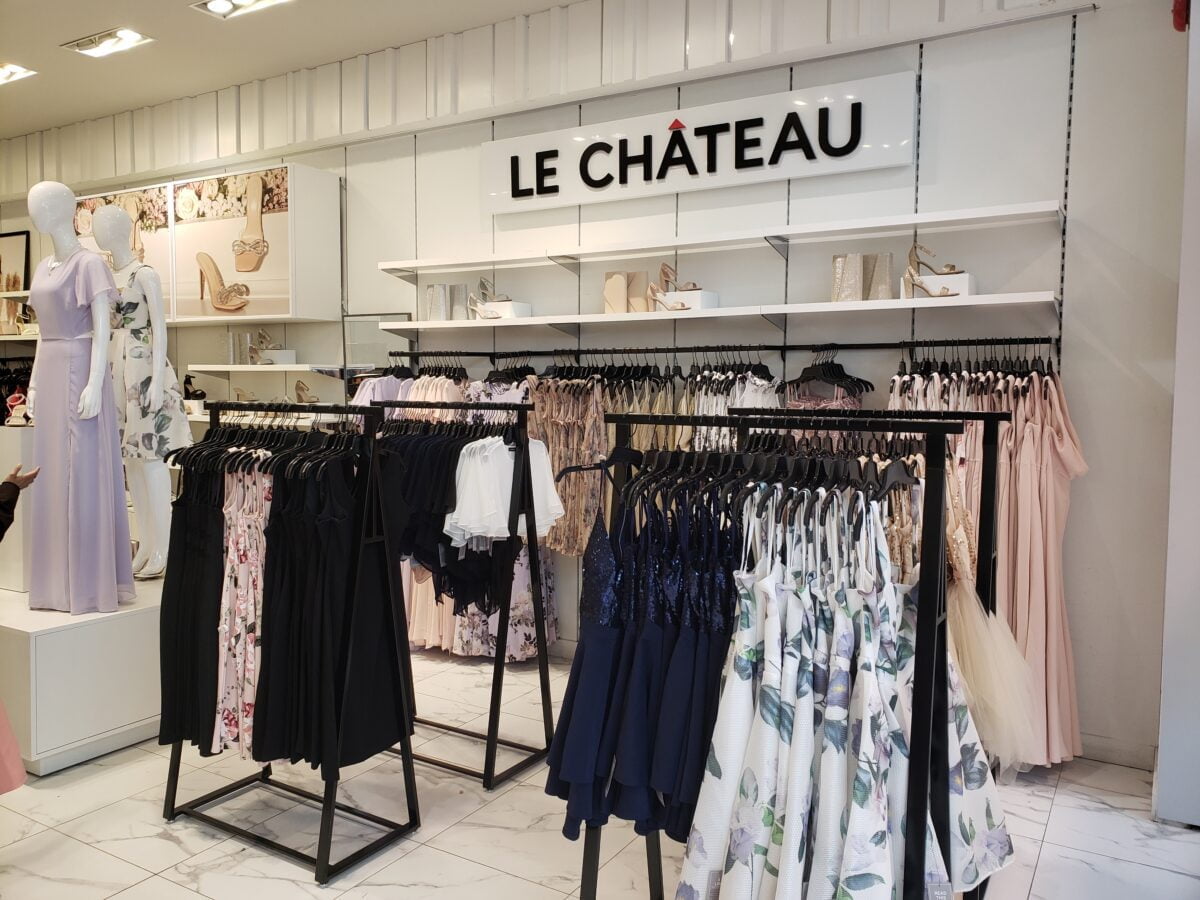
Image: Le Chateau

Iconic Canadian fashion brand Le Château is making its comeback in brick and mortar stores with the launch of a new collection of clothing in 37 new concept Suzy Shier locations across the country. 

“As proud as we are of our online site, we are also delighted to be back in stores,” said Franco Rocchi, former Le Château Executive and now Senior Director of Marketing on the new Suzy/Le Château team. “The brand was born in brick-and-mortar, and we couldn’t be happier to rejoin the community of retailers in shopping centres across the country. We are also proud to join our sister brand Suzy in stores now providing a full-service destination for our customers: fashion daywear and workwear at Suzy, while Le Château takes care of all your nighttime and special occasion needs. Le Château also announces the return of its beloved footwear collection, and Le Château menswear makes its online debut.”

Franco Rocchi
Franco Rocchi

Rocchi described Le Château and Suzy Shier as Canada’s new fashion powerhouse.

“Le Château was founded in 1969 and has a long and storied history in Canada. In its heyday, we had 240 stores across the country, this is pre-digital, not only primary and secondary markets but we were in tertiary markets as well. Anywhere from Sydney, Nova Scotia to Kamloops, British Columbia. Ninety per cent of Canadians had a Le Château within a 30-minute drive from where they lived,” said Rocchi. “We permeated the Canadian brick and mortar scene.

Image: Le Chateau

“In 2020, Le Château closed. I was with them for 40 years until the end. So Suzy acquired the intellectual property of Le Château. The fact that Suzy won out in the end was a great thing for Canada because other contenders for the intellectual property, serious contenders, were all based out of the US and would have seen the brand relocated to the US. Jobs would have been lost. Suzy has acquired the brand and has maintained the headquarters of the initial brand in Canada in Montreal.

“If you look at the last 10 years of Le Château, it had really found its groove in occasion wear. Dresses, footwear and accessories for those special evenings whether it’s weddings, or parties, or stepping out, or date night. That had become a strong point and in fact even during the challenging last five years that part of the business had continuously shown year over year growth. We had become the dominant players in that special occasion segment, niche.”

He said Suzy, which was also founded in the 1960s in Montreal, is a master of daywear, casual wear, weekend wear, and workwear.

“This special occasion dress niche was not something in their portfolio and with the relaunch of Le Château we call it Suzy by Day, Le Château by Night. We’ve created a brick and mortar experience for customers in 37 stores to start where the two brands co-exist. Sections are carved out in the stores with distinct personalities but a customer can now get a 360-degree service for all their lifestyle needs from day to night within one brick and mortar store,” said Rocchi.

Le Chateau is shuttering Canada-wide, including at SouthCentre Mall in Calgary. Photo: Jessica Finch.

“The occasion wear is really interesting because there really isn’t anyone in Canada, retail, brick and mortar, that specializes in that lifestyle and at our price point . . . So together we’re looking at a synergy between the two brands that will be experienced in these 37 stores.”

Rocchi said that in some cases Suzy acquired leases of some of the old Le Château stores.

“The new Le Château is really focused on occasion wear. The prior Le Château we covered every lifestyle from casual. We had jeans, we had T-shirts, we had all of that. The new Le Château is going to be focused really on dresses, occasion wear. It has a very glamorous look and feel to it,” he said.

In October 2020, Le Château filed an application seeking protection of the court in order to proceed with the orderly liquidation of its assets and wind down of its operations through the Companies’ Creditors Arrangement Act. At the time, Le Château, headquartered in Montréal, had 123 stores across Canada, in addition to its e-commerce website. 

In June 2021, Le Château announced the sale of all of their intellectual property as well as certain other assets to Suzy’s Inc.

Le Chateau at Guildford – Photo by Lee Rivett

“Le Chateau’s Spring/Summer 2022 Collection is the first full launch since the brand’s return to the fashion scene. It upholds the brand’s reputation as a master dress designer, with styles, prints, and silhouettes for every occasion. This season, inspirations range from the quiet beauty and romance of the garden, channeling feminine florals and pastel-hued chiffons, to the cutting edge vibes of cut-outs, sequins, and sparkles that will stand out in any special occasions: proms, weddings, or that special night on the town. Shimmering metallics and new stunning silhouettes in dresses and jumpsuits position the brand as the go-to destination for all special occasion needs,” said the company.

Under new Canadian ownership, the Le Château Spring/Summer 2022 Collection will be available on lechateau.com and in 37 select Suzy Shier stores across Canada as of April 21. Le Chateau dresses will also be available at the HBC Marketplace as of April 12. 

Store locations include Vancouver, Kelowna, Edmonton, Calgary, Fort McMurray, Red Deer, Saskatoon, Toronto, Brampton, Windsor, Burlington, London, Waterloo, Oshawa, Cambridge, North Bay, Ottawa, Montreal, Rosemere, Chicoutimi, Quebec City, St Jerome, Drummondville, Drummondville, St. John’s, and Moncton.

Video Interview: Scott Arsenault, CEO of Ren’s Pets, on the State of the Canadian Pet Industry

Video Interview: Scott Arsenault, CEO of Ren's Pets, on the State of the Canadian Pet Industry

Scott Arsenault, CEO of Ren’s Pets, discusses how the pet industry has been booming in Canada.

Arsenault talks about the company’s recent growth and plans for continued expansion, some key trends in the pet industry today, the impact of the pandemic, and what the acquisition by Legault last year has meant for the company.

The Video Interview Series by Retail Insider is available on YouTube.

Connect with Mario Toneguzzi, a veteran of the media industry for more than 40 years and named in 2021 a Top Ten Business Journalist in the world and the only Canadian – to learn how you can tell your story, share your message and amplify it to a wide audience. He is Senior National Business Journalist with Retail Insider and owner of Mario Toneguzzi Communications Inc. and can be reached at mdtoneguzzi@gmail.com

Interviewed this episode:

Likes, Share and Subscribe to Mario Toneguzzi on YouTube!

Follow Mario:

Also check out the other series offered by Retail Insider, including The Weekly podcast and The Interview Series, which are both available on Apple Podcasts, Stitcher, TuneIn, Google Podcasts, or through our dedicated RSS feed for Simplecast and other podcast players.

Follow Retail Insider:

Share your thoughts!