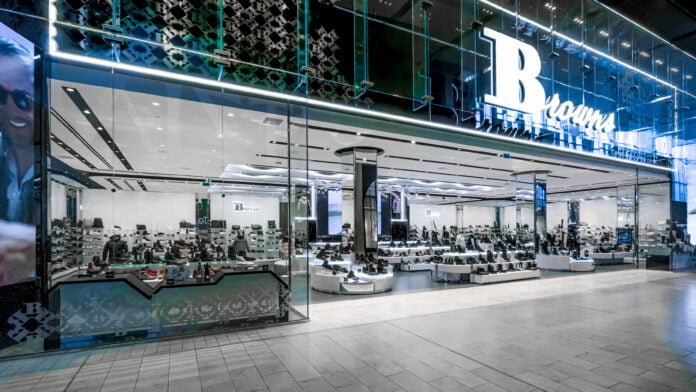
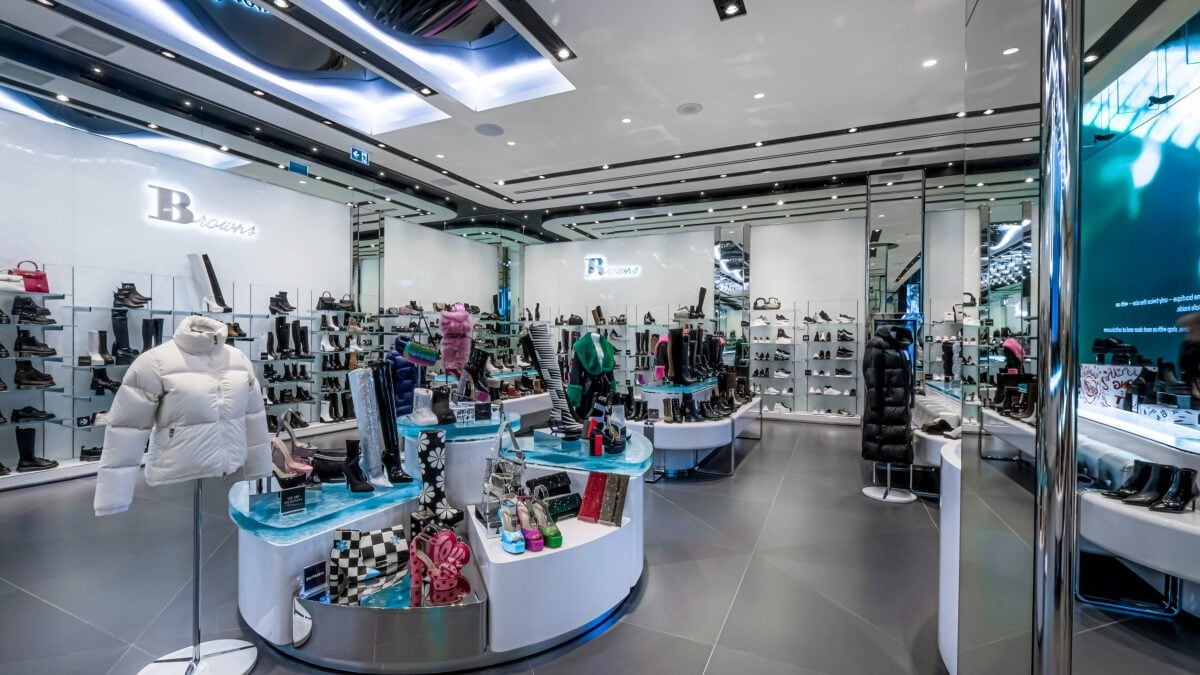
Browns Shoes at Yorkdale Shopping Centre (Image: Browns)
Originally founded in 1940 by Benjamin Brownstein as a single store on Ste- Catherine Street in Montreal, Browns Shoes continues to expand its footprint across the country with more and larger stores.
The latest addition to the retailer’s portfolio is a new flagship location at the Yorkdale Shopping Centre in Toronto.
Eric Ouaknine
“We’re quite proud of this one, our design team really outdid themselves,” said Eric Ouaknine, Senior Director of Retail for Browns Shoes.
“The new store is close to 6,000 square feet and boasts a massive facade that’s 87 feet wide and 37 feet high. It’s a very imposing store.”
“It’s a major flagship for us in arguably the number one shopping centre in North America. The new store is bigger, wider, and brighter than its predecessor.”
Photo: Browns
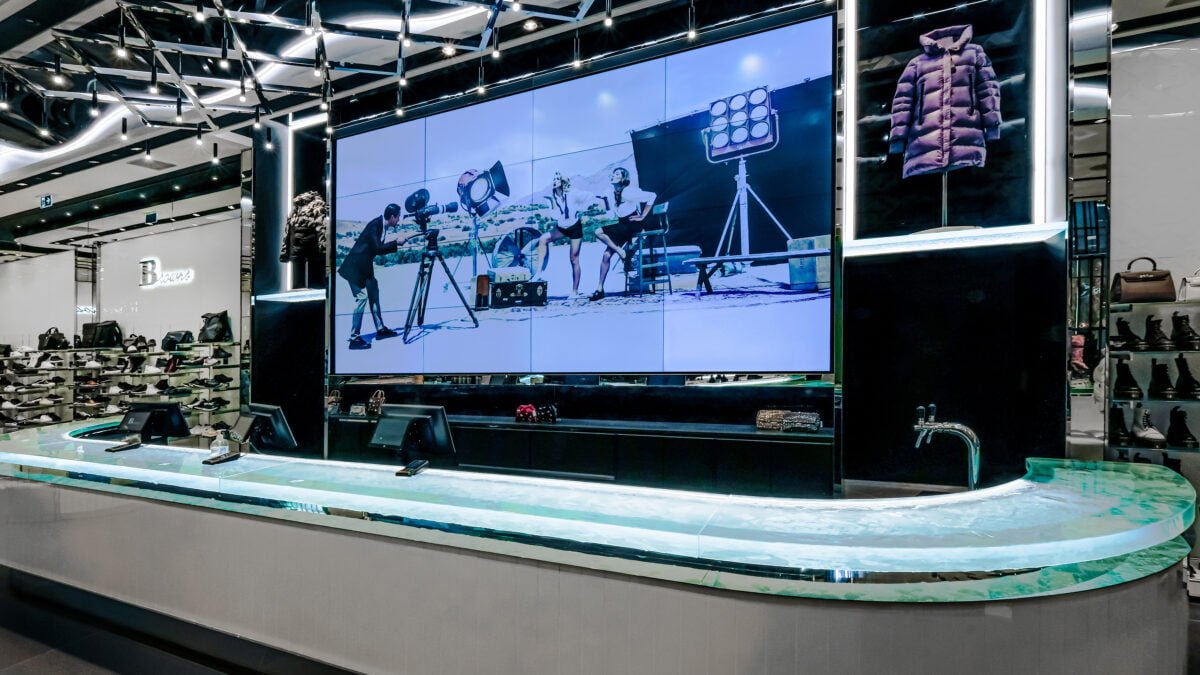
Ouaknine also said that this location includes a water bar where flat and sparkling water is served, an Endless Aisle Station where customers can browse the full collection in case there’s something they can’t find in-store, and a 20-foot video wall and a sound system. “Shoppertainment” is the goal, he said.
“The store is very customer-experience driven. In designing this store, our objective was to give people an experience they’re going to want to come back for, and tell all their friends about,” shares Ouaknine.
Currently there are 70 Browns Shoes stores in the country with the recent opening of a store at the McArthurGlen Outlets in Vancouver. This includes nine stores under the B2 banner.
“We have two major B2 locations with all new, exciting concepts currently under construction. One is a 4,300 square foot location at Yorkdale and the other is a 5,700 square foot location at CF Carrefour Laval. Both will be opening in Spring 2023,” says Ouaknine.
“This was probably our biggest year ever in terms of store construction. We developed and built 14 stores this year. Including renovations, expansions, and new stores.”
Photo: Browns
Next year, Ouaknine says his team is looking to do another 10-12 locations, including an expansion of the retailer’s Metropolis at Metrotown location near Vancouver and a new store at Conestoga Mall in Kitchener – both of which are under construction and slated to open in Spring 2023.
“The team has certainly been busy.”
After more than eight decades in business, Ouaknine says the brand is unique in the Canadian landscape.
“I think our selection of highly curated brands is quite distinctive. Many of the brands we carry are exclusive to us.
“If you look at the footwear market in Canada, there’s nobody like us.
And then you layer on our industry-leading customer service, which is a big part of our DNA – we’re poised for success and couldn’t be happier to share it with our growing customer base.”
Video Interview: Hootsuite's Top Social Trends for 2023 with Retail Impact
Konstantin Prodanovic, Senior Copywriter, Hootsuite, discusses the company’s latest research report on social media trends.
Prodanovic talks about big brands investing less in influencer marketing and opening the door for small businesses to engage top creators, how exposure in the C-Suite opens the door to new levels of scrutiny, how recycling content is a thing of the past, how social commerce is losing traction with a platform pullback, why social search optimization is emerging as a make-or-break skill for marketers and why retailers should not lose their digital focus as more shoppers come back to physical stores.
The full report can be found here:
The Video Interview Series by Retail Insider is available on YouTube.
Connect with Mario Toneguzzi, a veteran of the media industry for more than 40 years and named in 2021 a Top Ten Business Journalist in the world and the only Canadian – to learn how you can tell your story, share your message and amplify it to a wide audience. He is Senior News Editor with Retail Insider and owner of Mario Toneguzzi Communications Inc. and can be reached at mdtoneguzzi@gmail.com.
Also check out the other series offered by Retail Insider, including The Weekly podcast and The Interview Series, which are both available on Apple Podcasts, Stitcher, TuneIn, Google Podcasts, or through our dedicated RSS feed for Simplecast and other podcast players.
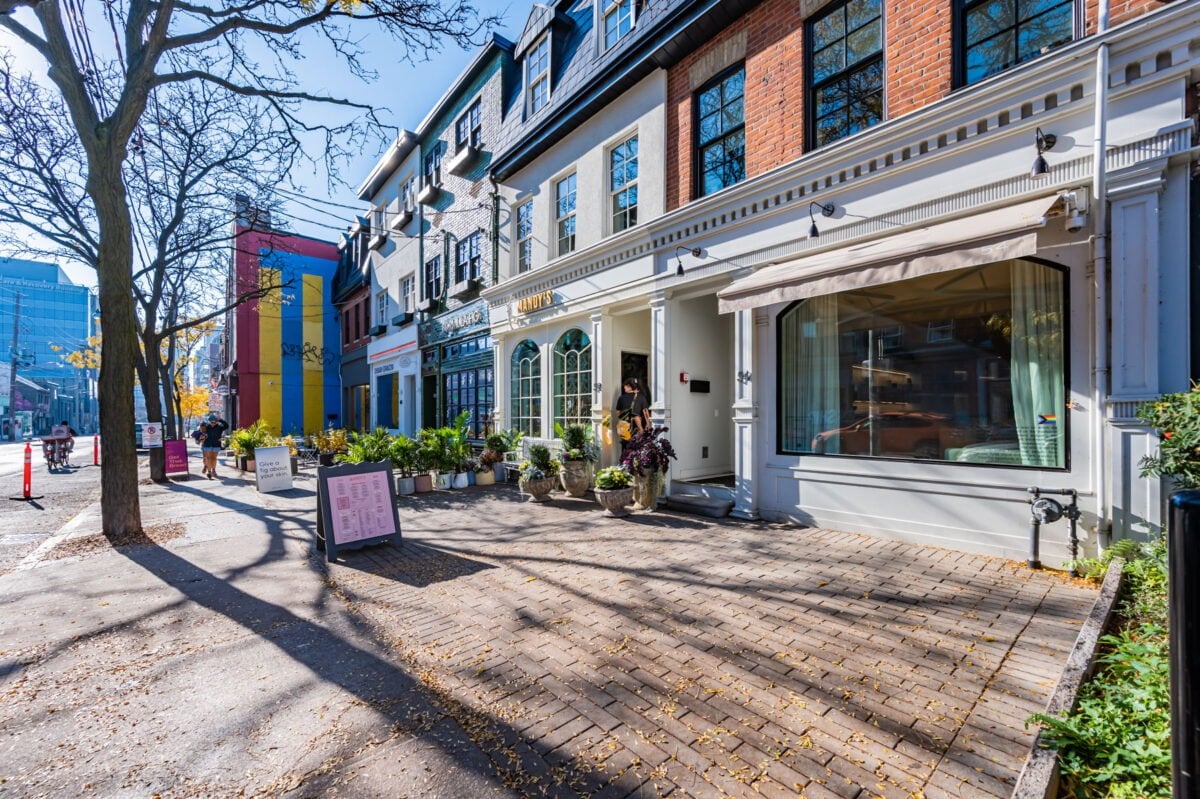
Toronto’s Ossington Avenue has been named one of the world’s coolest streets and Jeff Hull and his real estate development company Hullmark have been instrumental over the years in helping the neighbourhood reach that lofty status.
Jeff Hull
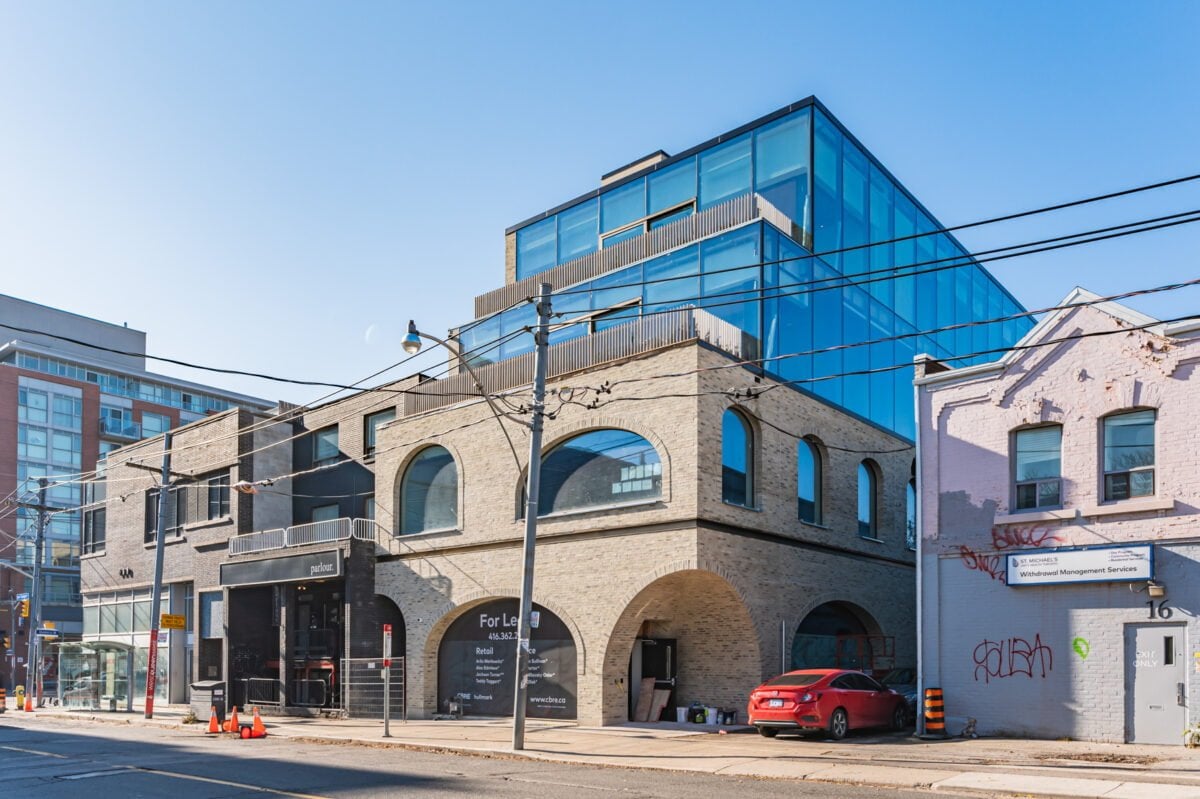
Today, Hullmark owns 17 properties on Ossington as the real estate investment and development firm has helped shape the neighbourhood since its first acquisition in 2014.
“Ossington’s transformation from overlooked street into a renowned cultural hub has been incredible to watch,” said Hull, President of Hullmark. “Ossington isn’t just the buildings, it’s the spaces in between – the people who call this neighbourhood home, and who come here every day to work, shop, eat and celebrate. It is generations of history and creative optimism that continues to drive it today.”
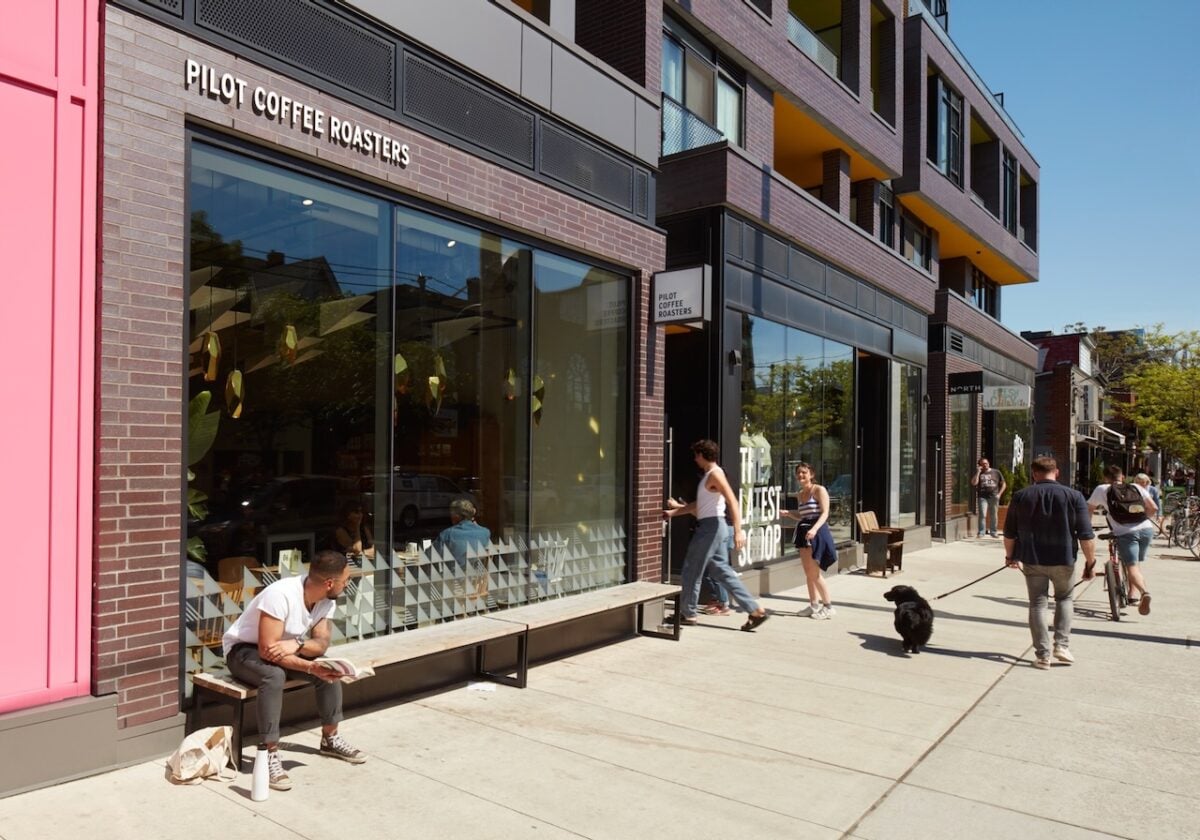
“Bustling Ossington is the place to go in Toronto for some of the city’s best restaurants, live music nearly every night of the week, and the kind of nights out that call for leather jackets, not heels. The most noteworthy stretch is between Dundas and Queen Street West: there you can parade the street and shop for everything from carefully selected vintage to garms by rising Canadian designers. For a leisurely afternoon, pop into Bellwoods Brewery or cosy up at one of the several hip and snug coffee shops and wine bars,” said Time Out.
“EAT An ice-cream sandwich or cone from Bang Bang – preferably while taking in the sunshine at the nearby Trinity Bellwoods Park.
DRINK A pint at Sweaty Betty’s for a true dive bar experience: this place is generally packed with an eclectic selection of local faces.
BUY Grown-up friendship bracelets. Book an appointment at Melanie Auld for a permanently welded jewellery experience that begs to be shared on your socials.”
Image: Hullmark
Hullmark was started by Jeff Hull’s grandfather Murphy Hull in 1950. Jeff took over the business about 15 years ago.
“Over the last 15 years we’ve built a real estate investment and asset management platform. We have about $1 billion of assets under management right now. We operate in urban neighbourhoods, mixed-use office, residential, retail for the most part. We’re starting to do some industrial as well,” said Hull.
“But our strategy is really built on a couple of core themes. One is investing in neighbourhoods, a real place-based development program. Number two investing in design as a key component of our development projects and our portfolio in general. And having a long-term investment horizon. So really investing in the relationships of all stakeholders to see these neighbourhoods grow and evolve I think in the best possible way over time. And there’s some elements of that that align with our strategy on Ossington.”
According to the company website: “Murphy Hull started Hullmark in 1950. Growing up in Toronto as a young Polish immigrant, Murphy began in the industry as a plasterer, later progressing his trade into a home building business and subsequently into real estate development. When he started building in the 50s, the new suburban ideal was taking shape. The measure of success was being able to move out of downtown Toronto into a spacious new home on the outskirts of the city. Through hard work, determination and cultivated partnerships, Murphy grew Hullmark into a successful and influential development business. In the 70s, Murphy began pioneering condominium development, which at the time, was a new and unprecedented housing typology in the Toronto suburbs. Continuing to invest in suburban communities, his life’s work and vision culminated with the Hullmark Centre at Yonge and Sheppard, a mixed-use urban-type community, and the largest-scale project Murphy had ever undertaken. Now, with his grandson Jeff carrying on the family business, Hullmark has come full-circle, investing in the very neighborhoods where his grandparents grew up in downtown Toronto.”
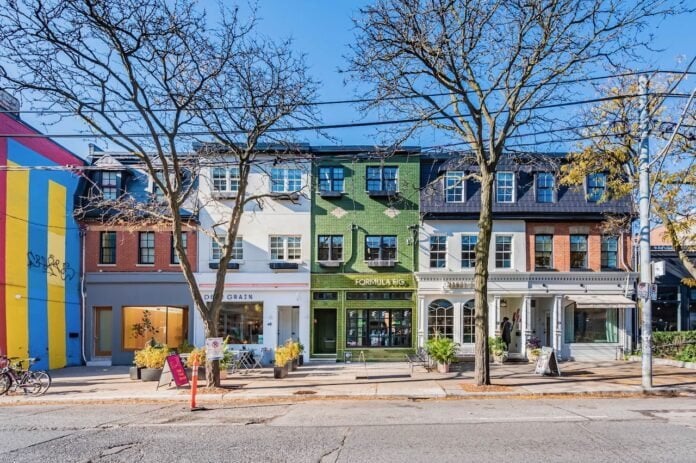
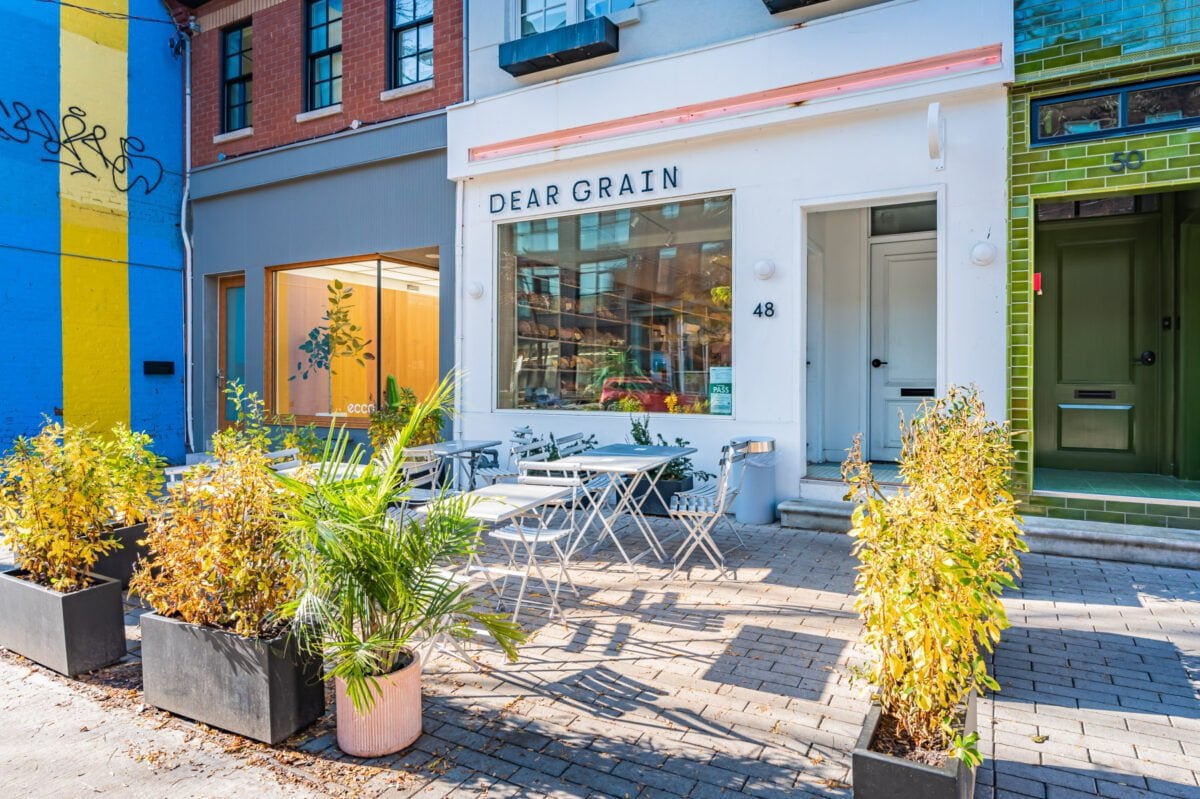
Dear Grain on Ossington (Image: Hullmark)
Hull said the vast majority of the Ossington portfolio are conventional street front retail buildings with residential or office above.
“There are a few assets that are larger format retail, multi-tenant retail,” he said.
“My interest (in Ossington Avenue) was honest because I as a younger person always enjoyed spending time on Ossington. And so I think there was a natural sort of authentic connection with Ossington as an avenue. Some of the things I liked about it then are still very apparent now. It’s just sort of evolved since then. It’s a small street in terms of retail avenues in Toronto. Ossington is really like two city blocks between Queen and Dundas. So it’s a small intimate high street that has a really good mix of both fashion, hospitality and local service related uses for the community.”
109 Ossington (Image: Hullmark)
Hull said there is still more opportunity for the company to acquire properties in the neighbourhood.
“We love Ossington. We’re really, really pleased with the way Ossington has evolved and the types of tenants that have targeted Ossington as the place where they want to open up in a lot of cases their first store in all of Toronto and Canada,” he said.
“I think what gives it its charm is first of all it’s a small high street in the context of Toronto. So it’s not very large. People can walk it in a relatively short time frame from top to bottom and back again.
“It’s the tenancies themselves which are some of the most successful and popular concepts or companies in both fashion, service and hospitality in Toronto. But I think what makes it particularly special is the community that has been built there between the tenants and the community itself.”
Size? at 1000 Queen St W (Image: Hullmark)
Another charm of the neighbourhood is its interesting mix of high and low end properties. It also has an interesting mix of retail from local service-based retailers, fashion and hospitality. It’s a mix of local mainstays to first to market and international flagships.
“What’s interesting is that over the last couple of years we’ve heard from many, many retailers that are coming into the market they say these are the three locations that we would consider opening up a store in Toronto. One is Yorkville, one is Yorkdale and the other is Ossington. And because it’s such a small street . . . it feels like a very intimate retail experience.”
All of Hullmark’s properties in the neighbourhood are located along Ossington Avenue with the exception of one building that’s just around the corner on Queen Street West.
Retail Insider is streamlining its Canadian retail news from around the web to include a handful of top news stories that can be viewed quickly during the day. Here are the top stories from the past 24 hours.
Canada has some of the highest interchange fees in the world. Interchange fees are the fees businesses pay each time their customers pay by credit card.
Several banks, along with Visa and Mastercard, admitted no fault but that will be dispersed to Canadian businesses that have accepted Visa or Mastercard since 2001.
In response to the lawsuit, Visaand Mastercard agreed to remove their no-surcharge rule, leaving businesses free to pass the interchange fee to their customers. For example, on a $50 purchase, a consumer could pay a credit card surcharge of up to $1.25.
So, what does this mean for Canadian consumers and businesses? Now that businesses are allowed to, will they add a surcharge to cover credit card fees or will they continue to absorb the cost? What should businesses know about consumers’ reactions to surcharges? And what are the costs and benefits of credit card surcharges for consumers?
Predicting customer reactions
To help businesses predict how consumers will react to credit card surcharges, we can turn to behavioural economics, which combines elements from economics and psychology to understand how and why people behave as they do in the marketplace.
As a teenager working in our family furniture business in the U.K., I recall the time a customer angrily threw his credit card at my mother after she informed him of our credit card surcharge. But the psychology of losses and gains doesn’t provide the whole picture here — part of the reason the customer was so angry was because he blamed us for the surcharge.
This is a reaction that businesses should rightly fear. Blame can dramatically enhance perceptions of unfairness. No one blames businesses for adding tax, but there is a strong possibility customers will blame businesses if they add credit card surcharges.
Although businesses can make an educated guess about how customers will react to surcharges, it is difficult to fully predict. To play it safe, most businesses in Canada will probably refrain from adding a surcharge for credit card use for the time being.
According to a Canadian Federation of Independent Business survey, most businesses either don’t plan to add the surcharge (15 per cent), aren’t sure whether they should (40 per cent) or will simply follow what others in their industry do (26 per cent). About one in five businesses (19 per cent) said they do intend to use the surcharge.
For businesses that are contemplating using the surcharge, there are better ways to implement it than simply tacking it on to existing prices. One approach involves reframing the situation for consumers by offering a discount for cash or debit, instead of adding a surcharge for credit cards.
For the same reason a separate credit card surcharge enhances the “pain of paying,” adding a discount — typically perceived as a small, separate gain — will have an outsized positive impact on customers’ reactions.
Although prices could be adjusted so this process ends up being objectively identical to an added credit card surcharge, a cash discount is also much less likely than a surcharge to be considered unfair by credit card users.
A second option is for businesses to reduce their prices before adding the surcharge, making sure customers are aware of the reduction. As long as customers perceive that a business has made efforts to lower prices first, a credit card surcharge is more likely to be seen as a charge imposed on the business, rather than an attempt by the business to boost profits.
Fees improve decision-making
If implemented appropriately, surcharges also have the potential to improve consumer decision-making by allowing consumers to make better decisions about their credit card use.
Credit cards provide benefits for consumers at a cost. In exchange for convenience, credit, rewards, and other perks, customers pay annual fees, interest, and — embedded in prices — interchange fees.
Currently, interchange fees, which are substantial, are hidden from consumers, meaning consumers cannot fully account for the costs of their decision. Not only that, cash and debit card-paying customers cannot avoid interchange fees when businesses are forced to include them in prices despite receiving none of the benefits.
Credit card surcharges, then, would allow consumers to avoid the cost if they don’t perceive the benefits to be sufficient. In other words, surcharges or cash discounts could actually help consumers make better decisions by allowing them to appropriately account for the costs of credit card use.
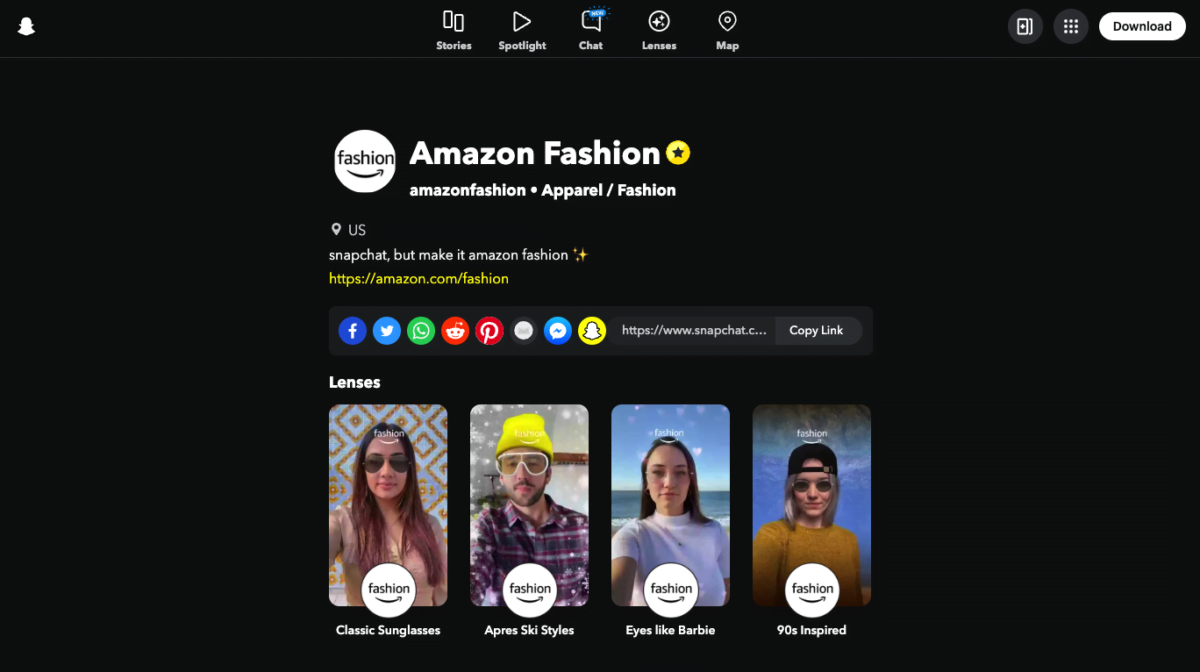
Snapchat has launched a new partnership with Amazon Fashion to bring the social media platform’s reach to the world of Augmented Reality (AR) when it comes to eyewear products through the retail giant.
Matt McGowan
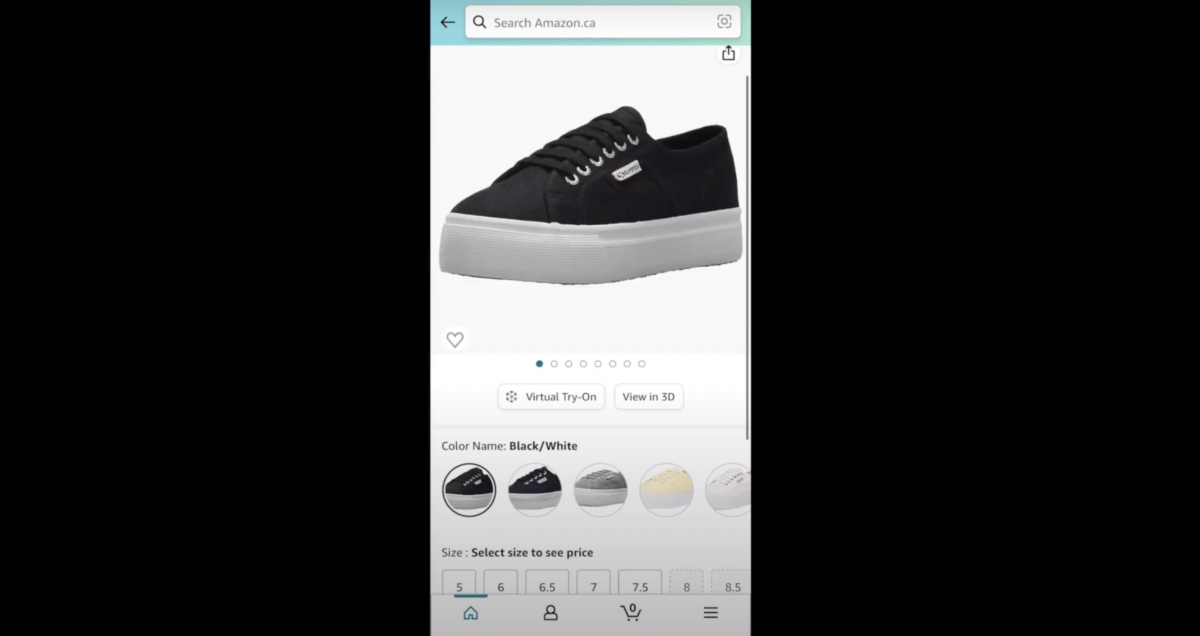
The new Snapchat try-on Lenses feature thousands of Amazon Fashion’s popular Virtual Try-On Eyewear products, enabling Amazon brands to leverage their Amazon AR assets and showcase styles in a fun, interactive experience to millions of Snapchatters. Customers will be able to explore, shop and digitally try-on thousands of eyewear styles directly on Snapchat and then seamlessly purchase in the Amazon Fashion store.
Snap Canada’s GM Matt McGowan said the partnership is built on the fact that more than 250 million people are engaging on Snapchat with AR every day.
“The consumer, the shopper, is finding a lot of utility with AR on Snapchat and across our peer set and in just in general. Snap and Amazon Fashion came together and specifically at the moment with respect to glasses. The decision was made to kind of partner up. Amazon Fashion using the Snapchat Augmented Reality Tools and basically just offering this experience to Snapchatters,” he said.
Image: Snap
In a recent survey Snapchat did with Ipsos, it found that 90 per cent of brands think AR is primarily for fun while only 55 per cent of consumers think of it this way.
According to the 2021 Global Deloitte Digital Study, it’s estimated by 2025 that about 75 per cent of the Canadian population and almost all people who use social/communication apps will be frequent users of AR.
“At Snap we’ve seen success kind of beyond eyecare and there’s definitive intention to expand the relationship with (Amazon Fashion) beyond eyewear,” said McGowan.
Snapchat said it sees over six billion AR Lens plays every day.
Dr. Muge Erdirik Dogan
“Amazon Fashion is always looking for new ways to collaborate with brands and create fun, innovative shopping experiences for customers,” said Muge Erdirik Dogan, president of Amazon Fashion. “Millions of customers regularly use Amazon’s AR shopping technology across categories in our stores, with Virtual Try-On for Eyewear being a long-time customer favorite. We are delighted to partner with Snapchat and further expand AR shopping for both fashion brands and today’s new generation of digital shoppers.”
Image: Amazon x Snapchat
In the past year, Amazon Fashion customers ordered more than one billion fashion items on mobile devices. The growing Snapchat community of 363 million daily active users now have access to Amazon’s popular eyewear brands, including Maui Jim, Persol, Oakley, and Costa Del Mar, among others. Eyewear is the first VTO Shopping Lens category for the Amazon and Snap partnership, and the companies plan to expand into additional verticals in the future.
McGowan said Snapchat has been pioneering Augmented Reality experiences for more than five years within its own community. He said there are about 12 million Gen Z and early Millennials on the platform in Canada.
He said AR has helped make visual communication more seamless.
“Companies, and now the world’s largest retailer is leaning in, because what we’re finding is that forward-thinking companies are starting to realize that AR can help bridge the gap and help a consumer feel better about buying something online,” he said, adding that while glasses may look good in a picture, it’s not until a person can try them on to determine whether they look good on them.
“In a virtual world, it’s hard to try things on. You can’t really bop into the store. So AR is that bridge in an e-commerce first world that is helping the consumer feel better about the products they’re buying and making sure they look the right way, making sure they fit. We’ve been able to communicate these insights back to our partners and clients and our advertisers. Amazon’s getting it and they’re going all in on this. And we’re starting here with the full intention of looking at all their fashion.”
Image: SnapImage: Amazon.ca
To create a seamless shopping experience, officials said Amazon and Snap partnered to establish 3D asset standards, enabling Amazon’s extensive library of assets to be easily integrated with Snap’s AR Try-On Technology. For this partnership, Amazon’s 3D Asset technology, a service that can be extended to industry partners, works with Snap’s Lenses to allow 3D assets and product information to be shared, as well as dynamically updated, providing shoppers up-to-date selection, product details, and availability.
“With the combined innovation and technology between Snap and Amazon, we are unlocking exciting and fun new try-on experiences for hundreds of millions of Snapchatters. AR eyewear is just the first step in our partnership, and we can’t wait to continue our innovation together,” said Ben Schwerin, SVP of Partnerships, Snap Inc.
The Shopping Lenses will be available through @amazonfashion’s Public Profile on Snapchat, in Snap’s Lens Explorer across the For You and Dress Up tabs, as well as in the Snapchat Camera Lens Carousel. Snapchatters can also browse additional products directly within the Amazon Fashion ‘store’ tab on the @amazonfashion profile on Snapchat, allowing customers to review thousands of products with the option to seamlessly link out to Amazon to purchase.
One of Calgary’s most successful grocery store chains is rebranding across all of its lines of business and embarking on enhanced member benefits.
Co-op will become Calgary Co-op with a new visual identity and positioning for all its locations including food, pharmacy, wine spirits beer, cannabis, home health care stores and gas stations.
The rebrand and a new logo will roll out in the coming months throughout the locally-owned cooperative’s operations.
Ken Keelor
“We have been known by our members as Calgary Co-op for some time, and now we’ll lean into a new visual identity,” said Ken Keelor, CEO of Calgary Co-op, adding that the new logo demonstrates several elements, including the open arms of the brand’s co-operative values, as well as the local producers whose hands seed the fields.
“We’ll be positioning ourselves in the market with our ‘Life’s in Store’ brand platform, showcasing Calgary Co-op’s commitment to providing life’s essentials, as well as a lifetime of benefits, rewards and savings for our members. More than ever, we are committed to local, exceptional in-store experiences, and an increased investment in the community,” he said.
“Just like the city we call home, we are continuing to evolve how we serve our community to provide our best to our members. By listening intently to our team members and members, we have set a confident path forward for our co-operative. We will continue to be a strong community pillar, and we’ll keep giving back in meaningful ways, by engaging with local companies and producers, and bringing our very best to our members every day.”
Calgary Co-op’s stores will transform throughout 2023.
Image: Calgary Co-op
Owned by members, Calgary Co-op is one of the largest retail co-operatives in North America. Locations in Calgary, Airdrie, Cochrane, High River, Okotoks, and Strathmore include food centres, pharmacies, gas stations, car washes, commercial cardlocks, home health care centres, wine, spirits, and beer locations, cannabis, Community Natural Food stores and Beacon Pharmacies. With over 400,000 members, 3,850 employees, assets of $627 million and annual sales of $1.2 billion, Calgary Co-op was recognized as one of Alberta’s Top 75 Employers of 2022.
The first store opened on November 15, 1956. North Hill Centre, Calgary Co-op’s second store, opened in 1960.
In recent years, Calgary Co-op has focused on developing its private local brands – Cal & Gary’s and Founders & Farmers.
“For over 65 years, Calgary Co-op has served the community of Calgary and the surrounding areas. We defined our promise very specifically a few years ago and it’s a promise to build an exceptional customer experience every time. And as times change, we feel we need to transform to continue to meet the needs of our members,” said Keelor.
Calgary Co-op’s stores will transform throughout 2023.
All of Calgary Co-op’s lines of business are rolling out the new identity, marking a new era for the brand.
“So, one of the biggest pieces is setting ourselves apart from our competition, signaling the modernization of our co-operative more openly, and committing more to the communities which we serve. In other words, committing more to Calgary. We’re called Co-op but putting Calgary in the name we feel is very important for Calgarians.
“The transformation begins with the new brand . . . with the logo symbolizing a new era for us. And our members quite frankly have known us as Calgary Co-op for a long time and many are now hearing that through as we lean in with a new visual identity.”
The brand will also be rolling out new technology for its members later in 2023, including a new member-facing app offering instant rewards and benefits, a new modernized membership program, better transparency to patronage earnings and enhancing the ways members can save.
Image: Calgary Co-opImage: Calgary Co-op
Keelor said the initiative of transforming the brand goes hand in hand with its launch of the private brands a few years ago. It’s the next stage of evolution for the company.
“In the first phase, we sought a more independent focus on the Calgary market in our food business and we found the way to get there was to create our own brands, reflecting this market in Cal & Gary’s and Founders & Farmers. We created our own flyers, began working on our flyers that can reflect private brands as well as local products. We enhanced local – over 2,500 items now,” said Keelor.
“So that was the first phase I would say of differentiation. We hadn’t thought about necessarily doing what we’re doing right now. But as the years have gone by from there – three years have gone by, by the way – we realized we need to do more to enhance the benefits our members are getting and if we’re going to do that we also want to signal the transformation up front.
“So this transformation, just doing our storefronts, is going to take the next year . . . We’re telling the customers and members early about the change but what is coming to me that is very exciting is the substance behind the style. You have a nice logo and that’s cool but what’s the substance and substance is the simplicity, transparency and immediacy of benefits that we’re going to bring behind our patronage program, our equity model and the immediate benefits of membership that we’re going to begin to show. Enhanced member benefits through simplicity, transparency and immediacy by simplifying our equity and patronage model as well as launching immediate customer member benefits. Immediate as in every time you shop.”
Calgary Co-Op (Rendering: Royop Development Corporation)
Recently, the company announced that one of its oldest stores, the second in the chain, is being transformed into a mixed-use community in partnership with Royop Development Corporation.
The local development company purchased the North Hill Co-op property site, along 16th Avenue NE, in September and will turn the property into a brand new Calgary Co-op grocery store, to replace the current 60-year-old supermarket, residential apartments, parkade, and two new commercial retail buildings.
Construction is set to begin in early 2023, first focused on a multi-storey mixed-use building with 180 residential apartments and townhomes with resort-like amenities such as an entertainment hub, sound stage, podcast studio, sports club, and culinary kitchen. The new building is expected to be ready for residents as early as autumn 2024. Below the residences will sit a 55,000-square-foot commercial level, featuring a new full-service Calgary Co-op grocery store, bank, and retail spaces.
Two additional commercial retail buildings will be constructed to house a Calgary Co-op Wine Spirits Beer, Calgary Co-op cannabis shop, car wash and gas bar, and other service-oriented businesses. The existing Calgary Co-op gas bar will remain on the site with a new car wash to be added during the project. To accommodate an influx in shoppers and residents, two levels of parkade will also be added to the site.
Retail Insider is streamlining its Canadian retail news from around the web to include a handful of top news stories that can be viewed quickly during the day. Here are the top stories from the past 24 hours.
By The Namesake (Image: Jeremie Dupont, courtesy of By The Namesake)
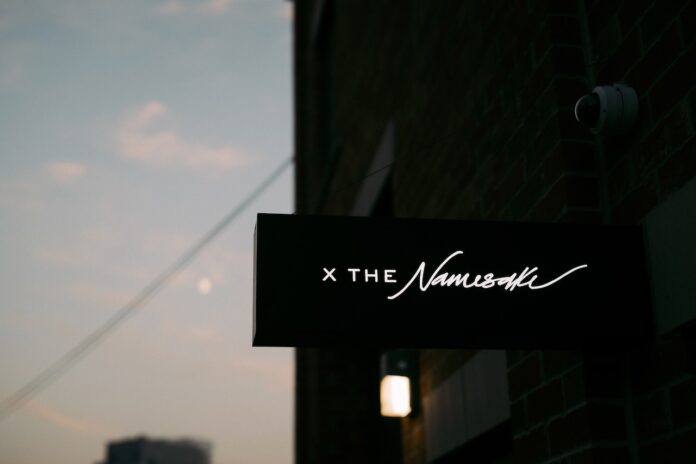
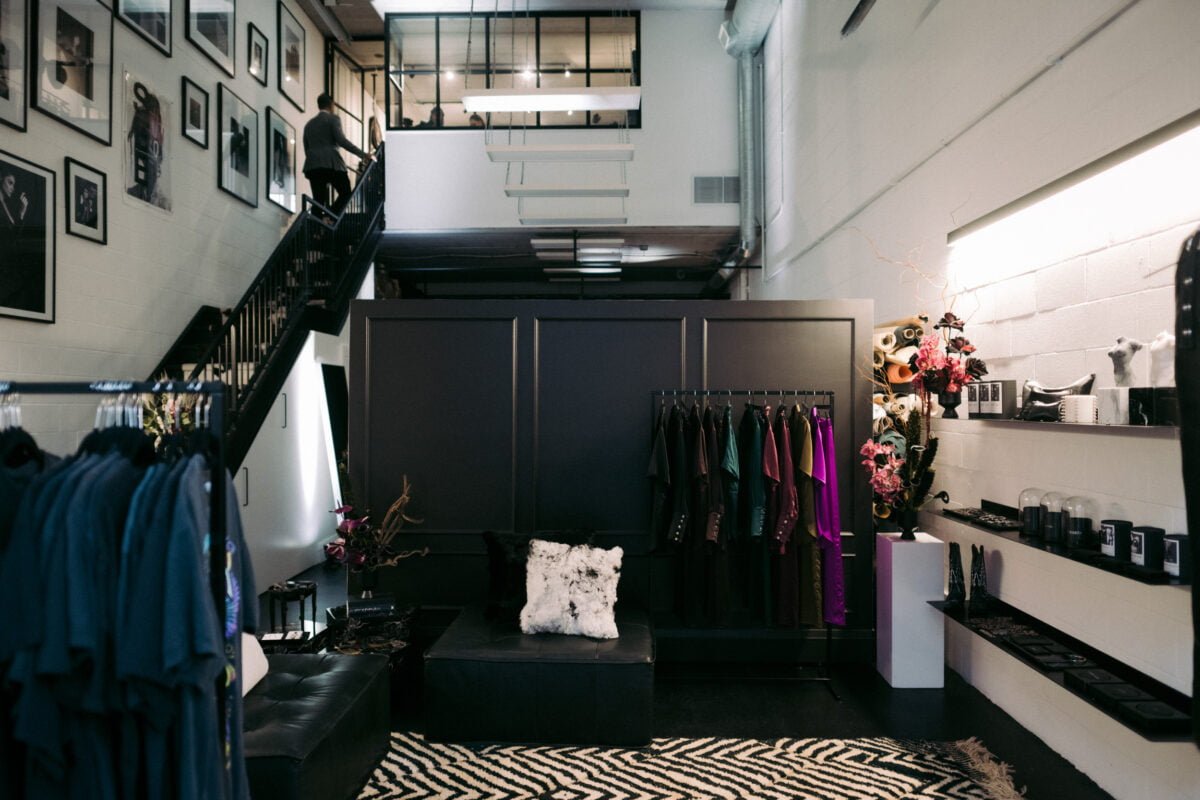
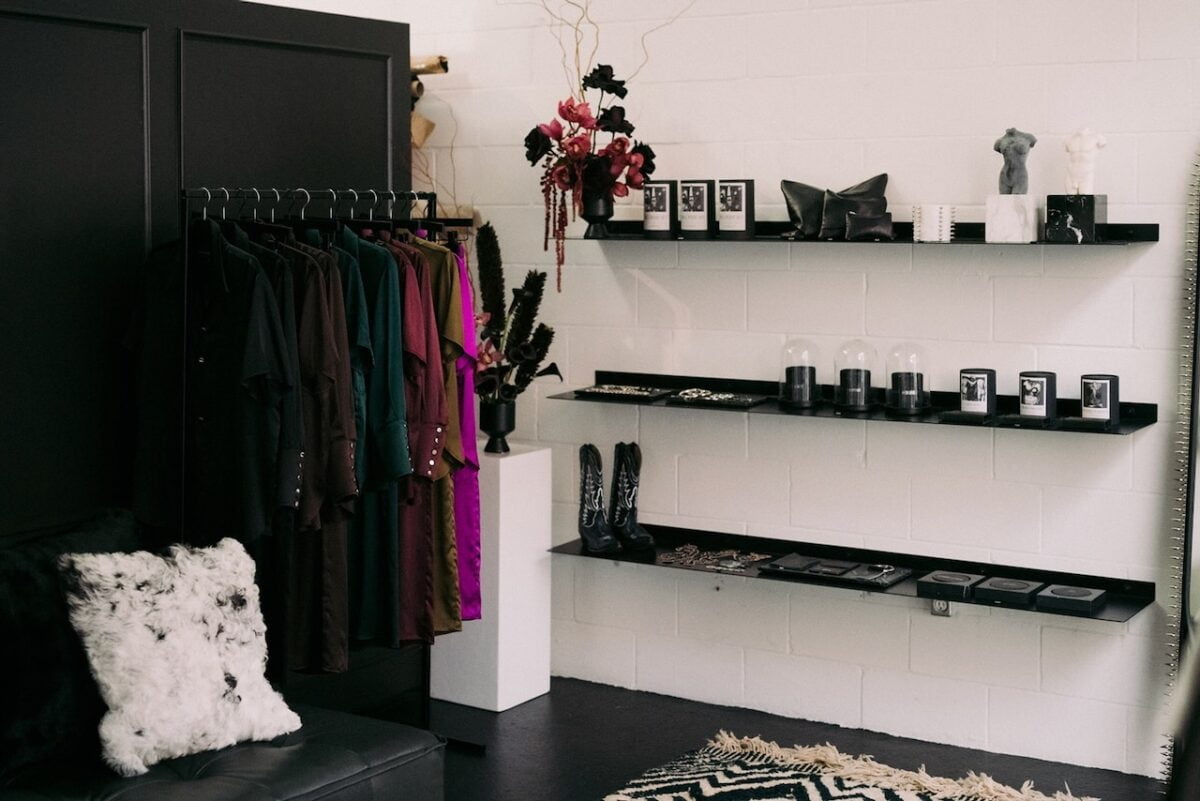
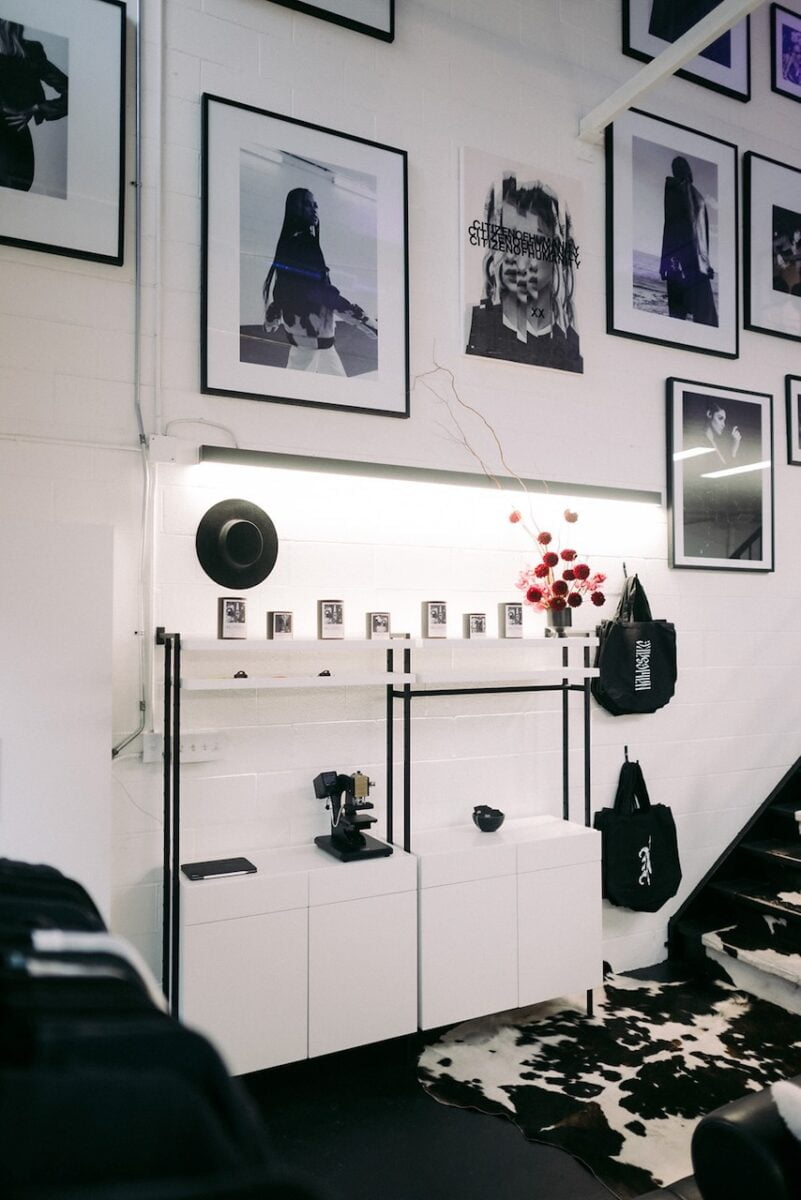
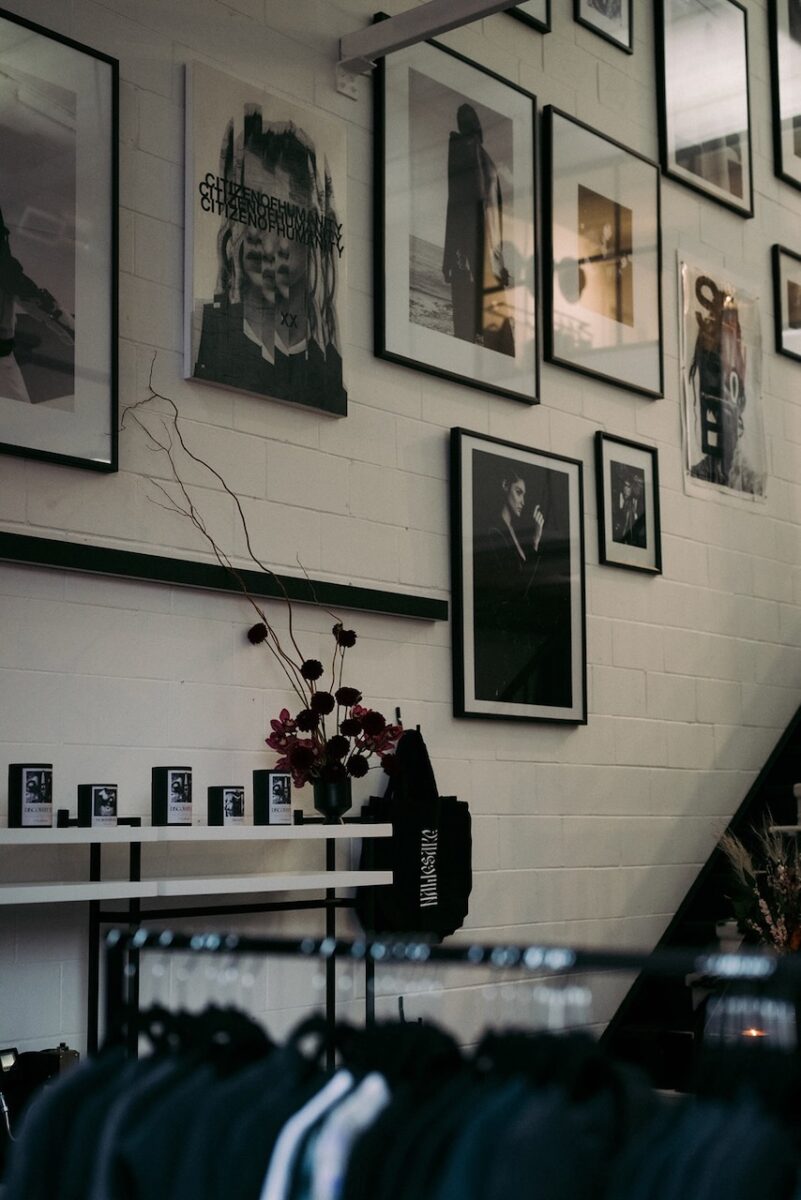
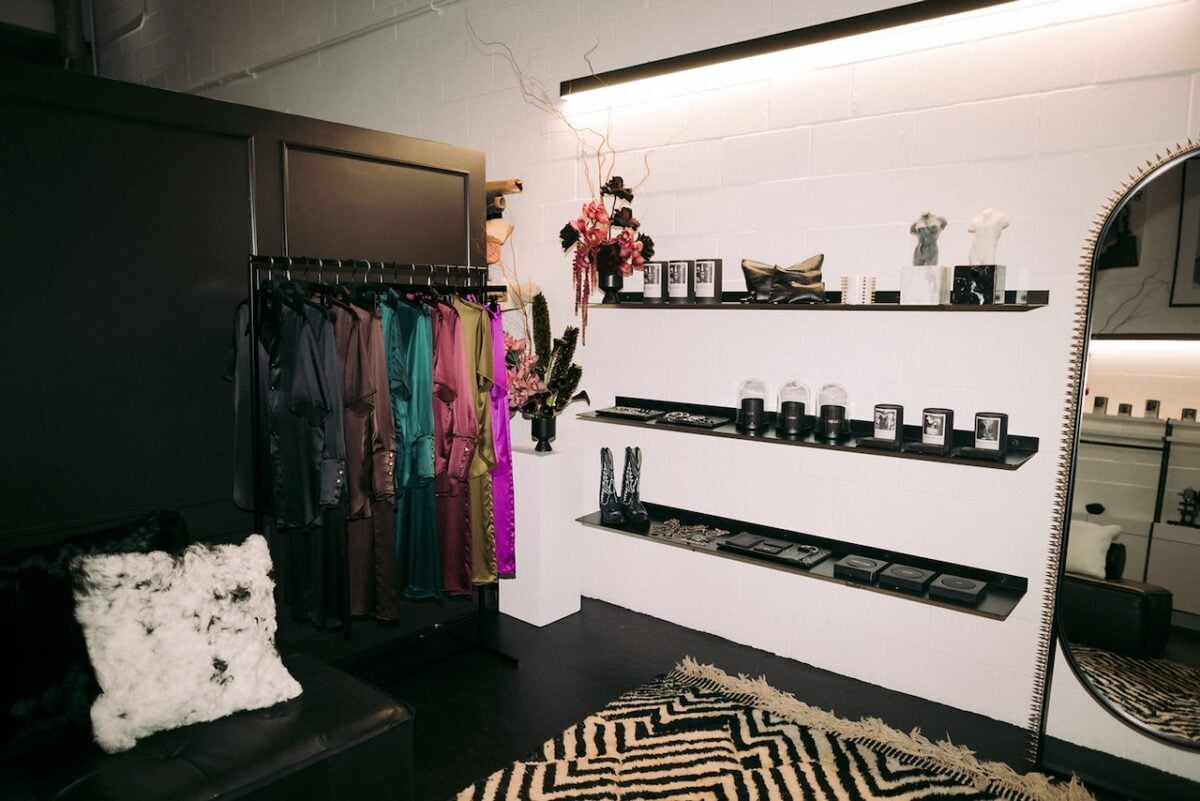
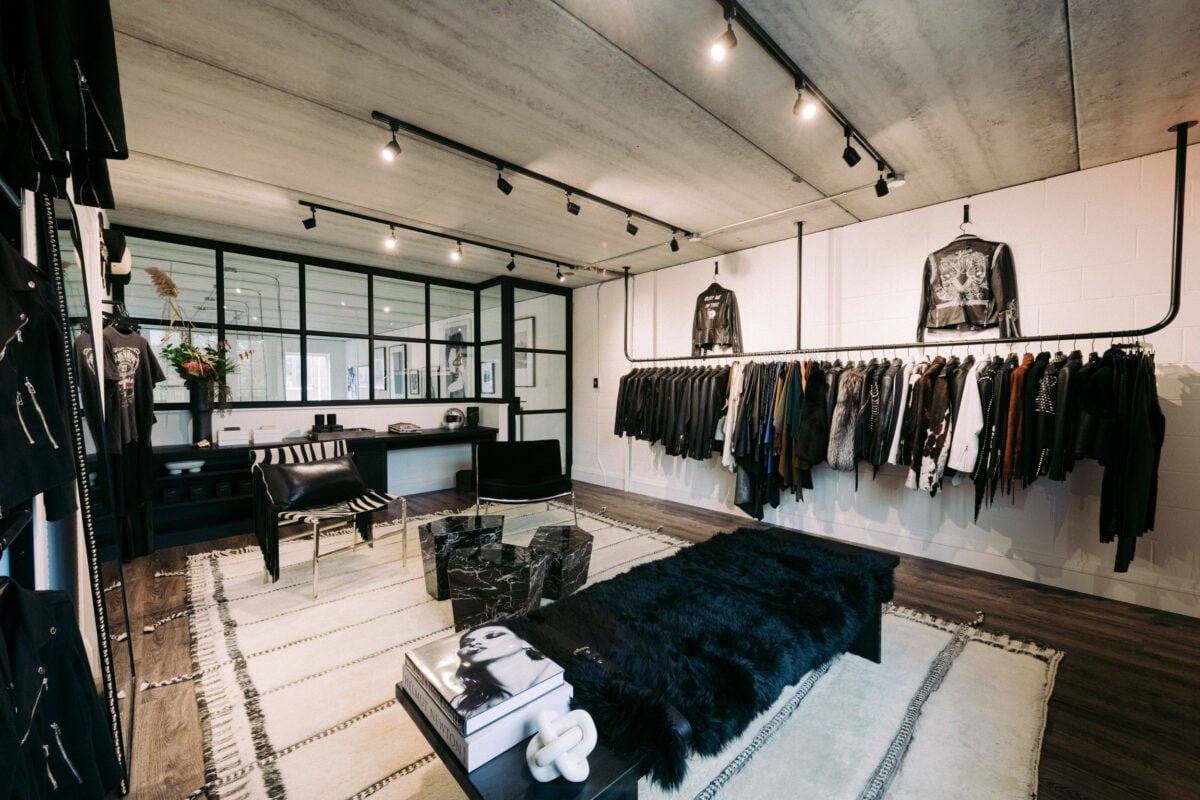
Internationally renowned custom leather brand, By The Namesake, has launched its first-ever retail location in Toronto offering an array of small customizable leather goods alongside a fully custom leather studio.
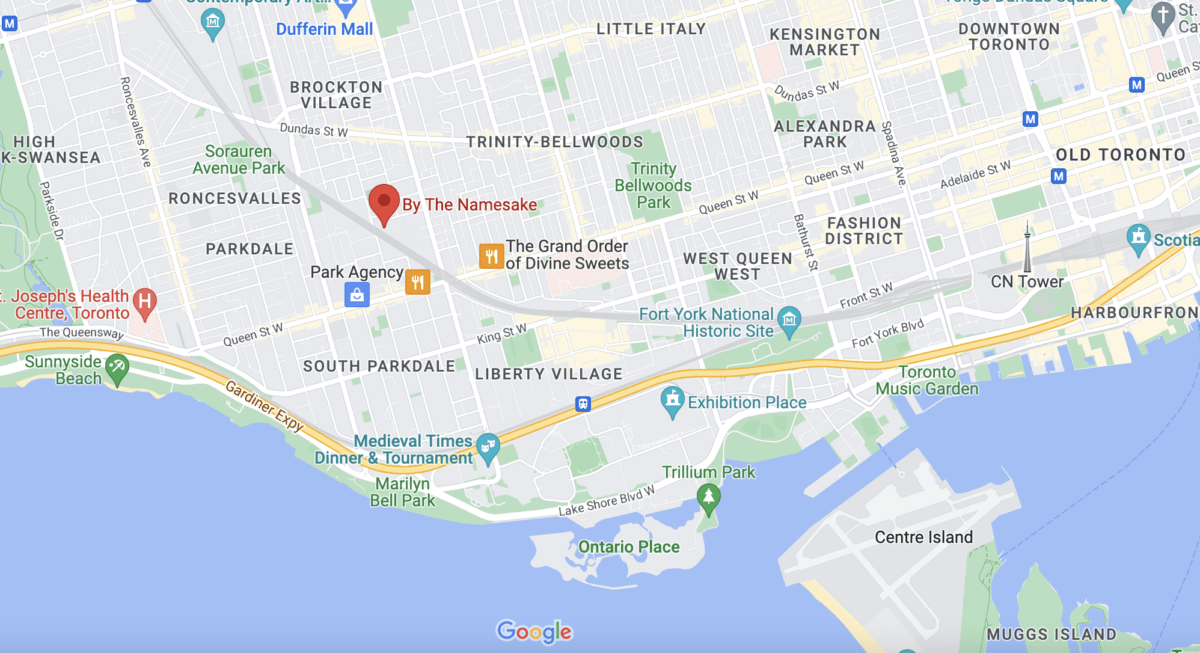
The store has opened at 95 Florence Street in the Parkdale neighbourhood. The location is about 3,000 square feet and includes retail space, a production facility, office, and showroom all under one roof.
Rosa Halpern
“As a champion of leather goods, our brand’s expansion into small leather accessories, home goods and ready-to-wear pieces, alongside our first official brick-and-mortar location is a natural progression,” said Rosa Halpern, founder and creative director of By The Namesake. “Our smaller customizable leather goods are the perfect add-on to anyone’s household, and a great gifting option for the holiday season.
“The past two years have shown us we really value and need to be accessible for consumers in our hometown, to have the full custom experience and understand what we’re about. We’re proud to open our doors in Toronto to not only allow people to shop daily but also to experience our leather jackets in the most luxurious setting.”
Click for interactive Google MapBy The Namesake (Image: Jeremie Dupont)
“Florence Street is very close to a main artery but not right on a main street. So it’s a bit tucked away. We wanted something that was accessible and very centrally located but not on a main street because we want it to be more of a destination,” said Halpern.
The company was founded in 2015 and from day one it’s been a direct to consumer brand.
“Our entire brand is built around redefining the leather jacket through customization. So we really involve our customer in the design process. Our customer is invited into the studio to pick their leather, their hardware, their lining, any embellishment and we do full custom fit. So really in terms of our leather jackets we’re selling an experience more than a product,” said Halpern.
By The Namesake (Image: Jeremie Dupont)
By The Namesake (Image: Jeremie Dupont)
By The Namesake (Image: Jeremie Dupont)
“The brand initially started out of my studio, my working studio, and as the brand grew it remained really, really important to us to actually keep our studio where everything’s made and the environment where we invited in one in the same because our customers love the fact that when they came to this experience they actually saw jackets in process and kind of the veil of the fashion industry was lifted a little and they could actually see where the leather was cut and sewn and handled and all of that.
“Those were our original roots and then as we’ve grown we’ve expanded to ready-to-wear items as well as other custom leather goods. And our new retail space that we just opened really focuses on those ready-to-wear and custom small leather goods. So we’re actually doing personalization on the spot of any of our custom goods which includes wallets, candles, cardholders, coasters, luggage tags. We’re staying true to the mission of allowing customers to come and see not only the beautiful finished product but the actual space where everything is made.”
The By The Namesake store is also offering its signature scented candle, which has been out of stock since selling out in 2019. It is now in three different scents. There’s customizable leather coasters and marble catchalls, passport wallets, and leather pouches. Larger items include a customizable all-leather punching bag and mixed-material pillows, to round out the home goods offering.
By The Namesake (Image: Jeremie Dupont)By The Namesake – Custom Leather Atelier (Image: Jeremie Dupont)
Additionally, for the first time, By The Namesake will also offer off-the-rack leather jackets and ready-to-wear silk sets available for purchase in its custom storefront. The brand’s custom leather studio, designed in collaboration with international interior designer Ali Budd, and built by Against the Grain Remodeling, is a welcoming taste to the vast array of possibilities in customizing leather jackets – the mainstay of the brand, said the company.
When asked about possible other stores in the future, Halpern replied: “This is definitely going to be our flagship location just because it’s where everything’s made. However, we have our sights set on other cities. We have seen a lot of success as a pop-up model and have in some cities like New York City which we’ve now been to eight times as a pop-up. So that will probably be our next goal to open something more permanent there.”
All photography credits are: Jeremie Dupont, courtesy of By The Namesake
La Maison Simons, 977 Saint-Catherine St W, Montreal (Image: Dustin Fuhs)
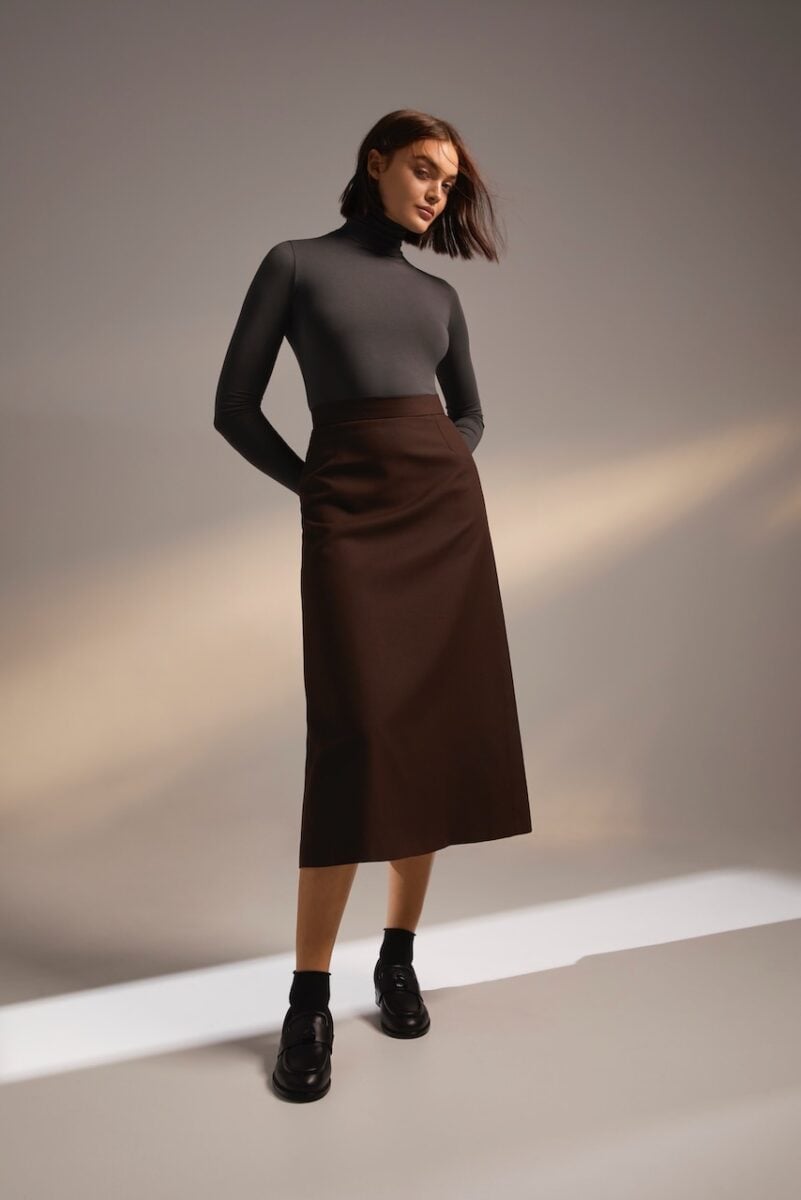
Quebec City-based La Maison Simons‘ newest fashion collection is designed by its in-house talent to create timeless and higher-quality pieces.
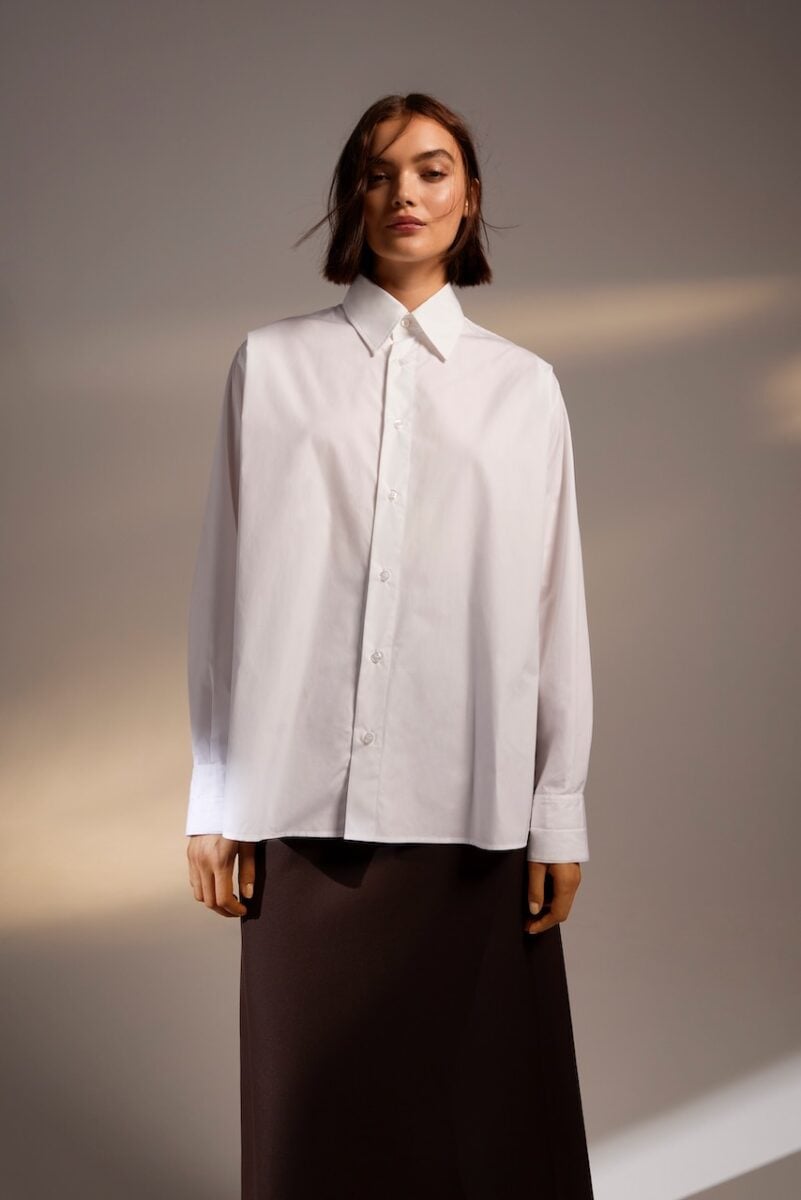
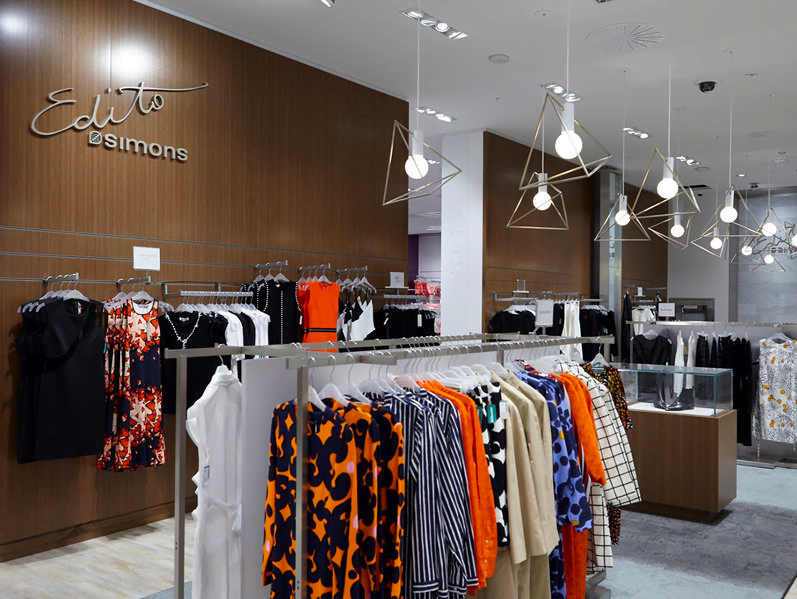
The new collection of a dozen pieces geared towards women launched a few weeks ago and it showcases the talent of the in-house design team, which consists of 150 people. The collection, called Édito by Simons, is carried in the upscale designer Édito departments located in selected Simons stores.
“At Simons we are always playing with new ideas. I wanted to experiment and do something different. We have done so many collaborations with international or local designers and I thought we were really ready to do something on our own with our own label and our own in-house talent where we can push up our levels of design, increase quality, and use much more luxurious fabrics,” says Richard Simons, Vice President of La Maison Simons.
Image: Édito by Simons
Image: Édito by Simons
Image: Édito by Simons
Simons said the company decided to go in-house for this collection as it fits more into its vision of buying better, using more ecological fabrics, and “we just wanted to keep building on that and I am happy with the way it has gone. The collection is in smaller units of what we are normally used to and we have a world class design team that travels across the world.”
Simons said with designing in-house, the team is able to experiment, and bring everyone’s knowledge together to design specifically to what the customer wants. This season’s collection includes blazers, knit sweaters, dresses, coats, long skirts, and more.
“You don’t see a lot of long skirts on the market this Fall, but they are definitely uptrending as we have seen a lot of long skirts popping up for Spring and a lot of international designers. This collection is more minimalist, it is more luxurious, refined, and it is modern. It is our vision of our customer of just wanting a timeless, basic, and clean design.”
Simon’s said the designs are more in the fine details and fabric choices – usually something a customer would not necessarily notice.
“The shape, the colors, the shape of the sleeves – a lot of it is in the fine details. You will see a very well made blazer, top quality wool fabrics, made in Italy, with the finishing being superior quality. It might not be apparent to customers, but we know we are working with quality fabrics that are going to wear well, survive, and be part of a woman’s wardrobe for many years to come.”
The fabrics that were used in this collection include a mix of yarn such as alpaca yarn, wool, linen, and silk. Simons said the fabrics the team has used are more luxurious than what you see in higher end collections.
“It is special blends you don’t normally see in retail and so we are excited about that. There are about a dozen pieces in the collection and we are going to listen to our customers and see what is working, exchange ideas, and see how it evolves.”
Looking to Add
Rendering: Simons at Halifax Shopping Centre
Although nothing has been decided on yet of what the in-house design team will be adding to the collection, customers can expect an additional collection in the Spring. As it will be a new season, the design will be tweaked for the details that are current for the Spring season, but will be created with different fabrics for the warmer weather. The Spring collection, Simons said, will keep the same minimalist feel, be modern, and very refined.
“We are always looking and studying for new opportunities in the market and I think just in retail today, you have to do something special and remarkable – just being average is not enough. You have to take risks, you have to be out there. The more risks you are taking, the more projects you are taking on – some are going to fail, but failing is good. As long as we are trying, exploring, and looking to do more collaborations, there are just endless ideas out there.”
To keep up with new fashion trends, Simons says the team are constantly on the market and are attending fashion weeks around the world such as the Paris and Korean fashion week so they can see a variety of collections and keep up with what is new and trending.
“We are constantly evolving and fashion is always changing which makes the industry fascinating. We see a lot of different collections, we study fashion like somebody would study medicine. We are constantly adapting our collections to serve our customers’ needs and respond to what is needed in the world.”
Image: Édito by Simons
Outside of the in-house collection, Simons was only able to disclose the new store opening in Halifax for 2024 that will be located in the Halifax Shopping Centre. The new store will be located on the third floor beside Zara and Apple and will be its 17th store. As for other new stores, we will have to wait for details and for now Simons says the design team is always looking for new ideas to bring to its collection.
“We take a lot of joy in working with young talent and discovering the possibilities that can happen. I think it is important to be out there and always looking for new ideas and not get too comfortable – things are always changing and you have to be a little nervous and humble in this industry. We keep our head to the ground, work hard, and we are exploring new ideas – hopefully our customers will appreciate them.”
The Édito by Simons collection is available at simons.ca and in the following stores: