Retail Insider is streamlining its Canadian retail news from around the web to include a handful of top news stories that can be viewed quickly during the day. Here are the top stories from the past 24 hours.
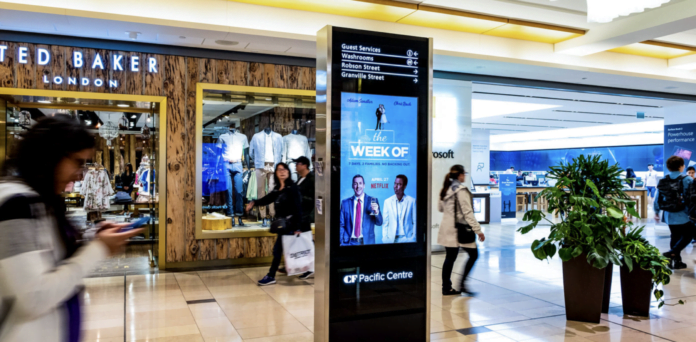
Mall directory at CF Pacific Centre in Vancouver. Photo: Branded Cities
Some retailers and shopping centre landlords in Canada are utilizing AI-based facial recognition technology to keep order and reduce thefts at a time when social issues and retail shrinkage are on the rise. The ethical utilization of AI-based data is critical as misidentification and other issues are posing problems, prompting businesses to look to best practices when using facial recognition tech.
A recent example is an Indigenous man in Manitoba who was accused of being a repeat thief in a Canadian Tire store in suburban Winnipeg. Facial recognition technology in the store identified him as a suspect, allegedly having stolen from the store months before, and the man vehemently denies that it was him. Ultimately it was determined that he wasn’t the thief, prompting an apology. It’s one of numerous examples of AI-based technology not performing with the accuracy expected.
And there has been backlash in terms of the use of such technologies in shopping centres — Cadillac Fairview came under fire in 2020 for collecting about five million images of shoppers at the landlord’s digital kiosks, prompting Canada’s privacy watchdog to launch an investigation into the practice. Cadillac Fairview claimed that the data was anonymized though it was found that privacy was not maintained with images being kept.
This is posing a challenge for retailers and landlords as thefts increase in major Canadian cities. Since the pandemic, shrinkage in stores has risen dramatically for a variety of reasons. Economics is certainly one of them, with some having lost jobs and using theft as a means to an end. Mental health has also become an issue following repeat pandemic lockdowns and other factors since early 2020 when the pandemic hit the world and changed things forever. Being able to identify criminals is a desired outcome to maintain order and profitability for retailers.
Kathy Baxter, Principal Architect of Ethical Artificial Intelligence Practice at Salesforce
The world of technology adoption is changing quickly, with a rise the utilization of Artificial Intelligence across various platforms including facial recognition technology. Retail Insider recently had the opportunity to sit down with Kathy Baxter, Principal Architect of Ethical Artificial Intelligence Practice at Salesforce at the Dreamforce Conference in San Francisco to discuss the ethical use of AI tech in businesses broadly.
Baxter said that there are many potential issues utilizing AI, be it in a hiring system that might discriminate based on factors, or voice recognition technology a business may use that cannot recognize a particular accent. She said that ultimately retailers and other businesses need to mitigate the potential of harmful effects given that AI is becoming commonplace both online and in physical spaces.
She felt so passionately about the topic that in 2018 she wrote her own job description and created a role to oversee how AI can be used in the most ethical ways. The goal is to build and maintain systems utilizing AI that customers can ultimately trust. With that, she and a team created Salesforce’s Trusted AI Principles, which is a commitment to developing AI that’s responsible, accountable, transparent, empowering and inclusive.
It was a timely move, given that many consumers don’t trust AI technology — part of the reason is likely a lack of knowledge in what it does, while at the same time consumers also overwhelmingly believe that companies have a duty to improve the state of the world. Incidents such as what happened recently at Canadian Tire, or with Cadillac Fairview, don’t help.
Specific to Salesforce, Baxter said that the company’s Einstein teams also saw the need to build ethics into Salesforce products including identifying risks and opportunities to mitigate outcomes.
Photo: Joseph Steinberg
One example she noted for online sellers product recommendations — consumers may question why a particular item was chosen by an AI platform. If AI were to suggest cosmetics items for women only, it could ultimately exclude some men and those who are transgender or non-binary. Challenges may further persist if, say, a household uses one computer to make purchases which means one spouse may make different purchases, causing confusion and other potential issues. Developing technologies must be thoughtful, with ‘consequence scanning’ being a tool that asks users to envision potentially unintended outcomes of a new feature and how to mitigate harm.
She also noted that a dedicated Data Science Review Board can be utilized to enforce best practices in data quality and model building, be it for a particular product or even the entire organization. This helps determine if there is bias and how it can be overcome. Ultimately a group reviewing AI-related platforms aims to create transparency in how they collect data used by machine learning algorithms.
Baxer said that developing ethical AI takes time and effort for companies developing and utilizing tech. It’s part of a goal to be more responsible while adding value to innovation.
Accountability with the use of technology is also key to successful outcomes, be it using facial recognition or otherwise. The use of AI is becoming commonplace which means retailers in Canada will be using it in the future involving most activities. Properly utilizing data will be key to prevent such issues as the misidentification of thieves in stores — this will be critical to build trust and even prevent litigation in years to come.
Real estate company Westwood Group has launched two major projects in Halifax, with a strong retail component to them, as the firm develops a total of about one million square feet of overall buildable space.
The two mixed-use projects consist of the Richmond Yards and The Mills and are a testament to the locally-based company’s confidence in the market and in Halifax.
“Bricks and mortar is back,” said Michael Haddad, Asset Manager with the Westwood Group.
Haddad said the company has been in business since 1989. It started in the residential and multi-residential sector but eventually added mixed-use projects to its portfolio.
“Most of our concentration is in Halifax,” said Haddad.
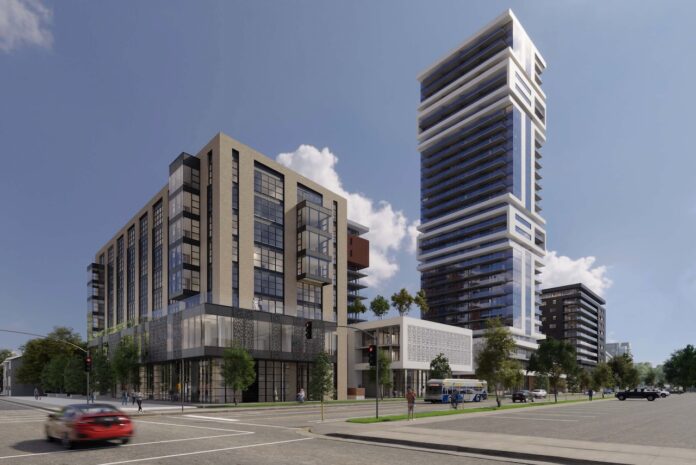
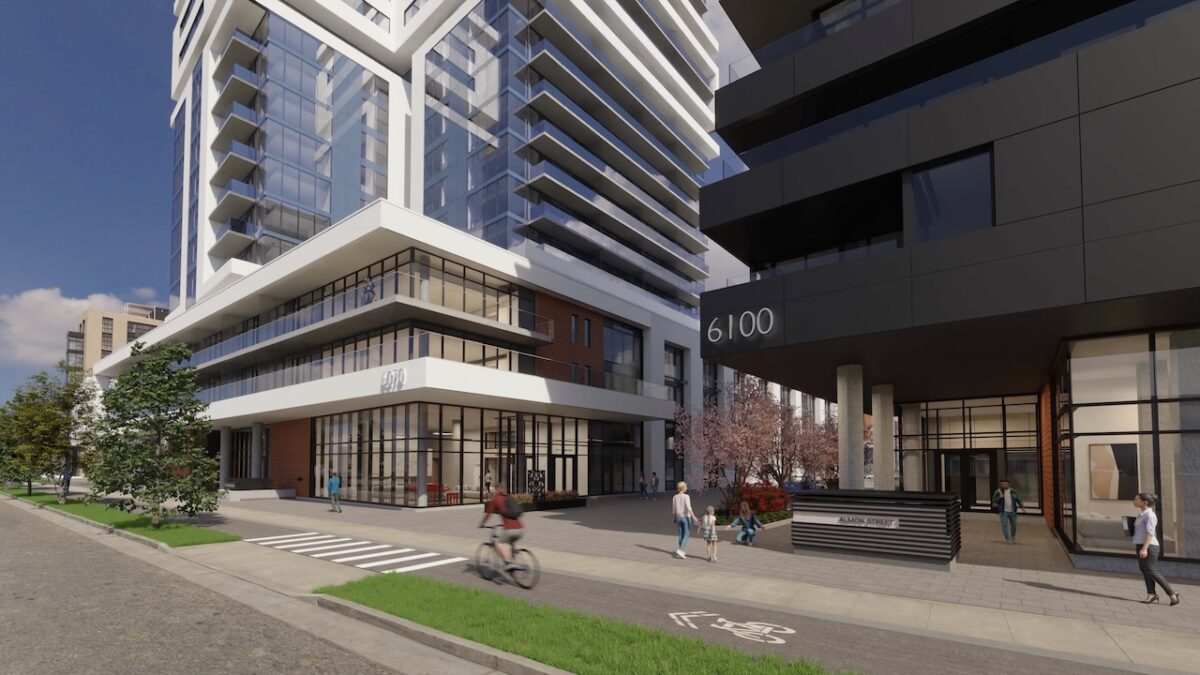
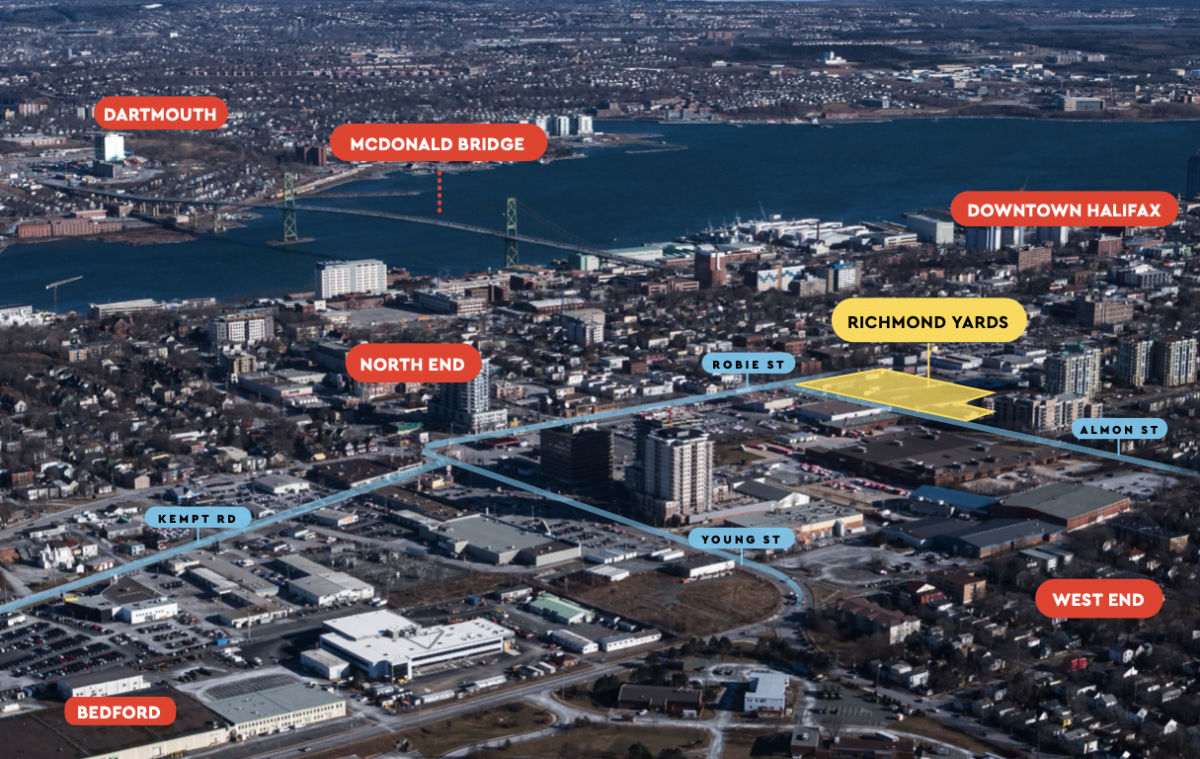
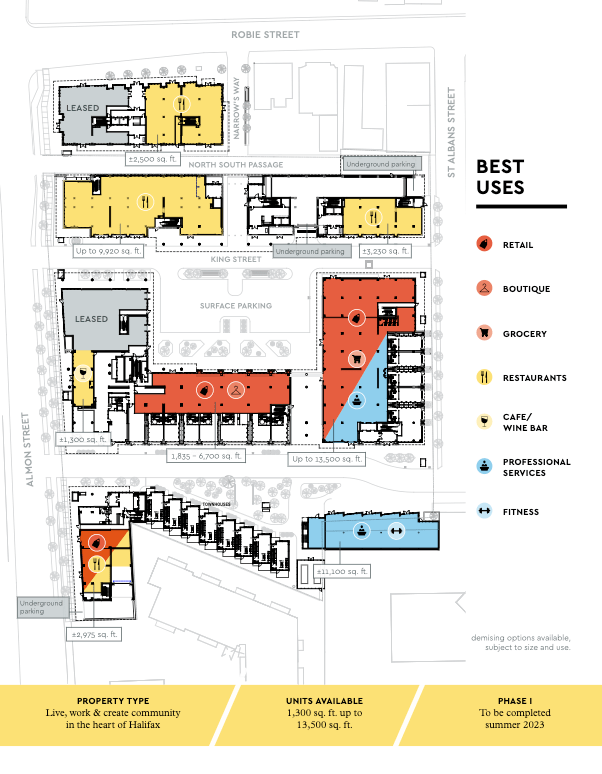
Richmond Yards is a development at the corner of Robie and Almon Street consisting of 4.5 acres of land with a mix of residential uses from townhouses to live/work spaces to 25,000 square feet of amenity space and office space. All the ground floor is retail for the development.
“The north end of Halifax has seen quite a bit of growth over the past couple of years but in most recent times with this project coming online we’re really providing a community or a district for people where they can come and shop and live all within the Richmond Yards area,” he said.
“What we’re seeing with our experience in the retail world is access is a big part of development these days. So we have three penetrations through the site . We didn’t over-densify the site to get as many units as we possibly can but we really focus on the experience and the lifestyle that individuals would have within this development.”
Richmond Yards (Image: CBRE)
The first building will have occupancy for February 2023. Retail will come on the site for August 2023. The overall project has concentrated retail at the ground level with a 6,000-square-foot spa and salon as an anchor. There’s also a restaurant district planned for the site with three to five establishments. Occupancy is slated for mid 2024.
The project will have about 750 residential rental units from studio apartments to two-bedroom plus dens – 400 square feet to 1,500 square feet. There will be six buildings eventually on the site with completion of the project.
There will be about 60,000 square feet of ground level retail with about eight to 12 businesses.
Richmond Yards Leasing Map (Image: CBRE)
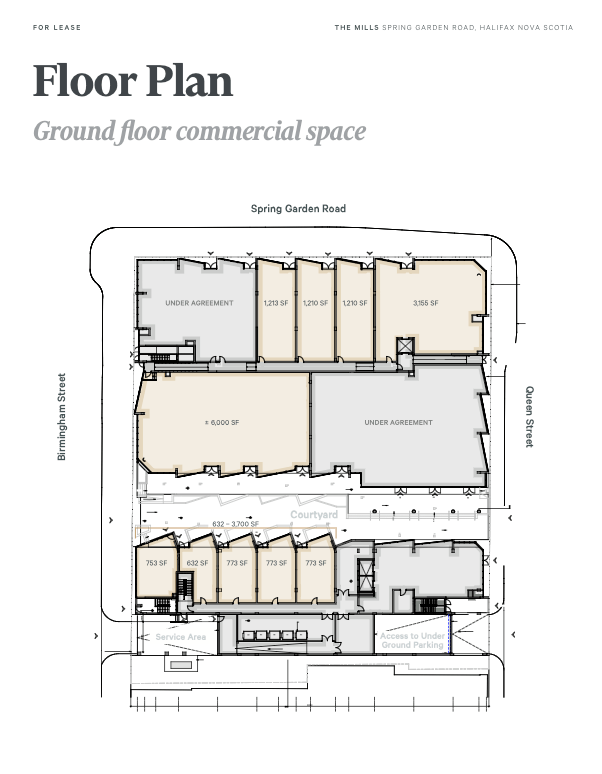
The Mills Leasing Map (Image: CBRE)
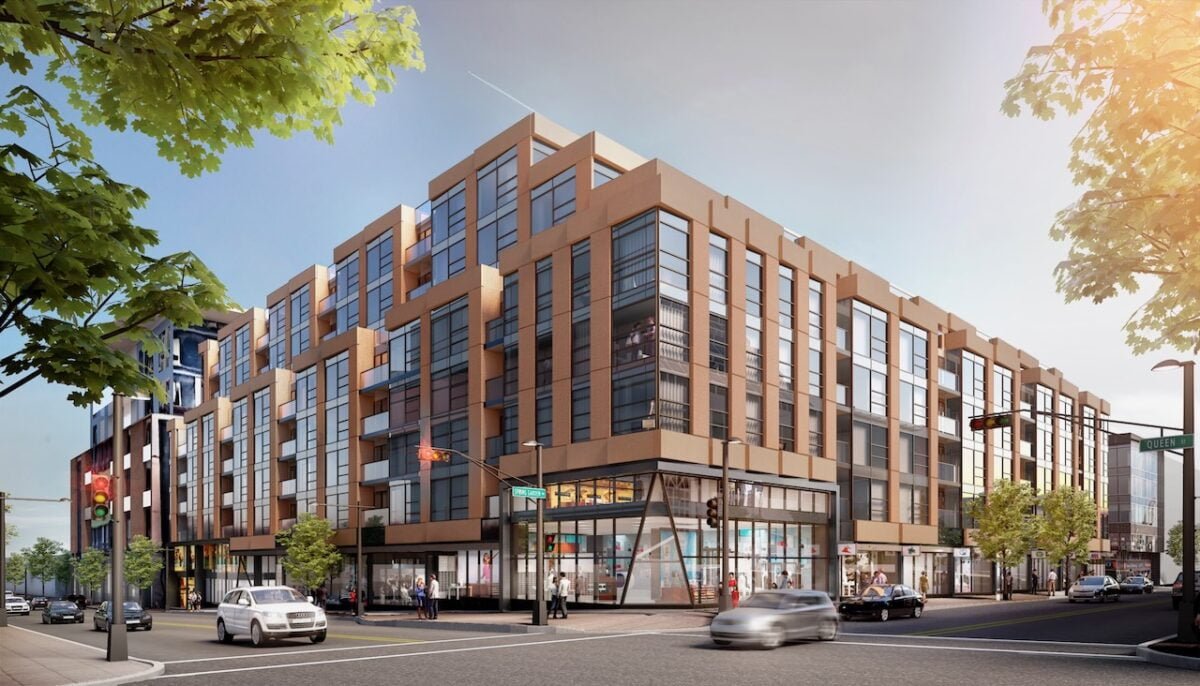
The Mills (Image: Westwood Group)
Haddad likens The Mills project on Spring Garden Road to the high fashion streets of Bloor and Queen in downtown Toronto. The project consists of about 22,000 square feet of ground floor retail.
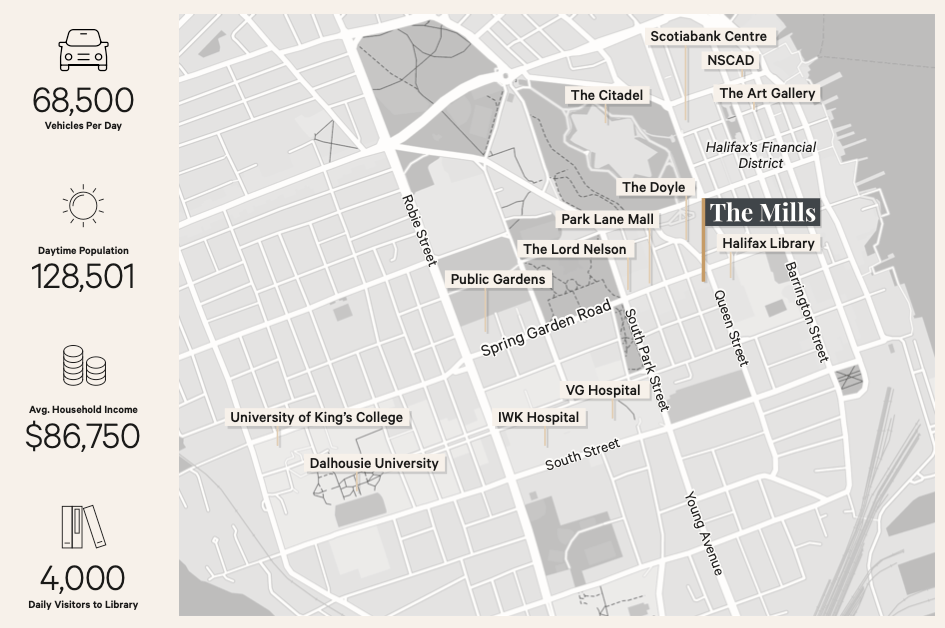
It’s located directly across the street from The Doyle, another mixed-use development the company finished about three years ago. It is also located across from the city’s Central Library.
Haddad said The Mills, encompassing eight storeys, will include 216 residential apartment rentals above the ground floor retail. The project has secured a luxury retail jeweller for the retail space. Total retail space will include eight to 12 businesses and the overall project is expected to be completed by the first quarter of 2024. Commercial occupancy is expected in the third or fourth quarter of 2023.
Image: Westwood Group
The Mills (Image: CBRE)
Mathew Houston, Associate Vice President with commercial real estate firm CBRE, is marketing and helping the Westwood Group lease retail space in both projects – Richmond Yards and The Mills.
“Spring Garden Road is the busiest pedestrian street in Atlantic Canada. It’s kind of our central hub for downtown for shopping and cafes. It’s a high foot traffic street,” said Houston.
“It’s been interesting developing on Spring Garden Road because the demand for retail on the street is quite exciting to see,” said Haddad. “We’re developing smaller size retail space to accommodate sort of what we believe the market is.”
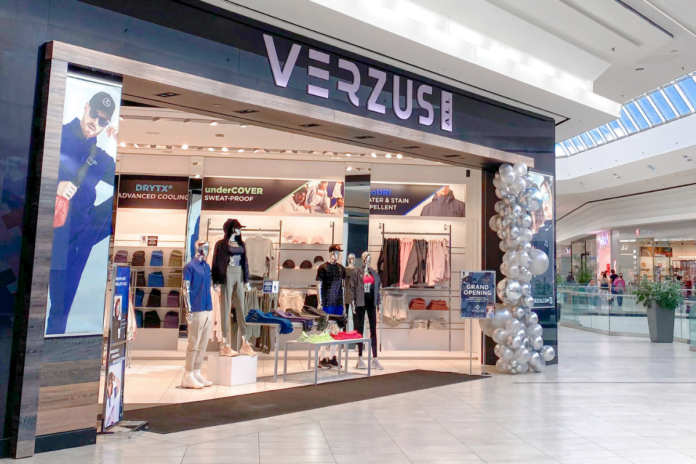
VERZUS ALL at CF Markville Mall (Image: VERZUS ALL)
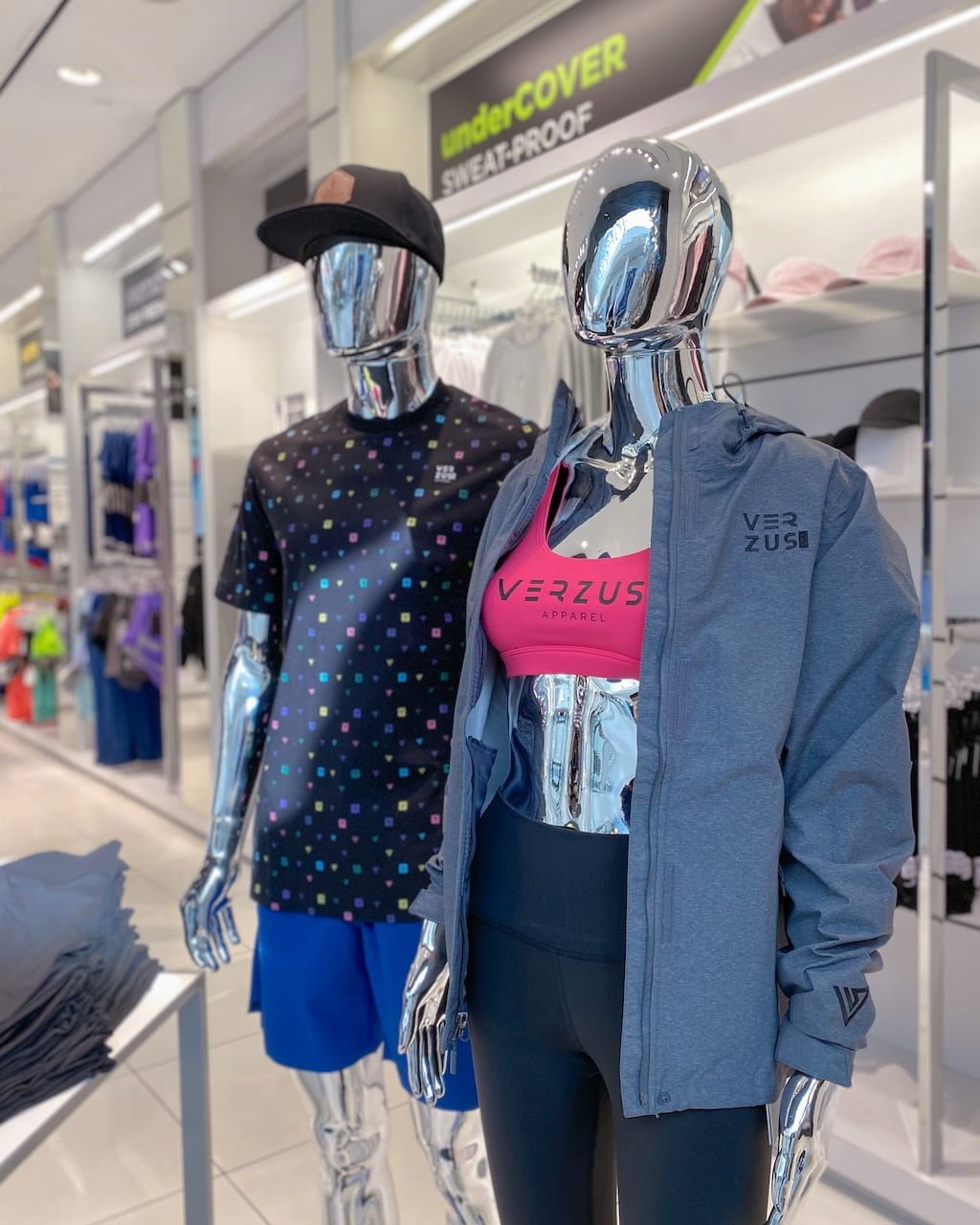
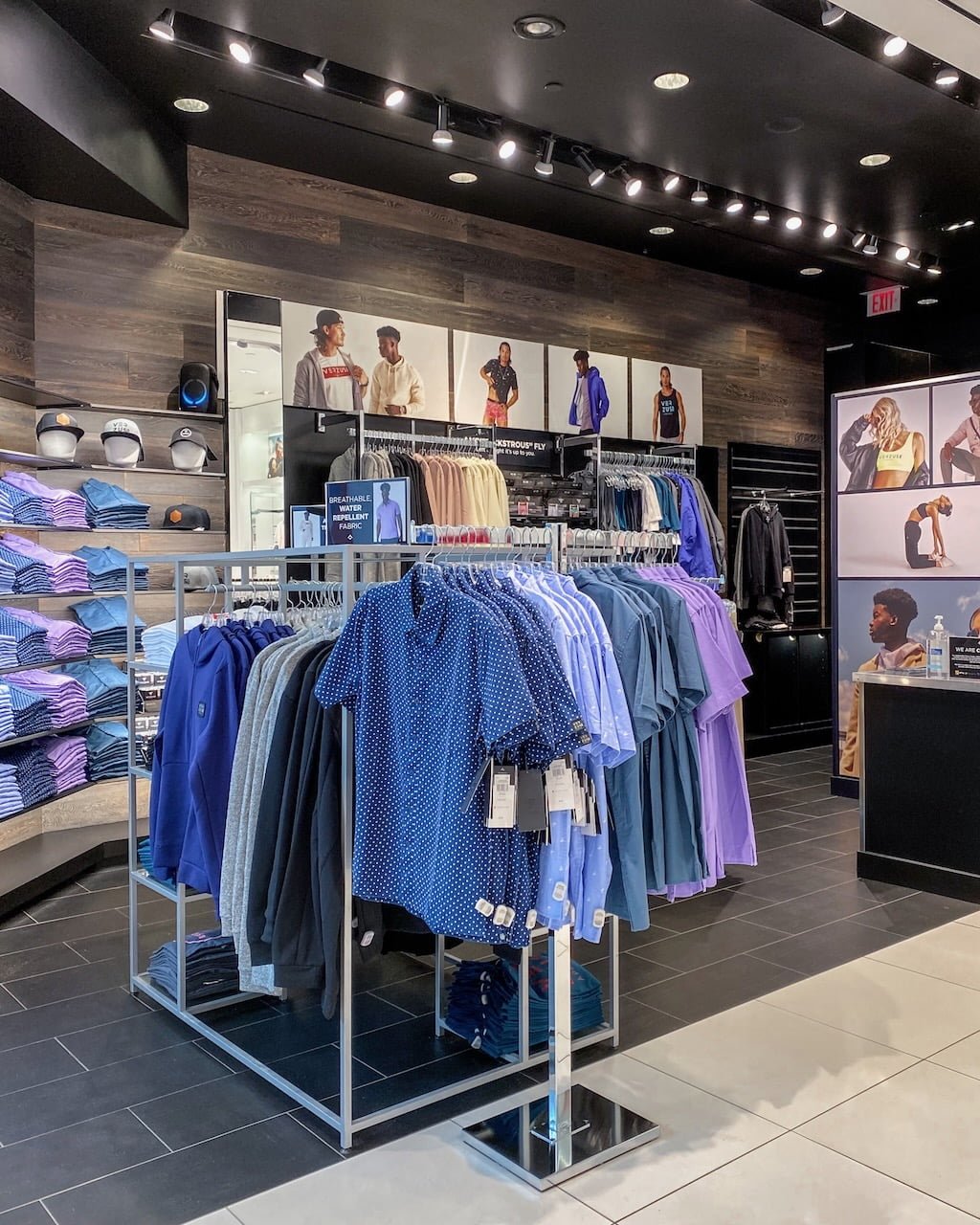
VERZUS ALL, a new athleisure line for men and women out of Toronto, has opened its first location – a pop-up at CF Markville Mall in Markham, Ontario.
“Our core collection was designed in response to an increasing demand for high performance clothing in all facets of life,” said Giancarlo Beevis, Chief Product Officer of VERZUS ALL Apparel. “And it’s no wonder. Small, everyday comforts add up to feeling good—not to mention, helping you stay on top of your game.”
Giancarlo Beevis
The retailer was planning to launch pre-COVID but the pandemic put the concept at a standstill. It focuses on creating technology-enhanced apparel to benefit and heighten the wearer’s experience.
“We really did want to launch this almost two years ago and we’re just launching it now as a sneak preview for our big collection to follow in the spring and into next year.”
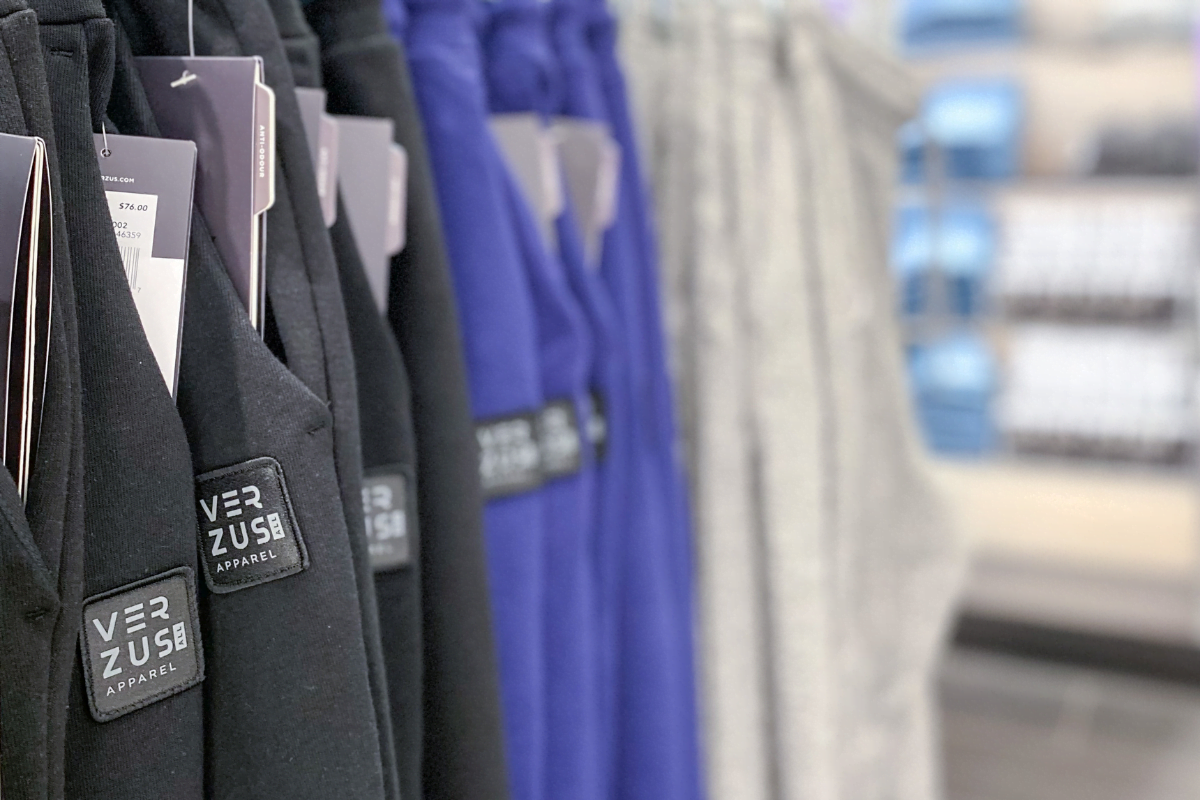
VERZUS ALL at CF Markville Mall (Image: VERZUS ALL)
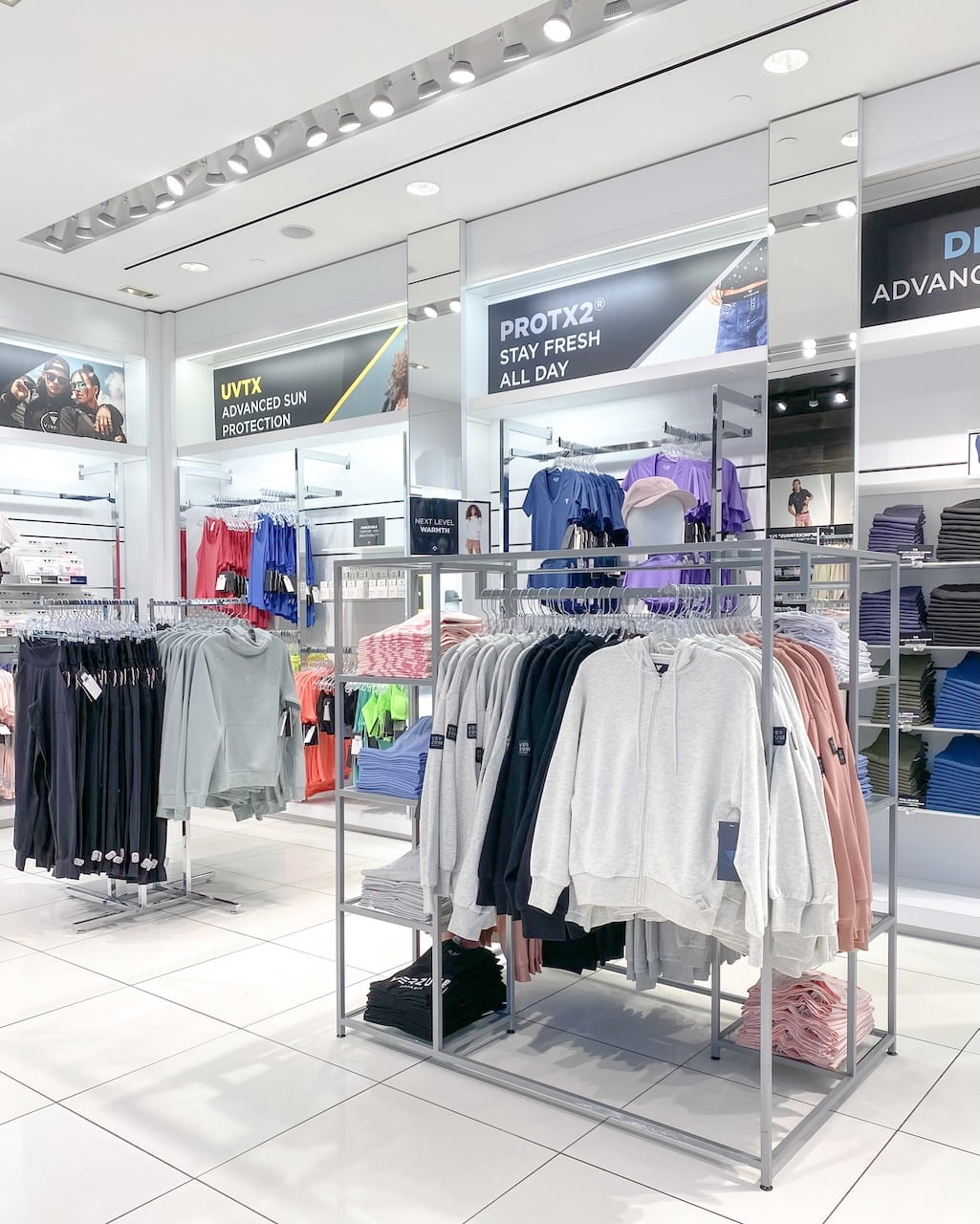
Every garment is enhanced with anti-bacterial, water-repellent, moisture-wicking, anti-wrinkle, or UV protection technologies for a more comfortable fit.
The brand’s signature fabrics include:
Elements Fleece for next-level warmth without the bulk
Wrinkle-resistant fabric
Legend breathable fabric with support
Don’t Sweat it, a premium fabric with advanced sweat-proof technology.
The parent company, iFabric Corporation, has developed a wide range of sustainable fabric technologies.
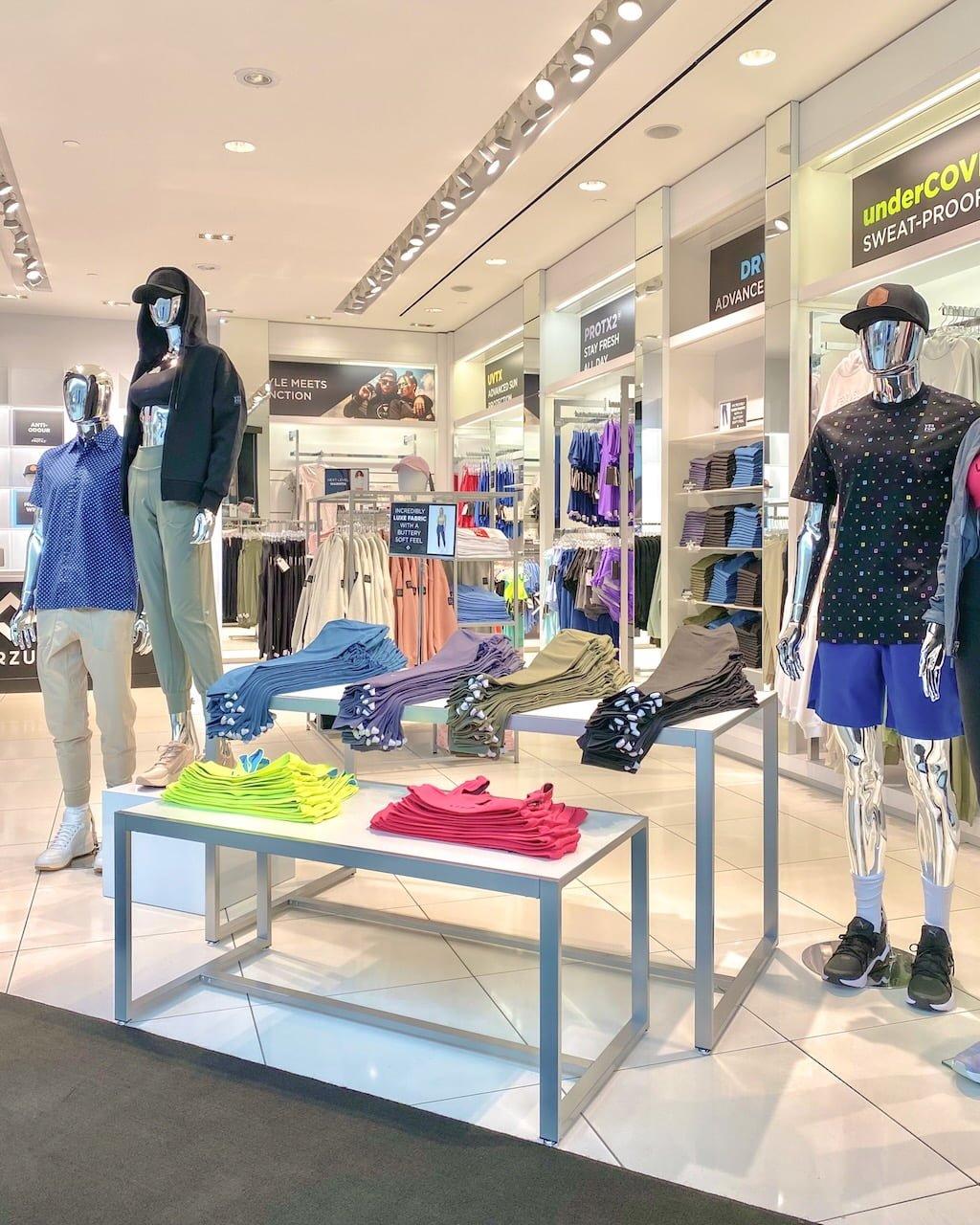
VERZUS ALL at CF Markville Mall (Image: VERZUS ALL)
VERZUS ALL at CF Markville Mall (Image: VERZUS ALL)
Beevis said VERZUS ALL is an online-based, direct-to-consumer brand with the one brick and mortar pop-up shop in the CF Markville Mall.
“We’ll be there through the end of February 2023 and then if everything goes according to plan we will keep a permanent location there as a flagship for the brand as we move forward,” he said.
“Obviously, we’re moving right now to get a bigger presence, social media and online, to drive to our website but there are plans down the road. We would like to expand and move into some other locations across the country and then eventually I would say probably year two or three into the United States, selectively.”
The company said cornerstones of the inaugural collection include the men’s and women’s ELEMENTS Fleece line. As its name suggests, the luxe cotton-blend fleece not only keeps you warm, but the water repellent finish protects you from whatever the day’s weather might throw at you, it said.
VERZUS ALL at CF Markville Mall (Image: VERZUS ALL)
VERZUS ALL at CF Markville Mall (Image: VERZUS ALL)
The men’s Profile Polo features the brand’s patented anti-odour PROTX2® technology that lets the wearer move from the blistering green to the clubhouse with their dignity intact. The Commute Jogger is made from the line’s wrinkle-resistant fabric of the same name, to keep you looking presentable. For women, a clear standout is the too-cool Cadence Short, featuring a breezy mesh layer over high-waisted performance shorts in a contrasting colour, that boast the brand’s DRYTX® rapid vaporization technology to keep the wearer feeling fresh, added the retailer.
“Pair them with the Reversible Icon Bra, cut from their buttery-soft Epic fabric, which comfortably smooths and sculpts, for a trendy workout look. Finally, Don’t Sweat IT t-shirts for both men and women will revolutionize sticky situations with their underCOVER technology that takes moisture-wicking to the next level by trapping excessive moisture in “maze-like” channels on the inside of the garment so it’s more evenly distributed and doesn’t show up as a wet patch on the outside of the shirt.”
“We’re super excited about it. The quality is there. We have a very sustainable product. Everything we do is with ethically sourced and sustainable fabrics and chemistries and that’s a big focus for us because obviously we want to be part of the future of the world and not contribute to the fast fashion issues with sustainability and environmental impact,” added Beevis.
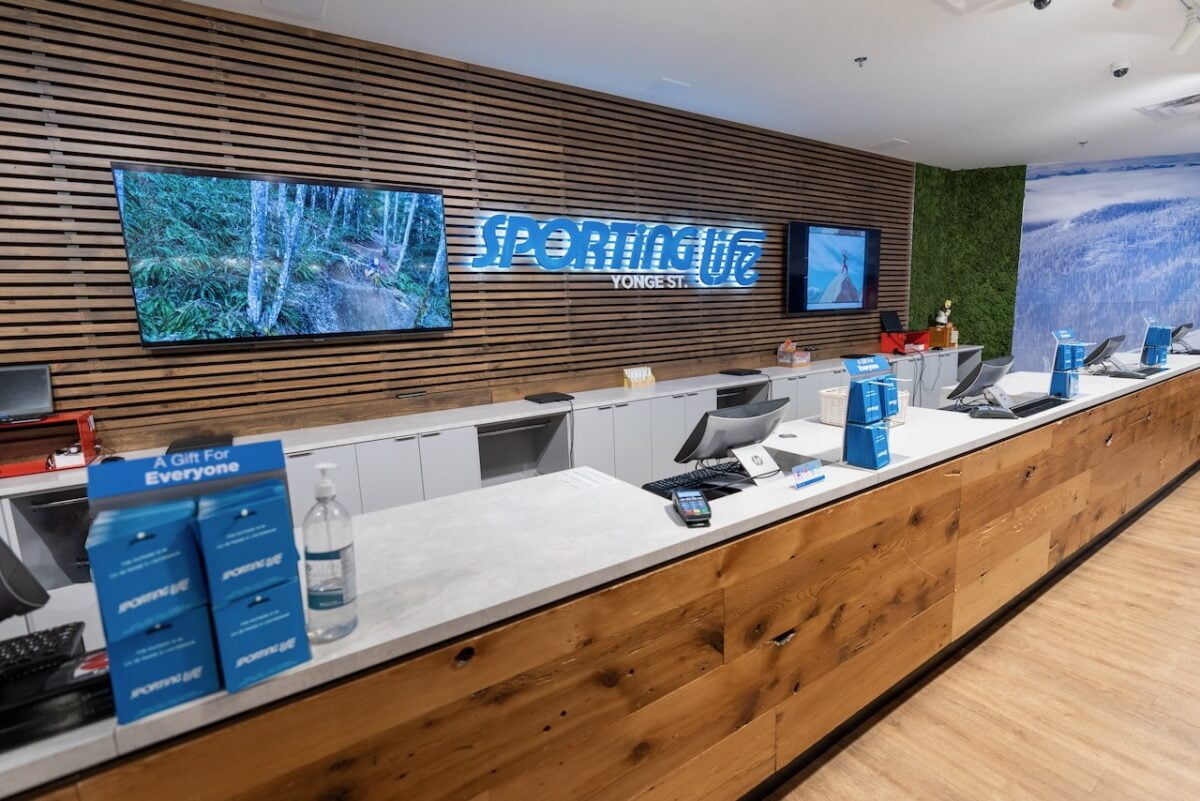
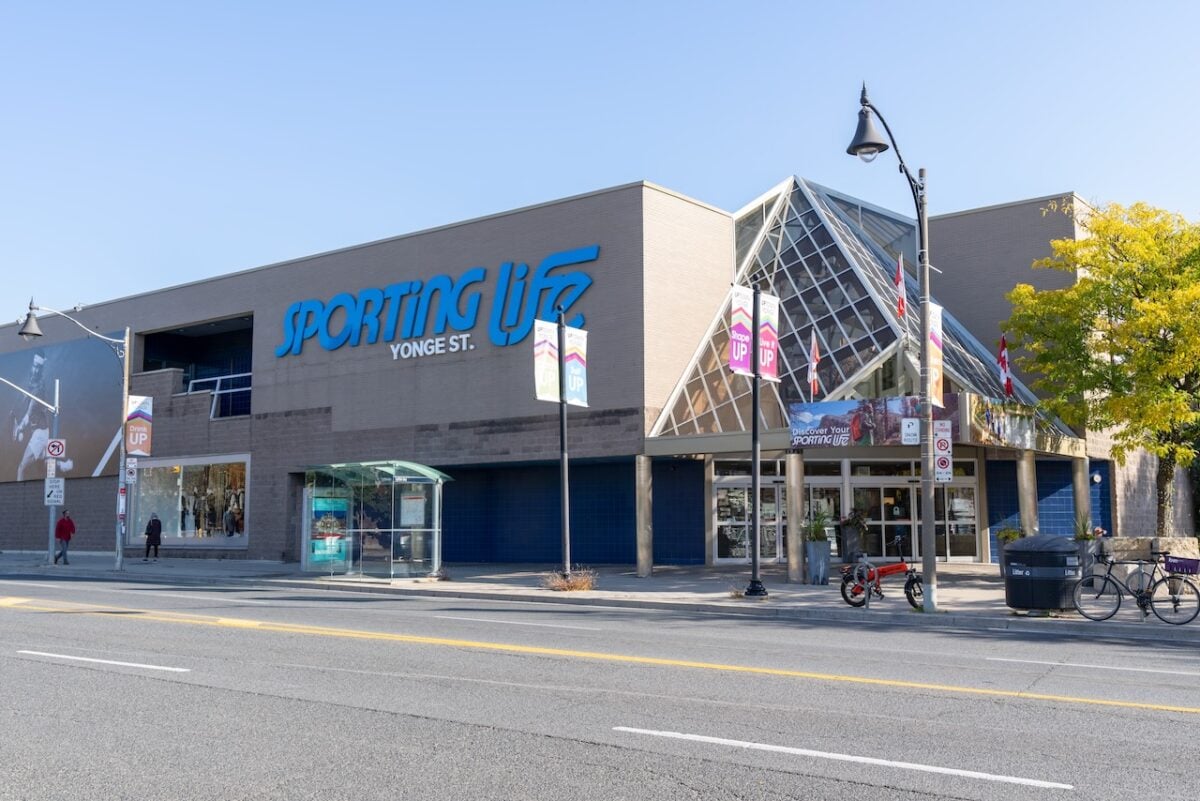
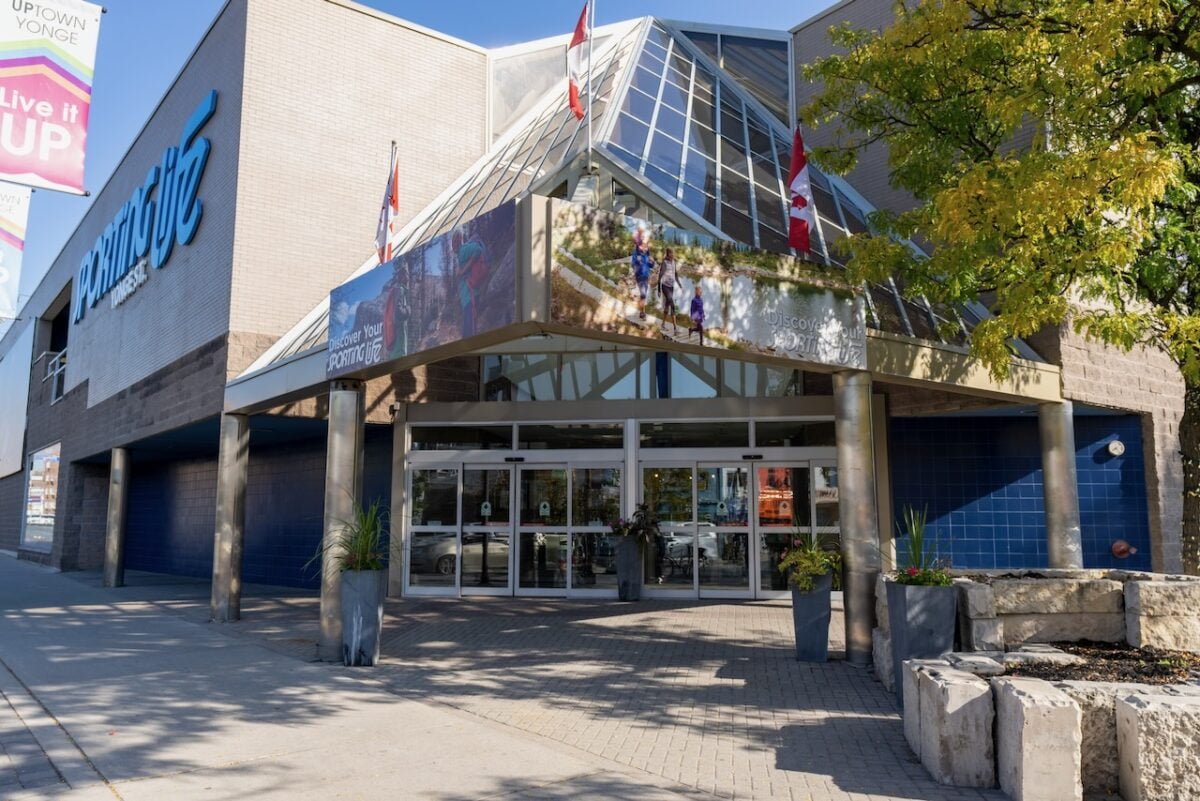
Sporting Life at 2665 Yonge Street in Toronto (Image: Sporting Life)
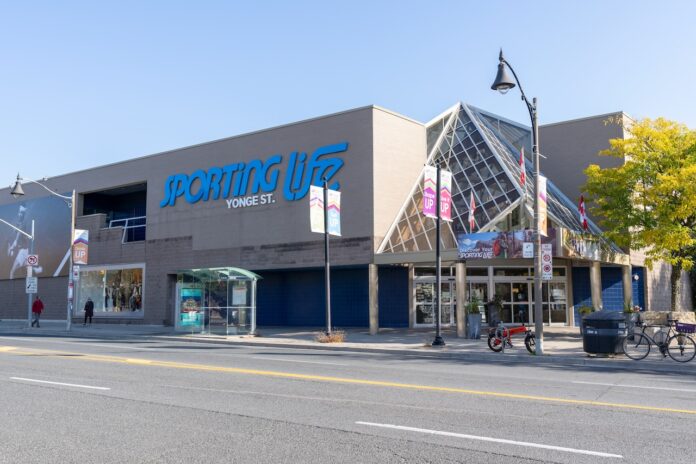
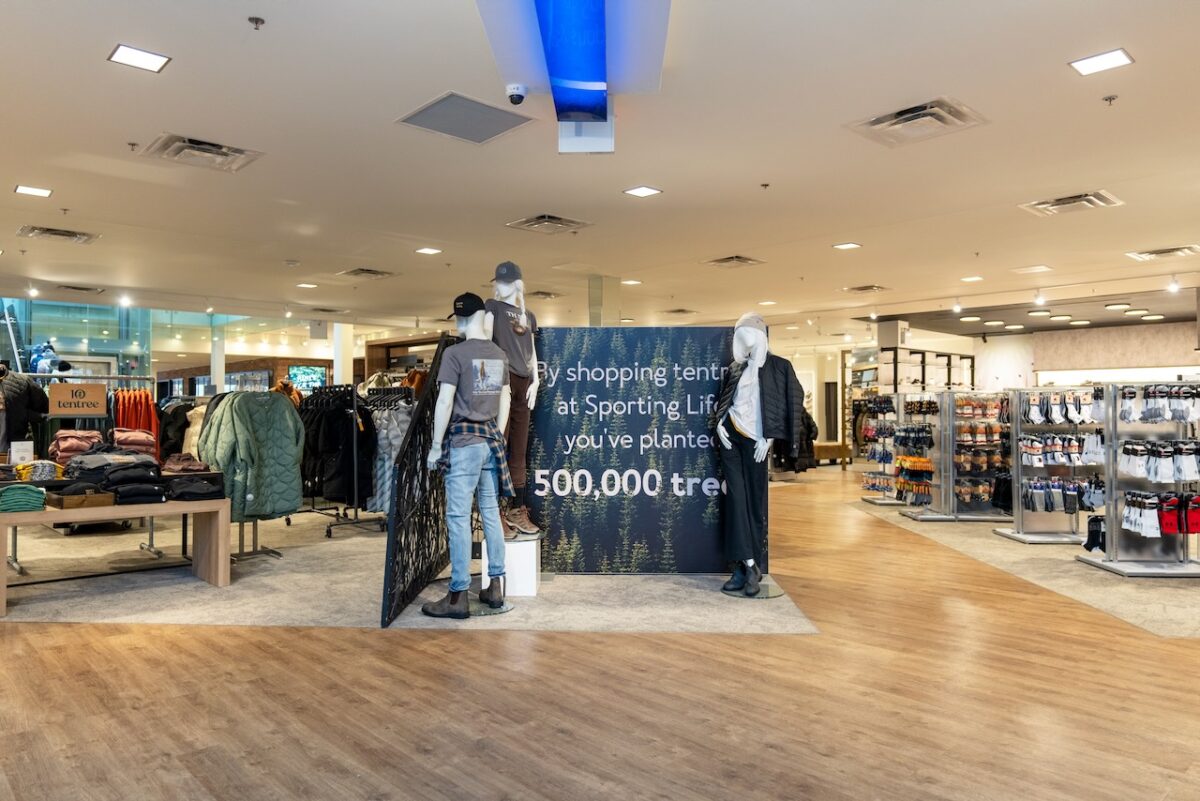
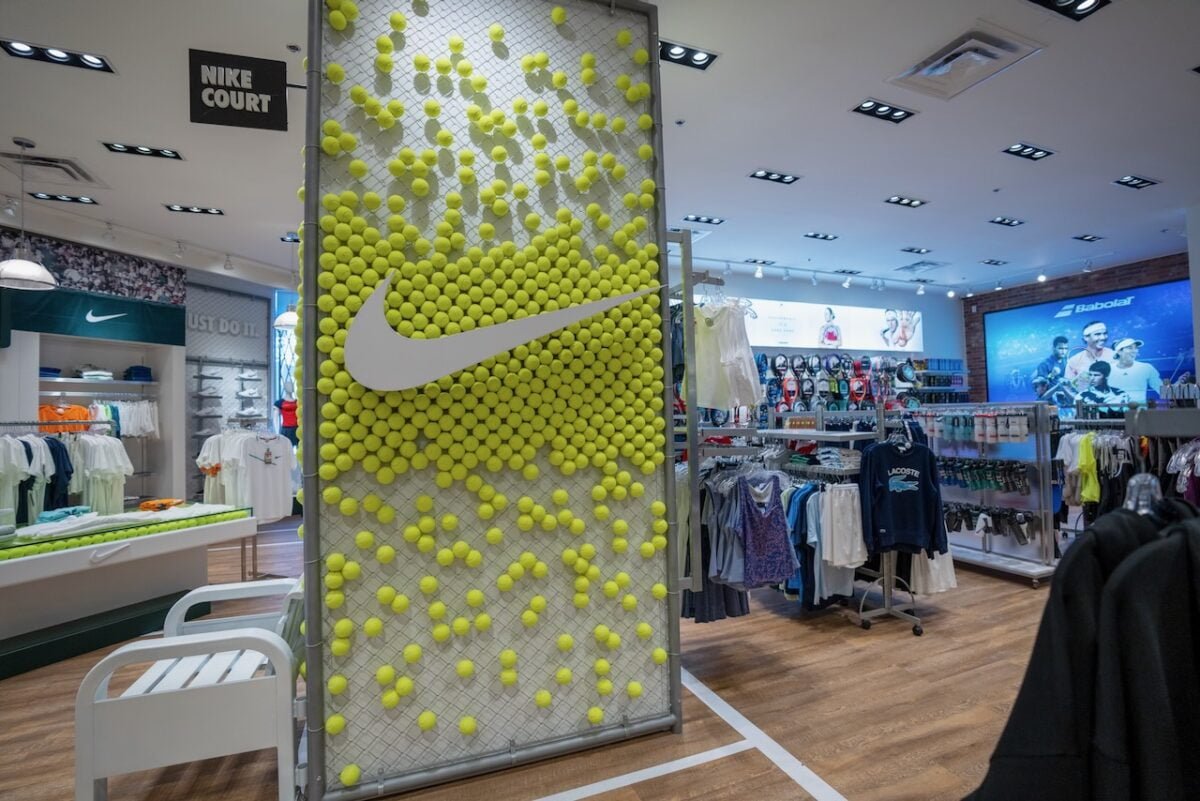
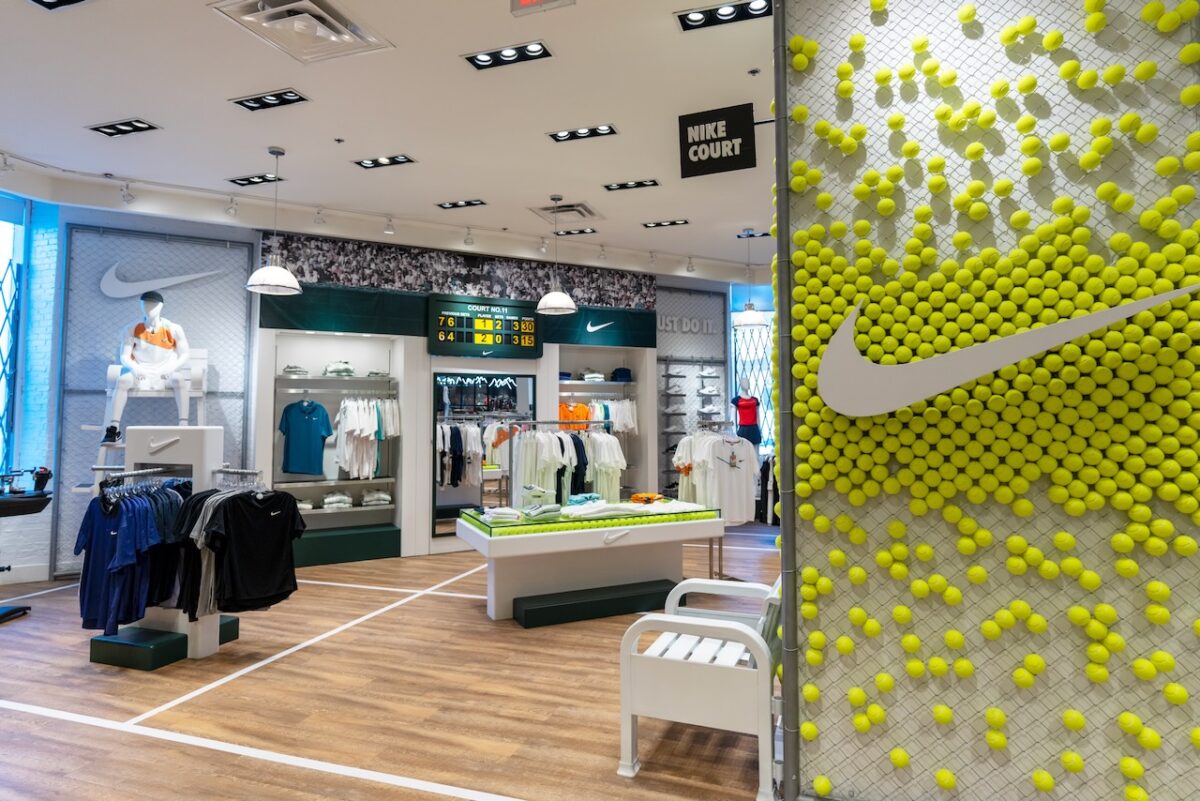
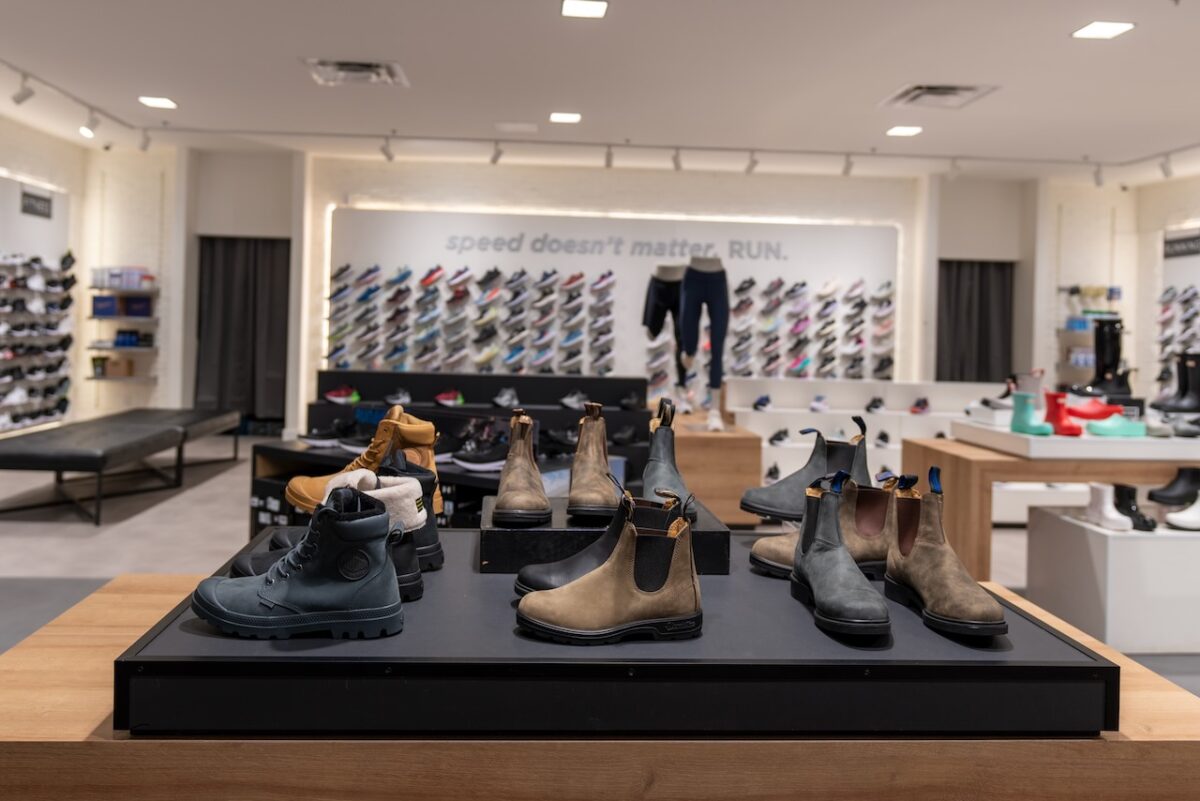
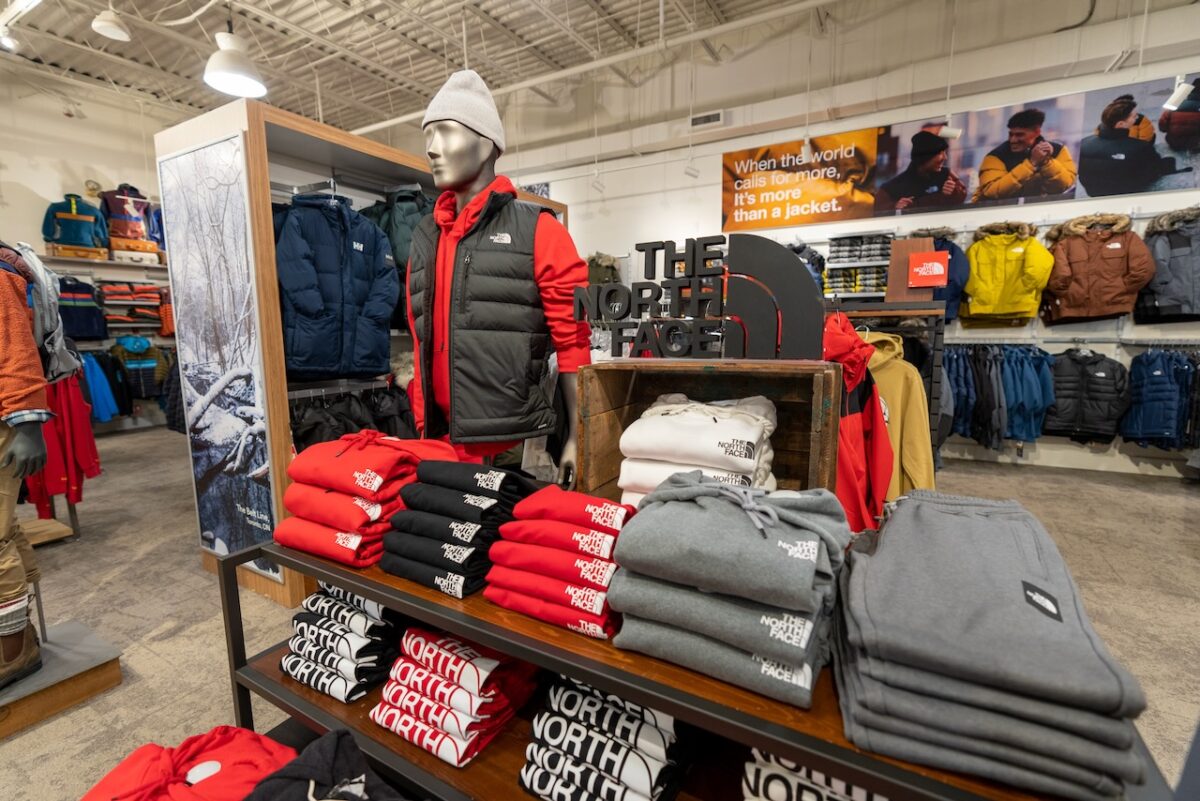
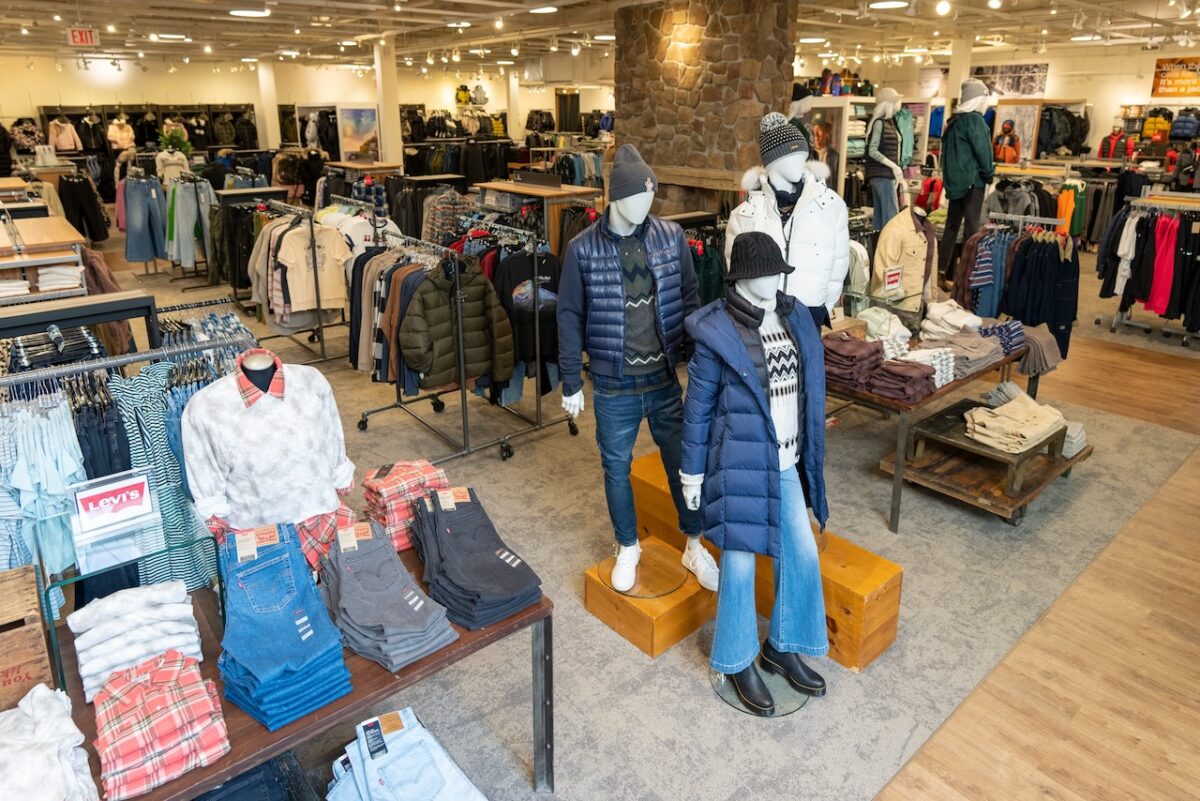
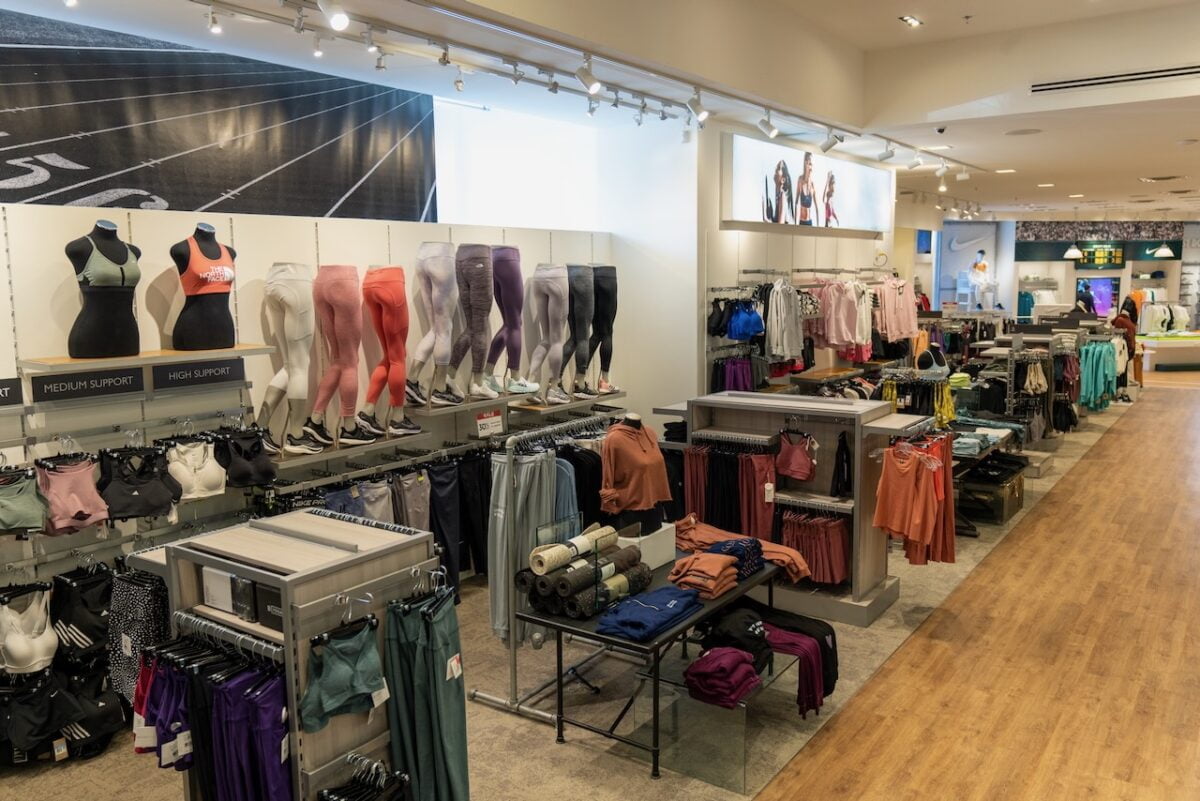
Sporting Life has reopened its flagship store and along with additional space, the store includes a new bike and tennis shop.
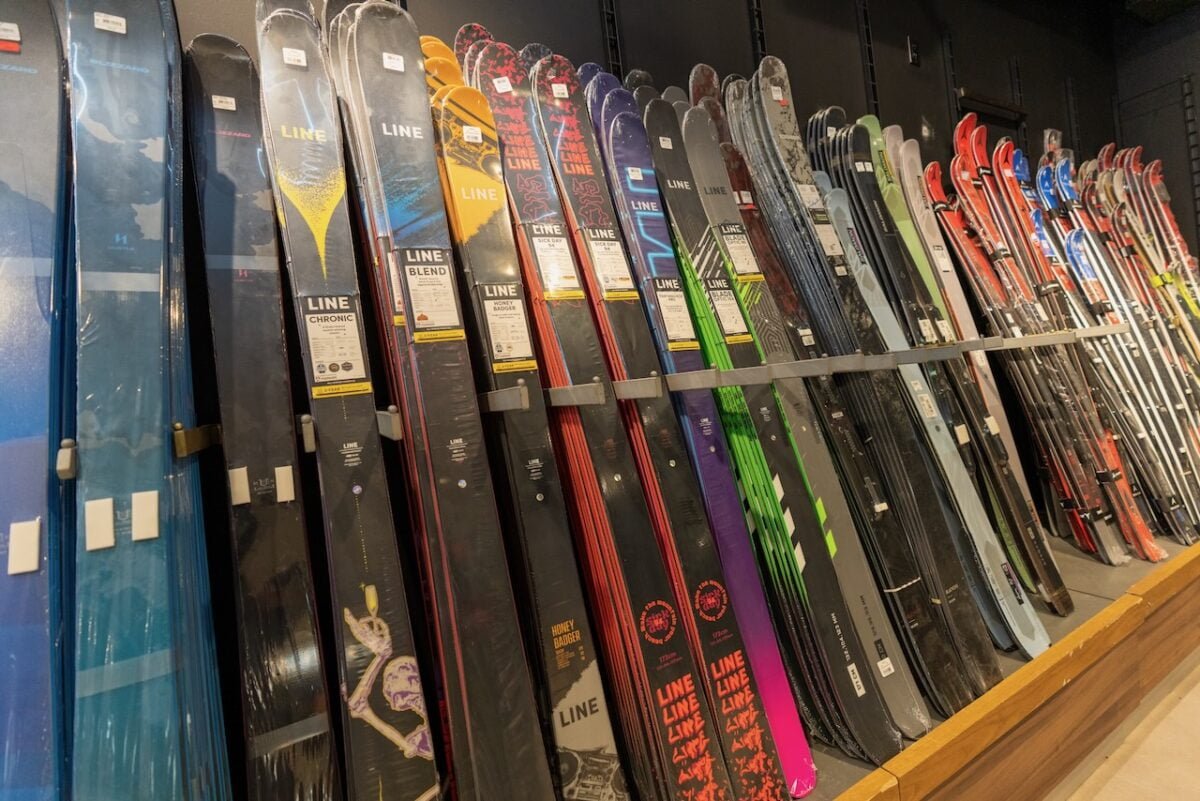
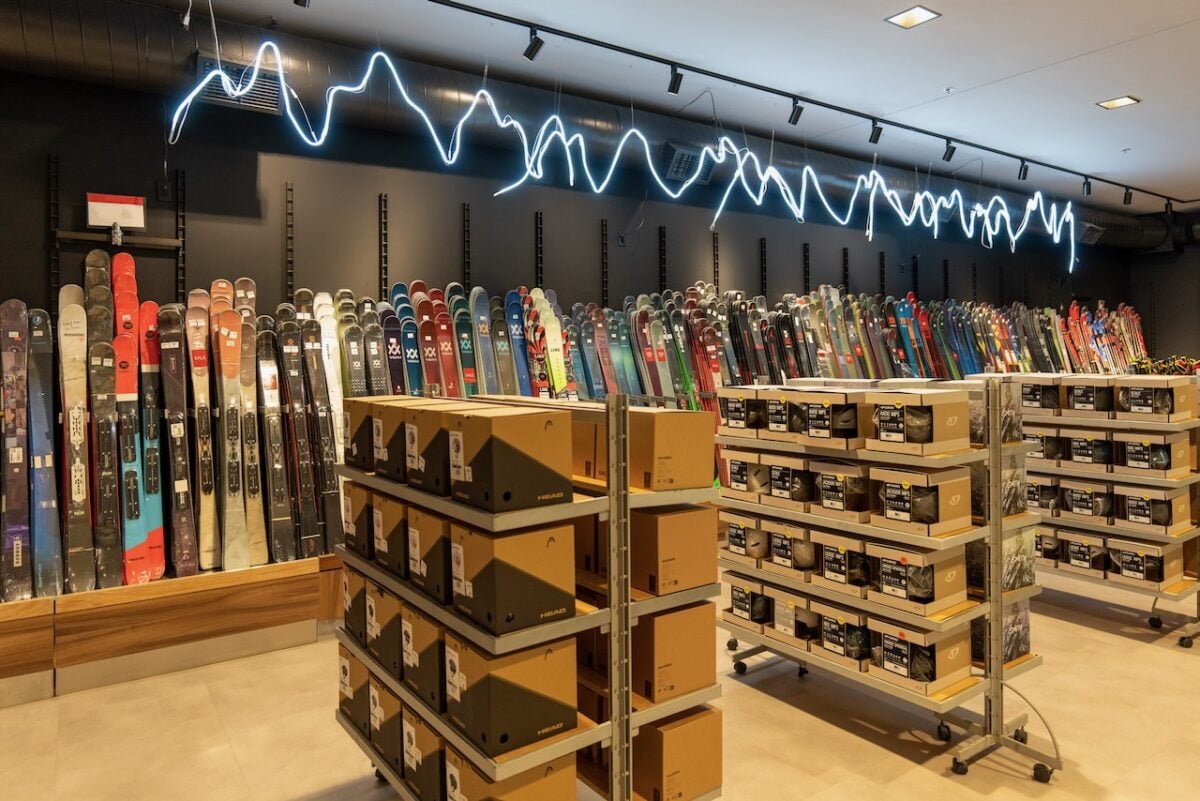
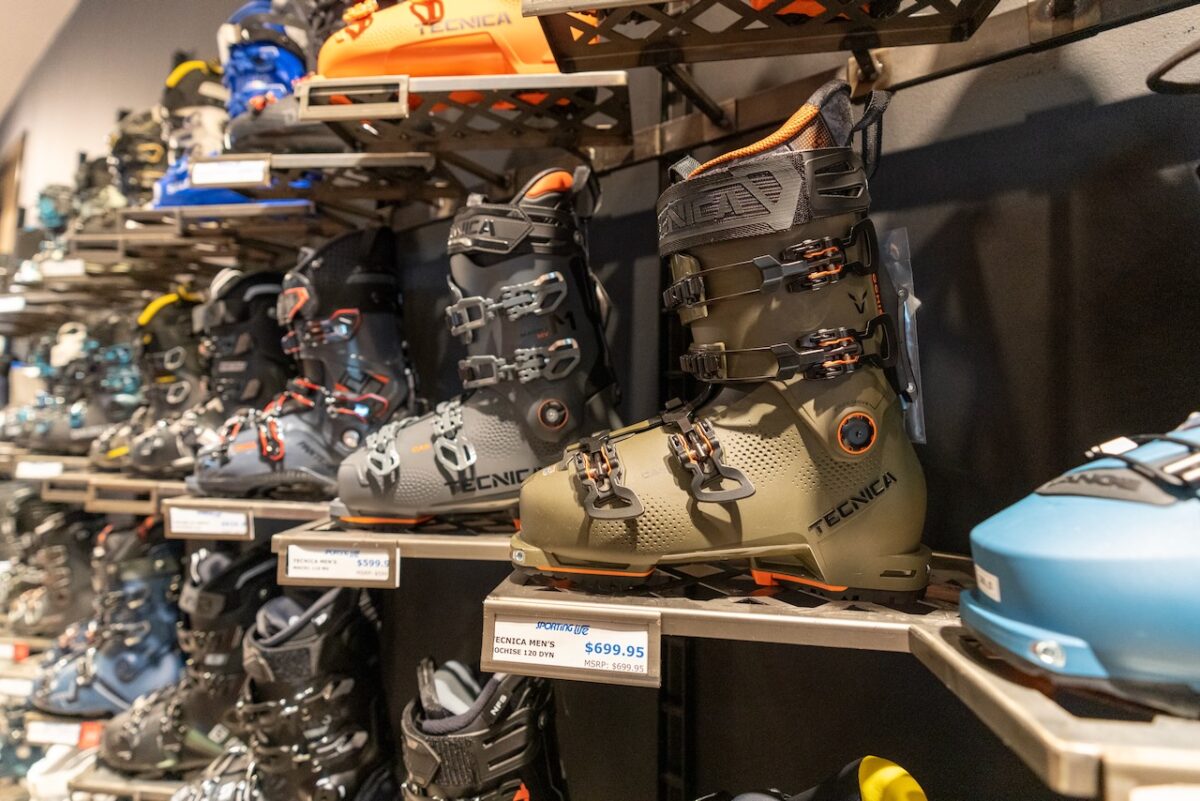
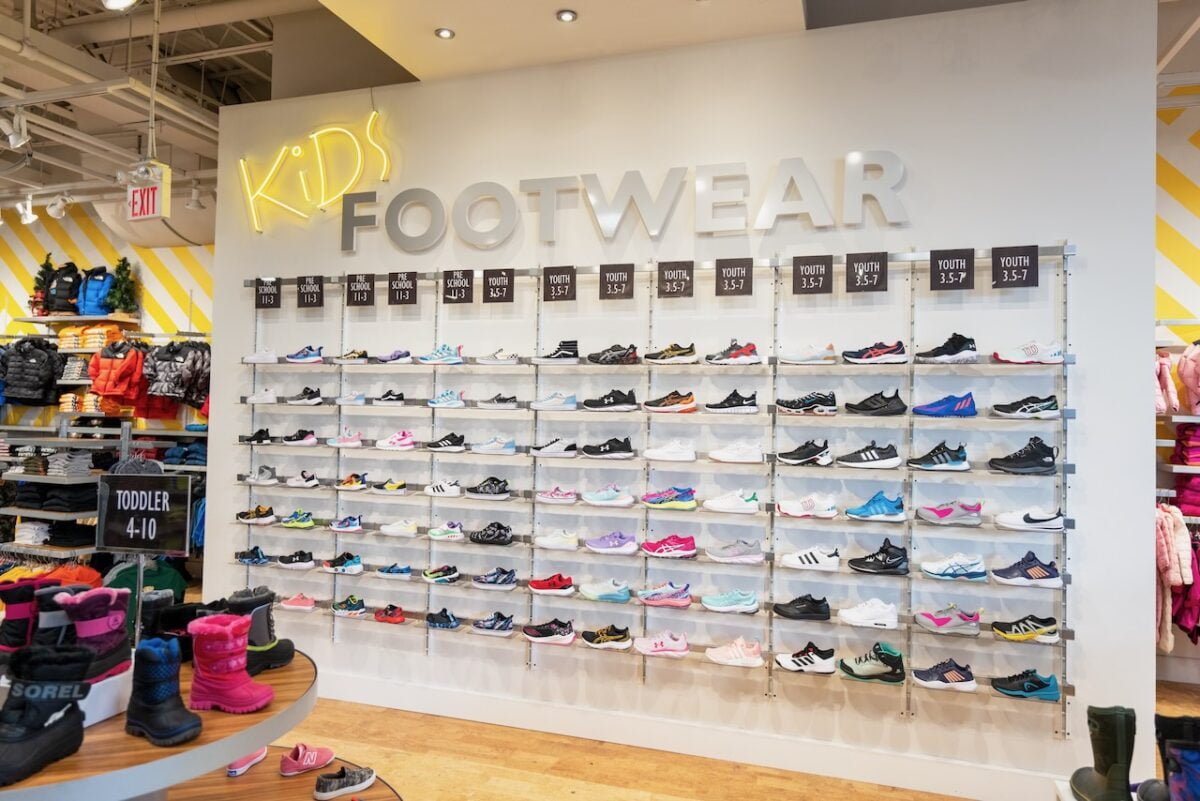
The retailer is known for its ski and snowboard products as well as apparel for women, men, and children.
“It is a store that has a new look, newly renovated – it is bigger and better, and we continue to be a proud part of the community. You can expect to experience the same great service you have had throughout the years, but just a new look and feel, a great sense of energy and a great centre for our great community hub for the neighbourhood as well,” says Ian Jacobson, the Store Manager of the Sporting Life Flagship location.
“Day and Night from What it Used to Be”
Sporting Life at 2665 Yonge Street in Toronto (Image: Sporting Life)
Located at 2665 Yonge Street, Sporting Life has added just over 5,000 square feet of retail space. The additional space includes a brand new 3,200 square feet bike shop, a premium sneaker shop, and an expanded tennis shop.
“We want to be a true sports and lifestyle destination, we are very proud of the store and what it represents to the brand and to the community and we are that hub, we are a part of the community that people associate with outside of just a retail store. We wanted to welcome the community into our store in a special way, I think it is what separates sporting life from a lot of other retailers is the community connection.”
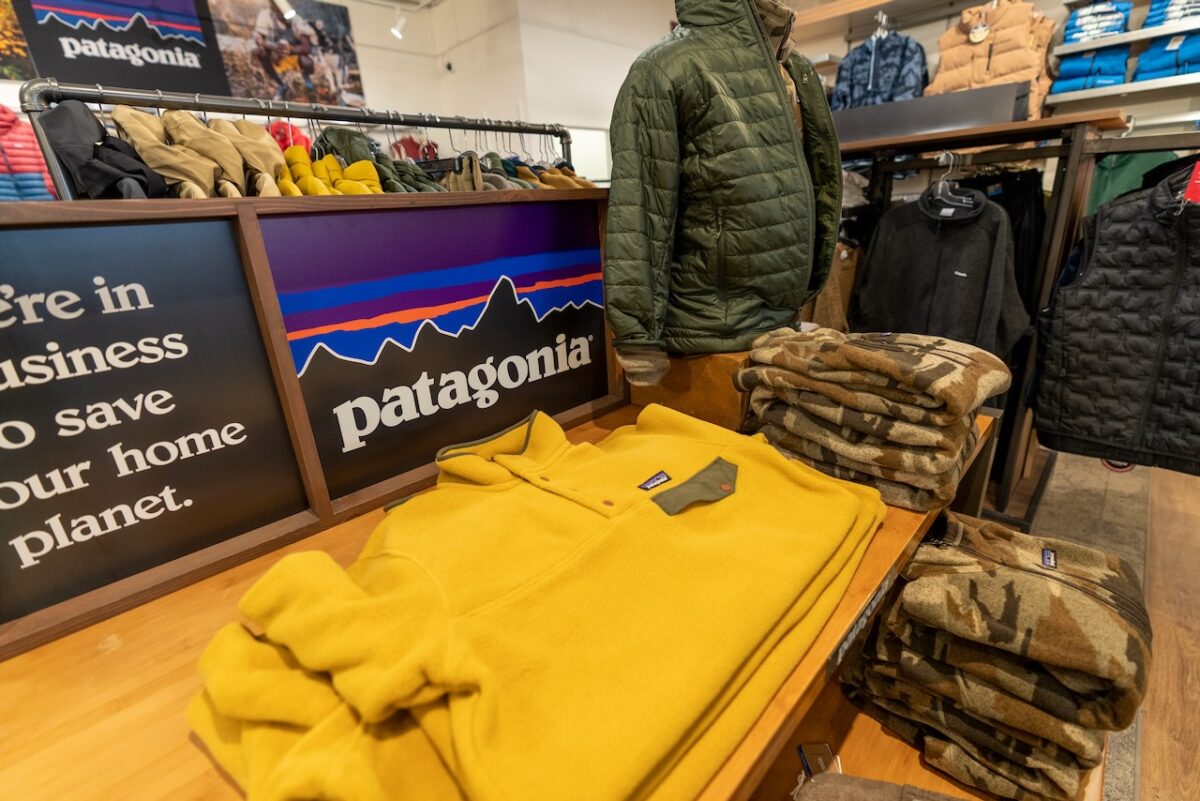
The location, along with its other locations, has premium brands including North Face, Patagonia, Nike, Arc’teryx, and more. Jacobson said as the company is continuing to expand to meet consumer needs, customers can expect more brands at Sporting Life this year that they have never seen before.
“Right now, we have state of the art ski and snowboard machines, we have world class technicians, and tennis stringers. If you want to come and experience the best of the best, then come to Sporting Life because that is the reason why a lot of people come and visit.”
“Not Just Another Retailer”
Sporting Life at 2665 Yonge Street in Toronto (Image: Sporting Life)
Sporting Life also serves as a community hub as it is “the go to ski and snowboard destination and we are Toronto’s most iconic sports store.”
“We are not just another retailer, we like to look at ourselves as another member of the community, a neighbour, and a friend. We have a lot of customers that just come in just to say hi and I think it speaks to the connection we have with the customers that we are the sports community, we are sporting life, we are a national level partner with Alpine Canada, and I think people really gravitate because it creates a great destination where you can get amazing service and see a lot of amazing premium brand products.
In addition to the reopening of the Yonge Street location, Sporting Life will also be opening three new stores this year which will be in Burlington, Laval (Quebec), and in Edmonton. “Right now, we are focused on welcoming our customers to connect with our amazing staff in store now, who knows what tomorrow will bring.“
Sporting Life at 2665 Yonge Street in Toronto (Image: Sporting Life)Sporting Life at 2665 Yonge Street in Toronto (Image: Sporting Life)Sporting Life at 2665 Yonge Street in Toronto (Image: Sporting Life)Sporting Life at 2665 Yonge Street in Toronto (Image: Sporting Life)Sporting Life at 2665 Yonge Street in Toronto (Image: Sporting Life)Sporting Life at 2665 Yonge Street in Toronto (Image: Sporting Life)Sporting Life at 2665 Yonge Street in Toronto (Image: Sporting Life)Sporting Life at 2665 Yonge Street in Toronto (Image: Sporting Life)Sporting Life at 2665 Yonge Street in Toronto (Image: Sporting Life)Sporting Life at 2665 Yonge Street in Toronto (Image: Sporting Life)Sporting Life at 2665 Yonge Street in Toronto (Image: Sporting Life)Sporting Life at 2665 Yonge Street in Toronto (Image: Sporting Life)Sporting Life at 2665 Yonge Street in Toronto (Image: Sporting Life)Sporting Life at 2665 Yonge Street in Toronto (Image: Sporting Life)Sporting Life at 2665 Yonge Street in Toronto (Image: Sporting Life)Sporting Life at 2665 Yonge Street in Toronto (Image: Sporting Life)Sporting Life at 2665 Yonge Street in Toronto (Image: Sporting Life)Sporting Life at 2665 Yonge Street in Toronto (Image: Sporting Life)Sporting Life at 2665 Yonge Street in Toronto (Image: Sporting Life)Sporting Life at 2665 Yonge Street in Toronto (Image: Sporting Life)Sporting Life at 2665 Yonge Street in Toronto (Image: Sporting Life)Sporting Life at 2665 Yonge Street in Toronto (Image: Sporting Life)Sporting Life at 2665 Yonge Street in Toronto (Image: Sporting Life)Sporting Life at 2665 Yonge Street in Toronto (Image: Sporting Life)Sporting Life at 2665 Yonge Street in Toronto (Image: Sporting Life)
Retail Insider is streamlining its Canadian retail news from around the web to include a handful of top news stories that can be viewed quickly during the day. Here are the top stories from the past 24 hours.
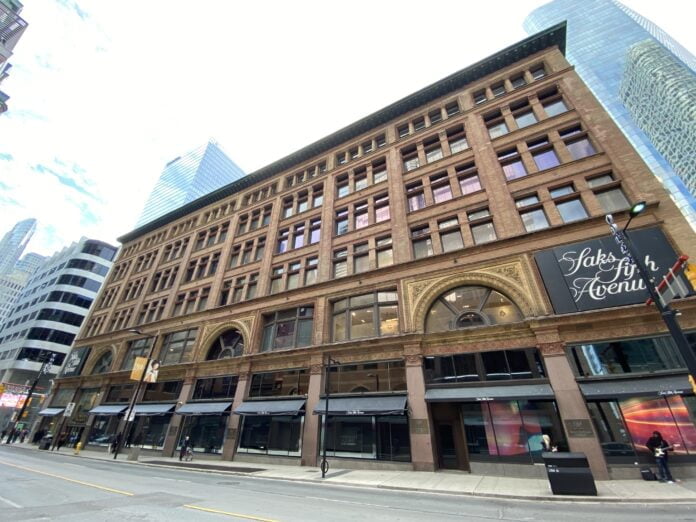
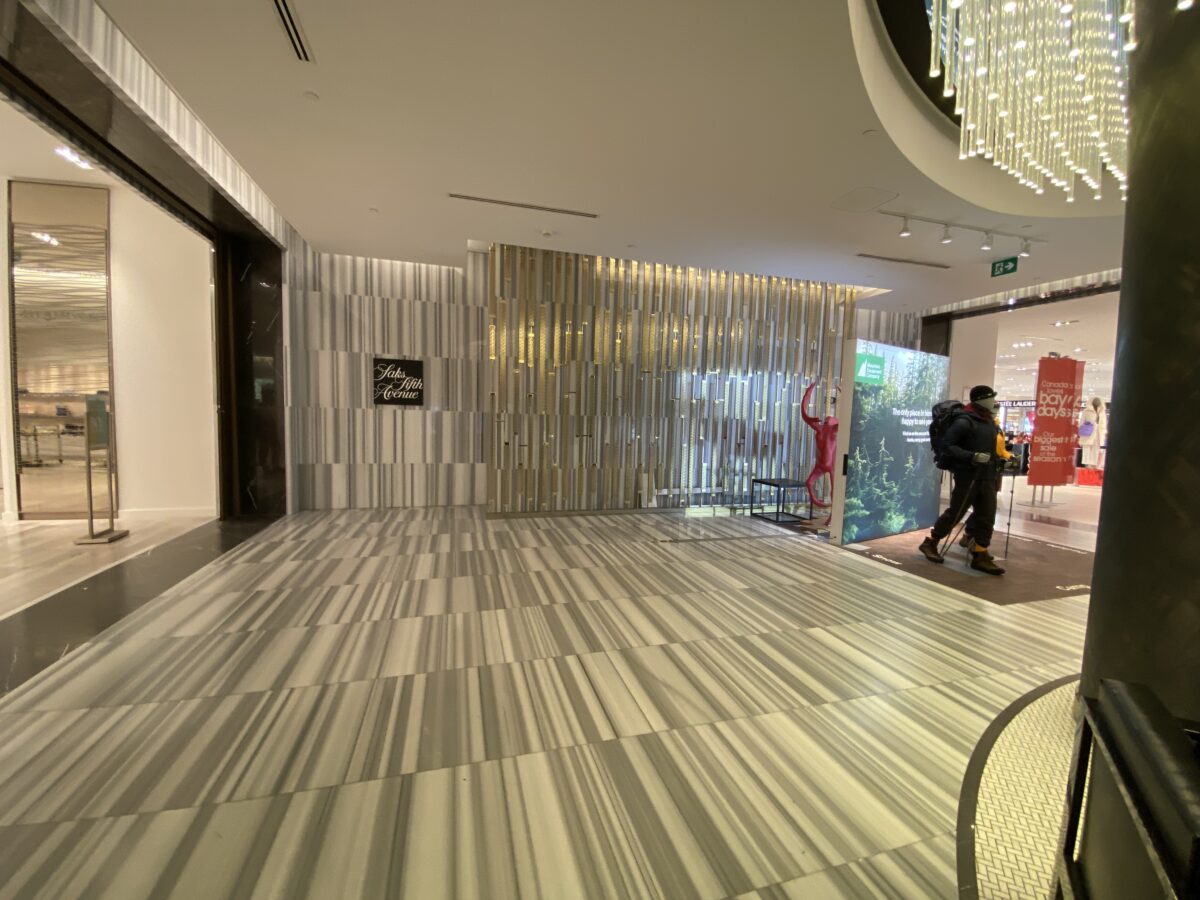
Saks Fifth Avenue at 176 Yonge St. in Toronto. Photo: Dustin Fuhs
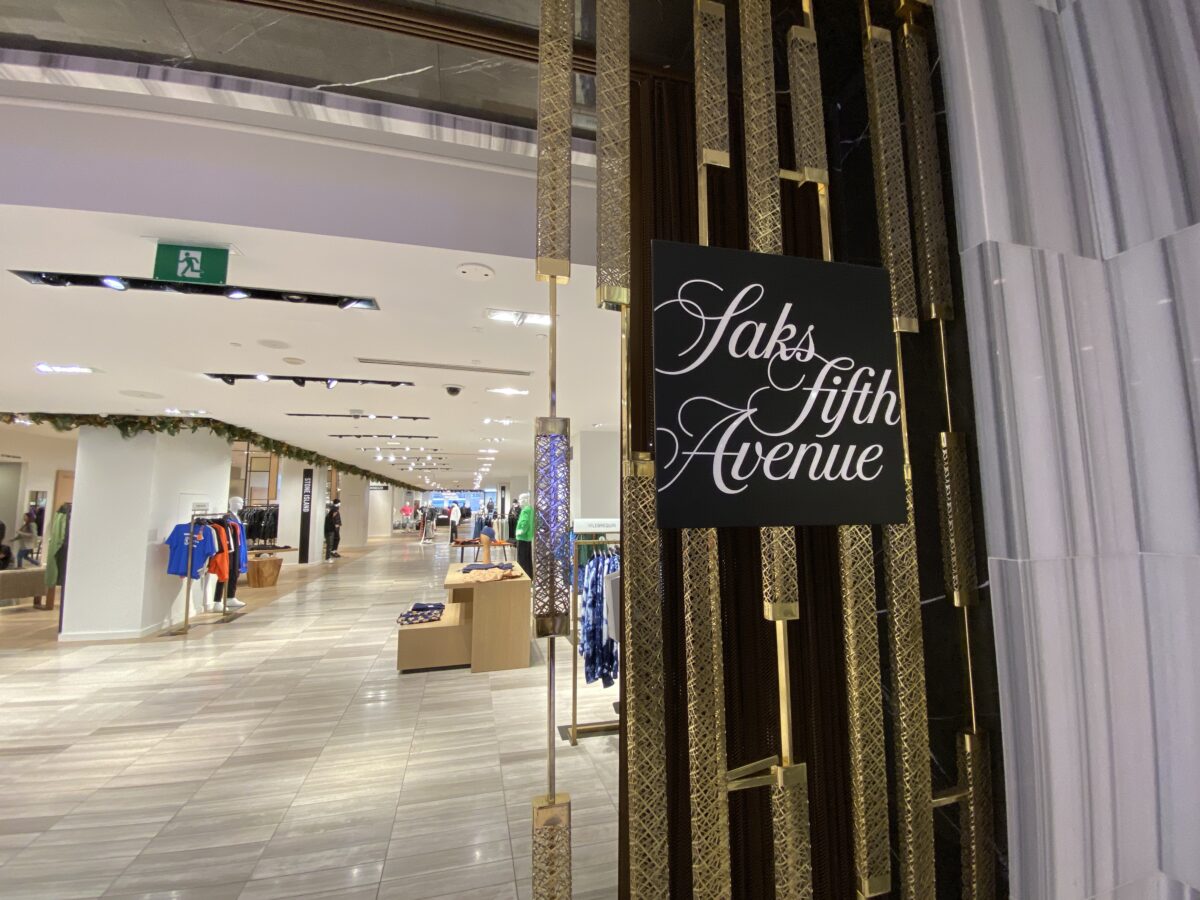
Saks Fifth Avenue has partially renovated its Canadian flagship store in downtown Toronto. Some departments have been moved around after several luxury brands exited the store earlier this year, including four concessions.
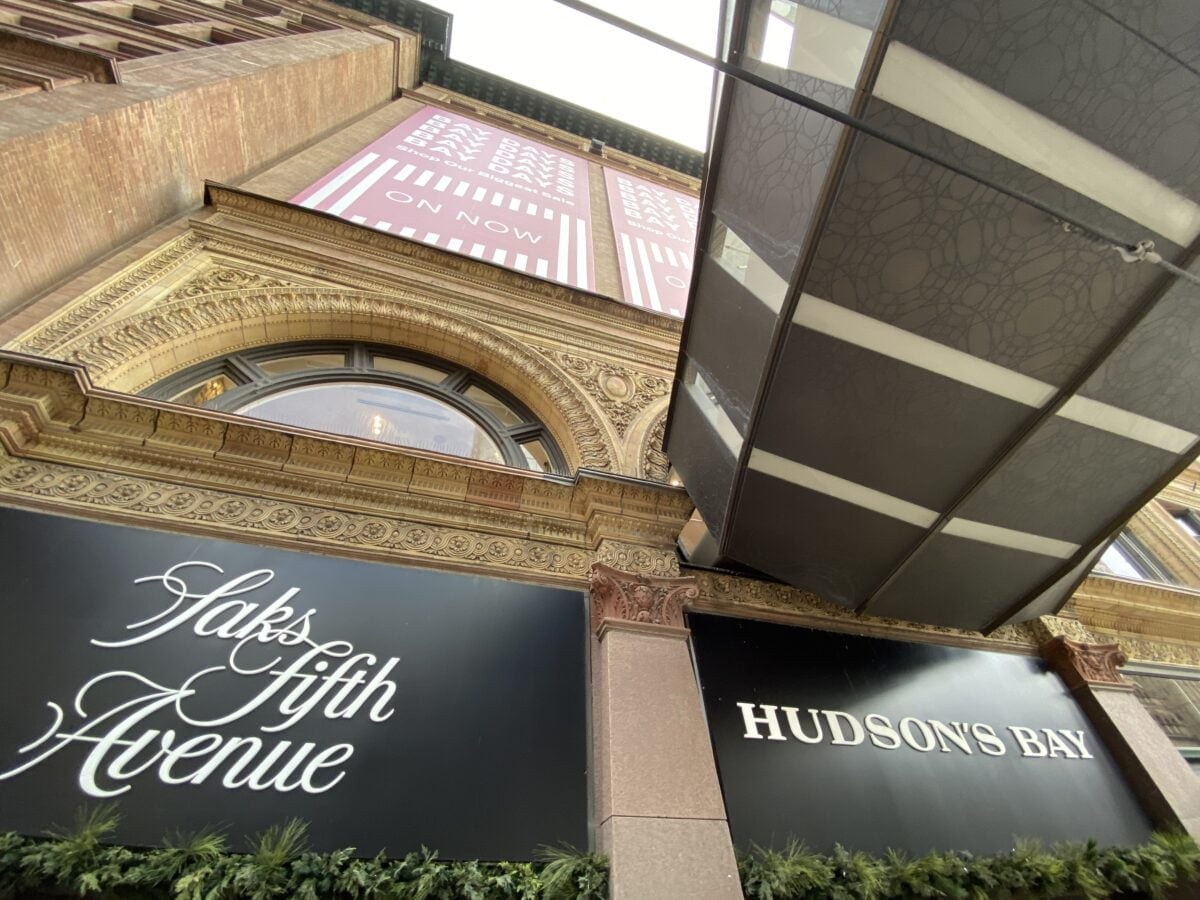
The downtown Toronto Saks Fifth Avenue store opened in February 2016. The three-floor store was made possible by carving out about 125,000 square feet of the eastern portion of the Hudson’s Bay flagship store at the southwest corner of Yonge and Queen Streets. Both stores are technically part of the CF Toronto Eaton Centre complex after Cadillac Fairview acquired the building and adjacent office tower in 2014. Toronto-based Pusateri’s Fine Foods also operates a 24,000 square foot branded ‘Saks Food Hall’ in the basement below the Saks fashion store.
When Saks opened in 2016 it housed concession boutique spaces for Louis Vuitton and Saint Laurent on the street level, as well as Dior which had a street level accessories concession and a women’s fashion boutique on the third floor. All brands shut their concessions earlier in the year and now the Saks store functions a bit differently.
Queen Street facade of the combined Saks/Hudson’s Bay in downtown Toronto. From the late 1800s until 1991 it was a Simpsons store. Photo: Dustin FuhsShared marble-clad lobby on the street level of the Hudson’s Bay building — a concierge desk was recently removed. Saks is on the left and Hudson’s Bay is on the right. Photo: Dustin Fuhs
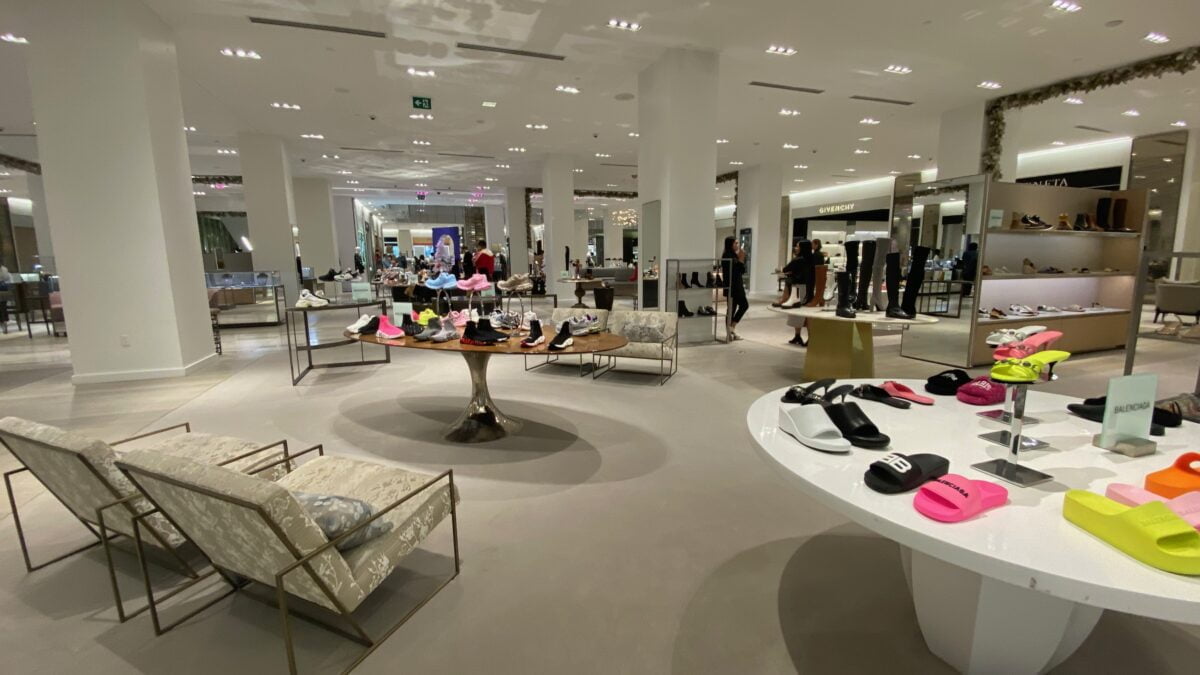
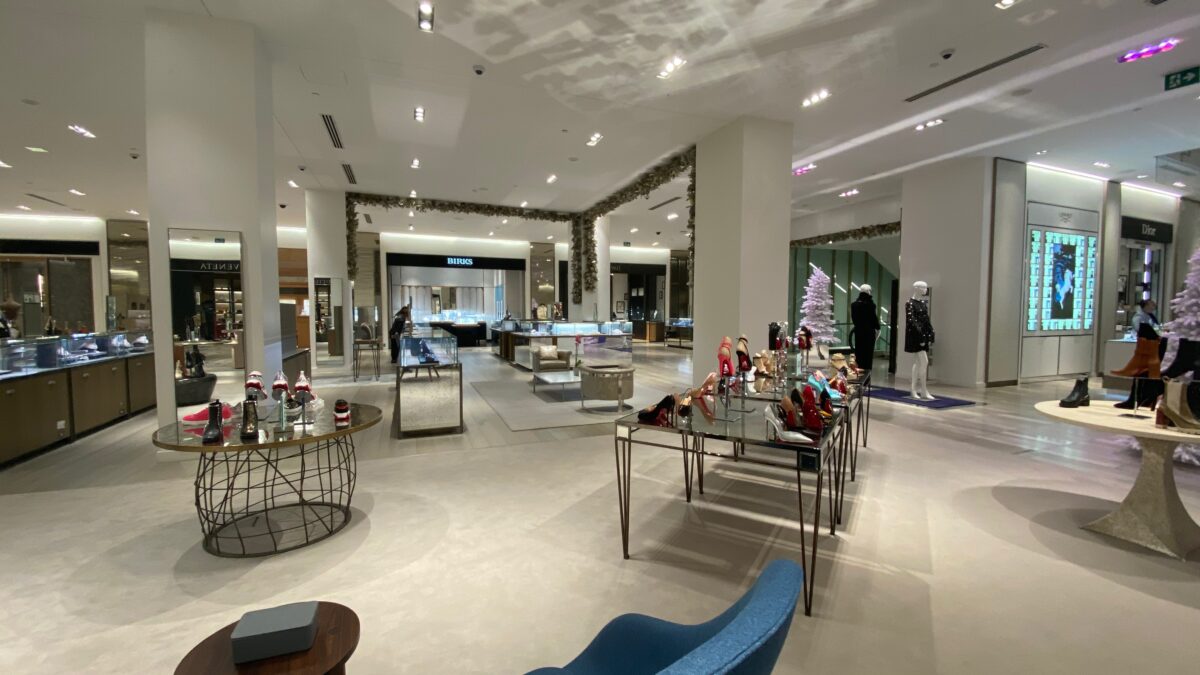
The differences begin in the marble-clad Queen Street entry foyer which is shared by Hudson’s Bay and Saks. A long concierge desk was recently removed from the joint lobby area. Walking into the Saks store on the left, one enters a new street level women’s shoe department that is located where women’s handbags and accessories were until a few weeks ago. A sales associate explained that women’s shoes were moved downstairs from a former home on the second floor (branded 10022-SHOES) to be closer to handbags.
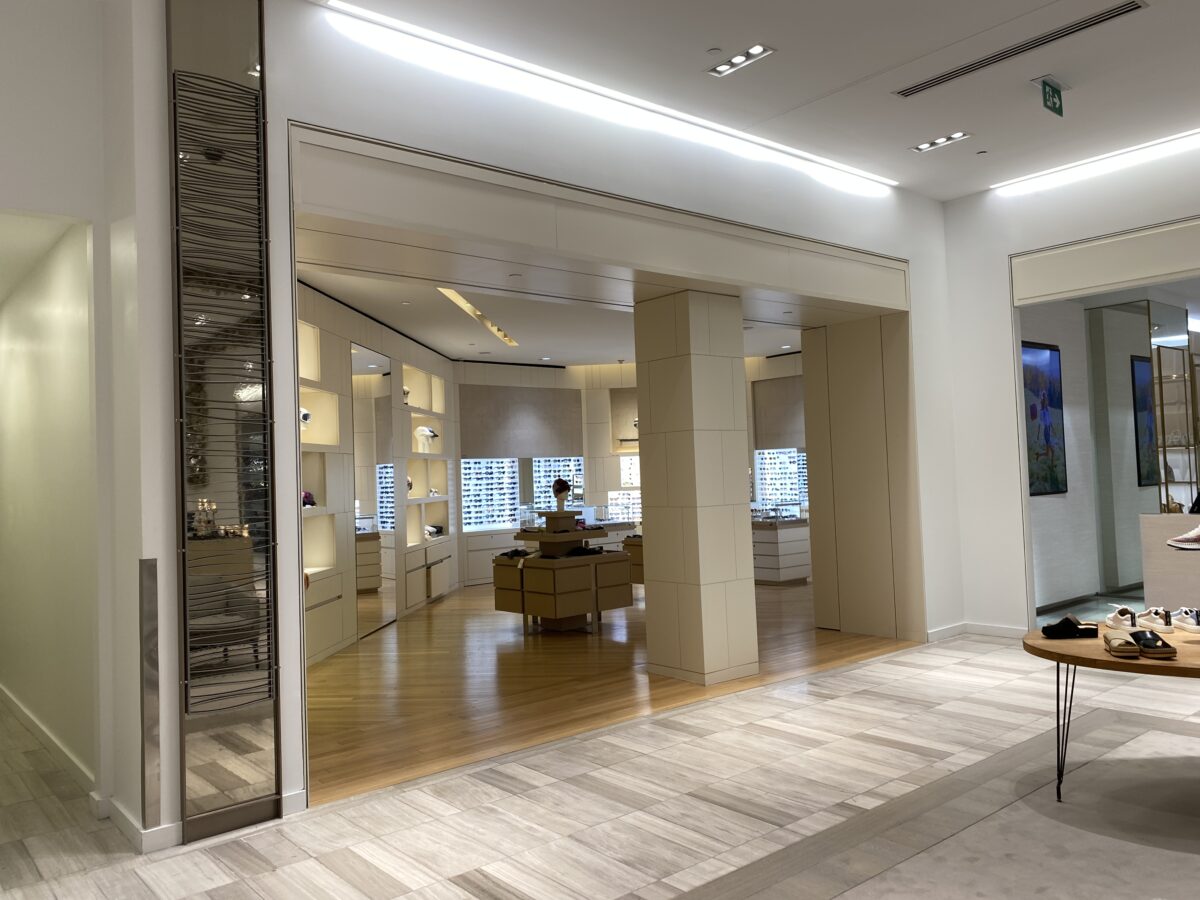
The former street-level 1,200 square foot Louis Vuitton boutique, which had a corner presence with windows facing both Yonge and Queen Street, has been converted to a sunglass and accessories shop for women. Accessories such as fur hats and scarves were formerly housed on the second level. Fur is one category that Saks still sells after competitor Holt Renfrew dropped fur from its stores, including for its concession partners, at the beginning of the year. However by the end of this year, Saks has also mandated the end of selling fur in it stores.
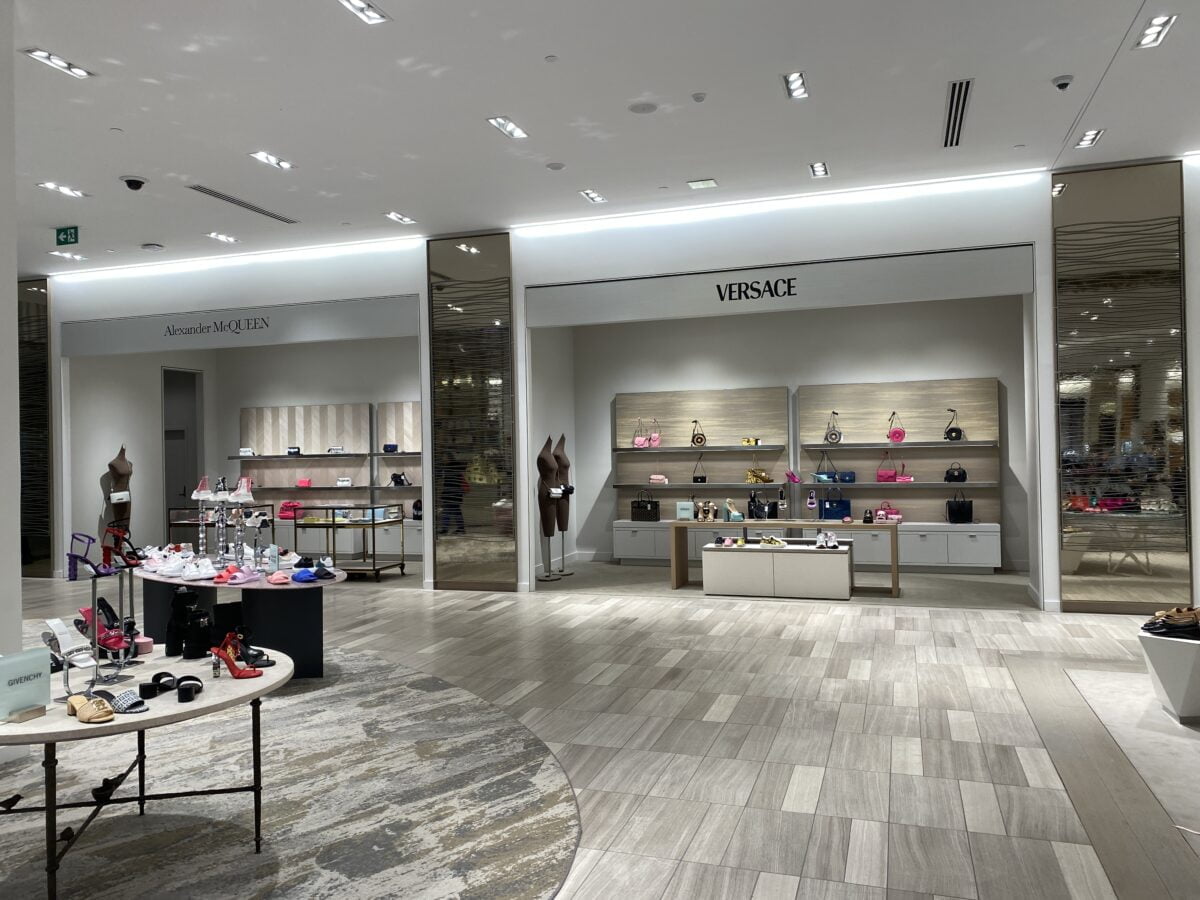
The former Dior bag and accessory shop on the main floor of Saks was downsized and is now branded Alexander McQueen, featuring handbags and accessories. Next to it is a new small Versace handbag shop in part of a space formerly occupied by a larger Celine handbag boutique. Space behind the smaller McQueen and Versace shops is being used for shoe storage.
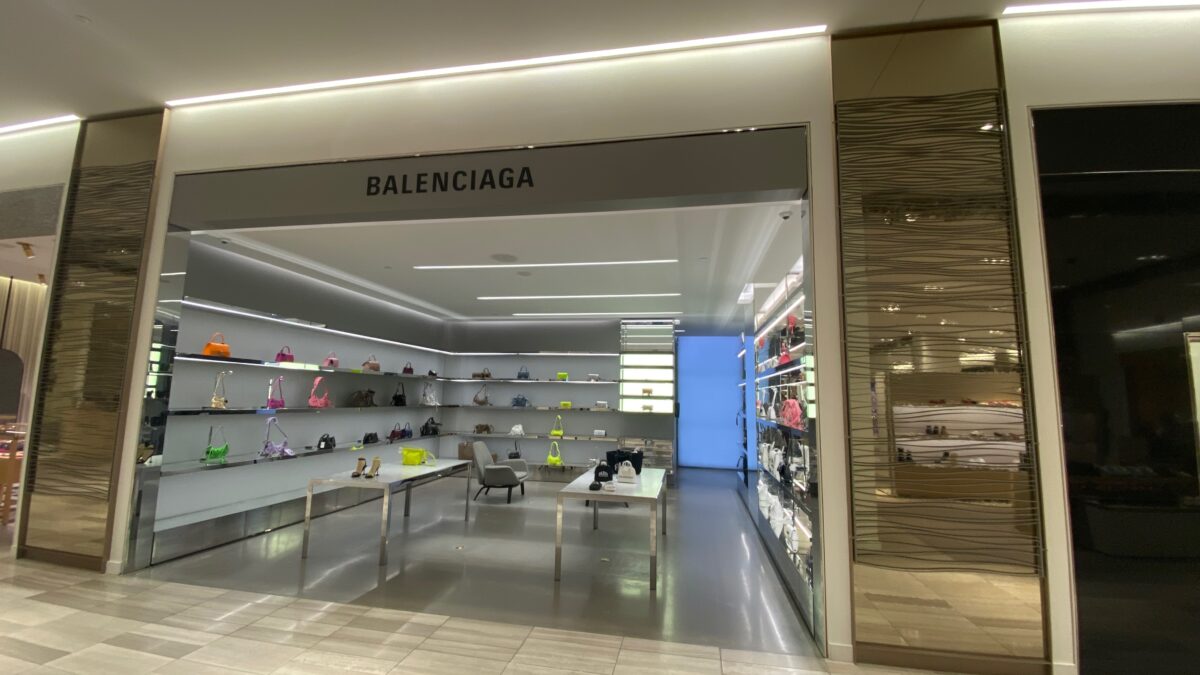
The former Saint Laurent handbag concession now houses Balenciaga bags and accessories in a space that saw a minor renovation that included removing YSL’s trademark marble walls. There were rumours a few months ago that Balenciaga would exit the downtown Saks store after opening two standalone storefronts in the city.
New street level women’s footwear department. Photo: Craig Patterson Former Louis Vuitton concession at Saks Toronto. The space has been painted a lighter colour and Vuitton’s floors remain. Photo: Dustin FuhsThe new main floor McQueen and Versace bag shops. Space behind them is now storage for the new women’s shoe department. Photo: Dustin FuhsNew Balenciaga shop on the main floor of Saks Toronto, replacing a Saint Laurent concession that shut several months ago. Photo: Craig Patterson Women’s main floor footwear with jewellery shops behind. Photo: Craig Patterson
Other main floor boutiques including Bottega Veneta, Chloe, Valentino, Birks, and Chopard remain, as is a concession for Prada bags and accessories. During the pandemic a Piaget jewellery concession was converted to a consignment model. More jewellery brands are available on the main floor near women’s shoes. The store’s street level beauty hall looks essentially the same as it did when the store opened almost seven years ago, though Aesop exited a while ago and a new Byredo counter was added.
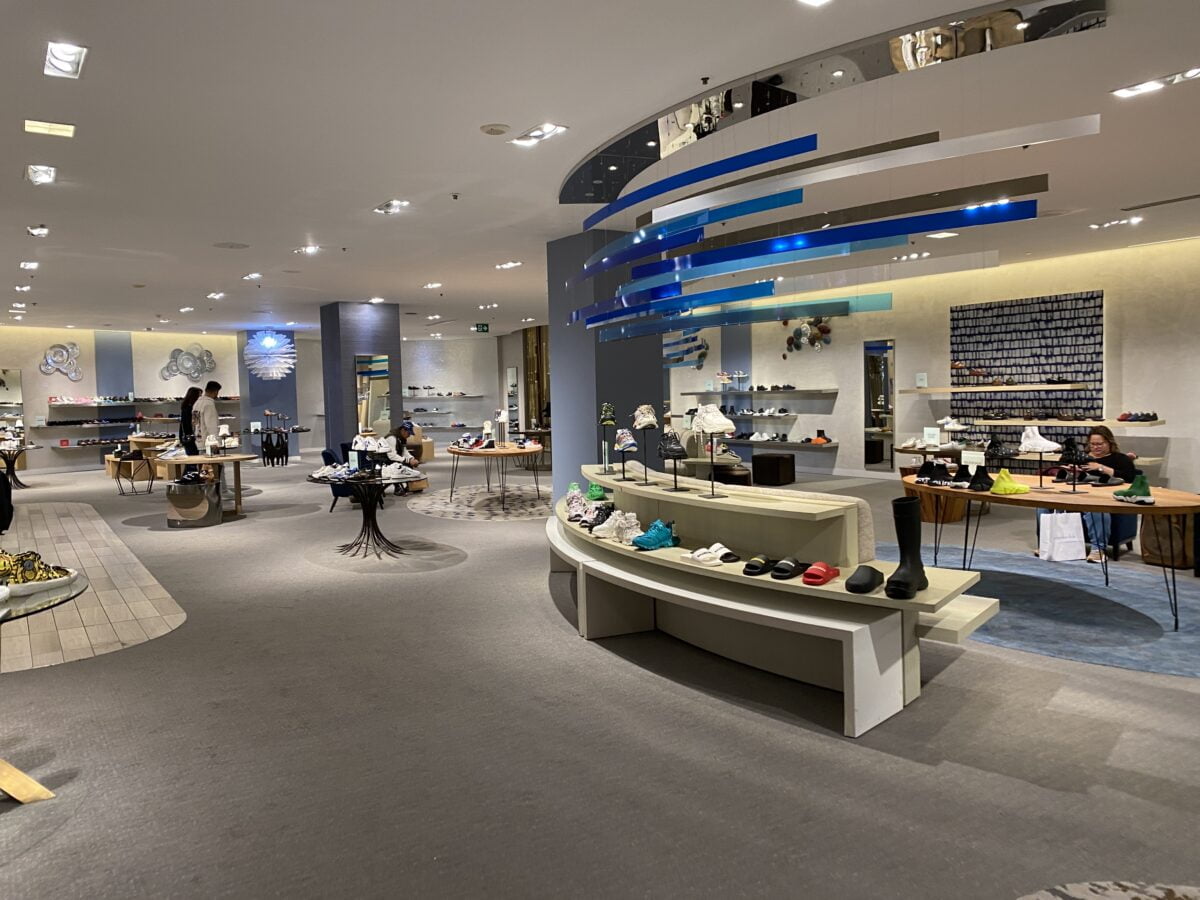
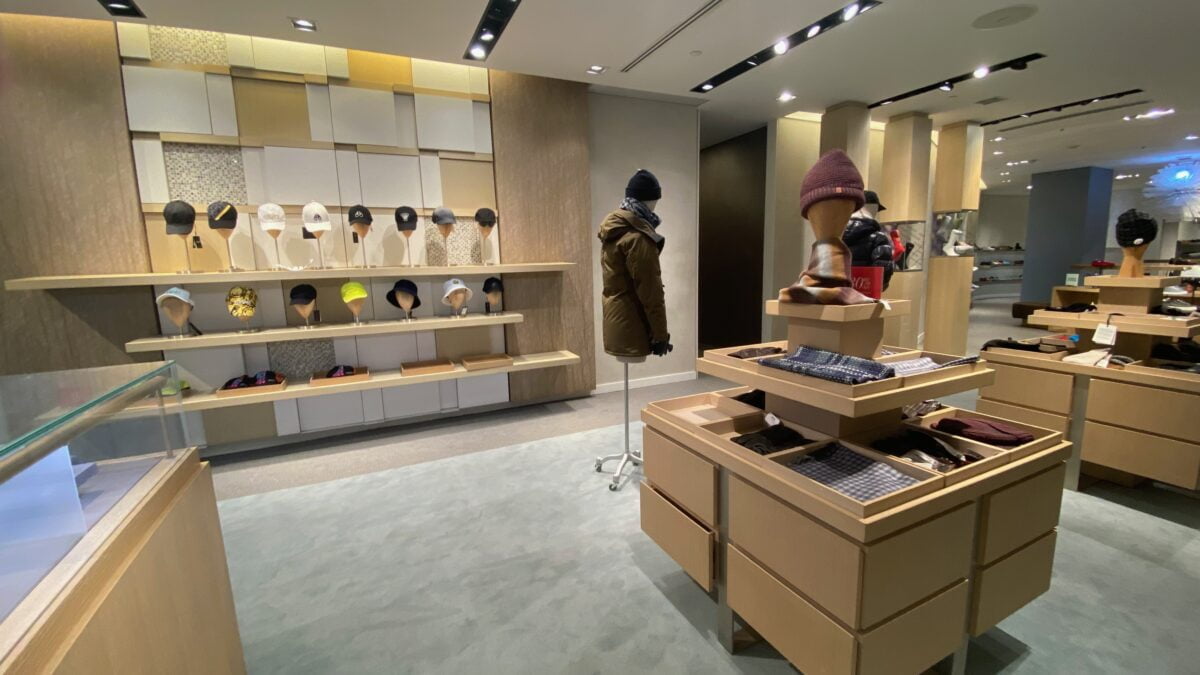
Saks’ second floor is now devoted entirely to menswear — from 2016 until recently, women’s footwear was located on the second floor as well as some accessories. Now men’s footwear occupies the entire 8,000 square foot former 10022-SHOE space, becoming the largest men’s luxury shoe floor in Canada. The adjacent former women’s accessories area is now dedicated to men’s accessories such as hats, gloves and scarves.
Moving women’s shoes downstairs disrupts the original planned flow for the combined Saks/Hudson’s Bay building. When Retail Insider toured the store prior to opening in February of 2016, a representative explained how the Saks women’s shoe department on the second floor was strategically located next to Hudson’s Bay’s women’s shoe department to create proximity and facilitate cross-shopping of both stores by consumers. The same was done on the main floor with the Saks and Hudson’s Bay beauty halls being adjacent, as well as the third-floor Saks/Hudson’s Bay women’s contemporary fashion offerings being in adjacent spaces.
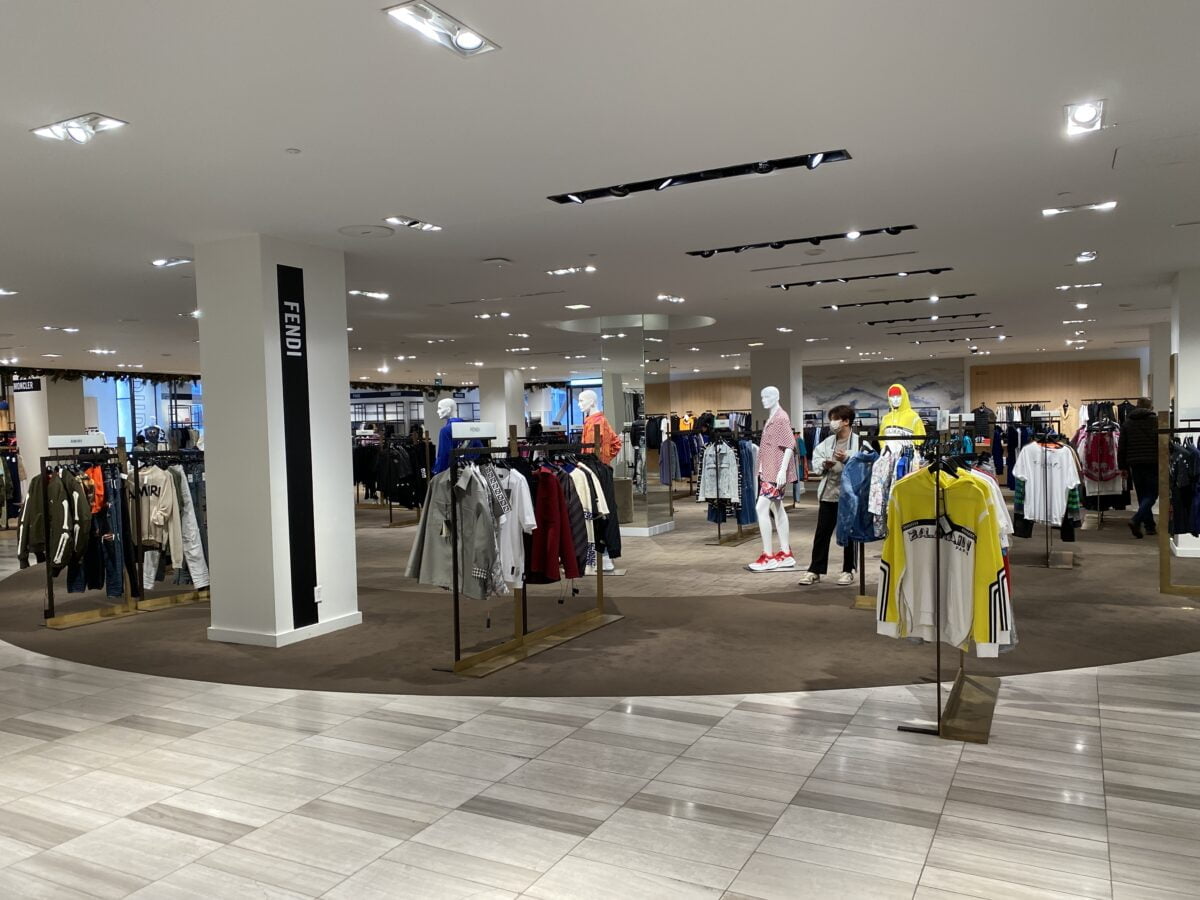
New second floor men’s footwear department. Photo: Dustin FuhsSecond floor men’s designer fashions in a rounded space formerly housing shoes. Photo: Dustin FuhsNew second floor men’s accessories area — the space had women’s accessories prior to the department reorganization. Photo: Craig Patterson Second floor entrance into Saks from Hudson’s Bay. Photo: Dustin Fuhs
The former circular men’s footwear space on the second floor of Saks has been converted into an area for men’s designer fashions, with big-name brands including Balmain, Versace and Fendi. The former footwear space had been modelled on a renovation to the Michigan Avenue Saks store in Chicago, and was copied at Saks in Calgary but with a much smaller selection of brands being available. In Toronto, Saks has a surprisingly robust assortment of men’s luxury brands on its second level which spans more than 30,000 square feet.
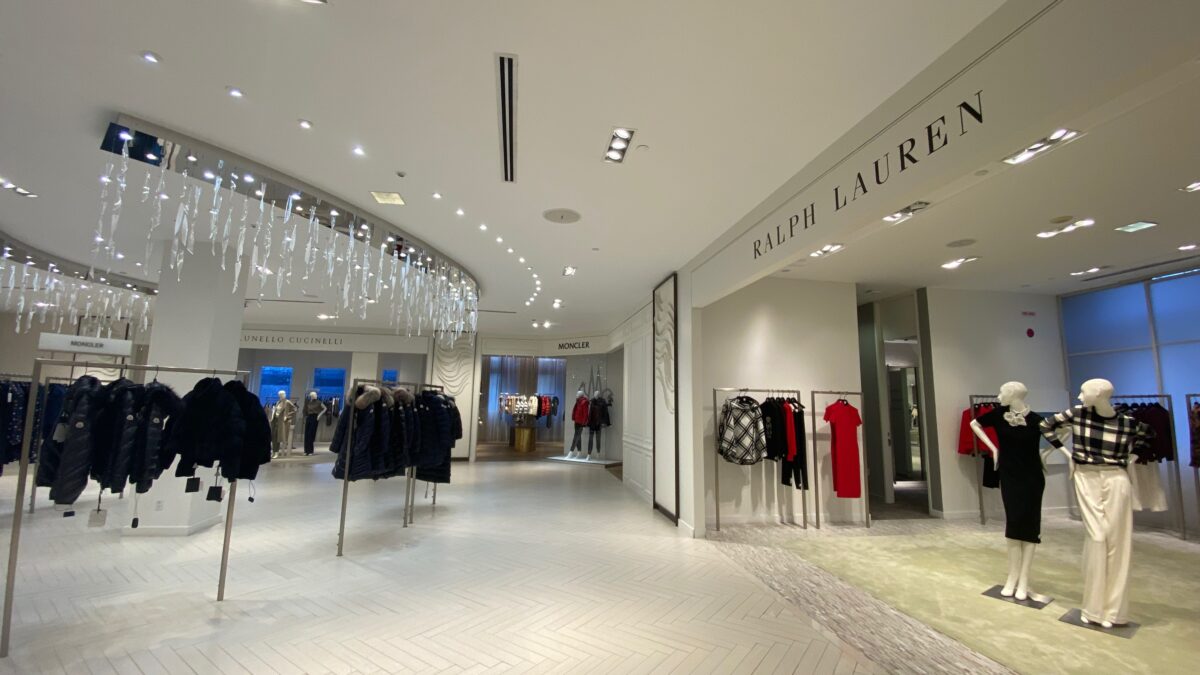
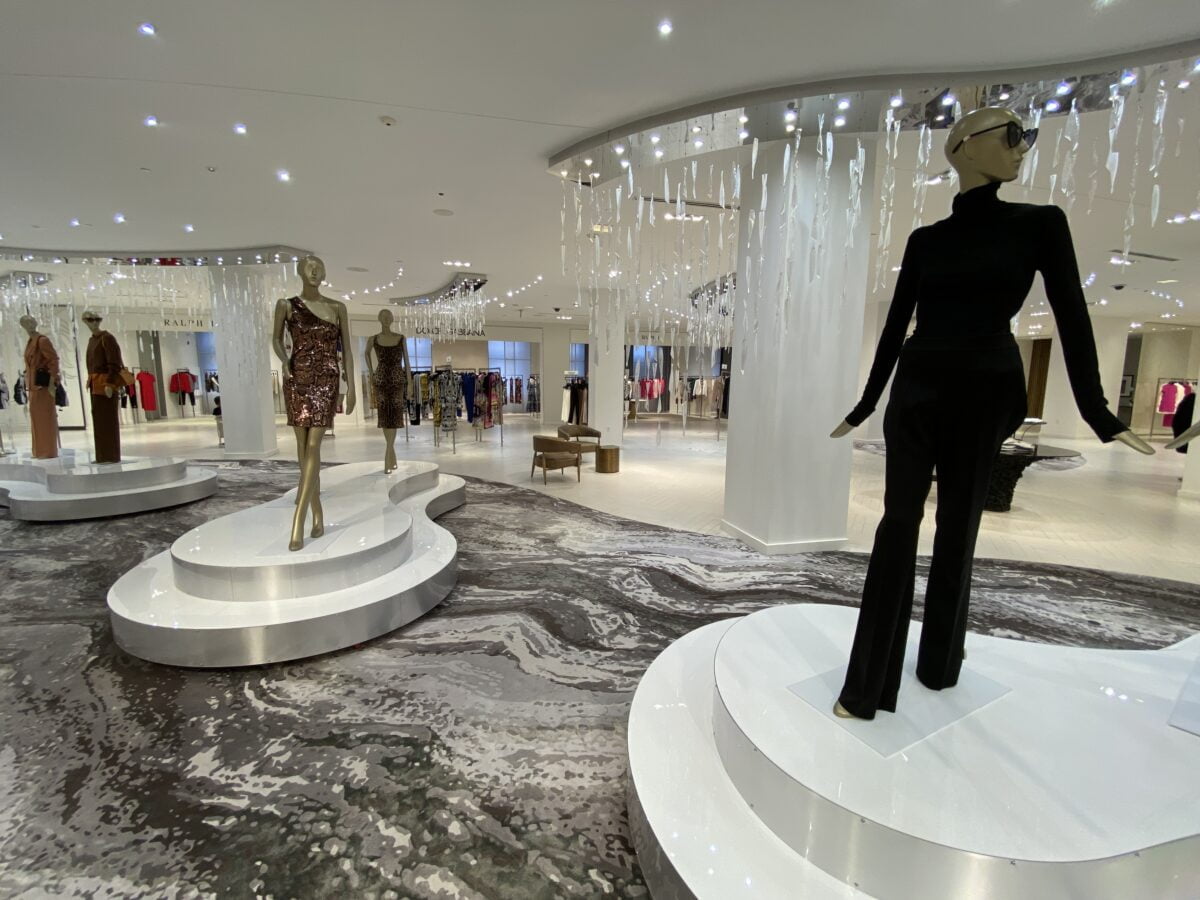
The women’s third floor at Saks has also seen some changes, though not as drastic as on the other two levels. We reported earlier this fall that Burberry had exited its women’s fashion boutique space on the third floor of Saks after Burberry pulled its wholesale accounts in Canada to instead operate standalone stores and concessions. A Ralph Lauren women’s fashion boutique now occupies the former third floor Burberry space, with the same design and even the same light green carpet that Burberry had been using.
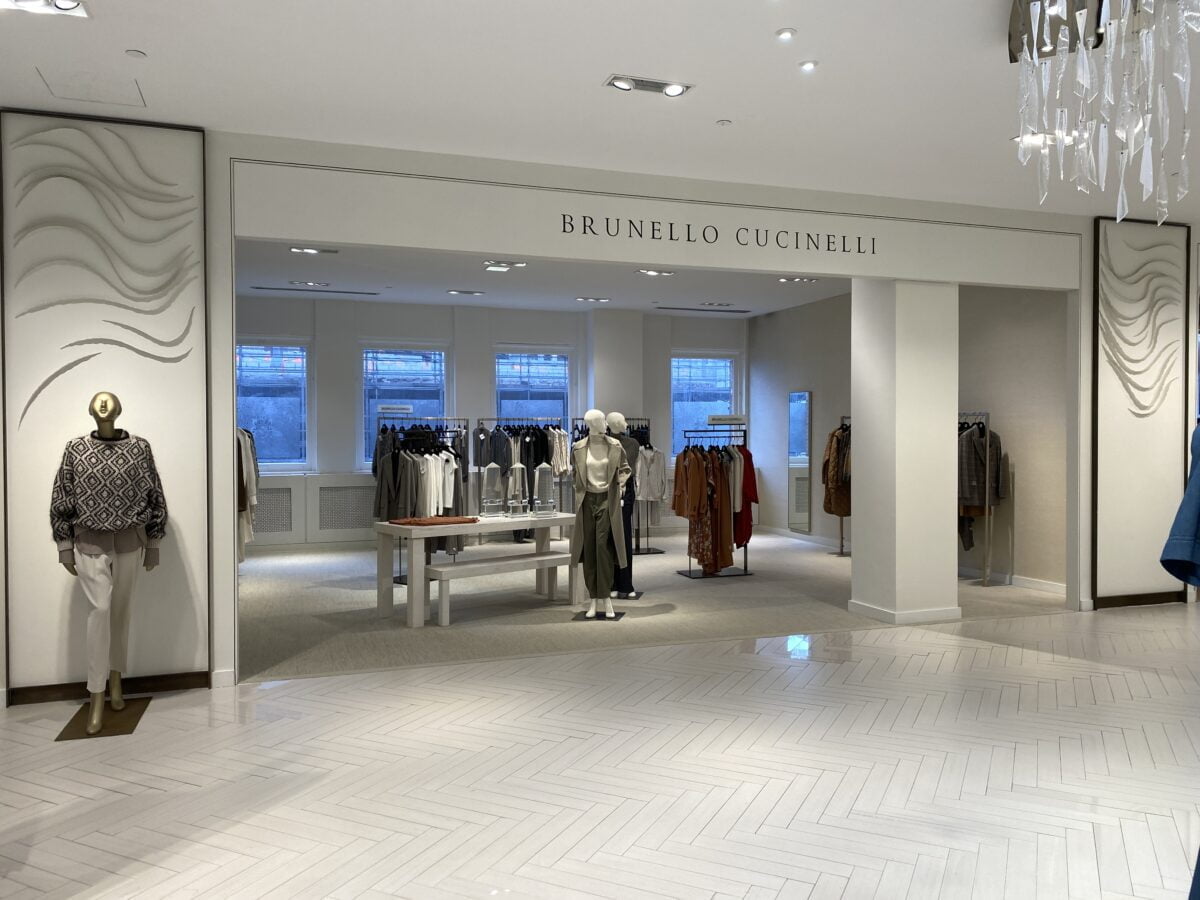
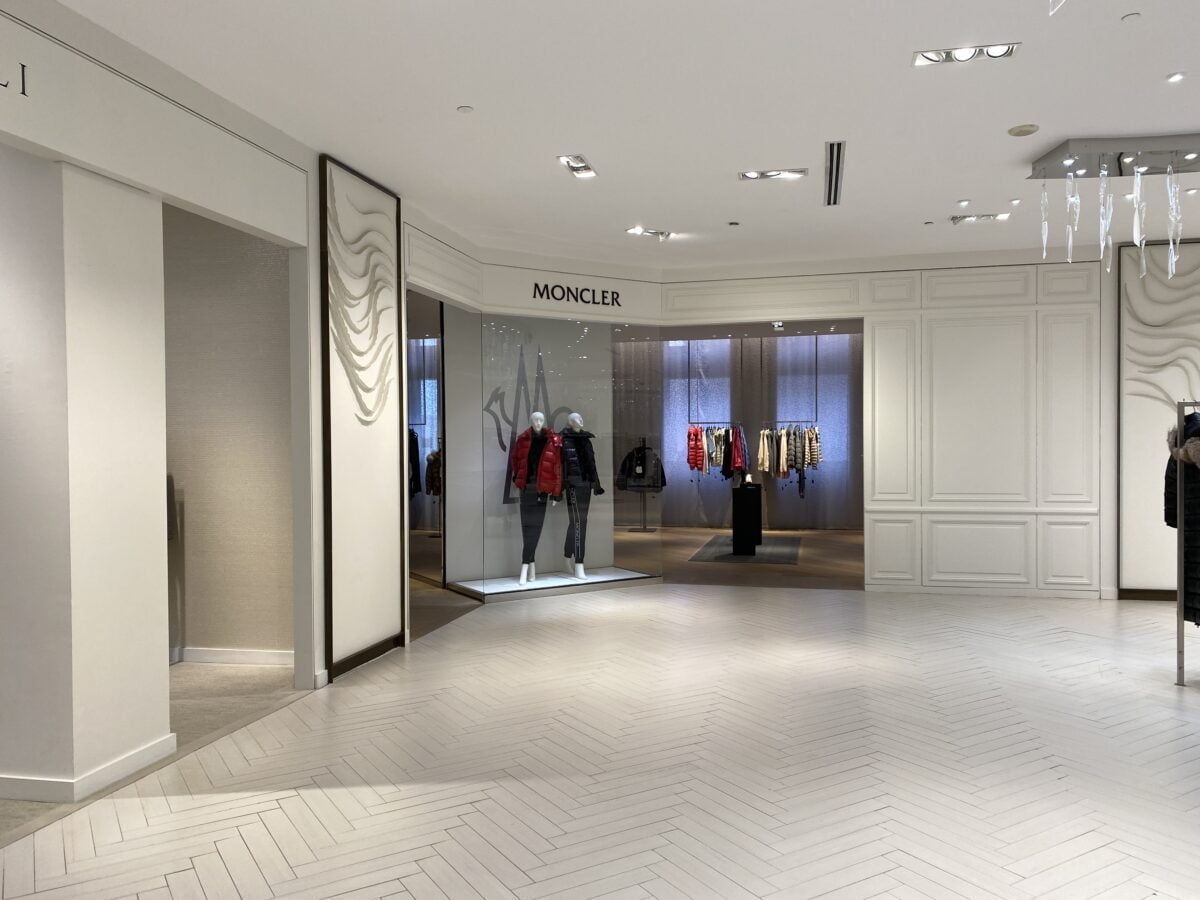
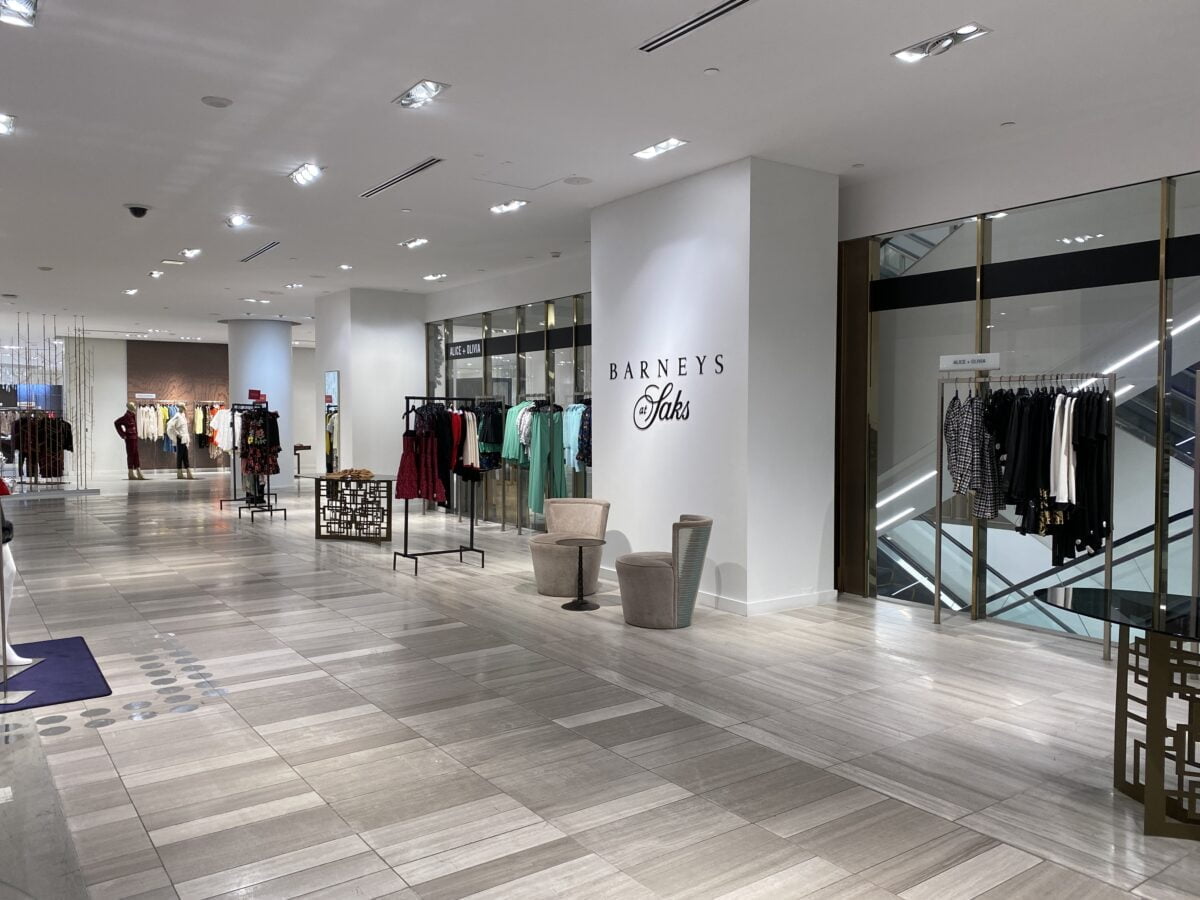
The former Dior women’s fashion concession on the third floor is now home to a Moncler jacket boutique for women, while a women’s Brunello Cucinelli boutique space recently opened next to it. The former Dior space is for the most part unchanged despite being branded Moncler. Most of the third floor remains relatively unchanged otherwise from prior to the pandemic with boutiques for brands including Valentino, Balenciaga, McQueen, Givenchy and Dolce & Gabbana. Some shoppers may scratch their heads when they see signage near the escalators on the third floor announcing ‘Barneys at Saks’ — while the signage was added during the pandemic, only two brands occupy the area which feels nothing like the Barneys at Saks which takes up an entire floor at the Saks flagship in Manhattan.
In 2021, a Saint Laurent women’s ready-to-wear boutique space shut on the third floor and was replaced by Balmain. A fur salon also recently shut ahead of Saks removing fur from its stores entirely.
New third floor Ralph Lauren shop where Burberry was located until a few weeks ago, with Burberry’s light green carpet. Ralph Lauren will also be opening standalone stores in Canada starting in 2023. Photo: Craig Patterson New third floor women’s Brunello Cucinelli boutique. Photo: Dustin FuhsNew third floor women’s Moncler boutique in a space formerly occupied by a women’s Dior ready-to-wear concession. Photo: Dustin Fuhs
Other changes to the Toronto Saks store include reduced hours — several months ago Saks reduced its hours to the current 11:00am to 6:00pm daily. The adjacent Hudson’s Bay store is still open from 10:00am to 9:00pm daily other than Sundays, creating a somewhat awkward situation for shoppers looking to visit both stores in the evening hours or before 11:00am.
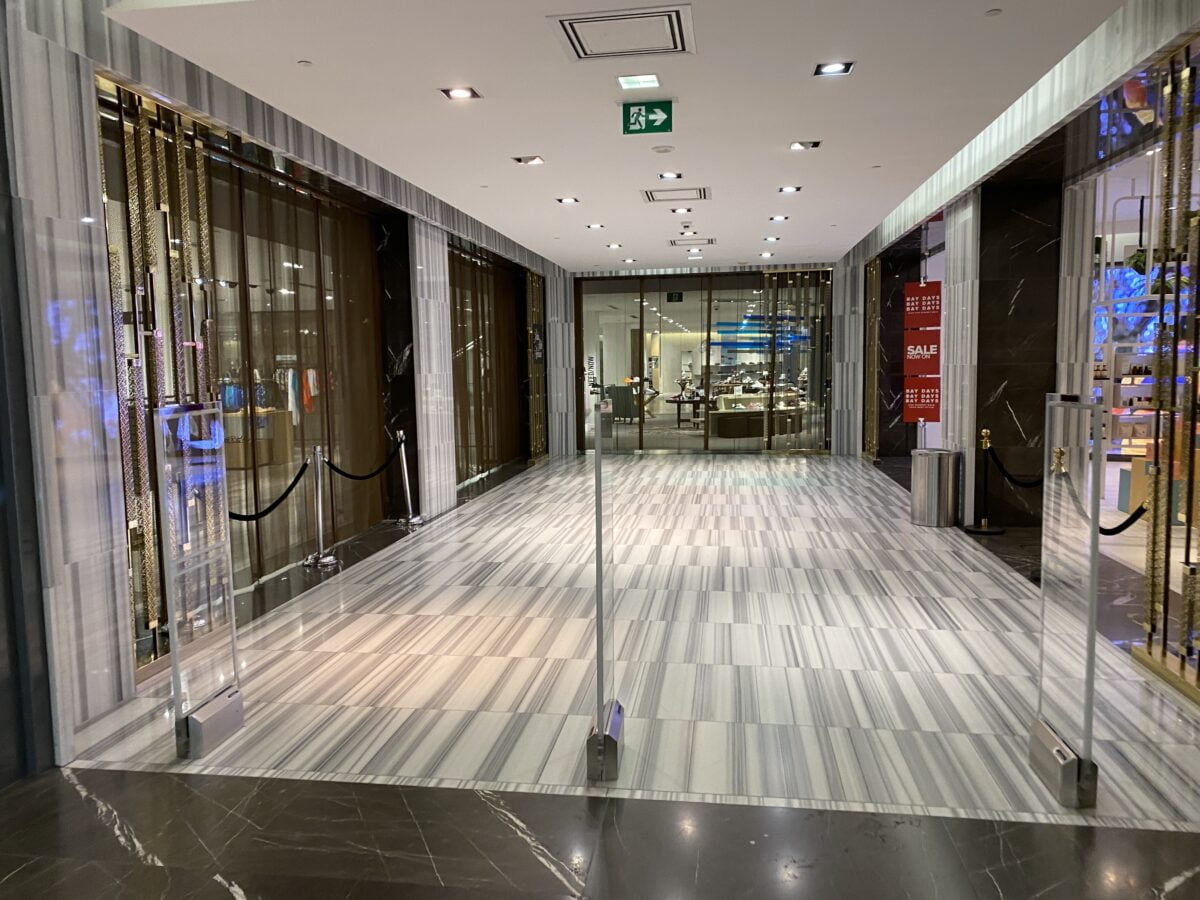
Several weeks ago a security guard was positioned near a second-level pedway from CF Toronto Eaton Centre into Saks, and now bronze metal gates block off the Saks store when it shuts at 6:00pm daily. Several weeks ago, as well, three plexiglass security gates were installed in the second-level lobby area shared by Saks and Hudson’s Bay that leads into the pedway to CF Toronto Eaton Centre, as per the photo below.
Closing early – gates shut at Saks Fifth Avenue at 6pm while the adjacent Hudson’s Bay store is still open. The three plexiglass security gates are also new. Photo: Dustin Fuhs
Saks Fifth Avenue also operates two other full-priced standalone stores in Canada, in Toronto and Calgary. The second Toronto Saks location opened in March of 2016 at CF Sherway Gardens in Toronto, also containing a Pusateri’s-operated Saks-branded grocery store. A menswear department adjacent to Pusateri’s at Sherway has since been relocated upstairs after the store was downsized.
In Calgary, Saks Fifth Avenue operates a 115,000 square foot store at CF Chinook Centre which opened in February of 2018. The store lacks a grocery component. Last month Retail Insider had an opportunity to visit the Calgary Saks store which was surprisingly lacking in product in its men’s and women’s fashion departments.
The opening hours for the CF Sherway Gardens and CF Chinook Centre Saks Fifth Avenue stores are interesting. Both stores are open just six hours a day, from 12 Noon to 6:00pm, seven days a week. The typical mall retail opening hours at both CF Sherway Gardens and CF Chinook Centre are from 10:00am to 9:00pm Monday-Saturday and from 10:00am to 6:00pm Sundays.
Barneys but not really — signage for ‘Barneys at Saks’ which has just two designers, and is nothing like the Barneys at Saks in Manhattan which occupies an entire floor. Photo: Dustin Fuhs
In the United States, Saks Fifth Avenue has found success in some markets while it has struggled in others. As a result, many Saks stores have opened and closed in the United States since the 1990s. Most recently, a location in downtown Cincinnati was announced to be closing by the end of this year. The most recent opening was a 113,000 square foot Saks store at American Dream in New Jersey and in Beverly Hills, CA, Saks will relocate into a former 125,000 square foot Barneys location on Wilshire Boulevard. Saks Fifth Avenue currently operates three stores in Canada and 39 in the US, as well as two partner stores in Bahrain and Kazakhstan. Saks Fifth Avenue was founded in New York City in 1867 and continues to operate a 650,000 square foot flagship store on Fifth Avenue which is said to be responsible for more than 20% of the company’s sales.
Third floor women’s designer department. Photo: Dustin Fuhs
Toronto has five full-sized luxury department stores, boasting the highest number of any city in Canada, by far. That includes Holt Renfrew and Saks Fifth Avenue. Downtown Toronto is home to a 190,000 square foot Holt Renfrew’s flagship that is also seeing a partial renovation that will eventually see a new men’s floor and expanded women’s contemporary floor. Holt Renfrew features numerous luxury brand concessions with the world’s top names, and is much busier than the downtown Saks. Toronto’s Yorkdale Shopping Centre is home to another 130,000 square foot Holt Renfrew store, housing many luxury brands and with sales in the hundreds of millions of dollars annually. Another beautiful 140,000 square foot Holt Renfrew store in Mississauga isn’t as busy as the one at Yorkdale, but it still features an expansive range of luxury brands in an impressive marble-clad space. The 143,000 square foot Saks at CF Sherway, located a few kilometres away, competes with Holts and is a very nice looking store.
Vancouver, Calgary, and Montreal are the only other cities in Canada with large luxury stores — Calgary has two (Holts and Saks) and Vancouver and Montreal are both home to one large Holt Renfrew store. Vancouver’s Nordstrom store is also seeing success with its expansive offering of luxury brands, including several branded shop-in-stores. Nordstrom’s other Canadian stores are not faring nearly as well. In Toronto, almost all of the luxury brands that opened in the CF Toronto Eaton Centre Nordstrom store in 2016 are no longer there, and five of the six original women’s luxury brand shop-in-stores at Nordstrom Yorkdale have shut since it opened in 2016. Nordstrom also operates smaller luxury-light stores in Calgary, Ottawa and at Toronto’s CF Sherway Gardens.
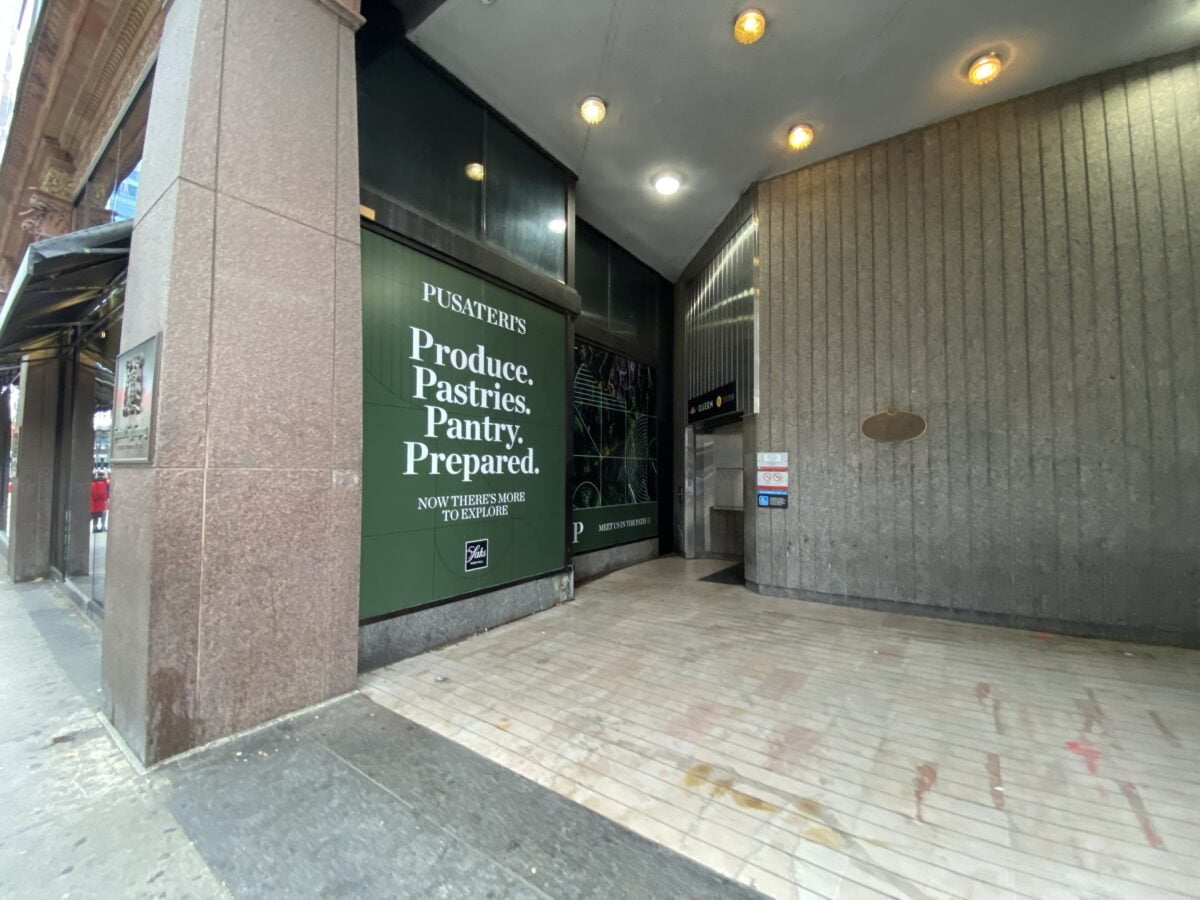
Queen Street subway entrance beside Saks Fifth Avenue on October 30, 2022 — cleanliness is a challenge in the area. Photo: Dustin Fuhs
The competition is particularly fierce in Toronto, which has become the centre of luxury retail in Canada with an ever-growing number of standalone luxury stores. Toronto’s Yorkdale Shopping Centre is leading the way with new luxury stores opening regularly. Toronto’s Bloor-Yorkville is also seeing interest from luxury brands, with more large flagship stores said to be on the way. CF Toronto Eaton Centre has struggled in terms of seeing the same luxury shopping dollars. It lacks valet parking, including at Saks where plans to have valet parking were dashed when the city mandated a bike lane on Richmond Street.
Vagrancy and cleanliness are among the challenges in the area surrounding CF Toronto Eaton Centre, turning off some of the city’s wealthy. The area is still very popular with the millions of people who come down to shop and be entertained, though Rosedale matrons are more likely to venture to nearby Yorkville, or to Yorkdale which offers top brands in a climate-controlled environment.
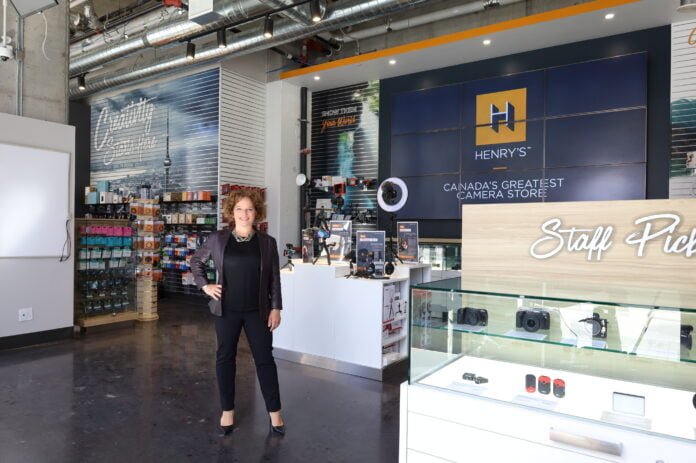
Henry's CEO Gillian Stein at the New Henry's Flagship (Image: Henry's)
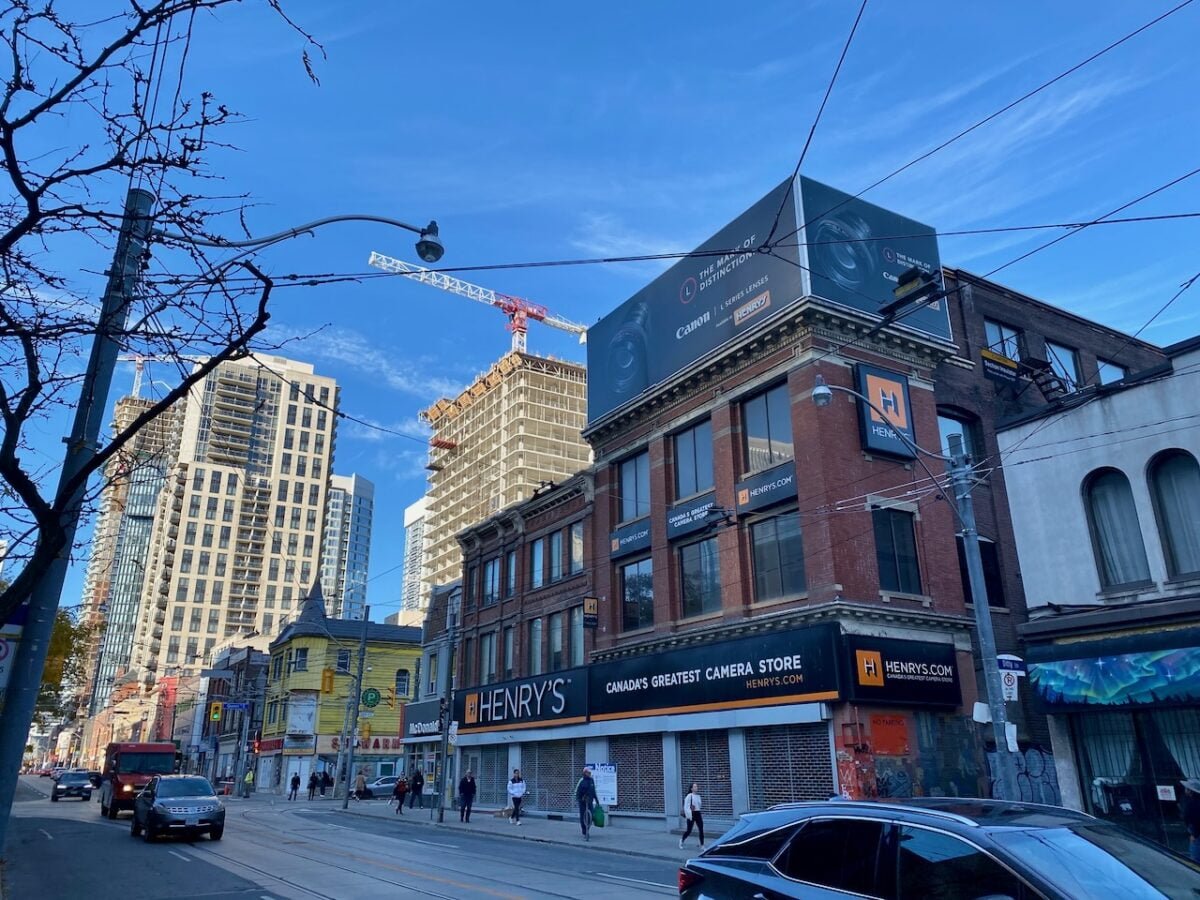
Henry’s, a Canadian specialty technology and camera retailer, has relocated its Toronto flagship to 185 Church Street from a storefront nearby. The new location is a city block away from where the flagship stood for nearly five decades.
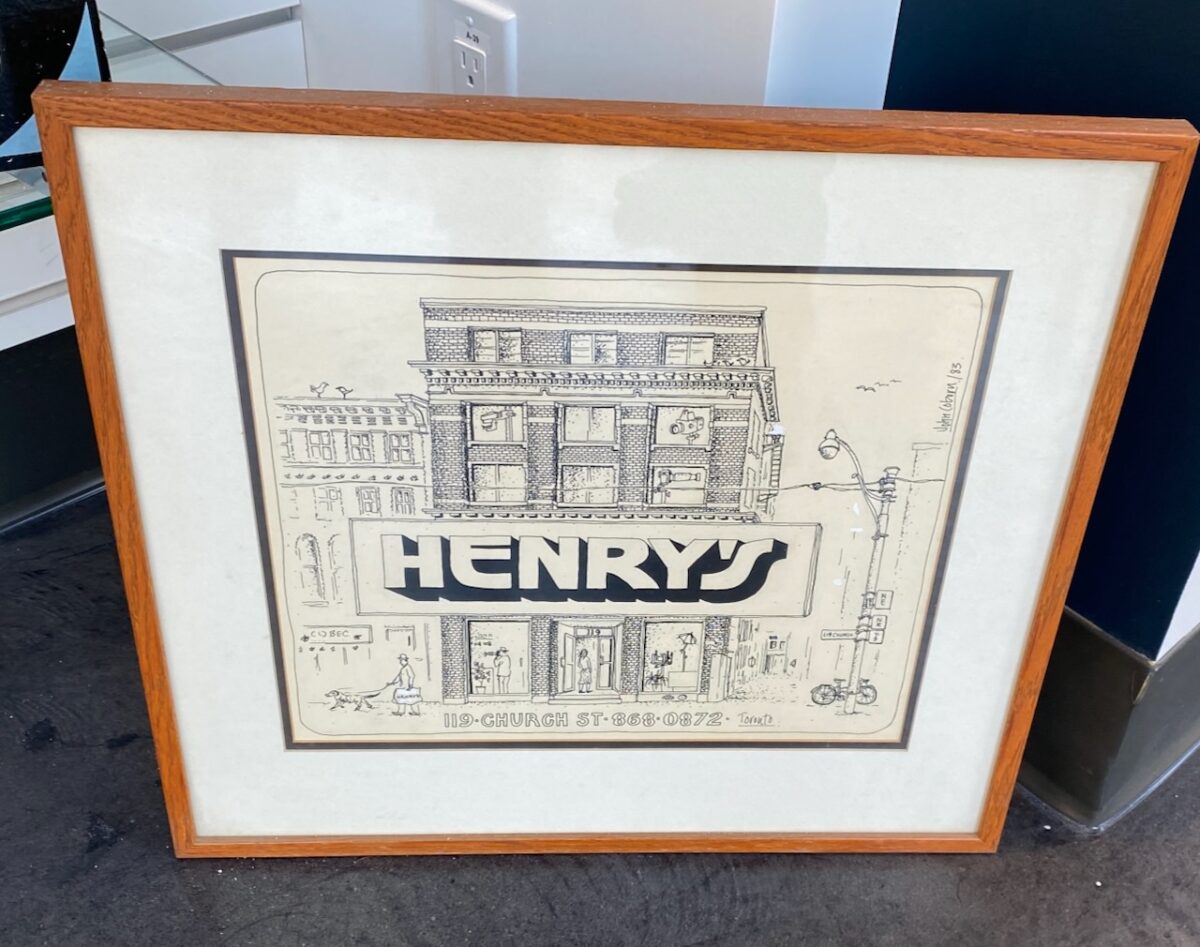
Church Street has been the home of the brand since the 1960’s, with an early location at 135 Church, and then relocating to the previous flagship at 119 Church Street.
“I can’t imagine a part of the city we’d rather be in,” says Gillian Stein, CEO of Henry’s. “This area has deep roots in the photographic community. Change is inevitable when you’ve been in business for 113 years, and we’re excited about the new space, but Church Street is still where Henry’s belongs.”
The Flagship is Home
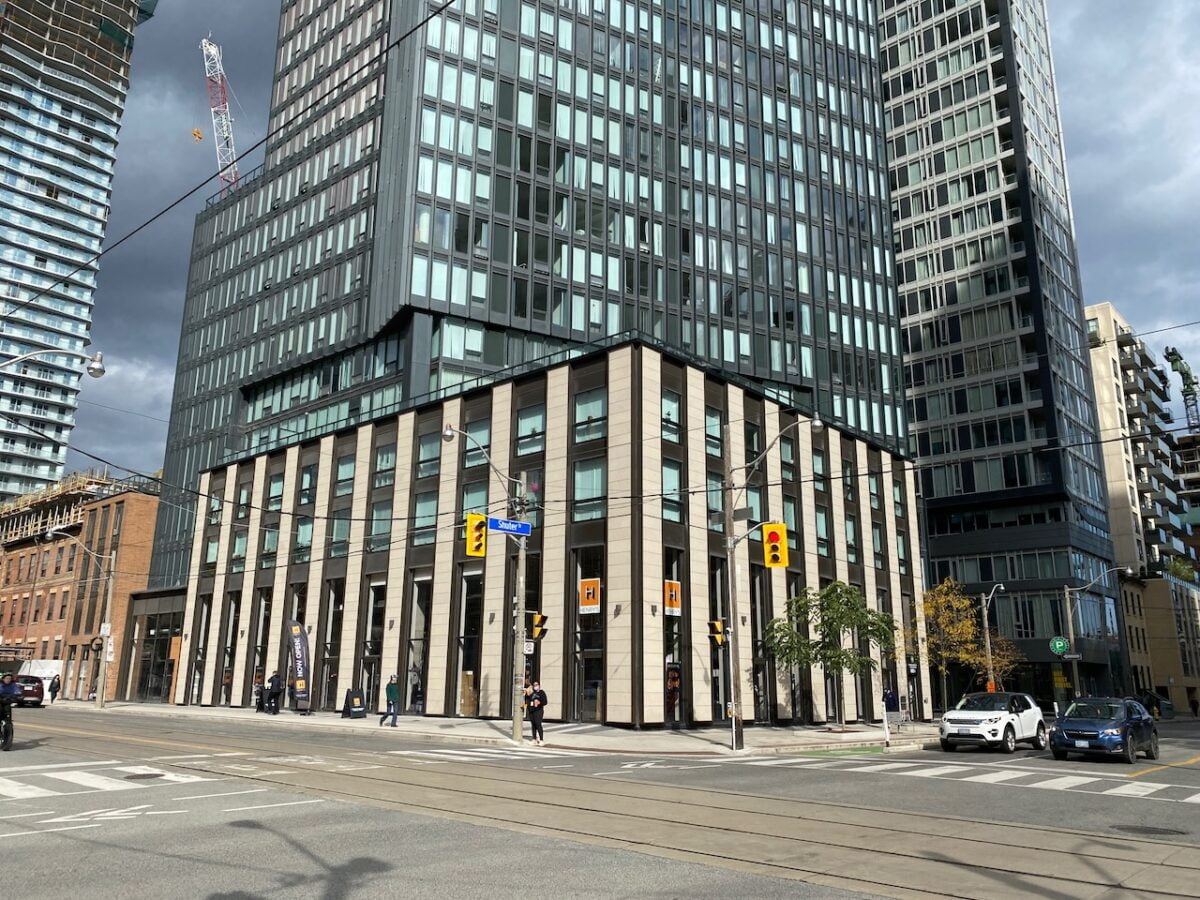
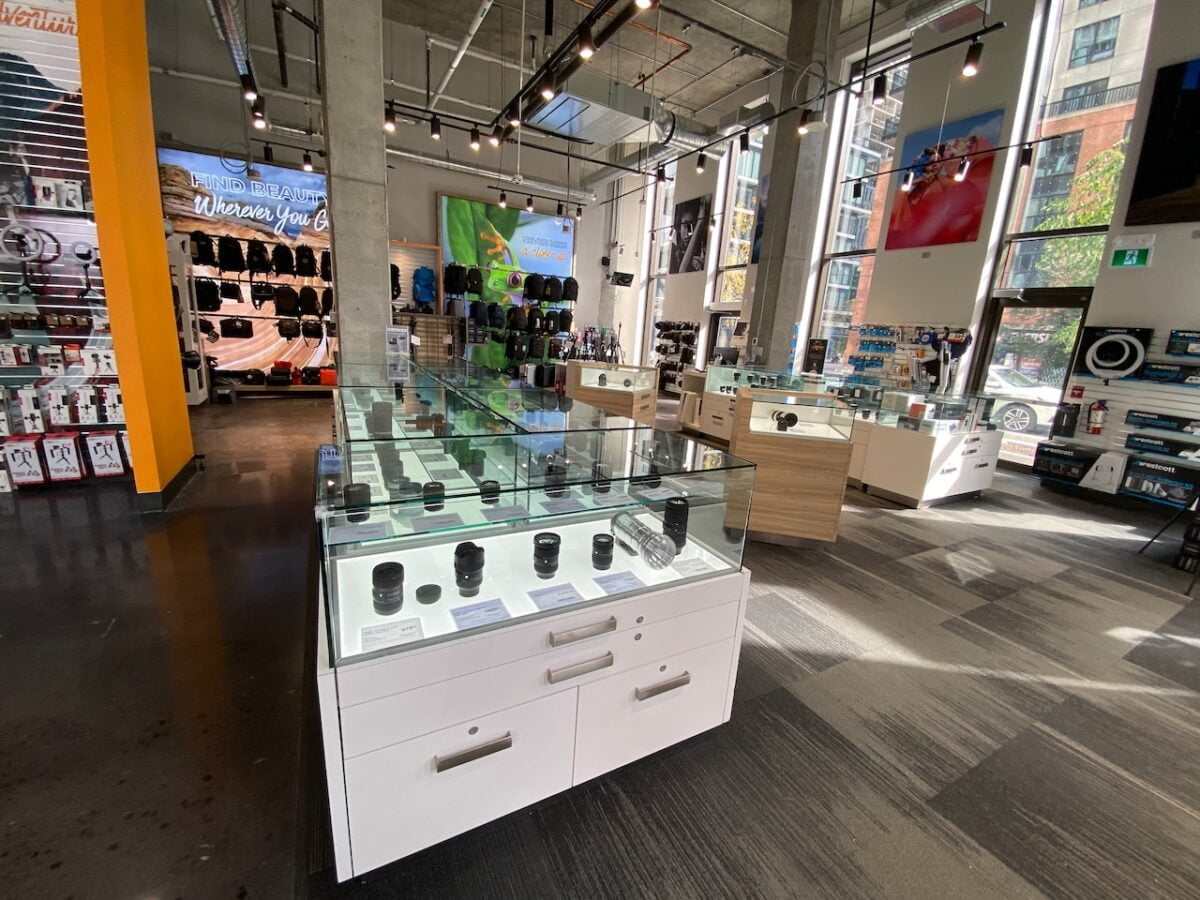
Henry’s at 185 Church Street in Toronto (Image: Dustin Fuhs)Henry’s at 185 Church Street in Toronto (Image: Dustin Fuhs)
Future planning for the flagship’s relocation has been on the table internally for years and the opportunity to relocate came when the lease was coming up for renewal.
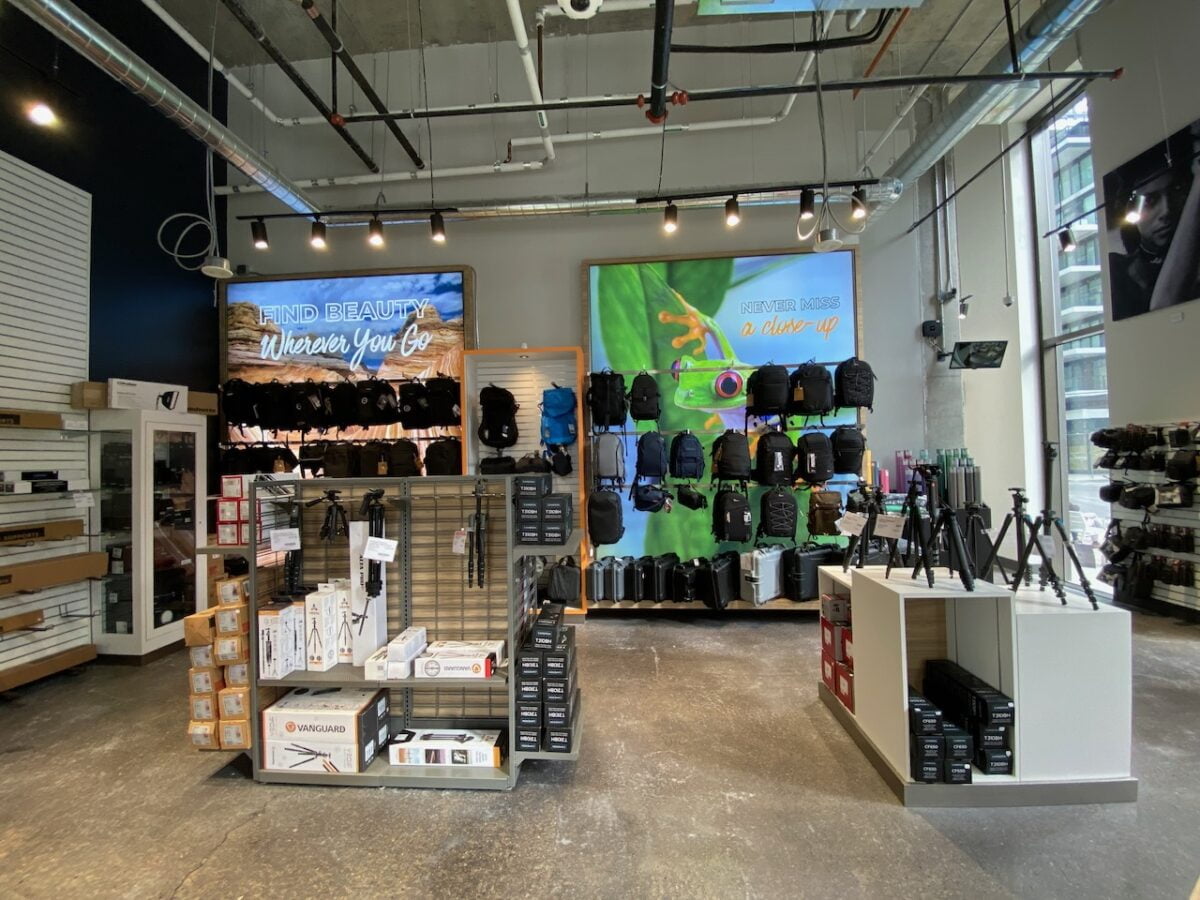
“We’ve been eager to find a new location that supports our newer store format for years. We have rolled out our new store concept out across half our chain, which provides a significantly better customer experience. Unfortunately, the new format didn’t physically fit in our quirky older space, We did our best with that store, but it was time to give it the update our customers deserve. The new location is a brand new, big open space – it was a blank canvas for us to work with.”
“The previous location had been surrounded by construction for a few years with a number of real estate development projects underway. It had been increasingly difficult for customers to access the store and find parking. When you factor in that the intersection of Church and Queen Street is subject to the Ontario Line subway construction, and new development proposals on three of the four corners, the future was going to unclear for the coming years.”
Previous Henry’s Flagship (Image: Dustin Fuhs)
“Knowing the time to move our flagship was approaching, we had been watching the market closely. When we saw this spot, we jumped. The timing was perfect as it coincided with the end of our lease in our old space.”
185 Church Street
Henry’s at 185 Church Street in Toronto (Image: Dustin Fuhs)
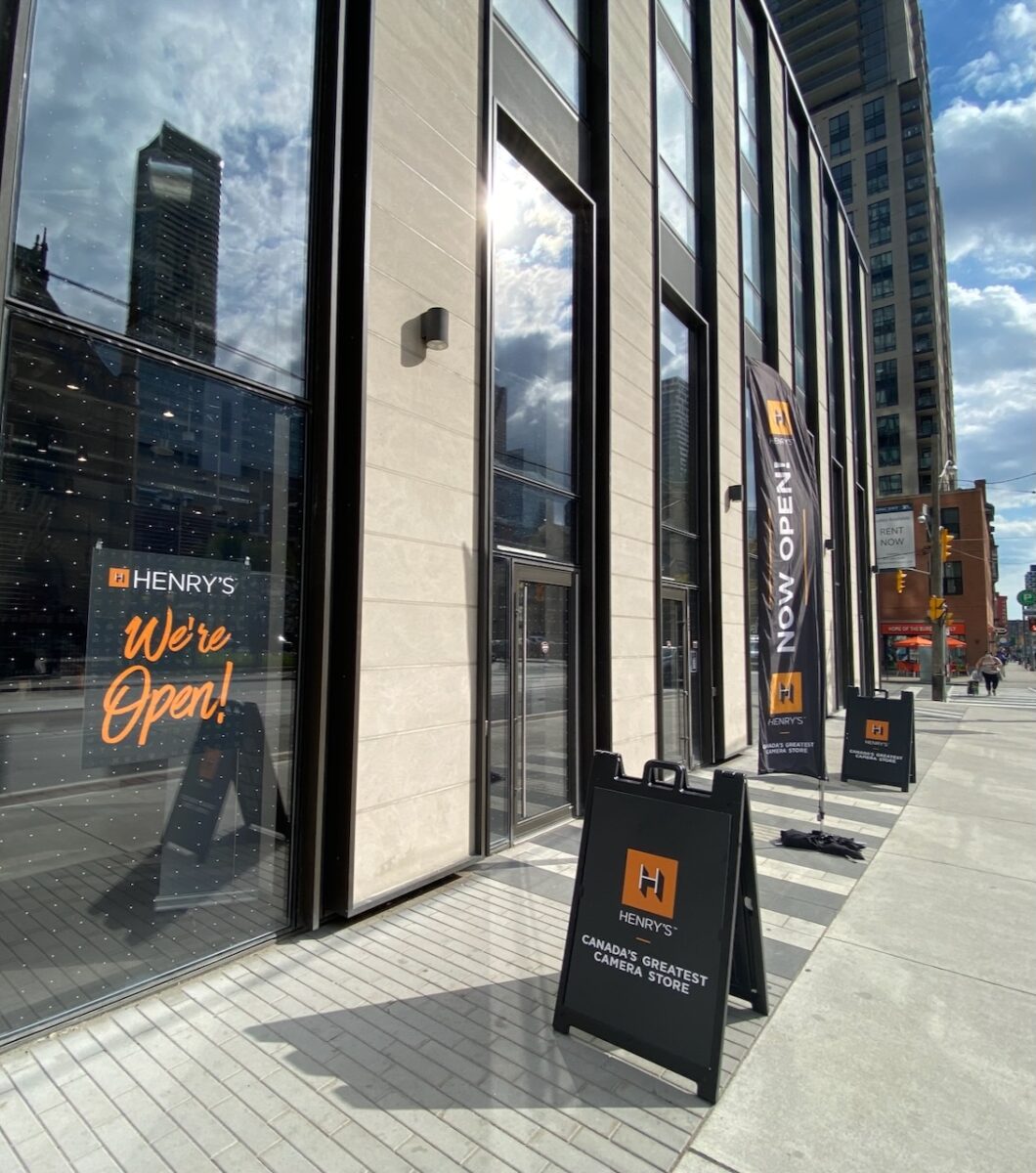
Located at 185 Church Street, the new space allowed for the introduction of Henry’s updated store concept to the downtown core while not giving up the neighbourhood.
“I love the fact that it’s only a block away from our previous location. Henry’s was there for 47 years, and we know in retail that moving a customer from an old location to a new location isn’t easy. We also wanted to be central – still close to Yonge, accessible to public transit, close to the downtown core and within a short walk to the CF Toronto Eaton Centre.”
The new location also provides a familiar touch.
“We have a corner with incredible frontage – the exposure is fantastic with high ceilings and high windows and we’re actually closer to the CF Toronto Eaton Centre now than we were before.”
Henry’s at 185 Church Street in Toronto (Image: Dustin Fuhs)Henry’s at 185 Church Street in Toronto (Image: Dustin Fuhs)
185 Church Street is half the size of the previous Henry’s retail space a block south.
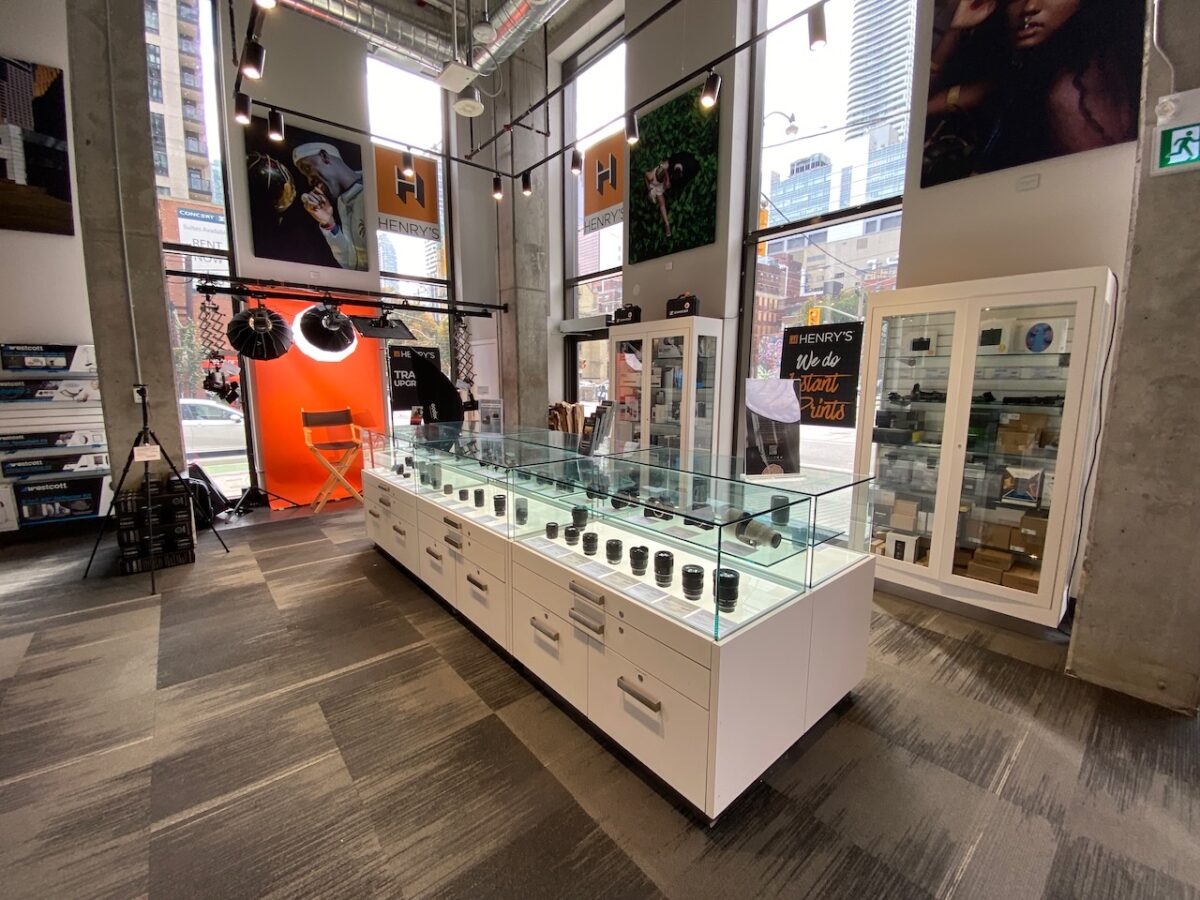
“Because the store is open and in a modern space without all the nooks and crannies of our old space, it’s a much more efficient layout and fits the new format. Even though it’s smaller, it feels bigger. The building also has Green P parking underground and we know that the surrounding buildings can’t be knocked down.
“Three of the four corners of the new location are historical landmarks or completed developments, which means that the store is coming in at the right time instead of being at a corner that will be a construction mess for years to come. Construction affects traffic and people will avoid downtown Toronto construction – but when you say ‘downtown Toronto with parking underground’, it’s very different.”
Henry’s Head Office Relocation
Former Henry’s Flagship and Head Office at 119 Church (Image: Dustin Fuhs)
With the move of the flagship, the brand had a decision to make about the head office and on-site functionality of the long-standing tradition of having the head office at the Flagship.
“We started this conversation long before COVID. Even then, we outlined our criteria for our new retail flagship store it was never contingent on satisfying our office needs. We committed to finding the best retail location for our customers first, and if it happened to have office space, that would be a bonus.
“By the time that we found this location, we were already a year into working remotely and the role of the office was already in flux. We spent a lot of time talking to our home office employees to understand their needs, in terms of work space. We proved that we were very successful working remote, so we made the decision to be ‘remote first’.
“We all agree that it’s important to see each other in person regularly to build relationships, build the culture, work through complex problems, do strategy – but we don’t need a big, permanent office to do that and it doesn’t need to be downtown. We also asked our staff ‘if you’re going to meet, then where?’ We do have warehouse facilities in Vaughan, which has some office and meeting space– everyone preferred to meet there as it’s a much easier commute.
“We are very fortunate to have flexibility and we can always adapt as the work environment changes over time.”
Customer Expectations and Community Development
Henry’s at 185 Church Street in Toronto (Image: Dustin Fuhs)
With a new flagship comes changes, but what will customers experience with the new store?
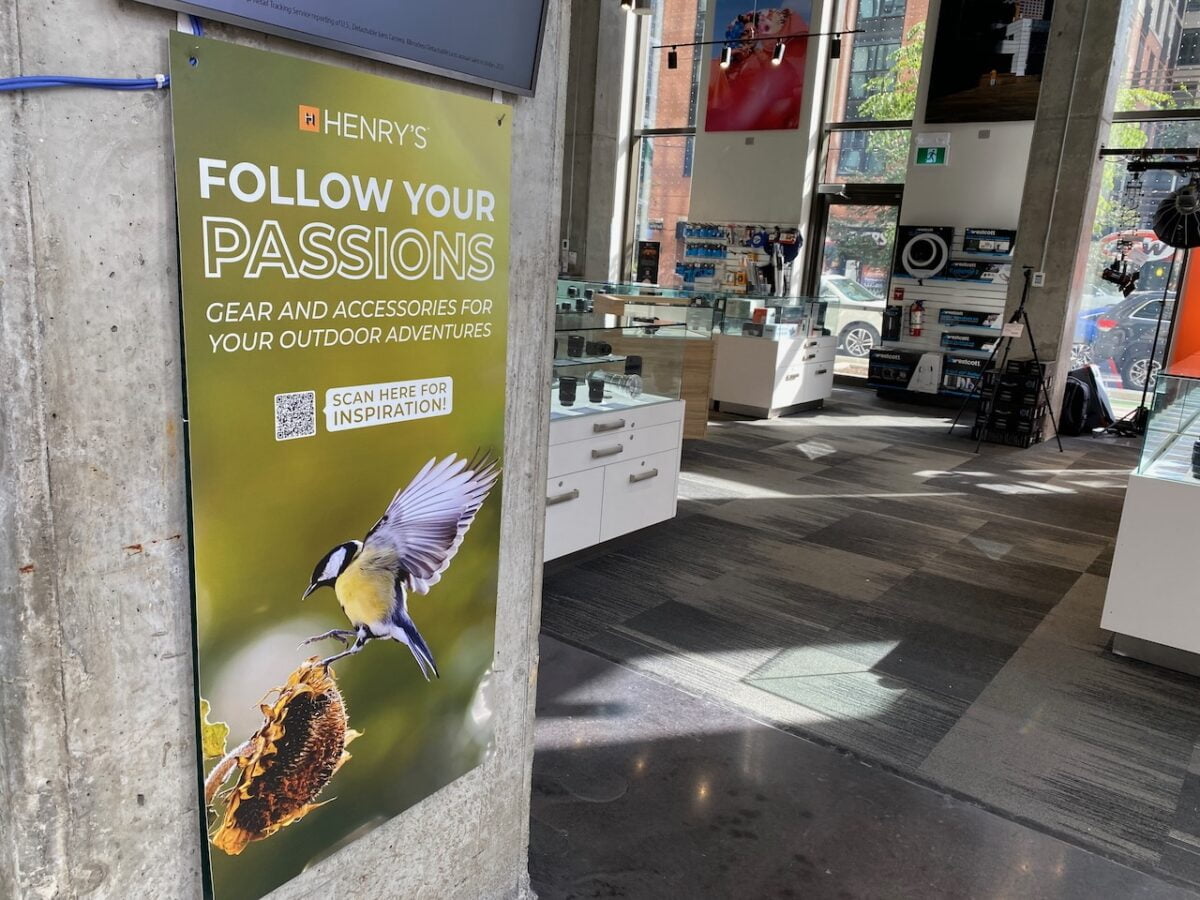
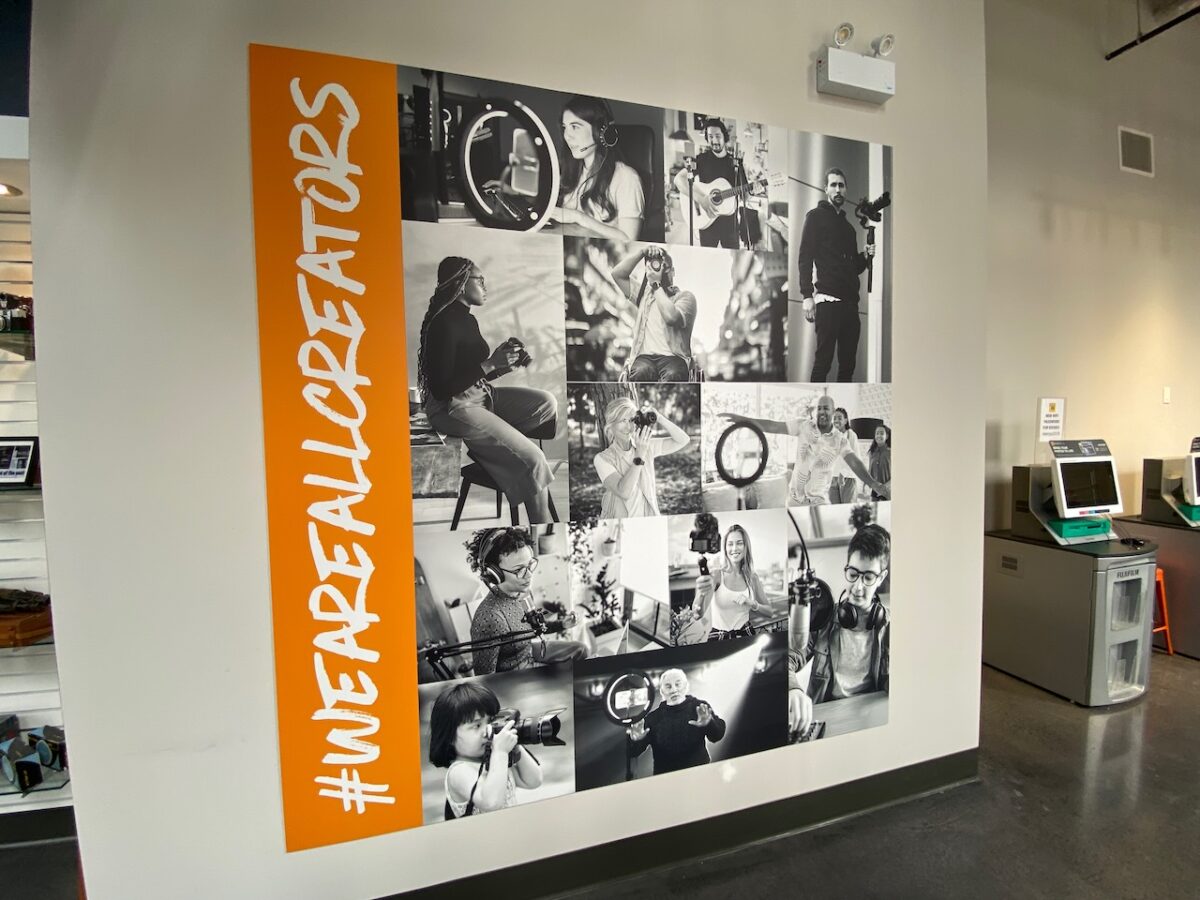
“The same exceptional Henry’s experience with the best selection of gear that photographers, videographers and content creators have come to expect from us, in a modern space for the modern Henry’s brand.”
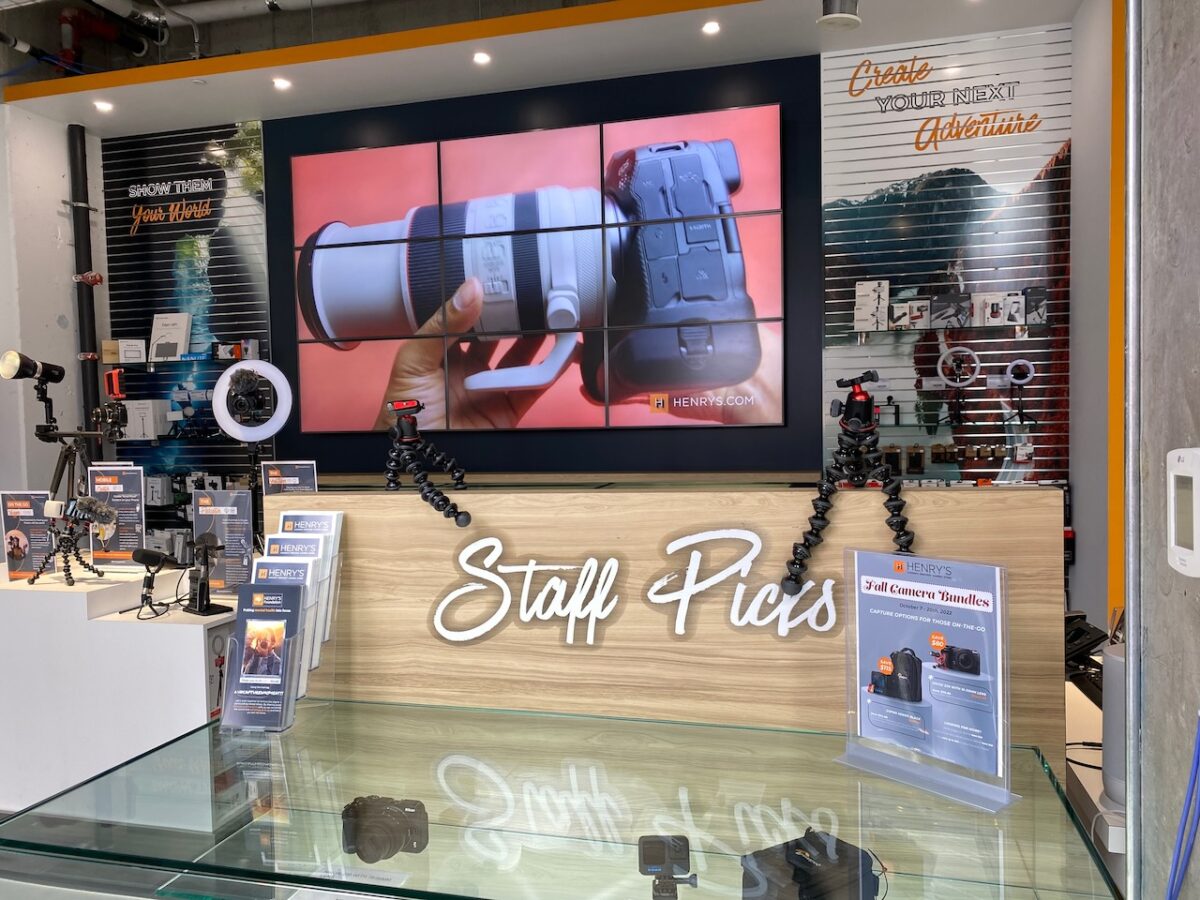
“The updated store format is designed to be more open and welcoming, bringing store associates out from behind a counter and allowing for more personal conversation and interaction with customers. It is a more collaborative and consultative experience. Our cabinets are accessible on all sides, so now you’re able to walk the store together. In the past, you would have sales associates that were trapped behind the sales counter because of the design.”
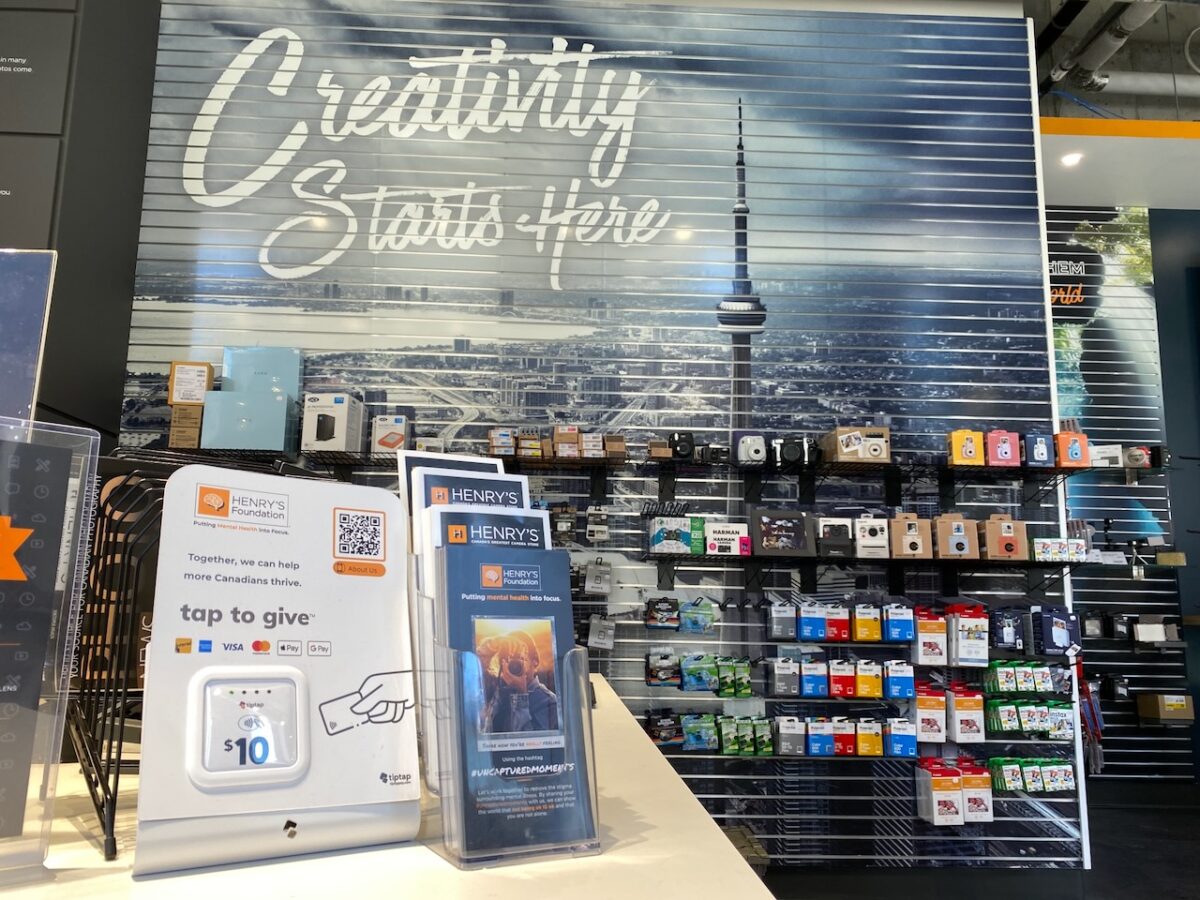
“It’s a more enjoyable shopping experience. We have so much natural light, inspiring imagery (video and still). It’s a far more inspiring environment.”
@185
@185 at Henry’s Flagship at 185 Church Street in Toronto (Image: Dustin Fuhs)Henry’s at 185 Church Street in Toronto (Image: Dustin Fuhs)
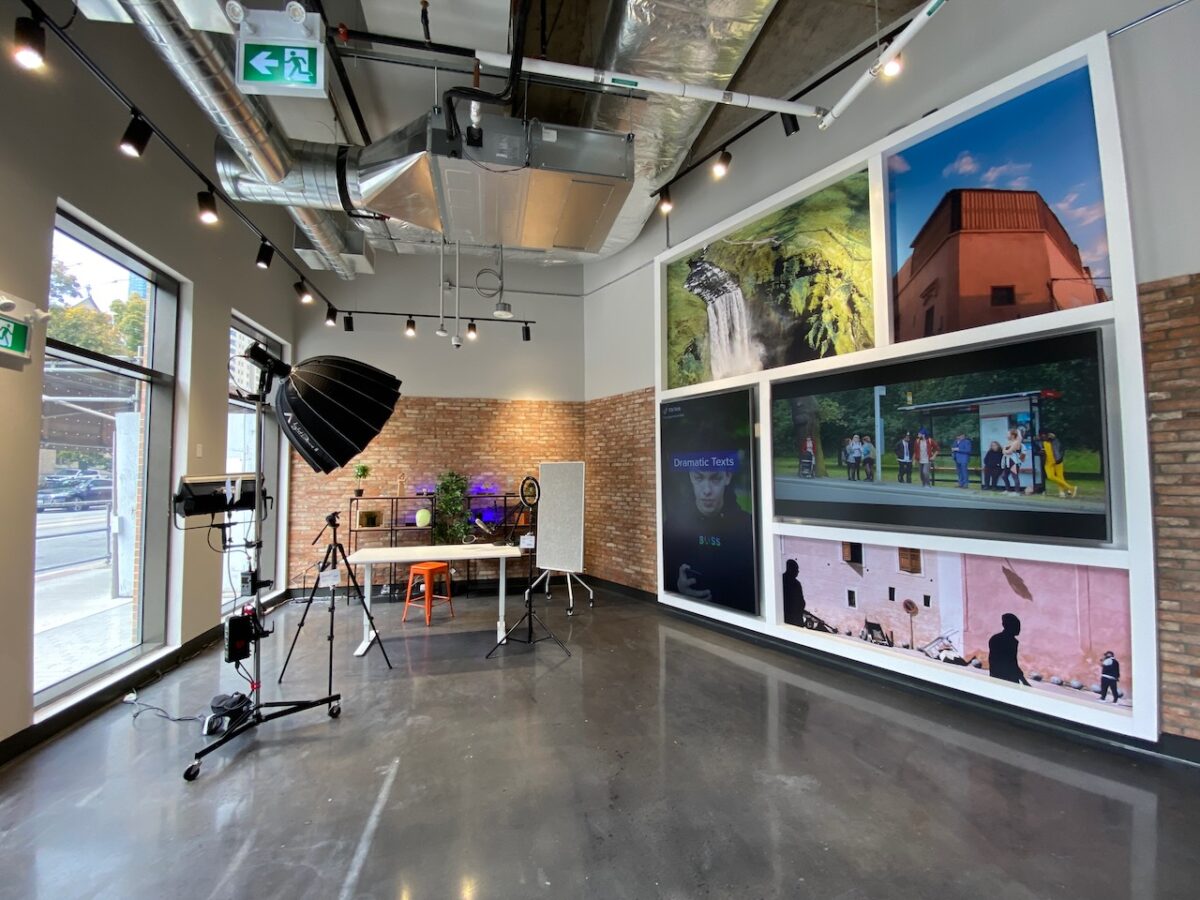
The new location has a community space, named @185, operated in partnership with Buffer Festival where photographers, videographers and content creators can work together, collaborate, learn, record, use the equipment and make content.
“We had been playing with the idea of a community space, which started with a podcast studio in our Vancouver store. When we toured the space, we got very excited about one spot in the store that was just perfect for this. It has great visibility from the street, it reminded us of the old Speaker’s Corner booth that had such a fun, contagious vibe.
“The most important goal of the space is to get people in. We want people to use the space. We want people to see the action. I want you to walk by, see someone recording and say WOW, that’s really cool!. The more people use it, the more people will learn how to improve their content and how the right gear is critical.”
More information for the hub will be available on Henrys.com
Investing in Retail
Henry’s at 185 Church Street in Toronto (Image: Dustin Fuhs)
“We are investing in physical retail. Today’s retail customers want digital and social channels to work hand in hand with physical spaces to support their needs. Henry’s believes strongly that physical retail has an important role to play in delivering that overall customer experience, and having a dynamic, engaging flagship store is a central part of that strategy.”
“It’s important for customers to have a physical space where they can come in, touch the product, play with the gear. More importantly is to have people that they can connect with, share the same passions and inspire them.”
“Specialty retail plays an important role in Canada’s retail industry. Specialty businesses offer a unique experience that Amazon and other big box retailers can’t, particularly as the digital imaging category moves up market. There is a lot of new, exciting technology and more uses for it. We’re the only national digital imaging retailer, so we are in a unique position where we offer the benefits of specialty with scale and 100+ years of credibility and loyalty.
The Future of Henry’s
Henry’s at 185 Church Street in Toronto (Image: Dustin Fuhs)
“We’re making huge investments in technology right now. It’s really important that we ensure we’ve got the infrastructure supporting our stores and our digital growth. Digital is a very important part of our strategy, to align our digital customer experience and with the physical journey.
Henry’s just implemented a new ERP, point of sale system and website. The brand continues to invest heavily into the social strategy.
“Content is critical to our business, and we have to have the best content out there to maintain credibility with our customers.
Henry’s at 185 Church Street in Toronto (Image: Dustin Fuhs)
The brand is also looking at the physical retail strategy going into 2023.
“The economy continues to be volatile, so we are constantly evaluating the market to identify opportunities to grow and look at where it makes sense to consolidate efforts.
“Our goal is to have a presence in all major markets across Canada and we have a few different models to achieve that. How that happens – it depends. We’ve got stores like our Flagship in urban cores and plaza locations outside the core. We’ve also recently opened our first smaller-format store at CF Limeridge Mall in Hamilton, which has been widely successful. This new format allows us to get into other regional markets which currently don’t have any stores. Of course, the retail network is heavily supported by our online business.”
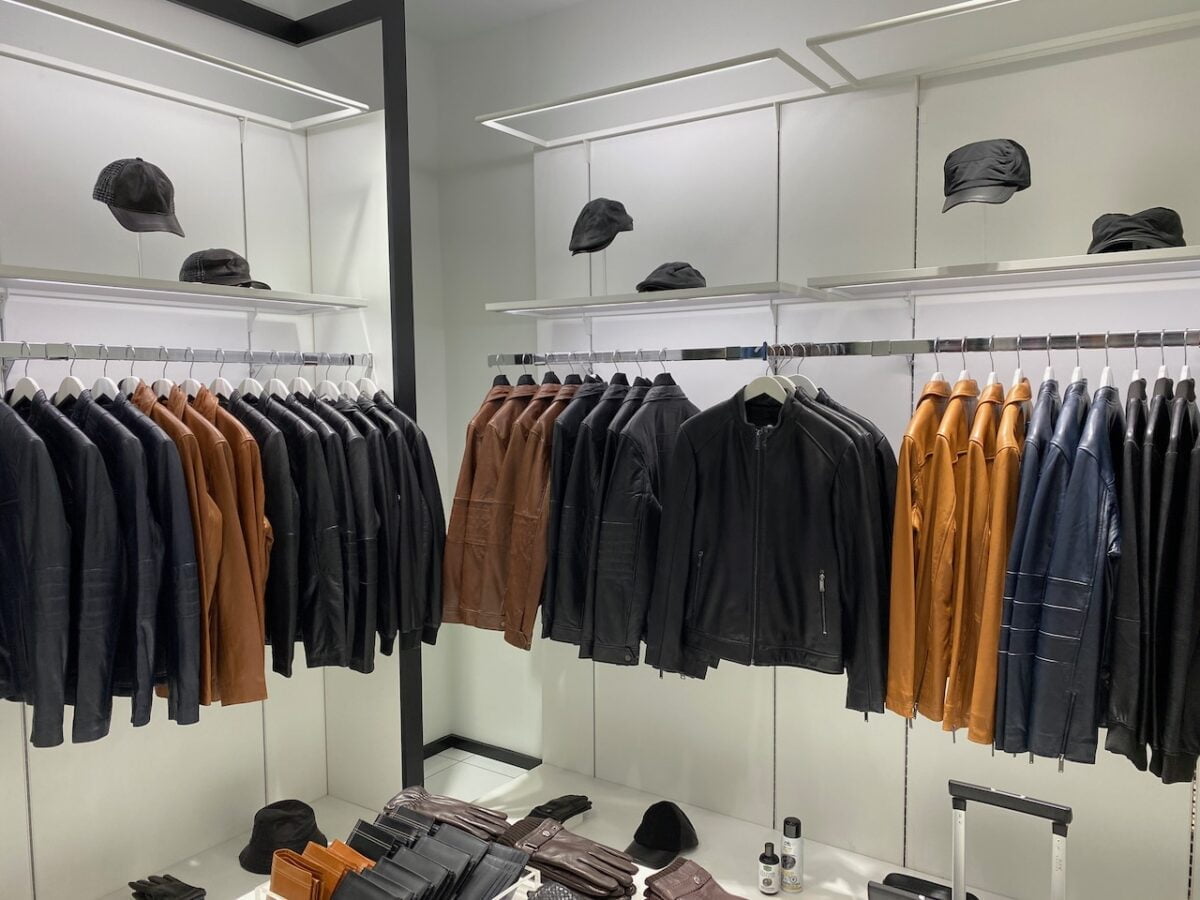
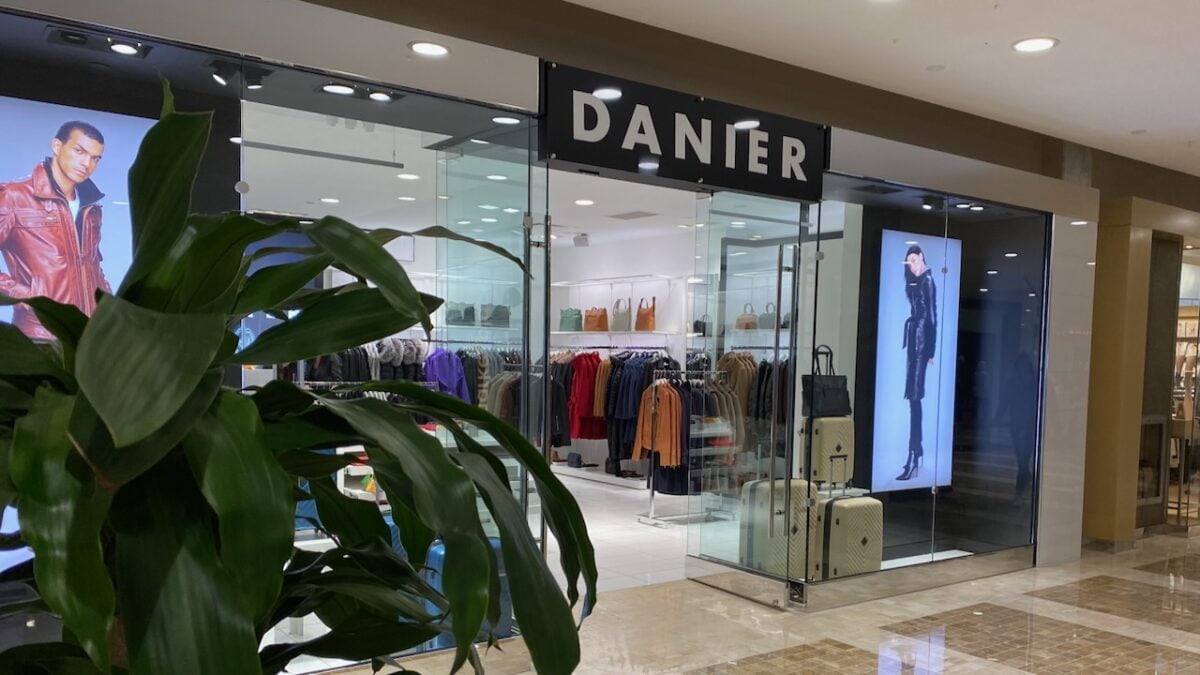
Danier at First Canadian Place (Image: Dustin Fuhs)
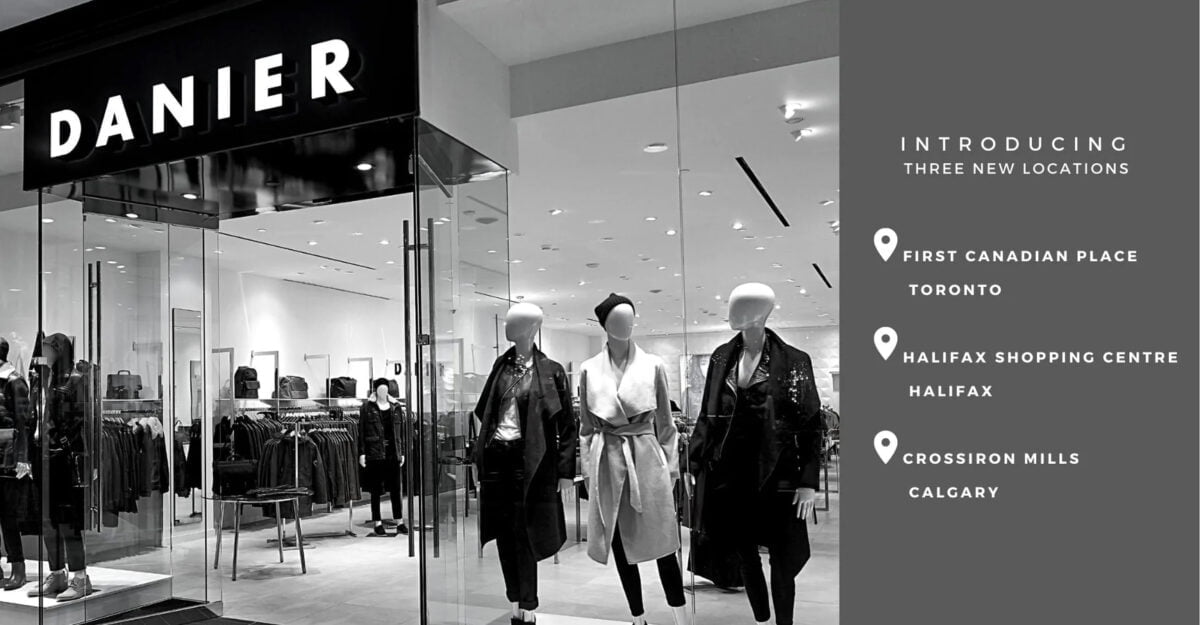
Canadian fashion brand Danier, known for its leather clothing and accessories, has recently opened three new locations in the country in key markets.
Stores have opened in First Canadian Place in Toronto, the Halifax Shopping Centre in Halifax and CrossIron Mills just outside of Calgary, bringing the total store count to 13 locations in BC, Alberta, Manitoba, Ontario and Nova Scotia.
Olga Koel
“We plan to expand our brick and mortar locations to 10-20 stores across major cities in Canada in the next one to five years. We do not want to oversaturate the market with redundant locations, rather focus on creating a more exclusive feel, where customers view us as a destination shop. Our brick and mortar stores are critical to the success of our business as there is still no substitute for being able to touch and feel the products before buying,” said Olga Koel, Executive Managing Director at Danier.
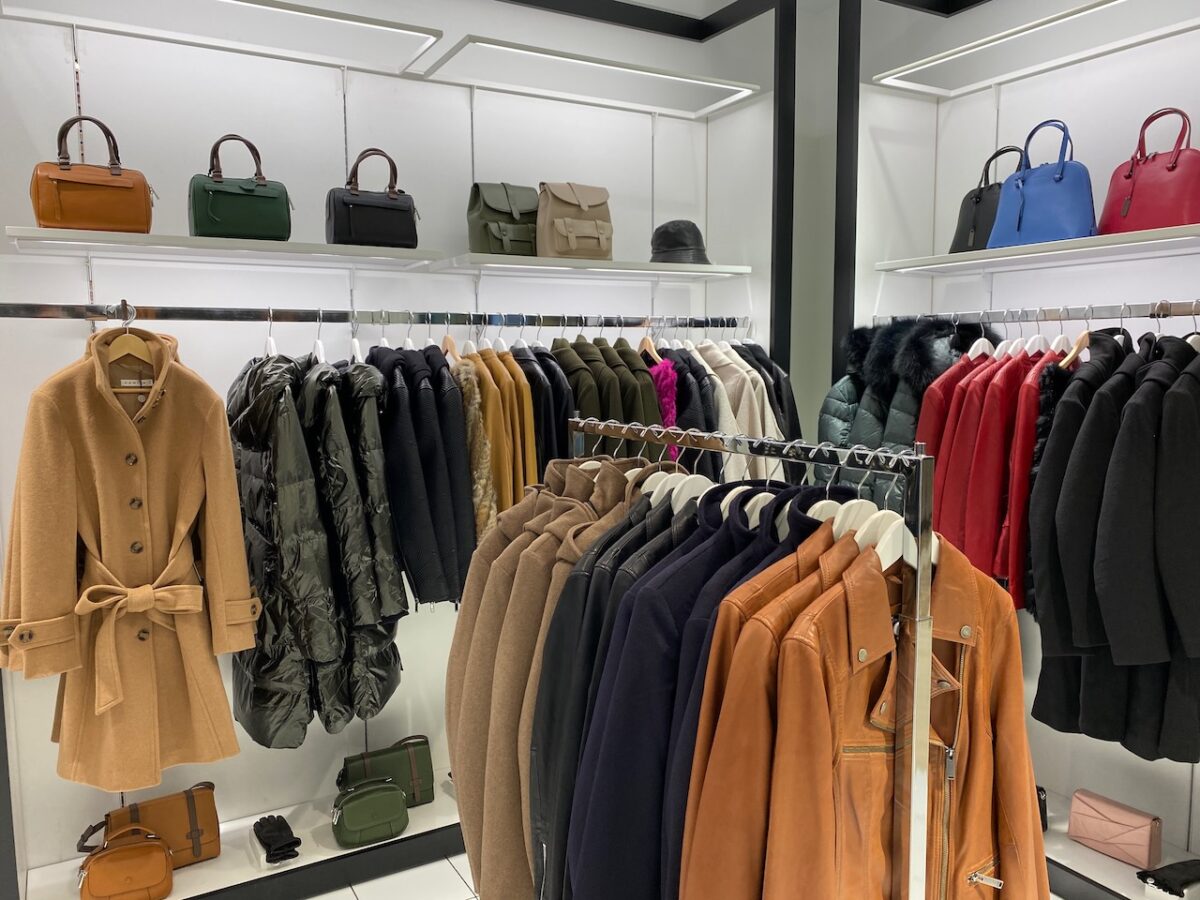
“Our products have a sensory element that invokes a strong feeling of richness and satisfaction – nothing beats the experience of getting into that perfect leather jacket and seeing how it transforms your look in an instant or wrapping yourself up in a luxurious wool coat and the confidence that comes with it.
“We expect to continue growing our online business to provide a robust omni channel experience to allow our customers the freedom and flexibility of shopping with us at their convenience. We look to incorporate integrated systems to create a seamless shopping experience that will work hand in hand with our brick and mortar locations.”
Danier at First Canadian Place (Image: Dustin Fuhs)
Koel said a critical component of selecting a retail location lies in understanding its target market.
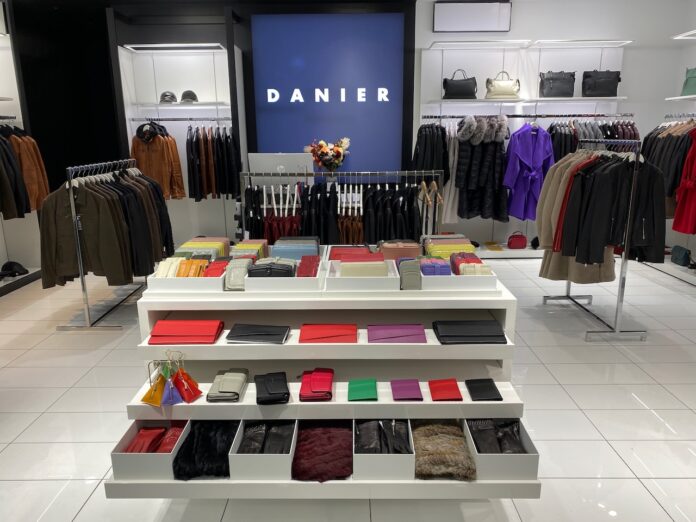
“We want to be easily accessible and have stores that best display our products and the modern, sophisticated feel we want to emulate. We choose spaces with large windows and attractive entrances to draw the eye in and help us stand out in the area. When selecting a location, we thoroughly study our competition and the adjacencies to the retail space to ensure that the environment is complementary to our offerings. Most importantly, we look at the overall experience through the point of view of our customers to ensure the best fit through their eyes,” she said.
Danier relaunched its operations in the fall of 2016 under new ownership and a new strategy, dropping ‘Leather’ from its name and focusing on a variety of men’s and women’s fashion categories. It has expanded its product assortment from what the former Danier had.
The previous Danier Leather brand sought creditor protection in February 2016 and closed all of its stores. New owners came in during the summer of that year.
Danier at First Canadian Place (Image: Dustin Fuhs)
Koel said the Danier store today “evokes trend and modern possibilities.”
“Clean lines and light colours create a canvas where our products are displayed with pride. While all stores have their own unique character, we keep a certain consistency through single bag display and no overcrowding to ensure that our customers feel comfortable, relaxed and welcome in our stores. We enhance the mood with selected playlists and trendy mannequin displays to complete the look,” she said.
“We strive to provide a top-level, in-store experience to match the high quality of our products. We have full service teams ready to help our customers achieve their style goals through trend and fit. These professionals work to make the Danier experience complete with the knowledge and attention to detail one could only expect from the best.
“It’s our leather that differentiates us from everybody else. It’s the history, our heritage of leather.”
Danier at First Canadian Place (Image: Dustin Fuhs)Image: Danier
Koel said the retailer is always looking at new locations.
“We still believe definitely in the retail market and being in more locations. We’re actively looking at expanding all the time in all the different areas, especially in BC, in Alberta . . . We are looking in BC more actively and that’s the area we’d really like to develop more there,” she said.
“We definitely want to look in key market areas. We want to be more in all of the upscale malls. So right now we’re actively looking at all of the top malls in BC and we want to get the right space wherever it is. It has to be the right space in the right area. If you don’t get the right space, you’re not going to get the right foot traffic and you’re not going to get the right recognition if you’re not in those areas.”
Retail Insider is streamlining its Canadian retail news from around the web to include a handful of top news stories that can be viewed quickly during the day. Here are the top stories from the past three days.