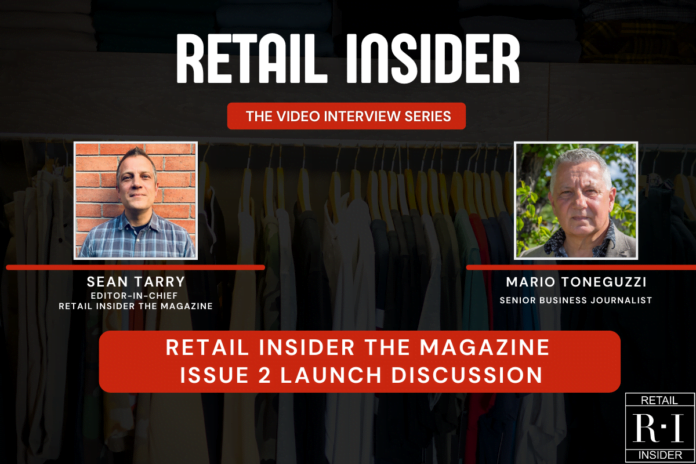
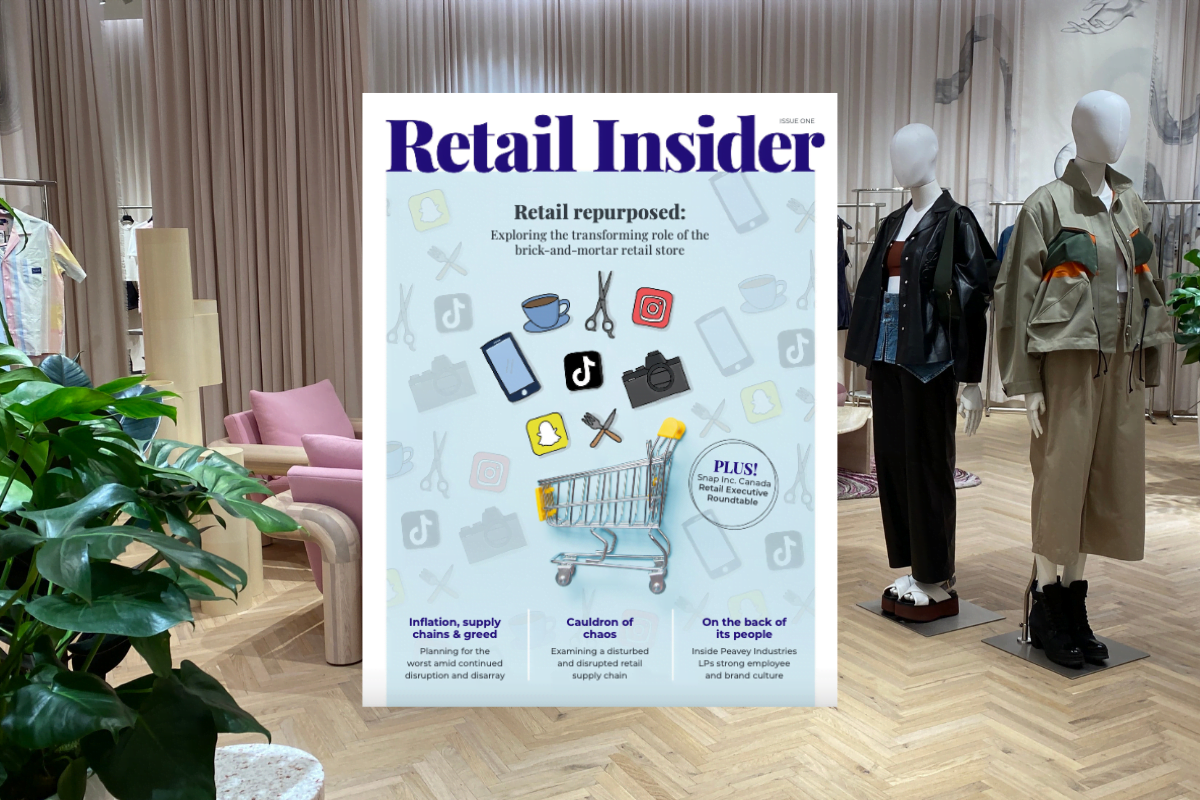
Tarry talks about the feedback from the first issue and how it went, preparation for the second issue, the use of a variety of writers and experts, topics and issues to be discussed in the second issue and what lies ahead for the publication.
The Video Interview Series by Retail Insider is available on YouTube.
Connect with Mario Toneguzzi, a veteran of the media industry for more than 40 years and named in 2021 a Top Ten Business Journalist in the world and the only Canadian – to learn how you can tell your story, share your message and amplify it to a wide audience. He is Senior National Business Journalist with Retail Insider and owner of Mario Toneguzzi Communications Inc. and can be reached at mdtoneguzzi@gmail.com.
Also check out the other series offered by Retail Insider, including The Weekly podcast and The Interview Series, which are both available on Apple Podcasts, Stitcher, TuneIn, Google Podcasts, or through our dedicated RSS feed for Simplecast and other podcast players.
The burgeoning area known as Liberty Village continues to undergo a dramatic transformation with more to come as First Capital Real Estate Investment Trust looks to build three residential towers in the neighbourhood with additional retail and office space.
Leah Feeley, Director of Leasing for First Capital REIT, said the area has seen a dramatic transformation within the last five years.
Leah Feeley
“Liberty Village is our bread-and-butter shopping centre in terms of our ‘Super-Urban’ Strategy. Our ‘Super-Urban’ Strategy encompasses three core metrics including population density, access to transit and walkability score,” said Feeley.
“We continue to have strong leasing demand and high renewal expectancies in Liberty Village. If a unit comes up for lease, we see this as a great opportunity to bring in new and exciting tenancies with a great following such as Nodo Restaurants, Burger Drops, Pi Co., Nani’s Gelato, and Chipotle – all recent deals. We have a very diverse tenant mix including grocery, daycare, banks, pet supplies, personal services, QSR, furniture stores etc. The Metro grocery store continues to be a huge traffic driver.”
Image: Liberty Village
First Capital’s urban mixed-use shopping centre, called “Liberty Village”, has about 75 tenants in about 450,000 square feet. Retail includes Shops at King Liberty, King High Line and Barrymore.
Jennifer Arezes, Vice President of Development for First Capital said, “We are proposing to redevelop a portion of our Shops at King Liberty property with 882 new residential units along with 20,000 square feet of new retail space and 70,000 square feet of office space”.
Jennifer Arezes
“We’re also proposing a new public park and multi-use pedestrian promenade traversing the site from East Liberty Street to 85 Hanna (Avenue)/Barrymore and eventually across the tracks to King High Line and the new proposed King-Liberty GO Station,” Arezes said.
Feeley said “There is a lot of high-rise residential going up in the area. There is great accessibility to Lakeshore and the Gardiner Expressway. It is walking distance to the Exhibition Station/BMO Field. There are a lot of young families that have moved here, and everyone seems to have a dog! Popular tech companies have also opened offices here. It has really become the trendiest most desirable place to live.”
Image: Liberty Village
According to First Capital, the proposed development includes the following elements:
Block A at 75 Hanna Avenue is proposed as a four-storey office podium with retail at grade and two residential towers at 29 and 34 storeys;
Block B at 120 Lynn Williams Street is proposed as a seven-storey podium with retail at grade and a 33-storey residential tower above; and
Approximately 40 per cent of the development site area is devoted to public realm elements – the Public Park, the Snooker Street Extension, the Promenade, and the Urban Plaza.
“Liberty Village continues to cater to young professionals, young couples, families, and ex-suburbanite empty nesters, making for a unique and diverse mix of tastemakers and trend shapers. Liberty Village is set to see the population grow over nine per cent in a five-kilometre radius by 2026. This will take the total population from 533,000 to over 582,000 people,” says Feeley.
“The City of Toronto is working in collaboration with the Province of Ontario and Metrolinx to take advantage of the nearly 40 kilometres of already existing Metrolinx GO rail corridors to bring a better transit experience to the city. The SmartTrack Program will bring five new stations along existing rail corridors (one of them being in Liberty Village) in order to create more desirable transit infrastructure for the people of Toronto. These stations will connect existing subway lines, the UP Express and future lines to the GO Train, allowing more people to easily travel in and out of the city while leaving their vehicles behind. All five stations are set to be operational by 2026 and are projected to bring 110,000 new daily riders to the rail network by 2031.”
Liberty Village has a Transit Score of 100, a Walk Score of 94 and a Bike Score of 79.
First Capital REIT, with over $10 billion in assets, is a leading owner, operator, and developer of grocery-anchored and mixed-use real estate located in Canada’s most densely populated cities.
As of June 30, it owned interests in 147 neighbourhoods, totalling 22.3 million square feet of gross leasable area and 2,400 tenants.
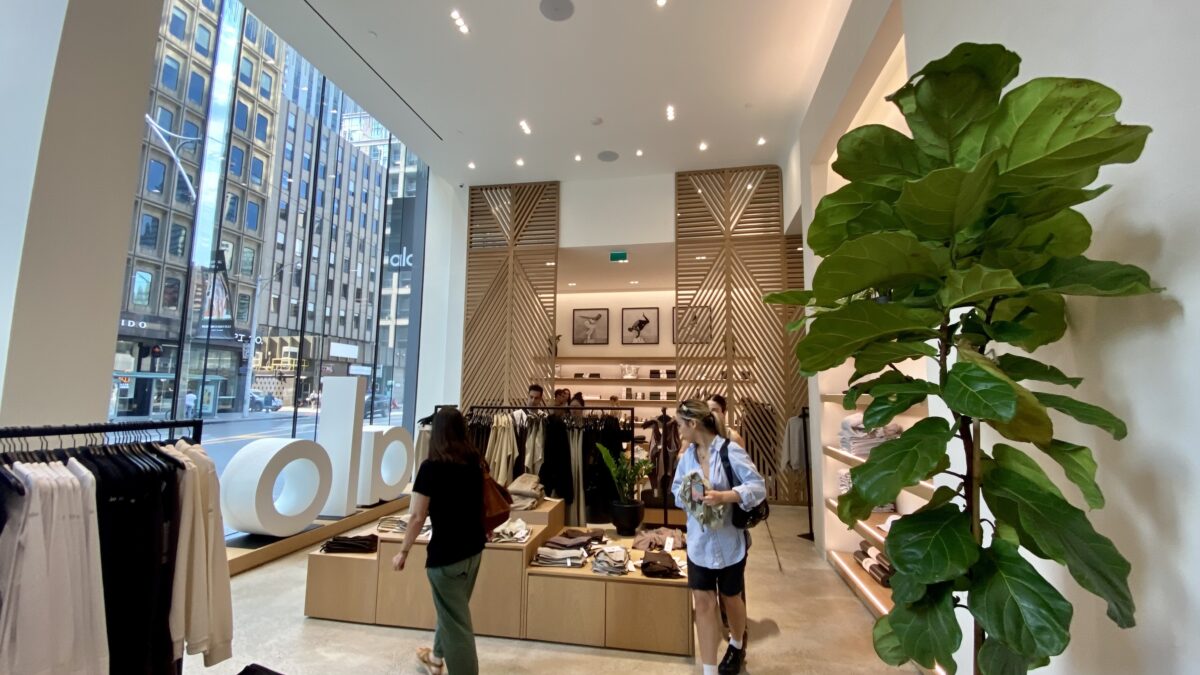
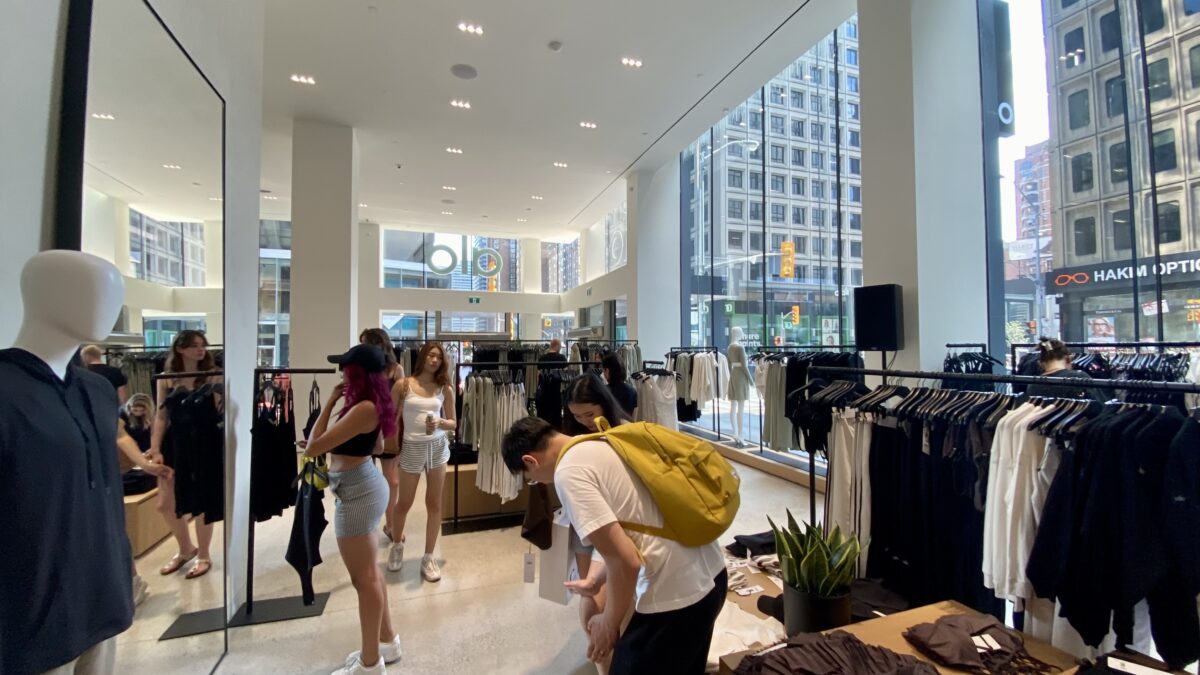
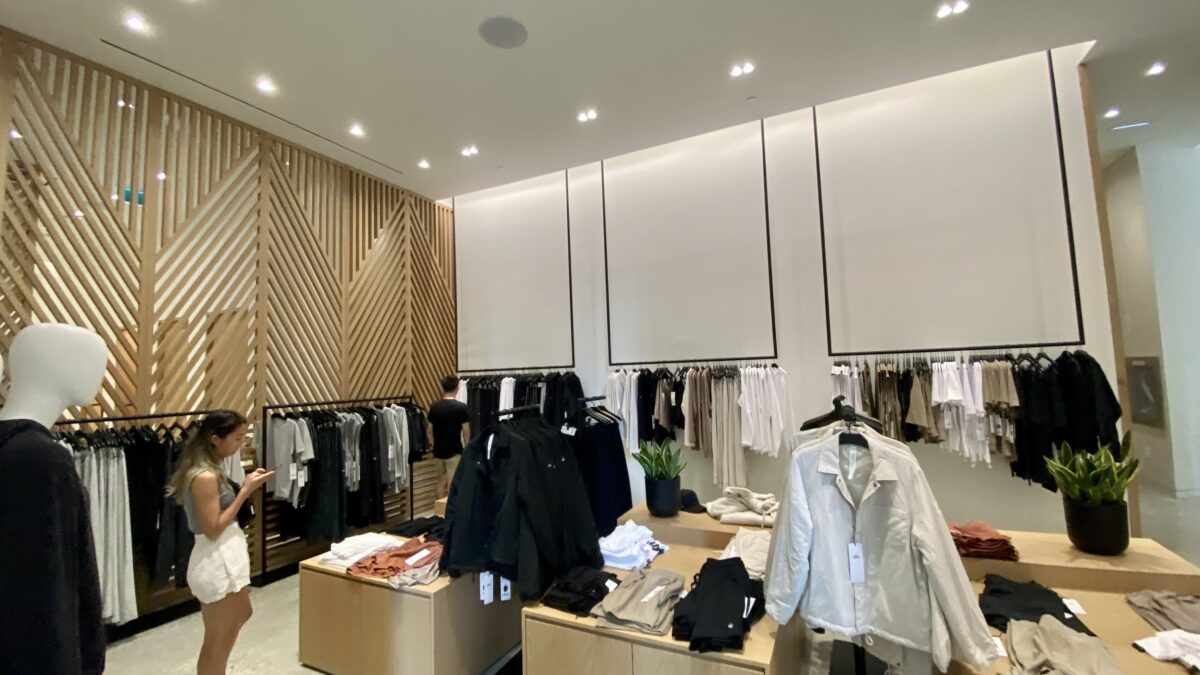
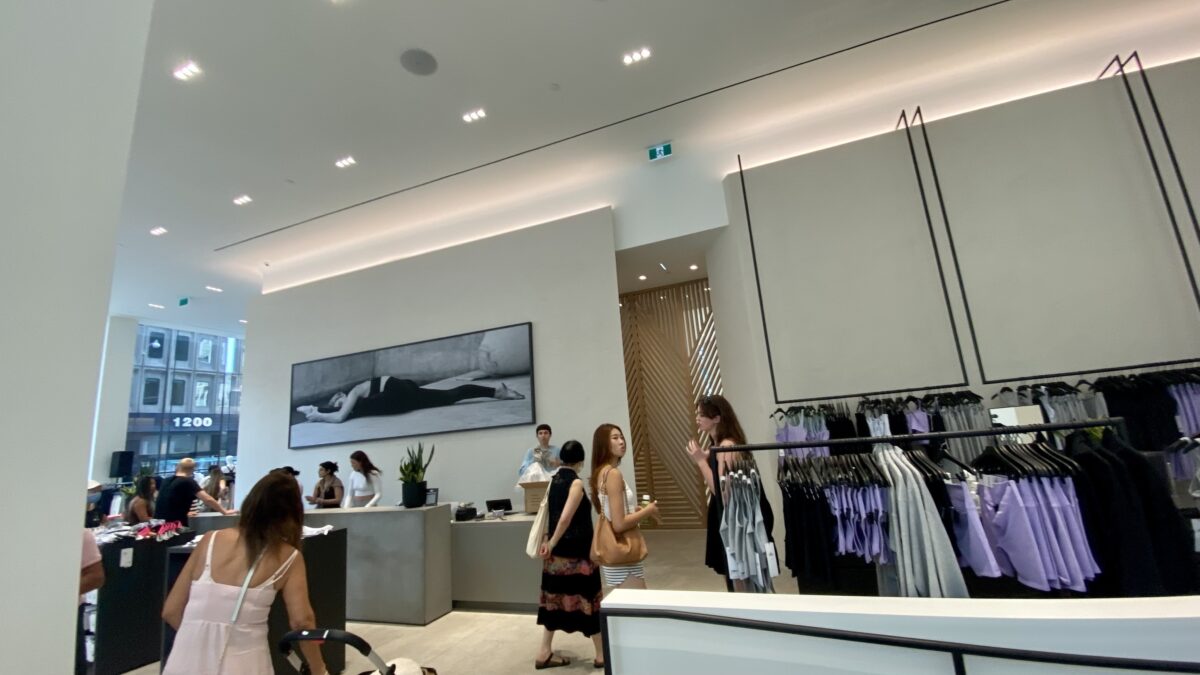
Los Angeles-based Alo Yoga has entered the Canadian market with its first storefront at 60 Bloor Street West in Toronto where a Gap store was formerly located. A second Alo store opens this fall at Toronto’s Yorkdale Shopping Centre, and more are said to be coming to major cities across the country.
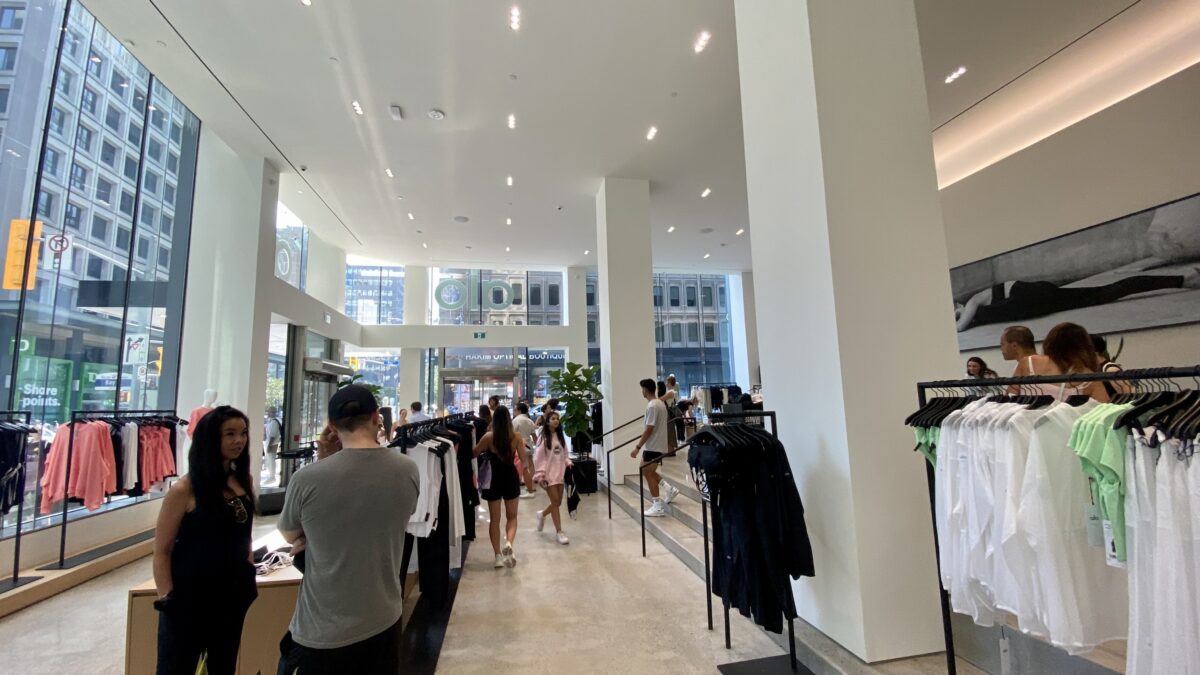
The 60 Bloor Street West Alo location is smaller than we had anticipated when we first reported on Alo’s entry into Canada in January. Alo occupies one level of the former Gap store, spanning about 7,000 square feet. The space boasts soaring ceiling heights facing Bloor Street, made possible by removing escalators from the former Gap store that led to a second level. The new Alo store itself features a white interior that is off-set with wood accents including fixtures and other design elements, as well as a contrasting black trim fixtures and artwork that create an airy and open space.
A 6,800 square foot Alo location is set to open at Toronto’s Yorkdale Shopping Centre in November — the suburban mall Alo location will be nearly as large as the downtown flagship. Alo is said to be looking at opening stores in Edmonton at West Edmonton Mall and in downtown Montreal on Ste-Catherine Street, though nothing is confirmed in terms of finalized deals.
60 Bloor Street West office tower with Holt Renfrew (50 Bloor St. W.) next to it. Photo: Craig Patterson Inside Alo Yoga’s Bloor Street store on opening day. Photo: Craig Patterson
Given what is being said so far, a national store expansion for Alo in Canada is likely at play. Calgary’s CF Chinook Centre could be a target, and Vancouver is a likely bet for Alo, being Lululemon’s home territory.
Alo Yoga’s entry into Canada comes at a time of intense competition, with Lululemon last week reporting stronger than expected sales numbers from its global operations. And Alo Yoga is specifically looking to grab market share from Lululemon. Both brands boast a cult following, and both feature somewhat pricey wares with high margins that allow both to afford the cost of store expansions and expensive real estate. Lululemon has the advantage of almost 70 Canadian stores (a few of which are seeing upgrades) and years of customer loyalty. Alo’s prices appear slightly higher than Lululemon’s, though the price difference might not matter as much to a more monied target demographic. Some Canadians are already familiar with the brand from travel, and have become loyal (we had several excited local shoppers asking us questions prior to the store’s opening). Over the opening weekend in Toronto, the Bloor Street Alo store appeared very busy and shopping bags were seen throughout the neighbourhood.
In Toronto, Lululemon is building a 12,100 square foot three-level flagship on the same block as Alo on Bloor — Lululemon will occupy the northwest corner of Yonge and Bloor streets just 165 metres or 550 feet from Alo Yoga’s new flagship. The Lululemon store will open in early 2024 according to the brand.
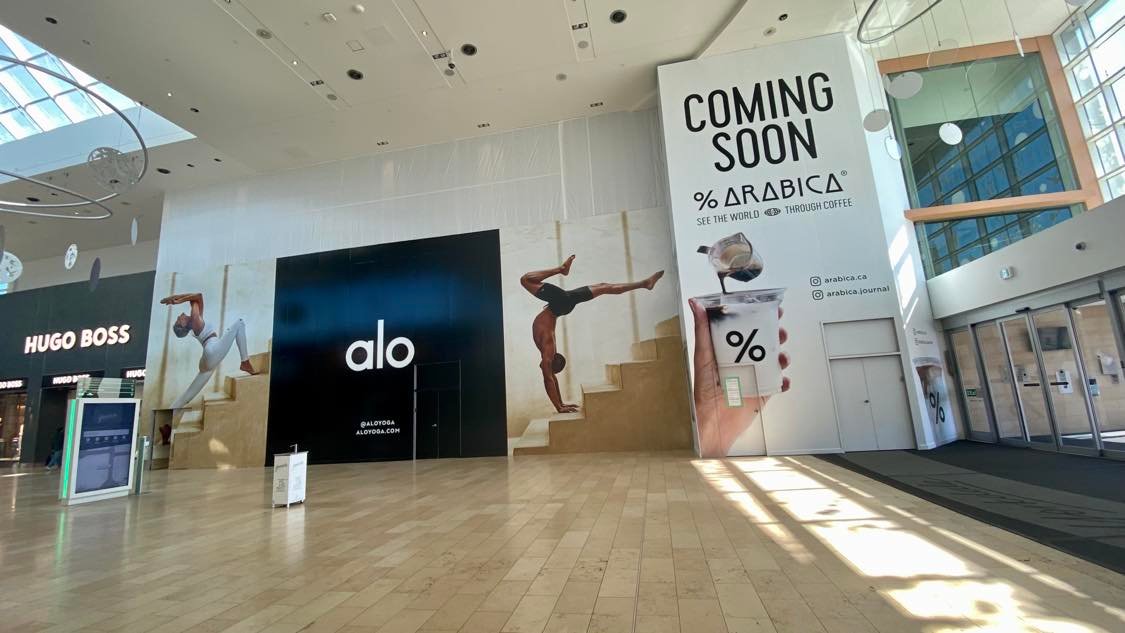
Future Alo Yoga at Toronto’s Yorkdale Shopping Centre. Photo: Craig Patterson (August 2022)Alo Yoga 60 Bloor St. W. in Toronto, Photo: Craig Patterson Alo Yoga 60 Bloor St. W. in Toronto, Photo: Craig Patterson
In Edmonton, if Alo opens at West Edmonton Mall, it would compete with a highly productive Lululemon location. In 2013, the mall’s Lululemon store was said to be top in the company with sales exceeding $25 million annually in just 3,200 square feet. The store expanded to 6,200 square feet several years later and sales rose from there.
Other brands are getting into the yoga/athleisure space in Canada, though at a bit of a lower price point. Women’s brand Offline by Aerie recently entered Canada with its first store at West Edmonton Mall in Edmonton — a second location is set to open at Toronto’s Yorkdale Shopping Centre and more are planned. It joins Gap-owned Athleta which is opening stores across Canada with a national expansion at play.
Some athleisure brands haven’t’ been so lucky in terms of success in Canada — Reitmans shut its Hyba yoga-themed stores in 2018 (the line can still be found in Reitmans stores) and Montreal-based Lole, once expecting to operate about 100 stores in Canada, has significantly shrunk in size since the pandemic. International brands including Lorna Jane were not successful here.
Alo Yoga 60 Bloor St. W. in Toronto, Photo: Craig Patterson Alo Yoga 60 Bloor St. W. in Toronto, Photo: Craig Patterson
Back to Toronto, it’s remarkable that given the importance of the corner of Bloor and Bay Streets, that a retailer such as Alo only ended up taking just one floor. The opportunity presented for something larger and more dramatic. Birks CEO Jean Christoph Bedos in 2019 said that the Bloor and Bay intersection was the “the best retail location in all of Canada”, though as of late it may have seen better days. For years luxury multi-brand retailer Davids Footwear occupied the northwest corner of Bloor and Bay — now it’s home to unsightly optical retailer Hakim Optical which many are unhappy about occupying such an important corner (Hakim also has three stores within less than a kilometre of each other southward along Bay Street). A TD Bank occupies the southwest corner, and Bedos’ snazzy open-concept Birks jewellery store occupies the southeast corner within the Manulife Place complex.
The opening of Alo is still good news for Toronto’s Bloor Street, which is seeing new retailers opening and others signing leases. We’ll continue to report on the ongoing developments in Toronto’s Bloor-Yorkville which is seeing something of a renaissance that will include the opening of several youthful and popular global brands with announcements to follow.
Alo Yoga was founded in Los Angeles in 2007 by entrepreneurs Danny Harris and Marco Degeorge who continue to own and bankroll the business. The company says that it makes “the most technologically advanced yoga clothing in the world” with a “studio-to-street” ethos. Home workouts are possible with Alo Moves, an at-home fitness concept with a $30 monthly membership for unlimited yoga, fitness and meditation. The company has a non-profit called Alo Gives which it says will introduce millions of kids to yoga. Each week classes are shared on YouTube for free.
Alo Yoga only has 19 stores in the United States currently — that’s up from 13 in January. In an exclusive article in WWD earlier this year, Alo co-founder and CEO Danny Harris said that the company is looking to open about a “half a dozen” more stores including Toronto and possibly a partner store in Dubai later this year.
“We have more [stores] coming, but we’re not really sure exactly how many more,” Harris said. “We’re a digital company first. So how many more stores that justifies, we’re not sure. We’re going to eventually go to major cities in Canada and to major cities all over the world,” he continued. Global centres including London and Paris are also among the targets.
During a challenging period of labour shortages in the foodservice industry across Canada, fast food chain McDonald’s has embarked on a campaign to hire thousands of people for its more than 1,400 restaurants.
Becky Ohayon, Senior Director, Field Human Resources McDonald’s Canada told Retail Insider that there are more than 20,000 open positions at McDonald’s for job-seeking students looking for work as well as more mature job seekers.
“We like to say that we’re always hiring, and the back-to-school season is no exception. There are a range of positions available for youth at McDonald’s Canada restaurants from Crew member all the way to Guest Experience Leaders, with opportunities for growth no matter where you’re starting from,” she said.
“With students going back-to-school in the coming weeks, we are looking to hire students looking for flexible work during the school year. Around 70 per cent of our restaurant staff is under 24. Available roles offer youth and students flexible schedules to help balance school, extra curriculars, community work and life while working in a skill-building position.”
Image: McDonalds Canada
Ohayon said hiring is an industry wide problem today.
“Everyone is looking to hire, but our size and scale makes hiring an extra challenge. While many brands in the QSR (Quick Service Restaurant) space may be looking to hire, there’s a lot that makes McDonald’s Canada stand out as an employer. From career development opportunities to flexible schedules, McDonald’s Canada has long been a great first job to kickstart your career—a claim recognized by hiring managers and recruiters across Canada.”
She said working with the fast-food chain is more than just a paycheque as it provides learning and development opportunities designed to empower employees with the tools to grow and succeed in their careers.
McDonald’s cites some independent surveys showing:
58 per cent of employers surveyed say it would be appealing for a job candidate to have experience working at McDonald’s restaurant;
89 per cent agree McDonald’s restaurant experience demonstrates that applicants can work well as part of a team;
82 per cent per cent agree McDonald’s restaurant experience is applicable to careers beyond the food and beverage industry;
77 per cent of hiring managers and recruiters believe that McDonald’s restaurant experience signals applicants have acquired versatile skills including people skills, communication skills, listening skills, time management and empathy;
35 per cent of hiring managers surveyed would select the applicant with McDonald’s restaurant experience when looking at two similar CVs;
According to a recent survey, Canadian residents with previous McDonald’s restaurant work experience went on to work in fields such as education (six per cent), healthcare (eight per cent) and government (nine per cent).
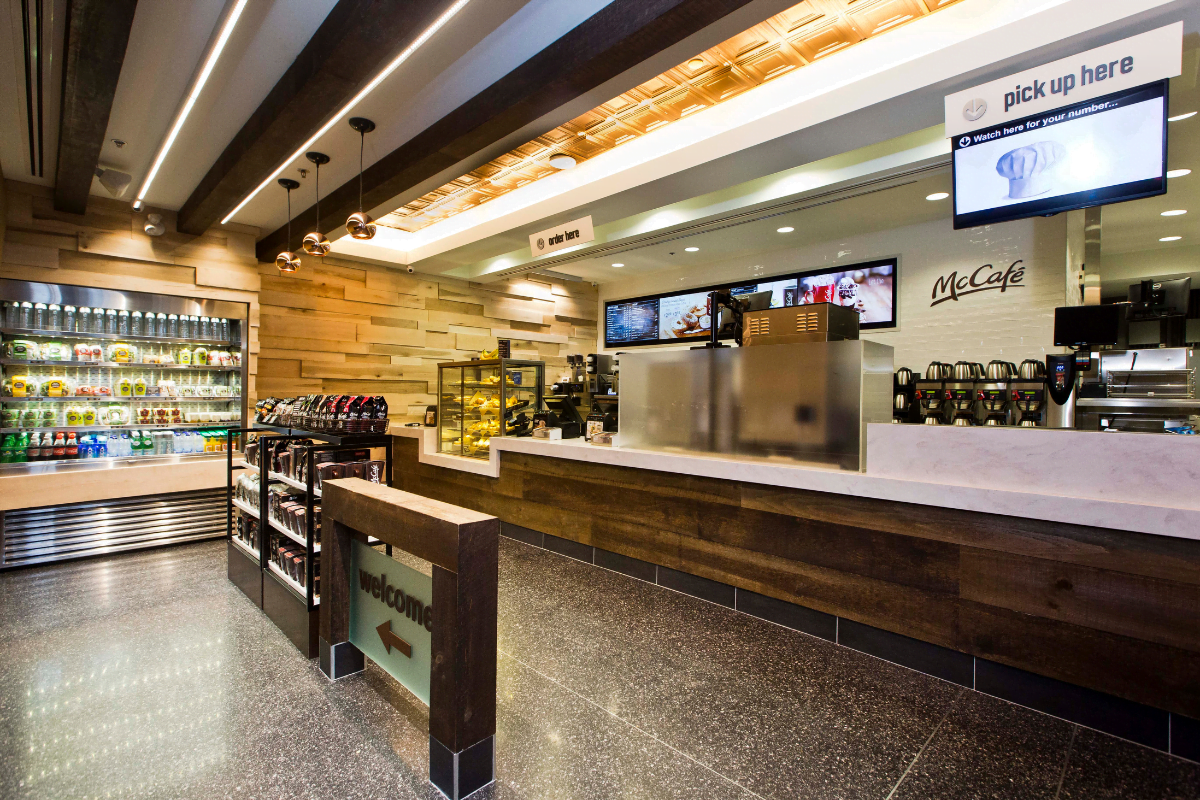
Standalone McCafe at Toronto Union Station (Image: McDonalds Canada)
Ohayon said about one in 10 Canadians have worked at a McDonald’s restaurant at some point.
McDonald’s has operated in Canada for the past 55 years.The first McDonald’s was launched in 1967 in Richmond, BC. Nearly 100,000 people are employed from coast to coast to coast, and more than 90 per cent of McDonald’s 1,400 Canadian restaurants are locally owned and operated by independent franchisees.
Winmark Corporation, the unique national retail resale franchise company, continues to grow its presence in Canada with future growth planned for several of its brands in the market.
Renae Gaudette, Chief Operating Officer for the Minneapolis-based company, said the resale market has been “wonderful” in recent years.
“We like to say we’re recession proof from a franchising perspective and consumers want our brands and want our products right now. They want the value. Not only that but we pay them cash. They bring in their products to us, we pay them immediately on the spot. And then obviously that fills the racks, providing great value to all of our families and consumers across Canada and North America,” she said.
“We’re on a mission. We’re on a mission to provide resale for everyone and we think all of our brands fill a niche in all the communities across North America and Canada, especially for families, growing families, young.”
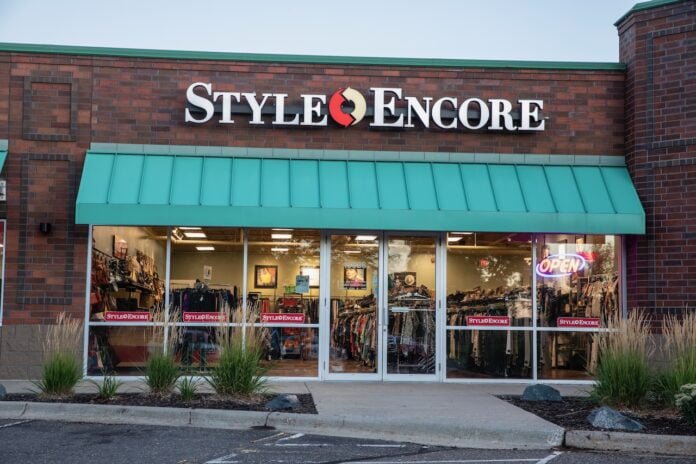
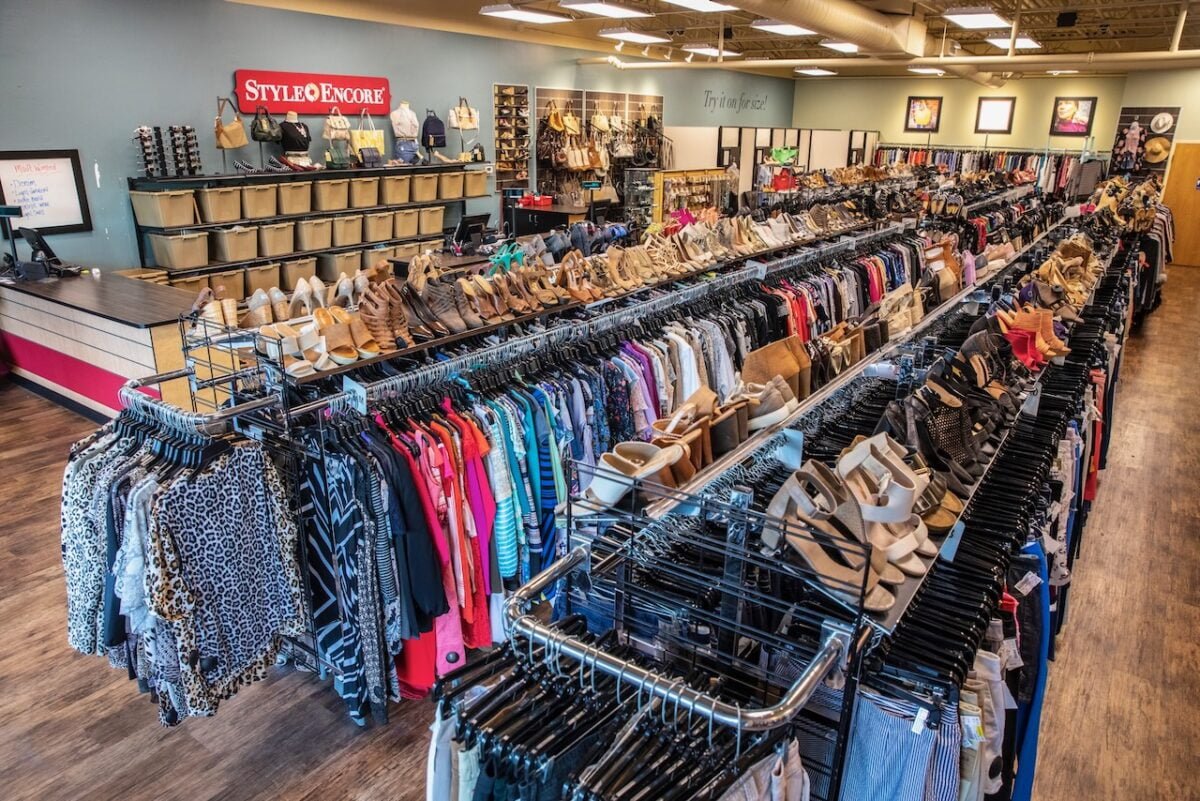
Style Encore (Image: Winmark)
Most recently, the company opened its latest Style Encore store in Markham, Ontario, specializing in resale clothing and accessories designed by women, for women.
“Our official company is called Winmark – the Resale Company. We’ve been around for over 30 years. We’re a franchisor of five wonderful resale brands. And we’ve got almost 1,300 locations across North America,” said Gaudette.
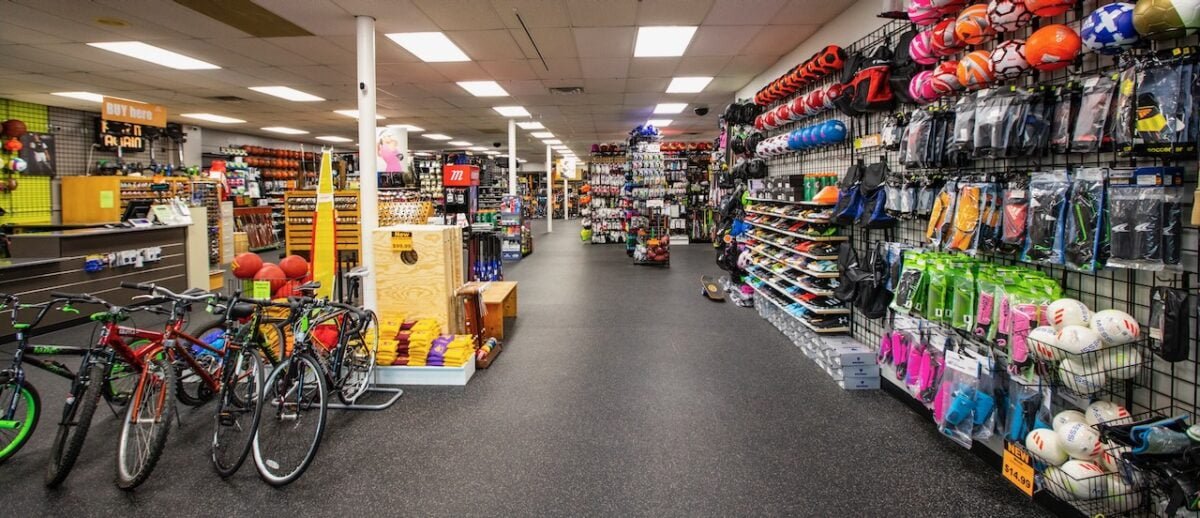
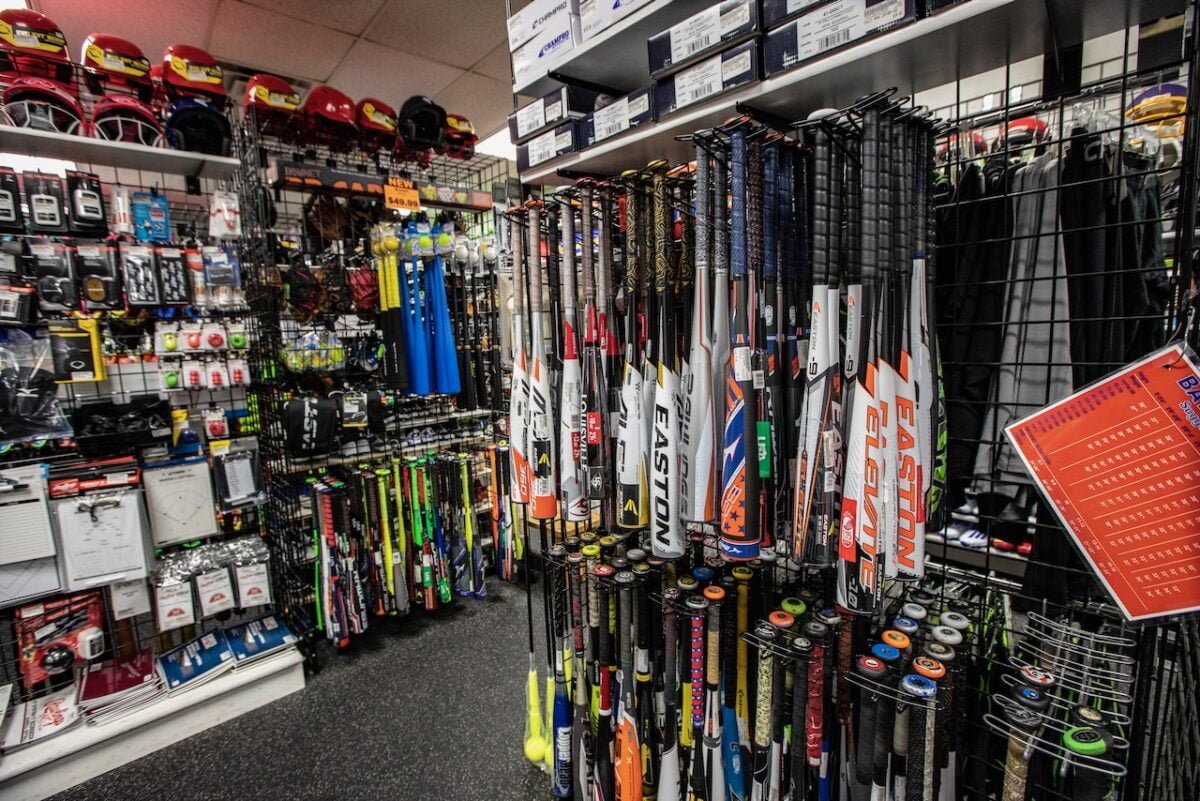
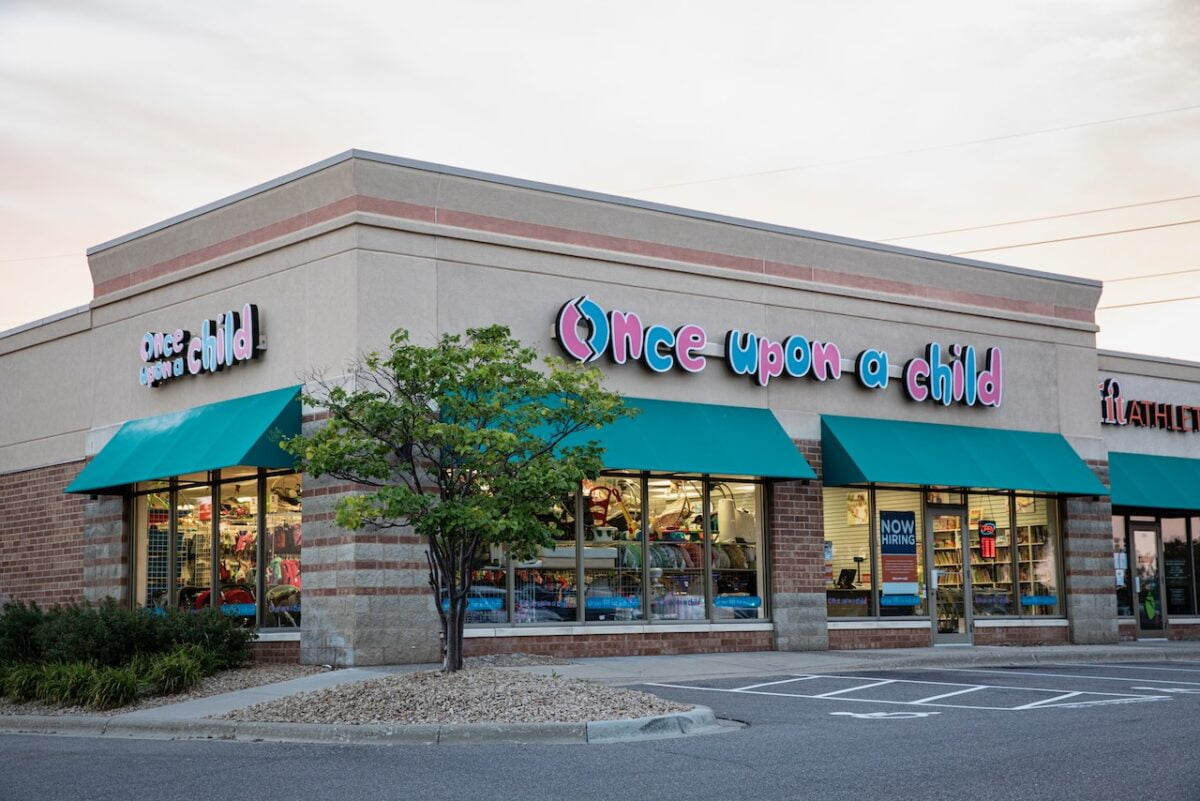
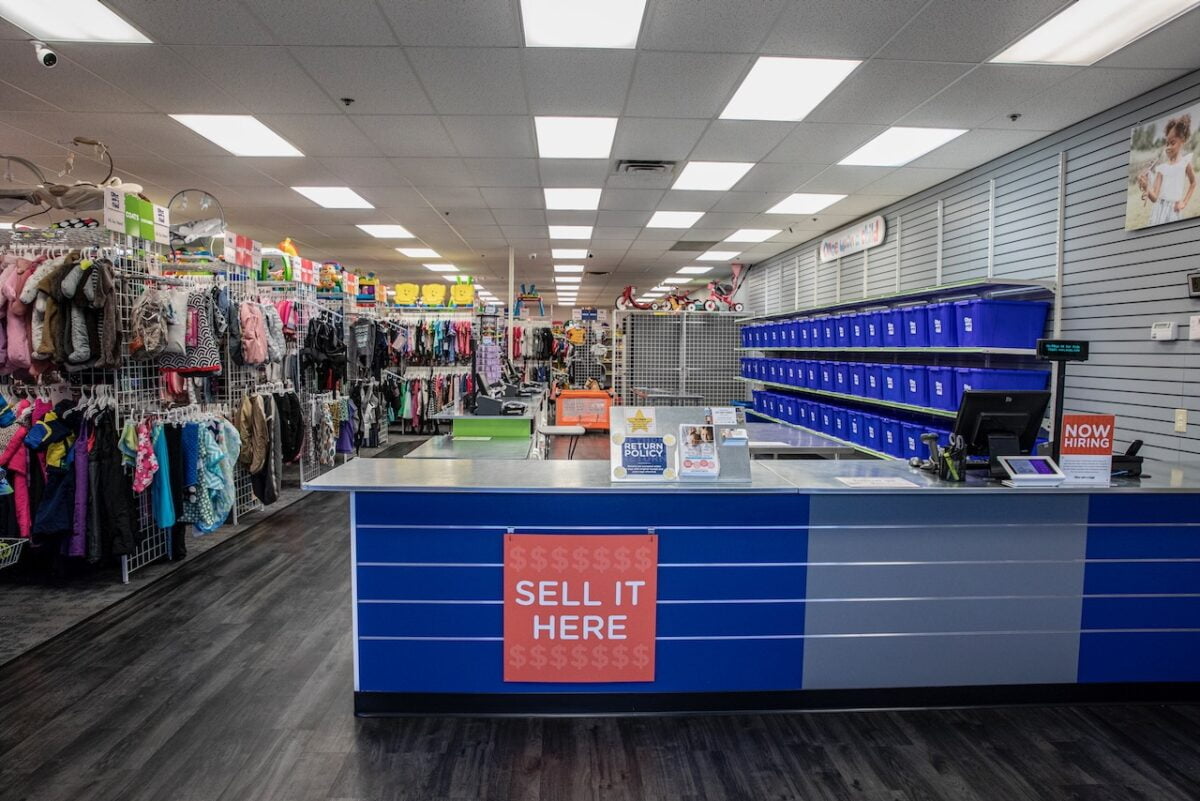
“Play It Again Sports, which deals with sporting goods, quality sporting goods new and used, was our first original resale brand. Next came Once Upon A Child which deals in children’s items, gently used, toys and equipment. After that came Music Go Round. We don’t have any locations in Canada right now but that one is one of our smaller brands but we are franchising in Canada. That deals with used musical instruments. And then came Plato’s Closet which is our teen and young adult gently used franchise that is our largest brand. We have almost 500 locations. Our newest brand was Style Encore which we started franchising in 2013 and opened our first Canadian location I believe it was 2016-2017. That is our women’s, gently used, resale brand. It’s like a big sister to Plato’s Closet.
“In Canada, we have almost 400 open stores across all four of those brands and another 15 signed and ready to be open.”
Play It Again Sports (Image: Winmark)Play It Again Sports (Image: Winmark)
Gaudette said because the products in the stores are locally sourced, the inflationary costs of shipping and supply chain are not passed on to the consumer and that’s where the value truly comes in for the customers.
While Music Go Round does not have a presence in Canada today, she said the company is actively looking for franchise partners who love the music industry.
“We have almost 200 territories across all of our brands that we’re actively looking for franchise partners to open one of our stores (in Canada),” added Gaudette.
Once Upon a Child (Image: Winmark)Once Upon a Child (Image: Winmark)
“Canadians love our brands. All of our franchise partners have been executing at a very high level, especially during the pandemic. Our brands are very sustainable, they’re recession proof. There’s no other retail concept that actually pays money back into the community. Customers come in and they want to sell us their gently-used stuff. We pay them and it’s on average per store over $350,000 that our franchisees pay back into the community. That’s the beauty of our model.
“There’s no other retail industry out there that can say that and it’s a win-win because not only do we pay the customer and it goes back out into the community but then they come to our stores and see the value that’s on the rack. It’s a win-win situation. That’s the beauty of our model. And we’re doing our little part, our franchisees and consumers, of keeping things out of the landfill.”
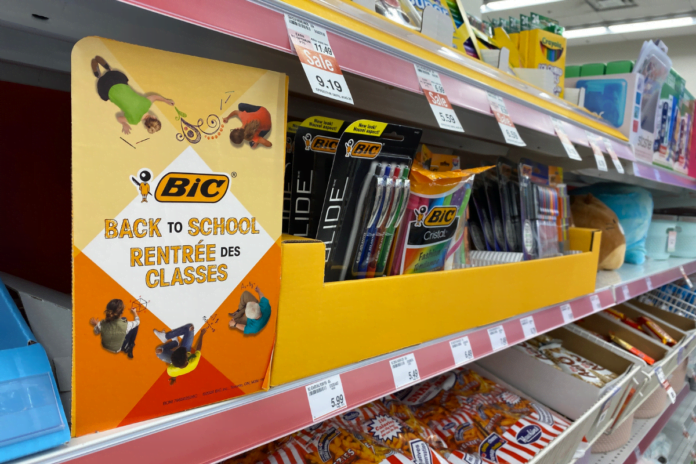
Back to School at Shoppers Drug Mart (Image: Dustin Fuhs)
It’s that time of the year again as retailers across the country have been catering to a back-to-school shopper looking for everything from pencils to clothing for their children.
And while some students may already be back in school, the shopping for supplies and clothing continues.
With kids returning to school, the Retail Council of Canada’s Back-to-School 2022 Shopping Survey, indicates 86.3 per cent of Canadians make back to school purchases and apparel is the top spending category, followed by books and personal and home electronics such as smartphones and tablets.
“Unlike the past two years, parents and students have more certainty of what back-to-school will look like this fall. As such, spending on school-related items is well underway with 42.9 per cent of respondents reporting that they make purchases between two to four weeks before the holiday,” said RCC in a news release.
Back to School 2022 Shopping in
Canada Survey | National
Consumer Research – Caddle &
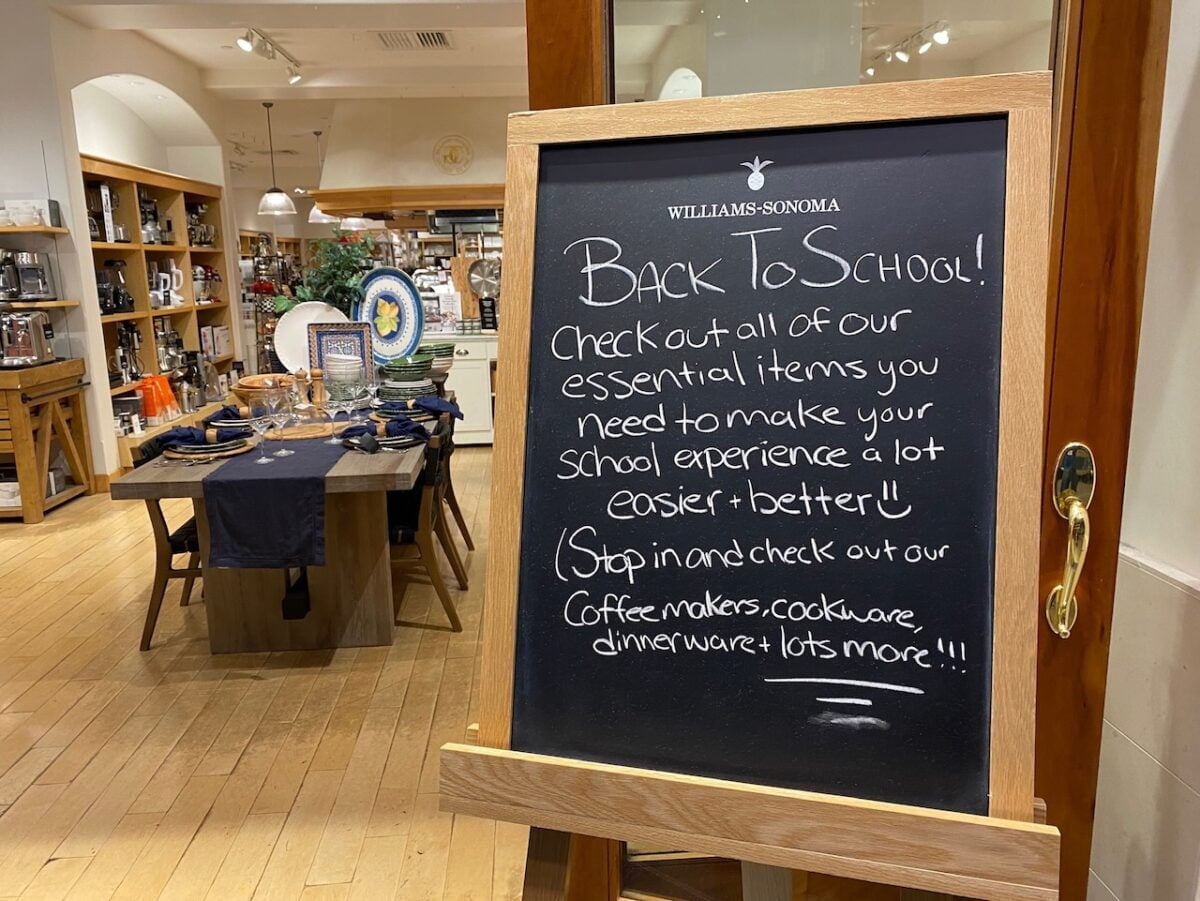
RCCBack to School at Williams-Sonoma in CF Toronto Eaton Centre (Image: Dustin Fuhs)
The report also found:
41.5 per cent intend to shop locally, and in person, this year versus online;
77 per cent will spend more than $50;
Big box retailers, followed by clothing retailers, is where most consumers say they intend to make their purchases; and
32.7 per cent of Canadians specifically go shopping for back-to-school purchases.
Caddle surveyed Canadians from coast to coast in June to better understand consumers’ shopping intentions around going back to school. The survey was conducted using Caddle’s mobile platform and online panel amongst a representative randomized sample of over 9,000 Canadians.
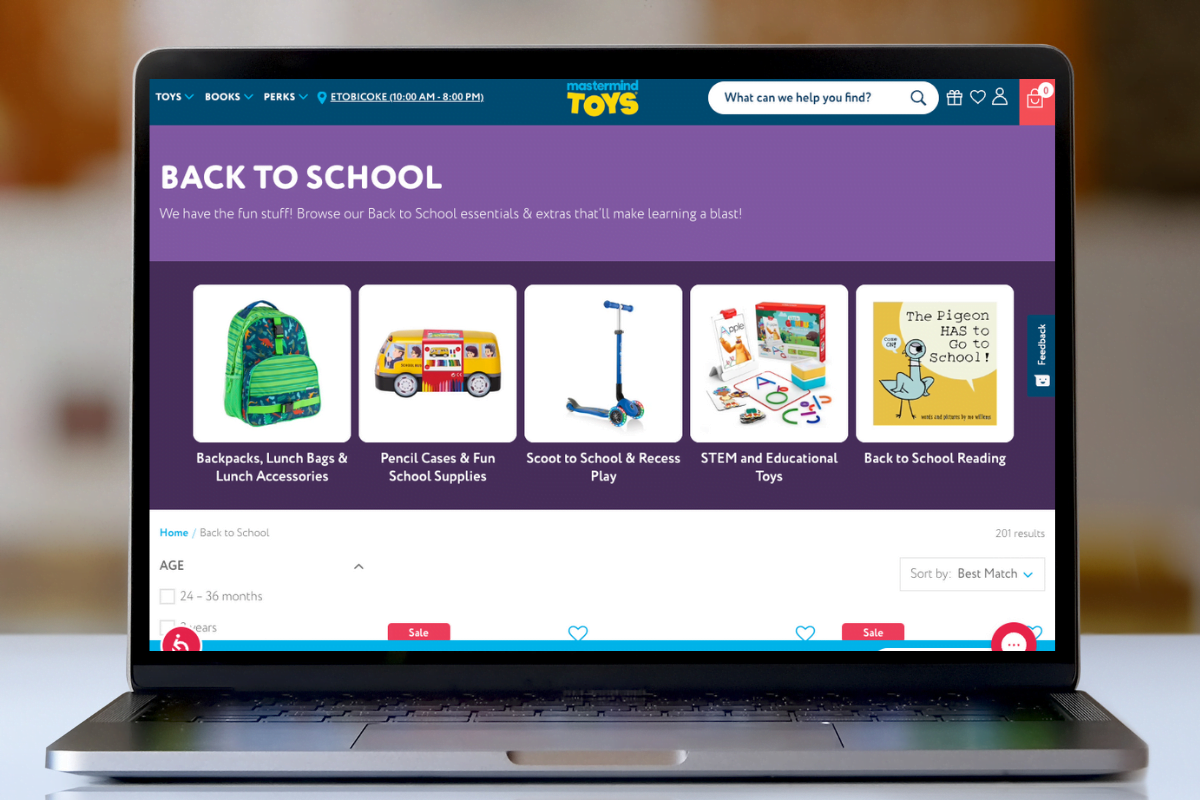
“And one thing they know is that they need to shop early. So pre-pandemic, and I’m talking about the holidays here, we noticed this trend pre-pandemic of people shopping later and later closer to the milestone holidays,” said Jordan. “And during the pandemic, certainly customers were savvy that they needed to shop early, especially because they wanted to make sure they had the gift for under the tree.
“They were very aware of the supply chain challenges. I’m predicting that this holiday season is going to look like last year where customers are going to shop early. The other thing we’re noticing is that digital is really being used to secure the top items. So while our doors are open we’ve been so excited to welcome back Canadian kids and families into our stores to see our larger than life demos, to see our window displays. So 2022 has really allowed us to be the toy store where we really can create all these moments of wonder.
“But we’re noticing that our customers are still relying on the digital channels whether it’s curbside or web for the sought-after items, whether it’s a new LEGO launch, whether it’s the hottest item of the season. They’re not waiting to get to the store to see if we still have (the product). They’re ordering it online to make sure that they can have it.”
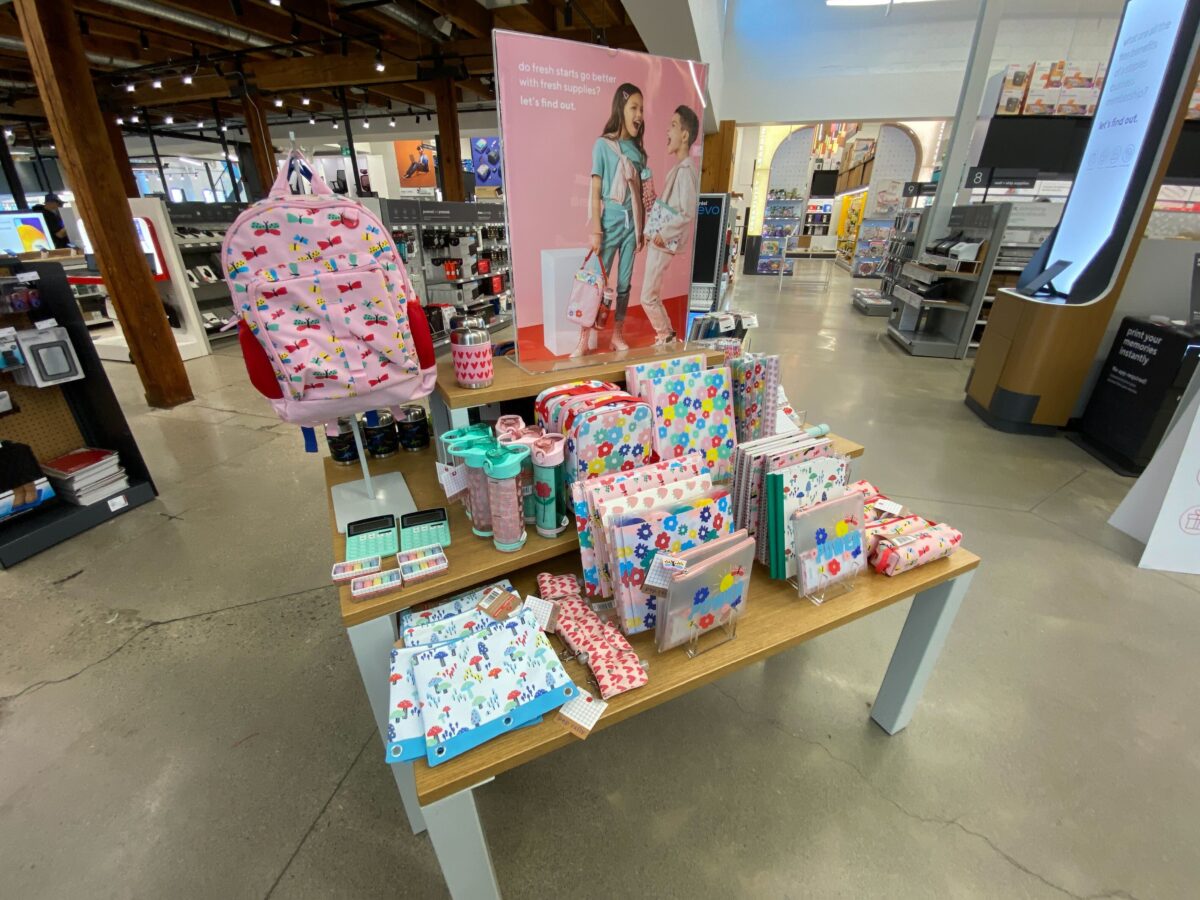
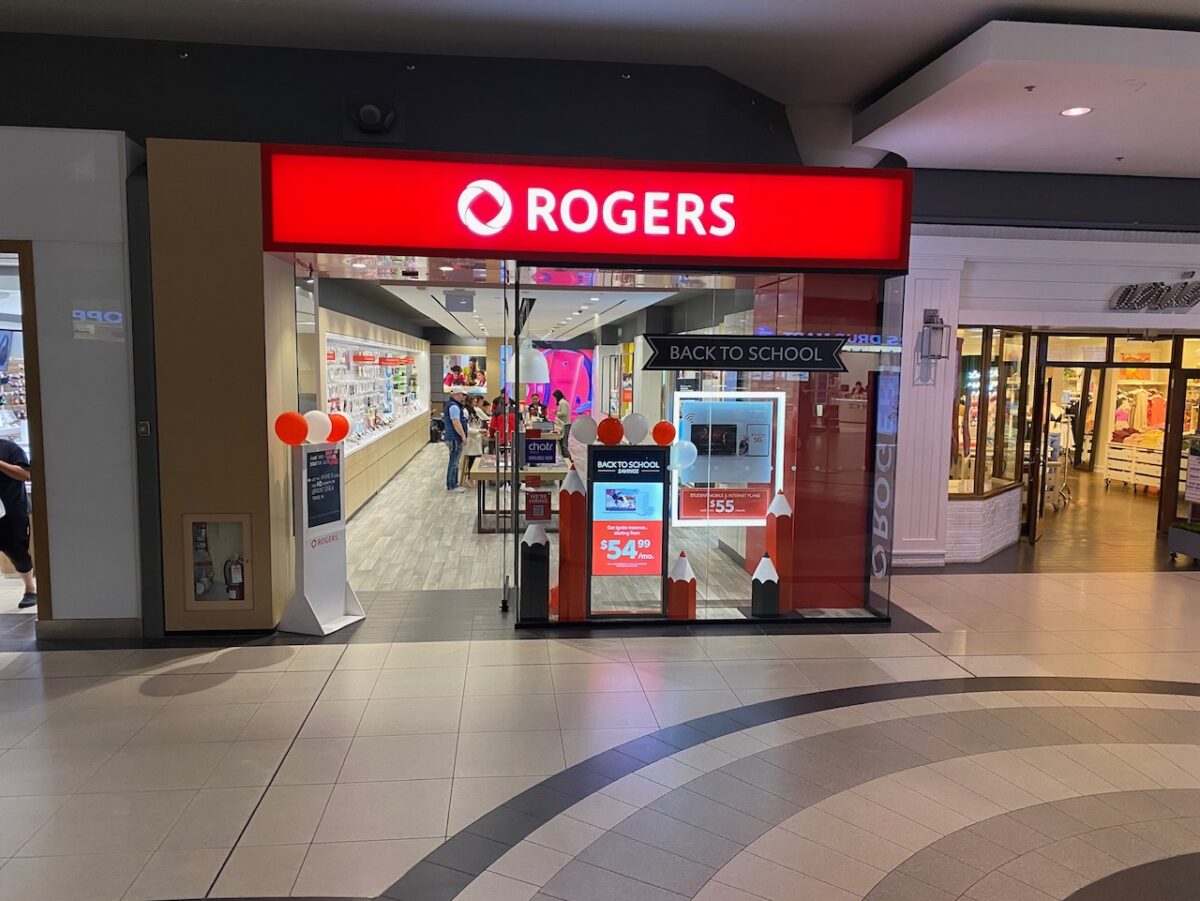
Back to School at Staples Canada (Image: Dustin Fuhs)Back to School at Rogers in CF Toronto Eaton Centre (Image: Dustin Fuhs)
Another recent survey found that two thirds of parents and students are worried about inflation’s effect on school-related costs.
The Angus Reid study, for Licenced Insolvency Trustees, Bromwich+Smith, surveyed 1,508 Canadians,
Laurie Campbell
“Back to school is always a financially and emotionally draining time for parents and students,” said Laurie Campbell, director of client financial wellness at Bromwich+Smith, in a news release. “With classrooms at their highest capacity since 2019 and inflation the biggest back-to-school story, our survey shows parents and students alike are overburdened with all things financial.
“It’s important to know your upfront costs and finances, set a budget, shop around and create a school spending fund.”
The survey found that 64 per cent of parents with children in school said they were worried/stressed about the effect of inflation on the cost of the upcoming school year. Also, 73 per cent said they expect even higher prices for school supplies/books due to supply chain issues.
Retail Insider is streamlining its Canadian retail news from around the web to include a handful of top news stories that can be viewed quickly during the day. Here are the top stories from the past 24 hours.
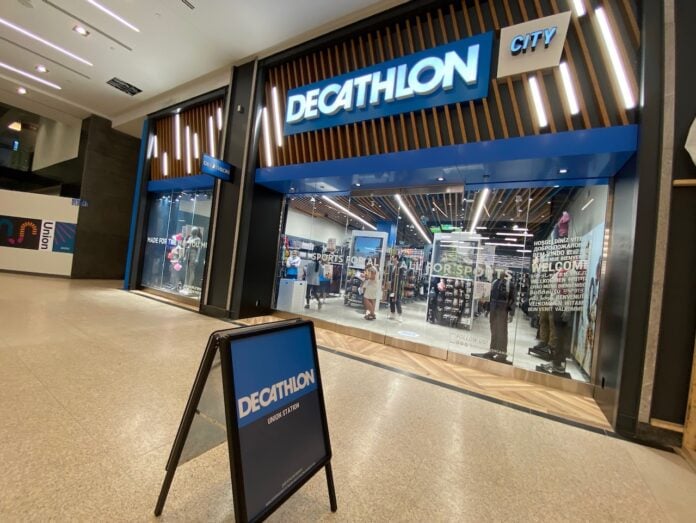
French Sporting goods retailer Decathlon has opened a new concept store at Union Station in the heart of Downtown Toronto as part of its ongoing Canadian expansion.
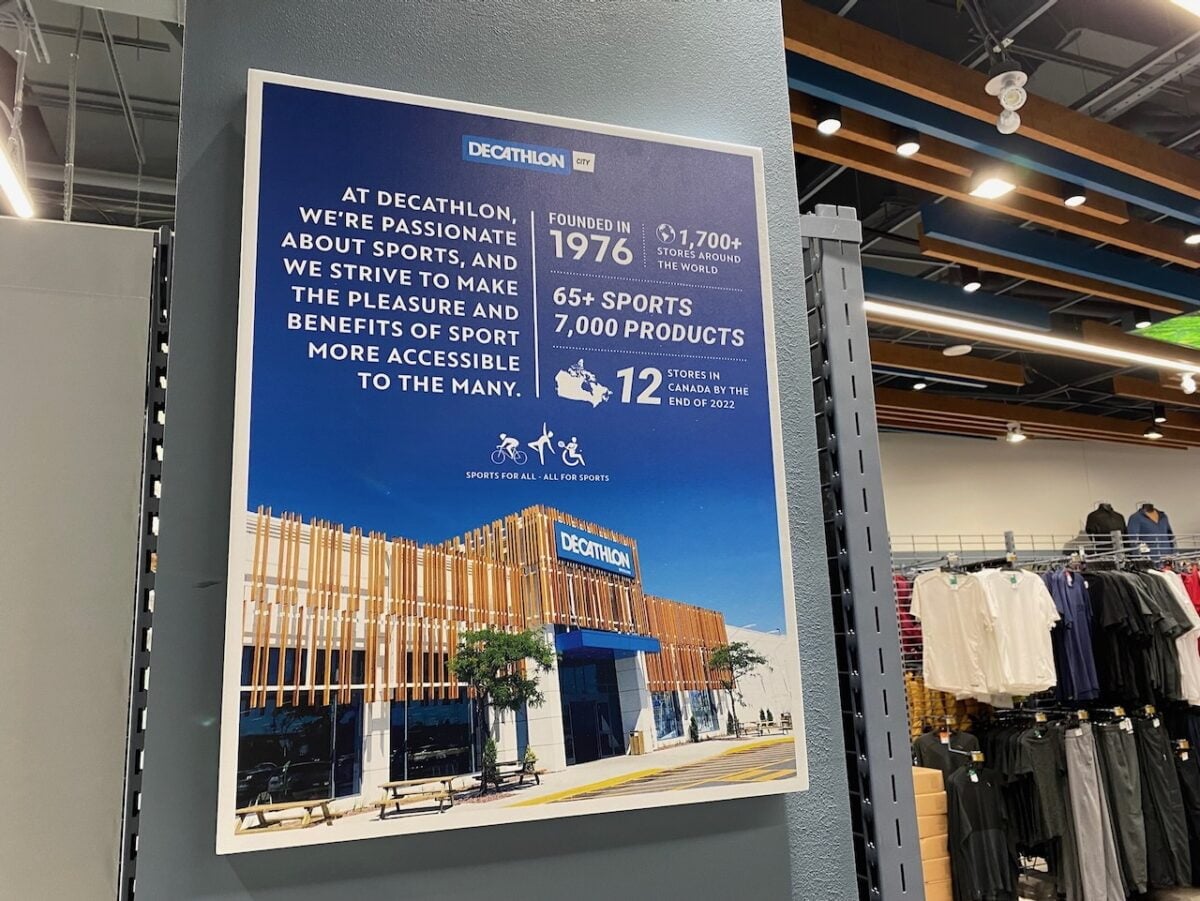
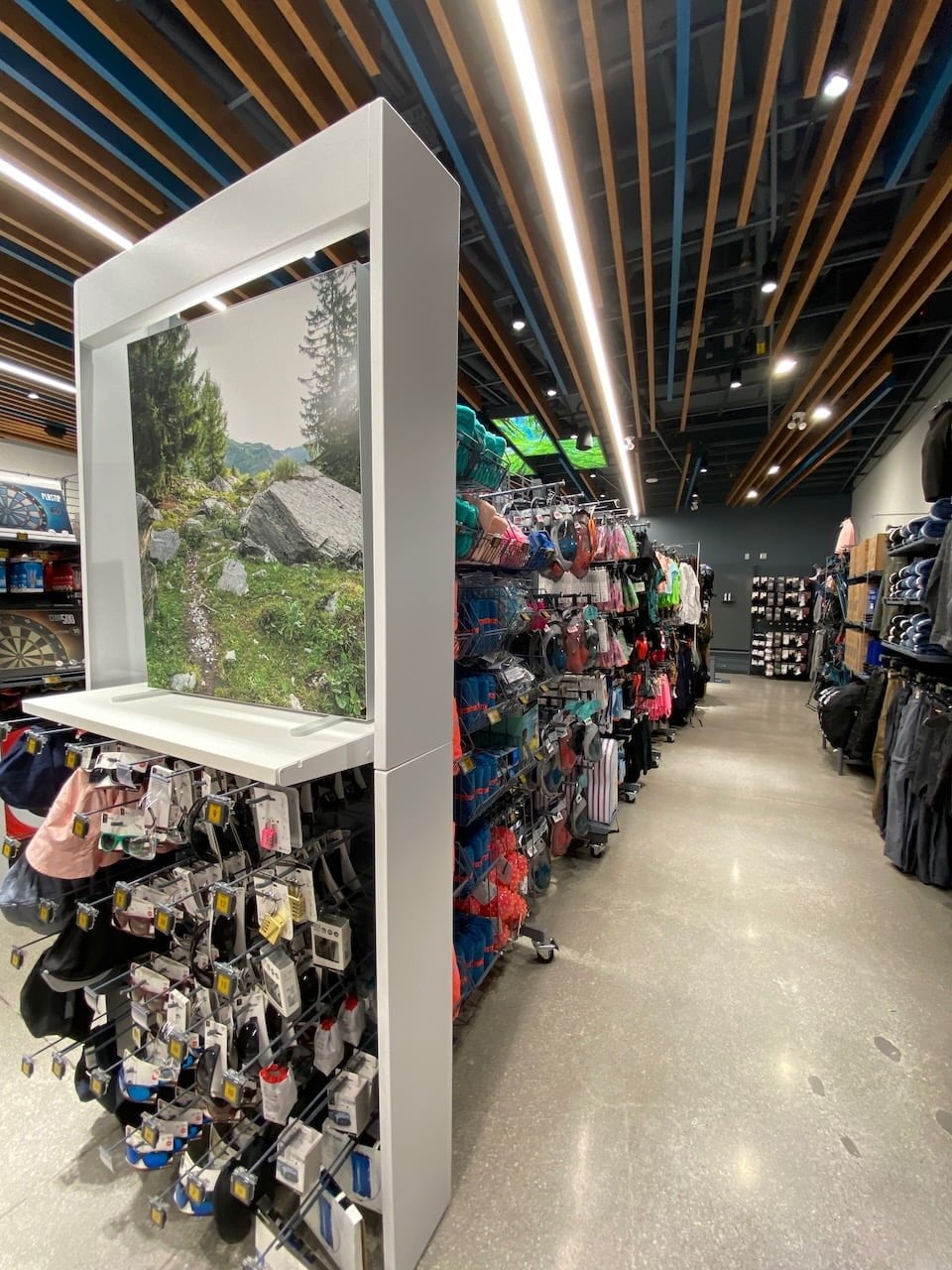
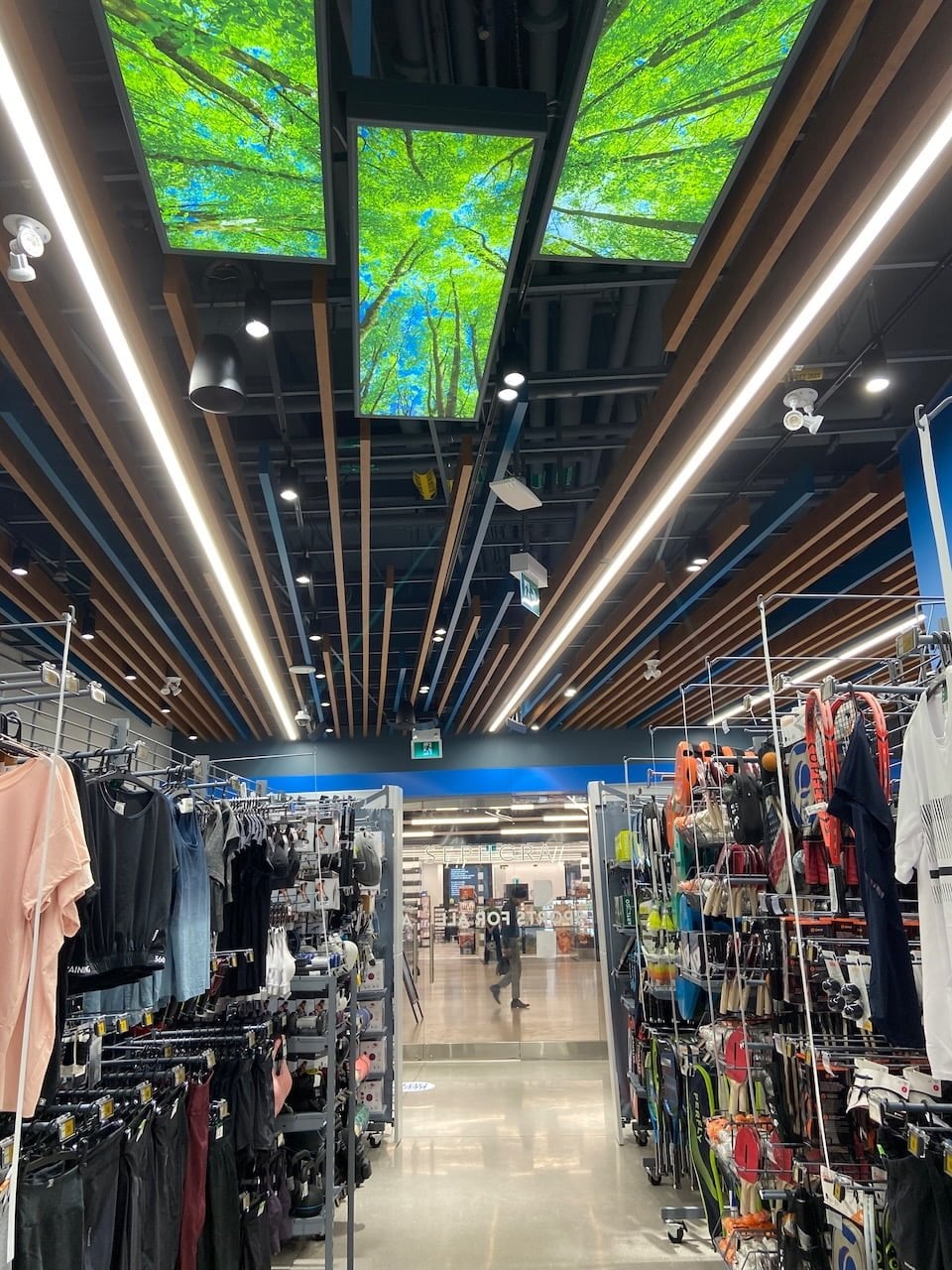
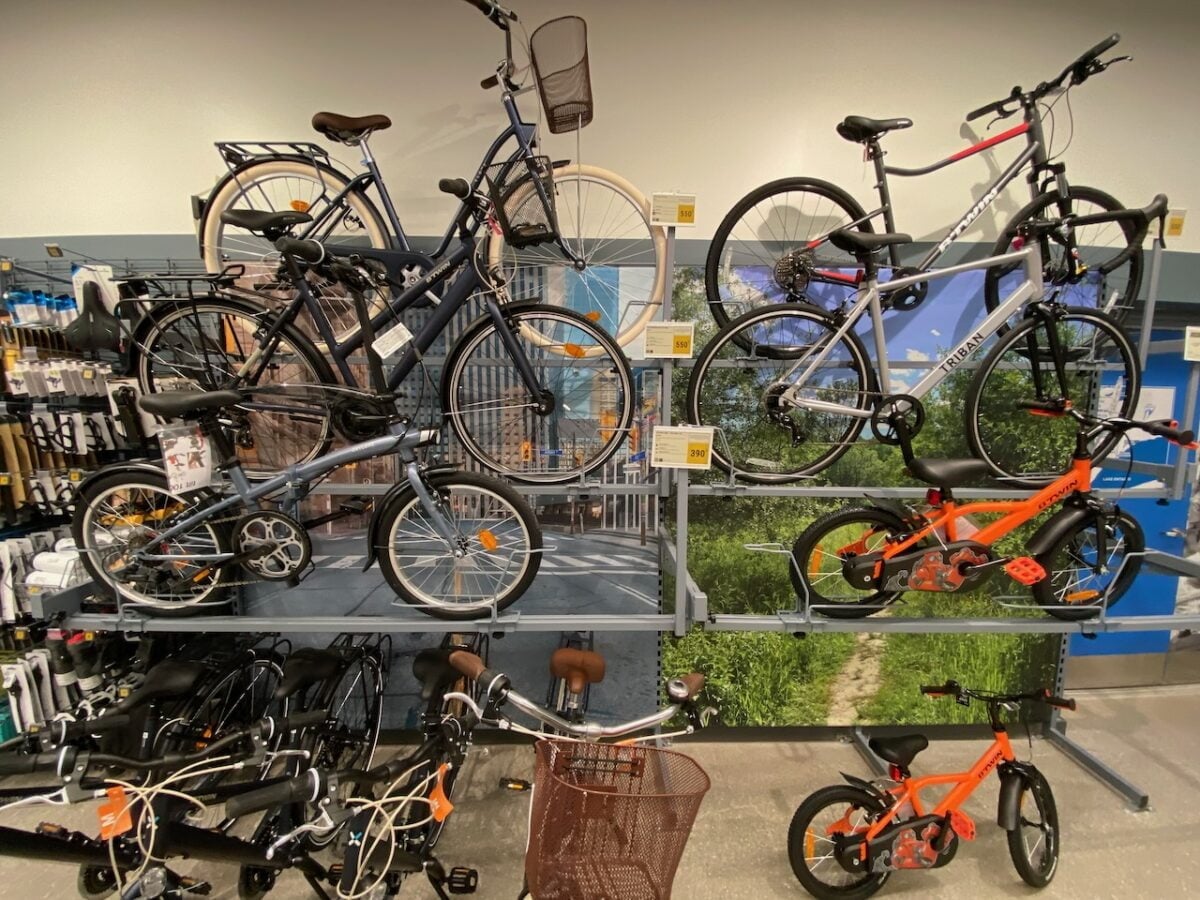
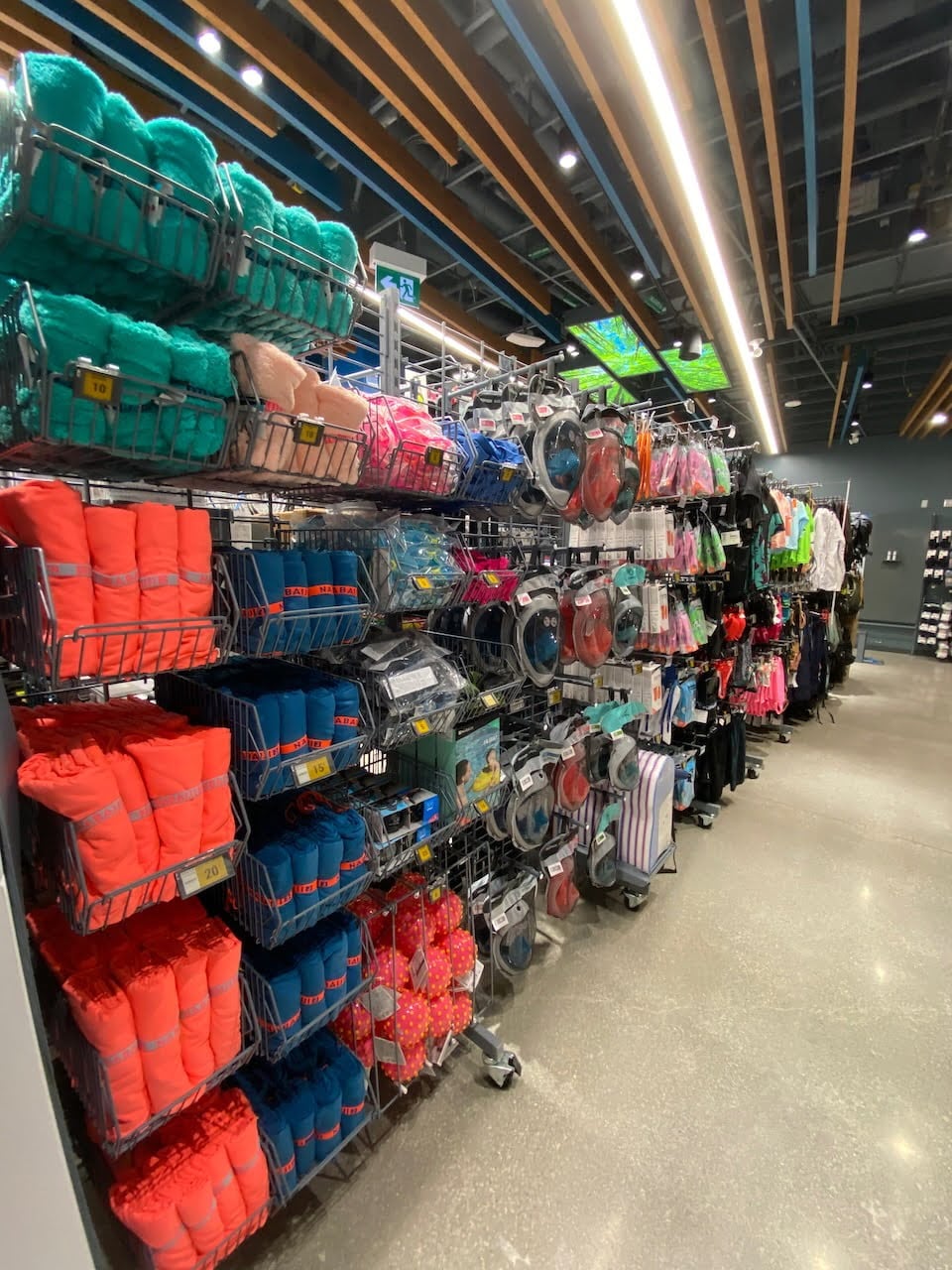
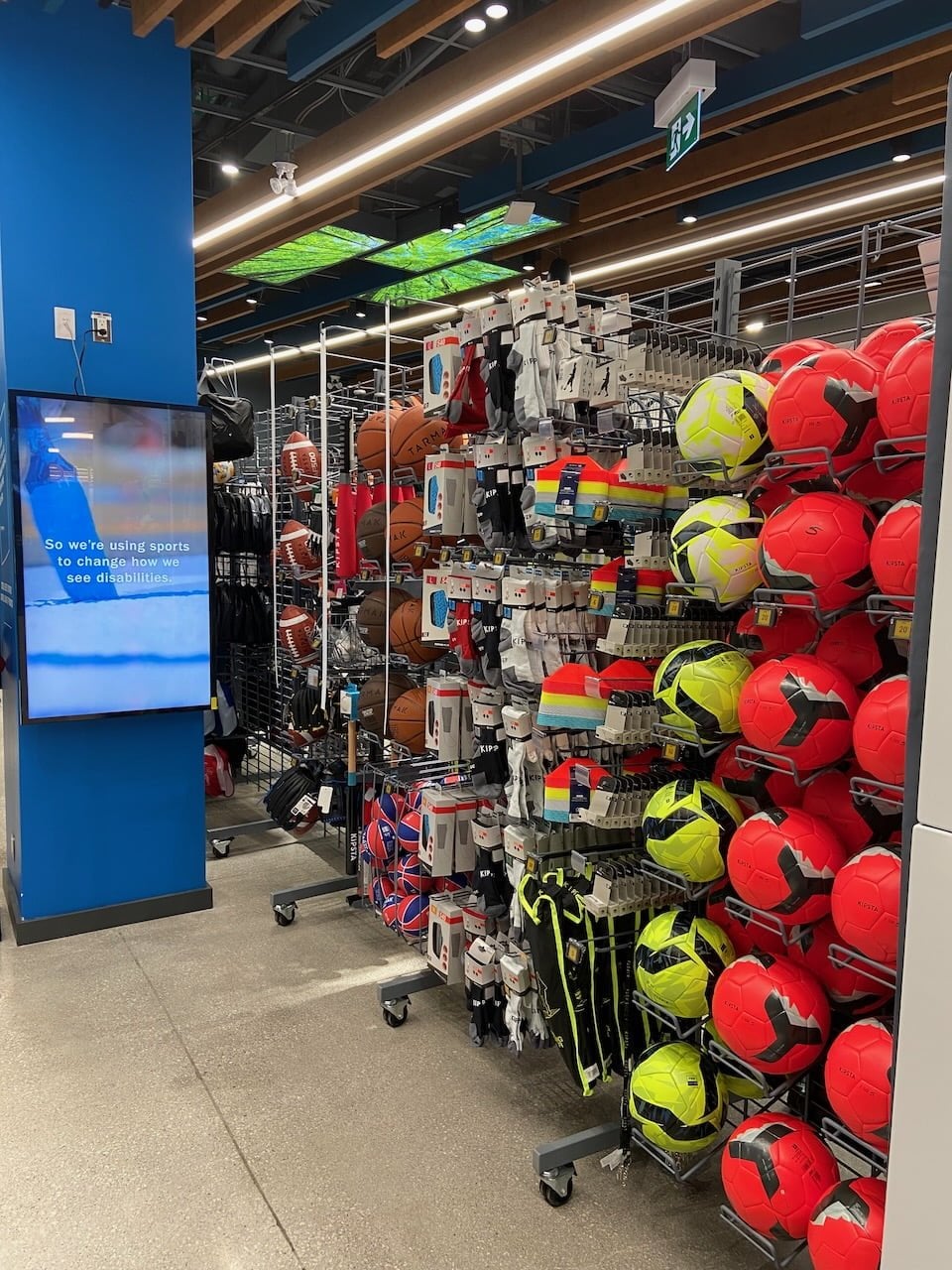
The 3500 sq. ft. “Decathlon City” location features a smaller footprint than a traditional Decathlon storefront and offers a ‘top-seller selection’ that draws from the 7,000 total products offered by the retailer.
“We are very excited to be able to meet downtown Torontonians exactly where they are with this new concept store,” says Bjorn Bosmans, Ontario leader for Decathlon Canada. “It is a great way to introduce our brand to people who live, work or commute in the downtown core.”
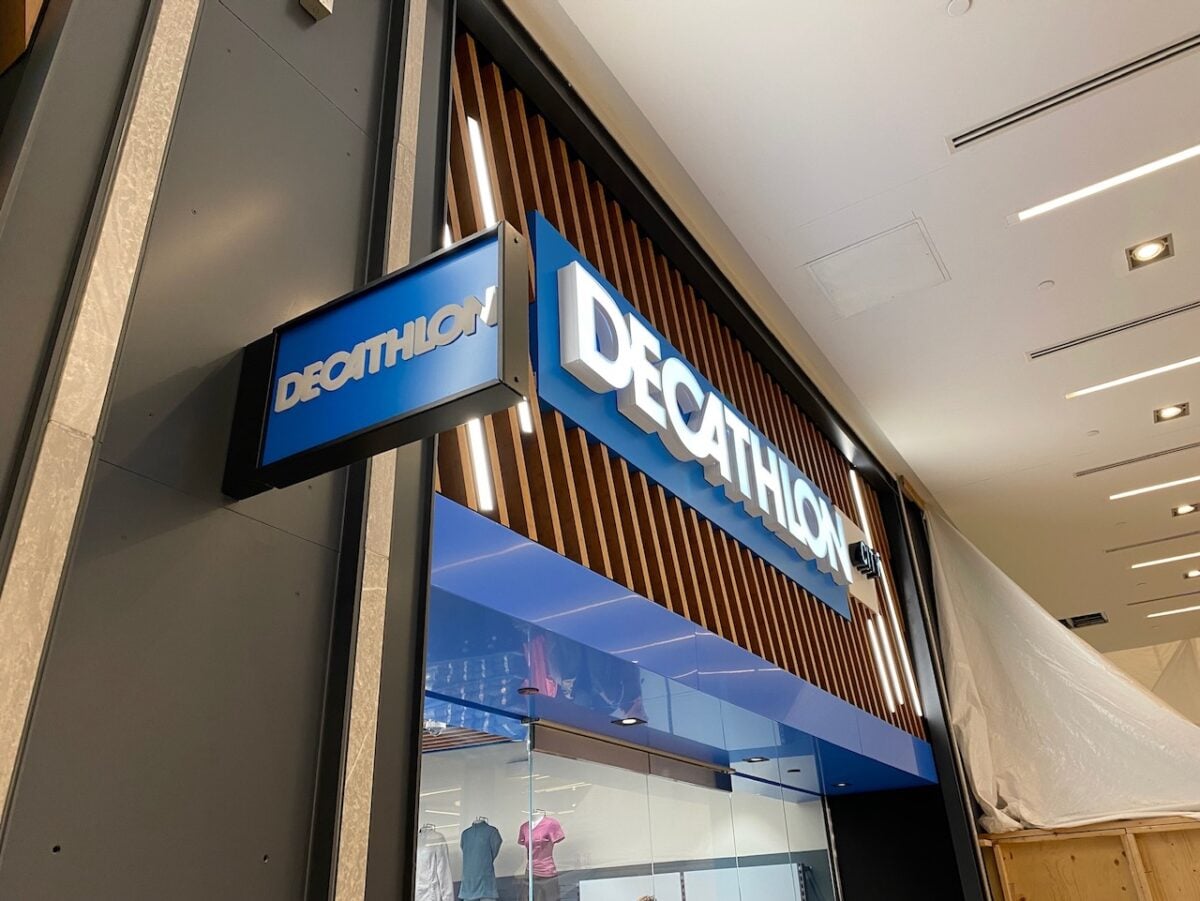
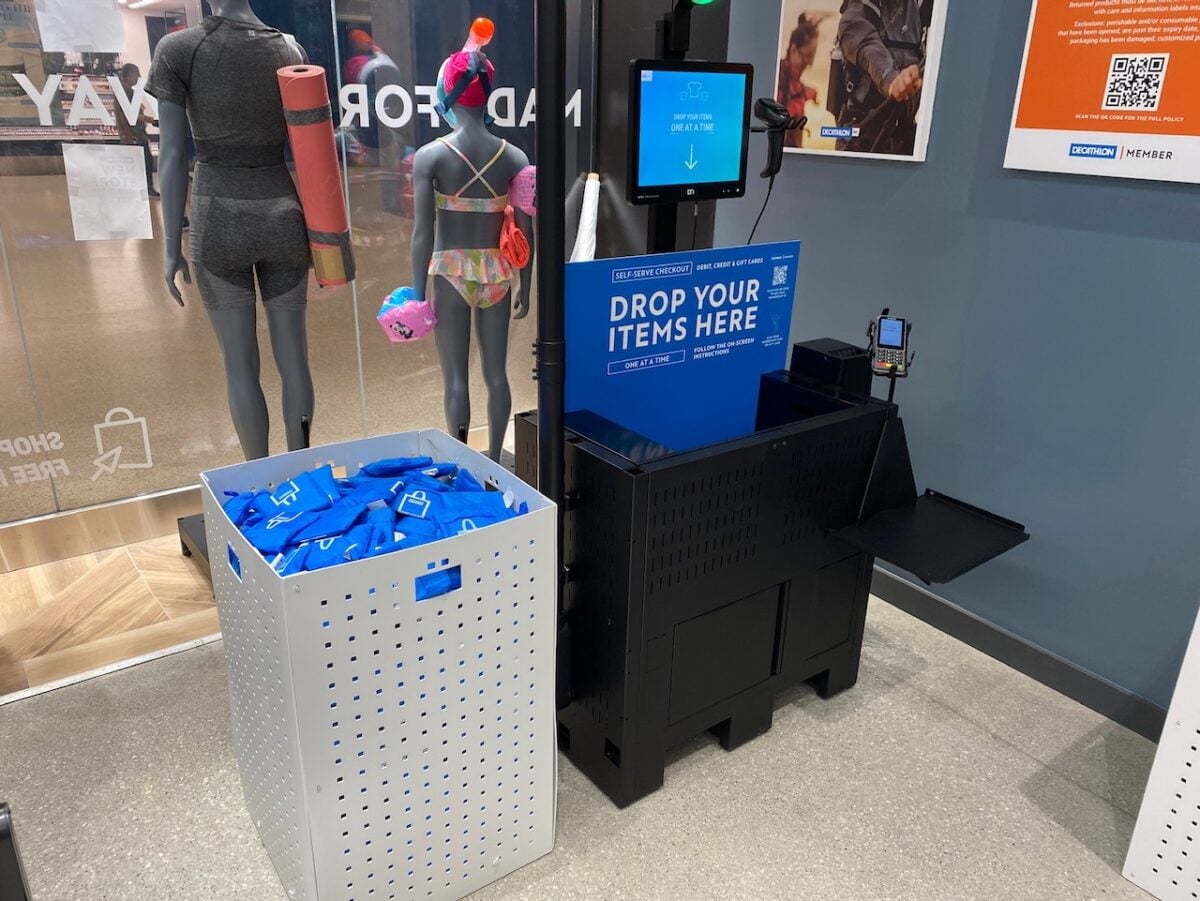
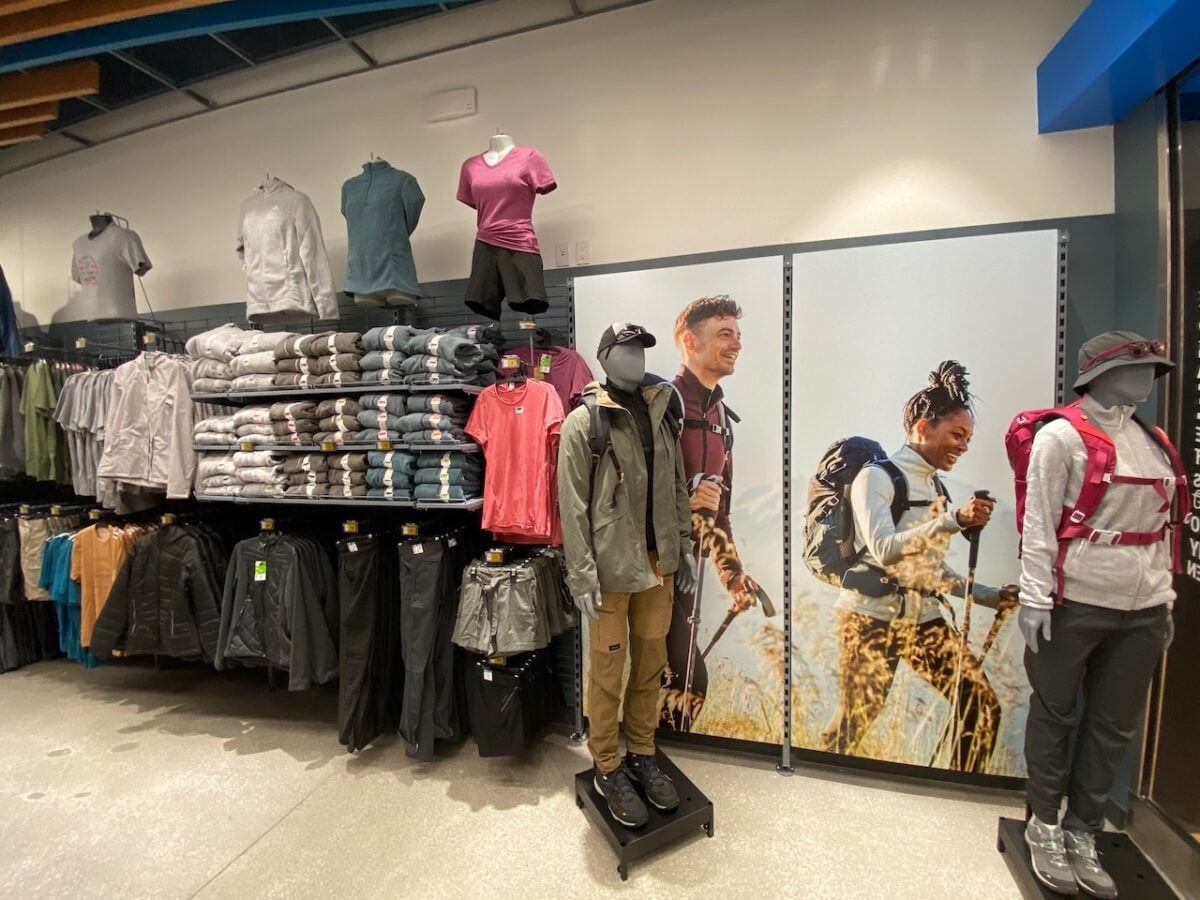
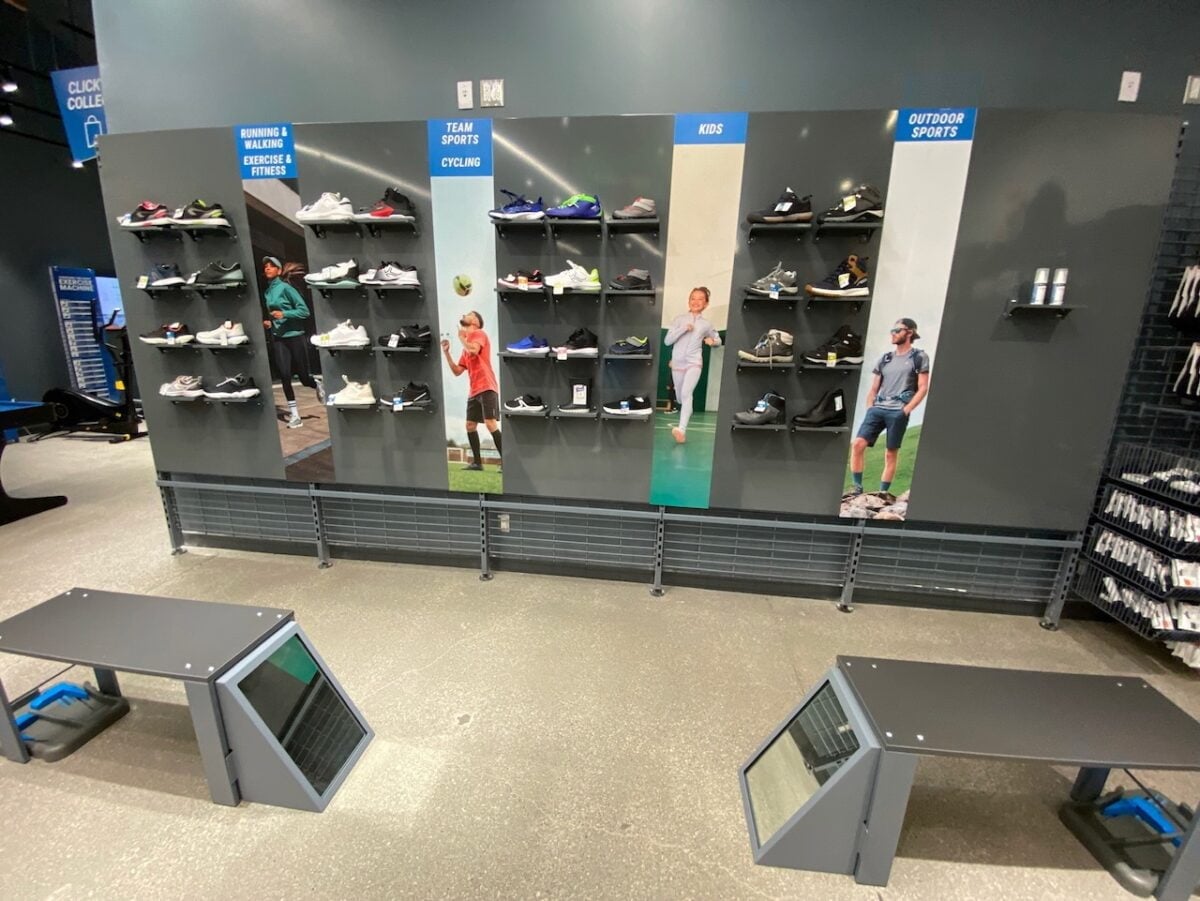
Decathlon City Union Station (Image: Dustin Fuhs)
Decathlon City Union Station (Image: Decathlon Canada)
Decathlon City Union Station (Image: Decathlon Canada)
The store will allow for shoppers to explore a selection of Decathlon’s most popular products in the experience-driven location.
“We want to get Torontonians moving through this central hub acting as a point of connection, a place for events, and see where this experience can take them,” says Bosmans. “Union Station provides us with the perfect access point for our new City store experience, and we look forward to meeting people and bringing the community together to stay active, uniting under the banner of sports.”
Decathlon City Union Station will employ 15-20 staff to start.
Decathlon City Union Station (Image: Decathlon Canada)
Decathlon City Union Station (Image: Decathlon Canada)
Decathlon City Union Station (Image: Decathlon Canada)
“Decathlon City is part of the ecosystem of Decathlon around the world,” shared Marie-Lou Blais, Director of Communications, Decathlon Canada. “It’s a smaller footprint store, but in the heart of where the community and people are, as we’d like to make sports accessible to the many.”
Marie-Lou Blais
“Decathlon is a sports brand, but it’s also for active living. We’re in the hub of where people go to, from work and go home…a lot of people live here. I think we fit the Union Station vision of making people active, unique retail, and we offer easy to buy products that will make a difference in your life.”
“The exciting part is that we want to build a community and we want to be there for a community that already exists – people that are active. So people are going to come into the store on opening day and they’re going to see golf, swimming, jackets. We will adapt and change the store as time goes to be able to answer the demand. We want to be customized to the customer who visits us.”
Decathlon City Union Station (Image: Dustin Fuhs)Decathlon City Union Station (Image: Dustin Fuhs)
“With 7000 products in our system, it can all be available here,” shared Blais. “The area is smaller, but we are also developing our Click and Collect offering. As time goes on, we can see what people are ordering online for Click and Collect and be able to bring those items into the store.”
With the new store being in the heart of the transit hub and connected to Scotiabank Arena and short walk to Rogers Centre, the store has an opportunity to be flexible.
“I think we’re opening the store with the current situation and we’ll be able to adapt by way of the number of staff and the hours.”
Decathlon City Union Station (Image: Decathlon Canada)Decathlon City Union Station (Image: Dustin Fuhs)
Decathlon has been on a cross Canada expansion, which currently sits at twelve locations.
“We’re opening a Flagship store in Markham at the end of the year,” shared Blais. “We’re growing around the GTA area. We have a lot of opening plans next year, more towards the second half of the year. We really want to be where the populations are, where the communities are. We have a lot of followers on social media, asking for locations and we love that, as then we can plan.”
With more than 1,700 stores in over 60 countries around the world, Decathlon is a world-renowned brand that designs, manufactures, tests, and sells apparel and equipment for over 65 different sports. Decathlon teams provide a complete sports experience through in-store gyms, product test areas and sports classes, as well as physical and virtual activities for the community.
Image: Decathlon
Decathlon Canada, represented by real estate advisory firm Oberfeld Snowcap, has twelve current Canadian locations.
Union Station recently saw the opening of the LCBO, Sephora and Tao Tea Leaf. The transit hub will be welcoming Liberty Entertainment Group’s Blue Bovine restaurant concept, The Queenston restaurant concept, Japanese-based % Arabica coffee shop – with more to be announced.
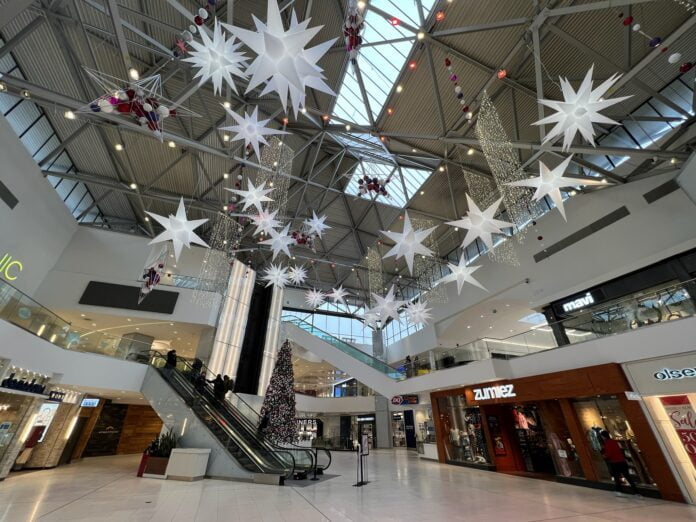
Park Royal South with the Christmas decorations up for Christmas 2021 in West Vancouver (December 2021). Photo: Lee Rivett.
Inflation in Canada has been at historic highs of late impacting consumer spending as the retail sector also deals with rising labour and material costs, staffing shortages, business sustainability and supply chain interruptions.
For retailers it is indeed a challenging time as they prepare for the upcoming holiday shopping season.
Rob Garf, VP and GM of Retail for Salesforce, said after a couple of years of tremendous growth particularly online we’re now seeing a balancing between store and digital sales.
“And there’s been a shift in mentality for many retailers around the world. And that’s moving from scrappy over the last couple of years in terms of putting in initiatives based on the changing consumer behaviour to scale which is ‘wow, now I need to fully operationalize initiatives like buying online, picking up in store or allowing our associates to provide service whether they’re in the store or hanging out at home on their couch’,” he said.
CF Toronto Eaton Centre In the Holidays
“Retailers generally have had somewhat of a wakeup call in the impact these new operational realities have taken. And it’s really putting tremendous pressure on margin and as we’re talking to retailers about holiday that seems to be a common theme in terms of not letting margin be the Grinch that steals Christmas.
Rob Garf
“Retailers have (implemented) a lot of new technologies. They’ve put in place some critical capabilities and now how do they make sure they can scale, drive automation, drive efficiency.”
Garf said the average selling price in the retail sector has been consistently rising over the last six or seven quarters. Consumer spending is essentially a zero sum game, he added.
“Consumers are now spending more on almost every item but they’re spending the same amount of money total so the math means they’re buying fewer products from less retailers,” said Garf. “So there’s been a shift to a large degree in loyalty and the definition of loyalty. Many consumers are looking for value, they’re looking for experience.
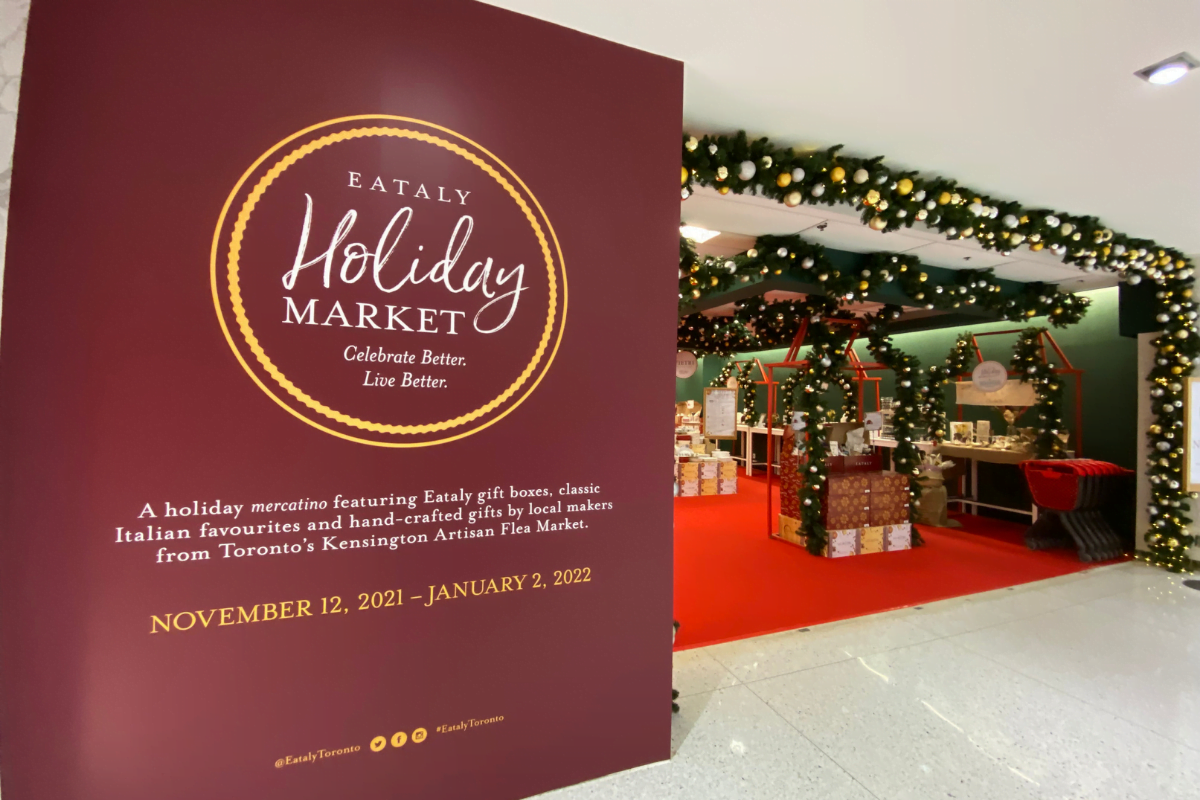
The Eataly Holiday Market in Manulife Centre (Photo by Dustin Fuhs)
“Inflation is real. Last holiday, in particular, retailers, the extended supply chain, they were able to absorb the incremental costs of doing business, partly because they were able to preserve their margin by not having to discount. If you remember, there’s an inventory challenge which is there’s not enough of it because it’s stuck in containers at the ports and not being able to come into the domestic supply chain.
“Consumers got wind of that . . . And consumers got scared. So the retailers didn’t have to discount because they didn’t feel compelled to. This year there’s an inventory problem which is many retailers have excess inventory in categories that aren’t hot anymore whereas last year retailers were able to absorb the incremental costs of goods sold because they weren’t discounting. This year the retailers are passing that along to the consumers but also feeling the pain of margin erosion.”
Garf said people will look back at this time 10 years from now and see that the pandemic was a kick in the butt for retailers and brands to really force them to think about how consumers traverse the online and offline shopping journey.
“On average, according to our research, consumers traverse nine different touch points in any given shopping journey. Obviously with grocery, it’s likely a little less. When it’s a very concerted purchase like furniture it’s probably more but the point here is retailers, even coming up to the pandemic, while omnichannel became a common word in our industry nomenclature, it wasn’t put into practice in a way that incentives changed, processes changed, operations changed, and what the pandemic has shown particularly with the rise in digital is that it’s not a contest against digital versus physical but it’s a blending of the two that will really best serve the consumer,” said Garf.
“It’s a kick in the butt but in a good way. It’s not just about being scrappy anymore, but it’s really about scaling that omnichannel operation and looking at how do we automate, how do we create more efficiency, how do we break down the friction as the consumers traverse the various channels.
“I really feel like this is an interesting turning point for industry and I’m pretty darn jazzed up, and I’m pretty excited about what the future holds for those retailers that embrace it.”
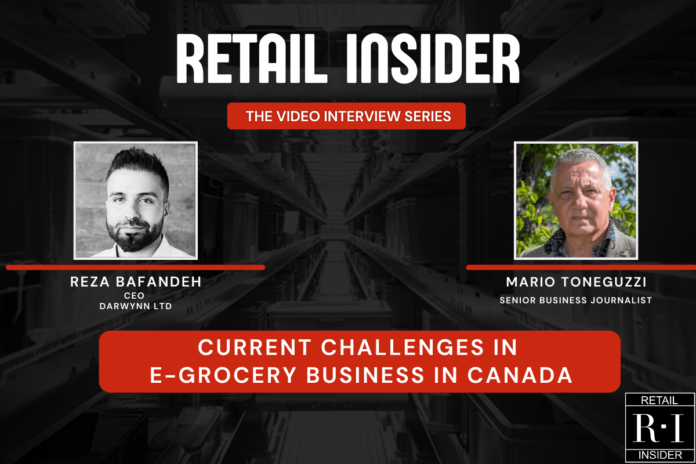
Bafandeh talks about why many models like click and collect continue to lose money, how companies can shift models to be more profitable, the lack of sustainability that creates plenty of waste, sunken costs for delivery companies, new technology to revolutionize e-grocery, and the history of Darwynn and what it does.
The Video Interview Series by Retail Insider is available on YouTube.
Connect with Mario Toneguzzi, a veteran of the media industry for more than 40 years and named in 2021 a Top Ten Business Journalist in the world and the only Canadian – to learn how you can tell your story, share your message and amplify it to a wide audience. He is Senior National Business Journalist with Retail Insider and owner of Mario Toneguzzi Communications Inc. and can be reached at mdtoneguzzi@gmail.com.
Also check out the other series offered by Retail Insider, including The Weekly podcast and The Interview Series, which are both available on Apple Podcasts, Stitcher, TuneIn, Google Podcasts, or through our dedicated RSS feed for Simplecast and other podcast players.