Advertisement
Advertisement
Home Blog Page 828

Canadian Local Product Search Engine ‘SokoLocal’ Surpasses 1.5 Million Products as it Supports Small Businesses: Interview

Image: SokoLocal

Calgary-based SokoLocal, a new local product search engine, has surpassed one million products in cities across North America.

“We started SokoLocal to help better connect shoppers with local businesses,” said Nikhil Sonpal, Founder, MQLabs. “The interest and growth we have seen in the last month, including cataloguing more than one million product listings on SokoLocal, is made possible because of the passion people have for supporting the communities in which they live, solidifying the need for this type of innovation. With SokoLocal, we have managed to streamline that process helping businesses and consumers alike, which is something we are very proud of.

Image: Nikhil Sonpal

“It’s a product search engine. I felt that there was this whole movement afoot for finding local businesses, supporting local businesses. But the challenge, at least for me, I don’t know that these local businesses exist. I personally don’t shop for businesses by name. I shop for products. So that’s where the idea came about – to create an interface like Amazon, to give users an Amazon-like experience but the convenience of what the underlying technology that Google has to catalogue and index content that is on these websites.

“What Google does for search in general, we’re trying to carve out a niche for searching for shopping for local products.”

SokoLocal, created and developed by MQLabs, a Calgary-based technology company, launched recently and has since grown a strong presence in Calgary, Edmonton, Winnipeg, Ottawa and Toronto, with additional cities across North America currently in development.

Image: SokoLocal

Sonpal said the search engine hit one million products on June 1 after launching March 1. As of June 18, it was 1.5 million products.

Featuring products from local vendors, SokoLocal allows consumers to search, browse, compare local prices and purchase their favourite products online directly from the retailers. Since launch, the online marketplace has seen significant growth and popularity in its Alberta markets and continues to offer their services to new cities as it expands its reach, most recently in Manitoba and Ontario and the United States with Austin, Texas. Now, with more than one million products available, there is no shortage of selection or accessibility to a wide variety of local products, explained Sonpal.

“It’s a fully automated system. We’ve built it using the latest and greatest technology with all the abbreviations that everyone uses in tech. So it has machine learning, it has AI capability into it,” said Sonpal, adding that there’s very little human intervention in the system. “The idea for us is to grow this globally. We are trying to make sure that local is not a fad and we can provide the convenience of finding local and by doing so we feel Soko fills that niche.”

Supporting local businesses is a vital step in creating new opportunities within local communities. Over the last year in particular, small businesses have been met with unprecedented challenges and have been struggling to stay afloat among giant competitors with international backing. By offering a platform that allows small businesses to increase their visibility and connect with shoppers in their area and around North America, SokoLocal aims to revitalise local economies and direct sales to those who need it most, explained Sonpal.

The impetus for the venture was an injury he received from cycling one day earlier this year. He broke two ribs cycling. He wanted to find local products but was having a hard time doing that.

“I’ve been in tech now for 22 years . . . The motivation for me is I really want to help small businesses be able to run their businesses efficiently and I think the biggest challenge that small businesses have is how do you get the word out to consumers that you exist. I am saddened by the state of ecommerce in the last year and a half being perceived as the next gold rush and I don’t want small business owners to feel helpless and to be taken for a ride where they feel they have to spend in some cases an unbelievable amount of money to get the word out to get consumers to come in because traditional advertising or marketing doesn’t work. Because it’s digital,” he said.

While shopping in physical stores is starting to open up more and more, the convenience of curbside pickup and the movement for buying local should remain.

“The messaging I’m trying to get out there is there is an alternative. That you don’t have to spend in some cases some businesses are being told I hear $2500 a month in Google ads and Facebook advertising to just get the word out and that’s preposterous to have to do that. I know $2500 a month is nothing for large brands but that is significant to a small business owner that’s an owner/operator.

“I wouldn’t say this is a philanthropic initiative because this is a for profit business and we have monetization paths in place that we will be releasing over the next couple of months but our focus has really been my focus predominantly to give business owners the tools to be able to get their products marketed. And consumers shop for products. They don’t shop for (businesses). And that’s the niche we’re trying to fulfill.”

The SokoLocal app is available for Apple iOS and Android Devices.

For more information, to browse local products, or have a local business added to the directory, visit sokolocal.com.

Impact Kitchen to Open 5th Location in Toronto’s Liberty Village

Impact Kitchen in Liberty Village - Photo by Dustin Fuhs

Impact Kitchen, a Toronto-based healthy fast-casual brand will be expanding their footprint in the city with their fifth location, which is confirmed to be opening in Liberty Village this summer.

Retail Insider reported on the expansion of the brand’s second location for to 444 Adelaide Street West (King West) back in 2018, with subsequent openings at 1222 Yonge Street (at Summerhill) and 88 Queens Quay West by the Waterfront. This joins the original location at 573 King Street East (Corktown), which opened in 2015.

The new cafe will be located at 99 Atlantic, which is the corner of Liberty Street and Atlantic Avenue. The Kevric-owned building broke ground in 2018 and has seen their 8-story availability fully-leased, including offices for Red Bull. Colliers International is the leasing partner for this property.

Click for Interactive Map
Impact Kitchen in Liberty Village – Photo by Dustin Fuhs
Ground Floor Plans at 99 Atlantic – Image via 99atlantic.com

We’ll be following up with Impact Kitchen as they continue to expand during a pandemic that has decimated the restaurant industry and will have long-lasting effects on the viability of community-driven businesses.

Related Retail Insider Article

Canadian Retail News From Around The Web For June 22nd, 2021

Canadian Retail News From Around The Web

Top Stories: National

Central/Eastern Canada News

Western Canada News

Oxford Properties Launches Outdoor Patios at All Enclosed Shopping Mall Properties in Canada: Interviews/Photos

Yorkdale Patio (Photo: Oxford)

Major Canadian shopping centre owner Oxford Properties Group has launched outdoor dining patios in all its enclosed malls across Canada.
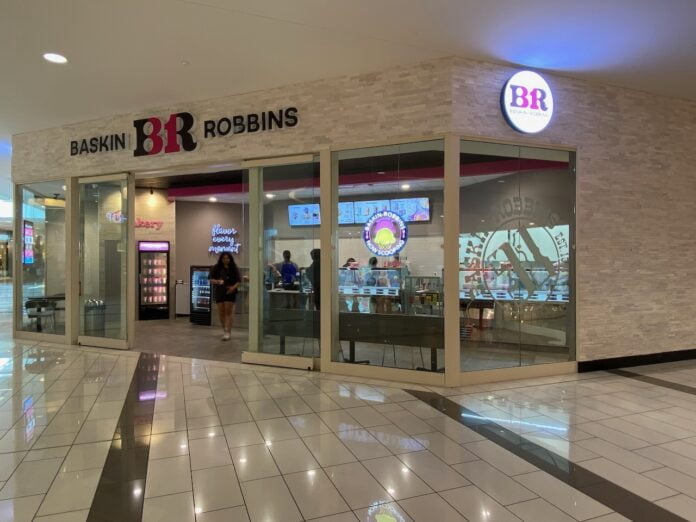
“Dining is an important part of the shopping centre experience, and we are deeply invested in the success of all restaurants and food tenants,” said L.A. Glassford, VP Restaurant, Entertainment, Urban Retail, Oxford Properties.

LORIANNE (LA) GLASSFORD

“A number of the food and beverage establishments in our shopping centres have weathered prolonged mall closures. These outdoor dining areas are designed to provide an opportunity for our customers to enjoy food from these businesses in a pleasant environment that adheres to provincial safety measures. These patios also support our restaurants with much-needed additional seating as consumer demand has exceeded expectations.”

Glassford said one thing the company thought about quite early with all the closures due to the COVID-19 pandemic was how it was going to support its food and beverage businesses in general in their enclosed malls.

“When you’ve got a food court, how are we going to support these businesses? And what about restaurants without exterior patios? How do we support these businesses who are already spending a large percentage of their businesses on third-party delivery services? How are we going to help them?,” she said.

“We spent a lot of time – the operations teams, the site teams, and the marketing teams – very creative on how can we not only support but what is the experience we want to create for the customer. Now the customer being the customer who is going to eat at these establishments, the customers that work at these establishments, our own staff that needs somewhere to eat. What we did is we decided to introduce outdoor dining patios across all of our shopping centres with not just an outdoor patio. But a dining experience.

“So we’re deeply invested in all of these locations. What we did first off it has to address the additional seating we need. It has to meet the expectations of COVID, the safety protocols. We wanted to make it accessible. So we’re open 11 a.m. to 8 p.m. daily. We’re going to be open the entire summer and if we need to licence it we can look at it then. Most of our outdoor experiences can accommodate up to 100 different diners. That’s huge.”

Glassford said they are not just patios.

“You can have an al fresco experience at the terrace at Yorkdale with a chandelier and high end furniture. The grass feels good underneath your feet. You can have a shaded area with an umbrella or you can sit under a pergola. You can have full sun and sit in some bean bag chairs. We have different curated seating options,” she said.

Image: Quartier DIX30

“Palms. Different trees. Landscaping. The lighting. It really feels special. That’s the best way I can describe it. It feels special. When you are underneath the tent or the pergola or you’re sitting around a great high top, you’re transported. That was the goal and I think we delivered.”

Glassford said each outdoor dining patio at a shopping centre is going to be specific to the actual asset and for each one Oxford looked very carefully at where to position them within the property.

“We’ve launched them all and they’re quite special,” she said. “I’m most pleased with the experience it is going to provide because we all right now need an experience. We do. We’re craving it.”

Galeries de la Capitale – Image: Oxford

Oxford Properties Group was established in 1960 and today manages approximately C$60 billion of assets across the globe on behalf of its co-owners and investment partners. Oxford’s portfolio encompasses office, retail, industrial, hotels and multifamily residential and spans more than 100 million square feet in global gateway cities and hubs across four continents. With its global headquarters in Toronto, Oxford operates out of 17 regional offices including London, Luxembourg, New York, Singapore and Sydney. Oxford is owned by OMERS, the defined benefit pension plan for Ontario’s municipal employees.

In Canada, its retail properties include: Arbora1Retail (Montreal); DIX-30-6000 Boulevard de Rome (Brossard, Quebec); Hillcrest Mall (Richmond Hill, Ontario); Kingsway Mall (Edmonton); Les Galeries de la Capitale (Quebec City); Les Promenades Gatineau (Gatineau, Quebec); Metro Centre (Toronto). One 70 Bloor Retail (Toronto); Royal Bank Plaza (Toronto); Scarborough Town Centre (Scarborough, Ontario); Southcentre Mall (Calgary); Square One Shopping Centre (Mississauga, Ontario); Upper Canada Mall (Newmarket, Ontario); and Yorkdale Shopping Centre (Toronto).

Upscale Calgary-Based Retailer O’Connors Looks to Future Growth Post-Pandemic: Interview

O'Connors Mens and Womens Clothing and Footwear - Photo by Mario Toneguzzi

For decades fine clothing and footwear independent retailer O’Connors has weathered all the economic storms Calgary has suffered through including the current one brought on by the COVID-19 pandemic.

The retailer has lived through a number of recessions and economic downturns over those years and has survived, and thrived, while many other retailers had to close their doors.

One thing has been consistent over that period of time and a key to the family owned and operated retailer – consistently delivering a quality product with exceptional customer service.

Greg Smith (Left) and Myles O’Connor (Right) – Photo by Mario Toneguzzi

Myles O’Connor, owner, said the past year has been very challenging with everything going on.

“I do count ourselves fortunate and thankful that we were basically able to open in May of 2020. We closed for the initial two months, March to early May, and we’ve been open since. It’s been obviously very challenging. Business isn’t what it was but the fact we were able to keep our doors open has been huge for us and for all retailers,” said O’Connor.

“I think things will start opening up come September. As far as business going forward, I think we’re going to be aggressive. There may be issues with lack of product and the supply chain to get product in. But we’re taking deliveries of fall goods as soon as we possibly can. We feel the country is going to be open for business come September. It’s going to be slow opening but we’re going to be there.”

“I think when we’re really going to see downtown come back by September.”

When asked why O’Connors has been so successful for decades, Myles replied: “I think the big thing is we’re a local business and we have boots on the ground so to speak. I’m here every day. My father, Graham, is part of the community and has been in the business for 60 plus years. He still comes into the store. He was an integral part of the business and service. We’ve got long-standing people who have worked with us. That’s been our biggest strength. People come in and see familiar faces. We’ve been able to evolve with the times. We haven’t stood still. We’ve been aggressive in our buying, products and lines, merchandising. We’re different than a major so to speak – the Nordstrom, Saks, Harry Rosen kind of thing which are all good retailers – but we are a local store and I think that has been our strength.”

Greg Smith, managing partner for Shoes by O’Connors, said the company will be launching in the future an e-commerce site, that isn’t a traditional platform, but something that is interactive between customers and staff at O’Connors.

“I don’t think we’ve ever stood still. We’re constantly trying to always be better, and change, and do things differently,” said Smith.

O’Connors Mens and Womens Clothing and Footwear – Photo by Mario Toneguzzi

In 1958, Ed O’Connor, Myles’ grandfather, and business partner Ed Bourque opened a menswear store O’Connors & Bourque. Myles’ father, Graham, went to work for them. In 1961, Graham O’Connor opened his own store The Stag Shop featuring clothing designed for “the button-down professional young man.”

In 1971, O’Connors & Bourque and The Stag Shop amalgamated and simply became known as O’Connors.

In the 1970s, Graham also opened The Pant Pocket which was the first designer jeans store in Alberta.

All the stores were on 7th Avenue S.W. near the Hudson’s Bay flagship.

Under Graham’s leadership, O’Connors successfully expanded through the economic turbulence of the 1970s and 1980s adding both a men’s shoe store and Lady O’Connor, an upscale establishment featuring women’s designer collections.

O’Connors Mens and Womens Clothing and Footwear – Photo by Mario Toneguzzi

In 2002, O’Connors commissioned a custom-built freestanding store just outside the downtown core in the old Valentine Volvo car dealership. O’Connors, one of the largest independent retailers in Canada, moved into 12,000 square feet of space. Initially the store had a women’s section but in 2007 O’Connors opened a new standalone women’s store across the street. The women’s store is about 3,100 square feet.

The current store is enhanced with historical items and paintings, including posters and pictures of the Calgary Stampede. The family has a strong connection to Calgary’s iconic annual event. Ed O’Connor was President of the Calgary Stampede and Graham O’Connor was a director at the Stampede for many years. Myles’ brother Stuart O’Connor is on the Stampede board.

Myles O’Connor played a few seasons in the National Hockey League and his son Logan is now with the Colorado Avalanche.

Additional photos below are courtesy of Mario Toneguzzi

O’Connors Mens and Womens Clothing and Footwear – Photo by Mario Toneguzzi

The “Tylenol” Moment the Food Industry Needed Amid Ransom Cyber Attacks in Canada: Sylvain Charlebois

The JBS facility in Brooks (Dan McGarvey/CBC)

Meat processing giant JBS paid out an $11 million ransom following a cyber attack, according to reports. Most of its meat packing facilities, including the one in Alberta, remained idle for a few days. For years, most of us linked the concept of cyber attacks with IT companies, governments, and media. Experts have been warning the food industry for years about the threat of becoming an active target for hackers. What was once purely academic has now become a reality.

Until now, efforts to counter cyber attacks in the industry have been timid, at best. At the very least, it was not an openly discussed topic amongst industry leaders. The fact that the world’s largest processor of beef and pork was targeted by hackers earlier this month is certainly a cause for concern and can serve as a major wake-up call. We can easily imagine that other companies like Cargill, Olymel, Maple Ridge Farms, McCain, Maple Leaf, Lassonde, Sysco, Loblaw’s, Sobeys, Metro, and other major players could also become a target.

Managing systemic risks is not new to the food industry – far from it. Threats related to food safety, food fraud and of course, pandemics have been considered critical issues for years. The focus has always been on the integrity and quality of ingredients and products coming in and out of facilities. The pandemic made companies focus more on worker safety and how humans play a role in manufacturing the food we consume every day. It has always been about keeping everyone safe, starting with consumers. Cybersecurity goes to the core of the operational nature of a company as it goes beyond the food we eat. Ransoms aren’t intuitively compatible with how food companies manage risks.

The food industry is a critical piece of our economy, and changes in the industry are making it a more likely target in the future. Operations are adopting high-tech innovations like drones, GPS mapping, soil sensors, autonomous tractors, artificial intelligence and more. These changes in the industry are needed, but they can also make it a primary target. As the industry becomes more data-driven, it will also become more vulnerable to cyber attacks. On the other side of the digital spectrum, many food operations still use outdated operating systems like Windows 98. One can only hope that most management teams in the food industry are reviewing their IT systems and figuring out how vulnerable they are to cyber attacks.

For consumers, the potential consequences of these attacks are not trivial. Disruptions can lead to food shortages and higher prices at retail. Or worse, cybersecurity breaches could lead to procurement issues and inadvertent alterations to ingredients put into the food sold at retail. Ransom requests are just the beginning. Evil has no shame, no limits and it can harm a great number of consumers within days, perhaps even hours. The fact that JBS did pay a ransom signaled to perpetrators that it can work. We should expect more attacks to occur in the future.

Virtually no mandatory cybersecurity rules govern the many agri-food businesses that account for close to 20% of the Canadian economy. Some trade groups may have voluntary guidelines, but that would be the extent of it. The Canadian Food Inspection Agency (CFIA) has no material on cybersecurity – not a single mention of this on its website. Its world is often exclusively about pathogens and allergens. Its focus requires a broader view, now more than ever. For the industry to protect itself, more information sharing mechanisms would be required, and our federal agency should be playing a more active role.

In essence, with the attack on JBS, the food industry has just experienced its own “Tylenol” moment. In 1982, some people tampered with bottles of Tylenol in Chicago-area retail stores and poisoned several people, killing at least seven. Many bottles were laced with potassium cyanide. At the time, bottle packaging practices were not the same and the murderers took the industry completely by surprise. That incident led to significant changes in how bottles were sealed and secured. Hopefully, the JBS incident will also lead to increased security and protection.

Canadian Retail News From Around The Web For June 21st, 2021

Canadian Retail News From Around The Web

Top Stories: National

Central/Eastern Canada News

Western Canada News

Podcast [Interview]: Anjli Patel and Gurpreet Ahluwalia Talk Fashion and Styling at Holt Renfrew

Anjli Patel and Gurpreet Ahluwalia Talk Fashion and Styling at Holt Renfrew

This week, Craig speaks with fashion icons Anjli and Gurpreet, discussing fashion in Canada as they begin working with Holt Renfrew as style consultants. The conversation includes a conversation about diversity as well as what we’ll be wearing as people begin to socialize in public again.

The Weekly podcast by Retail Insider Canada is available on Apple Podcasts, Stitcher, TuneIn, Google Play, or through our dedicated RSS feed for Overcast and other podcast players.

**Podcast Sponsor:  Salesforce virtual “The Future of Retail is Now” event on June 22, 2021 featuring an exclusive fireside chat with Brian Solis. [Register Here]

Discussed this episode:

Subscribe, Rate, and Review our Retail Insider Podcast!

Follow Craig:

Follow Retail Insider:

Listen & Subscribe:

Share your thoughts!

Drop us a line at Craig@Retail-Insider.com. You can also rate us in Apple Podcasts or recommend us in Overcast to help more people discover the show!

Background Music Credit: Hard Boiled Kevin MacLeod (incompetech.com). Licensed under Creative Commons: By Attribution 3.0 License. http://creativecommons.org/licenses/by/3.0/

Planning for the Worst to Secure Continuity for Retailers and Businesses in Canada During Times of Challenge, Pandemic and Disaster [Feature]

Image: Stock

Circumstances over the past 16 months or so surrounding the COVID-19 pandemic, its global spread and the subsequent havoc that it’s wreaked on industries and businesses all over the world have served as a stark example of the possible disasters that can strike and the potentially severe impacts that they can have on operations. In tandem with this, it’s provided a monumental real-life case study, complete with a multitude of success stories as well as unfortunate tales of failure and loss, detailed with the factors that contributed toward each set of contrasting results. And, although retailers throughout the country are currently preparing to fully reopen to the public and welcome consumers into a post-pandemic retail environment, Stephen O’Keefe, industry expert and President of retail consultancy Bottom Line Matters, believes that they should also be preparing for the worst, revisiting their organizations’ business continuity plans to ensure the viability and capability of their operations during times of disruption.

Stephen O’Keefe

“The industry has obviously been hit very hard by impacts of the COVID-19 pandemic,” he says. “The most obvious consequence has been a loss of sales during the past 16 months or so. However, the far greater and most detrimental result of the pandemic was the shutdown, at least in part, of the industry in cities and provinces across the country and the effect that it has had on people in communities everywhere. Everyone is impacted to some extent by retail. People are employed within the industry, providing them with a means to make a living. And people shop at retailers to purchase the items that they need. We saw when the pandemic hit that there were many retail operations that were not able to continue running anywhere near the levels that they could have been running at if they had been prepared. It’s such an important industry, serving a significant role in propping up the Canadian economy, that there is an obligation on the part of businesses to maintain optimum operation, despite the disturbance or disruption that might occur. And that’s exactly when the importance of a comprehensive and thoughtful business continuity plan comes to light. If developed and maintained properly, they’re hugely important in helping retailers and other businesses prepare for events like a pandemic, and others, ensuring that any negative impacts to the business are limited, or even mitigated altogether.”

Preparing to respond

He goes on to explain that, in addition to the destruction that the pandemic has brought, it should also serve as an impetus for those operating within the industry to place greater emphasis on the development of their business continuity plans going forward. It’s a need that’s highlighted in findings of a survey that was conducted by Gartner in March 2020, at the onset of the pandemic’s impact, which revealed that just 12 percent of those asked believed that their businesses were highly prepared for the disturbance and instability that was to follow, with 56 percent rating themselves as somewhat prepared and 11 percent stating that they were either relatively or very unprepared. It’s an uncomfortable and uncertain situation that O’Keefe says retailers and other businesses should never find themselves in, and one that they can avoid if the proper business continuity processes are in place and adhered to by the organization.

“The fundamental aspect to business continuity planning is to identify the incidents that can potentially effect a business, assess the impact and likelihood of the event taking place, and determine the appetite that the business leaders have in allowing such an event to go unchecked, possibly harming the operations of the business,” he explains. “There are several components involved in developing a strong plan that need to work in sync with one another. It has to be built in conjunction with an enterprise risk management evaluation which assesses the level of risk that a business might be subject to. It’s an assessment that provides a basis for the development of the business continuity plan. But it’s also one that should be performed ongoing. It’s a critically important step because it informs management, providing them with the information and data that helps them determine their tolerance for certain events. Based on the information, they can either transfer the risk by way of insurance, accept the risk, or put a plan in place to mitigate the risk.”

Allocating resources

Coupled with management’s appetite to proactively deal with potential risks, further informing their decision to put plans in place, O’Keefe suggests that the primary considerations are twofold, each involving resources that are available to the business. He adds that it becomes a bit of a numbers game at that point, but suggests that there are creative ways for businesses to execute against risk efficiently and get the most out of their continuity plans.

“Properly preparing for all events requires funding from the organization,” he asserts. “And it also requires human resources. One philosophy around business continuity is to ensure that the right people are put in the right positions in order to form an internal crisis management team which deals with events of risk directly. This approach often saves companies money by remaining nimble rather than investing in backup technology systems. Another philosophy is around the investment in technology so members of the organization aren’t required to engage. This approach removes the human error factor, enabling systems to assume the burden of risk. For example, if the power goes out, a system will engage the backup generator, and the company may never know that the lights had temporarily gone out. Each approach can be effective on their own. But increasingly, creative organizations are leveraging a mix of both approaches and finding a balance that allows them to build a strong plan and contingency to deal with negative impacts on the business.”

For people within the organization, addressing the issue of human resources, it means providing them with the training necessary to execute on their roles and responsibilities with respect to the business continuity plan and ensuring that the right skills are in place in order to identify the biggest risks and respond to them. From a funding perspective, it’s about determining whether or not the resources being allocated toward the mitigation of certain risks are appropriate. And this, according to O’Keefe, is where interdepartmental tabletop exercises, which are meant to dig in to potential risks and determine their likelihood and level of impacts to the business, are such a critical component of business continuity plan development.

“Business continuity planning is about planning and preparing for, responding to, and recovering from adverse events,” he explains. “To do this, members from every department within the organization need to be involved to share their unique perspectives and the risks they perceive. It’s also extremely important to ensure that everyone involved is on the same page when it comes to terminology so they can communicate properly and are all contributing with the same understanding of the objective of the exercise. For instance, the maximum tolerable downtime – a period of time during which you can operate before you panic – will be different between departments. Ensuring that everyone is on the same page enables the proper heat-mapping of risks by the collective group in order to determine the greatest probability and impact. At that point, resources can be allocated and plans put in place to protect the business from impediments.”

Assessing probability and impact

A heat-mapping exercise, put simply, plots risks within one of four quadrants based on the probability and impact axes. Risks plotted in the upper right quadrant pose the greatest probable threat and impact to the business and should be pre-emptively addressed. Based on this exercise, combined with input from each participating member of the organization, a level of tolerance for any number of risks can be decided. And, as O’Keefe points out, there are a number of factors that need to be considered, including the type of operation and services provided as well as the location of the business, among others, yielding varying assessments of risk between organizations.

“To take a real-life example,” he suggests, “if a business is operating in Ontario and the topic of hurricanes comes up, the impact would be assessed as extremely high, but the probability would be very low because we aren’t coastal and don’t experience the effects of that kind of weather. However, if the same risk is assessed in Newfoundland, the probability would be judged as very high because of where they’re situated. For companies, for instance, that have head offices or stores located in an air traffic flight path, they may consider developing a contingency plan that addresses the possibility of an aircraft crashing into their properties.”

Leveraging research and expert insights

Ironically, he says, dealing with the impacts of a global pandemic has traditionally been one of the standard situations addressed at tabletop exercises within organizations, yet when the spread of COVID-19 occurred, most companies were unprepared. He explains that the likelihood of the event taking place was incorrectly assessed to be low, suggesting that teams do their research and elicit the input from experts to help determine risk in order to make sure that heat-mapping exercises, and the plans that they result in, are plotted and executed as accurately and comprehensively as possible.

“Experts actually predicted that a global pandemic was likely to take place,” he laments. “Some even correctly predicted the year. Interestingly, one company that had gone through all of these exercises, thinking that they were diligent and prepared for potential disaster, actually had a plan in place to respond to an aircraft crashing into their head office and causing total destruction. But they did not have a plan in place to properly deal with the event that the business could not welcome customers into their store as a result of the lockdowns that we’ve experienced. There was no contingency for this and the company entered the pandemic period without a way to develop an online presence and were left unable to sell through ecommerce. They had put a considerable amount of time and focus into considering a threat that was in the end far lower than that of the event that ultimately crippled their operations.”

Perpetual plan evolution

He adds that the development of a document outlining and detailing the business continuity plan and sharing it throughout the organization is a vital piece of the process, as is the consistent maintenance and updating of the document as a living, breathing and evolving script based on changes in the overall environment and landscape within which the operation resides. The retail industry veteran quickly admits that it can be a challenging endeavour to assess all of the possible risks to a business, plan for their possible occurrence and prepare the correct and appropriate responses to each of them, but stresses the importance in doing so and the significant role that leadership plays in ensuring that its criticality is realized by their organizations, securing the continued health and success of their operations.

“No matter which way you look at it, there will always be events and occurrences that will impact the retail industry. How companies create their plans and prepare for these events in order to properly respond to and recover from them should be seen as an integral part of doing business. To ensure this, it’s the responsibility of leadership to convey the need internally and to facilitate the vigilant attitude required by their organizations in order to safeguard their operations and guarantee their uninterrupted continuation well into the future. A common question that’s asked of business leaders about developing trends and impacts is around the things that ‘keep them up at night’. The best answer that I’ve heard given in response is, ‘Nothing. My team is prepared’. That’s the confidence and reassurance that a well-thought-out business continuity plan can provide for a business, instilling a sense of readiness, despite the event that occurs.”     

RCC STORE Conference September 13-16: Hear Insights from Retail’s Strongest Leaders and Visionaries

Speakers (top row, L to R Doug Stephens, Amber Mac, Ashely Dudarenok, Eric Morris. Bottom row, L to R Michael Schneider, Michael Ward, John Thorbeck).

Retail Council of Canada’s STORE Conference will be held September 13-16, 2021 in a virtual format with four information-packed days of cutting-edge learnings from some of the most internationally respected retail influencers today.  [Register Here]

Speakers at RCC STORE Conference will share inspiring examples from around the globe of fascinating retail trends and research findings, reconsidered approaches for store operations and digital transformations, managing a dispersed workforce, and dynamic and unexpected marketing strategies that will resonate with consumers in the new retail reality.

This year’s powerful lineup of 75 + speakers includes:

  • Futurist superstar Doug Stephens who will provide an overview of how the total reinvention of many aspects of daily life because of the pandemic will reshape not just how consumers shop, but why. He will share an actionable roadmap for retail leaders to consider as they plan for what is not yet here.
  • Renowned China marketing expert and best-selling author, Ashley Dudarenok, who is one of the top 20 visionaries according to The Holmes Report, named guru on digital marketing and fast-evolving trend in China by Thinkers50, and the personality behind the world’s #1 YouTube business vlog about the China market, Ashley Talks China, will discuss how China’s new retail and tech giants are shaping the future of global commerce.
  • Media personality Amber Mac will provide the tech insider’s overview on the four key global retail tech trends that are-shaping retail’s future including voice commerce, retail robots, social commerce and XR experience.  
  • Google Canada’s Eric Morris will present insights on the five new consumer habits that will forever change retail.
  • Bunnings’ Michael Schneider, (Bunnings is Australia’s leading home improvement hardware store and has been voted Australia’s most trusted retail brand for the last 15 years in a row!) will discuss how earning trust and loyalty has been at the heart of Bunnings’ success.  
  • Mintel, the renowned global market research firm will explore how retailers can focus on what matters to consumers now and how companies can adeptly navigate the new real landscape as the next normal unfolds.
  • IKEA Canada’s Michael Ward will share how IKEA is re-envisioning its business and is continuing to push all its partners to offer healthier, more sustainable solutions at a scale that Canadians can afford.  
  • John S. Thorbeck of Chainge, whose impressive credentials include being a former CEO of GH Bass & Co (PVH), Rockport (Adidas), as well as senior executive for Timberland Co and Nike, will discuss rising consumer and investor expectations for sustainability and outline innovative ways it can be achieved with less risk and capital.

These and many more perspective-bending sessions will make RCC STORE 21 the landmark retail event of the year.  Visit STOREConference.ca to see the full agenda. 

Early bird rates for RCC STORE are in effect. Be sure to register before the discounted rates expire.