“Given skyrocketing prices, Canadians are looking for ways to save money at the grocery store. And compared to our American counterparts, Canadians have drastically fewer options.”
The food inflation rate in Canada in February was 7.4%, the largest yearly increase since May 2009. With a much higher food inflation rate these days, consumers are desperate to find new ways to save at the grocery store. Both in the United States and Canada, consumers are increasingly using food rescuing apps, going for the “enjoy tonight” deals, trading down on brands and product quality, and reading weekly flyers. But one advantage American consumers have in their savings toolbox that Canadians lack is an incredibly sophisticated couponing industry.
The inflation rate in America in February was 8.6%, but the couponing culture in the United States is far more advanced than that in Canada. Most households in the U.S. will receive numerous coupons every week. They are literally everywhere. Since the start of the pandemic, promotions in Canada, including coupons, are incredibly hard to find.
In the U.S, for example, coupon stacking – using more than one coupon to purchase the same item – is a common practice allowed in many stores, while few in Canada would allow it. In fact, it is not unusual in the U.S. to get a product for free using coupon stacking. Stores in the United States will also double the value of coupons for certain days. And to make things even more interesting, using coupons on already discounted food products is also quite frequent in the United States. Not in Canada. You can also get a credit in some stores if the value of your coupon is worth more than the product itself: say, if your product is worth one dollar and your coupon is worth two dollars, some retailers will give you a credit, just like cash. It’s a different world.
Coupon clipping companies are driving the American couponing industry. These are companies that clip, collect, and sell coupons to the public. People can actually go online and order as many coupons as desired. Empowering consumers with ways to save is embedded in the American way of life and allows consumers to save big at the grocery store.
In other words, given the options Americans have for saving, a food inflation rate of 8.6% in the United States is perhaps equivalent to 5% in Canada, perhaps. With the lack of tools to save, Canadians are somehow held hostage by food inflation.
While some Canadians claim to save up to $400 a week using coupons, whether digital or paper-based, doing so requires a great deal of work, almost 30 hours a week to manage. The culture is not the same in Canada and we haven’t accepted it as much, but times are changing as food prices are rising at a record pace.
A recent survey from Dalhousie University suggested that using coupons is the most popular cost-saving strategy consumers intend to follow at the grocery store in 2022. A total of 52.8% of Canadians intend to use coupons more often. People want to use more coupons but understanding the conditions and compliance rules for using coupons can be quite overwhelming.
It’s time for the Canadian food industry to up its couponing game. Canadians need a break, but most important, the industry needs to show it understands consumers are feeling the pain and that it wants to help those on an incredibly tight budget. And since prices are only going to go up, Canadians will certainly appreciate the help.
Volume discounting is also an issue. Asking Canadians to buy at least three or four items at a time to save, when they only need one, is unpractical and problematic. Not only does it discriminate against single-person or single-parent households, but it is also getting people to buy more than they need, potentially generating more food waste. Promotional strategies need to get smarter.
Grocers and food manufacturers have supplied Canadians with decent high-quality products, at affordable prices, for many years. There are only eight countries in the world where people spend less than 10% of their household income on food, and Canada is one of them. But rising food costs are getting Canadians to look around for mitigating options, and the industry needs to show it’s willing to help.
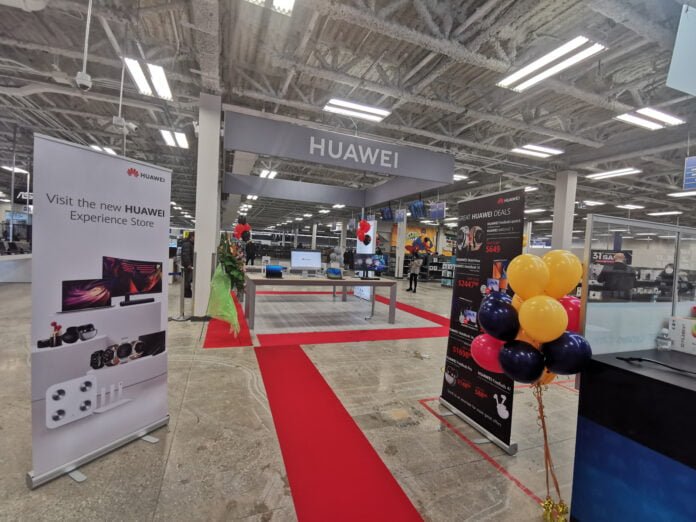
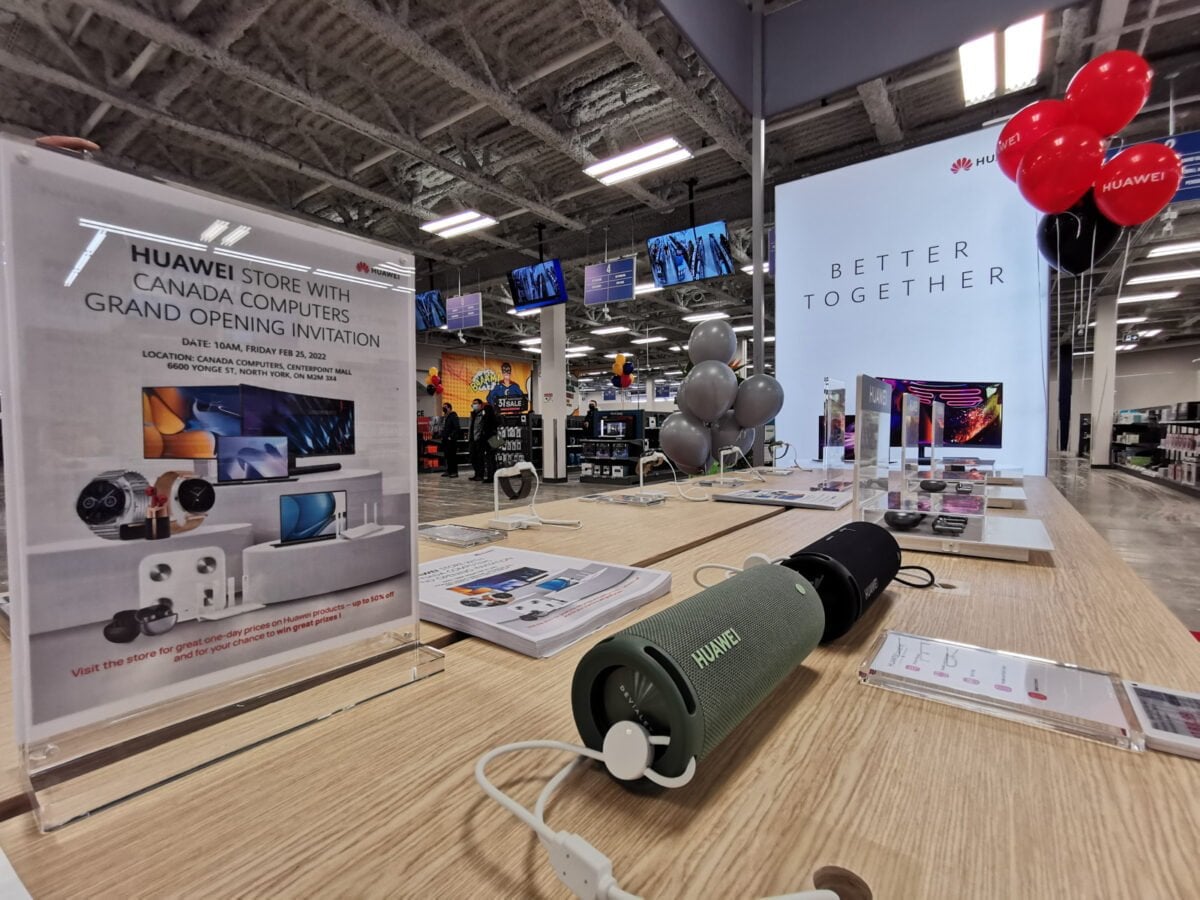
HUAWEI at Canada Computers North York (Image: HUAWEI)
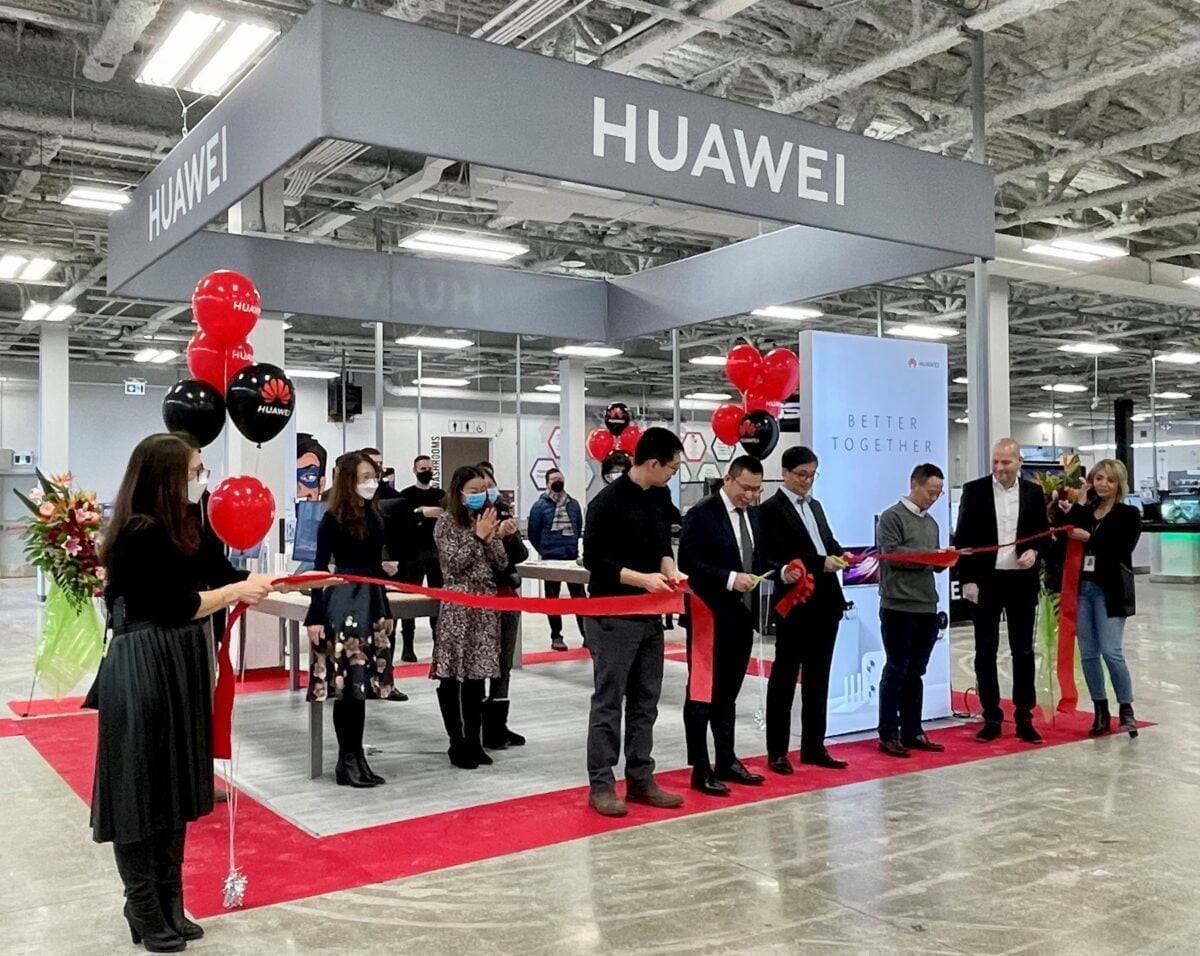
Huawei, a leading international technology company, has launched its first innovative store-in-store location in Canada with plans to aggressively expand the concept throughout the country.
Radek Krasny
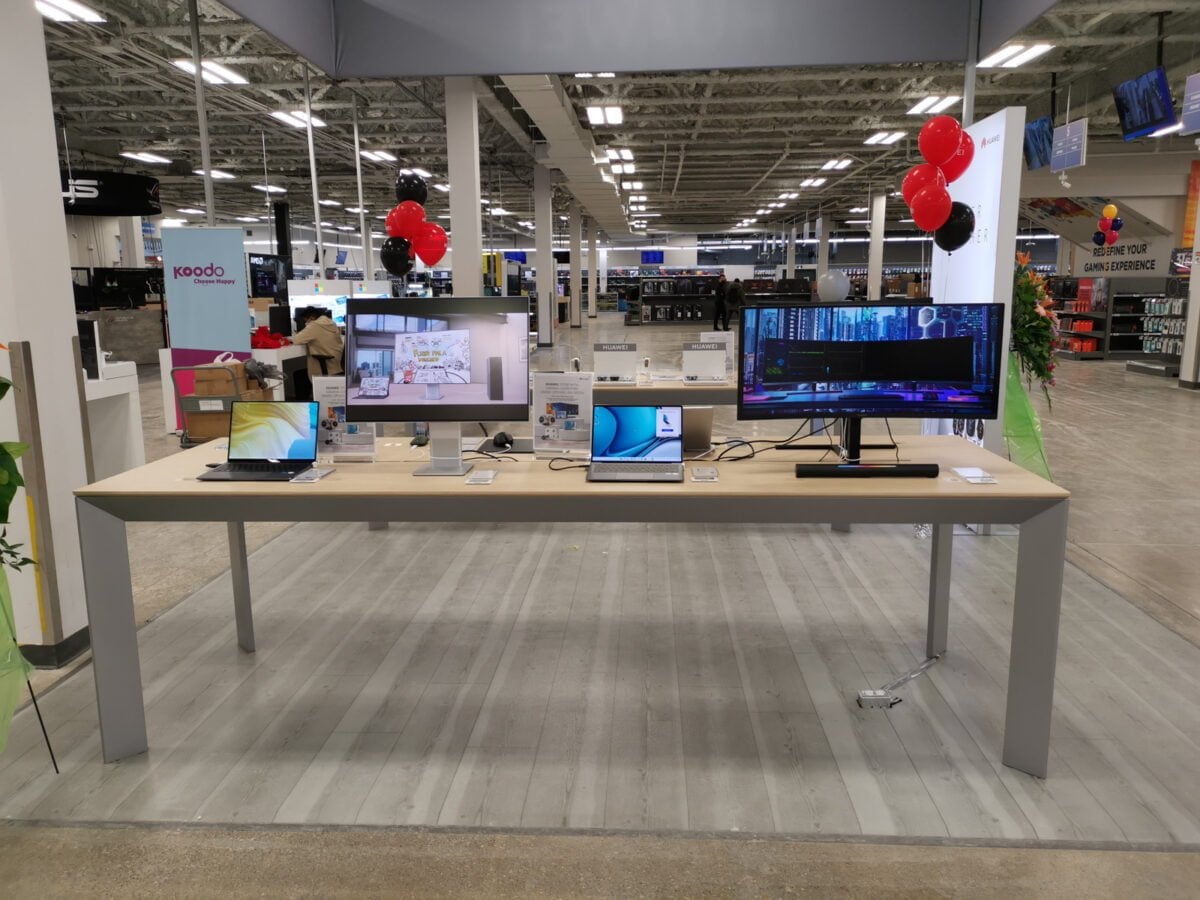
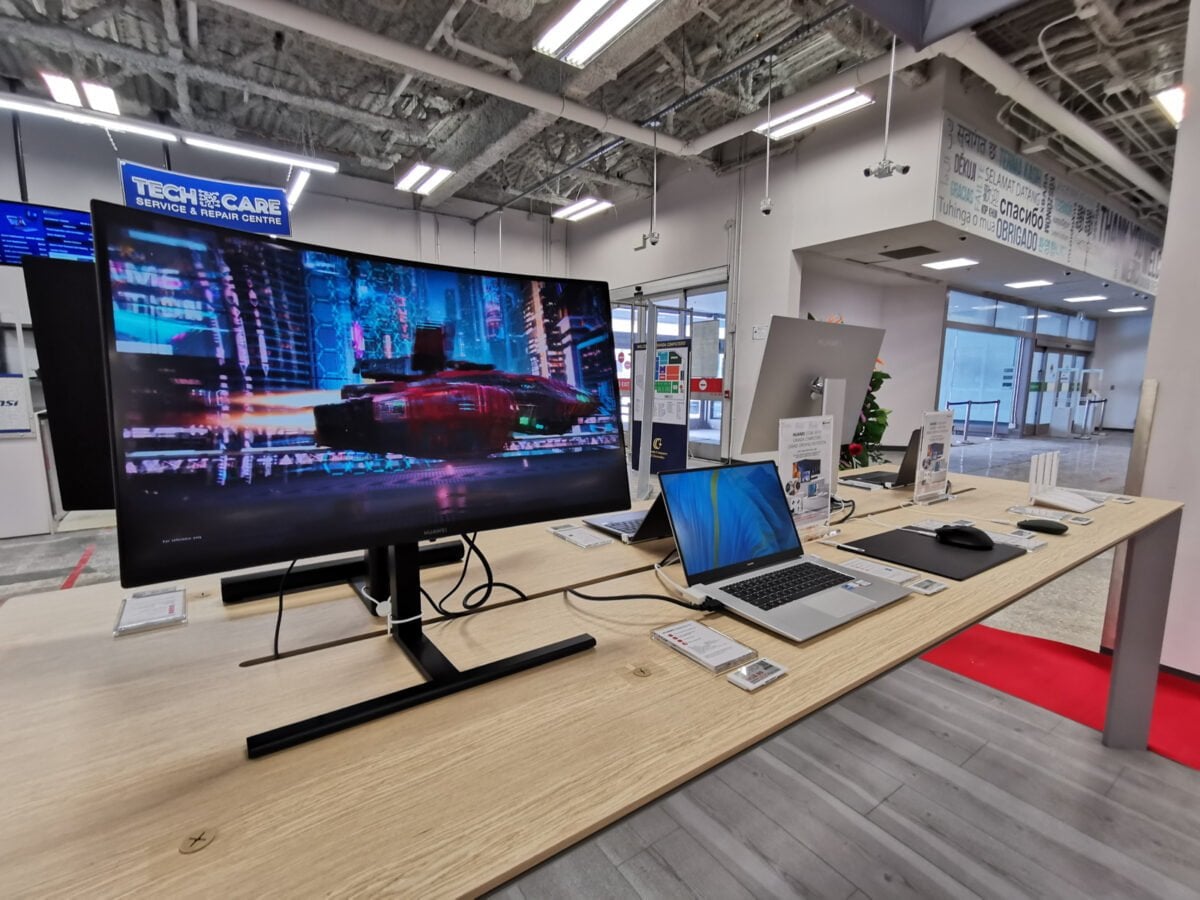
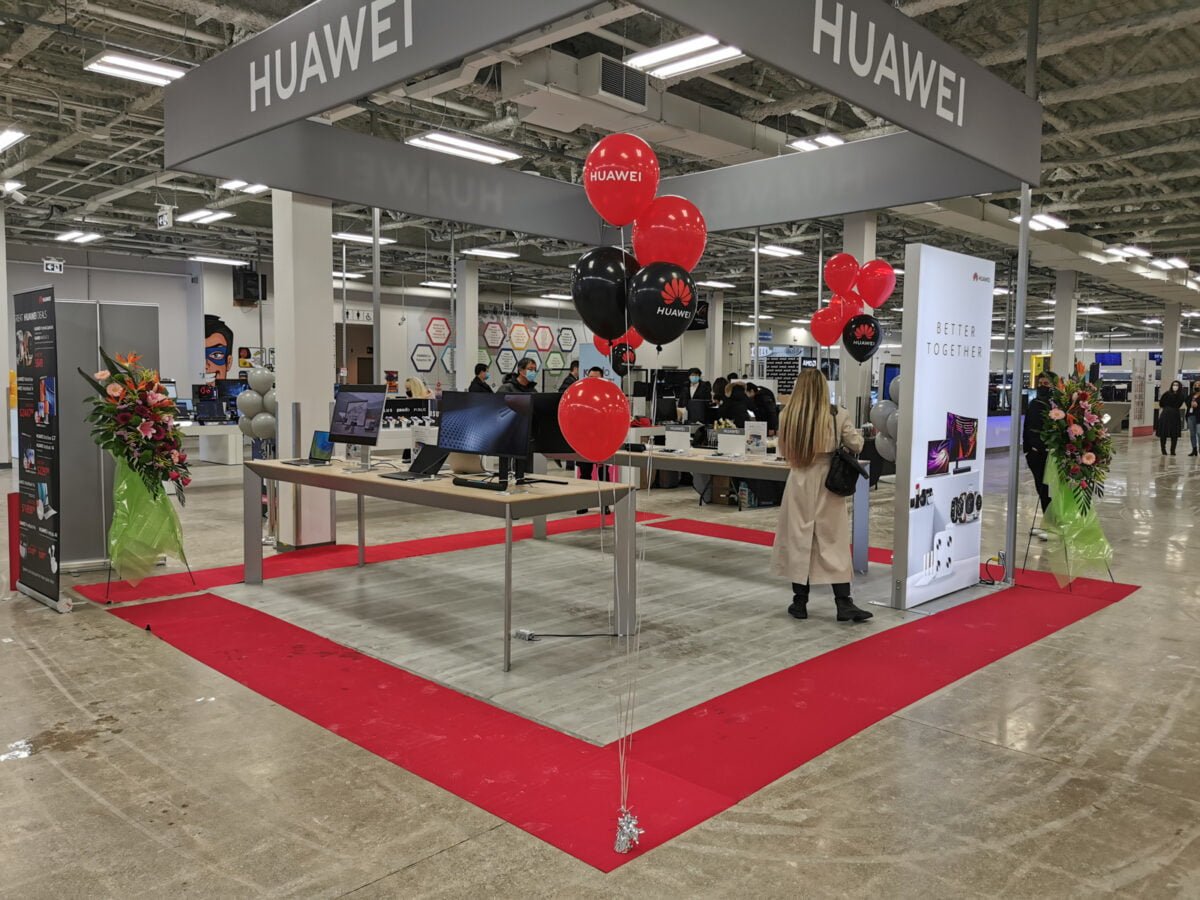
The Huawei store, for laptops, monitors, wearables, audio products, tables and smart home devices, was launched at the Canada Computers North York location in Toronto. It marked the beginning of retail expansion across Canada.
Radek Krasny, Director of Marketing, Huawei Canada, said the company plans to open 15 new Canada Computers store-in-store locations in major Canadian markets from coast-to-coast.
“All the store-in-stores will be located within Canada Computers. We signed a strategic partnership with Canada Computers as our first retail partner to open our store-in-stores,” he said.
HUAWEI store opening (CNW Group/Huawei Consumer Business Group)HUAWEI at Canada Computers North York (Image: HUAWEI)
“All the 15 locations will be open by spring of this year, within the March/April period. We are in the 15 busiest Canada Computers retail locations across the country with plans to add more.”
“One of the reasons why we invested in Canadian retail is that Huawei has been known in Canada mostly for our superior smartphones. We introduced our brand to the Canadian market in 2017 and our key focus for the first 3 years was solely Smartphones and Tablets. We started to expand our Canadian product portfolio in 2019”
The launch of the retail footprint is an effort to show Canadians the company’s full portfolio of products.
“Globally our flagship stores are called Huawei Experience Stores which are located in Europe, Asia and other markets. We were planning to bring one or two HES to Canada with consideration of Toronto, Montreal, and Vancouver. Plans were put on hold due to COVID. We are continuously exploring the opportunity with future plans to open our Canadian flagship Huawei Experience Store. For now, the smaller footprint store-in-stores will solidify our commitment to our Canadian open market retailers,” said Krasny.
HUAWEI at Canada Computers North York (Image: HUAWEI)HUAWEI at Canada Computers North York (Image: HUAWEI)
He said one of the key focuses of this year are laptops including professional and gaming monitors. And Canada Computers is a strategic retailer in this category.
“ Our plan and our goal is to expand across Canada partnering with all retailers. Canada Computers is our first key strategic partner for store-in-store retail, featuring the full portfolio of Huawei products. We currently have distribution across trusted Canadian retailers like Costco, Staples, Canada Computers, Visions, Walmart, London Drugs, Amazon and more.”
Simon Shilong Li
Li Shilong, General Manager of Huawei Device BG Canada, said the Canadian roll-out of the store-in-store concept is a strong sign of the brand’s sustainable investment and its goal to strengthen the connection to the Canadian market.
“Huawei utilizes the power of digital solutions and technological innovations to improve and simplify life for our customers. With our new stores located across Canada, we can now respond even more closely to the individual needs and wishes of Canadians,” said Shilong.
HUAWEI at Canada Computers North York (Image: HUAWEI)HUAWEI at Canada Computers North York (Image: HUAWEI)
“Canada Computers is happy to welcome Huawei Canada partnership from coast to coast, starting with our North York location. This partnership signifies our commitment to showcasing leading global technology to enhance our customer retail experience,” said Gordon Chan, CEO of Canada Computers & Electronics. “With 31 years of business, we look forward to elevating our portfolio by developing strong relations to advocate for a sustainable future.”
Huawei’s products and services are available in more than 170 countries and are used by a third of the world’s population. Fourteen R&D centres have been set up in countries around the world, including Germany, Canada, Sweden, Russia, India and China. Huawei Consumer BG is one of Huawei’s three business units and covers smartphones, PC and tablets, wearables and cloud services, etc.
Founded in 1991, Canada Computers & Electronics is a retailer of personal computers, IT and components, as well as consumer electronics. Canada Computers & Electronics has 40 store locations across Canada.
Back in 2001, Sam Osmow had an idea to bring Mediterranean cuisine to the people of Streetsville, Ontario – a “village in the city” of Mississauga.
Today, Osmow’s has grown into a national brand with 127 locations by the end of March and plans to grow into the largest Mediterranean fast casual chain in North America.
Ben Osmow, CEO and Head of Franchise Operations, said the company, which was started by his father, didn’t start franchising until 2015 when it had about 13 locations “mainly run by friends, family or even very diehard customers that became our first franchisees.”
Osmow said the concept really took off and became the biggest Middle Eastern, Mediterranean, franchise in Canada because it found a way to Westernize and modernize Middle Eastern cuisine.
“So essentially taking products that would be traditional dishes back home and finding a way to Westernize them,” he said.
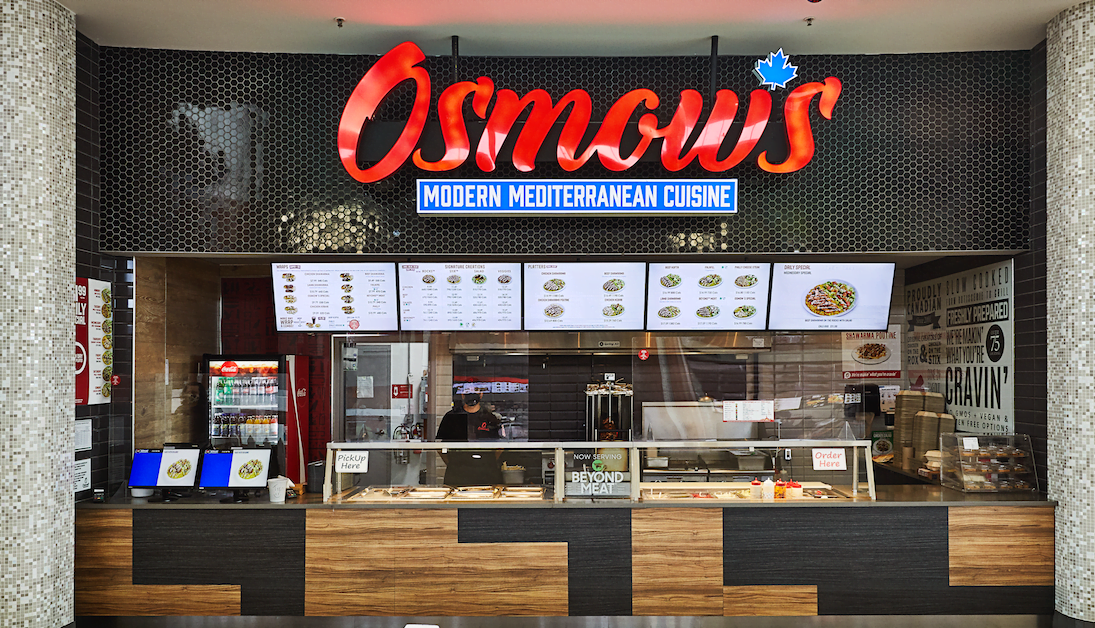
Osmow’s at Mapleview Mall (Image: Osmow’s)
Image: Osmow’s
Image: Osmow’s
When it comes to expansion plans, Osmow said “the sky’s the limit.”
“We want to be the largest brand within North America, ultimately, on the Mediterranean side. There’s many franchises that have done it on burgers. There’s many franchises that have done it on subs and on pizza. But there hasn’t been a brand that’s hit home across Middle Eastern, Mediterranean, food,” he said.
“So far we’ve developed ourselves as that go-to brand in Canada with having the largest number of locations by far and over the next few years we’re hoping we can be that go-to brand across all of North America.”
On the company website, Sam Osmow describes how the family-owned and operated business began.
Image: Osmow’s in Brampton
“When I arrived in Canada from Egypt, I was determined to do whatever it took to be successful. I worked different jobs trying to make my way in this new world. I pumped gas, worked retail, but always with the desire to get back to my real passion – food,” he writes.
“Finally, I scraped enough money together to buy a sub shop in 1999, but two years later, I wasn’t seeing the success I’d hoped for. One day a customer asked me what I was having for lunch . . . Shawarma! He was captivated by the aroma and flavour of my lunch.
“My customer inspired me to close the sub shop, along with the help of my family we painted, rebranded, and opened the first Osmow’s a week later. I did whatever I could to get our local community to give Mediterranean food a try, including giving out free samples at local festivals; soon people were lining up for it.
“It hasn’t always been easy, but I’ve loved every minute of this journey, and I am so happy working alongside my family everyday to bring Osmow’s to loyal customers, like you. I still love hearing your feedback and trying new ideas that our customers come up with. Thank you for being a part of our extended Osmow’s family . . . because to us, family is everything!”
Image: Osmow’s
Ben Osmow said his father worked night and day, all day, every day in that restaurant.
“I could say the rest is history but it didn’t get off to a great start to be very honest. It was something a lot of people were not familiar with shawarma and hummus. That was 20 years ago. Now shawarma has become a staple not just in Ontario but I would say in most major markets across Canada,” said Osmow. “It’s growing in popularity and it’s kind of a go-to cuisine right now in terms of trends.
“When I grew up here and went to elementary school here, I grew up on sub day and pizza day. And now we have over 30 elementary schools that order from Osmow’s for shawarma day. It’s absolutely incredible for me and that number is growing and we on-board more and more schools every few months. I’m really excited about that because that just means there’s going to be a new generation out there growing up having shawarma from a very young age and not discovering at a late age that most Canadian consumers do.”
Osmow said the brand has a multi-unit model where a franchisee is able to take multiple locations to expand the brand.
“We always look to work with great franchise partners and most of our franchises are multi-operated. We’re opening up about 30 to 40 new restaurants per year but that being said if we come across some great franchise partners, let’s say in deeper parts of Quebec, or Montreal or so on, it’s obviously something that would be a benefit for all of us,” he said.
As commerce and consumer habits evolve, the function of preventing loss in retail has become increasingly complex. Teams charged with protecting and enhancing retail profitability must take on new responsibilities to protect people, property, and assets.
Retail Council of Canada’s virtual Retail Loss Prevention Forum, on April 12, 2022, will examine how retail loss prevention and risk management teams are evolving their roles, responsibilities, and empowering their staff with the new skills and approaches required to be effective in today’s retail environment.
During this packed ½ day forum, leading retailers will share real-life, actionable examples of how new proactive tactics are outsmarting felonious activities. Some of the topics and speakers include:
The New Risk Management Model: Chris Strongman, Vice President, Enterprise Risk Management, Aritzia LP and Rui Rodrigues, Executive Advisor, Retail Council of Canada. Strongman will chat with Rodrigues about benefits and challenges of moving from a loss prevention to an enterprise risk management model, the strategic transformation at Aritzia, and how Aritzia’s leadership is supporting these new priorities in decision-making to protect its business.
The Impact of Changing In-Store Experiences: Calandra Guiry, Director Loss Prevention, Sephora Canada and Paul Trickett, National Director of Asset Protection and Health & Safety, Staples Canada. Guiry and Trickett will share how their teams are shifting their focus to better support and protect new types of in-store experiences while reducing potential losses by rethinking traditional asset protection.
Mitigating the Creative Deception of Professional Fraudsters in Retail: Guy-Paul Larocque, Acting Officer in Charge, Canadian Anti-Fraud Centre, RCMP and Rita Estwick, Director, Security Fusion Centre, Canada Post. Laroque and Estwick will discuss returns fraud, gift card fraud, cryptocurrency red flags, and other fraud trends that are becoming even more prevalent with continual advances in technology and how consumers now shop.
Advancing Collaboration on Organized Retail Crime in Canada: Chris DaCosta, Senior Manager, Central Investigations, The Home Depot Canada, Tony Sheppard, ORC expert, and Director, Loss Prevention Solutions, ThinkLP, and Supt. Robert Gourley, Halton Police. DaCosta, Sheppard, and Supt. Robert Gourley of Halton Police discuss how retailers can work together to help change perceptions and block the impact of organized retail crime at a time when collaboration between retailers, law enforcement, and justice has never been more important.
The insights shared and debated at this year’s RCC Retail Loss Prevention Forum on April 12, 2022 will shape the future of loss prevention, asset protection and risk management for retailers in Canada. Register today to be part of these important conversations and help your teams anticipate the best ways to lead your organization through the evolving complexities ahead.
Discounts are available for junior professionals and groups of five or more who register together.
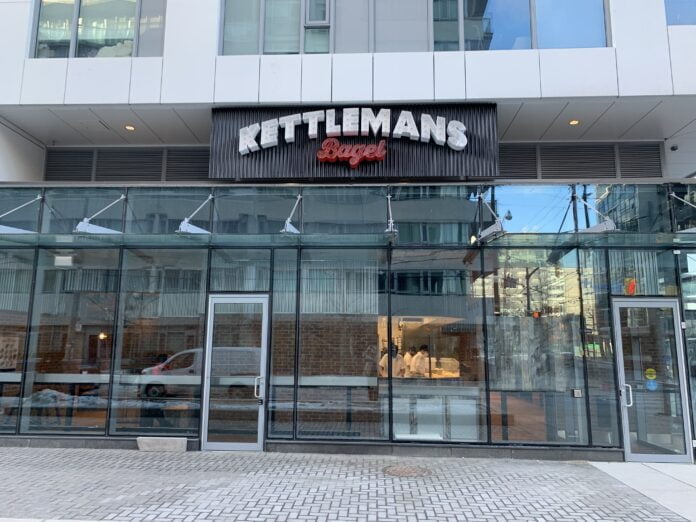
Kettlemans Bagel on Bathurst St. in Toronto (Image: Kettlemans Bagel)
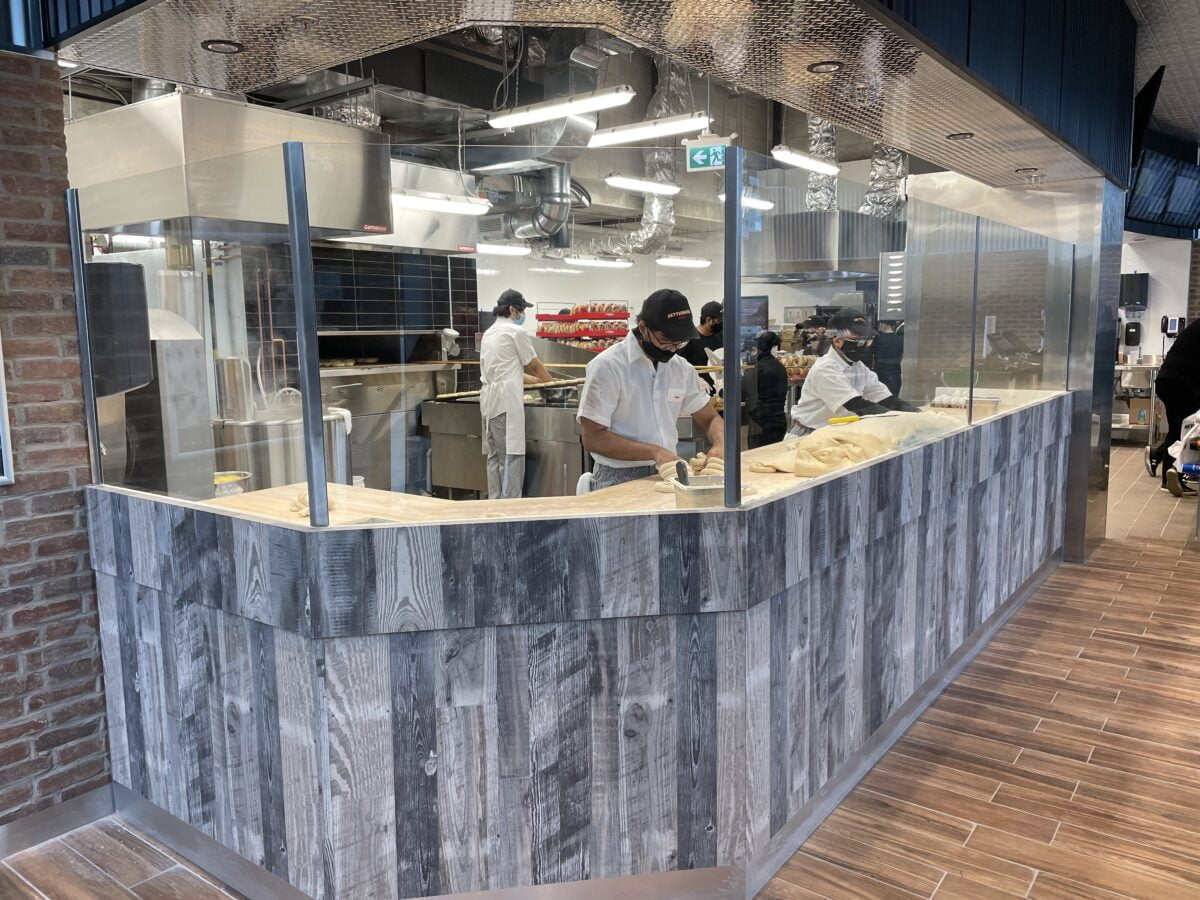
Ottawa-based Kettlemans Bagel has opened its long-anticipated Downtown Toronto storefront at 33 Bathurst Street. The large-format storefront is the first of several for the city as part of an expansion for Kettlemans.
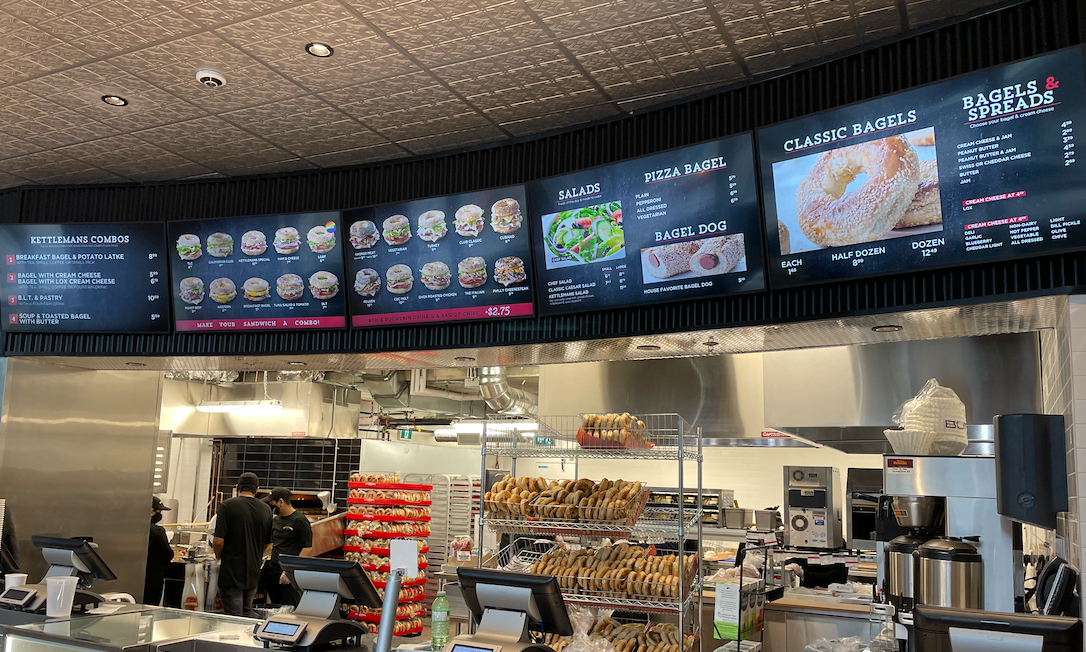
The Bathurst Street location is an all day 24/7/365 operation with the classic Kettlemans Bagel menu, which includes sandwiches, bulk bagel orders and prepared selection of market to-go food.
Daniel Reyes Cocka
Kettlemans Bagel was founded in 1993 in Ottawa and has since expanded into 5 locations, including the newest store in Toronto. The brand has expansion plans beyond the Bathurst & Front location, and according to the team behind the iconic bagel company, it was important to build the excitement in the city.
“You’d be astonished at how many people live in Toronto who are from Ottawa,” shared Daniel Reyes Cocka, Director of Marketing and Communications for Kettlemans Bagel. “The minute they hear ‘Kettlemans’ is in downtown Toronto – it sets off this emotional response. It’s so important. It’s become almost like a heritage brand in the city.”
“24-hours a day, 7 days a week, 365 days a year. It’s a very important piece for us, as obviously being downtown Toronto…it’s always the McDonalds in the middle of the night and what else? We’re stepping into an entirely new world, which is incredibly exciting for us.”
Craig Buckley
The Bathurst & Niagara store is in the Minto Westside, a 1200-unit condo development which includes a Farm Boy grocery store and multiple large-scale developments within a short distance, including The Well. In addition to a full scale Quick Service Restaurant operation, Kettlemans also has secured enough space in the building to create a wholesale support function to add to its Etobicoke production facility.
“The building is owned by Minto and the owners approached us three years ago,” said Craig Buckley, Owner of Kettlemans Bagel. “At that time, Farm Boy wasn’t signed and I walked away from the conversation. When Farm Boy ended up coming, I reached out to the ownership and we had a conversation.”
That conversation turned into a location that employs more than 100 people from many diverse backgrounds and experience levels, including team members from other stores in the network that are on-site to help with the training and development of the new store.
“We looked at locations around the downtown core before deciding on this spot, including The PATH, Union Station, Yonge Dundas Square,” Buckley said. “We had an opportunity to go into a spot on Yonge Street between King and Adelaide. We say to each other that it’s like The Matrix, where you’re going backwards and the world is going by you – that’s how we felt. We were supposed to go into the airport in Ottawa and we ducked that. So this is great, as this is downtown, but people live here. Whereas if we go to the Financial District, it’s more of a different experience.”
“This is the first of the downtown Toronto locations,” shared Cocka. “Later this year, we’re going to be opening up Whitby and then Yonge & Eglinton ideally next year. That will position us in the west, the east and the downtown core (south). Expansion into other cities will continue, but Toronto is a massive market for us.”
The concept and design of the location was designed with a purpose, including the seating and mobile-order pickup spots.
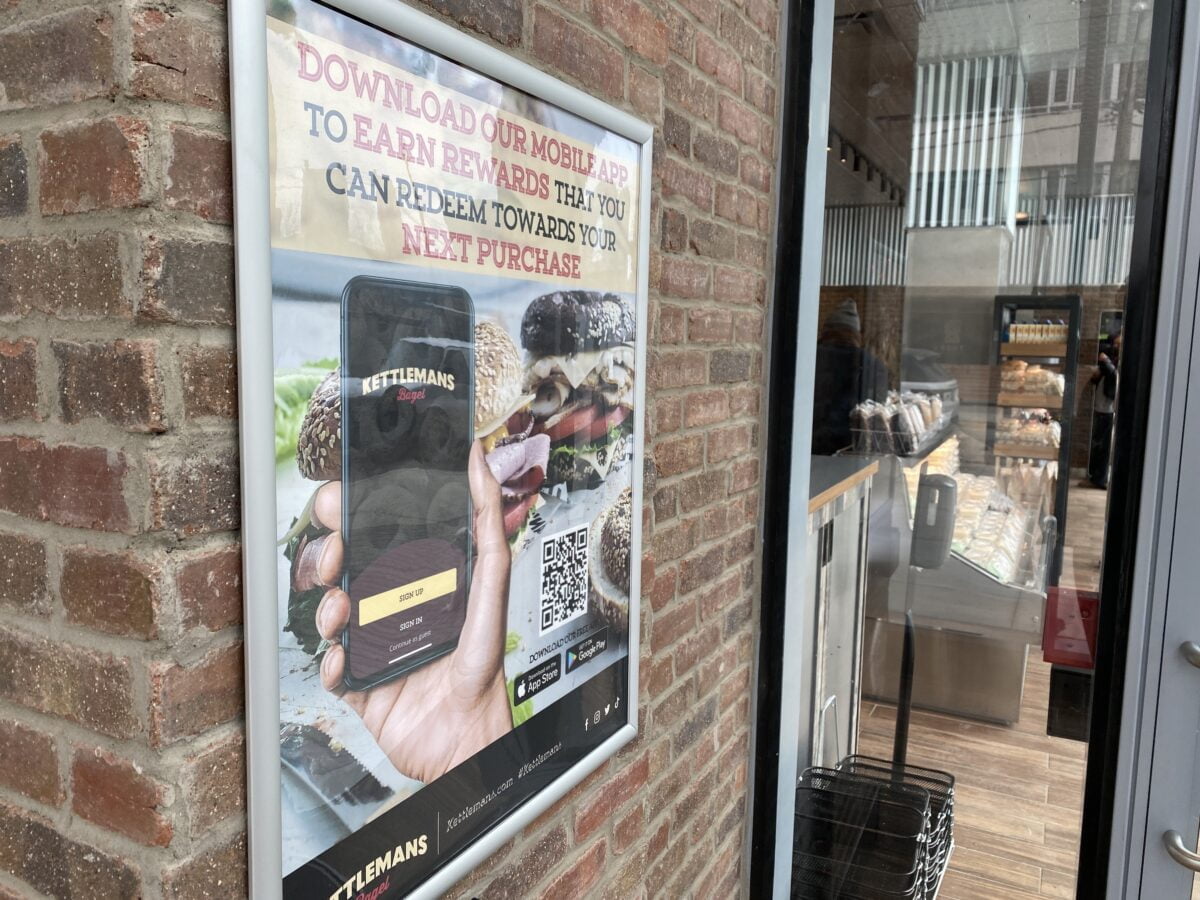
Kettlemans Bagel has partnered with UBER and SkiptheDishes for delivery options and is looking at a number of technological updates as the brand expands into new locations. The brand has an app which will allow for customers to order in advance and earn points through purchases.
“The demand is here – we’ve almost doubled our instagram page in the last year. Our Facebook page is over 40k likes. Anytime we talk about Toronto, everyone gets incredibly excited. It’s a matter of finding new locations that we can fit in, because we need a lot of space.”
Buckley said that each location is built from the ground up, and because the brand is privately owned – the expansion costs can be significant.
“Each one of these stores are $2.5 million to build. We’re here for the long term – we need to stay in a location for 15-20 years to get our money back. People don’t realize the amount of money that it takes to build these locations. We want to make sure that we pay people properly.”
“Our ovens are made in Washington State. Our mixers are specialty made for us by a company that’s been around for 100 years outside of Chicago – it’s actually more expensive than our ovens. The contractors are actually a Montreal company, with offices here in Toronto.”
“We’re not reinventing the wheel. I love Montreal bagels and if you’ve ever been to a Montreal bagel shop – they’re not big places. You go and buy a bag of bagels, your cream cheese and go outside and dip the bagel in the spread and you go on your way. I always thought that there was so much more that can be done with a bagel. We’ve always made sandwiches on the bagel – and I always wanted a QSR. I didn’t want waiter service.”
“Now, this is a nice bagel shop. It’s not fancy. I wanted it to look nice, but I didn’t want it to be over the top. I wanted you to be able to go up and get a sandwich or buy a bunch of bagels and go home. They’re so filling and delicious.”
Kettlemans Bagel Bathurst (Image: Dustin Fuhs)
The Kettlemans Bagel team said that the company doesn’t have food to give away to food banks at the end of the day because of the way that its business model works in terms of production for retail and wholesale.
“The fascinating part about this location is that we don’t usually have waste,” shared Cocka. The reason why is that we are 24/7 and we have wholesale. If we’re not producing for our guests in-store, we are producing for our wholesale business. It allows us a real clean business model.”
Buckley said that the brand does have two different organizations that they help support in various ways.
“We donate to two different organizations in-store. Kettlemans Bagel donates 5% of sales from the LGBT sandwich directly to CANFAR, which no other QSR donates year round proceeds from an individual item.” Kettlemans Bagel also donates to CampMisquah, a camp located on Lac Bitobi near Gracefield, Quebec, approximately an hour north of Ottawa.
“Continously giving back,” added Cocka. “…in every community that we operate, it’s important that we are a part of the culture, part of the economy and a part of the people.”
Retail Insider is streamlining its Canadian retail news from around the web to include a handful of top news stories that can be viewed quickly during the day. Here are the top stories from the past 24 hours.
IKEA Canada launches first Planning Studio in Boisbriand, QC
During times of disruption and challenge, the very best find a way to persevere. They reimagine and reinvent, driving innovation and creativity, in order to not only withstand the turbulence faced, but to continue laying the foundations of future growth and success. One such company that is never short on innovation and creativity is IKEA Canada, which recently announced the launch of its first Canadian Planning Studio in Boisbriand, Quebec. Meant to inspire its customers, the brand-new location is part of a larger strategy for the company, which intends to begin rolling out additional Planning Studios across the country as it continues its Canadian expansion. And, according to Eri Mathy, Country Business Development Manager, IKEA Canada, it’s a concept and expansion strategy that’s been developed with a focus on the evolving needs of the IKEA Canada customer.
“IKEA Canada has been on a journey to enhance our retail experience to be more affordable and convenient, while accelerating our investments to meet customers in the best possible way, wherever, whenever and however they choose to shop with us,” says Mathy. “The Planning Studio concept is part of a global ambition to bring a new world of IKEA to our customers. There are currently more than 30 IKEA Planning Studios globally in cities such as Copenhagen, Berlin, London and New York. It presents a new concept for the Canadian market and will be an inspiring space with the IKEA look and feel, offering customers planning and ordering services with knowledgeable IKEA design specialists.”
Greater convenience and accessibility
IKEA Design Studio at Oshawa Centre (Image: IKEA)
Responsible for leading the expansion efforts here in Canada, Mathy describes the Planning Studio concept as “much smaller” than a traditional IKEA location. In fact, the location in Boisbriand, coming in at 9,547 square feet, is approximately one-tenth the size of the average IKEA Canada store and is situated in a prime location within the Faubourg Boisbriand shopping center on Montreal’s North Shore. It’s a location that Mathy says was carefully and deliberately selected as part of the company’s expansion strategy, explaining that it serves as the perfect testing ground for the selection of future locations as IKEA Canada continues to introduce the concept across the country.
“The new IKEA Planning Studio Boisbriand will be located at Faubourg Boisbriand, one of the area’s most prominent shopping centres,” she asserts. “We want to make it easier for more customers to experience our products and services, and we know that there is significant travel time for North Shore residents to shop at our current IKEA locations in the Greater Montreal Area. This desirable location is highly accessible and a destination shopping area for many residents. By opening a Planning Studio in this location, we will be able to meet many more North Shore residents and support them with custom design needs, closer to home.”
Expanding IKEA ecosystem
It’s a move and introduction to the market that’s emblematic of the storied retailer’s penchant to consistently increase its understanding of the customers it serves, getting closer to them to better satisfy their needs. And, given our recent and current circumstances surrounding the global pandemic and its sustained impacts, they are consumer needs that are rapidly changing. As Mathy points out, consumers are increasingly seeking greater convenience and accessibility. However, she adds that the Planning Studio not only helps to satisfy these growing expectations, it also adds a completely new layer to the IKEA experience, allowing customers to design, order, and purchase complex home furnishing systems for their kitchens, bedrooms, bathrooms and living rooms. It’s all part of what Mathy describes as a larger global strategy, one that seems to be going a long way toward bolstering the retailers integrated retail ecosystem.
“The IKEA Planning Studio Boisbriand is part of a total IKEA market approach in Montreal, which includes introducing new experiences in our existing stores, enhancing our service offer and fulfilment and creating new IKEA meeting places,” she explains. “This unique shopping format allows you to design your living space with the help of an IKEA specialist. The difference is that instead of taking products home with you, you discover the look and style for your living space, design it with the help of an IKEA specialist, and then have the products shipped directly to your home or a nearby pick-up location.”
Meeting evolving consumer needs
IKEA Construction – The Aura at College Park . Photo: Dustin Fuhs
Mathy goes on to explain that IKEA has ambitious expansion plans that are aimed at continuously enhancing and elevating the experience it offers its Canadian customers, whenever and wherever they want to engage with the brand. She says that although the strategy is clear within the company, the timing and locations of future Planning Studios have not yet been finalized. The new concept, however, represents but one of a number of initiatives that the company is developing in its unwavering effort and commitment toward consistently and significantly raising the bar concerning customer service and engagement. And, as Mathy points out, it’s work that the company is doing with a focus on meeting evolving consumer needs and lifestyles.
“In addition to making our IKEA experience more accessible to more Canadians across the country, we continue to focus on making the IKEA brand more affordable and sustainable for our Canadian customers, too. Canadians will continue to see enhancements to our convenient services, digital planning tools and shopping experiences to meet the increased digitalization of the world around us. At the same time, however, we will continue to share products and inspiration to help more people live sustainably at home. IKEA Canada customers will also begin to see their home delivery orders arrive via zero-emission EV trucks. And we expect to see even more Canadians exploring our Sell-Back service as we all endeavour to reduce, reuse and reimagine sustainable ways forward.”
Retail giant Walmart is launching two new Walmart Global Tech hubs – one in Toronto and the other in Atlanta – and will hire more than 5,000 tech workers this year.
The retailer said Walmart Global Tech plans to make Toronto one of its larger hubs, with hundreds of new jobs over time. The initial hiring phase is expected to include 45 full-time roles in software development, technical program management and product management. Initial hiring in Atlanta is expected to include 140 new full-time roles such as data scientists and software engineers.
Sravana Kumar Karnati
Sravana Karnati, SVP/CTO, Walmart International, said the retailer has operated in Canada since 1994.
“It’s a market that we’re really familiar with. Toronto is home to 26 per cent of the technology population in Canada. About 25,000 students come out of colleges every year in that area,” he said.
“The presence of the big technology talent, our experience in the market and our desire to do more in the market and also have global impact is why we chose Toronto. Our strategy has always been to go where the talent is.
“Retail is ever changing. There is always new technologies being tried, applied, whether it is supply chain, the way we merchandise, the way we optimize our operations in the back room, the fulfillment centres, the distribution centres. So every area of retail has technology, innovation, happening as we speak. And to be really good in retail we need to be really good in each of those areas. And being able to solve these problems of scale, of Walmart scale . . . requires a deep focus on technology which is why we’re expanding.”
Image: Walmart Canada
With the addition of the Toronto and Atlanta hubs, Walmart Global Tech will have 16 technology hubs, including teams in Seattle and Chennai, India that launched last year. Walmart Global Tech is the fastest growing corporate team inside the world’s leading retailer. In the last fiscal year, Walmart Global Tech grew by 26 per cent to 20,000 associates and 20 per cent of the Global Tech team earned a promotion.
Karnati said Walmart has strong technology roots. Early on, the retailer invested heavily in technology and it continues to do that in various areas.
“As the company grew and the business grew, we just (developed) more and more opportunities at scale . . . Technology is the way we want to scale. Technology is the way we want to serve our customers better and also associates better as well. It’s an extremely important enabler for our business success.”
Each week, approximately 230 million Walmart customers and members visit approximately 10,500 stores and clubs under 46 banners in 24 countries and eCommerce websites. With fiscal year 2022 revenue of $573 billion, Walmart employs 2.3 million associates worldwide.
Dufferin Mall Walmart Supercentre in Toronto (Image: Dustin Fuhs)
Suresh Kumar
“The cutting-edge technology we build for 230 million customers around the world is fuelled by our greatest asset-our people,” said Suresh Kumar, Walmart’s EVP, Chief Technology Officer and Chief Development Officer. “We are excited to join the vibrant and diverse tech communities in Toronto and Atlanta. Work from these new hubs will impact millions of lives and transform the future of retail.”
Nicolai Salcedo
“Canada has a dynamic and world leading tech community powered by talented people and innovation that is recognized on a global scale,” said Nicolai Salcedo, Chief Technology and Data Officer, Walmart Canada. “It’s inspiring to see Walmart recognize the Canadian tech community and invest in further developing local talent with new opportunities that will be brought through this new tech hub.”
In 2020, Walmart Canada announced a $3.5 billion investment to make the online and in-store experience simpler, faster and more convenient for Walmart Canada’s customers.
John Tory
“Walmart’s decision to make Toronto the home of one of its larger tech hubs with hundreds of jobs to come is another vote of confidence in our city’s thriving tech sector,” said Toronto Mayor John Tory. “As Mayor, I am committed to supporting our technology sector and continuing to encourage companies to locate here and hire here. This is all part of our non-stop effort to ensure that Toronto comes back stronger than ever.”
Retail Insider is streamlining its Canadian retail news from around the web to include a handful of top news stories that can be viewed quickly during the day. Here are the top stories from the past 24 hours.
During these times of unequalled disruption, the uncertainty that lingers pervades just about every aspect of life on the planet. Social restrictions and other health and safety protocols enforced by governments all over the world have changed the way people in communities everywhere do things, and how they engage and communicate with one another. For retailers, the implications of the pandemic have been, generally speaking, swift and brutal, impacting entire organizations. Perhaps the greatest of impacts have been experienced within the retail supply chain, highlighted most dramatically by port closures and congestion, container shortages and inflated costs. They are global issues that have been wreaking havoc on operations and retailers’ ability to get the product that consumers are looking for on store shelves in a timely manner. However, through innovative supply chain strategy and the use of technology, Giant Tiger has managed to withstand much of the recent turbulence. And, led by a gender-equitable team, it seems to be doing so by virtue of a more holistic perspective – a quality about the company that Jessica Godin, SVP of Supply Chain at Giant Tiger, says is critical in driving it toward continued success and growth
“Gender equity is extremely important,” says Godin. “But, at Giant Tiger, we take a broader view of equity. We really celebrate everyone’s differences, regardless of their gender, race, culture, sexual orientation or identification. Everyone on the team brings different strengths, ideas and perspectives to the table, helping us think about things from all angles. Letting people be who they truly are allows them to bring their very best to work and encourages them to give everything they have for the team, knowing that their contribution is really valued. Approaching the business with a people-first focus supports the creation and maintenance of a positive culture and environment that fosters diversity and inclusion. When this is the case, when everyone within the company feels valued and appreciated, and a sense of equity and belonging is present, then people want to show up to the workplace every day, benefitting the organization tremendously.”
Common goals and objectives
It’s a sentiment echoed by Godin’s colleague, Ashley McDonald, who serves in the role of Ocean Import Specialist at Giant Tiger, recognizing the same benefits that a positive and inclusive culture yield. She also agrees that the work the company has done to achieve this provides a powerful platform for employees to perform and excel. It’s a testament to the company headquartered in Ottawa, operating an expansive network of more than 260 store locations and employing in excess of 10,000 people across the country. And, as McDonald points out, it’s a culture that’s very much appreciated by Giant Tiger’s personnel, and one whose benefits also serve to unite everyone at the company, rallying them around the brand’s goals and objectives.
“All of my female colleagues and I feel very fortunate to have such strong representation at all levels at Giant Tiger,” she says. “It makes everyone appreciate the work that the company has done around diversity, equity and inclusion. Everyone feels welcomed and encouraged here. There are so many benefits to working within a positive culture like the one we enjoy. But perhaps the greatest benefit that results is the fact that the entire team buys into the culture and the vision of the company. It facilitates and nurtures collaboration and teamwork, leading to stronger strategy and more effective execution. When the culture is a positive one, inclusive to everyone, it’s easier to motivate employees and to get all of them pulling in the same direction concerning targets and objectives. And, it also enhances a sense of accountability among individuals on the team because they are proud to be involved in a collective effort, one that’s supported by all of their colleagues through the entire organization.”
Overcoming disruption
McDonald goes on to explain that the strength of the culture at Giant Tiger, in large part due to the galvanizing nature of its impact, has enabled the company to face and overcome recent operational obstructions and obstacles within the supply chain. It’s a togetherness and camaraderie that facilitates information sharing and support, allowing the team at Giant Tiger to openly share insights and ideas in order to collectively address current challenges and anticipate those that may be on the horizon. She says that its an atmosphere at the company that allows the entire team within each level of the organization to be nimble, agile and prepared in order to properly respond to the next hurdle.
“One of the things that we’ve really noticed over the course of the past couple of years, as we’ve worked our way through the challenges brought about by the pandemic, is the fact that the entire team at Giant Tiger is ready, willing and able to not only deal with these challenges, but to overcome them as well,” she asserts. “Because of the dedication and commitment of everyone, we’ve been able to assess our challenges and develop effective contingency plans built to ensure the success and growth of the brand. As a result of everyone being invested in achieving our goals, we’re also more easily able to modify our strategy as we move forward, tweaking and adjusting based on everyone’s input. We’ve managed to develop and maintain a real sense of unity among the team which has been critical in allowing us to continue moving forward, despite the many disruptions that have been occurring.”
Growing list of challenges
Image: Giant Tiger
She mentions the lack of space on overseas vessels as one of the most significant disruptions that have impacted the efforts of Giant Tiger, and the rest of the retail industry, attempting to bring product into the country from other parts of the world. It’s an obviously essential layer to any business – the ability to move product swiftly and efficiently in order to make it available to customers. However, as Godin acknowledges, the availability of space on shipping vessels is but one of a whole host of challenges that retailers and their supply chain teams currently face, adding that the recent turbulence and interruptions have cast, for the first time, a bright light on the complexities of the retail supply chain and its importance in maintaining retail motion and satisfying the needs of the Canadian consumer.
“Very bluntly put, circumstances around the global supply chain are a mess,” Godin laments. “Folks working within the supply chain are well used to disruption, even prior to the pandemic. Anyone working within these roles have to possess a great deal of tenacity and grit in order to deal with regular occurrences like weather events that disrupt the flow of goods. However, the past couple of years have presented a number of persistent challenges all the way along the chain. There have been challenges related to the availability of labour and talent. The cost of virtually everything has inflated, from raw materials and finished goods to freight and fuel. There’s been a mountain of trucking disruption, especially over the last couple of months here in Canada. And there have been limitations on border crossings which have taken capacity out of the market. These challenges have been intense and sustained over a long period. During normal circumstances, the consumer doesn’t ever realize the disruption that’s overcome because it doesn’t end up impacting them. But, these past couple of years have really made the average Canadian take notice of just how integral the supply chain is to the management of a smooth retail operation.”
Equity driving innovation
It’s work and management that Godin says wouldn’t be possible without the people at Giant Tiger. As such, the company has placed substantial focus on ensuring the health and safety of its employees within the entire organization throughout the pandemic, a focus that’s been especially important for supply chain personnel given that many are working on the frontlines without the ability to work from home. It’s another layer that adds to the strength and upkeep of the positive culture that’s been created at Giant Tiger. And, adds Godin, it’s a layer and culture that’s also been pivotal in driving the continued innovation happening around the supply chain, helping the company tighten where needed, resulting in greater efficiencies and increased performance.
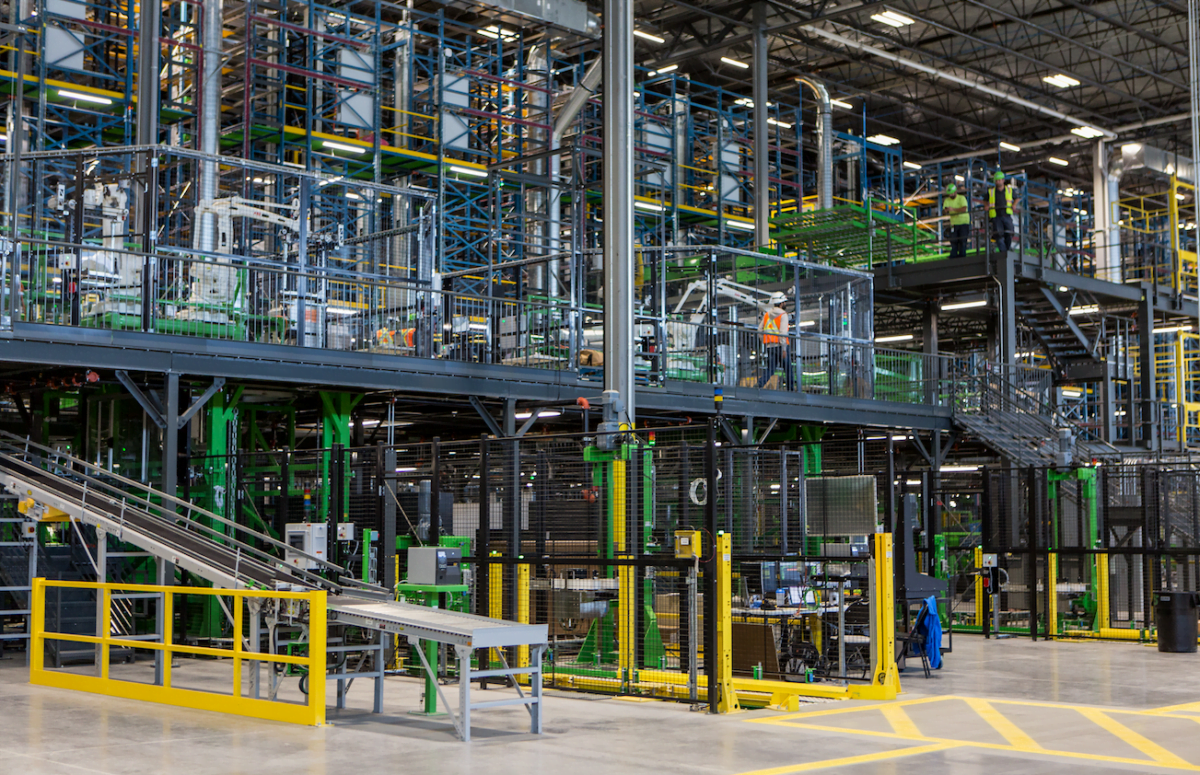
“There’s so much innovation that’s being developed at Giant Tiger,” she says proudly. “The easiest to talk about is robotics. We designed and built these capabilities within our distribution centre between 2015 and 2018. We knew that it was the right thing to do at the time in order to sustain our growth as a company. We obviously didn’t have any idea that things would be turned upside down in March 2020 with massive runs on food, toilet paper, hand sanitizer and wipes as people pantry-loaded. Leveraging our robotics and automation in order to deal with the spikes in volume that we’ve experienced, as well as to address the cause of the next disruption, has been, and will continue to be, critical.”
Tiger Trucking
Image: Giant Tiger
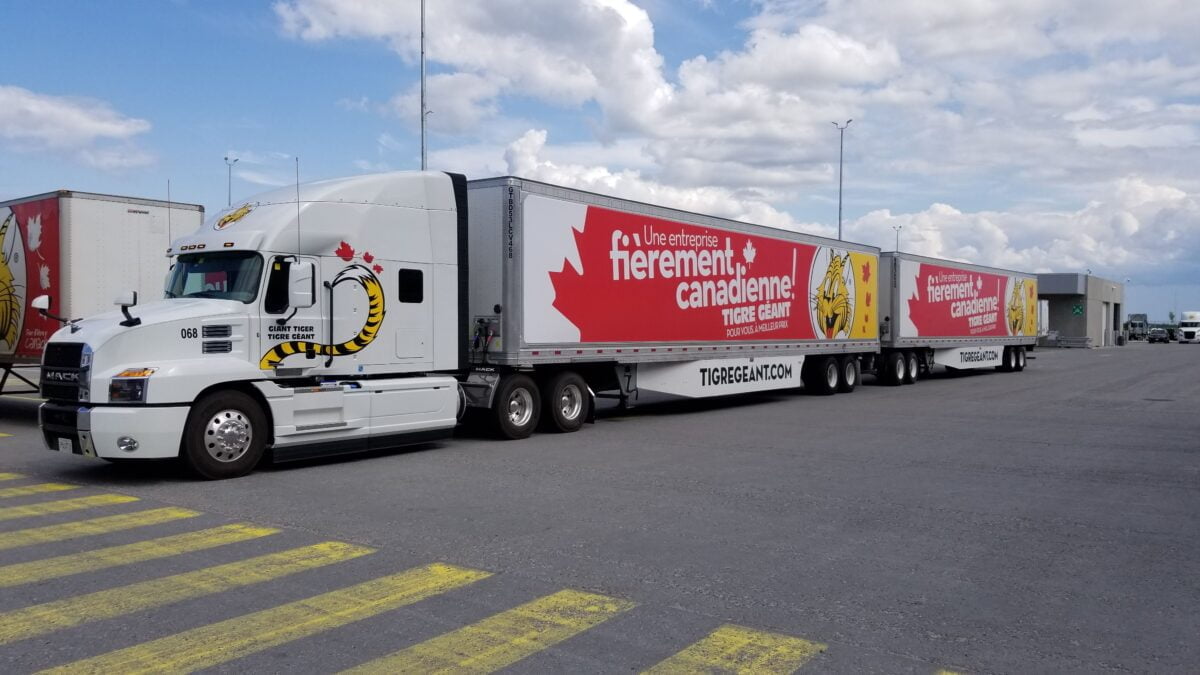
In addition, any commentary provided around Giant Tiger’s supply chain strategy and innovation would be remiss not to include mention of the company’s trucking fleet. Established all the way back in 1987, affectionately referred to within the company as ‘Tiger Trucking’, the private fleet makes daily trips to Giant Tiger’s network of stores, delivering product from its warehouses. Godin recognizes that being afforded the opportunity to manage its own fleet carries significant benefits for the company and its loyal customers. However, she says that constant development and upgrades made to the fleet, which include the use of innovative technologies, have been instrumental in consistently enhancing the performance and efficiency of Giant Tiger’s supply chain execution.
“We’ve got one of the safest, most efficient fleets in the entire country,” she says. “We invest quite a bit into technology that’s applied to our trucks, trailers and equipment in order to not only help from a fuel efficiency perspective and to provide GPS locations of our trucks, but to also be able to monitor things like whether or not a door was left open or if there was a hard brake during a trip. It all lends toward ensuring the safety of our drivers and personnel while also helping us reduce costs and find efficiencies. It’s another way in which the company has put a lot of effort into taking care of the people who help deliver the continued growth and success of Giant Tiger.”
The power of data
The advent and accelerated adoption of these types of technologies is very much reflective of the digitization of the industry, showing tremendous promise with respect to potential improvements and enhancements that could yet be made to the retail supply chain. The monitoring and tracking capabilities are changing the way fleets are managed. And, serving to underpin all of this advancement, drawing the greatest benefit of these connected technologies, is the generation and dissemination of the plethora of data that’s available. In short, the ability to use data and apply it to the supply chain is game-changing, says Godin, adding that the power that’s inherent in it is nearly boundless.
“There’s so much data out there,” she says. “Being able to harness it and pull it all together is critical today in informing decision-making and being proactive and efficient concerning the ways people are spending their time. You can call it blockchain, visibility or supply chain digitization. But, very simply put, the innovation out there now concerning the ability to connect all of the data, whether it’s related to distribution, trucking or replenishment, allows us to forecast with accuracy and plan strategy accordingly. It’s innovation that’s been developing for some time now, helping supply chains run smoother and more efficiently. But it’s power and associated benefits have ramped up over the past two years.”
Finding efficiencies through people
Although many of the disruptions and challenges that have blighted retail supply chain operations over the course of the past two years or so persist, the strategic and innovative thinking among the Giant Tiger team has been impressive, standing the brand extremely well to continue meeting its objectives. Through the use of technology and sustained improvements to its transportation fleet, the company pushes forward, forever modernizing in order to stay ahead of the perpetual curve. Godin says that the team will not relent when it comes to investing in these areas. However, she adds that it will always do so with a focus on its people and a commitment toward ensuring a first-class culture of inclusion and equity for them to ply their trade within.
“Regardless of where we look for efficiencies, it’s clear, given the challenges that the industry is facing, that we have to find them. At the end of the day, Giant Tiger is committed to providing Canadian consumers with the necessities, and more, at the lowest possible price. And, given the cost pressure on everyone at the moment, it’s non-negotiable. And so, we’ll continue to find efficiencies to offset those costs by continuing to leverage physical automation. However, we know that the discovery of those efficiencies just isn’t possible without properly investing in your people who can leverage the innovation. Driving all of this is strong communication and coordination within and between departments and with vendor partners, breaking down siloes and enabling a direction toward a common goal. You can layer on all of the technology that you want. But, without a great group of people who feel encouraged and supported within a positive culture and environment, the potential of organizations and the technologies they use will never be fully realized.”