Club Monaco on Bloor Street - Photo by Craig Patterson
The beautiful Club Monaco flagship store in an historic building on Toronto’s Mink Mile will be closing permanently this week, leaving a vacancy at a prominent corner of the city. Club Monaco moved into part of the Lilian Massey building at 157 Bloor Street West in March of 1996 and has been a fixture at the corner which is unlike any other in Toronto.
The store held a sale over the weekend that included 50% off sale priced merchandise. The basement men’s department has been moved upstairs and one of the women’s fashion rooms has already been closed to the public.
The store opened to much fanfare in the spring of 1996 and plans were already in place to expand it. “Bloor is one of best streets in the world for shopping, and though it has been in a moribund state for a while, it has clearly come back,” said Sol Nayman, executive vice president for Club Monaco in a statement to WWD at the time.
Click for interactive Google MapClub Monaco 157 Bloor Street Floor plan – Photo courtesy of CBRE
Club Monaco Bloor Street (March 14th, 2021) Photo by Craig Patterson
1 of 4
Club Monaco Bloor Street (March 14th, 2021) - Photo by Craig Patterson
The Lillian Massey Building’s Neoclassical architecture includes a prominent facade of Indiana limestone with columns topped with Ionic capitals and was designed by architect George Martell Miller. Construction on the building was completed in 1912 for the University of Toronto’s Household Science program that was created by Lillian Massey Treble, the daughter of wealthy businessman Hart Massey.
The building is owned by the University of Toronto and it also houses the University’s Department of Classics and Centre for Medieval Studies, as well as the offices of the University of Toronto’s Division of University Advancement.
In years past, renovations to the store saw Club Monaco’s CMX brand move downstairs into a room that was once a swimming pool. The pool was covered over and product was displayed in the space. Most recently, menswear was housed in the space which as of this week is no longer accessible to the public.
Club Monaco former Men’s Department in the basement – the space was once a room with a swimming pool. Photo courtesy of CBRE
Years ago, on-site restaurants opened in collaboration with Club Monaco and with limited success. A ‘Club Monaco Fashion Cafe’ opened in 1998 for a time and a ‘Colony Cafe and Bar’ opened in 2002. Space in front of the store allowed for a patio space and various pop-ups have been held there over the years, most recently including flower markets and food vendors.
Club Monaco is owned by Ralph Lauren. For years, many have speculated that the Club Monaco store could be converted to a Ralph Lauren flagship location which would make sense given the architectural style of the brand’s flagships in New York City and Chicago. A source at Ralph Lauren told Retail Insider in the fall of 2020 that the brand would not be moving into the Bloor Street Club Monaco building and may consider a storefront nearby in the future.
The Mink Mile Club Monaco flagship is located at the southwest corner of Bloor Street and Avenue Road — technically Avenue Road becomes ‘Queen’s Park’ leading to Queen’s Park Crescent south of Bloor Street. The address is unique in that all four corners feature historical buildings which are permitted to be lit at night. The northeast corner of the intersection houses the historic Church of the Redeemer and the Royal Ontario Museum occupies the southwest corner. The historic Park Hyatt Hotel occupies the northwest corner and the building is currently undergoing a transformation to include an upscale rental apartment building in the former historic hotel building as well as an updated hotel component facing Prince Arthur Avenue.
Club Monaco Bloor Street (March 14th, 2021) Photos by Craig Patterson
1 of 5
Club Monaco Bloor Street women's (March 14th, 2021) - Photo by Craig Patterson
Club Monaco Bloor Street -- this room was shut to the public (March 14th, 2021) - Photo by Craig Patterson
Club Monaco Bloor Street (March 14th, 2021) - Photo by Craig Patterson
Club Monaco Bloor Street in-store elevators (March 14th, 2021) - Photo by Craig Patterson
Club Monaco Bloor Street men's fashions that moved upstairs (March 14th, 2021) - Photo by Craig Patterson
Brokerage CBRE Toronto is listing the Club Monaco space at 157 Bloor Street for lease. Arlin Markowitz and the CBRE Urban Retail Team are the contact for those interested in leasing the space. Listing materials show a ground floor of 7,673 square feet and a lower level spanning 9,463 square feet. The space is available as of April 2021 and is described as being a “Once-in-a-lifetime opportunity to secure corner retail in a beautiful historical building along Toronto’s premier luxury fashion retail strip.”
The building features more than 100 feet of frontage on Bloor Street West. Neighbours next to Club Monaco include Peloton, Max Mara and Montblanc, all of which have renewed their leases for extended time periods according to CBRE. Across the street are flagships for Louis Vuitton, Tiffany & Co., Burberry, Gucci and other major brands.
Video from CBRE for the listing of 157 Bloor Street West
The exit of Club Monaco on Bloor Street leaves another vacancy to fill at a challenging time for the street, and it is fortunate that the space is said to be already seeing interest from brands since being advertised for lease in November. Since the pandemic, several other retailers have exited Bloor Street as retailers struggle. The Mulberry store at The Colonnade at 131 Bloor Street West closed over the summer and Intermix closed a few months later at 130 Bloor. J. Crew exited Canada recently and its store at 110 Bloor Street West shut forever in September of 2020. Victorinox shut its store at 95A Bloor Street West several months ago, as did Banana Republic at 80 Bloor Street West and The Gap which closed its store at 60 Bloor Street West early this year. Fossil quietly closed its store on the street level of the Holt Renfrew Centre at 50 Bloor Street West last year while other locations in Canada remain open.
1 of 3
Former J.Crew on Bloor Street - Photo by Dustin Fuhs
Former Gap store on Bloor Street West - Photo by Craig Patterson (January 14 2021)
Exterior of the former Victorinox store on Bloor Street - Photo by Craig Patterson
Prior to the pandemic, store locations that shut on the Mink Mile included MAC Cosmetics at 91 Bloor Street West, Michael Kors at 131 Bloor Street West, and Guerlain and Browns Shoes at 110 Bloor Street West. At the same time, spaces that have been vacated are seeing interest from new brands according to brokers working in the area.
We reported in December that Club Monaco was opening a store at CF Carrefour Laval near Montreal, marking an expansion for the retailer. In October of last year we reported that Club Monaco had partnered with Hudson’s Bay to carry the women’s and men’s fashion lines in 21 Bay stores.
Club Monaco was founded in 1985 by Joe Mimran, Saul Mimran, and designer Alfred Sung. The company was bought by Ralph Lauren in 1999. Club Monaco is known for its well designed casual clothing. Club Monaco operates stores throughout Canada primarily in shopping malls and the retailer also has several street front and outlet stores. Club Monaco also has stores in the United States, UK, China, Taiwan, Hong Kong, Macau, Singapore, South Korea, and Sweden.
Prunelle, a Montreal-based company that specializes in mid-century modern inspired furniture and décor, is launching its first retail store location after selling almost exclusively online since 2015.
While many retailers are closing their doors because of the COVID-19 pandemic, Maison Prunelle will open its doors in the trendy Plateau neighbourhood of Montreal as more people spend time in their homes and look to create or enhance inspiring spaces that truly reflect their style.
“Prunelle was started out of a wholesale brand that we launched in 2015. It was established as the B2C arm of our already established mid-century furniture wholesale business (Pink&Brown) that was founded in 2003. We transitioned from being a wholesaler to a retailer and the idea was first to bring the product online and now we saw this as an opportunity to set up a proper flagship and make investment into brick and mortar retail,” said Charles Kay, co-owner of the company with his wife, Vanessa Stettler.
“The story goes back probably over 20 years. I had always had a passion for mid-century modern furniture and design and was an avid collector of vintage and kind of out of production, hard to find pieces that could be anywhere from the 1920s to the 50s, 60s, and even 1970s. Items that had interesting shapes and lines.
“The idea was that we were going to try and find a way to produce these products that were no longer really available. With our manufacturing background, my wife and I had been in the fashion industry prior and even then when I had a clothing line, we used to exhibit at trade shows and have all this vintage in our trade show booth. So we got to be known for it. We even put images of some of these furniture and items on clothing, on shirts, on logos. So we looked and basically found ways to start manufacturing the product that just wasn’t available or was at unreachable price points for the average person.”
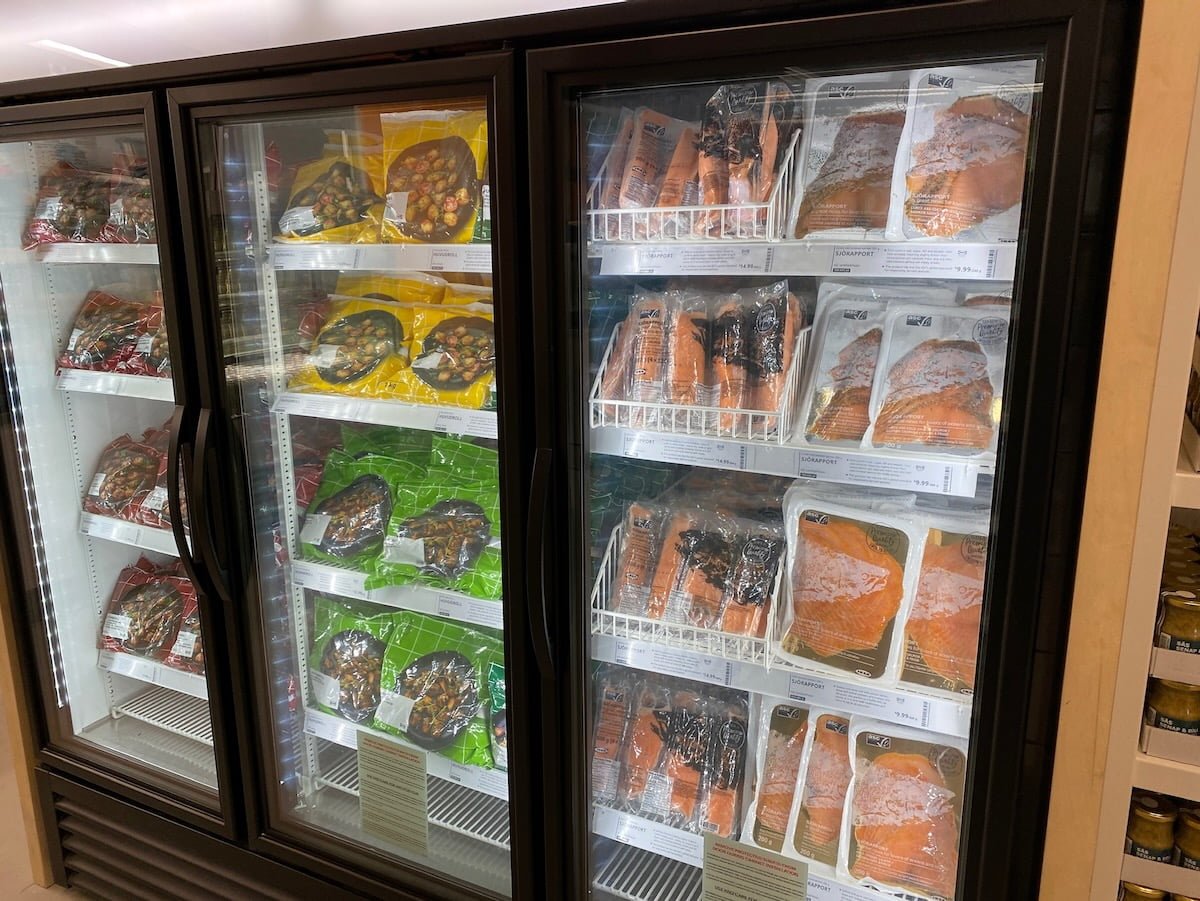
Photos: Prunelle
1 of 2
The majority of product is imported but the company is looking at starting to manufacture some product domestically as well.
The location at 844 Mont-Royal Avenue East is being renovated at this time with anticipation of the store launch in April. It is about 1,400 square feet in a building that dates back to the mid 1800s.
“The Plateau in Montreal is really one of the cultural and artistic hubs of the city. It has a lot of history architecturally. It has a great demographic of people from different age groups. Professionals. Young entrepreneurs. People in the art world. There’s some young families there and there’s also some established people that have been there for decades,” said Kay. “So it’s a very nice cross section of what makes Montreal, Montreal.
“Architecturally it was right for us and I think it’s a very vibrant neighbourhood. Embracing the neighbourhood and embracing the culture of the neighbourhood was really important to us.”

Gabriel Dallaire, who will be the retail manager for the store, lives right across the street from the location. He understands the people and the neighbourhood.
Interactive Google Map of Le Plateau-Mont-Royal and surrounding area
Kay said the retailer’s goal is to become a neighbourhood institution at some point by growing and building relationships with people who live there.
“We want to become part of the community. We want to engage with the people who come to our store,” said Stettler. “We’re billing this as a bit of a lifestyle store. We want to have items in the store that would fit their lifestyle.”
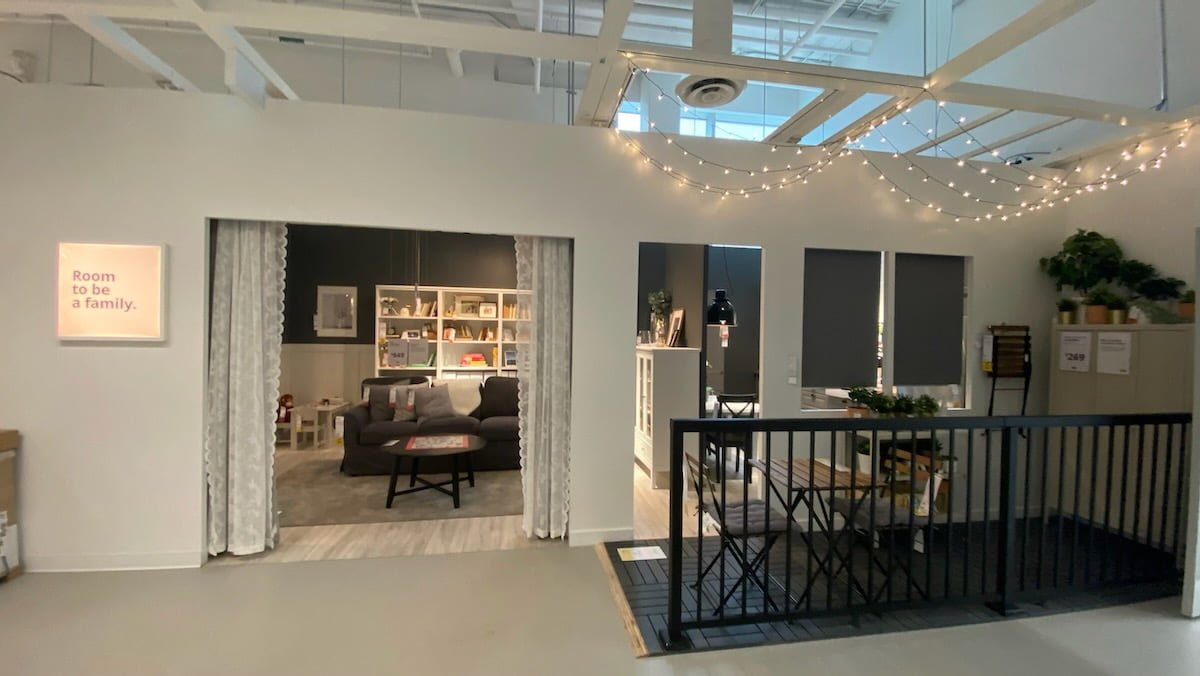
Kay said the company hopes that with success there is an opportunity to expand its footprint.
“We’ll see how it goes and how time progresses,” he added.
“I think first of all without risk there is no reward. That’s simply said. One thing that we’ve learned over the last year is that simply buying everything online will not have a great long-term effect on communities. I think brick and mortar is a necessity. Being part of a community and being able to support local businesses and support local consumers is important and I think we have to be visionaries and look at the long-term effect that we’ll get out of this and we’re hopefully on our way to getting out of this. We need to ensure that we have these vibrant retail destinations and these storefront shops that support the communities.”
Stettler said it’s also important to have a physical location for retail where people can come in, touch and feel items, and to talk to people for advice.
“It’s very much an engaging sensory experience to be in our store,” said Stettler.
Retailers need to focus on financial review in a post-COVID world.
By Monique Sassi & Michelle Pickett
It has been almost a year since the COVID-19 pandemic shuttered retail stores. With the vaccination program underway and the various government subsidy programs expected to come to an end in 2021, the fundamental questions at this time are: how are retailers thinking about and planning for the changes in the retail industry post COVID-19? How are they positioned operationally and financially to compete post COVID-19? How are retailers planning for the future?
In order to look ahead and understand what businesses should be considering at this time, it is worth noting how different retailers have reacted or responded to the pandemic. The almost 12 months of financial data and insolvency court filings are clear: COVID-19 has not had a generic effect on retailers.
Retailer Responses to the COVID-19 Pandemic
Most retailers have availed themselves of many forms of government aid and other support during the COVID-19 pandemic to provide liquidity and avoid substantial losses. These supports have included, among others, government-funded wage and rent subsidy programs, government and crown corporation loan programs such as the Business Credit Availability Program (BCAP) loan guarantees and co-lending programs, concessions from landlords, extended supplier terms, and concessions and/or covenant waivers from lenders. In addition, most retailers have benefited from the near elimination of travel and entertainment expenses and a significant reduction in general office expenses and marketing and advertising spend as they pivoted to social media and other online platforms to reach consumers.
However, certain retailers including “essential” grocery stores, home improvement, home furniture stores, and recreational equipment companies have gone one step further. They have taken advantage of curbside pickup opportunities and capitalized on ecommerce platforms to mimic or replace the in-store experience or leverage consumers’ renewed desire to “nest”, improve their homes and spend time outdoors.
In contrast, other retailers, such as work-related apparel retailers or stores which rely heavily on in-person sales and do not have access to curbside options (for example, mall-based retailers) have struggled to weather the pandemic. These retailers may have faced a severe decline in demand for their product and many have struggled to implement a successful digital retail experience. Others have adopted a “wait and see” approach — hunkering down, hoping to survive the economic downturn and planning to resume pre-pandemic operations. As discussed below, these retailers may be missing an important opportunity to reevaluate their business model going forward.
Strategic Court Filings During COVID-19
A number of retailers have used the COVID-19 pandemic as an opportunity to voluntarily file for creditor protection under the Companies’ Creditors Arrangement Act (CCAA) or file a proposal or notice of intention to file a proposal (NOI) under the Bankruptcy and Insolvency Act (BIA). Many of these retailers recognized the benefits of a formal restructuring and strategically filed in order to emerge as a going concern.
One such benefit of a filing is a “stay of proceedings” which prevents persons, including creditors and landlords from taking actions against the retailer during the insolvency filing and gives the retailer time to “breathe” and formulate a go-forward strategy. Filing a proposal or NOI under the BIA triggers an automatic stay of proceedings and the debtor is required to offer a proposal to its creditors for a vote by a statutory deadline failing which (or if there is insufficient support for the proposal) the debtor is deemed bankrupt. In contrast, the CCAA provides a debtor with more flexibility – there is no deadline to file a plan to creditors and while there is no automatic stay of proceedings, a court will likely grant a stay upon a successful application for protection for the debtor.
A proceeding under the CCAA or BIA can also facilitate a variety of creditor concessions such as partial payment of claims, conversion of claims to equity or deferral of debt. In the first 3-6 months of the pandemic, many retailers used the CCAA and BIA to renegotiate or terminate leases, one of retailers’ greatest expenses and liabilities. A court proceeding provides a ripe forum for re-negotiation of existing lease terms with landlords and the statutes also include provisions which allow a debtor to disclaim and exit a lease prior to the end of the lease term.
As an example, in July 2020, Montreal-based retailer, DavidsTea, which had faced declining sales and losses for multiple years before the COVID-19 pandemic, sought protection under the CCAA (which was recognized under Chapter 15 of the US Bankruptcy Code). To date, the retailer has disclaimed and exited more than 200 leases across Canada and the US and negotiated more favourable lease terms on the remaining leases. DavidsTea used the CCAA process to transition out of brick-and-mortar stores and focus nearly entirely on selling product online with wholesale distribution to third party grocery stores and pharmacies. The retailer is currently working on a three-year strategic plan.
This strategic use of court proceedings to address lease obligations was also used in June 2020 in the cross border restructuring of AllSaints USA Limited, by the UK-based contemporary fashion brand which initiated a “company voluntary arrangement” (CVA) proceeding in the UK which was recognized under the CCAA in Canada and Chapter 15 of the US Bankruptcy Code. Although the retailer had received rent deferrals from certain landlords, the COVID-19 pandemic, store closures and corresponding decline in sales made the substantial lease obligations in Canada, the US and UK unsustainable. Through the CVA and cross-border restructuring, AllSaints terminated or amended the terms of the majority of its leases to percentage or turnover-based rent. Creditors voted unanimously in favour of the CVA and amended lease terms and the recognition proceedings in Canada terminated in November 2020.
A similar process was undertaken in June 2020 by apparel retailer Comark Holding Inc., which owns brands Ricki’s, Cleo, and Bootlegger, whereby a quick CCAA proceeding (approximately 3 months from start to finish) was used to exit or renegotiate over 280 leases which facilitated the ultimate sale of the business to the previous owner and principal shareholder.
BIA and CCAA proceedings also provide a forum to conduct a court-approved sale process for all or part of the debtor’s business resulting in the granting of an approval and vesting order whereby a court approves a sale of assets free and clear of any creditor claims. Recently, Mountain Equipment Co-operative (MEC), Canada’s largest supplier of outdoor equipment, utilized the CCAA and a “pre-pack” sale in British Columbia to save its strong but over-leveraged business. MEC, which had debt and liquidity constraints prior to COVID-19 was unable to source adequate replacement financing on acceptable terms. A company will usually enter into CCAA protection first to utilize the benefits of the stay and then run a sale process. However, in early 2020 MEC ran a sale process and in September 2020 it entered into an asset purchase agreement to sell substantially all of its assets to a Canadian subsidiary of a US private investment firm. Three days later MEC filed for CCAA protection and sought court approval of the sale. The transaction provided stability during the CCAA proceeding and allowed the brand to survive (albeit in a different corporate form) and continue employing a substantial number of employees while shedding underperforming stores and excessive debt.
An abridged sale process was used in the context of an NOI in May 2020 by Coalision Inc., the parent company of the brand Lole., in order to source a buyer and avoid a liquidation. The retailer undertook a very limited sale process and completed a sale of the debtor’s assets in July 2020 to a syndicate of entities (some related to the debtor) that will focus on the profitable online and distribution business without the unsustainable debt.
The CCAA and BIA also allow a retailer to secure first priority interim or debtor-in- possession (DIP) financing to fund the restructuring which is important for a debtor that is liquidity-constrained and foresees a somewhat lengthy restructuring process. For example Reitmans (which owns the brands Reitman’s, Thyme Maternity, RW&Co, and Penningtons) and Aldo each filed for CCAA protection in May 2020. Both retailers experienced financial difficulties and attempted out-of-court restructurings prior to the COVID-19 pandemic to no avail. The debtors were able to secure substantial DIP financing to fund their continuing operations while they exit or renegotiate leases and wind down unprofitable business segments.
Financial Review Now Is Key
What is clear is that COVID-19 has changed the operating environment for many businesses, including retailers which has impacted many aspects of their financial model.
In some instances, returning to the pre-COVID status quo is not an option for success. Certain fundamentals in the industry have changed. After a year of largely online shopping, delivery or curbside pickup, consumers have discovered more convenient ways to interact with retailers. While a return to instore shopping is certain, online sales are expected to comprise a larger percentage of retailers’ sales in the future and consumer’s baseline expectations around the online experience including delivery times have changed. How are retailers positioned to adapt to these new demands? Retailers will need to consider how they engage with their customers online, how to compete effectively to increase traffic to their website and sale conversion rates. They also need to consider the efficiency of their supply chains and/or fulfillment models. If they need to make capital investments to meet customer demand and expectations, are they planning those now? Do they have access to funding?
With operational and financial models set to change, retailers will need to proactively assess their future financial position and liquidity, particularly in the transition period as they wean off government subsidies, address rent deferrals and extended payment terms with suppliers, face the end of covenant waivers or relief provided by lenders all while rebuilding working capital. In addition, many of the percentage rent agreements negotiated in 2020 were limited to a two-year period and will expire in 2022, and payments under BCAP loans secured early in 2020 may also be due in 2022.
Retailers have options, but they need to consider now what their business will and can look like post COVID-19. Developing a business plan and financial model will provide retailers with insights into the challenges the business may face post COVID-19 in terms of profitability and liquidity. Used proactively, these tools can also provide the retailers with adequate runway to address these issues, whether it is cost reductions, changes in its operating model, or sourcing additional funding for capital investments or working capital to avoid a crisis and potential financing restructuring in the future.
If a retailer’s financial model and business plan suggest that its current operating model would not align with the post-COVID environment, a retailer should consider whether an operating restructuring or financial restructuring is a strategic option for the business.
Authors:
Michelle Pickett is a partner at PwC Canada’s Deals practice in Toronto
Monique Sassi is a restructuring partner at Cassels Brock & Blackwell LLP’s Toronto Office
Montreal-based Lightspeed POS announced that it is acquiring VendLimited (Vend), a New Zealand cloud-based retail management software company. The acquisition aims to strengthen Lightspeed’s global retail base while reinforcing it as a premier global omnichannel retail platform for small and medium-sized businesses.
The acquisition is significant — it doubles Lightspeed’s customer base and expands its retail footprint in the Asia-Pacific region. When the acquisition closes, Lightspeed will serve as technology partner for over 135,000 customer locations worldwide as small and medium-sized businesses increasingly turn to the company’s innovative cloud-based platforms. Building on the acquisition of ShopKeep last year, Lightspeed says that it intends to leverage Vend’s complementary modern technology stack and user experience capabilities to continue to deliver the most advanced commerce capabilities to retailers around the world.
“Lightspeed’s mission is to ignite the potential of businesses to enrich the communities they serve, whether they are beloved local neighborhoods or the thriving metropolitan cities we are eager to see bustling with crowds once again,” said Dax Dasilva, Founder and CEO of Lightspeed, who went on to say, “We are thrilled to partner with Vend, a team that matches Lightspeed’s passion for retail. That combined drive will position our global retail base of high-performing businesses for success as they emerge from a truly transformational period in the history of modern commerce.”
Ana Wight, CEO of Vend, said, “Lightspeed’s global excellence and commitment to community is inspirational to Vend. By joining forces, we will power the global transformation of retail and pour our unparalleled collective efforts into the success of our retailers at this pivotal moment in our industry. As a New Zealand-based company, we’re proud to be globally recognized for the product and company we have built and are excited about this next step in our journey.”
Lightspeed will acquire Vend for total estimated consideration of approximately $350 million, which will involve payment on closing of approximately $192.5 million in cash and the issuance of subordinate voting shares in the capital of Lightspeed valued at approximately $157.5 million. The deal is expected to close towards the end of April 2021, subject to the receipt of applicable regulatory approvals.
Lightspeed powers complex small and medium-sized businesses with its cloud-based, omnichannel commerce platforms in over 100 countries. Its smart scalable point of sale systems provide all-in-one solutions that drive innovation and digital transformation within the retail, hospitality and golf industries. Lightspeed’s product suite enables SMBs to sell across channels, manage operations, engage with consumers, accept payments and ultimately grow their business.
Canadian Tire Testing First-of-its-Kind-in-the-World Autonomous Trucking Technology
Canadian Tire is teaming up with Toronto-based startup NuPort Robotics, Canada’s first autonomous trucking company, to partner with the Ontario government to invest $3 million to undertake an automated heavy duty trucking project to test a first-of-its-kind-in-the-world technology.
Officials said the breakthrough technology provides a transportation solution for the middle mile – the short-haul shuttle runs that semi-tractor trailers make between distribution centres, warehouses, and terminals each day – by enabling next-generation automated trucks that are more fuel efficient, safer to operate, and provide an enhanced driver experience.
“The trucks are currently transporting goods between a Canadian Tire distribution centre in the Greater Toronto Area and nearby rail terminals within a 20 kilometre radius, and early results are promising,” said Raghavender Sahdev, CEO of NuPort Robotics.
“The aim of the project is to develop a system that incorporates an autopilot feature for conventional trucks with a driver, leading to the most efficient way to drive and increase safety. The sensors work as a ‘safety cocoon’ to cover blind spots and prevent accidents and the end result is peak fuel efficiency, meaning lower carbon emissions, and peak driving performance for an overall more optimal transportation experience.”
NuPort was founded in 2019. Sahdev said its mission is to improve transportation safety, increase efficiency and reduce costs for clients in retail, logistics, and manufacturing. NuPort’s proprietary AI technology allows existing trucks to drive autonomously for short distances and is suited for high frequency, repetitive short-haul shuttle runs between distribution centres, warehouses, and terminals.
He said the company builds a retrofit system for an existing fleet of trucks to enable them to have automated technology over short distances.
“What this means is we enable trucks to operate in a safe, efficient and a more eco-friendly manner from one point to another. In Canadian Tire’s case this is between a distribution centre to a nearby rail terminal. This could be any short distance – something less than 25 miles or 40 kilometres, around that ballpark,” added Sahdev. “That’s our sweet spot. Our average distances are on the order of 10 kilometres or seven miles.
“The partnership with Canadian Tire means a lot for us. Canadian Tire is our first client and we are absolutely proud to have them as our client. It’s a two-year pilot wherein we are retrofitting two trucks to deploy NuPort technology on that and at the end of the day leading with a more safer, more efficient, and reduction in carbon emissions, leading to a more sustainable deployment of technologies.”
Gary Fast, Vice-President of Transportation, Canadian Tire, said the retailer embraces innovation and is always testing new technologies to improve its operational efficiency and safety.
“As proud Canadian companies, the safety of all stakeholders, including drivers, employees, customers, and public will be the top priority as we work together towards deployment of this technology,” he said.
Cari Covent, Vice President of Intelligent Automation, Canadian Tire, said the company has made a significant effort over the last three years to solve complex business problems by using the Canadian start-up Artificial Intelligence ecosystem.
“NuPort Robotics exemplifies what we look for in a start-up with a focus on innovation, automation and artificial intelligence,” she said.
The two-year project between Canadian Tire and NuPort Robotics has $1 million in support through the Ontario’s Autonomous Vehicle Innovation Network (AVIN). Investments of $1 million are being matched by both Canadian Tire and NuPort.
The project includes applying proprietary, artificial intelligence (AI) technology from NuPort Robotics to retrofit two conventional semi-tractor trailers – which will always be attended by a driver – with high-tech sensors and controls, a touchscreen navigation system, and other advanced features such as obstacle and collision avoidance.
Sahdev said NuPort’s approach to autonomous trucking is unique in the industry because it focuses only on solving the middle mile challenge, using a known set of predetermined trucking routes that are repetitive and high frequency as opposed to general highway driving. Ultimately, when implemented on fixed routes in the future, Canadian Tire will benefit from faster commercial deployments and improvements in supply chain sustainability, he said.
Sahdev, one of the co-founders of the company, is considered one of the leading Canadian AI entrepreneurs with more than eight years of experience in applied AI, Robotics, Computer Vision, Machine Learning, business strategy, and various start-ups.
Bao Xin Chen, a co-founder and CTO, is also a leading Canadian technologist with a unique style of deploying AI algorithms on autonomous vehicles, and mobile robots. He has more than seven years of experience in Robotics, Computer Vision, and Machine Learning. He has also won multiple research awards for his work.
In a statement, Caroline Mulroney, Ontario’s Minister of Transportation, said the province is proud to be a global leader in automated and connected vehicle technology and this innovative project, with Canadian Tire and NuPort, is an exciting milestone toward automated vehicle tech in the trucking industry.
“Ontarians rely on goods being delivered by trucks across the province every day and projects like this are demonstrating the ways that automated truck technology could help businesses meet delivery demands more efficiently while supporting a strong supply chain in Ontario,” she said.
AVIN is an initiative by the Government of Ontario, led by the Ontario Centre of Innovation (OCI), designed to reinforce Ontario’s position as a North American leader in transportation technology and infrastructure systems.
Exterior of new dex10 store in Calgary's downtown shopping centre, The Core. Photo: Geoff Dodsworth
Canada’s first fully-automated furniture retailer, dex10, has opened in The CORE Shopping Centre in downtown Calgary, offering consumers a fresh, new way to shop.
The innovative retailer merges e-commerce technology with a traditional showroom.
“We’ve put a lot of resources into this technology and the customer experience,” said Geoff Dodsworth, Founder and President/CEO of dex10. “By taking an online product gallery and moving it to a real-life, physical location, our customers will have first-hand experience with the furniture before actually placing their orders online.”
The store, with about 9,800 square feet, is located right next to Holt Renfrew on the second floor of the shopping centre.
“It’s essentially a fully-automated furniture shopping experience so to speak. We looked at both bricks and mortar models and e-commerce models for furniture retail and attempted in the development of it to look at what elements we wanted to keep and were good for consumers and what elements were drawbacks of each of those platforms. And that’s how we came up with dex10 which we coin ‘everything you love about online shopping and nothing you don’t’,” said Dodsworth.
He describes dex10 as an online furniture store that you can actually visit. Amazon Alexa is in the store to answer the most common questions people would have looking at items in the store. People can purchase product right off their phones or online at home.
“By doing that, we’re able to offer more competitive pricing than a bricks and mortar model because we don’t have to pay sales people. When we compare our business to strictly e-commerce, 20 per cent of home furniture purchased through e-commerce in Canada is actually returned and 75 per cent of the reason for that is the product not being as expected because the consumers weren’t able to physically see what they were buying. They just made their purchase decisions based on a screen,” he said. “Because of that we don’t have to build that cost into our pricing as our customers are able to see, feel, touch, experience the products before they buy them.”
1 of 5
Interior of new dex10 store showcasing furniture samples and interactive QR codes. Photo: Geoff Dodsworth
The physical store carries the most popular product lines that their vendors carry. The most in demand product is in the showroom. More is on the website.
Customers can scan QR codes for details and information about the items in the showroom.
A gallery host is always present during store hours to assist with the unique shopping experience. While the product and all services associated, including white glove delivery, cater to a high-end clientele, the business model allows dex10 to offer the most competitive pricing in Canada on the furniture it carries, said the company.
Dodsworth said the automated process means the expansion of the business is quite simple. The target is to open several additional locations in major urban centres across Canada, giving customers the ability to see the furniture they’re buying online prior to purchasing it.
Several other notable retailers have joined the high-end furniture company in taking the leap to open during the COVID-19 pandemic. Now open in The CORE Shopping Centre are:
Shop Made: a marketplace featuring products created by local artisans;
Chatime: a popular Taiwanese teahouse known for their bubble teas and milk teas;
Curatedlyf: a locally owned boutique with a focus on bringing Filipino and other international products to Calgary consumers; and
Les Moulins La Fayette: a gourmet French bakery and café, offering breads, pastries, confections, and lunch and dinner options.
“Despite the COVID-19 pandemic, entrepreneurship is alive and well here at The CORE,” said Allison Onyett, Marketing Director, The CORE Shopping Centre. “We’re thrilled to welcome these exciting, new retailers and restaurateurs into our incredible roster, and we can’t wait for Calgarians to experience all of their unique offerings.”
Exterior of new Ghost Kitchens location within the St. Catherines, Ontario Walmart store. Photo: Ghost Kitchens
Ghost Kitchen Brands has partnered with Walmart to bring one-stop meal pickup and delivery through the giant retailer’s store network.
Ghost Kitchen, which has relationships with more than 20 well-known restaurant brands, has launched its presence first in the St. Catharines, Ontario, Walmart store at 420 Vansicle Rd. with more locations in Woodstock, Toronto, Lachenaie, and Saint-Constant to open in the coming months.
George Kottas
George Kottas, Founder and CEO of GKB, said customers can order freshly-prepared meals in-store and online for contactless pickup or delivery (from a third-party app such as Uber Eats), and mix and match from more than 20 well-known brands including: Quiznos, The Cheesecake Factory Bakery, Pepe’s Perogies, Rocky’s Italian, Canadian Jerk, Slush Puppie, Monster Cupcakes, Saladworks, Beyond Meat, Amaya Indian Street Food, Taco del Mar, Lola’s Latin Food, Tazo, Red Bull, Crêpe Delicious, Nescafé, and Ben & Jerry’s with more being added. All meals are prepared in one kitchen for one pickup or delivery.
“Walmart Canada is a perfect strategic partner for us as we continue to innovate and reinvent the restaurant industry with our unique restaurant concept,” said Kottas. “We are both one-stop shops and we recognize the value in affordable, convenient solutions for our customers.”
Toronto-based Ghost Kitchen began more than five years ago. The concept it designed includes a footprint of about 2,500 to 3,000 square feet where it runs anywhere between 20 and 30 international brands out of one kitchen. Sales are either through walk-in with its own technology and QR codes, with no customer interaction in front of the house, or through third-party delivery. Customers can buy from any of the food brands at the same time.
The company has just over 40 of these ghost kitchens and about 90 under construction across Canada and the U.S.
“(The Walmart partnership) has been incredible. Walmart came in some of our stores and they loved the concept and the idea. They loved the interaction of the customers with the technology and after COVID they believe this is the wave of the future. Walmart’s been very, very supportive in what we do and how we do it and they believe we can direct traffic into the Walmarts because of the brands that we have,” said Kottas.
Interior of new Ghost Kitchens location within the St. Catherine’s, Ontario Walmart store. Photo: Ghost Kitchens
“We’re just finalizing a deal for another 15-20 (in Walmart) . . . They’ve made it pretty clear to us that they love our concept and going forward they’d like to put us in every Walmart that they can.”
He added that the company has signed up more than 30 Walmart locations in the United States as well.
Sam Hamam
Most of the spaces in both Canada and the U.S. are former McDonald’s space in Walmarts.
Sam Hamam, Senior Director of Licensees at Walmart Canada, said the retailer believes in Ghost Kitchen’s strategy and vision and it’s very excited to be the first retailer to team up with Ghost Kitchen.
“We’re always looking at ways to improve our customer shopping experience with greater access to affordable products, services and brands,” he said.
Hamam said the purpose of the company’s licensee partner program is to round out a one-stop shop for customers giving them the ability to accomplish what they need to within one place.
“We’ve known for some time that quick service restaurants is the number one choice for our customers. Just generally in terms of whether it’s feeding their kids or shopping with a coffee in hand . . . That’s always been top of mind for us,” he said.
“So ghost kitchens or dark kitchens generally have been quite popular over the last couple of years and I think they really sort of hit their stride this past year and for us Walmart always wants to be kind of on the innovative side of things and we thought it was a great way to introduce something new to our stores that provides our customers and our associates something that is innovative. It provides variety.”
Marc Choy
The idea with the concept is to have a seating area as well with the locations.
The pandemic has helped Ghost Kitchen Brands expand as Canadian consumers look for seamless integration of restaurant offerings, frictionless experiences, as well as the comfort of well-known restaurant and consumer goods brands combined. The company’s lean operations and leading-edge technologies allow it to operate dozens of international brands under one banner.
“Our goal is to open a Ghost Kitchen every 12 kilometres across Canada, and be able to reach every Canadian, in every urban market within 30 minutes, 24/7,” said Marc Choy, President of GKB.
David Hopkins, President of The Fifteen Group, one of North America’s leading hospitality industry experts, said the idea of ghost kitchens originally came about to get away from high urban rents.
“I think they’ve just soared through the roof now obviously with the pandemic and the rise of takeout and delivery and all these people pivoting to that model,” he said. “People are now seeing it as how they can avoid high urban rents, high overhead and service a hugely growing market segment.
Photo of Ghost Kitchen take out bag. Photo: Ghost Kitchen
“We get at least one inquiry a day from someone who wants to know more or is interested in doing a ghost kitchen.”
A smaller footprint and cheap rent are attractive for businesses who want to adopt the ghost kitchen idea.
David Hopkins
“The biggest message we’re talking through with potential clients who are calling us interested in the concept to not just assume that this is a great thing. There’s all this hype around them. It’s new and it’s the best coming thing. But when we work on ghost kitchen models by no means is it a slam dunk,” said Hopkins.
“There’s a lot that you have to figure out. Decisions that have to be made in terms of how it’s going to work and how it’s going to make money. People don’t realize the amount of volume that you need to run through it from delivery which is great right now in COVID but that doesn’t mean when we’re back to normal ideally in 10 months from now that delivery and demand is going to be as big as it was.
“You need critical volume to pay for your staff who are executing it all day long and especially to hire third party delivery fees.”
Hopkins said there will be continued interest in ghost kitchens heightened by the pandemic. But interest may level out when people realize that they’re not the home run that the craze is all about or that they’re overhyped to some degree.
“And if demand drops off post-pandemic for delivery . . . we’ll see a reduction. If too many of these things open up and it’s all the craze and there’s not enough demand for the supply that will be problematic.”