Advertisement
Advertisement
Home Blog Page 879

Brief: French Retailer Exits Canada, Starbucks Closing 100 More Locations

La Cure Gourmande Exits Canada

Upscale French biscuit, confectionery and chocolate shop La Cure Gourmande has exited Canada after a six-year run in the Montreal area. Plans were in place to grow the business in other parts of Canada via Montreal-based franchisee Nazar Najarian.

La Cure Gourmande’s first Canadian storefront opened at the Place Montreal Trust in downtown Montreal in 2014. In 2017 two kiosks opened at CF Carrefour Laval in Montreal as well as at CF Fairview Pointe-Claire near Montreal. In 2015 Mr. Najarian explained to Retail Insider how Montreal was used as the brand’s North American gateway and that sales were already strong. The initial focus was on opening more stores in the province of Quebec followed by Ontario. The province of Ontario was expected to eventually see 12 to 15 locations, with as many as 30 to 35 Canadian locations planned La Cure Gourmande for the long-term.

EXTERIOR OF LA CURE GOURMANDE STORE. PHOTO: LA CURE GOURMANDE

Founded in Balaruc-Les-Bains, France, in 1989, La Cure Gourmande uses traditional techniques to create a variety of edible sweet and savoury traditional biscuits, Berlandises (fruit pulp candies) Choupettes (old fashioned lollipops), chocolates, caramels, calissons, nougats mixed with strawberry paste or candied orange zest, and chocolate ‘olives’ (roasted almonds covered in dark chocolate). Product is made in the South of France. The retailer continues to operate storefronts in Europe with most being in the southern part of France.

EXTERIOR OF A DOWNTOWN TORONTO STARBUCKS COFFEE SHOP. PHOTO: STARBUCKS

Starbucks to Close An Additional 100 Canadian Locations on Top of 200 Already Announced

Seattle-based coffee chain Starbucks says that it will be closing 100 more locations in Canada in addition to the 200 locations that were announced for closure/relocation in June. Kevin Johnson, President and CEO of Starbucks, says that the retailer is examining its physical footprint in light of changing traffic pattern due to the COVID-19 pandemic.

“Our team has started the process of repositioning the portfolio over the course of the summer, accelerating the strategic plans”, said Johnson. “We already had in place, what we’ve learned is that we’ve been able to manage the closures much more efficiently than we had originally anticipated and that’s largely about the average lease exit costs.”

In June Starbucks said that it would shut or relocate about 600 locations in North America with about 200 of those being in Canada. Now Starbucks is looking to close an additional 200 units with half of those being in Canada. Canada is currently home to about 1,400 Starbucks locations.

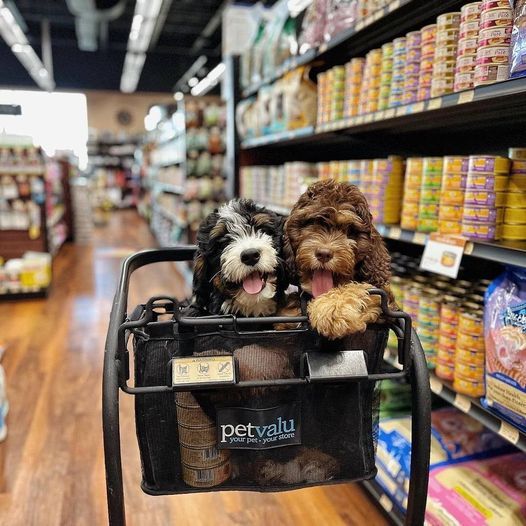
EXTERIOR OF PET VALU STORE. PHOTO: PET VALU

Canadian Retailer Pet Valu Closing All 358 US Stores

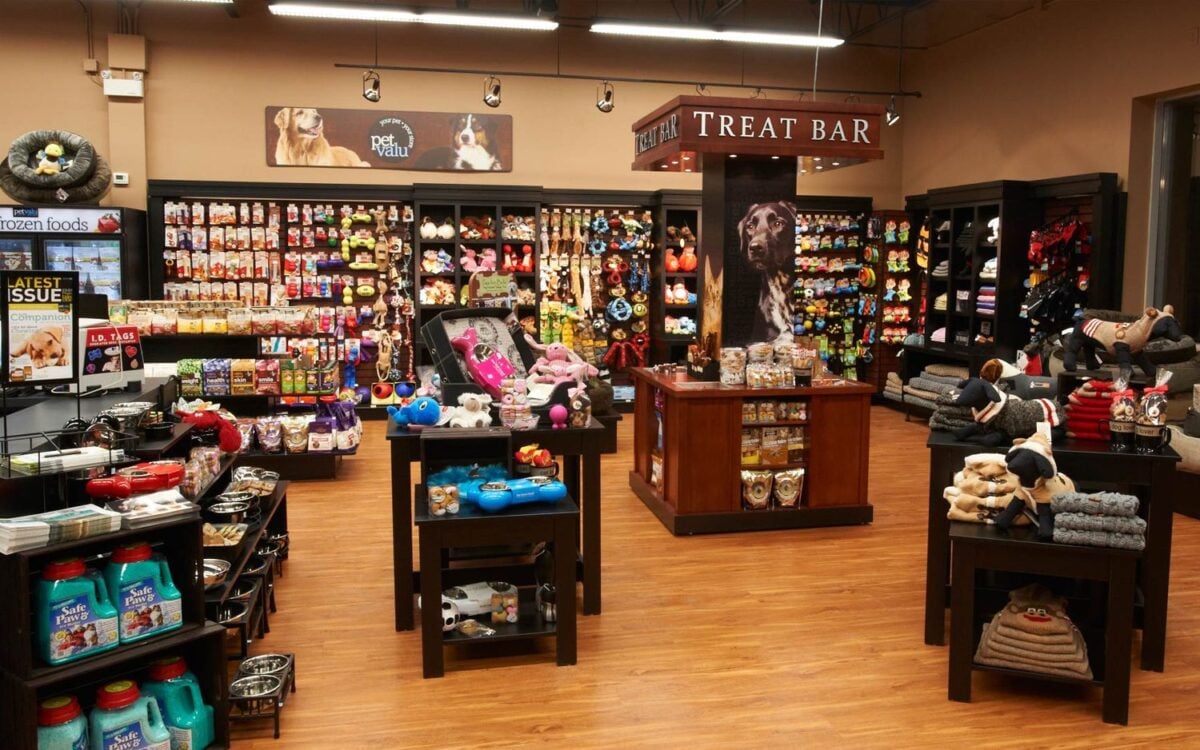
Canadian pet food retailer Pet Valu will shut all 358 of its US stores. Pet Valu says that operations are shutting down “due to severe impact from COVID-19”. The company’s warehouses in the US Northeast and midwest will also close along with a country office in Chester County near Philadelphia. Closing sales began Thursday of this week and will be ongoing.

Pet Value entered the US market over 25 years ago. Pet Valu Canada will continue to operate its more than 600 stores across Canada.

EXTERIOR OF CANADA GOOSE STORE AT YORKDALE SHOPPING CENTRE. PHOTO: JM

Canada Goose Unveils Yorkdale Store Expansion

Toronto-based outerwear and fashion brand Canada Goose has expanded its store at Toronto’s Yorkdale Shopping Centre. The store now spans 6,500 square feet and boasts the deepest assortment of Canada Goose products in Canada including hundreds of styles and colourways in jackets, apparel, premium accessories, and youth, kids, and baby styles. A cold room allows visitors to try jackets in sub-zero temperature. The store also features several ‘firsts’ for Canada Goose.

That includes being the first Canada Goose store in the world to feature product personalization. Seven design options are available for personalization and can be applied to almost 60 items permanently via a heat-sealer laser. The artwork choices are:

Monogram: 2-3 characters that designate it as yours

Coordinates: the longitude and latitude of a location

Monogram and Coordinates: a combination of the two

Box: a box outlining the monogram or coordinates

This Jacket Belongs To: an ownership label that is applied to the parka’s interior pocket

Made in Canada: a tribute to Canada Goose’s commitment to Canadian manufacturing, this is the application of “Made in Canada”

Manufacturing Label: aligned to the interior label, this details the style name, style number, size, colour and cut number, a unique identifier used in production

For outerwear ($75), placement can be on the shoulder, collar, sleeve, and interior and exterior pockets. For accessories ($25), either the top or wrist of the glove and the side of the mask. The unveiling of personalization coincides with Canada Goose’s launch of customized hood trims, which are available as an interchangeable accessory to outerwear or as a pre-attached element to select pinnacle pieces. Personalization is currently an in-store offering with customers able to book a personalization appointment online.

The store also features a 15-foot tall ‘Story Tree’ described as being “a meeting place where North and South come together telling the story of harmonization between nature, human, animal, and plant life. Story Tree is a southern symbol of ancestry, knowledge and enduring strength”. Toronto artist Alex Fisher created the tree which is based on a drawing by Inuk Artist Qavavau Manumie. The tree is made of hand-painted waterjet cut aluminum with layered Baltic birch cylinder seating. An Inuk figure clad in traditional parka and mukluks ‘breathes life into the canopy of the tree furnishing the branches with whales, elk, octopuses, squid, chargeese, and figures from Inuit myth – representing the harmony of human, animal and plant life.

The Canada Goose expansion at Yorkdale was made possibly by annexing a retail space formerly occupied by foodservice concept Nadege, which occupied about 2,000 square feet next to the world’s first Canada Goose store which opened at Yorkdale in 2016.

Canada Goose recently opened stores at CF Toronto Eaton Centre in Toronto and at CF Rideau Centre in Ottawa. Canada Goose also operates stores in markets including Vancouver, Calgary, Banff, Edmonton, and Montreal as well as in major global hubs.

EXTERIOR OF PROVINCE APOTHECARY STORE. PHOTO: COSMETICS

District Ventures Capital Invests in Canadian Clean Beauty Brand Province Apothecary

District Ventures Capital has announced it has closed an equity investment with Canadian clean beauty brand Province Apothecary Inc..

The organic beauty brand was founded in 2012 by Julie Clark, and was created with the intent of producing natural beauty products suitable for all skin types. Using only high quality, certified organic ingredients sourced from each Canadian province, the Province Apothercary product line remains committed to innovation, sustainability, and small-batch skin care, and includes ingredients such as organic seaweed from Nova Scotia, maple syrup from Quebec, organic sunflower oil from Ontario, and organic beeswax from Alberta.

INTERIOR OF PROVINCE APOTHECARY STORE. PHOTO: COSMETICS

“After learning about Province Apothecary and their organic product line, we were excited to learn more about the formulation process and company mission,” said Arlene Dickinson, General Partner, District Ventures Capital. “We came to discover a product that not only provided incredible skincare results for consumers, but a Canadian company that supported an array of sustainable practices and provided a fresh perspective into the beauty industry.”

Regarded as a leader in the clean beauty space, Province Apothecary’s product line is free from petroleum, parabens, synthetic fragrances, and toxins of any kind. In addition to an array of products, the clean beauty brand offers a variety of services from their Toronto clinic including Naturopathic Consultations, Facial Rejuvination Acupuncture and Eyebrow Shaping and Tinting. In Q4 2020, Province Apothecary will also be revealing new innovations. “We’re delighted to partner with District Ventures Capital and to continue growing the Province Apothecary brand with their knowledge and expertise,” said Julie Clark.

The deal marks District Ventures Capital’s second investment in clean beauty – a category which is estimated to generate over $22 billion annually by 2024.

BC Jewelry Designer and Dr. Bonnie Henry Collaborate to Support Those Suffering in Vancouver Amid COVID-19 Pandemic

BC-based jewelry designer Melissa Caron has partnered with Dr. Bonnie Henry, British Columbia’s Chief Medical Officer, to create The Bonnie Bees Fundraiser in an attempt to support local charity the WISH Drop-in Centre Society amid the COVID-19 pandemic.

Providing relief to vulnerable women during this challenging time — especially those living and working in the Downtown Eastside —  every Bonnie Bee pendant purchased will help provide food, essential supplies such as clothing and toiletries, access to sanitation such as showers and toilets, educational programs, and essential support to those in need.

View this post on Instagram

⭐️Introducing The Bonnie Bees⭐️ We are so honoured to have these beautiful creations my @melissacaronjeweller in our gallery. We are the only gallery, outside of Melissa Caron, where these can be seen, touched and purchased in support of @wishdropin . Pop by and see these little majesties 🐝 they are bee-ootiful! A little more about these written by Melissa Caron: Created in honour of and inspired by Dr. Bonnie Henry, BC’s Chief Medical Officer, who has gracefully and cautiously led us through the first wave of the COVID-19 pandemic. I’d like to introduce The Bonnie Bees! 💫🐝✨Bonnie Bee and Little Honey. Last month I reached out to Dr. Henry as a longtime client and expressed the desire to create a piece of tribute jewelry with proceeds going to a local charity. Together we chose @wishdropin Centre Society to provide relief to vulnerable women in this challenging time, especially those living and working in the Downtown Eastside. Every bee purchased will help provide food, essential supplies such as clothing and toiletries, access to sanitation such as showers and toilets, educational programs, and essential support. 🐝💫The bee symbolizes life, community, and personal power. My hope is people will wear these bees in solidarity with one another as a representation of kindness and compassion for their neighbor and community. ❤️ As Dr. Bonnie says…Bee calm, bee kind, bee safe! ~The Bonnie Bee~Bonnie Bee’s wings are truly enchanting. An internal climbing vine filigree pattern laces throughout the wings. This beauty is anatomically correct with a carved underbelly and six little legs, like she’s perched on a petal. This beauty comes with your choice of pink sapphire eyes, diamonds, emeralds, or blue sapphire eyes. ~Little Honey~This darling honeybee may be tiny in size but she’s a fierce and mighty pollinator! Her wings are delicately detailed, and she’s carved front and back with six little legs. The angle of her wings make her look like she’s about to wrap a flower in her loving embrace 🍃🐝 #bonniebeefundraiser #wishdropincentresociety #drbonniehenryfanclub #becalmbekindbesafe #jewellersforchange #queenbee #madeinvancouver #handmadejewellery

A post shared by 𝒁𝒂𝒅𝒆𝒍 𝑱𝒆𝒘𝒆𝒍𝒍𝒆𝒓𝒚 𝑺𝒕𝒖𝒅𝒊𝒐 (@zadeljewellerystudio) on

“The bee symbolizes life, community, and personal power. My hope is people will wear this bee in solidarity with one another as a representation of  kindness and compassion for their neighbour and community,” said Melissa Caron.

To learn more visit here.

This holiday season Hudson’s Bay is collaborating with 2020 Emmy Award winners and Schitt’s Creek stars, Catherine O’Hara and Annie Murphy, to bring Canadians ‘A Call to Joy’ — a 2020 Holiday Campaign.

Hudson’s Bay’s first-ever Holiday Hub showcases inspirational content that makes shopping easier than ever with an immersive mobile and desktop experience. Whether it’s through thoughtfully exchanged gifts, a stylishly decorated virtual meal with family and friends, or finding merriment in wellness and self-care, Hudson’s Bay’s Holiday Hub and A Call to Joy Holiday Gift Guide were designed with busy customers in mind to make shopping for everyone on your list more colourful.

“Growing up with my big family in Toronto, I was excited every year to see the beautiful holiday window display at Hudson’s Bay. I was also thrilled knowing my Mom and Dad would be buying our Christmas presents there! So I’m very happy to join this festive campaign celebrating Canadians and our colourful holiday season,” says Catherine O’Hara.

The extensive holiday gift guide features categories ranging from ‘Merry Modernista’, ‘Yuletide Uniter’, and ‘Holiday Traditionalist’.

To view all of Hudson’s Bay’s holiday services, visit here.

Read More Briefs From Retail Insider:

NEAR Technology Group Expands Retail Services

Toronto, Ontario – November 2nd, 2020 – NEAR Technology Group announces its first major expansion of services with new platform support for small and medium-sized retailers in Canada and the United States.

“This is an exciting step towards our goal of restoring brick and mortar retailers to being the first choice for consumers shopping online,” said Matthew Smith, co-founder of the Canadian start-up. “We’re passionate about making it easier for shoppers to support local businesses, and making it easier for those same businesses to compete against e-commerce giants like Amazon.”

The onset of the COVID-19 pandemic near the end of the first quarter hastened the trend by consumers towards spending more online. Though many retailers made heroic efforts to quickly build their own e-commerce presence, this shift ultimately benefited the largest internet retailers, each of which has notched up double-digit growth in 2020.

“The success of these e-commerce sites has come at the expense of retailers who have long been employers, tax payers and good corporate citizens in our communities. By comparison, most of these e-commerce companies have contributed very little to the cities and towns they’re mining for wealth.” Smith concludes.

NEAR Technology Group produces tools that alert online shoppers when the products they’re browsing are available from a local source. The software combines pricing and inventory information to help consumers make confident purchasing decisions when comparing online retailers with their brick and mortar counterparts. NEAR’s high-precision advertising tools for retailers help them connect to shoppers who are searching for exactly the products they sell, instead of broad campaigns with poor returns on advertising investment. The latest version of NEAR’s tools help retailers reach online shoppers – even when traditional internet advertising can’t.

Shoppers and retailers alike can learn more about NEAR by visiting https://near.shop/.

Entrepreneur Doug Putman Discusses His Newest Venture, T.Kettle, Opening in Former David’s Tea Storefronts: Interview

T.Kettle store read to open. photo: t.kettle
T.KETTLE LOCATION IN INTERCITY MALL IN THUNDER BAY ONTARIO. PHOTO: T.KETTLE

Canadian entrepreneur Doug Putman has a history of resurrecting struggling retail concepts with new ideas and new initiatives, including T.Kettle.

He is best known for converting HMV music stores to Sunrise Records a few years ago.

CANADIAN ENTREPRENEUR DOUG PUTMAN CONVERTS DAVIDSTEA LOCATIONS INTO T.KETTLE

Now, he has another project in the retail space as Doug Putman has taken 45 shuttered DAVIDsTea locations and transformed them into a new brand T.Kettle with the goal to expand the concept further in Canada.

Doug Putman headshot
DOUG PUTMAN HEADSHOT

“I think in any tough times – and this is certainly one of them – there’s opportunities that present themselves. Back four or five years ago, Sunrise Records presented an opportunity for us when HMV left the market and I think this is an exact example of that where it’s in an industry I really like, which is tea. I think people who are into tea are very passionate about it and it’s part of their ritual and routine,” said Putman.

“So obviously when DAVIDs decided to leave the market to a large extent – they have a few stores left – it just signalled to us that this could be one of those opportunities worth looking into. The further we looked into it the more we liked the business model, the more we liked the business itself. Very quickly it was just a check mark for us to say okay we’ve got to do this.”

T.Kettle stores will feature certified vegan, kosher, organic blends, with all products ethically sourced and sustainable.

“The store is going to look a little different. Obviously a different name but our products are different. There’s many different kinds of Earl Grey tea as an example and there’s different qualities. So we feel that we offer the best quality of loose leaf tea in the market. We’re really appealing to people who really want to taste and have the best quality tea out there.”

CANADIAN TEA MARKET IS GROWING

Putman said the tea market in Canada has been growing for years and continues to grow.

“Of course, it’s nowhere near the size of coffee but that’s okay. Businesses can be different sizes and they can grow. And so we just really like tea. We like the health benefits of tea. We like the enjoyment of drinking tea. I mean it is similar to listening to vinyl in our other business. There’s an experience there with it so we really enjoy that. We think there’s something great about it. Although it’s ‘niche’ it’s still a very big business. We’re at 45 stores right now but every day we’re signing more stores. I still believe in Canada we can get up to 100 stores in the next six months.”

T.Kettle stores will be in malls in provinces across Canada, with six US stores in California, Indiana, New Jersey, New York, Massachusetts, and Pennsylvania.

“We always believed there would be a return to the purity and authenticity of music on vinyl and the record shop experience, and we were right, said Putman. “We believe that loose-leaf tea is poised for a similar comeback, and we’re merging our expertise in retail operations with our passion for tea to bring T. Kettle to cities across Canada and the US.”

When asked what lifts his optimism in these challenging times and an economic downturn caused by COVID, Putman replied:

“We understand retail well. We now own retail in three different countries and I think if you can get partnership from your suppliers, your landlords, you can be fiscally responsible, you can listen to your customers and really provide something that they actually want and enjoy, I think you’re going to be successful.

“Is COVID the best time for us to be doing this? No, but I think without it we wouldn’t have been presented with this opportunity and for us we think about everything longer term. At some point, this will be behind us. We will get back to some form of normal and so again a long-term thing where the opportunity just happened to present itself today.

“I always believe you’re presented with lots of opportunities in life. Everyone is. Some you take. Some you don’t. This is one we just felt was too good to pass up.”

Will T.Kettle be Putman’s last retail resurrection?

“I hope not. From my end, we’re looking to acquire more businesses. It could be retail, it could not be retail. Of course, we’d always like to get someone before there’s a bankruptcy. We always like talking to retailers who are struggling right now and try and find a solution for them to help them through it, however if that’s not the case we’re always good to resurrect as well. I hope it’s not our last. I hope we do a few more.

“Personally I just love it. I love retail. I think it’s a great industry. I hope to stick with it.”

Walmart Canada Announces Major Investment to Integrate Ecommerce with In-Store

EXTERIOR OF WALMART SUPERCENTRE.
EXTERIOR OF WALMART SUPERCENTRE. PHOTO: SUPERMARKET NEWS

Walmart Canada is investing $110 million in store renovations and technology to enhance the omnichannel experience for consumers as more and more Canadians are shopping online due to the COVID-19 pandemic.

The strategy by the retail giant includes the piloting of 10 hybrid locations where supercentres have expanded fulfillment space within their stores to increase the speed of fulfillment for pickup and delivery.

130 WALMART STORES SET TO UNDERGO RENOVATION TO BETTER ACCOMMODATE ECOMMERCE

Also more than 130 stores are being renovated over the next few years to make new space for ecommerce including about 19 this year.

The multi-million-dollar investment also includes:

  • Expanding Walmart Grocery Pickup to about 270 stores – or 70 percent of locations – by the end of 2020;
  • Rolling out mobile check-in across the country so customers can check-in for their grocery orders while on route, making the pickup speed quicker;
  • Reducing the minimum order value from $50 to $35 for free Grocery Pickup and Walmart Grocery Delivery ($9.97 fee);
  • Expanding availability of third-party partners, such as Instacart and Cornershop, to be offered in more stores across the country; and
  • Thousands of new people are also currently being hired for omnichannel related roles to meet customer demand.

“In these busy and challenging times, we know customers want choice and convenience more than ever,” said Horacio Barbeito, President and CEO, Walmart Canada, in a statement. “This is a very exciting time at Walmart Canada, as we invest in the business, accelerate our omnichannel efforts and make the shopping experience easy and simple for our customers.”

“The speed of change is being dictated by customer demand and we are deepening our investments in our digital footprint and omnichannel offering more than ever,” added Alexis Lanternier, Executive Vice President eCommerce, Walmart Canada.

Jean-Francois Proulx, Director – Omnichannel Operations at Walmart Canada, said customers are looking for choice and convenience now more than ever.

“Saving time, saving money is always something that Walmart has had as a top priority. And this is why right now we’re accelerating our offering in the omnichannel world,” he said.

“It brings a lot of value to the customer having the ability to place a grocery (order) online and we’ve added more and more general merchandise type of orders so it’s really convenient for the customers to either come in and try the store and shop but also for this part here shop online and come and pick it up in one of our numerous pick up locations.

“It’s really transforming our stores into mini warehouses in order to fulfill the demand that we’re seeing.”

WALMART CANADA INVESTS $3.5 BILLION AMID COVID-19 PANDEMIC

The investment is part of Walmart’s overall $3.5 billion investment in all aspects of the business.

The hybrid locations will increase capacity in stores by giving Walmart more space. The crown jewel, he said, is Walmart’s new hybrid concept store, a relocated store in Vaughan, Ontario (670 Applewood Crescent), which is the most modern omnichannel store in its network. Also, the hybrid store will serve as an incubator to test future omnichannel features. The new store features:

  • A 10,000-square-foot omnichannel fulfilment space within the store – the largest of any Walmart in Canada;
  • Will fulfil as many as eight times the online orders of an average Walmart store;
  • A large drive-up pickup area, where customers can conveniently park and have their order loaded into their vehicle; and
  • More efficient and modern technology to support associates.

“We definitely have more space to stage orders but also now what we’ve done in these hybrid locations is we’re actually also picking some of our top selling or fastest moving items in this hybrid area of the stock room so it enables us to keep a better in stock, also train in a back room setting off of the sales floor. So it offers us a lot of value for our customers and also for our associates,” said Proulx, adding the company will be looking to expand the concept in the future to more locations.

For some stores in the country, some space is being transformed where dedicated space, normally at the front of the store, is reserved for customers to pick up orders they have bought online.

“We’re going to continue evolving over these next couple of years as we see how customer behaviour changes,” added Proulx.

RCC to Host Online Retail Loss Prevention Forum on November 10, 2020

FEMALE CUSTOMER ATTEMPTS TO SHOPLIFT

Retail Council of Canada is hosting a brand new online event on November 10, 2020, the Retail Loss Prevention Forum. This timely educational event will bring together retail loss prevention professionals and industry thought leaders to present the latest strategies and best practices.

“The retail landscape has adapted quickly to recent global events and it’s more important than ever to share knowledge and learn from our peers. This is why RCC, in cooperation with the Loss Prevention Task Force, has built an incredible agenda.” Rita Estwick, Director, Security Fusion Centre, Canada Post and RCC Loss Prevention Advisory Council Member.

Session topics include, Keeping up with Frauds and Scams in Canada, Protecting Against Cyber Threats, De-escalating Hostility in the Workplace, and more.

The powerful lineup of presenters includes Rita Estick, Director, Security Fusion Centre, Canada Post; Clint Mahlman, President & CEO, London Drugs Limited; Gord Jamieson, Senior Business Leader, Canada Risk Services, Visa Inc.; Patrick Jandard, Country Security Manager, H&M; Paul Trickett, National Director of Asset Protection, Staples Canada; Rui Rodrigues, Divisional Vice President, Loss Prevention & Risk Management, Holt Renfrew; among others.

The Retail Loss Prevention Forum is completely free for RCC members to attend and $49 for non-members. View the full agenda online to learn more about session topics and the presenters. Register online here.

Retail Loss Prevention Forum: November 10, 2020, 2 – 5pm ET.

www.retailcouncil.org/webinars/retail-loss-prevention-forum

Register online

*Partner content. To work with Retail Insider, email: craig@retail-insider.com

Retail Banking: Security Surveillance’s Role in Branch Transformation

WOMAN USES AN ATM MACHINE. PHOTO: AXIS COMMUNICATIONS

By Rick Snook

Retail banking has changed so much in the past decade that we even have an official term for it: ‘Branch Transformation’. As banking moves increasingly to digital formats, the role of the bank branch is evolving fast – revising and revamping for today’s needs. Things you’d never see in a branch 10 years ago are becoming more common, like casual meeting spaces, digital hubs and cafés.

As branch transformation and fintech (short for “financial technology”) continues to evolve, so will the needs for security surveillance, cybersecurity, and advanced digital technology. Surveillance systems enhanced with artificial intelligence are now becoming the standard. Adding a global pandemic to the mix of threats fuels our motivation to examine how security technology – specifically, video data analytics and network audio systems – can play a key role in taking banking into the future.

WOMAN HOLDING CASH AND A CREDIT CARD WITH A MAN BEHIND HER ATTEMPTING TO STEAL HER POSSESSIONS. PHOTO: AXIS COMMUNICATIONS

Building a Better, Safer, and Socially-Distanced Experience

Network surveillance cameras can now give us a plethora of data to use to our advantage. Equipped with insights about exactly how and when customers use branches, banks can optimize their branch assets and customer experience. Queue monitoring and occupancy estimating (or “people counting”) are two cost-effective ways to accomplish this.

Nobody likes to wait in line and queue monitoring analytics can provide real time data for how many people are “lined up,” giving an alert and notifying staff when a threshold is hit. It also provides statistics about queue fluctuations over the course of the day, which can help ensure your resources match future visitor traffic and needs.

If your branch is equipped with a network audio system (more on that later), queue monitoring can even help to ensure social distancing to prevent the spread of COVID-19. For example, when an event triggers a network camera, it will prompt a speaker to play a pre-defined clip such as: “Please remember to stay six feet apart until the customer in front of you has completed his or her transaction.”

Occupancy estimating provides real-time data on how many people are present in your branch or in a certain area at a certain time. This can help you improve how a space is used, get an indication of the revenue opportunity, plus optimize workforce planning and opening hours. It can also tell you when occupancy exceeds a set threshold, crucial in helping to prevent the spread of COVID-19. For example, occupancy estimating can play an audio message to people outside, so they know to wait until it’s safe to go in. When integrated with a building management system, occupancy estimating can even help to optimize HVAC system usage and reduce energy consumption.

Sounds like the Future – How Audio Analytics can Enhance Retail Banking

Network Audio Systems may not currently be a standard within retail banking, but they can improve a customer experience, which is why retailers have done it for years. Some examples of how network audio could enhance the branch environment are:

  • Background Music – Creates a pleasant environment and can help during times when customers are waiting to be assisted by relieving agitation and allowing them to enjoy their time in-branch, creating a positive overall experience.
  • Announcements – Audio alerts can help mobilize staff to assist visitors when the floor becomes busy. For customers, they can provide a new service offering or other important messages.
  • Zoning – Provides ability to define different audio zones in each location and manage and connect remotely with multiple locations at any time, providing a consistent brand experience.
  • Soundmasking – Background music can be used to increase confidentiality. By having distracting music, it makes conversations more difficult to hear and follow, thus keeping private conversations with customers confidential from those who may be within earshot.
  • Reduce Loitering – a triggered audio message can help to prevent unwanted activity in the ATM vestibule or around the branch. Music playing outside can also deter loitering as well.
  • Enforce Rules – when used with cross line detection analytics, an audio message can be triggered whenever someone crosses a user-defined virtual line. For example, to help prevent the spread of COVID-19, a pre-recorded audio clip can remind customers and employees to use hand sanitizer as they enter the store or washroom and as they’re leaving the building.
MAN USING ATM WITH ANOTHER WAITING IN LINE. PHOTO: AXIS COMMUNICATIONS

Detecting and Deterring Suspicious Activity from the ATM to the Parking Lot

Having just passed its 50th anniversary, the ATM (Automatic Teller Machine) plays a critical role in the customer experience and ATM numbers are actually increasing worldwide. But recent research shows us that customers often feel unsafe when using them. That’s why discreet network cameras in the ATM vestibule are a must, deterring potential assaults on customers and the ATM itself. A great example of network cameras “doing their job” is with a loitering detecting solution in the ATM vestibule, which can notify the system operator whenever too much time is spent in front of the ATM. Zooming in can catch criminal activity such as card skimming and “shoulder surfing,” allowing for immediate, real-time action in the case of an incident and improved investigation, thanks to hi-def video footage.

With a licence plate recognition solution, you can also, in theory, catch criminals before they even have a chance to walk into the branch. This type of analytics application captures a license plate in real-time, compares it to a pre-defined list (such as organized crime rings or vehicles associated with missing persons), and generates an alert. Today’s pan/tilt/zoom cameras with instant laser focus can also catch the license plate of vehicles even when they are moving.

Aggression and gunshot detection are excellent layers of defence for bank branches. Since many safety and security incidents are preceded or initiated with sound, a camera and advanced audio analytic software can “listen” for predefined noises. A system like this provides algorithms that can detect an acoustical pattern and pick up on aggressive voices or sounds, then notifies the operator, who can evaluate the situation by watching live video feeds and take necessary measures.

Biometrics and Facial Recognition – Slowly Gaining Acceptance as the New Normal

Biometrics, for those not familiar with the term, are defined as “body measurements and calculations related to human characteristics… used in computer science as a form of identification and access control.” Facial, fingerprint and voice recognition are all examples of biometrics. In branches, facial recognition is particularly beneficial for accessing high security or restricted areas, identifying organized crime rings, finding a missing person, or protecting a person’s assets through validation.

Because of privacy concerns, facial recognition is currently a controversial topic. While facial recognition with smartphones has gained acceptance, banking and other industries have been slower, limited for public deployment and only used for high security data centers, vaults and other secure areas of their facilities. There are, however, specific technologies that protect customer data while facial recognition is in use, which include things like video redaction; which is the ability to blur others in the video that are not directly involved in the incident.

The pandemic has also certainly increased receptiveness for touch free solutions via facial recognition, as keeping surfaces (particularly doorknobs) constantly clean is challenging. With a network door station, banks can setup up keyless entry into private areas to reduce the spread of germs. When an employee looks into the camera, the solution identifies them from a database of authorized personnel. Once the system authorizes the person, the network solution automatically unlocks the door. Facial recognition can also help with mask or no mask detection, automatically locking doors whenever someone tries to enter a mask mandatory area with no mask.

BANK HOSTESS USING TABLET. PHOTO: AXIS COMMUNICATIONS

Cybersecurity – Why OT and IT Must Work Together

As technology evolves, so do the threats. Hackers or “bad actors,” as they are known in the industry, are finding new ways in through your IoT (Internet of Things) devices, which includes network cameras. Because every network device is now a potential breach point, this is why your IT department (who manages the flow of digital information), and OT department (who manages the operation of physical processes, machinery and physical assets), must become a tighter team to create a better defence. One often-overlooked way to accomplish this is through device management software solutions – which can assemble a full real-time inventory of all your network surveillance devices, spelling out exactly where you stand on the cybersecurity front and what steps need to be taken to protect your technology – saving on both time and stress.

Making Today’s Solutions Sustainable for Tomorrow

Short term solutions for the pandemic have long term potential as well. Occupancy estimators today will lead to branch optimization tomorrow. Face mask detection today can be used for robbery detection tomorrow. There is even software being reinvented to capture facial features left uncovered by masks.

The current change in branch style to get more of a relaxed customer experience – such as moving staff from behind a counter to a lounge area – will require a different design in placing cameras and increase demand for smaller cameras that blend into the interior. These cameras will expand to provide not only security and safety but also business intelligence via AI data.

Planning for a safe and profitable branch transformation means anticipating future needs. The only way to accomplish this is to involve all stakeholders and partners in a total discussion, covering the needs of today and tomorrow. There are countless ways that having intelligent “eyes on everything” can prove to be a huge return on investment.

Rick Snook

Rick Snook is the Business Development Manager for Retail and Banking at Axis Communications. In this role he provides support and education and assists with providing comprehensive and sustainable solutions to our large end users while protecting our channel partners. Rick holds a Physical Security Professional (PSP) certification from ASIS International, Loss Prevention Qualified (LPQ) from the Loss Prevention Foundation, CPTED Level 1 as well as an Axis Certified Professional (ACP) designation from Axis Communications.

Evolution of the Physical Distancing Sticker in COVID-19

By Andrew Witkin, CEO, StickerYou

“Stay six feet apart.”

“Curbside delivery now available.”

“Yes, we’re open — but only if you’re wearing a mask!”

You’ve probably seen these messages and many more like them lately as businesses attempt to safely reopen their doors. Messaging plays a vital role in the nation’s ongoing efforts to bounce back from COVID-19, but it’s not just what you say that matters; it’s how you say it. And these days, it might be a bit surprising to learn that stickers, decals, and other “temporary” solutions are becoming a permanent part of the solution.

A Quickly-Evolving Sticker Message

In the early days of the pandemic, handwritten signs and hastily-printed messages were being taped up to shop windows and doors across the nation. When we all thought that things would be back to normal in a few weeks, these homemade solutions seemed sufficient. In the months since, it’s become much more common to see these messages printed professionally on stickers, labels, and decals. As it turns out, they’re the perfect medium in a situation that calls for rapid changes.

COVID turned our economy on its head virtually overnight, and the resulting social distancing restrictions have reshaped the way we do pretty much everything. As we learned more and more about the way the virus spreads, these social distancing guidelines changed as well. In a rapidly evolving situation like this, the fast turnaround time of printing stickers and decals lets businesses keep up with the latest requirements while ensuring their customers are safe and informed.

Speed to market is just one benefit of using stickers to communicate important pandemic-related information. They are also far more affordable than permanent signage or changes to product packaging. This is a time when many businesses are operating on even tighter budgets than usual, and custom stickers hit a sweet spot for affordability and their capacity to look professional.

Stickers Working Everywhere

Adhesive labels are incredibly versatile. By now you’ve surely seen stickers covering the floor of your local grocery or convenience store, advising people where to stand to maintain their six feet of spacing. That’s a valuable solution that’s perfectly suited to a sticker’s overall durability. But it’s not the only way businesses are using decals in their COVID reopening plans.

Many businesses are now using stickers and decals to promote new services and products. They’re ideal for advertising a business’s new contactless payment systems, altered hours of operation, or delivery options. And if you’re one of the many companies introducing bespoke masks and hand sanitizers to your product line, a big sticker in the shop window is a great way to get attention from your clientele.

It’s the versatility and affordability that make stickers a great choice for these applications. Businesses are able to display new information quickly or alter existing signage while avoiding overspending to promote temporary products or conditions.

Adapting the Sticker for the Future

The battle against COVID-19 is sure to be an ongoing struggle, and new solutions will play an important role in both economic and societal recovery strategies. It should be no surprise by now that stickers will be a central part of that fight.

Stickers and decals have always been great for injecting personality into everyday objects, and that role has become absolutely vital for bringing positivity into a society hidden behind facemasks and other PPE. Stickers provide the ability to personalize PPE, which can be as simple as adding a name or other personal identifier. For many, this is simply a way to keep tabs on their gear or to show a little bit of individuality. But for frontline workers who deal with children or groups with special needs, these custom touches can make all the difference. Brightening up a mask with stickers, adding a name tag to make the wearer more easily identifiable, or even adding a custom-printed picture of the person wearing the mask, can make a huge difference.

And like the messaging itself, the medium is evolving as well. One new tool in the fight against COVID is the iron-on transfer, which is being used to customize cloth masks quickly and easily. Much like the sticker, this is a technology that’s been around for a long time but is finding a new and important role in showing the world that we’re still smiling behind our masks.

Andrew Witkin is the founder and CEO of StickerYou, a global, e-commerce leader in custom-printed, die-cut products that empower consumers and businesses to create high-quality materials for personal expression, marketing, and packaging.

Empire’s Michael Medline Discusses the Future of Grocery Retail Amid Second Wave [Interview]

EXTERIOR OF SOBEYS GROCERY STORE. PHOTO: SUPERMARKET NEWS

The head of one of Canada’s biggest grocery chains says the company in the Canadian food supply chain is ready today for a second wave of the COVID-19 pandemic.

“We haven’t loosened our protocols. They’re as strong now as they ever were. We’re ready,” said Michael Medline, President & CEO of the Empire Company and Sobeys Inc., who recently spoke at the Empire Club of Canada event titled Managing through Crisis and Building a Winning Culture.

headshot of Michael Medline
MICHAEL MEDLINE. PHOTO: LINKEDIN

“Our real worry now to quote Game of Thrones is that winter is coming. Winter is coming. It could be very bad. We have to keep people safe and we have to be able to allow them to come in and get the food.

SOBEYS INNOVATING IN THE FACE OF CANADIAN WINTERS AND COVID-19

“We are looking at innovations in our stores. It’s going to be cold. We don’t want people lining up outside but we want it safe. We’re going to do some structural changes to our vestibules to allow that. We’re going to put in structures so people are protected from the elements where they need to be. We are now about to pilot some innovative technology for queuing that if it’s cold out or it’s snowing out or it’s sleeting out, we’ll let you know. You can sit in your car, stay warm, stay out of the elements and we’ll let you know when you can come in. At certain locations we’re going to be able to do that. So we’re always innovating and getting ready and we’re also ready in terms of supply chain.”

Medline said the initial stages of the pandemic back in March was a “blur”.

“We were moving as quickly as we could and the only way to get through this was to get back to basics . . . a few key priorities. We distilled down to three priorities – keep the stores open and keep those shelves stocked, keep our teammates and customers safe, and give back to the communities in terms of philanthropy,” said Medline. “That’s what we did during that period of time and we stayed true to our values throughout that time. And that’s how you have to act.

“Our team, including me, we worked around the clock from wherever we were. And the team did a great job. We just had such a duty. We don’t necessarily think of ourselves as essential services. For a number of months there we were an essential service. We had to keep people safe and we had to keep them fed. And we didn’t know where this was going. It was a very, very scary time and indeed unprecedented.”

COVID-19 HAS PROVEN THE STRENGTH OF CANADIAN FOOD SUPPLY CHAIN

Medline said the pandemic experience, especially in its early stages, proved that the Canadian food supply chain is strong.

“I’m not going to sugar coat it. I like to be transparent. It was hanging by a thread back in March and April. We were being asked to run our stores, run our supply chains at a level we didn’t actually think was possible. Our great supplier partners throughout the country were doing things they never thought were possible and the people who supply had to do that too,” he said. “It was hanging by a thread. We made it through because we worked together, because we innovated, and we partnered across the country. Everyone was helping each other. We were in constant communication with our supplier partners.”

Medline was quite blunt referring to reports that competitors have been or want to impose fees on suppliers.

“This is the worst relationship I’ve ever seen in my couple of decades in retail. Some of the practices that have been in the news right now are for me hard to believe and repugnant actually,” he said. “And taken to the extreme, some of these behaviours are just plain bad for Canada and that’s our view at Empire. They’re bad for the consumer goods companies and for clear reasons they feel bullied, it doesn’t seem fair. That in turn hurts our farmers that we have to take care of.

“It’s not good for small mom and pop food retailers. How can they compete with that? It’s terrible for consumers when things like this happen because the fear is it’s going to raise prices for consumers which we’ve been resisting with all our might. It’s even unfair, don’t cry for us, but it’s even unfair to large grocers like us who try to play by the rules, who try to play fairly, and want a good food supply chain.”

WHILE ECOMMERCE GROWS, IT REMAINS A SMALL % OF GROCERY SALES

Medline said people will continue in the future to visit brick and mortar stores. While ecommerce has grown, and more so through the pandemic, it still remains overall a small percentage of sales for grocery stores.

“The foreseeable future most grocery will be in bricks and mortar. Ecommerce will be sexy. It will be the highest growth but bricks and mortar will be what funds all this ecommerce growth and it will be the heart of how people shop for a long time,” said Medline.

“(Ecommerce) will continue to accelerate far faster than any other part of the business.”

Medline said he believes that if companies don’t innovate they will die.

“I’m a huge fan of innovation. We have all sorts of plans I’m not going to make public today. To be honest though, looking back five years ago, I’m disappointed in how little and surprised at how little progress retail has made in terms of innovation over a five-year period where I thought, and many thought, it would explode,” he said.

Welcome to the New Retail Insider Website

Retail Insider would like to welcome everyone the newest version of our website. The transition has taken months of hard work and we would like to thank everyone on the team who made everything come together. 

The look of the new website is a modern take on the previous version which hadn’t been changed significantly since 2014. Since then, Retail Insider has grown substantially to include new employees and correspondents, an expanded content assortment, and a readership which has more than doubled since March of 2020.

New Retail Insider Website Launched October 31, 2020

The new website is also part of an expansion for Retail Insider, which recently partnered with Best Retail Careers International Inc. to launch the new Luxury Careers Canada job board and staffing firm.

Retail Insider launched podcasts which have become popular, and now we are in the process of launching curated research as well as other initiatives. 

We would like to thank everyone for reading Retail Insider over the years. We will continue to bring you Canadian retail news that includes our exclusive content as well as an aggregated news from around the web

If you aren’t already, be sure to subscribed to our Retail Insider Daily Newsletter.

Mad Radish Foodservice Concept Expanding with Partners

MAD RADISH LOCATION IN FIRST CANADIAN PLACE IN DOWNTOWN TORONTO.

At a time when most restaurants are scaling back or closing their doors, the unique Mad Radish concept is going against the trend and expanding its business.

The brainchild of David Segal, who is also founder of DAVIDs TEA, has launched two new brands for its offerings at the gourmet fast-food chain – Luisa’s Burritos & Bowls and Revival Pizza.

MAD RADISH INNOVATING IN THE FACE OF COVID-19

As a response to COVID-19’s impact on the restaurant industry, Segal saw an opportunity to establish a new kind of convenience in the gourmet fast-food category by offering three unique menus under one roof (and on one app).

And he’s created a hybrid of a ghost kitchen with its working function capacity and a customer-facing restaurant.

REVIVAL PIZZA. PHOTO: MAD RADISH

Mad Radish was founded in 2017.

“Mad Radish started out being all about food that’s good for you but also makes you feel good and tastes good. It stemmed out of the idea that I lived in the U.S. and found that there’s so many options available for eating on the go and when I moved back to Canada there just seemed to be such a void in the market. I like to eat healthy but I also don’t want rabbit food. I want food that’s filling and has tons of flavour and that’s what Mad Radish was about,” said Segal.

“That’s how we started but we’ve since evolved the concept completely. Mad Radish is all about gourmet fast food now and it’s a family of gourmet fast foods. And we’ve since introduced two new brands into our stores. One is Luisa’s Burritos & Bowls and the other is Revival Pizza.

“Luisa’s is an authentic South American ingredients. Revival is Neapolitan style pizza with a modern twist. And all three brands share this philosophy of gourmet fast foods. The idea basically is food that’s made quickly but doesn’t compromise on flavour or on quality. It’s very simple ingredients at the highest quality. It’s food that’s made to order but built to travel.”

LUISA’S BURRITOS & BOWLS MEAL OPTIONS. PHOTO: MAD RADISH

There are six Mad Radish locations of which two are closed right now due to the COVID-19 pandemic. Three locations are in Ottawa and three in Toronto. One in downtown Ottawa and one in downtown Toronto are temporarily closed. A seventh store in Ottawa will be opening in January.

The first location for the concept was in downtown Ottawa.

“Right now we’re just really focused on nailing the model. I don’t know how many stores we’re good for. But we think there’s a lot of communities and there’s a void in the market around this higher quality fast food which is what we’re about and we’re trying to tackle that with three amazing brands that are run out of one space and they’re both available for instore purchase, contactless pickup on our Mad Radish app and we’ll be adding delivery to our app as well and then also on the third parties like Uber Eats.”

COVID FORCED BRICK & MORTAR RETAILERS TO RETHINK BUSINESS MODELS

Segal said when the pandemic hit it really caused everyone in the brick and mortar businesses to rethink their business model.

“We look at the future of restaurants or retail in the food world and it is multi-channel. It’s customers being able to get what they want, how they want it. We’re prepared for anything whether that’s instore purchases, contactless pickup and delivery,” said Segal. “What’s Mad Radish fundamentally about? We landed on the food philosophy. We think that’s really our differentiating factor. This idea of gourmet fast foods.

“And we said to ourselves how can we extend our value proposition to serve our customers more often in the kinds of foods they like to eat. And that’s where we landed on introducing a new burrito brand in Luisa’s and introducing a new pizza brand in Revival. They all share that common food ethos. We think it’s a market position that no one has. We see us much stronger with the three together, particularly with the shift in more delivery. This hopefully allows us to become a bigger part of our customers’ weekly meals and in turn generate more volume out of the spaces to be able to handle the shift towards delivery and do it really, really well. That’s been our focus. Takeout and delivery. We’ll still have seating in our restaurants but we’re dedicating more of our space to kitchen, to prep areas, to customer flow, to be able to handle takeout and delivery in a first-class way.”

Segal said the pandemic has taught people that many services now come to the consumers who are more comfortable dealing in a digital environment.

“The other thing we’ve learned is we kind of crave human contact sometimes and it’s part of being human to want to be around each other and face to face, and smile to each other, and be with people live. That’s going to have its place potentially in the future of restaurants. So we’ve developed a hybrid model between a ghost kitchen and a restaurant. We’re kind of trying to take the best elements of both with yes we’re going to operate with multiple brands, yes we’re going to have more space dedicated towards preparing food for delivery and takeout, and facilitating that effectively, but we’re not going to get rid of our seating entirely. We’re still going to be visible and accessible for customers that want to come in person.”