Preppy international fashion brand GANT has expanded further into the Canadian market with a new dedicated e-commerce site and plans for stores in major markets. The brand currently has wholesale distribution in major retailers including Hudson’s Bay where the brand has been available for years.
The new Canadian website showcases GANT’s range of fashions for men and women in Canadian dollars. Collections include staple pieces such as sweat shirts and polos for men and women’s dresses, along with some edgier pieces with preppy styling. Pricing is in the contemporary range.
GANT has had a presence in Canada for decades with Hudson’s Bay being the largest supplier in years past. La Maison Simons, Sporting Life and Nordstrom also carry GANT fashions and some footwear styles are available at Browns Shoes. Ukrainian-born Bernard Gantmacher founded GANT in 1949 based on the preppy fashions that he observed at Yale University. GANT’s corporate head office is located in New Haven, Connecticut while its global headquarters are in Stockholm, Sweden.
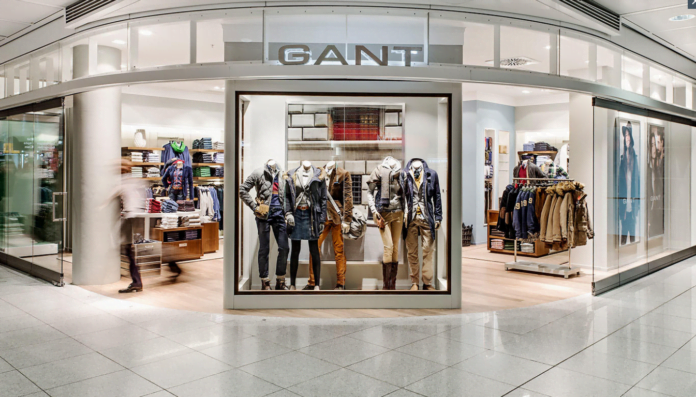
Image: GANTGANT at Munich Airport (Image: GANT)
In Canada, early plans are in place to open standalone GANT stores as part of a direct-to-consumer expansion following the launch earlier this month of the brand’s Canadian e-commerce site. A communications representative said that the Toronto, Montreal and Vancouver markets would be targets for GANT as it looks to further establish its foothold in the Canadian market by opening stores. A formal timeline for expansion has yet to be set.
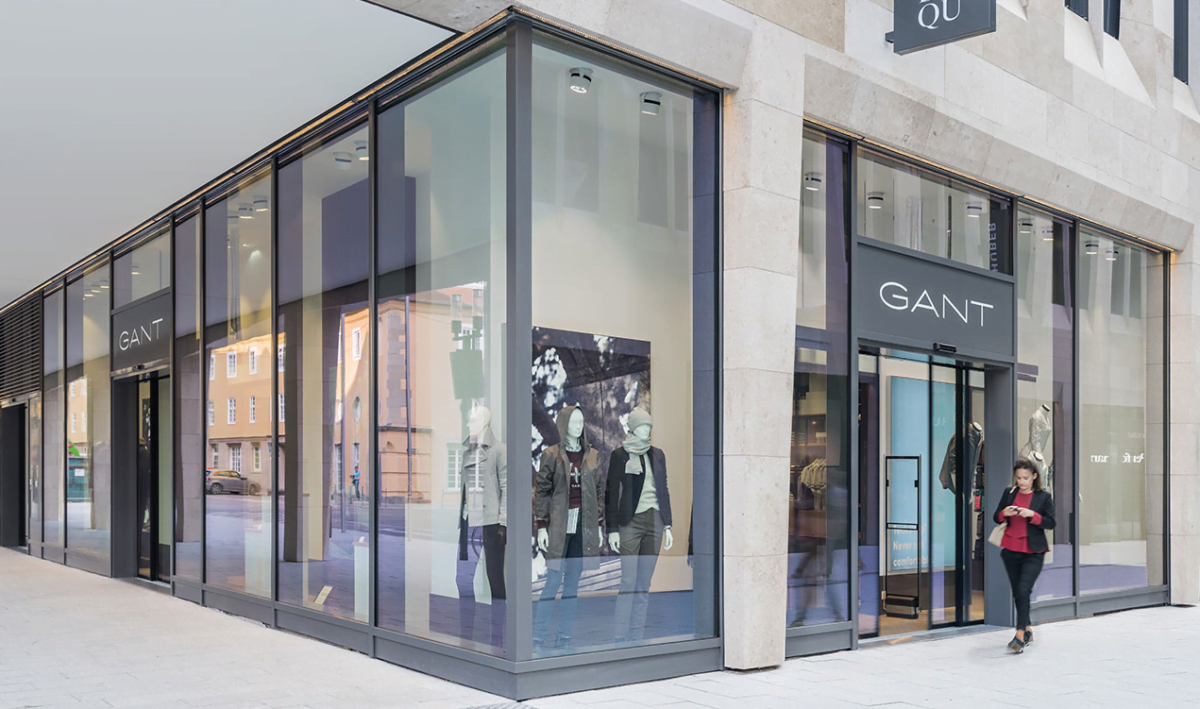
GANT has stores in a range of sizes located in upscale and trendy areas in major cities. That includes major shopping centres and street front locations. In Canada, we could see GANT stores on streets and/or in malls with Toronto’s Yorkdale Shopping Centre being a likely target.
Many brands continue to grow direct-to-consumer channels, which has been more than just a trend over the past several years in Canada and globally. We’ll follow up with GANT when we can confirm when and where stores will be opening in the Canadian market.
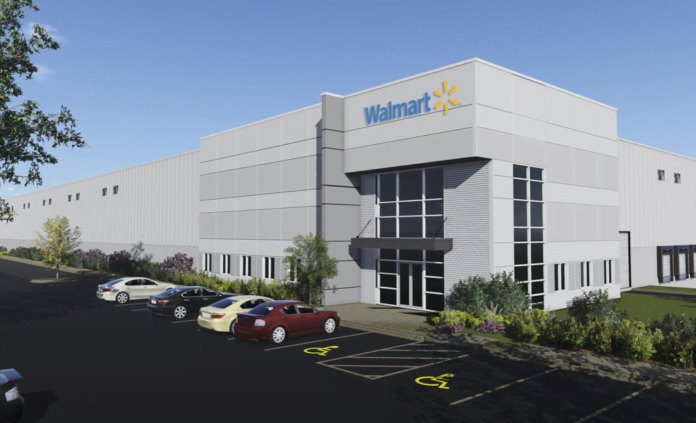
Walmart Canada continues to accelerate its commitment to its omni-channel network across the country with the announcement Monday of a new $118-million, 430,000-square-foot fulfillment centre in Rocky View County, which is located just north of Calgary’s city limits. (Rendering: Walmart Canada)
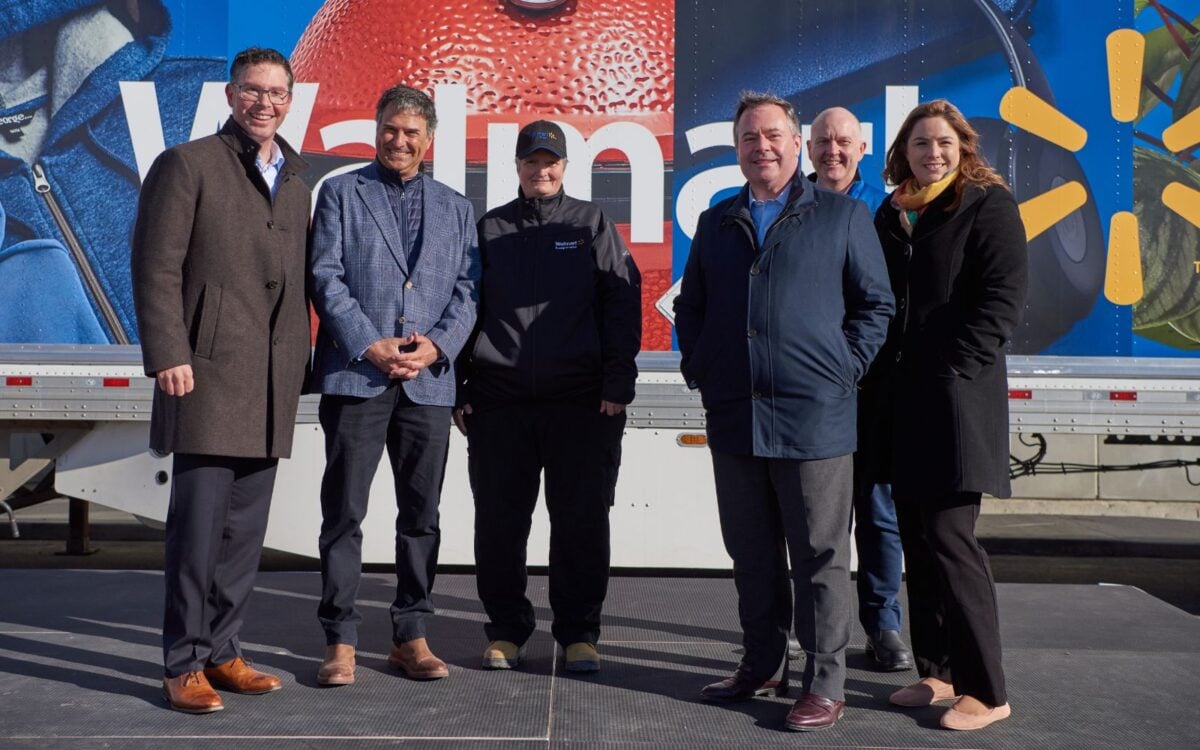
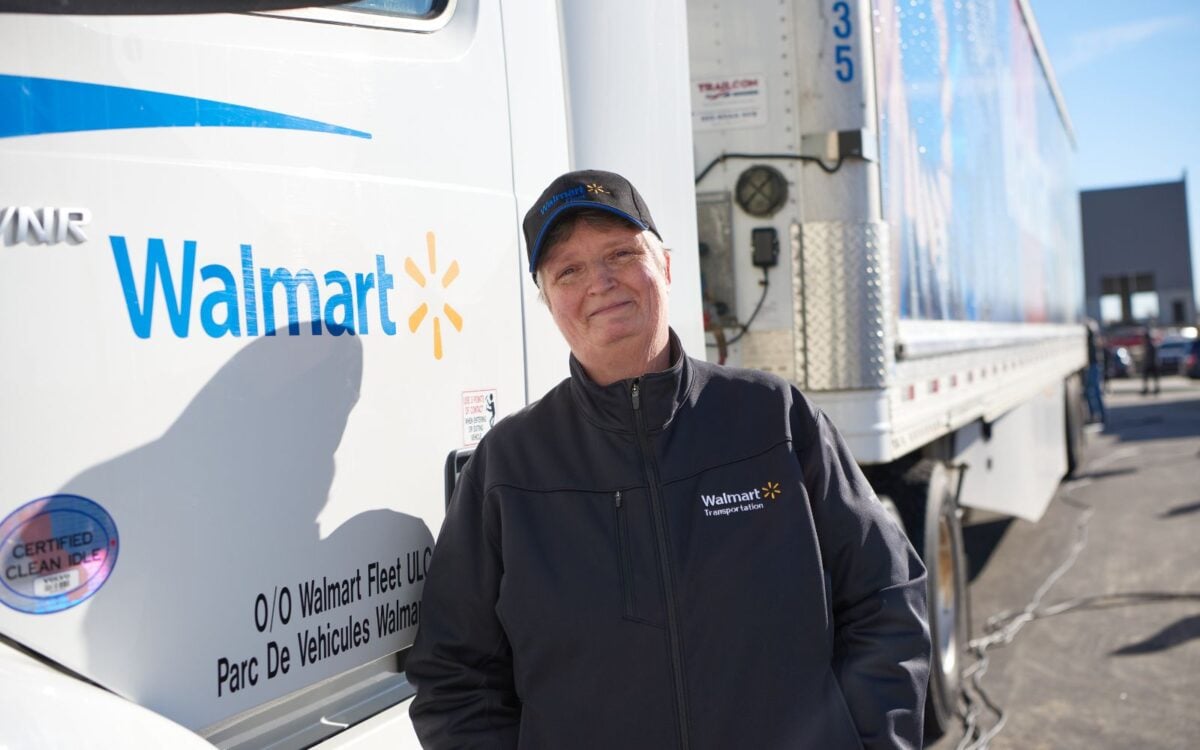
Walmart Canada continues to accelerate its commitment to its omni-channel network across the country with the announcement Monday of a new $118-million, 430,000-square-foot fulfillment centre in Rocky View County, which is located just north of Calgary’s city limits.
The retailer said the facility is slated to open in September 2022 and Walmart customers will see better product availability and quicker service whether they choose to shop in-store or online at Walmart.ca.
“We are tremendously proud to be investing in a new fulfillment centre in the Calgary area that will create jobs, boost the economy and deliver quicker service for our customers,” said Horacio Barbeito, President and CEO, Walmart Canada.
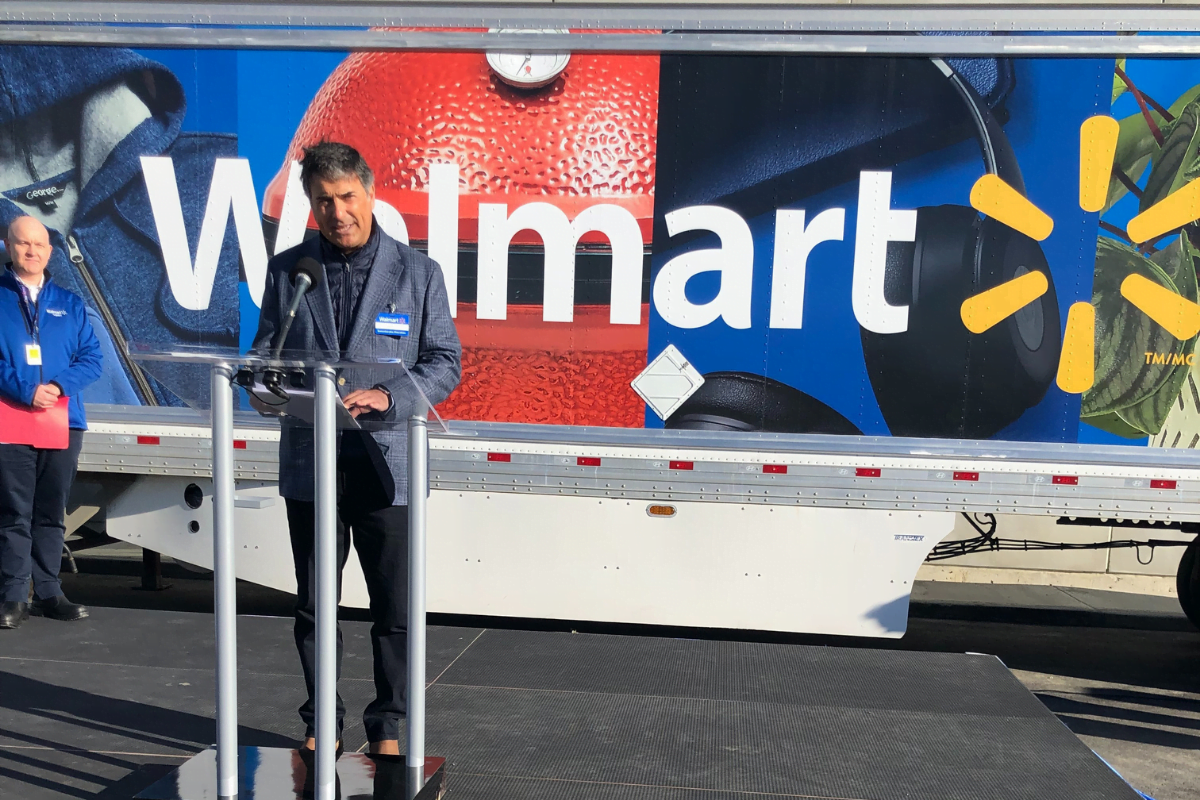
Horacio Barbeito at Rocky View County Fulfillment Centre (Image: Mario Toneguzzi)
“This modern facility will provide our associates with the latest logistics technology to improve our supply chain. That means more products available, more orders fulfilled and more Canadians offered two-day shipping. This is how we’re transforming our operations to meet the needs of Albertans and all Canadians.
“The customer will see more selection, better product availability and a quicker service whether they choose to shop in-store or online.”
He said the facility will use innovative robotic technology to better support its employees to better serve customers.
“This is very important. This is technology and robotics that helps our associates do their jobs better and faster, not to replace employees,” he said.
Walmart Canada (CNW Group/Walmart Canada Corp.)
“This high tech facility will feature cutting-edge technology to help us reach more Canadians faster and more efficiently by creating a new delivery hub in Western Canada.”
Including the new facility in the Calgary area, announced Monday, and the ones under construction in Surrey, Moncton and Vaughan, there will eventually be a total of 17 across the country – a combination of distribution and fulfillment centres with a total square footage of approximately nine million.
“At Walmart, service is a core value and as Walmart’s founder Sam Walton would say, there’s only one boss and that’s the customer,” said Barbeito.
“The past two years have been challenging times and we keep facing kind of a rocky present. People nowadays are worried about the rising cost of living as we continue to hopefully phase out the pandemic. But it’s also a concern on inflation and global disruptions. I want our customers to know that we’re listening to them and responding to their needs. At Walmart we’re on a mission to help Canadians save money and live better. This landmark investment will help us deliver on that promise.”
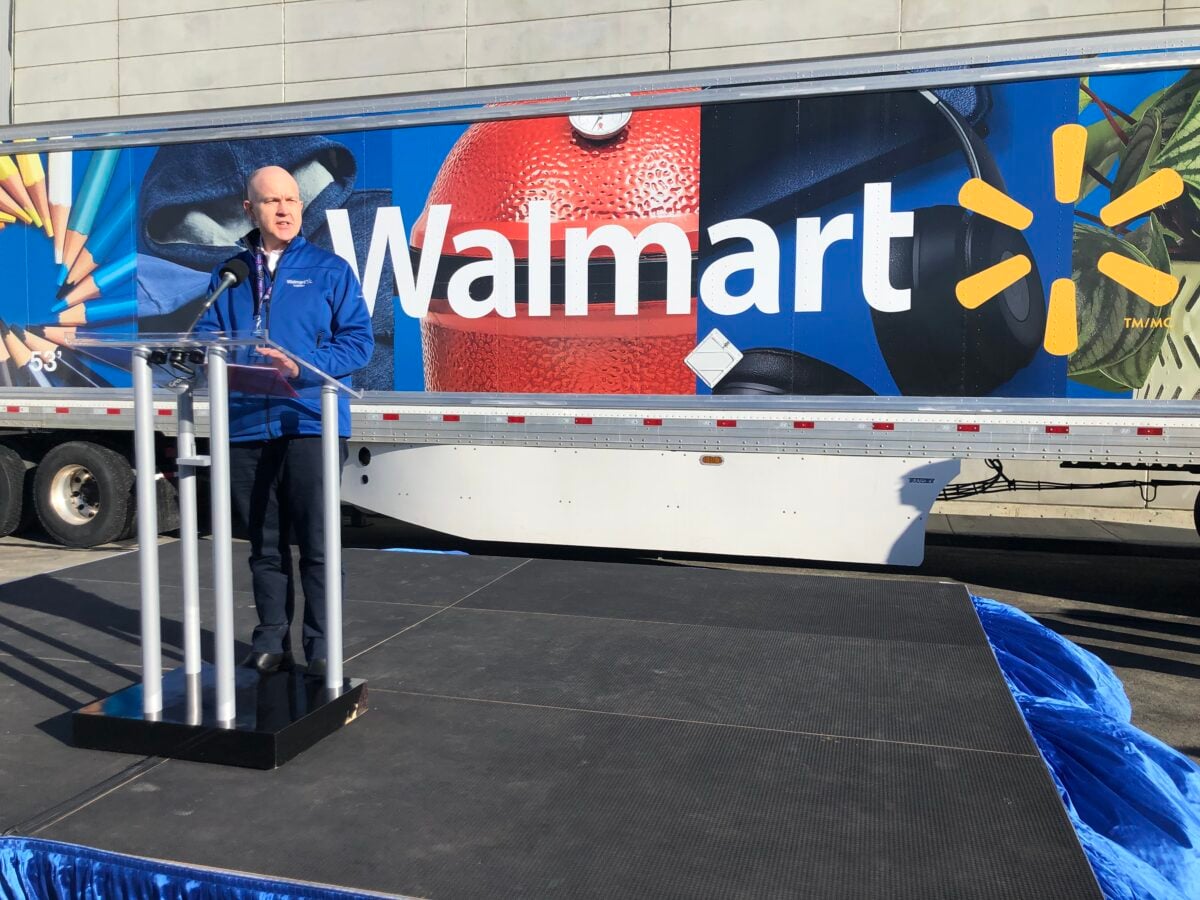
John Bayliss at Rocky View County Fulfillment Centre (Image: Mario Toneguzzi)
The new facility in the Calgary area is located in High Plains Industrial Park and it is the third Walmart industrial real estate facility in Rocky View County. The other two centres in the area, of 428,000 square feet and 400,000 square feet, were constructed about 12 years ago and seven years ago.
“The retail business is evolving and Walmart Canada is responding with investments in Alberta and across Canada to bolster our supply chain network,” said John Bayliss, Executive Vice President, Transformation Officer, Walmart Canada. “Walmart Canada is on a transformation journey and this investment ensures we can deliver for our customers in Western Canada, now and in the future.”
He said the Alberta market is a critical one for the retailer.
“For over 25 years this market has been our most critical supply chain hub for our company,” said Bayliss, adding that the Calgary hub is essential for the company because it helps the flow of goods to other parts of the country.
Walmart Canada (CNW Group/Walmart Canada Corp.)
“This hub has also been one of many firsts for us here in Canada. You can see in the distance the beautiful mountains,” said Bayliss from the site of the new facility. “You can see a windmill in the distance. That marks the spot of when it opened about 10 years ago one of the most sophisticated and environmentally-sound warehouses in the world, right here in this industrial park (High Plains Industrial Park).
“Also, this site here was home to our women in logistics program which has gone on to not only be a standard here in Canada but around the world. They’ve also pioneered safety, sustainability and engagement programs which are now the standard for us here in Canada. It is only fitting as we look to our future and look to transform our operations to better serve Canadians through our e-commerce business that we’re making this major investment in this community and in this team. This $118-million investment is part of our plan to expand, revolutionize and transform our best-in-class supply chain network while increasing our e-commerce capability to better serve millions of Canadians.”
Patricio Dallan
“We are excited to be bringing a new high-tech fulfillment centre to the Calgary area,” said Patricio Dallan, Senior Vice President of Omni Supply Chain, Walmart Canada. “Our customers deserve the best experience when they shop with us and this investment will help us deliver more items to more households quicker than ever before. We are proud to be investing for growth in Western Canada while improving our supply chain to deliver for Canadians.”
The retailer said the new facility, which will create 325 new jobs, will be a new delivery hub for Western Canadian customers, expand two-day shipping to 61 per cent of Canadians and it will be capable of shipping 20 million units annually.
Image: Walmart Canada
The new high-tech sortable fulfillment centre is part of the retailer’s plan to expand, revolutionize and transform its best-in-class supply chain network while increasing its e-commerce capabilities to better serve Walmart customers. It is part of Walmart Canada’s $3.5 billion investment to make the online and in-store shopping experience simpler, faster and more convenient for Walmart customers.
“The modern facility will be powered by cutting-edge logistics technology to achieve productivity with less physical effort. For the first time at Walmart Canada, innovative robotic technology from GreyOrange will be used at the fulfillment centre. This platform will speed up order fulfillment by using an advanced operating system that will help associates store, pick and sort items by using smart and flexible storage abilities to manage a large and wide variety of inventory. The result is an order fulfillment process that is quicker, easier and more efficient,” said the company, adding that the facility will be capable of storing 500,000 items to fulfill direct to home and in-store pickup orders and it is designed to optimize packaging, minimize waste and reduce transportation costs.
In Alberta, the retailer has 61 stores and four distribution centres. Last year, it invested more than $50 million in upgrading some of its stores in the province. It has more than 16,000 associates in Alberta.
Walmart said it recently purchased approximately $200 million worth of products from Alberta-based suppliers over a 12-month period.
Last year, it added more than 100 new Canadian suppliers, which includes a nine per cent increase in Alberta-based suppliers.
In Canada, the retailer has more than 400 stores with 1.5 million customers every day. Its online store is also visited by more than 1.5 million customers on a daily basis.
Retail Insider is streamlining its Canadian retail news from around the web to include a handful of top news stories that can be viewed quickly during the day. Here are the top stories from the weekend.
The continuing increase in Canada’s inflation rate is driving more consumers to the discount store market to ease the pain of rising prices across the board in the country.
Paul Wood, President & CEO of Giant Tiger Stores Limited, said the discount sector has experienced growth overall over recent years as retail and customers shifted away from the middle of the market either to discount or luxury.
Paul Wood
“Given the current disruptions in the economy and the geopolitical turmoil that exists, there remains a solid case for the discount retail as we move forward, and I do not see any immediate end in sight to these challenging conditions,” he said.
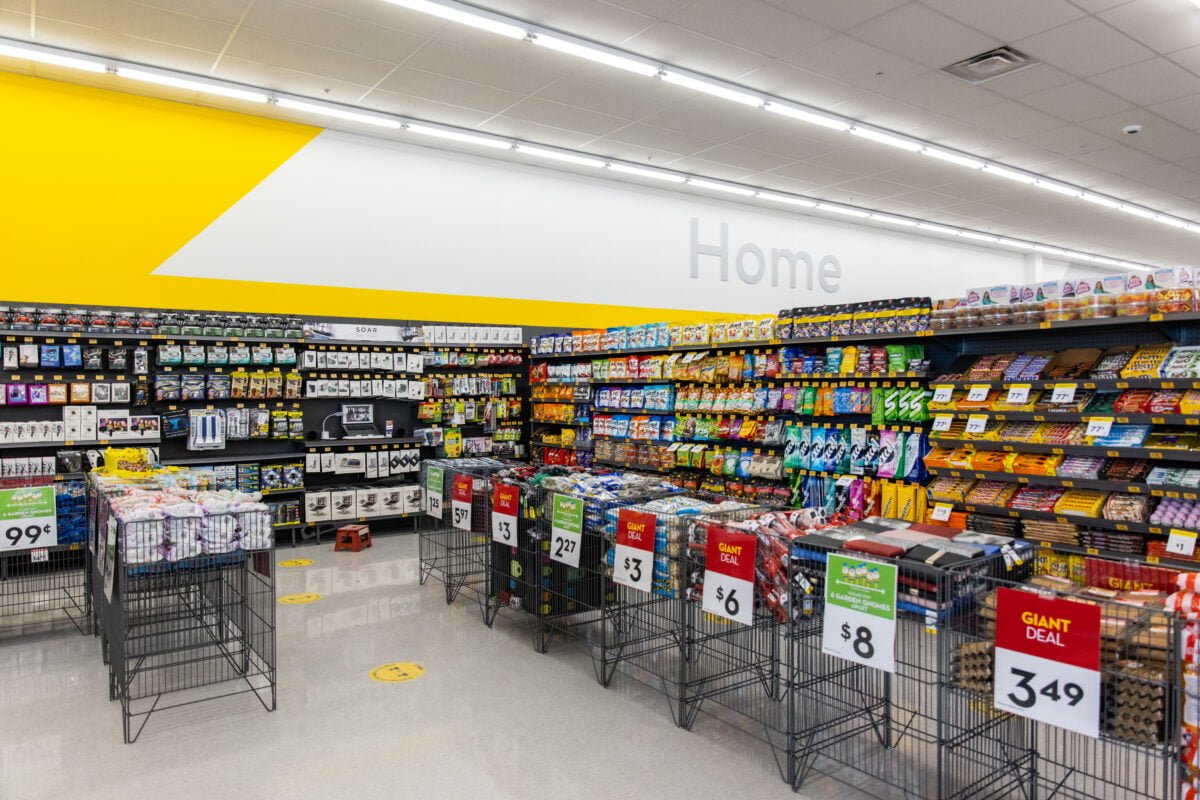
“At Giant Tiger we continue to focus on operating in a frugal manner to ensure we can keep our everyday low prices as low as possible for our customers and pass along great value online at gianttiger.com or in our over 260 stores across Canada through our assortment of on-trend fashion and home products, seasonal merchandise, and our full assortment of grocery.
Interior of new Giant Tiger store on Walkley Road in Ottawa. Photo: Giant Tiger
“As inflation and dramatically rising costs of fuel occupy some of the news reports, naturally the expectation is that more Canadians turn to discount for opportunities to save on their everyday needs. At Giant Tiger we seek to provide outstanding value at the lowest price and offer a fun and easy shopping experience for our customers to shop smart and save smart every day.
“Wages have not risen at the rapid rate of inflation Canadians are experiencing and as this trend persists, we expect more will choose to experience discount retail to get more for their money. Gas alone at current rates takes a big bite out of everyone’s bi-weekly paycheck. When people working at home begin to venture back out to work as COVID restrictions end, the pinch will become even more prominent.”
Bruce Winder
Bruce Winder, author of RETAIL Before, During & After COVID-19 and President of Bruce Winder Retail, said the discount sector had seen strong growth through the pandemic and will continue with this trajectory due to several factors affecting shoppers at this time and into the future.
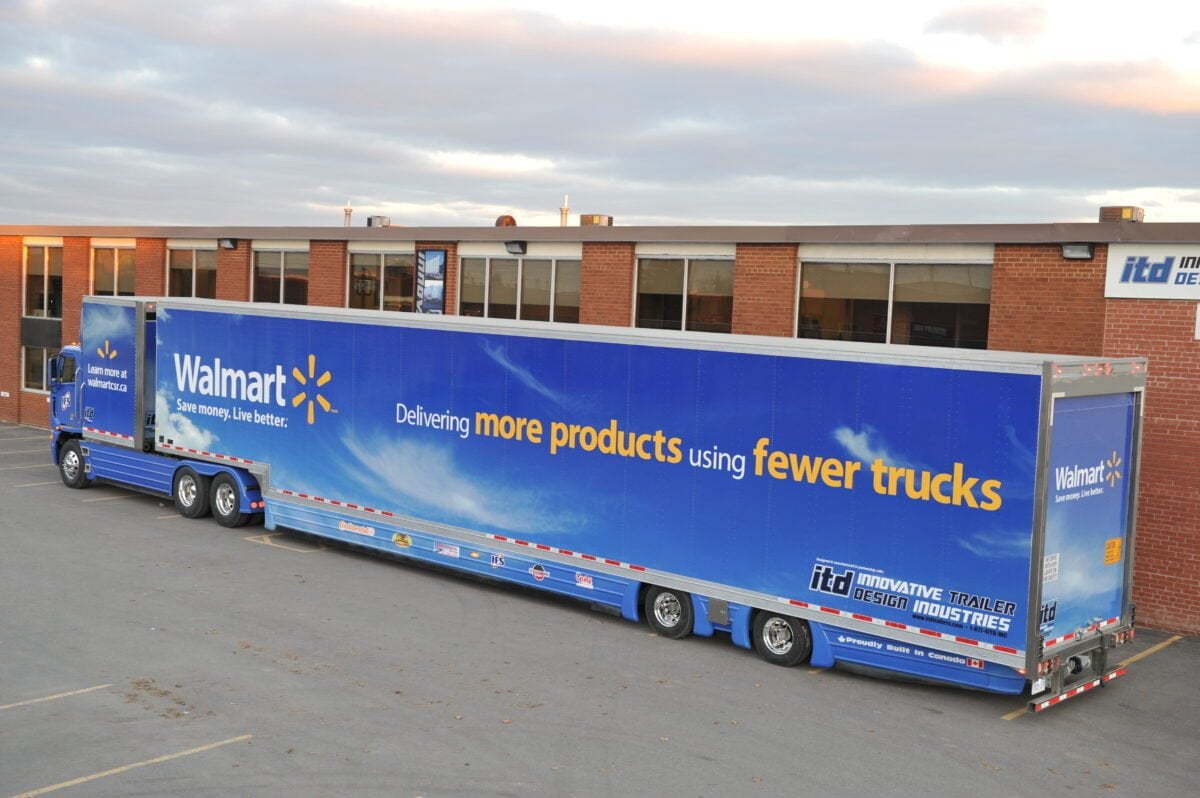
“First, when I think about discount, I include retailers such as Walmart, Costco, Amazon, No Frills, Food Basics, FreshCo, Dollarama, Dollar Tree and any other store selling value price points,” he said.
“For context, when I think about all price points in retail, I think about the range from value at the bottom, rising to good, better, best and luxury toward the high end. One could also include super-luxury for elite consumers – a growing segment.”
He said factors impacting the growth of discounters include rise of inflation, specifically in food, gas, housing, and other everyday living categories, the rise of interest rates, increased consumer debt, slow wage growth, particularly in low paying jobs, job uncertainty and other issues. These economic and social headwinds have forced consumers to shop at value-based stores to make their dollars stretch further to make ends meet.
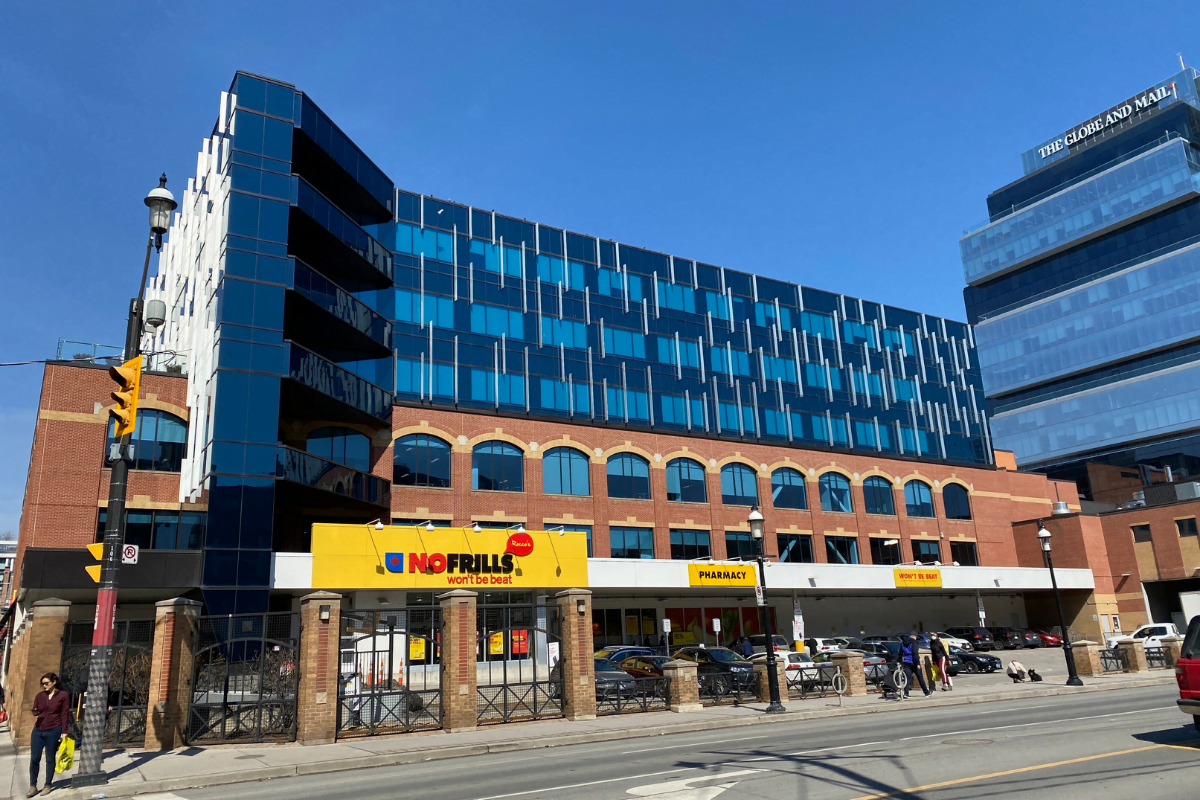
No Frills in Downtown Toronto (Image: Dustin Fuhs)
“We are seeing mix changes within the industry from mid-priced point retailers to value retailers and even within value retailers we are seeing an increase in private label sales as consumers choose store brands over national brands at higher price points,” said Winder.
“Within mid-priced retail we will also see lower end products (good price point) increase in sales as a percentage of the sales mix. More will be bought on promotion as well and we could see stockpiling of essentials during sale weeks.
“Thrifting will increase as consumers look to used product retailers (ie. Value Village) and websites such as Kijiji and Facebook Marketplace to manage budgets. Retail will continue to polarize based on society’s divide between the haves and have nots which has only become more pronounced during the pandemic and the new abnormal we find ourselves in now and through the balance of the 20’s.”
Winder said these trends will continue as many of those headwinds are not temporary.
“We will probably see several new retailers and service providers emerge who will cater to this growing part of retail,” he added.
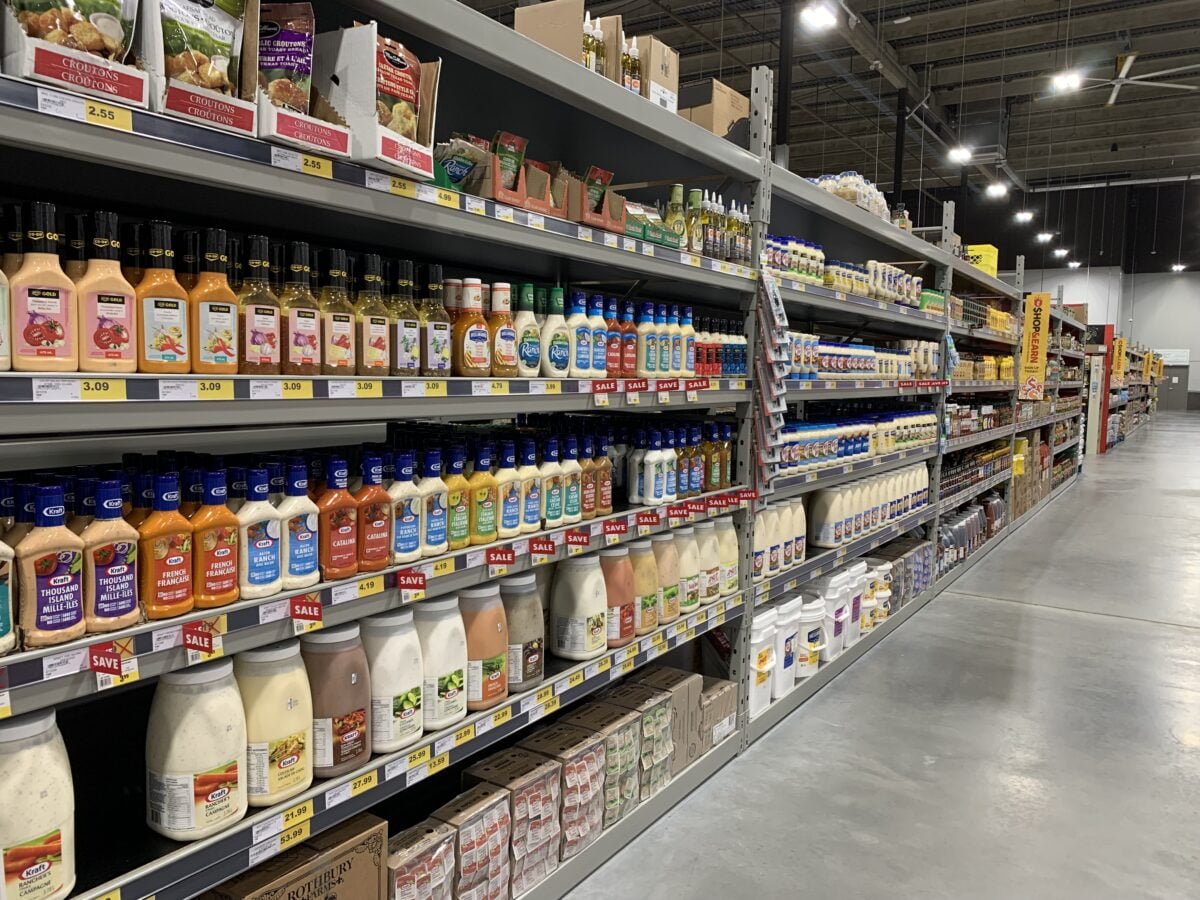
Image: Wholesale Market (The Grocery People)
George Minakakis, Principal of advisory firm Inception Retail Group Inc., and author of The New Bricks & Mortar Future Proofing Retail, said inflation is shrinking more of every Canadian’s present day budget.
George Minakakis
“It is human nature to focus on reducing costs and saving. In fact, a poll we are running currently is showing just that. Discount and variety type stores from grocery to mass merchandise have been growing for years. During the pandemic many announced plans to add stores,” he said. “There is a three-folded strategy behind growth here. More locations create convenience. It increases the operators buying power to keep costs down and at the same time it is a recognition that more consumers are becoming cost conscious. The demand is there. We already know that 50-55 per cent of Canadians live paycheque to paycheque. These stores are serving a need and give a hand to consumers who need to stretch their budget.
“The current economy has created human risks and the need to provide and feed the bodies and minds of a family. This is needed to sustain positive mental health. Especially as costs in general from grocery, gasoline to restaurants are rising. Clearly, this creates more competition for larger grocers and mass merchant retailers. They will also begin to respond with offers in this inflationary economy. Inflation will fuel more demand for the discount business model. It is to the benefit of consumers who need to pay for medicine, haircuts, eye exams, and take care of household emergencies.
Walmart Canada at Gerrard Square in Toronto (Image: Dustin Fuhs)
“Discount retailers are a permanent common and timely channel of choice for consumers. For that reason we should not be surprised to hear that larger retailers will try to get their hands on this sector of retail with acquisitions.”
Michael Kehoe
Michael Kehoe, broker of Fairfield Commercial Real Estate in Calgary, said there is a pronounced flight to value in the Canadian market as consumers look to save money in these inflationary, turbulent times.
“Retailers across the value-oriented spectrum are capitalizing on this by expanding their store networks and merchandise offerings. Grocery discounters and dollar stores are some of the clear winners as the retail landscape shifts to cater to more price-conscious shoppers. In consumer real estate circles retail chains like Dollarama are referred to as, ‘the store that ate Canada’ with around 1,400 locations and counting,” he said.
Podcast: Hudson's Bay Store Departing Toronto's Bloor Street
This week Craig and Lee talk about the Hudson’s Bay store which will be departing Bloor Street in downtown Toronto this year after nearly 50 years of operations. The shocking news will lead to big changes for Toronto’s downtown core.
The Weekly podcast by Retail Insider Canada is available on Apple Podcasts, Stitcher, TuneIn, Google Play, or through our dedicated RSS feed for Overcast and other podcast players. Also check out ourThe Interview Seriespodcast where Craig interviews guests from across the Canadian retail landscape as part of theThe Retail Insider Podcast Network.
Drop us a line at Craig@Retail-Insider.com. You can also rate us in Apple Podcasts or recommend us in Overcast to help more people discover the show!
Background Music Credit: Hard Boiled Kevin MacLeod (incompetech.com). Licensed under Creative Commons: By Attribution 3.0 License. http://creativecommons.org/licenses/by/3.0/
Michel Leblanc, President and CEO of the Chamber, said the recent lifting of the recommendation for compulsory teleworking will trigger the gradual return of downtown workers to hybrid mode.
Michel Leblanc
“This is good news, especially for merchants in the sector, who have suffered enormously from the drop in traffic over the past two years. The study . . . specifies, however, that changes in work organization methods will have a persistent negative impact on traffic and the level of consumer spending in the zone. According to our estimates, the number of workers present daily in the city centre next fall will be 19 per cent to 25 per cent lower than its pre-pandemic level. The fall in the level of expenditure will also be very significant – around 14 per cent. It’s a major shock,” said Leblanc.
“The Chamber’s study proposes solutions to reduce this shock in the short term and thus limit the risk of a breakdown in the commercial fabric. We propose a series of actions that will improve the experience of the city centre. In a hybrid model context, a face-to-face day would become a sort of local mini ‘business trip’, where workers’ consumption habits that were previously spread out over the rest of the week would be concentrated. The goal is to encourage behaviours that help maintain a good level of traffic in our businesses, restaurants and cultural establishments. Longer term, we remain optimistic. The reduction in the number of short-term workers will gradually be compensated by economic momentum and business growth.”
The study identified four major areas to guide recommendations aimed at strengthening the city centre and making it a more diversified, resilient and accessible economic hub:
Facilitate the transition to new work organization models;
Enhance the downtown experience and promote a mix of uses;
Contribute to informed decision-making in private investment; and
Position the city centre as a strategic sector that contributes to the international influence of the metropolis.
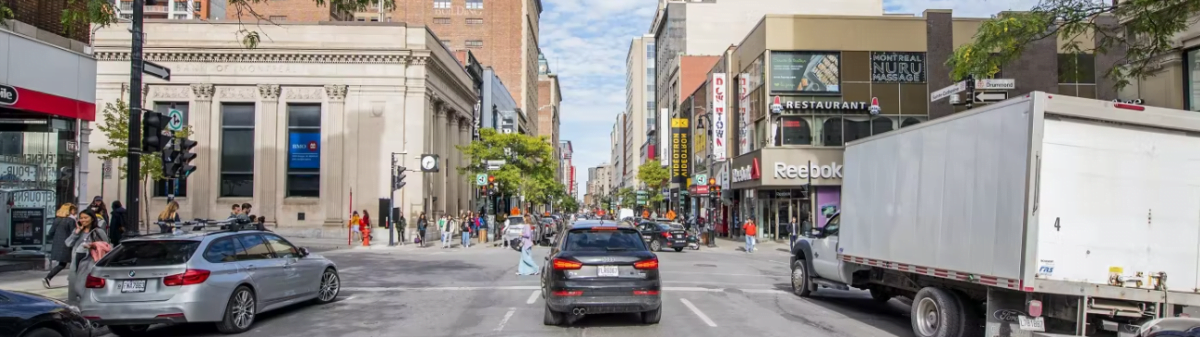
Image: Montreal centre-ville
Leblanc said after a few months into the pandemic the organization launched an initiative to get prepared for the eventual relaunch of the economy to make sure it understood collectively what would be the challenges.
“The idea right from the outset was that contrary to the usual situation where you have a recession it’s as if the tide went down and the tide going up and all the boats going up at the same time, initially we really understood that this would be different,” he said.
“That would be economic sectors where the pandemic would be almost a positive outcome for them and that they would grow like the IT sector and certain areas of the economy. And we anticipated of course that other sectors would find it very difficult like the tourism industry.
“As we moved along, we realized the downtown area was going to be hard hit for a long time and we started to consider the downtown as an economic sector in and of itself.”
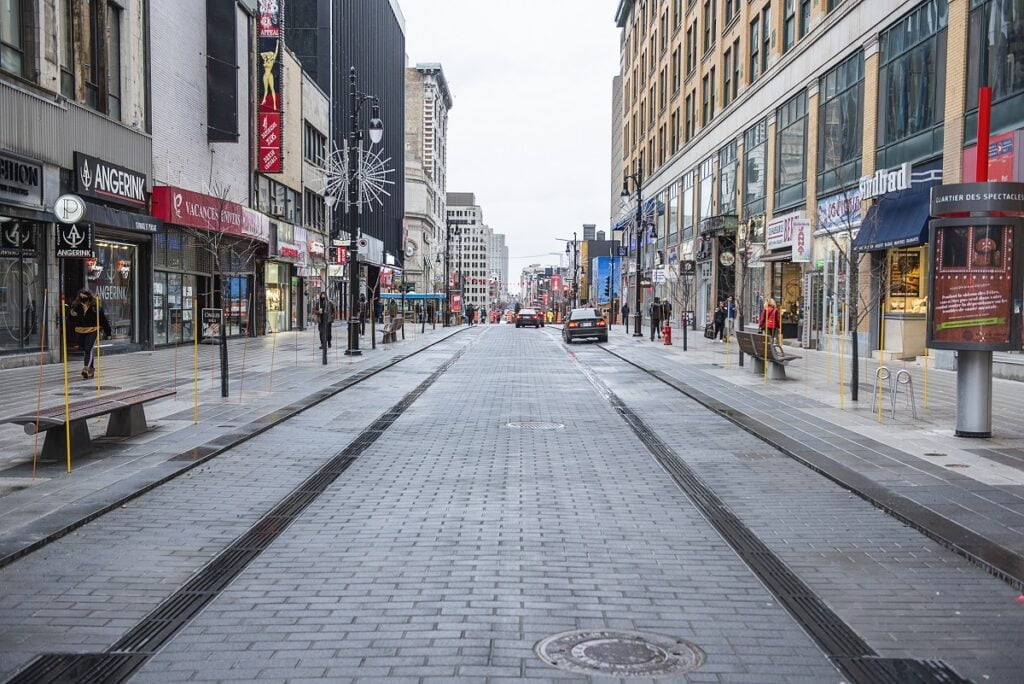
La Sainte-Catherine (Image: MakingMontreal.ca)
About a year ago, the Chamber received financial support from the provincial government to launch a series of initiatives to try and re-launch the downtown. The idea was to be ready as soon as the government relaxed certain public health measures. In the fall, the Chamber launched a public communications campaign, trying to entice workers to come back. Best practice committees included employers and owners of buildings to make sure everything needed to be done would be done. That included a plan of bringing back the employees.
Leblanc said the Chamber launched some projects to transform the experience of coming downtown. Those projects were in private or semi-private places like lobbies of towers, food courts, the underground system and outside areas belonging to private ownership.
“The idea there was that the city itself would finance initiatives on the public space and we would add creative projects on the private spaces and we would communicate to the employees coming to work that downtown is great. You’re going to see new things. You’re going to feel new experiences.”
Leblanc said some people have been saying that downtowns are finished because of the pandemic and the changes in how workplaces operate with a new remote work or hybrid model.
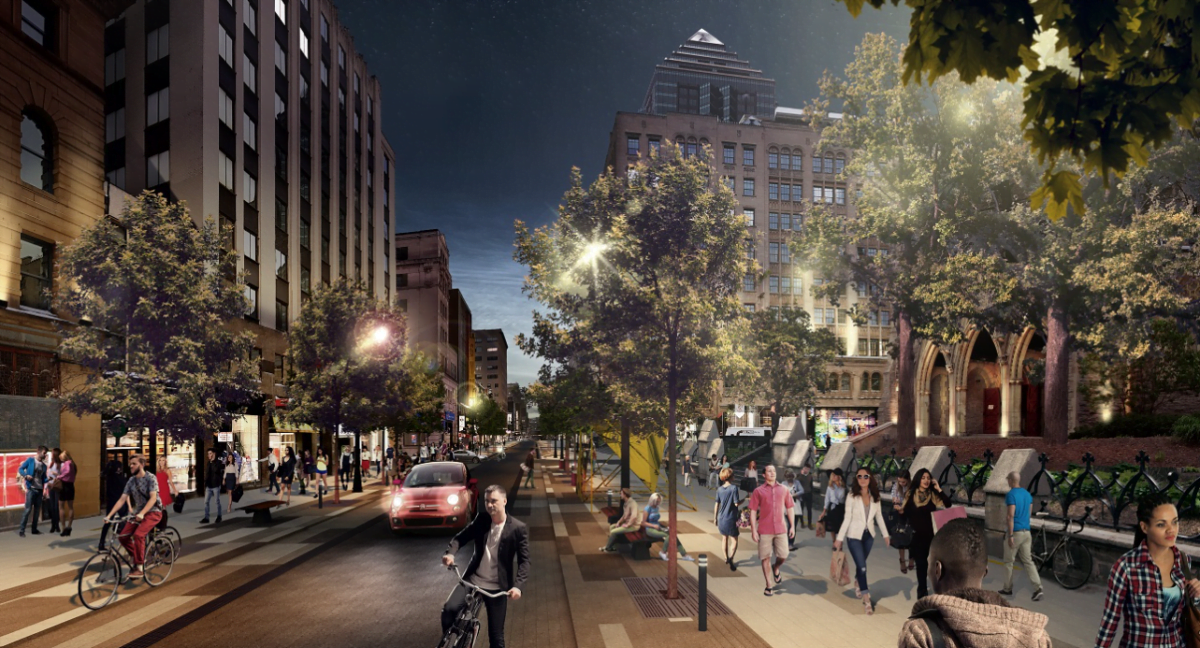
Rue Sainte-Catherine (Provencher_Roy, CIMA+S.E.N.C via Montreal.ca)
“A structural drop of 19 to 25 per cent is a big drop but at the same time it’s not at all the end of downtown,” he said. “When we ask companies what are your views for future years, the economy here is very strong so even if they say initially we’ll have less people coming, as we will grow, we will grow our workforce as well. Eventually numbers will resume going up,” he said.
Also, he said while there is an anticipated drop in the number of office workers coming to work, the Chamber at the same time anticipates less of a decrease in the amount of spending because people will simply concentrate on fewer days what they would have otherwise spent on coming out for five days.
Image: Jeffrey Berkowitz
Jeff Berkowitz, President of Aurora Realty Consultants in Montreal, said the biggest issue these days, and into the future, is the amount of construction taking place in the downtown, which is disruptive.
“The downtown needs revival but it also needs protection of the ongoing street work that they’re doing in the downtown core. So many things. COVID took a major hit obviously. We’ve lost all the tourists. We’ve lost all the office traffic that you have normally. But on top of that we’re in the midst of a long-delayed complete dig up of St. Catherine Street – the main street – as well as McGill College (Avenue) and Peel Street, which are two of the main cross streets on St. Catherine, getting their entire infrastructure redone,” said Berkowitz.
“So that is actually now the more concerning issue is to how long that’s going to continue to go and how disruptive will it be for the downtown core retail.
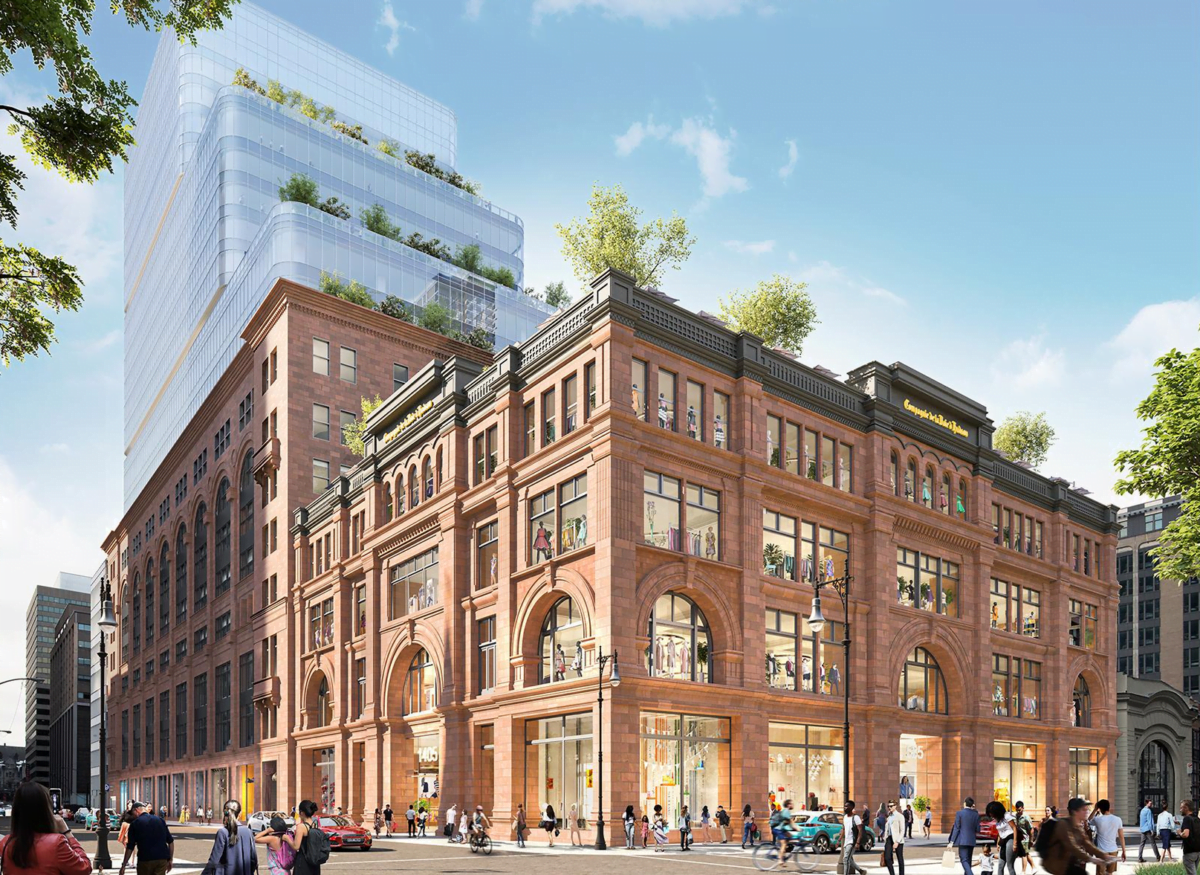
Hudson’s Bay Flagship Store – Downtown Montreal Ste Catherine Street. Rendering: Hudson’s Bay Company
“St. Catherine at this point probably has three to four years at the pace that they’re going. In various parts. They do it block by block. I don’t want to sound completely negative because we have seen a lot of activity and demand from retailers. Some expanding in the market and some new to the market completely that are looking at Montreal. So there is interest in the market.”
Berkowitz said many retailers, who have entered the Toronto and Vancouver markets, are looking at Montreal now because of its population mass and it’s a logical expansion for them.
“It’s rare that the first stores in Canada are in Montreal, usually they go to Toronto, Vancouver and some of the other markets first, but there’s been a fair number of those that have come through, they just got stopped in their expansion because of COVID. Now it’s time for Montreal and things are picking up again.”
The return of office workers will have a positive impact on Montreal’s downtown retail sector, he said, adding traffic has also increased due to students being back in school.
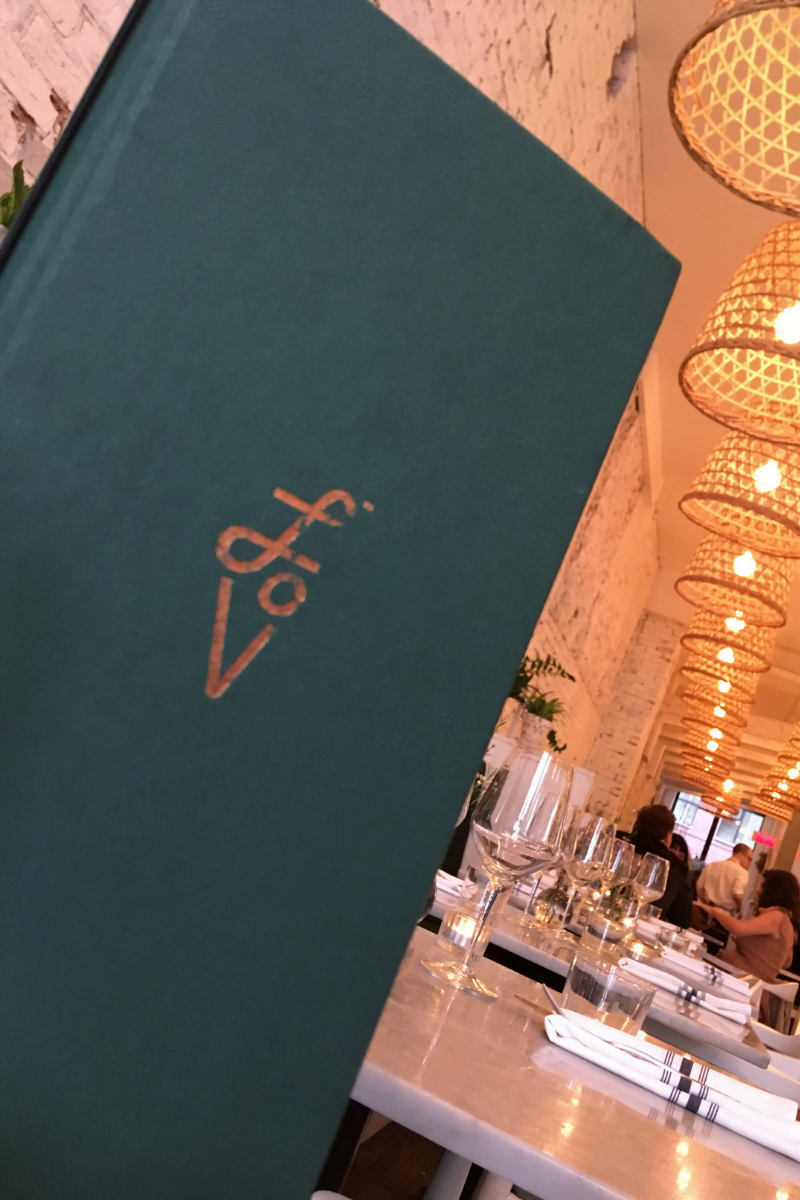
Lov Montreal (Image: Dustin Fuhs)
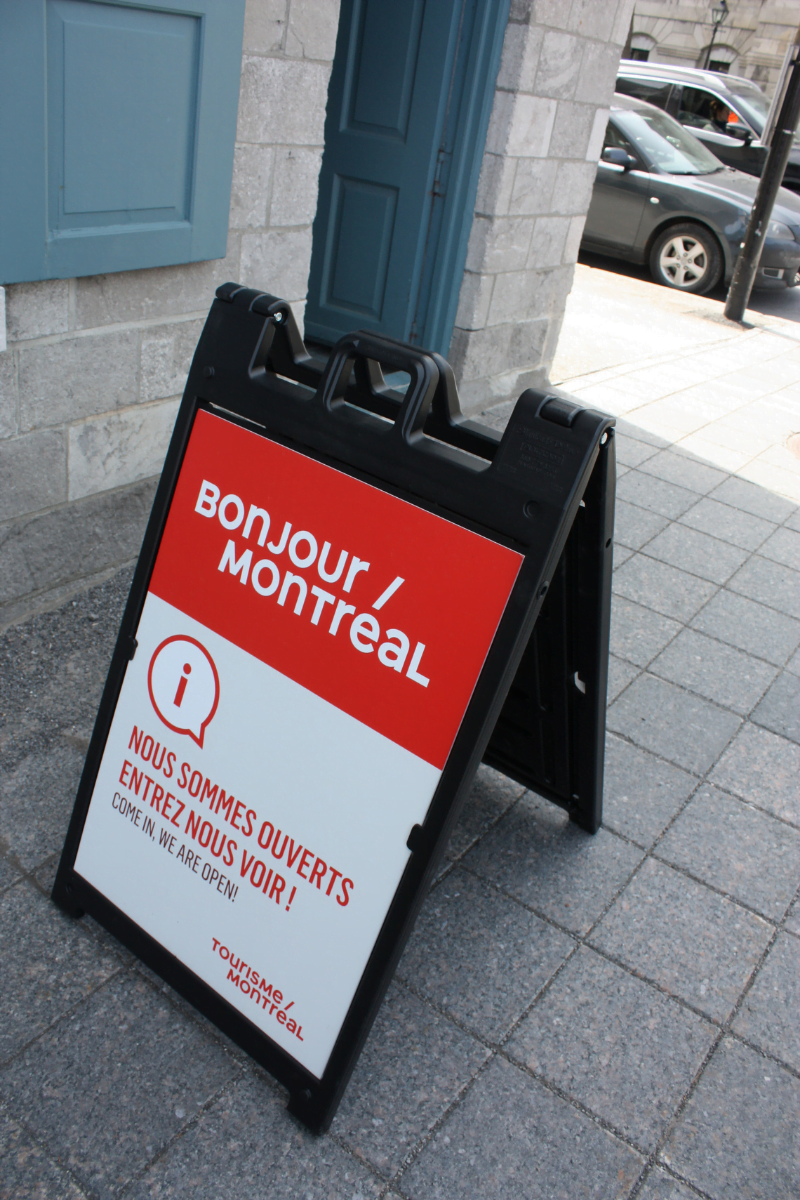
Tourisme Montreal (Image: Dustin Fuhs)
“What we are missing is that sweet spot which is the tourists and that’s a ways to go, but I definitely think the re-populating of the daytime, especially for food and beverage, will make a big difference,” said Berkowitz.
“If you want to keep it vibrant, it’s got to be a multi-use destination. It’s got to be live, work, play. You’ve got to have elements of everything. And the more you have residents in the downtown core, the more you get that neighbourhood feel and constant traffic, the more you’re drawing your tourists, or people who are there multiple times a week, the more alive your downtown core feels.”
Tony Flanz
Tony Flanz, President of Montreal-based Think Retail, which consults and represents international, national, and regional retail chains, said the downtown retail sector was hit particularly hard during the pandemic like other major cities. Offices were not populated and universities were closed for some time.
“It took a great toll on traffic on St. Catherine Street and some of the adjacent side streets to the point where there was little if any people walking around for the better part of a year and a half,” said Flanz. “Somewhat like a ghost town.
“There’s a lot of great news now that’s taken place over the last few months. It started with the universities reopening for in-person classes. That started to bring some of the people back. And all of a sudden downtown looked very young. The stores were getting a little more populated.
“That was the first real boost to business in the downtown core in quite some time. It was very welcomed and it was very noticeable. And all of a sudden retailers started to claw back a little bit of sales that had been missing during the pandemic.”
Now with the removal of all in-store capacity restrictions, the mood is incredibly positive. With more offices coming back, that is increasing traffic in the downtown core.
“For the first time in two years, there’s quite a few major international companies looking to open downtown and that itself is a big change and one that’s so welcome for our client landlords who have been waiting for good news. You have the Nike’s who have been rumoured to have finalized a very large flagship deal on the street. Lucid, the e-car company, has been actively pursuing a location in the downtown core.”
Retail Insider is streamlining its Canadian retail news from around the web to include a handful of top news stories that can be viewed quickly during the day. Here are the top stories from the past 24 hours.
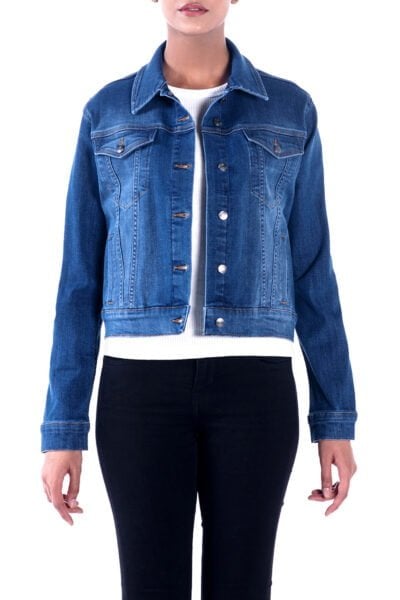
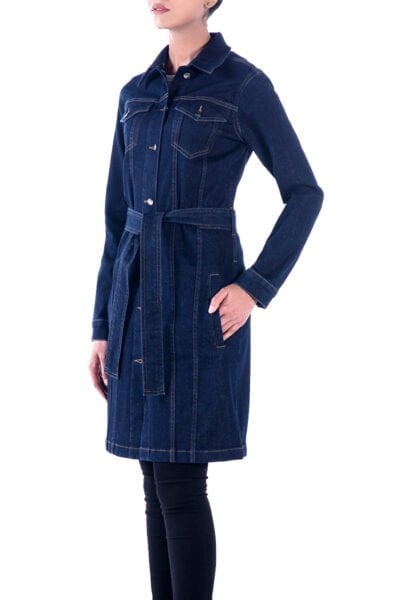
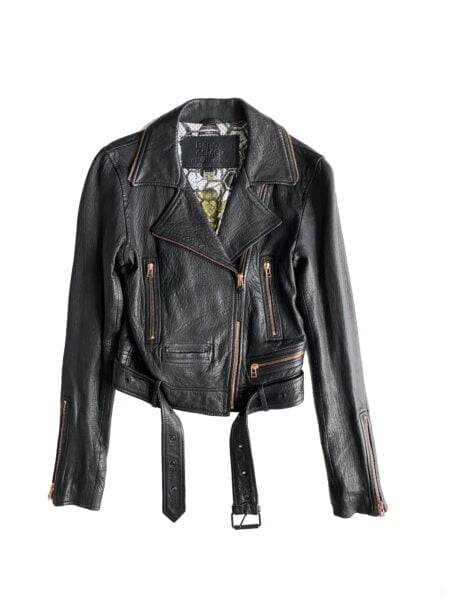
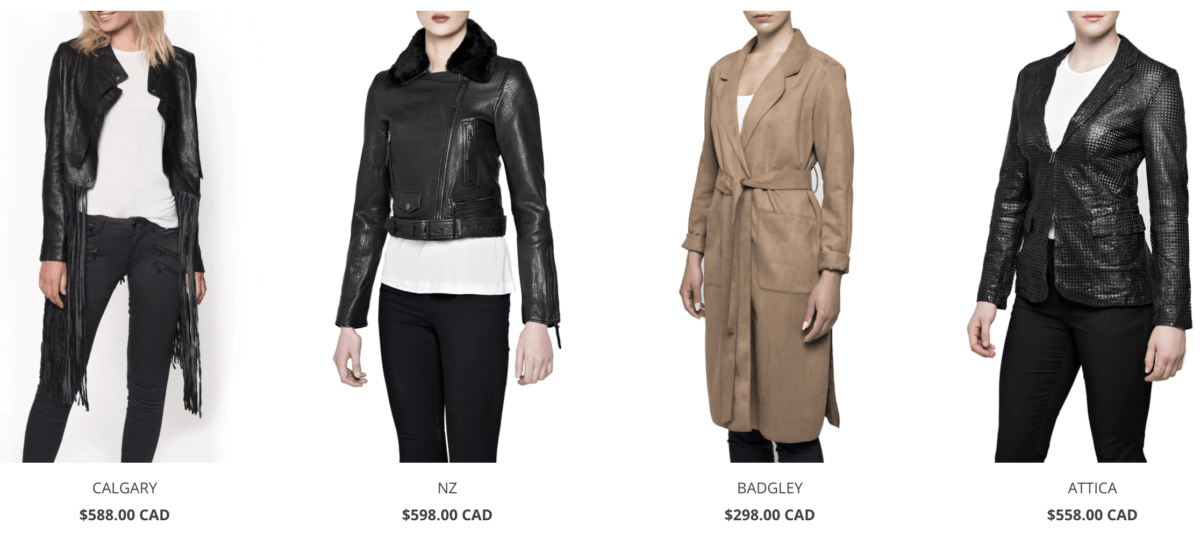
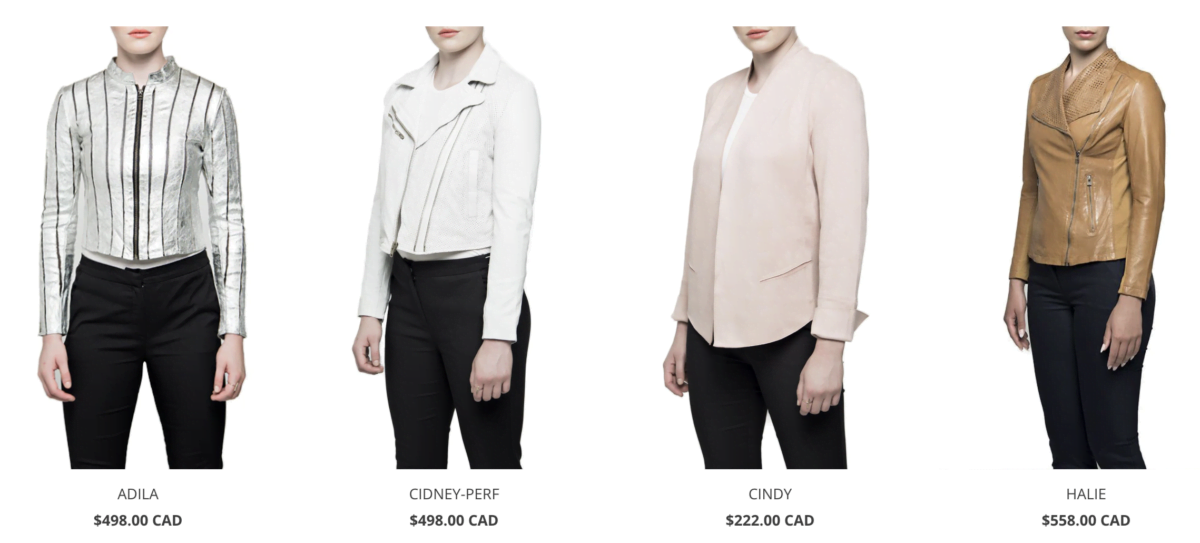
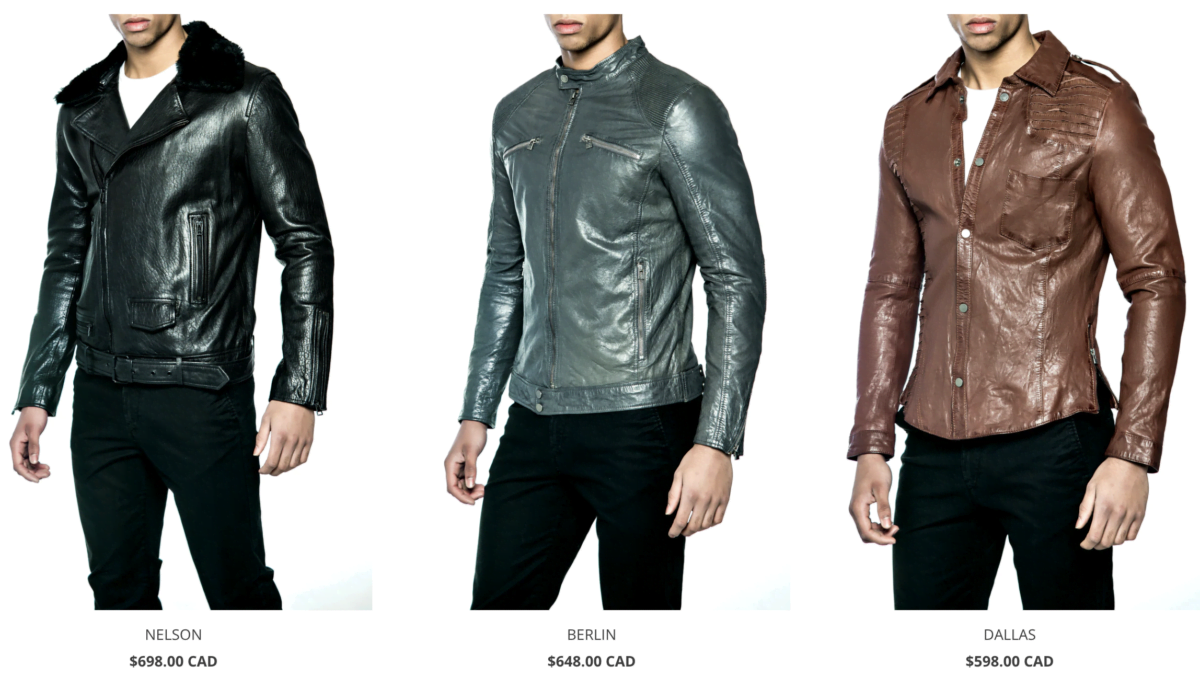
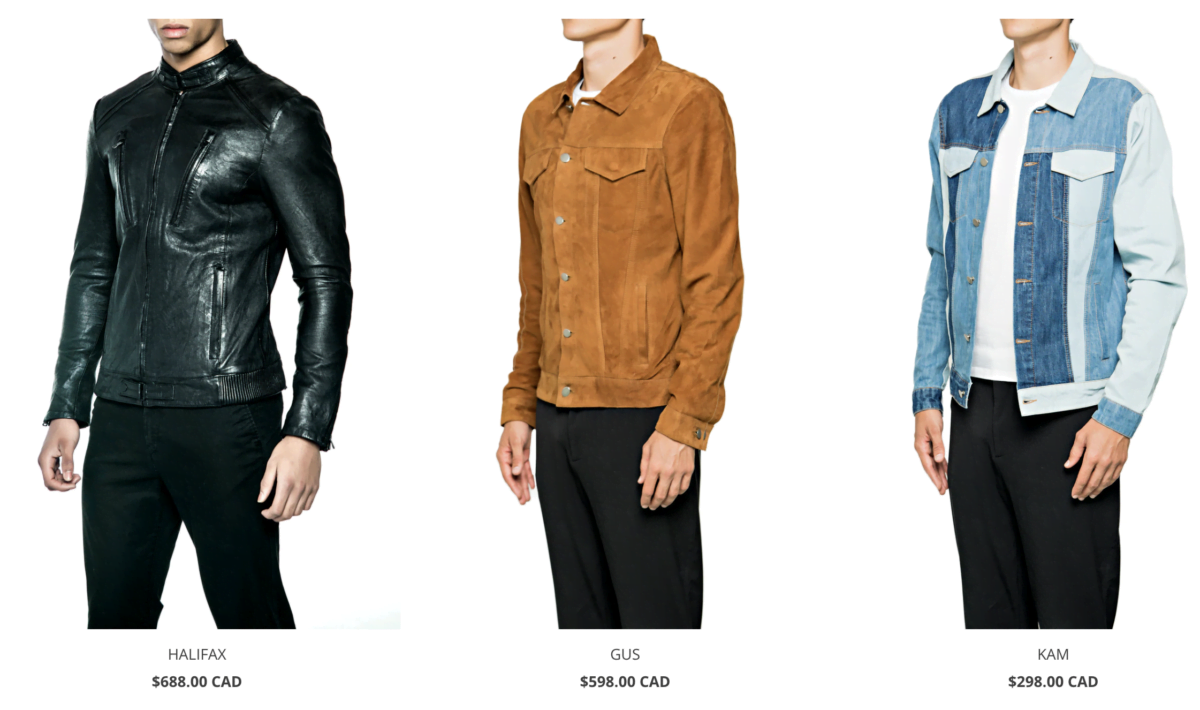
Toronto-based socially-conscious fashion brand Bano eeMee is expanding its line and is targeting Canadian retailers for distribution. Founder Aleem Arif recently returned to Toronto after spending time in the US and Asia and has launched a range of denim jackets to complement Bano eeMee’s ethically sourced leather jackets that the brand launched with its founding in 2012.
The new Bano eeMee denim line includes jackets for women and men using sustainably sourced materials. Arif said that the jackets, currently produced in both dark and medium washes, are an option for vegan customers in an effort to be inclusive. “Denim is an age-old fabric that is ideal to create pieces that are long-lasting,” Arif said.
Technology is built into the material which has a stretch to it along with moisture wicking and a silver ion treatment that suppresses odours.
New denim line. Image: Bano eeMee
New denim line. Image: Bano eeMee
“Our denim is sustainably sourced. We are working with our production partners to implement the ‘ozone wash technology’ to help conserve water in denim manufacturing,” Arif said.
Bano eeMee is a brand with a story. Aleem Arif founded the brand in Calgary in 2012 after relocating from Boston where he worked previously with an investment firm. A bold idea for a new fashion brand and a move to Calgary were risks that paid off with Arif discovering his passion for fashion design with a difference — he wanted to create fair-work opportunities in disadvantaged communities around with world. With that, he set up manufacturing in his native country of Pakistan.
The sale of a Bano eeMee jacket is said to translate into fair paid work for two days for three artisans. Designs are timeless and are meant to evolve into wardrobe staples with a level of quality intended to last for years.
Image: Bano eeMee
Image: Bano eeMee
The leather jackets are made from 100% vegetable tanned supple lamb leather, a by-product of the food industry. Any hard manual burnishing work is put in to the garment by hand to highlight the natural grain of the leather. Jackets are constructed with all-year-round wearability in mind and come in a range of styles that have resonated with consumers.
Bano eeMee’s other product lines include a range of vibrant scarves and during the pandemic it launched face masks made from a faux suede-like material created from recycled plastic bottles.
In an interview, Arif said that he’s looking to further expand his line into multi-brand retailers in Canada. That includes distribution for the new denim line as well as the brand’s popular leather jackets and scarves.
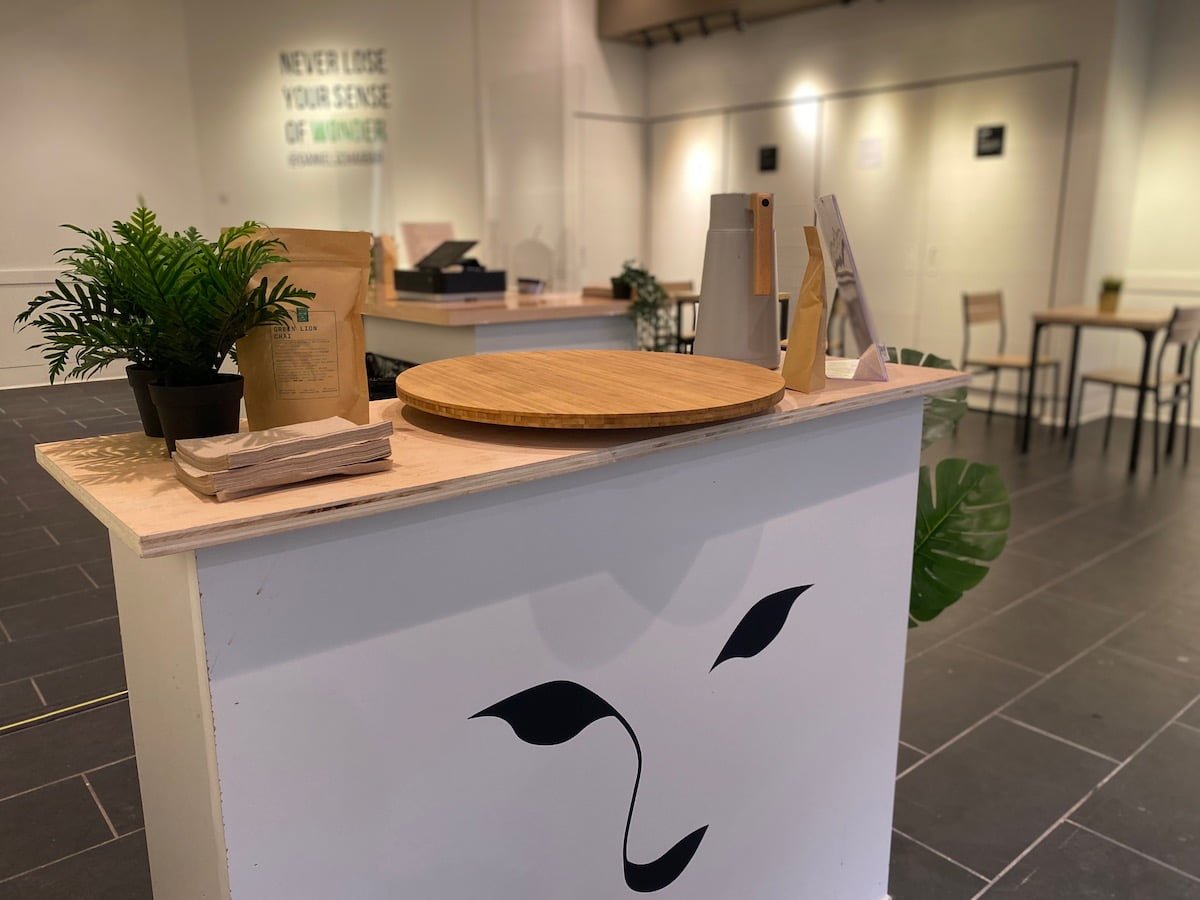
Daniel's Chai Bar Vaughan Mills -(Image: Daniel Lewis)
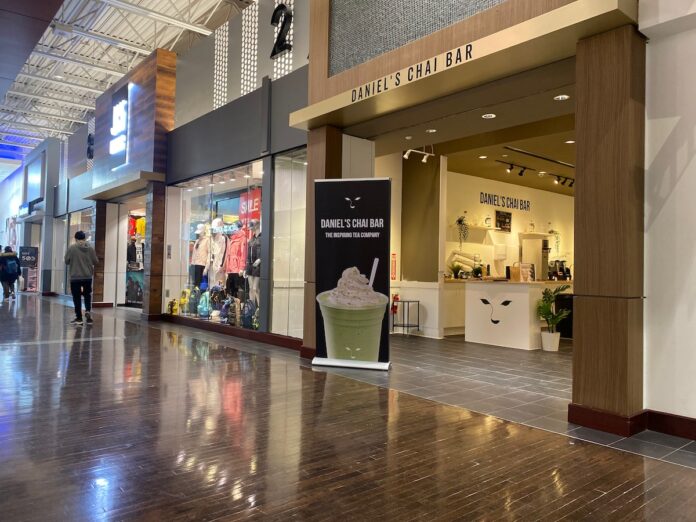
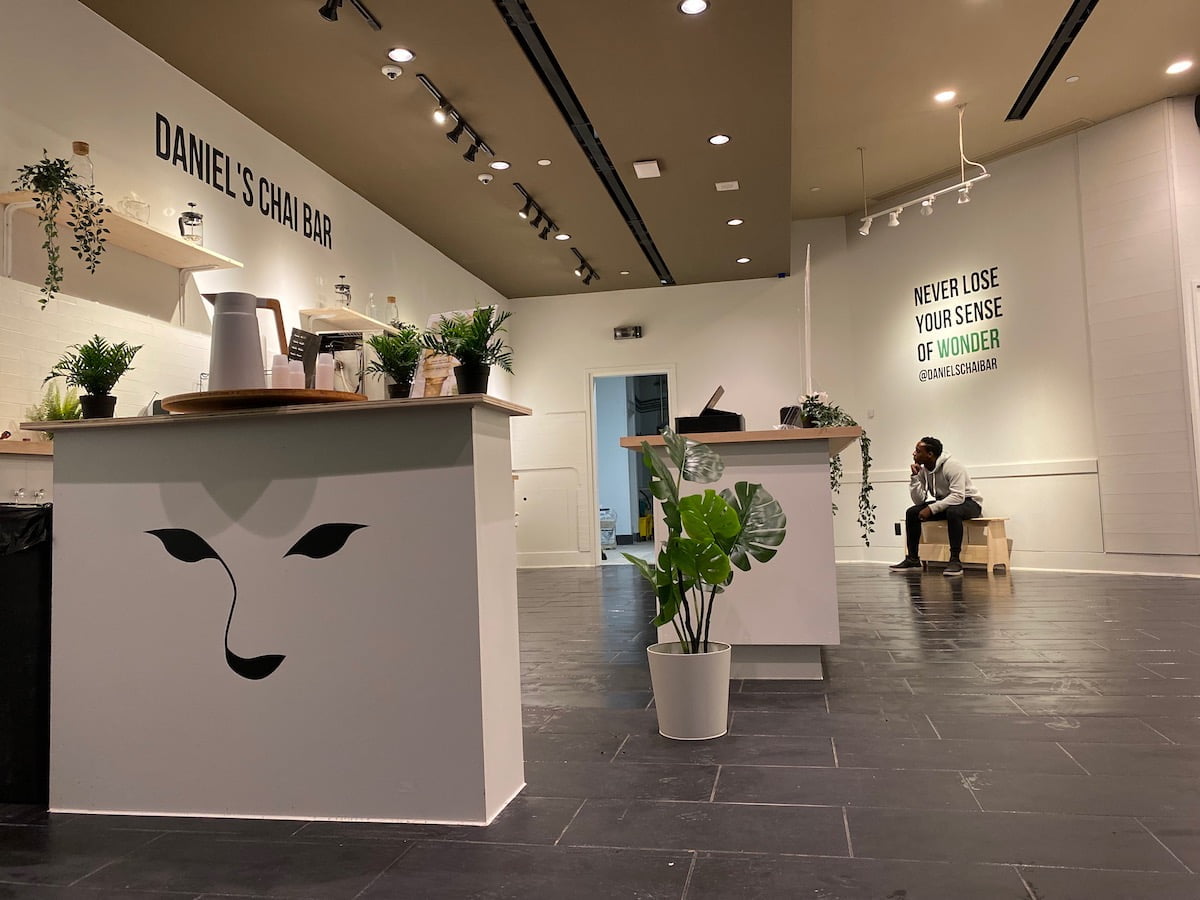
Brampton-based cafe Daniel’s Chai Bar opened a 1,236 square foot location at Vaughan Mills near Toronto, taking over a vacated Starbucks location for a proof of concept pop-up.
This is the second location for the quick service beverage concept, which opened its first store at Bramalea City Centre in late 2021 under the branding of ‘Daniel’s Chai Bar’. The founder’s former brand was called ‘T by Daniel’ and that was retired during the pandemic as a shift towards the new franchise model.
Daniel Lewis
“Daniel’s Chai Bar Vaughan Mills is a unique conceptual blend of our classic delicious menu, experienced in a new, upscale environment,” said Founder Daniel Lewis.
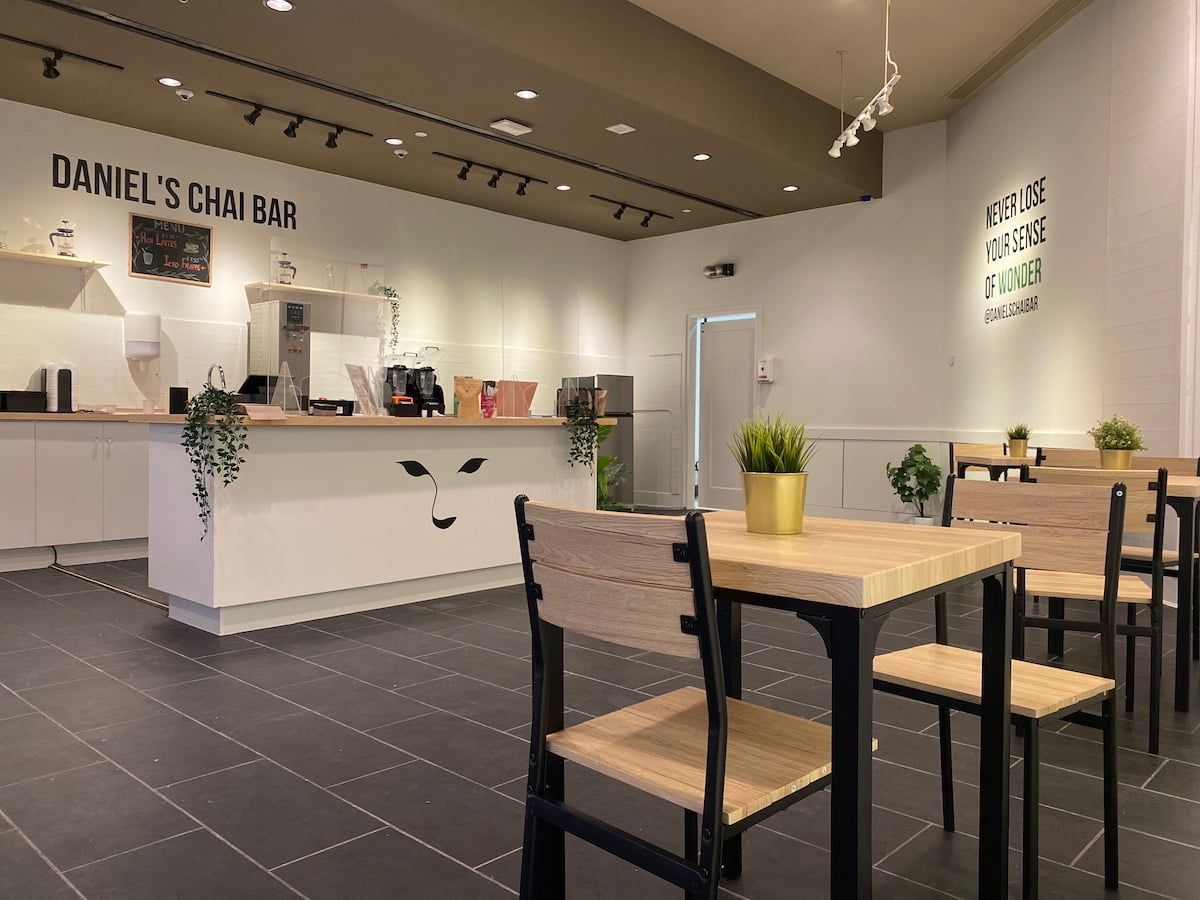
“We felt that we could really offer our customers something special if they could experience the warmth of our humble tea shop beginnings in Downtown Brampton, where they were first introduced to drinks like: The Famous Lion Chai latte, The Frozen Arctic Lion or the Fudge Fantasy, but in a clean and minimalistic designed space that would make for some aesthetically pleasing photos and an overall cool and relaxed vibe.”
Daniel’s Chai Bar Vaughan Mills -(Image: Daniel Lewis)
The Vaughan Mills location gave the team an opportunity to create a concept that could be rolled out into more coffee shops that closed during the pandemic.
“When I first walked into the former Starbucks space, I immediately could see what needed to be done to completely evaporate the warm, cozy atmosphere once enjoyed by Starbucks lovers (a title I shamelessly identify with myself). It also gave us the opportunity to create a design that would allow us to stand out as an in-line store that offers beverages in a section of the mall that is well-distanced from the food court.”
Design conclusions were made throughout the process, with Lewis providing the breakdown of the two major areas of focus.
“Lighter and Brighter. The only way we could dissolve the wooden oaks, dark browns and dim lighted cafe vibe of the former Starbucks, was to go fully white and very bright. We painted the entire space brilliant white and left the black tiles as a bold contrast to the now cloud-looking space and I had the counters custom built with shiny oak countertops tying our store theme of white, black & oak right into the space. The green plants and wall accessories added the warm and friendliness that we wanted to display so we didn’t end up looking like a hospital that sells tea and we decided that the taupe brown ceilings also gave a sense of warmth to the space that complimented the oak countertops and still made it feel like you were in a place that you could feel relaxed in and enjoy something tasty.”
Daniel’s Chai Bar Vaughan Mills -(Image: Daniel Lewis)
“The second conclusion I came to in regards to the design was that we wanted to create space. Less bulky furniture and counter space and more islands and walkable areas. When I looked at the previous Starbucks counters, I noticed that it took up half of the floor space and the barista’s and staff were all locked inside with one flap door exit leading to the customer area. I imagined what it might be like if we opened up the entire counter space and made the front more like an island that staff can freely walk around and even bend down to welcome small children or engage in a more intimate conversation with customers. An open design like this would even be a strong statement to our core beliefs as a brand that always seeks to be transparent and open with what we do, how we do it and who we are. I really believe our design achieved this.Vaughan Mills provides an opportunity for Daniel’s Chai Bar as the business is set to take on the next level of expansion, transitioning into a franchisable concept.”
Daniel’s Chai Bar Vaughan Mills -(Image: Daniel Lewis)
Image: Daniel’s Chai Bar
Image: Daniel’s Chai Bar
Franchising quick-service restaurant concepts in 2022 is increasingly popular, with expansions being announced daily with existing brands going into new markets and spaces. Lewis shared that the idea behind the pop-up was to see where the momentum could lead.
“The opportunity to open up in Vaughan Mills was really a confirmation to me that as a brand we are headed in the right direction. We are really starting to iron out a franchisable model that can be simple, minimalistic, attractive but at the same time energetic, delicious and fun bringing that sense of magic and entertainment to any space we occupy. We fit in, but we stand out and I think we really proved that with our concept and design at Vaughan Mills. Since December of 2021 Daniel’s Chai Bar has gone from one location in Bramalea City Centre to three additional locations (Vaughan Mills, Upper Canada Mall and Square One Pop-Up) in only 4 months, I think this is strong evidence that we have found a model that is simple, desirable and poised for healthy growth. All factors that will be important when offering our franchise opportunities in the near future.”
With hundreds of vacated Starbucks locations across the country and a changing of direction at the top, with Howard Schultz returning as interim CEO, the brand is in a reinvention mode. This gives brands like Daniel’s Chai Bar the opportunity to create community and culture during an expansion where many cafes currently sit empty.
“When I started Daniel’s Chai Bar, I made a post on Instagram announcing the launch of my new, reimagined tea bar concept and I asked my customers, friends, followers and really myself, “Can we build the next great Canadian company? Can we be what Tim Horton’s & Starbuck’s is for coffee? Or what McDonald’s is for fast food? I concluded that although these thoughts may seem like colossal dreams… Nobody ever achieved anything colossal without first daring to ask. Opening Daniel’s Chai Bar in a former Starbucks is another good reason for me to believe that it’s possible and I can.”
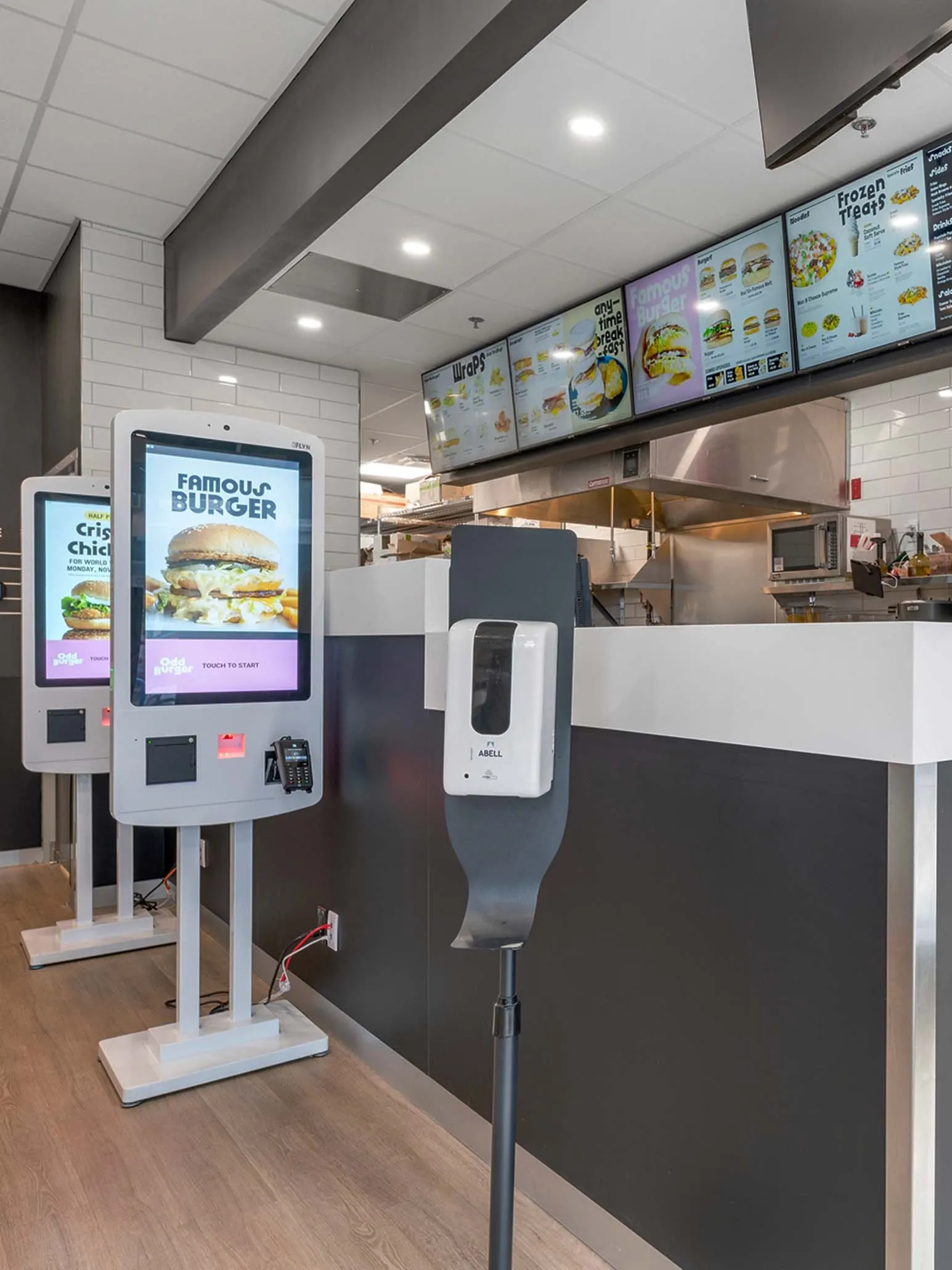
Odd Burger, one of the world’s first vegan fast-food chains and first to go public, has signed an agreement with Sai-Ganesh Enterprises (SGE), a family-owned hospitality group specializing in franchising and commercial construction, to open 36 new locations in Alberta and British Columbia over the next seven years.
James McInnes, Odd Burger co-founder and CEO, said the brand will grow from its current six locations in southern Ontario to about 20 by the end of this year.
James McInnes
The company opened its first location at the end of 2016 in London, Ontario.
“At the time we were Canada’s first vegan fast-food chain,” said McInnes.
He said about 10 sites are currently in various stages of development including Ontario, Calgary and Victoria.
Odd Burger Ottawa Announcement
Odd Burger Victoria Announcement
“We think we can open hundreds of locations in Canada and over a thousand in the US,” said McInnes of the brand’s long-term plans.
SGE will oversee franchise sales to individual owners, store construction, and support for franchises in its territory. In addition to supporting franchise growth, SGE plans on launching a corporate restaurant location in Western Canada that will be used for training new franchisees.
“SGE is always looking for truly new and unique opportunities in fast food, and Odd Burger is among the most exciting and modern concepts we have ever encountered,” said Utsang Desai, president of SGE. “As lifelong vegetarians we have a passion for healthy eating and environmental stewardship, and Odd Burger also adds innovative technology that enhances efficiency, profitability, and customer experience.”
McInnes said one challenge in franchising is providing an ideal level of support and service to locations that are distant to its corporate headquarters, but partnering with SGE has eliminated that concern entirely.
Image: Odd Burger
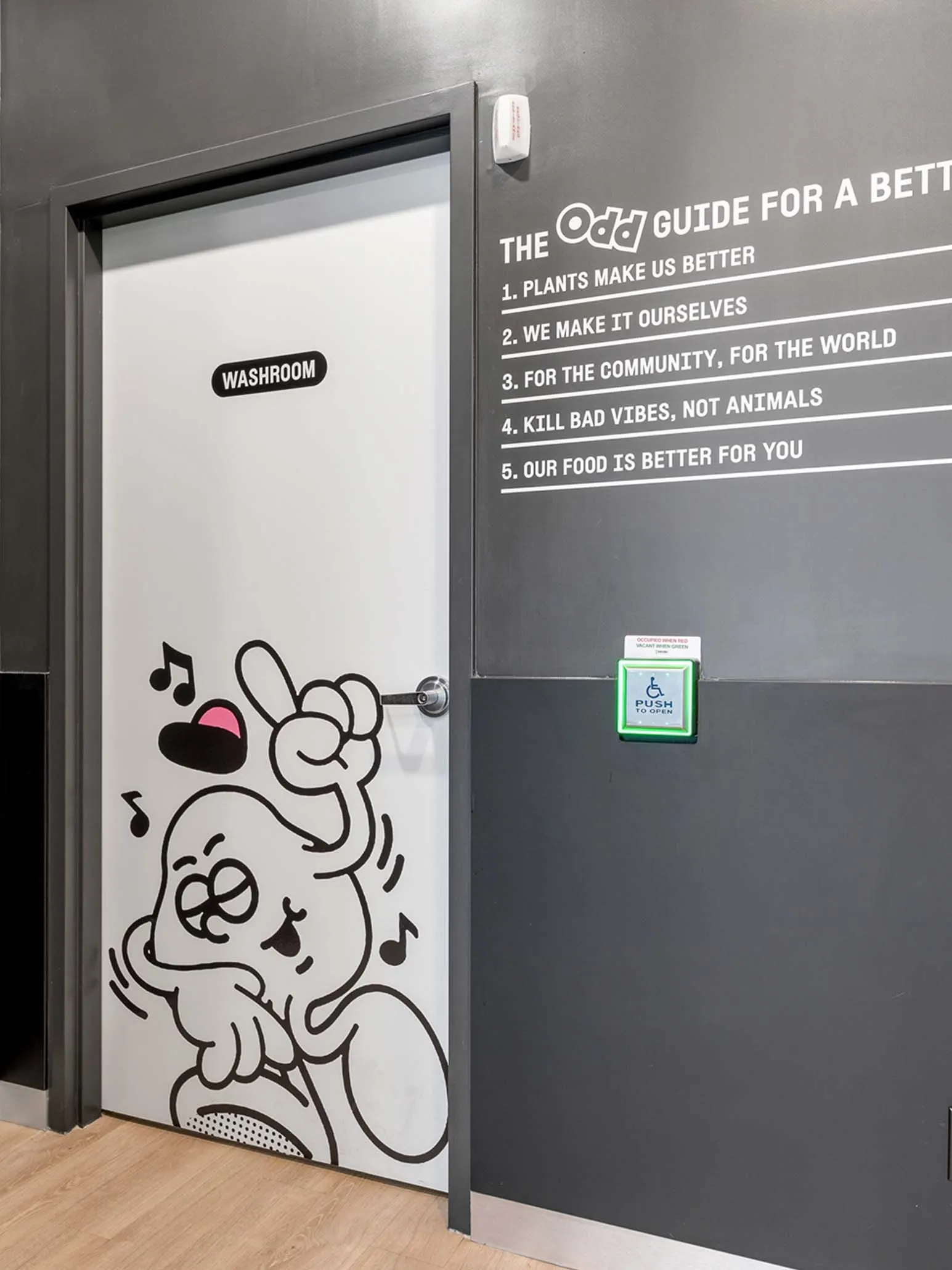
Image: Odd Burger
“Area development agreements are a logical way for us to grow and make an impact in new regions, so we’re eager to forge similar relationships with like-minded developers in Canada, the U.S. and internationally,” he added.
McInness said there’s lots of reasons for the company’s ambitious growth plans.
“Let’s start with our food. Our food is plant-based. It’s considered the most sustainable food source in terms of carbon footprint and emissions. And our menu is 100 per cent plant-based,” he said. “Consumers are getting more and more aware of the consequences of the environmental effect of their diet. We see a big shift.
“We see a big opportunity there of people shifting from traditional fast food to plant-based fast food. Being the dominant plant-based fast food brand, we see such a huge opportunity for growth. We’ve been building this for years in anticipation that there’s going to be this big switch in how people think about food both in terms of their health, animals and environment.”
He said the company is hoping to expand into the US by the end of this year.
Image: Odd Burger
Image: Odd Burger
McInnes said the brand is comparable in price to traditional fast food.
“We think that’s a very powerful aspect of what we do. We really remove the guilt from fast food. Traditionally, the fast food industry is based largely on guilt. When you eat fast food, you know you didn’t do your body any good. How do we rid the guilt so people can celebrate eating fast food again? That’s really what I think Odd Burger excels at both from a branding and marketing point of view,” said McInnes.
SGE is a family-owned and operated hospitality group with expertise in franchising and commercial construction. SGE has built its reputation by seeking out and introducing newer concepts in the fast-food industry. SGE owns master franchisor rights for BarBurrito in Saskatchewan and area developer rights for Meltwich in the provinces of British Columbia, Manitoba, and the Atlantic Provinces (New Brunswick, Newfoundland and Labrador, Nova Scotia, and Prince Edward Island). SGE also holds an advisory role in the expansion of Fast Fired Pizza into Western Canada.