(Note: Hudson’s Bay announced that it had closed this location permanently on November 30, 2020)
The Hudson’s Bay Company will shutter its downtown Winnipeg Hudson’s Bay flagship store early next year, marking the end of an era for the city. The Winnipeg Hudson’s Bay store was the company’s Canadian flagship between 1926 and 1974, and the loss of the store will mark the last department store for downtown Winnipeg.
The store will be shutting in February of 2021 and when it closes, about 60 employees will be out of work. In decades past when the store operated on all seven retail levels, more than thirty times that number of people would have worked there. Over the past decade, the 675,000 square foot store has been downsized to just two floors of retail space and in 2013 a Zellers store operating in the basement shuttered.
It’s the second announcement to shut a downtown Hudson’s Bay store this year. In the spring, the company announced that it would shut its downtown Edmonton location some time this fall.
For years, the Hudson’s Bay Company has been trying to determine what to do with the massive 675,000 building in downtown Winnipeg. In 2013 the retailer attempted to transfer ownership to the Manitoba government for tax benefits, and more recently the University of Manitoba was approached to take over the building. Last year the building was assessed at $0, and even less given a tax bill of more than $300,000 annually. The cost of renovating the massive complex was said to be cost-prohibitive — each floor plate spans more than 80,000 square feet with no interior light well, creating challenges to convert the building to office space for example.


Downtown Winnipeg’s first Hudson’s Bay store opened in 1881 at the corner of Main Street and York Avenue. In 1911 a larger fireproof store opened across the street where the general offices of the Hudson’s Bay Company were located as well as the wholesale, land and fur trade departments — the building was called Hudson’s Bay House.
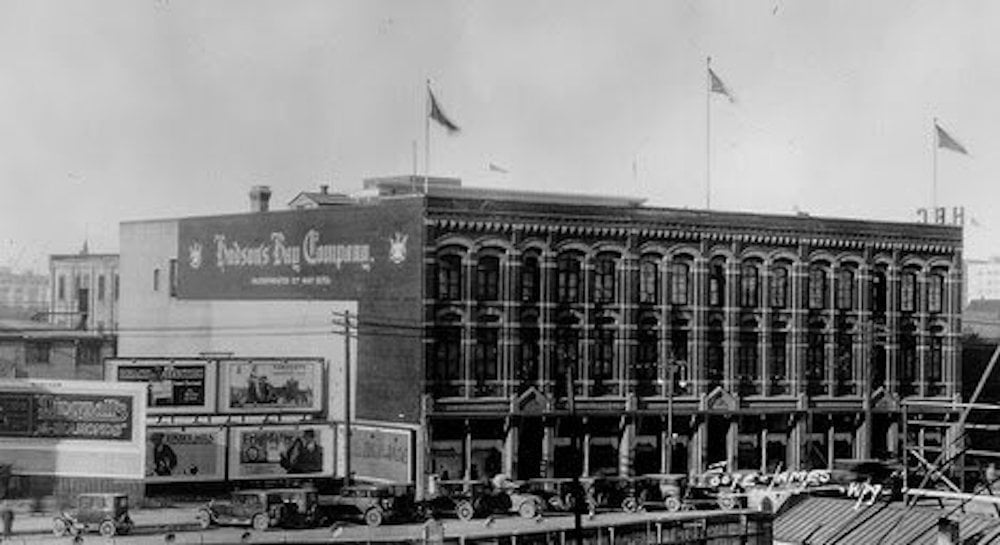
When the commercial centre of Winnipeg shifted to Portage Avenue, Hudson’s Bay sought out a new location where in 1926, the gigantic new flagship store was constructed. The current Winnipeg Hudson’s Bay store opened November 18, 1926, and cost about $5 million to build. About 50,000 people visited the store on the first day despite just the ground floor, second level and basement being open at that time. A whopping 2,000 people worked in the building. When it opened, some women’s dresses were priced as high as $125, which translates into about $1,900 in today’s dollars.
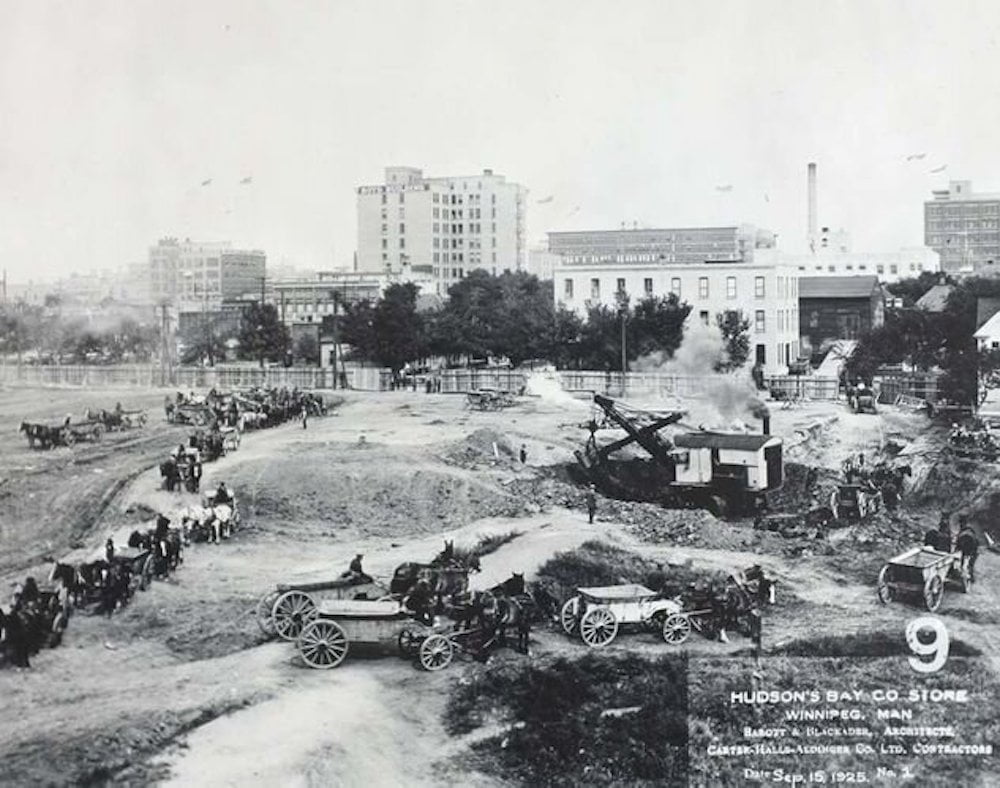
Construction of the new Winnipeg Bay store took over a year with 1,000 workers needed to complete the project. About 300 workers, 120 teams of horses, 20 trucks and two steam shovels were needed to excavate about 150,000 tons of earth to lay the foundation for the store. A total of 151 concrete pillars were driven by hand down 52 feet to the bedrock to support the building. Two million feet of lumber, 100,000 tons of concrete, and 125,000 cubic feet of Tyndall limestone were used in the building’s construction. At the time it was the largest reinforced concrete building in Canada spanning about 15 acres of floor space.
The modern structure utilized three massive coal-powered boilers in a power plant located 45 feet below street level to provide steam heat and hot water. Steam was diverted to turbines to generate electricity for lighting and elevators in the store. Three air conditioning units processed over 68,000 cubic feet of air per minute each. More than 32 km of pipes and 8,000 sprinkler heads provided fire protection. A 600 foot deep well, the deepest in Canada, was used for air conditioning and water for toilets. Gigantic refrigeration rooms held food for public sale as well as for in-store restaurants. The largest fur storage in Westin Canada housed 12,000 garments.
Twelve elevators were installed in two banks of six each facing each other in a concave arrangement with lobbies decrorated with immense murals depicting the early history of the Hudson’s Bay Company. Escalators were eventually installed in the store and some elevators and murals were eventually removed.
The store featured a wide range of services including a beauty parlour, public telephones, a post office, and a library. Later additions included an auditorium with its own orchestra and in 1930, the first of a series of aerial navigation beacons installed in western Canada. Previous in-store restaurants included the Jolly Canuck café in the basement, the Georgian Room, which opened in August of 1926 and the popular Paddlewheel, which opened in 1954 and was closed in January of 2013.

The first liquor outlet in a department store opened on the store’s mezzanine in 1971 and in 1975, a CIBC branch opened where it remained until 1978.
A $4 million renovation between 1986 and 1987 saw updates to the main, second and third floors. An additional $200,000 was invested to update the sixth floor and $700,000 for the basement and fourth floor. The basement was converted to a 67,000 square foot Zellers store (then owned by Hudson’s Bay) which shut in March of 2013.
The Winnipeg Hudson’s Bay store was the company’s flagship between 1926 and 1974. Technically the headquarters of Hudson’s Bay was in London UK until 1970. In 1974, the company shifted the flagship status to a new 340,000 square foot Bay store at the northeast corner of Yonge and Bloor Streets. The 935,000 square foot Simpson’s building in downtown Toronto replaced the Bloor Street store as the company’s flagship in 1991 — prior to that, the Winnipeg store was the largest in the chain.
The downtown Winnipeg Hudson’s Bay store was one of the company’s original downtown flagships. Other downtown Bay flagships in the early 1900s included the 650,000 square foot Vancouver Hudson’s Bay store which was built in phases beginning in 1893, the 500,000 square foot downtown Calgary Hudson’s Bay store which was built in phases starting in 1891, and the downtown Edmonton store (no longer occupied by Hudson’s Bay) which spanned 470,000 square feet and was finished in 1939. Smaller downtown stores were also located in Victoria, Regina and Saskatoon. Hudson’s Bay acquired Montreal-based Morgan’s in 1968 and converted the 655,000 square foot Montreal flagship store to the Bay banner in 1972. The large Freiman’s store in Ottawa was converted to the Bay in 1973, and the Simpson’s store on Queen Street in Toronto was converted to the Hudson’s Bay’s flagship in 1991.
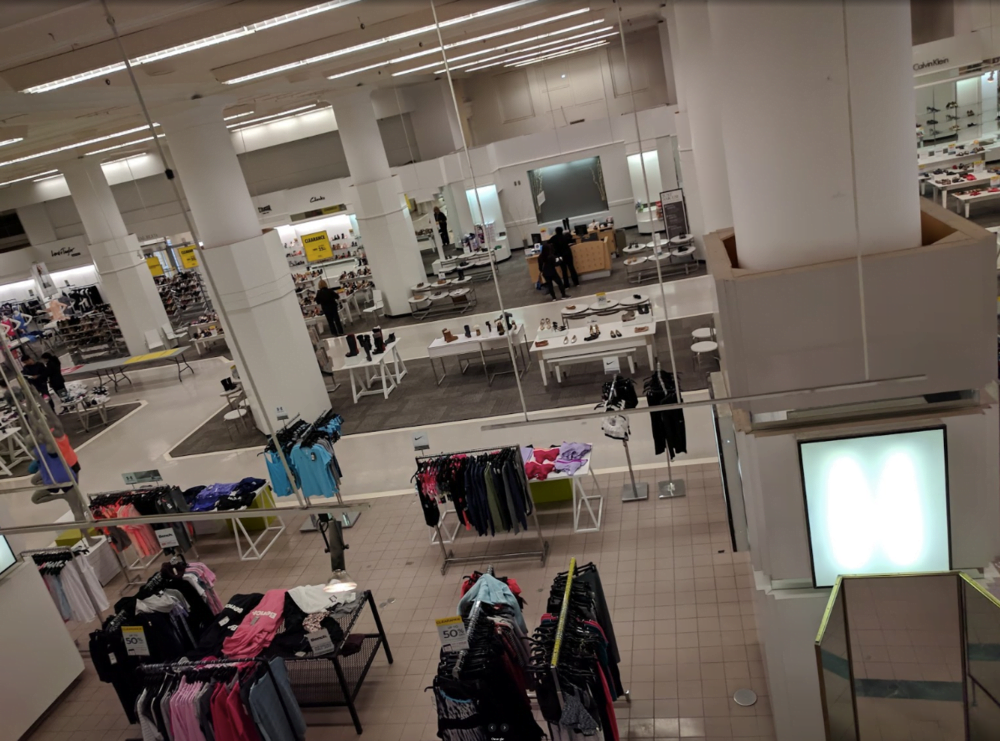
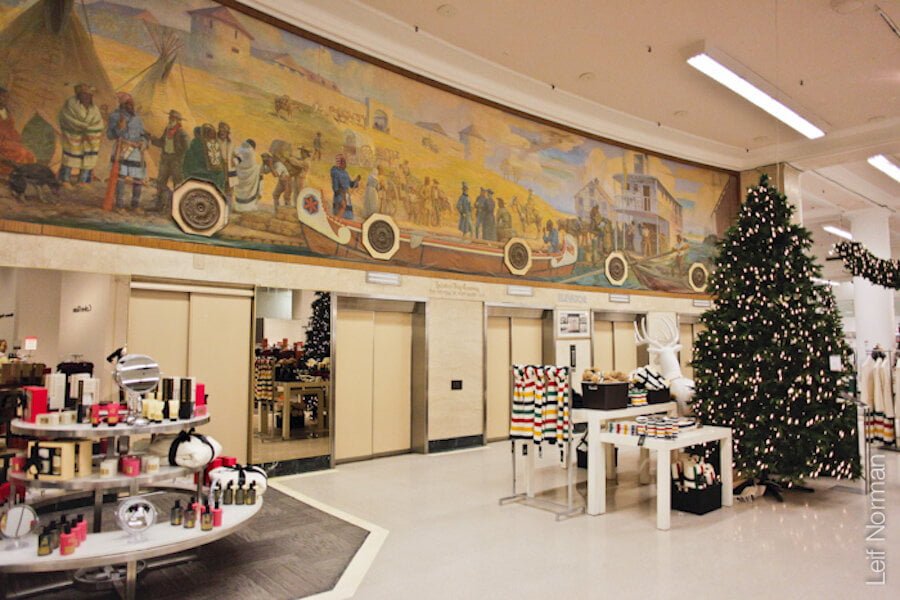
In decades past, the Winnipeg store was profitable and was one of three department stores in Winnipeg’s downtown core. Remarkably, the store once even had luxury brands. A newspaper article from 1973 noted that a Givenchy Nouvelle boutique was being added to ‘The Mirror Room’ department of the Winnipeg Hudson’s Bay as well as to Bay flagships in Vancouver, Calgary, Montreal and in 1974, in the new downtown Toronto store on Bloor Street.
Despite recent developments, downtown Winnipeg has been on the decline for years from a retail perspective. Eaton’s once operated an 885,000 square foot store nearby (demolished in 2003 and replaced by a stadium), while Holt Renfrew operated a 40,000 square foot store on Portage Avenue which relocated within the Portage Place shopping complex in 1987. Eaton’s shuttered the massive Winnipeg store in 1999 and Holt Renfrew exited Winnipeg in 2013.
The suburbanization of Winnipeg is partly to blame for the demise of the Hudson’s Bay store. The CF Polo Park shopping centre, located about 3.5 km west of the downtown Bay store, is one of the most productive malls in Canada in terms of annual sales per square foot. It also has free and ample parking. The CF Polo Park Hudson’s Bay store, which opened in the mall in 2003, is one of the company’s top performers. Hudson’s Bay also operates a store at the St. Vital Centre in Winnipeg and the retailer also once had a store at the suburban Kildonan Place which opened in 1980 as well as the former Unicity Mall which opened in 1975 and shuttered in 2000.
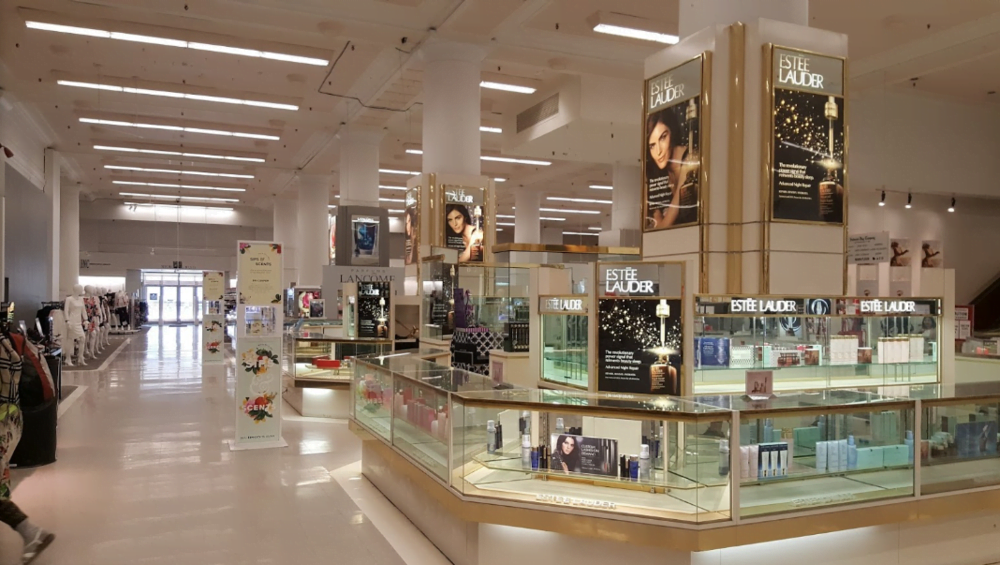
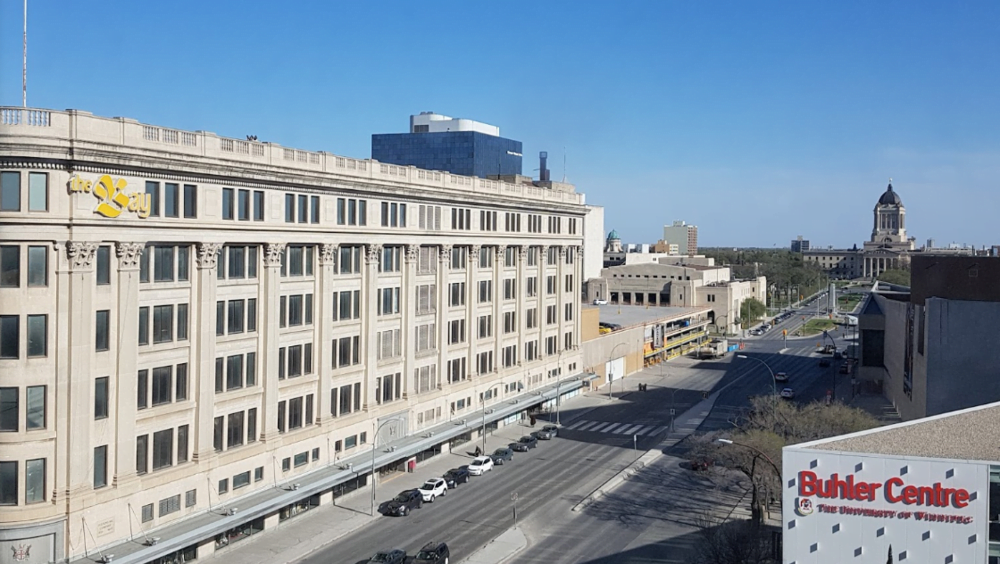
Parking and a perceived lack of safety are said to be blamed for challenges downtown. At the same time, downtown Winnipeg is seeing positive growth including the addition of the True North Square project which includes a food hall and gourmet grocery store.
Nevertheless, Winnipeg joins Edmonton as the second major city in Canada to have no downtown department stores. The 168,000 square foot downtown Edmonton Hudson’s Bay store, located in the Edmonton Centre shopping complex, will be closing soon as was announced several months ago.
It’s likely that the heritage-protected Hudson’s Bay building will sit vacant for years, creating a blight in downtown Winnipeg. This became an issue in Vancouver when the 700,000 square foot downtown Woodward’s store shut in 1993. The building became home to squatters until it was demolished for a redevelopment in 2006.
Montreal-based La Presse reported last month that the downtown Montreal Hudson’s Bay store is for sale and that its retail space could be reduced to just 250,000 square feet on three levels, with the remaining 400,000 square feet being repurposed into office space with a proposed 300-foot tower also potentially part of the plans. The downtown Vancouver Bay flagship store is also said to be for sale again. Hudson’s Bay is also said to be looking to convert departments to a concession model to be run by other providers.
We’ll follow up on this story when the Winnipeg store closes next February.