Luxury retailers continue to target the Canadian market despite the COVID-19 pandemic. Several are confirmed to be opening stores in Canada this year, while at the same time multi-brand retailers add brands in selected markets. Online channels for luxury brands are also expanding in Canada as ecommerce grows amid lockdowns in parts of the country.
It’s somewhat of a surprising trend given the challenges that the pandemic has created. International tourism has plummeted in Canada and many luxury stores were reliant on a brand-conscious Asian shoppers in years past. It appears that some brands have managed to secure local shoppers that may have gone elsewhere or spent money on other things and as a result, some brands are seeing higher sales during the pandemic than in 2019.
The expansion includes new luxury brand stores that will be opening this year. The Toronto market is leading the trend with several store opening announcements — the Greater Toronto Area is home to more than six million people, some high earners and others very wealthy. This spring, Italian luxury brand Isaia will open at 77 Yorkville Avenue in Toronto and nearby, Miami-based The Webster will open a multi-brand store on Scollard Street. They will join recently-opened luxury stores at Toronto’s Yorkdale Shopping Centre that include New York City-based Thom Browne and Italian brand Golden Goose. The Toronto market continues to see interest from luxury brands with more announcements to come this year, including a first-to-Canada retailer from New York City on Toronto’s famed Mink Mile.
1 of 4
Exterior of Thom Browne store in Yorkdale Shopping Centre. Photo: Thom Browne
Rendering of The Webster Facade in Yorkville. Rendering: The Webster
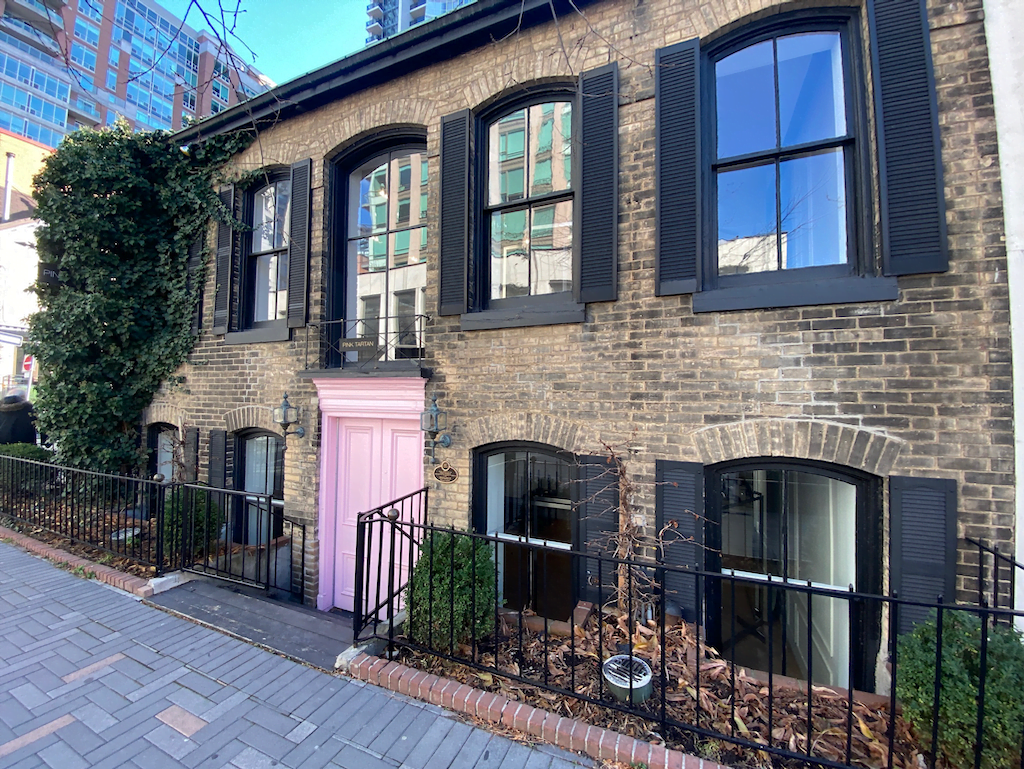
Exterior of old Pink Tartan store that will soon be Isaia's new Canadian Fkagship. Photo: Dustin Fuhs
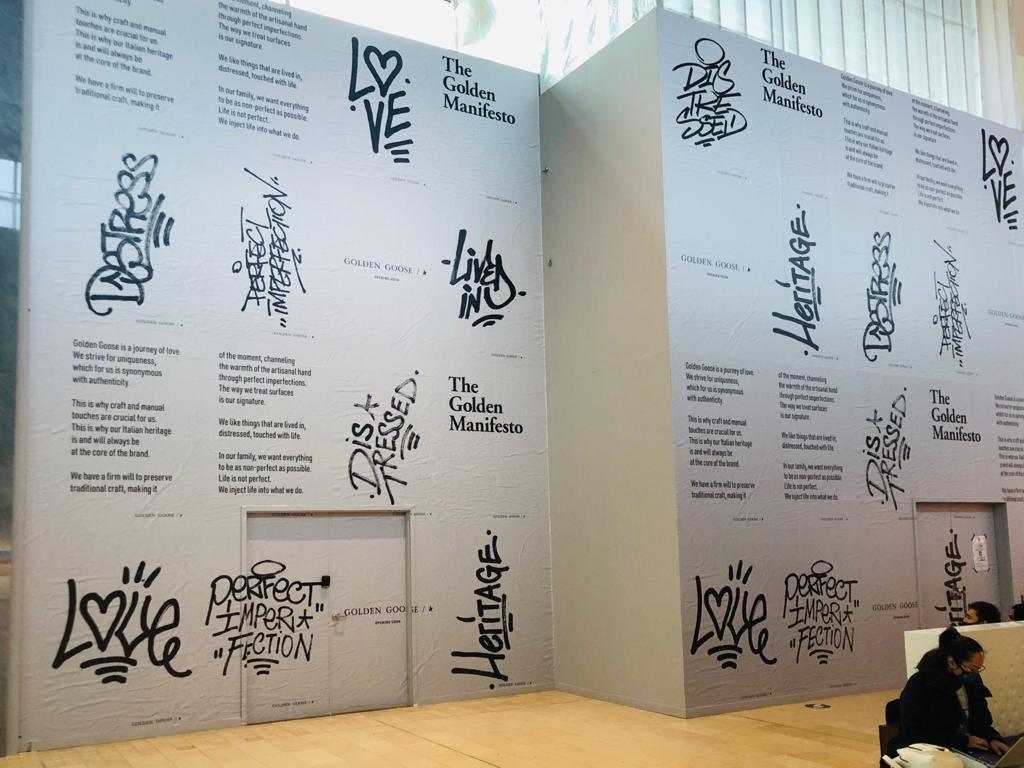
Golden Goose construction hoarding in Toronto's Yorkdale Shopping Centre
In Vancouver, Thom Browne will open its second Canadian store in a retail space to be vacated by Versace. The Vancouver market, which is heavily reliant on international visitors and cruise ship traffic, is taking a hit as international travel is limited and cruise ships are not permitted to dock in Canada until February 2022. The local market includes thousands of wealthy households that have settled in the city from other parts of the globe, which means there are still opportunities for luxury brands to make money from local residents. Luxury brands have embraced the 1000 block of Alberni Street and adjacent environs, and Holt Renfrew at CF Pacific Centre is home to almost 100 concessions, many luxury brands. The brands contained within Holt Renfrew are said to continue to see strong sales from locals. The storefront of Austrian luxury accessory brand Frey Wille, located a block north of Holt Renfrew on Howe Street, recently shuttered and we also reported last year on the closure of iconic luxury fashion retailer Leone.
The Montreal market saw the addition of Holt Renfrew Ogilvy in the spring of 2019, with the build-out of the 250,000-square-foot luxury store completed in the summer of 2020. The concession-based store acts as a central luxury node for the Montreal area, which otherwise lacks substantial luxury retail streets found in cities such as Vancouver and Toronto. This week, a women’s Prada boutique was unveiled on the third floor of Holt Renfrew Ogilvy which had been shut since December 25 due to provincial lockdowns. Off-White fashions were also added to the store, while at the same time it appears that The Row fashion line for men was dropped by the store according to Retail Insider’s Montreal correspondent, Maxime Frechette, who also noted that the Brioni shop-in-store on the men’s floor will also be closing. A planned Miu Miu women’s fashion boutique on Holt Renfrew Ogilvy’s third floor has been cancelled according to the brand, though Holt Renfrew Ogilvy still remains one of the most beautiful stores in North America, housing an expansive assortment of luxury labels.
Industry talk has it that Italian luxury brand Moncler could open a standalone store in downtown Montreal this year, though we have yet to learn the exact location. At one time, Sherbrooke Street West was Montreal’s luxury address though in recent years it has lost much of its lustre from a retail perspective. A smaller Holt Renfrew store shut on Sherbrooke Street over the summer to coincide with the opening of the new Holt Renfrew Ogilvy, leaving Tiffany & Co. at the Ritz and an Escada store on Sherbrooke Street as the only remaining luxury brands on the street. Rue de la Montagne, extending south from Sherbrooke Street towards Holt Renfrew Ogilvy, features several luxury brand stores including Montblanc and Pavillon Christofle. Last year, Toronto-based multi-brand retailer CNTRBND opened nearby on Crescent Street, carrying pricey brands with an emphasis on streetwear. The Montreal market is home to some very wealthy households — some say that the market spends less on luxury fashions as many embrace style, quality, and value over mere brand names.
The Edmonton market, which lost its Holt Renfrew store in January of 2020, is seeing luxury brands move onto the second level of the ‘main run’ at West Edmonton Mall. A Saint Laurent boutique opened in December and this spring, a 5,000-square-foot Gucci store will join it. Both follow Louis Vuitton which opened in the mall in the summer of 2019, and Tiffany & Co. which was a trailblazer when it opened at West Edmonton Mall in 2013. While not a luxury brand per se, upscale jeweller APM Monaco is confirmed to be opening at the mall, and several luxury brands are said to be in talks to open near the luxury clustering focused around Louis Vuitton. With the shuttering of its downtown Holt Renfrew store, Edmonton is now seeing some of Holt’s more successful brands opening standalone stores at West Edmonton Mall.
While the Calgary market is home to many wealthy households, there will likely be a slowdown in terms of luxury brands entering the market. An array of luxury stores have developed at CF Chinook Centre, including a Louis Vuitton store that opened there in 2019, joining Burberry and several others. In downtown Calgary, the Holt Renfrew store acts as a magnet for those seeking luxury brands with Chanel having opened an impressive street-level storefront at Holts last year.
Nordstrom, for its part, is expected to introduce more luxury brand concessions into the Canadian market. Last week during an earnings call, Nordstrom President, Jamie Nordstrom, said that the retailer is looking to grow its partner and shared revenue from 5% of business to 30%, which means that Nordstrom stores will be seeing more leased brand spaces than in years past. Most of these concession spaces are expected to be for luxury brands, which have seen success in Nordstorm stores particularly in the US and Vancouver markets. Current concessions at Nordstrom in Canada include Christian Louboutin footwear at Nordstrom in Vancouver, Delvaux at the Toronto Yorkdale Nordstrom store, and Gucci at Nordstrom at CF Toronto Eaton Centre — given the closure of the main floor wholesale vendor shops at the CF Toronto Eaton Centre Nordstrom for Loewe, Stella McCartney, and Miu Miu, new high-end concessions are rumoured to be replacing them. Prior to last week’s earnings call, Nordstrom was already beginning to expand its concession offerings when it partnered with SuitSupply in late 2019 to open three shop-in-stores at Nordstrom in Vancouver and Toronto.
The battle of the brands in Canada is ongoing after Nordstrom and Saks entered the Canadian markets several years ago. Holt Renfrew, which for decades was the leading luxury retailer in Canada, went on the offensive and secured LVMH-owned Spanish luxury brand Loewe, in a big way, coinciding with the brand’s reduction at Nordstrom. When Saks Fifth Avenue opened in Toronto in early 2016, it included a Boucheron jewellery boutique which closed last year — the closure coincided with Holt Renfrew opening Boucheron boutiques at the retailer’s Vancouver and Yorkdale stores, both of which are said to be seeing strong sales. The battle of the brands will continue into 2021 as Holt Renfrew looks to maintain its dominance in the market, which means it needs to hold onto its core concession vendors that include Louis Vuitton, Dior, Fendi, Saint Laurent, Bottega Veneta, Chanel, Hermes, and many others.
Several luxury brands that Retail Insider interviewed for this article said that sales were surprisingly strong despite the pandemic. In places where stores remained open, many consumers still stayed away from physical stores. Brands with consumer contacts were able to sell goods through mobile devices via text messaging as well as apps such as WhatsApp and WeChat. Some sales were being shipped overseas according to some sources in stores, as a luxury brand store operating in Canada will most certainly not be selling counterfeits as is a concern in some parts of the world.
Some are predicting a reduction in luxury retail sales in Canada, including a Trendex report covered by Retail Insider in October. That report focused more on luxury apparel, which in some segments will continue to struggle — that particularly includes evening gowns and men’s formalwear, which are less relevant given the lack of social gatherings at this time. Accessories and footwear appear to be another story however, with some brands seeing a spike in sales and some styles selling out entirely. Interestingly, several luxury brands selling t-shirts told Retail Insider last year that they saw a sales spike from young consumers whenever CERB cheques were issued.
Lockdowns could put a further damper on luxury retail sales in parts of Canada if a ‘third wave’ comes to fruition as some are predicting. Mutations of the virus are resulting in concerns that new variants could be more contagious and deadly, which could result in some consumers avoiding stores in months to come — that is, if governments don’t again shut stores altogether. In places where stores are open, the shopping experience is, in some respects, less comfortable given a mandate that face masks be worn and other precautions be taken. Traditionally, high-involvement luxury purchases have been done in store as part of an elevated experience, and now it appears that some of these luxury buyers are willing to buy pricey items online or through an app, at least for now. The future of luxury retail in Canada could end up being a hybrid in-store and online experience, and given the luxury brands that are still interested in entering the Canadian market, we are likely to continue to see new store openings into 2021 and beyond.
FREYWILLE Shuts Only North American Storefront in Vancouver
Austrian luxury brand FreyWille, known for its colourful enamel jewellery and silk scarves, has shuttered its only remaining standalone store in North America. It was located in Vancouver at 511 Howe Street and its closure is part of a reduction of the brand’s store count amid intense competition.
Exterior of shuttered Frey Wille store in Vancouver. Photo: Gaurav Mehra
Vancouver’s FREYWILLE location opened in September of 2010 in a small retail space about a block north of Holt Renfrew’s Vancouver flagship. At the time it was expected that the stretch of Howe Street between Holt Renfrew and West Hastings Street would become a ‘luxury zone’ for retailers. Previous tenants in the immediate area included Alfred Dunhill, Hugo Boss, and Leone. Cartier continues to operate at 456 Howe Street, though the store will be relocating to 755 Burrard Street following the relocation of a Hermes store in the fall of 2019.
In the summer of 2014, the FREYWILLE store experienced something bizarre — more than once, a cyclist vandalized the store’s doorway by using a miniature blow torch to shatter the glass. Nothing was stolen according to a store manager.
Based in Vienna, Austria, FREYWILLE was founded in 1951 and is known for its colourful designs based on the works of 19th and 20th century artists. The company has expanded from jewellery and scarves to include a line of watches as well as handbags, belts, ties, cuff links and pens. The company continues to operate stores with a focus on Europe, the Middle East, and Asia, according to its website. FREYWILLE also once operated stores in New York City and Beverly Hills.
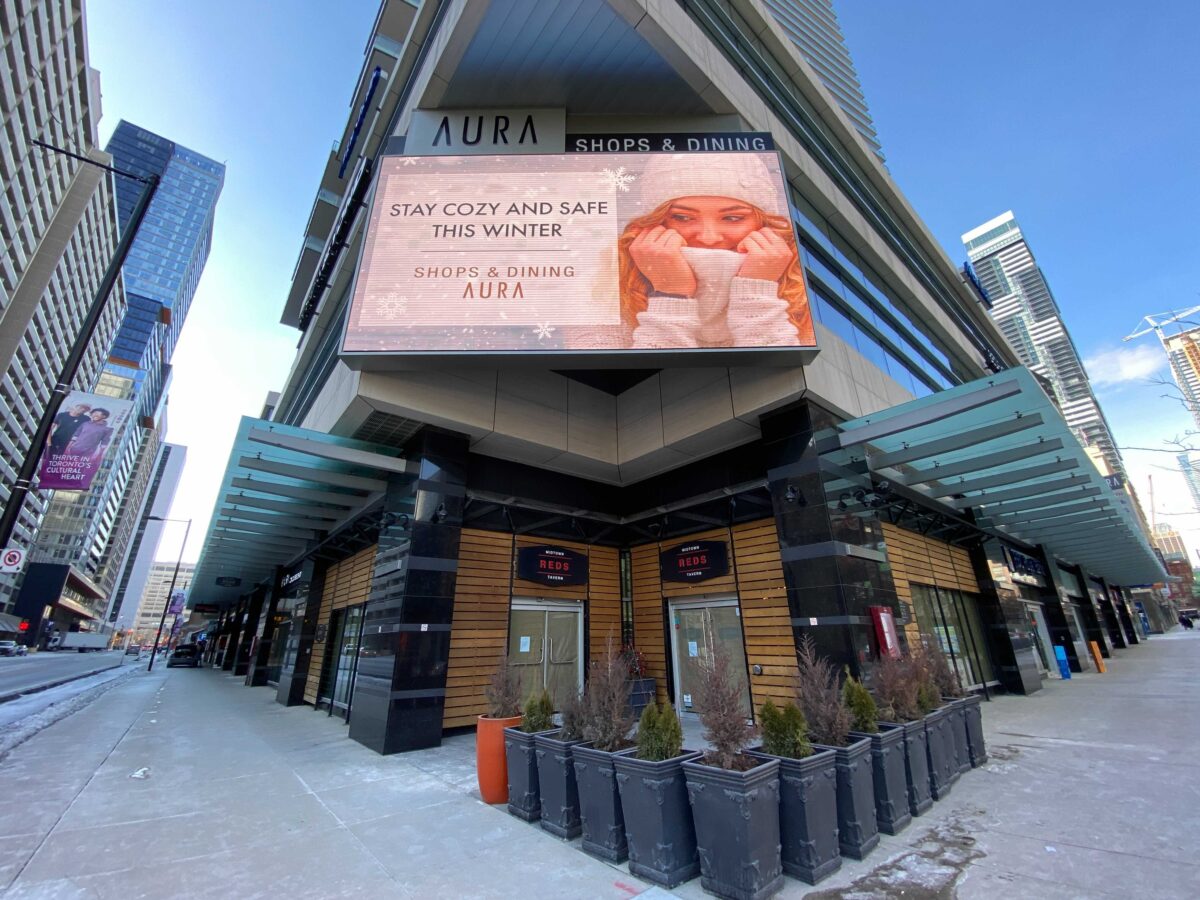
Exterior south west corner of Aura at College Park where three restaurants have now closed. Photo: Dustin Fuhs
Three Downtown Toronto Restaurants Shutter at Aura at Yonge & Gerrard Streets
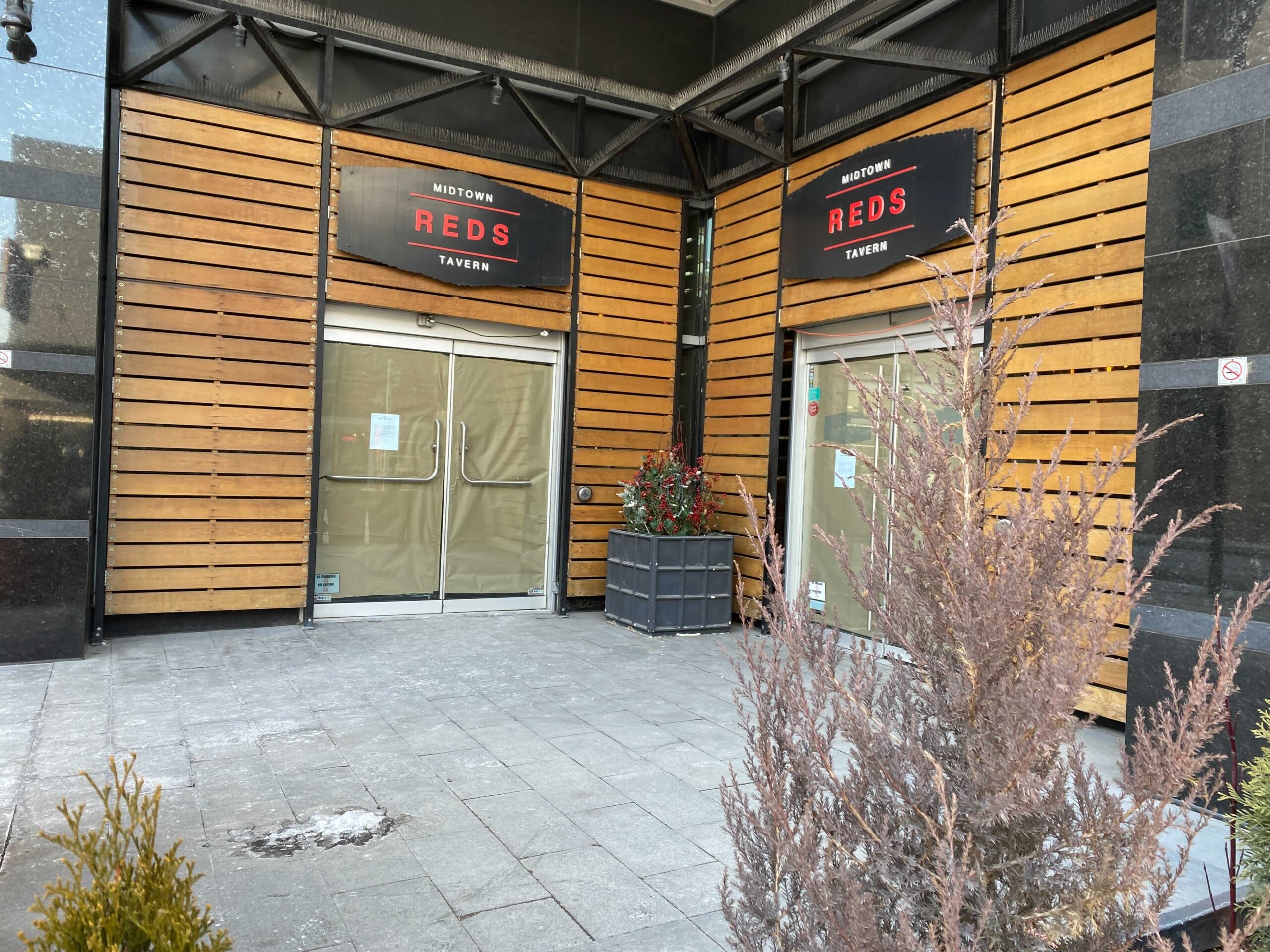
SIR Royalty Income Fund announced that as of February 9 it will permanently close three restaurants located at the corner of Yonge and Gerrard in downtown Toronto in the commercial podium of Aura at College Park. The three restaurants to be closed include a Scaddabush Italian Kitchen & Bar, Reds Midtown Tavern, and a Duke’s Refresher & Bar. The Scaddabush and Reds locations are both part of the Royalty Pool.
SIR said in a press release that its operating environment has changed immensely due to the COVID-19 pandemic, which has put stress on the business. Landlord Canderel presented the SIR with what it said is an unexpected and mutually beneficial opportunity to vacate these properties as the landlord had a unique opportunity to lease the space to another tenant for a non-restaurant purpose — some are speculating that a drug store could end up being part of the mix.
1 of 3
Exterior of Duke's at Aura Centre which is now closed. Photo: Dustin Fuhs
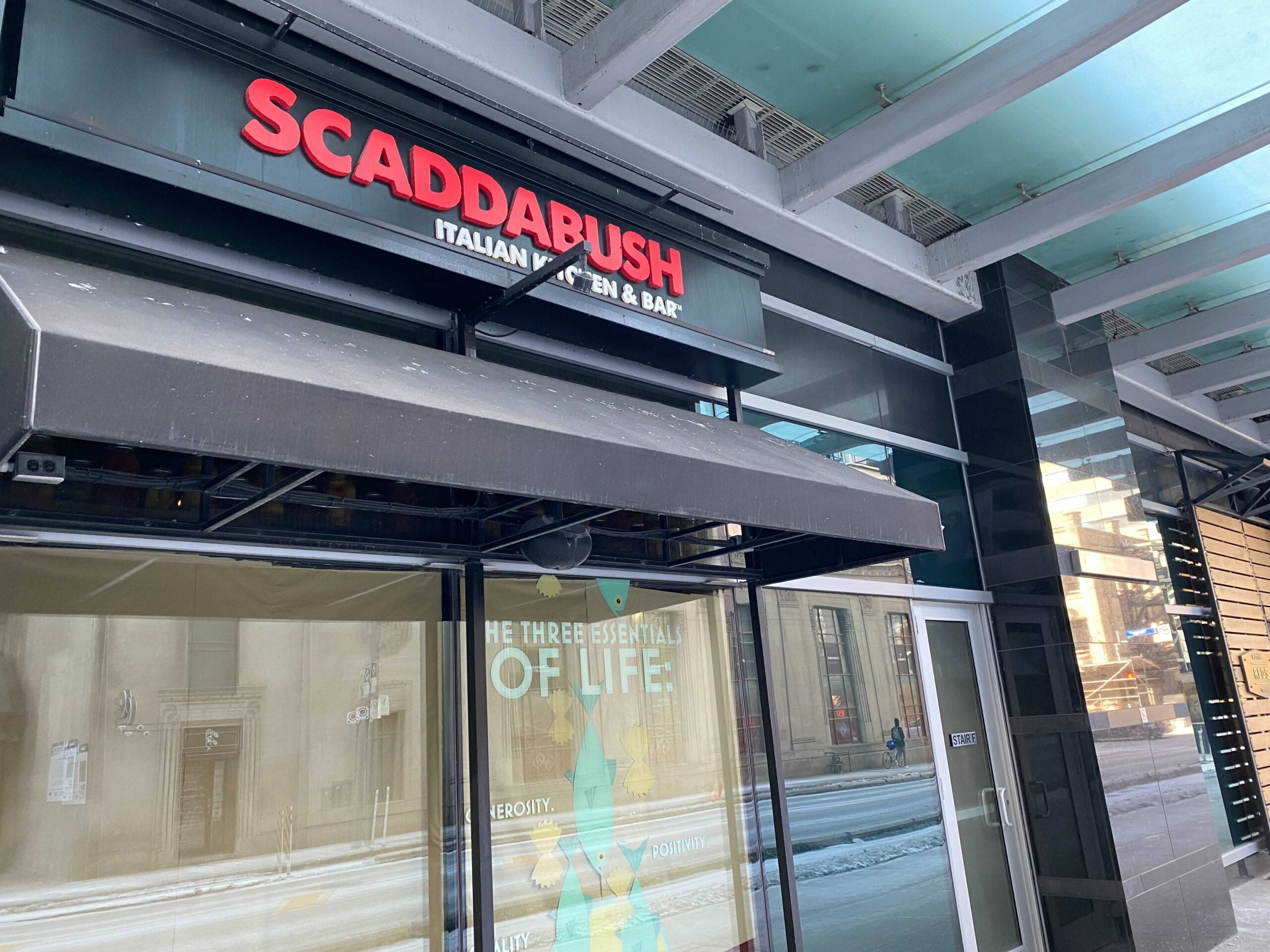
Exterior of Scaddabush at Aura Centre which is now closed. Photo: Dustin Fuhs
Exterior of Reds at Aura Centre which is now closed. Photo: Dustin Fuhs
Given the current operating environment and uncertain future prospects, SIR decided to exercise this option and return the property to the landlord. In the press release, it was explained that the net proceeds from the termination agreement will be used to reduce the value of SIR’s outstanding revolving loan, and SIR will have no further obligations, including for accrued and unpaid rent as well as future rent, at these closed locations.
“We want to thank our valued guests and team members for their loyalty and support during these unprecedented times. To the local community and all our valued partners, we sincerely thank you for the last 10 years and we will miss you. While we may not gather at this location again, you can still find a Scaddabush at 200 Front Street and numerous other locations throughout the GTA; our downtown Reds at 77 Adelaide Street and our Reds location at the Square One shopping mall. Our other Duke’s location is nearby at 73 Front Street, next to the St. Lawrence Market, which will also accommodate our pop-up Renegade Chicken kitchen that formerly operated at Duke’s Gerrard,” said Peter Fowler, CEO of SIR Corp.
Toronto has been subjected to expanded lockdowns since late 2020 which have hit the restaurant sector hard. When restaurants open again this spring, capacity limits and cautious consumers will likely result in a slow return which could see many restaurants remain unprofitable for the foreseeable future. At the same time, downtown Toronto lacks the thousands of visitors and tourists it enjoyed prior to the pandemic with no end to a reduction in foot traffic in the area.
Free Video Chat Tool Helps Local Businesses Survive Lockdown
Small to mid-sized retailers struggling to stay in business because of COVID-19 lockdown measures have been offered a free digital lifeline. Kognitive Tech Inc. is offering its video chat tool, called Optimy for free until April 30 to help retailers stay alive online, while their physical locations remain closed or severely restricted.
The offer comes on the heels of a recent survey from the Canadian Federation of Independent Business (CFIB) which said 181,000 businesses across Canada will likely close permanently due to the COVID-19 pandemic. The worst-case scenario would see up to 222,000 companies closing their stores, putting a staggering 2.9 million jobs at risk, CFIB reported.
“Optimy has the potential to generate tens of millions of dollars in new revenue for small retail businesses that are forced to limit or even close their physical store locations. It’s a much-needed digital tool for businesses struggling to survive amidst the pandemic,” says CEO of Kognitive Tech, Josh Singer. “Businesses with limited online capabilities can now personally connect with customers in a way that is not possible by phone or through conventional chat app features,” he added.
Optimy, which can be installed and up and running in 15 minutes on a retailer’s website, is worth $3,750 per retailer when implementation costs and monthly fees are included. There are no added costs or commitments for retailers who accept the free offer.
“We are just one small business trying to help other businesses stay open, which is why we have committed almost $2 million in software and training costs to make this happen,” Singer said.
Optimy is ideal for retailers who sell complex products that require the high-touch expertise of salespeople to help customers navigate their options and to choose the right products. The video chat function lets businesses interact with customers and sell products without the need for a fully functioning e-commerce website. The required minimum is a basic landing page and Optimy. Retailers will not incur additional costs because no new processes or software are required.
It is the first eCommerce plug-in in Canada that provides a live video chat within a customer’s web browser that is 100% private and secure.
OpenTable Launches Takeout in Canada To Support Restaurants Amid COVID-19 Restrictions
OpenTable, the world’s leading provider of online restaurant reservations and part of Booking Holdings Inc., is launching a Takeout ordering feature to support Canadian restaurants though prolonged restrictions in time to help food lovers dine-in this Valentine’s Day. Select Canadian restaurants available for reservations on OpenTable can now offer take out ordering through the platform.
OpenTable’s Takeout feature is available to Canadian restaurants free of charge until April 1st, 2021 as part of the reservation platform’s commitment to supporting the industry. In 2020 OpenTable also launched Open Door, which allows restaurants to access its network and restaurant platform with no subscription or cover fees until March 2021. OpenTable saw 75 million covers driven through its Open Door relief pricing program in 2020.
According to a recent OpenTable survey, 68% of Canadians want to do something special for Valentine’s Day, however 58% indicate that they need help figuring out how to elevate the occasion. As dining establishments across the country face ongoing restrictions due to the pandemic, OpenTable’s Takeout feature connects people who enjoy dining out with curated menus and offerings from local restaurants, giving customers more ways to make Valentine’s Day feel special.
“Romance and dining are inextricably linked and Valentine’s Day is typically the busiest day of the year for Canadian restaurants. Restaurants may be facing restrictions but they can still rise to the occasion and help diners make this day exceptional,” says Matt Davis, OpenTable Canada. “We’ve partnered with restaurants across the country to create unique at-home Valentine’s Day dining experiences through our Takeout feature, to inspire Canadians to make the most of the romantic occasion.”
Volkswagen Canada Launches an Innovative Digital Sustainability Campaign
Volkswagen Group is ready to hit the road with a worldwide journey toward sustainability — starting with a $50 billion investment into e-mobility efforts, and the launch of the company’s new electric ID.4. In collaboration with TYPE1, Volkswagen Canada has launched The Carbon-Neutral Net to educate Canadians about sustainability in the digital world. In doing so, they’ve created a more sustainable browsing experience that reduced electric vehicle web pages to little more than black and white text — even the images — that has significantly lowered the amount of embedded data.
What is a Digital Carbon Footprint?
73% of Canadians are unaware that online activity has a carbon footprint, especially the internet, which is determined in part by the amount of data embedded in web pages. Search queries, streamed videos and cloud computing are executed billions of times a day, increasing the global demand for energy and as a result, increasing carbon emissions. Surprisingly, the internet accounts for around 4% of global CO2 emissions — the same as the airline industry. While 72% of Canadians were surprised to learn that the internet accounts for as much CO2 as the airline industry, 81% said they wanted to try to reduce their Digital Carbon Footprint. How is this possible? By reducing the amount of data embedded in online media, which can then lower the amount of CO2 produced and reduce our digital carbon footprint.
GLCO was founded in 2010 by Garrett Leight, the brand’s creative director and son of eyewear entrepreneur Larry Leight, who founded the luxury brand Oliver Peoples. Offering eyeglasses and sunglasses for men and women, GLCO aims to bring a modern spin to classically tailored eyewear, with a focus on quality craftsmanship.
“What sets us apart is the vision which has always been to create the best and most unique eyewear experience,” says Leight. GLCO has become popular among celebrities such as Brad Pitt, Leonardo DiCaprio, Joaquin Phoenix, Jennifer Lawrence and Emma Roberts. Leight describes the brand’s target market as “confident, creative individuals that take pride in their appearance, but don’t take themselves too seriously.”
The new store marks the brand’s first store outside of the U.S., where it operates locations in New York City, Los Angeles, San Francisco, and Austin, Texas. GLCO designs are also available through various independent boutiques and optical clinics in more than 25 countries around the world.
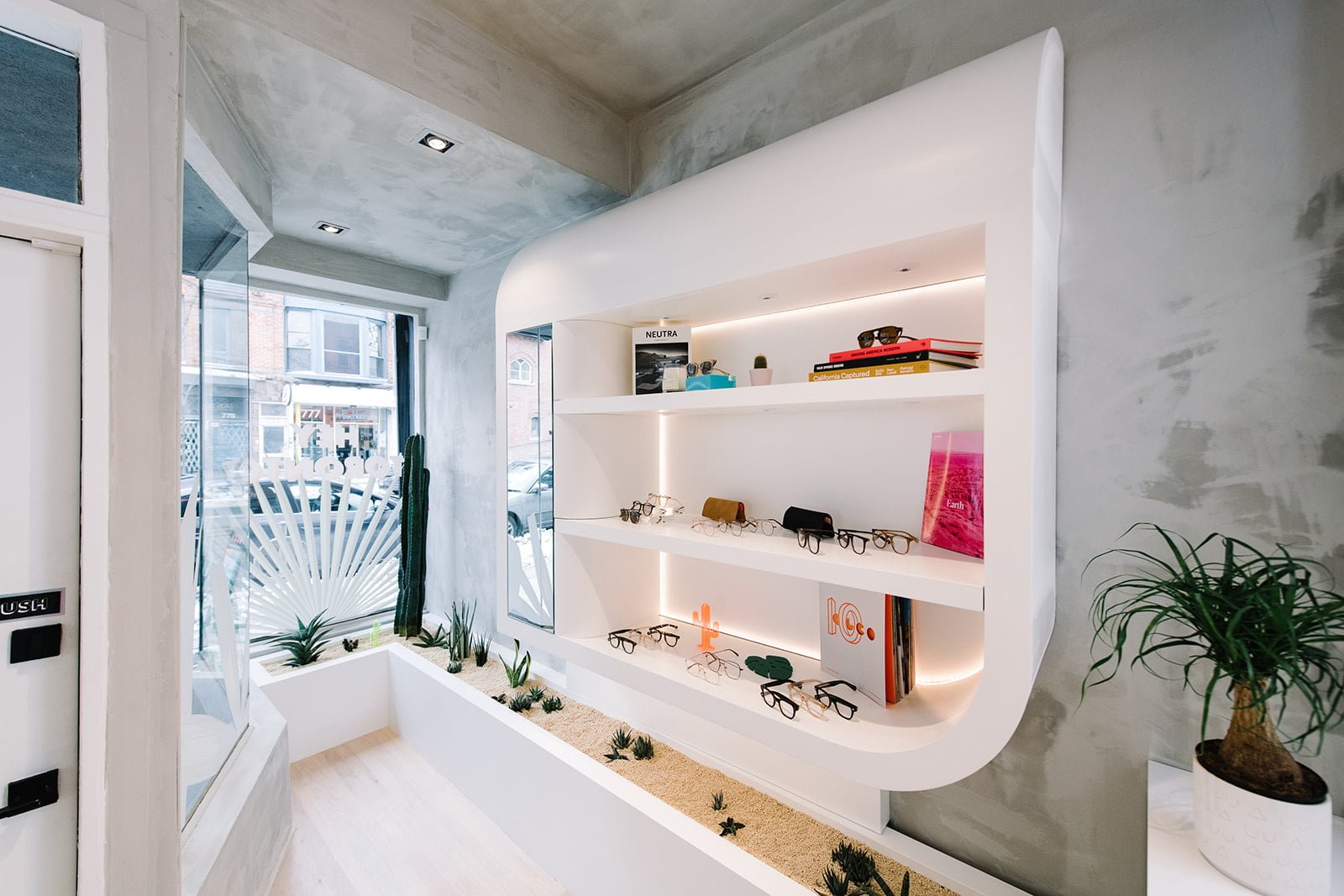
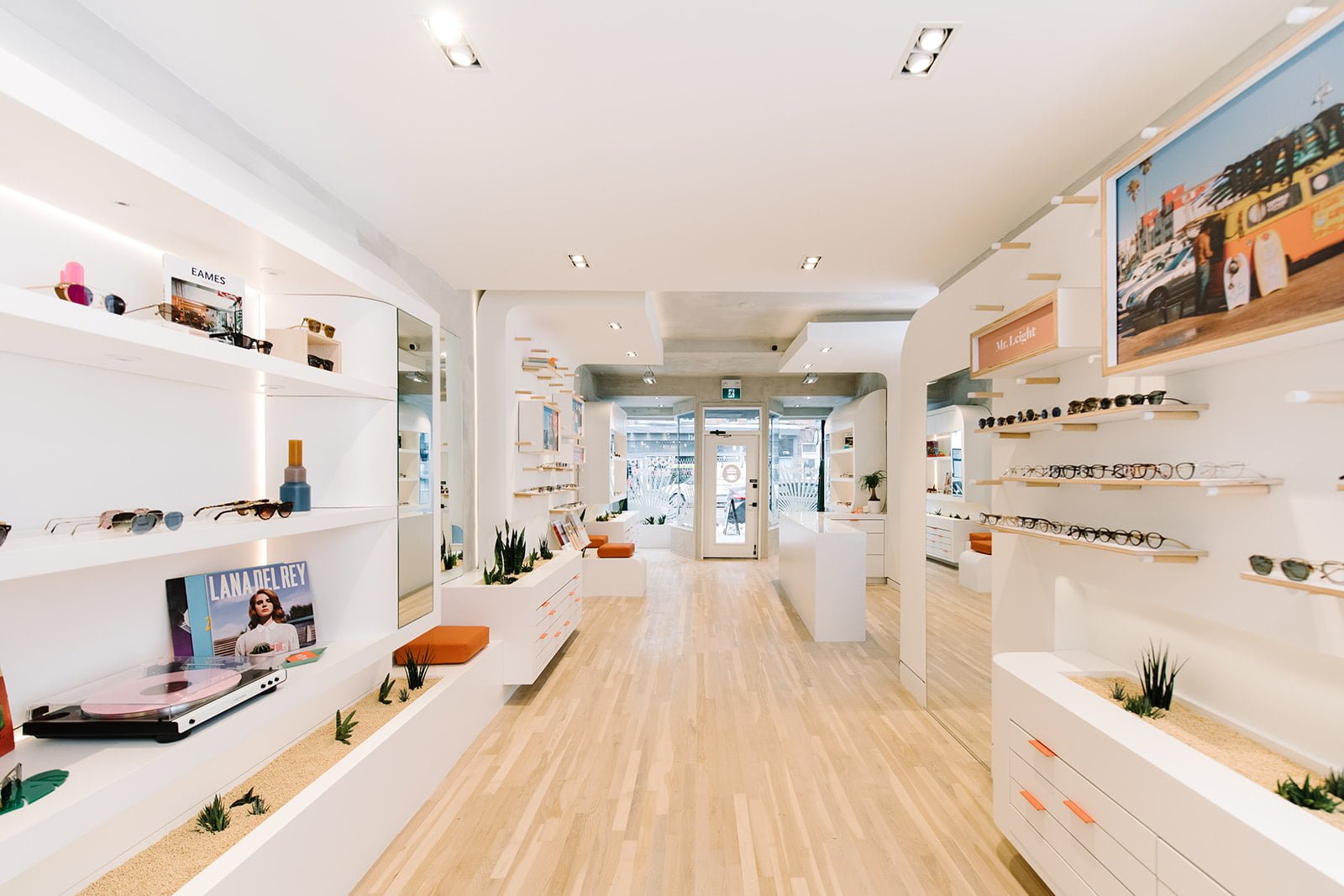
Garret Leight Queen West Toronto. Photos: Katherine Barcsay
1 of 9
Leight says he has wanted to open an international store since launching GLCO, and Toronto was an obvious choice. “Doing it in Canada felt like the best, most natural next step and Toronto always kind of reminded me of the ‘New York of Canada’,” he says. “I’d visited a bunch of times and loved it. The city, the people, the vibe—it just felt like GLCO would be well received.”
He adds that GLCO already has a strong customer base in Canada through its wholesale partners. “Looking at the traffic from our website, we knew we had a great base, so when the location and all the pieces started falling in place, I knew it was time to pull the trigger,” he says.
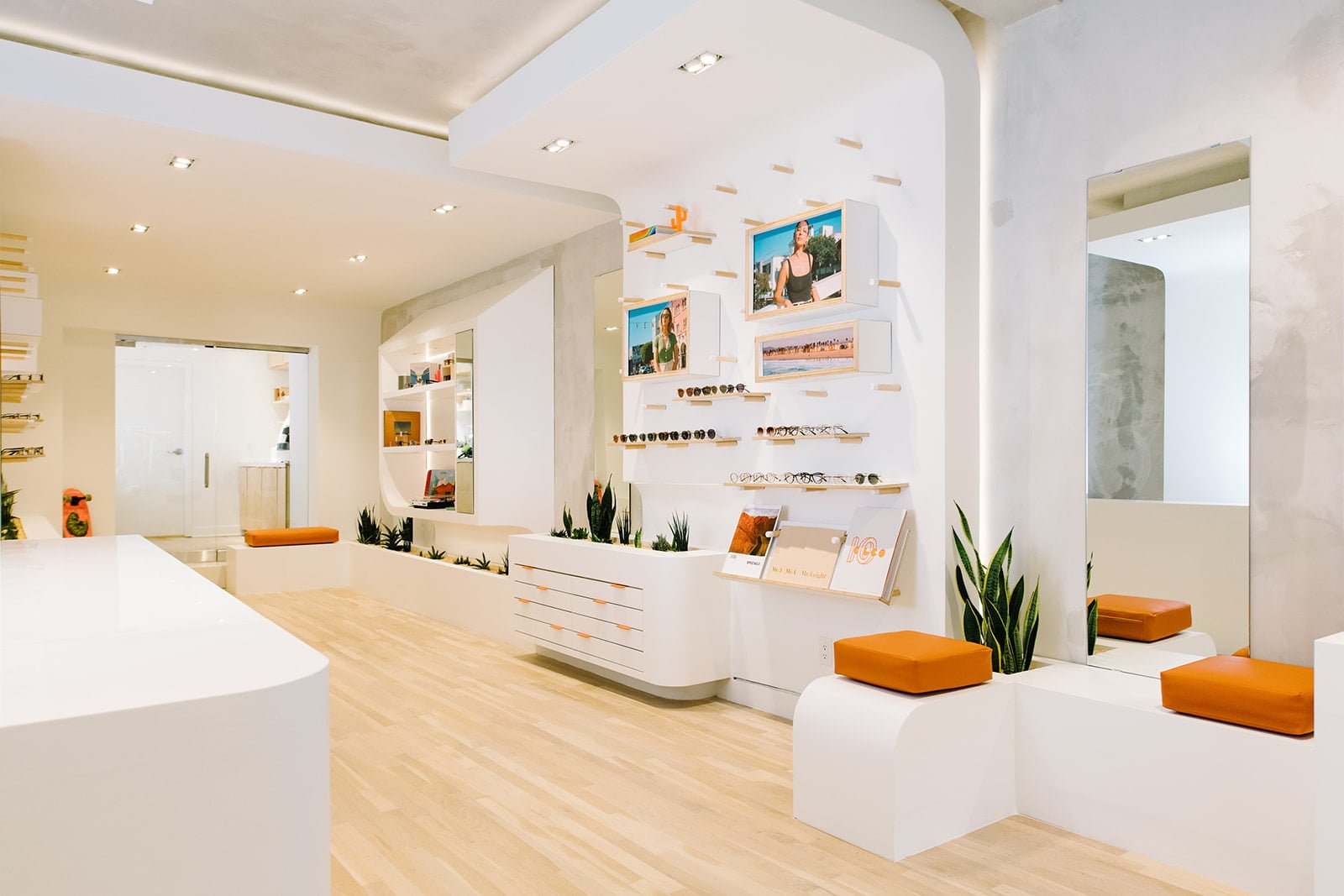
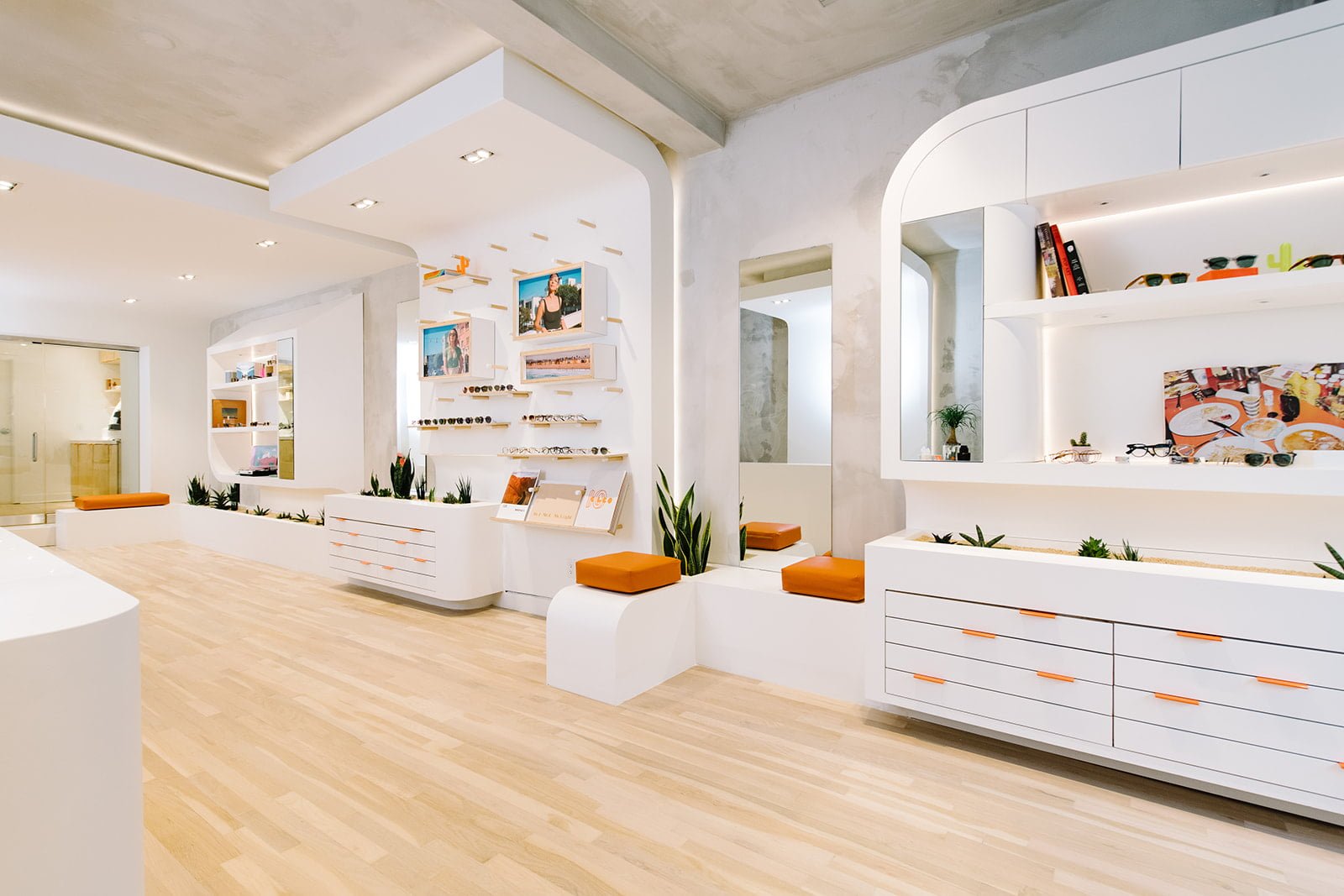
The new store, located at 692 Queen Street West, between Bathurst St. and Ossington Ave., is approximately 950 square feet, including the in-house lab and the back office. Leight says the trendy, hipster Queen West vibe was a perfect fit for the GLCO brand.
Click for interactive Google Map of 692 Queen Street West and surrounding area
“Whenever I open a new retail store, I look for neighbourhoods that have a certain energy to them,” Leight says. “The Queen West neighbourhood has always been filled with young creatives. There’s a real sense of community, and a lot of young families. The shops, restaurants, green spaces, and local artists murals/graffiti draws in people from all over to visit.”
Designed by architect Daniel Hapton, the new store is consistent with the bright California-inspired look recognizable in all GLCO stores. The boutique is dominated by fresh white and neutral-colours, with planters around the perimeter of the space providing pops of green.
Although GLCO doesn’t currently have plans for opening additional locations in Canada, Leight says the brand recently began shipping internationally, allowing customers in Canada and Europe to buy directly from the GLCO website.
“At the moment we just want to focus on making this store in Toronto as successful as possible,” Leight says. “One step at a time.”
Butterchick Sheppard Centre location. Photo: Butterchick
Despite the fact that much of the foodservice industry has been decimated by the COVID-19 lockdowns, restaurant concepts that have managed to adapt their business models to robustly include take-out and delivery options have thrived. As a result, some QSR brands have experienced significant year over year gains, and Canadian fast-food company Butterchick is calling for franchisees to be a part of the significant growth the brand is forecasting for 2021.
Currently Butterchick only has one restaurant, located in the foodcourt at Sheppard Centre in Toronto’s uptown. However, while food categories such as burgers, pizza, and sandwiches currently saturate the market, ethnic cuisine continues to gain in worldwide popularity. Delivering bold flavours, Indian food is one of the most popular ethnic foods segments in the QSR category despite being considerably under serviced. Butterchick aims to become the global market leader in the QSR Indian food segment and fill the gap within the foodservice industry with its unique business concept not requiring Indian cooks to prepare the food.
The Butterchick business concept is unique due to vertical integration with its parent company, Kataria Foods International (KFI Inc.), that produces all the required sauces, pastes, marinades, chutneys, and savoury drinks.
With its streamlined format, Butterchick can also make fresh tandoori naan in minutes without a tandoor or tandoori chef. The overall concept is designed to make daily operations easier and create logical customers by securing satisfying and consistently high-quality Indian food.
Established in 2006, Kataria Foods International is a family-owned manufacturer of premium Indian sauces based in Mississauga, Ontario. In 2015, KFI was inspired to fulfill a glaring gap in the QSR market by creating a real Indian fast-food restaurant that could serve high-quality, authentic dishes in a fast and consistent manner.
Ranked as one of Canada’s fastest growing companies, KFI began with the belief that they could offer Canadians a better-tasting, more-authentic product that was made in Canada, by Canadians, from Canadian-grown ingredients. Since then, KFI has worked to reach its goal of becoming Canada’s first choice for authentic Indian sauces. Currently, KFI sauces are sold across Canada by retailers such as Loblaw, Walmart, Costco, Overwaitea, and Metro, to name a few.
1 of 5
Butterchick menu at the Sheppard Centre. Photo: Butterchick
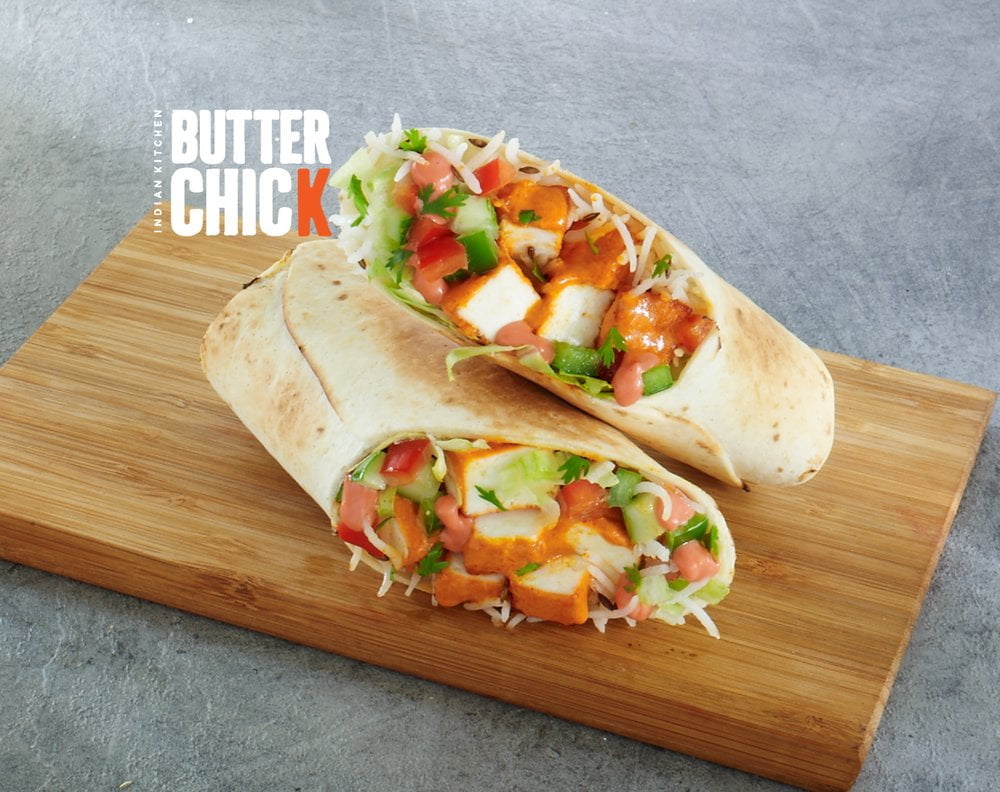
Example of Butterchick menu item. Photo: Butterchick
Example of Butterchick menu item. Photo: Butterchick
Examples of Butterchick menu items. Photo: Butterchick
Butterchick menu at the Sheppard Centre. Photo: Butterchick
A calculated venture into the QSR market began with a test run at a pop up location at the World Food Cafe in Toronto’s downtown Harbour Front. After completing several successful events at that space, and after being featured on Toronto’s CP24 news channel, the stage was set for Butterchick’s first permanent location. Today, through market-tested innovation and refinements, the brand is now growing its market presence via a franchise model.
“As a successful entrepreneurial family running an Indian food manufacturing facility, we recognized an opportunity to create a restaurant brand to fill a gap within the QSR industry. Our objective is to change the perception of Indian food from being heavily curried and spicy, to flavourful with different herbs and spices and less oily. Developed using these proprietary sauces and streamlined cooking methods, Butterchick was born. I look forward to meeting you on your journey to become a franchise partner with us and together building Butterchick into a global powerhouse brand,” said KFI Founder, Kiran Kataria.
Due to COVID-19 there has been a noticeable shift in consumer behaviour towards more-frequent digital ordering and third-party delivery leading to more off-premise consumption.
Butterchick is ideally positioned to capitalize on this growing trend. The Butterchick menu is comfort food that travels well and is ideal for take-out and on-line delivery platforms. According to DoorDash, in 2020 Butter Chicken was the second most popular food and was the number one ordered dish for dinner.
Butterchick U offers an extensive training program that will teach you the knowledge and skills necessary to become a successful Butterchick franchise owner. Our primary objective to set you up for success. We also provide on-going continued support and mentoring after you have opened your Butterchick location.
Inspired by shipping containers commonly found on India’s roadside serving street food, Butterchick’s restaurant design incorporates finishes and vibrant colours that reflect the brand’s heritage. Butterchick QSR locations are adaptable to a variety of trade environments, such as food court, storefronts, high street retail locations, mixed-use developments, and airports, to name a few. Generally, the food court model would require between 300-400 square feet to operate, with the street front model requiring 1,000-1,500 square feet.
For Butterchick franchising and real estate, Jeff Young can be reached at jeff@butterchick.com.
For other brands looking for franchise consulting contact Jeff Young at jeffyoungfranchising@gmail.com or call: 647.888.8420.
The Toronto Fashion Incubator, through a partnership with the Government of Canada, is creating and launching Showroom Canada, a digital wholesale showroom for designers and the industry, on the JOOR platform.
JOOR is one of the industry’s leading B2B wholesale platforms.
The showroom’s 11 featured brands include: Freed, Furb Upcycled, Furious Fur, Joeffer Caoc, Kate Austin, Kuwalla Tee, Maison Marie Saint Pierre, Shelli Oh, Sid Neigum, TORI.XO, and UNTTLD.
“Traditionally, the wholesale buying experience has happened offline, but the pandemic caused both designers and retailers to quickly pivot,” said Susan Langdon, Executive Director, TFI. “Showroom Canada will give Canadian brands access to thousands of global retailers including key UK targets such as Net-a-Porter, Selfridges, and Harvey Nichols. This is an exciting new chapter for the Canadian fashion industry.”
The brands represent top-tier talent in apparel and accessories with a strong focus on sustainable materials and innovative design. They are located in Manitoba, Ontario, Quebec, and Nova Scotia.
Susan Langdon
“We are delighted to partner once again with the Toronto Fashion Incubator for our highly-anticipated biannual celebration of Canadian fashion. Showroom Canada brings top-class Canadian designs to the United Kingdom, in an all-new innovative digital way. The participating designers feature all that Canada’s fashion industry has to offer, including our vibrant diversity, commitment to the environment, innovation and so much more,” said Her Excellency Mrs Janice Charette, High Commissioner for Canada to the United Kingdom.
Retailers can visit Showroom Canada by registering here on the JOOR site.
“TFI is a non-profit organization that was established in 1987 by the City of Toronto to help fashion entrepreneurs to understand the business of fashion so that they can become successful,” said Langdon.
She said the COVID-19 pandemic has been very devastating for the fashion industry.
“When the pandemic hit almost a year ago, a lot of designers were trying to sell their fall 2020 collection but then those orders never came through, or if there were orders placed, a lot of them were cancelled or came with really difficult terms. It was really difficult for the brands to manage,” said Langdon.
“A lot of them ended up relying on ecomm, creating masks. That was a real lifesaver in many ways. But for some brands it definitely brought in some much-needed revenue by selling direct to consumer.”
Langdon said the 11 brands will each have their own individual showrooms on the JOOR platform which they can brand how they wish. They can upload images. They can upload video. They can upload price lists.
The brands are selling to retailers for the fall 2021 season.
The following is a brief description, supplied by Langdon, of the businesses involved in the digital wholesale showroom:
FREED
For 100 years and four generations, Freed & Freed International Ltd. has been a full-service garment manufacturer that designs and develops products, both domestically and internationally. FREED, its new apparel line, is proudly made in Canada using ethical and sustainable practices, vegan fabrics and recycled materials whenever possible. FREED is committed to creating accessible fashion that is always luxurious, fun, and functional.
FURB UPCYCLED
FURB Upcycled creates handcrafted sustainable pieces by repurposing garments and discarded materials into refined luxury fashion and accessories. Backed by a team of highly experienced craftspeople, the company upcycles valuable and sustainable fabric in the spirit of shaping a thoughtful, ethical future.
FURIOUS FUR
Furious Fur is a socially conscious brand launched in 2017 by mother-daughter duo Philippa and Samantha Madigan. Although their closets were filled with vintage fur coats that they cherished, they set out to create products made from faux fur that had the same luxurious and glamorous quality of real fur. FURIOUS FUR combines classic vintage styles with a modern edge.
JOEFFER CAOC
Established in 2005, JOEFFER CAOC has become synonymous with enduring style. Designer Joeffer Caoc, the three-time winner of the Canadian Designer of the Year award, is a skilled technician, pairing a seemingly minimal aesthetic with meticulous construction. The fluid lines and classic tailoring of his womenswear are balanced by unconventional features and engineered draping, creating the JOEFFER CAOC signature. Using the finest European fabrics, it is proudly manufactured in Canada to ensure uncompromised quality.
KATE AUSTIN
Kate Austin is a sustainable lifestyle brand of print-focused casual clothing and accessories for women. Kate Austin values diversity, transparency and environmental responsibility. The brand’s original print designs are hand-blocked on organic cotton, silk, linen and wool. The colourful clothing and accessories are made in both Toronto and India by World Fair Trade Organization certified artisans.
KUWALLA TEE
KUWALLA TEE creates ready-to-wear basics for men and women who refuse to compromise comfort for style. As a North American leader in the world of premium streetwear brands, its Beyond Label Essentials ready-to-wear is created with the environment in mind, minimizing waste wherever it can. Using high-quality fabrics, KUWALLA TEE designs “essential” items that are timeless and easy-to-wear.
1 of 5
JOEFFER CAOC
Maison Mario Saint Pierre
shelli oh
Sid Neigum
Freed & Freed International Ltd.
MAISON MARIE SAINT PIERRE
With 30 years of tradition and excellence, Maison Marie Saint Pierre redefines modern, luxury womenswear. Designer Marie Saint Pierre has won numerous awards and is a leader in Canada’s fashion industry. Her brand is not only known for its use of innovative fabrics, but also for its elegant balance between power dressing and sculptural art.
SHELLI OH
The shelli oh collections for women and men infuse a refreshing vitality and vision into high-end clothing, with a signature focus on distinctive details, unique textures and stylish charm. The womenswear collections are defined by ethereal femininity and enhanced by hand-sewn detailing that creates elaborate tactile landscapes. The menswear collections are characterized by traditional tailoring with a whimsical twist and an art-house dandy air.
SID NEIGUM
Multi-award winning designer Sid Neigum aims to challenge convention and question tradition. He uses a mathematical approach, infusing geometry and precision into his innovative, modern womenswear looks.
Known for experimenting with pleats, shapes, movement and origami, the Alberta-born designer has shown in Toronto, London, New York, Paris and Dubai.
TORI•XO
TORI•XO jewellery has gained international momentum since its debut in 2008. Stylists have dubbed the brand “effortlessly elegant” and “truly one-of-a-kind”. The brand’s distinctive feature is a technique developed by founder Tori Poynton. Handmade vintage French lace is pressed onto silver; no two pieces are ever exactly the same. The award-winning brand has been worn by musicians such as Jill Barber and Taylor Swift.
ATELIER UNTTLD
Since its inception in 2011, Atelier UNTTLD has won several awards for design excellence. The brand is devoted to materializing a sense of power, drama and glamour, where the historic, the exotic and the poetic transcend to create timeless elegance. Through sensual tailoring, rich materials, and impeccable fit, creative directors José St-Jacques and Simon Bélanger handcraft high-quality, elegant designs with a distinct point of view.
Burgers n Fries Forever Sign at 106 John St in Toronto. Photo: Dustin Fuhs
The easing of some health restrictions on businesses in Ontario announced on Monday is a small, positive step but the Canadian Federation of Independent Business says thousands of small businesses will remain in full lockdown even after February 22.
“Small retailers will breathe a sigh of relief as Ontario will soon allow all retail businesses to reopen to in-person sales in the next few weeks, including at 25 percent of capacity in grey zones,” said Dan Kelly, President of the CFIB.
“This will finally end the bizarre and ineffective Ontario-only policy of allowing big box stores to sell in-person while barring small firms from doing the same. Retailers across the province will have been closed for at least 108 days since the Spring 2020 lockdowns began (33 percent of the pandemic) as of next week. By the time they reopen, those in Toronto and Peel will have been closed for 147 days (44 percent).
Dan Kelly
“For many businesses, particularly in Toronto, Peel, and York, today’s announcement will mean that they will move from a province-wide lockdown to a regional lockdown on February 22, 2021. This is deeply unfair and will mean that in-person dining, personal services like hair and nail care, and gyms will remain in full lockdown with no end in sight. By February 22, personal care services in Toronto and Peel will have been closed for a total of 183 days since the Spring 2020 lockdowns began, or roughly 55 percent of the pandemic. Gyms and indoor dining in Toronto and Peel will have been closed for 220 days (66 percent of the pandemic).”
Kelly said the CFIB will continue to advocate for a safe pathway for all small firms to reopen to in-person sales as it urges the government to move the hard caps for sectors like gyms, salons, events and restaurants to a capacity limit or other measures that better reflect their work and space.
“While reopening is a step forward, we aren’t out of the woods yet. While some businesses will soon be permitted to open, they will be reopening to capacity limits and government advice for consumers to stay home at a time when consumer activity is naturally lower, even in a good year,” said Kelly.
“75 percent of Ontario’s small businesses report that government programs are crucial to their survival in 2021. It is especially important for businesses to have broad access to government support programs. We continue to urge the government to expand the Ontario Small Business Support Grant eligibility criteria, and to broaden the $1,000 PPE program’s eligibility while increasing the PPE funding available to each applicant. As businesses reopen, it is crucial that they have the support they need to survive and to meet their health and safety obligations.”
On Monday, the Ontario government said it is moving to a regional approach and maintaining the shutdown in the majority of the public health regions in Ontario, including the Stay-at-Home order and all existing public health and workplace safety measures.
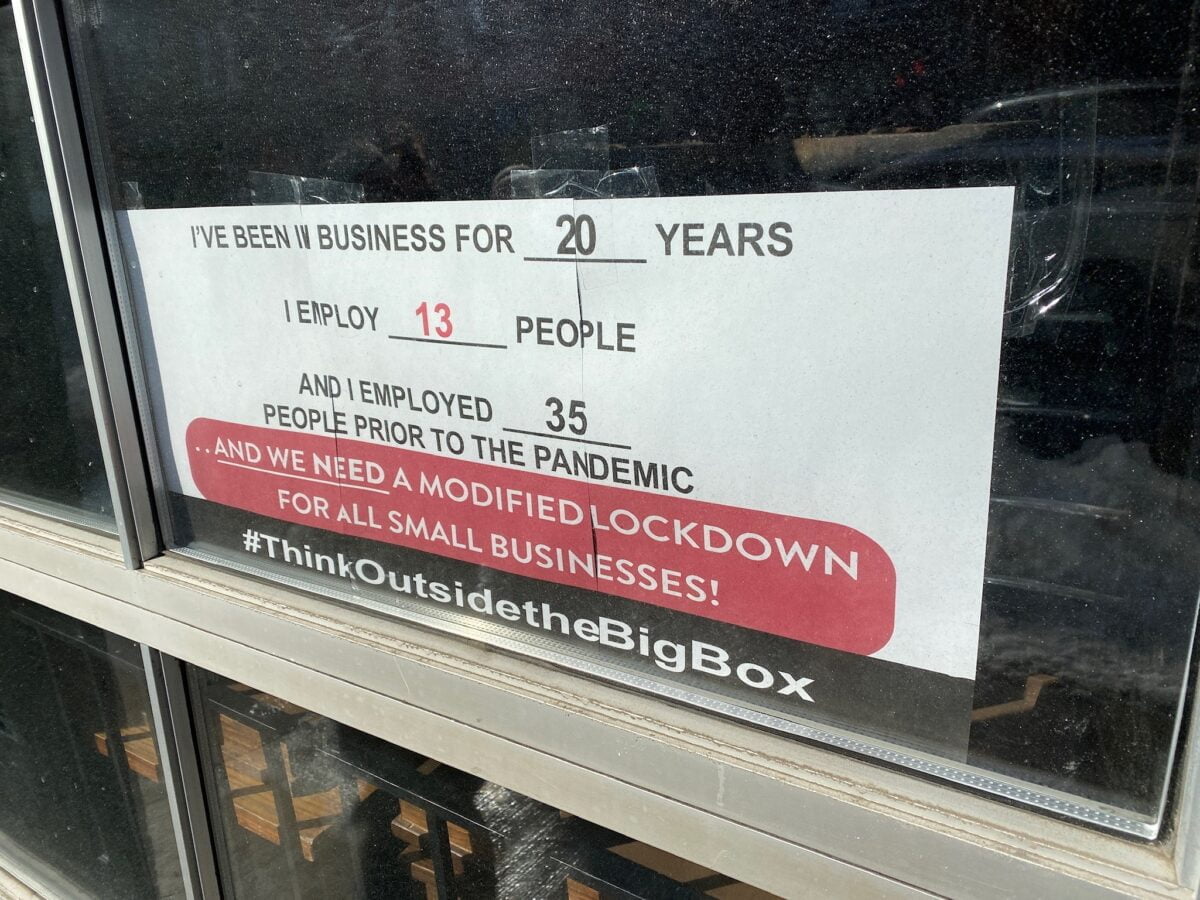
Sign spotted by Retail Insider in Toronto. Photo: Dustin Fuhs
When it is safe to do so, the province will gradually transition each region from the shutdown measures to a revised and strengthened COVID-19 Response Framework: Keeping Ontario Safe and Open, it said.
“Our number one priority will always be protecting the health and safety of all individuals, families and workers across the province,” said Premier Doug Ford. “But we must also consider the severe impact COVID-19 is having on our businesses. That’s why we have been listening to business owners, and we are strengthening and adjusting the Framework to allow more businesses to safely reopen and get people back to work.”
The government said it has updated the Framework to allow for a safer approach to retail. Limited in-person shopping in Grey-Lockdown zones will be permitted with public health and safety measures, such as limiting capacity to 25 percent in most retail settings. In addition, public health and safety measures in retail settings will be strengthened for other levels of the Framework. Individuals will also be required to wear a face covering and maintain physical distance when indoors in a business, with limited exceptions, it said.
Bruce Winder, author of RETAIL Before, During & After COVID-19, said Ontario’s easing of restrictions will provide a desperate lifeline to thousands of non-essential retailers who are sinking a little more every day.
Bruce Winder
“Operating at 25 percent will certainly help small and medium-sized retailers who were struggling. It does not mean that they are out of the woods yet but at least they have a chance for survival until the country is vaccinated – presumably by the fall,” said Winder.
“We must be careful though as a society not to underestimate the several COVID-19 variants that are making their way through Canada as they could put us back to lockdown status quickly. It has been alarming to see so many big box stores in violation of the rules imposed since December 26 in Ontario which gave them a clear and I would say unfair market advantage within the industry.”
Veteran retail expert George Minakakis, a global retail executive with over 25 years of experience, wondered what kind of an environment these businesses will be opening back up to as on Monday Ontario had more than 1,300 reported new cases of coronavirus.
“We shut down when we were around similar numbers. Clearly, with reopening and mandatory masks and social distancing, the pattern has been that numbers will climb again. And now we have two, three variants to be worried about as well,” said Minakakis, CEO of the Inception Retail Group.
George Minakakis
“Obviously, businesses will not survive with rolling openings and closures. However it looks like the kind of cycle we will be in for the rest of this year. Vaccines are on the horizon at least that’s what we are being told.
There are over 1.2 million small businesses in Canada representing 98 percent of all businesses and Ontario has the largest share.
“I am reluctant to say that people will storm back out with pent up demand to shops, restaurants or malls. Certainly there will be services like hair stylists and salons that will have customers waiting. But I don’t see rational consumers rushing out to hit a bar or restaurant. The demand for new clothing to wear at work continues to be in decline. New behaviours are settling in as we see our savings increase. We are also opening in the slowest seasonality of the year.”
Minakakis said he has seen news reports about luxury brands saying they don’t see a rebound until 2022.
“I am a little longer, taking into account delays on vaccines and reluctant consumers who even after receiving their immunization they will wait. My estimation is that anyone over 55 and with underlying health issues will not be blazing a path to shop at this time. That’s a big portion of the population that will not take chances. Businesses cannot survive on 20-50 percent less traffic,” he said.
“Businesses need to reopen but like I said; to what kind of environment? Not one that is fully open for business.”
Gary Newbury, retail supply chain and last mile interim executive, said the easing of restrictions will be most welcome across the whole of the retailing industry within Ontario on the face of things, however, the challenge will be for the industry to help keep people safe to avoid restrictions being ratcheted up again.
Gary Newbury
“Many businesses have been really struggling to get this far, especially the small to mid-sized enterprises — independent stores and food service outlets, and personal service businesses — who often needed to accelerate their digital capabilities quickly and may have found this to be unprofitable forcing some to close and wait for reopening,” he said.
“We will start to see much change in our streetscapes and malls. Even before Boxing Day, when Ontario was subject to a stay at home order, there were many stores being closed down or in various stages of being boarded up in the absence of alternative retailers rushing to fill those spaces.
“One of the biggest questions we need to ask as an industry is will consumers want to return to stores or maintain their buying patterns with online services — click & collect/curbside and home delivery. Some will revert to their previous shopping habits in some categories, such as apparel, but for others, new habits may continue apace. There is no real data we can use to predict with any certainty which way things will go, especially with delays occurring with vaccinations and continued fear of COVId maintained by large subsets of the Ontario population.”
Although regional lockdowns which allow targeted actions to contain continued spreading of the virus are logically sound, many people drove to zones in lower levels of restrictions to do their shopping, added Newbury. If there is a regional strategy, retailers should be mandated to ensure local residents are being admitted to malls and stores to help avoid a growth in cases, once again, he said.