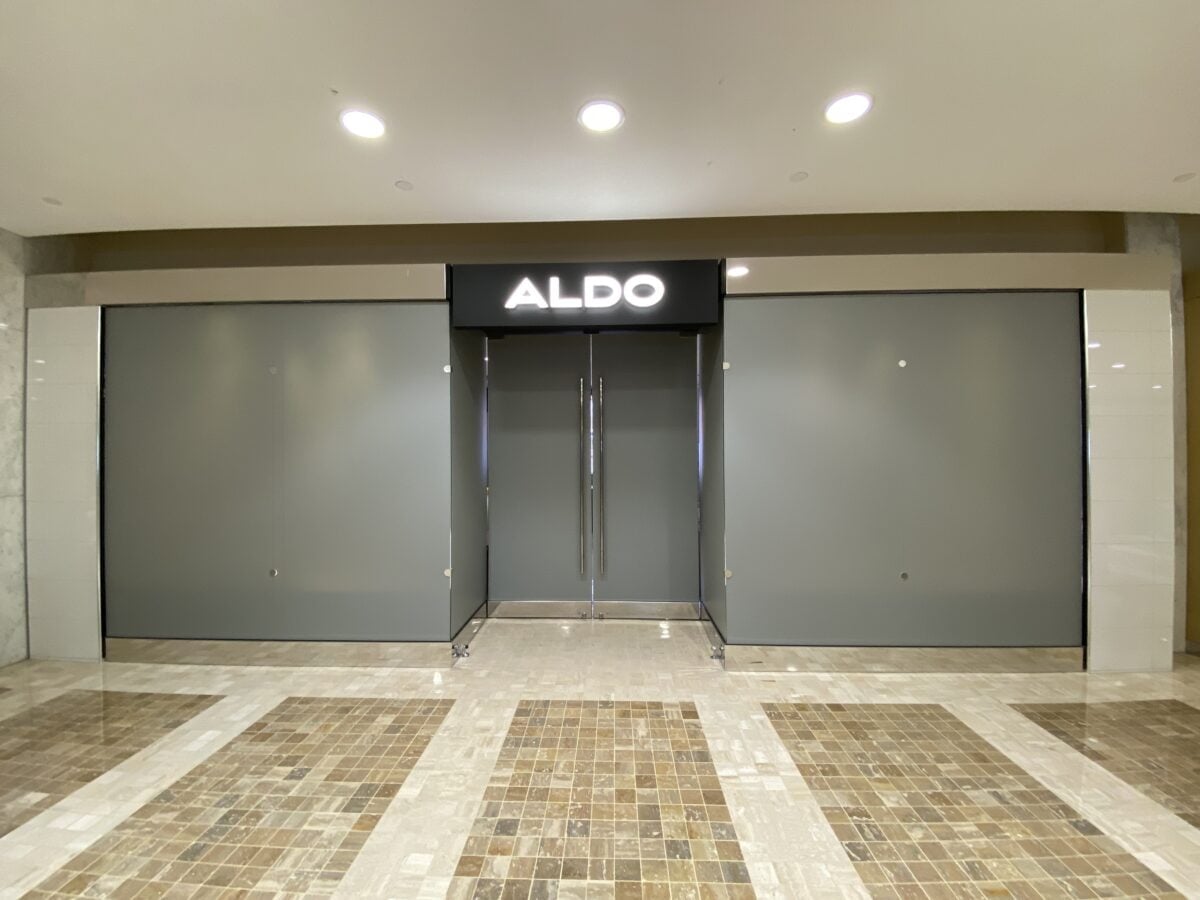
Exterior of Forever 21 storefront in the US. Photo: Forever 21
Los Angeles-based fast fashion retailer Forever 21 will make its return to Canada this year with physical stores after shuttering all locations as part of a bankruptcy filing in 2019. Toronto-based YM Inc. is leading the expansion after establishing a partnership last year that included announcing a new Forever 21 e-commerce site for the Canadian market.
YM Inc. acquired many of Forever 21’s leases after the retailer exited Canada. YM subsequently opened stores under various banners in the former Forever 21 locations including Urban Planet, Urban Behaviour and Stitches. Many of the Forever 21 stores saw few changes to the retail spaces following the shuttering of the original chain, possibly in anticipation of re-introducing the Forever 21 banner to the Canadian market. Now some of the former Forever 21 locations will be converted back to the original banner as the brand again re-enters Canada.
It’s not yet clear how many Forever 21 locations that YM will open in Canada, though locations are confirmed already for Metropolis at Metrotown near Vancouver, as well as Devonshire Mall in Windsor, Ontario. The Windsor store will be located in a space most recently branded as Urban Behaviour.
Forever 21 closed all of its 44 Canadian stores in November of 2019 after its US-based parent company filed for bankruptcy. In total, about 900,000 square feet was vacated, with much of it being scooped up by YM Inc. as temporary leases for its own banners.
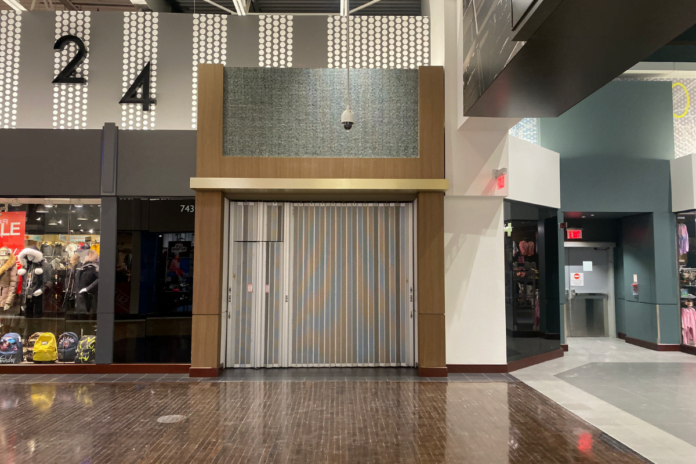
Exterior of soon-to-open Forever 21 store at Metropolis at Metrotown. Photo courtesy of Srushti Gangdev on Twitter
YM Inc. launched Forever 21’s Canadian e-commerce website in early 2020. Forever 21 partnered with cross-border e-commerce solutions provider Global-e to launch the international offering, which included localized websites for the Canadian market as well as sites for Asia, Asia/Pacific, and Latin America.
YM Inc. owns several fashion retail banners in Canada including Urban Planet, Urban Behaviour, Sirens, Bluenotes, Suzy Shier, Stitches, West 49, and Amnesia. In 2019 Retail Insider reported that YM was bringing the Aéropostale retail banner back into the Canadian market after the US brand’s bankruptcy in 2016. YM Inc. was founded in 1975 with the opening of a Stitches store in downtown Toronto and the company has since grown rapidly with more than 650 stores across its banners and thousands of employees.
Forever 21’s re-launch in Canada comes at a time of intense competition amongst fashion retailers with various fast-fashion and value-priced retailers continuing to operate within Canada. Swedish fast-fashion retailer H&M had been opening stores yearly in Canada before the pandemic in an effort to gain market share, as has Spanish chain Zara and Japanese retailer Uniqlo. At the same time, value-priced retailers such as TJX Group’s Winners and Marshalls have been expanding further into Canada, offering designer product at discounted prices.
Exterior of Harry Rosen store at Square One. Photo: Harry Rosen
Iconic luxury menswear retailer Harry Rosen has built its successful business over the last seven decades focused around personalized interactions with clients.
The COVID-19 pandemic, along with its mandatory closures and public health measures, has dramatically changed the retail landscape in the country, and Harry Rosen has been at the forefront in the industry in accelerating its digital transformation to meet the changing marketplace.
Ian Rosen, Executive Vice-President of Digital and Strategy for the company, said its online sales grew in 2020 by almost three times.
“Our online storefront is now our largest storefront and we don’t expect it to go back. And it shot up to just over 20 percent of our business,” he said, adding that the e-commerce site has more sales than its flagship stores on Bloor Street in Toronto and CF Pacific Centre in Vancouver.
Rosen, who has been in his current role since June 2018, said the company was seeing sales growth in its e-commerce initiatives prior to the pandemic.
“We just happened to hit 2023 targets in 2020,” he said.
Harry Rosen (Founder), Ian Rosen (Vice President of Digital and Strategy), and Larry Rosen (Chairman and CEO). Photo: CNW Group/Harry Rosen Inc.
“I think there will be a level set but the way in which our business has grown has been I think a little bit different than others who have seen the big increase in e-commerce. So obviously we’ve seen a number of transactions move onto our digital channels and we’ve acquired a number of new clients who have never shopped with us before through our online channel.
“But we’ve also digitized a lot of our relationships between our clothing advisors, our team that works in the stores and their clients, and moved those online. One of the things that we were working on pre-pandemic and optimized during the pandemic is the idea that if I were your clothing advisor, rather than you going to the website and browsing for things, we’ve actually enabled our team to be able to curate the website, down to your sizes. Perhaps you have a particular style. I can send it over to you with a few clicks of a button and you can check it out.”
Recently, Harry Rosen chose the Qualtrics XM Platform to digitize and scale its retail model and deliver more targeted and personalized experiences to shoppers and employees across the business.
“Our philosophy as a company has always been to listen to the client. What made my grandfather so successful when he started the business was starting to collect modern CRM-type information from a client. He’d put that on a Post-It note and he had a big Rolodex. He would remember your birthday. He would remember your significant other’s name and he’d remember your kids’ names and their birthdays. That kind of led to a lot of loyalty,” said Ian Rosen.
“So kind of embedded in our DNA has been this idea of know your customer, listen to your customer, always be there to reach out to them. However, one of the things that’s become more and more challenging as our business has grown is getting real time, consistent, in the moment feedback from our teams and being able to act on that in a coordinated way.
“So when we started to look at our strategy moving forward we asked whose guidance are we going to follow. Are we going to work off of the customers giving us feedback or are we going to go proactively ask for more feedback? Our executive team as well as our leaders in the customer experience side of the business said we learn 10 times more when we get unsolicited feedback or when we send out a quick survey and we’ll learn two or three things and a steady manageable stream of that would be insanely valuable for us.”
Highly-interactive Harry Rosen website.
Ian Rosen said the company has partnered with Qualtrics to integrate their solution into its business with a commitment to getting customer feedback.
With Qualtrics, Harry Rosen will use deep customer insights from areas such as shopping preferences, packaging, and delivery and post-purchase to continuously elevate both its in-store and online experience. The retailer will apply these insights across the business, including — but not limited to — merchandise selection, store & e-commerce experience, marketing communications, and clothing advisor training.
The menswear brand is also boosting its employee experience program, leveraging Qualtrics to get to the heart of workforce feedback and concerns and quickly identify where action needs to be taken.
“For 67 years, everything we’ve achieved has been anchored by our people doing whatever it takes to help our clients in big and important moments,” said Ian Rosen. “Qualtrics allows us to scale up what we’re good at by keeping us focused on what matters — and by getting us the data and information to help us mobilize and act as quickly as possible.
“The pandemic has really pushed us as leaders to understand that the reality our employees are facing is changing, it’s uncertain, and having a feedback mechanism for them to give us input, for them to bring light to where perhaps somebody’s leadership style isn’t translating into a remote environment as well as they were in person, and their team is feeling a little bit stressed by the situation, we can pick that up in surveys and action against it. We also could just monitor morale.
Interior of Harry Rosen store at Square One Shopping Centre. Photo: Harry Rosen
Interior of Harry Rosen Store at the Rideau Centre. Photo: Harry Rosen
Interior of Harry Rosen Store. Photo: Harry Rosen
“One of the benefits we have of being a ‘legacy’ company . . . we’ve reinvented ourselves before. We’ve had to confront market conditions and changes and client behaviours and changes maybe not to this level of acceleration but it actually was the muscle that we had built over the years. So we had a pretty big ship to turn and pivot with and we actually were pretty successful in orienting people around it at different ways of thinking of our business. Digital is going to be the first touch point that we prepare for. So we need to make sure that we’re encouraging customers to engage with our digital properties, we’re encouraging our staff to engage with it, we’re encouraging the information to be up to date, accurate, and translate into the different systems. That’s kind of like the marketplace and the stores are a place where people come to pick things up or have a different type of shopping experience. I prefer the word transformation than pivot because I think pivot means you can pivot back. It’s true transformation in the way we think about our business.”
Qualtrics is the world’s No. 1 Experience Management (XM) platform and creator of the XM category, with over 13,500 organizations around the world using it to listen, understand, and take action on experience data — the beliefs, emotions, and intentions that tell you why things are happening, and what to do about it. Its platform is a system of action that helps businesses attract customers who stay longer and buy more, engage employees who build a positive culture, develop breakthrough products people love, and build a brand people are passionate about.
“The companies who have emerged as leaders in the face of COVID-19 are constantly listening to their customers and employees, acting quickly on the insights, and closing feedback loops at a higher rate than others,” said Jay Choi, Chief Product Officer, Qualtrics. “Harry Rosen has always shown an industry-leading commitment to creating flawless experiences — and with Qualtrics, they can leverage the digital tools and insights necessary to broaden their reach and drive meaningful results by serving customers at every step of the journey.”
Rendering of the newly-renovated Hudson's Bay store and office building extension. Rendering: Menkes Shooner Dagenais LeTourneux
The Hudson’s Bay Company has provided some initial insights into the future of its physical department stores in Canada. On Monday in a joint statement, HBC and RioCan formally announced the redevelopment of the downtown Montreal flagship Hudson’s Bay store which will see an overhaul to become a ‘store of the future’ as consumers increasingly shift spending online.
“We are reimagining the Hudson’s Bay retail experience in Downtown Montreal, creating a digitally-connected store with elevated service and a curated assortment to showcase the best of what Hudson’s Bay has to offer,” said Iain Nairn, President and CEO of Hudson’s Bay.
“This project presents an opportunity to establish a multi-functional store that continues to offer the brands and services that Canadians trust us to deliver, while developing new uses for space — such as showrooms or concierge services — that reflect the modern lifestyles of our customers and the vibrancy of Downtown Montreal.”
Iain Nairn
The shift addresses a rapid consumer movement online at a time when Hudson’s Bay is also enhancing its overall digital operations. TheBay.com is launching a new Marketplace with more than 500 vendors as the retailer continues to shift its operations amid the COVID-19 pandemic.
The Hudson’s Bay Company is already capitalizing on its ecommerce assets, including spinning off Saks Fifth Avenue’s Saks.com website into its own business. No similar announcements have been made for the Canadian website which is one of the most visited in Canada in terms of overall web traffic.
The Oakridge Centre Hudson’s Bay store in Vancouver, which shut early this year and is set to reopen in 2024 after the shopping centre overhaul is completed, will also feature the ‘store of the future’ fit out, with digital technology being used to enhance the overall customer experience. This will include a showroom concept that connects to HBC’s extended aisle and marketplace offerings with enhanced pick-up and return options to create a more seamless consumer experience. Given the significant investment required to update its stores, analysts are saying that it’s unlikely that Hudson’s Bay will continue to operate all 87 of its current stores. Locations in downtown WinnipegandJardins Dorvalin Montreal shuttered recently and a downtown Edmonton location is set to close next month according to staff.
1 of 6
Rendering of the newly-renovated Hudson's Bay office building extension. Rendering: Menkes Shooner Dagenais LeTourneux
View of the newly-renovated Hudson's Bay store from Sainte-Catherine Street. Rendering: Menkes Shooner Dagenais LeTourneux
Side rendering of the newly-renovated Hudson's Bay store and office building extension on Union Avenue. Rendering: Menkes Shooner Dagenais LeTourneux
Aerial rendering of the newly-renovated Hudson's Bay office building extension facing west. Rendering: Menkes Shooner Dagenais LeTourneux
Aerial rendering of the newly-renovated Hudson's Bay office building extension on the Sainte-Catherine Street side. Rendering: Menkes Shooner Dagenais LeTourneux
Aerial rendering of the newly-renovated Hudson's Bay office building extension. Rendering: Menkes Shooner Dagenais LeTourneux
Prior to the pandemic, sources confirmed that Hudson’s Bay was in talks to launch concession departments within its stores, including bringing in outside operators to manage jewellery and footwear departments. It is unclear if the private company will continue on that path given the pandemic and some of the financial challenges that the company has faced amid declining sales at its stores that were shut due to lockdowns.
Hudson’s Bay is taking advantage of its vast real estate with plans to capitalize on the value through redevelopment and other means. “As consumers continue to evolve the way they live, work, and shop, we are committed to capitalizing on these shifts, while unleashing the full potential of our prime properties throughout North America and reinvigorating the urban districts in which they are situated,” said Ian Putnam, President and CEO, HBC Properties and Investments. “HBCPI is excited to lead the way to unlock the value and potential of our joint venture portfolio for our most significant flagship properties throughout Canada.”
The Montreal store redevelopment, which Retail Insider reported on in February, will see an overhaul of The Bay store that will include a reduction in size to about 295,000 square feet. The retail building currently spans 655,000 square feet and was built in phases between 1891 and 1960 for retail tenant, Henry Morgan, which operated there until 1972 after being acquired by the Hudson’s Bay Company.
The Hudson’s Bay Company and RioCan own or control 10 properties comprising more than three million square feet in Canada, including the downtown Montreal Hudson’s Bay store. Costs for redevelopment will be shared on a proportionate basis with Hudson’s Bay owning 79.8% of the partnership and RioCan having the remaining 20.2%.
Jonathan Gitlin, President and CEO, RioCan, said, “RioCan is looking forward to the transformation of this iconic property to meet evolving consumer and office user expectations. This highly-attractive, transit-oriented site in the heart of Downtown Montreal will be revitalized and expanded with resilient uses and offer forward-thinking amenities driving value creation for the long-term.”
The Downtown Montreal mixed-use redevelopment project will include the construction of a 25-storey office tower of approximately one million square feet as well as the transformation of Hudson’s Bay’s existing retail space. HBC says that it is working closely with the City of Montreal and other stakeholders to finalize details.
The heritage building’s original architecture will be protected, including restoration of the facades, the reopening of windows, and the return of display window showcases to their original state. Four tiered terraces will be created on the four green roofs of the office tower. The main entrance and tallest part of the tower will be on the de Maisonneuve Boulevard side of the complex which had been intended for a 200,000-square-foot Saks Fifth Avenue store that never came to fruition after being announced in 2016.
A public consultation process is now underway for the downtown Montreal Bay redevelopment. The project is expected to be underway by 2023 with completion targeted for 2027. The Hudson’s Bay flagship store on Sainte-Catherine Street will continue to operate throughout the construction process according to the company.
The office tower, which will be clad in a glass curtain, will be “among the most avant-garde in Montreal and will represent the future of the workplace”, according to HBC in a statement. “The Partners will focus on employee well-being and concern for the environment, while respecting the heritage of the flagship building.”
The new tower will satisfy LEED standards and will feature large, flexible floor plates of up to 60,000 square feet as well as high ceilings and a biophilic design that will allow for maximum natural light exposure.
“The Hudson’s Bay redevelopment project represents the next chapter in HBC’s retail history and its continued commitment to Montreal,” said Richard Hamori, COO, Streetworks Development, the real estate development arm of HBC Properties and Investments. “We intend to honour the heritage of our flagship building, as well as that of historic Sainte-Catherine Street, while expressing our confidence in the future of Montreal’s downtown. This project is another step towards our goal of maximizing the value of our portfolio of downtown properties throughout North America, while diversifying our holdings to a mix of retail, residential and office space.”
The Montreal redevelopment is part of a larger revitalization of the area surrounding Philips Square which itself is seeing significant improvements. Sainte-Catherine Street is undergoing a multi-year overhaul as are Ivanhoé Cambridge properties such as Montreal Eaton Centre and Place Ville Marie.
WANT Apothecary store at 2579 Yonge St., Toronto. Photo: WANT Apothecary
The physical retail spaces for Montreal-based WANT Apothecary have shut down as the brand pivots to an ecommerce business while refocusing on its core brand. The tasteful, highly-curated retail concept launched 10 years ago and at one time had five stores in major cities in Canada and the United States.
WANT Apothecary was the brainchild of WANT Les Essentiels Co-Founders and brothers, Byron and Dexter Peart, along with business partners, Mark Wiltzer and Jacqueline Gelber. The brothers sold the business to Wiltzer and Gelber (who own Mark Edwards Apparel Inc.) in 2017, including the upscale WANT Les Essentials brand that they founded in 2007, and exited the company.
The WANT Apothecary concept was unique in how it mirrored the style of a classic apothecary while also mixing a selection of fashion items from some of the world’s leading designers. Products included women’s and men’s ready-to-wear, as well as accessories, leather goods, footwear, and various gift items, not to mention an assortment of beauty products, hence the apothecary name.
1 of 2
WANT Apothecary store at 4960 Sherbrooke St. W. Westmount, Quebec. Photo: WANT Apothecary
WANT Apothecary store at 1070 Yonge St., Toronto. Photo: WANT Apothecary
The Peart brothers, along with their business partners, launched the first WANT Apothecary location in Montreal in 2011, in the city’s affluent Westmount area. The beautiful store located at 4960 Sherbrooke Street West was buoyed by the existing brand recognition of the WANT Les Essentiels lifestyle brand that had launched five years earlier. After testing and perfecting the Montreal store, the business partners set out to open a second location in Toronto’s upscale Rosedale retail area at 1070 Yonge Street in 2013, followed by a Vancouver store located in the South Granville shopping area at 2956 Granville Street which debuted in 2014. In 2017, WANT Apothecary opened a Toronto location at 2579 Yonge Street as well as a store in New York City at The NoMad Hotel at 1170 Broadway.
Co-founder, Dexter Peart, told Retail Insider in an interview in 2017 that rather than locating in malls or on popular retail streets such as Bloor Street West or Robson Street, WANT Apothecary’s locations sought to create a “curated experience within close proximity to the consumer” that was the “antithesis to a large shopping experience”. Collections in the stores were highly curated to reflect the retailer’s aesthetic, and each store was typically between 1,700 and 2,000 square feet to ensure a more intimate experience.
1 of 5
Interior of WANT Apothecary store in NYC. Photo: WANT Apothecary
Interior of WANT Apothecary store in Lawrence Park, Toronto. Photo: WANT Apothecary
The WANT brand has moved to an ecommerce model after shutting its physical stores. And as the multi-brand apothecary concept shuts stores, the WANT Les Essentials brand is being moved to the forefront.
“We are excited to announce that we will be focusing all efforts on our house brand, beginning with a new website launching in April and ready-to-wear collections releasing throughout the year,” stated the company. “As we pursue this vision, we’ve decided to close our WANT Apothecary locations and consolidate both WANT websites to wantlesessentiels.com. This new experience will be the digital home for WANT Les Essentiels and stock several of the skincare, beauty, and home brands you know and love.”
1 of 2
We reported this spring that Australian beauty brand Aesop had opened a new store in the former WANT Apothecary location at 2579 Yonge Street in Toronto.
Retailers have been struggling amid the COVID-19 pandemic. Some are finding that the expense of having leases is too great and some have been closing locations as a result. At the same time, studies have shown that having a physical retail presence helps drive online web traffic, bringing WANT’s ecommerce-only strategy into question in terms of future growth for the brand.
Food affordability in Canada is becoming an increasing worry.
The two necessities in life are food and shelter. It looks like both are getting much more expensive these days. For a few years now, the cost of food has been the most important food affordability barrier. Not anymore. The cost of housing is now seen by Canadians as the most significant barrier.
A recent poll conducted by Grassroots Public Affairs, in partnership with Food Banks Canada, shows how things have changed in just twelve months. A total of 46% of Canadians, almost half, consider the cost of housing to be the largest obstacle to food affordability. Only 12 months ago, it was 21%. A total of 29% of Canadians see the cost of housing as a larger obstacle now compared to 12 months ago. Rising unemployment was the largest obstacle for 71% last year, for obvious reasons. The percentage dropped to 42% this year, which is the same percentage as the cost of food. Indeed, the cost of food is still seen as an important barrier, but concerns related to food prices have now been surpassed by lodging costs.
Seeing house prices go up is not necessarily undesirable. After all, most Canadians rely on the value of their property to increase their wealth and support their retirement. Taxing capital gains on primary residences would be aiming at the wrong problem and would make many Canadians poorer. But the rate at which prices are going up is alarming. The OCDE recently reported that over the last 20 years, Canadian house prices on average have gone up by more than 1680%, the highest rate amongst all OCDE countries. The second highest is not even close at 96%, which is the United Kingdom. So, this is a real issue in Canada.
Canadians are facing a perfect storm when looking at food affordability. The cost to put a roof over one’s head is going up while food prices are expected to go up by as much as 5% this year. Furthermore, the economy is slowly picking up the pace, but the number of jobs is still short by 500,000 from what the Canadian job market had before the pandemic. Naturally, many Canadians are concerned about the professional situation.
Given these macroeconomic shifts in recent years, Canada is now on the list of countries facing challenges of ensuring food security for many of its citizens. There are no problems with food availability in Canada, none, except perhaps for the greater north, however, the cost of essential elements in our lives coupled with the fact that salaries are barely moving to help Canadians deal with higher expenses is worrying.
Ottawa will need to get a better a sense of the real estate market conditions beyond the pandemic as interest rates may remain at historic lows for some time. When real estate prices go up, rents will eventually catch up to tenants who can only dream about owning a house one day. We are already seeing rental costs going up in Canada, from 3% to 5% in some markets.
Because of the pandemic, some markets are more affected than others. Interestingly, the work-from-home phenomena is impacting smaller markets, not just urban ones. Many do not have to live within commuting distance from their jobs. According to the Canadian Real Estate Association, the greatest year-over-year percentage changes came from the Northwest Territories (48.1%), Nova Scotia (30.4%), Ontario (24.5%), Quebec (22.5%), and New Brunswick (20.9%). Many economists believe a supply-deprived real estate market is driving prices higher. Increasing supplies in markets where demand is higher than ever, urban, or not, should be our governments’ priority.
The pandemic has also rejuvenated our collective discussion of a guaranteed minimum income. The pandemic itself has given us data on how Canadians behave when receiving financial aid from governments. We still know very little about how a guaranteed minimum income would help families cope with changing real estate conditions and higher housing costs. The fabric of our workforce will also change due to the pandemic. Now, more than ever perhaps, is time to have that conversation. Committing to nationally-coordinated pilot projects to assess such a program is long overdue.
Exnterior of the Cornwall Centre in Regina. Photo: Tourism Saskatchewan
The restrictive nature by which everyone has been forced to live during the course of the past twelve months or so is, at least temporarily, changing the way we do things. For retailers, the repercussions have been monumental. Increased concerns related to health and safety combined with the ease and convenience offered by the online shopping experience has resulted in a massive spike in ecommerce sales and activity across the country. It’s also spawned a consumer who is more channel agnostic than ever before and who views the multitude of purchasing options at their disposal as one big marketplace. Retailers have responded through an acceleration of their digital strategies in efforts to meet this shift in preferences. It’s provided many within the industry with a massive task, challenging their agility, innovation and acumen. However, according to Matt Crowell, Founder and CEO of GetintheLoop, the current retail landscape is also presenting businesses with even bigger opportunities to create truly seamless omnichannel experiences, bridging the gaps between the online and physical worlds, and engaging local customers who want to shop with them.
“The pandemic has certainly impacted the retail experience and the way merchants across the country operate,” he recognizes. “That impact has been most obvious in the recent explosion of ecommerce. But with this increased and sustained activity comes new and increased customer expectations and demand. People want to shop with their favourite brands, whenever and wherever they want, whether in person, on their computer, or mobile phone. And, given the uncertainty of our current situation, proximity has also been an increasingly important factor in the purchase decisions being made by customers today. It’s resulted in providing retailers with a strong incentive to digitize their operations and connect with their local communities in order to drive awareness, engagement, traffic and sales.”
Cost-Effective Digital Solution
To help Canadian business owners achieve this outcome, GetintheLoop offers a cost-effective tool that complements their digital offering and supports their marketing and communications goals. The app, which is available for users to download via the App Store and Google Play, serves as a digital marketing platform for businesses, helping merchants tap into a flourishing local community, providing them with a highly-effective means by which to publish meaningful digital content and enticing offers. It helps facilitate connections for them, providing consumers with ever-expanding ways to explore, discover, and shop within their local communities, offering incentives and rewards via special promotions. Working with businesses in every province across the country since 2013, GetintheLoop has quickly become one of the leading offers platforms in Canada. And, according to Crowell, much of the tech company’s success is down to the simplicity of the innovation and ease of use by all parties.
“It’s really about leveraging technology to connect brands with customers while making the shopping experience fun and rewarding,” he says. “Because the platform allows businesses to provide real-time mobile offers and information to smartphones, email and web, they’re able to keep their customers engaged and up-to-date concerning store hours, new or changed service, as well as details about delivery and curbside pickup options. It could be described as a way of placing an entire local merchant community in the hands of the consumer, seamlessly connecting the online and offline experiences and enhancing a retailer’s omnichannel offering.”
Performance and Results
As an example of the power and influence of the GetintheLoop mobile marketing platform, the company partnered with Shopping centre developer, Cushman & Wakefield, in the summer of 2020, providing its technology to 1,500 retailers operating in 21 malls across the country. Results were impressive, seeing the activation of 60 percent of mall merchants within the first three months and significant growth for Cushman & Wakefield whose portfolio of tenants reached more than 20 million Canadians during the fourth quarter of 2020. Molly Westbrook, Executive Managing Director Asset Services at Cushman & Wakefield, recognizes the success of the partnership
“We have experienced very positive results in each of the centres where we leveraged GetintheLoop’s technology and platform,” she asserts. “During this challenging time for the industry, we looked for innovative opportunities to generate traffic to the stores’ physical locations. The engagement and connectivity that it facilitates and fosters within each local community allows us to communicate our offering, enabling the customer to engage with the centre and our tenants within a seamless omnichannel experience.”
Interior of the Cornwall Centre in Regina. Photo: Tourism Saskatchewan
In addition to serving as a compelling and dynamic digital marketing solution for businesses, the app also generates useful analytics for the users, informing current and future campaigns and offers. And to help support these vital efforts, GetintheLoop also offers a centralized support team that works with clients on a monthly basis in order to help execute campaigns and increase customer attraction and retention via digital means. Rooted in grassroots passion, the company is further changing the way businesses market to and communicate with their local communities while helping to create innovative strategies and campaigns to achieve maximum results.
One such display of marketing innovation is reflected well in the company’s most recent digital punch card campaign that it launched with Cushman & Wakefield property, Halifax Shopping Centre, in Nova Scotia. Running within the centre from March 17 to April 3, the campaign presented visitors to the centre with an Easter egg hunt, with Easter egg stickers placed in six locations throughout the mall. Each sticker was equipped with a pin number and QR code which, when scanned, revealed a page within the GetintheLoop app to enter the pin number to validate that the Easter Egg sticker had been found. Participants of the hunt who found all six Easter egg stickers were rewarded with a $10 gift card from Halifax Shopping Centre guest services. The campaign was extremely effective, resulting in a reach of 43,598, responses totalling 8,888, 1,580 actions taken and 217 gift card giveaways to those who engaged with the hunt. Stephanie Schnare, a representative of Halifax Shopping Centre, describes the virtual hunt as a “huge success”, lauding the ability of the app to serve as a conduit for interest and traffic.
“Due to the pandemic, many traditional Easter activities were paused in the market,” she says. “But the virtual egg hunt allowed Halifax Shopping Centre to drive traffic to the mall and connect with key customer targets, while offering some egg-cellent entertainment.”
Interior of the Cornwall Centre in Regina. Photo: Tourism Saskatchewan
Marketing Evolution
During this time of disruption, it’s perhaps more important than ever for businesses to create and enhance their digital presences and to engage with their local communities through these types of creative omnichannel experiences. And, with the right support and strategic thinking, the challenges that businesses are facing today could very well result in increasingly adept shifts in their operations and a continued evolution with respect to the ways they attract and retain customers. It’s something that Crowell believes is currently happening and is set to ensure not only the survival, but the growth, of businesses during these difficult times.
“The industry’s been challenged significantly throughout the past year. It’s tested the strength of merchants across the country. But, as with all challenges, the climate of the past twelve months has provided everyone with some really valuable insights, one of the most critical being that the traditional ways of reaching and engaging local audiences are not as effective as they once used to be. Today, retailers need a digital advantage and a way to not only get in front of customers, but to provide them with an experience that’s easy and convenient, and one which serves the businesses omnichannel strategy and goals. With the right technologies and digital tools, the entire retail experience can be transformed and enhanced, providing customers with engagement that’s fun and informative, forming a true brand experience across all channels throughout the entire shopping journey.”
For more information concerning the ways GetintheLoop can help your business connect with shoppers and thrive within your local communities, visit getintheloop.ca/business
Lockdowns, Nordstrom, Cartier, Gucci and La Vie en Rose
This week, Craig and Lee discuss Ontario’s latest lockdowns, Nordstrom’s launching Dover Street Market in Canada, Toronto’s Cartier renovations on Bloor, West Edmonton Mall’s Gucci opening and the continued expansion of retailer La Vie en Rose.
The Weekly podcast by Retail Insider Canada is available on Apple Podcasts, Stitcher, TuneIn, Google Play, or through our dedicated RSS feed for Overcast and other podcast players.
Drop us a line at Craig@Retail-Insider.com. You can also rate us in Apple Podcasts or recommend us in Overcast to help more people discover the show!
Background Music Credit: Hard Boiled Kevin MacLeod (incompetech.com). Licensed under Creative Commons: By Attribution 3.0 License. http://creativecommons.org/licenses/by/3.0/
Value-priced Japanese variety retailer Daiso has expanded into Canada with its first corporate store that has opened in downtown Vancouver. The retailer is testing the waters in Canada prior to launching a larger national expansion.
The 4,700-square-foot downtown Vancouver store is located at 810 Granville Street, which was formerly occupied by an Indigo Spirit bookstore. A wide range of products from stationery to cosmetics to home goods is carried in the new store. Origami paper and other traditional Japanese items can be found as well — the product assortment is known to be of a high quality for the price point which has resulted in Daiso’s success with more than 5,000 stores globally.
Almost all of the product in the new Vancouver store is imported from Japan, while some items were bought either in Canada or the US. A Canadian Daiso website is in the works and a US ecommerce site launched in December of last year.
Cash desks in Daiso store at 810 Granville Street. Photo: Daiso
Daiso Store at 810 Granville Street in Vancouver. Photo: Daiso
Interior of Daiso Store at 810 Granville Street in Vancouver. Photo: Daiso
JLL Canada represents Daiso in its further expansion into the Canadian market.
In 2003, the Fairchild Group opened a franchised Daiso store at the Aberdeen Centre in the Vancouver suburb of Richmond which operated for about 16 years. In August of 2019 Fairchild converted the 23,000-square-foot space to an Oomomo nameplate and the Vancouver-based Japanese-themed variety retailer continues with its own store expansion throughout Canada. Oomomo currently carries some Daiso products and the supply will be cut off as Daiso itself expands further in this country.
Daiso expanded into the United States in 2005 and the retailer now has over 80 stores there.
JLL is leading the Daiso expansion with a planned 10 stores in the Vancouver/Lower Mainland prior to a national expansion. Value shoppers in higher-income areas with a high Asian population will be initially targeted for stores that will include ‘daily needs’. Retail spaces between 5,000 and 7,000 square feet will be targeted initially with high foot traffic. Jack Voykin and Ryan McCarthy are points of contact at JLL for Daiso.