Shopify tracking technology shown on smartphone device. Photo: Shopify
By Devin Partida
In an era when everything is digital and happens with just a few taps, retail must be just as easy. Customers want responsive tracking so they know where their items are every step of the way. Now, it’s not only a luxury to have this tracking info, but a necessity. As a retailer, you can benefit while helping the consumer.
Why Tracking Is Important
The following advantages show how you can benefit from the simple addition of order tracking.
1. Competition
E-commerce was already growing before the COVID-19 pandemic hit. Once it arrived, even more retailers flocked to the internet. From March to May of 2020 alone, each field of retail in Canada grew dramatically. Now, retailers must offer some form of online service to thrive.
On top of the pandemic’s impact, retailers also are seeing the Amazon Effect. Brands are already competing online, but Amazon’s fast shipping and order tracking require smaller businesses to step up their game.
With better tracking tools, your retail services will keep up with consumer demands and help you stand out amongst competitors.
2. Risk Mitigation
When it comes to shipping, the retailer is ultimately responsible for the package. You may have to issue a refund or credit if the package gets damaged, lost, or stolen while in transit. If it happens too often, the costs quickly add up. Instead, tracking mitigates these risks and enhances your reliability.
When you, the customer, and the delivery driver know exactly where the package is or where it should be, risks decrease. Tracking encourages overall communication, which keeps orders safe and on the right track.
3. Customer Satisfaction
The bottom line relies on customer satisfaction. Going above and beyond their expectations will help you stand out as a retailer. Tracking is a primary way to do so. They’ll get to see the expected delivery date and current location, and timestamps to accompany them. Tracking information can also update them about delays or weather impediments.
The tracking number itself is also a handy tool. If customers have any questions, they can contact customer service and read the number so employees can find the exact order. However, you can use chatbots for customer service as well. These will help customers with basic tasks and free up the number of available employees.
How to Add Tracking
To properly achieve the above benefits, retailers can use the following methods to add tracking to product orders.
1. Use Different Tracking Numbers
Using a tracking number is the most essential step. However, you can use two different numbers to maximize efficiency and organization. When it comes to behind-the-scenes fulfillment with suppliers and manufacturers, you can ask for a tracking number to ensure you get the right products and get them on time.
Then, the second tracking number will be for you, the delivery driver, and the customer. If you want, you can create your own system for order tracking. Otherwise, you can find several apps and existing systems to integrate into your business model. ShipStation, VIA, and ShipHawk are just a few examples that will start you out.
2. GPS Tracking
A somewhat newer form of tracking uses GPS technology. Standard order tracking will provide the location once a facility or driver scans it into a new phase of the delivery. However, GPS software goes above and beyond. Typically, the sensor will attach to the vehicle, not the package itself, so that retailers can track several items at once.
This form of monitoring comes with added benefits on top of standard tracking numbers. Customers get to see exactly where their delivery vehicle is. They can also get alerts about hazardous weather conditions and any delays while still knowing where their item is, in case it has to return to the post office.
3. Work With Online Services
As a retailer, you may want your own tracking system for your orders. Other times, working with an online service will set you up with tracking information immediately, hassle-free. For instance, Shopify lets you add tracking information both before and after fulfilling the order. Shopify also works with Canada Post.
Other online sellers include Amazon and eBay. These sites will also help you add tracking information. If you don’t work with e-commerce companies, instead connect with postal and delivery services to create the best tracking system.
Devin Partida is a writer and blogger, as well as the Editor-in-Chief of ReHack.com
The Best Connections
As you add order tracking, you give consumers a better method of communicating and understanding the process. They know when to expect the order, which adds a layer of customer satisfaction, all while you stay on top of the order and stand out as a retailer.
Over the past 10 years, DX3 has been committed to the nexus of retail, marketing, and technology, and for its 10th annual event next month, DX3 is exploring what the future will look like post pandemic.
DX3 Season 10 will include 56+ episodes, all streaming from March 2-5. The DX3 2021 speaking faculty will provide industry insights on key focused areas; retail, marketing, and technology, and they will share their challenges and opportunities on how to build a brand and be relevant in this competitive environment.
Explore trending and futuristic technology leaders and solution providers through the virtual exhibition.
DX3 SEASON 10 FEATURES:
DX3 Season 10 will be a 100% virtual event spread over 4 days. Everyone who registers for the event will get access to the platform and can login with the email they registered to the event with.
3 SUMMITS:
DX3 Season 10 will witness 3 summits – Retail Summit, Marketing and Innovation Summit, and for the 1st time ever, Generational Summit. The speaker faculty consists of the top thought leaders across a variety of industries, providing attendees with invaluable knowledge that they can immediately implement in their respective industries.
Nikita Medvedev, Sr. Manager of Predictive Analytics, Coca-Cola
Rena Nickerson, GM, SodaStream Canada
Rajen Ruparell, Chairman & Founder, Endy
Alyssa Kerbel, Founder & President, mini mioche
Cynthia Wong, Associate Vice President, Digital Product Management, Canadian Tire Corporation
Simon Tooley Founder & President, Maison
Etiket Trinh Tham, CMO, Harry Rosen
Jill Van Gyn, CEO/Founder, Fatso
Sarah Jordan, CEO, Mastermind Toys
Courtne Smith, CEO & Founder, NewNew
VIRTUAL EXHIBITION: LATEST IN RETAIL, MARKETING & TECH:
Discover new and clever concepts and solutions that can help you take your company to the next level. Experience it for yourself, what the latest in retail and marketing innovation has to offer at this large two-day exhibition.
Some exciting exhibitors include:
TikTok
Medallia
PayPal
EY Ada
Afterpay
AIR MILES Reward Program
Second Closet
Kognitiv
DX3 TALKS: INTERACTIVE, ACTIONABLE WORKSHOPS
Enjoy a variety of learning offerings and workshops every afternoon at DX3 2021. They are all about HOW TO implement strategies, new concepts, products, and expert advice. This amazing feature takes place after the main episodes of each day.
Use Code RETAILINSIDER25 to get 25% off on the ticket prices. You can register here:
Q: What is the top positive change to emerge from the past year?
A: Joining the Mastermind Toys team as CEO in January of 2020 and then navigating a pandemic within my first 100 days was a unique, albeit challenging, experience! I am a purpose-driven leader so I’ve encouraged my team to keep Mastermind Toys’ purpose that Play is Kids’ Work in mind with every decision—from closing our stores before the government mandate to offering a greater assortment for our kids-at-heart to recognizing the benefits of play have no age limit. I deeply believe that purpose-driven leadership is what inspires employees to connect with our core mission.
We are so much more than a toy store. We are Canada’s Authority on Play and a place of wonder for our customers. Through our expert curation, we support child development at every age and stage following our ‘Why Kids Play’ model. Our customers are central to everything we do, and so while Canadians reimagined how they work, live, learn, and play over the past year, we stepped up to be a resource for parents, grandparents, educators, and kids adapting to remote learning and time spent at home. Facing an ever-changing retail landscape during a pandemic isn’t how I imagined my first year, but it has given me clear perspective on how we can best deliver wonder and delight to our customers.
Q: What changes do you expect to see this summer and how are you preparing?
A: The pandemic has resulted in a renewed love and enthusiasm for the great outdoors. Families have turned their backyards into the recess playground and celebrated birthday parties from sidewalks with friends driving by. As the weather gets nicer, we know Canadians will be eager to spend more time outside with scooters, bikes, spring gardening, and other outdoor accessories to get kids excited. You can expect to see lots of ideas from Mastermind Toys about how to spend time together outside this year.
We’re also anticipating a great excitement around back-to-school, with this moment of time really taking on new meaning for kids and parents. While September has always marked the start of a new chapter for families, there is a heightened hope of what this fall could bring for all Canadians. Mastermind Toys is preparing for this milestone moment by making a big splash for our customers: more specialty school supplies offered in our stores and online, ideas for activities that kids can easily pack with them for recess, among other exciting plans that are in the works!
Q: What’s the best marketing initiative you’ve seen recently?
A: I loved our highly coveted 2020 Mastermind Toys Gift Guide. After a year where so many families were looking for something to celebrate, the gift guide was a welcome reminder of all that we had to be grateful for and it truly embraced the wonder of the season. Our industry-leading merchants hand-curated an incredible assortment of toys, books, puzzles, and games, aimed to spark new discoveries and joy for kids and kids-at-heart, as well as keep families entertained during the holidays and beyond.
I am also proud of the type of representation featured in our Gift Guide. Since our beginning, we have been passionate about having all types of kids, from all backgrounds and of all abilities, in our marketing and content. We have a proud 36-year heritage of serving Canadians and so it’s really important to us that we reflect the communities we’re a part of coast-to-coast. The guide itself was designed in Canada and includes special tributes to our roots throughout it, including our partnership with another beloved Canadian brand, Hatley, who provided pajamas for our families. Through the gift guide, we hoped to play a small role in bringing wonder of all sizes during a very different holiday season.
Q: What are you looking forward to in the future?
A: Mastermind Toys has always been a destination spot for our customers celebrating birthdays and other milestones in their lives. We have reinvented birthday parties and family gatherings with Virtual Verified games and activities that make online togetherness fun, but I am really looking forward to the day when these celebrations can happen with everyone in person again.
Mastermind Toys is also the nation’s largest specialty toy and children’s book retailer, with our world-class assortment driving who we are. Our Category Buyers are always looking for the next best toy and game to share with our customers and historically they’ve built our curation with great finds from toy fairs. We are greatly missing the opportunity to meet with vendors worldwide at toy fairs, and though we’ve innovated that experience to host our very own Mastermind Toys Play Preview virtually, we’re excited for the day where the industry can come together. In the meantime, we are incredibly grateful for our vendors and partners who continue to look for new ways to co-create with us.
Q: What is the top positive change to emerge from the past year?
A: Less travel and more efficient use of time via video meetings. Now that everyone is up to speed with meeting technology, I think the days of travel for a 30 minute meeting may be over or at least significantly reduced. It not only saves time and has a positive impact on the environment, but gives back precious time with family.
Q: What changes do you expect to see this summer and how are you preparing?
A: I think most people will still be eating at home the majority of the time and looking for more creative BBQ, summer salad and cocktail recipes to try. At Chickapea we’re creating tons of fresh, nutritious pasta salad recipes and showing customers how they can incorporate Chickapea into their summer meals in place of animal protein – like tossing our spirals on top of a green salad instead of chicken or using our spaghetti in fresh salad rolls.
Q: What’s the best marketing initiative you’ve seen recently?
A: I love everything Oatly puts out. They manage to use fun and humor to communicate their beliefs on serious issues; namely animal consumption. They’re open, honest and brave with their marketing and it’s inspiring.
Q: What are you looking forward to in the future?
A: I’m very curious to see how grocery shopping is permanently impacted by the trends of this past year and how much online grocery will continue to grow. As happy as I am not to travel as much, I am really looking forward to being face to face with our customers again at events and shows because I am missing that connection.
Q: What is the top positive change to emerge from the past year?
A: Our brand has always been built around prioritizing high quality local manufacturing using traceable raw materials. Our customers appreciated deliberate, small batch manufacturing with total transparency and control of where our products came from. The pandemic seemed to have put a renewed focus on both the support for local manufacturing, and the awareness of where their products come from. Many customers who were previously very transactional, were now more thoughtful of their purchases and were more inquisitive of how the products they are purchasing are being made.
Q: What changes do you expect to see this summer and how are you preparing?
A: Container shortages are causing continual shortages in raw materials. Although we manufacture and source raw materials for most of our products locally, many of our competitors use imported materials and have now resorted to sourcing things locally due to the impact the pandemic has had on importing raw materials. This has lead to pricing pressure due to the additional demand on our local suppliers, and in turn has caused some of our suppliers to start rationing and applying measured allocations to their customers. Fortunately for us, we have been a prominent buyer of locally sourced materials prior to the pandemic and have established very good relationships with our local suppliers, meaning we have not been impacted as much as our competitors, but we expect to see the issue of price pressure and inconsistency of supply for raw materials continue to worsen in the summer. To avoid the risk of these supply chain disruptions impacting our customers, we plan on maintaining a larger inventory and continuing to take advantage of our relationships with our local suppliers.
Q: What’s the best marketing initiative you’ve seen recently?
A: We started to run more traditional radio ads recently, as traditional media rates have fallen quite a bit due to a lack of demand. The return on ad spend for traditional media had never made sense for a digitally native retail business like ours, due to the high cost. However, the pandemic has opened up a unique opportunity for us to start testing marketing initiatives using more traditional media such as radio or out-of-home.
Q: What are you looking forward to in the future?
A: We want to continue to focus on promoting our locally made products and tell the story behind the people and businesses that manufacture thoughtfully made, high quality products, like the ones we continue to offer.
Brandon Kim
Brandon Kim, Co-founder, Creative & Strategy, Brevitē
Q: What is the top positive change to emerge from the past year?
A: 2020 allowed for us to become very concise in our vision and very focused in our efforts. In March, we had a huge mindshift change that allowed for us to remove the external distractions and double down on our core efforts.
Q: What changes do you expect to see this summer and how are you preparing?
A: As a backpack brand, our business revolves around the movement of people. We are anticipating as the nicer weather comes and as the vaccine is rolled out at scale, there will be an increase in sales. Fortunately, you can use our product without other people, so it is good for socially distanced activities as well. As we prep for the summer, we are now building up our marketing operations in anticipation.
Q: What’s the best marketing initiative you’ve seen recently?
A: Kinfield and Blume are very good at engaging their audiences via SMS strategy. Their ability to be human in their language and approachable as a brand has allowed for them to have a very successful SMS channel.
Q: What are you looking forward to in the future?
A: We are looking forward to telling more of our Brand story.
Use Code RETAILINSIDER25 to get 25% off on the ticket prices. You can register here:
*Partner content. To work with Retail Insider, email: craig@retail-insider.com more than ever, the story you tell is vital as everything is going digital.
This week, Craig and Lee discuss how increased leasing activity, including new stores for Diptique, EQ3 and Uniqlo signal confidence in physical retail.
The Weekly podcast by Retail Insider Canada is available on Apple Podcasts, Stitcher, TuneIn, Google Play, or through our dedicated RSS feed for Overcast and other podcast players.
Drop us a line at Craig@Retail-Insider.com. You can also rate us in Apple Podcasts or recommend us in Overcast to help more people discover the show!
Background Music Credit: Hard Boiled Kevin MacLeod (incompetech.com). Licensed under Creative Commons: By Attribution 3.0 License. http://creativecommons.org/licenses/by/3.0/
Over the last couple of years, a chorus of voices predicted the end of traditional retail, stating its future would lie online. The pandemic exacerbated this belief as it triggered almost a year of store closures, physical distancing, and other restricting measures. As a result, between March and May of 2020 e-commerce sales rose 99.3% according to Statistics Canada.
Evidenced by Shopify’s unprecedented growth in 2020 and by the implementation of various tools including “Buy Online Pick up In Store” (BOPIS), curbside pick-up, and social selling, retailers pivoted massively to e-commerce. A digital capacity has become imperative today, however, focusing solely on that channel would be a serious mistake.
Indeed, as retailers flood the digital space, its differentiating power diminishes and fades. The situation reveals the dearth of high-level online customer service that retailers overlooked in their quest for sales, and the increased focus on digital disregards the importance of the physical stores that remain the core of their business.
In this fast-changing and complex environment, here are the most important things retailers should be doing right now.
Digital Is Necessary but Not a Sufficient Requirement
Digital is not an option, it is essential. With the pandemic triggering a digital acceleration that saw four to six years of growth within a few months, a lack of digital presence is bound to hinder retailers’ future expansion, rendering them invisible to the markets they work with. But being available online doesn’t deliver the competitive advantage it once did. The more crowded the space, the lesser the differentiating power of digital distribution.
Specialty and luxury retailers must find creative ways to navigate the now and shape the future. A 2018 McKinsey report highlighted how the traditional linear customer journey had already been blown to bits with the average luxury shopper engaging with brands through multiple touchpoints before entering a store. Therefore, being present and active on social media is critical, even when not selling online. Chanel is a good example of a brand who shies away from e-commerce but still delivers rich digital content for its followers to share, making it the world’s most influential brand on social media.
Additionally, with ample options across multiple channels, shoppers’ online expectations have risen. There is little tolerance for sub-par digital shopping experiences that might have been adequate before the crisis. Mobile responsive websites, integrated services such as BOPIS or “buy online, return to store” are now standard.
Finally, seamless delivery is a must. However, despite a 2018 PwC survey stating that many shoppers would willingly pay more for same-day shipping, experts at a recent Business of Fashion (BOF) webinar claimed this was no longer the case. The pandemic revealed a significant lack of tracking tools, leading irritated shoppers to hound brands’ social media in search of orders. Today, delivery seems to be more about accuracy than immediacy.
Online Customer Service Must Mirror Offline Counterpart
It is clear that the digital aspect of the customer journey is inescapable. But it goes together with improving online customer service capabilities. Customers who switched to shopping online during the pandemic expected the same personalized service they received in stores. Unfortunately, it was often not the case. A customer whose order was lost tried for days to get in touch with the company’s customer service department only to reach someone in a foreign country who was incapable of assisting her. Existing tools like chatbots, next-day social media messaging, or live chats subcontracted overseas just don’t cut it if the strategic intent is quality service.
It is up to the companies to purposefully develop teams to service online channels in the same way they would store advisors: With a focus on quality. The human touch remains essential. Investing in customer service cannot be ignored as evidenced during the pandemic with brands overwhelmed by customer complaints. In the future, all retail channels will be treated equally with the customer experience flowing seamlessly between them.
Investment in Physical Stores Can’t Be Ignored
With 10 years of e-commerce growth happening in just 90 days, the digital space is becoming extremely crowded and retailers doing business online face serious obstacles. Customer acquisition costs have sky-rocketed, often exceeding the lifetime value of a customer as have online operational expenses triggered by generous shipping and return policies.
In such a context, physical retail remains one of the most important touchpoints in the customer’s journey. It is critical that retailers invest not only in digital channels but also in their physical ones. While brands can draw in web-savvy consumers through appealing and efficient e-commerce sites, it is usually the brick-and-mortar stores that make the most lasting impressions: They deliver experiences that simply cannot be replicated online.
In his book Reengineering Retail, Doug Stephens goes as far as stating that the stores of the future will be designed first and foremost for experiences with products coming second. Retail experts agree that a focus on transactional retail only is not a viable option.
When a space is well-designed and comfortable, the value of a store’s assortment of goods is elevated. Despite popular belief that physical retail is dead, it seems that being able to see, smell and touch things is still vitally important to the majority of the economy.
Future of Retail Lies in its People
Together with beautiful Instagrammable spaces, consumers need compelling experiences combined with exceptional customer service. Responding to this successfully will further heighten a shopper’s positive sentiment for a brand.
Retailers must devote time to develop their front store teams and ensure they acquire essential soft skills like empathy and communication. How a customer feels when she shops is more important than what she’s shopping for. The focus must be on upskilling the personnel to master the art of storytelling and be able to amaze customers.
Doing so can actually inspire a consumer to make a purchase even if the same item can be found elsewhere. Wharton University Professor Marshall L. Fisher demonstrated in a 2015 study that well-trained sales associates who can answer customers’ questions knowledgeably are an incredible weapon for a retail store. He believes that most customers end up buying online because they get better information than in store.
Seen in that light, stores could be retailers’ most profitable channel. Investing in training and development must be an immediate priority, not only to increase sales, but more importantly for the long term, to increase the quality of the brand experience, resulting in higher consumer loyalty and increased differentiation from competitors.
Building Now for Tomorrow
As stores reopen, retailers will have to ensure customers feel welcome. After the first lockdown, it was painfully obvious that sanitary measures were prioritized over employee and customer well-being. Too often, retail staff had to unwillingly take on the role of hygiene watchdogs rather than do their jobs. Clients eager to visit stores abided by the rules but nevertheless expected to be warmly welcomed and shown special appreciation for coming. Instead, they often felt like interlopers. While safety is absolutely paramount, it should be like tech tools – integrated and invisible.
Additionally, fierce competition for talent can be anticipated in customer facing sectors from hospitality to retail. In Canada, there is a lack of potential staff to recruit from that has been exacerbated by the pandemic with many leaving the industry for other sectors.
Suzanne Sears, President of Luxury Careers Canada, thinks that retailers’ human resource department will have to reinvent itself to start serving more of a marketing function developing ways to attract the best individuals to their organizations. Some of the necessary changes will have to include not only training and career advancement opportunities but also adequate compensation packages.
Solange Strom
Gone are the days when a retailer could offer little more than minimum wage and no benefits. When employees are properly trained and developed, they move from being a cost to the retailer to becoming revenue generators. And while some might balk at the extra expense this will entail, the more progressive retailers will view this investment as a way to grow revenue, create value for their brand, and remain competitive in the marketplace.
Frederic Dimanche
Solange Strom, visionary and entrepreneurial retail executive with a track record of driving growth through employee-centric strategies. 25 years helming global brands such as Boiron, L’Occitane en Provence and Repetto Paris. Founder of the Radical Retail Method, a training program aimed at supporting retail organizations in their quest for excellence. To contact Solange visit www.solangestrom.com.
Frederic Dimanche, Professor and Director, Ted Rogers School of Hospitality and Tourism Management, Ryerson University. Thirty years of professional and academic experience in service marketing and consumer behaviour, particularly in hospitality and tourism. Academic experience in the USA, France, and Canada.
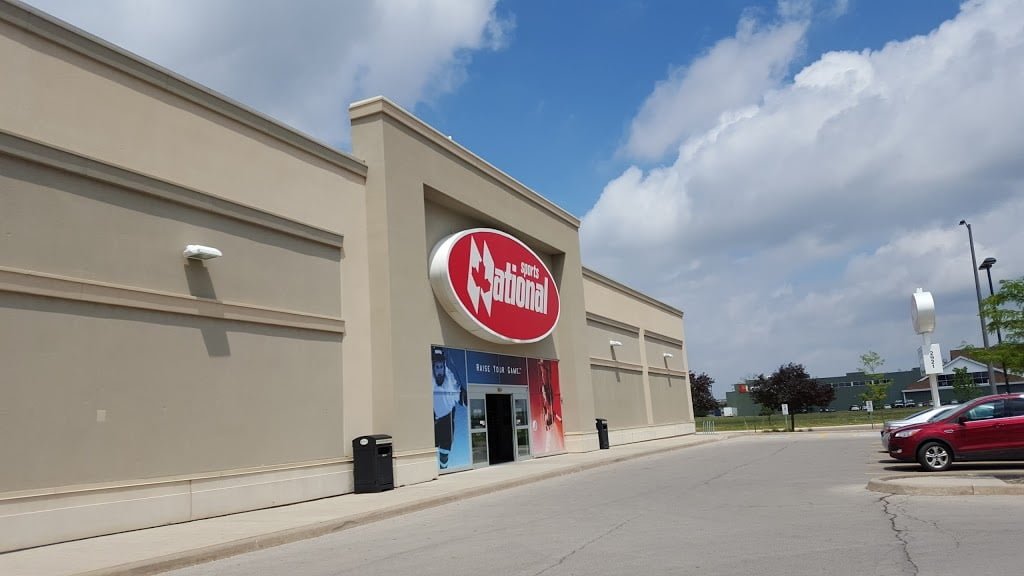
Canadian Tire to Close National Sports Store Chain Amid New Competition
Canadian Tire announced Thursday that it will shut all 18 of its value-priced National Sports store locations in Canada as part of an effort to become more efficient. It comes as competitors begin to expand, including UK-based JD Sports, which is entering the Canadian market this year.
The 18 National Sports locations are all in Ontario, with most of them occupying space in strip malls and big box centres. The retailer also has a store in downtown Peterborough as well as at the popular Erin Mills Town Centre in Mississauga.
Photo: National Sports
Canadian Tire is making efforts to transition employees of National Sports to other Canadian Tire banners, including Canadian Tire stores, Mark’s, Party City, and sports-focused FGL Group (which operates under banners Sport Chek), Atmosphere, Sports Experts, Pro Hockey Life, and Trio Hockey. Fourth Quarter revenue and profits at Canadian Tire rose significantly with net income totalling $488.8 million ending January 2nd, up from $334.1 million a year earlier. Revenue was $4.87 billion, up from $4.32 billion a year earlier.
Retailer ‘Century 21’ Eyes Canadian Expansion Following Summer Bankruptcy
Popular New York City-based off-price retailer Century 21 is reportedly looking to enter the Canadian market amid a global store expansion following its bankruptcy over the summer and the shuttering of all stores. The timeline for the Canadian expansion is unclear as the retailer prepares to open its first new store following the filing in Busan, South Korea.
The Busan Century 21 store will span nine floors and about 100,000 square feet, according to an exclusive report this week in WWD. The store will open in August with a branded facade. It is unclear if Canadian luxury vintage accessory retailer LXRandCo will be part of the mix as was the case with the former Century 21 stores.
Entrepreneurs Al, Ralph, and Sonny Gindi founded Century 21 in New York City in 1961 and the company expanded to multiple locations. After failing to recover disaster insurance, the company filed for bankruptcy over the summer and its remaining stores shut in early December (Century 21 will litigate). The Gindi family and a silent partner bought the intellectual property rights for Century 21 in November for USD $9 million with plans to revive the concept. Industry veteran, Marc Benitez, has been appointed President of the new company and will spearhead the expansion.
According to the WWD report, Mr. Benitez said that Century 21 is targeting Canada, China, Hong Kong, Europe, Australia, and South America for stores in the coming years. An expansion into the United States is also planned at the “right time” with a Manhattan flagship being part of the mix, either on 34th Street or in the Times Square area. It has not yet been established what the company’s real estate strategy might be in terms of choosing locations for Canadian storefronts.
Exterior of Costco location. Photo: Costco
Costco Shuts In-Store Photo Departments
Seattle-based large-format membership club Costco shut all of its in-store photo departments last weekend and is now directing costumers to its photo services still available online. Customers are no longer able to get passport photos, ink refills, photo restoration service, or video transfer service in-store.
Online, the Costco website offers home/office delivery of photo/metal/acrylic prints, enlargements, posters, stationery, photo greeting cards, canvas, photo books, calendars, and business printing, among other services.
Changes to Costco’s offerings reflect changing technologies amid a new digital age. Costco has 102 stores in Canada with a highest per capita penetration in Alberta. The company’s annual sales in Canada surpassed $28.5 billion last year, with 13 million square feet of space and 34,000 employees.
Amazon and Global Optimism Announce Addition of 20 New Signatories to The Climate Pledge
Amazon and Global Optimism have announced the addition of 20 new signatories to The Climate Pledge. Coming from all over the world, they include: ACCIONA, Colis Prive, Cranswick plc, Daabon, FREE NOW, Generation Investment Management, Green Britain Group, Hotelbeds, IBM, Iceland Foods, Interface, Johnson Controls, MiiR, Ørsted, Prosegur Cash, Prosegur Compañia de Seguridad, Slalom, S4Capital, UPM, and Vanderlande.
With the addition of the new signatories, 53 companies across 18 industries and 12 countries have committed to working toward net-zero carbon in their worldwide businesses — which in aggregate has the potential to significantly reduce corporate carbon emissions. The 20 new signatories represent diverse economic sectors, ranging from energy to agricultural and financial services, and although each organization is at a different stage in its journey to net-zero carbon emissions, all are committed to The Climate Pledge’s ambitious goal of meeting the Paris Agreement 10 years early.
Signatories to The Climate Pledge agree to:
• Measure and report greenhouse gas emissions on a regular basis.
• Implement decarbonization strategies in line with the Paris Agreement through real business changes and innovations, including efficiency improvements, renewable energy, materials reductions, and other carbon emission elimination strategies.
• Neutralize any remaining emissions with additional, quantifiable, real, permanent, and socially beneficial offsets to achieve net-zero annual carbon emissions by 2040 — a decade ahead of the Paris Agreement’s goal of 2050.
Each company is implementing science-based, high-impact changes to its business to help decarbonize the value chain, including innovating in circular economy, deploying clean energy solutions, and mobilizing supply chains to reach net-zero by 2040.
“As the U.S. takes an important step forward in the fight against climate change by officially rejoining the Paris Agreement this week, I am excited to welcome 20 new companies to The Climate Pledge who want to go even faster,” said Jeff Bezos, Amazon founder and CEO.
Aura at College Park. Photo: Aura at College Park
Former Hard Candy Gym Space in Toronto for Sale
On behalf of Toronto Standard Condominium Corporation No. 2421 & 2446, Cushman and Wakefield has announced the sale and lease opportunity for the 4th floor retail space within the Podium at Aura Condos, located at 382 Yonge Street in Toronto.
The Property provides the investor, user, or tenant with an opportunity to acquire and/or occupy a vacant 40,000-square-foot existing retail unit, intended for fitness and wellness concepts, in one of the country’s most densely populated and rapidly-growing urban areas.
Located right at the corner of Yonge and Gerrard Streets, the unit was formerly well known for Madonna’s Hard Candy Fitness, Later Crunch Fitness. The space hosts 19-foot-high ceilings and windows and includes unit 1, level 2 of Toronto Standard Condominium Plan No. 2421. The purchasing price is set at $22,000,000.00, with additional rent estimated at $10.50 per square foot. Available for demise and/or reconfiguration for either a purchaser or leasee, the 4th floor unit is located in the same retail podium and shares the same elevator bank as Marshalls (3rd floor), Bed Bath and Beyond (2nd floor), RBC, BMO (ground floor).
Map of the 4th floor of Aura at College Park. Image: Cushman and Wakefield
Aura is currently the tallest residential building in Canada, at 79 stories with over 1,000 units and not only does this part of Downtown Toronto capture the highest population density in Canada, it also arguably defines the country’s flagship retail epicentre, featuring some of the best brands in the world.
Retail Insider recently reported on SIR Royalty Income Fund‘s announcement regarding the closure of all three restaurants within the Aura centre — Scaddabush Italian Kitchen & Bar, Reds Midtown Tavern, and a Duke’s Refresher & Bar. Given the current operating environment and uncertain future prospects, SIR decided to exercise its options and return the property to the landlord.
Rendering of the Grocery Neighbour truck concept. Rendering: Grocery Neighbour
A Toronto-based company is planning to launch a ‘grocery store on wheels’ which could be a game changer for some neighbourhoods and places lacking quick access to larger-format supermarkets. It is considered to be so innovative that Ebeltoft Group recently named it as the global innovator of the year.
Frank Sinopoli, CEO of Grocery Neighbour, said a mobile grocery store concept was conceptualized at the end of March 2020 as an opportunity within the COVID-19 pandemic.
“We’re in the middle of launching. What we’ve done at this point is test it out. We’ve done beta. People run through and experience it. Nobody has ever done this before — not at this scale,” said Sinopoli.
“People have put groceries in the back of a truck but we’ve actually put wheels on a store is the way I look at it. We have multiple temperatures, we have positive air flow. It’s high technology. So it’s actually a store on wheels not groceries inside of a truck. It’s a mobile grocery store that runs into neighbourhoods that have voted it in.
“The idea is we want to focus on the underserved neighbourhoods that have to drive 15 plus minutes to get to a grocery store. It is completely autonomous. So you scan items on your phone, you check out on your own. Nobody is touching any of the products. There’s a digital lineup system. The whole experience itself is quite unique, it’s quite streamlined but more importantly it’s just ridiculously convenient for people.”
The trucks are 53 feet in length. The concept is neighbourhood centric with a focus primarily on meats, produce, dairy, and bread with a selection of CPG (consumer packaged goods). The trucks can carry up to about 2,000 SKUs (stock keeping unit).
“There are some items that are standard but because neighbourhoods tend to create patterns within themselves. We become part of the neighbourhood and we gradually learn and understand what the buying habits are and demands are and we adapt,” said Sinopoli.
The idea is aiming to officially launch in the next 30 to 90 days.
“We’ve had over 1,000 serious franchise requests from around the world,” he said. “I’m in the middle of signing deals in the Dominican Republic. I just signed a few on the West Coast of the U.S. I’ve signed more here than anywhere. We’re rolling out with two to three (trucks). Until it gets rolling and we figure out everything at scale, I don’t want to try and launch a hundred stores in the first year.
Rendering of the Grocery Neighbour truck concept. Rendering: Grocery Neighbour
“By year five, we’ll have a thousand stores out there. I know it sounds crazy but the demand is there and there’s enough franchise demand, investor demand.”
Sinopoli said the key is finding neighbourhoods located more than 15 minutes from a major grocery store. The use of the mobile grocery store will depend on each neighbourhood and what rights have been granted. In some of the neighbourhoods the store will “inch” its way through with designated stops. Other neighbourhoods might find the mobile grocery store stationed at a specific location.
Because of the technology, the mobile store knows when people are accessing it and leaving it. In that way, said Sinopoli, the lineup system can be managed digitally.
“I see a bigger play here. I see an opportunity to supercede a lot of the online grocery world because in the neighbourhoods where we exist nobody will be able to physically get there faster than us and then not only will we be able to get there faster but we’ll solve the price issue. We won’t have a minimum spend because we’re already there. Timing. We’ll give you groceries faster than you can physically get them yourself in under 20 minutes because we’re already there,” he said.
Oodle Noodle location in Terwillegar Heights, Edmonton. Photo: Oodle Noodle
It has been a tough year for many businesses due to the COVID-19 pandemic but Edmonton-based Oodle Noodle has experienced some success in expanding its brand and raising money and food for charity during these turbulent times.
Ziad Kaddoura, general manager of the company, said it will open a Calgary branch to focus on its southern Alberta business with the potential of opening 10 stores within the coming 10 years.
It is also opening its first food court location in Edmonton, which will be a great place to test its operation in a food court setting.
In addition, the chain is looking at adding three more locations within the Greater Edmonton Area.
And its charity initiative, which is at the forefront of its branding activities, has raised $100,000 and 20,000 meals in the past year for organizations and people in need.
The authentic Asian restaurant, which first opened about 12 years ago by Founder, Sonny Pham, with one location on Whyte Avenue, today has 14 locations, which are all in the Greater Edmonton Area.
Photo of popular Oodle Noodle dish ‘Penang Laksa’. Photo: Oodle Noodle
“We’re looking at opening a minimum of five locations this year,” said Kaddoura. “We’re looking at expanding in the Greater Edmonton Area. We’re looking at opening in St. Albert, as well as Fort Saskatchewan. We’re looking at doing our first food court location here in Edmonton and that’s going to be a first for us because we don’t have any food court locations. Depending on the learnings, we’re going to create a concept design that basically has a food court footprint. That’s going to be this year as well.
“In Calgary, we set up a subsidiary that is going to be managing the expansion in southern Alberta. That will include Airdrie all the way down to southern Alberta. We’ve already set this entity up and we already have two franchisees that have committed and we’re looking at opening two locations I would say in the next eight months.
“Hopefully by year end we’re looking at having 18 to 19 locations.”
Kaddoura said many of the company’s franchise owners are becoming multi-location owners because they’re happy with the results and they’re happy with the relationship with the franchisor.
He said the company’s focus on charity remains a strong core value of its operations.
“Our contributions have all been to smaller charities that aren’t usually covered. They aren’t given attention because they are smaller charities,” added Kaddoura. “We’ve done things around animals. We’ve done things around dogs and cats. Youth. Homeless. We’ve done things around Indigenous artists. We’ve supported artists.
“We’re very much a community focus. We’re going after charities in our communities where we operate. We would like you to help us. They’re very happily using our platform to reach a higher number of people. We like bringing awareness of these charities to our customers as well as to the community we operate in.”
Kaddoura believes that in business, if you are true to your beliefs, COVID or no COVID, you are going to grow the business and grow the brand if you are genuinely thinking of your community and you’re giving back in a genuine way.
“Not everything we do has a commercial reason. I think that is important,” he said. “Our success is not set by how many stores we have and how much we are doing per store. Our success is set by how are we becoming an added value to the community where we’re operating whether that means providing jobs which is very important or providing an opportunity for people to own their first business.”