Many markets in Canada will likely go through a second lockdown. With potentially 60,000 cases a day within weeks, more regional lockdowns seems inevitable. The virus knows no borders, and the virus is now spreading like a wildfire.
Toronto and Peel region are now experiencing a second lockdown in 9 months as of Monday. As news of a vaccine in reach are giving hope, public health officials will naturally want to buy precious time and save as many lives as possible. Questions about the resiliency of our food supply chain are now emerging again. Rest assured though, this new cycle of lockdowns will be different.
In March, the virus caused an abrupt standstill to our daily lives. Most of the food industry were not anticipating such a shock. Two things happened which likely made the spring a once in a lifetime event. First, we saw the complete collapse of one major sector: restaurants. According to StatsCan, monthly food retail sales in Canada were approximately $7.7b, versus $5.3b for food service. By May 2020, the last month before restaurants started to re-open, food retail generated $7.8b in sales in May 2020 versus $891m in food service. Since many food service outlets have changed their business models, sales will never reach such lows again.
The other noteworthy factor is us, the consumer. Back in March, lets face it, many of us went to the grocery store without knowing when we would be allowed to go back again. That is one main reason why panic-buying occurred. The virus was still quite foreign to us and most did not know how public health was going to deal with the pandemic. The pace of how new regulations are implemented is more manageable now. Decisions from governments now are also much more predictable.
Our behaviour has also changed. Before the pandemic, Canadians went to the grocery store slightly more than twice a week and spent just under 25 minutes per visit. Today, for the first time in more than 20 years, the average Canadian visits the grocery once a week and spends about the same amount of time per visit. Shoppers are more disciplined, focused and tend to stick to a predetermined plan without buying more than they need. As we have all become better food inventory managers at home, better cooks, better gardeners, the Canadian average household is wasting less food now than during the first few months of the pandemic, according to some reports. We are much more methodological as shoppers now. We just needed a pandemic to make that happened.
Food e-tailing in Canada is also much more developed. In fact, since March, the experience of buying food online has changed dramatically. Initially food orders took days to be delivered, whereas now orders are processed within hours. Many processors, farmers’ markets, restaurants and of course, grocers have pivoted, consumers have more options. Kraft-Heinz is now operating a restaurant. Loblaw, our country’s number one grocer, now sells meal kits from restaurants. Loblaw went from a grocer to a food broker. According to a recent survey by Dalhousie University, 63.8% of Canadians have ordered food online in some capacity over the last 6 months. The same survey estimated that 4.2 million more Canadians are ordering food online at least once a week, which is more than before the pandemic. In other words, COVID-19 has already helped to create new habits. And when asked if Canadians intend to order food online at least once a week after the pandemic, 49.4% intend to do so. That is almost half of Canadians surveyed.
Going into a second phase of lockdowns, the food industry is in a much better position, but some risks remain. The border has remained fluid throughout the pandemic. With a new tenant in the White House, we know the Biden/Harris administration will have a different approach to the virus. Let us hope it does not involve compromising the operability of food supply chains on both sides of the border.
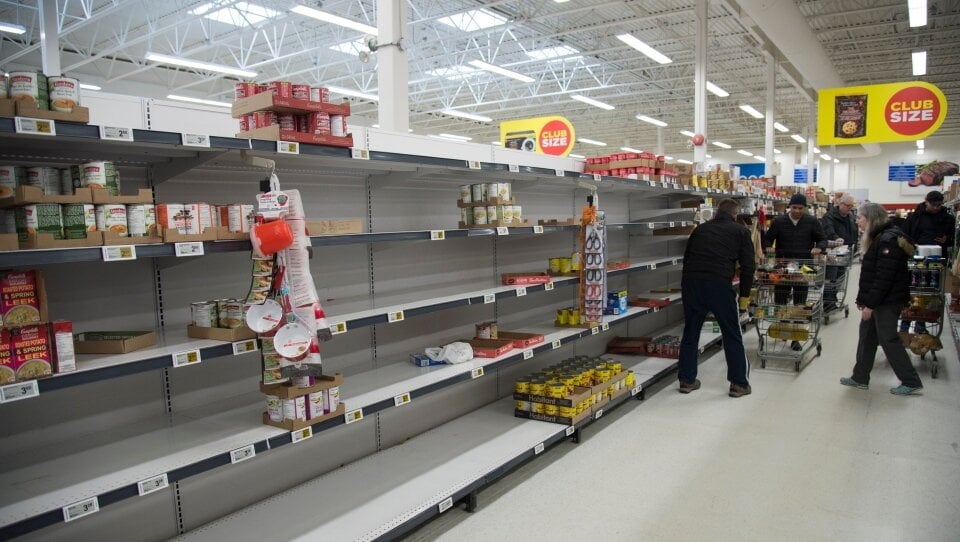
Analytics are another issue. Food supplies are primarily determined by historical sales order data and not by actual consumption and market data. The disconnect between the two caused the dichotomy of shortages in some food products and surpluses in others. The need to digitize the food supply chain is greater than ever. As the industry adopts different analytical methods and embraces the use of new technologies, this will certainly help.
Food processing remains our food supply chain’s greatest weakness. The need for more nearshoring, local sourcing, and domestic food manufacturing is much more acute. Costs of distribution in Canada and access for food manufacturers to domestic production of raw materials and packaging are major headwinds. This needs to change. More investments in logical infrastructure cannot be underscored enough. Any trucking company will tell you that Canada needs work in this area, urgently.
And finally, human capital. Several incidences made the sector look bad. First, the “hero pay” affair was mismanaged by our grocers and was a complete public relations disaster. Also, with many closures in food processing and farming, particularly foreign workers succumbing to COVID-19 this summer, recruitment has become much more challenging. Food manufacturing in Canada has over 28,000 vacancies now, the highest it has ever been. We can invest and re-skill all we want, but overly generous publicly funded financial aid programs for Canadians will only make our food supply chain more fragile and less resilient. The last thing the food industry needs are governments incentivizing people to stay home. It can be overdone, despite public health concerns. The food industry needs workers, desperately.
As for all of us, we should continue to trust our food supply chain. Our food industry has delivered and will continue to do so.