Retail Insider is streamlining its Canadian retail news from around the web to include a handful of top news stories that can be viewed quickly during the day. Here are the top stories from the past 24 hours.
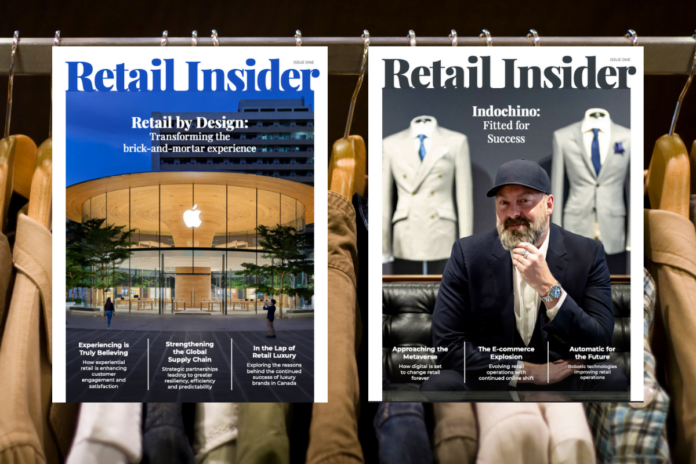
Retail Insider Media Ltd. Announces Spring 2022 Launch of Canada’s Premier Retail Industry Digital Publication
Retail Insider Media Ltd. is proud to announce the introduction of its ground-breaking digital publication Retail Insider the magazine. Set for quarterly distribution, the magazine will launch its first issue in Spring 2022, further expanding the company’s already impressive media offering. It’s a product that’s been hotly anticipated by industry players across the country and will fill a void to become Canada’s only national retail magazine publication. And, according to Craig Patterson, Founder and President/CEO of Retail Insider Media Ltd., it’s doing so with the purpose of creating and providing the most engaging, thought-provoking and useful content for the industry’s decision-makers and their teams.
“The magazine is a really unique proposition in that it’s the only of its kind covering the trends and happenings shaping the current and future state of the retail industry in Canada,” he asserts. “It’s being developed mindfully by a team that understands both the publishing and retail industries and will quickly become recognized as a premier source for executives and their teams to gain critical information and insights related to their operations. And, we’re not only dedicated to identifying the trends. One of the mandates of the magazine is to dive deep into the challenges and opportunities facing retailers and brands through the development of research and expert analysis in order to provide a clear, holistic view of the changing landscape. In addition, content is being crafted and presented in a way, with creative storytelling, compelling stats and striking design, that will reflect the excitement and verve of retail.”
Tackling retail’s biggest challenges
The innovative publication is led by its Editor-in-Chief and long-time retail industry reporter and analyst, Sean Tarry. With a breadth of experience working within the publishing industry, which includes 11 years serving as Editor of Publications at Retail Council of Canada (RCC) and Editor-in-Chief of its award-winning but now defunct publication, Canadian Retailer magazine, Tarry brings with him unrivalled ability concerning magazine development and an acute awareness and understanding of the forcing functions regularly impacting businesses. This rare combination of editorial acumen, creativity and industry knowledge, says Patterson, sets him apart from most content creators, and made him the obvious choice to take charge of the magazine.
“I’ve known and have worked with Sean for a long time now,” he says. “Our paths crossed years ago at one of the many industry functions, and we quickly got to know each other through our common interests and dedication to covering the exciting world of retail. He’s a very thoughtful and intuitive journalist and editor who has an ear for a story and a real knack for speaking with industry professionals and observers to uncover the truths and insights most relevant to the continued growth and progress of the industry. Because he’s been covering the Canadian retail beat for so many years now, he’s amassed an incredible sense for the industry and developed a scope of expertise that is going to serve the magazine extremely well, allowing us to tackle issues from all angles.”
Research-driven reports
Patterson goes on to explain that the breadth of the issues featured will also be impressive, including everything from supply chain and logistics and human resources to the latest in enterprise technology and store design and operations. He says that the content will be meticulously developed with the intention of aiding the efforts of Canadian businesses of all sizes, operating in a multitude of categories and verticals. Each issue’s stellar schedule of content will also be complemented by a special piece of proprietary research conceived and produced in partnership with some of the country’s leading agencies and firms. And, explains Patterson, it will all be presented as a reflection of the industry, capturing the essence of everything that makes it so unique.
“We’re working on a lot of really interesting research projects that will be included within each issue as a special report featuring exclusive industry information and analysis,” he says. “For instance, within the first issue of the magazine, we’ll be providing some insights on plans around international brands entering the Canadian market and homegrown brands that are expanding their operations. Later in the year we’ll be releasing our Canadian Shopping Centre study as part of another issue as well as taking a look at the future of retail in Canada. It’s all very exciting and will serve as a platform to not only explore and dissect the retail ecosystem, but to highlight the innovation and creativity inherent within the Canadian retail industry, too, celebrating the incredible leaders and their teams who make it all happen.”
Highlighting innovation and creativity
In addition to the four digital issues of the publication, a special print edition of Retail Insider the magazine will be distributed, focussing on the latest advancements in store design, the evolution of the integrated retail experience and a recognition of the best of Canadian retail innovators. Offering such comprehensive and cutting-edge coverage of the Canadian retail scene, in combination with its position as the sole authority on the shifts and trends impacting the industry, the magazine seems to present the perfect platform for advertising and sponsorship. However, although Patterson recognizes the clear opportunities, he emphasizes his team’s commitment to creating and delivering a meaningful, inspirational and indispensable issue of content every quarter for their readers, growing the publication from its first release.
“The retail industry in Canada is so innovative, driven and diverse. We want to make sure that our coverage of the industry, and the way we present it to our readers, is representative of those characteristics, doing them justice. We want to become the go-to source for the most insightful, captivating and relevant research and narrative around the issues impacting retailers and their partners most. We’re looking forward to providing this for our readers. And, because the retail industry moves at such an incredibly fast pace, serving a consumer whose behaviours and attitudes are ever-changing, the potential for Retail Insider the magazine to establish a practical and essential purpose within the industry is immense.”
For advertising and sponsorship inquiries, to download a copy of Retail Insider the magazine’s 2022 media kit, or for more information about this unique and exciting publication, visit therimagazine.com
Retail Insider Media Ltd. Announces Spring 2022 Launch of Canada’s Premier Retail Industry Digital Publication
The retail industry is not really like any other. The speed at which it travels, soaring on equal parts innovation, intuition and inspiration, is breakneck. And those who ply the trade are often the first to attest to the fact. Retailers understand better than most the need to perform at consistently high levels while constantly shifting and adapting to changing market conditions, macroeconomic factors and evolving consumer behaviour. And they’re acutely aware of the pressures that result from their need to also accurately discern the current landscape while identifying trends before they impact their businesses. It’s a daunting task, to say the least, and one that seems to become increasingly more challenging and complex as we move forward. They are challenges and complexities that Sean Tarry, Editor-in-Chief of Retail Insider the magazine, says are resulting in a range of results for businesses across the country. And, he adds, they represent the catalyst for the creation of the forthcoming digital publication.
“Canadian retailers are incredibly resilient,” he says. “They’re also representative of some of the savviest, most innovative and hardworking people that you’re going to come across in any industry or walk of life. With the launch of Retail Insider the magazine, we want to highlight everything that’s great about Canadian retail. However, we approach this publication with a strong commitment to helping retailers navigate a landscape that’s changing faster than ever before amid an accelerated digitization of the world around us and an ever-evolving consumer. In order to do this properly, we assume it as our obligation to dig deep into both the issues impacting the industry today, as well as those that loom on the horizon, accurately identifying the challenges and opportunities that might arise as a result or consequence, and mapping out the actions that can be taken to address them. It’s a really exciting venture for us, and one that we’re approaching with focus and an accountability to serve the industry with the most reliable, trustworthy and relevant content possible.”
Analysis of trends
Retail Insider the magazine joins a growing list of offering that’s provided by Retail Insider Media Ltd., which includes its renowned website that features daily retail news from across the country and its podcasts that regularly present conversations between Retail Insider Media Ltd.’s Founder and President/CEO, Craig Patterson, and some of the Canadian industry’s most prominent retail leaders. It’s a product that helps to broaden the range of coverage that the fast-growing media purveyor is responsible for. And, according to Tarry, in doing so, the magazine also provides the perfect complement to the content that has established Retail Insider Media Ltd. as a brand and the elements of production that have laid the foundation of its growth.
“Retail-Insider.com has, for quite some time now, been known throughout the industry as the de facto source for current and breaking retail news and information,” he asserts. “There’s no other source like it when it comes to getting ahead of retail news before it happens. With the magazine, I want to complement the website offering with the same strategy and execution, but with a longer view that focuses on the trends and forcing functions impacting the industry today and into the future. The content is going to be extremely research-driven, featuring analysis and prognostication from the industry’s leading thinkers and top innovators in order to identify the path forward for the industry. The magazine’s going to provide the Retail Insider community with another lens through which to view the industry, rounding out the brand’s already excellent content.”
Breadth of content
Retail Insider the magazine Editor-in-Chief, Sean Tarry, Retail Insider Media Ltd. CEO and Publisher, Craig Patterson and Co-Editor-in-Chief of Retail-Insider.com, Dustin Fuhs
Tarry enthusiastically goes on to explain that he and the Retail Insider team will not be shying away from any topic or area of interest as long as there is a potential impact on retailers, their consumers and the markets they operate in. He cites the continued digitization of the industry and the development of supporting technologies, evolving consumer behaviour and preferences, the continued rise of ecommerce, the shop local movement amid enhanced globalization, and the increasing importance of environmental, social and governance issues as just a few of those that will be intensely explored and written about within the first few editions of the magazine. It’s a promised breadth of coverage that Dustin Fuhs, Co-Editor-in-Chief of Retail-Insider.com and Associate Publisher of Retail Insider the magazine, says is impressive and instantly sets the publication apart from anything else in the market.
“There’s literally nothing else like the magazine anywhere,” he says. “The way Sean has developed this product, based on his years of experience and expertise, is going to translate into a comprehensive and holistic view of the industry for our readers. Every type and format of retailer, operating in just about every category, will be engaged by content related to every aspect of the retail business, including supply chain, information technology, human resources, loss prevention, customer service and in-store operations, merchandising, ecommerce, and on and on. Essentially, if you’re operating within retail, you’re going to need every edition of this magazine as a resource and reference for your entire team. It’s going to serve as a pulse for the industry concerning the current state of affairs while also providing a view into shifts and trends that will pose impact down the line.”
Experience and expertise
As Fuhs points out, Tarry possesses a wealth of experience within both the publishing and retail industries, having served for 11 years as Editor of Publications at Retail Council of Canada and Editor-in-Chief of its now defunct Canadian Retailer magazine. His tenure at Canada’s national retail trade organization provided him with invaluable exposure to the industry, equipping him with an intimate understanding and appreciation for the complexities of the retail business. Beyond the acumen he’s cultivated, however, Fuhs suggests that it’s Tarry’s nose for the story and participation in its development from a journalistic perspective that sets him apart from most other editors.
“Throughout his career reporting on and writing about Canadian retail, Sean’s developed a real sense for the information that matters most to those within the industry,” he says. “He’s managed to cultivate relationships with some of retail’s top leaders and innovators, allowing him to engage in significant conversations and remain in the know with respect to all of the latest shifts and trends that are happening. And, he’s also incredibly involved in every aspect of the publication, from managing advertising leads and developing marketing materials to providing art direction and overseeing production. What’s most impressive, however, is the way he works with all stakeholders involved to develop deep, meaningful content that uncovers valuable insights and starts conversations. We’re looking forward to launching our first issue and working to grow the publication every step of the way.”
The advancement of retail in Canada
The excitement surrounding the launch of the first issue of Retail Insider the magazine is palpable when speaking with the team. It’s excitement that Tarry says is borne out of Retail Insider Media Ltd.’s inherent desire and commitment to providing the information, data and tools that retailers within the industry crave in order to benchmark against competitors, assess and explore best practices being deployed throughout the industry and improve efficiencies across the entire organization. He’s eager to continue following, documenting and contributing toward the advancement of retail in Canada, describing the magazine as a cog in the giant wheel that keeps the industry turning, forever moving forward. And, in his estimation, this may just be the perfect time to introduce this product to the Retail Insider Media Ltd. community.
“Retail is such an incredible industry to be a part of. Anyone who’s ever experienced it is aware of the pace at which it moves, the innovation that’s required to keep up and the intelligence and savvy that entrepreneurs and business leaders need to demonstrate on a daily basis in order to consistently enjoy positive outcomes. It’s an environment that’s challenging at the best of times. And, given the circumstances that have impacted operations over the course of the past couple years, merchants and their teams across the country, from small business owners and operators to national brands, need all of the support that they can get. The Canadian retail community is a unique one, known for its strength and creativity in the face of adversity. Retail Insider the magazine is going to provide a tremendous platform to reflect and celebrate everything that makes the industry in Canada so special, while also providing meaningful content that will help them drive continued growth and success.”
The ultrafast delivery startup Tiggy was an idea that came to Eugene Bisovka while he was living in Russia.
Eugene Bisovka
With four dark stores in Vancouver with a mission to deliver grocery orders within 15 minutes, the brand has a vision to expand into other major Canadian markets with Toronto a key target.
The first store was launched in September.
Bisovka, who is CEO, said the company has raised $6.35 million in seed funding to grow the brand.
“We have our own stores, our own delivery team, picker team, store managers, own inventory. We deliver groceries within a 1.5 mile radius within one store and all orders are placed through an easy-to-use mobile app both for iOS and Android,” he said.
Image: Tiggy App
“It’s a new way of shopping for groceries online. So instead of going to a store you just open the app, place an order and it gets delivered in 15 minutes and it’s super easy to use compared to most of the experience customers get with other services.”
The company, in a news release, said global consumer trends are shifting towards quicker shipments, no delivery fees, and the possibility of ordering as little as a couple of bagels without an obligatory minimum purchase.
“Customers in many markets, from the UK to Japan, buy food using rapid grocery delivery apps. The request for on-demand product delivery is increasing in Canada, too. Since the pandemic broke out, 66 per cent of Canadians cook at home more often, while 75 per cent are already engaged in online grocery shopping,” said Tiggy.
“Previously I lived in Russia and Russia has I guess one of the most developed markets in terms of this business model,” said Bisovka. “Everyone is now ordering in this way because it’s so easy, it’s so convenient, especially for the younger generation that gets used to companies like Uber. When you have instant taxi, you want to have instant groceries as well.
“I had two different ventures in Russia. One of them was also like delivering meals and it was growing really fast. I was a customer myself (for delivery services of groceries). I probably placed like 1,500 orders previously. I simply stopped going to grocery stores.
“I was really wondering if there were some places in the world that this model didn’t happen to launch for any reason. Canada looked really interesting in terms of this. I thought what if we brought the expertise of this business model, knowing exactly how one should do it in terms of operations, how to build stores and the customer experience, and bring it to Canada. As soon as we launched we got so much positive feedback, traction and eventually it worked out. People really love it and we’re growing a lot.”
Image: Tiggy App
Bisovka said the company wants to be available in most major cities within two to three years.
“We are expanding into Toronto. We want to cover Vancouver really fast. Within a couple of months we’ll cover 80 per cent plus in Vancouver. In Vancouver, at least eight (stores). In Toronto, at least 50 locations,” he said.
Bisovka said a typical store has 1,500 SKUs which will be increased to 2,000 SKUs. It’s designed this way so orders can be picked up quickly to deliver in 15 minutes.
“Quick-commerce will take 20 per cent of all grocery retail in around 10 years,” said Oskar Hartmann, a co-founder and an investor. “It’s not a game where one corporation can easily monopolize the market. I invest in local teams with big potential that are set on turning into leading players in the confines of one country.”
Did you receive them? Found in many mailboxes in this second pandemic holiday season were paper catalogues from Toys “R” Us, Mastermind Toys and perhaps most surprisingly, the highly profitable digital retailer Amazon. Amazon first launched a toy catalogue in 2018 and mailed it to millions of customers.
While it might seem that paper catalogues would be relegated to history with the advent of e-commerce, it seems as if, at least for these retailers, they are still part of doing business.
To understand why catalogues formed part of these retailers’ promotional strategy, let’s explore some retail history.
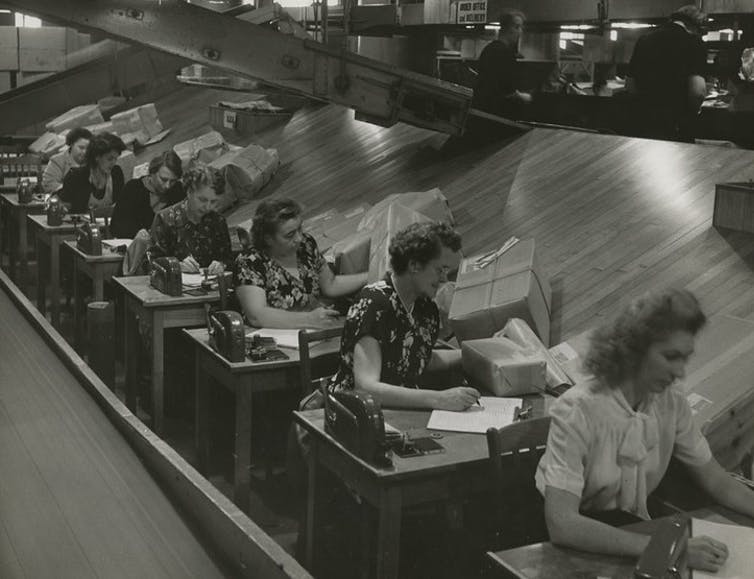
Catalogue mailing room in Toronto, 1953. (Sears Canada. Panda Photography. Library and Archives Canada, e011172127/Flickr), CC BY
Nostalgia and childhood
The way we celebrate holidays is based in part on what we learned from our families as children. Consumer studies researchers have examined how holidays ideally involve the creation of special foods that take time and effort, the coming together of special people in our lives and making memories that we recall with pleasure long afterwards.
Thinking positively about people, events or places that happened in the past is called nostalgia. We can even feel nostalgia for something that occurred before we were born through seeing objects from the past, or hearing the memories of others.
Some contemporary consumers or their grandparents in Canada today had the experience of receiving or reading the Eaton’s and Sears Christmas catalogues as children. Sears even called their Christmas catalogue the “wish book.”
While it is possible to remember without physical artifacts, the three dimensional and tactile information received from interacting with paper documents help to reinforce people’s memories and knowledge retrieval. People may have had the experience of going carefully through each catalogue page, marking it up and folding down the pages — whether or not they received what they wanted.
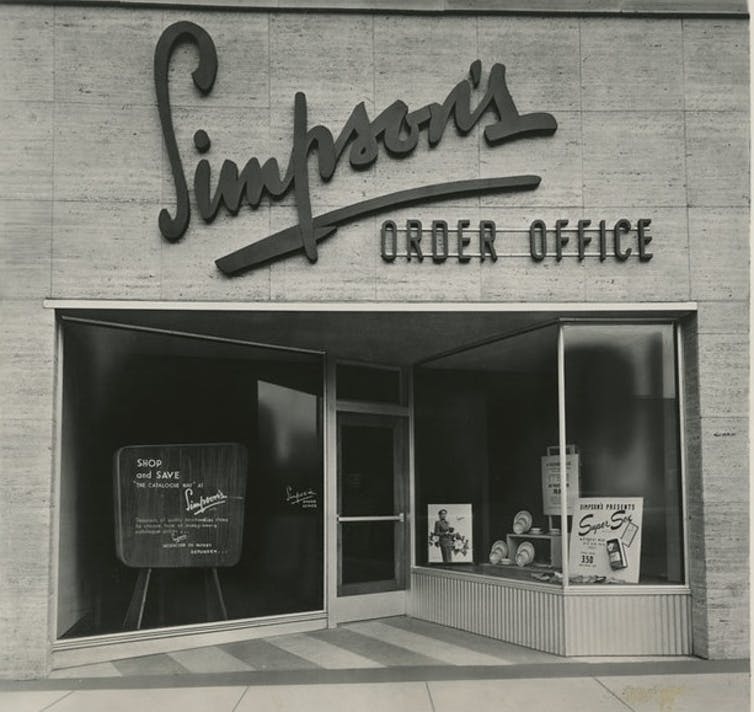
Simpson’s mail order office, Sarnia, Ont., 1952. (Sears Canada. Photo Engravers and Electrotypers Ltd. Library and Archives Canada, e011172139 / Flickr), CC BY
As Archives Ontario notes, not only did the Eaton’s catalogue make an emotional impression, it even made its way into some Canadian literature. For example, in The Hockey Sweater, by Québec writer Roch Carrier, a devastating mail-order mixup means a most unwanted Toronto Maple Leafs sweater from Eaton’s arrives at his childhood home.
Emotion aside, how do catalogues influence sales?
While nostalgia can be a powerful motivator for consumers who consider shopping today at physical toy stores or online retailers, companies must consider catalogues’ effects on sales and return on the investment.
Toys “R” Us and Mastermind Toys (both physical stores) and Amazon have a short corporate histories compared to Eaton’s and Simpson’s (later Simpsons-Sears), and none had mail-order businesses. Mastermind Toys and Amazon grew up during the advent of e-commerce, so using this seemingly old-fashioned technology seems curious.
Home-delivered paper catalogues can be part of leisure reading and are artifacts with esthetic, symbolic and instrumental value. Catalogues present images and text that are viewed as the retailer intended, without the mediation imposed by the consumer’s screen size and device capabilities.
In the face of criticism of its impact on small and medium retailers, Amazon set up its Shop Local Campaign to promote products from small and medium Canadian companies. I believe sending paper catalogues helps them tap into the long tradition of Christmas catalogues and connect in an emotional and surprising way with their customers.
Retail Insider is streamlining its Canadian retail news from around the web to include a handful of top news stories that can be viewed quickly during the day. Here are the top stories from the past 24 hours.
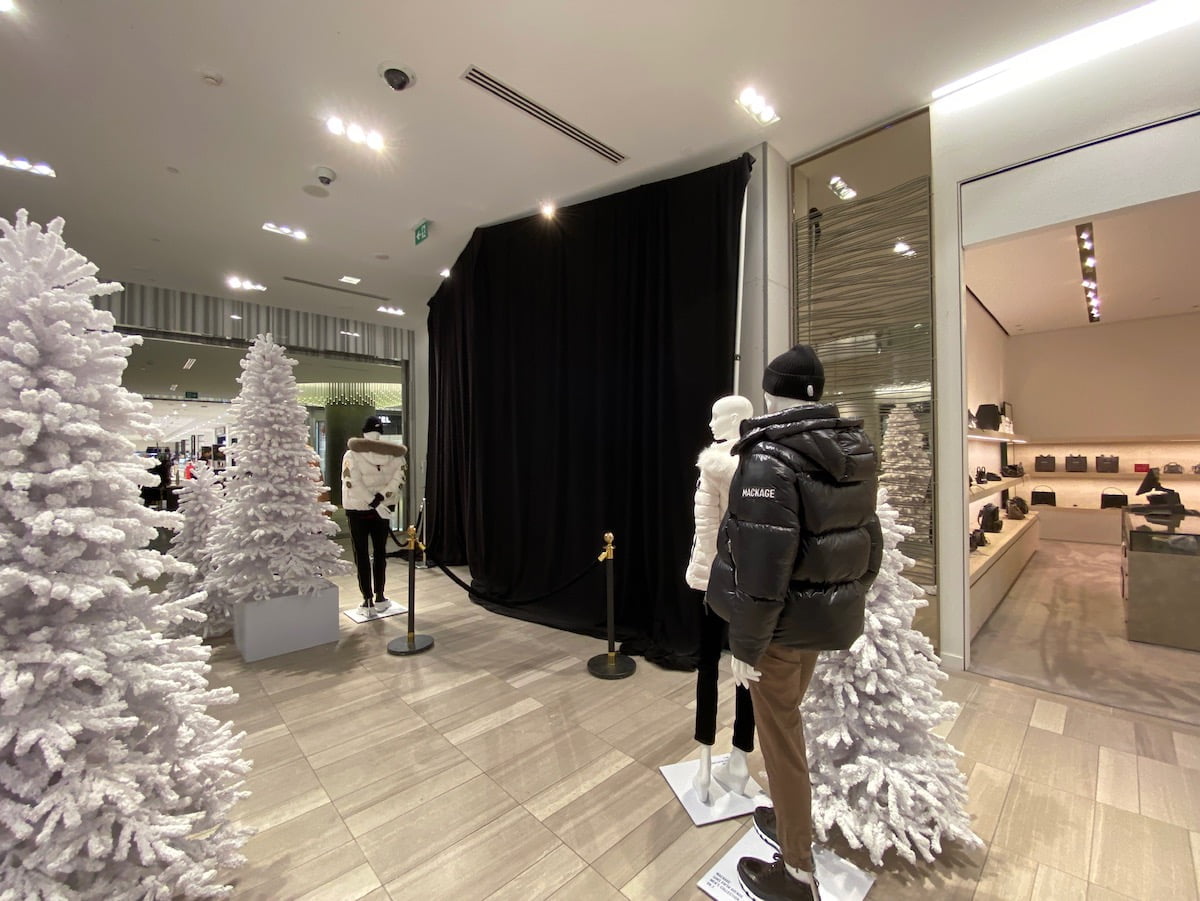
Shuttered Louis Vuitton at Saks Fifth Avenue Queen Street on January 3rd, 2022 (Photo: Dustin Fuhs)
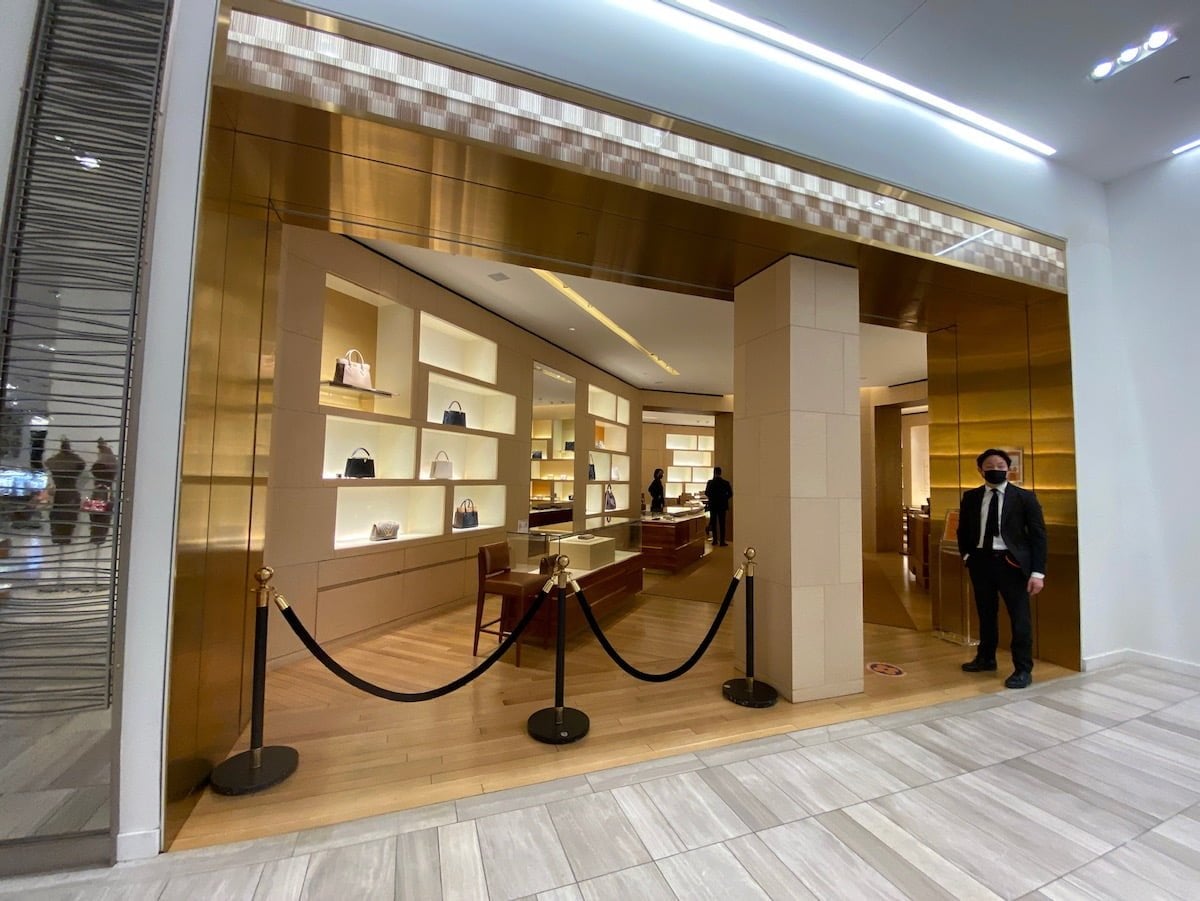
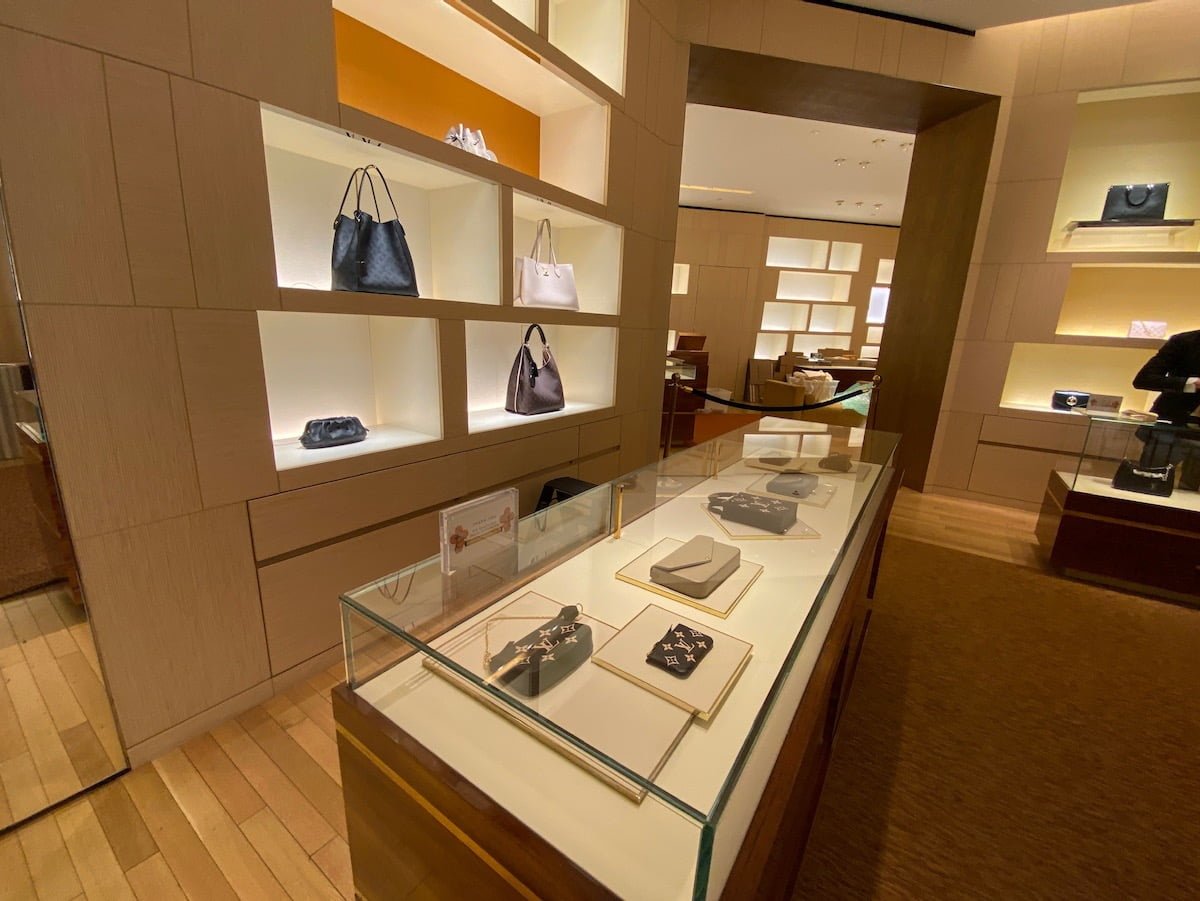
LVMH-owned luxury brands Louis Vuitton and Christian Dior have exited concession operations at Saks Fifth Avenue in downtown Toronto. Louis Vuitton had been present since the opening of Saks in 2016 and Dior opened its two boutiques at Saks several months later.
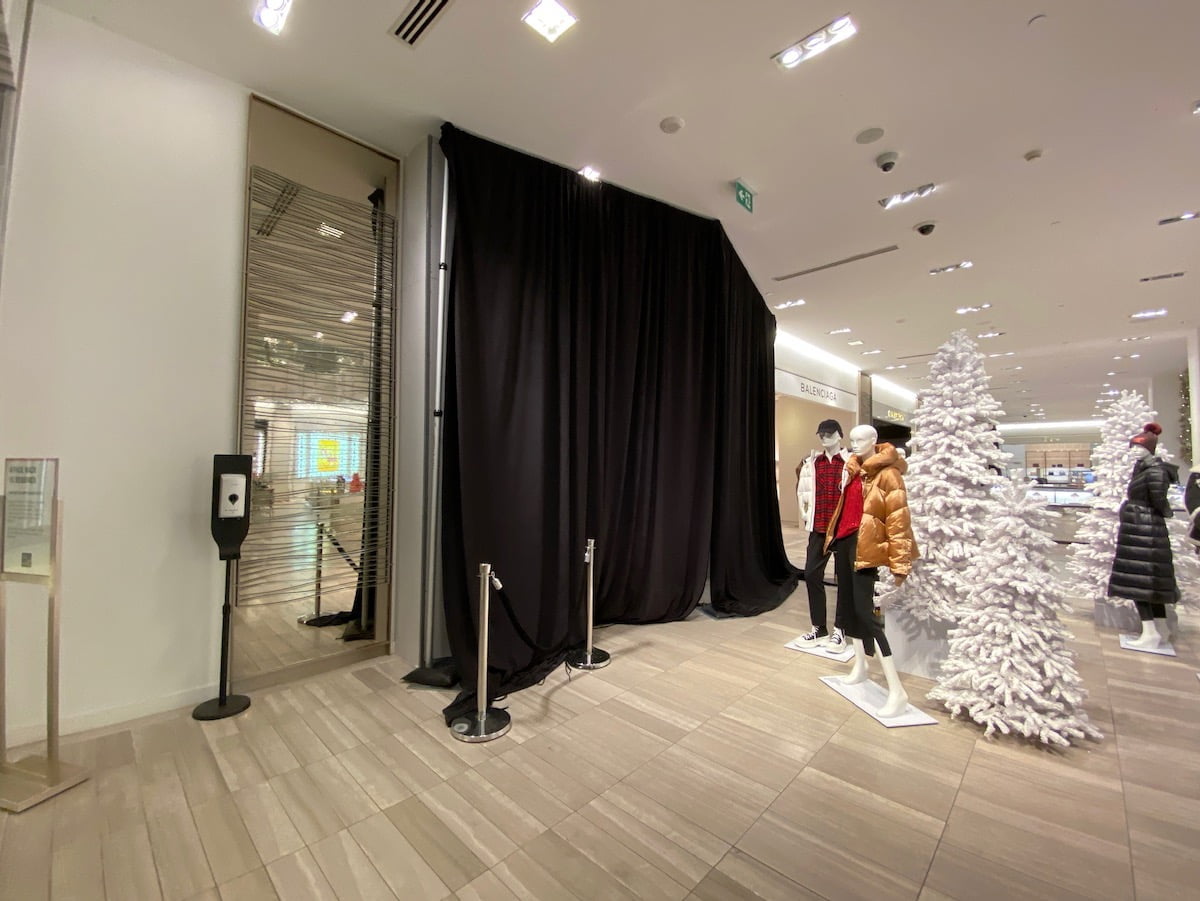
The 1,200 square foot Louis Vuitton boutique opened along with the first Saks Fifth Avenue in Canada on February 18, 2016. The boutique carried a range of bags and accessories and had a branded facade on the exterior of Saks facing both Yonge and Queen Streets. As of press time the street-facing Louis Vuitton facade had been covered over and black tarp had been placed over the entrance to the former boutique.
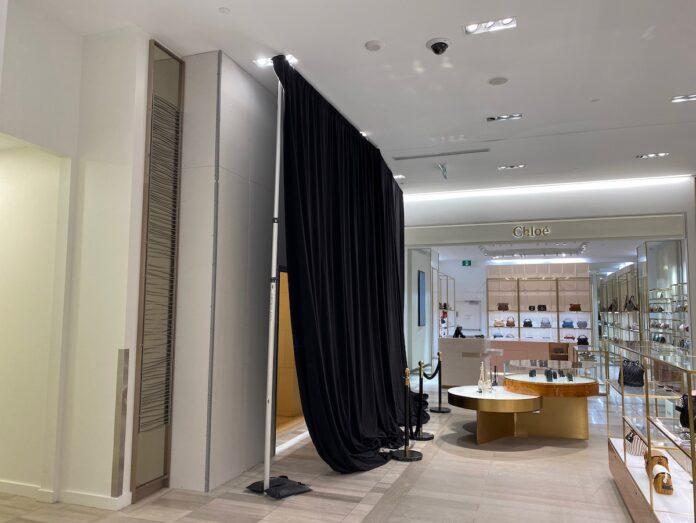
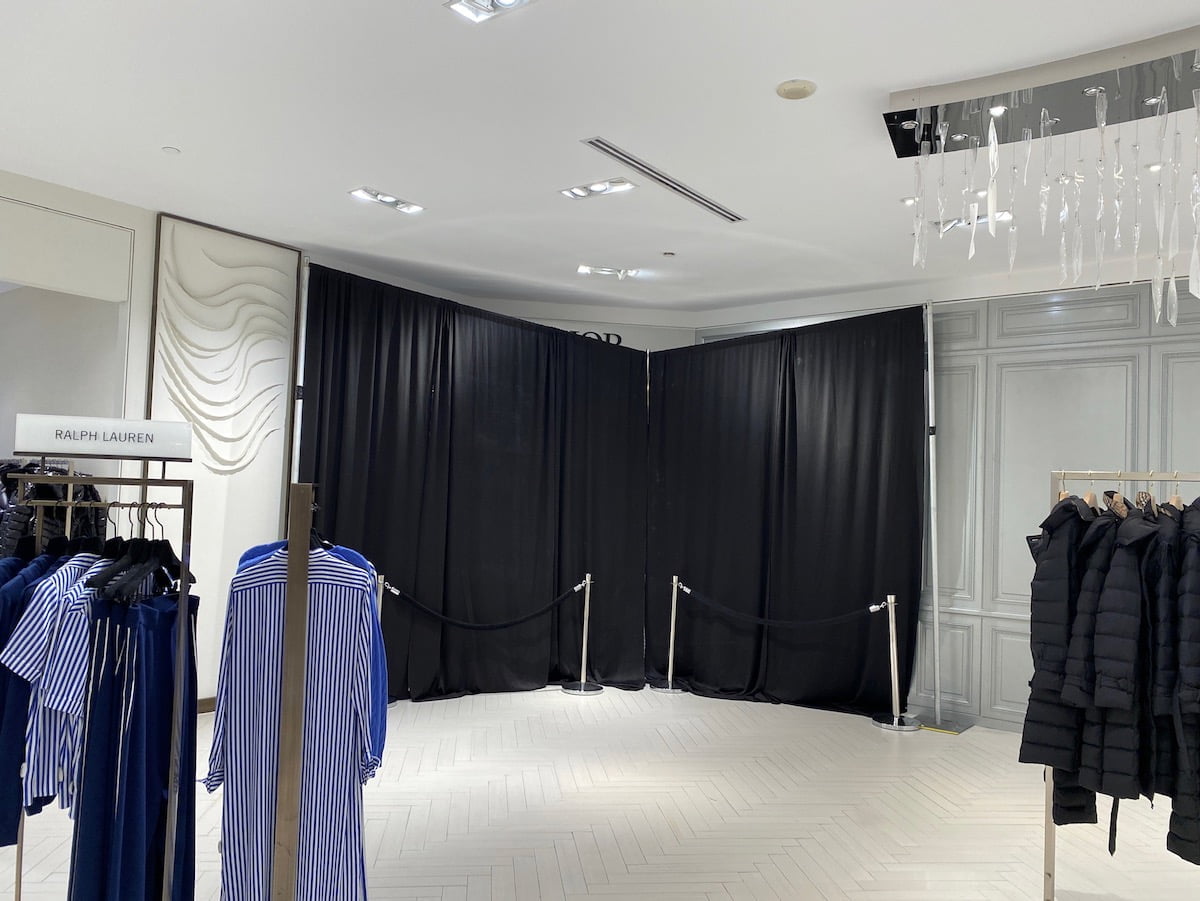
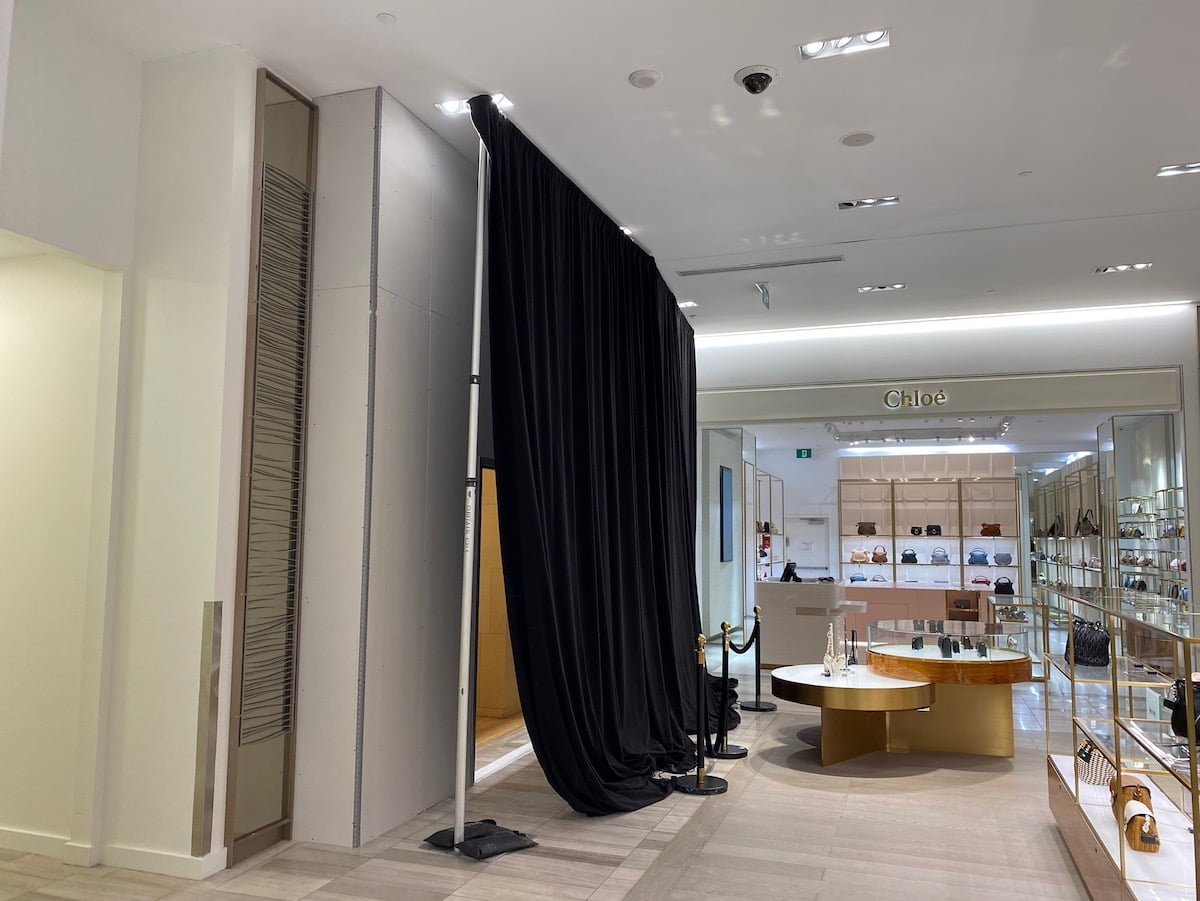
Dior operated two boutique spaces at Saks including a main floor bag and accessory boutique as well as a women’s ready-to-wear boutique on Saks’ third floor. The bag and accessory boutique opened in May of 2016 after a construction process that included importing custom fixtures from Europe. The 2,000 square foot apparel shop, which opened in September of 2016, was the first Dior concession boutique for women to open in Canada. The facades of both boutiques were covered over in black curtains as of press time.
Shuttered main floor Louis Vuitton at Saks Fifth Avenue Queen Street on January 3rd, 2022 (Photo: Dustin Fuhs)Shuttered main floor DIOR bag/accessory boutique at Saks Fifth Avenue Queen Street on January 3rd, 2022 (Photo: Dustin Fuhs)Shuttered DIOR ready-to-wear boutique on the 3rd Floor at Saks Fifth Avenue Queen Street on December 31st, 2021 (Photo: Dustin Fuhs)
The exit of both brands does not spell good news for Saks, particularly given that both Louis Vuitton and Dior have a presence at Holt Renfrew on Bloor Street, and both brands also have a standalone presence with storefronts on Toronto’s Bloor Street ‘Mink Mile’ as well as at Holt Renfrew Yorkdale. And Saks has seen other brands make an exit in recent memory — a David Yurman jewellery boutique that operated as a concession shut in 2019, jeweller Boucheron exited Saks to partner with Holt Renfrew, De Grisogono shut its global operations in late 2019, Australian beauty brand Aesop left both Saks stores in Toronto, and most recently French luxury brand Celine shut its main floor Saks bag and accessory boutique a few days before opening a standalone flagship at the Yorkdale Shopping Centre.
In downtown Toronto, Saks’ main floor still includes several other luxury brands in dedicated boutique spaces including several concessions. The remaining leased concessions on Saks’ main floor include Prada, Saint Laurent and Piaget while Saks also operates shop-in-stores for brands including Bottega Veneta, Balenciaga, Givenchy, Chloé, Valentino, Chopard and Birks.
Saks Fifth Avenue Queen Street with Louis Vuitton Windows Covered. Photo taken on Yonge Street (Photo: Dustin Fuhs)
Saks Fifth Avenue also continues to operate two other stores in Canada — in March of 2016 the luxury retailer opened at CF Sherway Gardens in Toronto and in February of 2018 Saks opened at CF Chinook Centre in Calgary. Saks was expected to expand further into the Montreal and Vancouver markets but its expansion was said to have been shelved due to weak sales performance numbers at other Canadian locations.
See more photos below including the last day Louis Vuitton was open.
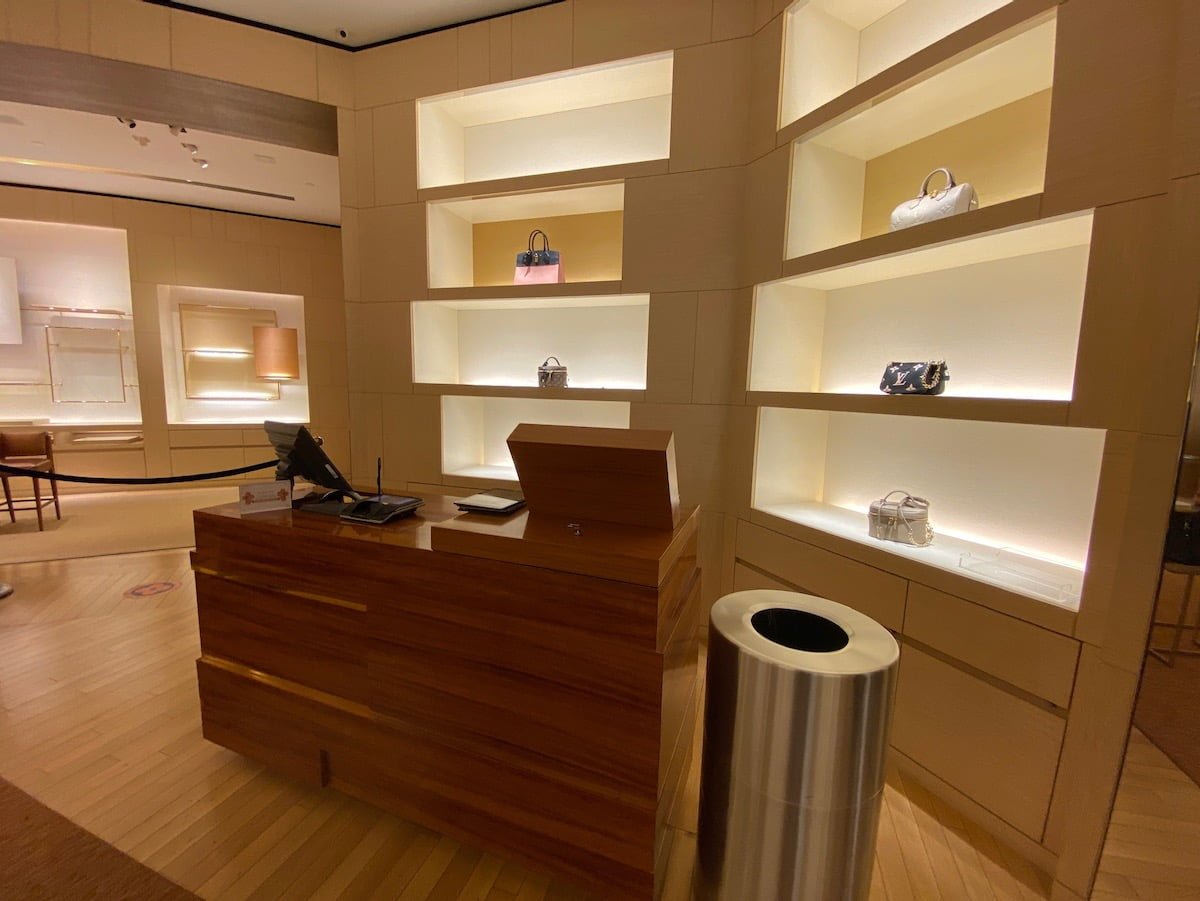
On the day of closing: Louis Vuitton at Saks Fifth Avenue Queen Street on December 31st, 2021 (Photo: Dustin Fuhs)On the day of closing: Louis Vuitton at Saks Fifth Avenue Queen Street on December 31st, 2021 (Photo: Dustin Fuhs)On the day of closing: Louis Vuitton at Saks Fifth Avenue Queen Street on December 31st, 2021 (Photo: Dustin Fuhs)Shuttered third floor DIOR at Saks Fifth Avenue Queen Street on December 31st, 2021 (Photo: Dustin Fuhs)Saks Fifth Avenue Queen Street (Photo: Dustin Fuhs)Saks Fifth Avenue Queen Street with Louis Vuitton Windows Covered (Photo: Dustin Fuhs)Shuttered main floor DIOR boutique at Saks Fifth Avenue Queen Street on January 3rd, 2022 (Photo: Dustin Fuhs)Shuttered main floor Louis Vuitton at Saks Fifth Avenue Queen Street on January 3rd, 2022 (Photo: Dustin Fuhs)
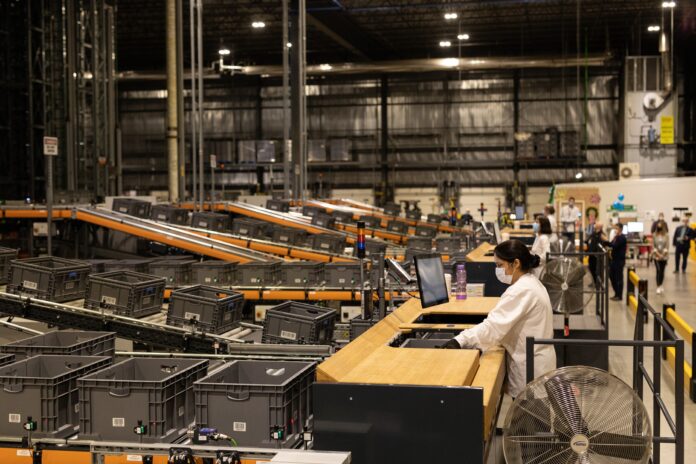
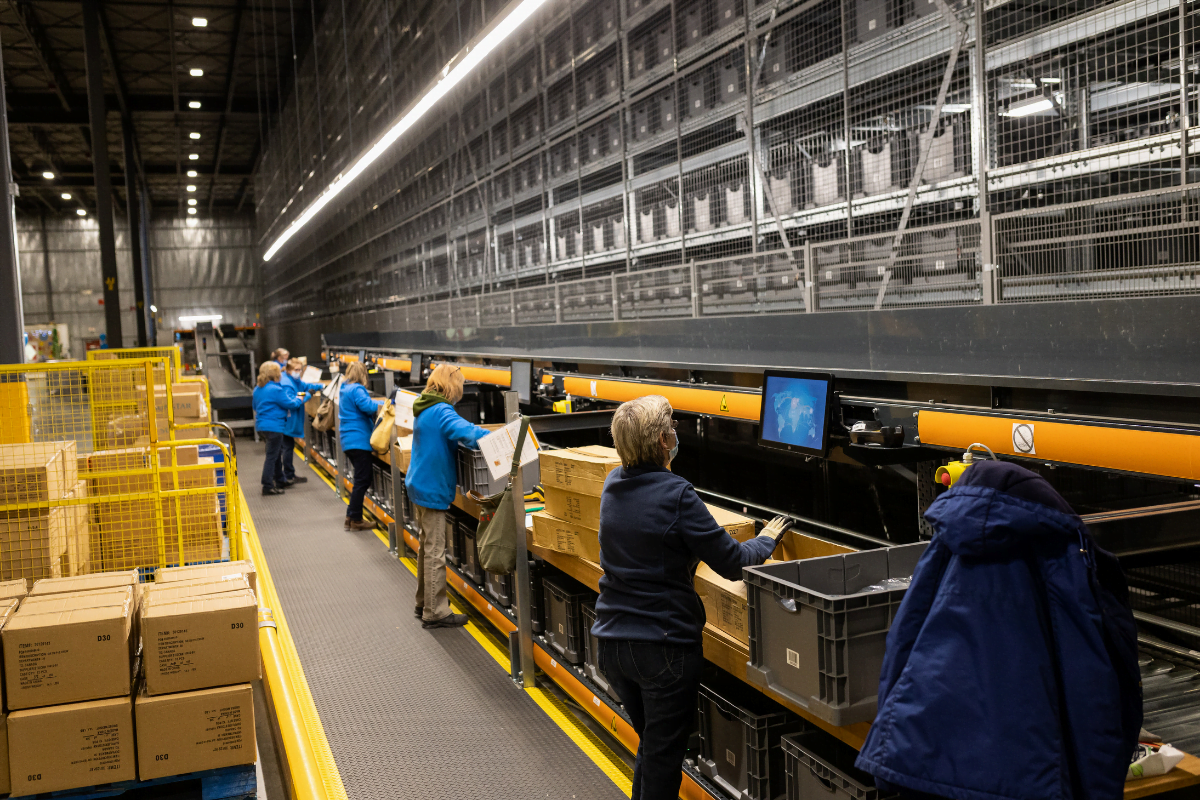
Walmart Canada Distribution Centre in Cornwall, Ontario (Image: Walmart Canada)
Walmart Canada has launched a new state-of-the-art warehouse order fulfillment centre in Cornwall, Ontario – the first of its kind for the giant retailer in Canada.
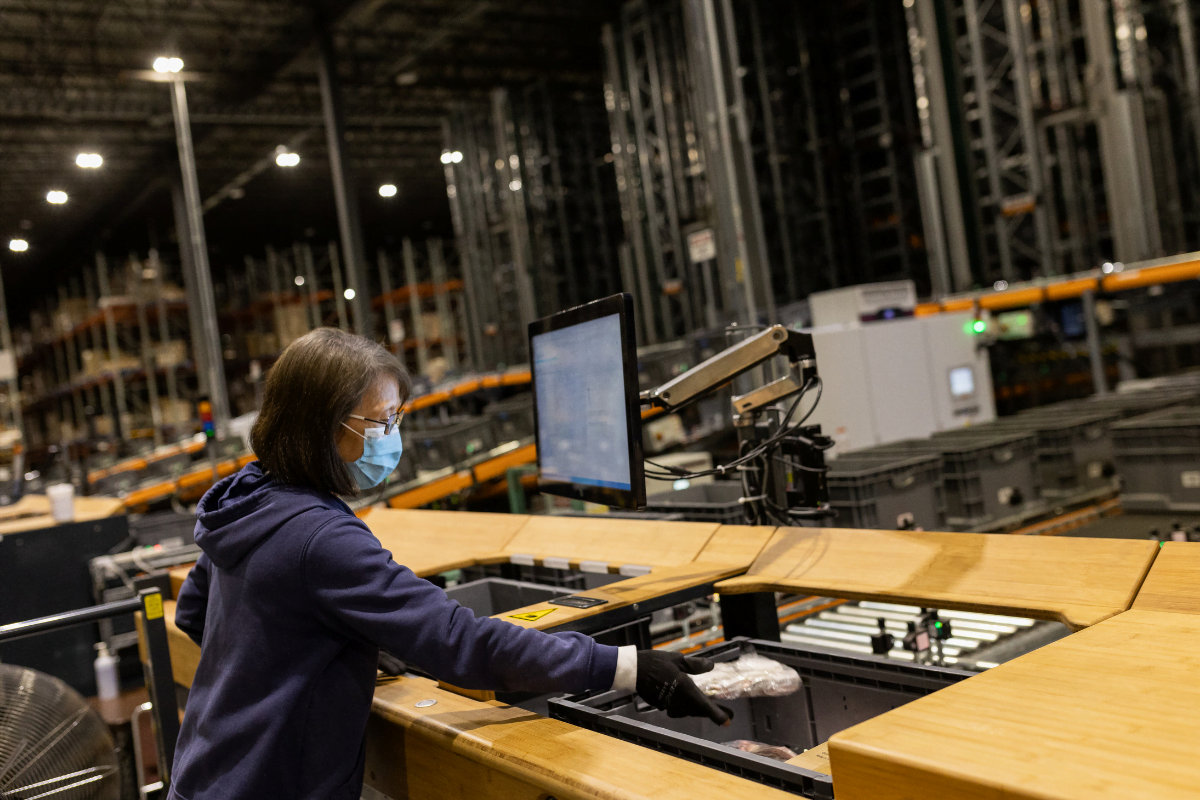
The $20-million investment in the 40,000-square-foot space provides the retailer with a modern method of order fulfillment that uses innovative technology with a user-friendly computer system to deliver goods to associates. The system will provide general merchandise, including health and beauty products, apparel, stationery, and electronics to 136 Walmart stores from Kingston, Ontario, to Canada’s East Coast. It is part of Walmart Canada’s $3.5-billion investment to make the online and in-store shopping experience simpler, faster and more convenient for associates and customers, said the company.
Ken Henderson
Ken Henderson, Vice President of Distribution Centre Operations for Central Canada for Walmart Canada, said the technology allows the company to improve its capacity and capability to provide more accurate selection.
The company will be able to more quickly, efficiently and accurately put product on store shelves with greater traceability.
“When we think about product flow and how we meet the needs of our customers, we want to make sure we have the right amount of products in the stores and ready for consumers. Our focus is on how do we create the best selection for our customers. We think about our store associates as well and how they work from the back of the store and then move the product from the back to the shelves. This technology helps them to become more effective in how they do that,” said Henderson.
Walmart Canada Distribution Centre in Cornwall, Ontario (Image: Walmart Canada)
“With the way it’s being picked, the technology sets it up for being more convenient and more accurate for our store associates. So ultimately speeding it up and allowing them to do it more accurately ultimately provides a better shopping experience for customers.”
Walmart Canada operates a chain of more than 400 stores nationwide serving 1.5 million customers each day. It listed the following new features and benefits at the Cornwall facility:
Modern machinery powered by an easy-to-use computer system that helps support workflow, improving accuracy and traceability;
The infrastructure can transport 60,000 goods in 16 hours, increasing speed and productivity;
The facility uses cutting-edge logistics technology, installed by Vanderlande;
The technology helps move goods in the warehouse with fewer physical demands;
It is omni-capable in meeting the current and future needs of stores and e-commerce; and
The new software is similar to what will be used in two distribution centres currently under construction in Surrey, British Columbia (expected to open in 2022) and Vaughan, Ontario (expected to open in 2024).
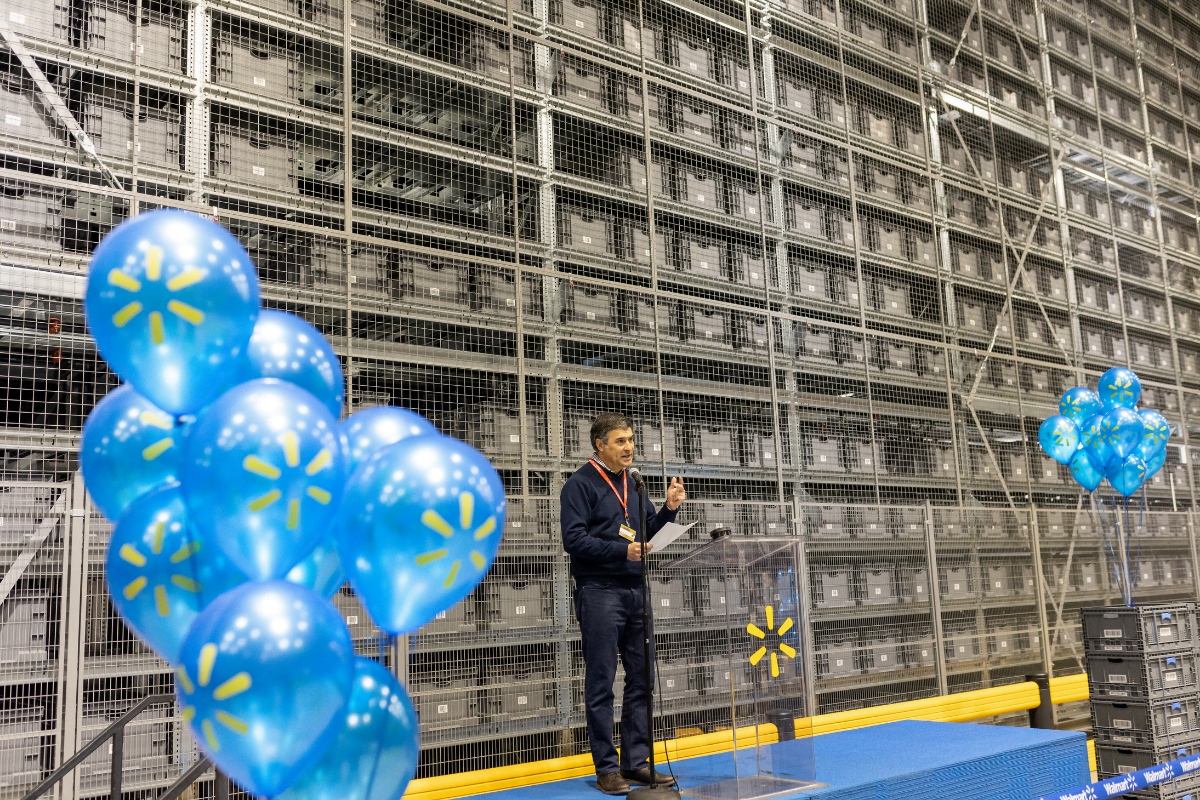
Walmart Canada Distribution Centre in Cornwall, Ontario (Image: Walmart Canada)Walmart Canada President and CEO Horacio Barbeito
“We’re incredibly excited to be modernizing our supply chain – in Cornwall and across the country. These investments will help our associates to better serve our customers,” said Horacio Barbeito, President and CEO, Walmart Canada, in a statement. “Cornwall is an integral part of our supply-chain network and we’re committed to providing jobs and opportunities to this valuable community that we’ve proudly called home for 27 years.”
Cornwall has become an important city for Walmart, having a presence there since 1994. The Cornwall Walmart store was converted into a Supercentre in 2015, where it currently employs approximately 280 associates. Cornwall is also home to four Walmart distribution centres, covering 2.9 million square feet.
The new facility will go into an existing facility that has been operating for Walmart for about 20 years.
Walmart Canada Distribution Centre in Cornwall, Ontario (Image: Walmart Canada)Walmart Canada Distribution Centre in Cornwall, Ontario (Image: Walmart Canada)
“We picked that as one of the first phases of multiple investments that we’re doing across Canada. So in picking Cornwall, it had the space that we could use this new technology. We had the space and capability to start there,” said Henderson. “When we built this facility 20 years ago, it was a great hub to service both Ontario and Quebec and Atlantic Canada.
“We’re actually adding more technology across Canada. You’ll see it in Surrey, BC, and you’ll see some in Vaughan, Ontario as well.”
The company also has a current project in Moncton which is more of a traditional facility.
Historic upscale New York City-based optical frame and sunglasses brand MOSCOT has entered the Canadian market by opening its first standalone store location in downtown Toronto. After testing the market, a Montreal location could follow according to the family-owned business which spans five generations and has just 18 stores in 12 cities globally.
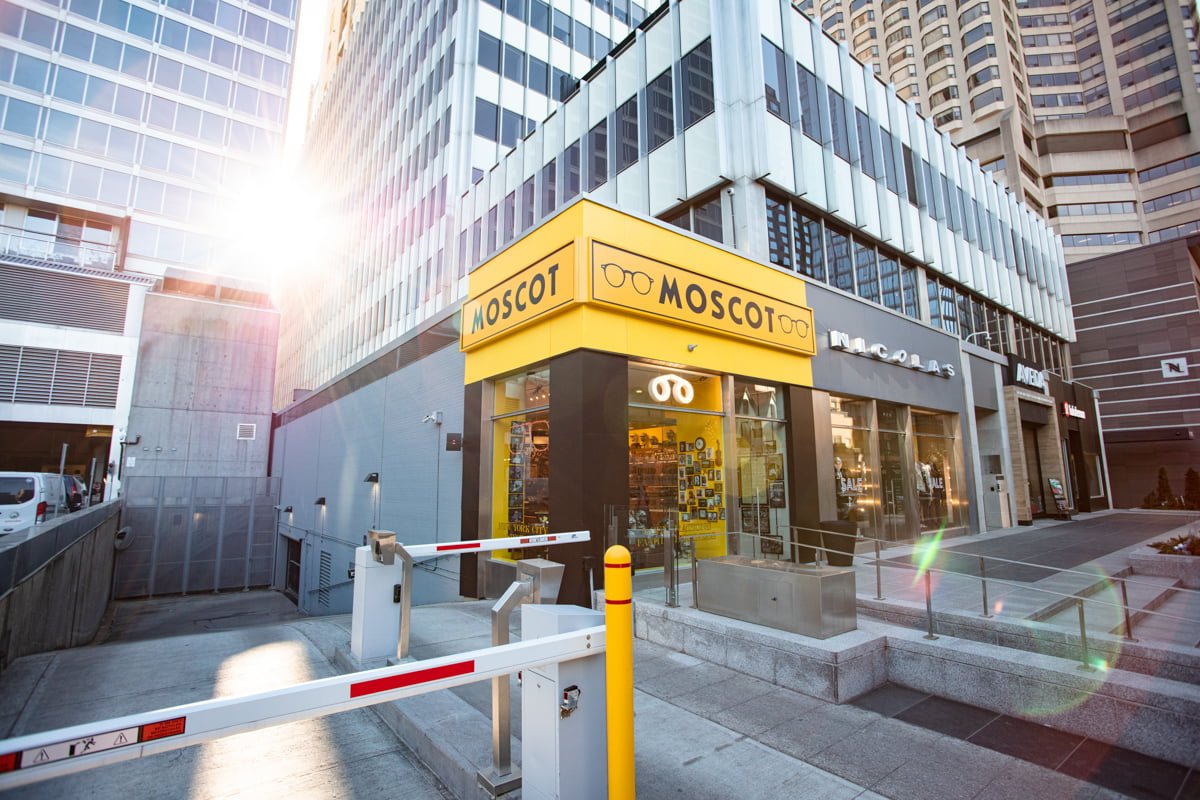
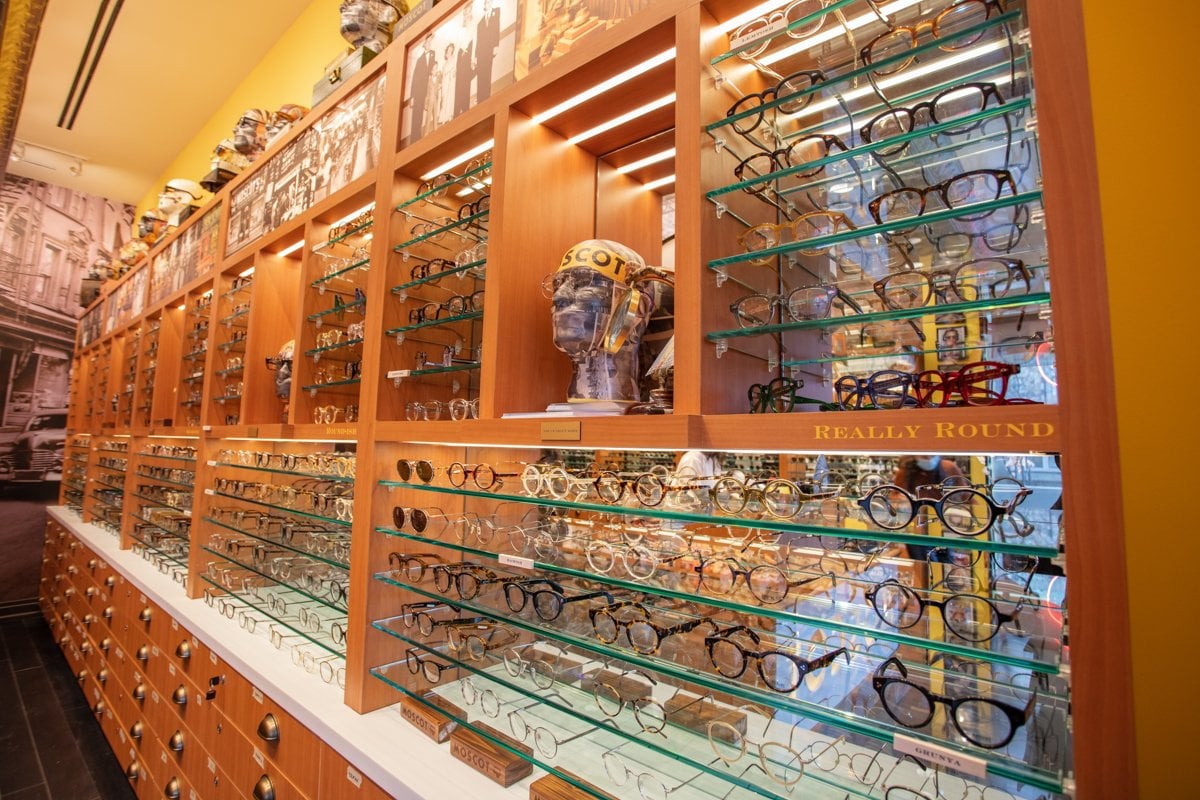
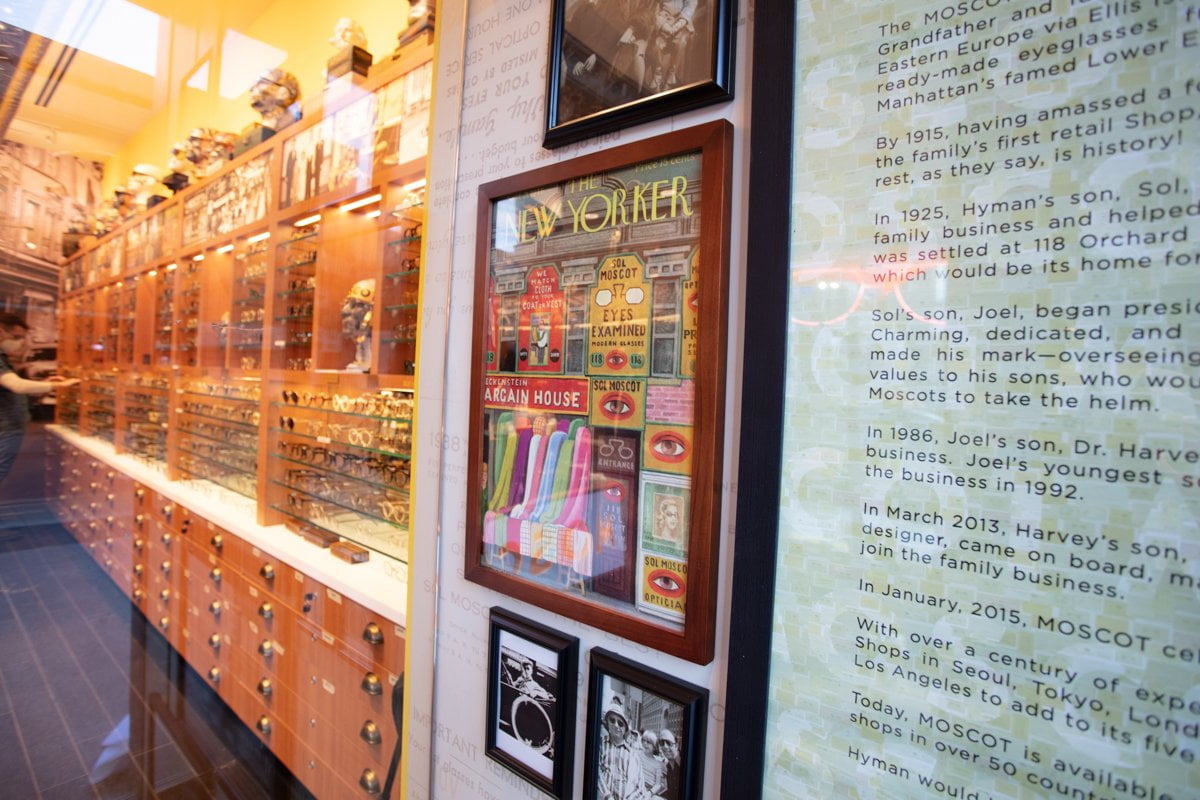
The Toronto MOSCOT storefront opened in late December at 153 Cumberland Street in Toronto’s upscale Yorkville area. The 800 square foot storefront replaces SEE Eyewear that occupied the space for about three and a half years. The store’s interior references historical elements found in MOSCOT’s stores in New York City including photography and a bright yellow colour scheme.
MOSCOT Toronto (Image: MOSCOT)MOSCOT Toronto (Image: MOSCOT)
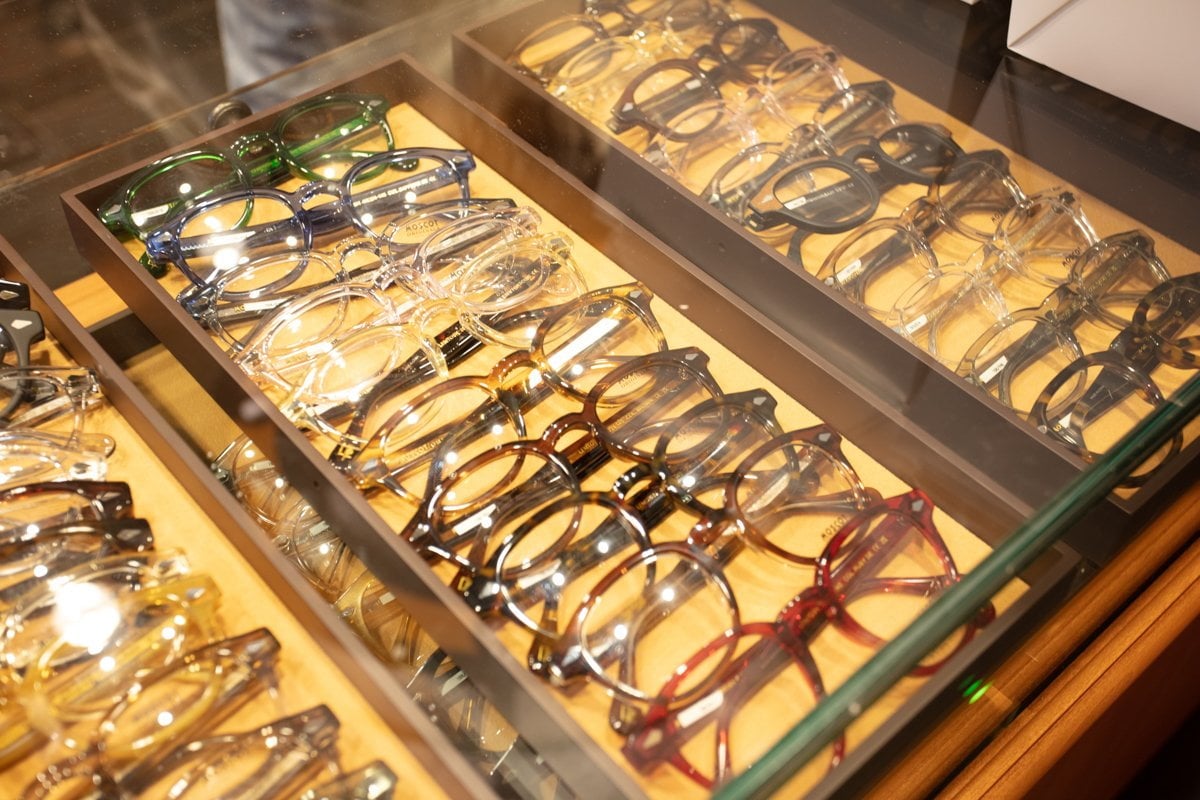
MOSCOT’s full range of glasses frames are now available for the first time in Canada in the new store. Zach Moscot designs the frames and is a fifth generation family member. He explained in an interview that prior to opening the new Toronto store, only selected styles of MOSCOT eyewear was available wholesale in Canada — the new store is part of a brand building endeavour which he said will also help grow sales for multi-brand retailers as well while growing market share overall.
CBRE Toronto broker Arlin Markowitz and his team listed the former SEE eyewear space and coordinated the sublease of the former SEE store to MOSCOT.
A store expansion for MOSCOT in Canada would be careful he said, with the Montreal market being eyed for a storefront at some point in the future. Success of the Toronto store will be a signal for future Canadian stores he said. Toronto is only the third market for MOSCOT in North America to have a standalone location.
MOSCOT Toronto (Image: MOSCOT)MOSCOT Toronto (Image: MOSCOT)
The 106-year-old brand is known for its unique frames in a variety of colours priced at several hundred dollars per pair. Frames are made from materials ranging from metal to beta-titanium. Since 2008, the company has partnered with several designers in collaborations. MOSCOT stores are noted for having eye-catching yellow facades with black trim, and the new Toronto store is no exception.
Besides its store locations in the greater New York City and Los Angeles areas, MOSCOT has standalone stores in Rome, Milan, Paris, Amsterdam, Tokyo, Yokohama and Seoul. Last month the retailer opened its first store in Denmark in central Copenhagen and more international locations are planned.
MOSCOT was founded by Hyman Moscot in the Lower East Side neighbourhood of Manhattan in 1915. In 1925, his son Solomon took over in the business and in 1935, he relocated the store to 118 Orchard Street in New York City where he introduced a bright yellow colour scheme to the store that was named SOL MOSCOT. Solomon’s son Joel began running the business in 1951 and his sons Harvey and Kenny joined the company in 1986 and 1991 respectively. Joel retired in 2003 and ‘Sol’ was dropped from the name of the retailer that was then called just MOSCOT. His sons began to take the retailer global with stores overseas in Asia and Europe.
MOSCOT Toronto (Image: MOSCOT)
Various celebrities in years past have worn MOSCOT frames, including Andy Warhol, Truman Capote and Johnny Depp.
MOSCOT joins other eyewear retailers in Toronto’s Bloor-Yorkville area. Last year on Cumberland Street, retailer All Eyes On Me opened a unique storefront focused primarily on Cartier designs. Other optical retailers in the area include Karir on Old York Lane, Optical Outlook on Yorkville Avenue, Holly Eyewear on Cumberland Street, Lenscrafters at the Holt Renfrew Centre, Hudson’s Bay Optical at the Hudson’s Bay Centre, Josephson’s on Bay Street and a Hakim Optical at the northwest corner of Bloor and Bay Streets. Bloor-Yorkville represents one of the highest densities of eyewear retailers in Canada with other major nodes including Queen Street West in Toronto and West 4th Avenue in Vancouver.
See below for more photos of the new Toronto store.
Retail Insider is streamlining its Canadian retail news from around the web to include a handful of top news stories that can be viewed quickly during the day. Here are the top stories from the past few days.