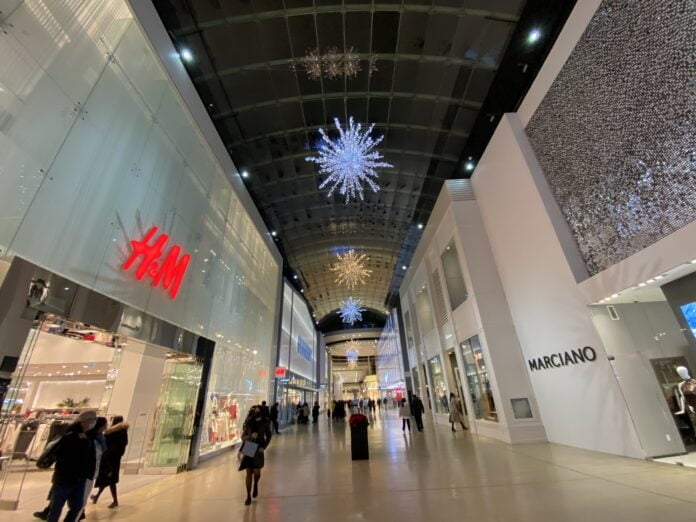
Canadian Tire store at 839 Yonge Street, January 2022. Photo: Craig Patterson
The historic Canadian Tire store at 839 Yonge Street in downtown Toronto will eventually be demolished for an intensified redevelopment that could include residential towers as well as a new Canadian Tire store. That’s according to sources noting that a development application will be brought to the City of Toronto in the next while.
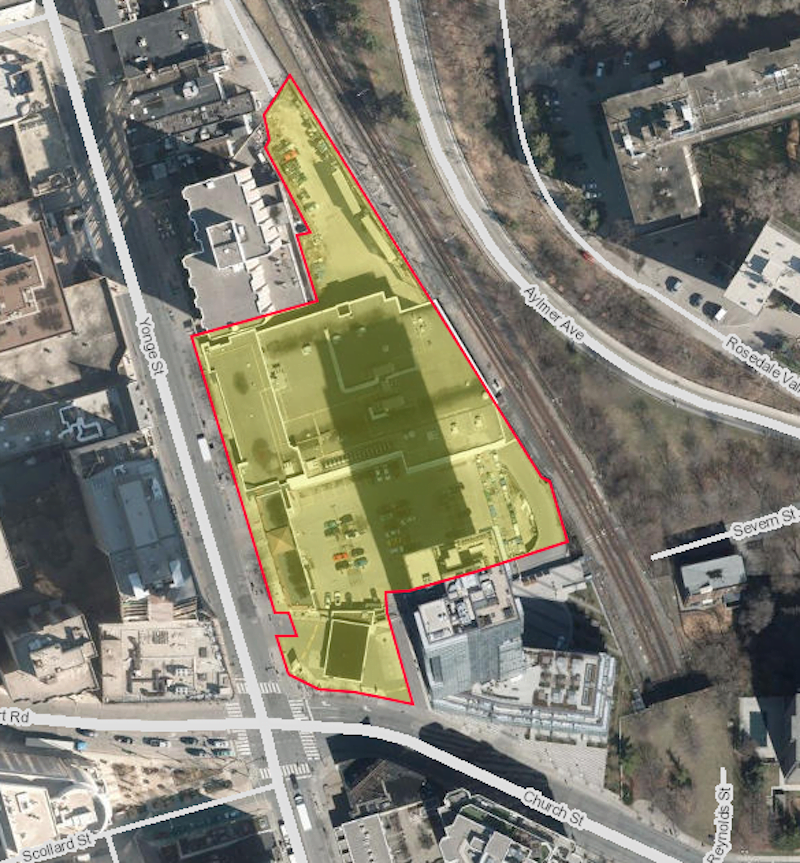
The proposed plans would include a multi-tower configuration according to one source. The building site encompasses about 2.4 acres and an adjacent gas station adds another 0.2 acres to the site.
A new Canadian Tire store would ideally be built on the site according to the source. The existing store was recently renovated to reflect the more modern design seen in some Canadian Tire locations. A historic component known as the Grand Central Markets Building was built in 1929 and is heritage protected, characterized by a Spanish Colonial Revival-style type architecture. It would be expected that it would somehow be preserved and incorporated into the new proposal.
Image: Northern Light via Urban Toronto
Canadian Tire owns the site according to another source, who also said that after the development application is approved Canadian Tire will likely sell the site, valued well in excess of $100 million.
The location on Yonge Street backs onto the subway tracks. In behind the tracks lies Rosedale, the wealthy leafy and historic residential area with winding streets and multi-million dollar mansions that is unlike anything in North America in terms of its proximity to a downtown core. Some of the wealthiest people in Canada live in Rosedale including David Thomson who is worth over $50 billion USD.
Historic store component and gas station at the corner of Yonge and Church Streets. Photo: Craig Patterson
Other commercial buildings in the area will be demolished for future redevelopment as well according to reports in Urban Toronto. Forum poster ‘Northern Light’ also posted a conversation thread on the Urban Toronto Forum about the proposed redevelopment.
High real estate prices in Canadian centres is leading to landlords seeking to intensify building sites. That includes individual stores with enough land and even entire shopping centre properties. It’s a trend expected to continue for years to come amid a population and housing boom in some markets.
The reemergence of COVID will continue to put a strain on the Canadian apparel industry with uncertainty over shopping restrictions in 2022.
But a new report by Trendex North America, a marketing research and consulting firm, says apparel specialty chains will lose share in the market for the sixth year in a row.
The Canadian Apparel Insights report, released in December, also said the growth rate for apparel e-commerce will slow assuming consumers are able to shop in brick and mortar stores and luxury apparel sales, after a disappointing 2020 and 2021, will increase in proportion to the growth of foreign tourism.
Randy Harris, photo supplied
“I think the expectations from a value metric standpoint, meaning sales, you can’t really speculate because you don’t know how long the newest phase of COVID is going to affect shopping restrictions,” said Randy Harris, president and owner of Trendex North America. “I was very optimistic last July when it looked like we were beginning to come back to pre-COVID sales levels on a monthly basis. Certainly, beginning June and July the industry was selling more apparel than it was, not just the previous year but than in 2019. So it made me very optimistic from a sales standpoint.
“Right now, I have no idea what to expect in terms of sales for this year and anybody that says they do is crazy.”
In November, a report by Trendex said Canadian retail apparel sales fell by 23.6 per cent year-over-year in 2020 and the forecast growth was 13.9 per cent in 2021. At that time, Trendex was forecasting 8.2 per cent year-over-year growth in 2022.
“I expect that we’ll continue to see evolutionary changes in apparel retailing as opposed to revolutionary changes in apparel retailing. In a sense, the Canadian apparel industry when it comes to change it moves at kind of glacial speed,” said Harris. “When you look back at last year, you see very few changes were made in the industry. If the changes were made, they were often made in the back rooms if you will, but not in the stores themselves.
“I think one of the things people miss right now is how little apparel retailing has really changed compared to some other industries. Yes, e-commerce has become bigger, buy online and pickup in store has become bigger. But so many other things have not changed that much.”
The latest Trendex report predicted for 2022:
Resale apparel sales will increase thanks to luxury resale e-commerce;
SSENSE and Indochino will take advantage of a buoyant IPO market by going public;
Athleisure sales growth will slow while dress apparel sales will increase from their record low sales levels during 2020/2021;
Almost 40 per cent of Canadian headquartered apparel retailers will offer a buy now/pay later option by year’s end;
Personalized digital marketing will increase at the expense of print advertising;
Turkey will disproportionately increase its apparel exports to Canada as a result of the recent major devaluation of the country’s currency;
Apparel supply chain problems will sort themselves out by mid-summer; and
Retail apparel prices will, starting in April, climb steadily during the year.
“If there was one big surprise that I had last year, I expected a flood of bankruptcies in January and February of last year. That did not happen. The lack of bankruptcies for the most part during the entire year last year surprised me,” said Harris.
“From the apparel industry standpoint, e-commerce’s growth really saved the industry for the last two years although the rate of growth last year was far less than the previous year. I think a lot of retailers have batten down the hatches in the last year and a half or so and were able to make it through the year. What surprised me though is yes there were fewer bankruptcies but I also thought companies blew an opportunity to close unprofitable stores. But so many companies kept limping along and I thought this would have been a good time for them closing some stores.”
Harris said some Canadian retailers are opening more stores around the world which is an optimistic sign but it’s in very narrow industries such as outerwear. He expects that trend will continue.
“There’s no doubt that in the coming year the one thing we will notice is that mall traffic will continue to fall. That will have an effect not on the major retailers in the major malls but certainly have a greater effect on the retailers who are basically based in second and third tier malls,” said Harris.
CF MARKET MALL. PHOTO: CADILLAC FAIRVIEW
“E-commerce has got an inertia right now and it’s going to continue to grow but we won’t see a triple digit rate in growth. The one that I’m worried about right now is luxury retailing which again last year I believe apparel retailing had a very poor year and I attribute that to the lack of tourists coming in, especially from the Orient. Tourism basically in 2021 shut down for a good part of the year, especially the beginning of the year and that had an adverse effect on the luxury retailers. Tourism numbers started to crank back up at the end of last year but with what’s going on in Canada it might lag it down again. That’s another segment that everything is up in the air right at the moment about.”
Trendex said the sales pattern for footwear over the past three years is unexpectedly similar to that for apparel. Footwear sales decreased 21.3 per cent in 2020 and are forecasted by Trendex to increase 17.3 per cent in 2021. Athletic footwear in 2021 should account for 34.1 per cent of all footwear – an increase from 29.3 per cent in 2019.
“As a result, footwear specialty stores during that period lost share to sporting goods stores and e-commerce retailers. The net result of these two changes is that malls continue to decrease in importance for footwear sales. Although little information is available on the footwear sales of individual footwear retailers, consensus is that the largest retailers are Aldo Inc, CTC (Marks and Sport Chek) and DSW Canada. The latter, a public held company, according to Trendex will have sales of US$236 million in 2021,” said the report.
2021 Most-Read Articles, LV/Dior Exit Saks in Toronto
This week Craig and Lee talk about the Louis Vuitton and Dior boutiques closuring in Saks Fifth Avenue in downtown Toronto before reviewing some of the most read articles for Retail Insider in 2021.
The Weekly podcast by Retail Insider Canada is available on Apple Podcasts, Stitcher, TuneIn, Google Play, or through our dedicated RSS feed for Overcast and other podcast players. Also check out ourThe Interview Seriespodcast where Craig interviews guests from across the Canadian retail landscape as part of theThe Retail Insider Podcast Network.
Drop us a line at Craig@Retail-Insider.com. You can also rate us in Apple Podcasts or recommend us in Overcast to help more people discover the show!
Background Music Credit: Hard Boiled Kevin MacLeod (incompetech.com). Licensed under Creative Commons: By Attribution 3.0 License. http://creativecommons.org/licenses/by/3.0/
Retail Insider is streamlining its Canadian retail news from around the web to include a handful of top news stories that can be viewed quickly during the day. Here are the top stories from the past 24 hours.
Training Lane Sign from January 5th, 2022 (Image: Dustin Fuhs)
Support programs introduced by the Ontario government to mitigate losses for businesses during the province’s latest lockdown measures are welcome news for many entrepreneurs but simply don’t go far enough to compensate for their losses.
The Small Business Relief Grant for small businesses that are subject to closure under the modified Step Two of the Roadmap to Reopen will provide eligible small businesses with a grant payment of $10,000.
Linkedin: Rocco Rossi
The Ontario government is also providing electricity-rate relief to support small businesses.
Rocco Rossi, President & CEO, Ontario Chamber of Commerce, said the organization is pleased with the provincial government’s responsiveness to its feedback.
“However, we are deeply concerned about those businesses that will be left behind. On the one hand, the grant is too narrow as it only applies to businesses that were required to fully close. It misses those that are at limited capacity or those losing revenue as a result of restrictions affecting their clients (such as food service suppliers). On the other hand, the electricity subsidy is too broad as it will largely benefit ratepayers that are not impacted by current restrictions,” said Rossi.
“We recognize that public health and a healthy economy are intrinsically linked. However, sweeping new restrictions – impacting employers, workers, and families – unaccompanied by appropriately targeted and commensurate supports are unacceptable nearly two years into the pandemic. Beyond this, we need a comprehensive plan that ties restrictions to clear, data-based metrics so that employers, workers, and families can plan ahead.”
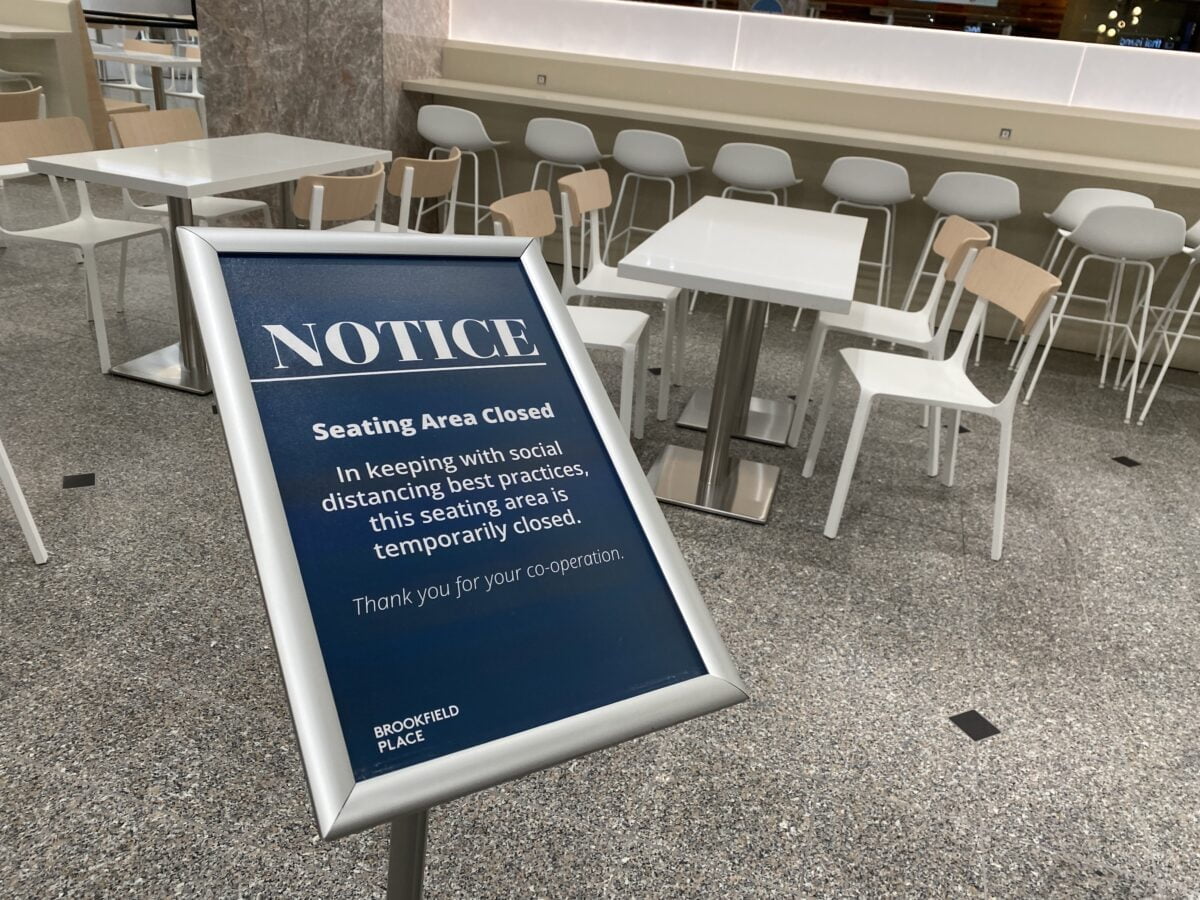
Brookfield Place Food Court Sign from January 6th, 2022 (Image: Dustin Fuhs)
In a statement, Restaurants Canada said it appreciates the government’s announcement to re-introduce the Ontario Small Business Support Grant, but it falls well short of the needs of the industry.
“The restriction to businesses with fewer than 100 employees is unfair to restaurants. The restaurant industry is more labour intensive and dependent on part-time employees than any other industry. Many small businesses will not qualify despite size and need,” said the organization.
“The grant will help, but it will not provide the support many need to keep their businesses running. We need targeted, significant funding that will keep businesses afloat. There is no reason to delay the money until February. Businesses need to pay bills now.
“We still need a ban on the evictions so that restaurants are not locked out of their buildings when the lockdown is over. We have heard nothing on this request, or the need to defer HST remittances to help businesses pay their bills now. The government needs to sit down with us as soon as possible to find ways to ensure restaurants are able to reopen, and stay open, after January 26th.”
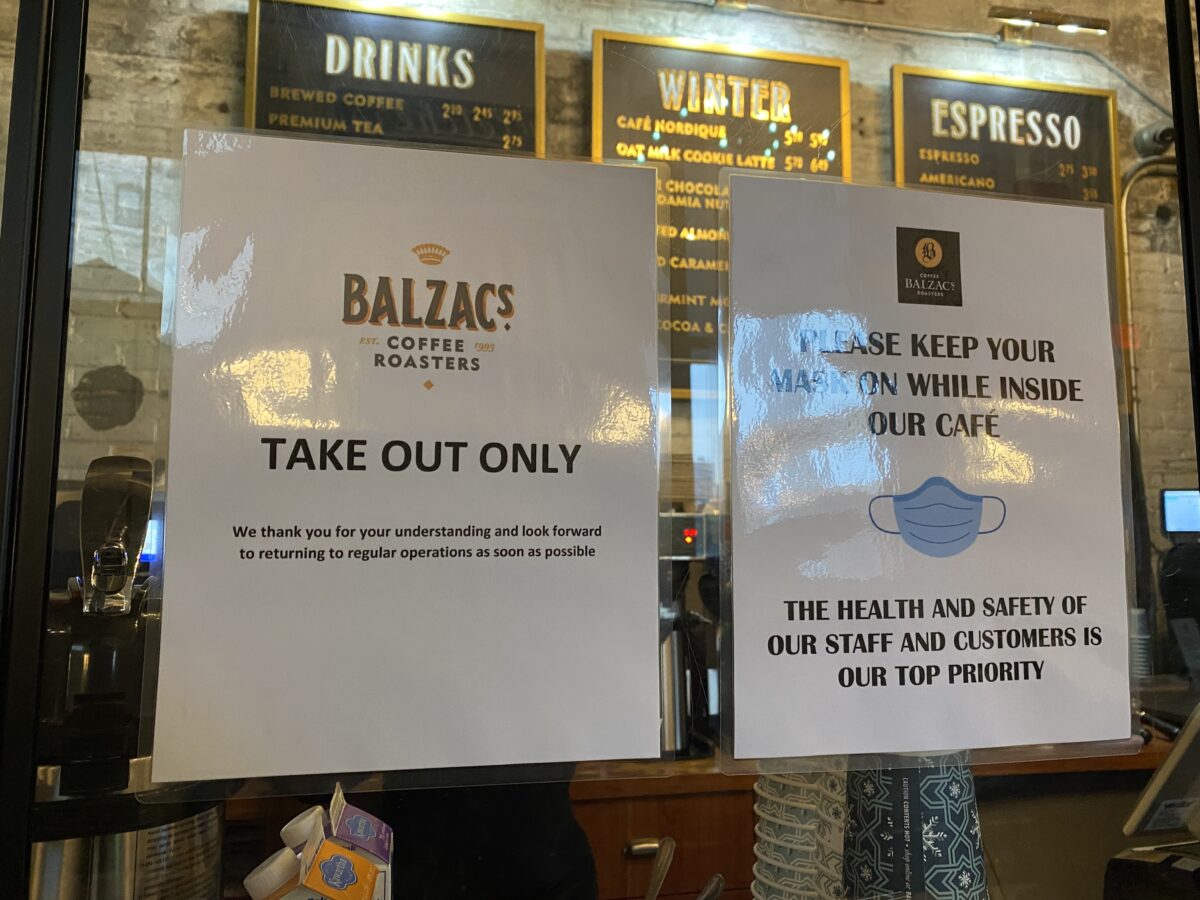
Balzac’s Coffee Sign from January 5th, 2022 (Image: Dustin Fuhs)
The new Ontario lockdown measures became effective Wednesday, January 5 at 12:01 a.m. for at least 21 days (until January 26).
“It is good news the Ontario government will provide $10,000 grants to help compensate for lockdowns. It appears those who received earlier rounds won’t need to reapply. But if lockdowns go on for longer than three weeks, this is entirely insufficient,” said Dan Kelly, President and CEO of the Canadian Federation of Independent Business.
Dan Kelly
“The grant won’t help those affected by deep capacity restrictions (like retail), suppliers to locked down industries, those losing customers because of fear ofOmicron or those who are affected by ‘work from home’ orders (like dry cleaners). More comprehensive help is needed.”
Kelly said only 35 per cent of Ontario’s small firms are at normal revenues. The average COVID-19 debt for an Ontario small business is an alarming $190,000, and 18.5 per cent are actively considering bankruptcy.
“As the pandemic restrictions continue and consumers are told to stay home, small businesses are struggling with limited sales and staggering debt. The average small business (in Canada) has taken on $170,000 in fresh COVID-related debt and it is this burden that will drag many into bankruptcy or wind down,” added Kelly.
“CEBA (Canada Emergency Business Account) could play a big role in ensuring more small firms survive. CFIB is advocating that the (federal) government add another $20,000 to CEBA loans for a total of $80,000. But loans on their own are not enough. The federal government should significantly increase the portion forgiven to 50 per cent of the total. We are also advocating that the loan repayment period be delayed until the end of 2024 to ensure small firms have more time to get back to normal.”
Peter Bethlenfalvy
Peter Bethlenfalvy, Minister of Finance in Ontario, said the provincial government understands that public health measures needed to blunt the spread of the Omicron variant are impacting the lives and livelihoods of small businesses, workers and families across Ontario.
“Since the first day of the pandemic, we have provided unprecedented levels of support to protect people, jobs and our economy. We will continue to deliver on that commitment,” he said.
Eligible small businesses for the Ontario COVID-19 Small Business Relief Grant for small businesses that are subject to closure under the modified Step Two of the Roadmap to Reopen include:
Restaurants and bars;
Facilities for indoor sports and recreational fitness activities (including fitness centres and gyms);
Performing arts and cinemas;
Museums, galleries, aquariums, zoos, science centres, landmarks, historic sites, botanical gardens and similar attractions;
Meeting or event spaces;
Tour and guide services;
Conference centres and convention centres;
Driving instruction for individuals; and
Before- and after- school programs.
CN Tower (Image: CN Tower Facebook)
HHOF (Image: HHOF Facebook)
“Small businesses, job creators and the entrepreneurial spirit are the backbone of Ontario’s economy. Unfortunately, these businesses have been some of the most impacted by COVID-19, and many continue to struggle,” said Vic Fedeli, Minister of Economic Development, Job Creation and Trade. “Since the start of the pandemic, we have provided unprecedented supports for businesses in every region of the province. With the new Ontario COVID-19 Small Business Relief Grant, our government will provide relief for thousands of small businesses that create jobs for hard working Ontarians.”
The government said eligible businesses that qualified for the Ontario Small Business Support Grant and that are subject to closure under modified Step Two of the Roadmap to Reopen will be pre-screened to verify eligibility and will not need to apply to the new program. Newly established and newly eligible small businesses will need to apply once the application portal opens in the coming weeks. Small businesses that qualify can expect to receive their payment in February.
The Ontario government said it is also providing electricity-rate relief to support small businesses, as well as workers and families spending more time at home while the province is in Modified Step Two. For 21 days starting at 12:01 am on Tuesday, January 18, electricity prices will be set 24 hours a day at the current off-peak rate of 8.2 cents per kilowatt-hour, which is less than half the cost of the current on-peak rate. The off-peak rate will apply automatically to residential, small businesses and farms who pay regulated rates set by the Ontario Energy Board and get a bill from a utility and will benefit customers on both Time-of-Use and Tiered rate plans.
The government said it is also improving cash flows for Ontario businesses by providing up to $7.5 billion through a six-month interest- and penalty-free period starting January 1 for Ontario businesses to make payments for most provincially administered taxes. This supports businesses now and provides the flexibility they will need for long-term planning. Building on Ontario’s efforts to improve cash flows for businesses, the province continues to call on the federal government to match provincial tax deferral efforts by allowing small businesses impacted by public health restrictions to defer their HST remittances for a period of six months, it added.
Grant and Pam Hooker began serving the BeaverTails artisanal pastry in 1978 at the Killaloe Fair, just west of Ottawa.
Today the brand is known internationally with intense interest sparked after U.S. President Barack Obama visited Ottawa’s Byward Market in February 2009 and indulged in the iconic treat.
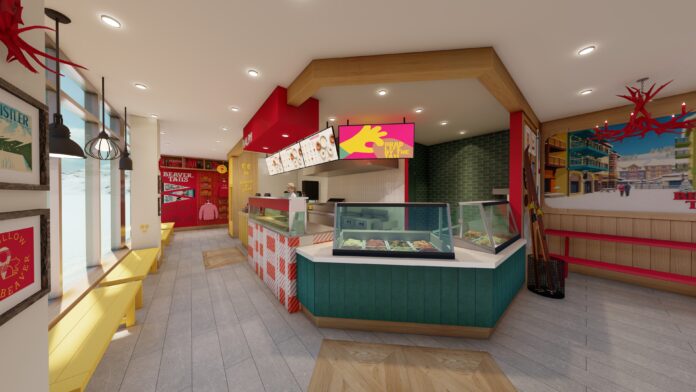
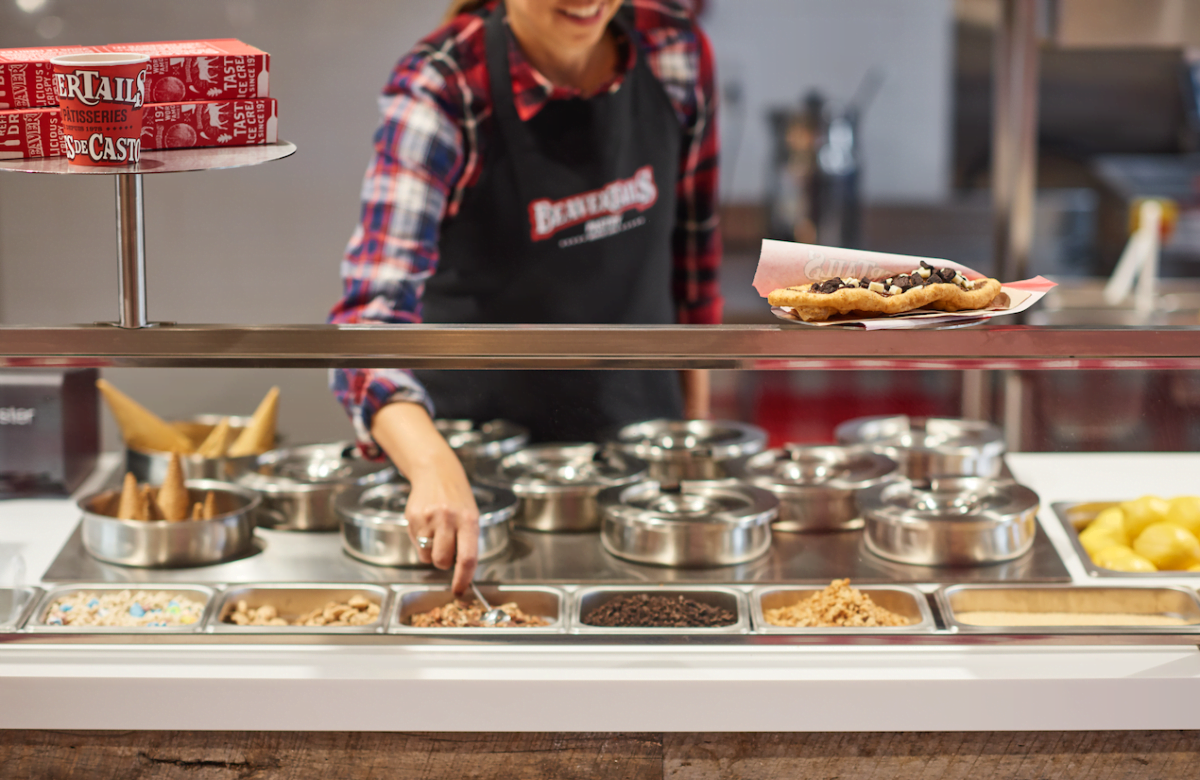
With about 182 locations, and a presence in Mexico, France, United Arab Emirates and Japan, the brand plans a big expansion of its footprint in 2022 and a move into more traditional commercial/neighbourhood environments.
Image: BeaverTails
Pino Di Ioia, the company’s CEO, said the brand is now enjoying a maturing.
“When Obama came to Canada, we called it our Oprah moment. We saw a significant jump in sales which is normal for those PR events. But it never went down which we frankly didn’t expect. It was a 20 to 30 point jump in the whole chain and it just stayed there,” he said.
Pino Di Ioia
“Now we’re experiencing the same. COVID was unfortunately, or fortunately, depending on how you look at it, good for us because we’re not a real restaurant and if you go to a place like Banff you’re maybe afraid to sit in a restaurant but you’ll have a snack.
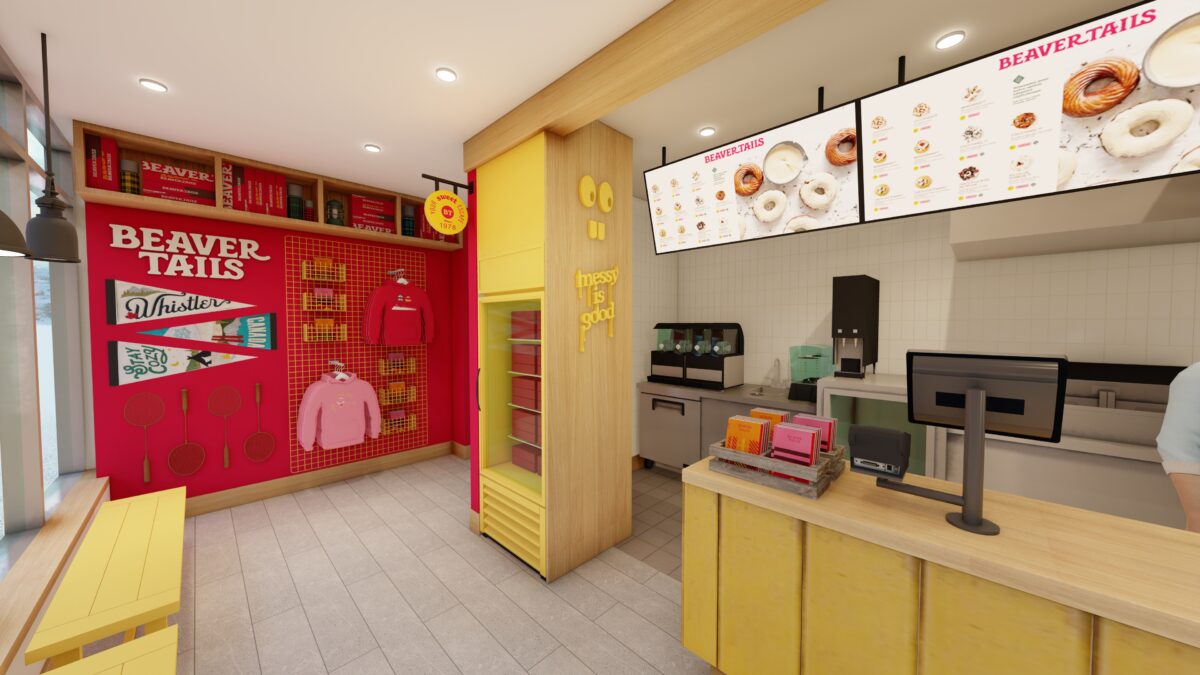
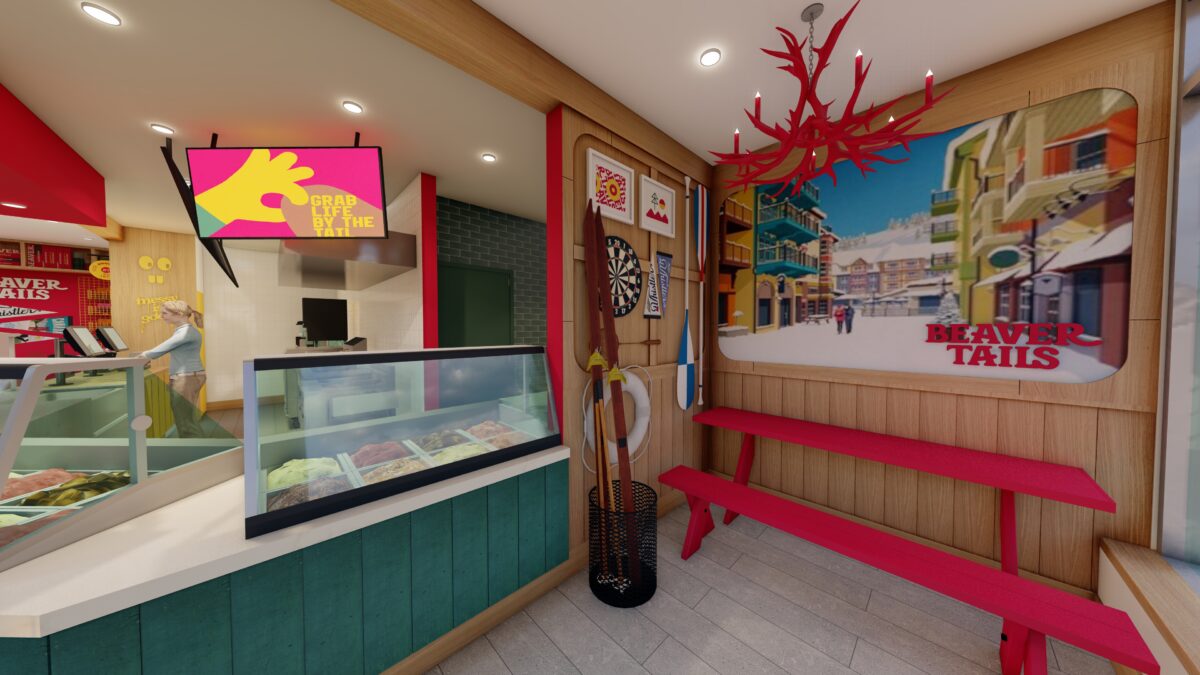
“We’re opening new, better looking stores. We’ve broadened the menu extensively over the last five or 10 years. The brand has matured. We’ve done a lot more marketing and social media. And all of those factors together combined with the unexpected explosiveness of COVID is another Oprah moment for us. We’re just bumping one more level. We’ve become more of a mainstream. We’re accepted in the mainstream. And that’s why we’re now opening in communities across Canada.”
Rendering: BeaverTails
Expansion includes downtown Calgary, Milton, Burlington, Brossard in Montreal, Vaudreuil in Montreal, Mississauga, Edmonton, Hamilton, Oakville.
Di Ioia said in 2021 the brand, which has its headquarters in Montreal, opened just over 20 locations and another 24 are coming in 2022.
“Nobody is trying to break a record and open a hundred in a year,” he said. “We’re privately owned. It’s a family business. We want to continue growing solid. So we’re happy to continue at that same clip.”
Di Ioia said the reason for the brand’s popularity is simple.
Rendering: BeaverTails
“We happen to be in Canada’s most iconic places. If you go coast to coast, if you’re having a good time, you’re having a BeaverTail. And it’s from the Victoria waterfront, Grouse Mountain, Whistler, Banff, Canmore, Jasper, the Forks in Winnipeg, right on the waterfront in Toronto, old Quebec, old Montreal, the Beach. You name it,” he said.
“You look at our store list and it’s where Canadians leisure. And that’s a powerful memory driver. People have great memories. The product is an excellent product. I don’t think people would memorialize a weekend at the beach with a salad.”
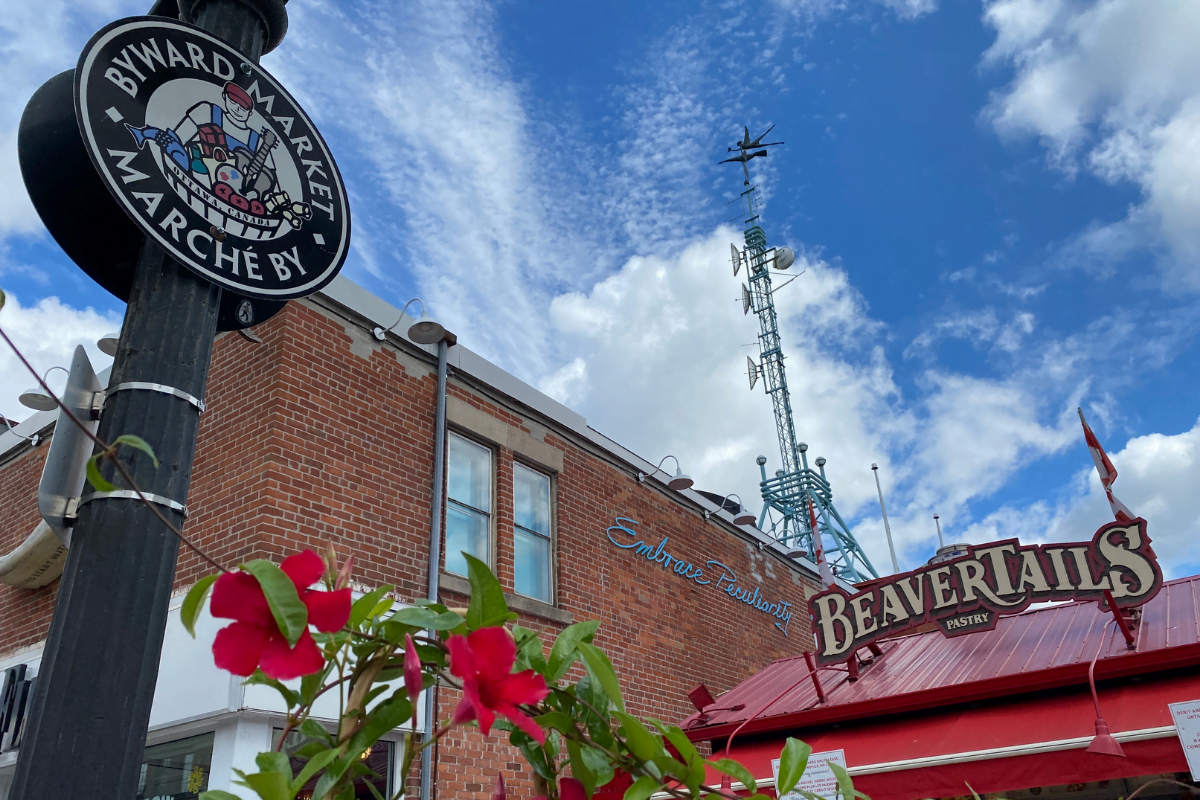
Di Ioia said the long-standing original location in Byward Market remains very strong.
“We’re now looking to expand that location after 40 years,” he said.
BeaverTails in Byward Market in Ottawa (Photo: Dustin Fuhs)
Scott Reid
Scott Reid, Director of Development, said the company’s initial expansion many years ago involved places that would attract tourism like ski hills such a Mont Tremblant, Blue Mountain and Collingwood. They were natural fits for the brand. Mobile units in trailers and trucks expanded the brand.
“The biggest evolution of the brand is over the last couple of years where we are now graduating to a more traditional bricks and mortar type location,” said Reid.
“This would not necessarily be in those leisure or touristy places. What we’re looking to do and what has been developing over the last two years is what we call a community shop. And these community shops are found in suburbs. We’re getting a ton of interest in Mississauga, Edmonton, Calgary, Vancouver, all across Canada in suburb type areas and also downtown, anchored by places that people would visit two or three times a week. A plaza that would have a major grocery store, maybe a Starbucks, a Tim Hortons, a liquor store, Dollarama.
BeaverTails on Toronto’s Waterfront (Image: Dustin Fuhs)
“We find ourselves in maybe a strip mall that would be surrounded by these anchors not unlike a Dairy Queen or a Baskin-Robins . . . a dessert/snack destination where people can now treat themselves several times in a month instead of just finding a BeaverTail at a place like the Byward Market or a Tremblant. Now we have 10 of these under construction,” said Reid.
“It’s such a love brand. It really is. I know a lot of people use that word and it’s kind of cliche in the marketing world but it truly is a love brand because it’s associated with a special event. It’s associated with a vacation, with a special afternoon with the family, amusement park, water park, ski hills. And it’s an indulgence. It’s part of that event. What makes it special is that emotional connection people have to the brand. It’s more than just the product. The product of course is unique and delicious and sweet. We’re selling sugar and that’s never a bad thing. But it’s really the association they have with the happiness and joy of the moment that really sets us apart.
“The awareness of the brand is right up there. It’s almost a household name right across Canada. You could say that about a bunch of brands obviously. But one that’s so underdeveloped is actually pretty interesting. Most people will know BeaverTails when you tell them about it and have a story, have an experience associated to it but can’t actually access the product except for maybe a few times a year if that. This led to not only our customers but our franchisees and investors in general just wanting to be able to set up a BeaverTails business because they know the demand and the notoriety of the brand just outweighs its availability. That’s where the next step of developing started shaping itself over the last couple of years.”
Retail Insider is streamlining its Canadian retail news from around the web to include a handful of top news stories that can be viewed quickly during the day. Here are the top stories from the past 24 hours.
Stefanie Hill Discusses Former ‘Chez Catherine’ Luxury Retail Stores in Toronto and Montreal
Craig and Stefanie discuss some of the history of luxury retail in Toronto and Montreal in the 1970s-1990s. Stefanie and her mother Catherine Hill ran the Chez Catherine luxury retail group in decades past with big names including Valentino, Giorgio Armani, Claude Montana, Ungaro and others.
The Interview Series podcast by Retail Insider Canada is available on Apple Podcasts, Stitcher, TuneIn, Google Play, or through our dedicated RSS feed for Overcast and other podcast players. Also check out our The Weekly podcast where Craig and Lee discuss popular content published on Retail Insider which is part of the The Retail Insider Podcast Network.
Drop us a line at Craig@Retail-Insider.com. You can also rate us in Apple Podcasts or recommend us in Overcast to help more people discover the show!
Background Music Credit: Hard Boiled Kevin MacLeod (incompetech.com). Licensed under Creative Commons: By Attribution 3.0 License. http://creativecommons.org/licenses/by/3.0/
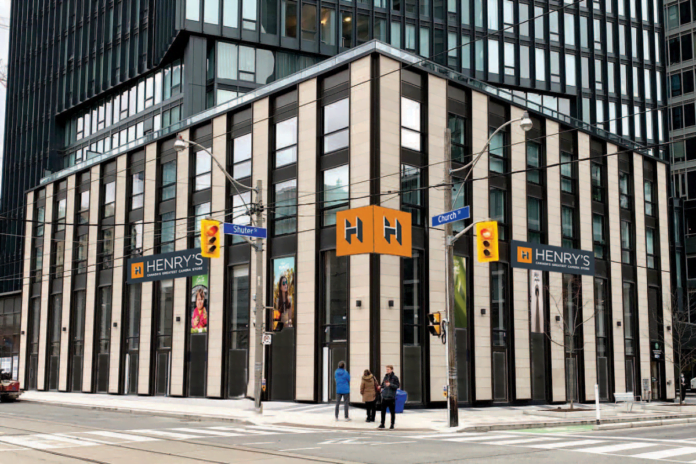
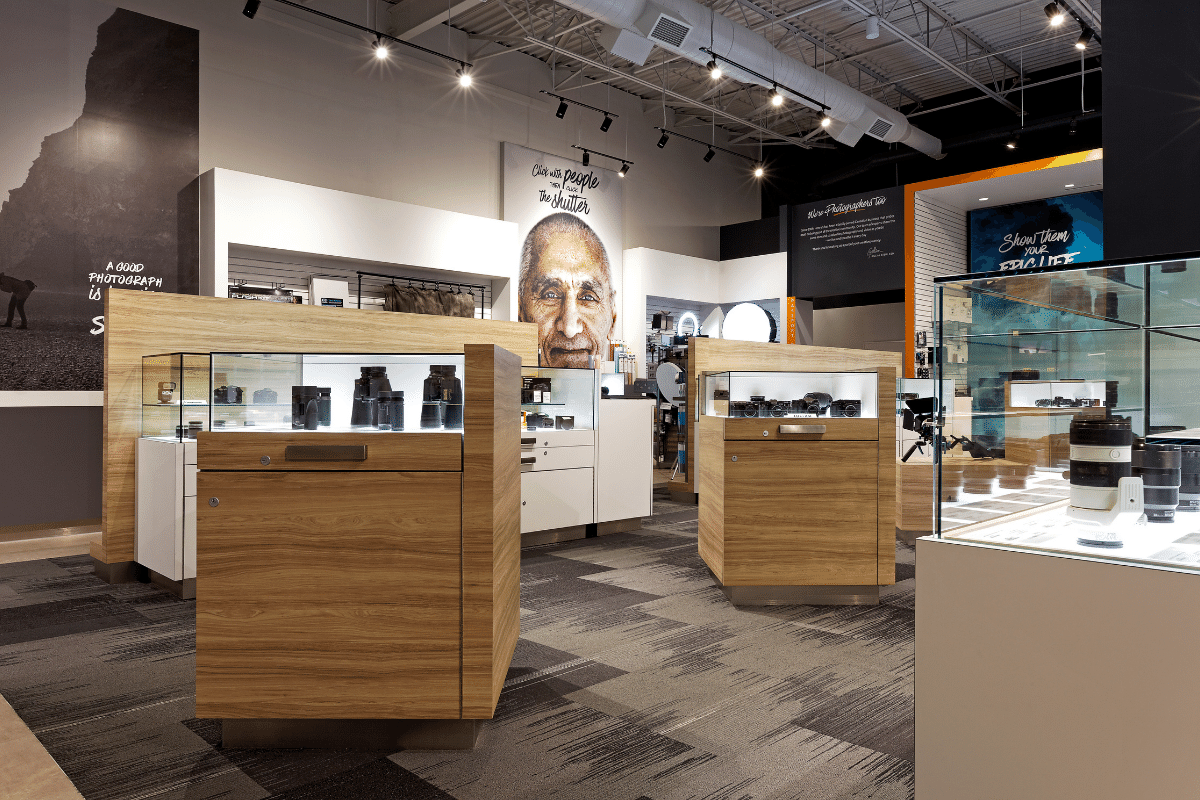
Henry's Flagship at 185 Church Street (Proposed artist rendering)
Henry’s, a leading specialty digital imaging and camera retailer in Canada, continues to expand its physical store network even during the pandemic with plans to relocate its Toronto flagship store by this summer.
The retailer has 22 stores across the country which will grow in the near future with the addition of another store in Hamilton at the CF Lime Ridge Mall. The majority of the company’s stores are in Ontario.
It also has an e-commerce and a commercial business.
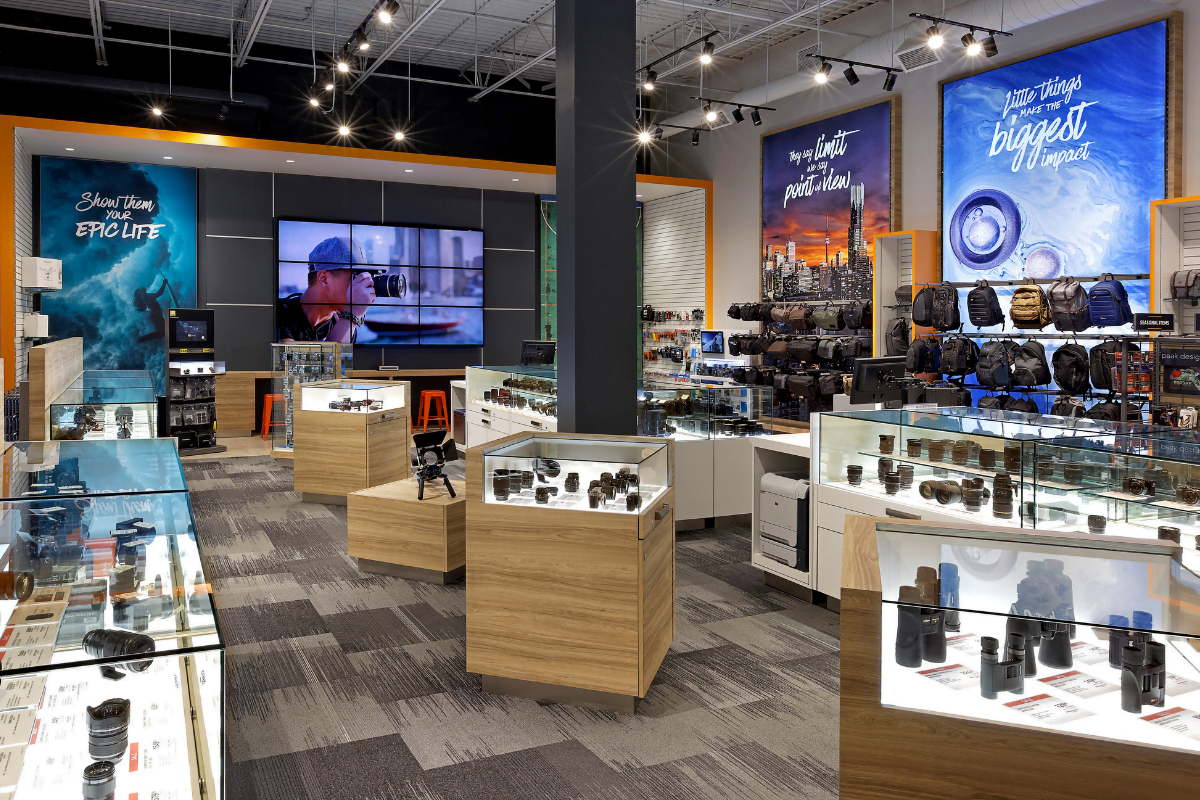
New Henry’s Concept in Oakville (Image: Henry’s)New Henry’s Concept in Oakville (Image: Henry’s)
Gillian Stein
“The store network is important. For us, the physical location still has a lot of value. The service we provide is very experiential,” said Gillian Stein, the company’s CEO. “It’s hands on. You want to talk to somebody. You want to touch and feel the product and there’s a lot of value in that in what we see . . . People want to have that interaction.”
“So we’re firm believers in the store but I think the purpose that it serves now is very different than what it used to be. It’s not just about obviously stacking your shelves with inventory and watching it go off the shelf. It’s about having a space for interaction. It’s very important that the store is there to support the ecomm experience.”
Henry’s was an early adopter of ecommerce with a platform in place in 1997.
As for future new store openings, Stein said she wasn’t sure right now about that as the company always looks at the store network and what makes sense at the time – always evaluating leases in terms of what makes sense as the market shifts and changes.
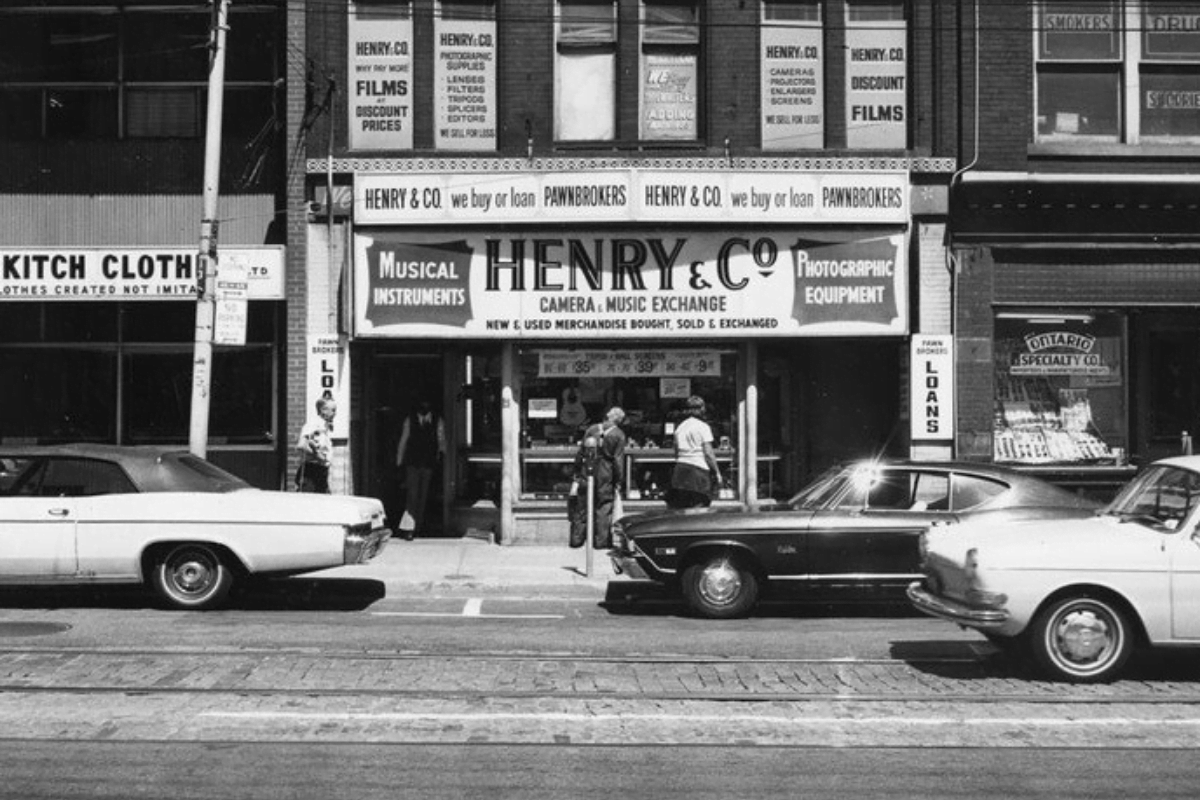
Image: Henry’s at 135 Church Street (1965)
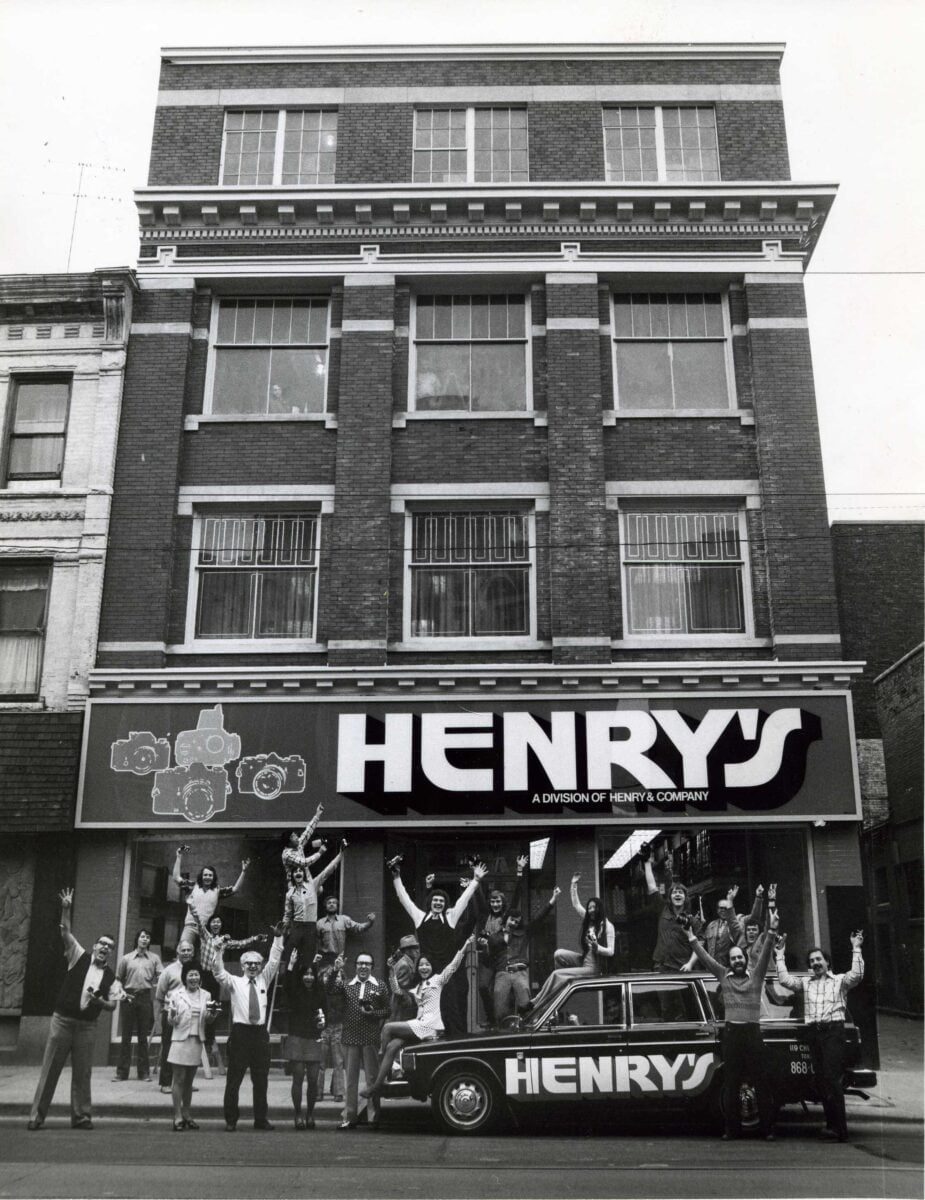
Henry’s has been at the corner of Church Street and Queen Street E in Toronto for 57 years. It has been in its current building at 119 Church Street for 47 years. Originally, before that, Henry’s was at 135 Church Street for 10 years. It will be moving to 185 Church Street – one block north of its current location.
At the current location, the real estate footprint is about 10,000 square feet with corporate offices in three floors above the store. The new location will be about 5,200 square feet but only retail space.
“In this new store, we’re going to have a dedicated unique space for content creators. So people who use YouTube, Instagram, TikTok and Twitch and creating a space for them to be able to come and have more community involvement,” said Stein.
“The space itself is going to be our new format with a much more modern, much more inviting and welcoming feel and really celebrate the passion of photography and content as opposed to sort of a more traditional photography store that’s really about the gear.”
Henry’s (Photo: Dustin Fuhs)
When Stein looks at the past two years as a retailer experiencing the challenges of the pandemic, what is the biggest lesson she’s learned?
“You always have to be able to be agile. We want to be agile but you actually have to make sure that you have a business that can support that,” explained Stein. “It’s about the way your team thinks. Do you have the capital for that? Do you have the infrastructure for that?
“I’ve been really impressed with our team’s ability to be adaptable and resilient and as agile as possible. For sure, there’s been elements of our infrastructure that we knew had to change to support us to be more agile and nimble in the future. So we’re making investments in technology to support that.”
“I really wanted to encourage others to share their stories about mental health and to be able to seek the help that they need to lead a normal and fulfilling wonderful life because I think that’s something that everybody deserves,” said Stein, who is part of the fourth generation leading Henry’s.
“I think it’s amazing that we see depression and anxiety have become more normalized. But I would say that in the business community it’s not the same and we’re really quite behind and as business leaders I find we don’t really talk about our personal struggles. There’s still a lot of stigma and shame around a much broader spectrum of mental health issues. If we don’t talk about it, I think we’re perpetuating the stigma. And so for me I felt that every time I don’t tell someone about my mental health situation, it’s an opportunity that’s dropped.”
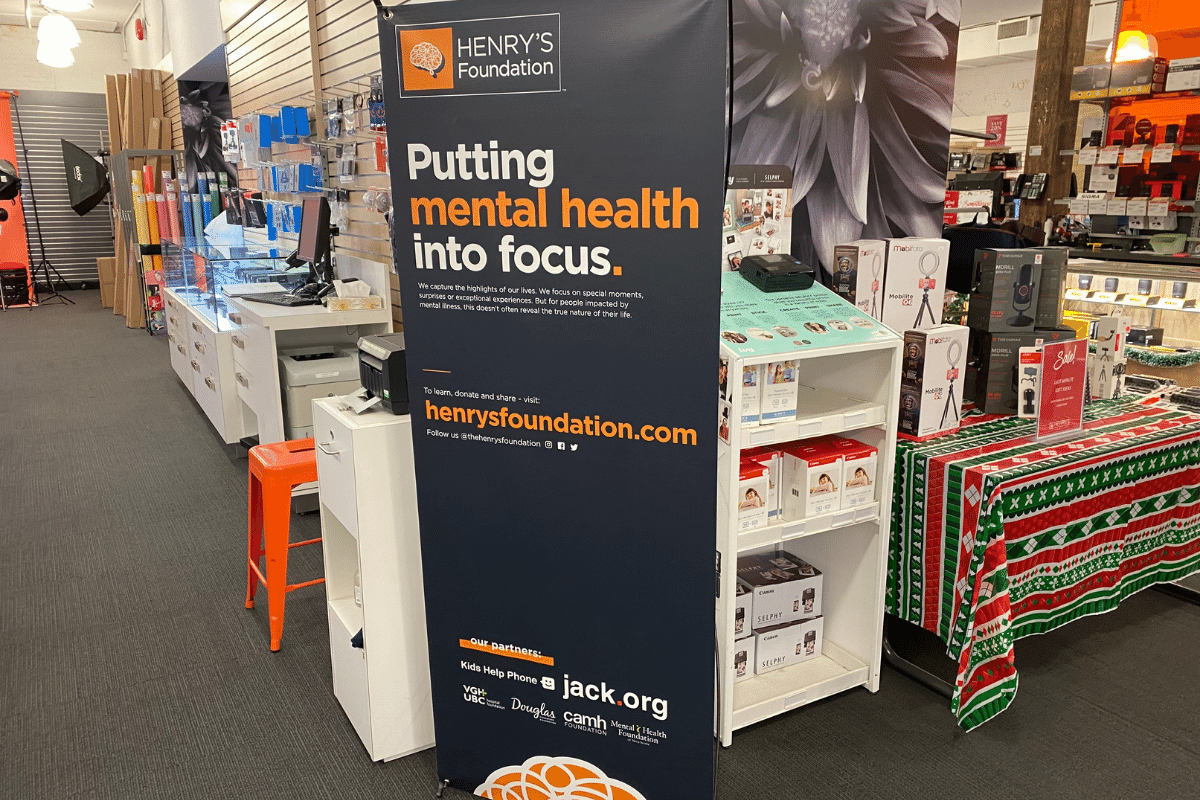
Original Henry’s Cash Register, in use until 1964 (Image: Dustin Fuhs)Henry’s Foundation (Photo: Dustin Fuhs)
The Stein family founded Henry’s Foundation in March 2020, which is committed to fighting against the mental health stigma and to helping Canadians get the mental health support they need. Gillian’s sister Amy Stein is the Executive Director.
“Our family has always been very deeply rooted in our community and have always really believed in giving back. But we felt it was really important for us to really focus our efforts on a single cause and felt mental health was really the key for us,” said Stein.
“Our family personally struggles with it. We know that it is something that impacts our employees and it’s something that impacts our community as well.”
The Winnipeg-based Carbone Restaurant Group aims to be a pioneer in the ghost kitchen space as well as robotic kitchens, conveyors and be one of the leading restaurant technology companies while also embarking on massive expansion plans for its FAST FIRED by Carbone pizza brand.
Benjamin Nasberg
The quick service restaurant began with its first location in Winnipeg in 2015. Today it is operating four locations – two in Winnipeg, one in Brandon and one in Regina – with two more expected to open soon in Regina and Moose Jaw. The company was founded by CEO Benjamin Nasberg.
‘Ghost Kitchens are on the rise globally,’ Nasberg says. ‘‘Operating as 100% virtual brands that are strictly take-out and delivery offer a variety of products and cuisine from a single location. The ghost kitchen model offers restaurant and business owners the opportunity to utilize existing kitchen space and staff, capitalize on delivery demand, have less food waste, and increase revenues.”
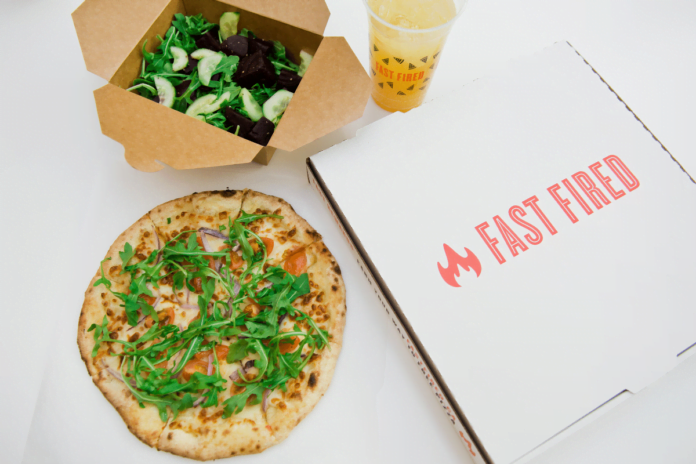
Fast Fired (Image: Carbone Restaurant Group)
Doug Warren, Vice President of Franchise Sales for FAST FIRED/Carbone Restaurant Group, said the brand offers a completely different experience than other regular pizza establishments.
Doug Warren
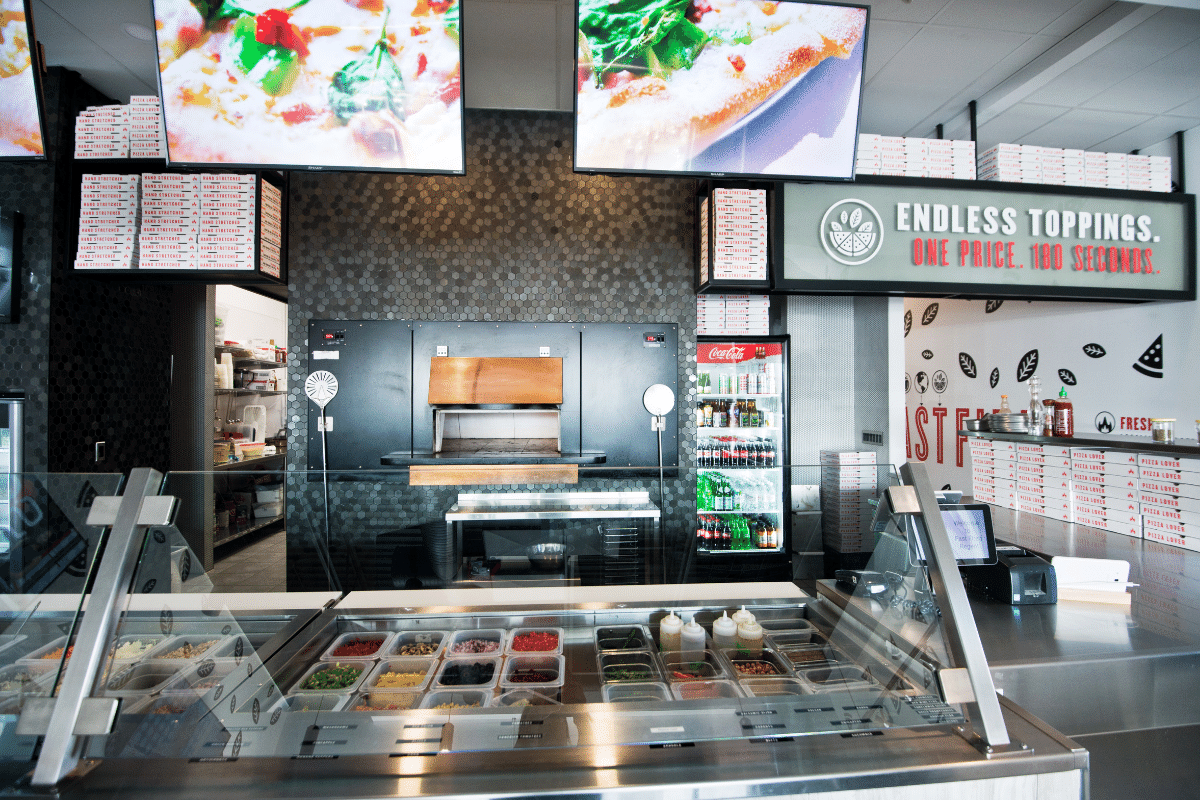
“Custom made pizza, which is on the healthy variety and kind of more plant-based is our angle you can say. The fact that it’s cooked so quickly allows us to have a heavy lunch crowd. Some pizza places are not even set up to open up until 4 p.m.,” said Warren.
“There’s a whole system of different markets we can hit (dine in, delivery, pickup) because the pizza is cooked very quickly, you don’t have to wait 45 minutes for it.”
The FAST FIRED name comes from Fresh, Authentic, Sustainable, Tailor-made.
Fast Fired (Image: Carbone Restaurant Group)
Warren said the pandemic held back expansion plans for the past year or so.
“We’ve got 25 people lined up, signed franchise agreements coast to coast. Half of them were delayed a year because of the pandemic unfortunately. Locations, leases, landlords weren’t even working for awhile. So it was a real challenge,” he said.
“We’ve got six locations, but we’re expanding rapidly. In total, our goal is about 200 stores and that includes some non-traditional type sites, maybe universities and those kind of industrial settings. Two hundred coast to coast in Canada.
“And then from there, international. We’re likely to look at Australia, U.S., possibly Middle East. In fact, I have investors that are waiting to look at this in places like Dubai and Europe. We’re just kind of holding back until we really get it developed in Canada. Now how long will that take? I signed over 20 deals since May. If I was to look at 2022 I think 50 signed deals, 25 stores will open and that’s really when it will take off. It has to do with executing on operations and being successful.”
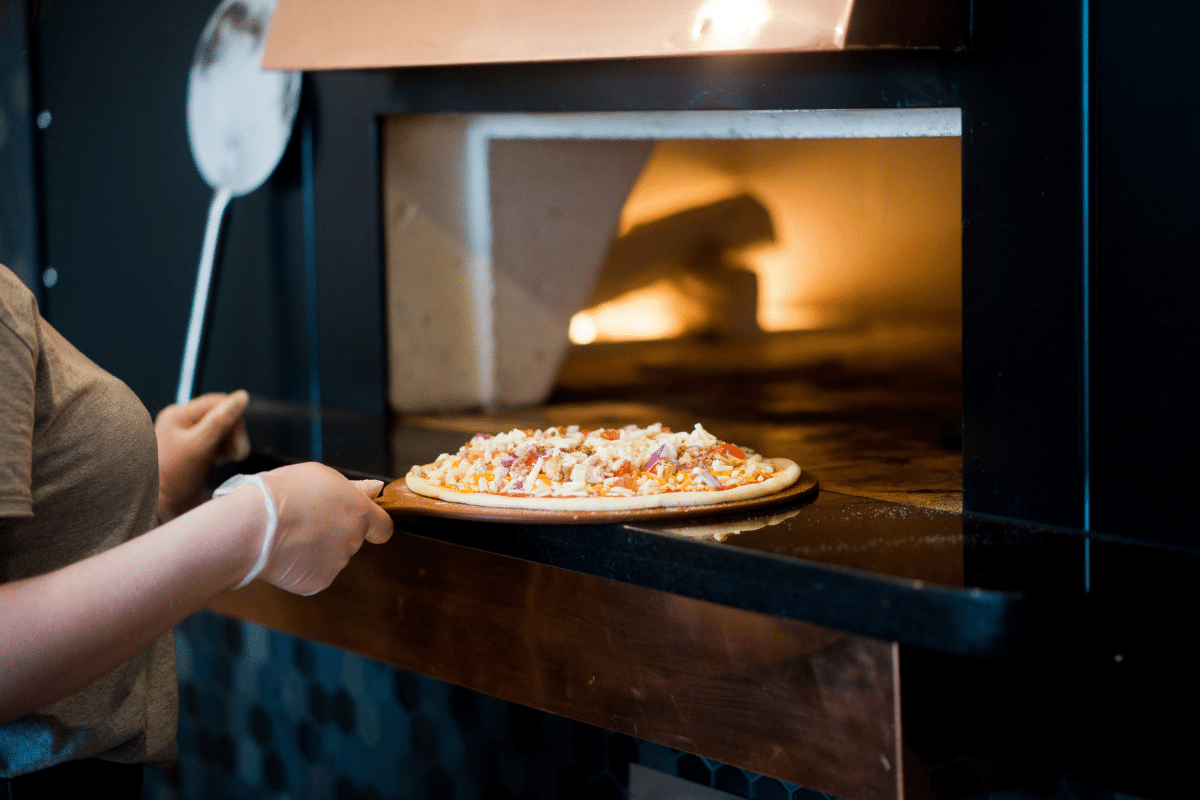
Fast Fired (Image: Carbone Restaurant Group)
Warren said the Carbone Restaurant Group is also pioneering in the ghost kitchen space.
“Ghost kitchens are developing a robotic kitchen concept like a technology. Pizza vending machines for certain types of locations that FAST FIRED could not go into. At the same time we have folks buying QSR concepts because you’ve got be in there to deal with the customer and make the pizza, we’re developing automated systems to not only sell to the restaurant industry but also some of those innovations will go into FAST FIRED,” said Warren.
“For instance, right now a guy has to stand at the oven for three minutes to make sure the pizza doesn’t burn. It’s so hot. But with a conveyor which we’re developing, it will actually move the pizza through it in three minutes and we could do 20 at a time if we wanted to without burning any of them. That’s the thing we’re working on.”
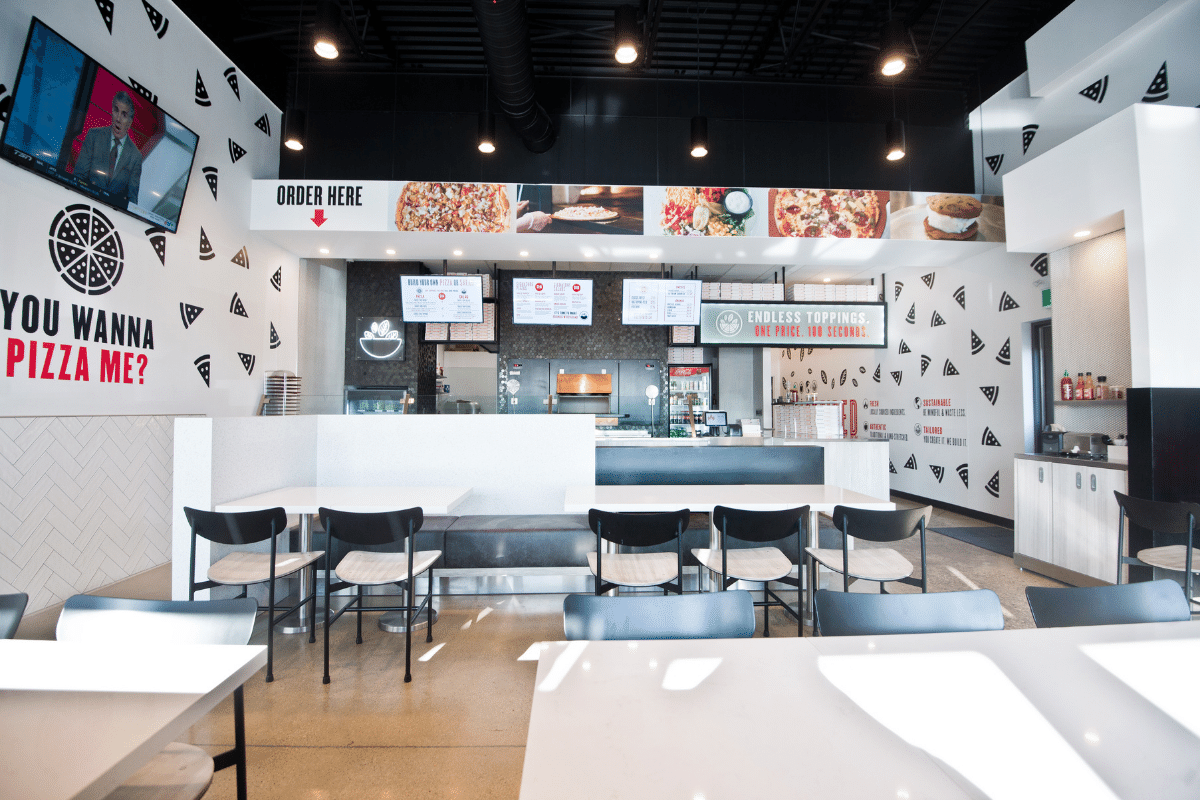
Fast Fired (Image: Carbone Restaurant Group)
“There’s a lot of AI (Artificial Intelligence) these guys are involved with for the restaurant industry. It’s a separate division. Some of it could really revolutionize the restaurant industry. The CRG believes that automated restaurants are coming.”
Warren said the company is helping struggling restaurants create a ghost kitchen in their restaurants with the idea to generate revenue.
“They seem to be hitting a chord, there’s no doubt about it. The other thing too is actually open up our own ghost kitchens with these brands including FAST FIRED, but right now FAST FIRED is in the QSR space,” he said. “The ghost kitchens right now are burgers, tacos, all different products than pizza.”