Advertisement
Home Blog Page 915

Salesforce Releases Retail Playbook Amid COVID-19 Pandemic

CARTOON SHOWING PLEXIGLASS SCREEN BETWEEN SALES ASSOCIATE AND CUSTOMER BOTH WEARING MASKS. IMAGE: SALESFORCE

The COVID-19 pandemic has forever changed the retail industry as retailers around the world have adapted and adopted new ways to deal with the changing behaviours of consumers.

In its most recent Retail Playbook, Salesforce, a global leader in Customer Relationship Management, gained insights from leading industry experts, shoppers, retailers, and retail employees to develop four pillars for the retail sector moving forward — store safety, contactless experiences, empowered associates, and relationships with shoppers in a digital-first world.

“We’re all living through our first pandemic, which we’re seeing rapidly advance the pace of change,” said Margaret Stuart, Country Manager for Salesforce Canada. “In fact, McKinsey reported that in the first 90 days of COVID-19, we saw 10 years of acceleration in ecommerce. As that continues, it’s imperative for retailers to adapt, innovate and disrupt.”

“Today a consumer can buy whatever they want, wherever they want, whenever they want. A key part to meeting customers where they want to be met in that type of environment is to prioritize digital.”

Stuart said retailers need to be prepared to invest in the technology side of their business.

“We see that it is imperative for retailers to blend the digital and the physical world. Roots is one of my favourite iconic Canadian examples. Even though their stores have reopened, their focus on online engagement has increased. In the last few months, Roots has added digital advisors for those shopping online and invested in their search engine optimization, and they now have sales associates located in their stores advising online customers over chat and provide voice recognition technology to accelerate the response time and give people more choice in how they want to engage.”

Ensuring safety in retail stores has become a key and critical initiative for retailers.

“Safety is the first pillar. One of the research studies Salesforce did in June of this year showed that 62 percent of folks are much more willing to go back to shopping in a store when they know that where they’re going to shop has safety precautions in place. This includes safety, not only for the shoppers, but also for employees,” said Stuart.

“One of the solutions that we launched was Work.com, which provides businesses with access to global health information, provincial health information, and national health information. Through this, you have contact tracing in place so you’re able to optimize the safety of everybody that interacts with you as a business including your employees.”

Contactless engagement through delivery and curbside pickup is also a growing trend in the retail industry.

“This will continue to evolve. Our research indicated that 82 percent of Canadians said they’ve done self-checkout. We’re seeing contactless engagement increasingly become the norm,” explained Stuart.

She said a recent global survey found a 71 percent increase in digital shopping in the second quarter of this year. In Canada, there was a 111 percent increase in digital spend. And the companies that do buy online pick up in store have seen a 127 percent increase compared to the 54 percent increase for the stores that do not buy online pick up in store.

“The move toward buy online, pick up in store, is increasingly prevalent. We all want to feel safe and combine it with the convenience of online or in-store.”

As the retail sector transitions amid this COVID environment, Stuart said it has never been a better time to be a store associate.

“The job is getting so much more diverse. Today, store associates have tablets so that they have customer information at their fingertips. That’s the real digital engagement,” she said, adding that many are also re-skilling to meet growing demands and needs.

Stuart said there is huge potential for retailers in having a single source of truth about customers so they truly can give them that personalized experience.

“From how you market to them, how you sell either online or in store, how you service, to how you analyze data across all of your customer base,” she said. “I think truly having that single source of truth across your customers is one we’re moving toward and many of our customers are very close to being there.”

“Best Buy is one of my favourite examples with their Geek Squad. When they show up at your house, they have your information at their fingertips so they can spend so much more time resolving your technical issues and not asking for information that you’ve given five times in other environments.”

Stuart said she is constantly impressed by the resilience and innovation she’s seen across Canada in retailers during this pandemic.

“I’m very optimistic for where we’re going with all of this.”

Download the Salesforce Retail Playbook here.

*Partner content. To work with Retail Insider, email: craig@retail-insider.com

Complete Playbook for HR Technology During Times of Crisis

EMPLOYEE DISINFECTS ELEVATOR. PHOTO: KRONOS

Workforce innovation company Kronos has released an expansive Playbook that shows retailers and other businesses how HR technology systems are effective in managing staff during times of crisis. (Note: Kronos has merged with Ultimate and as of October 1, will become UKG.)

Some of the important topics include how HR technology keeps front-line employees safe, and how it helps remote employees stay connected. Temporary fixes are not enough, according to Kronos, especially in today’s rapidly changing environment. HR technology helps manage that change with effective, repeatable, safe strategies and processes for workplace safety, productivity and engagement, and psychological safety.

  • Workplace safety – The Playbook discusses how innovative scheduling processes, alternative options for time tracking, and health & safety reminders can contribute to a safe environment across all physical locations.
  • Productivity and engagement – In times of stress, employees and managers alike can benefit from tools to streamline work. The Playbook offers many ways HR technology can help, such as workflow management and activity tracking for informed decision-making.
  • Psychological safety – Mental and physical health often go hand-in-hand. The Playbook discusses proactive strategies, and even provides key predictors of employee well-being.

The Kronos playbook also delves into how HR technology can be implemented through mobile devices, which is so important at a time when so many people use a smartphone as their primary technology device – and may not, in the case of hourly workers, wish to be physically interacting with a shared time clock. Mobile HR technology can also be used for financial activities to simplify processes for workers.

The ebook goes on to provide strategies to keep newly remote employees connected and productive through communication, development and flexibility during the COVID-19 pandemic. Employee development and engagement in the new work environment is a key issue, along with how to manage employees requiring flexibility in work-from-home situations.

Finally, the Kronos ebook discusses how technology can be used to support business processes, the HR team, and employers generally – how HR technology enables compliance with laws and regulations, improves processes, and maintains employee well-being, all while managing through a crisis.

The Playbook is a valuable tool for employers seeking to optimize their use of HR technology during this, or any time of crisis. Download the free Playbook now.

Learn more about UKG at www.ukg.ca.

Furniture Rental Business ‘Fülhaus’ Launches 1st Retail Space in Montreal

EXTERIOR OF FÜLHAUS LOCATION IN MONTREAL. PHOTO: FÜLHAUS

Fülhaus, a design and furnishing service for hotels, apart-hotels, and short-term rentals in Canada, the USA, and Europe, has launched a new concept as Montreal’s first direct-to-consumer furniture rental service.

Starting in the greater Montreal area, Fülhaus plans to expand to Canada and the US in 2021 where it also operates.

“More and more consumers are looking for furnished rental apartments, especially in urban centres and high-mobility destinations, especially in these more uncertain times. While landlords get used to the idea of furnishing their units, there are a lot of people that are more willing to rent furniture rather than fork over the expensive price tag of owning it,” said Andria Santos, the company’s CEO.

“On the business side of things we actually service all of North America and Europe, so we wanted to launch in Montreal. It is our hometown. We kind of wanted to cater it to the city, be one of the first real furniture rental companies in the city. But we do offer services across North America and across Canada as well. So we’ll be expanding slowly and you’ll see those launches coming up shortly.”

Santos founded Fülhaus in 2015 as a way for short-term rental business owners to better compete with hotels with photo-ready interior design and affordable furnishings.

Santos said the company realized it was excluding a large portion of the population where landlords are not willing to furnish but many people, especially in the central business district, want to live there for a certain period of time however they don’t want to commit to the entire furnishings for whatever their next move was going to be.

“So we felt like we were excluding a whole demographic and a whole consumer market. One of the big things was to figure out our deliverable system and really to offer the services and figure out how we retain that service level for the consumer as much as we do for the business. That’s been a work in progress that we feel we really figured out,” said Santos.

“Now that we’ve launched it, it felt like the perfect time. People are home. Everybody’s focusing on how to upgrade their homes right now since they’re not travelling.”

The company cited some interesting demographic data as a reason it has entered into this new market. According to Statistics Canada, 32.2 percent of Canadians don’t own permanent homes. It is even larger for millennials, where 49.8 percent don’t own a home. Homeownership, especially among young Canadians, has decreased 5.3 percent over the past four decades.

While millennials appear to be opting out or unable to own a home, the average cost of rent continues to increase. According to Urbanization’s 2020 report, the price of a furnished condo has increased by 52 percent within the past year, said Fülhaus, adding that the pre-furnished condo is a progressively unaffordable option.

“I don’t want to commit to a $2,000 sofa for a home I don’t currently own. Let alone move it as often as I move, or have to sell it. There’s a gap in the market for people who love design but don’t want to own it (yet),” said Santos.

The numbers involving millennials and homeownership raise the question of where are they going to get all this furniture for their rental spaces. It is a pricey endeavour. And it’s for their temporary space.

“Even myself, I don’t want to live in a rental forever. Nor do I want to buy furniture for this rental space and then have to move it eventually in a home I might own. It’s kind of a logical scenario,” said Santos.

“A lot more millennials are mobile and especially now work from home so you don’t want to own all of this stuff that makes you responsible for it if you have to pick up and move.”

Fülhaus adapted its B2B model by removing some of the extras like installation, staging and photography more associated with marketing properties. Customers can take an online quiz that determines their project scope and design preferences and then matches them with one of Fülhaus’s many and evolving seasonal design packages.

Each package comes with specially curated furniture selected from over 300 designer brands including Lolio, Nuevo, Safavieh, Moe’s, and TOV. The price for a one-bedroom home design and furnishing package starts at $350 per month, and includes free professional curation with the option to renew after a year at a discount, buy back the furniture or swap out.

Fülhaus will initially offer packages for dorm rooms, home offices, studio apartments, and one to four bedroom homes.

Santos said furniture used as rental can be reclaimed by the company and be put to use again if it is in good condition or donate it to charities such as Habitat for Humanity.

“It really is super important for us to make sure that furniture goes not to a landfill, not to the side of the road but actually gets reused and that we actually follow it through its lifecycle,” she said.

Canada’s 1st Baby Gear Marketplace Secures Major Expansion Investment

REBELSTORK LOGO

Rebelstork, Canada’s first managed baby gear marketplace, has recently raised $2 million in seed funding from a group of ultra-high net worth investors that will fuel the company’s future growth.

The concept allows the online buying and selling of expert-curated quality baby gear at reduced prices.

“Parents today are looking for affordability and sustainability, without having to compromise on style, convenience or safety standards, and Rebelstork is able to deliver,” said Emily Hosie, CEO and Founder of Rebelstork, which is based in Toronto. “Our investors recognize that Rebelstork is well positioned to own part of the growing $2.1 billion Canadian used baby goods market and our month over month growth has demonstrated our ability to do so.”

The concept launched July 8, 2019. Hosie said the online marketplace enables the buying and selling of overstock, open box, and quality used baby gear.

“We basically take the haggle and the hassle out of the transaction. We have our custom algorithm. So from a seller’s standpoint they book a pick up, we go pick up their items and all of the items are priced using our proprietary algorithm that I built. It sets fair market value based on market demand for that brand, the age of the item, the condition of the item, a whole bunch of things and as soon as their items are sold we obviously ship it out to the new buyer,” said Hosie.

“And from a buying standpoint it’s just like the convenience of shopping online at any retailer.”

Hosie has an extensive background in retail trend buying and merchandising with Saks Fifth Avenue, Saks off Fifth in New York City, Holt Renfrew, and TJX Canada (Winners & Marshalls).

When she was pregnant with her first son and on maternity leave, she had items that she wasn’t using and was trying to get rid of them.

“I thought this was actually insane. The only options I had were Kijiji or Facebook marketplace. I didn’t want to do that. So that’s where I kind of built the idea and then it took me obviously a while to go from business plan to raising capital to actually launching it,” explained Hosie. “The idea really came from my own personal experience and just knowing the retail environment and wondering well why if everything else can be so convenient and new parents are the ones so starved for time, this is crazy that these are our options.”

She said the recent seed funding allows the company to scale and to grow. The company is hiring and has hired six people in the past six months.

“COVID has actually been amazing for our business and so who knew I was building a pandemic-proof business when I set out. We already ship products nationally but we’re going to be expanding our pick up services nationally so it’s really to scale across the country for the most part. And marketing of course,” she said of the investment.

The company says Rebelstork’s engaged buyer base means that the average Rebelstork seller makes $400 on a four-item pickup within a short 48 hours of the listings going live.

Rebelstork is a certified pending B Corporation with a mission to reduce the “stuff burden” on the next generation and make parenting lighter.

Hosie said the vision for the company includes being a household name and being a destination for parents to shop for their babies or kids.

“But also a household name for when you’re ready to part with your items,” she said. “That’s a goal. At the same time, I think the whole baby industry is quite old school and I think it needs to kind of step up with the times of what’s happening in the rest of the retail industry which is people don’t just shop all one avenue. They don’t just shop all brand names. They don’t just shop all second hand. It’s a mixed bag.

“So if we can be a destination where people are able to do that and they can buy overstock items at a deal that it’s brand new but also in their cart they’re buying something that’s quality used that’s kind of the way new parents are shopping today anyways so we’re just allowing it to happen in one spot.”

There is a wide range of smart baby gadgets on the market today, from commonly used baby monitors and bottle sterilizers, to the less well-known smart baby car seats and white noise machines. More of these items are finding their way to retailers like Rebelstork as well.

Loblaws Expands Urban Flagship Concept with Innovative Toronto West Block Storefront

EXTERIOR OF NEW LOBLAW FLAGSHIP AT WEST BLOCK BUILDING IN TORONTO. PHOTO: NORMAN KATZ

More than a century of work in the grocery business provides the foundation for the company, as well as an ongoing historical reference for the brand that helps guide and inform its continued evolution.

An air of prestige and reverence that it’s managed to cultivate among both patrons and peers for its numerous banners, private label products, and other offerings sets it apart as a Canadian icon. And its many successes and clever acquisitions through the years have placed the company in enviable stead as the country’s largest retailer.

Yet, despite all of the related accolades and applause it still receives, Loblaw Company Limited – a true pioneer of Canadian grocery — endures as a trailblazer of innovation within the industry. The opening of the completely redeveloped West Block Flagship location at the corner of Bathurst and Lakeshore in Toronto is simply the latest example of the company’s leading-edge plans for grocery.

Tradition Imbedded in Innovation

Redevelopment of the historic West Block building seems to serve as a symbol of sorts for the company, where it’s fused its impressive heritage with its bold vision for the future. Originally constructed in 1928, the site was the location of the very first Loblaws Groceterias warehouse – an innovation that was, in its day, lauded by many as the most modern of retail warehouse facilities.

Sharla Paraskevopoulos

Today, following a collaborative undertaking between the grocer and property development and management partners Wittington Properties and Choice Properties REIT, and supported by an investment worth more than $400 million, the West Block Flagship is set to lead Loblaw and the grocery experience into the future.

“At Loblaw, we like to preserve and celebrate history,” explains Sharla Paraskevopoulos, Senior Vice President of Operations, Market Division at Loblaw Companies Limited. “We are always consciously weaving the past in with the things we’re doing today. The West Block project is a great reflection of that. And, given everything that the site offers, it also reflects the innovation that helps to move the company forward as we continue to make investments to grow and expand even further.”

The mingling of the past and present is apparent in the building itself, explains Paraskevopoulos, which was deliberately deconstructed and rebuilt piece by piece to ensure that each brick used in the construction of the building more than 90 years ago was numbered, preserved and put back into its original spot. And helping to propel Loblaw’s vision of the future is the place it’s assumed at the heart of this mixed-use concept, and an offering that allows it to act as the central hub for the surrounding community, meeting the many needs of the neighbourhoods that envelop the site.

A Whole New Grocery Experience

The new West Block Flagship, which opened to the public on Friday, September 11, has been beautifully and prominently constructed, featuring seven floors of retail and office space, along with the incorporation of two condo towers with approximately 850 residential units and a stylish courtyard sized comfortably enough to hold community events. The first floor of the building features a Shoppers Drug Mart meant to satisfy all of the beauty, health and wellness needs of the community, as well as a new concept Joe Fresh that will provide its visitors with its “affordable, every day fashion” within a showroom-type environment.

“We’re all really excited about this,” says Paraskevopoulos. “This is the first time that Loblaw has been involved in a mixed-use project. Considering the continued evolution of the grocery shopping journey and the increasing desire shown by today’s urban consumer for a convenient and seamless experience, the concept makes a lot of sense if you can deliver on it.”

The second floor of the inspiring Flagship is occupied by the expansive and elegantly spacious Loblaws store, which the company says presents visitors with “an elevated grocery experience” that’s delivered in part through its curated selection and assortment of unique, local product. In fact, the West Block Loblaws is the first of its kind, partnering with one of its banners, Fortinos, to offer Pane Fresco products in the store. It’s a move that Paraskevopoulos describes as “combining the very best of Fortinos with the best that Loblaws has to offer”, resulting in a breadth of selection that speaks directly to the lifestyle of today’s urban consumer.

“Pane Fresco is all about fresh food offering,” says Paraskevopoulos. “From freshly baked pizzas and breads to lasagnas and pastries and other product that’s made ready to eat or take home, the Pane Fresco offering lends itself very well to catering to the needs of the dense urban neighbourhoods that surround the West Block location.”

In fact, Paraskevopoulos explains that apart from the inclusion of Pane Fresco, there are actually more than 300 products on offer at the West Block location that can’t be found at any other Loblaws in the country, providing visitors with a unique store offering that’s unlike any other. These include a variety of curated local product from craft beers and salad dressings to fresh meat in the deli. It’s all part of the company’s objective to deliver top quality foods and an exceptional experience.

Driving Digital Development

Another way in which Loblaw is elevating the grocery experience for its patrons is through its commitment to digital innovation and the continuous development of ways by which it can be leveraged to ensure ease and convenience for its shoppers while adding value to their lives. To help support its commitment, the five floors that sit atop the Flagship’s two floors of retail house the Loblaw Digital team and the PC Financial team among others, providing a collaborative space for approximately 1,100 of the company’s retail innovators to continue exploring and discovering ways to improve and personalize interaction with the brand

SEAFOOD AND BUTCHER SECTION OF NEW WEST BLOCK LOBLAW FLAGSHIP. PHOTO: NORMAN KATZ

“Our digital team and the work that they do is really important to us and what we’re trying to achieve as a business,” explains Paraskevopoulos. “We’re always looking for new and better ways to engage and connect with our shoppers. Whether it’s by improving our online experience, making it more relevant to the individual brands we offer, or through the personalized information and exclusive price offers received by members of our PC Optimum program, we’re very focused on driving that digital experience for our customers.”

The West Block location also has a PC Express pick-up option where time-starved, on-the-go urbanites can pick up groceries that were ordered through the PC Express app without having to go into the store, another way in which the grocer helps provide real value and convenience for residents in the area.

There’s no doubt in one’s mind when entering the West Block Flagship that creating a seamless experience for the urban consumer has been a focus of the company’s efforts and planning for the project since it began ten years ago. Focus that’s resulted in other, more subtle in-store innovations like creating more space for the shopper to move about the store, ensuring greater accessibility to product, the inclusion of more self-checkouts and an emphasis on skus and sizes that can be easily carried away from the store as most visitors are more likely to walk than drive to the West Block location.

“With the support of demographic data, we really paid attention to the needs of the consumer living in the area,” says Paraskevopoulos, “And we’ve tried to reflect that in the store’s offering of quality and convenience. Feedback so far from those shopping at the store has been incredibly positive.”

The Future of Grocery?

With the construction and development of the West Block Flagship, Loblaw has not only elevated the grocery experience for visitors to the store, it’s also helped to create a hub for the community – a place for residents to shop, eat, interact, and fulfill many of their daily needs. In doing so, it also seems to have once again set the grocery experience bar even higher, rendering the project a possible template for future plans.

At the start of 2019, Loblaw announced that it would enter into an additional mixed-use project, partnering with QuadReal Property Group to open a massive 50,000-square-foot Flagship at ‘The Post’ in downtown Vancouver, which will open in 2022. The Post location will operate much in the same way as the West Block Flagship, servicing the needs of those living in the surrounding neighbourhoods, offering a similar but different assortment of curated local product to bring something unique to the urban footprint in Vancouver. And, according to Paraskevopoulos, the company will continue to explore the concept further.

“We’re going to keep a close eye on the store’s performance. We’ll monitor all of the key KPI’s for this project and, in partnership with Choice Properties, will look for opportunities to bring this type of offering to other urban centres across the country in the future.”

World’s 1st Pizza Subscription Service Launches in Toronto

General Assembly subscription user unboxing delivery of frozen pizzas. Photo: General Assembly Pizza

Toronto-based General Assembly Pizza has launched what it describes as the world’s first pizza subscription service as it also plans to aggressively expand its product offering in the near future by opening a new concept in the market.

“Since opening our doors in 2017, we have pushed for the best guest-experience possible — that’s why our dough is 100 percent naturally leavened, that’s why we have a purpose-built 400-square-foot pick-up and delivery area, and that’s why we’ve launched a direct-to-consumer subscription-based ecommerce platform,” said Founder & CEO Ali Khan Lalani.

“In 2020, providing the best guest experience means General Assembly Pizza has to be more than a restaurant. I’m proud to say that after almost six months of planning, many roadblocks, and countless pivots — all while maintaining our day-to-day restaurant operations amidst a pandemic — we have done it. Along the way, we’ve connected more than ever with our community, and we look forward to bringing a little of that original GA guest experience back into their day-to-day lives, at home.

“We’re very, very excited about the launch of the subscription business and we think that premium finish at home, premium cook at home, products are a path forward and a way forward for Canadians to enjoy dining out at home. Restaurant quality food. Restaurant driven food in a safe, sustainable way at home however they choose, on their time.”

GENERAL ASSEMBLY PIZZA SUBSCRIPTION SERVICE PLANS ONTARIO EXPANSION FOR 2021

The GA pizza subscription offers free home delivery for stacks of 4, 6, 8, or 10 pizzas, from as little as $39 per order and as low as $9 per pizza. The service is available in Toronto (i.e. all postal codes that start with the letter ‘M’), with plans to expand throughout Ontario in 2021. The service was launched at gapizza.com

The direct-to-consumer subscription model builds on the successful launch of GA’s premium frozen pizza line, developed by GA Executive Chef Curt Martin, which features six 100 percent naturally leavened pizzas that cook at home in five to seven minutes.

“Food quality and forward thinking is what drives our team. Whether it’s made-to-order or frozen, our pizza is entirely handmade, chef-prepped and fired in our hand-built, made-in-Italy brick ovens,” said Martin.

Subscribers to the subscription service can choose their monthly stack size and select their pizzas. Pizzas are delivered to a subscriber’s doorstep in a temperature controlled recyclable box that declares “pizza night, reinvented”. Contactless delivery and package tracking ensure customers know exactly when to expect their order.

GENERAL ASSEMBLY PIZZA BEING PREPARED AT HOME. PHOTO: GENERAL ASSEMBLY PIZZA

Lalani said the business took on a new mantra, a new wave, during the current pandemic. GA has one location in downtown Toronto on Adelaide Street West.

“Now that we’re in the middle of the pandemic we’ve all had the chance to assess our goals. We think that a very small 500-600-square-foot takeout, delivery type model is going to be the way, the path forward for us. No dining room seating. And we’d just focus on having our own CPG (Consumer Packaged Goods) freezer that sells all of our consumer package goods and our brand new frozen pizza line as well as pizza kit, dough, sauce, and cheese, and hot fresh pizzas which we’ve been well-known for for the last three years,” he said.

“Our new model is going to be one where it’s very different than our current. The new model will have a frozen section and a kit section so if people want to make pizza at home everything you need would be there . . . We’ll also be able to do pick up through an app and we’ll also be able to do delivery. So the current model of fill the restaurant with people, people pay, people leave, repeat has been flipped on its head and now we think that we’ll have four interesting ways for people to engage with our brand and four ways for our business to generate revenue.”

Lalani said the company is actively looking for locations in Toronto for that model. The company’s Consumer Packaged Goods, finish-at-home frozen pizzas are also in about 10 grocery stores in southern Ontario.

Better Cash Flow, Better Reporting – Here’s How FreshBooks’s Accounting Software Helps Canadian Retailers

Retail is a sector with fine margins and business managers know that small changes can mean a great deal when it comes to the bottom line.

A perennial issue is the management of cashflow and this has been an area that has come under even greater scrutiny over the last few weeks.

The truth is though that if managers don’t know what is happening then they can’t manage their cashflow and if they can’t manage their cashflow then they can’t efficiently manage their business.

These twin areas of concern are central planks in the FreshBooks offering and retailers are finding that the accounting software can make a real difference to the way they do business.

Collect Cash Quickly

We’ve seen over the last few weeks how the move away from a cash-based economy has accelerated and that this is even more important for retailers meaning that they need to have effective methods for collecting payments.

One of the key features of FreshBooks is the ability to collect cash at the click of a button whether that be for in-person, over the phone or online sales.

Retail has evolved over the last few years and having the ability to receive payments online, through payment buttons on socials such as Facebook and through no-invoice checkout links all adds to the flexibility that the modern retailer needs.

Bricks and mortar retailers need access to a quick and simple method of accepting payments and FreshBooks offers an app-based virtual terminal which allows their teams to take payment wherever they are in the store.

We have also seen many retailers institute a phone sales & delivery service in response to the COVID-19 crisis and using the FreshBooks virtual terminal for called-in orders makes the channel more viable and easier for the customer.

For retailers who run credit accounts the availability of a simple payment method makes a big difference as anecdotal evidence suggests that providing people with an easy way to pay speeds up the process, meaning that retailers see the cash hit their account quicker.

This is especially important for retailers because having cash in their bank account means that many more options are available for short-notice wholesale deals and after all, we’d all prefer to have cash in our bank account than that of our customers.

Strategically it makes sense to ensure that you are holding as much cash as possible, especially during uncertain times and this is where FreshBooks comes in.

The Accounting Software Landscape has Changed

Unsurprisingly the COVID-19 crisis led to a huge change in the way that companies organised their workers with a jump from only 10 percent of the population working from home to over 40% during the lockdown.

Whilst retail staff have to be in place to serve their customers, this is not necessarily the case for back office workers which has resulted in more businesses looking towards cloud accounting products.

Where before employers were happy to have a desktop solution to manage their accounts, they now have to be more creative around online software to handle their sales and finance administration.

Having an accounting system in place that is available 24/7 and can be accessed from anywhere with internet or cell phone coverage is an incredibly valuable resilience factor in a time of uncertainty.

FreshBooks gives finance staff the ability to work from home, employees to add information using an app and managers the option of checking reports online and from this point of view it is certainly a winner. 

In Retail, Knowledge is Power

Understanding what is going on in the business is incredibly powerful and having access to information that is as close to real-time as possible is the way to go.

FreshBooks is considered to be one of the best accounting software offers out there especially for freelancers and SMBs, and one of the reasons for this is their extensive reporting ability.

Being able to see what is selling well, which customers owe money and how much cash is in the bank are all pivotal to smart management.

Efficiency is really important when managing a retail business and there’s no point in making extra gross margin by buying well and then wasting it by paying someone to handle the accounting.

This is where integrations come in and with an impressively large roster of third-party apps, FreshBooks helps retailers to account for and report on everything from online sales to memberships and regular payments.

With online integrations to banks, merchant services such as Stripe, EPOS and CRM systems Freshbooks provides virtually instant reporting on sales and receipts and of course cash.

One of the most helpful features is the ability to automate many of the routine tasks using Zapier to link between apps meaning that the manager is left to get on with the business of retailing.

Having the information at your fingertips is clearly the way to go for Canadian retailers.

BRIEF: J. Crew Shuts All But 1 Store in Canada, Lululemon Expanding Flagship

J. Crew Shuts All But One Store in Canada

J.CREW STORE AT CF TORONTO EATON CENTRE. PHOTO: J.CREW

And then there was one: American fashion retailer J. Crew is shutting down two of its remaining three stores in Canada, possibly signalling the end of the brand’s full-priced physical stores in this country.

A sign on the door of the J. Crew store at 110 Bloor Street West in Toronto said that the store will be shutting down permanently on Saturday, September 26. However on Wednesday September 23, the store was already shut with its windows papered over.

In Vancouver, a sign at the J. Crew store at 1088 Robson Street said that the store will close on September 28. After both are closed, the only remaining full-priced J. Crew store in Canada will be located at Toronto’s Yorkdale Shopping Centre. A Yorkdale store employee says they’re not aware of any plans to close that unit as of yet.

Yorkdale is where J. Crew got started in Canada when the retailer opened a store there in 2011. For years, J. Crew operated a small network of stores in Canada in markets including Vancouver, Edmonton, Calgary, Toronto, and Ottawa. A store at West Edmonton Mall closed several years ago and more recently in 2018, units at CF Rideau Centre and CF Chinook Centre in Ottawa also shuttered. Other J. Crew units that closed included at CF Fairview and CF Markville in Toronto, CF Market Mall in Calgary and CF Sherway Gardens in Toronto. A store at CF Toronto Eaton Centre shut down in early 2019 after having opened seven years prior.

J. Crew continues to operate five* outlet stores in Canada including at McArthurGlen Designer Outlets in Vancouver, Vaughan Mills near Toronto, Toronto Premium Outlets in Halton Hills, Outlet Collection at Niagara near Niagara Falls, and at Tanger Outlets in Ottawa.

In the spring J. Crew filed for bankruptcy protection. We had expected the company to announce an exit from Canada, which in theory could still happen.

*We’ve been informed that the South Edmonton Common location has closed, and others may have as well.

Lululemon Expanding Robson Street Flagship in Vancouver

LULULEMON LOCATION ON VANCOUVER’S ROBSON STREET. PHOTO: LULULEMON

Canadian athleisure brand Lululemon is expanding its flagship store in downtown Vancouver by annexing a space vacated by Australian footwear brand UGG. Lululemon will grow its 4,400-square-foot store by an additional 2,500 square feet at 970 Robson Street with the expansion.

Lululemon opened the Vancouver flagship store, occupying the prominent corner of Robson and Burrard Streets, in 2014. Taking over the UGG space will give Lululemon more than 100 feet of linear frontage along Robson Street between Burrard Street and a laneway. Retailers across the street include Victoria’s Secret, Clearly, and Tesla. Luxury brand Salvatore Ferragamo occupies the same block at 918 Robson Street.

CBRE Vancouver’s retail team negotiated the lease deal under the direction of Mario Negris and Martin Moriarty.

Lululemon is opening and expanding stores despite the pandemic. In places such as Richmond BC, Lululemon is relocating its store to a space once occupied by Victoria’s Secret, for example.

Nordstrom Shuts Main Floor Luxury Brand Boutiques in Downtown Toronto

SHUTTERED MAIN FLOOR LUXURY BRAND CONCESSIONS IN NORDSTROM. PHOTO: CRAIG PATTERSON

The 220,000-square-foot Nordstrom store at CF Toronto Eaton Centre opened four years ago this month. Until last week, the main floor featured boutique spaces for Gucci, Burberry, Loewe, Stella McCartney, and Miu Miu.

This week, the three adjacent spaces for Loewe, Stella McCartney, and Miu Miu were boarded over with the brands’ bags being moved to the open floor. Staff in the store said they’re not yet sure what will happen to the three spaces. One sales associate said that she suspected new brands could be brought into the space. A sales associate at Gucci speculated that the spaces could be dedicated to leased brands as with Gucci, which is a concession.

Upstairs in the downtown Toronto Nordstrom store, women’s boutiques for luxury brands Lanvin, Loewe and Stella McCartney have also closed since Nordstrom’s opening in 2016. Boutiques for Moncler and Burberry remain, and last year a Max Mara fashion boutique was also added.

Nordstrom’s Yorkdale store in Toronto as well as the retailer’s Vancouver flagship both feature at least six luxury brand accessory boutiques each.

We’ll report back when we learn more.

Balenciaga Opens Montreal Women’s Concession

EXTERIOR OF NEW BALENCIAGA WOMEN’S CONCESSION AT HOLT RENFREW OGILVY. PHOTO: MAXIME FRECHETTE

Luxury brand Balenciaga unveiled an impressive boutique space at Holt Renfrew Ogilvy in Montreal. The concession features the updated Balenciaga store design which includes carpeting with the word ‘Balenciaga’ printed throughout.

What’s interesting about the carpeting is an artisan actually hand-carved each logo — a labour intensive process. Hence the pattern on the carpets in Balenciaga stores aren’t completely uniform as they’re human-made.

The Balenciaga boutique is located on the third floor of Holt Renfrew Ogilvy, which houses some of the world’s leading luxury brands in a series of boutiques. Several of these are leased spaces operated by the brands. We recently profiled the completed Holt Renfrew Ogilvy store in an article.

Last year Balenciaga opened a men’s concession space on the fourth floor of Holt Renfrew Ogilvy in Montreal. We profiled the men’s floor last year in an article as well.

Balenciaga operates a standalone flagship store at Toronto’s Yorkdale Shopping Centre which opened last year. The brand also operates ‘world of’ concessions at Holt Renfrew stores at 50 Bloor Street West in Toronto as well as at Holt Renfrew in Vancouver.

The ‘world of’ boutiques carry a full range of men’s and women’s ready-to-wear as well as bags, shoes, and accessories. Balenciaga is also carried at Saks Fifth Avenue in Toronto and at Nordstrom in Vancouver.

Pusateri’s at Saks Shut Until 2021

A SHUTTERED PUSATERI’S FINE FOODS AT SAKS FIFTH AVENUE IN DOWNTOWN TORONTO. PHOTO: CRAIG PATTERSON

The Pusateri’s Fine Foods food hall at Saks Fifth Avenue in downtown Toronto has delayed its reopening until January 2021. A lack of foot traffic in downtown Toronto is said to be one of the reasons for keeping the 18,000-square-foot food emporium shuttered.

pusateri’s fine foods reopening january 2021 signage. photo: craig patterson
PUSATERI’S FINE FOODS REOPENING JANUARY 2021 SIGNAGE. PHOTO: CRAIG PATTERSON

The Saks food hall by Pusateri’s opened in November of 2016 directly under the Saks Fifth Avenue flagship store located at the east end of the Hudson’s Bay Building on Queen Street, which is part of CF Toronto Eaton Centre. The Saks food hall includes groceries as well as restaurant and concession food vendors. The environment is beautiful with bright lights and pricey fixtures, creating an elevated experience.

Prior to COVID-19, more than 50,000 people would pass by the basement level Saks food hall daily. The location is strategic, being next to the Queen Street TTC subway station with underground access to several major office towers nearby. Given that only about 10% of office workers have returned downtown, the area is said to be quiet even during lunch hours. By November, Restaurants Canada predicts 60% of restaurants in Canada will have shut permanently due to the pandemic.

Family-Owned Zadel Jewellery Studio Plants Roots Amid COVID-19 Pandemic

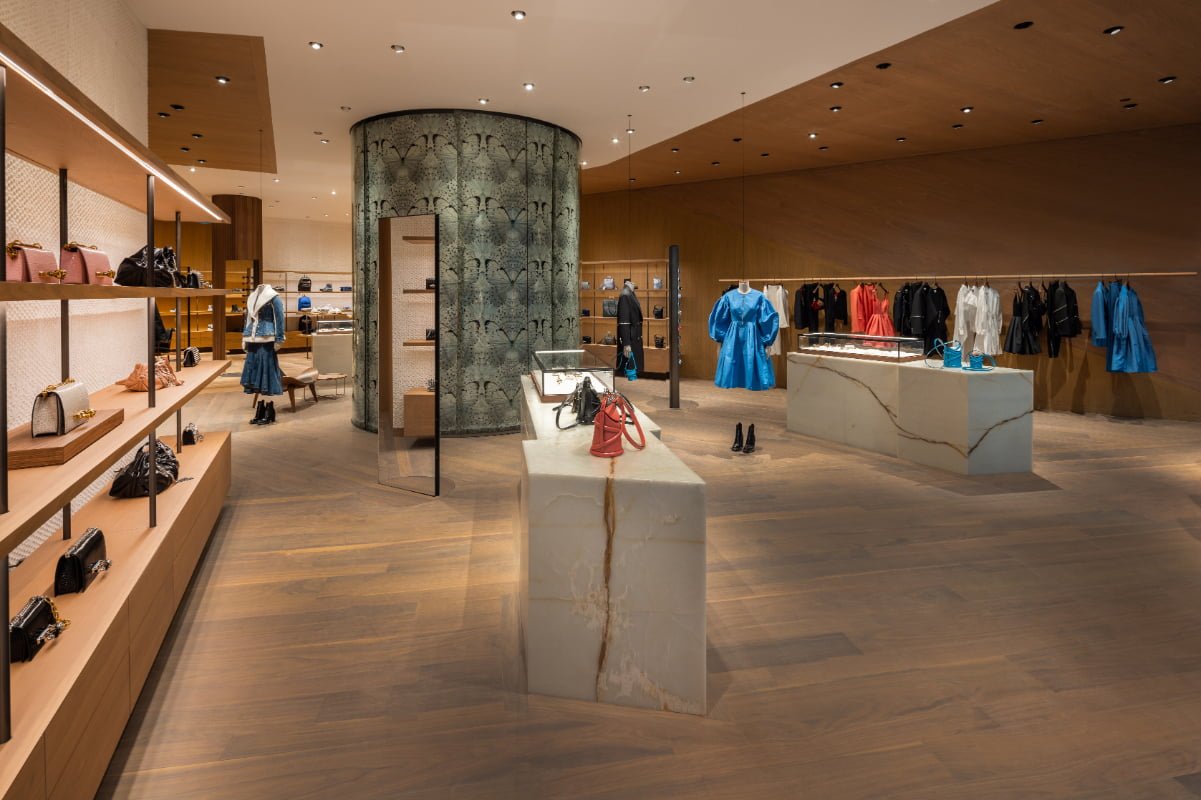
Husband and wife team, Johan and Adele, have more than 70 years of combined experience in the jewellery industry, and now, what started 1o years ago as a modest at-home workshop, has turned into a beautiful jewellery studio on Vancouver’s Granville Island.

Zadel Jewellery Studio opened at 1808 Boatlift Lane on Granville Island on September 5 and curates Canadian jewellery designers to give them a platform to showcase their art. The studio is comprehensively kitted out, requiring no outside intervention, meaning all manufacturing, repairs, setting, and casting production are done on the premises. The couple — who are originally from Johannesburg, South Africa — have spent many years servicing the surrounding neighbourhood with their unique jewellery designs and vast expertise in the field.

“We strive to make each piece of jewellery as near as possible to perfection with the special attention to the finest detail. The quality of each manufactured piece of jewellery is guaranteed, and the total satisfaction of each and every client is of the utmost importance. Nothing is left to chance, and every step is carefully planned and fulfilled…Our design style has settled to a refined symmetrical style of jewellery, emphasis being on clean lines and highlighted stones.”

The recent COVID-19 pandemic didn’t hold Zadel back as the studio pushed forward with the expansion.

To learn more about Zadel Jewellery Studio go to zadeljewellerystudio.com or visit the new studio at 1808 Boatlift Lane on Granville Island in Vancouver.

Vancouver-Based ChopValue Launches SMĪLE

SMĪLE BY CHOPVALUE. PHOTO: CHOPVALUE

Four years after its official founding, Vancouver-based award-winning green startup, ChopValue, have announced the launch of SMĪLE — the only climate positive modular shelving system made of 4,276 recycled chopsticks.

“When launching ChopValue, our mission was to make a change with one chopstick at a time. Today, I am excited to announce our new achievement towards that goal — SMĪLE. We’ve designed SMĪLE to prove that minimalist, sustainable, and beautiful design can be 100% eco-friendly and can leave you smiling,” says Felix Bock, Founder, and CEO of ChopValue.

With its sleek lines, minimalist and space-saving design, the SMĪLE shelving system is timeless and designed to tastefully fit any interior. Each SMĪLE is proudly made from recycled chopsticks and construction steel, urban harvested from restaurants and construction sites near you. This not only minimizes the damage to the environment by reducing global shipping, but it also adds value directly back to the community.

This global network of carbon-negative microfactories means every SMĪLE has a positive impact on the environment. Each SMĪLE stores about 6,532g (14 lbs) of CO2 that otherwise would’ve been released into the atmosphere — more than it takes to gather the resources, make and deliver it! That’s the equivalent of charging your cell phone over 830 times!

“We work to create a unique experience and an impact that will inspire people. By reutilizing used chopsticks, we promote forests’ sustainable management and raise social awareness for environmental accountability,” points out Felix.

To date, ChopValue has urban-harvested, recycled, and transformed over 25,786,890 chopsticks that otherwise would have ended up in the landfills.

Self-Serve In-Office Technology ‘KitchenMate’ Aims to Get Office Workers Back Onsite

KITCHENMATE MOBILE APP. PHOTO: KITCHENMATE

KitchenMate, a Toronto-based technology startup founded by ex-IBM, Amazon, and Google engineers, is promising Canadians a safer and more convenient way to enjoy a meal at the office without compromising their health or their wallet. CEO Yang Yu is calling the solution “a 24/7 Automated Restaurant for the modern office break room or cafeteria”.

KitchenMate’s solution is having self-serve kiosks installed throughout the facility. Each kiosk consists of a Smart Fridge, which holds up to 70 fresh meals in individually packaged tamper-proof and recyclable containers, in addition to 3 or 4 internet-connected Smart Cookers. These Smart Cookers scan unique barcodes to automatically steam-cook meals to precise temperature, creating restaurant-quality meals in around ten minutes.

The KitchenMate solution enables employees to minimize going in and out of the office while providing a healthy and safe on-site meal option. KitchenMate uses a white-glove service, bulk delivery once or twice a week, and a federally-inspected food production facility with safety standards far exceeding that of traditional food establishments. KitchenMate ensures that its product is safe, fully traceable, and of the highest possible quality.

KITCHENMATE SMART COOKERS. PHOTO: KITCHENMATE

“KitchenMate was started five years ago with a mission to provide access to high-quality meals to busy professionals, starting with where they work. While that mission hasn’t changed, our solution has turned from a great employee perk to an essential amenity.” said Yu. Today, their solution has been installed in some of the best places to work including Osler, Mazda, Staples, and many more.

In addition to safety and quality, KitchenMate also aims to lower customer costs and help the environment through reduced waste. Yang says they “recognize the challenge of food waste and heavy operating costs of traditional retailers in an unpredictable world” and “have developed proprietary AI technology to determine which recipes will sell and how to stock the fridge based on individuals’ consumption patterns at any particular location”.

Yang claims their food waste levels are three times below industry average, helping them keep costs low for customers while helping the environment through less waste in the supply chain.

KITCHENMATE MAC & CHEESE MEAL. PHOTO: KITCHENMATE

KitchenMate has also developed an iOS and Android App which works as a remote control for both the Smart Fridge and Smart Cookers. Without so much as leaving their desks, workers can see what dishes are available in the fridge and view detailed ingredient information, complete nutrition facts and reviews from other colleagues. It also warns of allergies and intolerances based on customers’ unique dietary profiles. With over 50 different dishes and new ones added every few weeks, Yang says “there is definitely something for everyone”. Customers can grab a meal from the fridge whenever they want, and are billed automatically through the app.

Companies can also support staff by providing customized subsidies based on meal time or cuisine type to promote positive and healthy company culture. “Before KitchenMate and the pandemic, our associates would use the cafeteria for quick snacks and small meals, go out for breakfast or lunch and sometimes bring in shared treats for the team. Since COVID, all of this has slowed down quite a bit as we’ve shut down our cafeteria and implemented social distancing in our lunchroom. Having KitchenMate has been a really good subsidized option for all of our staff, including our overnight shift. The service is convenient with very good and healthy options,” according to the fulfillment centre manager of Staples Canada.

The average meal price is $10 without a subsidy, but most companies subsidize prices to $8, and some go as low as $5 per meal or even free after 6pm. This encourages employees to stay on site, and provides them with rewards for their hard work during these challenging times.

KITCHENMATE SMART FRIDGE AND SMART COOKERS IN OFFICE CAFETERIA. PHOTO: KITCHENMATE

JLL has recently partnered with the Toronto startup, and Sam Meer, JLL’s Integrated Portfolio Services Lead, said, “JLL and KitchenMate have partnered in an effort to support our customers’ evolving workplace and corporate strategies. JLL acts as an integrator for solutions that support the workplace, and our embrace of technology to solve problems in the real estate space has conditioned us to look for technology solutions that remove friction and improve the speed and quality of service to the workforce.”

Lee Jackson, JLL’s Vice President of Retail Business Development and a food and beverage industry veteran added, “KitchenMate has been installed in our offices at 22 Adelaide St. West and has been a welcome addition. Employees are able to order meals from the comfort of an individual workspace and enjoy a restaurant-quality meal without leaving the bubble of the office space. We firmly believe that KitchenMate can be part of a food ecosystem that employers and employees can rely on to deliver choice, safety, and quality to keep employees nourished and engaged.”

As schools and offices reopen, everyone is wondering about the new normal and whether their safety will be compromised when returning to shared spaces. According to the Equiem 2020 Global Office Tenant Report, 60% of offices won’t return until “it feels safe”.

Landlords are implementing better air ventilation and filtration systems, ramping up cleaning services, and installing automatic door openers, new seating plans and hand sanitizing stations. However, as more people come back to the office, it becomes increasingly difficult to maintain social distancing. Some of the main bottlenecks are lobby areas and elevators which are used by office staff, delivery drivers and clients, especially during rush hours like lunchtime.

Many employers are encouraging their employees to bring food from home, adding to their workload and to the fatigue of cooking every meal at home for the past few months. Workers used to quickly grabbing a bite from a cafeteria will now find their options limited as low foot traffic and safety concerns have shuttered many restaurants.

However, while public spaces continue to operate at reduced capacity and work-from-home policies hold strong, is it a bad time for a company like KitchenMate to look at expanding?

Sam Meer doesn’t think so, noting “KitchenMate offers a warm welcome back for employees who are gradually returning in a phased approach and need to make the most of their time in the office. KitchenMate provides a delicious, convenient, safe and cost-effective option to stay nourished. No elevators, no PATH line-ups and no wasted time. KitchenMate won’t be THE reason your employees elect to come back to the office, but once they come, it will be a big part of them staying longer and having something to look forward to. The tech interface, variety and food is amazing – you have to try it.”

For more information and to book a demo, they can be contacted at KitchenMate@am.jll.com.

Toronto’s SickKids Hospital Launches Unique Online Store for Fundraising

One of the most beloved mainstays at SickKids Hospital received a major upgrade this summer with the launch of the 5Fifty5 shop online store.

The 5Fifty5 Shop is a key fundraising stream for SickKids, generating upwards of $1 million in annual sales revenue. Owned and operated by the Women’s Auxiliary Volunteers (WAV) — a registered charity and volunteer group that is celebrating its 70th anniversary this year — the women-only group consists of 260 members, some of whom have been members for decades.

Due to the COVID-19 pandemic, Public Health guidelines and infection control measures implemented at SickKids meant that many of the shops operating within the hospital had to be closed over the past six months.

Patients and families visiting SickKids had come to rely on the gift shop as somewhat of a distraction from medical procedures. Unfortunately, with the unavoidable COVID-19 closure, sales stalled and the shop’s future was in jeopardy. That was, however, until an innovative collaboration opportunity called ShopHERE by Digital Main Street was presented to members of the WAV.

To help Canadian small businesses with their economic recovery, Digital Main Street’s ShopHERE program powered by Google pledges to help get 50,000 Canadian small businesses online this year. Funded in part by the Government of Canada through the Federal Economic Development Agency for Southern Ontario, The ShopHERE program offers businesses and artists the opportunity to build a digital presence and minimize the economic impact of the COVID-19 pandemic.

Created by the Toronto Association of Business Improvement Areas (TABIA) with direct support from the City of Toronto, Digital Main Street is also supported by a group of strategic business partners, including Google, Intuit Quickbooks, Facebook, MasterCard, Microsoft, and Shopify.

“We needed a bit of a revitalization for the 5Fifty5 shop and the ShopHERE program has been a catalyst for change,” says Pamela Stevens, President, Women’s Auxiliary Volunteers at SickKids. “Going forward the shop will have in-store and online offerings of all our merchandise with greater variety and inventory potential because of the diversity the online shop offers.”

Since launching in early June, 5Fifty5 online has brought in more than $25,000 in phone and web orders. Pickup locations are offered for patient families at the specialty food shop in the hospital, with Canada Post being used to deliver all external orders.

“Supporting the 5Fifty5 Shop in their transition to online was really important for us. Bringing this to life with the Women’s Auxiliary Volunteer Group and SickKids has been an incredible experience. We look forward to seeing the expanded impact of the 5Fifty5 online store,” says Darryl Julott, Managing Lead at Digital Main Street.

The revenue generated by the 5Fifity5 shop supports a variety of programs in the hospital ranging from therapeutic clowns and the Bravery Beads program to neonatology research. WAV currently funds five research chairs, the most recent being WAV Chair in Image-Guided Care, and is a major donor towards operating suite renovations in the hospital. WAV also holds Grand Benefactor status with SickKids Foundation having raised over $18 million since 1993.

To view the 5Fifty5 online store, please visit: thesickkids5fifty5shop.ca