Advertisement
Advertisement
Home Blog Page 938

Major Canadian Landlord Offers Immediate Relief Program, Retailers Say it’s Insufficient

‘SHOPS AT KING LIBERTY’. PHOTO: FIRST CAPITAL REALTY

First Capital REIT (FCR) has launched a $30-million program to “bring immediate relief” to small business owners in the company’s portfolio during the crisis created by the COVID-19 (coronavirus) pandemic.

The REIT said the FCR Small Business Support Program is effective April 1 to qualifying tenants impacted by the current challenging economic times.

But some tenants are not happy, saying the program does not go far enough to help them get through this extremely difficult time and the requirements for qualification are not appropriate.

Jordan Robins, Executive Vice-President and Chief Operating Officer of First Capital, said the program provides short-term relief for small business tenants who need it most as a result of the profound impact of the COVID-19 pandemic.

“We’ll make available up to $30 million in the form of lease amendments that will defer rent for qualified small business tenants for a period of up to two months. The effective date of the program would be April 1,” he said. “And obviously it would assist the small businesses and their employees during this unprecedented period.”

EDMONTON BREWERY DISTRICT. PHOTO: FIRST CAPITAL REALTY

The company has about 4,500 tenants across its portfolio in Canada. Qualifying small businesses that operate within the company’s portfolio and that demonstrate a need for assistance, may qualify to defer a portion or all of their rent for a time period that is initially set at two months commencing with April rent.

But some tenants are critical about the company’s response to the crisis they are facing which is putting many small businesses in Canada on the brink of permanent closure.

One tenant is upset that in order to qualify for the FCR program they must demonstrate need for financial assistance with the mandatory submission of both 2018 tax return and 2019 financial statements; monthly gross sales/revenues for each of the 12 months 2018 and 2019; and agree to provide signed authorization for FCR to conduct a credit check.

“All of that just to be considered, considered, for rent deferral,” said the tenant. If we don’t provide it to them, they will not consider our application. That is actually none of their business and literally has nothing to do with what is happening right now with sales.

“I don’t really know what kind of rent relief they’re talking about with $30 million because they’re not actually prepared to lose a penny. We are in a pandemic. We are in a situation where the entire economy has ground to a halt. There is just no foundation for asking for any financial information that literally has nothing to do with anything that is happening right now.”

Another tenant said what First Capital is doing is not enough and it’s a blanket solution to so many small businesses that are not all affected the same way.

“This offer is really cheap and low and so inadequate to so many small businesses,” said the tenant. “When you look at First Capital’s financials which are available on their website on their investor page, you look at a company that is doing extremely well. This offer is so weak compared to what they can do.”

Robins said FCR is in the final stages of developing a dedicated tenant portal including an on-line application process. Access details for the portal will be communicated to tenants.

MOUNT ROYAL VILLAGE IN CALGARY. PHOTO: FIRST CAPITAL REALTY

“We have also asked for financials including sales, which should come as no surprise to anyone, as we are offering an interest free loan. This loan is being expedited by FCR but of course necessitates a certain degree of rigor and vigilance,” he said.

Robins said the company had been contacted by a number of its tenants prior to announcing the new program. When asked if he thinks what FCR is enough for those tenants to survive the next little while, he responded: “We don’t know what the next little while looks like. We don’t know how long this crisis will last. All we know is we have put in place a program to help people for the next 60 days.”

In a news release, Adam Paul, President and CEO of First Capital said small businesses play such an important role in the thriving neighbourhoods in which the company invests.

“Many of these businesses are also among the most impacted by the COVID-19 pandemic,” he said. “We have long recognized that one of our greatest strengths lies in working together as a community. This program continues First Capital’s investment in our properties and tenants so that through these challenging times we can give small businesses and the communities in which they operate some short-term relief to help them thrive over the long term.”

Light At the End of the Tunnel: China Provides Hope for Canadian Retail Industry

IFC MALL IN SHANGHAI ON MARCH 21, 2020. PHOTO: SAVILLS CHINA

By Jordan Karp

This week, Savills Canada published an overview of what it’s seeing in China in terms of a retail recovery following a containment of the COVID-19 pandemic. The following narrative provides some hope to those in Canada concerned about the economic fallout of the pandemic, which some predicted would be grim. It will be critical for Canadians to put their best efforts into stopping the spread of COVID-19 — the sooner that it is contained, the sooner the economy, not to mention lives, will be saved.

Notes from Jordan Karp and Savills Canada/China:

Impact of COVID-19 on the China Retail Market:

The Chinese Government put Wuhan on lockdown on Jan 23 (Chinese New Year Holiday was Jan 24 – Jan 30 which got extended). Around the same time, most of the workers were required to stay at home, and most of the restaurants and all the gyms and entertainment centers in China closed their doors to contain the Coronavirus spread. Some shopping malls closed, and some adjusted their business hours from 12 hours (10am-10pm) to 6-8 hours per day.

IAPM MALL IN SHANGHAI. PHOTO: THOUSAND WONDERS

Shopping malls: Now, as China’s coronavirus outbreak eases, consumers are gingerly returning to the shops. Shopping Malls in Shanghai are at 30% footfall levels (compared to pre-Corona levels). From this week, most of the shopping malls adjusted their business hours back to 10am-10pm and basically all the tenants reopened to the public. I chose to stay at home today but I was told by friends, there were tons of people in the IAMP mall and IFC mall in Shanghai. In IAPM mall, I heard that it was difficult to find a parking space and you had to compete for seats at the coffee shops. Apple store was packed, and my friend was told that iPad pro is out of stock due to the home-schooling (schools are still closed). In IFC mall, shoppers waited in a long queue outside the fashion boutique of Chanel and Hermes. However, community malls may need more time to get the consumers go back to the mall. A few landlords have told me that footfall traffic is still way below their expectation.

ALL 550 HAI DI LAO WERE REOPENED LAST WEEK. NOT ALL RESTAURANTS WERE SO LUCKY. PHOTO: HAI DI LAO

Restaurants: Of course, some restaurants have shut down permanently as they are unable to cover labor and rental costs during this period. For those that survived, they needed to prepare all the requested documents for re-opening and submit to the government for approval. Once they got approval, they have been allowed to reopen. Please note that different districts in Shanghai have different regulations. For example, my client owns three bakeries (all street shop locations) in Shanghai, and he got approvals very quickly for his two stores, but the one in Jing’an district can only offer take-out or delivery service as of this week.

Hai di Lao re-opened all of its 550 restaurants in China last week which was very exciting. We rushed to the restaurants immediately and found they had restrictions on crowds and the cap amount of people sitting at the same table was 4. We had 8 people that day so we split into two groups. Again, these rules are made by restaurants, with direction provided by the government. Popular restaurants remain popular after the Coronavirus outbreak. My colleague waited for one hour to get a table at a famous Japanese BBQ restaurant last night!

Gyms: Most of the gyms in China have re-opened excluding Beijing. They have introduced max capacity levels – allowing a max of 50 people in at a time (based on 30,000 sq ft) for a 90 minute period. After the 90 mins is up, the gym does a full clean for half an hour before letting the next 50 people in to work out and so on. People are having to book slots in at the gym rather than just turn up. Working well so far apparently (in that gyms can re-open and people can go) but nowhere near as convenient and flexible

HAICHANG OCEAN PARKS ARE ONCE AGAIN OPEN. PHOTO: HAICHANG OCEAN PARK

Entertainments: Nightclubs and KTV just opened a few days ago in Shanghai and most of the cities in China (all closed in Beijing), but consumers remain hesitant to go to these places. Cinemas remain closed in Shanghai. Disney Land remains closed while Haichang Ocean Park has opened this week. My friend who works for Haichang Ocean Park told me that Disney probably chooses not to open. Museums and Galleries are mostly open but real-name registration is required. Overall, things are getting better every week but a more robust rebound is going to take some time – consumers are still in the process of returning to normal after what has been a worrying few months. A full recovery will probably happen in the second half of the year. A few extra points:

  • Limited domestic Chinese brand failures have been reported at this stage but expected in the next couple of weeks as cash flows are impacted.

  • Savills China are back in the office Mon-Fri but very cautious at weekends (still limited people going out and socializing, travelling etc).

  • The most affected sectors have been retail, F&B, leisure and entertainment, gyms, and education.

  • All of their international clients that are currently looking to expand into China (the likes of Urban Outfitters and Blue Bottle for example) are on hold until further notice.

  • ‘Revenge Spending’ doesn’t seem to be kicking in as quickly as people thought as so many jobs have been impacted therefore less disposable income.

It’s too soon to say how COVID-19 will impact us in the short, medium, and long term. Whether we already talk to you on a regular basis, or its been a while since you last heard from us, we look forward to connecting in person when this experience is in the rear view mirrors. In the meantime, stay safe and healthy, and home. Hear a great joke, share it. If there is anything we can do to help you over the next few weeks (as and when appropriate) then please just let us know.

Jordan Karp

Jordan Karp is the Executive Vice President and Head of Canadian Retail Services at Savills Canada.

COVID-19 and Commercial Leases in Canada: Expert Insight

PHOTO: BLANEY MCMURTY

By Dennis Tobin, John Wolf, and Michael Gilburt

History will tell us that, when faced with a common threat, competing societies will temporarily band together in alliances. If the third-party aggressor is very clever and cunning it will prevent the alliance, divide and conquer and damage the others’ ability to respond in the future.

Landlords and tenants share a common and unprecedented challenge in 2020 with the COVID-19 crisis.

COVID-19 has knocked the world economy off its axis. Malls and office buildings are closing as non-essential business operations voluntarily close outright or operate on a massively scaled down basis. Employees have been sent home to work; many may be laid off in the near future. Governmental decree has invested in individuals the right to determine whether they will agree to attend workplaces or not.

All the good and bad of the retail, building, and industrial leasing markets in Canada in 2019 seem far in the past and on the way to becoming fondly remembered as the good old days.

Over the past couple of weeks, people have been rightly focused on their homes and the health of their families. With that sorted as well as it can be, they are now isolated in their remote offices facing unique generational risks and decisions. All of us are greatly concerned by the scenarios that have been running around in our heads and in head offices.

IMAGE: SHUTTERSTOCK

Leases are, in most respects, like any other contract. The parties look to the express terms of the lease to determine what it provides for in any particular situation. We at Blaneys have negotiated, drafted and litigated hundreds of leases dealing with different fact scenarios. The drafting and negotiating focus is on what is most important to the parties’ business fortunes, most likely to occur during the term, and then allocating the risk for the rest, such as a global health crisis on the scale of COVID-19.

What follows is an outline of many of the issues that will be discussed as the crisis unfolds in the commercial leasing marketplace.

The parties to a lease will look for contractual solutions under the Quiet Enjoyment (in the case of a landlord-initiated closure) Act of God or Force Majeure clauses (to the extent either are contained in their lease) and to the law of “frustration” and “impossibility of performance”. Unfortunately, none of those concepts will get both parties what they want, and/or may need to survive.

Some retail leases have ‘go dark’ rights, co-tenancy clauses and conditional operating hours which may permit a tenant to cease operating in a given situation or perhaps, in a handful of leases, to terminate a lease.

What about the fact that the landlord and/or tenant’s decision to close was done at the suggestion of the government and health authorities, or by their direct order? What about the parties’ respective obligations to “comply with laws”? Does liability risk change if the landlord keeps common areas of a property operating? What if there are no operating tenants in a building – may the landlord close access? What about the fact that the overwhelming number of the leases say the rent must be paid regardless of the circumstances (no set off, deduction or withholding of rent)?

What happens to estimated monthly rents when municipalities defer the obligation to pay taxes, and operating costs decrease because of lack of use and there is a corresponding temporary decrease in actual expenses, or deferment of those expenses?

All the balls are now up in the air and we are all jesters, furiously juggling, waiting for the first and heaviest ball— the rent— to come around on April Fool’s Day 2020. It is expected that many non-operating commercial tenants in the country will consciously elect not pay the rent in full, or at all, on that day as they try to conserve resources and take a “wait and see” approach. Some will forget they gave the landlord the right to withdraw the money from their accounts by way of pre-authorized payment or provided post-dated cheques – an oversight likely not to be repeated in future months.

Landlords who usually look to their default rights of distress, voiding of conditional rights, and termination to induce payment will find themselves largely powerless as it is impractical to terminate tenancies with no replacement in hand. Expected tenancy failures suggest market rents will face downward pressures.

Also, landlords should anticipate a damaging counterattack from tenants whose leases are enforced and who want to stay. We would expect judicial sympathy for tenants facing landlord enforcement and expect laws of equity and proportionality of the default to the remedy actually taken to be paramount. When the courts get back to business as usual, we can count on applications for relief from forfeiture and expect they will be readily granted.

Landlords seeking to enforce leases may have exploitable weaknesses in their arguments. For instance, the Landlord may have been in default under the terms of the lease by closing (or not closing) the mall or the building; refusing to adjust monthly estimated rent to mirror actual expenses, delays in processing reconciliations and a myriad of other reasons. As cash flow is reduced in the coming weeks or months, maintenance and repairs and the meaning of “first class condition” may become issues for undercapitalized landlords. Also, where are landlords going to find new tenants?

There will be some tenants who will seek to take advantage of unique provisions of their leases to terminate and vacate the premises. There will be landlords who will want to cull troublesome tenants or tenants who have rental rates below market, or who have aspirations of rebranding or redevelopment. Also, parties should anticipate many current deals will unravel due to the many forces still beyond their control.

In a couple of years there will be unique judicial decisions on the wording of Act of God and Force Majeure clauses, the meaning of frustration, the impossibility of performance and whether certain concepts and clauses actually support the remedy taken. There will be cases testing the meaning of damage to property in business interruption insurance policies. The money spent on prosecuting those cases won’t be worth it for some landlords or tenants. Perhaps the money would be better spent on matters of common benefit which perpetuate the economic relationship.

The retail real estate market is dominated in Canada by a group of large landlords who are related to pension funds, insurance companies and other large institutional investors. Their response to the 2009 financial crisis illustrated that they have access to funding, are able to think “big picture”, see beyond individual tenants, resist pressure to sign bad deals and have the interests of the current and future pensioners and investors (employees of all those tenant businesses) in mind.

With all of the considerations above in the balance, what kind of temporary alliance can landlords and tenants entertain, and how will it vary by region? Might they come to an agreement that includes a deferral of all or part of the rent? Perhaps there is some negotiating room. For instance, a large portion of the immediate cash outlay on any property is tied up in the taxes and operating costs. Property taxes are now being deferred by many municipal authorities and a portion of the operating costs will not be incurred as a result of properties being closed or hours scaled back. Temporary agreements between landlords and tenants also buy time for more detailed planning and perhaps some due diligence on particular tenants (and landlords).

In cases where tenants have the assets and resources to weather the storm, landlords are likely to resist a solution involving rent abatement alone. A tenant could offer amendments to the lease or the space in return. A landlord will also want to know that its concessions will save jobs and that management and shareholders of the tenant are also making sacrifices. Few large landlords will have the people available now to negotiate those deals in the short term and the inherent uncertainty that exists may make all parties reluctant to bind themselves until the smoke clears.

There are different types of properties and different types of tenants. We all expect that government, quasi-government, insurance and other institutional, financial, grocery store and pharmacy tenants with a clear ability to pay will pay their rent, in full, and on time. Almost all other retailers will be hit harder than many service businesses that operate from office buildings, who are also scaling down but will continue to offer services and carry on business. Some industrial and manufacturing properties are still operating and making products and sales. Deals will need to be crafted to suit the particular circumstances.

Alliances usually only last until the strategic goal is achieved – in this case getting everyone back on a footing where there is a chance for a semblance of business as usual. A landlord and tenant alliance can be without prejudice, drafted so that either party can withdraw on reasonable notice, and provide for the deferral of some or all of the rent for a period of time. Meanwhile, the government will tinker with the economic levers, deal with some of the issues affecting commercial real estate and try to instill confidence again. It is likely that many landlords will not come to terms with their tenants and the rent may be only partially paid. In such a case, it is still open to a landlord to agree to do nothing for today. A truce today may be a good decision that will allow everyone to focus on defeating the real foe.

Please contact any of the authors should you wish to learn more about these matters.

**The authors would like to acknowledge and thank articling student Brianne Quesnel for her contributions to this article.

Dennis Tobin: dtobin@blaney.com

View Dennis’ bio at: blaney.com/lawyers/dennis-tobin


John Wolf: jwolf@blaney.com

View John’s bio at: blaney.com/lawyers/john-wolf


Michael Gilburt: mgilburt@blaney.com

View Michael’s bio at: blaney.com/lawyers/michael-gilburt

Why COVID-19 Will Change Canadian Grocery Industry Forever: Expert

PHOTO: THE KITCHN

COVID-19 is likely going to redefine grocery shopping in more ways than one. Convenience now has a different meaning. It’s less about saving time and more about survival and safety. Before the crisis barely anyone ordered online, and many Canadians wondered why someone would ever order food online.

Many things are changing, and changing rapidly. The in-store shopping experience is changing quickly to meet the new standards. Most grocers have reduced shopping hours to give employees a rest and allow for stores to be thoroughly cleaned, from counters to carts, cashiers’ machines to self-checkout counters. Plexiglass barriers at checkouts are being installed. Expectations are that grocery stores now must be as clean as a hospital operating room. That comes at a cost.

Grocers are also limiting the number of people visiting stores at any given time, and getting customers to shop within a limited time. This is shopping under pressure for the betterment of society. Grocers basically do not have much of a choice, and they need to pay employees more. While 500,000 Canadians got laid off last week, Loblaw and Metro announced pay increases for employees.

For many years, the industry wanted to provide a different feel to make the in-store experience more pleasant, less stressful. COVID-19 is changing all of this now.

According to a recent report released by Dalhousie University this week, only 24% of Canadians are comfortable with the idea of grocery shopping. In other words, more than three quarters of Canadians see the grocery store as an inherent risk. Selling to someone who is concerned about their own health as they visit your facility is not good for business. When looking at the entire food chain, retailing has always been the most hazardous part, given that everyone, and anybody, has access to the foods, unlike farming or processing. In an era during which risk self-management has never been so prevailing, Canadians are beginning to figure it out.

As a result of the COVID-19 outbreak, 9% of Canadians are now shopping for food online for the first time, according to the same survey. It may not seem like many, but keep in mind that 1.5% of all food sales were conducted online before the crisis. That percentage had already begun to grow higher, but COVID-19 will likely accelerate the pace. In the United States, some changes are already happening. Downloads of Instacart, Walmart’s grocery app and Shipt have increased 218%, 160%, and 124% respectively last week compared to a year ago.

Compared to other disruptive events in our lives, COVID-19 is different in many ways. Humans are creatures of habits. In time, we do change our ways, especially with food. But we need time. COVID-19 may likely offer enough of us time to change how we purchase our food. Public health officials believe social distancing can last for months. In other words, this is not your typical storm, or hurricane when lives are disrupted for merely a few days, or a week or two. Such a length of time can be enough to create habits, such as shopping online. Grocers already cannot keep up these days.

A GROCERY STORE IN MONTREAL WITH PLEXIGLASS TO PROTECT EMPLOYEES. PHOTO: MTL BLOG

With crises and disruptions come opportunities for the food industry to adapt. Over the last few years the food industry has been slowly gaining an online presence in order to counter the Amazon menace. It was all about Amazon. Now, purchasing on line is all about safety.

Before Amazon, foot traffic in stores was the one metric grocers looked at with extreme caution. Those days are long gone. COVID-19 is a powerful reminder of how business models can be so fragile. Great lesson. It is similar for the food service industry. Restaurants either served patrons in house or delivered by managing a crew of delivery personal. Food delivery apps have changed all of that, and more Canadians are using them since the start of the COVID-19 outbreak.

Essentially, COVID-19 has the potential to be as disruptive to the food retail and service industries as the Green Revolution was to agriculture. The Green Revolution made agriculture more adaptable to modern food consumption trends. Since the beginning of the revolution, in the 1950s, the globe has 5 billion more occupants and the percentage of people who are food insecure has dropped significantly. The Green Revolution made the entire sector more efficient, smarter, and more immune to threatening diseases and other potential socio-technological threats. The Green Revolution has not been perfect, far from it, but we have all benefited from it as consumers, whether we recognize it or not. Food distribution by way of different technological means won’t be perfect either, but it will make food distribution more compliant to our modern reality.

IMAGE: INSTACART NEWS

When location and brick-and-motor business becomes secondary factors, a business’ path to success in food distribution changes dramatically. The transition from traditional agriculture, in which inputs were generated on-farm, to the Green Revolution agriculture, which required the purchase of inputs, led to the widespread establishment of different credit processes. An entire new eco-system was built to support agriculture.

With COVID-19, we may see the rise of dark or ghost kitchens in food service, allowing anyone to start a food service company, virtual or not. The establishment of more micro-fulfilment centres or dark warehouses to support grocers and other food retailers will redesign the entire sector.

This does not mean that Canadians will stop visiting grocery stores, farmers’ markets, or restaurants anytime soon. But, in 5 years from now, perhaps even before, we could see 20% of all food sold online or through apps, restaurants and retail combined. That’s potentially over $50 billion worth of food. According to estimates, it’s roughly around $7 to $9 billion right now. What was seen as a far-fetched concept by many just a few years ago appears to be a likely probability because of COVID-19.

Canadian Retail Industry Seeing ‘Branding Crisis’ Amid Coronavirus Outbreak: Expert

exc-5e73834b1368ee6f43722e6c

The retail industry is facing a “branding crisis” as major stores and owners of shopping centres have been slow to react in closing operations during the COVID-19 (coronavirus) pandemic.

Suzanne Sears, President of Best Retail Careers International, said the coronavirus has shaken the faith that Canada’s largest employer, retail, is worth investing in.

“The slow response of the malls to close, the slow response of the major retailers to close, has left a bit of a sour taste with a lot of employees. Yes, they’re catching up now but it’s almost a week or two too late,” said Sears, who is retained primarily by retailers for private searches to fill roles from the Executive to Sales Clerk level.

“So from a PR point of view it was a bad play. And it continues to be a bad play when the big players, the big mall owners, are not simply shutting down the non-essentials. More than anything else, there’s a branding crisis in retail – perception of retail as a valuable career.”

Sears said there are three segments of retail that always react differently to economic pressures. The first level is the luxury market. So much of the stock market value has been erased which is the type of consumer the luxury retail market targets. We may well see a downtick in the luxury segment.

The second level is the mid-range with mostly fashion and impulse items targeted to what is left of the middle class. A lot of that too is impulse buying. Sears said it remains to be seen how this segment will do in the sense that demand will still be there if there is enough people to buy it.

The third level is the discounters will likely have their best next two years ever seen in the history of retail, added Sears.

“There will be a big upsurge in that level of staffing” she said. “On the whole as it washes out, I think retail won’t be all that much changed from the way it looked before. Prior to this crisis, mostly every significant metropolitan area was at full employment or in the case of B.C. and Quebec under-employed. Meaning not enough people to fill the jobs.”

Sears said some economists are predicting the unemployment rate in Canada to rise by two percentage points in the short term. But retail was already under-staffed so if there is another two per cent shrink that would simply mean as many people want to hire and people who want to work in retail will basically be even.

“So I don’t think in any way, shape or form you’re going to see the death of the retail employee. I don’t think so. In a couple of months, it will be pretty much the same,” explained Sears.

She said some baby boomers employed in the industry may decide it’s finally time to retire. On the other end of the spectrum with new people coming into retail, this becomes a little more difficult because retail has been bashed all year long before the coronavirus and stores closing.

“So your best and brightest, be they tech, supply chain, design, they’re not entirely enticed because they’re not convinced that retail is a secure career,” said Sears.

Michael Kehoe, owner and broker of Fairfield Commercial Real Estate in Calgary, said coronavirus is the black swan of 2020 and for many retailers around the world, the COVID-19 outbreak is now a reality rather than a looming threat.

“In addition to protecting public health, industry cooperation is absolutely critical to supporting retailers and their employees. As retailers send their teams home there are many unknowns currently with respect to the duration of the crisis and how governments plan to compensate retail employees. In Canada, shopping centres and retailers alike must face a new reality with the goal of preserving the retail sector over the mid to long-term and entice retail sales staff back to the fold when this is over,” said Kehoe.

“Retailers are the heart and soul of the country and when times are challenging, governments, lenders, developers, mall operators and all retail real estate landlords must find solutions to assist retailers so they can assist their employees. Internationally many landlords have issued a waiver of rent for all food service and retail tenants for the upcoming months, some mandated by their national governments. The drop-in business activity, supply chain disruptions, curtailment of business and tourist travel are just some of the challenge’s retailers are facing. In some ways, business mirrors biology. As Charles Darwin surmised, those who survive ‘are not the strongest or the most intelligent, but the most adaptable to change’.”

Kehoe said retailers will have to be quick on their feet and examine their employee headcount and many have concluded that given all of the above stress points on their finances that this might be the time to evaluate critically whether they can do more with less manpower and raise productivity when things return to a new normal whatever and whenever that will be.

“As the situation progressively returns to a new normal and it will, the retail employee / employer and customer relationships will have been significantly altered. Leadership teams in retail need to plan for the eventual recovery. Operationally, the return to a new normal won’t happen overnight. Companies need to think about how they’ll gradually wind down resources, ramp up again and internalize the lessons learned during the coronavirus outbreak. This will serve as a template for responses to other external shocks in the future, ranging from new pandemic threats, economic downturns, terror attacks and natural disasters. Retailing will be forever changed as e-commerce is sure to fill the gap during these unprecedented times,” added Kehoe.

SmartCentres Offers Government and Health Authorities Free Space to Support COVID-19 Efforts

PHOTO: SMARTCENTRES

SmartCentres REIT says that it will be offering rent-free use of a total of up to 1-million square feet of space in 200 of its shopping centre properties across Canada. It’s part of the landlord’s efforts to help out amid the COVID-19 pandemic that is spreading rapidly in this country as well as globally.

As well, land owned by SmartCentres as well as parking lots and signage will be available to all Canadian governments and health care authorities. The space is being made effective immediately. SmartCentres, which is one of the largest real estate companies in Canada, has properties that are strategically located at major intersections in every province across the country.

“We have been in contact with Leadership in all Provinces,” said Mitchell Goldhar, Executive Chairman of SmartCentres. “We are not just a Canadian company, we are Canadians. The impulse to help each other is embedded in the DNA of our culture. We will use every means available to us to help each and every one of our fellow Canadians.”

Easily accessible to a large percentage Canadians, the land and buildings offered by SmartCentres can be used for drive-through and/or walk-in assessment centres, clinics, social assistance, overflow hospital services, information centres, and/or other facilities that may assist the country’s medical system, and other important industries needed at this time. Lands separately owned in a partnership between Walmart Canada and SmartCentres will be made available as well. SmartCentres has $9.9 billion in assets and owns over 34 million square feet of income-producing value-oriented retail space. Prior to COVID-19, the company’s proper saw a remarkable 98% occupancy on its 3,500 acres of owned land across Canada, the greatest concentration of which is in the Greater Toronto Area.

PHOTO: REIT INSTITUTE

Based in Vaughan, Ontario, SmartCentres says that it focuses on enhancing the lives of Canadians through the planning and developing of complete, connected, mixed-use communities on its existing retail properties. The current COVID-19 pandemic has proved SmartCentres’ loyalty and dedication to the Canadian public as all efforts are being made to ease some of the strain on the country’s resources. SmartCentres is one of Canada’s largest fully integrated REITs, with a best-in-class portfolio of strategically located properties in communities across the country.

The company was founded on the belief that Canadians deserve convenient access to fair and affordable retail. “The guiding principles of our open-air, value-oriented shopping centres have never been more relevant than they are right now,” said Mr. Goldhar. “We are supporting Canadians through various means, including this initiative and support of our retailers who provide groceries, pharmacy, medical, general merchandise and other essentials to customers in the communities we live in and serve across Canada.”

Free Webinar Thursday: Negotiating Rent Relief In A Coronavirus World

By Retail Insider

CRE Radio & TV founder and host, Howard Kline, is set to host a free webinar on Thursday, March 26, 2020 at 11:00 am Pacific/2:00pm Eastern to discuss landlord and tenant strategies for negotiating tenant rent relief, all with an eye towards an economic recovery after the dust settles on COVID-19. [Register Here]

“This webinar is about the business decisions relating to the inevitable requests for rent relief. While we will only touch on some of the legal issues and perspectives of the tenants and landlords. The detailed legalities, including discussions on Force Majeure, the covenant of quiet enjoyment as well as legal theories of Eminent Domain and “frustration of purpose” will be dealt with in later webinars, podcasts, blog posts and videos,” said Peter Morris, a guest speaker on Thursday’s webinar.

Topics due to be discussed:

  • Why should landlords and tenants consider rent relief even when there is no legal obligation or right?

  • What should the tenant do to maximize the rent relief requested or received?

  • Financials

  • How to approach the landlord

  • Other documents

  • Lease modification strategies

  • Landlord

  • Tenant

During this unprecedented time of COVID-19 chaos, tenants are struggling to navigate their next steps. It is certain that many, if not all, will be seeking rent relief, whether they are legally entitled to it or not. Landlords may be willing to accommodate where they can, as they seek to minimize their own exposure and insure the maximum revenue from their property.

The economic unrest draws similarities to the 2008 recession and some are looking to strategies used then to aid tenants in the uphill struggle that is sure to ensue COVID-19.

Kline will be joined by other industry experts to discuss the pending issues. Guest speakers will include:

Howard F. Kline, Esq. 

Howard has been focusing much of his 43 year legal career on landlord tenant relations, whether negotiating leases or litigating disputes. Howard is the founder and host of CRE Radio & TV and has published hundreds of blog posts and podcasts on a wide array of commercial real estate topics. Howard has been published in numerous legal periodicals, including the National Law Journal, LA Daily Journal and other business.

Peter Morris, Real Estate Educator at The Greenstead Group

Peter D. Morris is a highly credentialed real estate executive with almost 40 years of global experience including all of North America, South America, South East Asia, China, and the Middle East; as well as covering most asset classes from both the owner and occupier perspective to provide a true 360 degree advantage for his clients. He is widely recognized as an industry leader, commentator, author and educator

Jerry Neitlich, Real Estate Broker at IN/House Corporate Real Estate

Jerry S. Neitlich established IN/House Corporate Real Estate in 1992 bringing with him over 30 years of corporate business and real estate experience. Jerry has contributed to features in The Orange County Register and Orange County Business Journal, written articles for the Orange County Lawyer and numerous other regional business publications, and was a contributor to the former Orange County News Channel regarding real estate issues. He lectures to law firms on current real estate issues and how to better serve their corporate clients. He has been a guest lecturer at MAI, NAIOP and OC Bar Real Estate Section seminars discussing, “Appraisal of Fair Market Value of Leases” and how landlords and tenants can better understand each other’s needs to successfully complete transactions. He also serves as an expert witness regarding landlord/tenant issues.

To register for CRE’s free webinar click here.

Canadian Retail Heading for a Meltdown: Ed Strapagiel

‘THE OVAL’ AT YORKVILLE VILLAGE DURING WHAT WOULD HAVE BEEN A NORMALLY BUSY AFTERNOON. A WINE STORE WAS THE ONLY RETAILER OPEN IN THE AREA. PHOTO: CRAIG PATTERSON

By Ed Strapagiel

The latest numbers from StatsCan indicate a slight improvement in Canadian retail sales growth for the 3 months ending January 2020. Well, fuhgeddaboudit. The reality is that Canadian retail had a relatively weak 2019, and is simply not in good shape to take on current challenges. The coronavirus pandemic is almost certain to lead to a recession which likely will significantly depress retail sales, although it will be a few months yet before we see it in the official statistics.

Another potential effect is that many consumers may make greater use of online buying and home delivery, just to avoid shopping in actual stores. And they may find that they like it. This could result in a marginal but permanent shift from bricks and mortar to e-commerce.

Food & Drug

Retail sales growth in the Food & Drug sector has improved somewhat in recent months, although this is as compared to some record lows in the second half of 2019. The short term 3 month trend (orange line in the chart) is crawling upwards, but the underlying 12 month trend (green line) is still at a 6 year low. Retail sales at supermarkets & other grocery stores were up a respectable 4.4% year-over-year for the 3 months ending January 2020. This however was offset by a mere 0.1% gain at health and personal care stores during the same period.

IMAGE: CONSUMER REPORTS

The Food & Drug sector is probably the most insulated from the coronavirus pandemic. People are still going to need groceries and health and beauty aids. Short term imbalances in supply/demand due to hoarding are likely to work themselves out in a matter of weeks, depending on the item. It can be expected that consumption of hand sanitizer and related products will dramatically increase, but there’s no reason to say the same for toilet paper.

Store Merchandise

Retail sales in the Store Merchandise sector were up a modest 1.8% year-over-year for the 3 months ending January 2020. This was slightly behind the 12 month growth trend of 2.2%. Overall, Store Merchandise appears to be holding about steady, but at a modest level, and it’s not regaining the momentum lost in 2019.

The usual suspects are dragging the sector down. For the 3 months ending January 2020, electronics & appliance stores retail sales were down 7.8% year-over-year, sporting goods, hobby, book & music stores declined 4.9%, shoe stores lost 2.6%, and home furnishings stores were off by 1.7%.

On the other hand, the retailer types that made better gains were fewer and less significant. Miscellaneous store retailers were up 13.3% for the 3 months thanks to the addition of cannabis stores in this category. Jewellery, luggage & leather goods stores gained 6.2% during the period.

The Store Merchandise sector may be the most vulnerable to the negative effects of coronavirus. Most of the goods on offer are non-essential, and whole shopping malls might be shut down by government decree. Retailers with an established and profitable e-commerce operation may be in a better position to ride out the storm.

Note that Statistics Canada is now suppressing the breakdown of general merchandise stores for confidentiality reasons. The figures in the “By The Numbers” table below are estimates based on previous trends.

Automotive & Related retail sales growth appears to have spiked upwards for the 3 months ending January 2020 (orange line in the chart). But it’s unlikely to last.

Gas station sales were up significantly in January 2020, but mostly due to gasoline price increases. Pump prices however have now declined drastically. Secondly, as more people work from home and avoid going out to public places, there is likely to be less driving and less demand for gasoline.

New car dealers, who are still trying to recover from lackluster sales in 2019, may be in for a rough ride going forward. People who are unsure about their jobs tend to put off major purchases like vehicles. Also, some auto dealers have suspended test drives which is likely to impede sales.

By The Numbers

Special Note: Statistics Canada revised historical data with the February 2019 release. Unadjusted monthly data were revised back to January 2018, while seasonally adjusted data were revised back to January 2015. Those keeping score should update their files. The analysis in this report is always based on unadjusted data.

For definitions of store types, see Statistics Canada NAICS.

Canadian E-Commerce Sales

StatsCan started providing ecommerce retail sales data in January 2016. While the amount of data is limited, some trends appear to be emerging. Here are some results.

Overall, e-commerce represented about 3.5% of Canadian retail sales for the 12 months ending January 2020, including both pure play sellers as well as the online operations of brick & mortar stores. Canadian consumers however also buy online from foreign websites which is not captured in these numbers.

Canadian e-commerce sales were up 18.4% year-over-year for the 3 months ending January 2020. This was much higher than for location based retail which gained 2.5%.

Note that location based retail is the same as that in the preceding “By The Numbers” table. It’s what’s normally reported as Canadian retail sales. Except that it isn’t. Location based retail excludes another section called Non-Store Retailers (NAICS code 454), which includes electronic shopping and mail-order houses, which in turn is where (mostly) pure play e-commerce businesses are. For the 12 months ending January 2020, electronic shopping and mail-order houses had an estimated $14.5 billion in e-commerce sales.

But that’s not the only source of e-commerce, as (mostly) bricks & mortar location-based retailers also sell online. For the 12 months ending January 2020, this group had an estimated $7.9 billion in e-commerce sales. With electronic shopping and mail-order houses, there’s a grand total of $22.4 billion in e-commerce sales by Canadian operators, up 22.4% over the previous year. Note that this does not include foreign e-commerce purchases made by Canadian consumers, but it does include e-commerce purchases made by foreigners at Canadian operations.

For electronic shopping and mail-order houses, an estimated 85.8% of their sales are allocated to e-commerce. For (mostly) bricks & mortar retailers, it can be estimated that just 1.3% of their total sales are attributable to e-commerce.

In the final section of the above table, (mostly) pure play operators (namely, under electronic shopping and mail-order houses) generated an estimated 64.8% of all e-commerce sales in Canada, while (mostly) bricks & mortar location-based retailers’ share of e-commerce was 35.2%.

For more explanation on the e-commerce numbers, see Statistics Canada: Retail E-commerce in Canada.

This analysis is updated monthly as new numbers are published by Statistics Canada. If you would like notification of when an update becomes available (and you’ve read this far), please connect with Ed Strapagiel on LinkedIn.

Special Edition 6: The Present & Future of Canadian Retail Amid COVID-19: Expert Interview

Special Edition 6: The Present & Future of Canadian Retail Amid COVID-19: Expert Interview

An off-schedule podcast interview with David Ian Gray, founder and strategist at DIG360 Consulting Ltd., about the inevitable consequence of the devastating economic impact the COVID-19 (coronavirus) pandemic is having on retailers across the country.

The Weekly podcast by Retail Insider Canada is available on Apple Podcasts, Stitcher, TuneIn, Google Play, or through our dedicated RSS feed for Overcast and other podcast players.

Sponsored by Peregrine/Acorn: The team has shifted their BC facility from fabricating store fixtures to plexiglas shields to protect our grocery store workers during the COVID-19 pandemic. Visit https://www.peregrine.build/order-plexiglas-shields/ or more information.

Interview Details

  1. Second Wave of Retail Bankruptcies Expected in Canada Amid COVID-19 Pandemic: Expert

  2. David Ian Gray, founder and strategist at DIG360 Consulting Ltd.

Subscribe, Rate, and Review our Retail Insider Podcast!

Follow Craig:

Follow Retail Insider:

Listen & Subscribe:

Share your thoughts!

Drop us a line at Craig@Retail-Insider.com. You can also rate us in Apple Podcasts or recommend us in Overcast to help more people discover the show!

Second Wave of Retail Bankruptcies Expected in Canada Amid COVID-19 Pandemic: Expert

An empty CF Toronto Eaton Centre - Photo by Toronto Tourism

The Canadian retail industry can expect a second 2020 wave of retail bankruptcies on the heels of the wave we saw in January and February, says a national retail expert.

David Ian Gray, founder and strategist at DIG360 Consulting Ltd., said in an interview last week that will be the inevitable consequence of the devastating economic impact the COVID-19 (coronavirus) pandemic is having on retailers across the country.

“What I find ironic is that for a long time there’s this repeated phrase ‘retail apocalypse’ and it really wasn’t happening that way,” Gray said.

“There was an erosion of physical retail to online, but it wasn’t as if Amazon came in and then overnight retail was gone. In Canadian grocery, for example, the percentage of people buying online was so very small. Single digit,” he said.  “And now a real virus has an excellent chance to leave behind a true ‘retail apocalypse’.”

He said that he sees three phases: the current “Triage” phase (crisis management and reactive); an “Assessment” phase once we see the social restrictions end and stores re-open, where retailers take stock and reassess their own health and opportunities; and a longer term “Adapting” phase, where a return to strategy and business planning is based on a new ‘normal’.

 “The three biggest variables coming out of Triage will be firstly, the drastic drop in revenue (for most), secondly the handling of April and May payrolls, rents and taxes (with some of this being addressed by public policy and growing pressure on landlords to show their support), and thirdly, consumer sentiment and the near term consumer interest in your product.”

“It’s almost a mathematical relationship with balance sheets with cash reserves and the length of time that people are staying away from stores,” said Gray. “The most at-risk retailers are going to be independents and certainly we’re already seeing it in bars and restaurants. In services. We’re likely to see permanent closings of any that were already in a precarious position.

In last week’s interview, Gray said in the key concern now is the length of time of slashed revenue but in the longer run concerns will be for the whole system.  “For example, how are orders for fall being placed with disrupted supply? How even would one forecast fall demand right now? Many typical retail decisions are in question now.”

Gray noted the work of Supply Chain expert Gary Newbury and others.  He said the supply chain network for the retail industry will disrupted over the next few months or even more.

In a blog, Gray said retail logistics have been hit hard, not only by the unpredictability in demand, but more importantly by the foreign vacant factories and warehouses where workers have been told to isolate.

“Yes, they are getting back online now, but not uniformly and in a couple of months we will see shortages caused by the production and shipping gap,” he said.

“When we hit the summer, we’re probably going to see in some product categories with some stock challenges because China was shut down for a few weeks which was really the factories. There’s already stock for the now but that’s going to be where that flows into the next seasonal batch of goods that are coming through the pipeline,” he said.

In the short-term, he explained that Canada is at basic levels in Maslow’s hierarchy of needs versus wants.

“This is actually good for those supplying consumable household items, healthcare, grocery, and food at home. Not only because we are not dining out, but people are working at home and kids are at home beyond March break,” said Gray in the interview.

“We are going through a crisis with a focus on reacting day-to-day and minute-by-minute to COVID-19. We will generally turn to the tried and true brands we know. We will have little bandwidth for researching and discovering a wide range of new products and stores unless driven by a specific need.”

PEOPLE ARE FOCUSING THEIR BUYING ON NECESSITIES IN PHARMACIES AND GROCERY STORES. PHOTO: FOOD ALLERGY CANADA

“The back half of this period, boredom will be creeping in. That will cause some trying of new things – maybe new fitness of family activities in the home. Perhaps Peleton and other home-based fitness models will gain. And then we will look ahead to what’s next. Spring items, things we have put off.”

He questioned how many retailers are set up for a sudden volume boost. “Retailers should be ready for a sharp rebound in demand, but only for a moment, once we return from isolation. There may be signs of retail-therapy and consumer hedonism, but general exhaustion, lost jobs and household income, and concerns for savings that have been decimated by the stock markets, will put a long shadow over a consumer bounce-back,” added Gray.

By the fall and the longer term, he says that ‘a new normal’ will set in for the consumer. “Many will think about what is important and others will still be economically impacted. However, in the Adapting phase there will be opportunities for surviving retailers, as well as ongoing threats.”

“For example, the shift to online will be profound in grocery and home meal delivery. Those signing up for monthly in-home fitness may dampen motivation to return to fitness centres.  Other long-term ramifications will involve the travel sector which will likely take more time to return back to some degree of normalcy. Retailers and shopping centres that rely on tourism will take longer to rebound.”

PEOPLE ARE FOCUSING THEIR BUYING ON NECESSITIES IN PHARMACIES AND GROCERY STORES. PHOTO: SHUTTERSTOCK

Gray said that the biggest change might be a step-change bump in long-term online shopping replacing physical stores.  “I think for those who were reluctant or occasional, if they now shop online, say for groceries, once a week for the next month that’s going to be four experiences with online. If it works okay, well, they’ve gone through that learning curve. That’s the apocalyptic bump we had not yet seen,” he said.

Gray concluded, “it’s a mistake to try to predict all the changes now, but we can be sure there will be long run shifts in consumers behaviour. Retailers will need to monitor shifting competition and consumer needs. The key is to work internally on baking in resiliency and recovery with a sharp eye for shifts on the outside.” 

Gray says that he is working with other thought leaders, including a group by retail supply chain and last mile specialist Gary Newbury, to frame out a range of industry possibilities across the short, medium and longer term.  He believes now is the time for consultants to share and pool support, not lock down and try to own solutions.

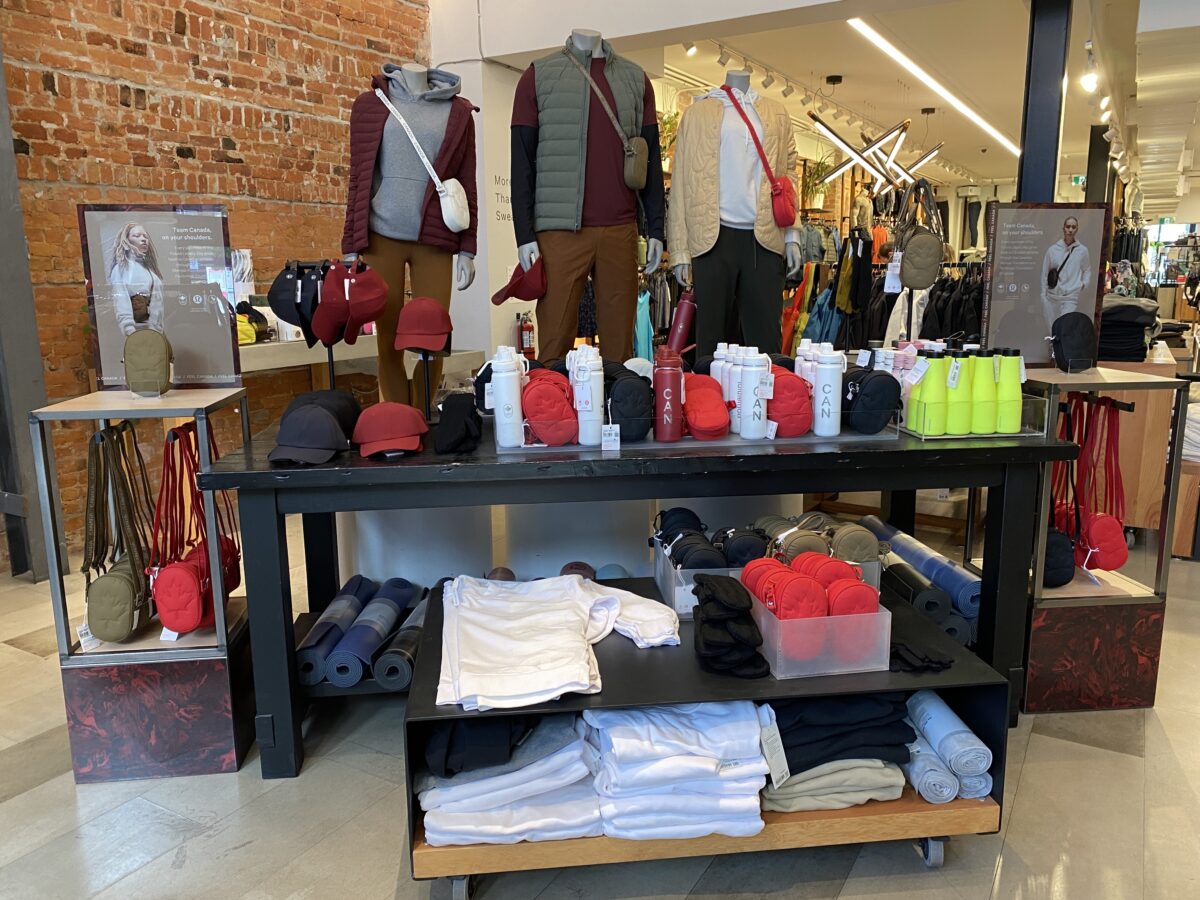
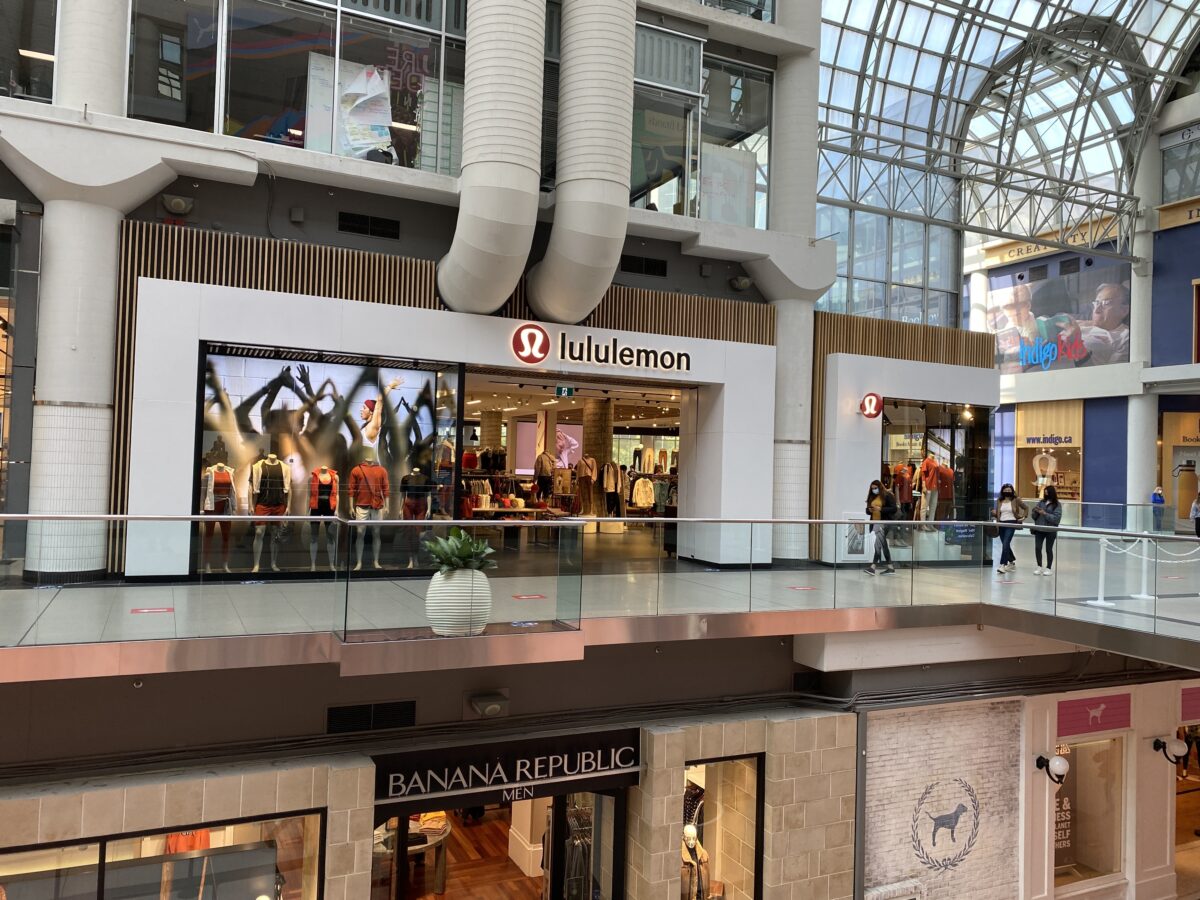
LULULEMON STORE AT CF TORONTO EATON CENTRE. PHOTO: QUADRANGLE

In his blog, Gray last week wrote the following short-term impacts of this current retail crisis:

  1. A lack of consumer interest in categories other than ‘necessities’. We are not ‘self-actualizing’ much right now. Many households will be wondering about livelihoods. General fiscal stimuli may not flow through to real consumer spending;

  2. We are not consuming much messaging other than virus-related or Netflix binging. I would expect there is a drop in clicks of consumer social marketing and email. With less time for ‘noise’ likely the biggest brands and names are getting through right now;

  3. North American chains, such as Lululemon, Roots, Canada Goose, with stores in China or other markets hit first by COVID-19, were the first to feel pain. They closed first and took the first earnings hits. We can learn from their experiences and that of European retail;

  4. Domestically, malls are reducing hours and at some point will look at indefinite closures. A lead round of retailers have begun this already. Once a few more bellwether chains follow suit, the dominos will fall and we will see wide ranging closures;

  5. There will be more selected stock-outs. Irrational as they may be, consumers herding themselves into panic buying will happen again, as replenishments occur. Perhaps in new categories (flashlights? batteries?);

  6. Fast-food, restaurants, and bars are becoming very quiet, particularly adjacent to tourist districts. Now these are being asked to close in Quebec and it is expected many will close in the days ahead. My deepest concern lies with local, independent stores and especially restaurants and bars. I wonder how many will reopen?;

  7. While HQ workers will continue to be employed as they Work From Home (WFH), front-liners will be at risk. It is unclear how much retailers can support full-time sales associates, let alone part-timers – and for how long; and

  8. Financially, overall declines will sweep through the sector. There are some early and scary indicators from the Chinese experience. Keep in mind, numbers from China tend to be presenting in the best light. Those without the cash reserves will be hard-pressed to emerge unscathed. And retail shares will be caught in the crashing stock markets.

Gray also listed the following silver linings amidst the gloom:

  1. Leading retailers in grocery, pharmacy and any at the forefront of keeping households safe and sufficient during the worst of the outbreak will gain in the short run;

  2. Favourite restaurants that set up properly for home deliveries will likely see some wins. Grocery chains could include prepared meals delivery services;

  3. Will there be more time to explore new products and new brands if we have more time to spare during a prolonged self-isolation?;

  4. There will be some bounce back when shoppers get the ‘all clear’ signal. Not just for needed items put off, but perhaps a need for some feel-good retail therapy;

  5. There will be a big opportunity for retail leaders to build or rebuild systems to proactively identify and mitigate risks;

  6. We might develop a portfolio approach to global sourcing, as opposed to the historic linear approach based on economies and efficiencies. Perhaps even so far as to reboot some Canadian production; and

  7. There might be a return to retail basics: the energy and resources to adopt leading edge “customer experience” tools may be parked while retailers focus on just getting basics of the business back to normal;

  8. Those who have been investing in ecommerce should see the biggest payback; and

  9. Publicly traded retailers face real hurdles to making the right long-term investments and changes. Depleted stock prices might be exactly what is needed by retailers, such as the Nordstroms, to take their business private. Yet Montreal-based thought leader Carl Boutet convinced us that cash will be so precious that there will be higher order priorities for buybacks, leaving companies exposed for takeovers.