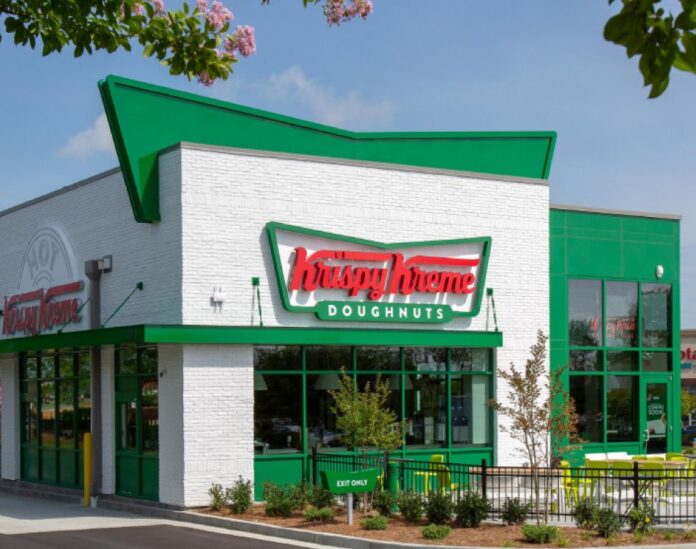
The US owner of doughnut retail concept Krispy Kreme announced Thursday that it is taking a majority controlling stake in the Canadian franchised operations Krispy K Canada. As part of the deal, Krispy Kreme says that it is planning an expansion.
Krispy K Canada operated 10 Krispy Kreme locations in Canada in the Ontario and Quebec Markets. The Ontario locations are all in the Toronto area and the Quebec locations are in Montreal and Quebec City. A Krispy Kreme also operates separately in suburban Vancouver.
Canadian operating partners for Krispy K, Christopher Lindsay and Kelcey Hamaker, will remain as co-CEOs of the entity after the transaction is completed and will continue to manage the day-to-day operations of the Krispy K Canada shops.
US-based Krispy Kreme says that its investment in the Canadian operations reflects its confidence in the Canadian market. With that, plans are in place to open more Krispy Kreme storefronts in Canada while expanding an omni-channel strategy. The omni-channel strategy allows Krispy Kreme to reach more consumers by creating points of access across multiple channels, including its shops, e-commerce, delivery, and retail. The strategy is supported by what the company describes is a capital-efficient hub-and-spoke manufacturing and distribution model that enables Krispy Kreme to deliver fresh doughnuts daily to points of access through an integrated network of delivery routes.
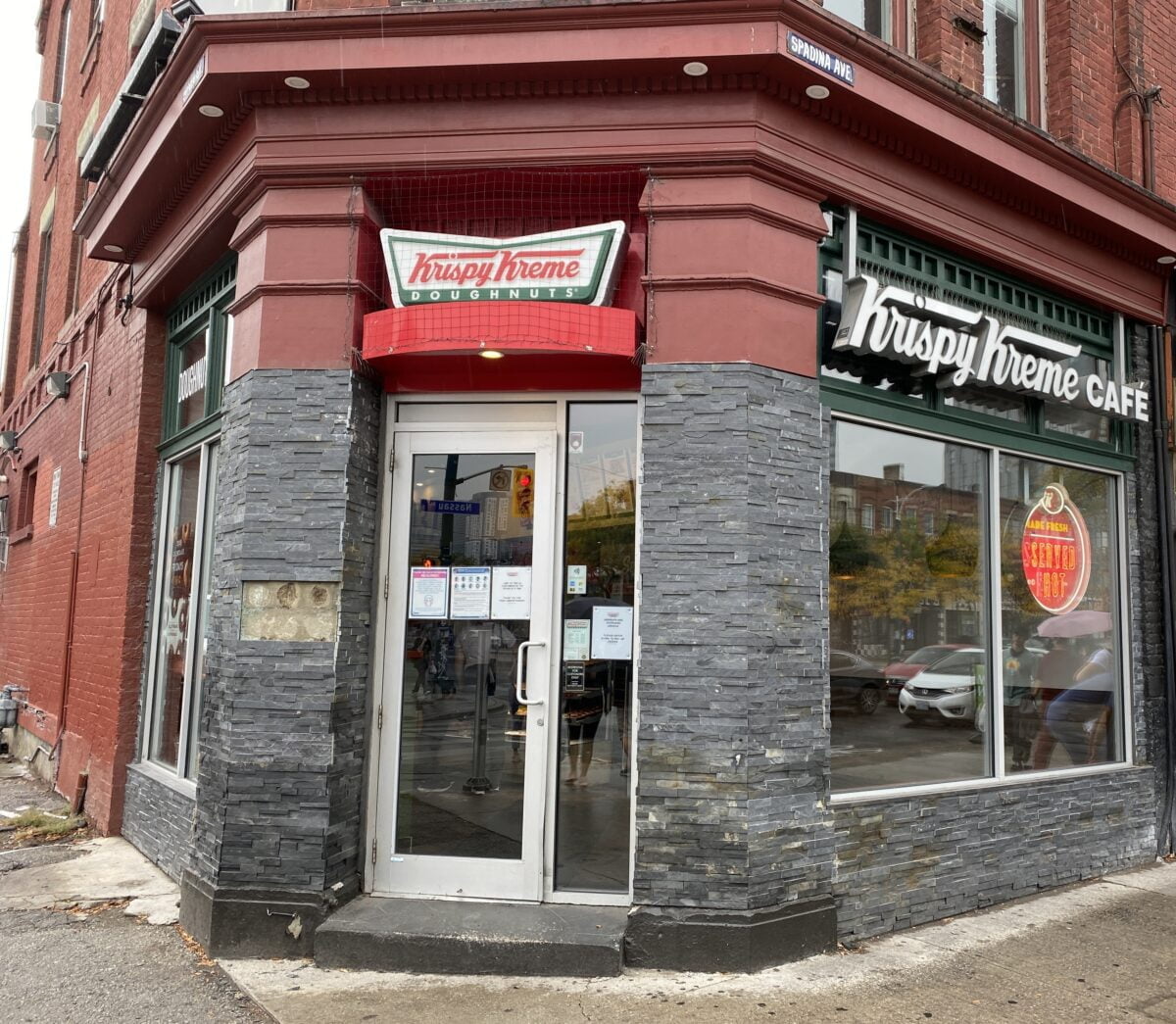
Krispy Kreme on Spadina in Toronto (Photo by Dustin Fuhs)Photo: Krispy Kreme
“Working with Krispy Kreme for so many years, we know that the Company shares our belief in the potential for growth here in Canada,” said Christopher Lindsay and Kelcey Hamaker, co-CEOs of Krispy K Canada. “Our strong recent performance is a testament to that potential, and our ability to deliver a great Krispy Kreme experience across different formats has been a key driver of this success. We are thrilled to continue to work alongside our partners at Krispy Kreme to deliver on our vision of providing more people the most awesome doughnut experience on earth.”
Krispy Kreme noted that the UK and Australia both have over 1,000 retail points of access for the brand, indicating that a very significant expansion is at play for the Canadian market as well.
Globally, Krispy Kreme has been bolstering is operations including increased control through increased ownership — following the Canadian transaction, Krispy Kreme will control 75% of sales across its global network.
Krispy Kreme is headquartered in Charlotte NC and is known particularly for its iconic Original Glazed doughnut. The company operates in 31 countries through its network of fresh doughnut shops, partnerships with leading retailers, and a rapidly growing ecommerce and delivery business. The company’s first Canadian location opened in Mississauga in December of 2001.
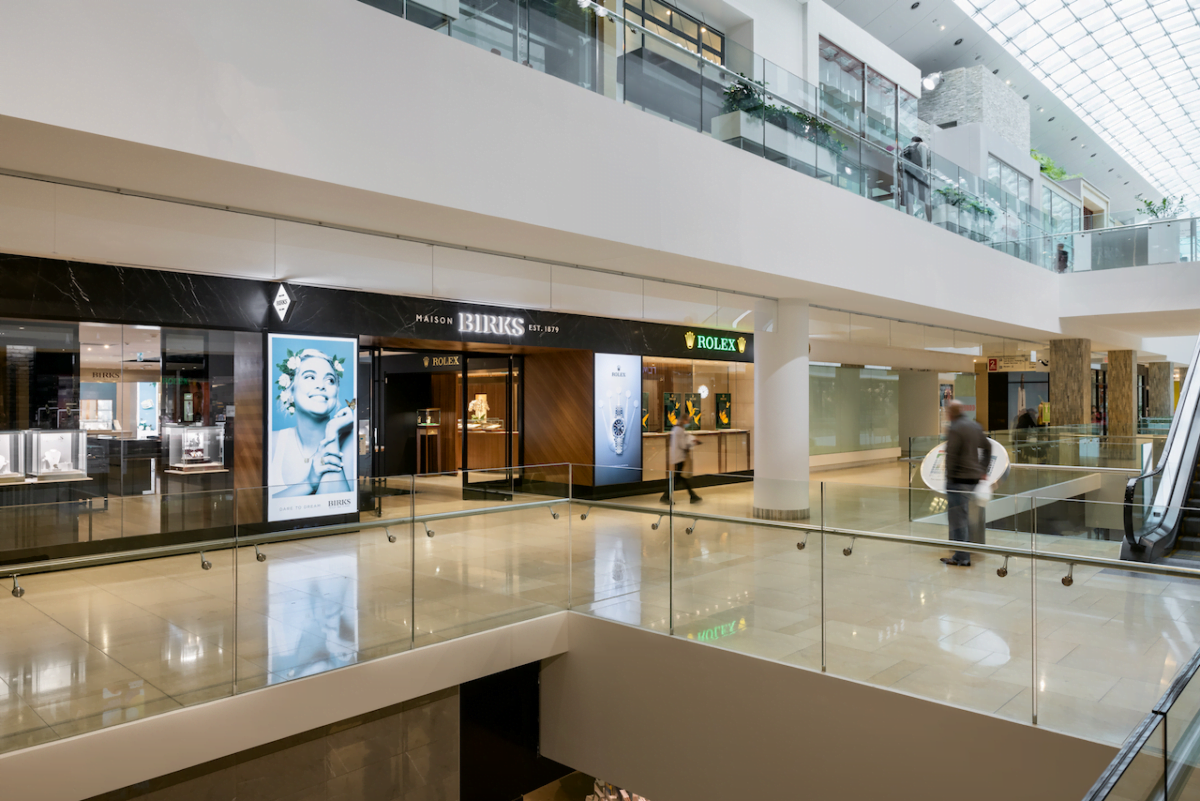
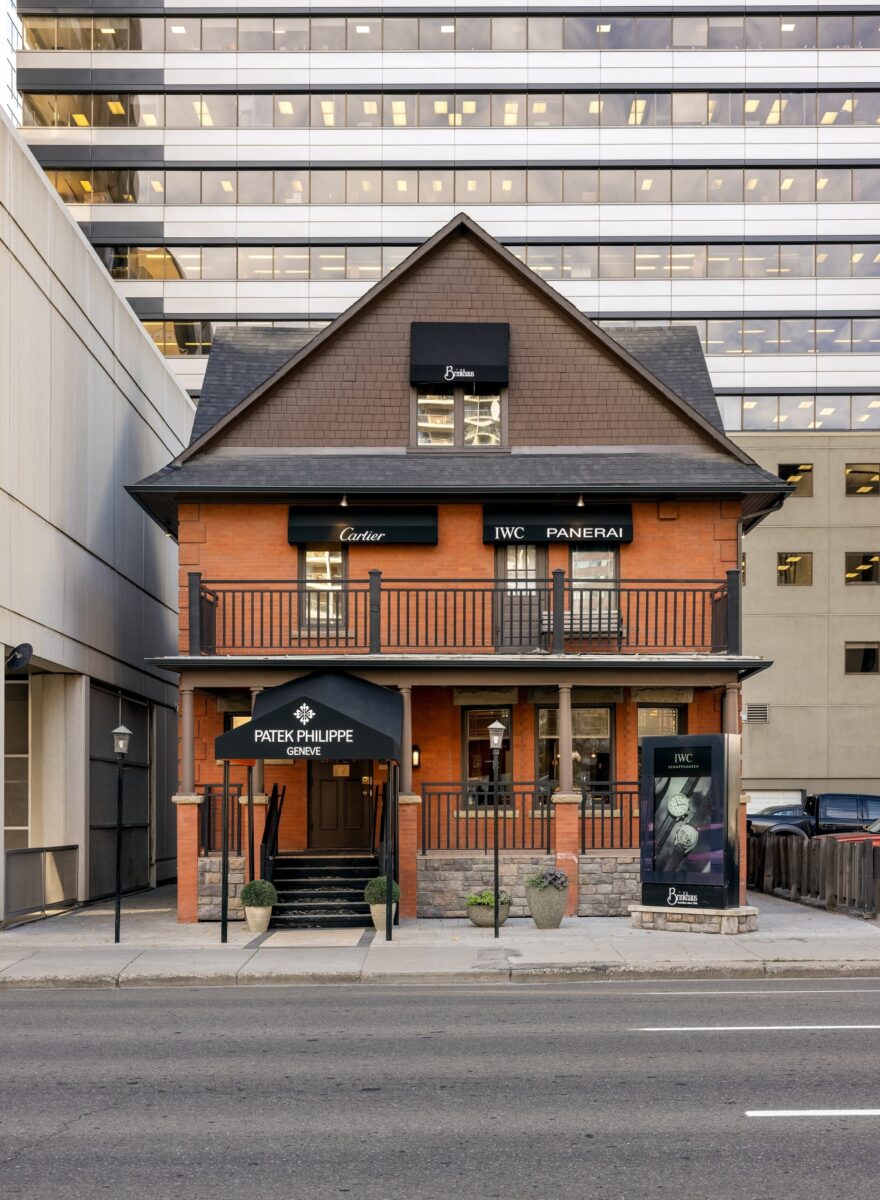
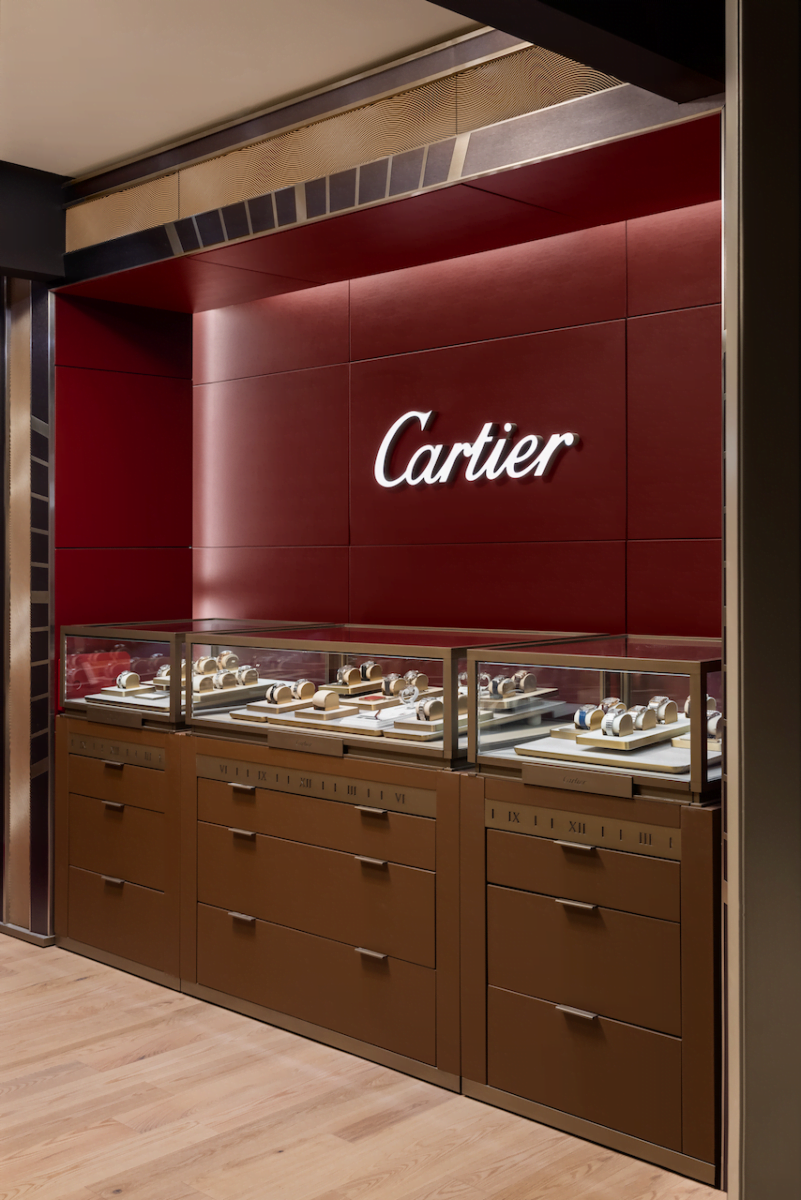
Montreal-based multi-brand jeweller Maison Birks has renovated two of its stores in downtown Calgary. That includes a large Birks store at The CORE as well as the Brinkhaus store located in a historic house nearby.
Maison Birks at The CORE
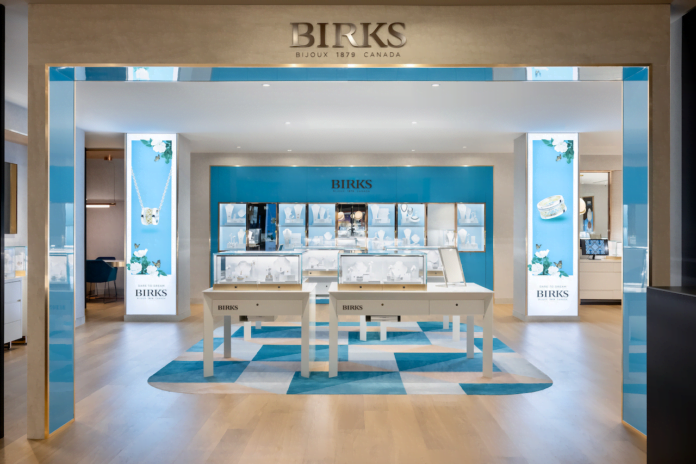
BIRKS – TD Core Calgary (Image: BIRKS)
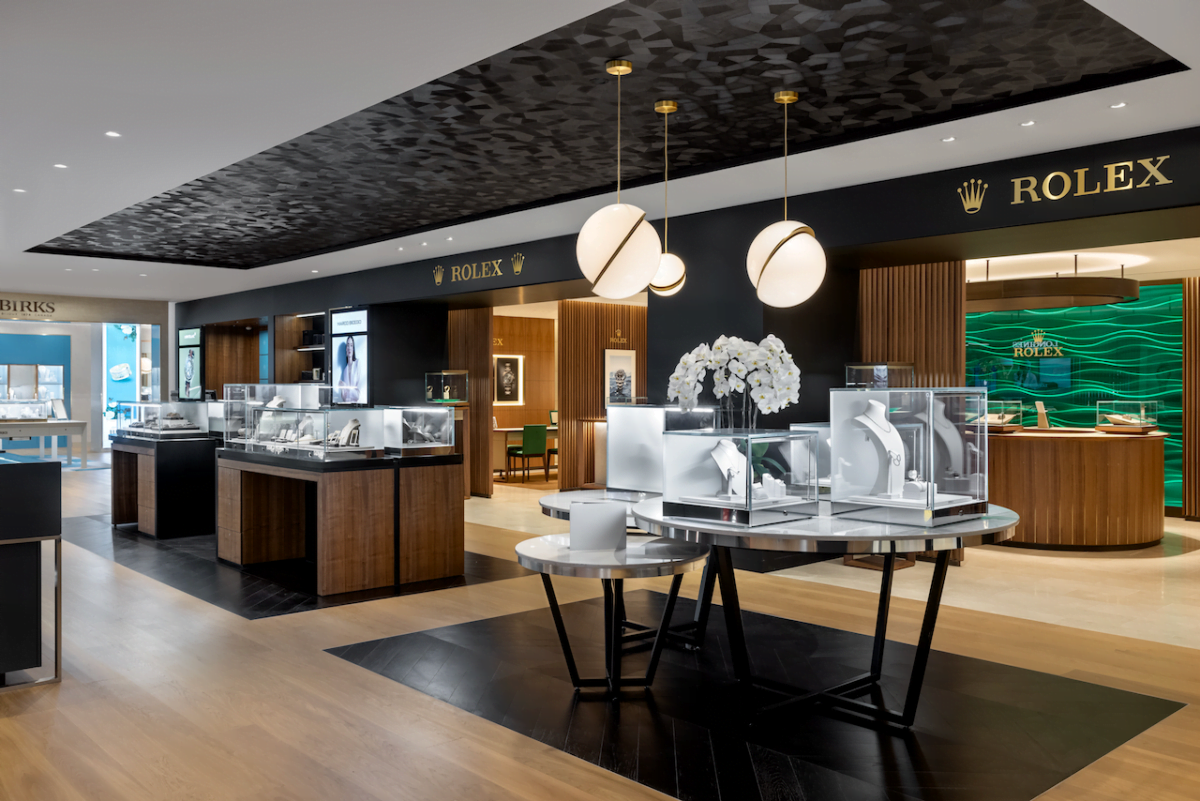
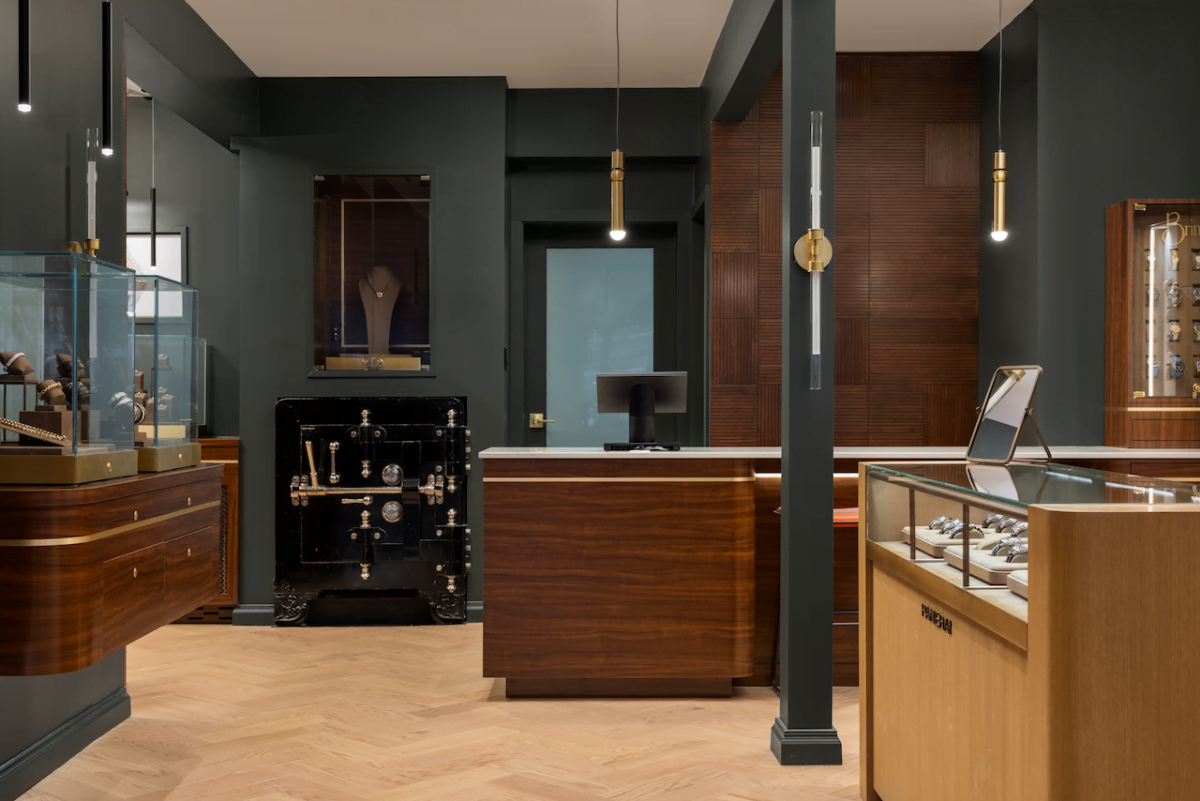
Renovations to the 5,465 square foot Birks store at The CORE shopping centre were completed over the summer. The space was designed by Aedifica and incorporates elements inspired by the Montreal and Toronto Maison Birks flagship stores which both have seen full renovations in recent years.
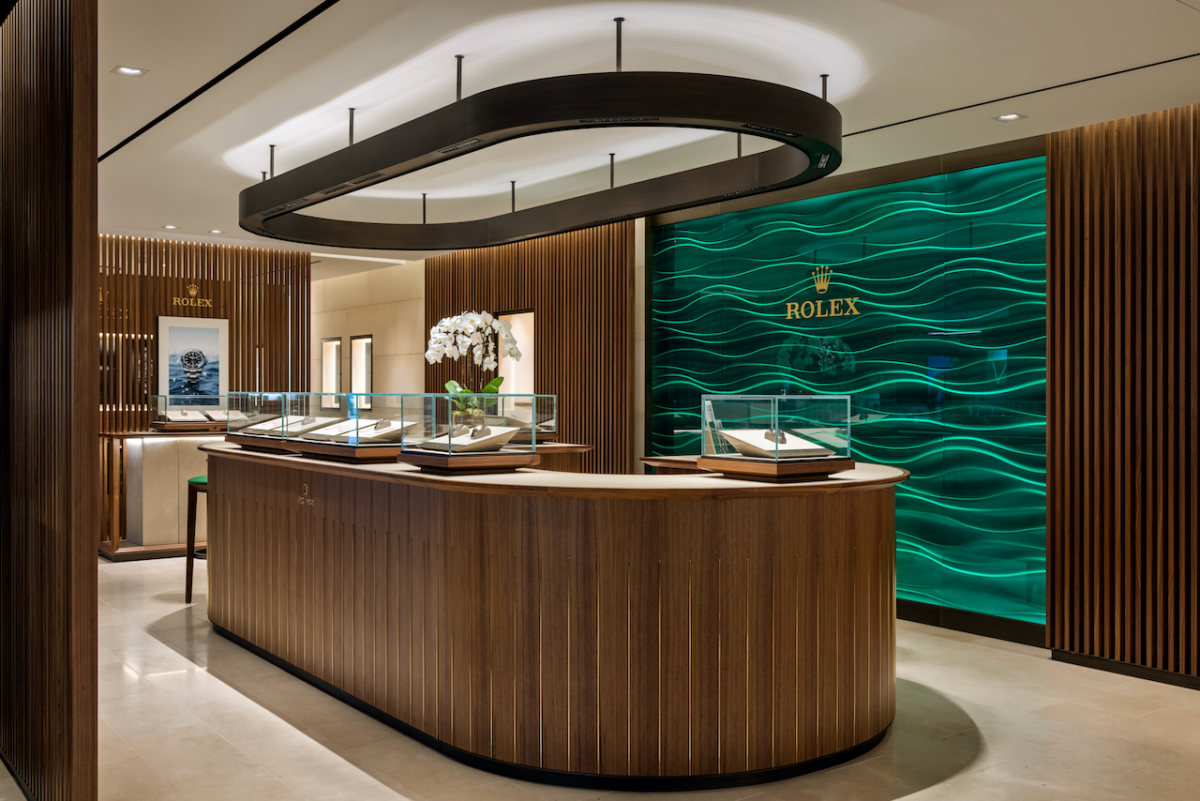
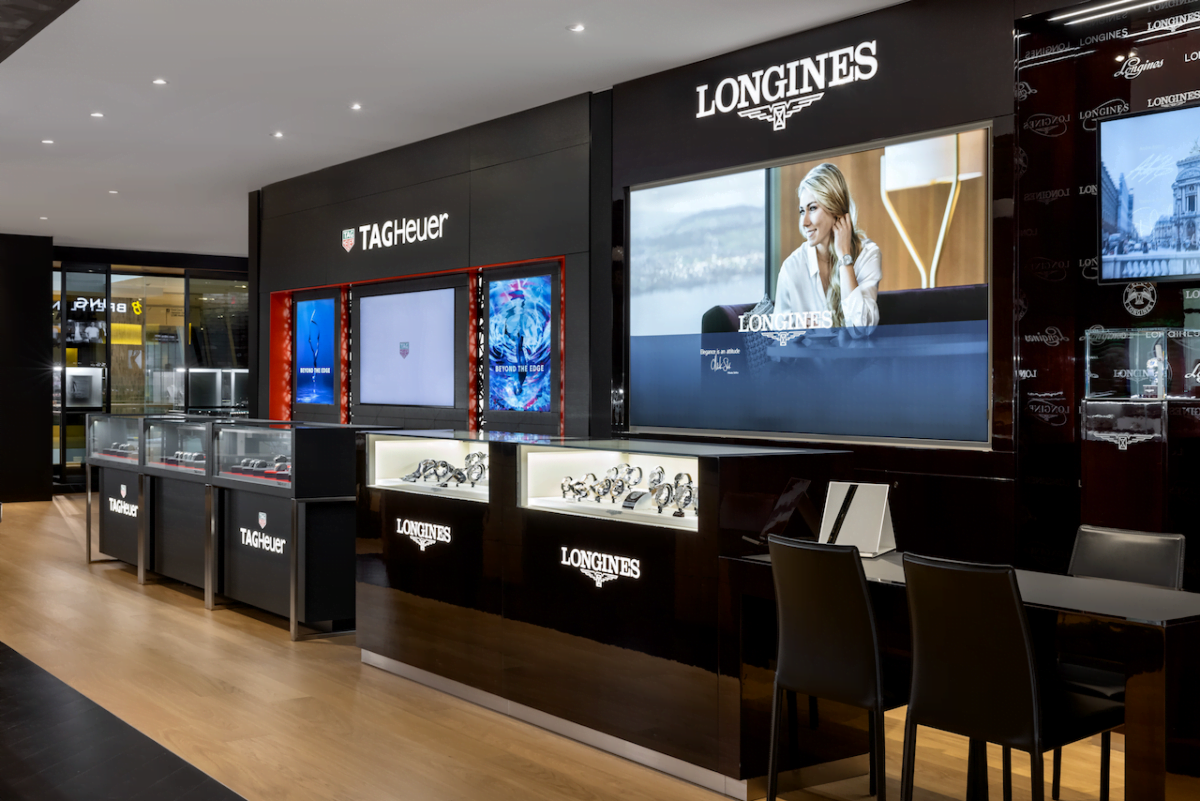
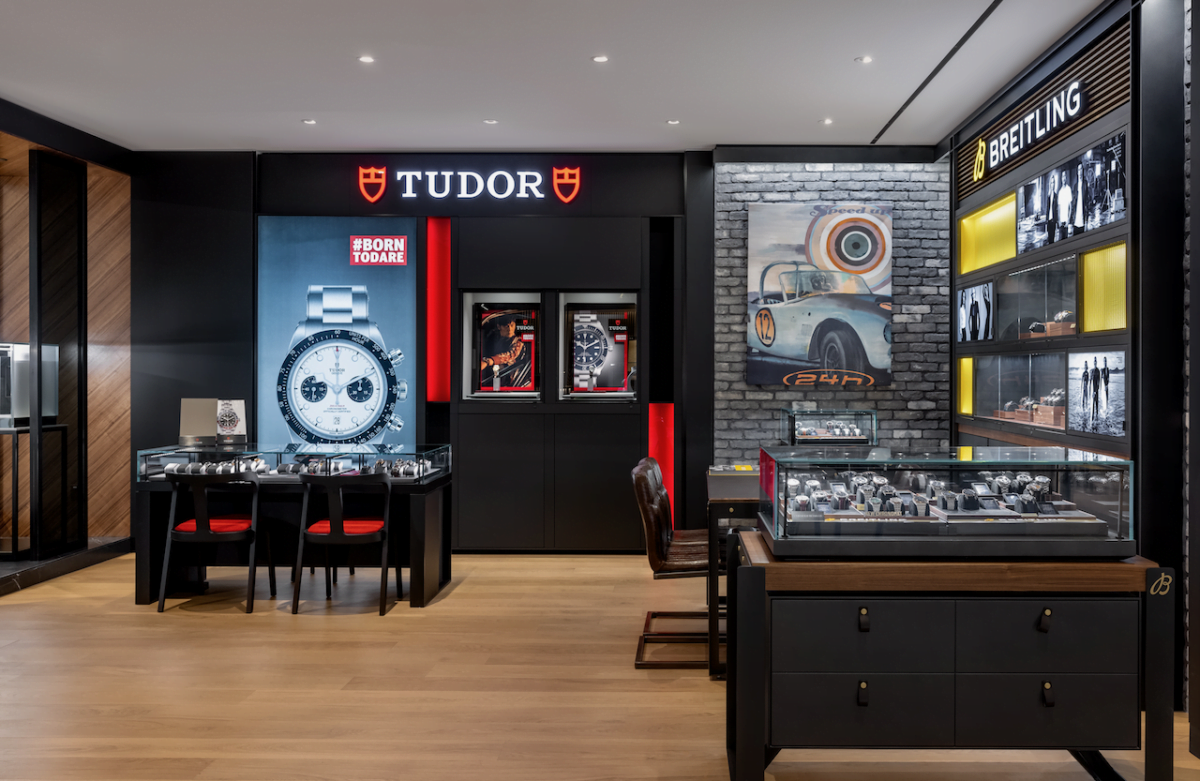
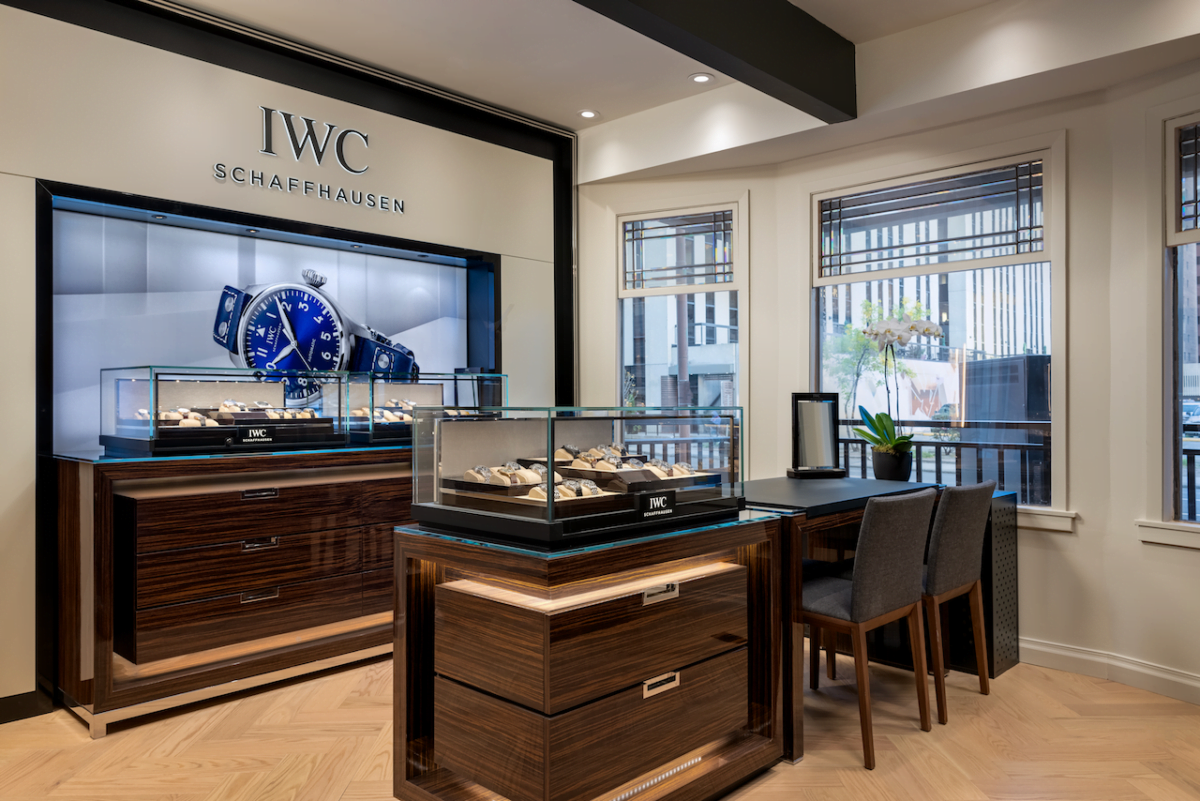
Brands carried at the store include Rolex, Breitling, Longines, Marco Bicego, Montblanc, Roberto Coin, TAG Heuer, Tudor, and Wolf. The recent renovations unveiled a new design concept for the store’s Rolex shop-in-shop which measures 1,210 square feet.
The CORE Birks store is the first location for the retailer to unveil an in-store Bijoux Birks shop-in-shop carrying Birks Group’s own extensive Bijoux Birks bridal and fine jewellery collections. The shop-in-shop spans about 1,500 square feet.
BIRKS – TD Core Calgary (Image: BIRKS)
A new bridal bar in the store allows for interactive engagement ring and wedding band shopping, allowing for family and friends to join the couple. The bridal bar concept was first introduced to the Yorkdale Birks store in 2016. A pop-up section at the front of the store called the ‘Labo’ offers those walking past the store a glimpse of Birks’ latest collections.
As recently as the 1990s, the CORE Birks store spanned two levels with a curving staircase — Birks stores are now for the most part smaller than in decades past.
The Calgary Brinkhaus Jewellers Store (CNW Group/Birks Group Inc.)
Brinkhaus
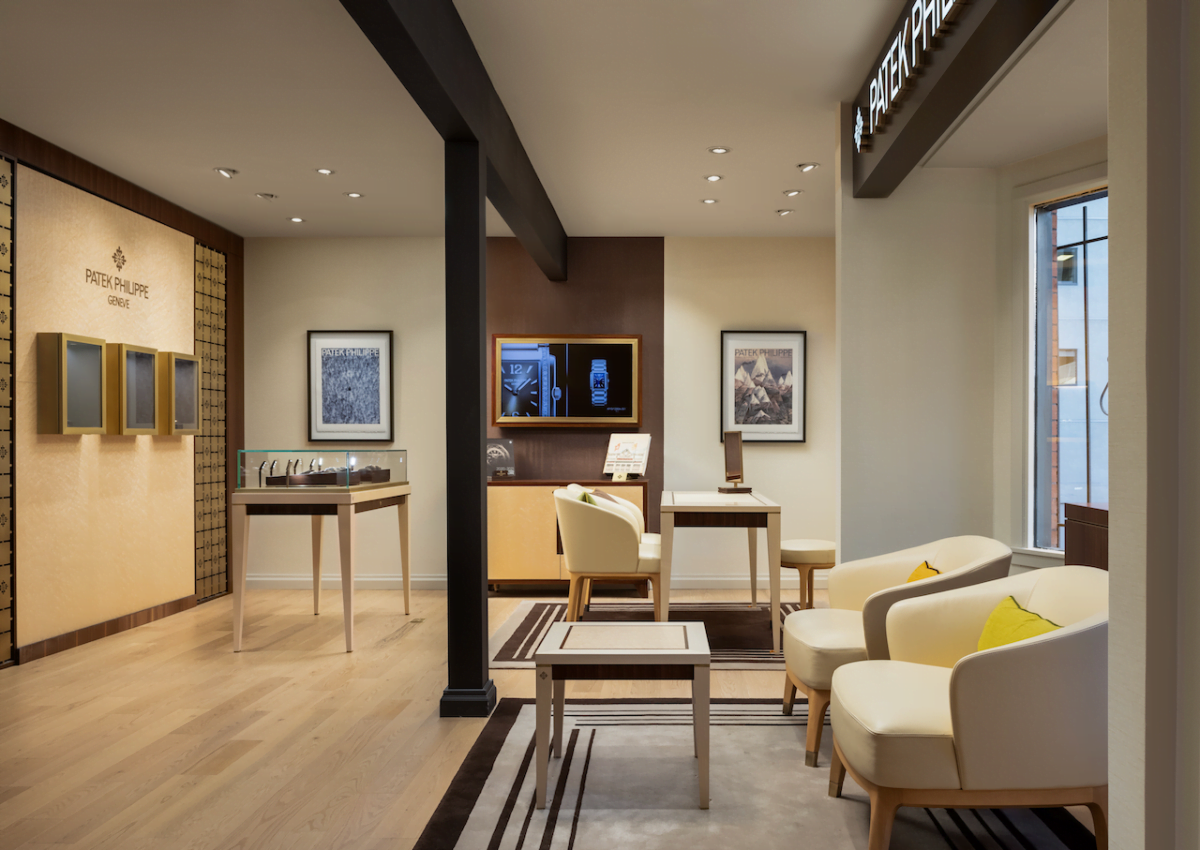
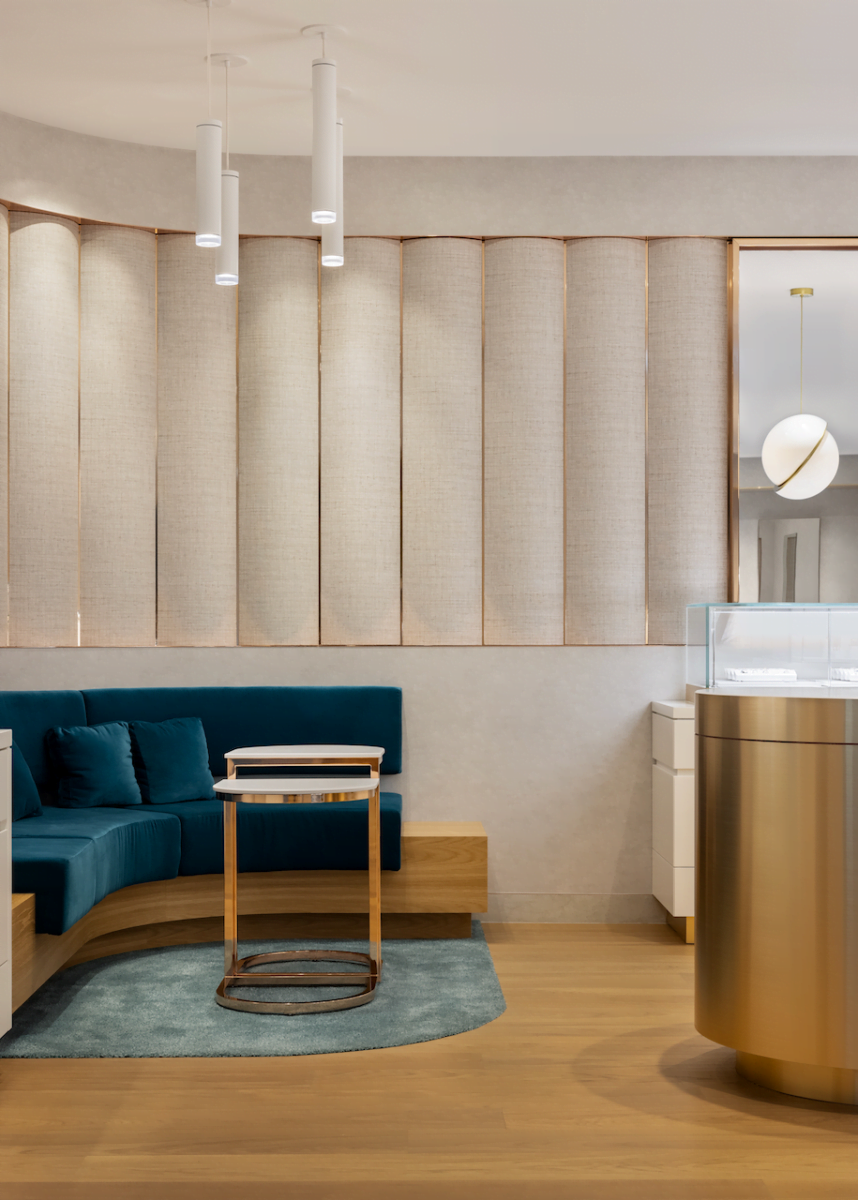
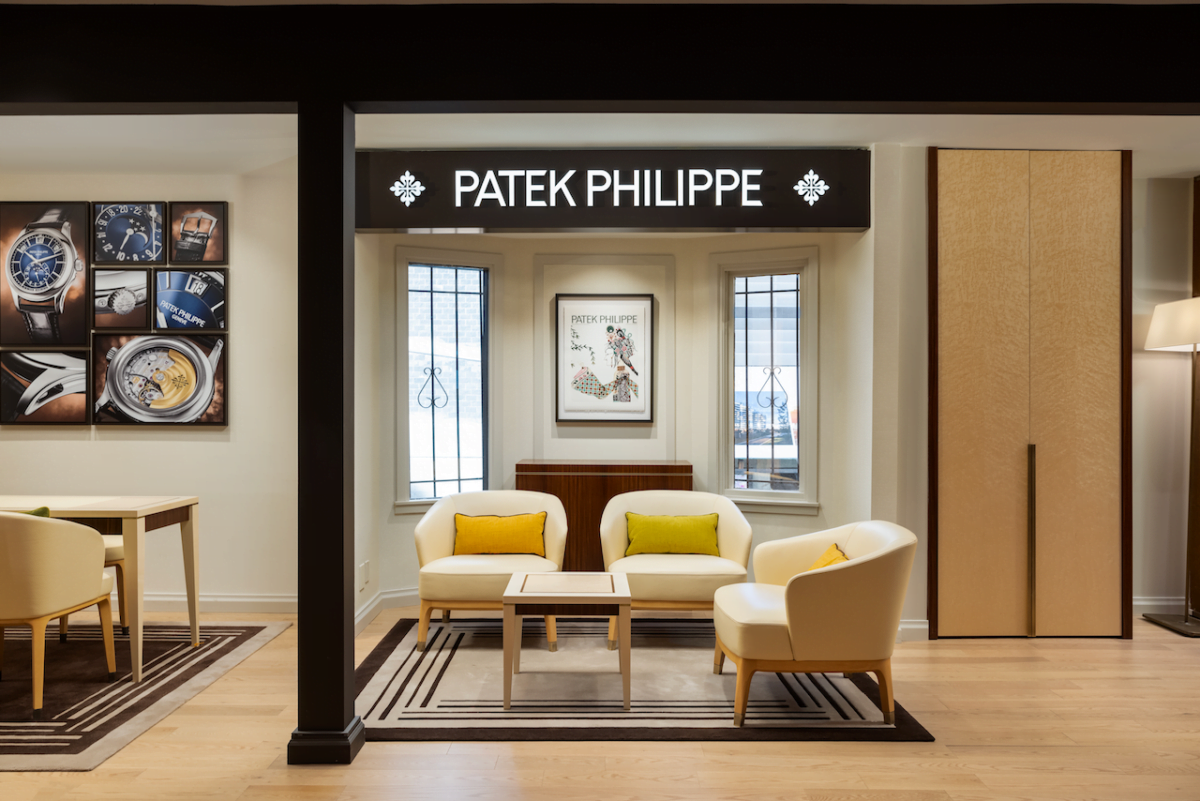
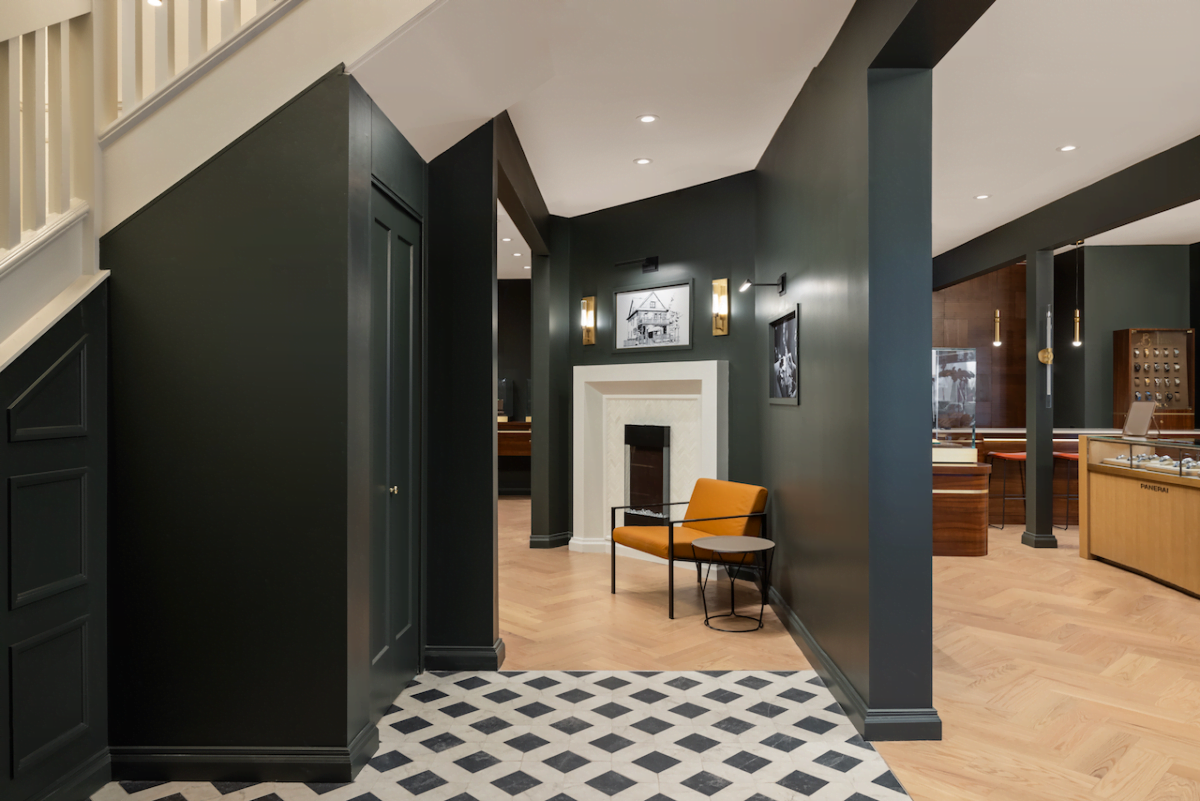
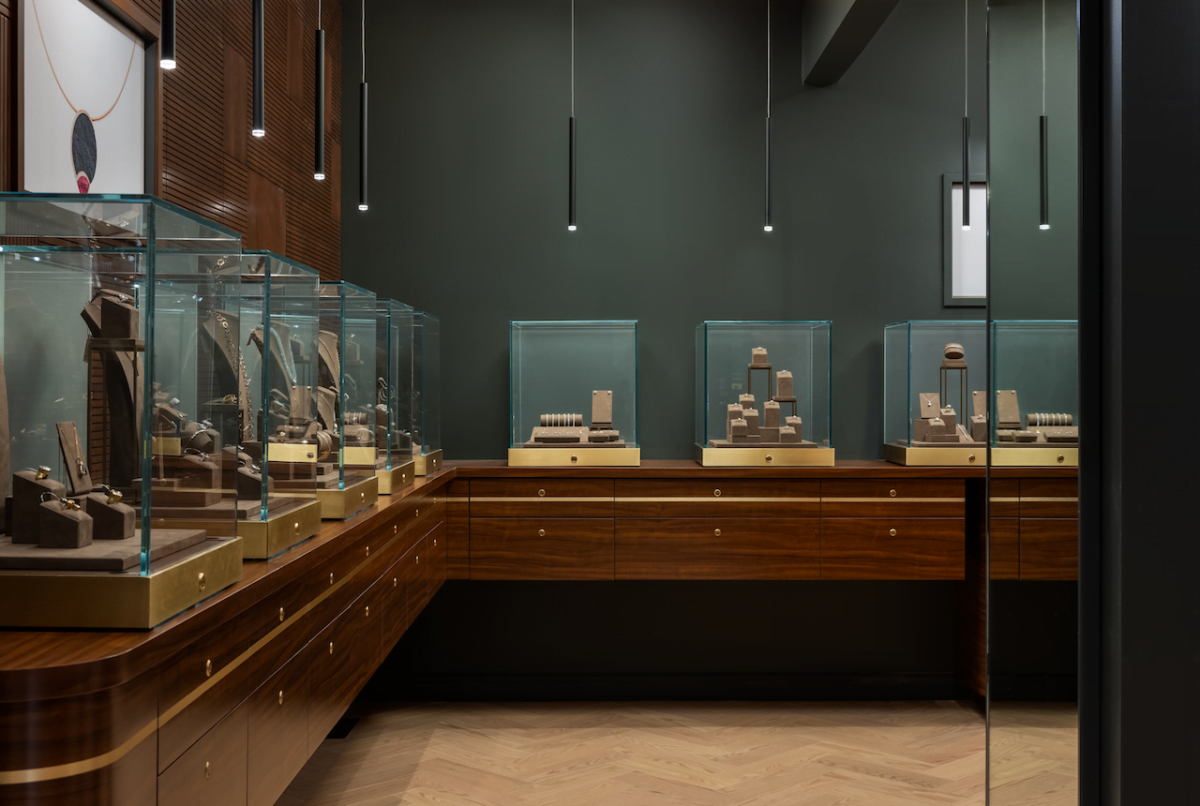
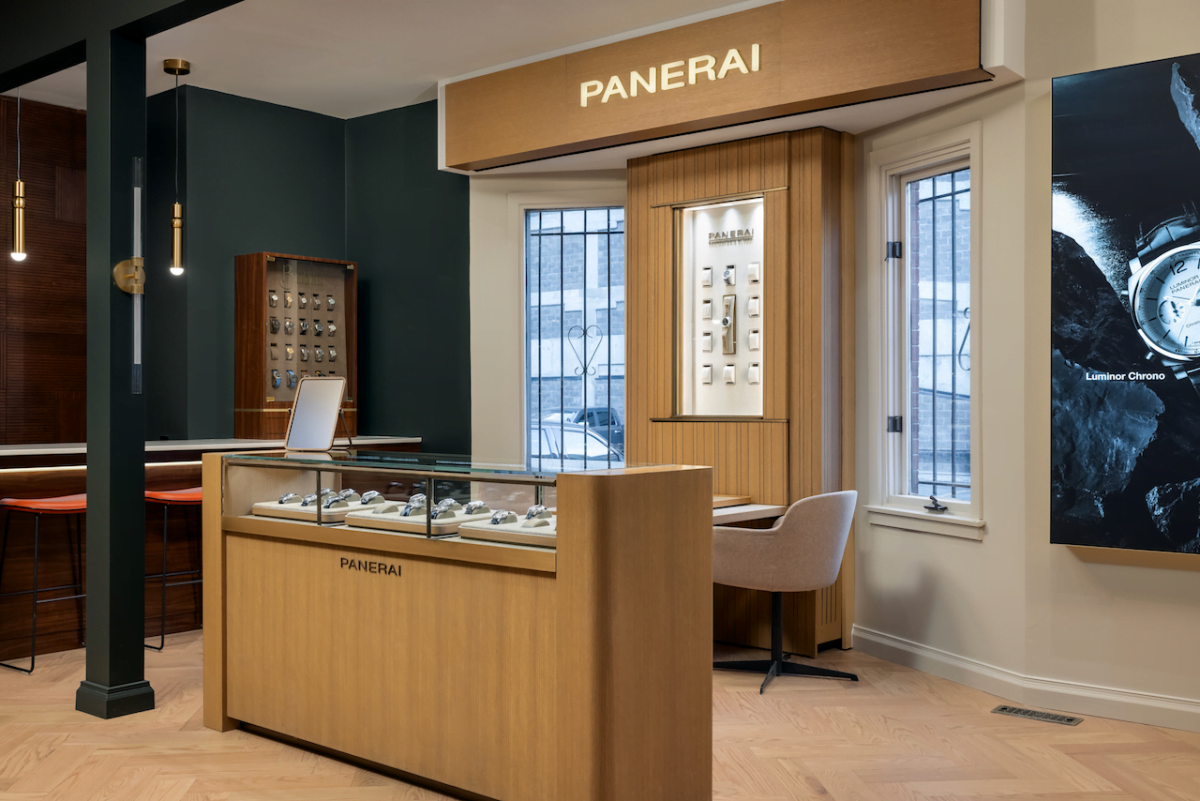
The Brinkhaus store located at 823 6 Ave SW also saw an overhaul that was revealed last week. Led by Optima Design, the three-story historical building that was once a house now features floating showcases, textured wood walls, and gold accents. The store features an expanded fine jewellery and Patek Philippe area.
The 1,950 square foot Brinkhaus store has existed in Calgary for 70 years. A Vancouver location on West Georgia Street near Burrard opened about a decade ago and in 2018, it was converted to retail spaces for Graff and Patek Philippe.
BIRKS – Brinkhaus (Image: BIRKS)
Other News
Birks is said to be conceptualizing renovations to its downtown Vancouver flagship store located at the northeast corner of Granville and Hastings Streets. The store is contained in an historic bank building. It’s the last of the retailer’s three downtown flagships to see overhauls after the Bloor Street store in Toronto and Ste-Catherine Street flagship in Montreal saw significant upgrades as profiled in Retail Insider.
Birks Group operates 26 stores under the Maison Birks brand across Canada as well Brinkhaus in Calgary and the Graff and Patek Philippe storefronts downtown Vancouver. Bijoux Birks fine jewellery collections are also available through Mappin & Webb and Goldsmiths locations in the United Kingdom in addition to several jewellery retailers across North America. Saks Fifth Avenue features several shop-in-stores for Bijoux Birks including a new one at the CF Toronto Eaton Centre in downtown Toronto. Birks was founded in Montreal in 1879.
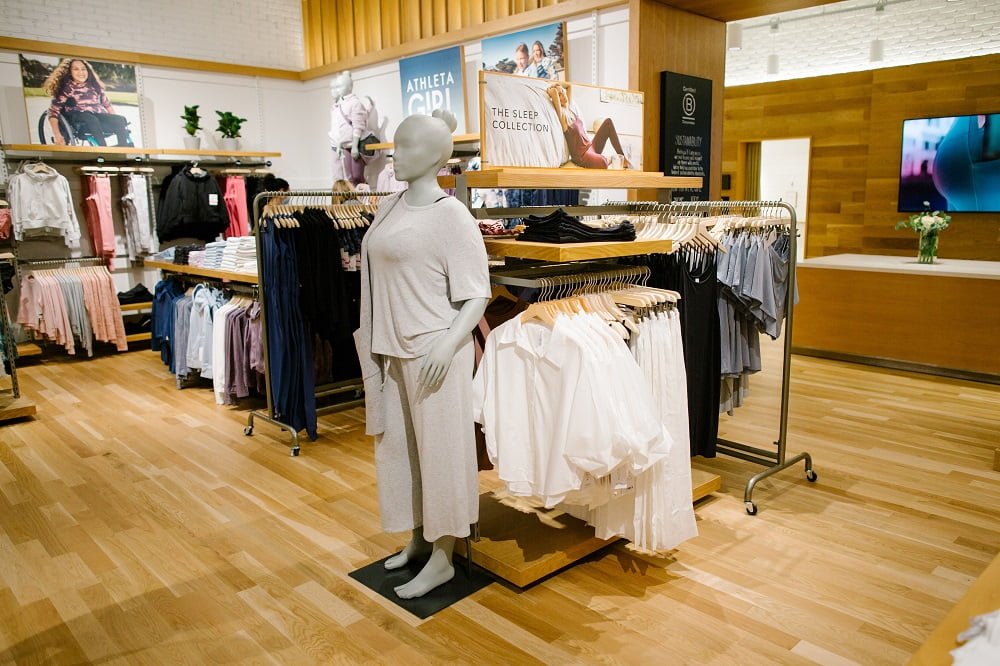
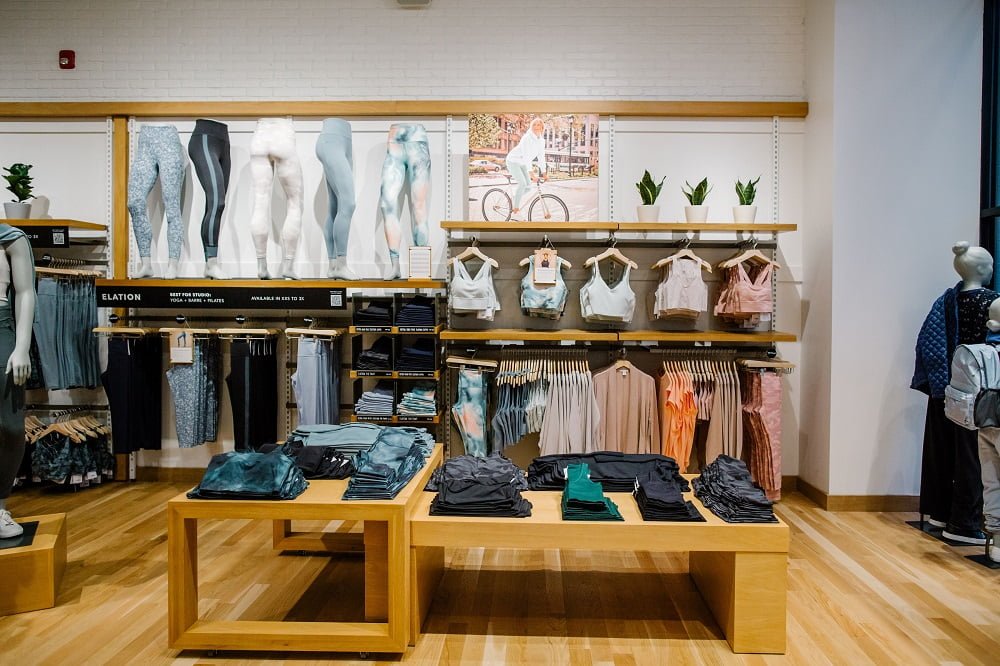
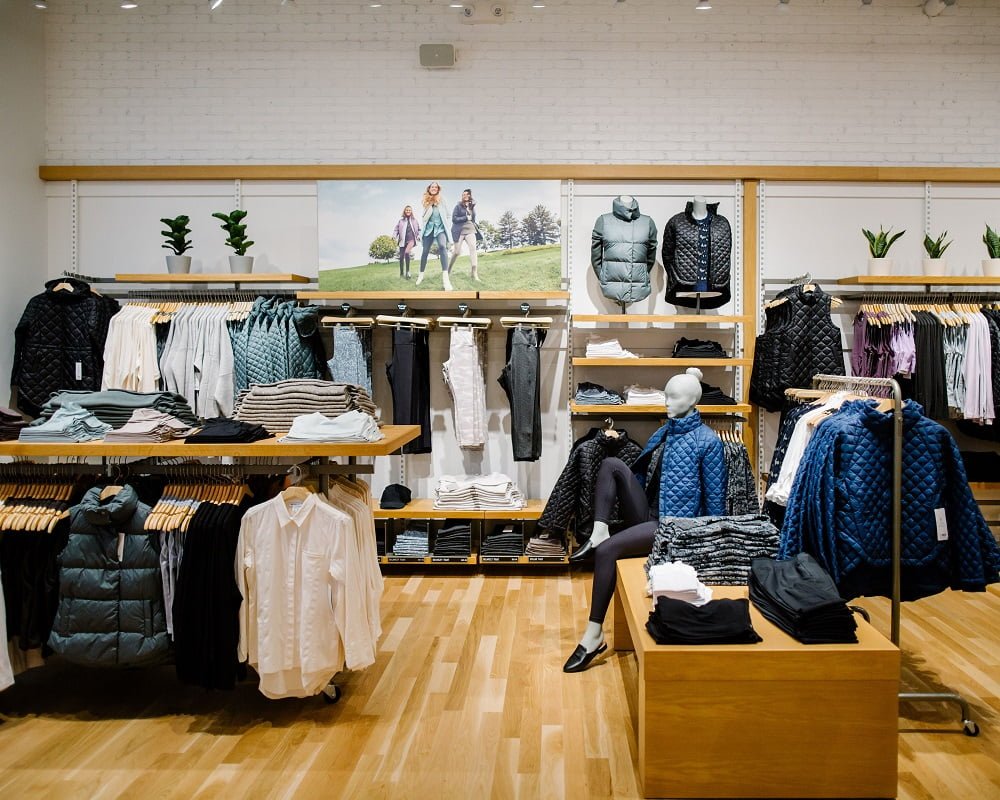
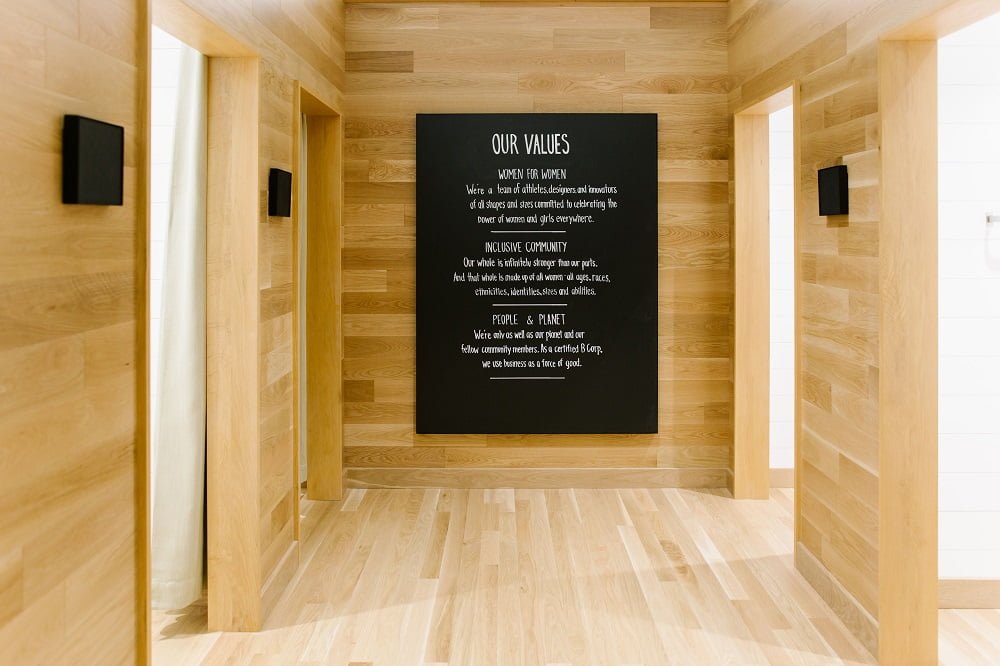
The West Vancouver store houses a variety of performance lifestyle apparel that includes bottoms (sweatpants, skirts, tights, leggings, etc.), tops (including sweatshirts, long sleeve, tanks and support tops), bras, dresses (including rompers, maxi/midi and above-the-knee), outerwear (including jackets, vests, rain/insulated options) and accessories (including bags, hats, socks and gloves) geared toward women and girls.
In an effort to promote inclusivity, the retailer groups sizing into categories: Petite, Regular, Tall and Plus (1x to 3x). This sizing is found for about 500 products found in-store and online.
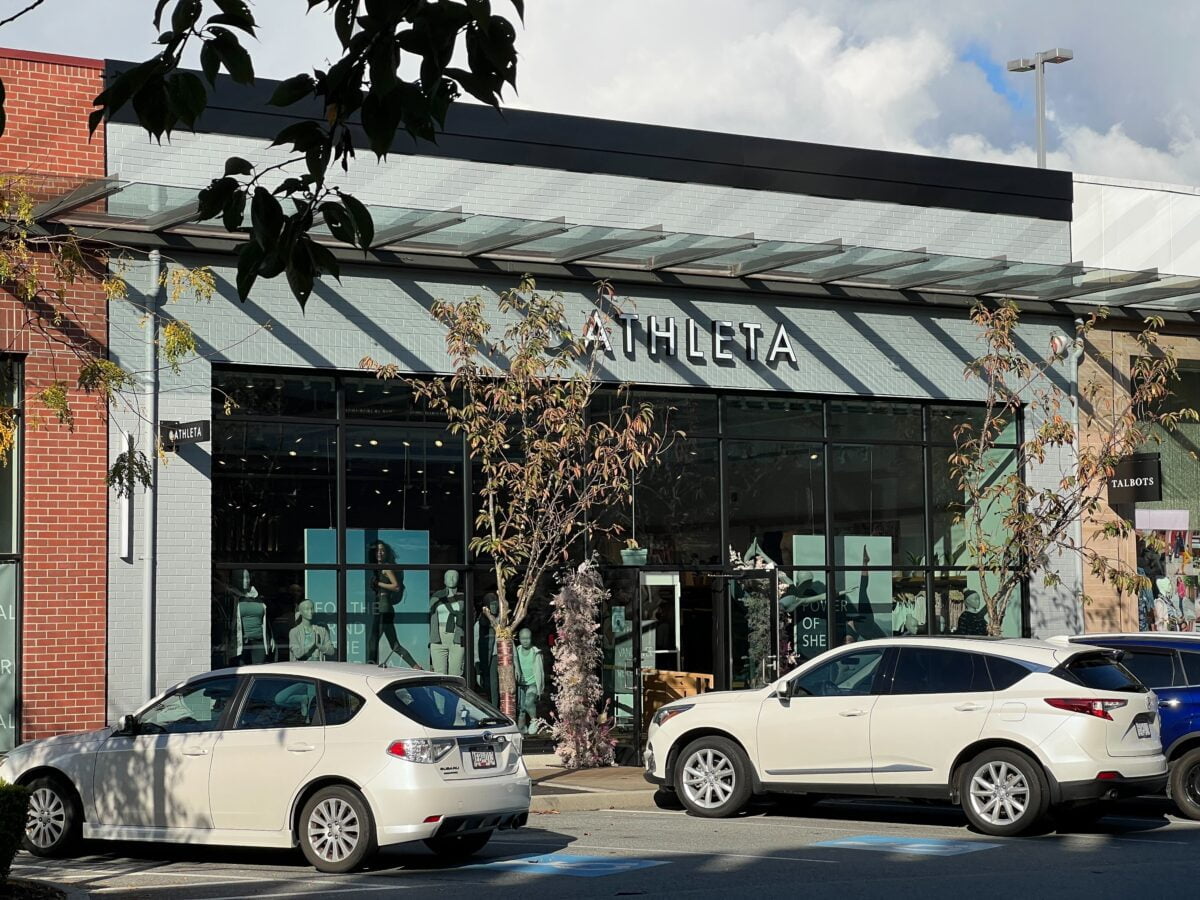
Athleta at Park Royal Shopping Centre in West Vancouver, BC (October 2021). Photo: Lee Rivett.
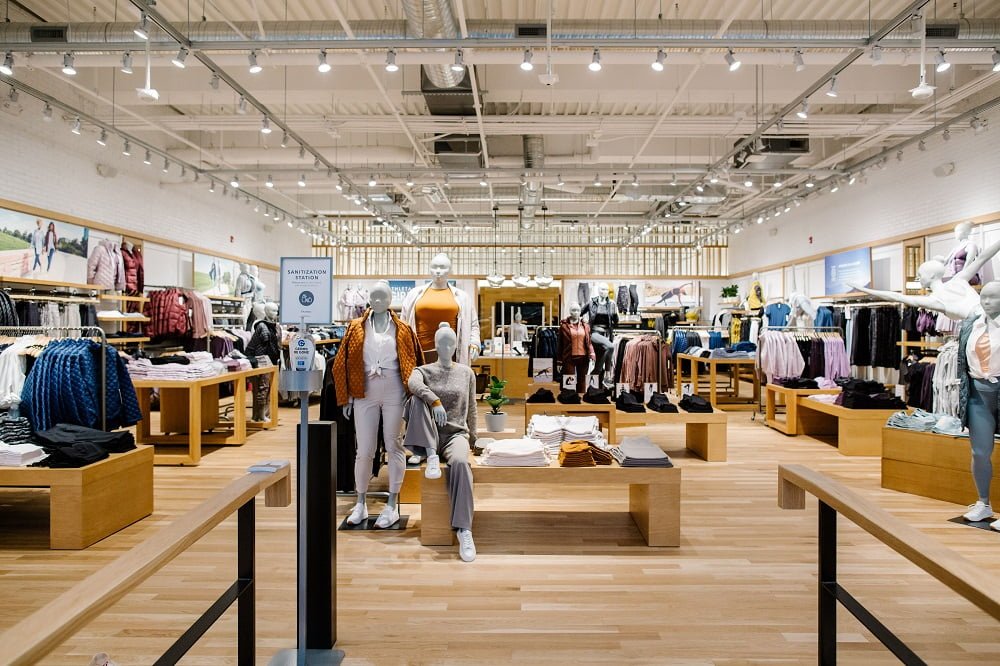
Interior of Athleta at Park Royal Shopping Centre in West Vancouver, BC (September 2021). Photo: Athleta and Mariel Nelms Photography.
Girl Section of Athleta at Park Royal Shopping Centre in West Vancouver, BC (September 2021). Photo: Athleta and Mariel Nelms Photography.
Studio Apparel Section of Athleta at Park Royal Shopping Centre in West Vancouver, BC (September 2021). Photo: Athleta and Mariel Nelms Photography.
The Athleta store opening adds to the crowded athleisure offering at Park Royal. Aerie, a lifestyle retailer and sub-brand owned by American Eagle Outfitters, has construction signage erected in the same section of the shopping centre as Athleta.
Lululemon is an obvious established athleisure competitor and it operates a separate Men’s store adjacent to its women’s store at Park Royal. Competing women’s and girl’s apparel in the shopping centre include Urban Outfitters (activewear, intimates, rompers, bottoms) and Zara (yoga wear, skirts, shirts, bottoms) as well as the larger multi-brand stores including Winners, Simons, Saks Off Fifth and Hudson’s Bay which all carry their own varieties of athleisure at varied price points.
Performance Lifestyle Section of Athleta at Park Royal Shopping Centre in West Vancouver, BC (September 2021). Photo: Athleta and Mariel Nelms Photography.
The former Nike space at Yorkdale Shopping Centre where Athleta is moving into measures about 4,800 square feet according to lease plans with a 34-foot frontage near the mall’s Hudson’s Bay store.
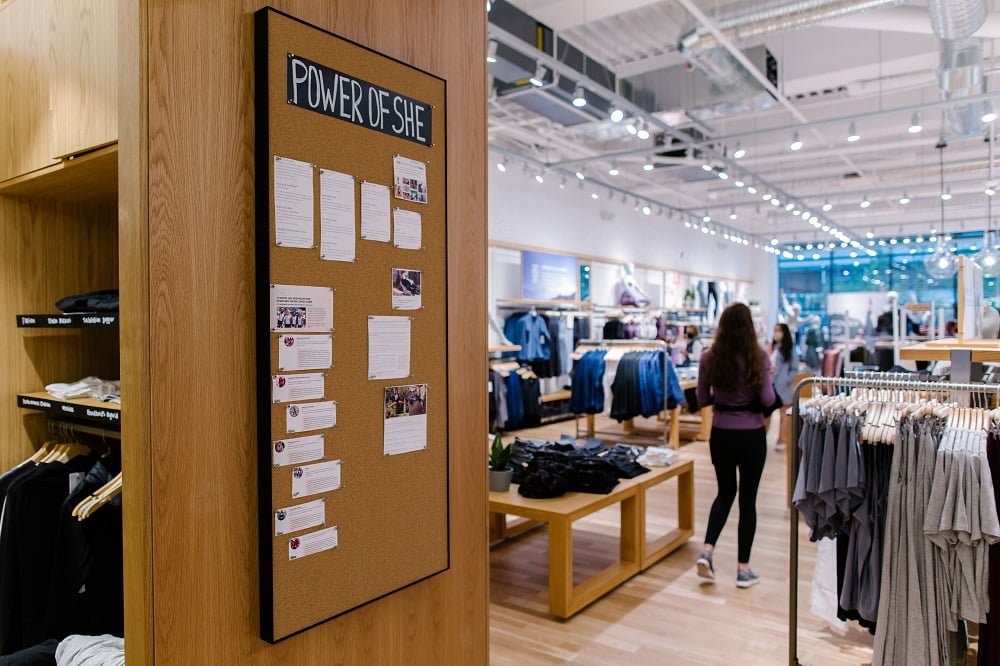
Storeback Section of Athleta at Park Royal Shopping Centre in West Vancouver, BC (September 2021). Photo: Athleta and Mariel Nelms Photography. Change Room of Athleta at Park Royal Shopping Centre in West Vancouver, BC (September 2021). Photo: Athleta and Mariel Nelms Photography.
Disruption, devastation and disillusion. Although there are many other words that could be employed in their place, the three aforementioned come pretty close to accurately and adequately summing up the general sentiment of businesses following 18 months of impacts caused by the COVID-19 global pandemic. And, although the related repercussions have been felt by just about every organization operating within every country, industry and sector around the world, few have been affected to the same extent as the small businesses on main street everywhere. Over the course of the past year-and-a-half, many entrepreneurs have suffered, either experiencing a significant decrease in sales, or worse, the demise of their operations altogether. It’s been a grim period. However, according to The Global State of Small Business Report recently released by Facebook, there may be some reason for optimism going forward, albeit of the cautious variety.
“Our report finds that closure rates are falling around the world in a majority of surveyed countries, a sign that the small business recovery is underway,” says Sheryl Sandberg, COO of Facebook. “But there is still a long way to go and many of the inequalities and challenges persist.”
The most current in a series of releases, The Global State of Small Business Report explores the ongoing crisis facing small businesses as well as the challenges and obstacles that lay ahead. Based on surveys of nearly 1,000 small businesses across Canada, in addition to more than 35,000 small businesses operating in 30 other countries around the world, the report attempts to shed some light on the struggles of small businesses and some of the opportunities for growth while uncovering the trends that are over time most significantly impacting the viability and success of merchants everywhere.
Lack of physical traffic
One of the forcing functions impacting small businesses most severely has been that of government-imposed lockdowns and social restrictions, resulting in a distinct lack of physical traffic to brick-and-mortar main street locations. And, although many provinces across the country have been experiencing a gradual reopening of their communities and economies, the report finds that Canadian small businesses have struggled to turn the opportunity into sales. According to the survey, 88 percent of small businesses in Canada reported to have been operational in August of this year, with 41 percent of those operational businesses citing lower sales for that period. Though these numbers are not as encouraging as they perhaps could be, it seems as though the recovery in Canada may be slightly ahead of the rest of the world, with 12 percent of small businesses remaining closed in Canada, compared to 18 percent globally.
Ecommerce acceleration
Another trend, one that’s been extremely noticeable and pervasive throughout the pandemic, has been the accelerated shift by the consumer toward online channels to make purchases. Facebook’s report finds that 45 percent of Canadian small businesses experienced digital sales that comprised 25 percent of their total sales, a number that is almost exactly the equivalent of the global average (46%) of businesses that have been leveraging ecommerce to sustain and make up for a lack of brick-and-mortar sales. It’s a pivot that Sandberg recognizes as one of the more critical moves made by small businesses over the course of the past 18 months, signifying a digitization that’s only expected to continue moving forward.
“One silver lining is that many small businesses have found success by shifting online,” she says. “The use of digital tools has increased during the pandemic, and it’s up again in this survey to 88 percent of all businesses compared to 81 percent in February. More than half expect their use of digital tools to be permanent. For some, shifting online has been the difference between staying afloat or going under. For others, it’s given them a whole new lease on life.”
Cautious optimism
On another bright note, Canadian small business owners report to being significantly more optimistic than their global counterparts with respect to the accessibility of their physical storefronts going forward. The report finds that 62 percent of small businesses across the country are feeling confident in the ability to stay open for at least the next 12 months, compared to just 48 percent globally. However, there remain challenges that are expected ahead, with 30 percent of Canadian small businesses citing cash flow troubles as the biggest impediment to growth going forward, followed by a lack of consumer demand (25%). Globally, 60 percent of small businesses reported to still be struggling financially, with roughly a quarter facing difficulty paying down loans or debt (26%), bills (25%), rent (25%), and employee wages (24%).
Critical holiday shopping season
Looking ahead, however, the report finds that over a fifth of small businesses around the world expect the final three months of 2021 to represent the majority of their sales for the year. That forecast might seem a bit too optimistic to some. However, in order to help small businesses take advantage of the upcoming critical sales period, Facebook is about to launch the second installment of its 2021 global holiday program, The Boost with Facebook Good Ideas Season. Beginning in October, small businesses everywhere can access free resources, digital skills training, thought leadership and networking opportunities. It’s all in an effort, Sandberg says, to help prepare small businesses for a successful holiday season and beyond.
“Facebook is in the business of small business. More than 200 million businesses use our apps every month to create virtual storefronts and reach customers, with millions using our tools to help them make the transition online since the start of the pandemic. Whatever challenges they face, Facebook will continue to do all we can to help them find success online.”
Bayview Village - Garden of Curiosities (Image: QuadReal)
Canadian landlord QuadReal unveiled unique floral activations at several of its shopping centres this last month. The goal was to bring shoppers into QuadReal’s malls while also ‘sparking joy’ during the pandemic.
“There’s so much talk in our industry about ‘placemaking’ but it is our firm belief that what makes a ‘place’ extra special are these unforgettable, joyful moments that place customers and communities at the forefront,” says Andy Clydesdale, EVP of Retail, QuadReal Property Group. “Now, more than ever, we are fixated on ‘moment making’ at our retail properties creating these unique moments wholly designed to connect with our customers on an emotional level.”
At the Bayview Village in Toronto from September 17 to 19, a display called ‘In a Garden of Curiosities’ launched under the centre’s Swarovski-encrusted chandeliers. The immersive flower garden also allowed guests to pose for a complimentary portrait taken by renowned Toronto photographer Katherine Holland.
Candyy Koated Studio Red Deer (Image: QuadReal)
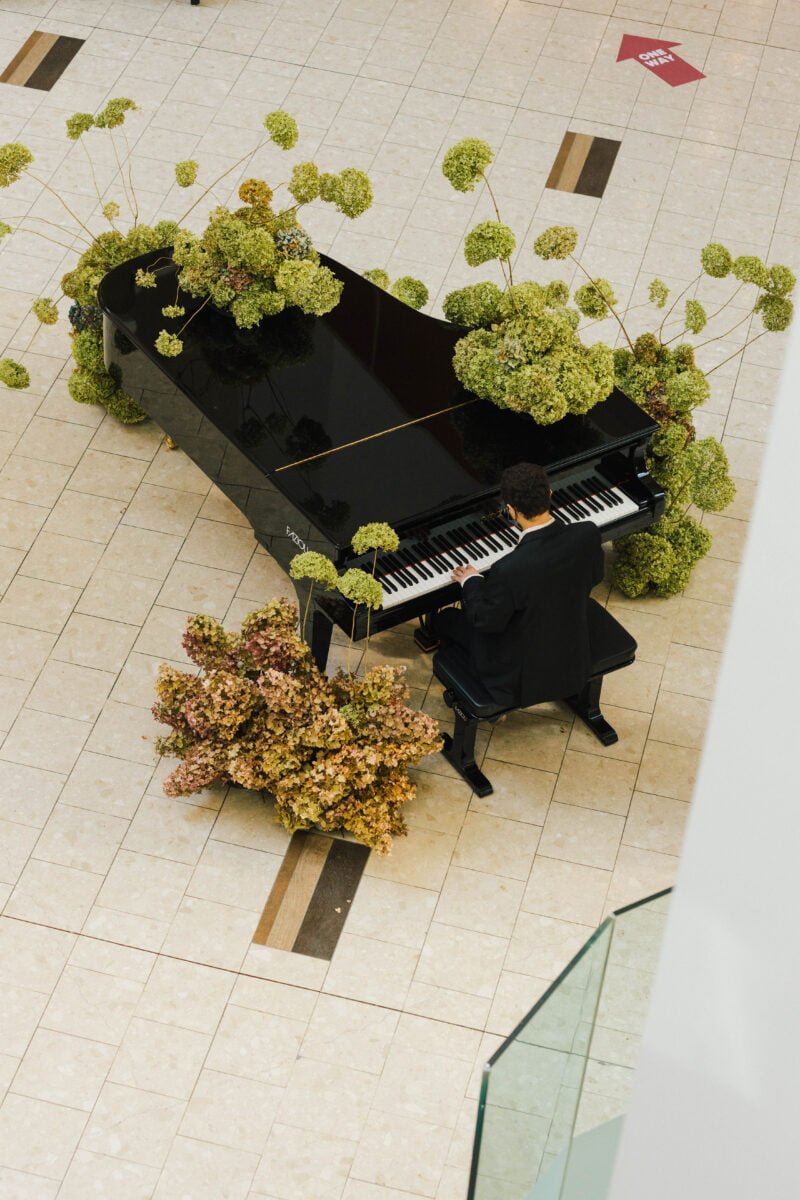
Capilano Mall – Blooming Piano (Image: QuadReal)
At Bower Place in Red Deer on September 19, a pick-up truck with local blooms was parked for the day underneath the centre’s ‘galloping horses’. Guests received a complimentary posy bouquet as well as care tips and DIY arranging instructions.
At the Capilano Mall in North Vancouver from September 16 to 19, an interactive floral piano was set up in Centre Court filling the shopping centre with the sound of music and the scent of local flowers. Guests were welcome to play the blossoming piano themselves or enjoy one of the scheduled performances taking place throughout the weekend.
At Cloverdale Mall in Toronto from September 16 to 19, guests were invited to stroll through a Parisian-inspired floral market inside the shopping centre which will eventually be redeveloped. Under a canopy, guests could choose a complimentary seasonal bouquet of local flowers, each enclosed with a QR code that directed them to a DIY tutorial as well as, information on the farm and grower.
At Marché Central in Montreal on September 19, the Centre Square was transformed into a flower “marche” that celebrated the origins of the centre with several vendor stalls.
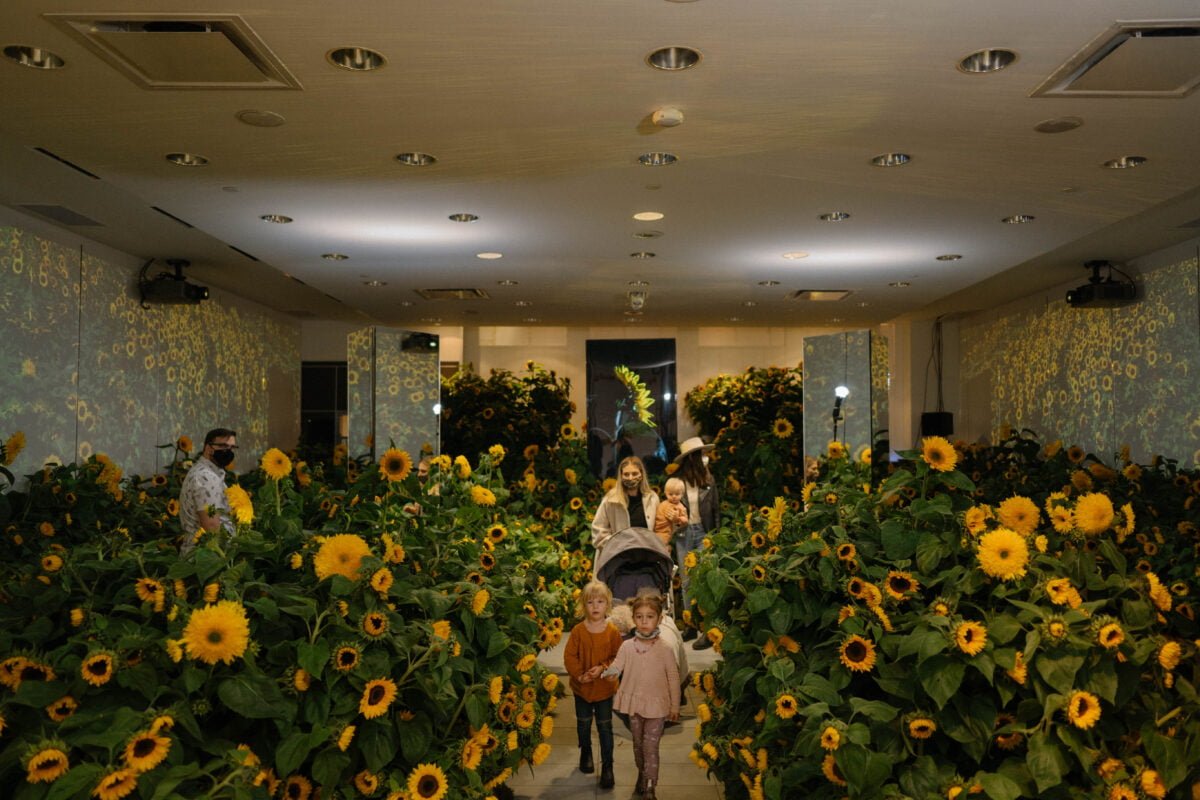
Willowbrook Shopping Centre – Sunflower field (Image: QuadReal)
At Westshore Town Centre in Victoria on September 18 and 19, an abundance of locally-grown flowers took over an architectural centerpiece at the centre. Guests were welcomed by an unexpected floral marvel by way of a Living Floral Pillar.
And at the Willowbrook Shopping Centre in Langley from September 17 to 19, guests were invited to step into an immersive floral experience that transported them into a field of sunflowers. On the last day, flower bouquets were made and distributed free to customers using the flowers from the installation.
QuadReal is also redeveloping the Oakridge Centre in Vancouver which will become a showpiece asset for the landlord, as well as a draw for the Vancouver region. QuadReal is also looking at intensifying and investing into several of its other shopping centre properties with more details to follow.
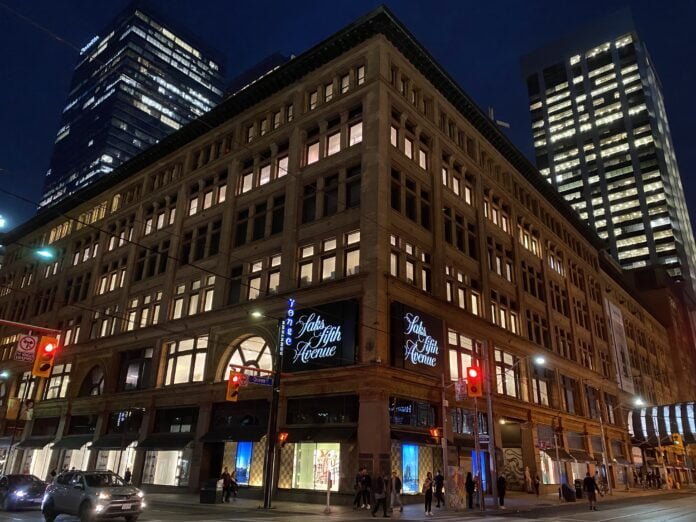
Saks Fifth Avenue at CF Toronto Eaton Centre - Photo by Dustin Fuhs
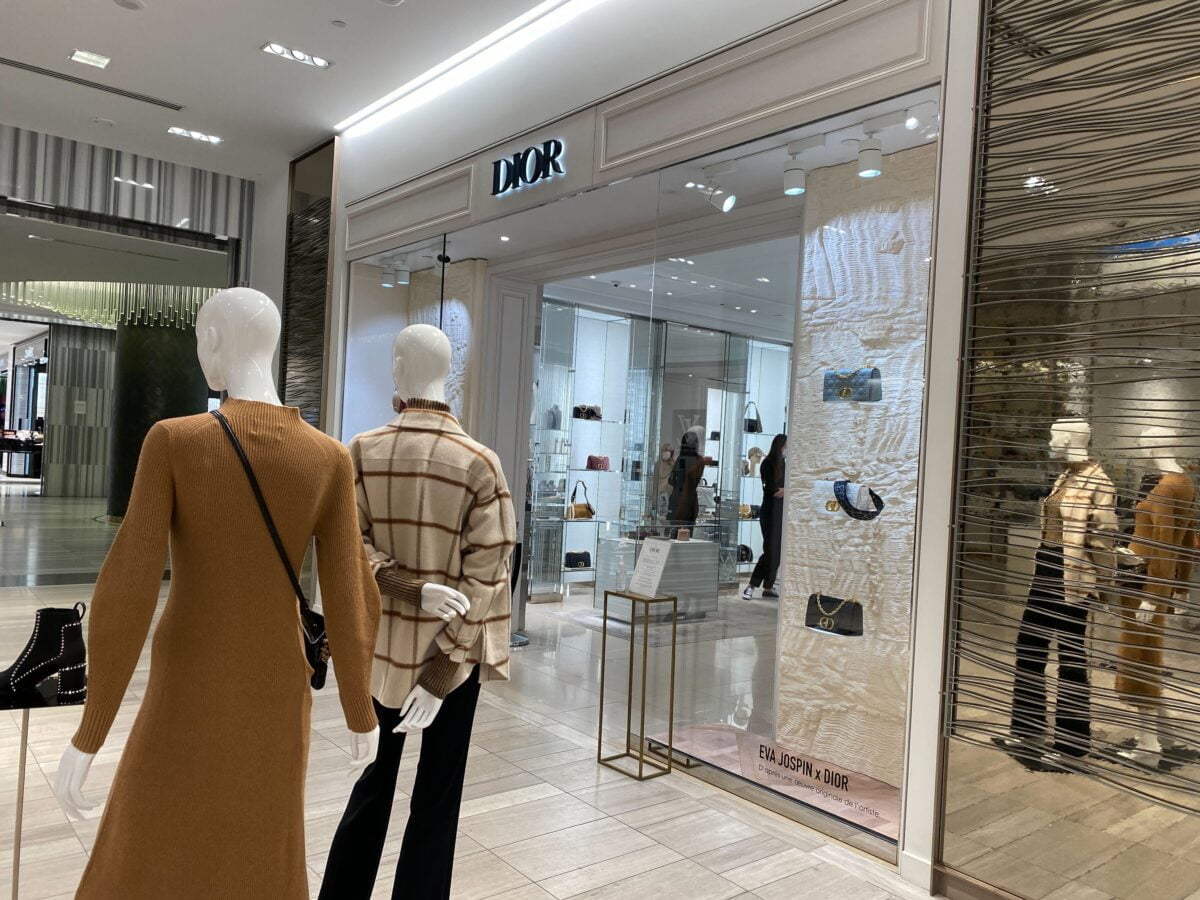
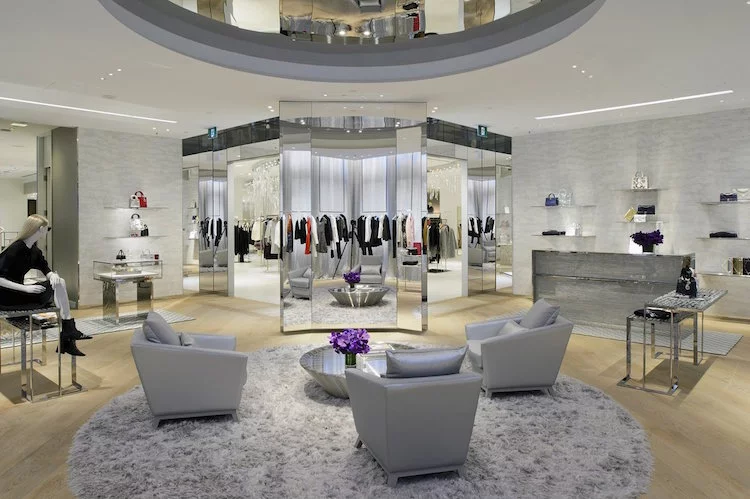
The Louis Vuitton and Christian Dior concession boutiques at Saks Fifth Avenue at the CF Toronto Eaton Centre in downtown Toronto will be shuttering at the end of December this year. Both stores have operated inside of Saks since 2016.
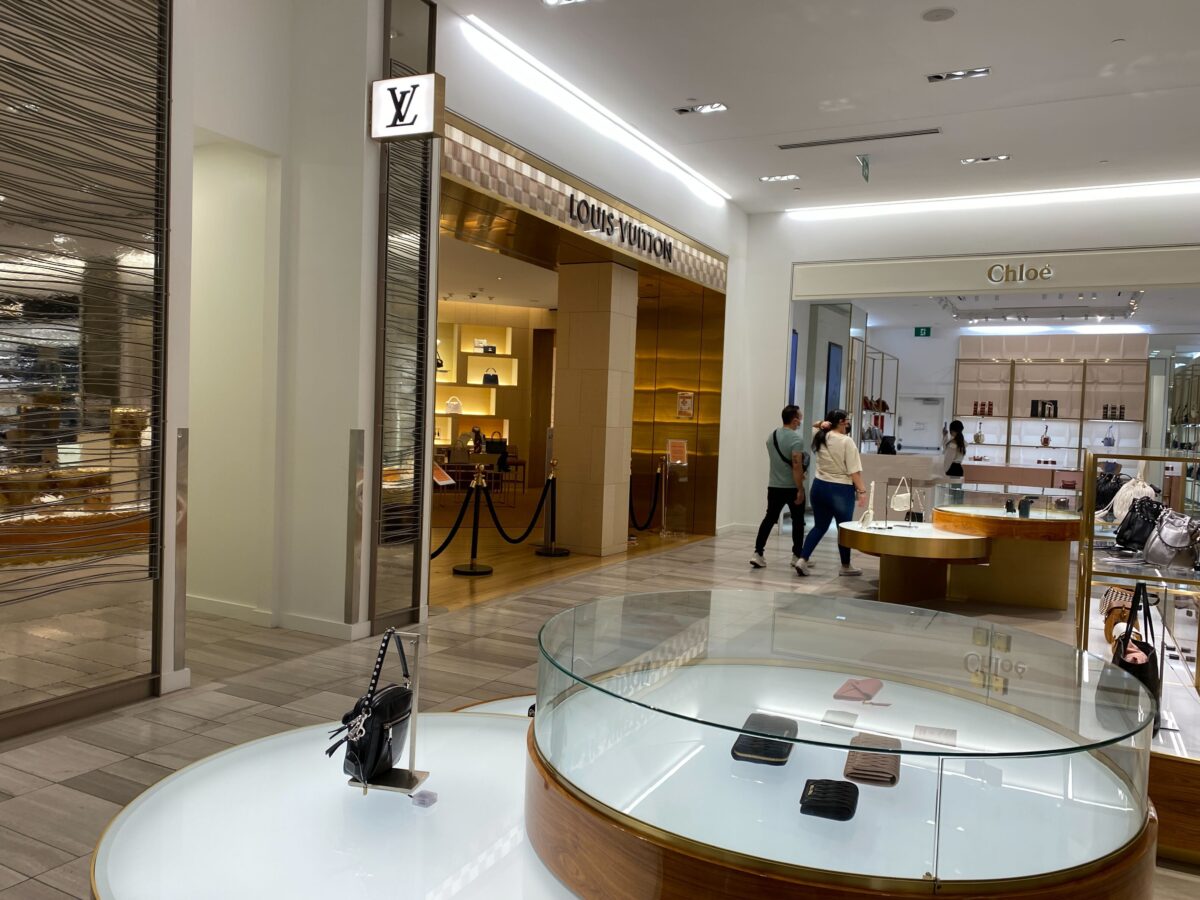
The Louis Vuitton boutique set to close in December spans about 1,200 square feet on the street level of Saks. The boutique is prominent in the store given that it has its own dedicated corner facade and windows facing onto both Queen Street and Yonge Street. The Louis Vuitton concession carries a range of bags and accessories.
Saks Fifth Avenue’s downtown Toronto store was the first in Canada when it opened to the public on February 18, 2016. The store’s main floor includes several other luxury brands in dedicated boutique spaces including several concessions. The remaining leased concessions on Saks’ main floor include Prada, Saint Laurent and Piaget while Saks also operates shop-in-stores for brands including Bottega Veneta, Balenciaga, Givenchy, Chloé, Valentino, Chopard and Birks.
DIOR in Saks Fifth Avenue at CF Toronto Eaton Centre – Photo by Dustin Fuhs Dior ready-to-wear boutique on the third floor of Saks Toronto. Photo: SaksLouis Vuitton in Saks Fifth Avenue at CF Toronto Eaton Centre – Photo by Dustin Fuhs
Since its opening, several boutiques have shut on the main floor of the downtown Toronto Saks. That includes a David Yurman jewellery boutique that operated as a concession, Boucheron which jumped ship to partner with Holt Renfrew, De Grisogono which shut its global operations last year, Australian beauty brand Aesop, and most recently French luxury brand Celine shut its main floor Saks bag and accessory boutique a few days before opening a standalone flagship at the Yorkdale Shopping Centre.
A sales associate at Saks said that the downtown Toronto store is expected to see a partial renovation beginning in 2022, including an expanded menswear offering and a related women’s footwear department. A basement-level grocery store operated by Pusateri’s Fine Foods is also in the process of reopening in phases after pandemic shutdowns due in part to low foot traffic in the office worker-dependent PATH system.
Saks Fifth Avenue also operates two other stores in Canada — in March of 2016 the retailer opened at CF Sherway Gardens in Toronto and in February of 2018 Saks opened at CF Chinook Centre in Calgary. Saks was expected to expand further into the Montreal and Vancouver markets but its expansion has been since shelved due to weak sales performance numbers.
Louis Vuitton occupies a prominent corner location at Saks with frontage on Yonge Street and Queen Street. Photo: Dustin Fuhs
In Toronto, Louis Vuitton and Dior brands are available in both standalone stores and at concessions in Holt Renfrew stores. Louis Vuitton operates two standalone stores in Toronto (at 150 Bloor Street West and at Yorkdale), as well as concessions at Holt Renfrew (at 50 Bloor Street West and at Yorkdale). Dior operates its largest store location in North America at 131 Bloor Street West in Toronto as well as a large concession space with the full Dior fashion collections for women and men at Holt Renfrew Yorkdale.
Amazon recently hosted a webinar which can be viewed on-demand online laying out the benefits of cloud-based AWS Amazon Web Services. Several retailers explain in the webinar how AWS has helped their businesses.
The webinar provides insight into the core needs of small and medium-sized retailers in particular, explaining how the cloud-based AWS provides the ability to scale, access to innovative tech, IT support as well as a cost structure that is affordable for these retailers.
Retail is seeing a shift online as the pandemic accelerates a digital transformation. Being online will be paramount to retailers moving forward as consumers increasingly search to buy goods online.
To learn more about AWS Amazon Web Services and to watch the webinar, click here.
Craig speaks with Founder and CEO of Ottawa-based Bathorium, Gregory Macdonald, about how he got started with the business and where it’s going. That includes a new Bathorium storefront at CF Rideau Centre in Ottawa, marking a milestone for the business.
The Interview Series podcast by Retail Insider Canada is available on Apple Podcasts, Stitcher, TuneIn, Google Play, or through our dedicated RSS feed for Overcast and other podcast players. Also check out our The Weekly podcast where Craig and Lee discuss popular content published on Retail Insider which is part of the The Retail Insider Podcast Network.
Drop us a line at Craig@Retail-Insider.com. You can also rate us in Apple Podcasts or recommend us in Overcast to help more people discover the show!
Background Music Credit: Hard Boiled Kevin MacLeod (incompetech.com). Licensed under Creative Commons: By Attribution 3.0 License. http://creativecommons.org/licenses/by/3.0/
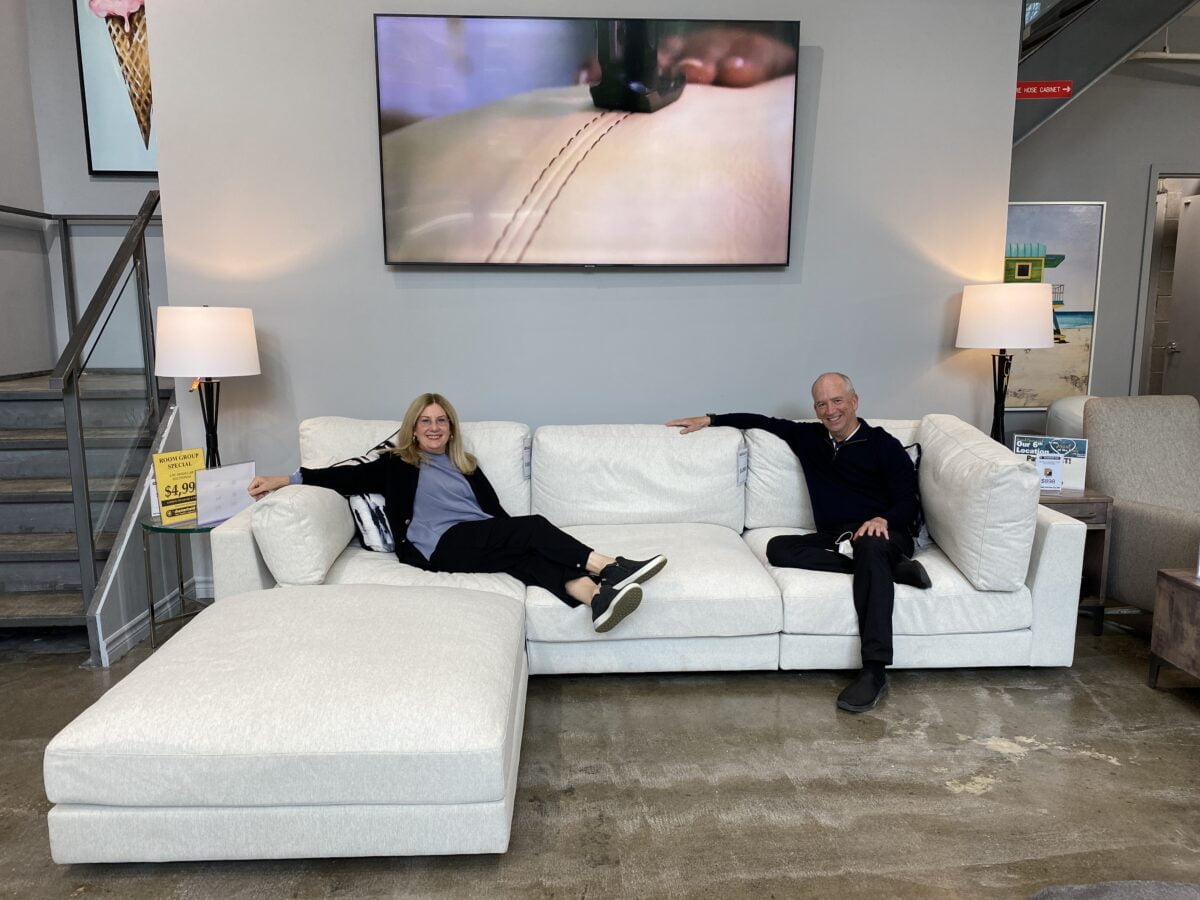
Pam and Steve Freedman, The Chesterfield Shop (Photo: Dustin Fuhs)
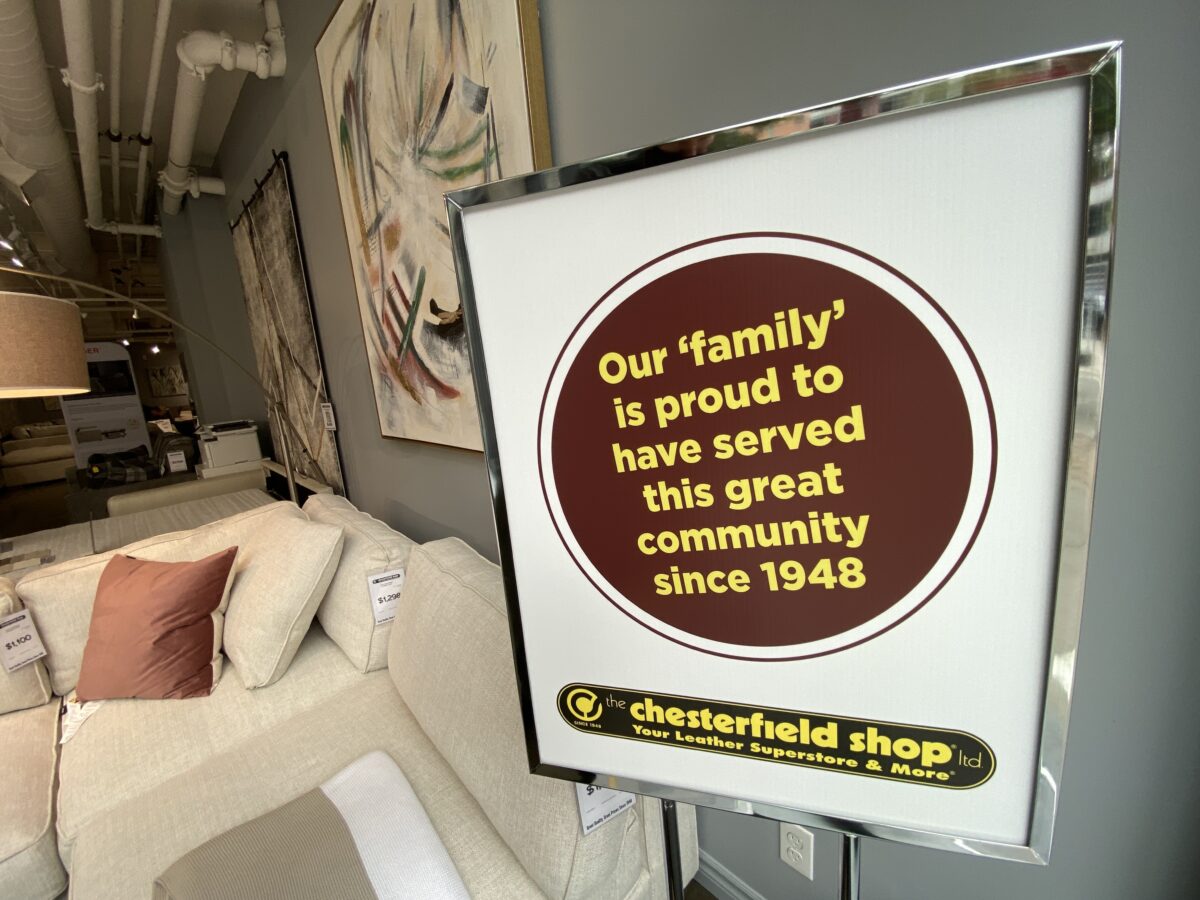
Longevity in retail. It’s a rarity in such a fast-paced industry – one that seems to present its players with constant twists and turns that add to the complexities of the landscape every day. A dedication and commitment to the operation, focus on market changes and trends, ability to make shifts and pivots necessitated by economic forcing functions, and willingness to adapt and evolve are all elements required by any business seeking success over any length of time. To sustain similar results that span decades, however, seems to demand a whole host of qualities, both tangible and intangible. One such company that’s managed to achieve consistent success over an extended period of time is family-owned furniture store, The Chesterfield Shop. The retailer is on the verge of celebrating 75 years of operation. And, according to its President, Steve Freedman, the brand continues to adhere to the foundations of customer service and quality that it was built on nearly three quarters of a century ago.
“One of the most important things that we’ve done in order to sustain our success and reputation through the years is consistently ensuring that we’re operating with respect for our staff members, suppliers and our customers,” he says. “It’s a philosophy that drives just about everything we do. It ensures that everyone at the company is focused at keeping customer-service at the forefront of our operation. We’re currently serving third generation customers of the store – the result of ensuring constant focus on the customer’s needs and providing friendly, knowledgeable service from sales consultants, helping them find the piece of furniture that will compliment their home and their lifestyle. And, because we’ve always been a smaller hands-on company, it’s allowed us to adapt to changes in the marketplace and continuously evolve with changes in furniture fashion in order to consistently provide fresh product of the highest possible quality.”
Pam and Steve Freedman, The Chesterfield Shop (Photo: Dustin Fuhs)The Chesterfield Shop Grand Opening at 275 King Street East (Photo: The Chesterfield Shop)
The Chesterfield Shop operates six showroom locations throughout the Greater Toronto Area, specializing in an unsurpassed selection of seating products for the home, boasting items within a range of categories that include sofas, sofa-beds, sectionals, chairs, recliners, recliner furniture and theatre seating, in addition to a collection of accessories and accent pieces. Through dependable service and offering, the brand has been able to cultivate and nurture trust among its community of customers and a reciprocation of the respect that it prides itself on. It’s a focus that Freedman, who’s been running the business with his wife Pam for the better part of 40 years, believes is critical. And, he adds, part of that focus has included a need to digitize the business in order to remain relevant.
“There have been so many changes that we’ve experienced running the company through the years,” he recognizes. “But there have been more changes in the last couple of years than there were in the previous 36 or so years that I’ve been doing this. The advent and strength of things like social and digital marketing have been hugely impactful. The digitization of the world around us has forced so much evolution, and it continues to move at breakneck speed. It’s influenced us and others within the industry to make sure that we provide and constantly enhance our ecommerce capabilities and internet presence, and that we’re reaching and engaging our customers on the channels that they frequent. And, it’s also opened up opportunities to reach customers that might otherwise be unfamiliar with our store and the product that we offer.”
In addition to ensuring adaptability in order to shift and pivot in response to the latest changes in technology and other factors influencing the retail operation, the Freedman’s also need to constantly educate themselves with respect to the product that they offer, maintaining a deep understanding of the market and current trends. It’s a part of the process that Freedman says is challenging and constantly evolving, but adds that listening to the customer and keeping on top of all of the latest in furniture fashion allows the company to regularly ensure that it offers the latest styles and most relevant pieces available today.
The Chesterfield Shop (Photo: Dustin Fuhs)
“One thing that I realized when I took over the business was the fact that each one of our locations has a unique personality and client-base,” he says. “The products our customers are looking for in our Newmarket store differs from our downtown Toronto store, our Scarborough store and our Mississauga store. The styles that people are looking for are slightly different at each location. In order to properly address this, I rely heavily on my store managers. Together, supported by continuous communication, we’re able to stay attuned to the needs and preferences of our customers in each market and submarket that we serve. Ensuring this happens on a consistent basis requires a lot of effort and continuous education on our part.”
Managing the business and ensuring this kind of hands-on approach is something that presents challenges during the best of times. However, as is the case with most other things, the COVID-19 global pandemic has exacerbated these challenges while also presenting new ones. It’s been difficult to maintain buoyancy throughout the course of the past 18 months, admits Freedman. However, rather than succumb to the pressures of the situation that the business faced, it instead saw an opportunity to pivot and shift, enhancing elements of its offering and doubling down on the principles that have helped make The Chesterfield Shop what it is today.
“It’s been an extremely interesting time to be in business,” he says. “We were closed something like 240 days out of 410 during the various lockdowns. And every time we’d open up again, business would roar back. It’s been a bit like managing a roller-coaster, which has come with its own challenges. To address some of the challenges, we’ve pivoted in a number of different ways. We refreshed our website to be a little more interactive. We also decided to start doing in-store appointments in order to make customers feel a little more comfortable about visiting the store. And we also started doing virtual appointments during the lockdowns. Beyond these measures, which were meant to maintain our engagement with our customers, we became much more focused on our relationships with them.”
In addition to challenges presented by the pandemic, Freedman also recognizes further challenges on the horizon, including a current shortage of talented warehouse labour, continued lockdowns in regions and countries around the world, as well as a lack of skilled truckers within the trucking industry, impacting transportation and the flow and delivery of products. However, it’s the more holistic issues around the global supply chain that are most worrisome, he says, causing massive problems for retailers everywhere that depend on its reliability.
The Chesterfield Shop (Photo: Dustin Fuhs)
Image: The Chesterfield Shop (1956 Advertisement)
“There are shortages of raw materials that are resulting in tremendous price increases for offshore containers,” he asserts. “And, even though we don’t receive any finished product from offshore, a lot of the fabrics and furniture mechanisms that we need have been held up at ports. There are so many balls up in the air, causing a lot of disruption with respect to the supply chain today, resulting in stresses on the entire industry. In order to address these challenges, retailers have got to apply unique and thoughtful approaches to the issues that will enable them to continue offering the value and selection that customers have become used to.”
Despite the challenges of the past year-and-a-half, which continue to persist, Freedman is optimistic about the future and the opportunities that will be available to retailers and other businesses to engage with a returning consumer. He believes that a reopening of communities and economies, combined with a consumer who’s experiencing a pent-up desire for tangible interactions and experiences, will provide the perfect setting for success for many. And, with respect to the future of The Chesterfield Shop, he’s confident that, after nearly three quarters of a century of business, there remain plenty of areas for growth.
“With the type of company that we’ve built through the years, we have the opportunity to grow the business even further. We love what we do, and I certainly don’t want to lose the genuine and deep connection that we enjoy with our staff and customers. But there are some really great growth opportunities in markets that we don’t currently serve, like Barrie, Burlington, Kitchener-Waterloo, as well as other regions that might welcome one of our locations. Expanding in this sense means that we don’t need to stray too far from our home base, while broadening and extending our reach and presence. As long as we can continue to build our team with really great people, then anything is possible. Our staff is extremely important to us and the real driver behind the success of The Chesterfield Shop, and will continue to be critical in supporting our achievements going forward.”
“Since the start of the pandemic, several restaurants have closed their doors. Is it really that bad for the consumer?”
A question that often comes up is, did we have too many restaurants before the pandemic? Many wonder if the pandemic has only wiped out the restaurants we had “extra” of. With the labour shortage, the cost of food ingredients exploding, and the list of regulations growing almost every year, making a restaurant profitable has become a difficult task. Certainly, the pandemic has presented a golden opportunity for the industry to reflect on its future.
Before the pandemic, restaurants were in their glory years, literally. Compared to 20 or 30 years ago, going out to eat was routine for many of us. Canadians spent an average of about 35% of their food budget on restaurants, and the sector was on the verge of exceeding $100 billion in sales per year. But in March 2020, everything changed. According to Statistics Canada, there were approximately 65,000 restaurants at the start of 2020. That number is probably around 40,000 to 45,000 today. No one is quite sure, but this approximation seems fair enough.
Even if the sector has recorded less than 30 bankruptcies in total since the start of the pandemic, many have simply abandoned the industry. Despite the difficulties created by the pandemic, the sector is running at about 82% of the capacity it had before the pandemic, according to Statistics Canada. Households are no longer spending 35% of their food budget at restaurants, as they were before the pandemic. Now that percentage is more around 27% or 28%. In April 2020, at the heart of the first wave, this percentage barely reached 9%. But in August of this year, several restaurants had a historic month with record-breaking sales.
However, the sector is still not out of the woods. Managing a restaurant after the pandemic will not be easy. According to a recent report from Restaurants Canada, the nation’s leading foodservice lobby group, nearly half of foodservice operators plan to increase menu prices by 4% or more over the next year. One in five establishments expects to increase prices by at least 6%, and several have already done so. The cost of food is becoming a real problem not only for consumers but for restaurant owners as well.
The labour shortage, which existed before the pandemic, has only worsened since. Over the next year, it is predicted that 42% of restaurants will experience an increase in the number of vacant positions, and more than 53% plan to increase their employees’ salaries in the coming months. It’s great news for restaurant workers, who certainly deserve it, but someone will have to pay for it all.
These macroeconomic factors will make it difficult for the sector to go back to its 65,000-restaurant mark. For households, restaurant visits (now with higher prices) will certainly be less frequent. The 35% portion of the family food budget allocated to meals eaten out before the pandemic is not coming back anytime soon.
Of the more than 15,000 to 20,000 restaurants that disappeared during the pandemic, some were excellent, leaving behind an incredible legacy for their customers. It’s sad to see many of these independent and family restaurateurs forced to abandon ship. But in truth, the pandemic also acted as a purgatory by eliminating several restaurants which lowered the quality of the sector. Food safety issues, food fraud, you name it. Some were already heading for closure and would have gone out of business, whether there was a pandemic or not.
Most large chains that enjoy superior financial and strategic support emerged from the pandemic almost unscathed. By some estimates, while the big chains were closing about 10% of the restaurants in the network, Canada was losing almost 50% of its independent restaurants. Most of the innovations we have seen as consumers have come from independents. Sushi dishes as well as Korean, Mediterranean, and Ethiopian cuisines all came from independents at first. Big chains, on the other hand, offer us restaurants that are all alike and serve pretty much the same food from the same suppliers with only a few subtle differences.
The issue that deserves special attention is not how many restaurants we need to support our economy, but rather what kind of restaurants we need. We may have too many restaurants offering the same dishes. Our culinary identity will slowly be lost without all these chef-restaurant owners who will no longer be there to make us eat creative and tasty dishes inspired by market and local products.