Ditta Artigianale, Italy’s preeminent artisanal coffee roaster, is expanding its footprint from three stores in Florence to add its first North American location in Toronto.
The Toronto flagship location will be opening in the Garment District at Richmond Street West and Bathurst Street West – which has seen huge development in the past five years with more to come.
Francesco Sanapo
The brand was founded in 2013 by Francesco Sanapo, a world-renowned barista and roaster, and Patrick Hoffer.
“Opening Ditta in Toronto is a dream come true for me. When I created the Ditta Artigianale concept, I always thought it would become an international company featuring a fine Italian touch and showing the world a new wave of Italian coffee. This is a big opportunity for me, for Ditta, for Italy, showing and sharing the high quality of Italian specialty coffee. I cannot wait to serve Ditta’s coffee to the people of Toronto,” said Sanapo, who is the company’s CEO.
“You can’t imagine how excited I am to spread my coffee in Canada, in Toronto.”
The new cafe will be located on the ground floor of The Harlowe condominium apartment building and will be open for coffee, pastry, brunch and signature cocktails in the evening.
Image: Ditta Artigianale
And the company plans to open new locations in Canada and the United States in the future.
You could say coffee is in Sanapo’s blood. He is the personification of coffee, winning Italy’s best roaster in 2019 and twice being a finalist in the World Barista Championship. His love has spread to the current staff who have won four Italian barista championships.
Staff from Toronto will have the opportunity to train in Florence to ensure the same rules and protocols are followed across the pond making for an experience equal in quality.
The new cafe will open its doors in the spring of 2022 and aside from being open during the day for coffee and brunch fare it will also radiate at night as a slick cocktail bar featuring Peter in Florence, Italy’s first Tuscan-made artisanal gin founded by Ditta’s co-founder Hoffer.
The Harlow (Rendering: LAMB DEV. CORP)
Alexander Zeleniuch
Alexander Zelenuich, the company’s Chief Operating Officer, said the company has built a really strong base in Florence and pre-COVID Florence was hopping with tourists and students – a big part of the customer base – with many of them from North America.
“In Canada and the USA, it’s common to go to a coffee shop and work and socialize, hang out. That didn’t exist in Florence and was very rare in Italy. And so that’s why we had so much success here,” he said. “What we realized is that there would probably be demand for this kind of model outside of Italy, especially if we hit the Italian notes just right. So we keep it within specialty coffee but with an Italian touch.
“One of the major points that makes us unique compared to some of the other peers out there in the field is we also have a sister company if you will that’s a separate company but it’s a gin company, and it’s an artisanal gin company called Peter in Florence and it’s produced 30 minutes outside of Florence. We grow 10 out of the 14 botanicals that we use to distil the gin.
“And what makes Ditta really special is that given we’re paying rent 24 hours a day most coffee shops close at 5 or 6 and that’s it. They just do coffee, maybe some light bites. We said well we have this gin company, why don’t we turn it into an aperitivo bar. We don’t need to stay open all night. We don’t need to do dinner service. But let’s keep the same quality we have for coffee and apply it to cocktails. When I joined I thought something like this would drive in North America. It’s logical to move there because there’s demand for specialty coffee, there’s demand for craft cocktails and it’s all with a very Italian soul and Francesco is the heartbeat behind that soul.”
Zelenuich said the company’s expansion plans are quite ambitious to scale in the next few years. There is still room for growth in Florence. Then from there it’s focused on Toronto to open a few more there and in Canada.
Ayana Miller, operating partner of Ditta Artigianale Canada, said the company is looking at about five locations in the GTA first, mirroring the same strategy as what it has done in Italy with Florence as the base.
“Really building momentum in a certain area and creating the foundation that’s very strong and then expanding outwardly in Canada as well. There is also plans of opening a location in Los Gatos, California too, right in the Silicon Valley, which is also known for its love of coffee,” said Miller.
Ditta Artigianale – Via Carducci
Ditta Artigianale – Via dello Sprone
Ditta Artigianale- Via de Neri
“What brings that unique twist to Ditta is that it has that Italian soul even if you look at the design of everything, the intention behind everything. This special vibe, this dolce vita, that Ditta Artigianale holds has spoken to so many that we have an association with the luxury brands such as Dolce & Gabbana and Brunello Cucinelli in terms of the Peter in Florence gin.”
Ditta brings high quality coffees to Italy and the world with a focus on total transparency and sustainability throughout the supply chain. The brand’s philosophy is based on researching the most exclusive micro-lots, establishing direct relationships with producers and engaging in special roasting techniques to give consumers a unique, quality-orientated experience, said the company.
The company said the concept was inspired by the third wave roaster movement, displaying coffee as another example of exquisite Italian craftmanship.
“I want to protect my company to grow up in a really good way, in a healthy way. That’s the reason why we haven’t opened up yet in Milano or in Rome,” said Sanapo. “Just because I’m protecting the growth of my company.
“As a coffee lover, more than expert, more than everything, what I want to keep always on my way to spread out coffee is every coffee I serve I want to make richness. This can appear in very simple things, but that doesn’t happen very often. I spend part of my life travelling to find the best coffee.”
Jackson Turner of CBRE negotiated the Ditta Artigianale lease deal on behalf of the brand.
Ren's Pets at Liberty Village Grand Opening (Photo: Ren's Pets)
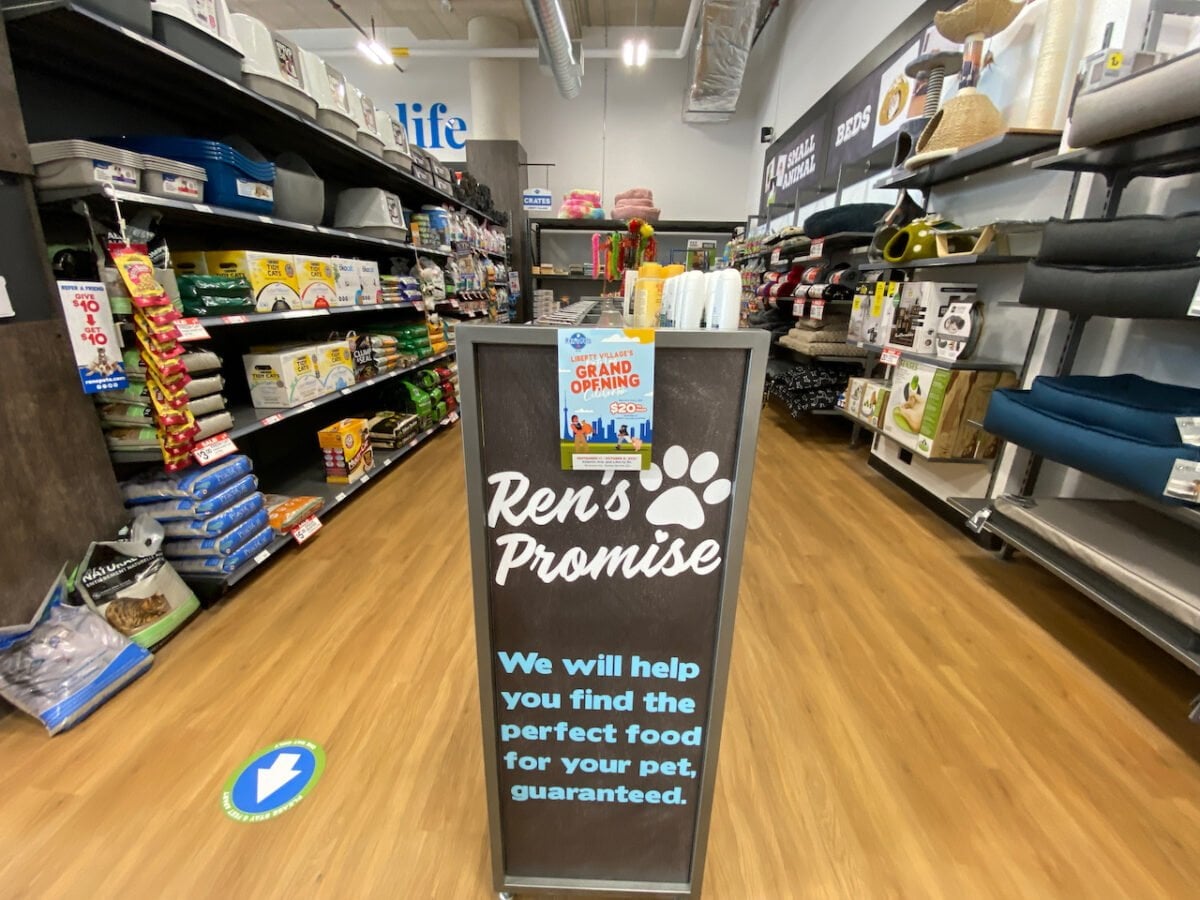
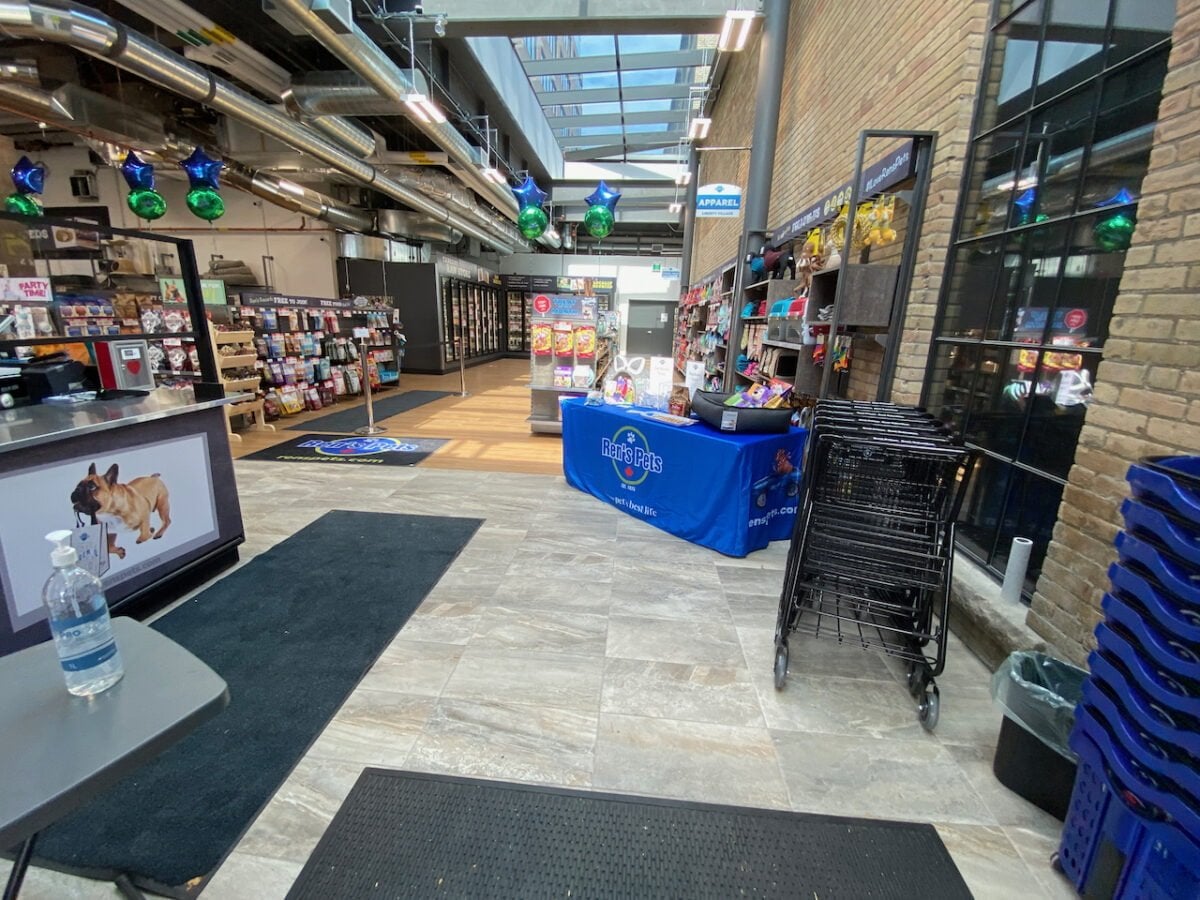
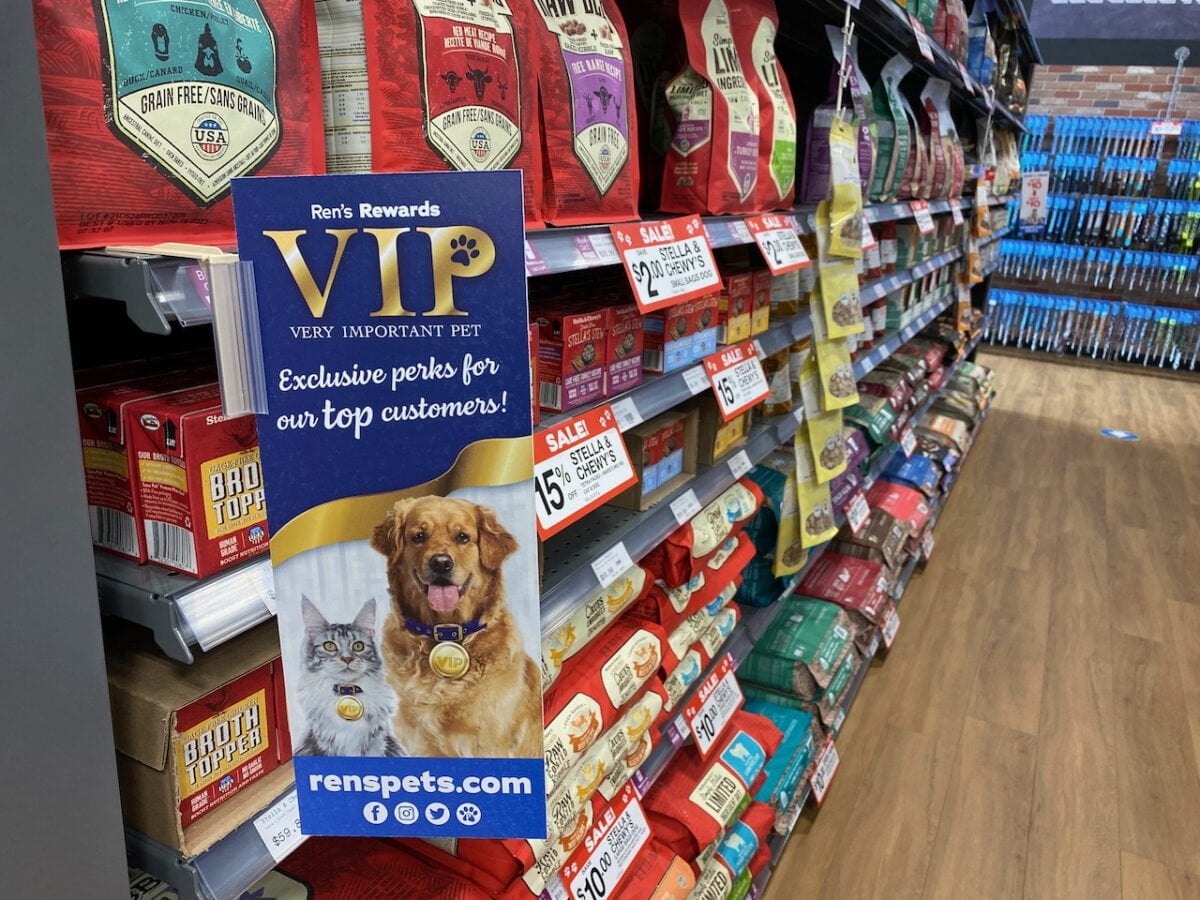
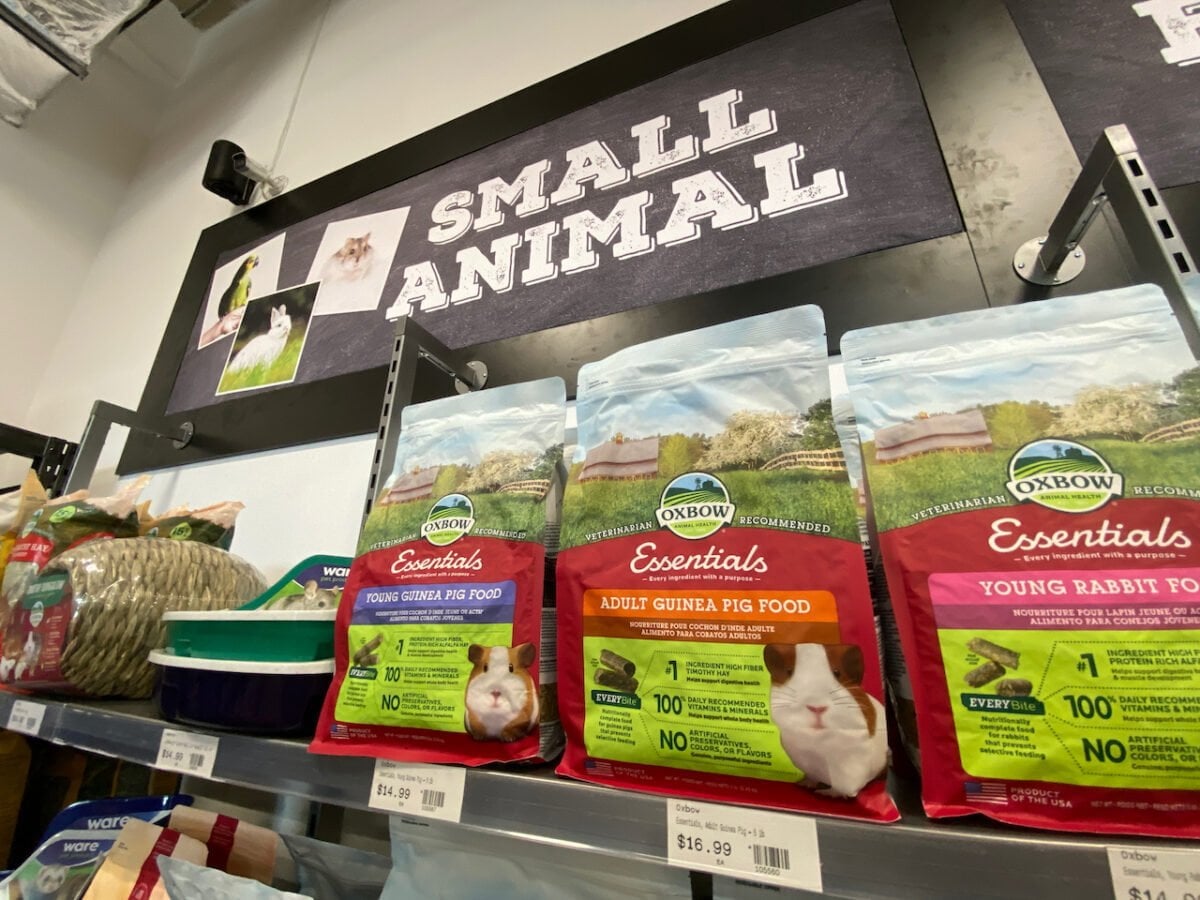
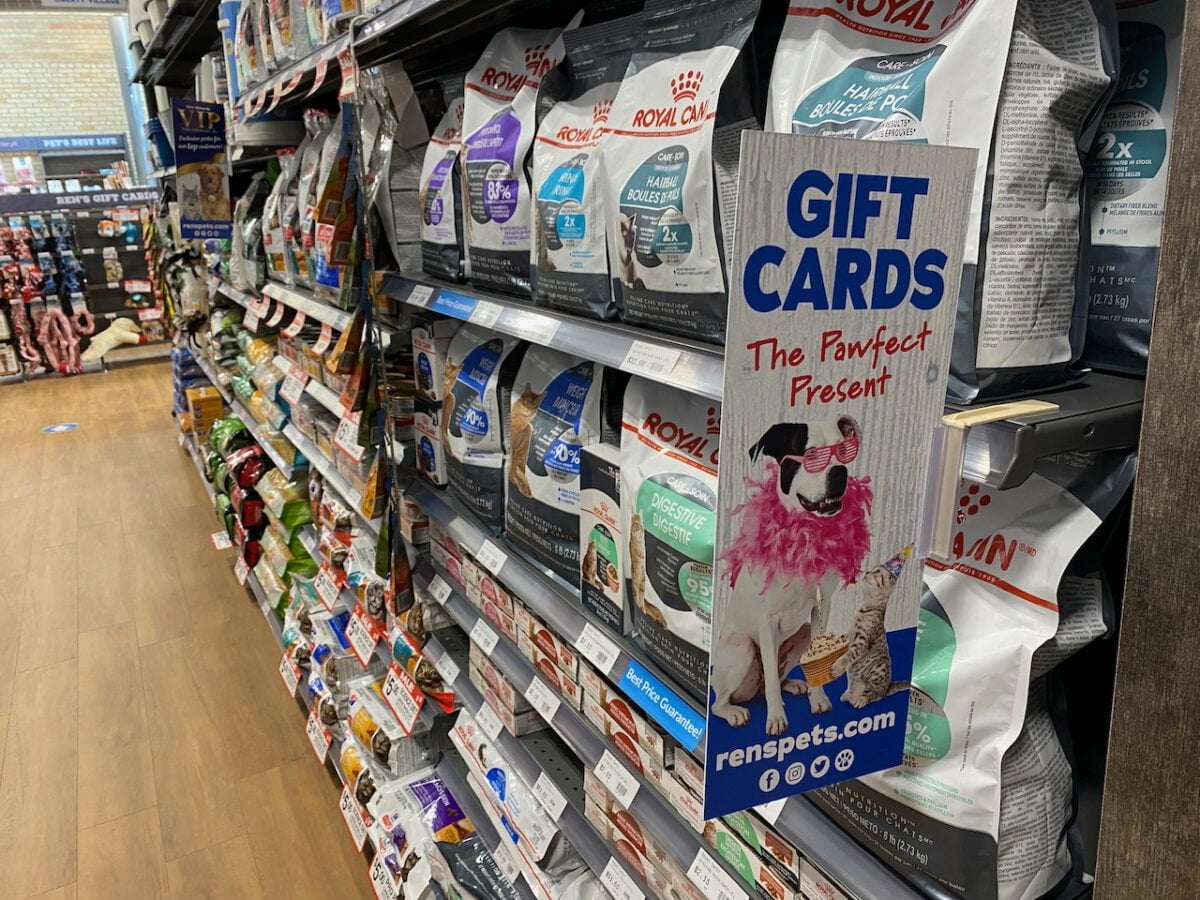
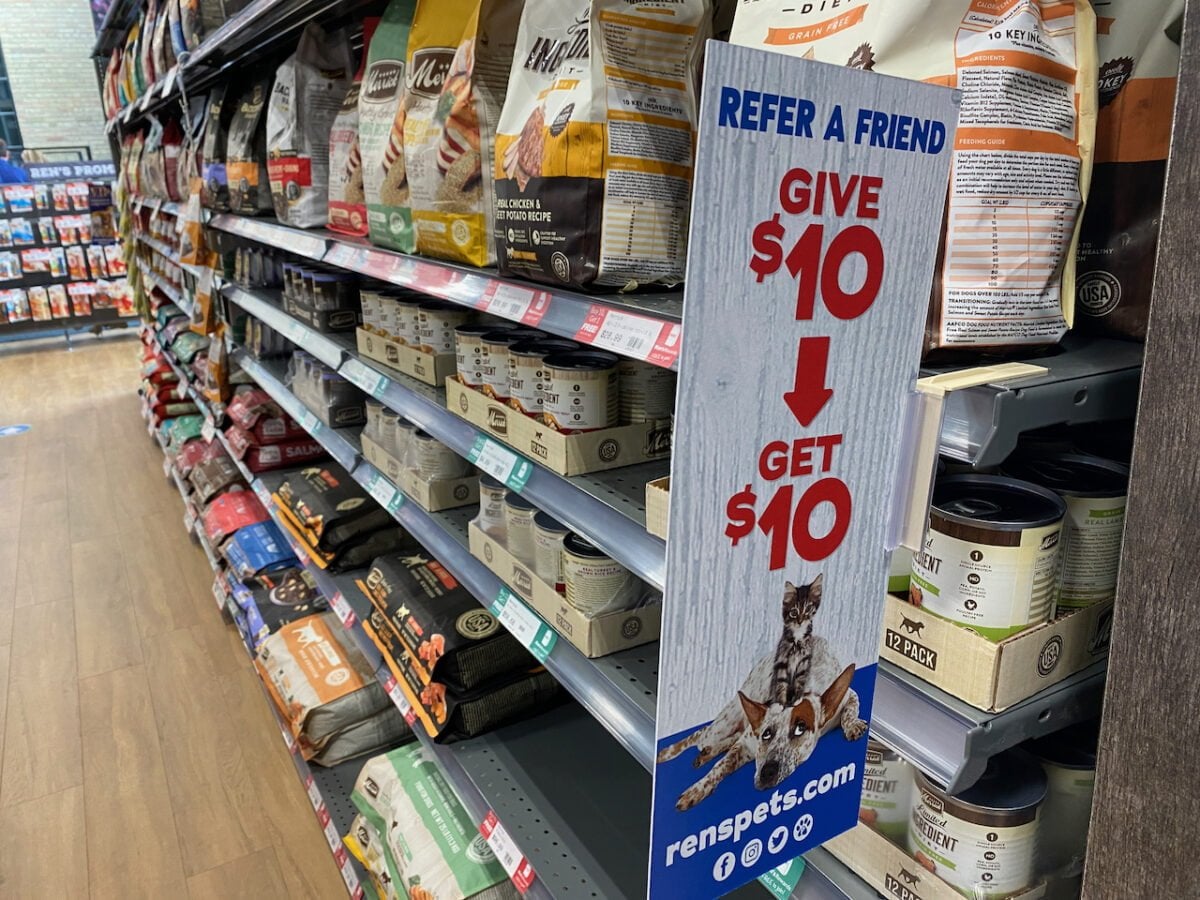
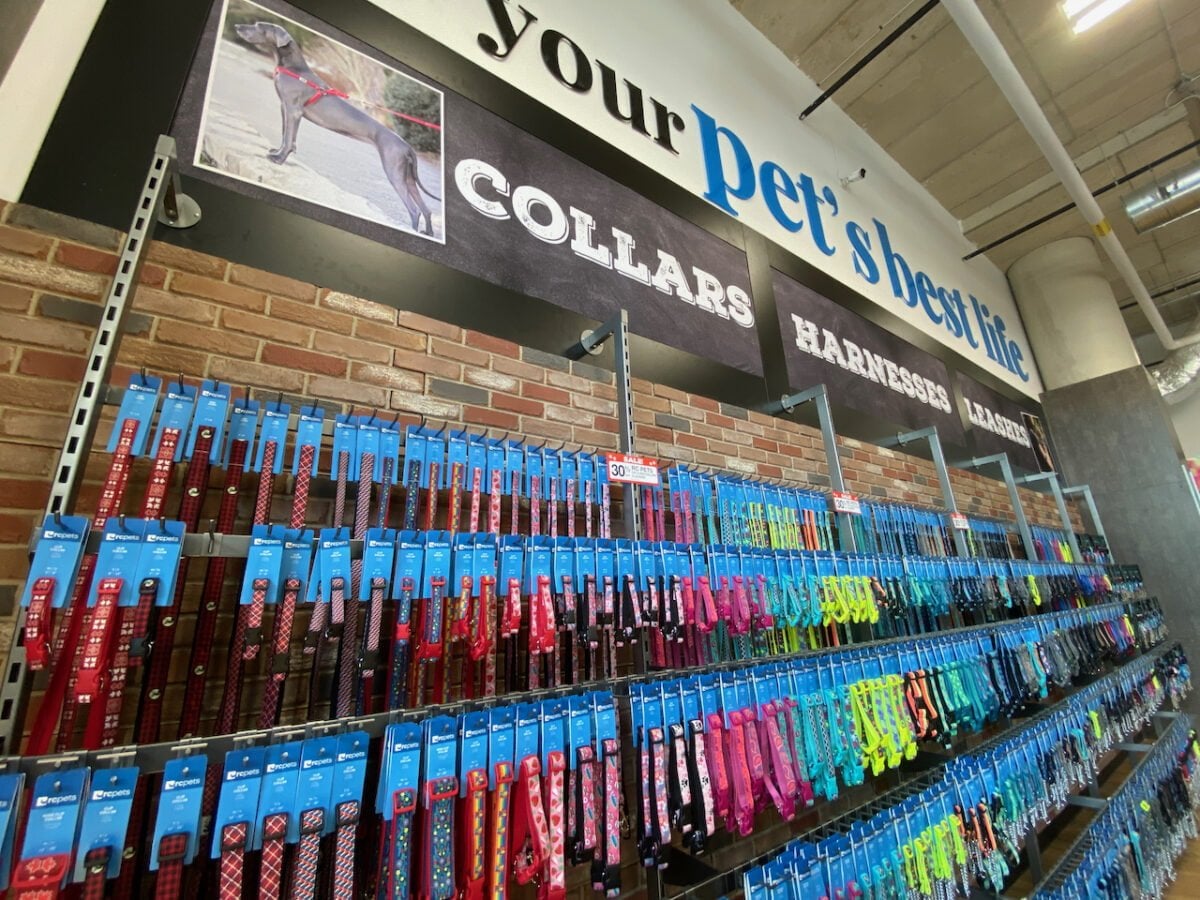
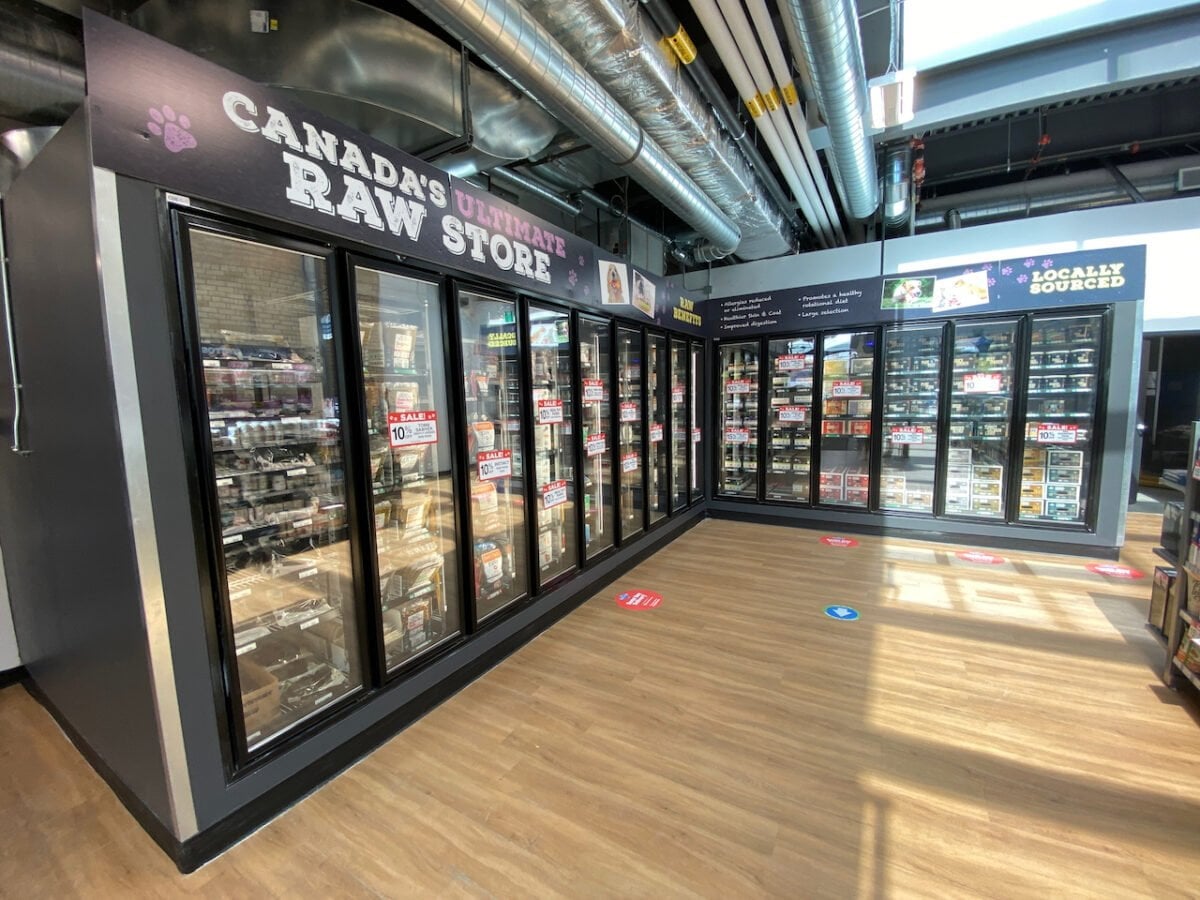
Ontario-based specialty pet retailer Ren’s Pets has opened its newest location in Toronto’s Liberty Village area, with more openings on the docket for the near future.
Liberty Village marks the 36th store in the chain, which was recently acquired by Quebec-based Legault Group. Legault also owns the Mondou chain of stores which is based entirely in Quebec.
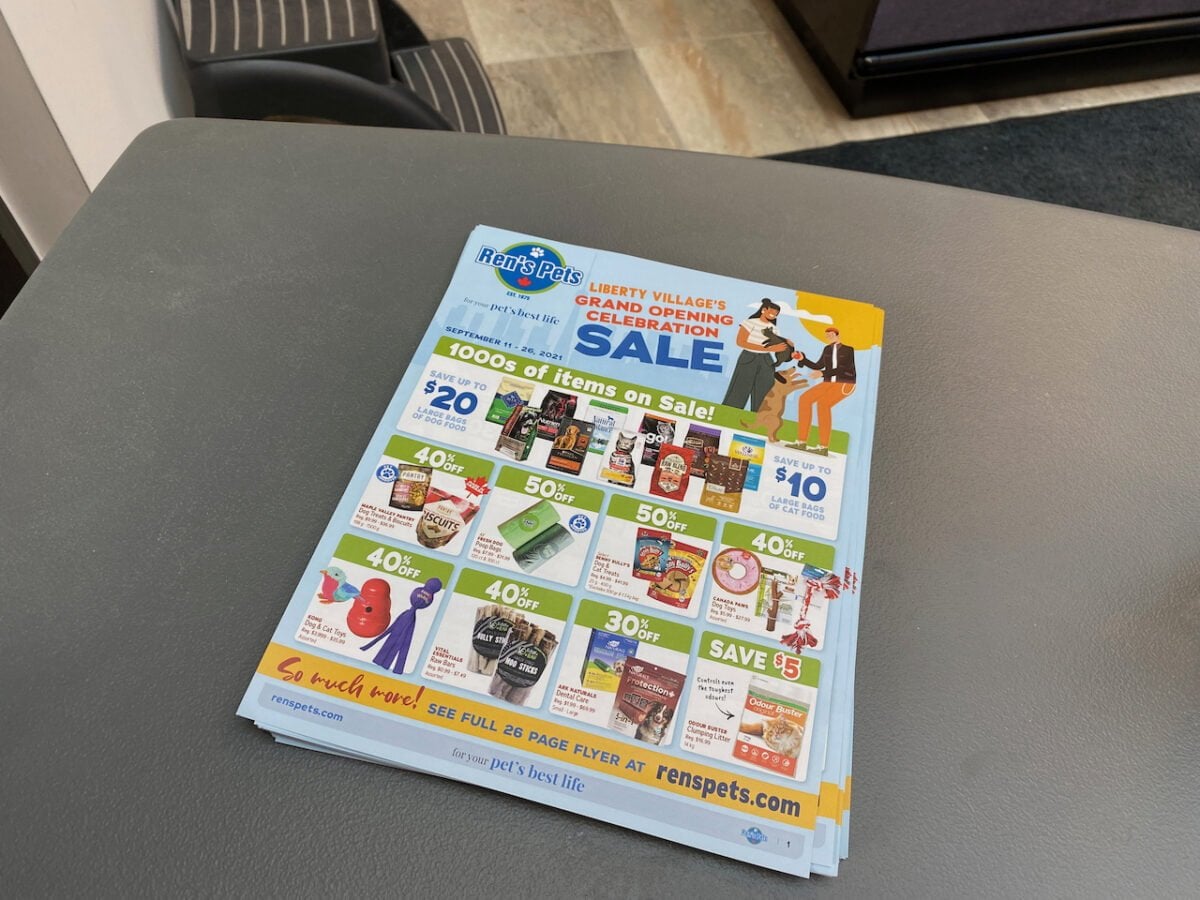
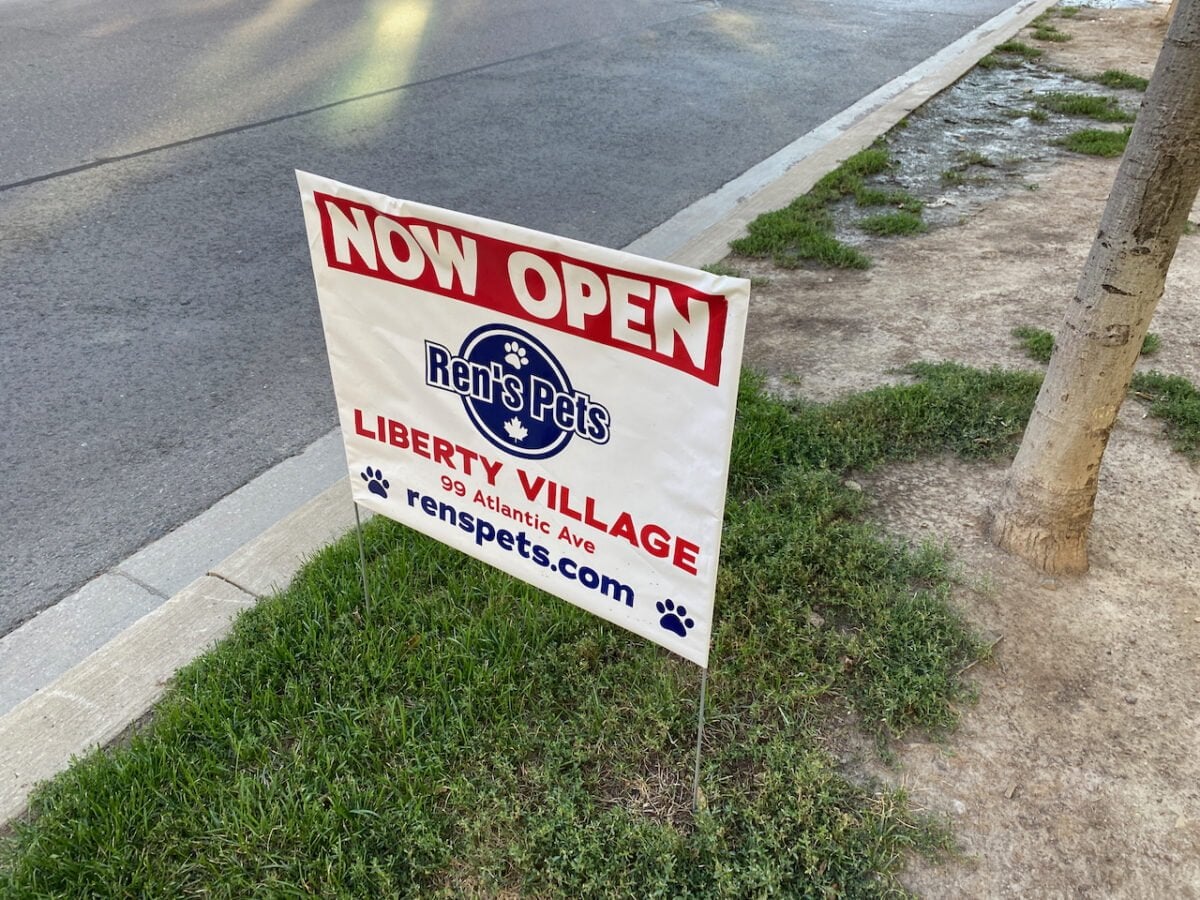
Retail Insider was in attendance of the grand opening of the new store at 99 Atlantic Avenue this month. The event included representatives from Ren’s Pets, the Legault Group, in addition to a number of national suppliers and industry partners.
Ren’s Pets at Liberty Village (Photo by Dustin Fuhs)
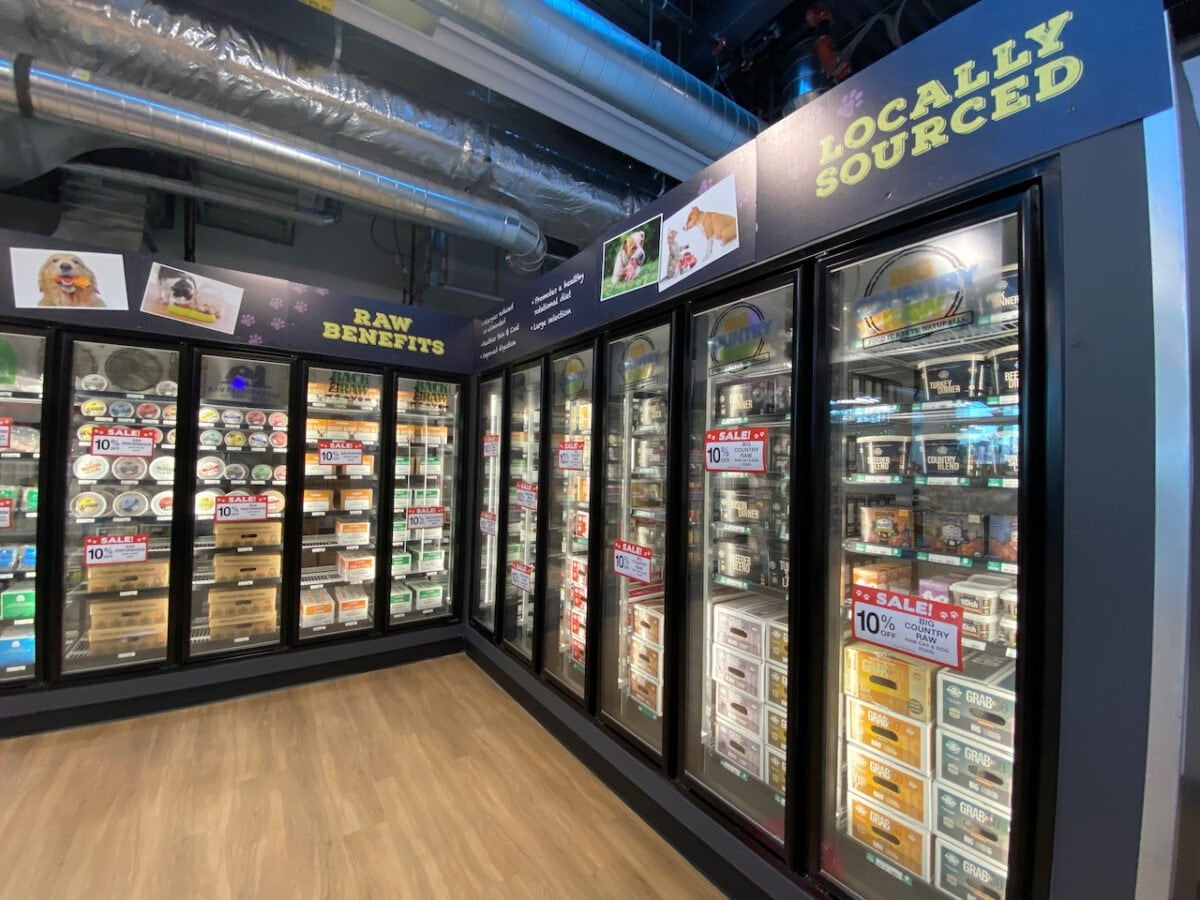
“The urban concept is very exciting for Ren’s,” said Larissa Wasyliw, VP Ecommerce & Marketing at Ren’s Pets. “It allows us to introduce a smaller footprint store into more densely populated markets where there is a big pet community, leveraging our ecommerce capabilities.”
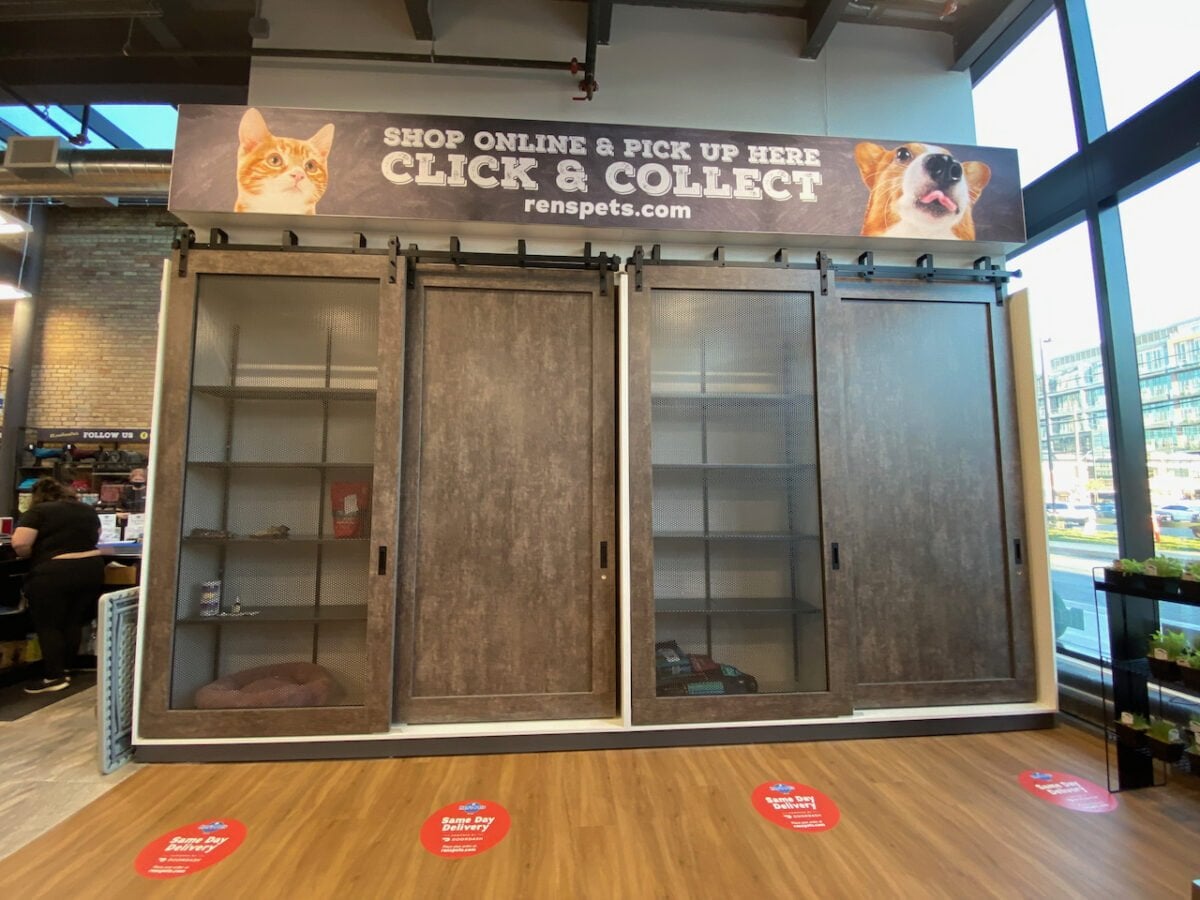
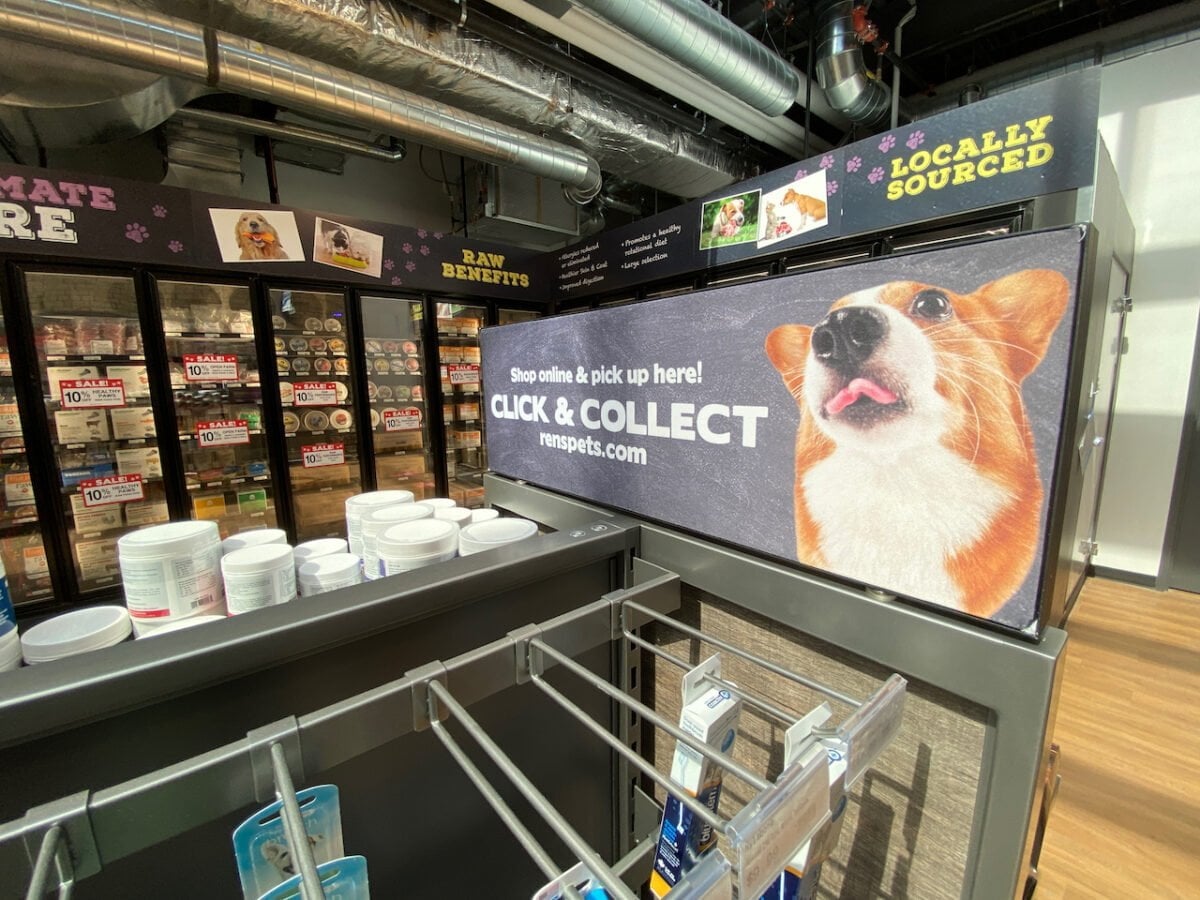
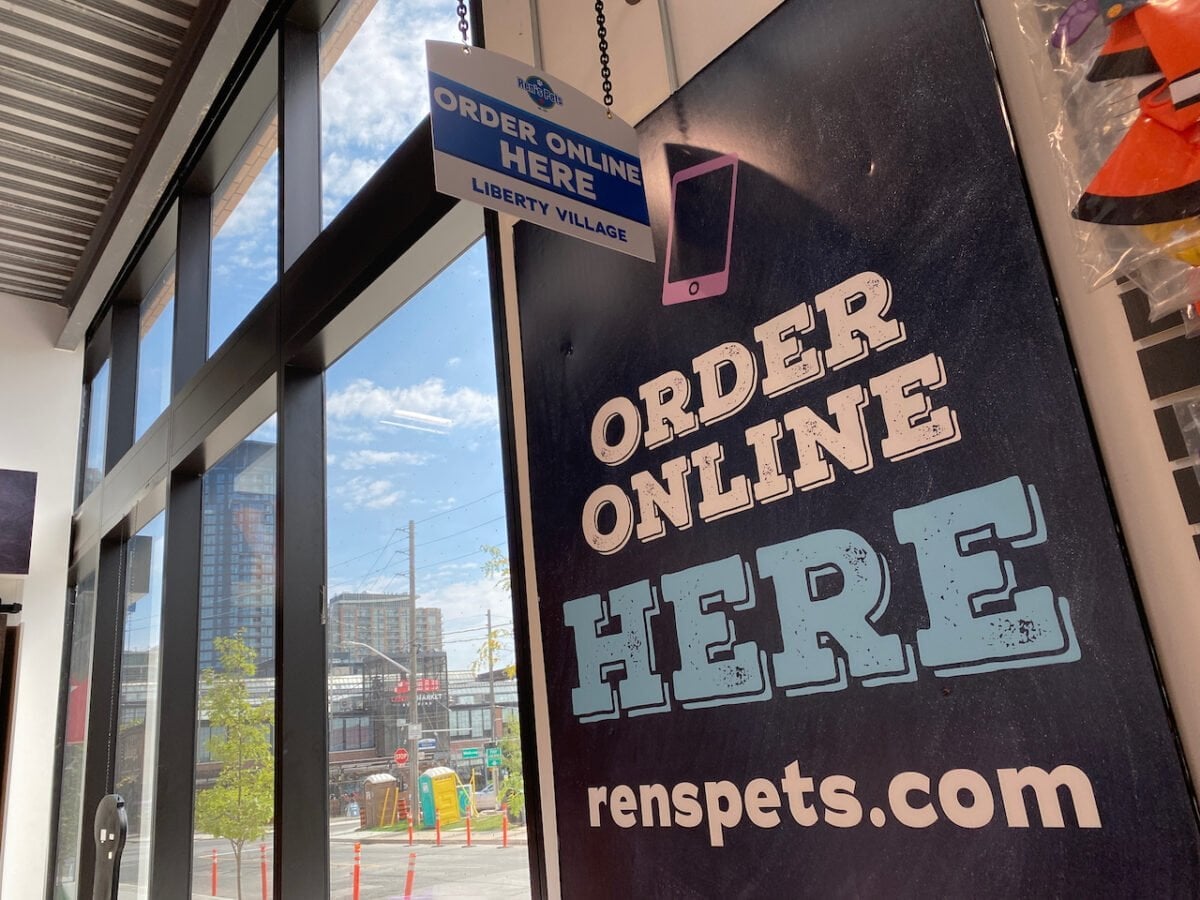
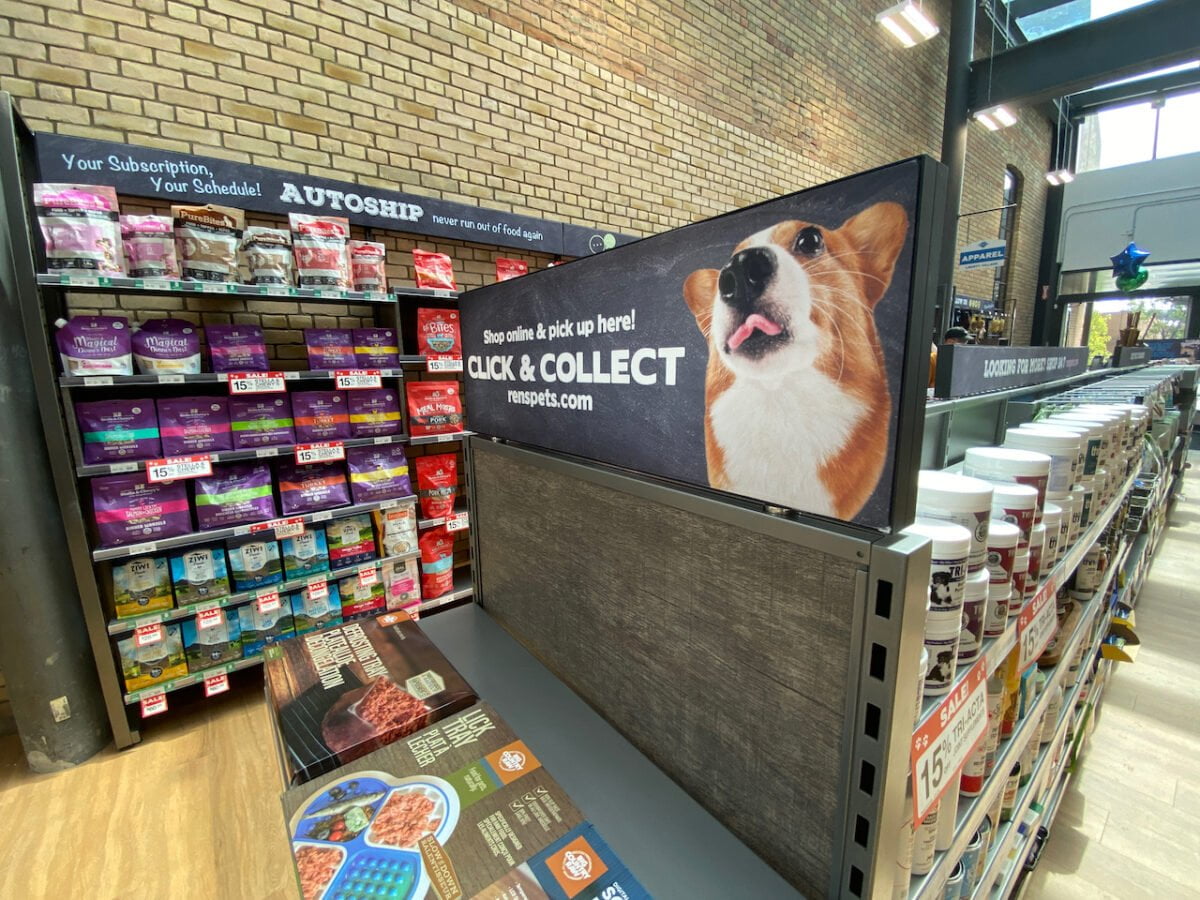
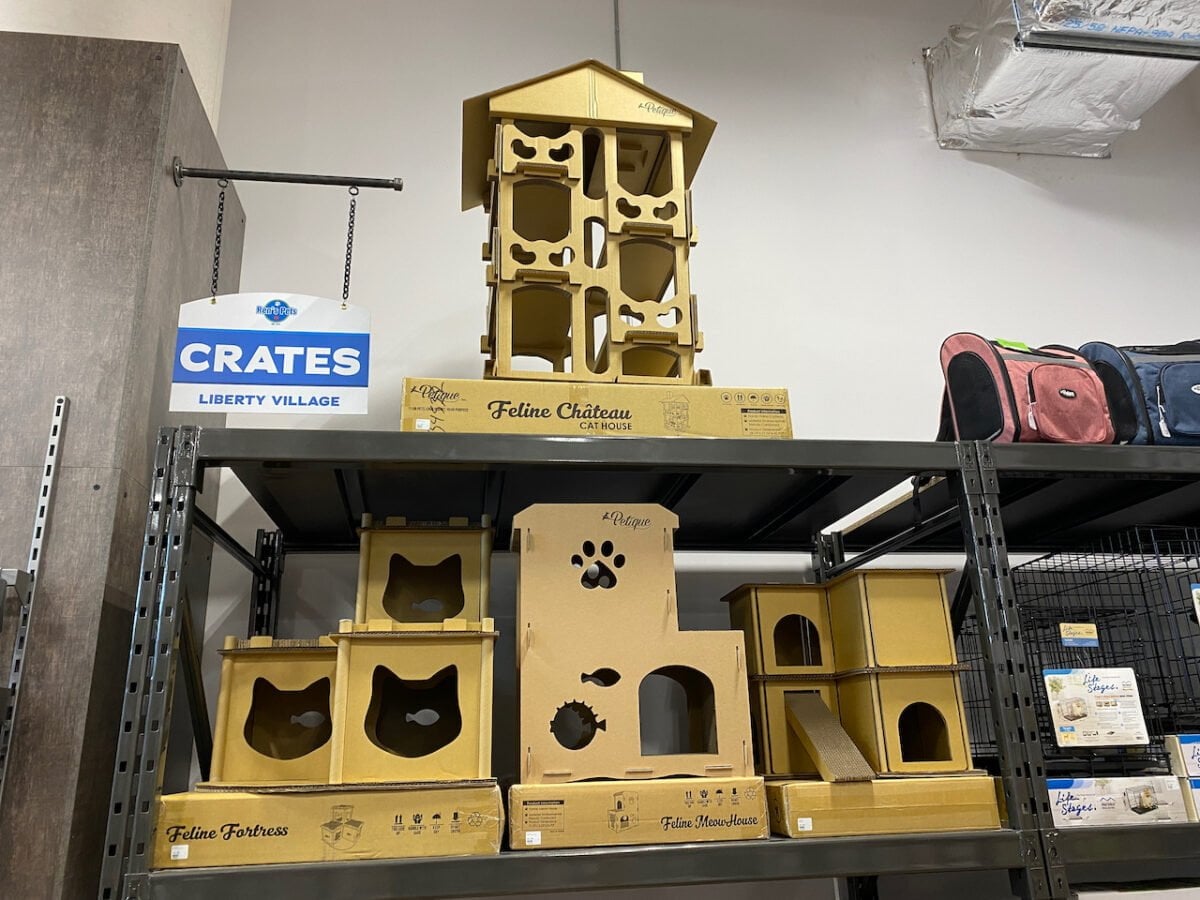
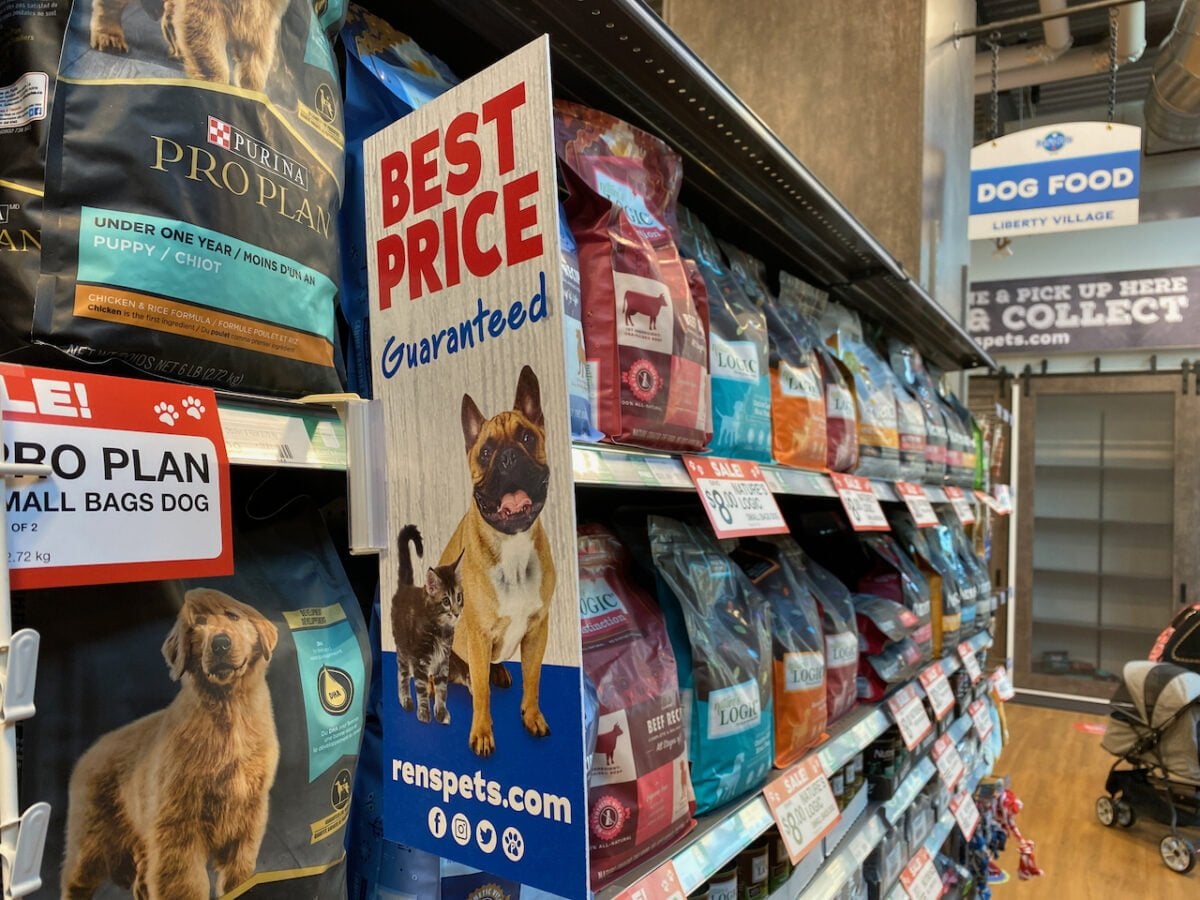
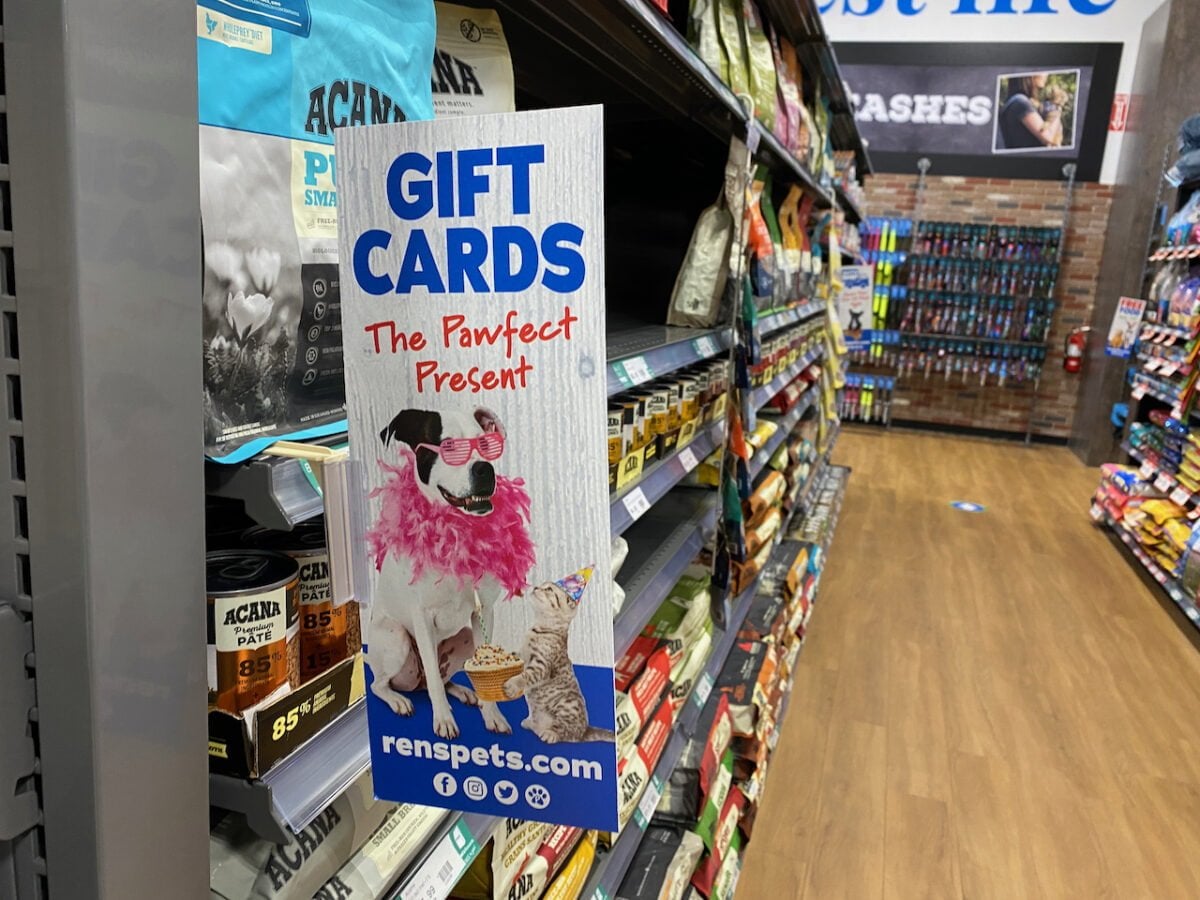
“Our plan is to expand our network of urban concept stores across Toronto, with Liberty Village being the first. Already, it’s off to a very successful start with pet parents and their pets visiting the store for their food, treats, toys, and more. We’ve added special products like strollers that are geared towards a more city-type customer, which have been a hit in the first week of business. We also have ipads set up for order to home, along with a big click n collect pick up section to make it easy for customers to pick up online orders.”
Ren’s Pets at Liberty Village (Photo by Dustin Fuhs)
With Ren’s Pets being acquired earlier in 2021 by the Legault Group, the short term plans are still being finalized and adapted.
“The transaction is still quite new, and the opportunities are still developing for next year as we settle into our partnership,” Wasyliw said. “However, we know Groupe Legault will allow us continue the success of the brand that we’ve been cultivating for over 40 years.”
“While Ren’s and Mondou will continue to run as separate brands, there will be a high level of collaboration to share best practices between the two groups. Groupe Legault’s support will allow Ren’s to remain flexible, agile, and pursue an even faster growth strategy.”
1 of 4
Ren's Pets at Liberty Village Grand Opening (Photo: Ren's Pets)
Ren's Pets at Liberty Village Grand Opening (Photo: Ren's Pets)
Ren's Pets at Liberty Village Grand Opening (Photo by Dustin Fuhs)
Ren's Pets at Liberty Village Grand Opening
Ren's Pets at Liberty Village Grand Opening (Photo by Dustin Fuhs)
Ren's Pets at Liberty Village Grand Opening
CEO Scott Arsenault brought the focus of the event to the team many times during the opening remarks. The ability to expand during a pandemic; staffing, procurement of product and securing a long-lasting supply chain, and creating a neighbourhood experience with the backing of a supportive ownership group.
When we asked about what ‘teamwork’ means to the goals of the brand, Wasyliw said that the growth potential doesn’t stop on motivational signage.
“The sky is the limit! We’re really looking forward to Groupe Legault building a Canadian pet powerhouse in retail with their family of brands, including Ren’s Pets and Mondou. We know they support our vision of growing the Ren’s brand through stores and ecommerce, to be the premier specialty pet retailer and dominate the category. We share common values, which benefits both the business and also pet parents.”
“Ren’s will continue to be a high growth, innovative pet supply company providing premium food, treats, and toys for your pet’s best life. Our goal is to continue to build stores, develop our ecommerce business, and serve pet parents so their pets have happy, healthy lives.”
Ren’s Pets at Liberty Village (Photo by Dustin Fuhs)Ren’s Pets at Liberty Village (Photo by Dustin Fuhs)Ren’s Pets Click and Collect at Liberty Village (Photo by Dustin Fuhs)Ren’s Pets at Liberty Village (Photo by Dustin Fuhs)Ren’s Pets at Liberty Village Grand Opening (Photo by Dustin Fuhs)Ren’s Pets at Liberty Village (Photo by Dustin Fuhs)Ren’s Pets at Liberty Village (Photo by Dustin Fuhs)Ren’s Pets at Liberty Village (Photo by Dustin Fuhs)Ren’s Pets Gift Cards at Liberty Village (Photo by Dustin Fuhs)Ren’s Pets at Liberty Village (Photo by Dustin Fuhs)Ren’s Pets at Liberty Village (Photo by Dustin Fuhs)Ren’s Pets at Liberty Village (Photo by Dustin Fuhs)Ren’s Pets Online Ordering at Liberty Village (Photo by Dustin Fuhs)Ren’s Pets at Liberty Village (Photo by Dustin Fuhs)Ren’s Pets at Liberty Village (Photo by Dustin Fuhs)Ren’s Pets at Liberty Village (Photo by Dustin Fuhs)Ren’s Pets Grand Opening Deals at Liberty Village (Photo by Dustin Fuhs)Ren’s Pets Lawn Sign at Liberty Village (Photo by Dustin Fuhs)Ren’s Pets Halloween Costumes at Liberty Village (Photo by Dustin Fuhs)Ren’s Pets at Liberty Village (Photo by Dustin Fuhs)Ren’s Pets at Liberty Village (Photo by Dustin Fuhs)Ren’s Pets at Liberty Village (Photo by Dustin Fuhs)Ren’s Pets Referral Program at Liberty Village (Photo by Dustin Fuhs)Ren’s Pets at Liberty Village (Photo by Dustin Fuhs)Ren’s Pets at Liberty Village (Photo by Dustin Fuhs)Ren’s Pets at Liberty Village (Photo by Dustin Fuhs)
California-based Apple Inc. held its annual fall Apple event announcement last Tuesday showcasing new iPhones, the next Apple Watch and new iPad variants. Amongst its offerings and services was the promotion of the “Apple Trade In” program.
The Apple Trade In process involves 1) evaluating your current device to determine the value, 2) providing it to Apple (or its partner which it has been outsourced to, and 3) get a credit of the value. If your trade-in is worth more than the new device you are purchasing, Apple offers an “Apple Gift Card” for the difference.
Apple Trade In Process. Photo: Apple Website
The key benefits for using this program is the ease of handing over your Apple device and then getting a credit for it. Also if your device is destined for the landfill, then Apple will recycle it which is good for the environment.
Questionable Device Evaluations
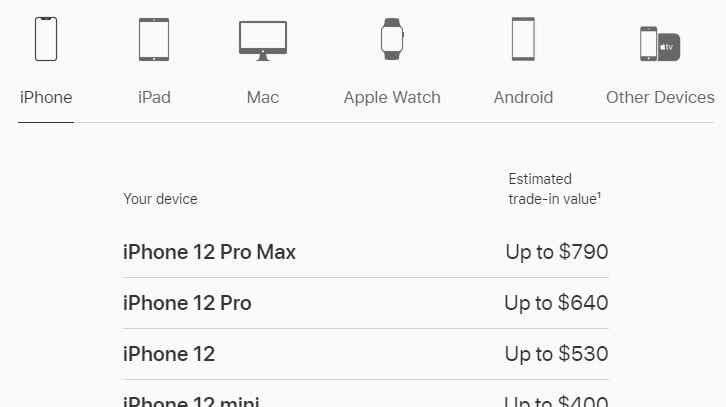
There isn’t a question that it is convenient to hand over your old device to Apple for a credit towards a new purchase, nor that keeping electronics out of landfills is beneficial for the environment. The current value Apple offers is what is in question. Apple offers an easy reference guide to what it is willing to pay up to.
Current Apple Estimated Trade-In Values. Photo: Apple Website.
Real World Evaluation
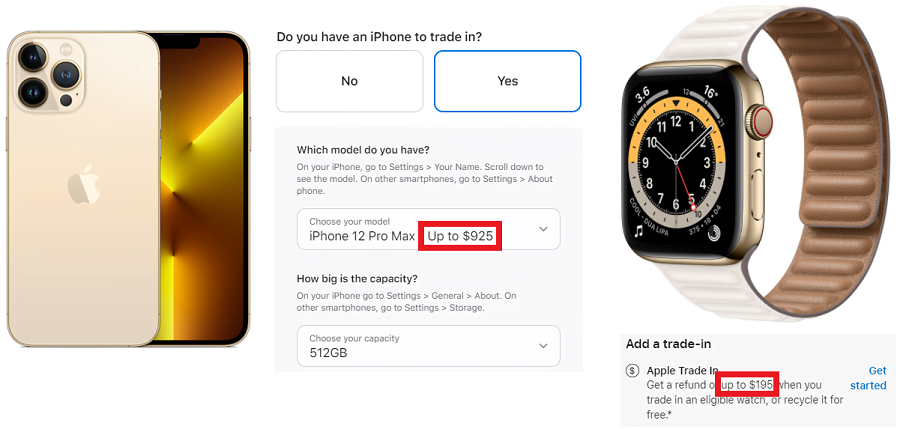
The famous quote goes something along the lines of “Value is what people are willing to pay for it”. Let’s take the scenario of a typical Apple customer that would like to upgrade their current iPhone and Apple Watch for the latest models announced last Tuesday.
Current iPhone and Apple Watch
Original Purchase Price
Apple’s Trade-In Offer
iPhone 12 Pro Max 512GB
$1,959
$925*
Apple Watch Series 6 44mm Cellular Stainless Steel
$1,049
$195**
* Apple’s best-case Estimated trade-in value (the ‘up to’ value)
** As the new ‘Series 7’ is not available yet, Apple indicates “get up to $195 in credit when you trade in your Apple Watch” when purchasing a new watch and this amount was used
Apple Trade-In Values from the Canadian website. Photo: Apple website.
The most prolific reselling marketplace would be eBay. Looking for recent sales for the two items above (i.e., selling in the last week and within Canada/USA) identified a similar iPhone sold today for $1,562 and Apple Watch for $733.
Recent eBay Sales for the latest iPhone and Apple Watch. Photo: Ebay/Completed Sales.
~Retail Insider recommends readers thoroughly research the other risks and processes to sell devices on eBay or other marketplaces prior to listing on them. This is not a guide on how to sell your devices, nor is it intended to inform readers on the risks of selling online.~
Just reviewing the basic comparison for the Apple Trade-In value versus recent eBay sales identified:
Current iPhone and Apple Watch
Recent eBay Sales
Apple’s Trade-In Offer (above)
Difference
iPhone 12 Pro Max 512GB
$1,562
$925
$637
Apple Watch Series 6 44mm Cellular Stainless Steel
$733
$195
$538
The combined difference of the eBay sale versus Apple Trade-In ‘best-case’ values were $637 (iPhone) and $538 (Apple Watch). The total loss for the customer in this example would be $1,175.
Is the Apple Trade-In Program Worth It?
While there are environmental benefits mentioned, the scenario above would be embracing the ‘reuse’ aspect of recycling so we’ll set aside that ‘benefit’ mentioned by Apple for now. The main benefit mentioned by Apple for the trade-in program was the convenience.
Let us know in the comments below if you feel that accepting $1,175 less than selling the Apple devices on eBay is worth it.
Cities in countries all over the world continue a gradual and methodical reopening of communities, events and services as we approach ever closer toward a post-pandemic world. As recovery is on the horizon, hopeful optimism is rising among Canadians that have experienced the impacts brought about by the COVID-19 virus and a return to normal is just around the corner. For many retailers, the next year-and-a-half or so represents opportunities for recovery after an incredibly difficult period for the industry. And, for some, it will also serve as a critical period of growth potential as they look to expand their operations and networks to capitalize on a rebound in consumer spending and market conditions. To help support the recovery and growth efforts of clients in Canada, RBC recently introduced its award-winning RBC Insights Edge – a platform for real-time data and insights. And, according to Christina Vandoremalen, Vice President, Business Deposits and Treasury Solutions, RBC, the benefits of the platform can be transformative.
“Data insights – like those offered by RBC Insight Edge – are incredibly valuable for businesses because they can help them make informed decisions about their next business move and investment,” she says. “These insights can help a business owner benchmark their performance against their peers, find trends in their customers’ profiles, preferences and shopping behaviours, and understand sales and market trends in order to adapt everything from staffing and resources, to finding future locations to grow their business.”
Data-driven insights
A powerful subscription-based tool developed to provide commercial and small to medium retail business clients with a much-needed edge on their competition, RBC’s platform delivers pivotal insights to retail businesses that support and inform their strategy and decision-making. Comprised of aggregated RBC credit card and debit card transactional data, and enhanced with demographic data, the insights generated also provide retailers with a critical view into some of the finer details of their customer’s behaviour. In addition, and perhaps most important at this juncture in the retail recovery timeline, says Vandoremalen, is the view it provides its users into the ways the pandemic has accelerated, shifted or outright changed the landscape.
“RBC Insight Edge is suitable for businesses of all sizes that are looking for a simpler, more aggregated way to access comprehensive data around customer and market trends, competitive benchmarks and other insights to support the operation and growth of their business,” she asserts. “While it’s designed to support clients across a variety of sectors, it’s been especially helpful for those in retail who are currently adapting to COVID-19 and planning for the post-pandemic economy, as they’ve seen a change in customer profiles, new shopping behaviours, and broader digital trends that have disrupted the sector over the last several years.”
Informing business strategy
The digitization of the industry that Vandoremalen refers to has been germinating over many years prior to the pandemic. However, influenced by lockdowns and social restrictions associated with COVID-19, an acceleration of consumer behaviour around digital trends like the shift toward ecommerce has resulted in required action by retailers everywhere. Overnight, many businesses pivoted to ensure that shoppers could continue to access and purchase product whenever, wherever and however they wanted to. Given the general operational upheaval that these drastic changes in behaviour can cause, the potential that RBC Insight Edge offers to better understand current behaviour and develop the right strategy for the business is immense.
“Whether businesses are looking to keep a brick-and-mortar strategy, switch over to ecommerce or develop a hybrid business strategy, RBC Insight Edge is a powerful tool that helps businesses gain a better sense of customer and market trends to guide their business investments and decisions,” she explains. “As the marketplace and customer expectations continue to evolve, so too will the real-time insights offered by the RBC Insight Edge platform, allowing business clients to quickly pivot, scale and identify new opportunities for growth. These insights can also complement other market research and data sources to further validate their business decisions.”
Supporting growth and expansion
Exterior of Peavey Mart store. Photo: Peavey Mart
One retailer that’s recently leveraged RBC Insight Edge, supporting the growth of its store network and a deeper understanding of the markets it serves, is Peavey Industries LP. Operating multiple banners – including Peavey Mart, Ace Canada and MainStreet Hardware – in markets across the country, it’s developed a reputation among its customers as Canada’s go-to farm and ranch retailer, offering a unique selection of agriculture, farm and ranch, pet, work wear, lawn and garden, hardware and homesteading supplies. The company is hot on the heels of aggressive expansion into new markets. And, according to Doug Anderson, President and CEO at Peavey Industries LP, the RBC Insight Edge platform and insights that it generates have helped to inform the retailer’s growth strategy and decisions around expansion.
“Leveraging analytics is really about developing a better understanding of your customer and the markets that you operate in,” he says. “It allows us as a retailer to continuously improve our relationships with customers as well as the product assortment that we offer them. And, because we’re in growth mode as an organization at the moment, analytics are informing our decision-making around where we grow and in what ways we grow. We’ve leveraged RBC Insight Edge in a number of ways in order to support our objectives. For instance, we recently evaluated a location in Alberta and were trying to understand which of our banners would best serve the customers in that area. The data and insights generated by the platform provided us with a deep understanding of the customers from a regional perspective, helping to inform our strategy.”
Developing a stronger network
In addition to helping Peavey Industries develop a clear vision with respect to identifying prospective profitable locations, the benefits of RBC Insight Edge stretch much further, informing decisions and strategy that impact the entire business. The insights shed light on the things that are going well and some of the things that can be optimized; sales performance trends and regional comparisons; customer behaviour and the aspects of the retail experience that helps drive their loyalty, as well as many other aspects of the operation. And, one of the most significant contributions of the platform’s insights, says Anderson, is the ability they provide in helping to monitor the health of the Peavey Industries network as a whole.
“One of the more critical aspects of the data that’s generated by RBC Insight Edge is the insights that allows us to understand how a new location will impact that particular region, as well as the impact it might have on our other stores within each banner network,” he says. “The insights also enable us to gain a deeper understanding into the performance of new stores and properly set goals and objectives for those locations. It helped us determine where some of our blind-spots were from a customer penetration point-of-view and whether or not we were capturing all of the customers that we were expecting to capture at a new location. As a result, as we rolled out our marketing programs and advertising, we were able to adjust and refine our plans accordingly. From an expansion perspective, the tools provided by RBC Insight Edge have been quite useful to us.”
Making sense of uncertainty
The growth that Peavey Industries has experienced throughout the pandemic has been remarkable. And, although not all retailers within the country have been able to boast the same kind of performance and trajectory during the same time, it’s understood by most that the use of data and analytics will continue to become more pervasive and useful as we continue to move toward a post-COVID environment. The ability it arms retailers with to better understand their customers, markets and own operations is impressive. They are data-driven results that Vandoremalen recognizes as of notable importance to most retailers operating within the industry, but suggests that the tool’s ability to clear up some of the uncertainty of our current situation may serve most useful in helping the industry recover and rebound moving forward.
“As we enter a phase of recovery and growth in this ‘new normal’, data-backed decision making will be an important driver of recovery, growth and staying competitive. No one really knows how shopping patterns will shift and how quickly they will change in a post- pandemic world, so having access to timely data will help retailers spot changing trends quickly. Making measured decisions based on these real-time insights will also be critical in helping businesses manage the post-pandemic realities of rising costs, heightened demand for talent and resources, and new consumer behaviours, and optimize their businesses accordingly.”
For commercial and small to medium-sized retail clients interested in finding out more concerning the ways RBC Insight Edge can help you develop a clearer understanding of their customers and operations, sign up at http://rbc.com/insightedge.
Retail Insider has partnered with the City of Toronto to host its September 2021 online Retail Job Fair. The online Retail Job Fair takes place from 11:00am to 3:00pm on Thursday, September 30.
Every participating retailer will receive a free one month subscription to Hellohire, a recruiting tool that helps hire staff 80% faster with virtual job fairs and speed interviews.
Job applicants aged 16-29 can visit this link to register for the virtual event. Registration is required to attend and applicants can also upload resumes to the portal.
Also available at Retail Job Fair for applicants:
Coaches Support – Receive encouragement and recommendations on what to incorporate into your interview.
Swob – Additional employment opportunities are also available on the platform for youth 16-29 years old with Employers who are currently hiring.
If you have any questions, would like more information about the Retail Job Fair, or would like support with developing a resume, feel free to reach out to Veronica (Roni) Simic at veronica.simic@toronto.ca
Past events have been successful, including 2020-21 Retail Job Fairs where over 1,500 youth attended virtually due to the pandemic. The City of Toronto has hosted in-person Retail Job Fairs since 2004 with over 15,000 job seekers in attendance, over 200 retail employers participating and over 8,000 job seekers hired for various positions.
The Retail Job Fair is a unique customized job fair model exclusively supporting youth 16-29 years old in Toronto. These young and ambitious job seekers are identified as job ready and interested in not only working in the retail sector but also creating a career in retail. The Retail Job Fair provides the opportunity for youth to engage directly with employers who are recruiting for a variety of positions.
In preparation for attending the Retail Job Fair, job seekers have received support from various City of Toronto youth employment programs including Toronto Youth Partnerships and Employment (TYPE), Toronto Employment & Social Services (TESS), and Youth Employment Partnerships (YEP) network agencies. These teams work closely with youth prior to the Retail Job Fair to ensure they are coached and prepared and have any necessary supports they require, such as child care, resumes and financial support so they can attend interviews and start a career in retail.
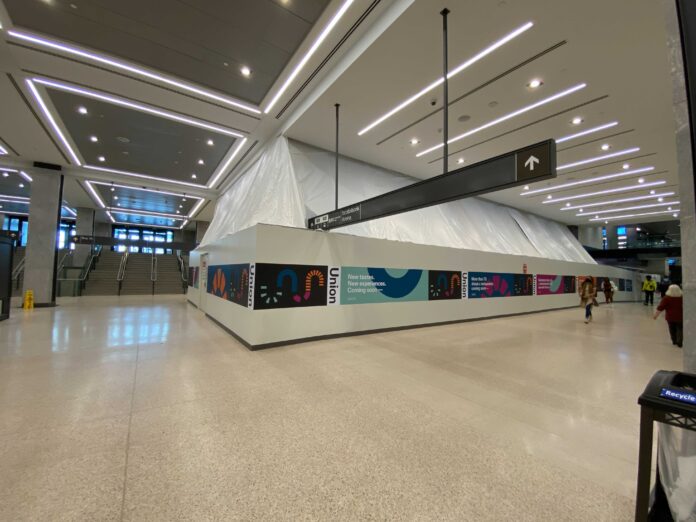
Future Sephora at Union Station - Photo by Dustin Fuhs
Toronto’s Union Station is in the process of seeing a transformation that will turn Canada’s busiest and most iconic transit hub into a destination with a mix of retailers and food concepts. A key tenant to the development will be LVMH-owned beauty retailer Sephora which will open at Union Station in 2022. Sephora will join an impressive roster of tenants which will include some well-known local names in retail and food and beverage, as well as many familiar national and international brands. Other tenants will be revealed in the coming weeks and months as deals are signed.
Sephora will occupy a key location spanning about 4,500 square feet in the new Bay Street Promenade at Union Station, marking a major milestone in the Union Station development which will see the transit hub become a significant social and shopping destination.
“We are thrilled to be expanding our presence in Toronto with the planned opening of a new Sephora store at Union Station,” said Gregory Bruyer, General Manager of Sephora Canada in a statement to Retail Insider. “Our national expansion strategy focuses on bringing our unique in-store experience to more Canadians while delivering ease and convenience to our clients, with new ways to shop Sephora continuously rolling out. We can’t wait for the local community and commuters alike to discover all that we have in store for them at this new location.”
Sephora is expanding its presence in Canada significantly over the next two-to-three years. The retailer says that it will open about 50 more Canadian stores during that time. Sephora currently operates 83 stores in Canada following the opening of a store last month at Lansdowne Place in Peterborough Ontario, and the chain’s 84th Canadian location opens Friday at Les Promenades Gatineau near Ottawa.
Future Sephora at Union Station – Photo by Dustin FuhsImage: Sephora
“We are grateful for Sephora’s long-term commitment to Union Station, a reflection of the quality of the project and its tremendous consumer traffic draw,” said Lawrence Zucker, CEO of Osmington Inc., the retail developer of Union Station.
Union Station is seeing a remarkable overhaul that includes a complete repositioning and redevelopment of the retail component which will expand its footprint to about 170,000 square feet. The Union Station project is the most significant retail development in downtown Toronto in more than 40 years since the opening of CF Toronto Eaton Centre in 1977. The mix of retail, food and service tenants will make Union Station a draw for locals and visitors in a unique heritage building in the heart of the city.
Retail Insider toured the construction site, noting that the majority of the retail footprint at Union Station has been accounted for with committed tenants while some spaces remain under negotiation. Other exciting developments include a new food-focused market hall that will celebrate Toronto’s diversity as one of the most multicultural places in the world.
We’ll be reporting more on Union Station in the coming weeks as more announcements can be made, and we’ll follow up on this story when Sephora opens.
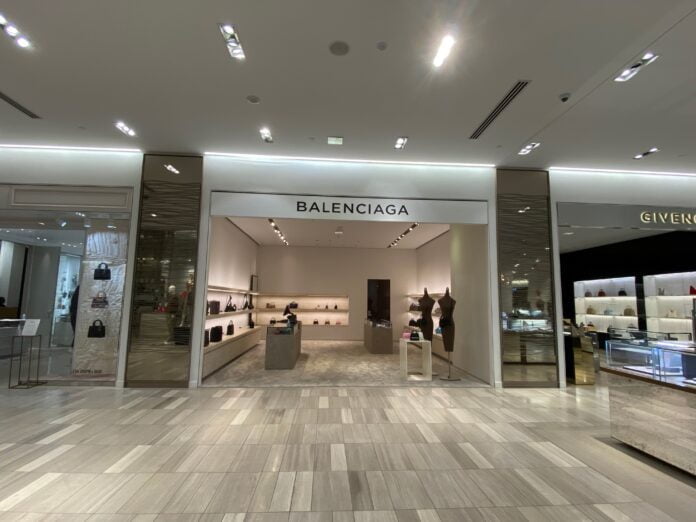
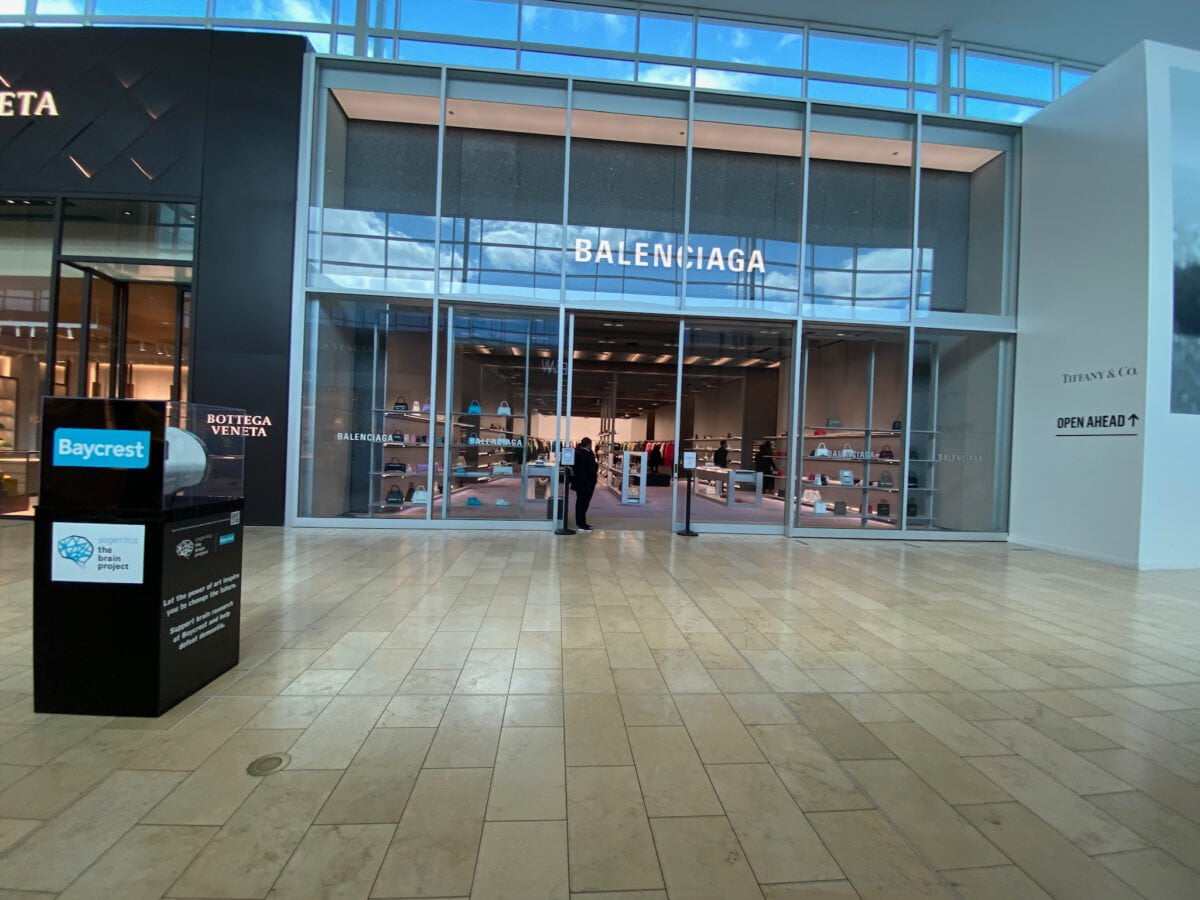
Balenciaga Boutique in Saks Fifth Avenue at CF Toronto Eaton Centre - Photo by Craig Patterson
Saks Fifth Avenue has opened a bag and accessory boutique space for Kering-owned French luxury brand Balenciaga on the main floor of its CF Toronto Eaton Centre store in Toronto. The Balenciaga boutique replaces Celine which vacated the space last month prior to Celine’s standalone flagship opening at Toronto’s Yorkdale Shopping Centre.
The main floor Balenciaga boutique is located next to a Dior bag and accessory concession on one side and a Givenchy shop on the other. The main floor of Saks also houses concession spaces for Louis Vuitton, Saint Laurent, Prada and Piaget as well as wholesale shop spaces for brands Bottega Veneta, Chloé, Chopard and Birks.
Balenciaga bags were already carried at Saks in downtown Toronto and the new boutique space allows the brand to expand its assortment while presenting the collection more prominently. A dedicated Balenciaga women’s ready-to-wear boutique space has been present on the third floor of Saks in downtown Toronto since the store opened in February of 2016. Balenciaga menswear is also carried on the second floor of the store.
In Canada, Balenciaga operates a flagship store at Toronto’s Yorkdale Shopping Centre which opened in late 2019 as well as concession boutique spaces at Holt Renfrew stores in Toronto, Vancouver and Montreal. The brand can be found at Nordstrom including a women’s shop-in-store in Vancouver.
Balenciaga at Yorkdale – Photo by Dustin Fuhs
Spanish fashion designer Cristóbal Balenciaga opened his first storefront in San Sebastián, Spain, in 1917, prior to expanding into Madrid and Barcelona. The Spanish Civil War forced Mr. Balenciaga to move his operations to Paris where he opened a couture house on Avenue George V in 1937. Balenciaga has morphed over the years from a brand known for elegant evening gowns to one featuring a wide range of fashions, including streetwear.
Craig and industry recruiter Suzanne Sears of Best Retail Careers Int’l. discuss why many retailers in Canada are demanding staff are vaccinated while also supporting vaccine passports.
The Interview Series podcast by Retail Insider Canada is available on Apple Podcasts, Stitcher, TuneIn, Google Play, or through our dedicated RSS feed for Overcast and other podcast players. Also check out our The Weekly podcast where Craig and Lee discuss popular content published on Retail Insider which is part of the The Retail Insider Podcast Network.
Interviewed this episode:
Suzanne Sears, President of Best Retail Careers International Inc.
Drop us a line at Craig@Retail-Insider.com. You can also rate us in Apple Podcasts or recommend us in Overcast to help more people discover the show!
Background Music Credit: Hard Boiled Kevin MacLeod (incompetech.com). Licensed under Creative Commons: By Attribution 3.0 License. http://creativecommons.org/licenses/by/3.0/
The past year-and-a-half has no doubt proven to be an incredibly difficult time for most retailers in just about every vertical throughout the industry. The pandemic and its impacts have challenged merchants and other businesses to pivot, at times redefining their service and offering, in order to remain relevant and successful. It’s forced many across the country to reimagine their place in an unstable market amid the instability and uncertainty of a changed and still unsettled landscape. And, it’s put an enormous amount of pressure on departments and teams within organizations to explore and discover new ways of doing things as we collectively await our new ‘normal’. In short, the past 18 months have been a far stretch from fun and games. However, for Mastermind Toys CEO, Sarah Jordan, this period in retail history has served as an opportunity to further strengthen the beloved Canadian brand, elevating it through her passionate and purpose-driven approach to leadership.
“When it comes to successfully leading a team, an individual needs to, among other things, be passionate, bold and authentic,” she says. “And, to be truly effective, they’ve got to be purpose-driven. I’m also a strong advocate for brand storytelling and deeply believe in sharing that story with both employees and customers and showcasing it as a real strength for differentiation. A leader also requires inspiring communications skills, ensuring that the organization’s priorities and focus are clear. And, they’ve got to be able to understand their own strengths in order to build the best team, putting the right people around them. The ability to nurture and develop talent and to truly believe in the team around them is also critical and sets everyone up for success, resulting in an incredible employee experience which, in turn, drives a phenomenal customer experience. And there’s no better place than retail to surprise and delight a customer and create connections with a brand and purpose.”
Strategic transformation
Jordan, whose rise to retail success has been somewhat unconventional, holds an engineering degree and MBA from Queen’s University and started her professional career in management consulting. She spent a decade at Boston Consulting Group where she worked with Fortune 500 companies on retail and banking customer transformations before joining Scotiabank as its Senior Vice President of Customer Experience and Omnichannel Strategy. She was named CEO of Mastermind Toys – Canada’s biggest specialty toy and children’s book retailer – in January 2020, just months before the onset of pandemic-induced restrictions and lockdowns. Despite the incredibly challenging backdrop to her new role, however, she saw prospects for the brand and a chance to apply her energy and enthusiasm toward realizing them.
“When I took over as CEO of Mastermind Toys, I saw a big opportunity to take this leader in its category to the next level,” she asserts. “To achieve this, I instituted a strategic plan. I set out to declare us as the ‘Authority on Play’ in Canada. We are a purpose-driven brand and deeply believe that ‘Play is Kids’ Work’ and knew that we needed to introduce our brand to more Canadian kids and kids-at-heart. I also wanted to strengthen our channels. We were delivering amazing wonder in our stores, but we were lagging the industry with respect to our web and curbside presence. And so, I really wanted to lead the organization on a digital reinvention and to create wonder for our customers both in-store and online. I also wanted to amplify our differentiators, one of them being our ‘Why Kids Play’ curation model by which we curate our toys, books, puzzles and games based on a child’s development, for each age and stage, with respect to their body, mind and expression. There were opportunities for us to bring this curation to life in more ways by leading in specialty and trends. And, what I’m most proud of is the fact that we’ve been able to drive a cultural transformation around being more purpose- and performance-driven.”
Leadership reinvented
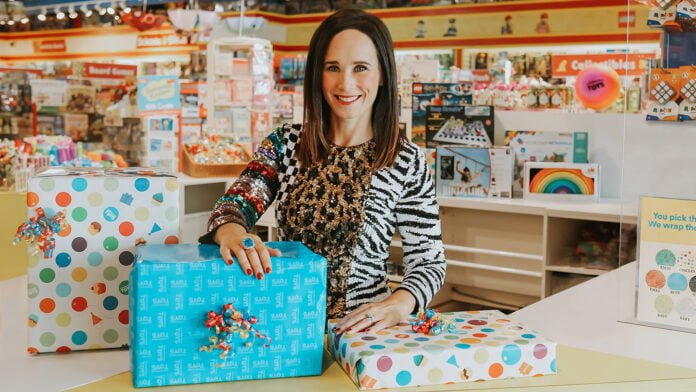
Sarah Jordan (Image: Mastermind Toys)
She goes on to explain that, although there hasn’t been a playbook available to her concerning the ways to lead through a global pandemic, it’s been a privilege to be part of a team that’s pulled together to such great effect, navigating through these challenging times to come out stronger. It’s a testament to the resilience and determination of the revered Canadian brand, and an example of the kind of character that’s exuded by a special category of merchants within the industry that continue to push the boundaries of what’s possible. Despite the positivity with which she approaches just about every aspect of her job, however, she suggests that circumstances over the course of the past 18 months have not only influenced the retail environment, but those who lead through it as well.
“I remember, if I reflect on the past year-and-a-half, a real heaviness and weight to the decisions that I made through the pandemic,” she admits. “I knew that I needed to make decisions that ultimately kept our employees and customers safe and realized that this was going to be a period of time that not only reinvented retail, but was one that would also reinvent leadership, serving as a defining moment for many within the industry. In response to the turmoil that was happening, I saw tremendous value in bringing our employees into the conversation about the ways we should respond and best support our customers. I believe in co-creation and seeking input from all levels of the organization to better understand everyone’s concerns, suggestions and feedback. It’s the best way to properly gain a holistic view of the brand and the areas that can be strengthened and improved.”
Cultural development
Leading this type of transformation at such a critical juncture for the brand and industry is ambitious, to say the least. But when considering the fact that Jordan’s appointment as CEO represents the first leadership change in Mastermind Toys’ 37-year history, the move suddenly becomes a very courageous one as well. And the results to this point couldn’t be more impressive. Through the pandemic, the retailer launched its leading curbside promise to deliver product into the trunk of the customer’s car or at curbside, presented in the brand’s signature wrapping paper, within one hour. It launched a brand-new website on a completely new platform, equipped with artificial intelligence-powered customer experiences that bolsters search and functionality for the end-user. And, it also introduced three cultural goals meant to enhance and support employee development and performance.
“We really wanted our employees to feel inspired through the pandemic,” Jordan explains. “Mastermind Toys has always had corporate goals. But I wanted to inject cultural goals as well. So, as the pandemic was unfolding, I asked all of the Mastermind Toys employees, communicating the message through virtual town halls, to be bold and scrappy. If we were going to make it through these challenging times stronger, we needed to innovate and to give our employees inspiration to go for it. We also set a goal to create momentum. Rather than focusing on the twists and turns of the pandemic, we wanted to remain focused on our long-term vision and strategy. Every town hall meeting, we’d celebrate wins big and small, and we’d celebrate failures as well. We introduced the weekly ‘Mastermind Moment’ that is handpicked from our employees’ performances across the nation. And lastly, we wanted to maintain the ingredients that make Mastermind Toys special and to allow our purpose to guide us and shine through during a moment when our customers’ and employees’ lives were being transformed.”
Culmination of goals
The goals that Jordan and her team set out last year were well-received by the entire organization, so well-received, in fact, that they’ve been reinvigorated for 2021. This year, she explains, Mastermind Toys employees have been charged with keeping kids and kids-at-heart central to everything the brand does. They’ve been inspired to win each moment and milestone throughout the year, beyond the brand’s traditional holiday shopping season success, with the addition of its Spring and Back-to-School Play Guides. And, due to the extreme pressures that everyone has been under over the course of the past year-and-a-half, they’ve been encouraged to work together and play together, focusing on being a team. Results of the goals and the overall transformation that Jordan has led for Mastermind Toys have been significant, seeming to culminate in many ways in the launch of its first sub-brand, Mastermind Toys Baby.
“I pride myself on being a deeply customer-obsessed leader,” Jordan affirms. “So, I wanted to understand exactly who the Mastermind Toys customer is today, who we’re serving and who we’re underserving. Mastermind Toy’s’ purpose is to inspire generations of lifelong learners through the power of play. And our sweet spot has always been parents, grandparents and kids aged three to six years old. What we realized was that we were missing an opportunity to support the new parents or grandparents and to speak authentically about our belief that ‘Play is Kids’ Work’. When we transitioned that statement to babies, we recognized that there are a lot of companies who are supporting the new parent with respect to gear, the nursery and bringing the baby home. But no one was addressing the importance of play in order to support their development. And so, we set a goal to become the number one choice for baby play for development.”
Expanding customer-base
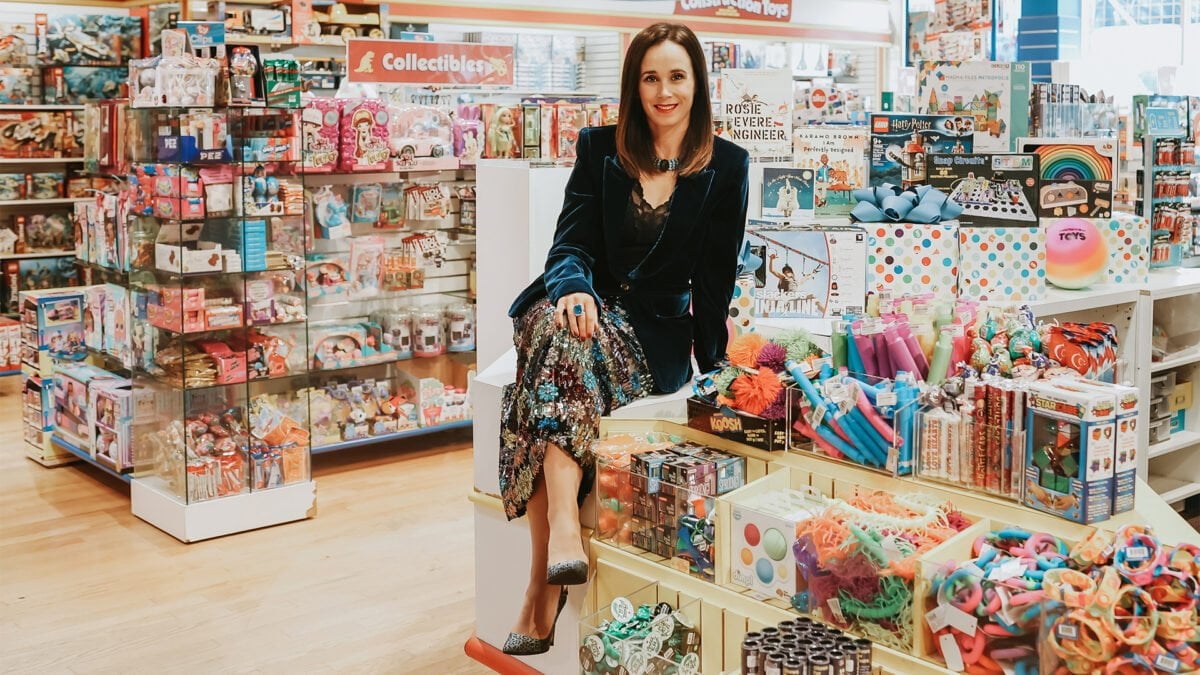
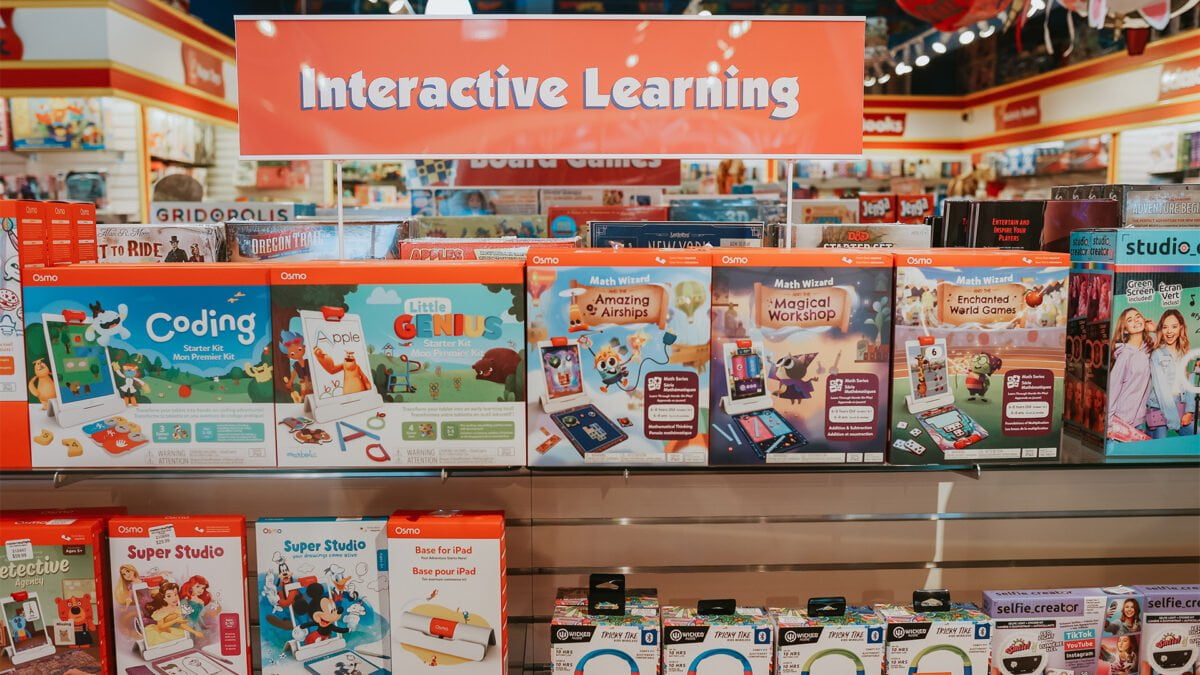
Image: Mastermind Toys
To do so, the brand applied its curation model to the development of Mastermind Toys Baby, resulting in a selection of items for baby’s playtime that support five key development skills, including fine motor skills, gross motor skills, cognitive skills, speech and language and social and emotional. The sub-brand is rooted in the company’s origin, founded in 1984 as ‘Canada’s educational store’, and is being introduced during a time that Jordan believes new parents are in most need of support and educational resources. She adds that it’s helped Mastermind Toys broaden its customer-base and to explore in more detail where some of its future opportunities might be with respect to growth.
“Prior to the pandemic, we narrowly described our customer and who we wanted our customer to be,” she says. “Now, we want our customers to be parents, expecting parents, grandparents, educators, gift-givers and kids-at-heart, meaning adults, who are one of the fastest growing segments in toys. We want them to be passionate about celebrating milestone moments to make lasting memories. We want them to be adventurous, lifelong learners who are looking to inspire curiosity in others. And we want them, of course, to look to us as their trusted resource for all things play. To support our customers, we want to own our moments with them by helping to celebrate holidays, reward occasions like good behaviour and grades, celebrate milestones like potty-training and losing a soother. And, we’re also looking to support life transitions, like the introduction of new siblings or kindergarten graduation. The world is better at play. And we want to ensure this by curating world-class assortments and experiences that inspire wonder and foster development.”
Delighting the customer
Always looking forward, discovering new ways by which to serve its community of customers, Jordan is optimistic about the future of retail in Canada and is relishing the opportunity to reignite and intensify everything that’s great about the toy store experience, in particular the Mastermind Toys experience. Brought to life in-store through toy demonstrations, its bold colours, whimsical signage and engaging displays, the Mastermind Toys experience sets the brand apart. And, although much of the brick-and-mortar offering that the brand provides was limited throughout the pandemic, all 68 locations from coast-to-coast are now operating at full capacity. It’s something that Jordan says is the most exciting moment of her journey with the brand thus far.
“The retail industry really sets the pace for innovation, in both big and small ways,” she asserts. “And I’m excited to navigate over the coming months and years toward enhancing the interaction of retail and the creation of those real moments rather than the quick curbside pickup. I was thrilled when our stores started to reopen after the lockdowns to see the kids enter and experience that wonder around every corner. And because we understand that we continue to set the trends, customers are greeted when they come into our stores by a ‘Play Expert’ and guided toward the perfect gift. I’m looking forward to 2022 and beyond to be about understanding and creating new experiences that will delight our customers.”
Amplifying the retail experience
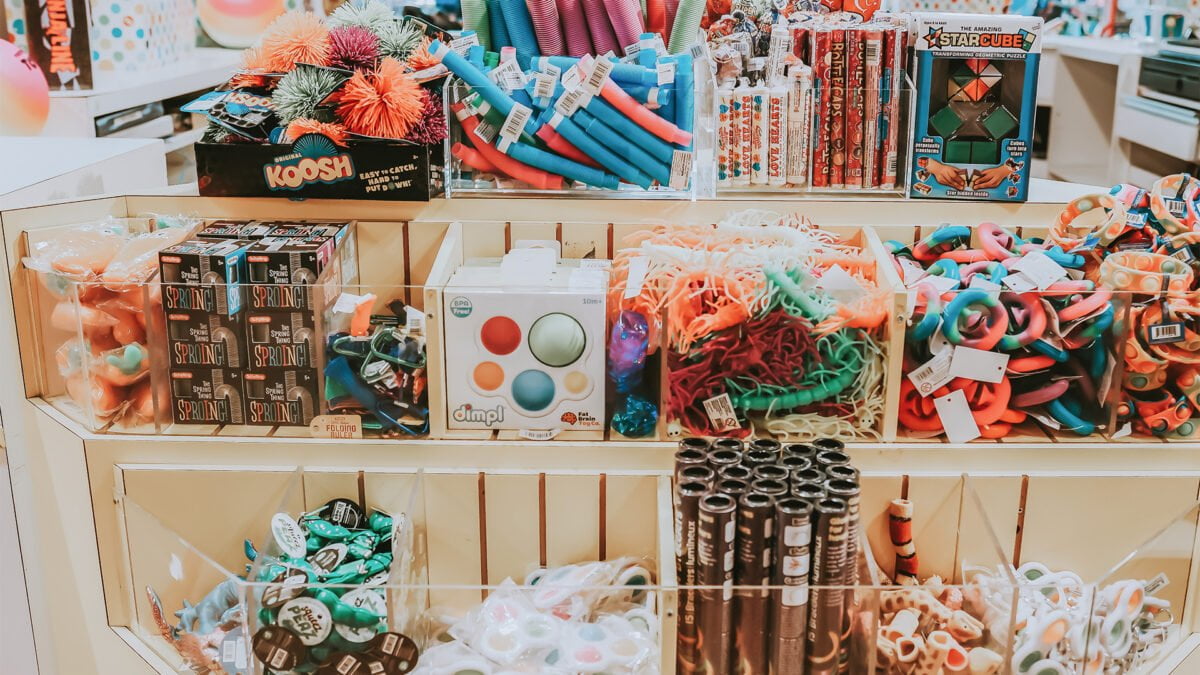
Image: Mastermind Toys
Jordan also expresses anticipation and enthusiasm for the upcoming holiday shopping season and the opportunities to provide customers with the experiences she describes. Her energy and natural acumen for the role she’s currently serving have already reaped dividends for Mastermind Toys. Despite her early achievements, however, the retail leader remains fixed on continuous improvements and enhancements, describing the transformation of the brand as a multi-year journey, and work with a purpose that she’s more than willing to see through to fruition.
“We’re excited and inspired by the impact of our strategic transformation to date. We want to truly be Canada’s ‘Authority on Play’ from coast-to-coast, leading the way in toy trends, retail innovations and experiences in our category. We still want to introduce the Mastermind Toys brand purpose to more Canadians and we see many opportunities to continue to improve our channel offering and customer journeys. We’re just getting started in terms of our digital experiences and how we can provide as much wonder online as we deliver in our stores. From an assortment and curation standpoint, we’ve been known for certain categories with deep roots in educational toys. Many opportunities exist to deepen our offering in those categories and create new ways to surprise and delight customers. We want to ensure that we’re Canada’s year-long destination for all things play. And we want to put the special back into specialty. With a focus on our customer and this amazing Mastermind Toys team, I’m confident that we’ll continue to lead within the industry, amplifying the retail experience.”