Canada’s tourism industry is calling on Canadians to take the 2021 Tourism Pledge to travel in Canada – an invitation to come together as a country and support our local tourism destinations, businesses and employees.
The seven-day Tourism Week, which launched Sunday May 23, is an important time to highlight the resilience of the industry through this unprecedented time.
The COVID-19 pandemic has had a devastating impact overall on tourism in Canada and that has impacted businesses such as retailers, restaurants and hotels that each year rely on the industry for their survival.
A lack of visitors, both internationally and from within Canada, has seen a significant decline in sales for businesses in those sectors.
Tourism Week 2021 (Photo TourismCounts.ca)
Those particular businesses in places such as Banff, Alberta and Whistler, B.C. have been hit hard in the past year and a half.
Accommodation, food and beverage, and retail in Canada’s largest cities have also felt the tough times with a significant decrease in visitor spending. As urban expert Richard White, a blogger with the Everyday Tourist, points out: you only have a robust, vibrant downtown when you have tourists.
With advisories against non-essential travel, border restrictions, and strict lockdowns in several provinces and territories, the operating revenue of travel arrangement and reservation services plummeted by 61.5 per cent in 2020, according to Statistics Canada. The accommodation services industry was also severely affected, as operating revenue fell by almost half (-46.1 per cent) in 2020.
Prior to the pandemic, the tourism industry in Canada was a $105 billion sector which accounted for two per cent of Canada’s GDP and employed 1.8 million workers.
She said the association and other groups involved in tourism in the country continue to advocate for the reopening of Canada’s borders but “we’re asking Canadians to choose to travel in Canada first to support our industry and kickstart the recovery.”
“We know that 80 per cent of Canadians plan to travel as restrictions are released and our focus (during Tourism Week) is to make sure we do that first in Canada. We invite Canadians to start planning now and take the pledge to travel in Canada, post it on social media and encourage their family, friends and followers to do the same,” added Potter.
Destination Canada has launched two new initiatives to inspire Canadians to travel domestically as restrictions allow.
Heartbeat of Canada: Tourism Anthem video
Produced by Canadian director, Mark Zibert, the industry anthem video spotlights the makers, performers, business owners, and staff who make up Canada’s tourism sector. The people featured are not actors; they are tourism workers and among the one in 10 Canadians whose jobs are tied to the sector. Canadian drummer Sharon Rose Ransom is central to the video, and delivers a powerful drum solo that’s full of energy, symbolizing hope and a desire for rebirth. The prominence of drums in the video reflects Canada’s spirit and “heartbeat”, as an instrument of celebration and motivation—representing an industry that, despite facing hardship, remains positive, explained Destination Canada. Download the video here.
Inspiring Domestic travel: Postcard campaign
Destination Canada Postcards
Destination Canada is inviting Canadians to send a postcard to the family and friends they have missed during the pandemic. The initiative was inspired by Destination Canada’s research, which shows that 39 per cent of Canadians expect their first trip will be to visit loved ones and friends. The series of postcards are inspired by destinations from coast to coast to coast and can be sent in French and English. Canadians can access the postcards online, then have them printed and mailed anywhere in Canada. This effort is meant to inspire Canadians to explore and enjoy travel in our country, when restrictions lift, it explained. You can view and complete a postcard here.
“We have seen the strength and resilience of the tourism sector shine through in what has been an incredibly challenging 14 months. Tourism is central to our quality of life offering rich social, economic and cultural benefits to all Canadians. The Government of Canada is proud to have invested $15 billion towards tourism, culture and arts, since the onset of the pandemic with an additional $1 billion announced for tourism in the 2021 Federal budget. In recognition of tourism week, I encourage all Canadians to embrace our magnificent country and consider the endless potential of the new and familiar destinations waiting to be discovered,” said Mélanie Joly, Minister of Economic Development and Official Languages, in a statement.
“From baristas and brewers to designers and festival directors to historians and hotel owners, the richness of our diversity—and the heartbeat of this country—can all be found in Canada’s tourism industry. Tourism week is a great opportunity to remind Canadians about the impact of our industry—supporting tourism means enhancing the quality of life for all Canadians. Despite the enormous challenges faced by the sector, we have a resilient industry that is ready to welcome Canadians back into our hotels, airplanes, tour buses, museums, restaurants, and beyond, once restrictions are lifted,” said Marsha Walden, President and CEO, Destination Canada.
“There is hope on the horizon for all of us, we believe. We’re reminding all Canadians about the value of tourism in their communities and we hope to inspire them to travel in Canada this year.”
If Canadians shift two-thirds of their planned spend on international leisure travel towards domestic tourism; it will make up for the estimated $19 billion shortfall currently facing our visitor economy, help sustain 150,000 jobs and accelerate recovery, according to Destination Canada.
“I think beyond asking people to take travel pledges and to get excited about experiencing things in their backyard, it’s really summoning this idea that we have to support local. It’s never been more important to bring back our way of life, to bring back our communities and to support our friends and families in a resumption to normal work activities,” he said.
Walden suggested that people also think about urban centres in their travel plans.
“Canada has a unique set of cities that are unlike most cities in the world. We are filled with green spaces and outdoor activities and parks and lakes and canals. The kind of urban experience you can have in Canada is really very different to most places in the world and most Canadians are eager to flee the city and get out into the countryside but consider your neighbouring cities as another option for travel this summer. They really need your support and they’re incredible experiences. You’ll find lots of outdoor activities,” said Walden.
Potter also asked that Canadians get vaccinated as soon as they can and that will help the country get to the point where it can start to see restrictions ease.
Travel to Canada continues to be impacted through the third wave of the pandemic. The most recent data from the federal agency indicates that arrivals to Canada from the United States and other countries were down 83.7 per cent in March compared with March 2020.
The number of non-residents from countries other than the United States entering Canada declined by 81.5 per cent year over year to 27,600 in March.
Travel originating from Europe (-92.1 per cent) and Asia (-70.0 per cent), Canada’s largest markets, were down significantly compared with the same month in 2020. Travel from other major markets also remained low throughout March.
In March, US residents made 95,900 trips to Canada, down 84.3 per cent from the same month last year. The number of US residents arriving by plane declined by 96.8 per cent year-over-year to 4,500 in March.
Car arrivals dropped 79.9 per cent year over year to 90,100 in March.
Big Frog Custom T-Shirts & More - South Edmonton (Photo Big Frog)
American T-shirt retailer Big Frog is expanding into Canada with its first store in Edmonton and more locations to come across the country.
Jessica Eggert, Director of Communications with Big Frog Canada, said the company has initially been focusing on Alberta, primarily Edmonton and Calgary, for the retailer’s launch across the country. It has been advertising to raise awareness of the brand and the opportunities for franchise locations.
“We’re focusing in Alberta right now but we’ve had interested people from Ontario that we’ve had conversations with and BC as well. The plan is to be right across Canada,” she said.
The exception is Quebec due to its franchising legislation.
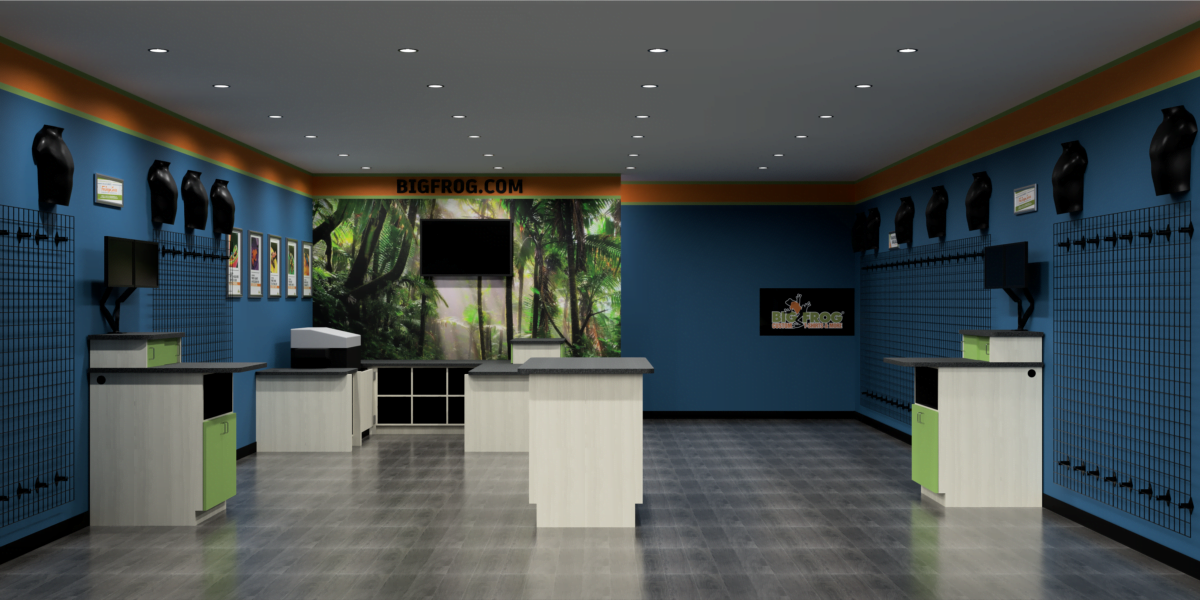
Big Frog Custom T-Shirts & More (Rendering: Big Frog)
Big Frog is a high-tech, light manufacturing retail garment decorating boutique.
Tina Bacon-DeFrece, Big Frog Franchise Group President & CEO, said the retailer has 80 locations in 26 states in the US.
The company started franchising in 2008. Bacon-DeFrece had started her first store in 2006 in Clearwater, Florida.
“It was a neighbourhood T-shirt shop that my husband and my partner (Ron) developed just to be part of the community and service schools and non-profits and small businesses,” said Bacon-DeFrece.
Big Frog Custom T-Shirts & More (Rendering: Big Frog)
“We are essentially a specialty retail boutique where we’ll do a custom shirt . . . We bought one of the first prototype garment printers that uses garment dye that actually dyes the image in the shirt.”
The printer allowed customers to buy just one shirt at a time and the concept caught on. The local news featured the retailer because no one was doing it at the time.
“So essentially a customer can come in and they’re able to work with a professional designer, get a custom shirt done for $20, $25. It’s no longer you have to pay someone $300 to do artwork, set up, do all the colour charges. They get a completely custom product that they designed themselves with our help for $20, $25,” said Bacon-DeFrece.
Brian and Shannon Marowitch are opening the first Canadian store in early July in the Windermere community in southwest Edmonton. It will be located near the West Edmonton Mall, just off the busy Anthony Henday road and close to Calgary Trail and the airport. The store will be in a brand new strip mall, kitty corner from the Windermere Crossing shopping centre.
“Very much a high visibility, high traffic, accessible location,” said Shannon, adding that the couple’s goal is to eventually open a second store in their territory.
“But it’s just one store at a time. We’re focusing on getting the brand out there, getting the excitement going. Summer’s coming and with the vaccination rollout and the protocols being lifted, we’re very excited and we’re ready to go.”
The Edmonton store will offer custom T-shirt work and more.
“This just seemed like a perfect fit (for us). It seemed like a great concept. I think it’s going to be extremely well received in Edmonton. It’s very accessible for the one-off T-shirts in addition to business to business sales. It’s a concept that is not seen in Edmonton or anywhere as far as I know in Canada,” said Shannon.
“Since the pandemic, we need something like a Big Frog. We need fun and we need excitement. And we need that froggie spirit. It’s something that we are thrilled to be a part of.”
“And it’s a great work/life balance,” added Brian. “You can put as much time in as you want and get the results that you want and if you want to work really hard you can get even better results. It just seemed like a very nice balance for us and the concept of course is fantastic. And it seems like a fun job too -like you want to enjoy yourself too. And that’s what we’re looking forward to is enjoy meeting all the new customers and just helping them have fun building their own shirts.”
More than a year into the lingering COVID-19 pandemic thousands of new businesses in Canada remain shut out of all federal government support programs.
The Canadian Federation of Independent Business has highlighted the fact that on May 19, 2020 Prime Minister Justin Trudeau promised to work on a potential solution for businesses that had not yet filed a tax return, such as newly created businesses, who found themselves not eligible for the wage subsidy, rent subsidy and the Canada Emergency Business Account loan program.
Dan Kelly, President and CEO of the CFIB, called it shameful that tens of thousands of businesses that began formal operations after March 2020 continue to face a gruelling stretch of new restrictions and lockdowns without any of the support available to other firms.
Dan Kelly
“There are thousands and thousands of businesses that get their start every year and typically it’s not like you decide to go into business one day and then automatically your business is set up the very next,” said Kelly. “It often takes months, sometimes years, before the business is actually operationalized. So all of those businesses that were often planned and worked on pre-pandemic and then went on stream during the pandemic just as it started or the months that followed they have by policy been excluded from all of the government support programs.
“For example, a restaurant owner contacted us. They had spent $400,000 – their entire life savings, every dollar they could borrow – to try to get a 100-seat restaurant open. It was supposed to start for April 2020. Unfortunately what happened is that the pandemic slowed down the finalization of their construction because of the lockdowns that began at the beginning of the year. They were only able to open their doors in June of 2020, serving a very limited number of people. Because they didn’t open in time, because they didn’t have a payroll account, a tax return from 2019, a business number at the appropriate date, they have been excluded, as have thousands and thousands of other businesses from accessing a single dollar from the rent subsidy, a single dollar from the wage subsidy, or a single loan dollar from the Canada Emergency Business Account. And that’s deeply unfair.
“These businesses need the support to be able to make it through. In fact, they probably deserve the support even more because they have no track record.”
Kelly said the organization has written, lobbied and talked to government “a thousand times” since the Prime Minister’s promise to fix the problem and there has been no progress whatsoever.
“I find it shameful that the Government of Canada that likes to talk about having the backs of the business community during the pandemic has completely ignored new small business owners simply because they were unlucky enough to open their doors during the worldwide pandemic,” he added.
Small business owners can now sign CFIB’s petition calling on the government to provide support to new firms.
In a letter to Deputy Prime Minister Chrystia Freeland, the CFIB has outlined the following recommendations:
Waive the requirement for an active CRA Business Number (BN) on the first day of each COVID-19 relief program or allow a business to apply for one;
As new firms are not able to determine their revenue loss compared to the same month in 2019 or January/February 2020, allow them to use provincial average revenue loss numbers by sector or determine revenue comparisons based on an average sales revenue over a few recent months, as Saskatchewan has implemented;
Allow new businesses that opened after March 1, 2020, to demonstrate a month-over-month revenue reduction when comparing a month between April 2020 and April 2021 to any month between November 2020 and April 2021; and
Allow new businesses to compare month-over-month revenues to the previous month (prior to increased restrictions).
“New businesses will be vital to Canada’s economic recovery, as they create new jobs and replace the businesses that we have lost. They face the same lockdowns as other businesses, and are often more fragile because they don’t yet have a list of loyal customers or any reserves after starting operations. We urge the federal government to deliver on the promise made a year ago and provide new businesses with the support they need,” said Kelly.
“One important group has fallen through the cracks — a group that is critical to the nation’s economic recovery and a return to higher employment and vibrancy in our downtown cores and neighbourhoods.
These are the entrepreneurs who risked their capital and started businesses during the pandemic — many not by choice but by circumstance, as they were well into building a new venture when the pandemic hit and had a financial imperative to complete the project and open their doors,” explained Vallis.
Image: Piatto Cambridge
“Canada’s newest entrepreneurs rented and renovated previously empty retail spaces, hired and trained people, and contributed to their neighbourhoods. In many cases they had strong support from the community and good sales until the second wave of lockdowns hit. Like the vast majority of Canadian businesses, they wanted to help flatten the curve, and therefore abided by all the regulations and restrictions to their operations just like everyone else.
“However, without any “previous year” sales (based on pre COVID sales commencing April 2019), they did not qualify for government assistance, primarily Canada Emergency Wage Subsidy and Canada Emergency Rent Subsidy. They were between a rock and a hard place. By complying with lockdown orders, they had no way to survive.”
Not qualifying for government assistance means Canada’s newest entrepreneurs bore the full brunt of the business interruption with no help in the form of wage or rent subsidies. With each new lockdown, more permanent closures happened, and more businesses moved closer to the verge of collapse, said Vallis.
“If these businesses are not supported, and the associated jobs are not made available to those who need them, social problems — addictions, untreated mental illness and crime — are a reliable consequence that puts a strain on our social and medical systems. And when businesses close, the buildings that housed them often remain vacant for extended periods, serving as a blight on our neighbourhoods. This becomes all the more obvious the longer the buildings are left unattended, becoming worn and sometimes vandalized due to their lack of care,” he added.
“When this happens in the downtown core, the vibrancy that many municipalities worked on for years is diminished and communities experience decline at a time when we need growth.
“These new entrepreneurs want to be part of the recovery. They represent the spirit and initiative this country needs to recover, but they need support if they are going to survive, and they need it now. If the government is truly serious about building this country back better than it was before, if it cares about the vitality and safety of our towns and cities, and if it wants to do what’s best for those among us who struggle the most, it will rectify its unbalanced treatment of small businesses and expand their assistance programs to include our newest entrepreneurs who started their businesses during the pandemic. Supporting them with CEWS and CERS will surely aid in Canada’s recovery. In doing so, it will take an important step to recovery and to getting Canadians back to the Canada they know and love.”
The COVID-19 pandemic has led to a new running boom in Canada as more people are taking their fitness activities outdoors. Retailers catering to the activity will see increased sales as a result.
A new survey of 3,961 runners by RunRepeat, a website that reviews running shoes, found that 28.76 per cent of current runners are new pandemic runners that began over the past year.
The boom in running is not surprising given the circumstances of fitness studios and gyms who have had to deal with closures throughout the past year due to public health measures.
Nick Rizzo
Nick Rizzo, Research Director of RunRepeat, said the pandemic was the perfect opportunity for people to pick up that habit.
“Before the pandemic you always had an excess of options to choose to be fit, to be healthy, to get in shape. It depended on what your goal was fitness wise. Study after study has shown that just having more options to choose from it doesn’t improve your situation, it typically just makes you more anxious, more reluctant to make a decision to take action when you have more options,” said Rizzo.
“I think the pandemic narrowed all that down. When you don’t have other options to typically go to, on top of being forced to kind of stay home for a period of time, you don’t have other things to do, it’s a perfect environment to develop a new habit. There’s less distractions. There’s less that they can take away from you so you’re more likely to be successful in developing a habit which I feel is why a significant portion of those who started running during the pandemic are still running now.
“The situation was perfect for fostering the habit and will likely lead to people sticking around with running for a long time which I see is a massive opportunity for the running industry.”
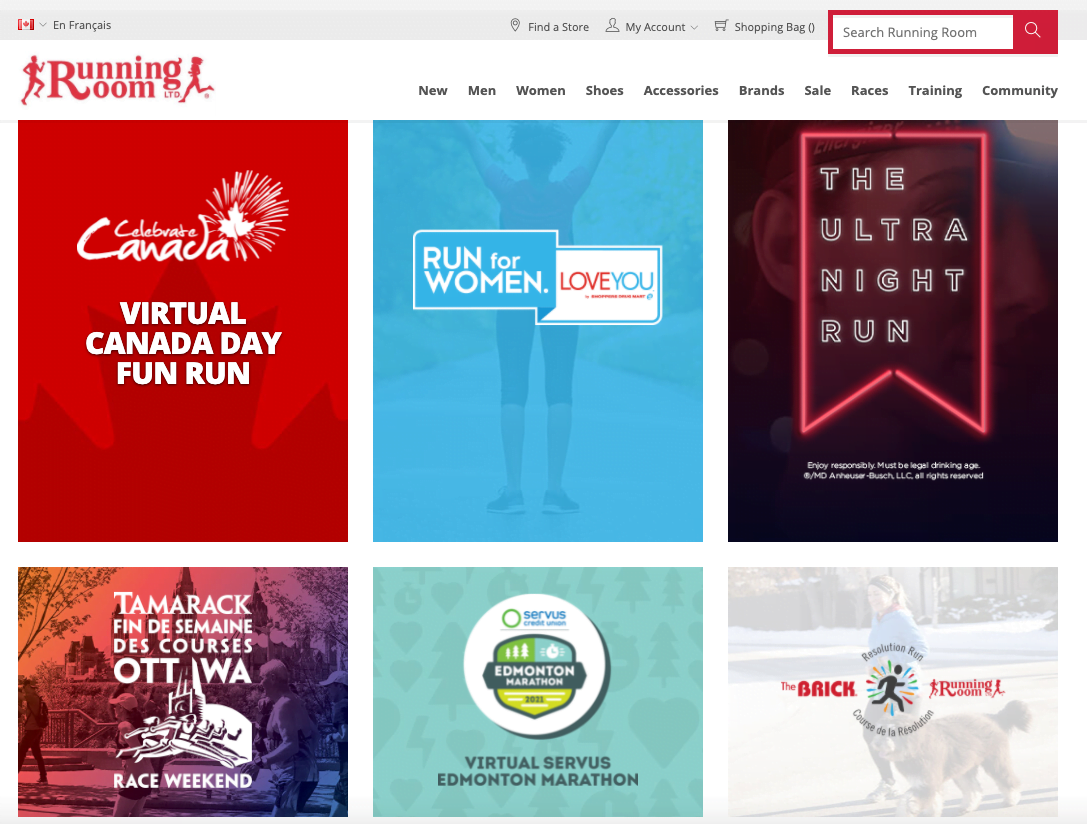
John Stanton, Founder and CEO of the Running Room, which has 100 stores across Canada, said there is a running boom taking place now as a result of the pandemic.
Image: Screen grab from RunningRoom.com
“There’s a number of factors. The isolation and the fact that every health minister is recommending outdoor exercise and to do it by yourself. So walking and running fits really well for that,” said Stanton. “What we’re seeing is a lot of runners who are my age where they might not have been running as much but with the pandemic they can’t go to the swimming pool, they can’t go to the gym, they can’t go workout, and because a lot of those fitness classes are being cancelled a lot of those runners are returning.”
Stanton said many people involved in team sports also want to maintain their fitness while their sports are on a break so they too have taken up running.
“We’re seeing a real upsurge of it and it will continue too. There’s definitely an interest in it. You’re seeing it in the neighbourhoods of Calgary and Edmonton and across Canada. You see people out. Not only do you see that runner by themselves but you see families, and they’re running and walking together. We’re seeing an uptick on selling shoes because the runner who used to run and maybe because of aging or injuries and can’t run any longer knows the benefits of getting outside and getting moving and exercising. And they’re walking in the community,” said Stanton.
“You’ve got the newbie runner that’s there and they’re there in big numbers. You’ve got the return runner who is there and decided to come back to running because they maybe gave up and took up another sport for awhile. And then you’ve got the runner who can’t run anymore but they’re walking. And you’ve got the brand new person who has seen everyone in the neighbourhood and they’re going stir crazy in the house and they’ve got to go outside and do something. So they might as well try walking or running.”
Running Room at CrossIron Mills. Photo: Jessica Finch
Key findings from the RunRepeat survey include:
These new-pandemic runners are 19.82 per cent less likely to participate in in-person races over the next 12 months;
New runners are 115.37 per cent more in favour of virtual races than pre-pandemic runners;
Motives for running are changing – physical health is the primary motivation for 72 per cent of new-pandemic runners, up 18.03 per cent from runners who began running before the pandemic;
Only 50.04 per cent of new-pandemic runners plan to participate in a race over the next 12 months in comparison to the 63.08 per cent of pre-pandemic runners;
Currently, these new-pandemic runners are 20.67 per cent less likely to participate in any form of race, in-person or virtual;
Of these new runners that are looking to participate in a race, 68.42 per cent plan to race in-person in comparison to the 85.34 per cent of pre-pandemic runners;
New runners are running for their health, all while being less likely to choose any of the other options as a primary source of motivation. Specifically, these new runners are: 34.27 per cent less likely to run for competition or achievement; 31.44 per cent less likely to run for social interaction; 14.81 per cent less likely to run for mental or emotional health; three per cent less likely to run for their confidence or self-esteem.
“Our Fitness Trends 2021 report showed that outdoor activities like running were the #1 trend in 2020 and 2021, increasing significantly over the year,” said RunRepeat. “This study shows that there has been a significant boom in running during the pandemic. The situation and circumstances that these people have taken up running are drastically different than their pre-pandemic counterparts.
“With more than a quarter of runners having begun during the pandemic, the “average runner” has changed. From their motivations to their race participation and preferences. Focusing much more on the physical health benefits of cardio and being much more highly in favour of virtual races.”
Season 3, Episode 11: Topshop to Close All Stores in Canada
This week, Craig and Lee discuss Hudson’s Bay’s plans to close all of its Topshop stores. The closure of Topshop and Topman shop-in-stores will require HBC to strategize a substantial amount of space in many of its stores.
The Weekly podcast by Retail Insider Canada is available on Apple Podcasts, Stitcher, TuneIn, Google Play, or through our dedicated RSS feed for Overcast and other podcast players.
Drop us a line at Craig@Retail-Insider.com. You can also rate us in Apple Podcasts or recommend us in Overcast to help more people discover the show!
Background Music Credit: Hard Boiled Kevin MacLeod (incompetech.com). Licensed under Creative Commons: By Attribution 3.0 License. http://creativecommons.org/licenses/by/3.0/
The Compass Restaurant Group, based out of Ontario and run by Kathryn and John Chayka, a former General Manager of the NHL’s Arizona Coyotes, has picked up 13 franchise Wendy’s restaurants in Quebec with a commitment to expand the brand in that province.
The deal also comes with a commitment to build 13 additional restaurants in Quebec by 2025 as Wendy’s seeks to double its footprint in the province.
“At Wendy’s, we see tremendous opportunity in Quebec with more than a quarter of the population living there and only three per cent of our Wendy’s Canadian restaurants. This new agreement demonstrates the strength of the brand and the faith our franchise partners have in our bright future,” said Abigail Pringle, President, International and Chief Development Officer at The Wendy’s Company, in a statement.
“Wendy’s franchise owners, like Kathryn and John Chayka, continue to play an integral role in bringing our restaurants to communities across Canada and we are thrilled with their continued commitment to Wendy’s.”
The Chayka’s became Wendy’s franchise owners in 2015 when they purchased 12 locations in southern Ontario from Wendy’s corporate. Today they have 14 locations, primarily in the Niagara region but from Fort Erie to Burlington. The company’s head office is in Timmins, ON, but the Chayka’s are based out of Niagara.
“I think Wendy’s has done a really good job growing and re-invigorating the brand. They’ve done a really good job adapting with consumers, and not only that, it’s sometimes hard for brands to be Canadian when they’re not necessarily Canadian. I think they do a really good job with the quality. We have Canadian beef. They do a great job speaking to the Canadian consumer and even more now speaking to the Millennial consumer,” said Kathryn.
The Chayka’s are known for their involvement in the community. For example, in 2020, they donated and delivered more than 1,000 meals to frontline workers in the Niagara region who were fighting the spread of COVID-19. They also offered 50 per cent off meals for employees on leave of absence and provided active employees the same discount to provide meals for their families after their shift was over.
“Community has always been an important part of our lives and our Wendy’s restaurants have been a great way for us to connect with those in the Niagara region. This expansion is an exciting opportunity for us to grow our business, bring jobs to Quebec and to provide more Wendy’s experiences to more consumers across Canada,” said Kathryn.
“I think right now the economy is really strong (in Quebec). It’s interesting because the Wendy’s brand only has 13 stores in the province but Quebec has a quarter of Canada’s population. It’s not like there’s necessarily crazy barriers to entry. We see all sorts of brands in Quebec that are also popular throughout all the provinces in Canada. Other QSR’s (quick service restaurants) even . . . Overall we thought it was a huge opportunity. We’re young and we’re hungry and we want to grow and we felt that given all the opportunities in all the provinces Quebec had the most potential.”
There are nearly 400 Wendy’s restaurants across Canada.
Pringle said Quebec is substantially underpenetrated versus the rest of the country.
“We’ve seen strong sales growth in this market and believe there is a great opportunity to unlock growth for Wendy’s in Quebec,” said Pringle.
“We know that consumers are looking for fresh, high quality, made to order food at an affordable price that they can access quickly, conveniently and safely, and Wendy’s is positioned to do just that. We also offer consumers a variety of ways to access the brand that creates convenience in their everyday lives such as delivery, mobile order, and our drive-thrus.
“At Wendy’s, our vision is to become the world’s most beloved and thriving restaurant brand. To achieve that, we are developing innovative ways to expand access to the brand and unlock explosive growth across the globe. Expanding our footprint is one of our strategic growth pillars, and we remain committed to recruiting franchisees and building relationships with partners who want to grow with us. We expect Canada to contribute to our net growth Internationally in 2021. Further, we remain confident in our plans to reach approximately 8,000 restaurants globally by 2025.”
Wendy’s was founded in 1969 by Dave Thomas in Columbus, Ohio.
The first Wendy’s restaurant in Canada opened in 1975. Today there are more than 6,800 restaurants worldwide.
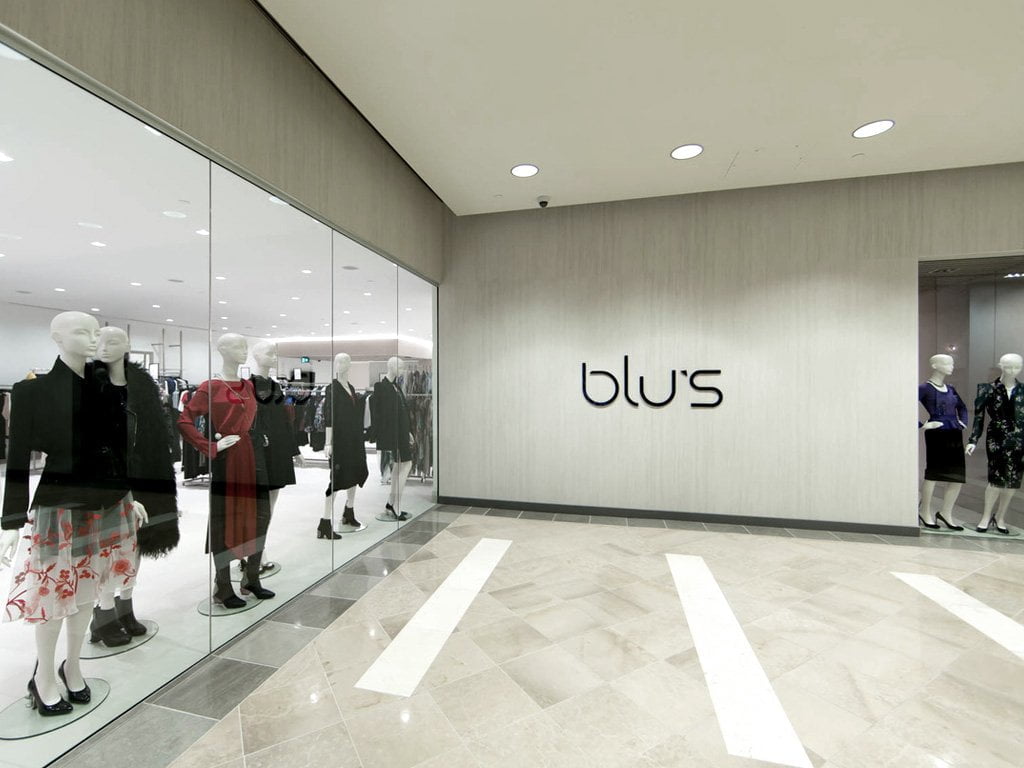
Manulife Centre Blu's store in Edmonton. Photo: Blu's
Upscale Edmonton-based womenswear retailer Blu’s will open a store this year at West Edmonton Mall in Edmonton. It will be a fourth location for the storied retailer and will replace a store that recently shuttered at Edmonton’s Southgate Centre.
The West Edmonton Mall Blu’s store will be located in Phase One of the shopping centre in a 2,100 square foot second-level space most recently occupied by womenswear retailer J. Michael’s. Blu’s will be located between a Mephisto shoe store and retail Luggage Unlimited, and across from multi-brand luxury menswear retailer Harry Rosen as part of a strategic positioning. A large number of women shop at Harry Rosen for men in their life, and now women will have their own upscale place to by fashions close by.
An Edmonton Blu’s store closed several months ago at the Southgate Centre after a lease expiry. Blu’s had occupied 3,315 square feet on a small second level of the shopping centre that also houses the mall’s administration offices and an optical centre.
Blu’s will open across from Harry Rosen on the 2nd level of phase One at West Edmonton Mall. Click image above for interactive West Edmonton Mall map.
Blu’s other Edmonton storefront is located on the second level of the downtown Manulife Place retail podium which until January of 2020 also housed a Holt Renfrew store. Upscale menswear retailer Henry Singer has a store downstairs at Manulife Place which has otherwise seen most retail tenants vacate over the past three years and will see a redevelopment.
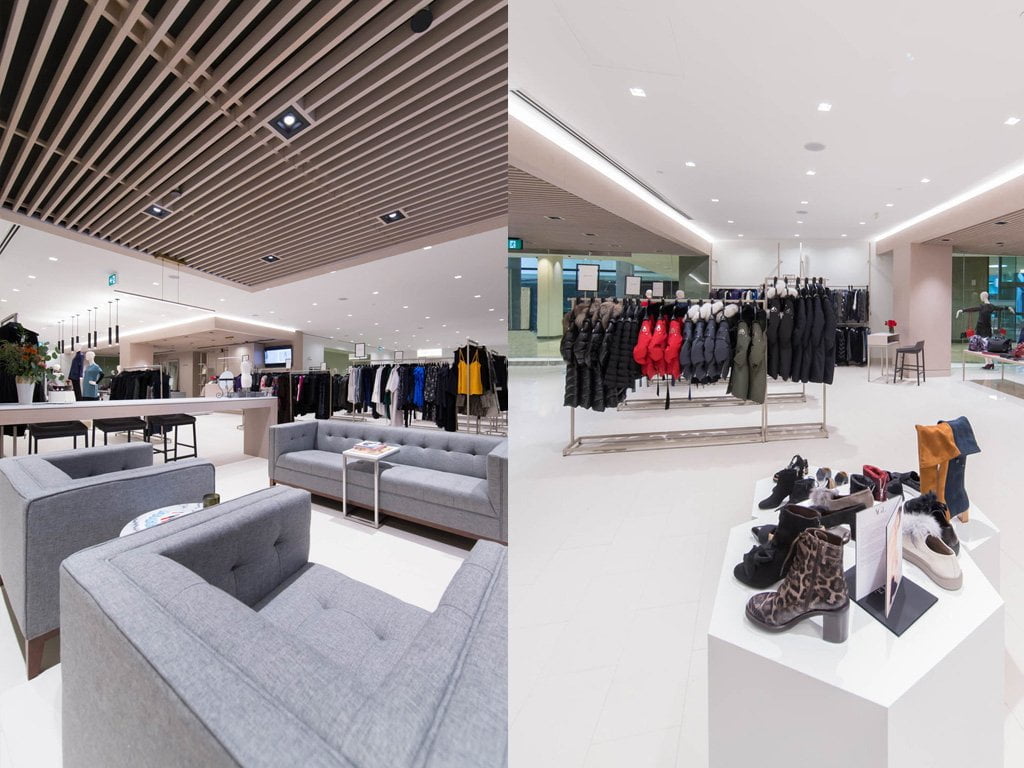
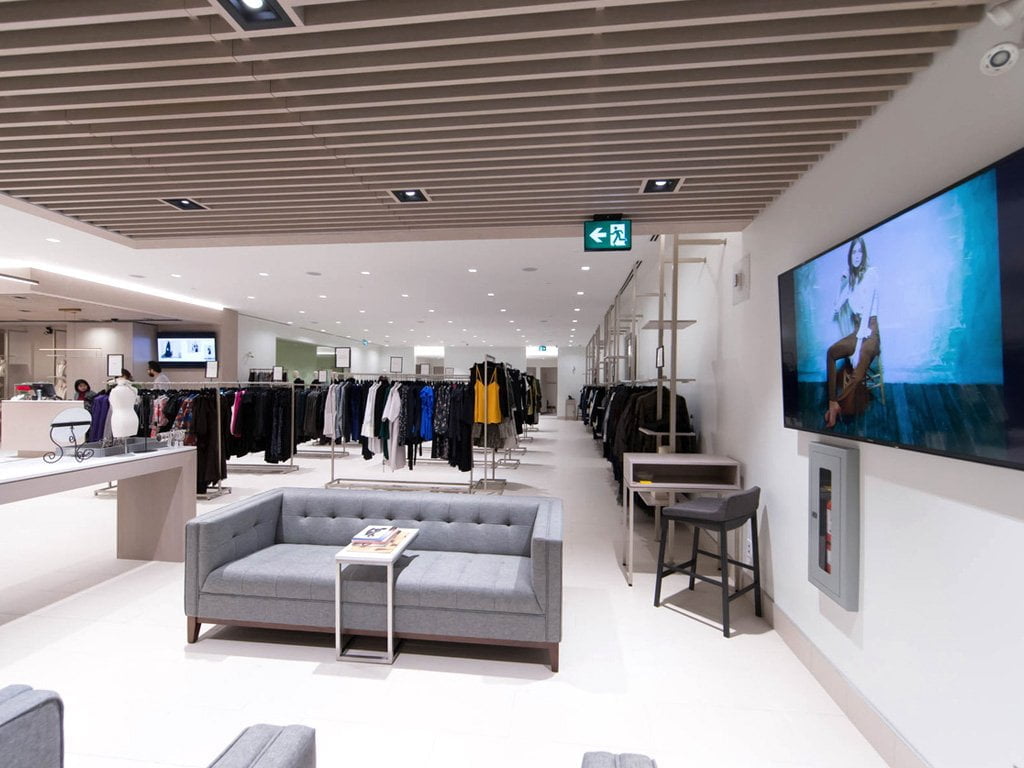
Blu's at Manulife Place
1 of 4
Blu's at Manulife Place
Blu's at Manulife Place
Blu's at Manulife Place
Blu's at Manulife Place
Blu's at Manulife Place
In Calgary, Blu’s operates two stores, including a 4,439 square foot downtown location on the third floor of Banker’s Hall, as well as a 3,890 square foot store on the second level of the Southcentre shopping centre.
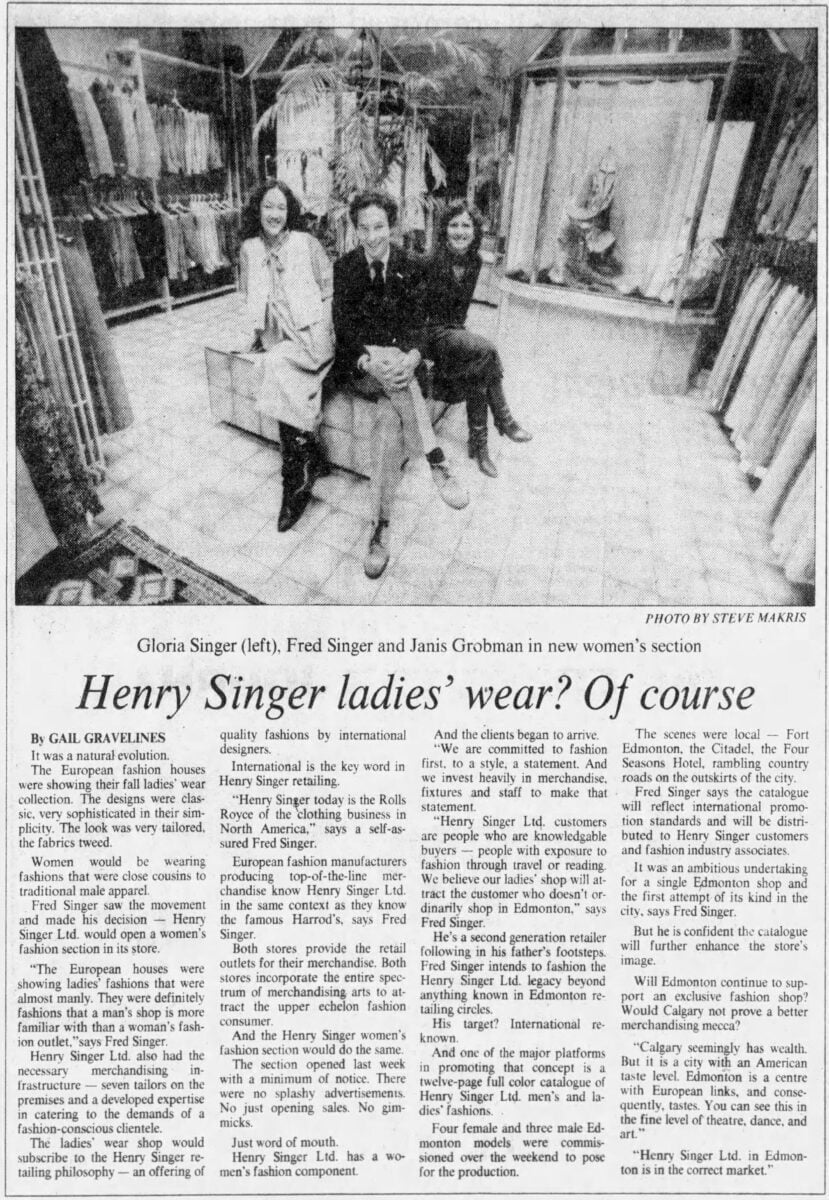
Blu’s began in 1978 as a section within the Henry Singer store in downtown Edmonton. At the time, Henry Singer occupied the main floor of the Birks Building at the northeast corner of Jasper Avenue and 104 Street in a 6,000 square foot space that it leased in 1974. The opening of the Henry Singer women’s department saw coverage in the Edmonton Journal as per the newspaper clipping from Newspapers.com below.
Newspaper article from the Edmonton Journal on September 12, 1978. Image retrieved from www.newspapers.com
In 1981, Blu’s relocated to a small storefront on 104 Street near Jasper Avenue in the Standard Life building (which is now anchored by a Shoppers Drug Mart store). In 1983, John and Jennifer Leavitt purchased Blu’s from Henry Singer and in 1988, the couple moved the Blu’s store into a much larger two-level space in the new 200,000 square foot Manulife Place Phase II which is now occupied by DynaLIFE Medical Labs. Blu’s eventually moved to its current second-level space at the original Manulife Place and in 2015, the retailer was acquired by Kerry Tham and Vince Kong who joined as partners. The Manulife Place Blu’s store saw a full renovation in 2017.
Newspaper article/advertisement from the Edmonton Journal on March 15, 1988. Image retrieved from www.newspapers.com
Blu’s has been part of many Edmonton women’s wardrobes over the years, helped in part with its ‘The Investment Wardrobe’ which encourages customers to buy key pieces that can be worn in various ways depending on the occasion.
Upscale Blu’s features a range of fashions, footwear, bags and accessories from leading designers with a price-point in the ‘contemporary’ category. The retailer carries some brands not found elsewhere in Edmonton or Northern Alberta. Exclusive brands to Blu’s in Edmonton include French bag and accessory brand Longchamp as well as fashion brands such as Veronica Beard and Anne Fontaine. Other notable brands at Blu’s include Eileen Fisher, Hugo Boss, Marie Saint Pierre, Marc Cain, Smythe, Sarah Pacini, and Tiger of Sweden. Footwear styles from Stuart Weitzman, Frye, and Canadian brand Ron White are also carried in-store.
Blu’s is one of the only upscale multi-brand retailers in the Edmonton market and in downtown Edmonton, it’s the only upscale multi-brand womenswear retailer after Donovan’s shut down in 2009. Downtown Edmonton retail has been devastated due in part to the pandemic with mass vacancies made worse with Hudson’s Bay’s plans to shut its Edmonton City Centre store on June 3rd. West Edmonton Mall is home to La Maison Simons which currently has the most extensive assortment of women’s designer brands in the shopping centre.
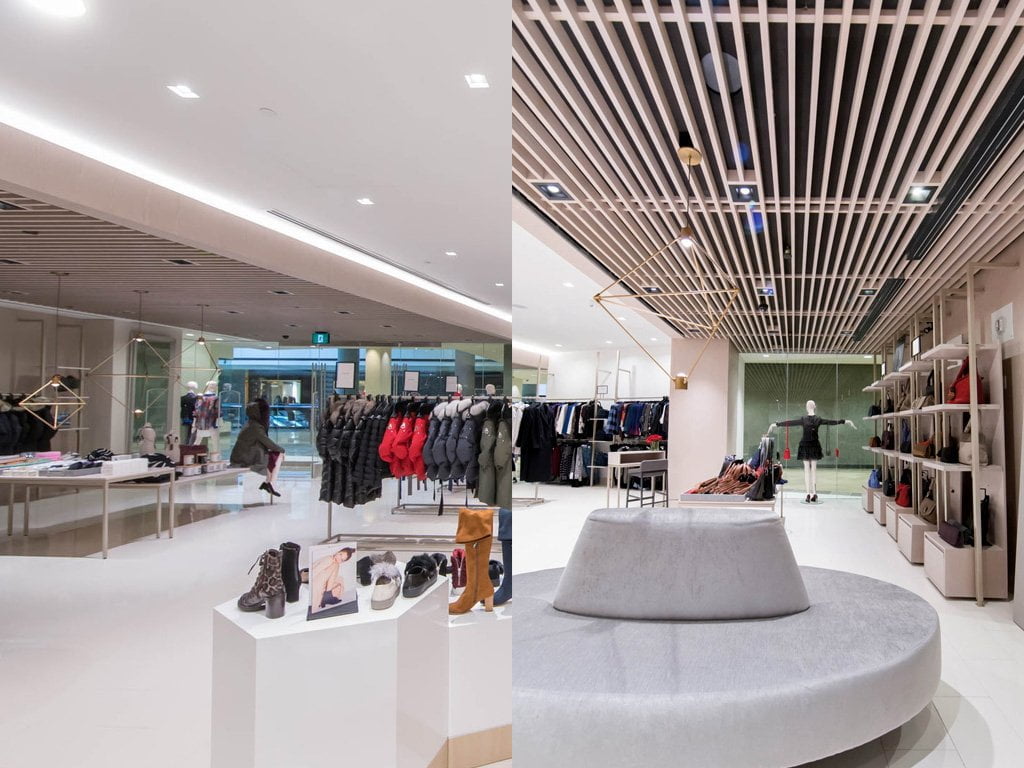
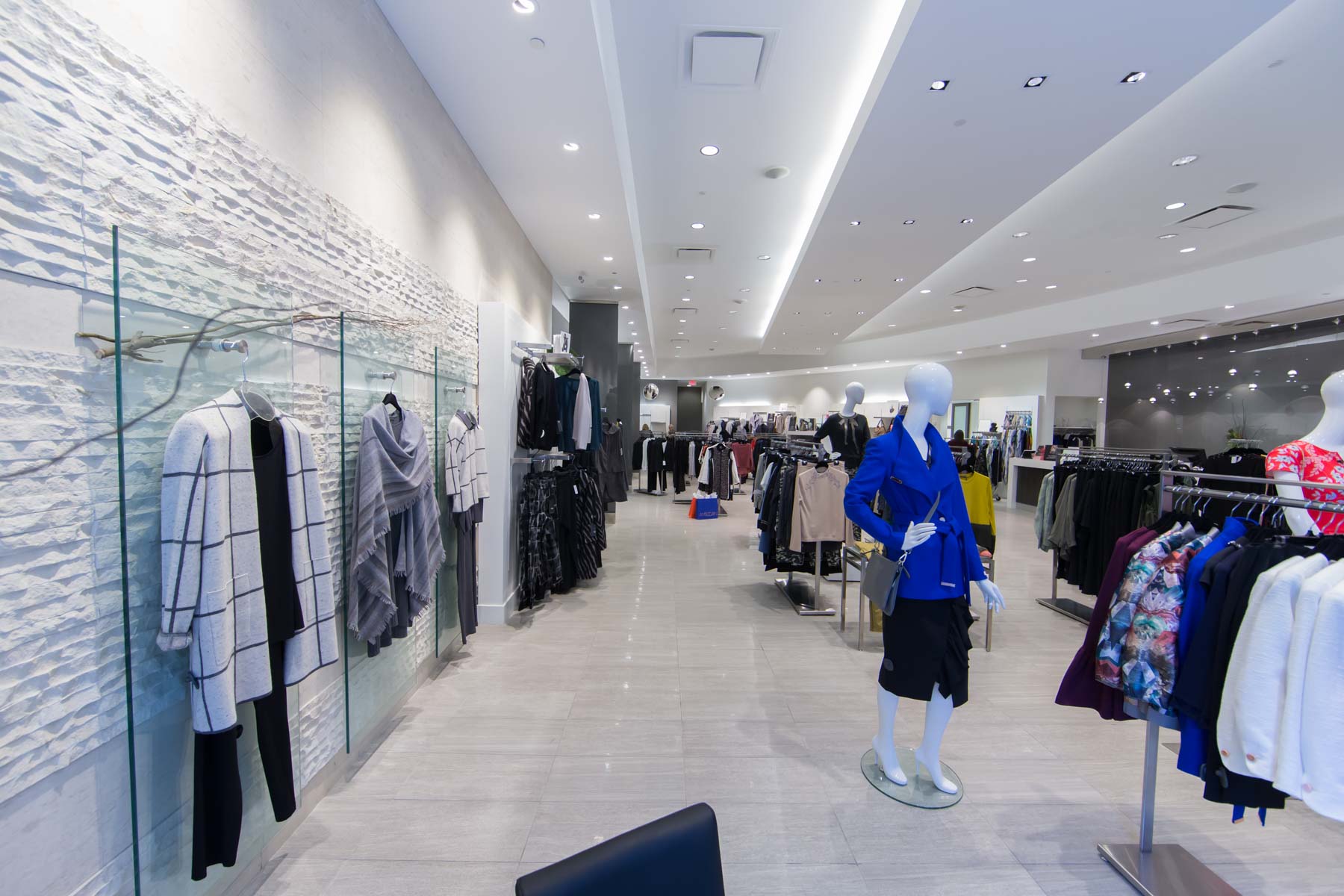
Blu's Southcentre Mall
1 of 3
Exterior Blu's Southcentre Mall
Blu's Southcentre Mall
Inside Blu's Southcentre Mall
Blu's Southcentre Mall
Blu's Southcentre Mall (Image: Blu's)
Blu's Southcentre Mall
Upscale retail in Edmonton is clearly shifting to West Edmonton Mall — it’s a movement that has been progressing for the past eight years when Tiffany & Co. opened a store at the centre. Things ramped up when in the summer of 2019, French luxury brand Louis Vuitton opened a store at West Edmonton Mall, followed by luxury brand Saint Laurent in December 2020 and last month, a 5,000 square foot Gucci store opened between the two other luxury brands. The loss of Holt Renfrew in downtown Edmonton was a blow to the area and its closure was only about two months before the pandemic shut retail across the country temporarily. Downtown Edmonton continues to struggle as many work from home because of the pandemic, and it’s unclear what the future will hold in terms of people returning downtown to shop.