Home Blog Page 982

Significant Staffing Crisis in Canada as Retailers Reopen: Feature

We’re almost there. Though the process has seemed slow and somewhat cumbersome, the rollout of COVID-19 vaccines is now well underway in every province and territory across Canada. Successful administering of its multiple types in numerous clinics throughout the country is allowing communities everywhere to move collectively and consistently toward our goal of reaching herd immunity. In conjunction with steadily decreasing cases reported, it means that we’re that much closer to a return to normalcy, or something like it, anyway. We’ll once again soon be able to gather, assemble and attend events; to enjoy interaction and engagement with our neighbours and communities at large. And, after such a turbulent and uncertain time, it also means that retailers will be able to start reopening their physical spaces to their customers, welcoming them back to the in-store environment that makes the industry so dynamic and exciting. However, according to Suzanne Sears, President of Luxury Careers Canada and retail staffing expert, it seems increasingly likely that their efforts to do so will be stunted in the midst of what she describes as a retail staffing crisis.

Suzanne Sears
Suzanne Sears

“What retailers are going to be facing when they reopen their physical storefronts is the fact that at least 20 to 25 percent of the retail workforce is not going to come back in time to help create a great in-store environment and support the operation in general,” she says. “And, most importantly, they’re not going to return in time to save the fiscal year for most retailers. If you couldn’t sell much of anything between January and June, you’ve really got to hustle now to make up for those lost dollars. And you can’t do it if you don’t have people. I’m seeing it on a daily basis. Requests are coming in for staff from companies and locations that have never experienced a problem in this area before. In Montreal, for example, there are hundreds of vacancies within organizations. The idea of reopening and restarting is to generate income. And you can’t do that without people.”

Retail talent shortage

Recent Statistics Canada data highlights the issue, reporting that the Canadian economy lost 68,000 more jobs during the month of May, bringing the total of jobs lost since the start of the pandemic to 571,000. Given the fact that retail is by far the largest employment sector in the country, the impact of these lost jobs on the industry starts to become obvious for many. But what isn’t so evident to the casual observer, explains Sears, is the scale and magnitude of the impact, which she believes will show up primarily in a loss of sales and productivity for any retailer struggling with the challenge of filling roles within their organizations, which will be exacerbated by something of a multiplier effect.

“When you’re missing staff, you’re missing out on revenue equal to four-times their salary in the sales and products and services they deliver for the company,” she explains. “So, if you’re paying someone $50,000 a year and that position becomes vacant, you’re actually losing out on about $200,000 because of the vacancy. When you multiply that by dozens or hundreds of missing people, organizations will be losing money simply because of a shortage of talent. Some of that comes from lost sales because there isn’t anyone there to sell to the customer. Some of it comes from lost efficiencies in things like the supply chain. And some of it comes from overburdening existing staff who, because another position is unfilled, have to do two jobs at the same time, decreasing their efficiencies. Vacancies hurt organizations. And when the vacancies are this pronounced and widespread, they have the potential to hurt the entire industry.”

Multitude of factors

Sears is quick to point out the fact that vacancies had already been an issue for many retailers prior to the pandemic when fully ten percent of roles within organizations were unfilled. However, events of the past 16 months or so have resulted in a multitude of factors that are each contributing significantly toward the current talent shortage. Impacts of the pandemic have precipitated in many heightened concerns over safety, leading to an exodus from major urban centres and an unwillingness in those living outside of cities to commute for work. In addition, due to a halt on immigration to the country, the number of new Canadians, who fill a sizeable percentage of retail roles, both frontline and support, have decreased year-over-year, falling substantially short of Canada’s immigration targets. And students enrolled in post-secondary institutions have left their campuses, returning home and leaving the supporting part-time roles that they filled.

“All of these factors have combined to create a worrisome population gap for retail in many cities across the country,” she says. “The problem is most challenging in Montreal, Toronto, British Columbia and Manitoba. There just aren’t enough people willing to re-enter the workforce to fill the vacancies left by impacts of the pandemic. But, what’s perhaps even more troubling, posing potentially severe consequences, is the fact that women have been exiting the labour market at an alarming rate. Without full-time schooling and childcare services, many are unwilling or unable to return to work.”

Stability and security

Further Statistics Canada data indicates that more than 20,000 women exited the Canadian labour force between February and October 2020, representing the majority of jobs lost (55%) within the retail, accommodation and food services industries during that time period. Any of the factors lending to the crisis on their own would be cause for concern, says Sears, but cumulatively they are reflective of one of the greatest staffing challenges that Canadian retail has ever experienced. Add to the list some of the fundamental deficiencies within the offering of retail employment, and the challenge becomes even greater.

“The scope of benefits and incentives that retailers offer in order to attract people to the industry has got to improve,” she asserts. “Wages have got to increase and more paid sick leave, among other things, need to be afforded. But, more than anything, retailers need to offer a guaranteed number of hours to work. It’s the number one complaint among prospective employees – the fact that most within retail work a random schedule of hours that’s different every week. It leads to a perspective of retail as an unstable career and not something that’s desirable enough to be involved in. Providing consistency and security will be critical in retailers’ efforts to attract the right talent to their stores.”

Providing a healthy and safe environment

In addition to ensuring the financial stability that job seekers require, allowing them to meet their own budgets and pay for things like childcare, groceries, rent and other necessities, Sears believes that retailers must also provide the security of a safe and healthy environment to work within. Without having achieved vaccine herd immunity, many are not currently comfortable enough returning to the retail workplace. However, going forward, the retail staffing expert offers a way by which retailers can safeguard their physical locations and establish a safe setting.

“Retailers are going to need to demonstrate to prospective employees, in a tangible way, that showing up for work is not going to jeopardize their health or their lives,” she exclaims. “To do this, they’re going to need to implement significant measures in order to offset risk. As a result, employing a fully vaccinated staff is going to be crucial. It’s the issue that retailers are going to be confronted with tomorrow and into the foreseeable future. In order to do this, many will consider making ‘proof of vaccination’ as a term of employment within their organizations. I absolutely believe that this will gain traction within the industry very quickly and will become the way of the modern workforce. It’s really the only way by which retailers or any other business can ensure the health and safety of their employees and customers.”

Innovation and reinvention 

As retailers in communities and cities across the country continue their preparations to reopen their operations to the public and reintroduce their offering, the need for many to fill the roles required to execute on their anticipated return is becoming increasingly dire. Sears recognizes the seriousness of the situation, describing the current staffing shortage as a pivotal moment in the near- and long-term future of retail in Canada. She adds that it could serve as a catalyst for real change within the industry, perhaps sparking a bit of much needed creativity in order to attract and retain the best of the best and ensure the continued growth and success of their businesses.

“Most of the jobs that have been lost during the pandemic are supporting part-time jobs. To start refilling these positions, retailers are going to need to invest into modernizing them with more flexible terms and conditions. They’re going to need to innovate and reinvent retail as a viable career again, offering clear paths to opportunity, success and promotion within the company that are easily documented and observable. As part of this, they’re going to need to offer training for their employees and teach them more, which almost always results in heightened engagement and productivity. There are a lot of changes that need to be made within the industry to meet the current challenges. The changes that are required need to come from leadership in order to empower human resources and the rest of the organization. And it needs to happen sooner rather than later, because they’re already fighting the battle from behind.”

For retail staffing support, contact Suzanne Sears, President, Best Retail Careers International Incorporated, by email: info@brcareers.com or phone: 289.795.6150, or visit https://brcareers.com/

Podcast [The Weekly]: Hudson’s Bay Downsizing its Downtown Flagship Stores

This week, Craig and Lee talk about Craig’s analysis on The Hudson’s Bay Company’s potential redevelopment plans for its flagship locations in Canadian downtowns. Is it a good strategy or missed opportunity?

The Weekly podcast by Retail Insider Canada is available on Apple Podcasts, Stitcher, TuneIn, Google Play, or through our dedicated RSS feed for Overcast and other podcast players.

Discussed this episode:

Subscribe, Rate, and Review our Retail Insider Podcast!

Follow Craig:

Follow Retail Insider:

Listen & Subscribe:

Share your thoughts!

Drop us a line at Craig@Retail-Insider.com. You can also rate us in Apple Podcasts or recommend us in Overcast to help more people discover the show!

Background Music Credit: Hard Boiled Kevin MacLeod (incompetech.com). Licensed under Creative Commons: By Attribution 3.0 License. http://creativecommons.org/licenses/by/3.0/

Free Live Event Featuring Retail Insider’s Craig Patterson: Smart Security and Automation for Retail in Canada

Retail Insider’s Craig Patterson is hosting a free online event next Wednesday June 16 at 2pm Eastern/11am Pacific called Access Granted: Unlock your business potential with smart security and automation. The one-hour event discusses smart security for retailers and banking and how systems go above and beyond in terms of automation [Register Here]

The discussion will include:

–Rick Snook, Segment Manager, Retail and Banking, Axis Communications

-Jason Macdonnell, President, Smart Security and Automation, TELUS

–James Reno, VP, Commercial Business, Alarm.com

The panel of experts will discuss how smart security systems and automation tools can help businesses drive value across the entire organization while arming HR, marketing and operations teams with valuable data insights that they need to navigate the tectonic shifts being seen over the course of the pandemic. You’ll learn how to:

  • Create ‘wow’ shopping experiences for your guests and embrace new trends such as curbside pickup
  • Proactively detect threats, minimize inventory loss and streamline business operations
  • Run more secure, efficient and profitable storefronts

As retailers reopen and gain capacity following lockdowns, theft and other security incidents are on the rise and need to be addressed. Technology now can also do much more. Join us next Wednesday for the free event by registering here. 

*Retail Insider partnered with TELUS for this event. For more information, email: craig@retail-insider.com. 

Canadian Retail News From Around The Web For June 10th, 2021

Canadian Retail News From Around The Web

Top Stories: National

Central/Eastern Canada News

Western Canada News

Aldo Pilots Livestream Shopping as the Asian Trend Expands into Canada: Expert Commentary

Image: Aldo

Montreal-based footwear brand Aldo is piloting livestream shopping as the company innovates amid a rapidly changing retail world. This spring the brand tested the concept with considerable success and it is now strategizing a larger rollout in various markets.

For the livestream shopping pilot, Aldo partnered with celebrity stylist Mimi Cuttrell and Los Angeles-based entertainer Nate Wyatt to host the event. The duo shared their style-tips on how to wear various styles of Aldo shoes and accessories, and viewers were able to shop the spring 2021 collection instantly in stream during the show.

The spring 2021 livestream shopping pilot was said to be a success. The Aldo website saw about 17,000 page views in the first five days after the event with an average viewing time of 12 minutes and six seconds. A 308% engagement rate including likes, hearts and comments were registered. Aldo will apply key learnings from its pilot as it looks to further test the waters this year with more online live shopping events.

Aldo says that there are ways to extend the shelf life of the experience and have it live on via the website and social channels even after the livestream has ended. Views and conversations continue to be present even two weeks after the actual event. Third party platform Bambuser, which was utilized for the Aldo livestream shopping event, noted that on average 75%-80% of sales and views happen post-live in the few weeks following a livestream event.

Amanda Amar

For future livestream shopping events, Aldo is looking to experiment with different formats and collection launches, as well as elements such as advanced viewing of collections for participants. The idea of livestream shopping is new to the North American market which means there’s room for some experimentation, according to Amanda Amar, Director of Global Social Media and PR . Ultimately the goal of Aldo’s livestream shopping initiative is to create engaging shopping moments while embracing new digital innovation.

Livestream shopping is hugely popular in Asia and now expanding into North America. Some are saying that it’s the ‘next big thing’ and that consumers will begin demanding as the experience grows in popularity. Overseas, livestream shopping takes place online through websites, social media and apps.

Aldo is embracing innovation to gain market share at a challenging time for the retail industry, as well as for the retailer. The pandemic has impacted consumer spending on fashion significantly in Canada, and Aldo itself filed for creditor protection last year after accumulating significant debt. The company has since been closing underperforming stores in Canada and the United States and is now looking to the future which includes a hybrid of physical and digital retail channels.

Retail Insider is putting together a panel of experts to comment on trends that we are seeing in Canadian retailing. Below are comments from some noted experts.

Retail Panelist Discussion

George Minakakis

George Minakakis

Welcome to the future of retailing, one continuous giant experiment. Is livestreaming another disruptive component in retail? We have to keep in mind that China moved a lot faster on e-commerce and livestreaming because they did two things. First, they skipped a lot of technological learning curves and jumped right into mobile phones, bypassing the infrastructure pain and limitations of landlines. According to iresearch.cn in 2019 mobile transactions were approximately 85% Chinese consumer purchases.

Chinese consumers are protective of their free time from work, looking for greater convenience, and are very health conscious. I am not surprised at livestreaming being popular, couple that with the pandemic suddenly 30% of the population is watching. But there is an art to this. A colourful host/influencer, product that is attractive and in short supply on the product that creates a sense of urgency, as a must have in your wardrobe or in your home. There is a lot of production planning, creativity, execution, and the ability to respond to live requests. It must be engaging and entertaining or your platform can lose interest fast. Retailing in China continues its evolution as it did when I led and built a 200-store chain there.

George Minakakis is the CEO Inception Retail Group Inc. and author of The New Bricks & Mortar – Future Proofing Retail. He’s also a co-host on The Business of Retail podcast.

Gary Newbury

Gary Newbury

Retailers continue to be at the digital/physical crossroads as they look for more engaging ways to attract consumers to their proposition beyond their store and website, especially during the lockdowns. Social channels, including Instagram, Twitter and Facebook continue to be a strong source to attract consumers and their orders during this period, however, “more live” aspects, as facilitated via apps like TikTok have really caught consumers’ interest. Livestreaming is a natural progression of this, especially with its high adoption in China, where we tend to look for what’s coming down the digital wire to North America.

Linking livestream and the appropriate influencers looks like a winning formula for retailers, especially in apparel, fashion and luxury who have been placed in and out of lockdown restrictions many times over the last fifteen months. The success of this event should be a signal to other market participants within these categories and beyond, continuous innovation is required to keep top of mind for consumers. The key now, beyond the promise of value, is to make sure consumer orders are fulfilled with the delivery options and convenience they expect.

Gary Newbury is a GTA based Senior Exec On Call at RetailAID, focused on helping consumer driven supply chains to be agile, be innovative and be digital through supply chain transformation. Gary is a Co-Host on The Business of Retail podcast.

David Ian Gray

“It has great potential and makes a lot of sense for the right brands and shopper situations. However, there are cautions. The first adopters in their categories will create lots of buzz. I have no doubt it will generate sales if executed decently. However, once every brand is doing it, it will quickly overwhelm shoppers and not be special anymore. Just like apps. Consumers only use about 5-6 third-party apps on their phones. Yet how many businesses say, ‘we need to create an app’? At that point, it will be the ones who are strategic and purposeful with why they are doing it and how it bridges customer and business needs. Just bolting it on as a sales tactic won’t meet exec expectations long run without purpose and support.”

David Ian Gray is the Founder/Principal of DIG360 and is a Co-Host on The Business of Retail podcast.

Farla Efros

I believe strongly in the value and benefits of livestreaming in reaching consumers. About 80% of people are more likely to watch a video versus reading a blog. The massive increase in the amount of video content consumed, which has led to video and live streaming features from Facebook, Instagram, Twitter, Snap Chat etc.

The key benefits of livestreaming as a key tool for retailers as described below:

  • Accessibility- this allows consumers to get to know and trust a brand before spending money
  • Larger Audience – this allows brands to engage with people that do not know them. Livestreaming can attract people you did not know and provide them with a “behind the scenes” experience so they can build a stronger connection with your brand
  • Rise of Smartphones and Unlimited Data — as virtually everyone has a smartphone, allowing people to watch livestreams any time and any place
  • Improved ROI—livestreaming is interactive which both draws more viewers and is viewed as much as three times longer than a standard video
  • Build Relationships with your consumers, giving your brand a personality, a face and voice which can translate into increased credibility and trust.
  • Working with Influencers more effectively to become your brand ambassador and host the livestream to keep the audience tuned in and draw more eyes & clicks to your brand.

Farla Efros is President of HRC Retail Advisory, a leading retail consulting firm focused on enhancing retail profitability.

Bruce Winder

“I have read a great deal about live streaming events in Asia and the US and think it is a great example of how a Canadian retailer can innovate. Bravo!

We have all witnessed the growth of e-commerce during the pandemic and it is safe to assume a great deal of it will continue on after this nightmare ends. The livestreaming medium also offers the potential for tremendous excitement and capitalizes on impulse sales through mobile technology.  The event helps customers engage with the brand and telegraphs that something is different about Aldo as they look to reinvent themselves.

I think we are going to see an explosion of sales in fashion as customers have, for the most part, been confined to their dwellings for the last year plus – wearing track pants, sweatshirts and slippers. It sounds like a cliché but I anticipate a roaring twenties-esque social scene for at least a year after we open up our economy. People will be buying fashion like never before and making up for lost time to live their best lives.”

Bruce Winder is a Retail Analyst – Author of RETAIL Before, During & After COVID-19 (Available on Amazon), Consultant, Speaker, Instructor, Neurodiverse, Artist

Retail Insider is welcoming experts to comment on future trend stories as we develop this concept. To contact Retail Insider’s Editor-in-Chief Craig Patterson, email: craig@retail-insider.com

Amazon Announces Canadian Operations Expansion with Hiring at Tech Hubs: Interviews

Amazon Canada office in Toronto - Photo by Dustin Fuhs

Retail giant Amazon is expanding its footprint in Canada with plans to hire 1,800 new corporate and technology employees at its Canadian offices in 2021, including its Vancouver and Toronto Tech Hubs. 

The company said the new hires mark the latest milestone as it continues to invest to meet customer demand.

The 1,800 new hires will support teams across Amazon, including AWS, Alexa, Amazon Advertising, and Retail and Operations Technology. More than 1,500 positions are currently open on amazon.jobs for software development managers, senior software development managers,  software development engineers, senior software development engineers, data engineers, program managers, cloud computing solutions architects, sales and marketing executives, and more.

Kristin Gable, spokesperson for Amazon in Canada, said the company is “customer obsessed.”

Kristin Gable

“So we’re constantly innovating on behalf of customers and what you’re seeing with today’s announcement is we’re building the team that will be innovating on behalf of customers here in Canada,” she said. “Today’s announcement of 1,800 new corporate and technology employees really focuses on roles in Amazon’s tech hub where we support various teams across the company including a lot of the teams that support our cloud division, AWS, our retail sites, and our various logistics components.

“What you’re seeing is the growth of the team that is committed to supporting our customers. Last fall Amazon announced 3,500 what we call net new jobs that will be added in Canada between 2020 and 2023. The hires that we are announcing today are part of those growth projections. They also demonstrate great momentum in our commitment to being accountable for what we’ve announced in the past.”

The company said full-time employees at Amazon receive competitive wages, as well as medical, vision, and dental coverage, a group RRSP plan, stock awards, and performance-based bonuses. Amazon is also committed to providing employees with access to the education and skills training they need to grow their careers, offering a variety of company-funded training opportunities to help them transition into higher-paying, in-demand careers within the company and beyond.

Future Amazon Headquarters at The Post in Vancouver. Rendering: QuadReal

Amazon has more than 1.3 million employees worldwide.

The company said software development engineers applying to Amazon will benefit from Best Fit, a new way to find the job that best fits a candidate’s interests and skills. Amazon offers candidates choice and reverses the process: instead of having job applicants do their own research about which teams they would like to join, Amazon’s teams pitch future employees the roles that they have open.  

“Candidates interested in software engineering jobs at Amazon only have to apply once and are automatically considered for positions in this field across many teams within the company. Candidates describe their ideal job, including their tech stack (the set of technologies used to build a web or mobile application) and domains of interest, their preferred location, and the kind of team they are looking for. After passing an online assessment and interviews, they are presented with multiple matches—both in the fields they prefer, and in new areas where they could be successful,” it said.

Alfonso Palacios

“We are inventing new ways for candidates of all backgrounds to easily access the job that will help them grow,” said Alfonso Palacios, Vice President of Recruiting at Amazon, in a statement.

Candidates looking for a one-stop resource for software development engineer jobs at AWS can visit https://www.amazon.jobs/en/teams/aws-software-development-engineer.

Amazon employs more than 23,000 full- and part-time employees at the company’s fulfillment centres, corporate offices, development centres, and other facilities in British Columbia, Ontario, Alberta, Manitoba, and Quebec. Between 2010 and 2019, Amazon invested more than $11 billion (CDN) in Canada, including infrastructure and compensation to employees.

The company’s presence in Canada includes one data centre region, two tech hubs, two sortation centres, and 13 fulfillment centres with three on the way in 2021 including Hamilton, Ajax and Ottawa.

The company has operations located in over 25 communities in five provinces. 

The tech hub in Vancouver employs more than 2,700 people with more than 5,000 jobs to be added by 2023. The tech hub in Toronto employs more than 1,600 people with more than 2,000 jobs being added by 2023.

Amazon said it has contributed more than $9 billion to the Canadian GDP between 2010 and 2019.

Etsy Sees Significant Platform Growth for Handmade and Vintage Goods in Canada: Interview

Image: Etsy

Etsy, the online marketplace for handmade and vintage goods, sold more than $10 billion in goods in 2020, according to a new report from the company. 

In Canada, it said there are 199,000 active Etsy sellers as the company offers an on-ramp to creative entrepreneurship for many people who might not have otherwise started a business. In Canada, 50 per cent sold their goods for the first time on Etsy; 83 per cent are businesses of one; and 97 per cent operate their businesses from their homes.

“Etsy has long served as an on-ramp to entrepreneurship for creators, designers, and makers all over the world, allowing them the freedom and flexibility to work and build a business on their own terms. The importance of being able to build and grow a small business on Etsy was abundantly clear over the last year, amidst a global pandemic and the resulting economic crisis. Nearly two million new sellers turned to Etsy last year—bringing the total number of active sellers on Etsy at the end of 2020 to 4.4 million—looking for economic opportunity as well as personal fulfillment during challenging times,” said Chelsea Mozen, Etsy’s Director of Impact and Sustainability. 

ETSY Toronto (Image Toronto Etsy Street Team)

“2020 reinforced the notion that creative entrepreneurship can be a powerful force for good, providing income and jobs, driving local economic development, and helping to revitalize and bring hope to communities around the world. During 2021 and beyond, Etsy remains committed to supporting our community around the world.”

Chelsea Mozen

Company research indicates that for 28 per cent of these entrepreneurs, Etsy is their sole occupation. For the rest, it provides an important source of supplemental income –  with their creative business contributing 9.9 per cent of household income, on average. Four in 10 have financial dependents, including 22 per cent who have children at home and 35 per cent use income from their creative business to cover household expenses like bills, rent, and food.

Etsy said these businesses support local communities and the broader economy:

  • The majority (78 per cent) source their vendors and supplies domestically, if not in their own province (64 per cent), then in their own country (14 per cent). 
  • 17 per cent have help (both paid and unpaid), with most hiring fewer than five people; 
  • They contribute to the broader retail ecosystem, with the majority (52 per cent) selling their goods via other channels as well, including other online sales platforms, social media, craft fairs, or through retail stores; and
  • 56 per cent export their goods outside their home country.

“We found that the pandemic drove many to start creative businesses in a time of economic upheaval. Within Canada, 43 per cent of sellers who started their business in the past year did so due to COVID-19, and half cite financial challenges as prompting them to start their creative businesses,” said Mozen.

“Despite the challenges of 2020, Etsy offered stability and even growth for new and existing sellers: 69 per cent of sellers in Canada say their Etsy income has held steady, if not grown, since the start of the pandemic, while nine in 10 say the importance of Etsy income has stayed the same or increased.”

Half of all sellers cite financial challenges as prompting them to start their creative businesses, with loss of employment driving many (10 per cent job loss, 13 per cent unable to find work and seven per cent unable to work to care for a family member). 

The company said 31 per cent of Etsy sellers in Canada experienced income declines during the pandemic, yet only 13 per cent were able to access relief funds, adding that 21 per cent wanted to apply for relief funds, but were either unable to apply for them or unsure if they could.

Approximately 40 per cent of Etsy sellers globally with a sale had double the number of sales in 2020 versus 2019, and nearly three quarters of these sellers had quadruple the number of sales. On average, new sellers in 2020 received over two times more orders in the first 30 days after opening a shop compared to new sellers in 2019.

Canadian Retail News From Around The Web For June 9th, 2021

Canadian Retail News From Around The Web

Top Stories: National

Central/Eastern Canada News

Western Canada News

Downtown Victoria BC Retail and Foodservice Finding its Place Amid Drastic Downturn in Tourism: Interviews

Downtown Victoria
Downtown Victoria - Image courtesy of the Downtown Victoria Business Association (DVBA)

Victoria’s downtown retail vacancy rate rose from 3.1 per cent in the fourth quarter of 2019 to 6 per cent in the fourth quarter of 2020 which confirms the pressures the market faced in a pandemic year, according to a report by commercial real estate firm Colliers Canada.

Also, the city’s shopping centre vacancy rose by 0.8 per cent over the year to finish 2020 at 5.8 per cent.

“2020 started with very optimistic expectations for the vibrancy of the downtown core. 2019 had been a strong year for the downtown and the prediction was that 2020 would continue the trend with downtown residents, office workers and record tourism figures all driving the market forward. By March 2020, however, it was clear that the predictions were going to be incorrect. Although downtown residents continued to offer some life to retailers, the occupants of office space largely were forced to work from home and tourism was severely restricted,” said Colliers. 

“Thankfully, government programs provided much needed support and many retail and restaurant operations have been able to hold on through this challenging period. Wage subsidies, rent subsidies and other small business programs have combined to minimize the damage to downtown businesses.

Government Street in Victoria
Government Street in Victoria – Image courtesy of the Downtown Victoria Business Association (DVBA)

“Furthermore, with the local market not travelling, retailers did benefit from local support throughout the year. Canadian residents and particularly lower mainland residents also took the opportunity to visit Victoria instead of travelling abroad, providing some level of relief to local retailers and restaurants.”

Nathaniel Simpson, Sales Associate with commercial real estate firm CBRE Limited, said government support helped local businesses as did a trend by consumers to shop local. And many landlords did help tenants through the challenging times.

Nathaniel Simpson

“Everyone managed to survive. Revenues are down but the profits because of the subsidies are actually up for a lot of people,” said Simpson.

“The pandemic created a real opportunity for Victoria to take a hard look at just how sustainable the market is without the tourism dollars, without the cruise ships, which is huge. Hundreds of millions of dollars. Tourism is a billion dollar industry in Victoria. A lot of that comes from cruise ships.

“Over COVID, it’s been a real opportunity for retailers to see how sustainable their businesses are and then focus on the experience for the local community. The ones that have done well, they know that they haven’t relied on tourism dollars.

“The local community did rally to keep businesses alive, especially food and  beverage.”

Some small retailers have suffered because many consumers are going to Amazon and buying smaller items. But the trend was already shifting toward that experience prior to the pandemic, which simply accelerated some of that in the market. 

“Everyone’s had to reinvent and luckily a lot of the businesses are still around and this time last year we didn’t know that was going to be the case. As a Realtor I get lots of people from people out of town saying ‘I’m a restaurateur. Send me a list of all the closed restaurants because I’m looking for existing infrastructure’. And there is no list. We don’t have a list of closed restaurants to send. There’s one or two. It’s not a doom and gloom as we felt we were at risk of last year,” said Simpson.

While the vacancy rate in the retail market has increased, Simpson said it remains a healthy market at a six per cent rate.

“At least now there’s a few more options,” he said.

The Colliers report said the next market test for Victoria will be balancing the eventual pull back from government subsidies with an expected increase in office workers returning to the core and tourism gradually strengthening. 

“We do predict that this balancing act will be difficult to time perfectly for all retailers which will likely create additional pressures. Additional retail vacancy in the latter part of 2021 may be the result,” it said.

“For the majority of 2021, however, we do anticipate that the market will maintain status quo. It is anticipated that outcomes will become much easier to forecast as we progress through 2021, particularly as vaccination programs reach the larger population and consumer shopping patterns become more transparent. There is no question, however, that a timely and broad-based vaccination program will have an immediate and positive impact on sales for retailers and more importantly, for restaurants and hospitality venues in Victoria.”

The Bay Centre
The Bay Centre in downtown Victoria- Image courtesy of Cushman & Wakefield

Colliers said the suburban shopping centre market remained very strong through 2020 due to the large number of centres offering both essential and basic goods and services (grocery, liquor, pharmacy and take out). For those retailers most impacted by shutdowns, government programs once again provided a buffer to a drop in sales. Strong occupancy numbers in the suburban retail sector were also supported by a lack of any new shopping centres being added to the inventory in 2020, it said.

“The most challenged sector for the retail market continues to be interior enclosed shopping centres. Largely driven by fashion retail sales, these centres were already seeing challenges pre COVID-19, with the pandemic accelerating a shift in shopping trends and behaviours to the convenience of on-line shopping and same day delivery. The enhanced shift in consumer shopping resulted in several failures or companies in creditor protection such as Pier 1 Imports, Reitman’s, Victoria’s Secret and Aldo. Once again, government funding in 2020 helped to slow the decline of this market sector, however, 2021 will likely see an increase in downsizing of retailers serving this market,” added Colliers.

“The key for these enclosed shopping centres will be how to reinvent themselves in order to accommodate what is likely to be a new and smaller footprint approach from retailers while finding utility for excess land and buildings.”

*Images courtesy of the Downtown Victoria Business Association (DVBA)

‘Devastating Situation’ for Furniture Retailers in Canada Amid Ongoing Federal Government Tariffs: Interviews

Image: Furniture Store (JackF)

Recent tariffs imposed by the federal government have created a ‘devastating situation’ for furniture retailers in Canada.

A coalition of small to midsize furniture retailers said the tax of up to 295 per cent on specific categories of upholstered furniture from China and Vietnam, imposed by Canada Border Services Agency on May 5, is a “financial bombshell, adding to the one present throughout the past few months, affecting retailers and the entire retail furniture supply chain.”

“To better illustrate the impact: sofas sold – including those already ordered, those in the ports, or en route in the supply chain – are subject to an increase of up to 295 per cent, without any notice. For example, some upholstered sofas that used to cost $1,500 now cost $5,925. The imposition of the tax affects retailers and customers alike. At this cost, these products will not be able to be offered to consumers,” says the coalition.

Diane J. Brisebois, President & CEO of the Retail Council of Canada, called it a “devastating situation” for furniture retailers across the country.

The situation began in 2020 when several Canadian furniture manufacturers launched a complaint alleging that furniture from China and Vietnam was being dumped in the Canadian market at below market prices and hurting Canadian businesses. That led to the tariffs. The Canadian International Trade Tribunal will investigate the matter this Fall.

“This tax creates an unprecedented economic and operational challenge in a pandemic context, where rising raw material and labor costs, international transportation issues, in addition to staff shortages, cast a shadow on overall economic health of the furniture retail sector,” said Johannes Kau, President of Mobilia.

Brisebois said the Retail Council of Canada disagrees with the tariffs and it has indicated it will be intervening in the case to represent furniture retailers across Canada.

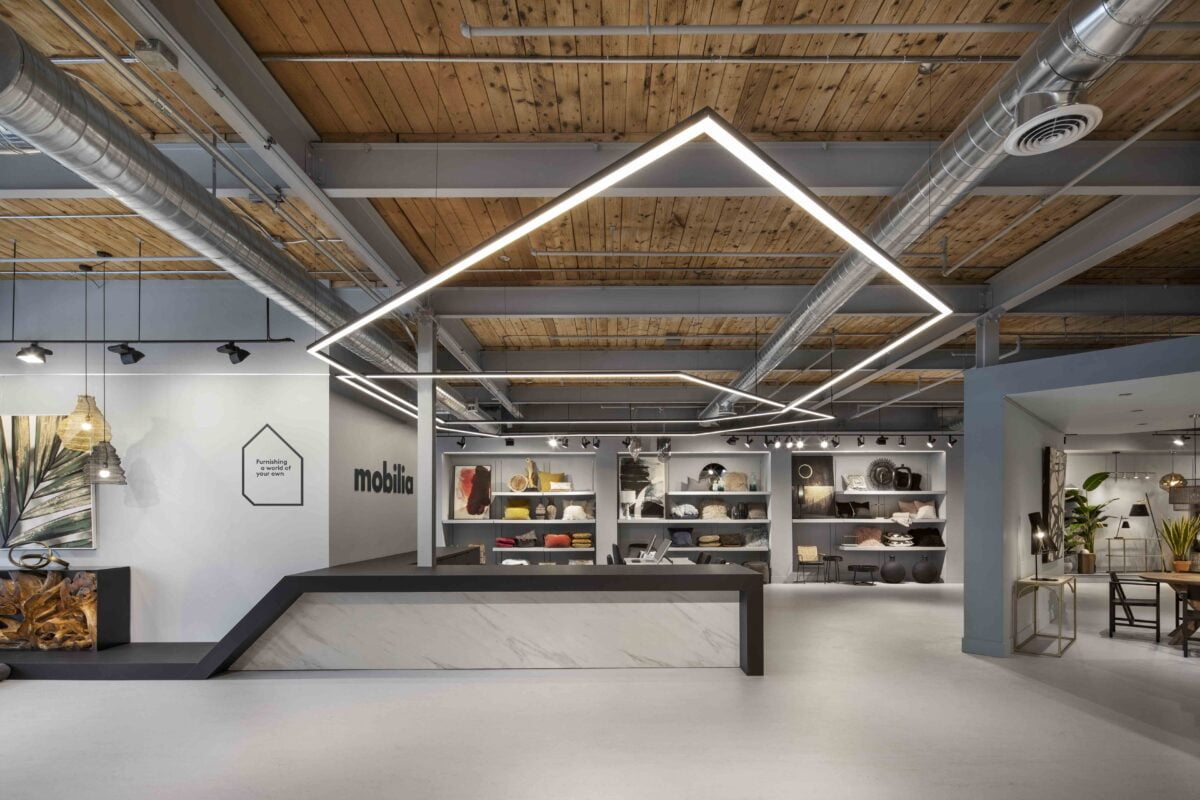
Image: Mobilia Storefront in Toronto’s Design District.

“The Tribunal will hopefully make its final decision around September, early to mid September, and at that point in time we will know if one, they believe that there’s no justification for any duties, two, if they believe there has been anti-dumping in some cases and may create a duty rate of a certain level that will be way below what the CBSA has put in place as a provisional duty or three, they could agree with the provisional duties that have been put in place by the CBSA in the interim period before the final finding,” said Brisebois. 

“Our case will be that we don’t believe there’s been anti-dumping and most importantly we believe that the provisional duties that the CBSA has put in place are absolutely outrageous and are creating an enormous amount of damage within the sector and also not only furniture retailers but their customers. The problem is that by making it effective May 5 those retailers who had shipments coming in had to in fact pay those duties to accept those shipments. In many cases, it’s had a very serious impact on their bottom line and secondly I think what has really aggravated the situation is that because of the pandemic and the challenges in supply chain . . . even those retailers who have been putting orders in through Canadian manufacturers have to wait three, six to nine months if not more to get some of the orders.

“At the end of the day, we are asking the Minister of Finance to intervene in this special case and to consider putting a freeze on the provisional duties until such time as the Tribunal has made its final decision or reduce the duties to the level at which even the complainants are suggesting which is around 35 per cent duty.”

Brisebois said many of the retailers have written letters to their MPs asking for this consideration because of the injurious nature of these provisional duties on the entire sector and ultimately on customers who are not able to afford expensive luxury furniture – the everyday Canadian in other words, she said.

Canyon Street Furniture in Creston, BC (Image: Google Maps)

In a letter to MP Rob Morrison, Canyon Street Furniture in Creston BC, which has operated since 2015, said that despite the many challenges posed by COVID-19 and repeated shut-downs and capacity restrictions, it has managed to weather the current public health crisis. 

“The biggest threat to our business arises from a recent federal government decision under the Special Import Measures Act (SIMA). SIMA, which is the joint responsibility of the Canada Border Services Agency (CBSA) and the Department of Finance, is intended to provide anti-dumping remedies. Dumping occurs when a foreign company exports goods to Canada at a price that is lower than in the exporting company’s domestic market,” said the company.

The letter said duties recently imposed “at these levels are highly unusual and are potentially crippling to Canadian furniture retailers like ourselves, as they can double the cost of Vietnamese imports and quadruple the cost of Chinese imports,” it added.

“At present, we have $30,000 of goods on order that we simply cannot afford to bring into Canada. Even if we could find the financing to pay the provisional duties, it is unlikely that we could sell much of it at the far higher consumer prices that would result from these increases in the cost-of-goods. To add to our frustration and challenges, there is no way for us to obtain alternative products from domestic manufacturers, who have next to no current capacity,” explained the company.