Anti-Looting Store Hoarding Should be Better

Date:

Share post:

By Jeffrey Spivock

A few times a week, I take a run to clear my head. First off, I recognize the privilege I have to do so without fear of police abuse or attack, unlike many of my fellow Canadians who are Black, Indigenous or Persons of Colour.

My runs often take me down Bloor Street West’s Mink Mile in Toronto, one of Canada’s most exclusive shopping destinations. Over the last several days, I have noticed that retailers have been putting up wood hoarding as a precautionary measure to protect their stores. It started with American brands (Nordstrom Rack, Gap, Banana Republic, TJX’s Homesense and Winners) along with a few others like Dolce & Gabbana, likely given their designers’ history of racist comments.

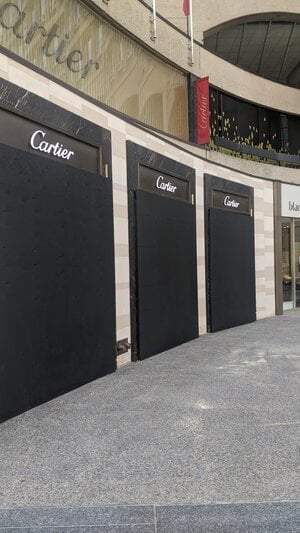
As of this weekend, most others had followed suit, from Hermes, Louis Vuitton, and Burberry to Canada’s Holt Renfrew Men and Harry Rosen. COS, Cartier and Moncler painted their hoarding black, likely to maintain a semblance of ‘chicness’ among the possible future ‘chaos.’


The vast majority of protests in Canada have been peaceful to date. However, in boarding up stores, retailers were likely assuming that subsequent protests may turn violent and that looting will occur. Some protestors may interpret it as daring them to do so. Canadians may also view this action as a way for the establishment to protect its assets, hoping for ‘a return to normal’, a return to the same status quo of injustice that has permeated in this country for generations.

I recognize that retailers have a fiduciary duty to their stakeholders and staff to protect their assets, and hoarding may be a smart risk management strategy. But I also believe that retailers have duty to all Canadians, especially those from marginalized communities, to listen, to support and to help. Not one retailer with hoarding has also mentioned its support for peaceful protests. (Roots, who doesn’t have hoarding, did say they were ‘closed to peacefully protest.’)

Despite being only a few hours old, some hoarding had already been ‘tagged’ or graffitied with slogans from those protesting inequality. This sparked an idea.

I’d like to personally issue the following challenge to Canadians retailers, who are reading this and who have hoarding up:

  • Consider painting all your protective hoarding a single colour, removing the DIY peg-board that mirrors the look of an area post-looting.

  • Use them to share your support for the continued peaceful protests against racial injustice.

  • Hand out markers and explicitly encourage all Canadians to use the hoarding to share their messages, their feelings, their experiences, their hopes, their anger, their solutions, their constructive criticism to you as a brand, thus leveraging this prime piece of real estate.

  • Every day that the hoarding is up, commit to photographing it and delivering the messages to your executive team, or, better yet, your full organization. Allow them to read, firsthand, the thoughts of Canadians in those communities and those protesting inequality.

  • You may even want to post those messages, unfiltered and unedited, on your social channels and invite your executives to publicly reflect or comment.

  • Commit to read them and to look for ideas that you as a retailer can support or implement moving forward.

  • Donate a portion of the money you are saving with these hoardings to local charities. You can even invite those ‘tagging’ to highlight hyper-local organizations that could use your support.

This is one simple idea that goes beyond posting a message on your social channel but demonstrates that you are listening, and, hopefully, taking action. Hopefully you have some others.


And if you like it, but don’t think you can’t find someone to help you paint and encourage people to participate, send me a Tweet. I am here with a can of paint and a roller, ready to do my part, so we can all listen and grow.

With respect,

Jeffrey Spivock

@Jeffretail

3 COMMENTS

  1. Article is dated for tomorrow (June 8) but posted today. If you walked by the stores today you would have seen some retailers already taking down their hoarding.

    • Good point Jane — the article was meant to be dated Friday but was put into the Monday schedule. It’s been re-dated. It’s good to hear the hoarding is coming down for some retailers. I hadn’t gone outside today so I didn’t get a chance to check myself. I’m near the Bloor/Bay intersection. I hope you had a great weekend!

  2. the scotiabank at wellesley and yonge started putting up hoarding thursday night. they put the framing, but not the plywood. perhaps they had a change of heart?

Comments are closed.

RELATED ARTICLES

Subscribe to the Newsletter

Subscribe

* indicates required

RECENT articles

From The Desk: Social Media Growth, Store Modernization and AI’s Impact on Retail Marketing

Canadian retailers focus on digital-driven growth, store upgrades and authentic brand experiences amid rising AI-produced marketing content and property shifts.

Retail Insider’s Canadian Retail Monitor: October 2026 — Retail Spending Rebounds, but Growth Remains Uneven

Canadian retail sales rose 1.2% in August 2026 to $74.6 billion, with gains across all nine major subsectors. Retail Insider's October Canadian Retail Monitor examines category performance, regional differences, wholesale activity, e-commerce growth and persistent affordability pressures heading into the holiday season.

RETHINK Retail Expands Executive Communities Under Canadian Leadership

RETHINK Retail is expanding its executive communities under Canadian CEO Marie Chevrier Schwartz, with Chris Parsons appointed VP of Audience. The company is developing Canadian programming focused on AI, retail media and industry collaboration.

Retail sales climb to nearly $75 billion in August: Statistics Canada

Core retail sales, which exclude gasoline stations and fuel vendors and motor vehicle and parts dealers, were up 1.1% in August.

Retail Insider “Q3 2026 Apparel & Fashion Report”: Stores Have to Earn Their Investment

Canadian fashion retailers are expanding, relocating and closing stores within the same market. The Q3 report examines why location productivity and network contribution matter more than headline store counts.

Canadian Franchise Sector Supports Nearly 2 Million Jobs: CFA

Canadian Franchise Association CEO Sherry McNeil discusses franchise ownership, opportunities for entrepreneurs, industry growth and the importance of due diligence.

OpenTable report highlights restaurants’ economic impact on Canadian communities

OpenTable survey finds half of Canadian diners spend an average of $133 at nearby businesses before or after restaurant visits, while no-shows remain a cost for operators.

Tahini’s targets 30 new restaurants as social media drives franchise growth

The Canadian Mediterranean fusion chain has 76 restaurants and plans further expansion in Canada and the U.S., with some franchisees discovering the brand online.

Toronto-Based Panda Hub Raises $4 Million to Expand Mobile Car Care Marketplace

Panda Hub plans to launch its Panda 2.0 platform, enter new markets and add premium automotive services as it prepares for Series A funding.

Canadian Small Businesses Emphasize Local Identity as Holiday Costs Rise: VistaPrint Survey

VistaPrint research finds 51% of Canadian small businesses cite financial pressures as a key holiday challenge, while 32% prioritize attracting new customers.

Daily Synopsis: October 22, 2026

Canada Post starting weekend parcel delivery in Toronto Montreal and Ottawa, Walmart Supercentre opens in Fort McMurray, Stony Plain Costco under construction, adults drive Halloween candy sales, and other news.

Kith Opens Second Canadian Storefront at Vancouver’s Oakridge Park

Kith has opened its second Canadian store at Oakridge Park in Vancouver. The approximately 9,000-square-foot store features men's, women's and children's fashion, footwear, Kith Treats and a distinctive street-facing design within the shopping centre's expanding international retail mix.

NAPA Canada Sales Rise 9% as Acquisitions Drive Expansion Amid Soft Market

NAPA Canada reported 9% sales growth in the third quarter of 2026, supported by its acquisition of Benson Auto Parts. Comparable sales rose just 1%, highlighting subdued demand as parent UAP expands its Canadian automotive distribution and repair network.

MUJI opening first Vancouver Island store as Canadian expansion continues

The Japanese retailer is introducing a community partnership program in Victoria, with plans to extend the initiative to future Canadian store openings.

WitchSchool Canada Tests ‘Reciprocal Retail’ Model in Ottawa’s ByWard Market

WitchSchool Canada is testing a collaborative retail model in a 160-square-foot storefront in Ottawa’s ByWard Market. Founder Kiki Keskinen says the grant-supported residency connects independent entrepreneurs through shared programming, customer referrals and promotional opportunities, while raising questions about long-term operating costs.

Cozey doubles size of Toronto flagship showroom (Photos)

The furniture retailer is expanding its Queen Street West location as it adds products and prepares for new store openings in Edmonton and New York City.

CouchHaus Expands Toronto Presence With New King East Pop-Up Showroom

The Canadian furniture brand is returning to Toronto after its 2024 Stackt Market test, using an in-person showroom to support customer experience and national growth.

Retail Insider “Q3 2026 Grocery Report”: More Capacity, a Harder Fight for the Basket

Canadian grocers are adding stores, converting banners and reworking online fulfilment. The Q3 report examines whether more capacity can capture additional household spending at an acceptable cost.

Two-thirds of small business owners plan to exit within decade, CFIB says

A CFIB report says limited succession planning could put Canadian business assets, jobs and community services at risk as owners prepare to retire or sell.

One in four Canadian small business owners required to guarantee financing personally: Equifax

Equifax Canada survey finds younger entrepreneurs are more likely to use personal credit and assets to support their businesses as owners face customer, cost and cash-flow pressures.