Canadian retail sales are still plunging at record speed, according the latest numbers from Statistics Canada. In May 2020, total unadjusted retail sales declined 20.0% versus the same month a year ago. While that’s a horrible result, it’s actually an improvement over the phenomenal 31.3% year-over-year drop recorded in April. With more stores and shopping malls reopening, gradual improvement in the numbers is expected going forward, but it will take a while.
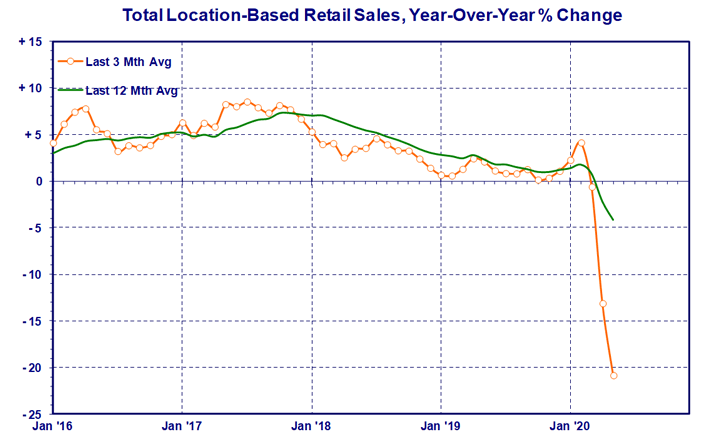
The above chart shows the plunge in the 3 month average (orange line) retail sales growth rate, the worst decline ever. For the 3 months ending May, retail sales fell 20.8% year-over-year. The underlying 12 month trend (green line) is now nose-diving in statistical sympathy.
Not all retail sectors have been affected equally however.
Food & Drug
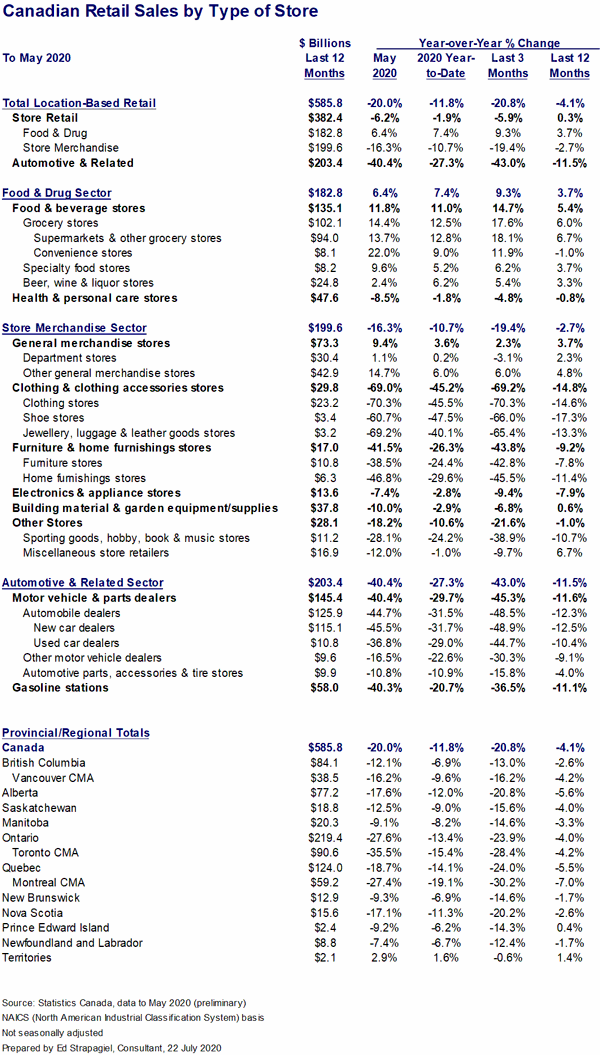
The relatively staid Food & Drug sector is showing unprecedented retail sales increases, gaining 9.3% for the 3 months ending May versus a year ago. The underlying 12 month trend (green line in the chart) has been trending up since the start of the year.
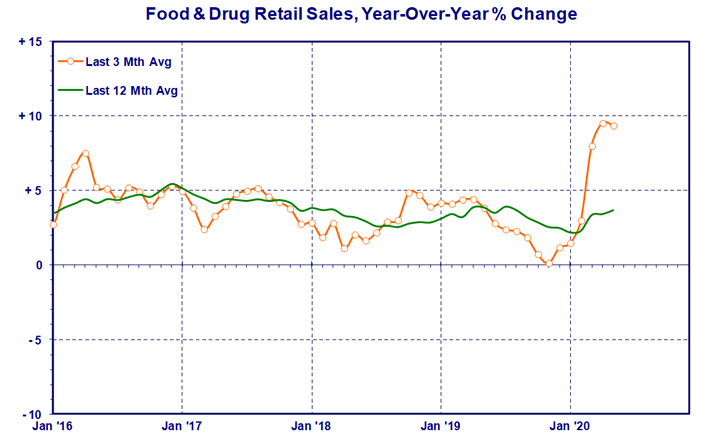
Supermarkets & other grocery stores seem to have cashed in the most from COVID-19, with retail sales up 18.1% year-over-year for the 3 months ending May. Convenience stores also did well, gaining 11.9%.
Retail sales at health and personal care stores however were down 4.8% for the 3 months ending May. Note that this category also includes cosmetics, beauty supplies and perfume stores, opticians, and other retailers which may have been required to close due to the pandemic.
Store Merchandise
Retail sales in the Store Merchandise sector continue to plunge, declining 19.4% for the 3 months ending May. The main factor here is store and shopping mall closures, which is now beginning to abate. There may be a modest surge in sales once everything is reopened as consumers catch up on some of the shopping they may have missed.
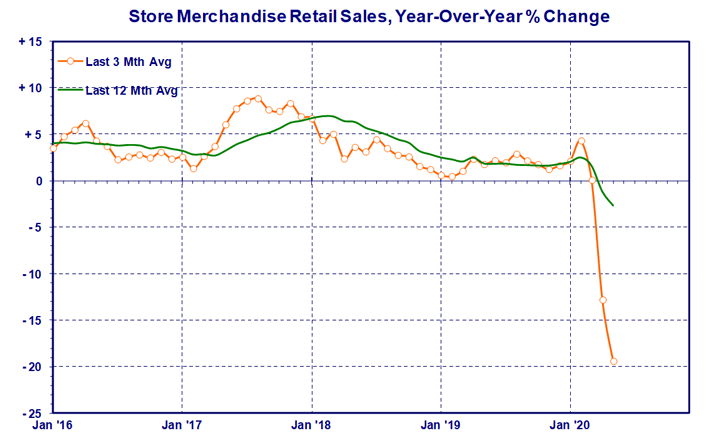
General merchandise stores are doing relatively well, with retail sales actually up 2.3% for the 3 months ending May. As noted in last month’s report, this group includes combination stores like Costco and Walmart which are also major food retailers, as well as larger operators like Canadian Tire and Hudson’s Bay which may have more developed e-commerce capabilities and online presence to fall back on.
Clothing and clothing accessories stores however are being decimated, with retail sales down an incredible 69.2% for the 3 months ending May. Many of these non-essential businesses were forced to shut their doors due to the pandemic, and/or are located in shopping malls which were also closed.
Furniture & home furnishings stores have taken a major hit too. Their retail sales declined 43.8% for the 3 months ending May.
Note that Statistics Canada is now suppressing the breakdown of general merchandise stores for confidentiality reasons. The figures in the “By The Numbers” table below are estimates based on previous trends.
Automotive & Related
There is absolutely nothing good to say about the Automotive & Related sector. Retail sales were down 43.0% for the 3 months ending May versus a year ago, including a 48.9% drop at new car dealers and a 36.5% decline at gasoline stations.
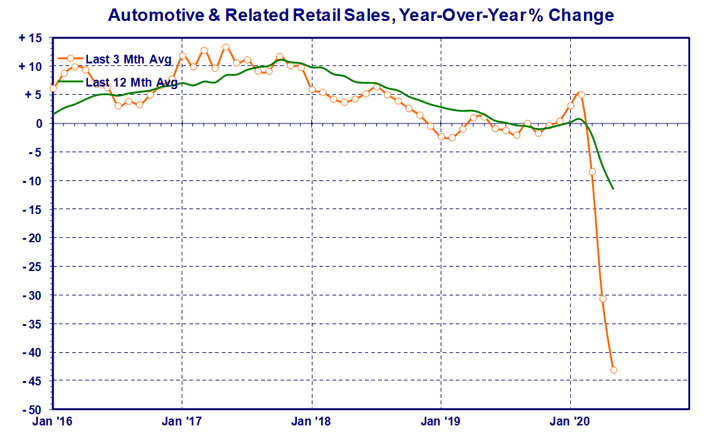
Auto dealers are now gradually reopening and are also using sales tactics like customer appointments and online viewing to stimulate business. Going forward, retail sales should gradually improve.
Gasoline station retail sales may need more time to recover. They face a double whammy of low pump prices and people driving less, whether for work, shopping, vacation, or just to visit grandma
By The Numbers
Special Note: Statistics Canada revised historical data with the February 2019 release. Unadjusted monthly data were revised back to January 2018, while seasonally adjusted data were revised back to January 2015. Those keeping score should update their files. The analysis in this report is always based on unadjusted data.
Canadian E-Commerce Sales
While there were major declines in location-based retail sales, StatsCan data shows a huge increase in e-commerce. In recent months, e-commerce retail sales were up more than double versus a year ago. This includes a 112.7% increase in May and a 123.6% gain in April. Although StatsCan does not directly provide the figures, estimates indicate e-commerce at bricks & mortar retailers grew more than those at pure play operators.
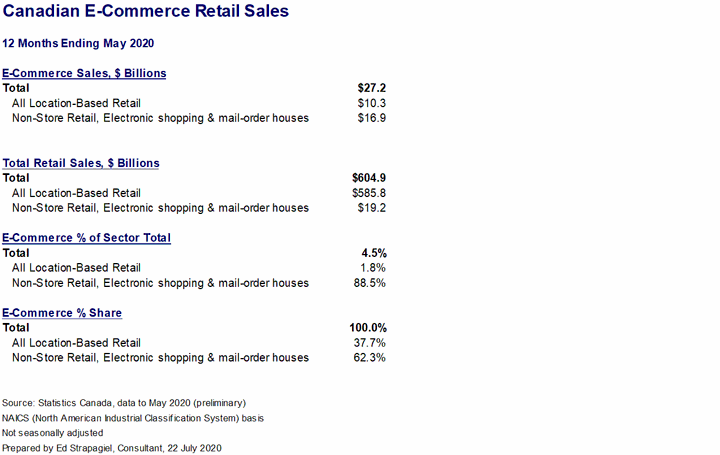
Overall, e-commerce represented about 4.5% of Canadian retail sales for the 12 months ending May 2020, including both pure play as well as brick & clicks stores. In May 2020 alone, e-commerce’s share of total retail was up to a record high of 9.5%. Note that Canadian consumers may also buy online from foreign websites which is not captured in these numbers.
Location based retail is the same as that in the preceding “By The Numbers” table. It’s what’s normally reported as Canadian retail sales. Except that it isn’t. Location based retail excludes another section called Non-Store Retailers (NAICS code 454), which includes electronic shopping and mail-order houses, which in turn is where (mostly) pure play e-commerce businesses are. For the 12 months ending May 2020, electronic shopping and mail-order houses had an estimated $16.9 billion in e-commerce sales.
But that’s not the only source of e-commerce, as (mostly) bricks & mortar location-based retailers also sell online. For the 12 months ending May 2020, this group had an estimated $10.3 billion in e-commerce sales. With electronic shopping and mail-order houses, there’s a grand total of $27.2 billion in e-commerce sales by Canadian operators. Note that this does not include foreign e-commerce purchases made by Canadian consumers, but it does include e-commerce purchases made by foreigners at Canadian operations.
For electronic shopping and mail-order houses, an estimated 8.5% of their sales are allocated to e-commerce. For (mostly) bricks & mortar retailers, it can be estimated that 1.8% of their total sales are attributable to e-commerce.
In the final section of the above table, (mostly) pure play operators (namely, under electronic shopping and mail-order houses) generated an estimated 62.3% of all e-commerce sales in Canada, while (mostly) bricks & mortar location-based retailers’ share of e-commerce was 37.7%.
For more explanation on the e-commerce numbers, see Statistics Canada: Retail E-commerce in Canada.
This analysis is updated monthly as new numbers are published by Statistics Canada. If you would like notification from Linkedin of when an update becomes available (and you’ve read this far), please connect with Ed Strapagiel on LinkedIn.