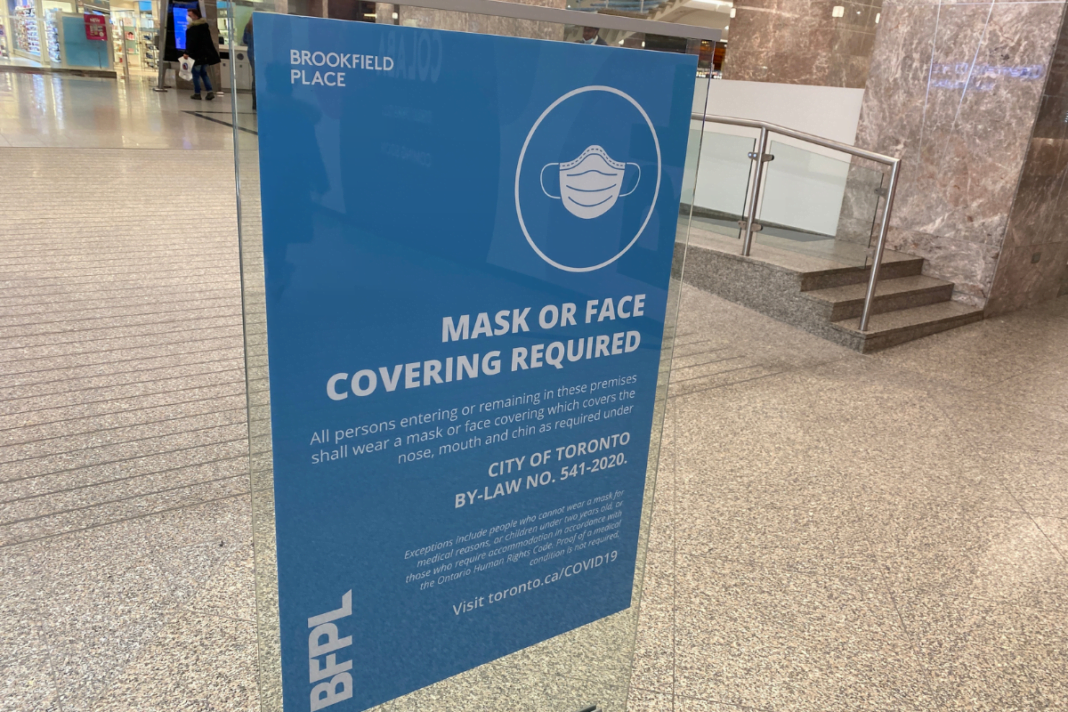
Businesses throughout Ontario are applauding the provincial government’s announcement Wednesday that it is lifting the mask mandate in many indoor public settings on March 21.
Consumers will soon not be required to wear masks in retail stores, restaurants and in many other places.

“We are pleased to see the government continues to make progress on eliminating COVID restrictions. The past two years have been incredibly difficult on Ontario’s small business owners. Even as the economy reopens, only 33 per cent are at normal revenue levels. The average small business COVID-related debt is $166,000, and 17 per cent of Ontario’s small businesses report actively considering bankruptcy – the highest level in the country,” said Ryan Mallough, senior director of provincial affairs for Ontario, with the Canadian Federation of Independent Business.
“While we are relieved we can finally put lockdowns behind us, there is still a lot of work to do as we begin small business recovery.”
In a statement, Restaurants Canada said: “The health and safety of our staff and customers has always been mission critical to restaurants — this is just as true now as it was before the COVID-19 crisis.
“Since the start of the pandemic, restaurants have quickly and effectively adapted to evolving public health guidance so that they can continue to safely serve their guests while ensuring the health and safety of their staff.
“As governments across the country continue to lift mandatory pandemic safety measures, our members will continue to make decisions based on local public health guidance, as well as their unique operational circumstances.”

Rocco Rossi, President and CEO of the Ontario Chamber of Commerce, said the province is sending a message that Ontario is ready to reopen with the announcement.
“Given the constantly evolving nature of the COVID-19 pandemic, we continue to call on the government to develop and clearly communicate an actionable plan on how the province intends to respond to the next stages of the pandemic. With the easing of public health measures, questions remain on how society’s most vulnerable citizens will be protected, what efforts will be made to bolster consumer and business confidence, reduce transmission and mitigate against further labour shortages,” said Rossi.
The Retail Council of Canada, in a statement, said the way we live our lives has fundamentally changed over the past two years and it understands that both retailers and consumers will experience varying degrees of comfort regarding the speed in which our “old ways” are embraced.
“As such, RCC recently conducted a survey of its members to better understand how they plan to handle the unwinding of mandatory public health requirements, particularly around masking, recognizing that each store is different and may have specific customer and associate needs.
“Our survey found that:
- All retailers will support staff if they choose to wear masks even if they are not required to do so.
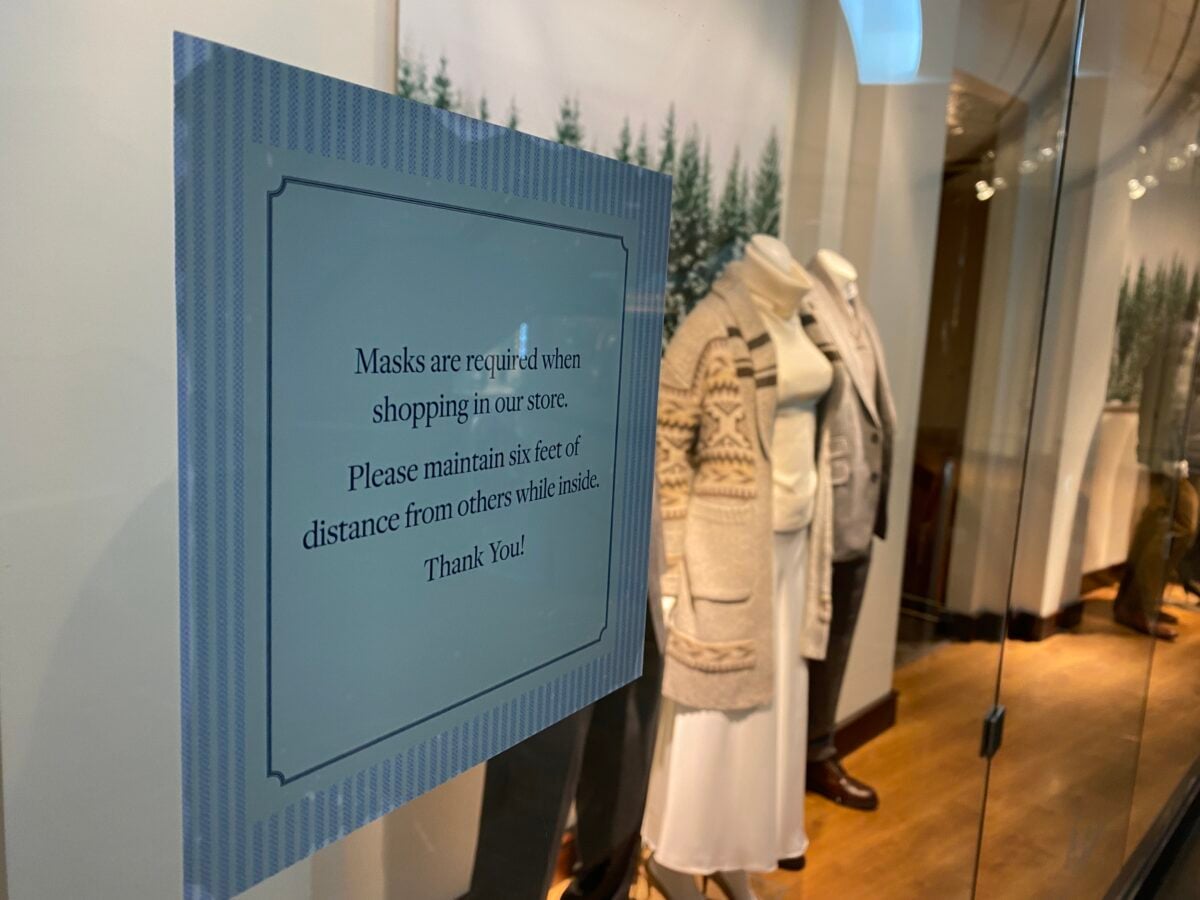
- Many retailers will maintain messaging – signs or otherwise – indicating that customers may continue to wear masks, but that they are not required to do so.
- Many will also continue to provide sanitizers and other health and safety tools, such as plexiglass shields at cash desks, for customers as a means of continuing to provide added protection to their associates and customers.”
The Council said retailers, after responding to changing measures over the past two years, are very experienced in implementing and adapting their stores to best address their unique operational requirements and to keep customers and employees safe.

The Council represents more than 45,000 small, medium and large retail businesses in all formats.
On Wednesday, Dr. Kieran Moore, Chief Medical Officer of Health in Ontario, said the province will remove the mandatory masking requirement for most settings on March 21, with the exception of select settings such as public transit, health care settings, long-term care homes and congregate care settings.
“With the peak of Omicron behind us, Ontario has been able to cautiously and gradually move through its reopening milestones. The majority of public health and workplace safety measures have now been lifted, and key public health indicators continue to improve or remain stable. As we continue on this path, we are able to take a more balanced and long-term approach to Ontario’s pandemic response,” he said.
“While this does not signal that COVID-19 has disappeared or that the pandemic is over, it does mean that we have come to a place where we know what we need to do to manage this virus and to keep each other safe.”
The CFIB, which is the largest association of small and medium-sized businesses with 95,000 members across every industry and region in Canada, is urging the federal government to continue to help small businesses who have felt the economic pain in the past two years. It is asking the federal government to:
- Announce a freeze in the carbon tax and work to immediately reduce energy costs for small business owners;
- Halt all current and future tax increases, including the alcohol excise tax, Canada Pension Plan and Employment Insurance premiums;
- Extend the Canada Recovery Hiring Program for six months and expand eligibility to new businesses; and
- Accelerate plans to reduce credit card processing fees for small businesses.
“While it is good news that COVID restrictions are finally being lifted across Canada, the economic damage to small business has been massive and has left many in a very precarious position,” said Dan Kelly, the CFIB’s President and CEO. “As we enter the recovery phase of the pandemic, governments need to hold off on any cost increases, especially given that one in seven (14 per cent) of small firms are actively considering bankruptcy or permanently winding down operations.
“Small businesses have borne the brunt of two years of COVID restrictions and will be dealing with the fallout of the pandemic for months, if not years. Imposing new costs and higher taxes on them right now could be the final nail in the coffin for some.”