

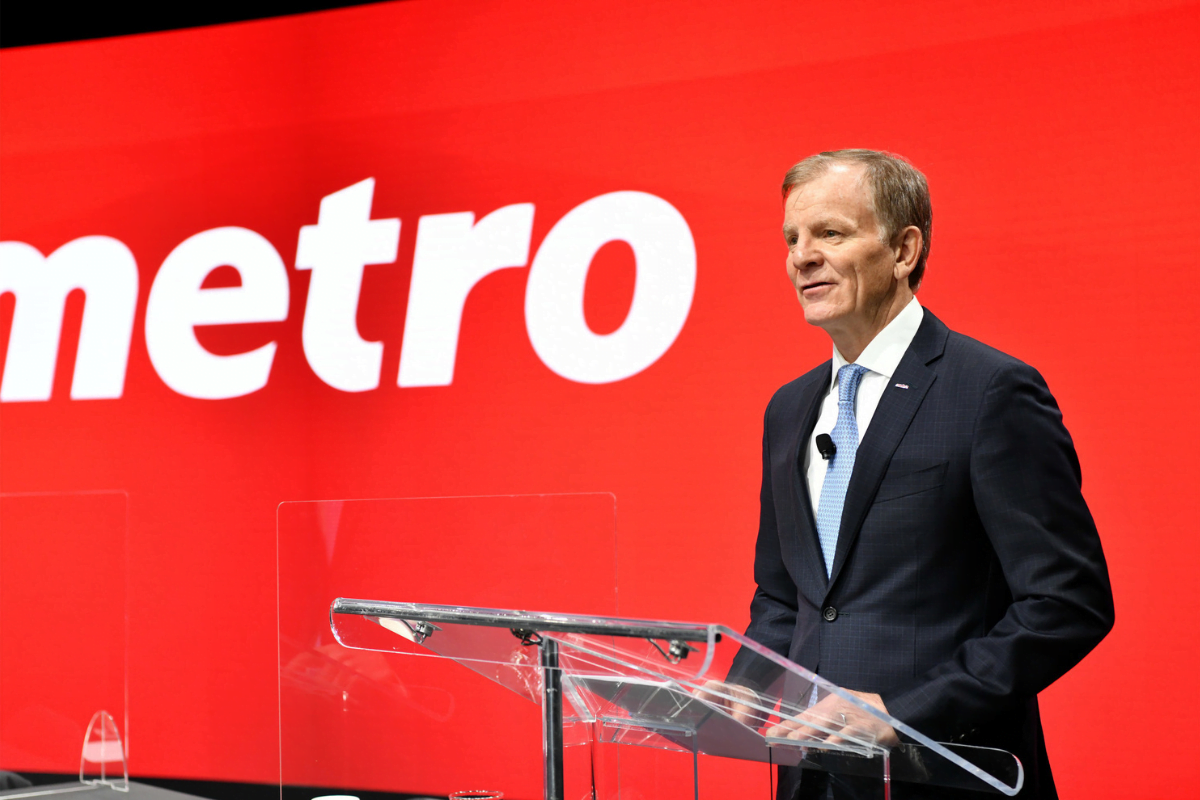
With a new year starting, we hear announcements about bonuses in food retailing. Metro recently announced that it was offering $3.7 million in bonuses to five top senior executives. This represents a 4% increase in bonus payouts over the previous year, while Metro sales grew 3.3% over the past fiscal year. Unsurprisingly, Éric La Flèche, its CEO, saw his total compensation reach $5.4 million, up 7% compared to 2021. His annual bonus this year is around $1.5 million, an increase of 14% compared to last year. Alas, Metro’s statement said nothing about the compensation paid to other employees of the company. A total of $3.7 million for five people.
Metro is obviously not alone. Other grocers and other companies in the food sector have done the same thing. In 2021, according to Globe and Mail data, José Cil of Restaurants Brand International, Brian Hannasch of Alimentation Couche-Tard, Galen Weston of Loblaws and George Weston, Neil Rossy of Dollarama, and Michael Medline of Empire/Sobeys, all working in the food sector, have without exception received larger bonuses than those announced by Metro.
There is nothing wrong with paying bonuses to executives who help a company grow and create value for its shareholders and customers. In fact, other than José Cil of Restaurants Brands International, who ranks 13th, again according to the Globe and Mail, there is no food CEO whose compensation ranks among the top 20 in the country. Galen Weston of Loblaws is in 42nd place, Michel Medline in 61st and Éric La Flèche in 78th position. Nothing exceptional. In food, the margins are thin and the salaries are, too.
Motivating leaders and attracting the talent needed to get things done remains an asset, especially these days. But in the food sector, companies must read the proverbial room, considering what’s happening with our economy. Profits in the food industry have an incredibly sensitive moral undertone. We have a very different perception of bonuses because it is above all a question of social acceptability.
Most often, performance reviews of corporate leaders are heavily influenced by the company’s sales figures. Like everywhere else, inflation has inflated the numbers in the financial statements. Moreover, food inflation in the country has exceeded 10% for several months and greatly exceeds the general inflation rate.
Major grocers have continually been criticized by politicians, analysts, and even journalists for their so-called record profits. The big food companies have been posting very good results for some time; that goes without saying. But food inflation in Canada remains one of the lowest in the world among industrialized countries. Amongst industrialized economies, only Japan, China and India show lower rates than Canada. Since the food sector manages a global phenomenon, it is unwise to point the finger at supermarkets, since their profit margins have never really exceeded the profitability thresholds that we see elsewhere, including in the United States.
So for Metro and the others, announcing bonuses requires tact, but above all, empathy. Announcing bonuses to just a handful of executives during the holidays is simply ill-timed. Or, the company could increase executive salaries to avoid bonuses, and avoid any public outcry. If that’s not possible, there are other ways to go about it.
With these bonus announcements, the companies should above all publicize the steps taken to also compensate other employees: all staff, not just executives. People don’t know much about Éric La Flèche, but they know Samantha, Nicole, Vincent, and others who work in stores we all visit. And they work long hours. It is critical to humanize food companies, perhaps more than ever, to demonstrate that employees occupy an important place when evaluating a company’s financial performance. In addition, these companies give generously to food banks and support various causes throughout the year. When announcing targeted bonuses, at least display charitable donations and shed light on socioeconomic contributions of the company. Again, recognizable and public empathy.
Grocers must come to terms with the fact that they are experiencing a real crisis of confidence across Canada. Their image depends on every word written in press releases and every sentence spoken in front of a microphone or a camera. Their relationship with the public changed in 2022, and much the same should be expected in 2023.












With such high salaries, it might be interesting to see how much the top executives donate to charities themselves. We as consumers are asked at particular times to donate to the chain’s charity when cashing out our grocery purchase.